Get your patient on Phexxi (Lactic Acid, L-, Citric Acid Monohydrate, And Potassium Bitartrate)
Phexxi patient education
Patient toolkit
Dosage & administration

Phexxi prescribing information

INDICATIONS AND USAGE
PHEXXI is indicated for the prevention of pregnancy in females of reproductive potential for use as an on-demand method of contraception.
Limitations of Use
PHEXXI is not effective for the prevention of pregnancy when administered after intercourse [see Dosage and Administration (2.1) ].
DOSAGE AND ADMINISTRATION
Recommended Dosage
Administer one pre-filled applicator of PHEXXI (5 grams) vaginally immediately before or up to one hour before each act of vaginal intercourse. If more than one act of vaginal intercourse occurs within one hour, an additional dose must be applied. Five grams of PHEXXI contains 90 mg of lactic acid, 50 mg of citric acid, and 20 mg of potassium bitartrate.
Timing of PHEXXI Use
May use PHEXXI during any part of the menstrual cycle. May use PHEXXI as soon as it is safe to resume vaginal intercourse after childbirth, abortion, or miscarriage.
Use of PHEXXI with Other Contraceptive Methods
PHEXXI may be used concomitantly with hormonal contraceptives; latex, polyurethane, and polyisoprene condoms; and vaginal diaphragms. Avoid PHEXXI use with vaginal rings.
Use of PHEXXI with Other Vaginal Products
PHEXXI may be used concomitantly with other products for vaginal infections including miconazole, metronidazole, and tioconazole.
DOSAGE FORMS AND STRENGTHS
Vaginal gel: 18 mg of lactic acid, 10 mg of citric acid, and 4 mg of potassium bitartrate in each gram (1.8%, 1%, and 0.4%, respectively) of off-white to tan color gel supplied in a pre-filled single-dose (5 grams) vaginal applicator
USE IN SPECIFIC POPULATIONS
Pregnancy
Risk Summary
There is no use for PHEXXI in pregnancy; therefore, discontinue PHEXXI during pregnancy. There are no data with the use of PHEXXI in pregnant women or animals. In the U.S. general population, the estimated background risk of major birth defects and miscarriage in clinically recognized pregnancies is 2 to 4 percent and 15 to 20 percent, respectively.
Lactation
Risk Summary
There are no data on the presence of lactic acid, citric acid, and potassium bitartrate or their metabolites in human milk, the effects on the breastfed infant, or the effects on milk production.
Pediatric Use
The safety and effectiveness of PHEXXI have been established in females of reproductive potential. Efficacy is expected to be the same for post-menarchal females under the age of 17 as for users 17 years and older. The use of PHEXXI before menarche is not indicated.
WARNINGS AND PRECAUTIONS
- Cystitis and Pyelonephritis: Avoid use in women with a history of recurrent UTI or urinary tract abnormalities (5.1 )
Cystitis and Pyelonephritis
Among 2804 subjects who received PHEXXI in Studies 1 and 2, 0.36% (n=10) reported adverse reactions of cystitis, pyelonephritis, or other upper urinary tract infection (UTI). Of these, one case of pyelonephritis was considered serious and required hospitalization. Avoid use of PHEXXI in females of reproductive potential with a history of recurrent urinary tract infection or urinary tract abnormalities .
ADVERSE REACTIONS
The following clinically significant adverse reactions are described elsewhere in the labeling:
- Cystitis and Pyelonephritis [see Warnings and Precautions (5.1) ]
Clinical Trials Experience
Because clinical trials are conducted under widely varying conditions, adverse reaction rates observed in the clinical trials of a drug cannot be directly compared to rates in the clinical trials of another drug and may not reflect the rates observed in practice.
The safety of PHEXXI (pre-filled applicator with 5-gram dose) has been evaluated in two clinical trials (Study 1 and Study 2) in 2804 subjects (over 19,000 cycles of exposure) . The racial/ethnic distribution was 66% White, 27% Black or African American, 2% Asian, 1% American Indian or Alaska Native, 0.3% Native Hawaiian or Pacific Islander, and 5% other; 32% of the study population was Hispanic. Study 1 included a one-year extension phase where 342 U.S. subjects were exposed to PHEXXI for 13 cycles.
Hypersensitivity Reaction
Of the 2804 PHEXXI-treated subjects in Studies 1 and 2, one subject reported a suspected drug hypersensitivity. Avoid PHEXXI use in females of reproductive potential with suspected hypersensitivity to the ingredients in PHEXXI.
The most common adverse reactions (≥10%) in the U.S. population in Studies 1 and 2 (n = 2480) were: vulvovaginal burning sensation (18.0%) and vulvovaginal pruritus (14.5%). The majority of these adverse reactions were mild and few led to discontinuation. Table 1 summarizes the most common adverse reactions (≥2%) reported by subjects using PHEXXI in the U.S.
| Adverse Reaction | PHEXXI (N=2480) (%) |
|---|---|
| Vulvovaginal Burning Sensation | 18.0 |
| Vulvovaginal Pruritus | 14.5 |
| Vulvovaginal Mycotic Infection Includes preferred terms (PT) vulvovaginal mycotic infection and vulvovaginal candidiasis. | 9.1 |
| Urinary Tract Infection Includes PTs urinary tract infection, streptococcal urinary tract infection, Escherichia urinary tract infection, and urinary tract infection bacterial. Does not include PTs cystitis, kidney infection, and pyelonephritis [see Warnings and Precautions (5.1)]. | 9.0 |
| Vulvovaginal Discomfort | 9.0 |
| Bacterial Vaginosis | 8.4 |
| Vaginal Discharge | 5.5 |
| Genital Discomfort | 4.1 |
| Dysuria | 3.1 |
| Vulvovaginal pain | 2.1 |
Among subjects who used PHEXXI in Studies 1 and 2, 1.6% discontinued from the clinical trials due to an adverse reaction. The most common adverse reactions leading to study discontinuation were vulvovaginal burning sensation (0.7%); and vulvovaginal pruritus and vulvovaginal discomfort (0.1% each).
Adverse Reactions in Male Partners
Among male partners of subjects who used PHEXXI for contraception in Study 2, 9.8% (131 of 1330) reported symptoms of local discomfort (burning, itching, pain, and "other"). Of these local discomfort symptoms, 74.7% were mild, 21.4% were moderate, and 3.9% were severe. Two subjects discontinued participation in the study due to male partner symptoms.
DESCRIPTION
PHEXXI (lactic acid, citric acid, and potassium bitartrate) is a vaginal gel.
PHEXXI is an off-white to tan in color gel of uniform consistency, containing three active ingredients: lactic acid, citric acid, and potassium bitartrate.
The structural formula for lactic acid is:
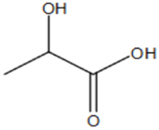
Lactic acid is designated chemically as 2-hydroxypropanoic acid with an empirical formula of C 3 H 6 O 3 and a molecular weight of 90.08 g/mol.
The structural formula for citric acid is:
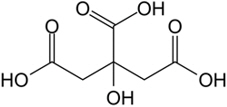
Citric acid is designated chemically as 2-hydroxypropane-1,2,3-tricarboxylic acid with an empirical formula of C 6 H 8 O 7 and a molecular weight of 192.124 g/mol.
The structural formula for potassium bitartrate is:
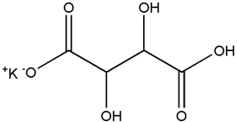
Potassium bitartrate is designated chemically as potassium; (2 R , 3 R )-2,3,4-trihydroxy-4-oxobutanoate with an empirical formula of KC 4 H 5 O 6 and a molecular weight of 188.177 g/mol.
Each 5 gram dose is provided in a pre-filled single-dose applicator containing lactic acid USP (1.8% w/w), citric acid USP (1% w/w), and potassium bitartrate USP (0.4% w/w). Inactive ingredients present in the gel are: glycerin, alginic acid, xanthan gum, sodium hydroxide, benzoic acid, and purified water.
CLINICAL PHARMACOLOGY
Mechanism of Action
In in vitro studies, Phexxi produced a normal vaginal pH range (pH 3.5 – 4.5) in the presence of semen. In clinical studies, post-coital testing demonstrated pH < 5 in the majority of subjects, and sperm motility reduction.
Pharmacodynamics
Pharmacodynamic studies in humans have not been performed.
Pharmacokinetics
Pharmacokinetic studies in humans have not been performed. Systemic exposures of lactic acid, citric acid, and potassium bitartrate following vaginal administration of PHEXXI are not expected to lead to safety concerns.
In vitro studies with commonly used vaginal preparations (miconazole, metronidazole, tioconazole, and a product for maintaining normal vaginal pH) showed no significant effect on the pH or buffering capacity of PHEXXI.
NONCLINICAL TOXICOLOGY
Carcinogenesis, Mutagenesis, Impairment of Fertility
Carcinogenesis
Long-term carcinogenicity studies have not been performed with PHEXXI.
Mutagenesis
Mutagenic studies have not been performed with PHEXXI.
Impairment of Fertility
Reproductive studies have not been performed with PHEXXI. Upon discontinuation of PHEXXI, pregnancy may occur.
CLINICAL STUDIES
The efficacy of PHEXXI for the prevention of pregnancy was evaluated in a multi-center, open-label, single-arm clinical trial in the United States (AMP002; NCT03243305). The study enrolled females of reproductive potential 18 to 35 years of age with regular menstrual cycles (21 to 35 days). The median age was 27.8 years. The racial distribution was 70.6% White, 23.7% Black or African American, 2.5% Asian, 0.4% American Indian or Alaska Native, 0.2% Native Hawaiian or Pacific Islander, and 2.7% other. Subjects agreed to engage in at least 3 acts of heterosexual, vaginal intercourse per cycle. Subjects self-administered a 5 gram dose of PHEXXI intravaginally up to one hour before each episode of intercourse for up to 7 cycles.
The primary efficacy endpoint was the 7-cycle typical use cumulative pregnancy rate as derived by Kaplan-Meier life-table analysis. A total of 101 on-treatment pregnancies occurred in 1183 subjects contributing 4769 evaluable natural cycles. The 7-cycle cumulative pregnancy rate was 13.7% (95% CI: 10.0%, 17.5%), excluding cycles with back-up contraception, cycles <21 days or >35 days in length and cycles in which no intercourse was reported. The estimated Pearl Index, calculated based on data from the 7-cycle study, was 27.5 (95% CI: 22.4%, 33.5%).
HOW SUPPLIED/STORAGE AND HANDLING
PHEXXI (lactic acid, citric acid, and potassium bitartrate) vaginal gel is an off-white to tan color gel of uniform consistency containing lactic acid (1.8%), citric acid (1%), and potassium bitartrate (0.4%), supplied as individually wrapped 5 gram pre-filled single-dose vaginal applicators in sealed foil pouches along with a plunger, and are available as follows:
| Box of 12 units |
| Sample box of 3 units |
Store in the original foil pack at room temperature 20°C to 25°C (68°F to 77°F); excursion permitted between 15°C to 30°C (59°F to 86°F) [ see USP Controlled Room Temperature ].
INSTRUCTIONS FOR USE
PHEXXI ® (FEX ee) (lactic acid, citric acid, and potassium bitartrate) vaginal gel
For Vaginal Use Only
These Instructions for Use contain information on how to use PHEXXI vaginal gel. Make sure that you read, understand, and follow the Instructions for Use before using PHEXXI and each time you get a refill. There may be new information.
Contents:
- Each box contains either 3 or 12 foil pouches.
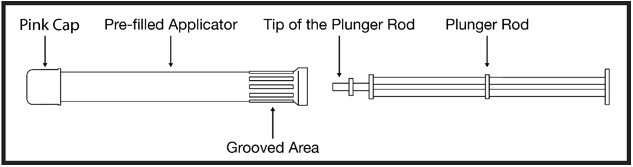
- Each foil pouch contains a pre-filled applicator and plunger rod (see Figure A ).
- Each pre-filled applicator contains 1 dose of PHEXXI for 1-time use (single use).
|
| Figure A |
Important Information You Need to Know Before Using PHEXXI
- Use 1 dose of PHEXXI within 1 hour before you have vaginal sex.
- A new PHEXXI pre-filled applicator must be used each time you have vaginal sex. If you have vaginal sex more than 1 time within 1 hour, a new PHEXXI pre-filled applicator must be used .
Prepare to Use PHEXXI
Keep the pre-filled applicator and plunger rod in the foil pouch until you are ready to use PHEXXI.
Step 1: Wash Your Hands
- Wash your hands with soap and water before opening the foil pouch.
Step 2: Remove the Pre-filled Applicator and Plunger Rod from the Foil Pouch
|
|
| Figure B |
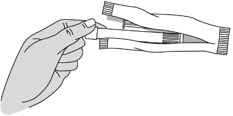
Important : Do not remove the pink cap until instructed in Step 4.
Insert PHEXXI Gel
Step 3: Insert the Plunger Rod
|
|
| Figure C |
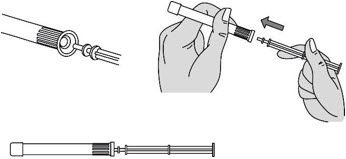
Step 4: Remove the Pink Cap
|
|
| Figure D |
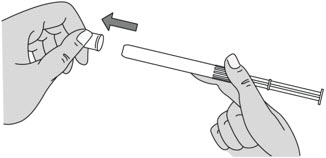
Step 5: Insert the PHEXXI Pre-filled Applicator into the Vagina
|
|
| Figure E | |
| |
| Figure F |

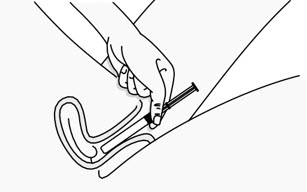
Step 6: Insert PHEXXI Gel
|
|
| Figure G |
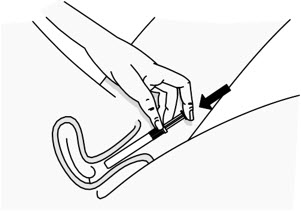
Step 7: Remove the Used PHEXXI Pre-filled Applicator
|
|
| Figure H |
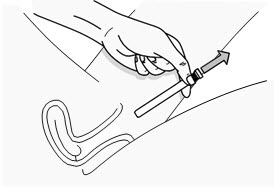
Disposing of PHEXXI
Step 8: Throw Away (Dispose of) the Used PHEXXI Pre-filled Applicator
- Used PHEXXI pre-filled applicators and caps should be disposed of in the trash. The cap may be a potential choking hazard.
Storing PHEXXI
- Store PHEXXI at room temperature between 68°F to 77°F (20°C to 25°C).
- Store PHEXXI in the original foil pouch.
Keep PHEXXI and all medicines out of the reach of children.
These Instructions for Use have been approved by the U.S. Food and Drug Administration.
For more information, including full prescribing information and information on patient safety, go to www.phexxi.com or call 1-833-EVFMBIO.
Manufactured for Evofem, Inc., a wholly owned subsidiary of Evofem Biosciences, Inc. ©2023 Evofem, Inc. All rights reserved.
Issued: June 2023
Mechanism of Action
In in vitro studies, Phexxi produced a normal vaginal pH range (pH 3.5 – 4.5) in the presence of semen. In clinical studies, post-coital testing demonstrated pH < 5 in the majority of subjects, and sperm motility reduction.
