Get your patient on Azathioprine - Azathioprine tablet (Azathioprine)
Azathioprine - Azathioprine tablet prescribing information

WARNING: MALIGNANCY Chronic immunosuppression with this purine antimetabolite increases risk of malignancy in humans. Reports of malignancy include post-transplant lymphoma and hepatosplenic T-cell lymphoma (HSTCL) in patients with inflammatory bowel disease. Physicians using this drug should be very familiar with this risk as well as with the mutagenic potential to both men and women and with possible hematologic toxicities. Physicians should inform patients of the risk of malignancy with azathioprine. See WARNINGS.
INDICATIONS AND USAGE: Azathioprine is indicated as an adjunct for the prevention of rejection in renal homotransplantation. It is also indicated for the management of active rheumatoid arthritis to reduce signs and symptoms.
Renal Homotransplantation: Azathioprine is indicated as an adjunct for the prevention of rejection in renal homotransplantation. Experience with over 16,000 transplants shows a 5-year patient survival of 35% to 55%, but this is dependent on donor, match for HLA antigens, anti-donor or anti B-cell alloantigen antibody, and other variables. The effect of azathioprine on these variables has not been tested in controlled trials.
Rheumatoid Arthritis: Azathioprine is indicated for the treatment of active rheumatoid arthritis (RA) to reduce signs and symptoms. Aspirin, non-steroidal anti-inflammatory drugs and/or low dose glucocorticoids may be continued during treatment with azathioprine. The combined use of azathioprine with disease modifying anti-rheumatic drugs (DMARDs) has not been studied for either added benefit or unexpected adverse effects. The use of azathioprine with these agents cannot be recommended.
DOSAGE AND ADMINISTRATION: TPMT TESTING CANNOT SUBSTITUTE FOR COMPLETE BLOOD COUNT (CBC) MONITORING IN PATIENTS RECEIVING AZATHIOPRINE. TPMT genotyping or phenotyping can be used to identify patients with absent or reduced TPMT activity. Patients with low or absent TPMT activity are at an increased risk of developing severe, lifethreatening myelotoxicity from azathioprine if conventional doses are given. Physicians may consider alternative therapies for patients who have low or absent TPMT activity (homozygous for non-functional alleles). Azathioprine should be administered with caution to patients having one non-functional allele (heterozygous) who are at risk for reduced TPMT activity that may lead to toxicity if conventional doses are given. Dosage reduction is recommended in patients with reduced TPMT activity. Early drug discontinuation may be considered in patients with abnormal CBC results that do not respond to dose reduction.
Renal Homotransplantation: The dose of azathioprine required to prevent rejection and minimize toxicity will vary with individual patients; this necessitates careful management. The initial dose is usually 3 to 5 mg/kg daily, beginning at the time of transplant. Azathioprine is usually given as a single daily dose on the day of, and in a minority of cases 1 to 3 days before, transplantation. Dose reduction to maintenance levels of 1 to 3 mg/kg daily is usually possible. The dose of azathioprine should not be increased to toxic levels because of threatened rejection. Discontinuation may be necessary for severe hematologic or other toxicity, even if rejection of the homograft may be a consequence of drug withdrawal.
Rheumatoid Arthritis: Azathioprine is usually given on a daily basis. The initial dose should be approximately 1.0 mg/kg (50 to 100 mg) given as a single dose or on a twice daily schedule. The dose may be increased, beginning at 6 to 8 weeks and thereafter by steps at 4-week intervals, if there are no serious toxicities and if initial response is unsatisfactory. Dose increments should be 0.5 mg/kg daily, up to a maximum dose of 2.5 mg/kg/day. Therapeutic response occurs after several weeks of treatment, usually 6 to 8; an adequate trial should be a minimum of 12 weeks. Patients not improved after 12 weeks can be considered refractory. Azathioprine may be continued long-term in patients with clinical response, but patients should be monitored carefully, and gradual dosage reduction should be attempted to reduce risk of toxicities.
Maintenance therapy should be at the lowest effective dose, and the dose given can be lowered decrementally with changes of 0.5 mg/kg or approximately 25 mg daily every 4 weeks while other therapy is kept constant. The optimum duration of maintenance azathioprine has not been determined. Azathioprine can be discontinued abruptly, but delayed effects are possible.
Use in Renal Dysfunction: Relatively oliguric patients, especially those with tubular necrosis in the immediate post-cadaveric transplant period, may have delayed clearance of azathioprine or its metabolites, may be particularly sensitive to this drug, and are usually given lower doses.
Procedures for proper handling and disposal of this immunosuppressive antimetabolite drug should be considered. Several guidelines on this subject have been published. 25-31 There is no general agreement that all of the procedures recommended in the guidelines are necessary or appropriate.
CONTRAINDICATIONS: Azathioprine should not be given to patients who have shown hypersensitivity to the drug.
Azathioprine should not be used for treating rheumatoid arthritis in pregnant women.
Patients with rheumatoid arthritis previously treated with alkylating agents (cyclophosphamide, chlorambucil, melphalan, or others) may have a prohibitive risk of malignancy if treated with azathioprine.
ADVERSE REACTIONS: The principal and potentially serious toxic effects of azathioprine are hematologic and gastrointestinal. The risks of secondary infection and malignancy are also significant (see WARNINGS). The frequency and severity of adverse reactions depend on the dose and duration of azathioprine as well as on the patient's underlying disease or concomitant therapies. The incidence of hematologic toxicities and neoplasia encountered in groups of renal homograft recipients is significantly higher than that in studies employing azathioprine for rheumatoid arthritis. The relative incidences in clinical studies are summarized below:
Toxicity | Renal Homograft | Rheumatiod Arthritis |
Leukopenia Any Degree | >50% | 28% |
<2500 cells/mm 3 | 16% | 5.3% |
Infections | 20% | <1% |
Neoplasia | ||
Lymphoma | 0.5% | |
Others | 2.8% |
•Data on the rate and risk of neoplasia among persons with rheumatoid arthritis treated with azathioprine are limited. The incidence of lymphoproliferative disease in patients with RA appears to be significantly higher than that in the general population. In one completed study, the rate of lymphoproliferative disease in RA patients receiving higher than recommended doses of azathioprine (5 mg/kg/day) was 1.8 cases per 1000 patient-years of follow-up, compared with 0.8 cases per 1000 patient-years of follow-up in those not receiving azathioprine. However, the proportion of the increased risk attributable to the azathioprine dosage or to other therapies (i.e., alkylating agents) received by patients treated with azathioprine cannot be determined.
Hematologic: Leukopenia and/or thrombocytopenia are dose dependent and may occur late in the course of therapy with azathioprine. Dose reduction or temporary withdrawal may result in reversal of these toxicities. Infection may occur as a secondary manifestation of bone marrow suppression or leukopenia, but the incidence of infection in renal homotransplantation is 30 to 60 times that in rheumatoid arthritis. Anemias, including macrocytic anemia and/or bleeding have been reported.
TPMT genotyping or phenotyping can help identify patients with low or absent TPMT activity (homozygous for nonfunctional alleles) who are at increased risk for severe, life-threatening myelosuppression from azathioprine. See CLINICAL PHARMACOLOGY, WARNINGS and PRECAUTIONS: Laboratory Tests. Death associated with pancytopenia has been reported in patients with absent TPMT activity receiving azathioprine. 6, 20
Gastrointestinal: Nausea and vomiting may occur within the first few months of therapy with azathioprine, and occurred in approximately 12% of 676 rheumatoid arthritis patients. The frequency of gastric disturbance often can be reduced by administration of the drug in divided doses and/or after meals. However, in some patients, nausea and vomiting may be severe and may be accompanied by symptoms such as diarrhea, fever, malaise, and myalgias (see PRECAUTIONS). Vomiting with abdominal pain may occur rarely with a hypersensitivity pancreatitis. Hepatotoxicity manifest by elevation of serum alkaline phosphatase, bilirubin, and/or serum transaminases is known to occur following azathioprine use, primarily in allograft recipients. Hepatotoxicity has been uncommon (less than 1%) in rheumatoid arthritis patients. Hepatotoxicity following transplantation most often occurs within 6 months of transplantation and is generally reversible after interruption of azathioprine. A rare, but life-threatening hepatic veno-occlusive disease associated with chronic administration of azathioprine has been described in transplant patients and in one patient receiving azathioprine for panuveitis. 21, 22, 23 Periodic measurement of serum transaminases, alkaline phosphatase, and bilirubin is indicated for early detection of hepatotoxicity. If hepatic veno-occlusive disease is clinically suspected, azathioprine should be permanently withdrawn.
Others: Additional side effects of low frequency have been reported. These include skin rashes, alopecia, fever, arthralgias, diarrhea, steatorrhea, negative nitrogen balance, reversible interstitial pneumonitis, hepatosplenic T-cell lymphoma (see WARNINGS – Malignancy), and Sweet's Syndrome (acute febrile neutrophilic dermatosis).
Drug Interactions :
Use with Allopurinol : One of the pathways for inactivation of azathioprine is inhibited by allopurinol. Patients receiving azathioprine and allopurinol concomitantly should have a dose reduction of azathioprine, to approximately 1/3 to 1/4 the usual dose. It is recommended that a further dose reduction or alternative therapies be considered for patients with low or absent TPMT activity receiving azathioprine and allopurinol because both TPMT and XO inactivation pathways are affected. See CLINICAL PHARMACOLOGY, WARNINGS, PRECAUTIONS: Laboratory Tests and ADVERSE REACTIONS sections.
Use with Aminosalicylates : There is in vitro evidence that aminosalicylate derivatives (e.g., sulphasalazine, mesalazine, or olsalazine) inhibit the TPMT enzyme. Concomitant use of these agents with azathioprine should be done with caution.
Use with Other Agents Affecting Myelopoesis: Drugs which may affect leukocyte production, including co-trimoxazole, may lead to exaggerated leukopenia, especially in renal transplant recipients.
Use with Angiotensin -Converting Enzyme Inhibitors: The use of angiotensin-converting enzyme inhibitors to control hypertension in patients on azathioprine has been reported to induce anemia and severe leukopenia.
Use with Warfarin : Azathioprine may inhibit the anticoagulant effect of warfarin.
Use with Ribavirin : The use of ribavirin for hepatitis C in patients receiving azathioprine has been reported to induce severe pancytopenia and may increase the risk of azathioprine-related myelotoxicity. Inosine monophosphate dehydrogenase (IMDH) is required for one of the metabolic pathways of azathioprine. Ribavirin is known to inhibit IMDH, thereby leading to accumulation of an azathioprine metabolite, 6-methylthioionosine monophosphate (6MTITP), which is associated with myelotoxicity (neutropenia, thrombocytopenia, and anemia). Patients receiving azathioprine with ribavirin should have complete blood counts, including platelet counts, monitored weekly for the first month, twice monthly for the second and third months of treatment, then monthly or more frequently if dosage or other therapy changes are necessary.
Carcinogenesis, Mutagenesis, Impairment of Fertility : See WARNINGS section.
Pregnancy: Teratogenic Effects : Pregnancy Category D. See WARNINGS section.
Nursing Mothers : The use of azathioprine in nursing mothers is not recommended. Azathioprine or its metabolites are transferred at low levels both transplacentally and in breast milk.17, 18, 19 Because of the potential for tumorigenicity shown for azathioprine, a decision should be made whether to discontinue nursing or discontinue the drug, taking into account the importance of the drug to the mother.
Pediatric Use : Safety and efficacy of azathioprine in pediatric patients have not been established.
DESCRIPTION: Azathioprine, an immunosuppressive antimetabolite, is available in tablet form for oral administration. Each scored tablet contains 50 mg azathioprine and the inactive ingredients lactose monohydrate, pregelatinized starch, povidone, corn starch, magnesium stearate, and stearic acid.
Azathioprine is chemically 1H-purine, 6-[(1-methyl-4-nitro- 1H-imidazol-5-yl)thio]-. The structural formula of azathioprine is:
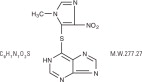
It is an imidazolyl derivative of 6-mercaptopurine and many of its biological effects are similar to those of the parent compound.
Azathioprine is insoluble in water, but may be dissolved with addition of one molar equivalent of alkali. Azathioprine is stable in solution at neutral or acid pH but hydrolysis to mercaptopurine occurs in excess sodium hydroxide (0.1N), especially on warming. Conversion to mercaptopurine also occurs in the presence of sulfhydryl compounds such as cysteine, glutathione, and hydrogen sulfide.
CLINICAL PHARMACOLOGY: Azathioprine is well absorbed following oral administration. Maximum serum radioactivity occurs at 1 to 2 hours after oral 35 S-azathioprine and decays with a half-life of 5 hours. This is not an estimate of the half-life of azathioprine itself but is the decay rate for all 35 S-containing metabolites of the drug. Because of extensive metabolism, only a fraction of the radioactivity is present as azathioprine. Usual doses produce blood levels of azathioprine, and of mercaptopurine derived from it, which are low (<1 mcg/mL). Blood levels are of little predictive value for therapy since the magnitude and duration of clinical effects correlate with thiopurine nucleotide levels in tissues rather than with plasma drug levels. Azathioprine and mercaptopurine are moderately bound to serum proteins (30%) and are partially dialyzable. See OVERDOSAGE.
Azathioprine is metabolized to 6-mercaptopurine (6-MP). Both compounds are rapidly eliminated from blood and are oxidized or methylated in erythrocytes and liver; no azathioprine or mercaptopurine is detectable in urine after 8 hours. Activation of 6-mercaptopurine occurs via hypoxanthine-guanine phosphoribosyltransferase (HGPRT) and a series of multi-enzymatic processes involving kinases to form 6-thioguanine nucleotides (6-TGNs) as major metabolites (See Metabolism Scheme in Figure 1). The cytotoxicity of azathioprine is due, in part, to the incorporation of 6-TGN into DNA.
6-MP undergoes two major inactivation routes (Figure 1). One is thiol methylation, which is catalyzed by the enzyme thiopurine S-methyltransferase (TPMT), to form the inactive metabolite methyl-6-MP (6-MeMP). TPMT activity is controlled by a genetic polymorphism. 1, 2, 3 For Caucasians and African Americans, approximately 10% of the population inherit one non-functional TPMT allele (heterozygous) conferring intermediate TPMT activity, and 0.3% inherit two TPMT non-functional alleles (homozygous) for low or absent TPMT activity. Non-functional alleles are less common in Asians. TPMT activity correlates inversely with 6-TGN levels in erythrocytes and presumably other hematopoietic tissues, since these cells have negligible xanthine oxidase (involved in the other inactivation pathway) activities, leaving TPMT methylation as the only inactivation pathway. Patients with intermediate TPMT activity may be at increased risk of myelotoxicity if receiving conventional doses of azathioprine. Patients with low or absent TPMT activity are at an increased risk of developing severe, life-threatening myelotoxicity if receiving conventional doses of azathioprine. 4-9 TPMT genotyping or phenotyping (red blood cell TPMT activity) can help identify patients who are at an increased risk for developing azathioprine toxicity. 2, 3, 7, 8, 9 Accurate phenotyping (red blood cell TPMT activity) results are not possible in patients who have received recent blood transfusions. See WARNINGS, PRECAUTIONS: Drug Interactions, PRECAUTIONS: Laboratory Tests and ADVERSE REACTIONS sections.
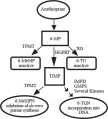 Figure 1. Metabolism pathway of azathioprine: competing pathways result in inactivation by TPMT or XO, or incorporation of cytotoxic nucleotides into DNA.
GMPS: Guanosine monophosphate synthetase; HGPRT:
Hypoxanthine-guanine-phosphoribosyl-transferase; IMPD: Inosine monophosphate dehydrogenase; MeMP: Methylmercaptopurine; MeMPN: Methylmercaptopurine nucleotide; TGN: Thioguanine nucleotides; TIMP: Thioinosine monophosphate; TPMT: Thiopurine S-methyltransferase; TU: Thiouric acid; XO: Xanthine oxidase (Adapted from Pharmacogenomics 2002; 3:89-98; and Cancer Res 2001; 61:5810-5816.)
Another inactivation pathway is oxidation, which is catalyzed by xanthine oxidase (XO) to form 6-thiouric acid. The inhibition of xanthine oxidase in patients receiving allopurinol is the basis for the azathioprine dosage reduction required in these patients (see PRECAUTIONS: Drug Interactions).
Proportions of metabolites are different in individual patients, and this presumably accounts for variable magnitude and duration of drug effects. Renal clearance is probably not important in predicting biological effectiveness or toxicities, although dose reduction is practiced in patients with poor renal function.
Homograft Survival: The use of azathioprine for inhibition of renal homograft rejection is well established, the mechanism(s) for this action are somewhat obscure. The drug suppresses hypersensitivities of the cell-mediated type and causes variable alterations in antibody production. Suppression of T-cell effects, including ablation of T-cell suppression, is dependent on the temporal relationship to antigenic stimulus or engraftment. This agent has little effect on established graft rejections or secondary responses.
Alterations in specific immune responses or immunologic functions in transplant recipients are difficult to relate specifically to immunosuppression by azathioprine. These patients have subnormal responses to vaccines, low numbers of T-cells, and abnormal phagocytosis by peripheral blood cells, but their mitogenic responses, serum immunoglobulins, and secondary antibody responses are usually normal.
Immunoinflammatory Response: Azathioprine suppresses disease manifestations as well as underlying pathology in animal models of autoimmune disease. For example, the severity of adjuvant arthritis is reduced by azathioprine.
The mechanisms whereby azathioprine affects autoimmune diseases are not known. Azathioprine is immunosuppressive, delayed hypersensitivity and cellular cytotoxicity tests being suppressed to a greater degree than are antibody responses. In the rat model of adjuvant arthritis, azathioprine has been shown to inhibit the lymph node hyperplasia, which precedes the onset of the signs of the disease. Both the immunosuppressive and therapeutic effects in animal models are dose-related. Azathioprine is considered a slow-acting drug and effects may persist after the drug has been discontinued.
HOW SUPPLIED: Azathioprine Tablets, USP, 50 mg are capsule-shaped, yellow, scored tablets, bottles of 100 (NDC 68462-502-01)
Rx only.
Store at 20° to 25°C (68° to 77° F) [See USP Controlled Room Temperature]
Store in a dry place and protect from light.
Dispense in a tight, light-resistant container as defined in the USP.
