Get your patient on Budesonide - Budesonide capsule, Coated Pellets (Budesonide)
Budesonide - Budesonide capsule, Coated Pellets prescribing information

RECENT MAJOR CHANGES
| Warnings and Precautions | |
| Immunosuppression and Increased Risk of Infection (5.3) | 06/2024 |
| Kaposi's Sarcoma (5.4) | 06/2024 |
INDICATIONS AND USAGE
Budesonide delayed-release capsules are corticosteroid indicated for:
Treatment of Mild to Moderate Active Crohn’s Disease
Budesonide delayed-release capsules are indicated for the treatment of mild to moderate active Crohn's disease involving the ileum and/or the ascending colon in patients 8 years of age and older.
Maintenance of Clinical Remission of Mild to Moderate Crohn’s Disease
Budesonide delayed-release capsules are indicated for the maintenance of clinical remission of mild to moderate Crohn's disease involving the ileum and/or the ascending colon for up to 3 months in adults.
DOSAGE AND ADMINISTRATION
Administration Instructions (2.1 )
- Take once daily in the morning.
- Swallow whole. Do not chew or crush.
- For patients unable to swallow an intact capsule, open the capsules and empty the granules onto one tablespoonful of applesauce. Mix and consume the entire contents within 30 minutes. Do not chew or crush. Follow with 8 ounces of water.
- Avoid consumption of grapefruit juice for the duration of therapy.
Recommended Dosage
Mild to moderate active Crohn's disease (2.2 )
- Adults: 9 mg once daily for up to 8 weeks; repeat 8 week treatment courses for recurring episodes of active disease.
- Pediatrics 8 to 17 years who weigh more than 25 kg: 9 mg once daily for up to 8 weeks, followed by 6 mg once daily in the morning for 2 weeks.
Maintenance of clinical remission of mild to moderate Crohn's disease (2.3 )
- Adults: 6 mg once daily for up to 3 months; taper to complete cessation after 3 months. Continued treatment for more than 3 months has not been shown to provide substantial clinical benefit.
- When switching from oral prednisolone, begin tapering prednisolone concomitantly with initiating budesonide delayed-release capsules.
Hepatic Impairment
Administration Instructions
- Take budesonide delayed-release capsules once daily in the morning.
- Swallow budesonide delayed-release capsules whole. Do not chew or crush.
- For patients unable to swallow an intact capsule, budesonide delayed-release capsules can be opened and administered as follows:
- Place one tablespoonful of applesauce into a clean container (e.g., empty bowl). The applesauce used should not be hot and should be soft enough to be swallowed without chewing.
- Open the capsule(s).
- Carefully empty all the granules inside the capsule(s) on the applesauce.
- Mix the granules with the applesauce.
- Consume the entire contents within 30 minutes of mixing. Do not chew or crush the granules. Do not save the applesauce and granules for future use.
- Follow the applesauce and granules immediately with a glass (8 ounces) of cool water to ensure complete swallowing of the granules.
- Avoid consumption of grapefruit juice for the duration of budesonide delayed-release capsules therapy [see Drug Interactions (7.1) ].
Treatment of Mild to Moderate Active Crohn’s Disease
The recommended dosage of budesonide delayed-release capsules is:
Adults
9 mg orally once daily for up to 8 weeks. Repeated 8 week courses of budesonide delayed-release capsules can be given for recurring episodes of active disease.
Pediatric patients 8 to 17 years who weigh more than 25 kg
9 mg orally once daily for up to 8 weeks, followed by 6 mg once daily for 2 weeks.
Maintenance of Clinical Remission of Mild to Moderate Crohn’s Disease
The recommended dosage in adults, following an 8 week course(s) of treatment for active disease and once the patient's symptoms are controlled (CDAI less than 150), is budesonide delayed-release capsules 6 mg orally once daily for maintenance of clinical remission up to 3 months. If symptom control is still maintained at 3 months an attempt to taper to complete cessation is recommended. Continued treatment with budesonide delayed-release capsules 6 mg for more than 3 months has not been shown to provide substantial clinical benefit.
Patients with mild to moderate active Crohn's disease involving the ileum and/or ascending colon have been switched from oral prednisolone to budesonide delayed-release capsules with no reported episodes of adrenal insufficiency. Since prednisolone should not be stopped abruptly, tapering should begin concomitantly with initiating budesonide delayed-release capsules treatment.
Dosage Adjustment in Adult Patients with Hepatic Impairment
Consider reducing the dosage of budesonide delayed-release capsules to 3 mg once daily for adult patients with moderate hepatic impairment (Child-Pugh Class B). Avoid use in patients with severe hepatic impairment (Child-Pugh Class C) [see Warnings and Precautions (5.1 ), Use in Specific Populations (8.6 )] .
DOSAGE FORMS AND STRENGTHS
Delayed-Release Capsules: 3 mg (3 )
Budesonide Delayed-Release Capsules , 3 mg are white to off-white, free flowing pellets, filled in size '1' hard gelatin capsules having opaque light-orange colored cap printed with "720" in black ink and opaque white body.
USE IN SPECIFIC POPULATIONS
Pregnancy : Based on animal data, may cause fetal harm. (8.1 )
Pregnancy
Risk Summary
Limited published studies report on the use of budesonide in pregnant women; however, the data are insufficient to inform a drug-associated risk for major birth defects and miscarriage. There are clinical considerations [see Clinical Considerations]. In animal reproduction studies with pregnant rats and rabbits, administration of subcutaneous budesonide during organogenesis at doses approximately 0.5 times or 0.05 times, respectively, the maximum recommended human dose, resulted in increased fetal loss, decreased pup weights, and skeletal abnormalities. Maternal toxicity was observed in both rats and rabbits at these dose levels [ see Data ]. Based on animal data, advise pregnant women of the potential risk to a fetus.
The estimated background risk of major birth defects and miscarriage of the indicated population is unknown. All pregnancies have a background risk of birth defect, loss, or other adverse outcomes. In the U.S. general population, the estimated background risk of major birth defects and miscarriage in clinically recognized pregnancies is 2% to 4% and 15% to 20%, respectively.
Clinical Considerations
Disease-Associated Maternal and/or Embryo/Fetal Risk
Some published epidemiological studies show an association of adverse pregnancy outcomes in women with Crohn's disease, including preterm birth and low birth weight infants, during periods of increased disease activity (including increased stool frequency and abdominal pain). Pregnant women with Crohn's disease should be counseled regarding the importance of controlling disease.
Fetal/Neonatal adverse reactions
Hypoadrenalism may occur in infants born of mothers receiving corticosteroids during pregnancy. Infants should be carefully observed for signs of hypoadrenalism, such as poor feeding, irritability, weakness, and vomiting, and managed accordingly [see Warnings and Precautions (5.1 )].
Data
Animal Data
Budesonide was teratogenic and embryolethal in rabbits and rats.
In an embryo-fetal development study in pregnant rats dosed subcutaneously with budesonide during the period of organogenesis from gestation days 6 to 15 there were effects on fetal development and survival at subcutaneous doses up to approximately 500 mcg/kg in rats (approximately 0.5 times the maximum recommended human dose on a body surface area basis). In an embryo-fetal development study in pregnant rabbits dosed during the period of organogenesis from gestation days 6 to 18, there was an increase in maternal abortion, and effects on fetal development and reduction in litter weights at subcutaneous doses up to approximately 25 mcg/kg in rabbits (approximately 0.05 times the maximum recommended human dose on a body surface area basis). Maternal toxicity, including reduction in body weight gain, was observed at subcutaneous doses of 5 mcg/kg in rabbits (approximately 0.01 times the maximum recommended human dose on a body surface area basis) and 500 mcg/kg in rats (approximately 0.5 times the maximum recommended human dose on a body surface area basis).
In a peri-and post-natal development study, rats dosed subcutaneously with budesonide during the period of Day 15 post coitum to Day 21 postpartum, budesonide had no effects on delivery but did have an effect on growth and development of offspring. In addition, offspring survival was reduced and surviving offspring had decreased mean body weights at birth and during lactation at exposures 0.02 times the MRHD (on a mg/m 2 basis at maternal subcutaneous doses of 20 mcg/kg/day and higher). These findings occurred in the presence of maternal toxicity.
Lactation
Risk Summary
Lactation studies have not been conducted with oral budesonide, including budesonide delayed-release capsules, and no information is available on the effects of the drug on the breastfed infant or the effects of the drug on milk production. One published study reports that budesonide is present in human milk following maternal inhalation of budesonide [ see Data ]. The developmental and health benefits of breastfeeding should be considered along with the mother's clinical need for budesonide delayed-release capsules and any potential adverse effects on the breastfed infant from budesonide delayed-release capsules, or from the underlying maternal condition.
Data
One published study reports that budesonide is present in human milk following maternal inhalation of budesonide which resulted in infant doses approximately 0.3% to 1% of the maternal weight-adjusted dosage and a milk/plasma ratio ranging between 0.4 and 0.5. Budesonide plasma concentrations were not detected and no adverse events were noted in the breastfed infants following maternal use of inhaled budesonide. The recommended daily dose of budesonide delayed-release capsules is higher (up to 9 mg daily) compared with inhaled budesonide (up to 800 mcg daily) given to mothers in the above described study. The maximum budesonide plasma concentration following a 9 mg daily dose (in both single- and repeated-dose pharmacokinetic studies) of oral budesonide is approximately 2.15 to 4.31 ng/mL which is up to 10 times higher than the 0.43 to 0.86 ng/mL for a 800 mcg daily dose of inhaled budesonide at steady state in the above inhalation study. Assuming the coefficient of extrapolation between the inhaled and oral doses is constant across all dose levels, at therapeutic doses of budesonide delayed-release capsules, budesonide exposure to the nursing child may be up to 10 times higher than that by budesonide inhalation.
Pediatric Use
The safety and effectiveness of budesonide delayed-release capsules have been established in pediatric patients 8 to 17 years of age who weigh more than 25 kg for the treatment of mild to moderate active Crohn's disease involving the ileum and/or the ascending colon. Use of budesonide delayed-release capsules in this age group is supported by evidence from adequate and well controlled studies of budesonide delayed-release capsules in adults, with additional data from 2 clinical studies in 149 pediatric patients treated up to 8 weeks and one pharmacokinetic study in 8 pediatric patients [see Adverse Reactions (6.1 ), Clinical Pharmacology (12.3 ), and Clinical Studies (14.1 )] .
The observed safety profile of budesonide delayed-release capsules in pediatric patients is consistent with its known safety profile in adults and no new safety concerns were identified [see Adverse Reactions (6.1 )] .
The safety and effectiveness of budesonide delayed-release capsules have not been established in pediatric patients less than 8 years of age for the treatment of mild to moderate active Crohn's disease involving the ileum and/or the ascending colon.
The safety and effectiveness of budesonide delayed-release capsules have not been established in pediatric patients for the maintenance of clinical remission of mild to moderate Crohn's disease. An open-label study to evaluate the safety and tolerability of budesonide delayed-release capsules as maintenance treatment in pediatric patients aged 5 to 17 years was conducted, and did not establish the safety and efficacy of maintenance of clinical remission.
Systemic corticosteroids, including budesonide delayed-release capsules, may cause a reduction of growth velocity in pediatric patients. Pediatric patients with Crohn's disease have a 17% higher mean systemic exposure and cortisol suppression than adults with Crohn's disease [see Warnings and Precautions (5.1 ) and Clinical Pharmacology (12.2 )] .
Geriatric Use
Clinical studies of budesonide delayed-release capsules did not include sufficient numbers of patients aged 65 and over to determine whether they respond differently from younger patients. Of the 651 patients treated with budesonide delayed-release capsules in clinical studies, 17 (3%) were greater than or equal to 65 years of age and none were greater than 74 years of age. Other reported clinical experience has not identified differences in responses between the elderly and younger patients. In general, dose selection for an elderly patient should be cautious, usually starting at the low end of the dosing range, reflecting the greater frequency of decreased hepatic, renal, or cardiac function, and of concomitant disease or other drug therapy.
Hepatic Impairment
Patients with moderate to severe hepatic impairment (Child-Pugh Class B and C, respectively) could be at an increased risk of hypercorticism and adrenal axis suppression due to an increased systemic exposure to budesonide [see Warnings and Precautions (5.1) and Clinical Pharmacology (12.3)] . Avoid use in patients with severe hepatic impairment (Child-Pugh Class C). Monitor for increased signs and/or symptoms of hypercorticism and consider dosage reduction in patients with moderate hepatic impairment (Child-Pugh Class B) [see Dosage and Administration (2.4)] . No dosage adjustment is needed in patients with mild hepatic impairment (Child-Pugh Class A).
CONTRAINDICATIONS
Hypersensitivity to budesonide or any of the ingredients in budesonide delayed-release capsules. (4 )
Budesonide delayed-release capsules are contraindicated in patients with hypersensitivity to budesonide or any of the ingredients of budesonide delayed-release capsules. Serious hypersensitivity reactions, including anaphylaxis have occurred [see Adverse Reactions (6.2 )].
WARNINGS AND PRECAUTIONS
- Hypercorticism and Adrenal Axis Suppression : May occur with treatment; monitor for signs and symptoms; pediatrics and patients with hepatic impairment may be at increased risk. (2.4 , 5.1 , 8.4 , 8.6 )
- Symptoms of Steroid Withdrawal in Patients Transferred from Other Systemic Corticosteroids : Taper slowly from corticosteroids with high systemic effects; monitor for withdrawal symptoms and unmasking of allergies (rhinitis, eczema). (5.2 )
- Immunosuppression and Increased Risk of Infection : Increased risk of viral, bacterial, fungal, protozoal and helminthic infections, including potentially fatal varicella and measles infection. Monitor patients for new or worsening infection and consider drug discontinuation. Avoid use in patients with fungal infections, Strongyloides infestation, cerebral malaria and ocular herpes simplex. Screen for hepatitis B infection. (5.3 )
- Karposi's Sarcoma : Reported to occur in patients receiving corticosteroid therapy, most often for chronic conditions. (5.4 )
- Other Corticosteroid Effects : Monitor patients with concomitant conditions where corticosteroids may have unwanted effects (e.g., hypertension, diabetes mellitus). (5.5 )
Hypercorticism and Adrenal Axis Suppression
Systemic effects such as hypercorticism and adrenal axis suppression may occur with use of corticosteroids, including budesonide delayed-release capsules [see Adverse Reactions (6.1 ), Clinical Pharmacology (12.2 )] . Pediatric patients with Crohn's disease have a slightly higher systemic exposure of budesonide and increased cortisol suppression than adults with Crohn's disease [see Use in Specific Populations (8.4 ), Clinical Pharmacology (12.2 )] . Monitor patients for signs and symptoms of hypercorticism and adrenal axis suppression during treatment with budesonide delayed-release capsules.
Patients with moderate to severe hepatic impairment (Child-Pugh Class B and C respectively) could be at an increased risk of hypercorticism and adrenal axis suppression due to an increased systemic exposure of oral budesonide. Avoid use in patients with severe hepatic impairment (Child-Pugh Class C). Monitor for increased signs and/or symptoms of hypercorticism and consider reducing the dosage in patients with moderate hepatic impairment (Child-Pugh Class B) [see Dosage and Administration (2.4 ), Use in Specific Populations (8.6 ), Clinical Pharmacology (12.3 )] .
Corticosteroids, including budesonide delayed-release capsules, can reduce the response of the hypothalamus-pituitary-adrenal (HPA) axis to stress. In situations where patients are subject to surgery or other stress situations, supplementation with a systemic corticosteroid is recommended.
Symptoms of Steroid Withdrawal in Patients Transferred from Other Systemic Corticosteroids
Monitor patients who are transferred from corticosteroid treatment with high systemic effects to corticosteroids with lower systemic availability, such as budesonide delayed-release capsules, since symptoms attributed to withdrawal of steroid therapy, including those of acute adrenal axis suppression or benign intracranial hypertension, may develop. Adrenocortical function monitoring may be required in these patients and the dose of corticosteroid treatment with high systemic effects should be reduced cautiously.
Replacement of systemic corticosteroids with budesonide delayed-release capsules may unmask allergies (e.g., rhinitis and eczema), which were previously controlled by the systemic drug.
Immunosuppression and Increased Risk of Infection
Corticosteroids, including budesonide delayed-release capsules, suppress the immune system and increase the risk of infection with any pathogen, including viral, bacterial, fungal, protozoan, or helminthic pathogens. Corticosteroids can:
- Reduce resistance to new infections
- Exacerbate existing infections
- Increase the risk of disseminated infections
- Increase the risk of reactivation or exacerbation of latent infections
- Mask some signs of infection
Corticosteroid-associated infections can be mild but can be severe and at times fatal. The rate of infectious complications increases with increasing corticosteroid dosages.
Monitor patients for the development of infection and consider discontinuation of budesonide delayed-release capsules if the patient develops an infection while on treatment.
Tuberculosis
If budesonide delayed-release capsules is used in patients with latent tuberculosis or tuberculin reactivity, reactivation of tuberculosis may occur. Closely monitor such patients for reactivation. During prolonged budesonide delayed-release capsules therapy, patients with latent tuberculosis or tuberculin reactivity should receive chemoprophylaxis.
Varicella Zoster and Measles Viral Infections
Varicella and measles can have a serious or even fatal course in non-immune pediatric and adult patients taking corticosteroids, including budesonide delayed-release capsules. In corticosteroid-treated patients who have not had these diseases or are non-immune, particular care should be taken to avoid exposure to varicella and measles:
- If a budesonide delayed-release capsules-treated patient is exposed to varicella, prophylaxis with varicella zoster immune globulin may be indicated. If varicella develops, treatment with antiviral agents may be considered.
- If a budesonide delayed-release capsules -treated patient is exposed to measles, prophylaxis with immunoglobulin may be indicated.
Hepatitis B Virus Reactivation
Hepatitis B virus reactivation can occur in patients who are hepatitis B carriers treated with immunosuppressive dosages of corticosteroids, including budesonide delayed-release capsules. Reactivation can also occur infrequently in corticosteroid-treated patients who appear to have resolved hepatitis B infection.
Screen patients for hepatitis B infection before initiating immunosuppressive (e.g., prolonged) treatment with budesonide delayed-release capsules. For patients who show evidence of hepatitis B infection, recommend consultation with physicians with expertise in managing hepatitis B regarding monitoring and consideration for hepatitis B antiviral therapy.
Fungal Infections
Corticosteroids, including budesonide delayed-release capsules, may exacerbate systemic fungal infections; therefore, avoid budesonide delayed-release capsules use in the presence of such infections. For patients on chronic budesonide delayed-release capsules therapy who develop systemic fungal infections, budesonide delayed-release capsules withdrawal or dosage reduction is recommended.
Amebiasis
Corticosteroids, including budesonide delayed-release capsules, may activate latent amebiasis. Therefore, it is recommended that latent amebiasis or active amebiasis be ruled out before initiating budesonide delayed-release capsules in patients who have spent time in the tropics or patients with unexplained diarrhea.
Strongyloides Infestation
Avoid budesonide delayed-release capsules in patients with known or suspected Strongyloides (threadworm) infection. Corticosteroid-induced immunosuppression may lead to Strongyloides superinfection and dissemination with widespread larval migration, often accompanied by severe enterocolitis and potentially fatal gram-negative septicemia.
Cerebral Malaria
Avoid corticosteroids, including budesonide delayed-release capsules, in patients with cerebral malaria.
Ocular Herpes Simplex
Avoid corticosteroids, including budesonide delayed-release capsules, in patients with active ocular herpes simplex.
Kaposi’s Sarcoma
Kaposi's sarcoma has been reported to occur in patients receiving corticosteroid therapy, most often for chronic conditions. Discontinuation of corticosteroids may result in clinical improvement of Kaposi's sarcoma.
Other Corticosteroid Effects
Monitor patients with hypertension, diabetes mellitus, osteoporosis, peptic ulcer, glaucoma or cataracts, or with a family history of diabetes or glaucoma, or with any other condition where corticosteroids may have unwanted effects.
ADVERSE REACTIONS
Most common adverse reactions (≥ 5%) in adults are: headache, respiratory infection, nausea, back pain, dyspepsia, dizziness, abdominal pain, flatulence, vomiting, fatigue and pain. (6.1 )
To report SUSPECTED ADVERSE REACTIONS, contact Zydus Pharmaceuticals (USA) Inc. at 1-877-993-8779 or FDA at 1-800-FDA-1088 or www.fda.gov/medwatch.
The following clinically significant adverse reactions are described elsewhere in labeling:
- Hypercorticism and adrenal axis suppression [see Warnings and Precautions (5.1 )]
- Symptoms of steroid withdrawal in those patients transferred from other systemic corticosteroids [see Warnings and Precautions (5.2 )]
- Immunosuppression and increased risk of infection [see Warnings and Precautions (5.3 )]
- Kaposi's sarcoma [see Warnings and Precautions (5.4 )]
- Other corticosteroid effects [see Warnings and Precautions (5.5 )]
Clinical Trials Experience
Because clinical trials are conducted under widely varying conditions, adverse reaction rates observed in the clinical trials of a drug cannot be directly compared to rates in the clinical trials of another drug and may not reflect the rates observed in practice.
Adults
The data described below reflect exposure to budesonide delayed-release capsules in 520 patients with Crohn's disease, including 520 exposed to 9 mg per day (total daily dose) for 8 weeks and 145 exposed to 6 mg per day for one year in placebo controlled clinical trials. Of the 520 patients, 38% were males and the age range was 17 to 74 years.
Treatment of Mild to Moderate Active Crohn's Disease
The safety of budesonide delayed-release capsules was evaluated in 651 adult patients in five clinical trials of 8 weeks duration in patients with active mild to moderate Crohn's disease. The most common adverse reactions, occurring in greater than or equal to 5% of the patients, are listed in Table 1.
1 Occurring in greater than or equal to 5% of the patients in any treated group. | ||||
2 Prednisolone tapering scheme: either 40 mg in week 1 to 2, thereafter tapering with 5 mg per week; or 40 mg in week 1 to 2, 30 mg in week 3 to 4, thereafter tapering with 5 mg per week. | ||||
3 This drug is not approved for the treatment of Crohn's disease in the United States. | ||||
| Adverse Reaction | Budesonide Delayed-Release Capsules 9 mg n=520 Number (%) | Placebo n=107 Number (%) | Prednisolone 2 40 mg n=145 Number (%) | Comparator 3 n=88 Number (%) |
| Headache | 107(21) | 19(18) | 31(21) | 11(13) |
| Respiratory Infection | 55(11) | 7(7) | 20(14) | 5(6) |
| Nausea | 57(11) | 10(9) | 18(12) | 7(8) |
| Back Pain | 36(7) | 10(9) | 17(12) | 5(6) |
| Dyspepsia | 31(6) | 4(4) | 17(12) | 3(3) |
| Dizziness | 38(7) | 5(5) | 18(12) | 5(6) |
| Abdominal Pain | 32(6) | 18(17) | 6(4) | 10(11) |
| Flatulence | 30(6) | 6(6) | 12(8) | 5(6) |
| Vomiting | 29(6) | 6(6) | 6(4) | 6(7) |
| Fatigue | 25(5) | 8(7) | 11(8) | 0(0) |
| Pain | 24(5) | 8(7) | 17(12) | 2(2) |
The incidence of signs and symptoms of hypercorticism reported by active questioning of patients in 4 of the 5 short-term clinical trials are displayed in Table 2.
1 Prednisolone tapering scheme: either 40 mg in week 1 to 2, thereafter tapering with 5 mg/week; or 40 mg in week 1 to 2, 30 mg in week 3 to 4, thereafter tapering with 5 mg/week. | |||
2 Statistically significantly different from budesonide delayed-release capsules 9 mg. | |||
3 including hair growth increased, local and hair growth increased, general. | |||
| Budesonide Delayed-Release Capsules 9 mg n=427 | Placebo n=107 | Prednisolone 1 40 mg n=145 | |
| Signs/Symptom | Number (%) | Number (%) | Number (%) |
| Total | 145 (34%) | 29 (27%) | 69 (48%) |
| Acne | 63(15) | 14(13) | 33(23) 2 |
| Bruising Easily | 63(15) | 12(11) | 13(9) |
| Moon Face | 46(11) | 4(4) | 53(37) 2 |
| Swollen Ankles | 32(7) | 6(6) | 13(9) |
| Hirsutism 3 | 22(5) | 2(2) | 5(3) |
| Buffalo Hump | 6(1) | 2(2) | 5(3) |
| Skin Striae | 4(1) | 2(2) | 0(0) |
Maintenance of Clinical Remission of Mild to Moderate Crohn's Disease
The safety of budesonide delayed-release capsules was evaluated in 233 adult patients in four long-term clinical trials (52 weeks) of maintenance of clinical remission in patients with mild to moderate Crohn's disease. A total of 145 patients were treated with budesonide delayed-release capsules 6 mg once daily.
The adverse reaction profile of budesonide delayed-release capsules 6 mg once daily in maintenance of Crohn's disease was similar to that of short-term treatment with budesonide delayed-release capsules 9 mg once daily in active Crohn's disease. In the long-term clinical trials, the following adverse reactions occurred in greater than or equal to 5% and are not listed in Table 1: diarrhea (10%); sinusitis (8%); infection viral (6%); and arthralgia (5%).
Signs/symptoms of hypercorticism reported by active questioning of patients in the long-term maintenance clinical trials are displayed in Table 3.
| Budesonide Delayed-Release Capsules 3 mg n=88 | Budesonide Delayed-Release Capsules 6 mg n=145 | Placebo n=143 | |
| Signs/Symptom | Number (%) | Number (%) | Number (%) |
| Bruising easily | 4(5) | 15(10) | 5(4) |
| Acne | 4(5) | 14(10) | 3(2) |
| Moon face | 3(3) | 6(4) | 0 |
| Hirsutism | 2(2) | 5(3) | 1(1) |
| Swollen ankles | 2(2) | 3(2) | 3(2) |
| Buffalo hump | 1(1) | 1(1) | 0 |
| Skin striae | 2(2) | 0 | 0 |
The incidence of signs/symptoms of hypercorticism as described above in long-term maintenance clinical trials was similar to that seen in the short-term treatment clinical trials.
Less Common Adverse Reactions in Treatment and Maintenance Clinical Trials
Less common adverse reactions (less than 5%), occurring in adult patients treated with budesonide delayed-release capsules 9 mg (total daily dose) in short-term treatment clinical studies and/or budesonide delayed-release capsules 6 mg (total daily dose) in long-term maintenance clinical trials, with an incidence are listed below by system organ class:
Cardiac disorders: palpitation, tachycardia
Eye disorders: eye abnormality, vision abnormal
General disorders and administration site conditions: asthenia, chest pain, dependent edema, face edema, flu-like disorder, malaise, fever
Gastrointestinal disorders: anus disorder, enteritis, epigastric pain, gastrointestinal fistula, glossitis, hemorrhoids, intestinal obstruction, tongue edema, tooth disorder
Infections and infestations: Ear infection - not otherwise specified, bronchitis, abscess, rhinitis, urinary tract infection, thrush
Investigations: weight increased
Metabolism and nutrition disorders: appetite increased
Musculoskeletal and connective tissue disorders: arthritis, cramps, myalgia
Nervous system disorders: hyperkinesia, paresthesia, tremor, vertigo, somnolence, amnesia
Psychiatric disorders: agitation, confusion, insomnia, nervousness, sleep disorder
Renal and urinary disorders: dysuria, micturition frequency, nocturia
Reproductive system and breast disorders: intermenstrual bleeding, menstrual disorder
Respiratory, thoracic and mediastinal disorders: dyspnea, pharynx disorder
Skin and subcutaneous tissue disorders: alopecia, dermatitis, eczema, skin disorder, sweating increased, purpura
Vascular disorders: flushing, hypertension
Bone Mineral Density
A randomized, open, parallel-group multicenter safety clinical trial specifically compared the effect of budesonide delayed-release capsules (less than 9 mg per day) and prednisolone (less than 40 mg per day) on bone mineral density over 2 years when used at doses adjusted to disease severity. Bone mineral density decreased significantly less with budesonide delayed-release capsules than with prednisolone in steroid-naïve patients, whereas no difference could be detected between treatment groups for steroid-dependent patients and previous steroid users. The incidence of symptoms associated with hypercorticism was significantly higher with prednisolone treatment.
Clinical Laboratory Test Findings
The following potentially clinically significant laboratory changes in clinical trials, irrespective of relationship to budesonide delayed-release capsules, were reported in greater than or equal to 1% of patients: hypokalemia, leukocytosis, anemia, hematuria, pyuria, erythrocyte sedimentation rate increased, alkaline phosphatase increased, atypical neutrophils, c-reactive protein increased and adrenal insufficiency.
Pediatrics-Treatment of Mild to Moderate Active Crohn's Disease
Adverse reactions reported in pediatric patients 8 to 17 years of age, who weigh more than 25 kg, were similar to those reactions described above in adult patients.
Postmarketing Experience
The following adverse reactions have been reported during post-approval use of budesonide delayed-release capsules. Because these reactions are reported voluntarily from a population of uncertain size, it is not always possible to reliably estimate their frequency or establish a causal relationship to drug exposure.
Immune System Disorders: Anaphylactic reactions
Nervous System Disorders: Benign intracranial hypertension
Psychiatric Disorders: Mood swings
DRUG INTERACTIONS
CYP3A4 Inhibitors (e.g., ketoconazole, grapefruit juice) : Can increase systemic budesonide concentrations: avoid use. (2.1 , 7.1 )
CYP3A4 Inhibitors
Budesonide is a substrate for CYP3A4. Avoid use with CYP3A4 inhibitors. Concomitant oral administration of a strong CYP3A4 inhibitor (ketoconazole) caused an eight-fold increase of the systemic exposure to oral budesonide. Inhibitors of CYP3A4 (e.g., ketoconazole, itraconazole, ritonavir, indinavir, saquinavir, erythromycin, and cyclosporine) can increase systemic budesonide concentrations [see Clinical Pharmacology (12.3 )] .
Grapefruit Juice
Avoid ingestion of grapefruit juice with budesonide. Intake of grapefruit juice which inhibits CYP3A4 activity with budesonide can increase the systemic exposure for budesonide [see Clinical Pharmacology (12.3 )] .
DESCRIPTION
Budesonide USP, the active ingredient of budesonide delayed-release capsules, is a synthetic corticosteroid. Budesonide is designated chemically as (RS)-11β, 16α, 17, 21- tetrahydroxypregna-1,4-diene-3,20-dione cyclic 16,17-acetal with butyraldehyde. Budesonide is provided as a mixture of two epimers (22R and 22S). The molecular formula of budesonide is C 25 H 34 O 6 and its molecular weight is 430.5. Its structural formula is:
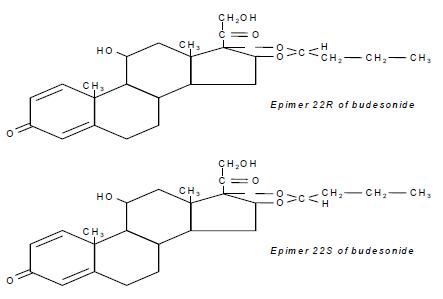
Budesonide, USP is a white to off-white, odorless, crystalline powder that is practically insoluble in water and heptane, sparingly soluble in ethanol, and freely soluble in chloroform. Its partition coefficient between octanol and water at pH 5 is 1.6 x 10 3 ionic strength 0.01.
Each capsule for oral administration contains 3 mg of micronized budesonide with the following inactive ingredients: acetyltributyl citrate, ethylcellulose aqueous dispersion, gelatin, iron oxide red, iron oxide yellow, methacrylic acid copolymer dispersion, polysorbate 80, simethicone emulsion, sodium lauryl sulfate, sugar spheres, talc, titanium dioxide and triethyl citrate. The capsule shell is printed with black pharmaceutical ink which contains following ingredients: iron oxide black, potassium hydroxide, propylene glycol and shellac.
CLINICAL PHARMACOLOGY
Mechanism of Action
Budesonide is an anti-inflammatory corticosteroid and has a high glucocorticoid effect and a weak mineralocorticoid effect, and the affinity of budesonide to glucocorticoid receptors, which reflects the intrinsic potency of the drug, is about 200-fold that of cortisol and 15-fold that of prednisolone.
Pharmacodynamics
Treatment with glucocorticoids, including budesonide delayed-release capsules is associated with a suppression of endogenous cortisol concentrations and an impairment of the hypothalamus-pituitary-adrenal (HPA) axis function. There was a positive correlation between the percent (%) reduction of AUC 0-24 of plasma cortisol and systemic exposure to budesonide both in pediatric and adult patients.
Adults
Plasma cortisol suppression was compared following five days' administration of budesonide delayed-release capsules and prednisolone in a crossover study in healthy volunteers. The mean decrease in the area under the plasma cortisol concentration-time curve over 24 hour (AUC 0-24 ) was greater (78%) with prednisolone 20 mg per day compared to 45% with budesonide delayed-release capsules 9 mg per day.
Pediatrics
The effect of budesonide on endogenous cortisol concentrations was compared between pediatrics (n=8, aged 9 to 14 years) and adults (n=6) with active Crohn's disease following administration of budesonide delayed-release capsules 9 mg once daily for 7 days. Compared to baseline values before treatment, the mean decrease in the AUC 0-24 of cortisol was 64% (±18%) in pediatrics and 50% (±27%) in adults after budesonide delayed-release capsules treatment [see Warnings and Precautions (5.1 ), Adverse Reactions (6.1 ) and Use in Specific Populations (8.4 )] .
The responses to adrenocorticotropin challenge (i.e., ACTH stimulation test) was studied in pediatric patients aged 8 to 17 years, with mild to moderate active Crohn's disease in randomized, double-blind, active control study [see Clinical Studies (14.1 )] . After 8 weeks of treatment with 9 mg once daily budesonide delayed-release capsules or with prednisolone, administered at tapering doses starting from 1 mg/kg, the proportion of patients with normal response to the ACTH challenge was 6% in the budesonide group compared to none in the prednisolone group; the proportion of patients with morning p-cortisol of greater than 5 mcg/dL was 50% in the budesonide group compared to 22% in the prednisolone group. The mean morning p-cortisol was 6.3 mcg/dL in the budesonide group and 2.6 mcg/dL in the prednisolone group (Table 4).
•The normal response to ACTH challenge included 3 criteria, as defined in the cosyntropin label: | ||
1) morning cortisol level above 5 mcg/dL; 2) increase in cortisol level by at least 7 mcg/dL above the morning (pre-challenge) level following ACTH challenge; and cortisol level of above 18 mcg/dL following ACTH challenge. Cortisol concentration was measured at 30 min after intravenous or intramuscular injection of 0.25 mg cosyntropin at baseline and at week 8 after treatment. | ||
| Budesonide | Prednisolone | |
| Peak plasma cortisol above 18 mcg/dL | ||
| At baseline | 91% (20/22) | 91% (21/23) |
| At week 8 | 25% (4/16) | 0% (0/18) |
| Normal response• to ACTH challenge | ||
| At baseline | 73% (16/22) | 78% (18/23) |
| At week 8 | 6% (1/16) | 0% (0/18) |
Pharmacokinetics
Absorption
Mean oral bioavailability of budesonide ranged from 9% to 21% both in patients and in healthy subjects, demonstrating a high first-pass elimination of the drug.
Budesonide pharmacokinetics were dose-proportional following repeated administration in the dose range of 3 to 15 mg. No accumulation of budesonide was observed following repeated dosing.
Following oral administration of a single dose of 9 mg budesonide delayed-release capsules in healthy subjects under fasting condition, the mean peak plasma concentration (C max ) and the area under the plasma concentration time curve (AUC) for budesonide were 1.50 ± 0.79 ng/mL and 14.13 ± 7.33 ng•hr/mL, respectively. The time to peak concentration (T max ) varied between 2 and 8 hours with a median value of 3.5 hours. In a different study, following oral administration of 9 mg budesonide delayed-release capsules for five days in healthy subjects, the mean C max and the steady state AUC for budesonide were 2.28 ± 0.77 ng/mL and 15.93 ± 6.29 ng•hr/mL, respectively.
Following administration of 9 mg budesonide delayed-release capsules once daily in patients with active Crohn's disease, the mean C max and AUC were 1.7 ± 0.9 ng/mL and 15.1 ± 8.5 ng•hr/mL, respectively. Following administration of budesonide delayed-release capsules, the T max ranged in individual patients from 0.5 to 10 hours.
Concomitant administration of a high-fat meal delayed the T max of budesonide by 2.3 hours compared to that under fasted conditions but did not significantly affect the AUC in healthy subjects. The mean C max and AUC of budesonide were similar when single dose of budesonide delayed-release capsules (9 mg) was administered after opening the capsules and sprinkling the granules on applesauce versus as intact capsules in the fasted state (N=24) in healthy subjects. The T max ranged from 3 to 10 hours with a median of 4 hours after administration of sprinkled granules on appleasauce.
Distribution
The mean volume of distribution (V ss ) of budesonide varied between 2.2 and 3.9 L/kg in healthy subjects and in patients. Plasma protein binding was estimated to be 85% to 90% in the concentration range 0.43 to 99.02 ng/mL, independent of gender. The erythrocyte/plasma partition ratio at clinically relevant concentrations was about 0.8.
Elimination
Budesonide had a plasma clearance, 0.9 to 1.8 L/min in healthy adults. Mean plasma clearance after intravenous administration of budesonide in patients with Crohn's disease was 1.0 L/min. These plasma clearance values approached the estimated liver blood flow, and, accordingly, suggest that budesonide is a high hepatic clearance drug. The plasma elimination half-life after administration of intravenous doses ranged between 2 and 3.6 hours, and did not differ between healthy adults and patients with Crohn's disease. The mean ± SD plasma elimination half-life after a single dose of budesonide delayed-release capsules (9 mg) in the fasted state (N=24) in healthy subjects was 6.3 ± 1.6 hours and ranged between 2 and 8 hours.
Metabolism
Following absorption, budesonide is subject to high first pass metabolism (80% to 90%). In vitro experiments in human liver microsomes demonstrated that budesonide is rapidly and extensively biotransformed, mainly by CYP3A4, to its 2 major metabolites, 6β-hydroxy budesonide and 16α-hydroxy prednisolone. The corticosteroid activity of these metabolites was negligible (less than 1/100) in relation to that of the parent compound. In vivo investigations with intravenous doses in healthy subjects were in agreement with the in vitro findings.
Excretion
Budesonide was excreted in urine and feces in the form of metabolites. After oral as well as intravenous administration of micronized [ 3 H]-budesonide, approximately 60% of the recovered radioactivity was found in urine. The major metabolites, including 6β-hydroxy budesonide and 16α-hydroxy prednisolone, are mainly renally excreted, intact or in conjugated forms. No unchanged budesonide was detected in urine.
Specific Populations
Age: Pediatric Population (8 years and older)
The pharmacokinetics of budesonide were investigated in pediatric patients aged 9 to 14 years (n=8) after oral administration of budesonide delayed-release capsules and intravenous administration of budesonide. Following administration of 9 mg budesonide delayed-release capsules once daily for 7 days, the median time to peak plasma concentration of budesonide was 5 hours and the mean peak plasma concentration was 2.58 ± 1.51 ng/mL. The mean AUC was 17.78 ± 5.25 ng•hr/mL and 17% higher than that in adult patients with Crohn's disease in the same study. The mean absolute oral availability was 9.2% (3 to 17%; n=4) in pediatric patients.
After single dose administration of intravenous budesonide (n=4), the mean volume of distribution (V ss ) was 2.2 ± 0.4 L/kg and mean clearance was 0.81 ± 0.2 L/min. The mean elimination half-life was 1.9 hours in pediatric patients. The body-weight normalized clearance in pediatric patients was 20.5 mL/min/kg in comparison to 15.9 mL/min/kg in adult patients after intravenous administration [see Warnings and Precautions (5.1 ), Use in Specific Population (8.4 )] .
Hepatic Impairment
In patients with mild (Child-Pugh Class A, n=4) or moderate (Child-Pugh Class B, n=4) hepatic impairment, budesonide 4 mg was administered orally as a single dose. The patients with moderate hepatic impairment had a 3.5-fold higher AUC compared to the healthy subjects with normal hepatic function while the patients with mild hepatic impairment had an approximately 1.4-fold higher AUC. The C max values demonstrated similar increases [see Dosage and Administration (2.4 ), Warnings and Precautions (5.1 )] . The increased systemic exposure in patients with mild hepatic impairment was not considered to be clinically relevant. Patients with severe liver impairment (Child-Pugh Class C) were not studied.
Drug Interaction Studies
Budesonide is metabolized via CYP3A4. Potent inhibitors of CYP3A4 can increase the plasma concentrations of budesonide several-fold. Conversely, induction of CYP3A4 potentially could result in the lowering of budesonide plasma concentrations.
Effects of Other Drugs on Budesonide
Ketoconazole
In an open, non-randomized, cross-over study, 6 healthy subjects were given budesonide 10 mg as a single dose, either alone or concomitantly with the last ketoconazole dose of 3 days treatment with ketoconazole 100 mg twice daily. Co-administration of ketoconazole resulted in an eight-fold increase in AUC of budesonide, compared to budesonide alone [see Drug Interactions (7.1 )] .
Grapefruit Juice
In an open, randomized, cross-over study, 8 healthy subjects were given budesonide delayed-release capsules 3 mg, either alone, or concomitantly with 600 mL concentrated grapefruit juice (which inhibits CYP3A4 activity predominantly in the intestinal mucosa), on the last of 4 daily administrations. Concomitant administration of grapefruit juice resulted in a 2-fold increase of the bioavailability of budesonide compared to budesonide alone [see Drug Interactions (7.1 )] .
Oral Contraceptives (CYP3A4 Substrates)
In a parallel study, the pharmacokinetics of budesonide were not significantly different between healthy female subjects who received oral contraceptives containing desogestrel 0.15 mg and ethinyl estradiol 30 μg and healthy female subjects who did not receive oral contraceptives. Budesonide 4.5 mg once daily (one-half the recommended dose) for one week did not affect the plasma concentrations of ethinyl estradiol, a CYP3A4 substrate. The effect of budesonide 9 mg once daily on the plasma concentrations of ethinyl estradiol was not studied.
Omeprazole
In a study in 11 healthy subjects, performed in a double-blind, randomized, placebo controlled manner, the effect of 5 to 6 days treatment with omeprazole 20 mg once daily on the pharmacokinetics of budesonide administered as budesonide delayed-release capsules 9 mg as a single dose was investigated. Omeprazole 20 mg once daily did not affect the absorption or pharmacokinetics of budesonide.
Cimetidine
In an open, non-randomized, cross-over study, the potential effect of cimetidine on the pharmacokinetics of budesonide was studied. Six healthy subjects received cimetidine 1 gram daily (200 mg with meals and 400 mg at night) for 2 separate 3-day periods. Budesonide 4 mg was administered either alone or on the last day of one of the cimetidine treatment periods. Co-administration of cimetidine resulted in a 52% and 31% increase in the budesonide peak plasma concentration and the AUC of budesonide, respectively.
NONCLINICAL TOXICOLOGY
Carcinogenesis, Mutagenesis, Impairment of Fertility
Carcinogenicity studies with budesonide were conducted in rats and mice. In a two-year study in Sprague-Dawley rats, budesonide caused a statistically significant increase in the incidence of gliomas in male rats at an oral dose of 50 mcg/kg (approximately 0.05 times the maximum recommended human dose on a body surface area basis). In addition, there were increased incidences of primary hepatocellular tumors in male rats at 25 mcg/kg (approximately 0.023 times the maximum recommended human dose on a body surface area basis) and above. No tumorigenicity was seen in female rats at oral doses up to 50 mcg/kg (approximately 0.05 times the maximum recommended human dose on a body surface area basis). In an additional two-year study in male Sprague-Dawley rats, budesonide caused no gliomas at an oral dose of 50 mcg/kg (approximately 0.05 times the maximum recommended human dose on a body surface area basis). However, it caused a statistically significant increase in the incidence of hepatocellular tumors at an oral dose of 50 mcg/kg (approximately 0.05 times the maximum recommended human dose on a body surface area basis). The concurrent reference corticosteroids (prednisolone and triamcinolone acetonide) showed similar findings. In a 91-week study in mice, budesonide caused no treatment-related carcinogenicity at oral doses up to 200 mcg/kg (approximately 0.1 times the maximum recommended human dose on a body surface area basis).
Budesonide was not genotoxic in the Ames test, the mouse lymphoma cell forward gene mutation (TK +/- ) test, the human lymphocyte chromosome aberration test, the Drosophila melanogaster sex-linked recessive lethality test, the rat hepatocyte UDS test and the mouse micronucleus test.
In rats, budesonide had no effect on fertility at subcutaneous doses up to 80 mcg/kg (approximately 0.07 times the maximum recommended human dose on a body surface area basis). However, it caused a decrease in prenatal viability and viability in pups at birth and during lactation, along with a decrease in maternal body-weight gain, at subcutaneous doses of 20 mcg/kg (approximately 0.02 times the maximum recommended human dose on a body surface area basis) and above. No such effects were noted at 5 mcg/kg (approximately 0.005 times the maximum recommended human dose on a body surface area basis).
CLINICAL STUDIES
Treatment of Mild to Moderate Active Crohn’s Disease
Adults
The efficacy of budesonide delayed-release capsules were evaluated in 994 patients with mild to moderate active Crohn's disease of the ileum and/or ascending colon in 5 randomized and double-blind studies of 8 weeks duration. The study patients ranged in age from 17 to 85 (mean 35), 40% were male and 97% were white. The Crohn's Disease Activity Index (CDAI) was the main clinical assessment used for determining efficacy in these 5 studies. 1 The CDAI is a validated index based on subjective aspects rated by the patient (frequency of liquid or very soft stools, abdominal pain rating and general well-being) and objective observations (number of extraintestinal symptoms, need for antidiarrheal drugs, presence of abdominal mass, body weight and hematocrit). Clinical improvement, defined as a CDAI score of less than or equal to 150 assessed after 8 weeks of treatment, was the primary efficacy variable in these 5 comparative efficacy studies of budesonide delayed-release capsules. Safety assessments in these studies included monitoring of adverse reactions. A checklist of potential symptoms of hypercorticism was used.
One study (Study 1) compared the efficacy of budesonide delayed-release capsules 9 mg daily in the morning to a comparator. At baseline, the median CDAI was 272. budesonide delayed-release capsules 9 mg daily resulted in a significantly higher clinical improvement rate at Week 8 than the comparator. See Table 5.
1.000000000000000e+00 p=0.0004 compared to comparator. | |||||
2.000000000000000e+00 p=0.001 compared to placebo. | |||||
3.000000000000000e+00 This drug is not approved for the treatment of Crohn's disease in the United States. | |||||
| Clinical Study | Budesonide Delayed-Release Capsules 9 mg Daily | Budesonide Delayed-Release Capsules 4.5 mg Twice Daily | Comparator 3 | Placebo | Prednisolone |
| 1 | 62/91 (69%) 1 | 37/83 (45%) | |||
| 2 | 31/61 (51%) 2 | 13/64 (20%) | |||
| 3 | 38/79 (48%) | 41/78 (53%) | 13/40 (33%) | ||
| 4 | 35/58 (60%) | 25/60 (42%) | 35/58 (60%) | ||
| 5 | 45/86 (52%) | 56/85 (65%) | |||
Two placebo-controlled clinical trials (Studies 2 and 3) were conducted. Study 2 involved 258 patients and tested the effects of graded doses of budesonide delayed-release capsules (1.5 mg twice daily, 4.5 mg twice daily, or 7.5 mg twice daily) versus placebo. At baseline, the median CDAI was 290. The 1.5 mg twice daily arm (data not shown) could not be differentiated from placebo. The 4.5 mg twice daily arm was statistically different from placebo (Table 5), while no additional benefit was seen when the daily budesonide delayed-release capsules dose was increased to 15 mg per day (data not shown). Study 3 was a 3-armed parallel group study. The groups were treated with budesonide delayed-release capsules 9 mg once daily, budesonide delayed-release capsules 4.5 mg twice daily and placebo for 8 weeks, followed by a 2-week double-blind taper phase. The median CDAI at baseline was 263. Neither 9 mg daily nor 4.5 mg twice daily budesonide delayed-release capsules dose levels were statistically different from placebo (Table 5). The recommended dosage of budesonide delayed-release capsules for the treatment of mild to moderate active Crohn's disease involving the ileum and/or the ascending colon in adults is 9 mg once daily in the morning for up to 8 weeks [see Dosage and Administration (2.1 )] .
Two clinical trials (Studies 4 and 5) compared budesonide delayed-release capsules with oral prednisolone (initial dose 40 mg per day). Study 4 was a 3-armed parallel group study. The groups were treated with budesonide delayed-release capsules 9 mg once daily, budesonide delayed-release capsules 4.5 mg twice daily and prednisolone 40 mg (tapered dose) for 8 weeks, followed by a 4-week double blind taper phase. At baseline, the median CDAI was 277. Equal clinical improvement rates (60%) were seen in the budesonide delayed-release capsules 9 mg daily and the prednisolone groups in Study 4. In Study 5, 13% fewer patients in the budesonide delayed-release capsules group experienced clinical improvement than in the prednisolone group (no statistical difference) (Table 5).
The proportion of patients with normal plasma cortisol values (greater than 64.58 ng/mL) was significantly higher in the budesonide delayed-release capsules groups in both trials (60% to 66%) than in the prednisolone groups (26% to 28%) at Week 8.
Pediatrics (8 to 17 Years of Age)
The effectiveness of budesonide delayed-release capsules, in pediatric patients aged 8 to 17 years, who weigh more than 25 kg with mild to moderate active Crohn's disease (defined as Crohn's Disease Activity Index (CDAI) ≥ 200) involving the ileum and/or the ascending colon, was assessed in one randomized, double-blind, active control study. This study compared budesonide delayed-release capsules 9 mg once daily, with prednisolone, administered at tapering doses starting from 1 mg/kg. Twenty-two (22) patients were treated with budesonide delayed-release capsules and 24 patients were treated with prednisolone. After 8 weeks of treatment, 55% (95% CI: 32%, 77%) of patients treated with budesonide delayed-release capsules reached the endpoint (CDAI ≤150), as compared to 68% (95% CI: 47%, 89%) of patients treated with prednisolone. The average number of liquid or very soft stools per day (assessed over 7 days) decreased from 1.49 at baseline to 0.96 after treatment with budesonide delayed-release capsules and 2.00 at baseline to 0.52 after treatment with prednisolone. The average daily abdominal pain rating (where 0=none, 1=mild, 2=moderate, and 3=severe) decreased from 1.49 at baseline to 0.54 after treatment with budesonide delayed-release capsules and 1.64 at baseline to 0.38 after 8 weeks of treatment with prednisolone.
Use of budesonide delayed-release capsules in this age group is supported by evidence from adequate and well-controlled studies of budesonide delayed-release capsules in adults, and by safety and pharmacokinetic studies performed in pediatric patients.
Maintenance of Clinical Remission of Mild to Moderate Crohn’s Disease
Adults
The efficacy of budesonide delayed-release capsules for maintenance of clinical remission were evaluated in four double-blind, placebo-controlled, 12-month trials in which 380 patients were randomized and treated once daily with 3 mg or 6 mg budesonide delayed-release capsules or placebo. Patients ranged in age from 18 to 73 (mean 37) years. Sixty percent of the patients were female and 99% were Caucasian. The mean CDAI at entry was 96. Among the four clinical trials, approximately 75% of the patients enrolled had exclusively ileal disease. Colonoscopy was not performed following treatment. Budesonide delayed-release capsules 6 mg per day prolonged the time to relapse, defined as an increase in CDAI of at least 60 units to a total score greater than 150 or withdrawal due to disease deterioration. The median time to relapse in the pooled population of the 4 studies was 154 days for patients taking placebo, and 268 days for patients taking budesonide delayed-release capsules 6 mg per day. Budesonide delayed-release capsules 6 mg per day reduced the proportion of patients with loss of symptom control relative to placebo in the pooled population for the 4 studies at 3 months (28% versus 45% for placebo).
HOW SUPPLIED/STORAGE AND HANDLING
Budesonide Delayed-Release Capsules, 3 mg are white to off-white, free flowing pellets, filled in size '1' hard gelatin capsules having opaque light-orange colored cap printed with "720" in black ink and opaque white body and are supplied as follows:
NDC 68382-720-06 in bottle of 30 capsules with child-resistant closure
NDC 68382-720-16 in bottle of 90 capsules with child-resistant closure
NDC 68382-720-01 in bottle of 100 capsules with child-resistant closure
NDC 68382-720-05 in bottle of 500 capsules
NDC 68382-720-10 in bottle of 1,000 capsules
NDC 68382-720-77 in unit-dose blister carton of 100 (10 x 10) unit-dose capsules
Store at 20°C to 25°C (68°F to 77°F) [See USP Controlled Room Temperature].
Keep container tightly closed.
Mechanism of Action
Budesonide is an anti-inflammatory corticosteroid and has a high glucocorticoid effect and a weak mineralocorticoid effect, and the affinity of budesonide to glucocorticoid receptors, which reflects the intrinsic potency of the drug, is about 200-fold that of cortisol and 15-fold that of prednisolone.
