Get your patient on Cefpodoxime Proxetil - Cefpodoxime Proxetil tablet, Film Coated (Cefpodoxime Proxetil)
Cefpodoxime Proxetil - Cefpodoxime Proxetil tablet, Film Coated prescribing information

INDICATIONS AND USAGE
Cefpodoxime proxetil is indicated for the treatment of patients with mild to moderate infections caused by susceptible strains of the designated microorganisms in the conditions listed below. Recommended dosages, durations of therapy, and applicable patient populations vary among these infections. Please see DOSAGE AND ADMINISTRATION for specific recommendations. Acute otitis media caused by Streptococcus pneumoniae (excluding penicillin-resistant strains), Streptococcus pyogenes , Haemophilus influenzae (including beta-lactamase-producing strains), or Moraxella (Branhamella) catarrhalis (including beta-lactamase-producing strains). Pharyngitis and/or tonsillitis caused by Streptococcus pyogenes . NOTE: Only penicillin by the intramuscular route of administration has been shown to be effective in the prophylaxis of rheumatic fever. Cefpodoxime proxetil is generally effective in the eradication of streptococci from the oropharynx. However, data establishing the efficacy of cefpodoxime proxetil for the prophylaxis of subsequent rheumatic fever are not available. Community-acquired pneumonia caused by S. pneumoniae or H. Influenzae (including beta-lactamase-producing strains). Acute bacterial exacerbation of chronic bronchitis caused by S. pneumoniae , H. influenzae (non-beta-lactamase-producing strains only), or M. catarrhalis . Data are insufficient at this time to establish efficacy in patients with acute bacterial exacerbations of chronic bronchitis caused by beta-lactamase-producing strains of H. influenzae . Acute, uncomplicated urethral and cervical gonorrhea caused by Neisseria gonorrhoeae (including penicillinase-producing strains). Acute, uncomplicated ano-rectal infections in women due to Neisseria gonorrhoeae (including penicillinase-producing strains). NOTE: The efficacy of cefpodoxime in treating male patients with rectal infections caused by N. gonorrhoeae has not been established. Data do not support the use of cefpodoxime proxetil in the treatment of pharyngeal infections due to N. gonorrhoeae in men or women. Uncomplicated skin and skin structure infections caused by Staphylococcus aureus (including penicillinase-producing strains) or Streptococcus pyogenes . Abscesses should be surgically drained as clinically indicated. NOTE: In clinical trials, successful treatment of uncomplicated skin and skin structure infections was dose-related. The effective therapeutic dose for skin infections was higher than those used in other recommended indications. (See DOSAGE AND ADMINISTRATION .) Acute maxillary sinusitis caused by Haemophilus influenzae (including beta-lactamase-producing strains), Streptococcus pneumoniae , and Moraxella catarrhalis . Uncomplicated urinary tract infections (cystitis) caused by Escherichia coli, Klebsiella pneumoniae, Proteus mirabilis , or Staphylococcus saprophyticus . NOTE: In considering the use of cefpodoxime proxetil in the treatment of cystitis, cefpodoxime proxetil’s lower bacterial eradication rates should be weighed against the increased eradication rates and different safety profiles of some other classes of approved agents. (See CLINICAL STUDIES section.) Appropriate specimens for bacteriological examination should be obtained in order to isolate and identify causative organisms and to determine their susceptibility to cefpodoxime. Therapy may be instituted while awaiting the results of these studies. Once these results become available, antimicrobial therapy should be adjusted accordingly. To reduce the development of drug-resistant bacteria and maintain the effectiveness of cefpodoxime proxetil and other antibacterial drugs, cefpodoxime proxetil should be used only to treat or prevent infections that are proven or strongly suspected to be caused by susceptible bacteria. When culture and susceptibility information are available, they should be considered in selecting or modifying antibacterial therapy. In the absence of such data, local epidemiology and susceptibility patterns may contribute to the empiric selection of therapy.
DOSAGE AND ADMINISTRATION
(See INDICATIONS AND USAGE for indicated pathogens.) FILM-COATED TABLETS: Cefpodoxime proxetil tablets should be administered orally with food to enhance absorption. (See CLINICAL PHARMACOLOGY .) The recommended dosages, durations of treatment, and applicable patient population are as described in the following chart:
| Type of Infection | Total Daily Dose | Dose Frequency | Duration |
|---|---|---|---|
| Pharyngitis and/or tonsillitis | 200 mg | 100 mg Q 12 hours | 5 to 10 days |
| Acute community-acquired pneumonia | 400 mg | 200 mg Q 12 hours | 14 days |
| Acute bacterial exacerbations of chronic bronchitis | 400 mg | 200 mg Q 12 hours | 10 days |
| Uncomplicated gonorrhea (men and women) and rectal gonococcal infections (women) | 200 mg | single dose | |
| Skin and skin structure | 800 mg | 400 mg Q 12 hours | 7 to 14 days |
| Acute maxillary sinusitis | 400 mg | 200 mg Q 12 hours | 10 days |
| Uncomplicated urinary tract infection | 200 mg | 100 mg Q 12 hours | 7 days |
GRANULES FOR ORAL SUSPENSION: Cefpodoxime proxetil oral suspension may be given without regard to food. The recommended dosages, durations of treatment, and applicable patient populations are as described in the following chart:
| Type of Infection | Total Daily Dose | Dose Frequency | Duration |
|---|---|---|---|
| Pharyngitis and/or tonsillitis | 200 mg | 100 mg Q 12 hours | 5 to 10 days |
| Acute community-acquired pneumonia | 400 mg | 200 mg Q 12 hours | 14 days |
| Uncomplicated gonorrhea (men and women) and rectal gonococcal infections (women) | 200 mg | single dose | |
| Skin and skin structure | 800 mg | 400 mg Q 12 hours | 7 to 14 days |
| Acute maxillary sinusitis | 400 mg | 200 mg Q 12 hours | 10 days |
| Uncomplicated urinary tract infection | 200 mg | 100 mg Q 12 hours | 7 days |
| Type of Infection | Total Daily Dose | Dose Frequency | Duration |
|---|---|---|---|
| Acute otitis media | 10 mg/kg/day (Max 400 mg/day) | 5 mg/kg Q 12 h (Max 200 mg/dose) | 5 days |
| Pharyngitis and/or tonsillitis | 10 mg/kg/day (Max 200 mg/day) | 5 mg/kg/dose Q 12 h (Max 100 mg/dose) | 5 to 10 days |
| Acute maxillary sinusitis | 10 mg/kg/day (Max 400 mg/day) | 5 mg/kg Q 12 hours (Max 200 mg/dose) | 10 days |
Patients with Renal Dysfunction: For patients with severe renal impairment (<30 mL/min creatinine clearance), the dosing intervals should be increased to Q 24 hours. In patients maintained on hemodialysis, the dose frequency should be 3 times/week after hemodialysis. When only the serum creatinine level is available, the following formula (based on sex, weight, and age of the patient) may be used to estimate creatinine clearance (mL/min). For this estimate to be valid, the serum creatinine level should represent a steady state of renal function. Males: Weight (kg) x (140 - age) (mL/min) 72 x serum creatinine (mg/100 mL) Females: 0.85 x above value (mL/min) Patients with Cirrhosis: Cefpodoxime pharmacokinetics in cirrhotic patients (with or without ascites) are similar to those in healthy subjects. Dose adjustment is not necessary in this population.
CONTRAINDICATIONS
Cefpodoxime proxetil is contraindicated in patients with a known allergy to cefpodoxime or to the cephalosporin group of antibiotics.
ADVERSE REACTIONS
Clinical Trials: Film-coated Tablets (Multiple dose): In clinical trials using multiple doses of cefpodoxime proxetil film-coated tablets, 4696 patients were treated with the recommended dosages of cefpodoxime (100 to 400 mg Q 12 hours). There were no deaths or permanent disabilities thought related to drug toxicity. One-hundred twenty-nine (2.7%) patients discontinued medication due to adverse events thought possibly or probably related to drug toxicity. Ninety-three (52%) of the 178 patients who discontinued therapy (whether thought related to drug therapy or not) did so because of gastrointestinal disturbances, nausea, vomiting, or diarrhea. The percentage of cefpodoxime proxetil-treated patients who discontinued study drug because of adverse events was significantly greater at a dose of 800 mg daily than at a dose of 400 mg daily or at a dose of 200 mg daily. Adverse events thought possibly or probably related to cefpodoxime in multiple-dose clinical trials (N=4696 cefpodoxime-treated patients) were: Incidence Greater Than 1%: Diarrhea 7% Diarrhea or loose stools were dose-related: decreasing from 10.4% of patients receiving 800 mg per day to 5.7% for those receiving 200 mg per day. Of patients with diarrhea, 10% had C. difficile organism or toxin in the stool. (See WARNINGS .) Nausea 3.3% Vaginal Fungal Infections 1% Vulvovaginal Infections 1.3% Abdominal Pain 1.2% Headache 1% Incidence Less Than 1%: By body system in decreasing order: Clinical Studies Adverse events thought possibly or probably related to cefpodoxime proxetil that occurred in less than 1% of patients (N=4696) Body - fungal infections, abdominal distention, malaise, fatigue, asthenia, fever, chest pain, back pain, chills, generalized pain, abnormal microbiological tests, moniliasis, abscess, allergic reaction, facial edema, bacterial infections, parasitic infections, localized edema, localized pain. Cardiovascular - congestive heart failure, migraine, palpitations, vasodilation, hematoma, hypertension, hypotension. Digestive - vomiting, dyspepsia, dry mouth, flatulence, decreased appetite, constipation, oral moniliasis, anorexia, eructation, gastritis, mouth ulcers, gastrointestinal disorders, rectal disorders, tongue disorders, tooth disorders, increased thirst, oral lesions, tenesmus, dry throat, toothache. Hemic and Lymphatic - anemia. Metabolic and Nutritional - dehydration, gout, peripheral edema, weight increase. Musculo-skeletal - myalgia. Nervous - dizziness, insomnia, somnolence, anxiety, shakiness, nervousness, cerebral infarction, change in dreams, impaired concentration, confusion, nightmares, paresthesia, vertigo. Respiratory - asthma, cough, epistaxis, rhinitis, wheezing, bronchitis, dyspnea, pleural effusion, pneumonia, sinusitis. Skin - urticaria, rash, pruritus non-application site, diaphoresis, maculopapular rash, fungal dermatitis, desquamation, dry skin non-application site, hair loss, vesiculobullous rash, sunburn. Special Senses - taste alterations, eye irritation, taste loss, tinnitus. Urogenital - hematuria, urinary tract infections, metrorrhagia, dysuria, urinary frequency, nocturia, penile infection, proteinuria, vaginal pain. Granules for Oral Suspension (Multiple dose): In clinical trials using multiple doses of cefpodoxime proxetil granules for oral suspension, 2128 pediatric patients (93% of whom were less than 12 years of age) were treated with the recommended dosages of cefpodoxime (10 mg/kg/day Q 24 hours or divided Q 12 hours to a maximum equivalent adult dose). There were no deaths or permanent disabilities in any of the patients in these studies. Twenty-four patients (1.1%) discontinued medication due to adverse events thought possibly or probably related to study drug. Primarily, these discontinuations were for gastrointestinal disturbances, usually diarrhea, vomiting, or rashes. Adverse events thought possibly or probably related, or of unknown relationship to cefpodoxime proxetil for oral suspension in multiple-dose clinical trials (N=2128 patients treated with cefpodoxime) were: Incidence Greater Than 1% : Diarrhea 6% The incidence of diarrhea in infants and toddlers (age 1 month to 2 years) was 12.8%. Diaper rash/Fungal skin rash 2% (includes moniliasis) The incidence of diaper rash in infants and toddlers was 8.5%. Other skin rashes 1.8% Vomiting 2.3% Incidence Less Than 1% : Body: Localized abdominal pain, abdominal cramp, headache, monilia, generalized abdominal pain, asthenia, fever, fungal infection. Digestive: Nausea, monilia, anorexia, dry mouth, stomatitis, pseudomembranous colitis. Hemic & Lymphatic: Thrombocythemia, positive direct Coombs’ test, eosinophilia, leukocytosis, leukopenia, prolonged partial thromboplastin time, thrombocytopenic purpura. Metabolic & Nutritional: Increased SGPT. Musculo-Skeletal: Myalgia. Nervous: Hallucination, hyperkinesia, nervousness, somnolence. Respiratory: Epistaxis, rhinitis. Skin: Skin moniliasis, urticaria, fungal dermatitis, acne, exfoliative dermatitis, maculopapular rash. Special Senses: Taste perversion. Film-coated Tablets (Single dose) : In clinical trials using a single dose of cefpodoxime proxetil film-coated tablets, 509 patients were treated with the recommended dosage of cefpodoxime (200 mg). There were no deaths or permanent disabilities thought related to drug toxicity in these studies. Adverse events thought possibly or probably related to cefpodoxime in single-dose clinical trials conducted in the United States were: Incidence Greater Than 1% : Nausea 1.4% Diarrhea 1.2% Incidence Less Than 1% : Central Nervous System : Dizziness, headache, syncope. Dermatologic : Rash. Genital : Vaginitis. Gastrointestinal : Abdominal pain. Psychiatric : Anxiety. Laboratory Changes Significant laboratory changes that have been reported in adult and pediatric patients in clinical trials of cefpodoxime proxetil, without regard to drug relationship, were: Hepatic : Transient increases in AST (SGOT), ALT (SGPT), GGT, alkaline phosphatase, bilirubin, and LDH. Hematologic : Eosinophilia, leukocytosis, lymphocytosis, granulocytosis, basophilia, monocytosis, thrombocytosis, decreased hemoglobin, decreased hematocrit, leukopenia, neutropenia, lymphocytopenia, thrombocytopenia, thrombocythemia, positive Coombs’ test, and prolonged PT, and PTT. Serum Chemistry : Hyperglycemia, hypoglycemia, hypoalbuminemia, hypoproteinemia, hyperkalemia, and hyponatremia. Renal : Increases in BUN and creatinine. Most of these abnormalities were transient and not clinically significant. Post-marketing Experience: The following serious adverse experiences have been reported: allergic reactions including Stevens-Johnson syndrome, toxic epidermal necrolysis, erythema multiforme and serum sickness-like reactions, pseudomembranous colitis, bloody diarrhea with abdominal pain, ulcerative colitis, rectorrhagia with hypotension, anaphylactic shock, acute liver injury, in utero exposure with miscarriage, purpuric nephritis, pulmonary infiltrate with eosinophilia, and eyelid dermatitis. One death was attributed to pseudomembranous colitis and disseminated intravascular coagulation. Cephalosporin Class Labeling: In addition to the adverse reactions listed above which have been observed in patients treated with cefpodoxime proxetil, the following adverse reactions and altered laboratory tests have been reported for cephalosporin class antibiotics: Adverse Reactions and Abnormal Laboratory Tests : Renal dysfunction, toxic nephropathy, hepatic dysfunction including cholestasis, aplastic anemia, hemolytic anemia, serum sickness-like reaction, hemorrhage, agranulocytosis, and pancytopenia. Several cephalosporins have been implicated in triggering seizures, particularly in patients with renal impairment when the dosage was not reduced. (See DOSAGE AND ADMINISTRATION and OVERDOSAGE . ) If seizures associated with drug therapy occur, the drug should be discontinued. Anticonvulsant therapy can be given if clinically indicated.
Drug Interactions:
Antacids: Concomitant administration of high doses of antacids (sodium bicarbonate and aluminum hydroxide) or H 2 blockers reduces peak plasma levels by 24% to 42% and the extent of absorption by 27% to 32%, respectively. The rate of absorption is not altered by these concomitant medications. Oral anti-cholinergics (e.g., propantheline) delay peak plasma levels (47% increase in T max ), but do not affect the extent of absorption (AUC). Probenecid: As with other beta-lactam antibiotics, renal excretion of cefpodoxime was inhibited by probenecid and resulted in an approximately 31% increase in AUC and 20% increase in peak cefpodoxime plasma levels. Nephrotoxic drugs: Although nephrotoxicity has not been noted when cefpodoxime proxetil was given alone, close monitoring of renal function is advised when cefpodoxime proxetil is administered concomitantly with compounds of known nephrotoxic potential.
DESCRIPTION
Cefpodoxime proxetil is an orally administered, extended spectrum, semi-synthetic antibiotic of the cephalosporin class. The chemical name is (RS)-1(isopropoxycarbonyloxy) ethyl (+)-(6R,7R)-7-[2-(2-amino-4-thiazolyl)-2-{(Z)methoxyimino}acetamido]-3-methoxymethyl-8-oxo-5-thia-1-azabicyclo [4.2.0]oct-2-ene- 2-carboxylate. Its molecular formula is C 21 H 27 N 5 O 9 S 2 and its structural formula is represented below:
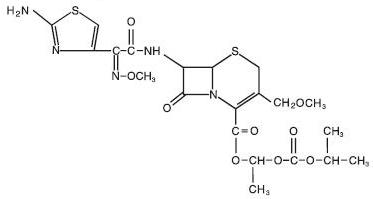
The molecular weight of cefpodoxime proxetil is 557.6. Cefpodoxime proxetil is a prodrug; its active metabolite is cefpodoxime. All doses of cefpodoxime proxetil in this insert are expressed in terms of the active cefpodoxime moiety. The drug is supplied as film-coated tablets. Cefpodoxime proxetil tablets, USP contain cefpodoxime proxetil USP equivalent to 100 mg or 200 mg of cefpodoxime activity and the following inactive ingredients: carboxy methyl cellulose calcium, lactose monohydrate, hydroxy propyl cellulose, sodium lauryl sulfate, crospovidone, corn starch, magnesium stearate, hypromellose, titanium dioxide, propylene glycol and FD&C yellow #6 aluminum lake. In addition, the 100 mg film-coated tablets contain iron oxide yellow and the 200 mg film-coated tablets contain FD&C red #40 aluminum lake.
CLINICAL PHARMACOLOGY
Absorption and Excretion: Cefpodoxime proxetil is a prodrug that is absorbed from the gastrointestinal tract and de-esterified to its active metabolite, cefpodoxime. Following oral administration of 100 mg of cefpodoxime proxetil to fasting subjects, approximately 50% of the administered cefpodoxime dose was absorbed systemically. Over the recommended dosing range (100 to 400 mg), approximately 29 to 33% of the administered cefpodoxime dose was excreted unchanged in the urine in 12 hours. There is minimal metabolism of cefpodoxime in vivo . Effects of Food: The extent of absorption (mean AUC) and the mean peak plasma concentration increased when film-coated tablets were administered with food. Following a 200 mg tablet dose taken with food, the AUC was 21 to 33% higher than under fasting conditions, and the peak plasma concentration averaged 3.1 mcg/mL in fed subjects versus 2.6 mcg/mL in fasted subjects. Time to peak concentration was not significantly different between fed and fasted subjects. When a 200 mg dose of the suspension was taken with food, the extent of absorption (mean AUC) and mean peak plasma concentration in fed subjects were not significantly different from fasted subjects, but the rate of absorption was slower with food (48% increase in T max ). Pharmacokinetics of Cefpodoxime Proxetil Film-coated Tablets: Over the recommended dosing range (100 to 400 mg), the rate and extent of cefpodoxime absorption exhibited dose-dependency; dose-normalized C max and AUC decreased by up to 32% with increasing dose. Over the recommended dosing range, the T max was approximately 2 to 3 hours and the T 1/2 ranged from 2.09 to 2.84 hours. Mean C max was 1.4 mcg/mL for the 100 mg dose, 2.3 mcg/mL for the 200 mg dose, and 3.9 mcg/mL for the 400 mg dose. In patients with normal renal function, neither accumulation nor significant changes in other pharmacokinetic parameters were noted following multiple oral doses of up to 400 mg Q 12 hours.
| Dose (cefpodoxime equivalents) | Time after oral ingestion | ||||||
| 1hr | 2hr | 3hr | 4hr | 6hr | 8hr | 12hr | |
| 100 mg | 0.98 | 1.4 | 1.3 | 1 | 0.59 | 0.29 | 0.08 |
| 200 mg | 1.5 | 2.2 | 2.2 | 1.8 | 1.2 | 0.62 | 0.18 |
| 400 mg | 2.2 | 3.7 | 3.8 | 3.3 | 2.3 | 1.3 | 0.38 |
Pharmacokinetics of Cefpodoxime Proxetil Suspension: In adult subjects, a 100 mg dose of oral suspension produced an average peak cefpodoxime concentration of approximately 1.5 mcg/mL (range: 1.1 to 2.1 mcg/mL), which is equivalent to that reported following administration of the 100 mg tablet. Time to peak plasma concentration and area under the plasma concentration-time curve (AUC) for the oral suspension were also equivalent to those produced with film-coated tablets in adults following a 100 mg oral dose. The pharmacokinetics of cefpodoxime were investigated in 29 patients aged 1 to 17 years. Each patient received a single, oral, 5 mg/kg dose of cefpodoxime oral suspension. Plasma and urine samples were collected for 12 hours after dosing. The plasma levels reported from this study are as follows:
| 1 Dose did not exceed 200 mg. | |||||||
| Dose (cefpodoxime equivalents) | Time after oral ingestion | ||||||
| 1hr | 2hr | 3hr | 4hr | 6hr | 8hr | 12hr | |
| 5 mg/kg 1 | 1.4 | 2.1 | 2.1 | 1.7 | 0.9 | 0.4 | 0.09 |
Distribution Protein binding of cefpodoxime ranges from 22 to 33% in serum and from 21 to 29% in plasma. Skin Blister: Following multiple-dose administration every 12 hours for 5 days of 200 mg or 400 mg cefpodoxime proxetil, the mean maximum cefpodoxime concentration in skin blister fluid averaged 1.6 and 2.8 mcg/mL, respectively. Skin blister fluid cefpodoxime levels at 12 hours after dosing averaged 0.2 and 0.4 mcg/mL for the 200 mg and 400 mg multiple-dose regimens, respectively. Tonsil Tissue: Following a single, oral 100 mg cefpodoxime proxetil film-coated tablet, the mean maximum cefpodoxime concentration in tonsil tissue averaged 0.24 mcg/g at 4 hours post-dosing and 0.09 mcg/g at 7 hours post-dosing. Equilibrium was achieved between plasma and tonsil tissue within 4 hours of dosing. No detection of cefpodoxime in tonsillar tissue was reported 12 hours after dosing. These results demonstrated that concentrations of cefpodoxime exceeded the MIC 90 of S. pyogenes for at least 7 hours after dosing of 100 mg of cefpodoxime proxetil. Lung Tissue: Following a single, oral 200 mg cefpodoxime proxetil film-coated tablet, the mean maximum cefpodoxime concentration in lung tissue averaged 0.63 mcg/g at 3 hours post-dosing, 0.52 mcg/g at 6 hours post-dosing, and 0.19 mcg/g at 12 hours post-dosing. The results of this study indicated that cefpodoxime penetrated into lung tissue and produced sustained drug concentrations for at least 12 hours after dosing at levels that exceeded the MIC 90 for S. pneumoniae and H. influenzae. CSF: Adequate data on CSF levels of cefpodoxime are not available. Effects of Decreased Renal Function: Elimination of cefpodoxime is reduced in patients with moderate to severe renal impairment (<50 mL/min creatinine clearance). (See PRECAUTIONS and DOSAGE AND ADMINISTRATION . ) In subjects with mild impairment of renal function (50 to 80 mL/min creatinine clearance), the average plasma half-life of cefpodoxime was 3.5 hours. In subjects with moderate (30 to 49 mL/min creatinine clearance) or severe renal impairment (5 to 29 mL/min creatinine clearance), the half-life increased to 5.9 and 9.8 hours, respectively. Approximately 23% of the administered dose was cleared from the body during a standard 3-hour hemodialysis procedure. Effect of Hepatic Impairment (cirrhosis): Absorption was somewhat diminished and elimination unchanged in patients with cirrhosis. The mean cefpodoxime T 1/2 and renal clearance in cirrhotic patients were similar to those derived in studies of healthy subjects. Ascites did not appear to affect values in cirrhotic subjects. No dosage adjustment is recommended in this patient population. Pharmacokinetics in Elderly Subjects: Elderly subjects do not require dosage adjustments unless they have diminished renal function. (See PRECAUTIONS . ) In healthy geriatric subjects, cefpodoxime half-life in plasma averaged 4.2 hours (vs 3.3 in younger subjects) and urinary recovery averaged 21% after a 400 mg dose was administered every 12 hours. Other pharmacokinetic parameters (C max , AUC, and T max ) were unchanged relative to those observed in healthy young subjects. Microbiology: Mechanism of Action: Cefpodoxime is a bactericidal agent that acts by inhibition of bacterial cell wall synthesis. Cefpodoxime has activity in the presence of some beta-lactamases, both penicillinases and cephalosporinases, of Gram-negative and Gram-positive bacteria. Mechanism of Resistance: Resistance to cefpodoxime is primarily through hydrolysis by beta-lactamase, alteration of penicillin-binding proteins (PBPs), and decreased permeability. Cefpodoxime has been shown to be active against most isolates of the following bacteria, both in vitro and in clinical infections as described in the Indications and Usage (1) section: Gram-positive bacteria: Staphylococcus aureus (methicillin-susceptible strains, including those producing penicillinases) Staphylococcus saprophyticus Streptococcus pneumoniae (excluding penicillin-resistant isolates) Streptococcus pyogenes Gram-negative bacteria: Escherichia coli Klebsiella pneumoniae Proteus mirabilis Haemophilus influenzae (including beta-lactamase producing isolates) Moraxella catarrhalis Neisseria gonorrhoeae (including penicillinase-producing isolates) The following in vitro data are available, but their clinical significance is unknown. At least 90 percent of the following microorganisms exhibit an in vitro minimum inhibitory concentration (MIC) less than or equal to the susceptible breakpoint for cefpodoxime. However, the efficacy of cefpodoxime in treating clinical infections due to these microorganisms has not been established in adequate and well-controlled clinical trials. Gram-positive bacteria: Streptococcus agalactiae Streptococcus spp. (Groups C, F, G) Gram-negative bacteria: Citrobacter diversus Klebsiella oxytoca Proteus vulgaris Providencia rettgeri Haemophilus parainfluenzae Anaerobic Gram-positive bacteria: Peptostreptococcus magnus Susceptibility Testing For specific information regarding susceptibility test interpretive criteria and associated test methods and quality control standards recognized by FDA for this drug, please see: https://www.fda.gov/STIC.
CLINICAL TRIALS
Cystitis In two double-blind, 2:1 randomized, comparative trials performed in adults in the United States, cefpodoxime proxetil was compared to other beta-lactam antibiotics. In these studies, the following bacterial eradication rates were obtained at 5 to 9 days after therapy:
| Pathogen | Cefpodoxime | Comparator |
| E. coli | 200/243 (82%) | 99/123 (80%) |
| Other pathogens | 34/42 (81%) | 23/28 (82%) |
| K. pneumoniae P. mirabilis S. saprophyticus | ||
| TOTAL | 234/285 (82%) | 122/151 (81%) |
In these studies, clinical cure rates and bacterial eradication rates for cefpodoxime proxetil were comparable to the comparator agents; however, the clinical cure rates and bacteriologic eradication rates were lower than those observed with some other classes of approved agents for cystitis. Acute Otitis Media Studies In controlled studies of acute otitis media performed in the United States, where significant rates of beta-lactamase-producing organisms were found, cefpodoxime proxetil was compared to cefixime. In these studies, using very strict evaluability criteria and microbiologic and clinical response criteria at the 4 to 21 day post-therapy follow-up, the following presumptive bacterial eradication/clinical success outcomes (cured and improved) were obtained.
| Cefpodoxime Proxetil | Cefixime | |
| Pathogen | 5 mg/kg Q 12 h x 5 d | |
| S. pneumoniae | 88/122 (72%) | 72/124 (58%) |
| H. influenzae | 50/76 (66%) | 61/81 (75%) |
| M. catarrhalis | 22/39 (56%) | 23/41 (56%) |
| S. pyogenes | 20/25 (80%) | 13/23 (57%) |
| Clinical success rate | 171/254 (67%) | 165/258 (64%) |
Manufactured for: CRONUS PHARMA LLC 2 Tower Center Blvd, Suite - 1101A East Brunswick, NJ 08816 USA Made in India Code: TS/DRUGS/78/1996 Revised: 09/2023
HOW SUPPLIED
Cefpodoxime Proxetil Tablets, USP 100 mg are light yellowish-orange, elliptical, film-coated tablets debossed with ‘C’ on one side and ‘61’ on the other side. Bottles of 100 NDC 69043-006-01 Bottles of 250 NDC 69043-006-25 Cefpodoxime Proxetil Tablets, USP 200 mg are coral red, elliptical, film-coated tablets debossed with ‘C’ on one side and ‘62’ on the other side. Bottles of 100 NDC 69043-007-01 Bottles of 250 NDC 69043-007-25 Store at 20° to 25°C (68° to 77°F); excursions permitted to 15° to 30°C (59° to 86°F) [see USP Controlled Room Temperature]. Dispense in tight, light-resistant container. Replace cap securely after each opening.
