Get your patient on Ceftazidime - Ceftazidime injection, Powder, For Solution (Ceftazidime)
Ceftazidime - Ceftazidime injection, Powder, For Solution prescribing information

PHARMACY BULK PACKAGE
NOT FOR DIRECT INFUSION
INDICATIONS AND USAGE
Ceftazidime for injection, USP is indicated for the treatment of patients with infections caused by susceptible strains of the designated organisms in the following diseases:
1. Lower Respiratory Tract Infections, including pneumonia, caused by Pseudomonas aeruginosa and other Pseudomonas spp.; Haemophilus influenzae, including ampicillin-resistant strains; Klebsiella spp.; Enterobacter spp.; Proteus mirabilis; Escherichia coli; Serratia spp.; Citrobacter spp.; Streptococcus pneumoniae; and Staphylococcus aureus (methicillin-susceptible strains).
2. Skin and Skin-Structure Infections caused by Pseudomonas aeruginosa; Klebsiella spp.; Escherichia coli; Proteus spp., including Proteus mirabilis and indole-positive Proteus; Enterobacter spp.; Serratia spp.; Staphylococcus aureus (methicillin-susceptible strains); and Streptococcus pyogenes (group A beta-hemolytic streptococci).
3. Urinary Tract Infections, both complicated and uncomplicated, caused by Pseudomonas aeruginosa; Enterobacter spp.; Proteus spp., including Proteus mirabilis and indole-positive Proteus; Klebsiella spp.; and Escherichia coli.
4. Bacterial Septicemia caused by Pseudomonas aeruginosa, Klebsiella spp., Haemophilus influenzae, Escherichia coli, Serratia spp., Streptococcus pneumoniae, and Staphylococcus aureus (methicillin-susceptible strains).
5. Bone and Joint Infections caused by Pseudomonas aeruginosa, Klebsiella spp., Enterobacter spp., and Staphylococcus aureus (methicillin-susceptible strains).
6. Gynecologic Infections, including endometritis, pelvic cellulitis, and other infections of the female genital tract caused by Escherichia coli.
7. Intra-abdominal Infections, including peritonitis caused by Escherichia coli, Klebsiella spp., and Staphylococcus aureus (methicillin-susceptible strains) and polymicrobial infections caused by aerobic and anaerobic organisms and Bacteroides spp. (many strains of Bacteroides fragilis are resistant).
8. Central Nervous System Infections, including meningitis, caused by Haemophilus influenzae and Neisseria meningitidis. Ceftazidime has also been used successfully in a limited number of cases of meningitis due to Pseudomonas aeruginosa and Streptococcus pneumoniae.
Ceftazidime for injection, USP may be used alone in cases of confirmed or suspected sepsis. Ceftazidime has been used successfully in clinical trials as empiric therapy in cases where various concomitant therapies with other antibacterial drugs have been used.
Ceftazidime for injection, USP may also be used concomitantly with other antibacterial drugs, such as aminoglycosides, vancomycin, and clindamycin; in severe and life-threatening infections; and in the immunocompromised patient. When such concomitant treatment is appropriate, prescribing information in the labeling for the other antibacterial drugs should be followed. The dose depends on the severity of the infection and the patient’s condition.
To reduce the development of drug-resistant bacteria and maintain the effectiveness of ceftazidime for injection, USP and other antibacterial drugs, ceftazidime for injection, USP should be used only to treat infections that are proven or strongly suspected to be caused by susceptible bacteria. When culture and susceptibility information are available, they should be considered in selecting or modifying antibacterial therapy. In the absence of such data, local epidemiology and susceptibility patterns may contribute to the empiric selection of therapy.
DOSAGE AND ADMINISTRATION
Dosage
The usual adult dosage is 1 gram administered intravenously or intramuscularly every 8 to 12 hours. The dosage and route should be determined by the susceptibility of the causative organisms, the severity of infection, and the condition and renal function of the patient.
The guidelines for dosage of ceftazidime for injection are listed in Table 3 . The following dosage schedule is recommended.
Dose | Frequency | |
Adult | ||
Usual recommended dosage | 1 gram intravenous or intramuscular | every 8 to 12 hours |
Uncomplicated urinary tract infection | 250 mg intravenous or intramuscular | every 12 hours |
Bone and joint infections | 2 grams intravenous | every 12 hours |
Complicated urinary tract infections | 500 mg intravenous or intramuscular | every 8 to 12 hours |
Uncomplicated pneumonia; mild skin and skin-structure infections | 500 mg to 1 gram intravenous or intramuscular | every 8 hours |
Serious gynecological and intra-abdominal infections | 2 grams intravenous | every 8 hours |
Meningitis | 2 grams intravenous | every 8 hours |
Very severe life-threatening infections, especially in immunocompromised patients | 2 grams intravenous | every 8 hours |
Lung infections caused by Pseudomonas spp. in patients with cystic fibrosis with normal renal function Although clinical improvement has been shown, bacteriologic cures cannot be expected in patients with chronic respiratory disease and cystic fibrosis. | 30 to 50 mg/kg intravenous to a maximum of 6 grams per day | every 8 hours |
Neonates (0 to 4 weeks) | 30 mg/kg intravenous | every 12 hours |
Infants and children (1 month to 12 years) | 30 to 50 mg/kg intravenous to a maximum of 6 grams per day The higher dose should be reserved for immunocompromised pediatric patients or pediatric patients with cystic fibrosis or meningitis. | every 8 hours |
Impaired Hepatic Function
No adjustment in dosage is required for patients with hepatic dysfunction.
Impaired Renal Function
Ceftazidime is excreted by the kidneys, almost exclusively by glomerular filtration. Therefore, in patients with impaired renal function (glomerular filtration rate [GFR] <50 mL/min), it is recommended that the dosage of ceftazidime be reduced to compensate for its slower excretion. In patients with suspected renal insufficiency, an initial loading dose of 1 gram of ceftazidime may be given. An estimate of GFR should be made to determine the appropriate maintenance dosage. The recommended dosage is presented in Table 4 .
Note: if the dose recommended in Table 3 above is lower than that recommended for patients with renal insufficiency as outlined in Table 4 , the lower dose should be used. | ||
Creatinine Clearance (mL/min) | Recommended Unit Dose of Ceftazidime for Injection | Frequency of Dosing |
50 to 31 | 1 gram | every 12 hours |
30 to 16 | 1 gram | every 24 hours |
15 to 6 | 500 mg | every 24 hours |
less than 5 | 500 mg | every 48 hours |
When only serum creatinine is available, the following formula (Cockcroft’s equation) 1 may be used to estimate creatinine clearance. The serum creatinine should represent a steady state of renal function:
Males: Creatinine clearance (mL/min) = Weight (kg) x (140 - age) __
- 72 x serum creatinine (mg/dL)
Females: 0.85 x male value
In patients with severe infections who would normally receive 6 grams of ceftazidime for injection daily were it not for renal insufficiency, the unit dose given in the table above may be increased by 50% or the dosing frequency may be increased appropriately. Further dosing should be determined by therapeutic monitoring, severity of the infection, and susceptibility of the causative organism.
In pediatric patients as for adults, the creatinine clearance should be adjusted for body surface area or lean body mass, and the dosing frequency should be reduced in cases of renal insufficiency.
In patients undergoing hemodialysis, a loading dose of 1 gram is recommended, followed by 1 gram after each hemodialysis period.
Ceftazidime for injection can also be used in patients undergoing intraperitoneal dialysis and continuous ambulatory peritoneal dialysis. In such patients, a loading dose of 1 gram of ceftazidime for injection may be given, followed by 500 mg every 24 hours. In addition to IV use, ceftazidime for injection can be incorporated in the dialysis fluid at a concentration of 250 mg for 2 L of dialysis fluid.
Note: Generally ceftazidime for injection should be continued for 2 days after the signs and symptoms of infection have disappeared, but in complicated infections longer therapy may be required.
Administration
Intravenous Administration: The IV route is preferable for patients with bacterial septicemia, bacterial meningitis, peritonitis, or other severe or life-threatening infections, or for patients who may be poor risks because of lowered resistance resulting from such debilitating conditions as malnutrition, trauma, surgery, diabetes, heart failure, or malignancy, particularly if shock is present or pending.
Directions for Proper Use of a Pharmacy Bulk Package
Not for direct infusion. This Pharmacy Bulk Package is for use in a hospital pharmacy admixture service, only in a suitable work area, such as a laminar flow hood. Using aseptic technique, the container closure may be penetrated only one time using a suitable sterile dispensing set or transfer device that allows measured dispensing of the contents. Use of a syringe and needle is not recommended as it may cause leakage. The withdrawal of container contents should be accomplished without delay. However, should this not be possible, a maximum time of 4 hours from initial closure entry is permitted to complete fluid transfer operations. This time limit should begin with the introduction of the solvent or diluent into the Pharmacy Bulk Package. DISCARD ANY UNUSED PORTION AFTER 4 HOURS. NOT FOR DIRECT INFUSION. THIS PHARMACY BULK PACKAGE IS NOT INTENDED TO BE DISPENSED AS A UNIT.
Freezing solution of ceftazidime for injection is not recommended.
Size | Amount of Diluent to be Added (mL) | Approximate Available Volume (mL) | Approximate Ceftazidime Concentration (mg/mL) |
Pharmacy bulk package bottle 6 grams | 26 | 30 | 200 |
Ceftazidime for injection (Pharmacy bulk package), when constituted as directed with Sterile Water for Injection, should have the contents withdrawn within 4 hours.
After constitution, add an appropriate quantity of the resulting solution to an IV container with one of the compatible IV fluids listed under the COMPATIBILITY AND STABILITY section.
All Pharmacy Bulk Package bottles of ceftazidime for injection as supplied are under reduced pressure. When ceftazidime for injection is dissolved, carbon dioxide is released and a positive pressure develops. For ease of use please follow the recommended techniques of constitution described on the detachable Instructions for Constitution section of this insert.
Solutions of ceftazidime for injection, like those of most beta-lactam antibacterial drugs, should not be added to solutions of aminoglycoside antibacterial drugs because of potential interaction.
However, if concurrent therapy with ceftazidime for injection and an aminoglycoside is indicated, each of these antibacterial drugs can be administered separately to the same patient.
CONTRAINDICATIONS
Ceftazidime for injection is contraindicated in patients who have shown hypersensitivity to ceftazidime or the cephalosporin group of antibacterial drugs.
ADVERSE REACTIONS
Ceftazidime is generally well tolerated. The incidence of adverse reactions associated with the administration of ceftazidime was low in clinical trials. The most common were local reactions following IV injection and allergic and gastrointestinal reactions. Other adverse reactions were encountered infrequently. No disulfiram-like reactions were reported.
The following adverse effects from clinical trials were considered to be either related to ceftazidime therapy or were of uncertain etiology:
Local Effects, reported in fewer than 2% of patients, were phlebitis and inflammation at the site of injection (1 in 69 patients).
Hypersensitivity Reactions, reported in 2% of patients, were pruritus, rash, and fever. Immediate reactions, generally manifested by rash and/or pruritus, occurred in 1 in 285 patients. Toxic epidermal necrolysis, Stevens-Johnson syndrome, and erythema multiforme have also been reported with cephalosporin antibacterial drugs, including ceftazidime. Angioedema and anaphylaxis (bronchospasm and/or hypotension) have been reported very rarely.
Gastrointestinal Symptoms, reported in fewer than 2% of patients, were diarrhea (1 in 78), nausea (1 in 156), vomiting (1 in 500), and abdominal pain (1 in 416). The onset of pseudomembranous colitis symptoms may occur during or after treatment (see WARNINGS ).
Central Nervous System Reactions (fewer than 1%) included headache, dizziness, and paresthesia. Seizures have been reported with several cephalosporins, including ceftazidime. In addition, encephalopathy, coma, asterixis, neuromuscular excitability, and myoclonia have been reported in renally impaired patients treated with unadjusted dosing regimens of ceftazidime (see PRECAUTIONS, General ).
Less Frequent Adverse Events (fewer than 1%) were candidiasis (including oral thrush) and vaginitis.
Hematologic: Rare cases of hemolytic anemia have been reported.
Laboratory Test Changes noted during clinical trials with ceftazidime were transient and included: eosinophilia (1 in 13), positive Coombs test without hemolysis (1 in 23), thrombocytosis (1 in 45), and slight elevations in one or more of the hepatic enzymes, aspartate aminotransferase (AST, SGOT) (1 in 16), alanine aminotransferase (ALT, SGPT) (1 in 15), LDH (1 in 18), GGT (1 in 19), and alkaline phosphatase (1 in 23). As with some other cephalosporins, transient elevations of blood urea, blood urea nitrogen, and/or serum creatinine were observed occasionally. Transient leukopenia, neutropenia, agranulocytosis, thrombocytopenia, and lymphocytosis were seen very rarely.
Drug Interactions
Nephrotoxicity has been reported following concomitant administration of cephalosporins with aminoglycoside antibacterial drugs or potent diuretics such as furosemide. Renal function should be carefully monitored, especially if higher dosages of the aminoglycosides are to be administered or if therapy is prolonged, because of the potential nephrotoxicity and ototoxicity of aminoglycoside antibacterial drugs. Nephrotoxicity and ototoxicity were not noted when ceftazidime was given alone in clinical trials.
Chloramphenicol has been shown to be antagonistic to beta-lactam antibacterial drugs, including ceftazidime, based on in vitro studies and time kill curves with enteric gram-negative bacilli. Due to the possibility of antagonism in vivo, particularly when bactericidal activity is desired, this drug combination should be avoided.
DESCRIPTION
Ceftazidime is a semisynthetic, broad-spectrum, beta-lactam antibacterial drug for parenteral administration. It is the pentahydrate of pyridinium, 1-[[7-[[(2-amino-4-thiazolyl)[(1-carboxy-1-methylethoxy)imino]acetyl]amino]-2-carboxy-8-oxo-5-thia-1-azabicyclo[4.2.0]oct-2-en-3-yl]methyl]-, hydroxide, inner salt, [6R-[6α,7β(Z)]]. It has the following structural formula:
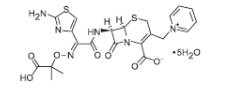
The molecular formula is C 22 H 22 N 6 O 7 S 2 ●5H 2 O, representing a molecular weight of 636.65.
Ceftazidime for injection, USP is a sterile, dry-powdered mixture of ceftazidime pentahydrate and sodium carbonate. The sodium carbonate at a concentration of 118 mg/g of ceftazidime activity has been admixed to facilitate dissolution. The total sodium content of the mixture is approximately 54 mg (2.3 mEq)/g of ceftazidime activity.
Ceftazidime for injection, USP is a white to cream-colored crystalline powder. Solutions of ceftazidime for injection, USP range in color from light yellow to amber, depending on the diluent and volume used. The pH of freshly constituted solutions usually ranges from 5 to 8.
Ceftazidime for injecton, USP in sterile crystalline form is supplied in 6 gram Pharmacy Bulk Package bottles equivalent to 6 grams of anhydrous ceftazidime.
The Pharmacy Bulk Package bottle contains 708 mg of sodium carbonate. The sodium content is approximately 54 mg (2.3 mEq) per gram of ceftazidime.
The 6 g Pharmacy Bulk Package bottle is a container of sterile preparation for parenteral use that contains many single doses. The contents are intended for use in a pharmacy admixture program and are restricted to the preparation of admixtures for intravenous use. THE 6 g PHARMACY BULK PACKAGE IS NOT FOR DIRECT INFUSION. FURTHER DILUTION IS REQUIRED BEFORE USE. ( See DOSAGE AND ADMINISTRATION – Directions for Proper Use of Pharmacy Bulk Package).
CLINICAL PHARMACOLOGY
After IV administration of 500 mg and 1 g doses of ceftazidime over 5 minutes to normal adult male volunteers, mean peak serum concentrations of 45 and 90 mcg/mL, respectively, were achieved. After IV infusion of 500 mg, 1 g, and 2 g doses of ceftazidime over 20 to 30 minutes to normal adult male volunteers, mean peak serum concentrations of 42, 69, and 170 mcg/mL, respectively, were achieved. The average serum concentrations following IV infusion of 500 mg, 1 g, and 2 g doses to these volunteers over an 8-hour interval are given in Table 1 .
Ceftazidime IV Dose | Serum Concentrations (mcg/mL) | ||||
0.5 hr | 1 hr | 2 hr | 4 hr | 8 hr | |
500 mg | 42 | 25 | 12 | 6 | 2 |
1 g | 60 | 39 | 23 | 11 | 3 |
2 g | 129 | 75 | 42 | 13 | 5 |
The absorption and elimination of ceftazidime were directly proportional to the size of the dose. The half-life following IV administration was approximately 1.9 hours. Less than 10% of ceftazidime was protein bound. The degree of protein binding was independent of concentration. There was no evidence of accumulation of ceftazidime in the serum in individuals with normal renal function following multiple IV doses of 1 and 2 g every 8 hours for 10 days.
Following intramuscular (IM) administration of 500 mg and 1 g doses of ceftazidime to normal adult volunteers, the mean peak serum concentrations were 17 and 39 mcg/mL, respectively, at approximately 1 hour. Serum concentrations remained above 4 mcg/mL for 6 and 8 hours after the IM administration of 500 mg and 1 g doses, respectively. The half-life of ceftazidime in these volunteers was approximately 2 hours.
The presence of hepatic dysfunction had no effect on the pharmacokinetics of ceftazidime in individuals administered 2 g intravenously every 8 hours for 5 days. Therefore, a dosage adjustment from the normal recommended dosage is not required for patients with hepatic dysfunction, provided renal function is not impaired.
Approximately 80% to 90% of an IM or IV dose of ceftazidime is excreted unchanged by the kidneys over a 24-hour period. After the IV administration of single 500 mg or 1 g doses, approximately 50% of the dose appeared in the urine in the first 2 hours. An additional 20% was excreted between 2 and 4 hours after dosing, and approximately another 12% of the dose appeared in the urine between 4 and 8 hours later. The elimination of ceftazidime by the kidneys resulted in high therapeutic concentrations in the urine.
The mean renal clearance of ceftazidime was approximately 100 mL/min. The calculated plasma clearance of approximately 115 mL/min indicated nearly complete elimination of ceftazidime by the renal route. Administration of probenecid before dosing had no effect on the elimination kinetics of ceftazidime. This suggested that ceftazidime is eliminated by glomerular filtration and is not actively secreted by renal tubular mechanisms.
Since ceftazidime is eliminated almost solely by the kidneys, its serum half-life is significantly prolonged in patients with impaired renal function. Consequently, dosage adjustments in such patients as described in the DOSAGE AND ADMINISTRATION section are suggested.
Therapeutic concentrations of ceftazidime are achieved in the following body tissues and fluids.
Tissue or Fluid | Dose/ Route | No. of Patients | Time of Sample Postdose | Average Tissue or Fluid Level (mcg/mL or mcg/g) |
Urine | 500 mg IM 2 g IV | 6 6 | 0 to 2 hr 0 to 2 hr | 2,100 12,000 |
Bile | 2 g IV | 3 | 90 min | 36.4 |
Synovial fluid | 2 g IV | 13 | 2 hr | 25.6 |
Peritoneal fluid | 2 g IV | 8 | 2 hr | 48.6 |
Sputum | 1 g IV | 8 | 1 hr | 9 |
Cerebrospinal fluid | 2 g q8hr IV | 5 | 120 min | 9.8 |
(inflamed meninges) | 2 g q8hr IV | 6 | 180 min | 9.4 |
Aqueous humor | 2 g IV | 13 | 1 to 3 hr | 11 |
Blister fluid | 1 g IV | 7 | 2 to 3 hr | 19.7 |
Lymphatic fluid | 1 g IV | 7 | 2 to 3 hr | 23.4 |
Bone | 2 g IV | 8 | 0.67 hr | 31.1 |
Heart muscle | 2 g IV | 35 | 30 to 280 min | 12.7 |
Skin | 2 g IV | 22 | 30 to 180 min | 6.6 |
Skeletal muscle | 2 g IV | 35 | 30 to 280 min | 9.4 |
Myometrium | 2 g IV | 31 | 1 to 2 hr | 18.7 |
Microbiology
Mechanism of Action
Ceftazidime is a bactericidal agent that acts by inhibition of bacterial cell wall synthesis. Ceftazidime has activity in the presence of some beta-lactamases, both penicillinases and cephalosporinases, of Gram-negative and Gram-positive bacteria.
Mechanism of Resistance
Resistance to ceftazidime is primarily through hydrolysis by beta-lactamase, alteration of penicillin-binding proteins (PBPs), and decreased permeability.
Interaction with Other Antimicrobials
In an in vitro study, antagonistic effects have been observed with the combination of chloramphenicol and ceftazidime.
Ceftazidime has been shown to be active against most isolates of the following bacteria, both in vitro and in clinical infections as described in the INDICATIONS AND USAGE section:
Gram-negative bacteria
- Citrobacter species
- Enterobacter species
- Escherichia coli
- Klebsiella species
- Haemophilus influenzae
- Neisseria meningitidis
- Proteus mirabilis
- Proteus vulgaris
- Pseudomonas aeruginosa
- Serratia species
Gram-positive bacteria
- Staphylococcus aureus
- Streptococcus pneumoniae
- Streptococcus pyogenes
- Streptococcus agalactiae
Anaerobic bacteria
- Bacteroides species (Note: many isolates of Bacteroides species are resistant)
The following in vitro data are available, but their clinical significance is unknown. At least 90 percent of the following microorganisms exhibit an in vitro minimum inhibitory concentration (MIC) less than or equal to the susceptible breakpoint for ceftazidime. However, the efficacy of ceftazidime in treating clinical infections due to these microorganisms has not been established in adequate and well-controlled clinical trials.
Gram-negative bacteria
- Acinetobacter species
- Citrobacter diversus
- Citrobacter freundii
- Providencia species (including Providencia rettgeri )
- Salmonella species
- Shigella species
- Haemophilus parainfluenzae
- Morganella morganii
- Neisseria gonorrhoeae
- Yersinia enterocolitica
Gram-positive bacteria
- Staphylococcus epidermidis
Anaerobic bacteria
- Clostridium species (Not including Clostridium difficile)
- Peptostreptococcus species
Susceptibility Testing
For specific information regarding susceptibility test interpretive criteria and associated test methods and quality control standards recognized by FDA for this drug, please see: https://www.fda.gov/STIC .
HOW SUPPLIED
Ceftazidime for injection, USP in the dry state should be stored at 20ºC to 25°C (68ºF to 77°F) [See USP controlled room temperature] and protected from light. Ceftazidime for injection, USP is a white to cream-colored crystalline powder supplied in Pharmacy Bulk Package Bottles as follows:
NDC 44567-237-06 6 g• Pharmacy Bulk Package bottle (Carton of 6)
•Equivalent to anhydrous ceftazidime.
