Get your patient on Celontin - Methsuximide capsule (Methsuximide)
Celontin - Methsuximide capsule prescribing information

INDICATIONS AND USAGE
Celontin is indicated for the control of absence (petit mal) seizures that are refractory to other drugs.
DOSAGE AND ADMINISTRATION
Optimum dosage of Celontin must be determined by trial. A suggested dosage schedule is 300 mg per day for the first week. If required, dosage may be increased thereafter at weekly intervals by 300 mg per day for the three weeks following to a daily dosage of 1.2 g. Because therapeutic effect and tolerance vary among patients, therapy with Celontin must be individualized according to the response of each patient. Optimal dosage is that amount of Celontin which is barely sufficient to control seizures so that side effects may be kept to a minimum.
Celontin may be administered in combination with other anticonvulsants when other forms of epilepsy coexist with absence (petit mal).
CONTRAINDICATIONS
Methsuximide should not be used in patients with a history of hypersensitivity to succinimides.
ADVERSE REACTIONS
Gastrointestinal System: Gastrointestinal symptoms occur frequently and have included nausea or vomiting, anorexia, diarrhea, weight loss, epigastric and abdominal pain, and constipation.
Hemopoietic System: Hemopoietic complications associated with the administration of methsuximide have included eosinophilia, leukopenia, monocytosis, and pancytopenia with or without bone marrow suppression.
Nervous System : Neurologic and sensory reactions reported during therapy with methsuximide have included drowsiness, ataxia or dizziness, irritability and nervousness, headache, blurred vision, photophobia, hiccups, and insomnia. Drowsiness, ataxia, and dizziness have been the most frequent side effects noted. Psychologic abnormalities have included confusion, instability, mental slowness, depression, hypochondriacal behavior, and aggressiveness. There have been rare reports of psychosis, suicidal behavior, and auditory hallucinations.
Integumentary System : Dermatologic manifestations which have occurred with the administration of methsuximide have included urticaria, Stevens-Johnson syndrome, and pruritic erythematous rashes.
Cardiovascular : Hyperemia.
Genitourinary System : Proteinuria, microscopic hematuria.
Body as a Whole : Periorbital edema.
Drug Interactions
Since Celontin (methsuximide) may interact with concurrently administered antiepileptic drugs, periodic serum level determinations of these drugs may be necessary (eg, methsuximide may increase the plasma concentrations of phenytoin and phenobarbital).
DESCRIPTION
Celontin (methsuximide) is an anticonvulsant succinimide, chemically designated as N,2-Dimethyl-2-phenylsuccinimide, with the following structural formula:
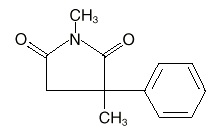
Each Celontin capsule contains 300 mg methsuximide, USP. Also contains starch, NF. The capsule contains colloidal silicon dioxide, NF; D&C yellow No. 10; FD&C yellow No. 6; gelatin, NF; and sodium lauryl sulfate, NF.
CLINICAL PHARMACOLOGY
Methsuximide suppresses the paroxysmal three cycle per second spike and wave activity associated with lapses of consciousness which is common in absence (petit mal) seizures. The frequency of epileptiform attacks is reduced, apparently by depression of the motor cortex and elevation of the threshold of the central nervous system to convulsive stimuli.
HOW SUPPLIED
N 0071-0525-24 (P-D 525)–Celontin Capsules, #1 capsule each containing 300 mg methsuximide; bottles of 100.
Store at 25°C (77°F); excursions permitted to 15–30°C (59–86°F) [see USP Controlled Room Temperature].
Protect from light and moisture. Protect from excessive heat 40°C (104°F).
