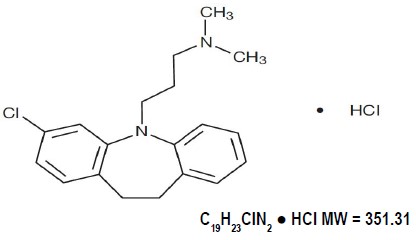
Clomipramine Hydrochloride Prescribing Information
Antidepressants increased the risk compared to placebo of suicidal thinking and behavior (suicidality) in children, adolescents, and young adults in short-term studies of major depressive disorder (MDD) and other psychiatric disorders. Anyone considering the use of clomipramine hydrochloride or any other antidepressant in a child, adolescent, or young adult must balance this risk with the clinical need. Short-term studies did not show an increase in the risk of suicidality with antidepressants compared to placebo in adults beyond age 24; there was a reduction in risk with antidepressants compared to placebo in adults aged 65 and older. Depression and certain other psychiatric disorders are themselves associated with increases in the risk of suicide. Patients of all ages who are started on antidepressant therapy should be monitored appropriately and observed closely for clinical worsening, suicidality, or unusual changes in behavior. Families and caregivers should be advised of the need for close observation and communication with the prescriber. Clomipramine hydrochloride is not approved for use in pediatric patients except for patients with obsessive compulsive disorder (OCD) (see
WARNINGSThe pooled analyses of placebo-controlled trials in children and adolescents with MDD, obsessive compulsive disorder (OCD), or other psychiatric disorders included a total of 24 short-term trials of 9 antidepressant drugs in over 4400 patients. The pooled analyses of placebo-controlled trials in adults with MDD or other psychiatric disorders included a total of 295 short-term trials (median duration of 2 months) of 11 antidepressant drugs in over 77,000 patients. There was considerable variation in risk of suicidality among drugs, but a tendency toward an increase in the younger patients for almost all drugs studied. There were differences in absolute risk of suicidality across the different indications, with the highest incidence in MDD. The risk differences (drug vs placebo), however, were relatively stable within age strata and across indications. These risk differences (drug-placebo difference in the number of cases of suicidality per 1000 patients treated) are provided in
Age Range | Drug-Placebo Difference in Number of Cases of Suicidality per 1000 Patients Treated |
Increases Compared to Placebo | |
<18 18-24 | 14 additional cases 5 additional cases |
Decreases Compared to Placebo | |
25-64 ≥65 | 1 fewer case 6 fewer cases |
No suicides occurred in any of the pediatric trials. There were suicides in the adult trials, but the number was not sufficient to reach any conclusion about drug effect on suicide.
It is unknown whether the suicidality risk extends to longer-term use, i.e., beyond several months. However, there is substantial evidence from placebo-controlled maintenance trials in adults with depression that the use of antidepressants can delay the recurrence of depression.
The following symptoms, anxiety, agitation, panic attacks, insomnia, irritability, hostility, aggressiveness, impulsivity, akathisia (psychomotor restlessness), hypomania, and mania, have been reported in adult and pediatric patients being treated with antidepressants for major depressive disorder as well as for other indications, both psychiatric and nonpsychiatric. Although a causal link between the emergence of such symptoms and either the worsening of depression and/or the emergence of suicidal impulses has not been established, there is concern that such symptoms may represent precursors to emerging suicidality.
Consideration should be given to changing the therapeutic regimen, including possibly discontinuing the medication, in patients whose depression is persistently worse, or who are experiencing emergent suicidality or symptoms that might be precursors to worsening depression or suicidality, especially if these symptoms are severe, abrupt in onset, or were not part of the patient’s presenting symptoms.
The development of a potentially life-threatening serotonin syndrome has been reported with SNRIs and SSRIs, including Clomipramine hydrochloride capsules, alone but particularly with concomitant use of other serotonergic drugs (including triptans, tricyclic antidepressants, fentanyl, lithium, tramadol, tryptophan, buspirone, and St. John’s Wort) and with drugs that impair metabolism of serotonin (in particular, MAOIs, both those intended to treat psychiatric disorders and also others, such as linezolid and intravenous methylene blue).
Serotonin syndrome symptoms may include mental status changes (e.g., agitation, hallucinations, delirium, and coma), autonomic instability (e.g., tachycardia, labile blood pressure, dizziness, diaphoresis, flushing, hyperthermia), neuromuscular changes (e.g., tremor, rigidity, myoclonus, hyperreflexia, incoordination), seizures, and/or gastrointestinal symptoms (e.g., nausea, vomiting, diarrhea). Patients should be monitored for the emergence of serotonin syndrome.
The concomitant use of Clomipramine hydrochloride capsules with MAOIs intended to treat psychiatric disorders is contraindicated. Clomipramine hydrochloride capsules should also not be started in a patient who is being treated with MAOIs such as linezolid or intravenous methylene blue. All reports with methylene blue that provided information on the route of administration involved intravenous administration in the dose range of 1 mg/kg to 8 mg/kg. No reports involved the administration of methylene blue by other routes (such as oral tablets or local tissue injection) or at lower doses. There may be circumstances when it is necessary to initiate treatment with an MAOI such as linezolid or intravenous methylene blue in a patient taking Clomipramine hydrochloride capsules. Clomipramine hydrochloride capsules should be discontinued before initiating treatment with the MAOI (
If concomitant use of Clomipramine hydrochloride capsules with other serotonergic drugs, including triptans, tricyclic antidepressants, fentanyl, lithium, tramadol, buspirone, tryptophan, and St. John’s Wort is clinically warranted, patients should be made aware of a potential increased risk for serotonin syndrome, particularly during treatment initiation and dose increases.
Treatment with Clomipramine hydrochloride capsules and any concomitant serotonergic agents should be discontinued immediately if the above events occur and supportive symptomatic treatment should be initiated.
The pupillary dilation that occurs following use of many antidepressant drugs including Clomipramine hydrochloride capsules may trigger an angle closure attack in a patient with anatomically narrow angles who does not have a patent iridectomy.
During premarket evaluation, seizure was identified as the most significant risk of Clomipramine hydrochloride capsules use.
The observed cumulative incidence of seizures among patients exposed to Clomipramine hydrochloride capsules at doses up to 300 mg/day was 0.64% at 90 days, 1.12% at 180 days, and 1.45% at 365 days. The cumulative rates correct the crude rate of 0.7% (25 of 3519 patients) for the variable duration of exposure in clinical trials.
Although dose appears to be a predictor of seizure, there is a confounding of dose and duration of exposure, making it difficult to assess independently the effect of either factor alone. The ability to predict the occurrence of seizures in subjects exposed to doses of CMI greater than 250 mg is limited, given that the plasma concentration of CMI may be dose-dependent and may vary among subjects given the same dose. Nevertheless, prescribers are advised to limit the daily dose to a maximum of 250 mg in adults and 3 mg/kg (or 200 mg) in children and adolescents (
Caution should be used in administering Clomipramine hydrochloride capsules to patients with a history of seizures or other predisposing factors, e.g., brain damage of varying etiology, alcoholism, and concomitant use with other drugs that lower the seizure threshold.
Rare reports of fatalities in association with seizures have been reported by foreign postmarketing surveillance, but not in U.S. clinical trials. In some of these cases, Clomipramine hydrochloride capsules had been administered with other epileptogenic agents; in others, the patients involved had possibly predisposing medical conditions. Thus a causal association between Clomipramine hydrochloride capsules treatment and these fatalities has not been established.
Physicians should discuss with patients the risk of taking Clomipramine hydrochloride capsules while engaging in activities in which sudden loss of consciousness could result in serious injury to the patient or others, e.g., the operation of complex machinery, driving, swimming, climbing.
WARNINGSThe pooled analyses of placebo-controlled trials in children and adolescents with MDD, obsessive compulsive disorder (OCD), or other psychiatric disorders included a total of 24 short-term trials of 9 antidepressant drugs in over 4400 patients. The pooled analyses of placebo-controlled trials in adults with MDD or other psychiatric disorders included a total of 295 short-term trials (median duration of 2 months) of 11 antidepressant drugs in over 77,000 patients. There was considerable variation in risk of suicidality among drugs, but a tendency toward an increase in the younger patients for almost all drugs studied. There were differences in absolute risk of suicidality across the different indications, with the highest incidence in MDD. The risk differences (drug vs placebo), however, were relatively stable within age strata and across indications. These risk differences (drug-placebo difference in the number of cases of suicidality per 1000 patients treated) are provided in
Age Range | Drug-Placebo Difference in Number of Cases of Suicidality per 1000 Patients Treated |
Increases Compared to Placebo | |
<18 18-24 | 14 additional cases 5 additional cases |
Decreases Compared to Placebo | |
25-64 ≥65 | 1 fewer case 6 fewer cases |
No suicides occurred in any of the pediatric trials. There were suicides in the adult trials, but the number was not sufficient to reach any conclusion about drug effect on suicide.
It is unknown whether the suicidality risk extends to longer-term use, i.e., beyond several months. However, there is substantial evidence from placebo-controlled maintenance trials in adults with depression that the use of antidepressants can delay the recurrence of depression.
The following symptoms, anxiety, agitation, panic attacks, insomnia, irritability, hostility, aggressiveness, impulsivity, akathisia (psychomotor restlessness), hypomania, and mania, have been reported in adult and pediatric patients being treated with antidepressants for major depressive disorder as well as for other indications, both psychiatric and nonpsychiatric. Although a causal link between the emergence of such symptoms and either the worsening of depression and/or the emergence of suicidal impulses has not been established, there is concern that such symptoms may represent precursors to emerging suicidality.
Consideration should be given to changing the therapeutic regimen, including possibly discontinuing the medication, in patients whose depression is persistently worse, or who are experiencing emergent suicidality or symptoms that might be precursors to worsening depression or suicidality, especially if these symptoms are severe, abrupt in onset, or were not part of the patient’s presenting symptoms.
The development of a potentially life-threatening serotonin syndrome has been reported with SNRIs and SSRIs, including Clomipramine hydrochloride capsules, alone but particularly with concomitant use of other serotonergic drugs (including triptans, tricyclic antidepressants, fentanyl, lithium, tramadol, tryptophan, buspirone, and St. John’s Wort) and with drugs that impair metabolism of serotonin (in particular, MAOIs, both those intended to treat psychiatric disorders and also others, such as linezolid and intravenous methylene blue).
Serotonin syndrome symptoms may include mental status changes (e.g., agitation, hallucinations, delirium, and coma), autonomic instability (e.g., tachycardia, labile blood pressure, dizziness, diaphoresis, flushing, hyperthermia), neuromuscular changes (e.g., tremor, rigidity, myoclonus, hyperreflexia, incoordination), seizures, and/or gastrointestinal symptoms (e.g., nausea, vomiting, diarrhea). Patients should be monitored for the emergence of serotonin syndrome.
The concomitant use of Clomipramine hydrochloride capsules with MAOIs intended to treat psychiatric disorders is contraindicated. Clomipramine hydrochloride capsules should also not be started in a patient who is being treated with MAOIs such as linezolid or intravenous methylene blue. All reports with methylene blue that provided information on the route of administration involved intravenous administration in the dose range of 1 mg/kg to 8 mg/kg. No reports involved the administration of methylene blue by other routes (such as oral tablets or local tissue injection) or at lower doses. There may be circumstances when it is necessary to initiate treatment with an MAOI such as linezolid or intravenous methylene blue in a patient taking Clomipramine hydrochloride capsules. Clomipramine hydrochloride capsules should be discontinued before initiating treatment with the MAOI (
If concomitant use of Clomipramine hydrochloride capsules with other serotonergic drugs, including triptans, tricyclic antidepressants, fentanyl, lithium, tramadol, buspirone, tryptophan, and St. John’s Wort is clinically warranted, patients should be made aware of a potential increased risk for serotonin syndrome, particularly during treatment initiation and dose increases.
Treatment with Clomipramine hydrochloride capsules and any concomitant serotonergic agents should be discontinued immediately if the above events occur and supportive symptomatic treatment should be initiated.
The pupillary dilation that occurs following use of many antidepressant drugs including Clomipramine hydrochloride capsules may trigger an angle closure attack in a patient with anatomically narrow angles who does not have a patent iridectomy.
During premarket evaluation, seizure was identified as the most significant risk of Clomipramine hydrochloride capsules use.
The observed cumulative incidence of seizures among patients exposed to Clomipramine hydrochloride capsules at doses up to 300 mg/day was 0.64% at 90 days, 1.12% at 180 days, and 1.45% at 365 days. The cumulative rates correct the crude rate of 0.7% (25 of 3519 patients) for the variable duration of exposure in clinical trials.
Although dose appears to be a predictor of seizure, there is a confounding of dose and duration of exposure, making it difficult to assess independently the effect of either factor alone. The ability to predict the occurrence of seizures in subjects exposed to doses of CMI greater than 250 mg is limited, given that the plasma concentration of CMI may be dose-dependent and may vary among subjects given the same dose. Nevertheless, prescribers are advised to limit the daily dose to a maximum of 250 mg in adults and 3 mg/kg (or 200 mg) in children and adolescents (
Caution should be used in administering Clomipramine hydrochloride capsules to patients with a history of seizures or other predisposing factors, e.g., brain damage of varying etiology, alcoholism, and concomitant use with other drugs that lower the seizure threshold.
Rare reports of fatalities in association with seizures have been reported by foreign postmarketing surveillance, but not in U.S. clinical trials. In some of these cases, Clomipramine hydrochloride capsules had been administered with other epileptogenic agents; in others, the patients involved had possibly predisposing medical conditions. Thus a causal association between Clomipramine hydrochloride capsules treatment and these fatalities has not been established.
Physicians should discuss with patients the risk of taking Clomipramine hydrochloride capsules while engaging in activities in which sudden loss of consciousness could result in serious injury to the patient or others, e.g., the operation of complex machinery, driving, swimming, climbing.
Information for PatientsPrescribers or other health professionals should inform patients, their families, and their caregivers about the benefits and risks associated with treatment with clomipramine hydrochloride and should counsel them in its appropriate use. A patient Medication Guide about “Antidepressant Medicines, Depression and other Serious Mental Illness, and Suicidal Thoughts or Actions” is available for clomipramine hydrochloride. The prescriber or health professional should instruct patients, their families, and their caregivers to read the Medication Guide and should assist them in understanding its contents. Patients should be given the opportunity to discuss the contents of the Medication Guide and to obtain answers to any questions they may have. The complete text of the Medication Guide is reprinted at the end of this document.
Patients should be advised of the following issues and asked to alert their prescriber if these occur while taking clomipramine hydrochloride.
Physicians are advised to discuss the following issues with patients for whom they prescribe Clomipramine hydrochloride capsules:
- The risk of seizure (seeWARNINGS);
- The relatively high incidence of sexual dysfunction among males (seeSexual Dysfunction);
- Since Clomipramine hydrochloride capsules may impair the mental and/or physical abilities required for the performance of complex tasks, and since Clomipramine hydrochloride capsules is associated with a risk of seizures, patients should be cautioned about the performance of complex and hazardous tasks (seeWARNINGS);
- Patients should be cautioned about using alcohol, barbiturates, or other CNS depressants concurrently, since Clomipramine hydrochloride capsules may exaggerate their response to these drugs;
- Patients should notify their physician if they become pregnant or intend to become pregnant during therapy;
- Patients should notify their physician if they are breast-feeding.
Patients should be advised that taking Clomipramine hydrochloride capsules can cause mild pupillary dilation, which in susceptible individuals, can lead to an episode of angle-closure glaucoma. Preexisting glaucoma is almost always open-angle glaucoma because angle-closure glaucoma, when diagnosed, can be treated definitively with iridectomy. Open-angle glaucoma is not a risk factor for angle-closure glaucoma. Patients may wish to be examined to determine whether they are susceptible to angle closure, and have a prophylactic procedure (e.g., iridectomy), if they are susceptible.
Pediatric UseSafety and effectiveness in the pediatric population other than pediatric patients with OCD have not been established (
In a controlled clinical trial in children and adolescents (10 to 17 years of age), 46 outpatients received Clomipramine hydrochloride capsules for up to 8 weeks. In addition, 150 adolescent patients have received Clomipramine hydrochloride capsules in open-label protocols for periods of several months to several years. Of the 196 adolescents studied, 50 were 13 years of age or less and 146 were 14 to 17 years of age. The adverse reaction profile in this age group (
The risks, if any, that may be associated with Clomipramine hydrochloride capsules’s extended use in children and adolescents with OCD have not been systematically assessed. The evidence supporting the conclusion that Clomipramine hydrochloride capsules is safe for use in children and adolescents is derived from relatively short term clinical studies and from extrapolation of experience gained with adult patients. In particular, there are no studies that directly evaluate the effects of long term Clomipramine hydrochloride capsules use on the growth, development, and maturation of children and adolescents. Although there is no evidence to suggest that Clomipramine hydrochloride capsules adversely affects growth, development or maturation, the absence of such findings is not adequate to rule out a potential for such effects in chronic use.
The safety and effectiveness in pediatric patients below the age of 10 have not been established. Therefore, specific recommendations cannot be made for the use of Clomipramine hydrochloride capsules in pediatric patients under the age of 10.
Clomipramine hydrochloride capsules USP is indicated for the treatment of obsessions and compulsions in patients with Obsessive-Compulsive Disorder (OCD). The obsessions or compulsions must cause marked distress, be time-consuming, or significantly interfere with social or occupational functioning, in order to meet the DSM-III-R (circa 1989) diagnosis of OCD.
Obsessions are recurrent, persistent ideas, thoughts, images, or impulses that are egodystonic. Compulsions are repetitive, purposeful, and intentional behaviors performed in response to an obsession or in a stereotyped fashion, and are recognized by the person as excessive or unreasonable.
The effectiveness of Clomipramine hydrochloride capsules for the treatment of OCD was demonstrated in multicenter, placebo-controlled, parallel-group studies, including two 10-week studies in adults and one 8-week study in children and adolescents 10 to 17 years of age. Patients in all studies had moderate-to-severe OCD (DSM-III), with mean baseline ratings on the Yale-Brown Obsessive Compulsive Scale (YBOCS) ranging from 26 to 28 and a mean baseline rating of 10 on the NIMH Clinical Global Obsessive Compulsive Scale (NIMH-OC). Patients taking CMI experienced a mean reduction of approximately 10 on the YBOCS, representing an average improvement on this scale of 35% to 42% among adults and 37% among children and adolescents. CMI-treated patients experienced a 3.5 unit decrement on the NIMH-OC. Patients on placebo showed no important clinical response on either scale. The maximum dose was 250 mg/day for most adults and 3 mg/kg/ day (up to 200 mg) for all children and adolescents.
The effectiveness of Clomipramine hydrochloride capsules for long term use (i.e., for more than 10 weeks) has not been systematically evaluated in placebo-controlled trials. The physician who elects to use Clomipramine hydrochloride capsules for extended periods should periodically reevaluate the long-term usefulness of the drug for the individual patient (
DOSAGE AND ADMINISTRATIONThe treatment regimens described below are based on those used in controlled clinical trials of Clomipramine hydrochloride capsules in 520 adults, and 91 children and adolescents with OCD. During initial titration, Clomipramine hydrochloride capsules should be given in divided doses with meals to reduce gastrointestinal side effects. The goal of this initial titration phase is to minimize side effects by permitting tolerance to side effects to develop or allowing the patient time to adapt if tolerance does not develop.
Because both CMI and its active metabolite, DMI, have long elimination half-lives, the prescriber should take into consideration the fact that steady-state plasma levels may not be achieved until 2 to 3 weeks after dosage change (
At least 14 days should elapse between discontinuation of an MAOI intended to treat psychiatric disorders and initiation of therapy with Clomipramine hydrochloride capsules. Conversely, at least 14 days should be allowed after stopping Clomipramine hydrochloride capsules before starting an MAOI intended to treat psychiatric disorders (
Do not start Clomipramine hydrochloride capsules in a patient who is being treated with linezolid or intravenous methylene blue because there is increased risk of serotonin syndrome. In a patient who requires more urgent treatment of a psychiatric condition, other interventions, including hospitalization, should be considered (
In some cases, a patient already receiving Clomipramine hydrochloride capsules therapy may require urgent treatment with linezolid or intravenous methylene blue. If acceptable alternatives to linezolid or intravenous methylene blue treatment are not available and the potential benefits of linezolid or intravenous methylene blue treatment are judged to outweigh the risks of serotonin syndrome in a particular patient, Clomipramine hydrochloride capsules should be stopped promptly, and linezolid or intravenous methylene blue can be administered. The patient should be monitored for symptoms of serotonin syndrome for two weeks or until 24 hours after the last dose of linezolid or intravenous methylene blue, whichever comes first. Therapy with Clomipramine hydrochloride capsules may be resumed 24 hours after the last dose of linezolid or intravenous methylene blue (
The risk of administering methylene blue by non-intravenous routes (such as oral tablets or by local injection) or in intravenous doses much lower than 1 mg/kg with Clomipramine hydrochloride capsules is unclear. The clinician should, nevertheless, be aware of the possibility of emergent symptoms of serotonin syndrome with such use (
The treatment regimens described below are based on those used in controlled clinical trials of Clomipramine hydrochloride capsules in 520 adults, and 91 children and adolescents with OCD. During initial titration, Clomipramine hydrochloride capsules should be given in divided doses with meals to reduce gastrointestinal side effects. The goal of this initial titration phase is to minimize side effects by permitting tolerance to side effects to develop or allowing the patient time to adapt if tolerance does not develop.
Because both CMI and its active metabolite, DMI, have long elimination half-lives, the prescriber should take into consideration the fact that steady-state plasma levels may not be achieved until 2 to 3 weeks after dosage change (
CLINICAL PHARMACOLOGYClomipramine (CMI) is presumed to influence obsessive and compulsive behaviors through its effects on serotonergic neuronal transmission. The actual neurochemical mechanism is unknown, but CMI’s capacity to inhibit the reuptake of serotonin (5-HT) is thought to be important.
In a dose proportionality study involving multiple CMI doses, steady-state plasma concentrations (Css) and area-under-plasma-concentration-time curves (AUC) of CMI and CMI’s major active metabolite, desmethylclomipramine (DMI), were not proportional to dose over the ranges evaluated, i.e., between 25 to 100 mg/day and between 25 to 150 mg/day, although Cssand AUC are approximately linearly related to dose between 100 to 150 mg/day. The relationship between dose and CMI/ DMI concentrations at higher daily doses has not been systematically assessed, but if there is significant dose dependency at doses above 150 mg/day, there is the potential for dramatically higher Cssand AUC even for patients dosed within the recommended range. This may pose a potential risk to some patients (
After a single 50 mg oral dose, maximum plasma concentrations of CMI occur within 2 to 6 hours (mean, 4.7 hr) and range from 56 ng/mL to 154 ng/mL (mean, 92 ng/mL). After multiple daily doses of 150 mg of Clomipramine hydrochloride capsules, steady-state maximum plasma concentrations range from 94 ng/mL to 339 ng/mL (mean, 218 ng/mL) for CMI and from 134 ng/mL to 532 ng/mL (mean, 274 ng/mL) for DMI. Additional information from a rising dose study of doses up to 250 mg suggests that DMI may exhibit nonlinear pharmacokinetics over the usual dosing range. At a dose of Clomipramine hydrochloride capsules 200 mg, subjects who had a single blood sample taken approximately 9 to 22 hours, (median 16 hours), after the dose had plasma concentrations of up to 605 ng/mL for CMI, 781 ng/mL for DMI, and 1386 ng/mL for both.
After a 150 mg dose, the half-life of CMI ranges from 19 hours to 37 hours (mean, 32 hr) and that of DMI ranges from 54 hours to 77 hours (mean, 69 hr). Steady-state levels after multiple dosing are typically reached within 7 to 14 days for CMI. Plasma concentrations of the metabolite exceed the parent drug on multiple dosing. After multiple dosing with 150 mg/day, the accumulation factor for CMI is approximately 2.5 and for DMI is 4.6. Importantly, it may take two weeks or longer to achieve this extent of accumulation at constant dosing because of the relatively long elimination half-lives of CMI and DMI (
PRECAUTIONSGeneral- Hyperthyroid patients or patients receiving thyroid medication, because of the possibility of cardiac toxicity;
- Patients with increased intraocular pressure, a history of narrow-angle glaucoma, or urinary retention, because of the anticholinergic properties of the drug;
- Patients with tumors of the adrenal medulla (e.g., pheochromocytoma, neuroblastoma) in whom the drug may provoke hypertensive crises;
- Patients with significantly impaired renal function.
Information for PatientsPrescribers or other health professionals should inform patients, their families, and their caregivers about the benefits and risks associated with treatment with clomipramine hydrochloride and should counsel them in its appropriate use. A patient Medication Guide about “Antidepressant Medicines, Depression and other Serious Mental Illness, and Suicidal Thoughts or Actions” is available for clomipramine hydrochloride. The prescriber or health professional should instruct patients, their families, and their caregivers to read the Medication Guide and should assist them in understanding its contents. Patients should be given the opportunity to discuss the contents of the Medication Guide and to obtain answers to any questions they may have. The complete text of the Medication Guide is reprinted at the end of this document.
Patients should be advised of the following issues and asked to alert their prescriber if these occur while taking clomipramine hydrochloride.
Physicians are advised to discuss the following issues with patients for whom they prescribe Clomipramine hydrochloride capsules:
- The risk of seizure (seeWARNINGS);
- The relatively high incidence of sexual dysfunction among males (seeSexual Dysfunction);
- Since Clomipramine hydrochloride capsules may impair the mental and/or physical abilities required for the performance of complex tasks, and since Clomipramine hydrochloride capsules is associated with a risk of seizures, patients should be cautioned about the performance of complex and hazardous tasks (seeWARNINGS);
- Patients should be cautioned about using alcohol, barbiturates, or other CNS depressants concurrently, since Clomipramine hydrochloride capsules may exaggerate their response to these drugs;
- Patients should notify their physician if they become pregnant or intend to become pregnant during therapy;
- Patients should notify their physician if they are breast-feeding.
Patients should be advised that taking Clomipramine hydrochloride capsules can cause mild pupillary dilation, which in susceptible individuals, can lead to an episode of angle-closure glaucoma. Preexisting glaucoma is almost always open-angle glaucoma because angle-closure glaucoma, when diagnosed, can be treated definitively with iridectomy. Open-angle glaucoma is not a risk factor for angle-closure glaucoma. Patients may wish to be examined to determine whether they are susceptible to angle closure, and have a prophylactic procedure (e.g., iridectomy), if they are susceptible.
Drug InteractionsThe risks of using Clomipramine hydrochloride capsules in combination with other drugs have not been systematically evaluated. Given the primary CNS effects of Clomipramine hydrochloride capsules, caution is advised in using it concomitantly with other CNS-active drugs (
Close supervision and careful adjustment of dosage are required when Clomipramine hydrochloride capsules is administered with anticholinergic or sympathomimetic drugs.
Several tricyclic antidepressants have been reported to block the pharmacologic effects of guanethidine, clonidine, or similar agents, and such an effect may be anticipated with CMI because of its structural similarity to other tricyclic antidepressants.
The plasma concentration of CMI has been reported to be increased by the concomitant administration of haloperidol; plasma levels of several closely related tricyclic antidepressants have been reported to be increased by the concomitant administration of methylphenidate or hepatic enzyme inhibitors (e.g., cimetidine, fluoxetine) and decreased by the concomitant administration of hepatic enzyme inducers (e.g., barbiturates, phenytoin), and such an effect may be anticipated with CMI as well. Administration of CMI has been reported to increase the plasma levels of phenobarbital, if given concomitantly (
Because Clomipramine hydrochloride capsules is highly bound to serum protein, the administration of Clomipramine hydrochloride capsules to patients taking other drugs that are highly bound to protein (e.g., warfarin, digoxin) may cause an increase in plasma concentrations of these drugs, potentially resulting in adverse effects. Conversely, adverse effects may result from displacement of protein-bound Clomipramine hydrochloride capsules by other highly bound drugs (
(
(
Carcinogenesis, Mutagenesis, Impairment of FertilityNo evidence of carcinogenicity was found in two 2-year bioassays in rats at doses up to 100 mg/kg, which is 24 and 4 times the maximum recommended human daily dose (MRHD) on a mg/kg and mg/m2basis, respectively, or in a 2-year bioassay in mice at doses up to 80 mg/kg, which is 20 and 1.5 times the MRHD on a mg/kg and mg/m2basis, respectively.
In reproduction studies, no effects on fertility were found in rats given up to 24 mg/kg, which is 6 times, and approximately equal to, the MRHD on a mg/kg and mg/m2basis, respectively.
Pregnancy Category CNo teratogenic effects were observed in studies performed in rats and mice at doses up to 100 mg/kg, which is 24 times the maximum recommended human daily dose (MRHD) on a mg/kg basis and 4 times (rats) and 2 times (mice) the MRHD on a mg/m2basis. Slight nonspecific embryo/fetotoxic effects were seen in the offspring of treated rats given 50 and 100 mg/kg and of treated mice given 100 mg/kg.
There are no adequate or well-controlled studies in pregnant women. Withdrawal symptoms, including jitteriness, tremor, and seizures, have been reported in neonates whose mothers had taken Clomipramine hydrochloride capsules until delivery. Clomipramine hydrochloride capsules should be used during pregnancy only if the potential benefit justifies the potential risk to the fetus.
Nursing MothersClomipramine hydrochloride capsules has been found in human milk. Because of the potential for adverse reactions, a decision should be made whether to discontinue nursing or to discontinue the drug, taking into account the importance of the drug to the mother.
Pediatric UseSafety and effectiveness in the pediatric population other than pediatric patients with OCD have not been established (
In a controlled clinical trial in children and adolescents (10 to 17 years of age), 46 outpatients received Clomipramine hydrochloride capsules for up to 8 weeks. In addition, 150 adolescent patients have received Clomipramine hydrochloride capsules in open-label protocols for periods of several months to several years. Of the 196 adolescents studied, 50 were 13 years of age or less and 146 were 14 to 17 years of age. The adverse reaction profile in this age group (
The risks, if any, that may be associated with Clomipramine hydrochloride capsules’s extended use in children and adolescents with OCD have not been systematically assessed. The evidence supporting the conclusion that Clomipramine hydrochloride capsules is safe for use in children and adolescents is derived from relatively short term clinical studies and from extrapolation of experience gained with adult patients. In particular, there are no studies that directly evaluate the effects of long term Clomipramine hydrochloride capsules use on the growth, development, and maturation of children and adolescents. Although there is no evidence to suggest that Clomipramine hydrochloride capsules adversely affects growth, development or maturation, the absence of such findings is not adequate to rule out a potential for such effects in chronic use.
The safety and effectiveness in pediatric patients below the age of 10 have not been established. Therefore, specific recommendations cannot be made for the use of Clomipramine hydrochloride capsules in pediatric patients under the age of 10.
Geriatric UseClinical studies of Clomipramine hydrochloride capsules did not include sufficient numbers of subjects age 65 and over to determine whether they respond differently from younger subjects; 152 patients at least 60 years of age participating in various U.S. clinical trials received Clomipramine hydrochloride capsules for periods of several months to several years. No unusual age-related adverse events were identified in this population. Other reported clinical experience has not identified differences in responses between the elderly and younger patients. In general, dose selection for an elderly patient should be cautious, usually starting at the low end of the dosing range, reflecting the greater frequency of decreased hepatic, renal, or cardiac function and of concomitant disease or other drug therapy.
Clomipramine hydrochloride capsules has been associated with cases of clinically significant hyponatremia. Elderly patients may be at greater risk for this adverse reaction (
At least 14 days should elapse between discontinuation of an MAOI intended to treat psychiatric disorders and initiation of therapy with Clomipramine hydrochloride capsules. Conversely, at least 14 days should be allowed after stopping Clomipramine hydrochloride capsules before starting an MAOI intended to treat psychiatric disorders (
CONTRAINDICATIONSClomipramine hydrochloride capsules is contraindicated in patients with a history of hypersensitivity to Clomipramine hydrochloride capsules or other tricyclic antidepressants.
The use of MAOIs intended to treat psychiatric disorders with Clomipramine hydrochloride capsules or within 14 days of stopping treatment with Clomipramine hydrochloride capsules is contraindicated because of an increased risk of serotonin syndrome. The use of Clomipramine hydrochloride capsules within 14 days of stopping an MAOI intended to treat psychiatric disorders is also contraindicated (
Starting Clomipramine hydrochloride capsules in a patient who is being treated with linezolid or intravenous methylene blue is also contraindicated because of an increased risk of serotonin syndrome (
Clomipramine hydrochloride capsules is contraindicated during the acute recovery period after a myocardial infarction.
Do not start Clomipramine hydrochloride capsules in a patient who is being treated with linezolid or intravenous methylene blue because there is increased risk of serotonin syndrome. In a patient who requires more urgent treatment of a psychiatric condition, other interventions, including hospitalization, should be considered (
CONTRAINDICATIONSClomipramine hydrochloride capsules is contraindicated in patients with a history of hypersensitivity to Clomipramine hydrochloride capsules or other tricyclic antidepressants.
The use of MAOIs intended to treat psychiatric disorders with Clomipramine hydrochloride capsules or within 14 days of stopping treatment with Clomipramine hydrochloride capsules is contraindicated because of an increased risk of serotonin syndrome. The use of Clomipramine hydrochloride capsules within 14 days of stopping an MAOI intended to treat psychiatric disorders is also contraindicated (
Starting Clomipramine hydrochloride capsules in a patient who is being treated with linezolid or intravenous methylene blue is also contraindicated because of an increased risk of serotonin syndrome (
Clomipramine hydrochloride capsules is contraindicated during the acute recovery period after a myocardial infarction.
In some cases, a patient already receiving Clomipramine hydrochloride capsules therapy may require urgent treatment with linezolid or intravenous methylene blue. If acceptable alternatives to linezolid or intravenous methylene blue treatment are not available and the potential benefits of linezolid or intravenous methylene blue treatment are judged to outweigh the risks of serotonin syndrome in a particular patient, Clomipramine hydrochloride capsules should be stopped promptly, and linezolid or intravenous methylene blue can be administered. The patient should be monitored for symptoms of serotonin syndrome for two weeks or until 24 hours after the last dose of linezolid or intravenous methylene blue, whichever comes first. Therapy with Clomipramine hydrochloride capsules may be resumed 24 hours after the last dose of linezolid or intravenous methylene blue (
WARNINGSThe pooled analyses of placebo-controlled trials in children and adolescents with MDD, obsessive compulsive disorder (OCD), or other psychiatric disorders included a total of 24 short-term trials of 9 antidepressant drugs in over 4400 patients. The pooled analyses of placebo-controlled trials in adults with MDD or other psychiatric disorders included a total of 295 short-term trials (median duration of 2 months) of 11 antidepressant drugs in over 77,000 patients. There was considerable variation in risk of suicidality among drugs, but a tendency toward an increase in the younger patients for almost all drugs studied. There were differences in absolute risk of suicidality across the different indications, with the highest incidence in MDD. The risk differences (drug vs placebo), however, were relatively stable within age strata and across indications. These risk differences (drug-placebo difference in the number of cases of suicidality per 1000 patients treated) are provided in
Age Range | Drug-Placebo Difference in Number of Cases of Suicidality per 1000 Patients Treated |
Increases Compared to Placebo | |
<18 18-24 | 14 additional cases 5 additional cases |
Decreases Compared to Placebo | |
25-64 ≥65 | 1 fewer case 6 fewer cases |
No suicides occurred in any of the pediatric trials. There were suicides in the adult trials, but the number was not sufficient to reach any conclusion about drug effect on suicide.
It is unknown whether the suicidality risk extends to longer-term use, i.e., beyond several months. However, there is substantial evidence from placebo-controlled maintenance trials in adults with depression that the use of antidepressants can delay the recurrence of depression.
The following symptoms, anxiety, agitation, panic attacks, insomnia, irritability, hostility, aggressiveness, impulsivity, akathisia (psychomotor restlessness), hypomania, and mania, have been reported in adult and pediatric patients being treated with antidepressants for major depressive disorder as well as for other indications, both psychiatric and nonpsychiatric. Although a causal link between the emergence of such symptoms and either the worsening of depression and/or the emergence of suicidal impulses has not been established, there is concern that such symptoms may represent precursors to emerging suicidality.
Consideration should be given to changing the therapeutic regimen, including possibly discontinuing the medication, in patients whose depression is persistently worse, or who are experiencing emergent suicidality or symptoms that might be precursors to worsening depression or suicidality, especially if these symptoms are severe, abrupt in onset, or were not part of the patient’s presenting symptoms.
The development of a potentially life-threatening serotonin syndrome has been reported with SNRIs and SSRIs, including Clomipramine hydrochloride capsules, alone but particularly with concomitant use of other serotonergic drugs (including triptans, tricyclic antidepressants, fentanyl, lithium, tramadol, tryptophan, buspirone, and St. John’s Wort) and with drugs that impair metabolism of serotonin (in particular, MAOIs, both those intended to treat psychiatric disorders and also others, such as linezolid and intravenous methylene blue).
Serotonin syndrome symptoms may include mental status changes (e.g., agitation, hallucinations, delirium, and coma), autonomic instability (e.g., tachycardia, labile blood pressure, dizziness, diaphoresis, flushing, hyperthermia), neuromuscular changes (e.g., tremor, rigidity, myoclonus, hyperreflexia, incoordination), seizures, and/or gastrointestinal symptoms (e.g., nausea, vomiting, diarrhea). Patients should be monitored for the emergence of serotonin syndrome.
The concomitant use of Clomipramine hydrochloride capsules with MAOIs intended to treat psychiatric disorders is contraindicated. Clomipramine hydrochloride capsules should also not be started in a patient who is being treated with MAOIs such as linezolid or intravenous methylene blue. All reports with methylene blue that provided information on the route of administration involved intravenous administration in the dose range of 1 mg/kg to 8 mg/kg. No reports involved the administration of methylene blue by other routes (such as oral tablets or local tissue injection) or at lower doses. There may be circumstances when it is necessary to initiate treatment with an MAOI such as linezolid or intravenous methylene blue in a patient taking Clomipramine hydrochloride capsules. Clomipramine hydrochloride capsules should be discontinued before initiating treatment with the MAOI (
If concomitant use of Clomipramine hydrochloride capsules with other serotonergic drugs, including triptans, tricyclic antidepressants, fentanyl, lithium, tramadol, buspirone, tryptophan, and St. John’s Wort is clinically warranted, patients should be made aware of a potential increased risk for serotonin syndrome, particularly during treatment initiation and dose increases.
Treatment with Clomipramine hydrochloride capsules and any concomitant serotonergic agents should be discontinued immediately if the above events occur and supportive symptomatic treatment should be initiated.
The pupillary dilation that occurs following use of many antidepressant drugs including Clomipramine hydrochloride capsules may trigger an angle closure attack in a patient with anatomically narrow angles who does not have a patent iridectomy.
During premarket evaluation, seizure was identified as the most significant risk of Clomipramine hydrochloride capsules use.
The observed cumulative incidence of seizures among patients exposed to Clomipramine hydrochloride capsules at doses up to 300 mg/day was 0.64% at 90 days, 1.12% at 180 days, and 1.45% at 365 days. The cumulative rates correct the crude rate of 0.7% (25 of 3519 patients) for the variable duration of exposure in clinical trials.
Although dose appears to be a predictor of seizure, there is a confounding of dose and duration of exposure, making it difficult to assess independently the effect of either factor alone. The ability to predict the occurrence of seizures in subjects exposed to doses of CMI greater than 250 mg is limited, given that the plasma concentration of CMI may be dose-dependent and may vary among subjects given the same dose. Nevertheless, prescribers are advised to limit the daily dose to a maximum of 250 mg in adults and 3 mg/kg (or 200 mg) in children and adolescents (
Caution should be used in administering Clomipramine hydrochloride capsules to patients with a history of seizures or other predisposing factors, e.g., brain damage of varying etiology, alcoholism, and concomitant use with other drugs that lower the seizure threshold.
Rare reports of fatalities in association with seizures have been reported by foreign postmarketing surveillance, but not in U.S. clinical trials. In some of these cases, Clomipramine hydrochloride capsules had been administered with other epileptogenic agents; in others, the patients involved had possibly predisposing medical conditions. Thus a causal association between Clomipramine hydrochloride capsules treatment and these fatalities has not been established.
Physicians should discuss with patients the risk of taking Clomipramine hydrochloride capsules while engaging in activities in which sudden loss of consciousness could result in serious injury to the patient or others, e.g., the operation of complex machinery, driving, swimming, climbing.
The risk of administering methylene blue by non-intravenous routes (such as oral tablets or by local injection) or in intravenous doses much lower than 1 mg/kg with Clomipramine hydrochloride capsules is unclear. The clinician should, nevertheless, be aware of the possibility of emergent symptoms of serotonin syndrome with such use (
WARNINGSThe pooled analyses of placebo-controlled trials in children and adolescents with MDD, obsessive compulsive disorder (OCD), or other psychiatric disorders included a total of 24 short-term trials of 9 antidepressant drugs in over 4400 patients. The pooled analyses of placebo-controlled trials in adults with MDD or other psychiatric disorders included a total of 295 short-term trials (median duration of 2 months) of 11 antidepressant drugs in over 77,000 patients. There was considerable variation in risk of suicidality among drugs, but a tendency toward an increase in the younger patients for almost all drugs studied. There were differences in absolute risk of suicidality across the different indications, with the highest incidence in MDD. The risk differences (drug vs placebo), however, were relatively stable within age strata and across indications. These risk differences (drug-placebo difference in the number of cases of suicidality per 1000 patients treated) are provided in
Age Range | Drug-Placebo Difference in Number of Cases of Suicidality per 1000 Patients Treated |
Increases Compared to Placebo | |
<18 18-24 | 14 additional cases 5 additional cases |
Decreases Compared to Placebo | |
25-64 ≥65 | 1 fewer case 6 fewer cases |
No suicides occurred in any of the pediatric trials. There were suicides in the adult trials, but the number was not sufficient to reach any conclusion about drug effect on suicide.
It is unknown whether the suicidality risk extends to longer-term use, i.e., beyond several months. However, there is substantial evidence from placebo-controlled maintenance trials in adults with depression that the use of antidepressants can delay the recurrence of depression.
The following symptoms, anxiety, agitation, panic attacks, insomnia, irritability, hostility, aggressiveness, impulsivity, akathisia (psychomotor restlessness), hypomania, and mania, have been reported in adult and pediatric patients being treated with antidepressants for major depressive disorder as well as for other indications, both psychiatric and nonpsychiatric. Although a causal link between the emergence of such symptoms and either the worsening of depression and/or the emergence of suicidal impulses has not been established, there is concern that such symptoms may represent precursors to emerging suicidality.
Consideration should be given to changing the therapeutic regimen, including possibly discontinuing the medication, in patients whose depression is persistently worse, or who are experiencing emergent suicidality or symptoms that might be precursors to worsening depression or suicidality, especially if these symptoms are severe, abrupt in onset, or were not part of the patient’s presenting symptoms.
The development of a potentially life-threatening serotonin syndrome has been reported with SNRIs and SSRIs, including Clomipramine hydrochloride capsules, alone but particularly with concomitant use of other serotonergic drugs (including triptans, tricyclic antidepressants, fentanyl, lithium, tramadol, tryptophan, buspirone, and St. John’s Wort) and with drugs that impair metabolism of serotonin (in particular, MAOIs, both those intended to treat psychiatric disorders and also others, such as linezolid and intravenous methylene blue).
Serotonin syndrome symptoms may include mental status changes (e.g., agitation, hallucinations, delirium, and coma), autonomic instability (e.g., tachycardia, labile blood pressure, dizziness, diaphoresis, flushing, hyperthermia), neuromuscular changes (e.g., tremor, rigidity, myoclonus, hyperreflexia, incoordination), seizures, and/or gastrointestinal symptoms (e.g., nausea, vomiting, diarrhea). Patients should be monitored for the emergence of serotonin syndrome.
The concomitant use of Clomipramine hydrochloride capsules with MAOIs intended to treat psychiatric disorders is contraindicated. Clomipramine hydrochloride capsules should also not be started in a patient who is being treated with MAOIs such as linezolid or intravenous methylene blue. All reports with methylene blue that provided information on the route of administration involved intravenous administration in the dose range of 1 mg/kg to 8 mg/kg. No reports involved the administration of methylene blue by other routes (such as oral tablets or local tissue injection) or at lower doses. There may be circumstances when it is necessary to initiate treatment with an MAOI such as linezolid or intravenous methylene blue in a patient taking Clomipramine hydrochloride capsules. Clomipramine hydrochloride capsules should be discontinued before initiating treatment with the MAOI (
If concomitant use of Clomipramine hydrochloride capsules with other serotonergic drugs, including triptans, tricyclic antidepressants, fentanyl, lithium, tramadol, buspirone, tryptophan, and St. John’s Wort is clinically warranted, patients should be made aware of a potential increased risk for serotonin syndrome, particularly during treatment initiation and dose increases.
Treatment with Clomipramine hydrochloride capsules and any concomitant serotonergic agents should be discontinued immediately if the above events occur and supportive symptomatic treatment should be initiated.
The pupillary dilation that occurs following use of many antidepressant drugs including Clomipramine hydrochloride capsules may trigger an angle closure attack in a patient with anatomically narrow angles who does not have a patent iridectomy.
During premarket evaluation, seizure was identified as the most significant risk of Clomipramine hydrochloride capsules use.
The observed cumulative incidence of seizures among patients exposed to Clomipramine hydrochloride capsules at doses up to 300 mg/day was 0.64% at 90 days, 1.12% at 180 days, and 1.45% at 365 days. The cumulative rates correct the crude rate of 0.7% (25 of 3519 patients) for the variable duration of exposure in clinical trials.
Although dose appears to be a predictor of seizure, there is a confounding of dose and duration of exposure, making it difficult to assess independently the effect of either factor alone. The ability to predict the occurrence of seizures in subjects exposed to doses of CMI greater than 250 mg is limited, given that the plasma concentration of CMI may be dose-dependent and may vary among subjects given the same dose. Nevertheless, prescribers are advised to limit the daily dose to a maximum of 250 mg in adults and 3 mg/kg (or 200 mg) in children and adolescents (
Caution should be used in administering Clomipramine hydrochloride capsules to patients with a history of seizures or other predisposing factors, e.g., brain damage of varying etiology, alcoholism, and concomitant use with other drugs that lower the seizure threshold.
Rare reports of fatalities in association with seizures have been reported by foreign postmarketing surveillance, but not in U.S. clinical trials. In some of these cases, Clomipramine hydrochloride capsules had been administered with other epileptogenic agents; in others, the patients involved had possibly predisposing medical conditions. Thus a causal association between Clomipramine hydrochloride capsules treatment and these fatalities has not been established.
Physicians should discuss with patients the risk of taking Clomipramine hydrochloride capsules while engaging in activities in which sudden loss of consciousness could result in serious injury to the patient or others, e.g., the operation of complex machinery, driving, swimming, climbing.
Clomipramine hydrochloride capsules is contraindicated in patients with a history of hypersensitivity to Clomipramine hydrochloride capsules or other tricyclic antidepressants.
The use of MAOIs intended to treat psychiatric disorders with Clomipramine hydrochloride capsules or within 14 days of stopping treatment with Clomipramine hydrochloride capsules is contraindicated because of an increased risk of serotonin syndrome. The use of Clomipramine hydrochloride capsules within 14 days of stopping an MAOI intended to treat psychiatric disorders is also contraindicated (
WARNINGSThe pooled analyses of placebo-controlled trials in children and adolescents with MDD, obsessive compulsive disorder (OCD), or other psychiatric disorders included a total of 24 short-term trials of 9 antidepressant drugs in over 4400 patients. The pooled analyses of placebo-controlled trials in adults with MDD or other psychiatric disorders included a total of 295 short-term trials (median duration of 2 months) of 11 antidepressant drugs in over 77,000 patients. There was considerable variation in risk of suicidality among drugs, but a tendency toward an increase in the younger patients for almost all drugs studied. There were differences in absolute risk of suicidality across the different indications, with the highest incidence in MDD. The risk differences (drug vs placebo), however, were relatively stable within age strata and across indications. These risk differences (drug-placebo difference in the number of cases of suicidality per 1000 patients treated) are provided in
Age Range | Drug-Placebo Difference in Number of Cases of Suicidality per 1000 Patients Treated |
Increases Compared to Placebo | |
<18 18-24 | 14 additional cases 5 additional cases |
Decreases Compared to Placebo | |
25-64 ≥65 | 1 fewer case 6 fewer cases |
No suicides occurred in any of the pediatric trials. There were suicides in the adult trials, but the number was not sufficient to reach any conclusion about drug effect on suicide.
It is unknown whether the suicidality risk extends to longer-term use, i.e., beyond several months. However, there is substantial evidence from placebo-controlled maintenance trials in adults with depression that the use of antidepressants can delay the recurrence of depression.
The following symptoms, anxiety, agitation, panic attacks, insomnia, irritability, hostility, aggressiveness, impulsivity, akathisia (psychomotor restlessness), hypomania, and mania, have been reported in adult and pediatric patients being treated with antidepressants for major depressive disorder as well as for other indications, both psychiatric and nonpsychiatric. Although a causal link between the emergence of such symptoms and either the worsening of depression and/or the emergence of suicidal impulses has not been established, there is concern that such symptoms may represent precursors to emerging suicidality.
Consideration should be given to changing the therapeutic regimen, including possibly discontinuing the medication, in patients whose depression is persistently worse, or who are experiencing emergent suicidality or symptoms that might be precursors to worsening depression or suicidality, especially if these symptoms are severe, abrupt in onset, or were not part of the patient’s presenting symptoms.
The development of a potentially life-threatening serotonin syndrome has been reported with SNRIs and SSRIs, including Clomipramine hydrochloride capsules, alone but particularly with concomitant use of other serotonergic drugs (including triptans, tricyclic antidepressants, fentanyl, lithium, tramadol, tryptophan, buspirone, and St. John’s Wort) and with drugs that impair metabolism of serotonin (in particular, MAOIs, both those intended to treat psychiatric disorders and also others, such as linezolid and intravenous methylene blue).
Serotonin syndrome symptoms may include mental status changes (e.g., agitation, hallucinations, delirium, and coma), autonomic instability (e.g., tachycardia, labile blood pressure, dizziness, diaphoresis, flushing, hyperthermia), neuromuscular changes (e.g., tremor, rigidity, myoclonus, hyperreflexia, incoordination), seizures, and/or gastrointestinal symptoms (e.g., nausea, vomiting, diarrhea). Patients should be monitored for the emergence of serotonin syndrome.
The concomitant use of Clomipramine hydrochloride capsules with MAOIs intended to treat psychiatric disorders is contraindicated. Clomipramine hydrochloride capsules should also not be started in a patient who is being treated with MAOIs such as linezolid or intravenous methylene blue. All reports with methylene blue that provided information on the route of administration involved intravenous administration in the dose range of 1 mg/kg to 8 mg/kg. No reports involved the administration of methylene blue by other routes (such as oral tablets or local tissue injection) or at lower doses. There may be circumstances when it is necessary to initiate treatment with an MAOI such as linezolid or intravenous methylene blue in a patient taking Clomipramine hydrochloride capsules. Clomipramine hydrochloride capsules should be discontinued before initiating treatment with the MAOI (
If concomitant use of Clomipramine hydrochloride capsules with other serotonergic drugs, including triptans, tricyclic antidepressants, fentanyl, lithium, tramadol, buspirone, tryptophan, and St. John’s Wort is clinically warranted, patients should be made aware of a potential increased risk for serotonin syndrome, particularly during treatment initiation and dose increases.
Treatment with Clomipramine hydrochloride capsules and any concomitant serotonergic agents should be discontinued immediately if the above events occur and supportive symptomatic treatment should be initiated.
The pupillary dilation that occurs following use of many antidepressant drugs including Clomipramine hydrochloride capsules may trigger an angle closure attack in a patient with anatomically narrow angles who does not have a patent iridectomy.
During premarket evaluation, seizure was identified as the most significant risk of Clomipramine hydrochloride capsules use.
The observed cumulative incidence of seizures among patients exposed to Clomipramine hydrochloride capsules at doses up to 300 mg/day was 0.64% at 90 days, 1.12% at 180 days, and 1.45% at 365 days. The cumulative rates correct the crude rate of 0.7% (25 of 3519 patients) for the variable duration of exposure in clinical trials.
Although dose appears to be a predictor of seizure, there is a confounding of dose and duration of exposure, making it difficult to assess independently the effect of either factor alone. The ability to predict the occurrence of seizures in subjects exposed to doses of CMI greater than 250 mg is limited, given that the plasma concentration of CMI may be dose-dependent and may vary among subjects given the same dose. Nevertheless, prescribers are advised to limit the daily dose to a maximum of 250 mg in adults and 3 mg/kg (or 200 mg) in children and adolescents (
Caution should be used in administering Clomipramine hydrochloride capsules to patients with a history of seizures or other predisposing factors, e.g., brain damage of varying etiology, alcoholism, and concomitant use with other drugs that lower the seizure threshold.
Rare reports of fatalities in association with seizures have been reported by foreign postmarketing surveillance, but not in U.S. clinical trials. In some of these cases, Clomipramine hydrochloride capsules had been administered with other epileptogenic agents; in others, the patients involved had possibly predisposing medical conditions. Thus a causal association between Clomipramine hydrochloride capsules treatment and these fatalities has not been established.
Physicians should discuss with patients the risk of taking Clomipramine hydrochloride capsules while engaging in activities in which sudden loss of consciousness could result in serious injury to the patient or others, e.g., the operation of complex machinery, driving, swimming, climbing.
DOSAGE AND ADMINISTRATIONThe treatment regimens described below are based on those used in controlled clinical trials of Clomipramine hydrochloride capsules in 520 adults, and 91 children and adolescents with OCD. During initial titration, Clomipramine hydrochloride capsules should be given in divided doses with meals to reduce gastrointestinal side effects. The goal of this initial titration phase is to minimize side effects by permitting tolerance to side effects to develop or allowing the patient time to adapt if tolerance does not develop.
Because both CMI and its active metabolite, DMI, have long elimination half-lives, the prescriber should take into consideration the fact that steady-state plasma levels may not be achieved until 2 to 3 weeks after dosage change (
At least 14 days should elapse between discontinuation of an MAOI intended to treat psychiatric disorders and initiation of therapy with Clomipramine hydrochloride capsules. Conversely, at least 14 days should be allowed after stopping Clomipramine hydrochloride capsules before starting an MAOI intended to treat psychiatric disorders (
Do not start Clomipramine hydrochloride capsules in a patient who is being treated with linezolid or intravenous methylene blue because there is increased risk of serotonin syndrome. In a patient who requires more urgent treatment of a psychiatric condition, other interventions, including hospitalization, should be considered (
In some cases, a patient already receiving Clomipramine hydrochloride capsules therapy may require urgent treatment with linezolid or intravenous methylene blue. If acceptable alternatives to linezolid or intravenous methylene blue treatment are not available and the potential benefits of linezolid or intravenous methylene blue treatment are judged to outweigh the risks of serotonin syndrome in a particular patient, Clomipramine hydrochloride capsules should be stopped promptly, and linezolid or intravenous methylene blue can be administered. The patient should be monitored for symptoms of serotonin syndrome for two weeks or until 24 hours after the last dose of linezolid or intravenous methylene blue, whichever comes first. Therapy with Clomipramine hydrochloride capsules may be resumed 24 hours after the last dose of linezolid or intravenous methylene blue (
The risk of administering methylene blue by non-intravenous routes (such as oral tablets or by local injection) or in intravenous doses much lower than 1 mg/kg with Clomipramine hydrochloride capsules is unclear. The clinician should, nevertheless, be aware of the possibility of emergent symptoms of serotonin syndrome with such use (
Starting Clomipramine hydrochloride capsules in a patient who is being treated with linezolid or intravenous methylene blue is also contraindicated because of an increased risk of serotonin syndrome (
WARNINGSThe pooled analyses of placebo-controlled trials in children and adolescents with MDD, obsessive compulsive disorder (OCD), or other psychiatric disorders included a total of 24 short-term trials of 9 antidepressant drugs in over 4400 patients. The pooled analyses of placebo-controlled trials in adults with MDD or other psychiatric disorders included a total of 295 short-term trials (median duration of 2 months) of 11 antidepressant drugs in over 77,000 patients. There was considerable variation in risk of suicidality among drugs, but a tendency toward an increase in the younger patients for almost all drugs studied. There were differences in absolute risk of suicidality across the different indications, with the highest incidence in MDD. The risk differences (drug vs placebo), however, were relatively stable within age strata and across indications. These risk differences (drug-placebo difference in the number of cases of suicidality per 1000 patients treated) are provided in
Age Range | Drug-Placebo Difference in Number of Cases of Suicidality per 1000 Patients Treated |
Increases Compared to Placebo | |
<18 18-24 | 14 additional cases 5 additional cases |
Decreases Compared to Placebo | |
25-64 ≥65 | 1 fewer case 6 fewer cases |
No suicides occurred in any of the pediatric trials. There were suicides in the adult trials, but the number was not sufficient to reach any conclusion about drug effect on suicide.
It is unknown whether the suicidality risk extends to longer-term use, i.e., beyond several months. However, there is substantial evidence from placebo-controlled maintenance trials in adults with depression that the use of antidepressants can delay the recurrence of depression.
The following symptoms, anxiety, agitation, panic attacks, insomnia, irritability, hostility, aggressiveness, impulsivity, akathisia (psychomotor restlessness), hypomania, and mania, have been reported in adult and pediatric patients being treated with antidepressants for major depressive disorder as well as for other indications, both psychiatric and nonpsychiatric. Although a causal link between the emergence of such symptoms and either the worsening of depression and/or the emergence of suicidal impulses has not been established, there is concern that such symptoms may represent precursors to emerging suicidality.
Consideration should be given to changing the therapeutic regimen, including possibly discontinuing the medication, in patients whose depression is persistently worse, or who are experiencing emergent suicidality or symptoms that might be precursors to worsening depression or suicidality, especially if these symptoms are severe, abrupt in onset, or were not part of the patient’s presenting symptoms.
The development of a potentially life-threatening serotonin syndrome has been reported with SNRIs and SSRIs, including Clomipramine hydrochloride capsules, alone but particularly with concomitant use of other serotonergic drugs (including triptans, tricyclic antidepressants, fentanyl, lithium, tramadol, tryptophan, buspirone, and St. John’s Wort) and with drugs that impair metabolism of serotonin (in particular, MAOIs, both those intended to treat psychiatric disorders and also others, such as linezolid and intravenous methylene blue).
Serotonin syndrome symptoms may include mental status changes (e.g., agitation, hallucinations, delirium, and coma), autonomic instability (e.g., tachycardia, labile blood pressure, dizziness, diaphoresis, flushing, hyperthermia), neuromuscular changes (e.g., tremor, rigidity, myoclonus, hyperreflexia, incoordination), seizures, and/or gastrointestinal symptoms (e.g., nausea, vomiting, diarrhea). Patients should be monitored for the emergence of serotonin syndrome.
The concomitant use of Clomipramine hydrochloride capsules with MAOIs intended to treat psychiatric disorders is contraindicated. Clomipramine hydrochloride capsules should also not be started in a patient who is being treated with MAOIs such as linezolid or intravenous methylene blue. All reports with methylene blue that provided information on the route of administration involved intravenous administration in the dose range of 1 mg/kg to 8 mg/kg. No reports involved the administration of methylene blue by other routes (such as oral tablets or local tissue injection) or at lower doses. There may be circumstances when it is necessary to initiate treatment with an MAOI such as linezolid or intravenous methylene blue in a patient taking Clomipramine hydrochloride capsules. Clomipramine hydrochloride capsules should be discontinued before initiating treatment with the MAOI (
If concomitant use of Clomipramine hydrochloride capsules with other serotonergic drugs, including triptans, tricyclic antidepressants, fentanyl, lithium, tramadol, buspirone, tryptophan, and St. John’s Wort is clinically warranted, patients should be made aware of a potential increased risk for serotonin syndrome, particularly during treatment initiation and dose increases.
Treatment with Clomipramine hydrochloride capsules and any concomitant serotonergic agents should be discontinued immediately if the above events occur and supportive symptomatic treatment should be initiated.
The pupillary dilation that occurs following use of many antidepressant drugs including Clomipramine hydrochloride capsules may trigger an angle closure attack in a patient with anatomically narrow angles who does not have a patent iridectomy.
During premarket evaluation, seizure was identified as the most significant risk of Clomipramine hydrochloride capsules use.
The observed cumulative incidence of seizures among patients exposed to Clomipramine hydrochloride capsules at doses up to 300 mg/day was 0.64% at 90 days, 1.12% at 180 days, and 1.45% at 365 days. The cumulative rates correct the crude rate of 0.7% (25 of 3519 patients) for the variable duration of exposure in clinical trials.
Although dose appears to be a predictor of seizure, there is a confounding of dose and duration of exposure, making it difficult to assess independently the effect of either factor alone. The ability to predict the occurrence of seizures in subjects exposed to doses of CMI greater than 250 mg is limited, given that the plasma concentration of CMI may be dose-dependent and may vary among subjects given the same dose. Nevertheless, prescribers are advised to limit the daily dose to a maximum of 250 mg in adults and 3 mg/kg (or 200 mg) in children and adolescents (
Caution should be used in administering Clomipramine hydrochloride capsules to patients with a history of seizures or other predisposing factors, e.g., brain damage of varying etiology, alcoholism, and concomitant use with other drugs that lower the seizure threshold.
Rare reports of fatalities in association with seizures have been reported by foreign postmarketing surveillance, but not in U.S. clinical trials. In some of these cases, Clomipramine hydrochloride capsules had been administered with other epileptogenic agents; in others, the patients involved had possibly predisposing medical conditions. Thus a causal association between Clomipramine hydrochloride capsules treatment and these fatalities has not been established.
Physicians should discuss with patients the risk of taking Clomipramine hydrochloride capsules while engaging in activities in which sudden loss of consciousness could result in serious injury to the patient or others, e.g., the operation of complex machinery, driving, swimming, climbing.
DOSAGE AND ADMINISTRATIONThe treatment regimens described below are based on those used in controlled clinical trials of Clomipramine hydrochloride capsules in 520 adults, and 91 children and adolescents with OCD. During initial titration, Clomipramine hydrochloride capsules should be given in divided doses with meals to reduce gastrointestinal side effects. The goal of this initial titration phase is to minimize side effects by permitting tolerance to side effects to develop or allowing the patient time to adapt if tolerance does not develop.
Because both CMI and its active metabolite, DMI, have long elimination half-lives, the prescriber should take into consideration the fact that steady-state plasma levels may not be achieved until 2 to 3 weeks after dosage change (
At least 14 days should elapse between discontinuation of an MAOI intended to treat psychiatric disorders and initiation of therapy with Clomipramine hydrochloride capsules. Conversely, at least 14 days should be allowed after stopping Clomipramine hydrochloride capsules before starting an MAOI intended to treat psychiatric disorders (
Do not start Clomipramine hydrochloride capsules in a patient who is being treated with linezolid or intravenous methylene blue because there is increased risk of serotonin syndrome. In a patient who requires more urgent treatment of a psychiatric condition, other interventions, including hospitalization, should be considered (
In some cases, a patient already receiving Clomipramine hydrochloride capsules therapy may require urgent treatment with linezolid or intravenous methylene blue. If acceptable alternatives to linezolid or intravenous methylene blue treatment are not available and the potential benefits of linezolid or intravenous methylene blue treatment are judged to outweigh the risks of serotonin syndrome in a particular patient, Clomipramine hydrochloride capsules should be stopped promptly, and linezolid or intravenous methylene blue can be administered. The patient should be monitored for symptoms of serotonin syndrome for two weeks or until 24 hours after the last dose of linezolid or intravenous methylene blue, whichever comes first. Therapy with Clomipramine hydrochloride capsules may be resumed 24 hours after the last dose of linezolid or intravenous methylene blue (
The risk of administering methylene blue by non-intravenous routes (such as oral tablets or by local injection) or in intravenous doses much lower than 1 mg/kg with Clomipramine hydrochloride capsules is unclear. The clinician should, nevertheless, be aware of the possibility of emergent symptoms of serotonin syndrome with such use (
Clomipramine hydrochloride capsules is contraindicated during the acute recovery period after a myocardial infarction.
The most commonly observed adverse events associated with the use of Clomipramine hydrochloride capsules and not seen at an equivalent incidence among placebo-treated patients were gastrointestinal complaints, including dry mouth, constipation, nausea, dyspepsia, and anorexia; nervous system complaints, including somnolence, tremor, dizziness, nervousness, and myoclonus; genitourinary complaints, including changed libido, ejaculatory failure, impotence, and micturition disorder; and other miscellaneous complaints, including fatigue, sweating, increased appetite, weight gain, and visual changes.
Approximately 20% of 3616 patients who received Clomipramine hydrochloride capsules in U.S. premarketing clinical trials discontinued treatment because of an adverse event. Approximately one-half of the patients who discontinued (9% of the total) had multiple complaints, none of which could be classified as primary. Where a primary reason for discontinuation could be identified, most patients discontinued because of nervous system complaints (5.4%), primarily somnolence. The second-most-frequent reason for discontinuation was digestive system complaints (1.3%), primarily vomiting and nausea.
There was no apparent relationship between the adverse events and elevated plasma drug concentrations.
The following table enumerates adverse events that occurred at an incidence of 1% or greater among patients with OCD who received Clomipramine hydrochloride capsules in adult or pediatric placebo controlled clinical trials. The frequencies were obtained from pooled data of clinical trials involving either adults receiving Clomipramine hydrochloride capsules (N=322) or placebo (N=319) or children treated with Clomipramine hydrochloride capsules (N=46) or placebo (N=44). The prescriber should be aware that these figures cannot be used to predict the incidence of side effects in the course of usual medical practice, in which patient characteristics and other factors differ from those that prevailed in the clinical trials. Similarly, the cited frequencies cannot be compared with figures obtained from other clinical investigations involving different treatments, uses, and investigators. The cited figures, however, provide the physician with a basis for estimating the relative contribution of drug and nondrug factors to the incidence of side effects in the populations studied.
| *Events reported by at least 1% of Clomipramine hydrochloride capsules patients are included | ||||
Body System/ Adverse Event* | Adults | Children and Adults Adolescents | ||
Clomipramine hydrochloride capsules (N=322) | Placebo (N=319) | Clomipramine hydrochloride capsules (N=46) | Placebo (N=44) | |
Nervous System | ||||
| Somnolence | 54 | 16 | 46 | 11 |
| Tremor | 54 | 2 | 33 | 2 |
| Dizziness | 54 | 14 | 41 | 14 |
| Headache | 52 | 41 | 28 | 34 |
| Insomnia | 25 | 15 | 11 | 7 |
| Libido change | 21 | 3 | - | - |
| Nervousness | 18 | 2 | 4 | 2 |
| Myoclonus | 13 | - | 2 | - |
| Increased appetite | 11 | 2 | - | 2 |
| Paresthesia | 9 | 3 | 2 | 2 |
| Memory impairment | 9 | 1 | 7 | 2 |
| Anxiety | 9 | 4 | 2 | - |
| Twitching | 7 | 1 | 4 | 5 |
| Impaired concentration | 5 | 2 | - | - |
| Depression | 5 | 1 | - | - |
| Hypertonia | 4 | 1 | 2 | - |
| Sleep disorder | 4 | - | 9 | 5 |
| Psychosomatic disorder | 3 | - | - | - |
| Yawning | 3 | - | - | - |
| Confusion | 3 | - | 2 | - |
| Speech disorder | 3 | - | - | - |
| Abnormal dreaming | 3 | - | - | 2 |
| Agitation | 3 | - | - | - |
| Migraine | 3 | - | - | - |
| Depersonalization | 2 | - | 2 | - |
| Irritability | 2 | 2 | 2 | - |
| Emotional lability | 2 | - | - | 2 |
| Panic reaction | 1 | - | 2 | - |
| Aggressive reaction | - | - | 2 | - |
| Paresis | - | - | 2 | - |
Skin and Appendages | ||||
| Increased sweating | 29 | 3 | 9 | - |
| Rash | 8 | 1 | 4 | 2 |
| Pruritus | 6 | - | 2 | 2 |
| Dermatitis | 2 | - | - | 2 |
| Acne | 2 | 2 | - | 5 |
| Dry skin | 2 | - | - | 5 |
| Urticaria | 1 | - | - | - |
| Abnormal skin odor | - | - | 2 | - |
Digestive System | ||||
| Dry mouth | 84 | 17 | 63 | 16 |
| Constipation | 47 | 11 | 22 | 9 |
| Nausea | 33 | 14 | 9 | 11 |
| Dyspepsia | 22 | 10 | 13 | 2 |
| Diarrhea | 13 | 9 | 7 | 5 |
| Anorexia | 12 | - | 22 | 2 |
| Abdominal pain | 11 | 9 | 13 | 16 |
| Vomiting | 7 | 2 | 7 | - |
| Flatulence | 6 | 3 | - | 2 |
| Tooth disorder | 5 | - | - | - |
| Gastrointestinal disorder | 2 | - | - | 2 |
| Dysphagia | 2 | - | - | - |
| Esophagitis | 1 | - | - | - |
| Eructation | - | - | 2 | 2 |
| Ulcerative stomatitis | - | - | 2 | - |
Body as a Whole | ||||
| Fatigue | 39 | 18 | 35 | 9 |
| Weight increase | 18 | 1 | 2 | - |
| Flushing | 8 | - | 7 | - |
| Hot flushes | 5 | - | 2 | - |
| Chest pain | 4 | 4 | 7 | - |
| Fever | 4 | - | 2 | 7 |
| Allergy | 3 | 3 | 7 | 5 |
| Pain | 3 | 2 | 4 | 2 |
| Local edema | 2 | 4 | - | - |
| Chills | 2 | 1 | - | - |
| Weight decrease | - | - | 7 | - |
| Otitis media | - | - | 4 | 5 |
| Asthenia | - | - | 2 | - |
| Halitosis | - | - | 2 | - |
Cardiovascular System | ||||
| Postural hypotension | 6 | - | 4 | - |
| Palpitation | 4 | 2 | 4 | - |
| Tachycardia | 4 | - | 2 | - |
| Syncope | - | - | 2 | - |
Respiratory System | ||||
| Pharyngitis | 14 | 9 | - | 5 |
| Rhinitis | 12 | 10 | 7 | 9 |
| Sinusitis | 6 | 4 | 2 | 5 |
| Coughing | 6 | 6 | 4 | 5 |
| Bronchospasm | 2 | - | 7 | 2 |
| Epistaxis | 2 | - | - | 2 |
| Dyspnea | - | - | 2 | - |
| Laryngitis | - | 1 | 2 | - |
Urogenital System Male and Female Patients Combined | ||||
| Micturition disorder | 14 | 2 | 4 | 2 |
| Urinary tract infection | 6 | 1 | - | - |
| Micturition frequency | 5 | 3 | - | - |
| Urinary retention | 2 | - | 7 | - |
| Dysuria | 2 | 2 | - | - |
| Cystitis | 2 | - | - | - |
Female Patients Only | (N=182) | (N=167) | (N=10) | (N=21) |
| Dysmenorrhea | 12 | 14 | 10 | 10 |
| Lactation (nonpuerperal) | 4 | - | - | - |
| Menstrual disorder | 4 | 2 | - | - |
| Vaginitis | 2 | - | - | - |
| Leukorrhea | 2 | - | - | - |
| Breast enlargement | 2 | - | - | - |
| Breast pain | 1 | - | - | - |
| Amenorrhea | 1 | - | - | - |
Male Patients Only | (N=140) | (N=152) | (N=36) | (N=23) |
| Ejaculation failure | 42 | 2 | 6 | - |
| Impotence | 20 | 3 | - | - |
Special Senses | ||||
| Abnormal vision | 18 | 4 | 7 | 2 |
| Taste perversion | 8 | - | 4 | - |
| Tinnitus | 6 | - | 4 | - |
| Abnormal lacrimation | 3 | 2 | - | - |
| Mydriasis | 2 | - | - | - |
| Conjunctivitis | 1 | - | - | - |
| Anisocoria | - | - | 2 | - |
| Blepharospasm | - | - | 2 | - |
| Ocular allergy | - | - | 2 | - |
| Vestibular disorder | - | - | 2 | 2 |
Musculoskeletal | ||||
| Myalgia | 13 | 9 | - | - |
| Back pain | 6 | 6 | - | - |
| Arthralgia | 3 | 5 | - | - |
| Muscle weakness | 1 | - | 2 | - |
Hemic and Lymphatic | ||||
| Purpura | 3 | - | - | - |
| Anemia | - | - | 2 | 2 |
Metabolic and Nutritional | ||||
| Thirst | 2 | 2 | - | 2 |
During clinical testing in the U.S., multiple doses of Clomipramine hydrochloride capsules were administered to approximately 3600 subjects. Untoward events associated with this exposure were recorded by clinical investigators using terminology of their own choosing. Consequently, it is not possible to provide a meaningful estimate of the proportion of individuals experiencing adverse events without first grouping similar types of untoward events into a smaller number of standardized event categories.
In the tabulations that follow, a modified World Health Organization dictionary of terminology has been used to classify reported adverse events. The frequencies presented, therefore, represent the proportion of the 3525 individuals exposed to Clomipramine hydrochloride capsules who experienced an event of the type cited on at least one occasion while receiving Clomipramine hydrochloride capsules. All events are included except those already listed in the previous table, those reported in terms so general as to be uninformative, and those in which an association with the drug was remote. It is important to emphasize that although the events reported occurred during treatment with Clomipramine hydrochloride capsules, they were not necessarily caused by it.
Events are further categorized by body system and listed in order of decreasing frequency according to the following definitions: frequent adverse events are those occurring on one or more occasions in at least 1/100 patients; infrequent adverse events are those occurring in 1/100 to 1/1000 patients; rare events are those occurring in less than 1/1000 patients.
The following adverse drug reaction has been reported during post-approval use of Clomipramine hydrochloride capsules. Because this reaction is reported voluntarily from a population of uncertain size, it is not always possible to reliably estimate frequency.
The risks of using Clomipramine hydrochloride capsules in combination with other drugs have not been systematically evaluated. Given the primary CNS effects of Clomipramine hydrochloride capsules, caution is advised in using it concomitantly with other CNS-active drugs (
Information for PatientsPrescribers or other health professionals should inform patients, their families, and their caregivers about the benefits and risks associated with treatment with clomipramine hydrochloride and should counsel them in its appropriate use. A patient Medication Guide about “Antidepressant Medicines, Depression and other Serious Mental Illness, and Suicidal Thoughts or Actions” is available for clomipramine hydrochloride. The prescriber or health professional should instruct patients, their families, and their caregivers to read the Medication Guide and should assist them in understanding its contents. Patients should be given the opportunity to discuss the contents of the Medication Guide and to obtain answers to any questions they may have. The complete text of the Medication Guide is reprinted at the end of this document.
Patients should be advised of the following issues and asked to alert their prescriber if these occur while taking clomipramine hydrochloride.
Physicians are advised to discuss the following issues with patients for whom they prescribe Clomipramine hydrochloride capsules:
- The risk of seizure (seeWARNINGS);
- The relatively high incidence of sexual dysfunction among males (seeSexual Dysfunction);
- Since Clomipramine hydrochloride capsules may impair the mental and/or physical abilities required for the performance of complex tasks, and since Clomipramine hydrochloride capsules is associated with a risk of seizures, patients should be cautioned about the performance of complex and hazardous tasks (seeWARNINGS);
- Patients should be cautioned about using alcohol, barbiturates, or other CNS depressants concurrently, since Clomipramine hydrochloride capsules may exaggerate their response to these drugs;
- Patients should notify their physician if they become pregnant or intend to become pregnant during therapy;
- Patients should notify their physician if they are breast-feeding.
Patients should be advised that taking Clomipramine hydrochloride capsules can cause mild pupillary dilation, which in susceptible individuals, can lead to an episode of angle-closure glaucoma. Preexisting glaucoma is almost always open-angle glaucoma because angle-closure glaucoma, when diagnosed, can be treated definitively with iridectomy. Open-angle glaucoma is not a risk factor for angle-closure glaucoma. Patients may wish to be examined to determine whether they are susceptible to angle closure, and have a prophylactic procedure (e.g., iridectomy), if they are susceptible.
CONTRAINDICATIONSClomipramine hydrochloride capsules is contraindicated in patients with a history of hypersensitivity to Clomipramine hydrochloride capsules or other tricyclic antidepressants.
The use of MAOIs intended to treat psychiatric disorders with Clomipramine hydrochloride capsules or within 14 days of stopping treatment with Clomipramine hydrochloride capsules is contraindicated because of an increased risk of serotonin syndrome. The use of Clomipramine hydrochloride capsules within 14 days of stopping an MAOI intended to treat psychiatric disorders is also contraindicated (
Starting Clomipramine hydrochloride capsules in a patient who is being treated with linezolid or intravenous methylene blue is also contraindicated because of an increased risk of serotonin syndrome (
Clomipramine hydrochloride capsules is contraindicated during the acute recovery period after a myocardial infarction.
Close supervision and careful adjustment of dosage are required when Clomipramine hydrochloride capsules is administered with anticholinergic or sympathomimetic drugs.
Several tricyclic antidepressants have been reported to block the pharmacologic effects of guanethidine, clonidine, or similar agents, and such an effect may be anticipated with CMI because of its structural similarity to other tricyclic antidepressants.
The plasma concentration of CMI has been reported to be increased by the concomitant administration of haloperidol; plasma levels of several closely related tricyclic antidepressants have been reported to be increased by the concomitant administration of methylphenidate or hepatic enzyme inhibitors (e.g., cimetidine, fluoxetine) and decreased by the concomitant administration of hepatic enzyme inducers (e.g., barbiturates, phenytoin), and such an effect may be anticipated with CMI as well. Administration of CMI has been reported to increase the plasma levels of phenobarbital, if given concomitantly (
CLINICAL PHARMACOLOGYClomipramine (CMI) is presumed to influence obsessive and compulsive behaviors through its effects on serotonergic neuronal transmission. The actual neurochemical mechanism is unknown, but CMI’s capacity to inhibit the reuptake of serotonin (5-HT) is thought to be important.
In a dose proportionality study involving multiple CMI doses, steady-state plasma concentrations (Css) and area-under-plasma-concentration-time curves (AUC) of CMI and CMI’s major active metabolite, desmethylclomipramine (DMI), were not proportional to dose over the ranges evaluated, i.e., between 25 to 100 mg/day and between 25 to 150 mg/day, although Cssand AUC are approximately linearly related to dose between 100 to 150 mg/day. The relationship between dose and CMI/ DMI concentrations at higher daily doses has not been systematically assessed, but if there is significant dose dependency at doses above 150 mg/day, there is the potential for dramatically higher Cssand AUC even for patients dosed within the recommended range. This may pose a potential risk to some patients (
After a single 50 mg oral dose, maximum plasma concentrations of CMI occur within 2 to 6 hours (mean, 4.7 hr) and range from 56 ng/mL to 154 ng/mL (mean, 92 ng/mL). After multiple daily doses of 150 mg of Clomipramine hydrochloride capsules, steady-state maximum plasma concentrations range from 94 ng/mL to 339 ng/mL (mean, 218 ng/mL) for CMI and from 134 ng/mL to 532 ng/mL (mean, 274 ng/mL) for DMI. Additional information from a rising dose study of doses up to 250 mg suggests that DMI may exhibit nonlinear pharmacokinetics over the usual dosing range. At a dose of Clomipramine hydrochloride capsules 200 mg, subjects who had a single blood sample taken approximately 9 to 22 hours, (median 16 hours), after the dose had plasma concentrations of up to 605 ng/mL for CMI, 781 ng/mL for DMI, and 1386 ng/mL for both.
After a 150 mg dose, the half-life of CMI ranges from 19 hours to 37 hours (mean, 32 hr) and that of DMI ranges from 54 hours to 77 hours (mean, 69 hr). Steady-state levels after multiple dosing are typically reached within 7 to 14 days for CMI. Plasma concentrations of the metabolite exceed the parent drug on multiple dosing. After multiple dosing with 150 mg/day, the accumulation factor for CMI is approximately 2.5 and for DMI is 4.6. Importantly, it may take two weeks or longer to achieve this extent of accumulation at constant dosing because of the relatively long elimination half-lives of CMI and DMI (
Because Clomipramine hydrochloride capsules is highly bound to serum protein, the administration of Clomipramine hydrochloride capsules to patients taking other drugs that are highly bound to protein (e.g., warfarin, digoxin) may cause an increase in plasma concentrations of these drugs, potentially resulting in adverse effects. Conversely, adverse effects may result from displacement of protein-bound Clomipramine hydrochloride capsules by other highly bound drugs (
CLINICAL PHARMACOLOGYClomipramine (CMI) is presumed to influence obsessive and compulsive behaviors through its effects on serotonergic neuronal transmission. The actual neurochemical mechanism is unknown, but CMI’s capacity to inhibit the reuptake of serotonin (5-HT) is thought to be important.
In a dose proportionality study involving multiple CMI doses, steady-state plasma concentrations (Css) and area-under-plasma-concentration-time curves (AUC) of CMI and CMI’s major active metabolite, desmethylclomipramine (DMI), were not proportional to dose over the ranges evaluated, i.e., between 25 to 100 mg/day and between 25 to 150 mg/day, although Cssand AUC are approximately linearly related to dose between 100 to 150 mg/day. The relationship between dose and CMI/ DMI concentrations at higher daily doses has not been systematically assessed, but if there is significant dose dependency at doses above 150 mg/day, there is the potential for dramatically higher Cssand AUC even for patients dosed within the recommended range. This may pose a potential risk to some patients (
After a single 50 mg oral dose, maximum plasma concentrations of CMI occur within 2 to 6 hours (mean, 4.7 hr) and range from 56 ng/mL to 154 ng/mL (mean, 92 ng/mL). After multiple daily doses of 150 mg of Clomipramine hydrochloride capsules, steady-state maximum plasma concentrations range from 94 ng/mL to 339 ng/mL (mean, 218 ng/mL) for CMI and from 134 ng/mL to 532 ng/mL (mean, 274 ng/mL) for DMI. Additional information from a rising dose study of doses up to 250 mg suggests that DMI may exhibit nonlinear pharmacokinetics over the usual dosing range. At a dose of Clomipramine hydrochloride capsules 200 mg, subjects who had a single blood sample taken approximately 9 to 22 hours, (median 16 hours), after the dose had plasma concentrations of up to 605 ng/mL for CMI, 781 ng/mL for DMI, and 1386 ng/mL for both.
After a 150 mg dose, the half-life of CMI ranges from 19 hours to 37 hours (mean, 32 hr) and that of DMI ranges from 54 hours to 77 hours (mean, 69 hr). Steady-state levels after multiple dosing are typically reached within 7 to 14 days for CMI. Plasma concentrations of the metabolite exceed the parent drug on multiple dosing. After multiple dosing with 150 mg/day, the accumulation factor for CMI is approximately 2.5 and for DMI is 4.6. Importantly, it may take two weeks or longer to achieve this extent of accumulation at constant dosing because of the relatively long elimination half-lives of CMI and DMI (
(
CONTRAINDICATIONSClomipramine hydrochloride capsules is contraindicated in patients with a history of hypersensitivity to Clomipramine hydrochloride capsules or other tricyclic antidepressants.
The use of MAOIs intended to treat psychiatric disorders with Clomipramine hydrochloride capsules or within 14 days of stopping treatment with Clomipramine hydrochloride capsules is contraindicated because of an increased risk of serotonin syndrome. The use of Clomipramine hydrochloride capsules within 14 days of stopping an MAOI intended to treat psychiatric disorders is also contraindicated (
Starting Clomipramine hydrochloride capsules in a patient who is being treated with linezolid or intravenous methylene blue is also contraindicated because of an increased risk of serotonin syndrome (
Clomipramine hydrochloride capsules is contraindicated during the acute recovery period after a myocardial infarction.
WARNINGSThe pooled analyses of placebo-controlled trials in children and adolescents with MDD, obsessive compulsive disorder (OCD), or other psychiatric disorders included a total of 24 short-term trials of 9 antidepressant drugs in over 4400 patients. The pooled analyses of placebo-controlled trials in adults with MDD or other psychiatric disorders included a total of 295 short-term trials (median duration of 2 months) of 11 antidepressant drugs in over 77,000 patients. There was considerable variation in risk of suicidality among drugs, but a tendency toward an increase in the younger patients for almost all drugs studied. There were differences in absolute risk of suicidality across the different indications, with the highest incidence in MDD. The risk differences (drug vs placebo), however, were relatively stable within age strata and across indications. These risk differences (drug-placebo difference in the number of cases of suicidality per 1000 patients treated) are provided in
Age Range | Drug-Placebo Difference in Number of Cases of Suicidality per 1000 Patients Treated |
Increases Compared to Placebo | |
<18 18-24 | 14 additional cases 5 additional cases |
Decreases Compared to Placebo | |
25-64 ≥65 | 1 fewer case 6 fewer cases |
No suicides occurred in any of the pediatric trials. There were suicides in the adult trials, but the number was not sufficient to reach any conclusion about drug effect on suicide.
It is unknown whether the suicidality risk extends to longer-term use, i.e., beyond several months. However, there is substantial evidence from placebo-controlled maintenance trials in adults with depression that the use of antidepressants can delay the recurrence of depression.
The following symptoms, anxiety, agitation, panic attacks, insomnia, irritability, hostility, aggressiveness, impulsivity, akathisia (psychomotor restlessness), hypomania, and mania, have been reported in adult and pediatric patients being treated with antidepressants for major depressive disorder as well as for other indications, both psychiatric and nonpsychiatric. Although a causal link between the emergence of such symptoms and either the worsening of depression and/or the emergence of suicidal impulses has not been established, there is concern that such symptoms may represent precursors to emerging suicidality.
Consideration should be given to changing the therapeutic regimen, including possibly discontinuing the medication, in patients whose depression is persistently worse, or who are experiencing emergent suicidality or symptoms that might be precursors to worsening depression or suicidality, especially if these symptoms are severe, abrupt in onset, or were not part of the patient’s presenting symptoms.
The development of a potentially life-threatening serotonin syndrome has been reported with SNRIs and SSRIs, including Clomipramine hydrochloride capsules, alone but particularly with concomitant use of other serotonergic drugs (including triptans, tricyclic antidepressants, fentanyl, lithium, tramadol, tryptophan, buspirone, and St. John’s Wort) and with drugs that impair metabolism of serotonin (in particular, MAOIs, both those intended to treat psychiatric disorders and also others, such as linezolid and intravenous methylene blue).
Serotonin syndrome symptoms may include mental status changes (e.g., agitation, hallucinations, delirium, and coma), autonomic instability (e.g., tachycardia, labile blood pressure, dizziness, diaphoresis, flushing, hyperthermia), neuromuscular changes (e.g., tremor, rigidity, myoclonus, hyperreflexia, incoordination), seizures, and/or gastrointestinal symptoms (e.g., nausea, vomiting, diarrhea). Patients should be monitored for the emergence of serotonin syndrome.
The concomitant use of Clomipramine hydrochloride capsules with MAOIs intended to treat psychiatric disorders is contraindicated. Clomipramine hydrochloride capsules should also not be started in a patient who is being treated with MAOIs such as linezolid or intravenous methylene blue. All reports with methylene blue that provided information on the route of administration involved intravenous administration in the dose range of 1 mg/kg to 8 mg/kg. No reports involved the administration of methylene blue by other routes (such as oral tablets or local tissue injection) or at lower doses. There may be circumstances when it is necessary to initiate treatment with an MAOI such as linezolid or intravenous methylene blue in a patient taking Clomipramine hydrochloride capsules. Clomipramine hydrochloride capsules should be discontinued before initiating treatment with the MAOI (
If concomitant use of Clomipramine hydrochloride capsules with other serotonergic drugs, including triptans, tricyclic antidepressants, fentanyl, lithium, tramadol, buspirone, tryptophan, and St. John’s Wort is clinically warranted, patients should be made aware of a potential increased risk for serotonin syndrome, particularly during treatment initiation and dose increases.
Treatment with Clomipramine hydrochloride capsules and any concomitant serotonergic agents should be discontinued immediately if the above events occur and supportive symptomatic treatment should be initiated.
The pupillary dilation that occurs following use of many antidepressant drugs including Clomipramine hydrochloride capsules may trigger an angle closure attack in a patient with anatomically narrow angles who does not have a patent iridectomy.
During premarket evaluation, seizure was identified as the most significant risk of Clomipramine hydrochloride capsules use.
The observed cumulative incidence of seizures among patients exposed to Clomipramine hydrochloride capsules at doses up to 300 mg/day was 0.64% at 90 days, 1.12% at 180 days, and 1.45% at 365 days. The cumulative rates correct the crude rate of 0.7% (25 of 3519 patients) for the variable duration of exposure in clinical trials.
Although dose appears to be a predictor of seizure, there is a confounding of dose and duration of exposure, making it difficult to assess independently the effect of either factor alone. The ability to predict the occurrence of seizures in subjects exposed to doses of CMI greater than 250 mg is limited, given that the plasma concentration of CMI may be dose-dependent and may vary among subjects given the same dose. Nevertheless, prescribers are advised to limit the daily dose to a maximum of 250 mg in adults and 3 mg/kg (or 200 mg) in children and adolescents (
Caution should be used in administering Clomipramine hydrochloride capsules to patients with a history of seizures or other predisposing factors, e.g., brain damage of varying etiology, alcoholism, and concomitant use with other drugs that lower the seizure threshold.
Rare reports of fatalities in association with seizures have been reported by foreign postmarketing surveillance, but not in U.S. clinical trials. In some of these cases, Clomipramine hydrochloride capsules had been administered with other epileptogenic agents; in others, the patients involved had possibly predisposing medical conditions. Thus a causal association between Clomipramine hydrochloride capsules treatment and these fatalities has not been established.
Physicians should discuss with patients the risk of taking Clomipramine hydrochloride capsules while engaging in activities in which sudden loss of consciousness could result in serious injury to the patient or others, e.g., the operation of complex machinery, driving, swimming, climbing.
DOSAGE AND ADMINISTRATIONThe treatment regimens described below are based on those used in controlled clinical trials of Clomipramine hydrochloride capsules in 520 adults, and 91 children and adolescents with OCD. During initial titration, Clomipramine hydrochloride capsules should be given in divided doses with meals to reduce gastrointestinal side effects. The goal of this initial titration phase is to minimize side effects by permitting tolerance to side effects to develop or allowing the patient time to adapt if tolerance does not develop.
Because both CMI and its active metabolite, DMI, have long elimination half-lives, the prescriber should take into consideration the fact that steady-state plasma levels may not be achieved until 2 to 3 weeks after dosage change (
At least 14 days should elapse between discontinuation of an MAOI intended to treat psychiatric disorders and initiation of therapy with Clomipramine hydrochloride capsules. Conversely, at least 14 days should be allowed after stopping Clomipramine hydrochloride capsules before starting an MAOI intended to treat psychiatric disorders (
Do not start Clomipramine hydrochloride capsules in a patient who is being treated with linezolid or intravenous methylene blue because there is increased risk of serotonin syndrome. In a patient who requires more urgent treatment of a psychiatric condition, other interventions, including hospitalization, should be considered (
In some cases, a patient already receiving Clomipramine hydrochloride capsules therapy may require urgent treatment with linezolid or intravenous methylene blue. If acceptable alternatives to linezolid or intravenous methylene blue treatment are not available and the potential benefits of linezolid or intravenous methylene blue treatment are judged to outweigh the risks of serotonin syndrome in a particular patient, Clomipramine hydrochloride capsules should be stopped promptly, and linezolid or intravenous methylene blue can be administered. The patient should be monitored for symptoms of serotonin syndrome for two weeks or until 24 hours after the last dose of linezolid or intravenous methylene blue, whichever comes first. Therapy with Clomipramine hydrochloride capsules may be resumed 24 hours after the last dose of linezolid or intravenous methylene blue (
The risk of administering methylene blue by non-intravenous routes (such as oral tablets or by local injection) or in intravenous doses much lower than 1 mg/kg with Clomipramine hydrochloride capsules is unclear. The clinician should, nevertheless, be aware of the possibility of emergent symptoms of serotonin syndrome with such use (
(
CONTRAINDICATIONSClomipramine hydrochloride capsules is contraindicated in patients with a history of hypersensitivity to Clomipramine hydrochloride capsules or other tricyclic antidepressants.
The use of MAOIs intended to treat psychiatric disorders with Clomipramine hydrochloride capsules or within 14 days of stopping treatment with Clomipramine hydrochloride capsules is contraindicated because of an increased risk of serotonin syndrome. The use of Clomipramine hydrochloride capsules within 14 days of stopping an MAOI intended to treat psychiatric disorders is also contraindicated (
Starting Clomipramine hydrochloride capsules in a patient who is being treated with linezolid or intravenous methylene blue is also contraindicated because of an increased risk of serotonin syndrome (
Clomipramine hydrochloride capsules is contraindicated during the acute recovery period after a myocardial infarction.
WARNINGSThe pooled analyses of placebo-controlled trials in children and adolescents with MDD, obsessive compulsive disorder (OCD), or other psychiatric disorders included a total of 24 short-term trials of 9 antidepressant drugs in over 4400 patients. The pooled analyses of placebo-controlled trials in adults with MDD or other psychiatric disorders included a total of 295 short-term trials (median duration of 2 months) of 11 antidepressant drugs in over 77,000 patients. There was considerable variation in risk of suicidality among drugs, but a tendency toward an increase in the younger patients for almost all drugs studied. There were differences in absolute risk of suicidality across the different indications, with the highest incidence in MDD. The risk differences (drug vs placebo), however, were relatively stable within age strata and across indications. These risk differences (drug-placebo difference in the number of cases of suicidality per 1000 patients treated) are provided in
Age Range | Drug-Placebo Difference in Number of Cases of Suicidality per 1000 Patients Treated |
Increases Compared to Placebo | |
<18 18-24 | 14 additional cases 5 additional cases |
Decreases Compared to Placebo | |
25-64 ≥65 | 1 fewer case 6 fewer cases |
No suicides occurred in any of the pediatric trials. There were suicides in the adult trials, but the number was not sufficient to reach any conclusion about drug effect on suicide.
It is unknown whether the suicidality risk extends to longer-term use, i.e., beyond several months. However, there is substantial evidence from placebo-controlled maintenance trials in adults with depression that the use of antidepressants can delay the recurrence of depression.
The following symptoms, anxiety, agitation, panic attacks, insomnia, irritability, hostility, aggressiveness, impulsivity, akathisia (psychomotor restlessness), hypomania, and mania, have been reported in adult and pediatric patients being treated with antidepressants for major depressive disorder as well as for other indications, both psychiatric and nonpsychiatric. Although a causal link between the emergence of such symptoms and either the worsening of depression and/or the emergence of suicidal impulses has not been established, there is concern that such symptoms may represent precursors to emerging suicidality.
Consideration should be given to changing the therapeutic regimen, including possibly discontinuing the medication, in patients whose depression is persistently worse, or who are experiencing emergent suicidality or symptoms that might be precursors to worsening depression or suicidality, especially if these symptoms are severe, abrupt in onset, or were not part of the patient’s presenting symptoms.
The development of a potentially life-threatening serotonin syndrome has been reported with SNRIs and SSRIs, including Clomipramine hydrochloride capsules, alone but particularly with concomitant use of other serotonergic drugs (including triptans, tricyclic antidepressants, fentanyl, lithium, tramadol, tryptophan, buspirone, and St. John’s Wort) and with drugs that impair metabolism of serotonin (in particular, MAOIs, both those intended to treat psychiatric disorders and also others, such as linezolid and intravenous methylene blue).
Serotonin syndrome symptoms may include mental status changes (e.g., agitation, hallucinations, delirium, and coma), autonomic instability (e.g., tachycardia, labile blood pressure, dizziness, diaphoresis, flushing, hyperthermia), neuromuscular changes (e.g., tremor, rigidity, myoclonus, hyperreflexia, incoordination), seizures, and/or gastrointestinal symptoms (e.g., nausea, vomiting, diarrhea). Patients should be monitored for the emergence of serotonin syndrome.
The concomitant use of Clomipramine hydrochloride capsules with MAOIs intended to treat psychiatric disorders is contraindicated. Clomipramine hydrochloride capsules should also not be started in a patient who is being treated with MAOIs such as linezolid or intravenous methylene blue. All reports with methylene blue that provided information on the route of administration involved intravenous administration in the dose range of 1 mg/kg to 8 mg/kg. No reports involved the administration of methylene blue by other routes (such as oral tablets or local tissue injection) or at lower doses. There may be circumstances when it is necessary to initiate treatment with an MAOI such as linezolid or intravenous methylene blue in a patient taking Clomipramine hydrochloride capsules. Clomipramine hydrochloride capsules should be discontinued before initiating treatment with the MAOI (
If concomitant use of Clomipramine hydrochloride capsules with other serotonergic drugs, including triptans, tricyclic antidepressants, fentanyl, lithium, tramadol, buspirone, tryptophan, and St. John’s Wort is clinically warranted, patients should be made aware of a potential increased risk for serotonin syndrome, particularly during treatment initiation and dose increases.
Treatment with Clomipramine hydrochloride capsules and any concomitant serotonergic agents should be discontinued immediately if the above events occur and supportive symptomatic treatment should be initiated.
The pupillary dilation that occurs following use of many antidepressant drugs including Clomipramine hydrochloride capsules may trigger an angle closure attack in a patient with anatomically narrow angles who does not have a patent iridectomy.
During premarket evaluation, seizure was identified as the most significant risk of Clomipramine hydrochloride capsules use.
The observed cumulative incidence of seizures among patients exposed to Clomipramine hydrochloride capsules at doses up to 300 mg/day was 0.64% at 90 days, 1.12% at 180 days, and 1.45% at 365 days. The cumulative rates correct the crude rate of 0.7% (25 of 3519 patients) for the variable duration of exposure in clinical trials.
Although dose appears to be a predictor of seizure, there is a confounding of dose and duration of exposure, making it difficult to assess independently the effect of either factor alone. The ability to predict the occurrence of seizures in subjects exposed to doses of CMI greater than 250 mg is limited, given that the plasma concentration of CMI may be dose-dependent and may vary among subjects given the same dose. Nevertheless, prescribers are advised to limit the daily dose to a maximum of 250 mg in adults and 3 mg/kg (or 200 mg) in children and adolescents (
Caution should be used in administering Clomipramine hydrochloride capsules to patients with a history of seizures or other predisposing factors, e.g., brain damage of varying etiology, alcoholism, and concomitant use with other drugs that lower the seizure threshold.
Rare reports of fatalities in association with seizures have been reported by foreign postmarketing surveillance, but not in U.S. clinical trials. In some of these cases, Clomipramine hydrochloride capsules had been administered with other epileptogenic agents; in others, the patients involved had possibly predisposing medical conditions. Thus a causal association between Clomipramine hydrochloride capsules treatment and these fatalities has not been established.
Physicians should discuss with patients the risk of taking Clomipramine hydrochloride capsules while engaging in activities in which sudden loss of consciousness could result in serious injury to the patient or others, e.g., the operation of complex machinery, driving, swimming, climbing.
DOSAGE AND ADMINISTRATIONThe treatment regimens described below are based on those used in controlled clinical trials of Clomipramine hydrochloride capsules in 520 adults, and 91 children and adolescents with OCD. During initial titration, Clomipramine hydrochloride capsules should be given in divided doses with meals to reduce gastrointestinal side effects. The goal of this initial titration phase is to minimize side effects by permitting tolerance to side effects to develop or allowing the patient time to adapt if tolerance does not develop.
Because both CMI and its active metabolite, DMI, have long elimination half-lives, the prescriber should take into consideration the fact that steady-state plasma levels may not be achieved until 2 to 3 weeks after dosage change (
At least 14 days should elapse between discontinuation of an MAOI intended to treat psychiatric disorders and initiation of therapy with Clomipramine hydrochloride capsules. Conversely, at least 14 days should be allowed after stopping Clomipramine hydrochloride capsules before starting an MAOI intended to treat psychiatric disorders (
Do not start Clomipramine hydrochloride capsules in a patient who is being treated with linezolid or intravenous methylene blue because there is increased risk of serotonin syndrome. In a patient who requires more urgent treatment of a psychiatric condition, other interventions, including hospitalization, should be considered (
In some cases, a patient already receiving Clomipramine hydrochloride capsules therapy may require urgent treatment with linezolid or intravenous methylene blue. If acceptable alternatives to linezolid or intravenous methylene blue treatment are not available and the potential benefits of linezolid or intravenous methylene blue treatment are judged to outweigh the risks of serotonin syndrome in a particular patient, Clomipramine hydrochloride capsules should be stopped promptly, and linezolid or intravenous methylene blue can be administered. The patient should be monitored for symptoms of serotonin syndrome for two weeks or until 24 hours after the last dose of linezolid or intravenous methylene blue, whichever comes first. Therapy with Clomipramine hydrochloride capsules may be resumed 24 hours after the last dose of linezolid or intravenous methylene blue (
The risk of administering methylene blue by non-intravenous routes (such as oral tablets or by local injection) or in intravenous doses much lower than 1 mg/kg with Clomipramine hydrochloride capsules is unclear. The clinician should, nevertheless, be aware of the possibility of emergent symptoms of serotonin syndrome with such use (