Get your patient on Dabigatran Etexilate - Dabigatran Etexilate capsule (Dabigatran Etexilate)
Dabigatran Etexilate - Dabigatran Etexilate capsule prescribing information

WARNING: (A) PREMATURE DISCONTINUATION OF DABIGATRAN ETEXILATE CAPSULES INCREASES THE RISK OF THROMBOTIC EVENTS, and (B) SPINAL/EPIDURAL HEMATOMA
(A) PREMATURE DISCONTINUATION OF DABIGATRAN ETEXILATE CAPSULES INCREASES THE RISK OF THROMBOTIC EVENTS Premature discontinuation of any oral anticoagulant, including dabigatran etexilate capsule s, increases the risk of thrombotic events. If anticoagulation with dabigatran etexilate capsules are discontinued for a reason other than pathological bleeding or completion of a course of therapy, consider coverage with another anticoagulant [see Dosage and Administration (2.6, 2.7, 2.8) and Warnings and Precautions (5.1)] . (B) SPINAL/EPIDURAL HEMATOMA Epidural or spinal hematomas may occur in patients treated with dabigatran etexilate capsule s who are receiving neuraxial anesthesia or undergoing spinal puncture. These hematomas may result in long-term or permanent paralysis. Consider these risks when scheduling patients for spinal procedures. Factors that can increase the risk of developing epidural or spinal hematomas in these patients include:
• use of indwelling epidural catheters • concomitant use of other drugs that affect hemostasis, such as non-steroidal anti-inflammatory drugs (NSAIDs), platelet inhibitors, other anticoagulants • a history of traumatic or repeated epidural or spinal punctures • a history of spinal deformity or spinal surgery • optimal timing between the administration of dabigatran etexilate capsule s and neuraxial procedures is not known [see Warnings and Precautions (5.3) ] .
Monitor patients frequently for signs and symptoms of neurological impairment. If neurological compromise is noted, urgent treatment is necessary [see Warnings and Precautions (5.3) ] . Consider the benefits and risks before neuraxial intervention in patients anticoagulated or to be anticoagulated [see Warnings and Precautions (5.3) ] .
INDICATIONS AND USAGE
Dabigatran etexilate capsules are direct thrombin inhibitor indicated:
- To reduce the risk of stroke and systemic embolism in adult patients with non-valvular atrial fibrillation (1.1 )
- For the treatment of deep venous thrombosis (DVT) and pulmonary embolism (PE) in adult patients who have been treated with a parenteral anticoagulant for 5 to 10 days (1.2 )
- To reduce the risk of recurrence of DVT and PE in adult patients who have been previously treated (1.3 )
- For the prophylaxis of DVT and PE in adult patients who have undergone hip replacement surgery (1.4 )
Reduction of Risk of Stroke and Systemic Embolism in Non-valvular Atrial Fibrillation in Adult Patients
Dabigatran etexilate capsules are indicated to reduce the risk of stroke and systemic embolism in adult patients with non-valvular atrial fibrillation.
1.2 Treatment of Deep Venous Thrombosis and Pulmonary Embolism in Adult Patients
Dabigatran etexilate capsules are indicated for the treatment of deep venous thrombosis and pulmonary embolism in adult patients who have been treated with a parenteral anticoagulant for 5 to 10 days.
1.3 Reduction in the Risk of Recurrence of Deep Venous Thrombosis and Pulmonary Embolism in Adult Patients
Dabigatran etexilate capsules are indicated to reduce the risk of recurrence of deep venous thrombosis and pulmonary embolism in adult patients who have been previously treated.
1.4 Prophylaxis of Deep Vein Thrombosis and Pulmonary Embolism in Adult Patients Following Hip Replacement Surgery
Dabigatran etexilate capsules are indicated for the prophylaxis of deep vein thrombosis and pulmonary embolism in adult patients who have undergone hip replacement surgery.
Pediatric use information is approved for Boehringer Ingelheim Pharmaceuticals, Inc.’s Pradaxa (dabigatran etexilate) capsules. However, due to Boehringer Ingelheim Pharmaceuticals, Inc.’s marketing exclusivity rights, this drug product is not labeled with that information.
DOSAGE AND ADMINISTRATION
Non-valvular Atrial Fibrillation in Adult Patients:
For patients with CrCl >30 mL/min: 150 mg orally, twice daily (2.2 )
For patients with CrCl 15 to 30 mL/min: 75 mg orally, twice daily (2.2 )
Treatment of DVT and PE in Adult Patients:
For patients with CrCl >30 mL/min: 150 mg orally, twice daily after 5 to10 days of parenteral anticoagulation (2.2 )
Prophylaxis of DVT and PE Following Hip Replacement Surgery in Adult Patients:
For patients with CrCl >30 mL/min: 110 mg orally first day, then 220 mg once daily (2.2 )
Dabigatran etexilate capsules are NOT substitutable on a milligram-to- milligram basis with other dabigatran etexilate dosage forms.
Review recommendations for converting to or from other oral or parenteral anticoagulants (2.6 , 2.7 )
Temporarily discontinue dabigatran etexilate capsules before invasive or surgical procedures when possible, then restart promptly (2.8 )
Important Dosage Information
Dabigatran etexilate is available in different dosage forms and not all dosage forms are approved for the same indications and age groups. In addition, there are differences between the dosage forms with respect to dosing due to differences in bioavailability. Do not substitute different dosage forms on a milligram-to-milligram basis and do not combine more than one dosage form to achieve the total dose [see Clinical Pharmacology (12.3 )].
Recommended Dabigatran Etexilate Capsules Dosage for Adults
| Indication | Dosage | |
| Reduction in Risk of Stroke and Systemic Embolism in Non-valvular AF | CrCl > 30 mL/min: | 150 mg twice daily |
| CrCl 15 to 30 mL/min: | 75 mg twice daily | |
| CrCl < 15 mL/min or on dialysis: | Dosing recommendations cannot be provided | |
| CrCl 30 to 50 mL/min with concomitant use of P-gp inhibitors: | Reduce dosage to 75 mg twice daily if given with P-gp inhibitors dronedarone or systemic ketoconazole. | |
| CrCl < 30 mL/min with concomitant use of P-gp inhibitors: | Avoid coadministration | |
| Treatment of DVT and PE Reduction in the Risk of Recurrence of DVT and PE | CrCl > 30 mL/min: | 150 mg twice daily |
| CrCl ≤ 30 mL/min or on dialysis: | Dosing recommendations cannot be provided | |
| CrCl <50 mL/min with concomitant use of P-gp inhibitors: | Avoid coadministration | |
| Prophylaxis of DVT and PE Following Hip Replacement Surgery | CrCl > 30 mL/min: CrCl ≤ 30 mL/min or on dialysis: | 110 mg for first day, then 220 mg once daily Dosing recommendations cannot be provided |
| CrCl < 50 mL/min with concomitant use of P-gp inhibitors: | Avoid coadministration | |
Reduction of Risk of Stroke and Systemic Embolism in Non-valvular Atrial Fibrillation in Adult Patients
For patients with creatinine clearance (CrCl) >30 mL/min, the recommended dosage of dabigatran etexilate capsules is 150 mg taken orally, twice daily. For patients with severe renal impairment (CrCl 15 to 30 mL/min), the recommended dosage of dabigatran etexilate capsules is 75 mg twice daily [see Use in Specific Populations (8.6) and Clinical Pharmacology (12.3) ]. Dosing recommendations for patients with a CrCl < 15 mL/min or on dialysis cannot be provided.
Treatment of Deep Venous Thrombosis and Pulmonary Embolismin Adult Patients
For patients with CrCl > 30 mL/min, the recommended dosage of dabigatran etexilate capsules is 150 mg taken orally, twice daily, after 5 to 10 days of parenteral anticoagulation. Dosing recommendations for patients with a CrCl ≤ 30 mL/min or on dialysis cannot be provided [see Use in Specific Populations (8.6) and Clinical Pharmacology (12.3)] .
Reduction in the Risk of Recurrence of Deep Venous Thrombosis and Pulmonary Embolismin Adult Patients
For patients with CrCl > 30 mL/min, the recommended dosage of dabigatran etexilate capsules is 150 mg taken orally, twice daily after previous treatment. Dosing recommendations for patients with a CrCl ≤30 mL/min or on dialysis cannot be provided [see Use in Specific Populations (8.6) and Clinical Pharmacology (12.3)] .
Prophylaxis of Deep Vein Thrombosis and Pulmonary Embolism in Adult Patients Following Hip Replacement Surgery
For patients with CrCl > 30 mL/min, the recommended dosage of dabigatran etexilate capsules is 110 mg taken orally 1 to 4 hours after surgery and after hemostasis has been achieved, then 220 mg taken once daily for 28 to 35 days. If dabigatran etexilate capsules is not started on the day of surgery, after hemostasis has been achieved initiate treatment with 220 mg once daily. Dosing recommendations for patients with a CrCl ≤30 mL/min or on dialysis cannot be provided [see Dosage and Administration (2.4), Use in Specific Populations (8.6) and Clinical Pharmacology (12.2, 12.3)] .
Pediatric use information is approved for Boehringer Ingelheim Pharmaceuticals, Inc.’s Pradaxa (dabigatran etexilate) capsules. However, due to Boehringer Ingelheim Pharmaceuticals, Inc.’s marketing exclusivity rights, this drug product is not labeled with that information.
Dosage Adjustments
Adult patients with renal impairment
Assess renal function prior to initiation of treatment with dabigatran etexilate capsules. Periodically assess renal function as clinically indicated (i.e., more frequently in clinical situations that may be associated with a decline in renal function) and adjust therapy accordingly. Discontinue dabigatran etexilate capsules in patients who develop acute renal failure while on dabigatran etexilate capsules and consider alternative anticoagulant therapy.
Generally, in adult patients, the extent of anticoagulation does not need to be assessed. When necessary, use aPTT or ECT, and not INR, to assess for anticoagulant activity in adult patients on dabigatran etexilate capsules [see Warnings and Precautions (5.2) and Clinical Pharmacology (12.2) ] .
Reduction of Risk of Stroke and Systemic Embolism in Non-valvular Atrial Fibrillation
In patients with moderate renal impairment (CrCl 30 to 50 mL/min), concomitant use of the P-gp inhibitor dronedarone or systemic ketoconazole can be expected to produce dabigatran exposure similar to that observed in severe renal impairment. Reduce the dosage of dabigatran etexilate capsules to 75 mg twice daily [see Warnings and Precautions (5.5) , Drug Interactions (7.1) and Clinical Pharmacology (12.3) ] .
Treatment and Reduction in the Risk of Recurrence of Deep Venous Thrombosis and Pulmonary Embolism
Dosing recommendations for patients with CrCl ≤ 30 mL/min cannot be provided. Avoid use of concomitant P-gp inhibitors in patients with CrCl <50 mL/min [see Warnings and Precautions (5.5 ), Drug Interactions (7.2) and Clinical Pharmacology (12.3 ) ] .
Prophylaxis of Deep Vein Thrombosis and Pulmonary Embolism Following Hip Replacement Surgery
Dosing recommendations for patients with CrCl ≤ 30 mL/min or on dialysis cannot be provided. Avoid use of concomitant P-gp inhibitors in patients with CrCl <50 mL/min [see Dosage and Administration (2.5 ), Warnings and Precautions (5.5), Drug Interactions (7.3) and Clinical Pharmacology (12.2, 12.3)] .
Pediatric patients with renal impairment
Pediatric use information is approved for Boehringer Ingelheim Pharmaceuticals, Inc.’s Pradaxa (dabigatran etexilate) capsules. However, due to Boehringer Ingelheim Pharmaceuticals, Inc.’s marketing exclusivity rights, this drug product is not labeled with that information.
Administration
Dabigatran etexilate capsules should be swallowed whole. Dabigatran etexilate capsules should be taken with a full glass of water. Breaking, chewing, or emptying the contents of the capsule can result in increased exposure [see Clinical Pharmacology (12.3 )] .
If a dose of dabigatran etexilate capsules is not taken at the scheduled time, the dose should be taken as soon as possible on the same day; the missed dose should be skipped if it cannot be taken at least 6 hours before the next scheduled dose. The dose of dabigatran etexilate capsules should not be doubled to make up for a missed dose.
Consider administration with food if gastrointestinal distress occurs with dabigatran etexilate capsules.
Converting from or to Warfarin
When converting patients from warfarin therapy to dabigatran etexilate capsules, discontinue warfarin and start dabigatran etexilate capsules when the INR is below 2.0.
When converting from dabigatran etexilate capsules to warfarin, adjust the starting time of warfarin as follows:
Adults
- For CrCl ≥50 mL/min, start warfarin 3 days before discontinuing dabigatran etexilate capsules.
- For CrCl 30 to 50 mL/min, start warfarin 2 days before discontinuing dabigatran etexilate capsules.
- For CrCl 15 to 30 mL/min, start warfarin 1 day before discontinuing dabigatran etexilate capsules.
- For CrCl <15 mL/min, no recommendations can be made.
Because dabigatran etexilate capsules can increase INR, the INR will better reflect warfarin’s effect only after dabigatran etexilate capsules has been stopped for at least 2 days [see Clinical Pharmacology (12.2) ] .
Pediatric use information is approved for Boehringer Ingelheim Pharmaceuticals, Inc.’s Pradaxa (dabigatran etexilate) capsules. However, due to Boehringer Ingelheim Pharmaceuticals, Inc.’s marketing exclusivity rights, this drug product is not labeled with that information.
Converting from or to Parenteral Anticoagulants
For adult patients currently receiving a parenteral anticoagulant, start dabigatran etexilate capsules 0 to 2 hours before the time that the next dose of the parenteral drug was to have been administered or at the time of discontinuation of a continuously administered parenteral drug (e.g., intravenous unfractionated heparin).
For adult patients currently taking dabigatran etexilate capsules, wait 12 hours (CrCl ≥30 mL/min) or 24 hours (CrCl <30 mL/min) after the last dose of dabigatran etexilate capsules before initiating treatment with a parenteral anticoagulant [see Clinical Pharmacology (12.3) ] .
Pediatric use information is approved for Boehringer Ingelheim Pharmaceuticals, Inc.’s Pradaxa (dabigatran etexilate) capsules. However, due to Boehringer Ingelheim Pharmaceuticals, Inc.’s marketing exclusivity rights, this drug product is not labeled with that information.
Discontinuation for Surgery and Other Interventions
If possible, discontinue dabigatran etexilate capsules in adults 1 to 2 days (CrCl ≥50 mL/min) or 3 to 5 days (CrCl <50 mL/min) before invasive or surgical procedures because of the increased risk of bleeding. Consider longer times for patients undergoing major surgery, spinal puncture, or placement of a spinal or epidural catheter or port, in whom complete hemostasis may be required [see Use in Specific Populations (8.6) and Clinical Pharmacology (12.3) ] .
If surgery cannot be delayed, there is an increased risk of bleeding [see Warnings and Precautions (5.2 )]. This risk of bleeding should be weighed against the urgency of intervention [see Warnings and Precautions (5.1 , 5.3 )]. Use a specific reversal agent (idarucizumab) in case of emergency surgery or urgent procedures when reversal of the anticoagulant effect of dabigatran is needed in adults. Efficacy and safety of idarucizumab have not been established in pediatric patients [see Warnings and Precautions (5.2 )]. Refer to the idarucizumab prescribing information for additional information. Restart dabigatran etexilate capsules as soon as medically appropriate.
Pediatric use information is approved for Boehringer Ingelheim Pharmaceuticals, Inc.’s Pradaxa (dabigatran etexilate) capsules. However, due to Boehringer Ingelheim Pharmaceuticals, Inc.’s marketing exclusivity rights, this drug product is not labeled with that information.
DOSAGE FORMS AND STRENGTHS
150 mg capsules consisting of hypromellose capsule shells with a buff opaque body, light blue opaque cap, imprinted "APO" on cap and "D150" on body in black ink. Filled with light yellow to yellow colored powder.
110 mg capsules consisting of hypromellose capsule shells with a buff opaque body, light blue opaque cap, imprinted "APO" on cap and "D110" on body in black ink. Filled with light yellow to yellow colored powder.
75 mg capsules consisting of hypromellose capsule shells with a buff opaque body, light blue opaque cap, imprinted "APO" on cap and "D75" on body in black ink. Filled with light yellow to yellow colored powder.
USE IN SPECIFIC POPULATIONS
Lactation: Breastfeeding not recommended (8.2 )
- Geriatric Use: Risk of bleeding increases with age (8.5 )
Pediatric use information is approved for Boehringer Ingelheim Pharmaceuticals, Inc.’s Pradaxa (dabigatran etexilate) capsules. However, due to Boehringer Ingelheim Pharmaceuticals, Inc.’s marketing exclusivity rights, this drug product is not labeled with that information.
Pregnancy
Risk Summary
The limited available data on dabigatran etexilate capsules use in pregnant women are insufficient to determine drug-associated risks for adverse developmental outcomes. There are risks to the mother associated with untreated venous thromboembolism in pregnancy and a risk of hemorrhage in the mother and fetus associated with the use of anticoagulants (see Clinical Considerations) . In pregnant rats treated from implantation until weaning, dabigatran increased the number of dead offspring and caused excess vaginal/uterine bleeding close to parturition at an exposure 2.6 times the human exposure. At a similar exposure, dabigatran decreased the number of implantations when rats were treated prior to mating and up to implantation (gestation Day 6). Dabigatran administered to pregnant rats and rabbits during organogenesis up to exposures 8 and 13 times the human exposure, respectively, did not induce major malformations. However, the incidence of delayed or irregular ossification of fetal skull bones and vertebrae was increased in the rat (see Data) .
The estimated background risk of major birth defects and miscarriage for the indicated population is unknown. All pregnancies have a background risk of birth defect, loss, or other adverse outcomes. In the U.S. general population, the estimated background risk of major birth defects and miscarriage in clinically recognized pregnancies is 2 % to 4% and 15 % to 20%, respectively.
Clinical Considerations
Disease-associated maternal and/or embryo/fetal risk
Pregnancy confers an increased risk for thromboembolism that is higher for women with underlying thromboembolic disease and certain high-risk pregnancy conditions. Published data describe that women with a previous history of venous thrombosis are at high risk for recurrence during pregnancy.
Fetal/Neonatal adverse reaction
Use of anticoagulants, including dabigatran etexilate capsules, may increase the risk of bleeding in the fetus and neonate. Monitor neonates for bleeding [see Warnings and Precautions (5.2 )] .
Labor or delivery
All patients receiving anticoagulants, including pregnant women, are at risk for bleeding. dabigatran etexilate capsules use during labor or delivery in women who are receiving neuraxial anesthesia may result in epidural or spinal hematomas. Consider discontinuation or use of shorter acting anticoagulant as delivery approaches [see Warnings and Precautions (5.2, 5.3)] .
Data
Animal Data
Dabigatran has been shown to decrease the number of implantations when male and female rats were treated at a dosage of 70 mg/kg (about 2.6 to 3 times the human exposure at MRHD of 300 mg/day based on area under the curve [AUC] comparisons) prior to mating and up to implantation (gestation Day 6). Treatment of pregnant rats after implantation with dabigatran at the same dose increased the number of dead offspring and caused excess vaginal/uterine bleeding close to parturition.
Dabigatran administered to pregnant rats and rabbits during organogenesis up to maternally toxic doses of 200 mg/kg (8 and 13 times the human exposure, respectively, at a MRHD of 300 mg/day based on AUC comparisons) did not induce major malformations, but increased the incidence of delayed or irregular ossification of fetal skull bones and vertebrae in the rat.
Death of offspring and mother rats during labor in association with uterine bleeding occurred during treatment of pregnant rats from implantation (gestation Day 7) to weaning (lactation Day 21) with dabigatran at a dose of 70 mg/kg (about 2.6 times the human exposure at MRHD of 300 mg/day based on AUC comparisons).
Lactation
Risk Summary
There are insufficient data to assess the presence of dabigatran in human milk. There are no data on the effects of dabigatran on the breastfed child, or on milk production. Dabigatran and/or its metabolites were present in rat milk. Breastfeeding is not recommended during treatment with dabigatran etexilate capsules.
Females and Males of Reproductive Potential
Females of reproductive potential requiring anticoagulation should discuss pregnancy planning with their physician.
The risk of clinically significant uterine bleeding, potentially requiring gynecological surgical interventions, identified with oral anticoagulants including dabigatran etexilate capsules should be assessed in females of reproductive potential and those with abnormal uterine bleeding.
Pediatric Use
Safety and effectiveness of dabigatran etexilate capsules have not been established in pediatric patients with non-valvular atrial fibrillation or those who have undergone hip replacement surgery.
Pediatric use information is approved for Boehringer Ingelheim Pharmaceuticals, Inc.’s Pradaxa (dabigatran etexilate) capsules. However, due to Boehringer Ingelheim Pharmaceuticals, Inc.’s marketing exclusivity rights, this drug product is not labeled with that information.
Geriatric Use
Of the total number of patients in the RE-LY study, 82% were 65 and over, while 40% were 75 and over. The risk of stroke and bleeding increases with age, but the risk-benefit profile is favorable in all age groups [see Warnings and Precautions (5) , Adverse Reactions (6.1) , and Clinical Studies (14.1) ] .
Renal Impairment
Reduction of Risk of Stroke and Systemic Embolism in Non-valvular Atrial Fibrillation in Adult Patients
No dose adjustment of dabigatran etexilate capsules is recommended in patients with mild or moderate renal impairment [see Clinical Pharmacology (12.3) ] . Reduce the dose of dabigatran etexilate capsules in patients with severe renal impairment (CrCl 15 to 30 mL/min) [see Dosage and Administration (2.2 , 2.4) and Clinical Pharmacology (12.3)] . Dosing recommendations for patients with CrCl <15 mL/min or on dialysis cannot be provided.
Adjust dose appropriately in patients with renal impairment receiving concomitant P-gp inhibitors [see Warnings and Precautions (5.5) , Drug Interactions (7.1) , and Clinical Pharmacology (12.3) ].
Treatment and Reduction in the Risk of Recurrence of Deep Venous Thrombosis and Pulmonary Embolism in Adult Patients
Patients with severe renal impairment (CrCl ≤30 mL/min) were excluded from RE-COVER.
Dosing recommendations for patients with CrCl ≤30 mL/min or on dialysis cannot be provided. Avoid use of dabigatran etexilate capsules with concomitant P-gp inhibitors in patients with CrCl <50 mL/min [see Warnings and Precautions (5.5), Drug Interactions (7.2), and Clinical Pharmacology (12.3)] .
Prophylaxis of Deep Vein Thrombosis and Pulmonary Embolism in Adult Patients Following Hip Replacement Surgery
Patients with severe renal impairment (CrCl <30 mL/min) were excluded from RE-NOVATE and RE-NOVATE II.
Dosing recommendations for patients with CrCl <30 mL/min or on dialysis cannot be provided.
Avoid use of dabigatran etexilate capsules with concomitant P-gp inhibitors in patients with CrCl <50 mL/min [see Warnings and Precautions (5.5 ), Drug Interactions (7.3) and Clinical Pharmacology (12.2, 12.3)] .
Pediatric use information is approved for Boehringer Ingelheim Pharmaceuticals, Inc.’s Pradaxa (dabigatran etexilate) capsules. However, due to Boehringer Ingelheim Pharmaceuticals, Inc.’s marketing exclusivity rights, this drug product is not labeled with that information.
CONTRAINDICATIONS
Dabigatran etexilate capsules are contraindicated in patients with:
- Active pathological bleeding [see Warnings and Precautions (5.2) and Adverse Reactions (6.1) ]
- History of a serious hypersensitivity reaction to dabigatran, dabigatran etexilate, or to one of the excipients of the product (e.g., anaphylactic reaction or anaphylactic shock) [see Adverse Reactions (6.1) ]
- Mechanical prosthetic heart valve [see Warnings and Precautions (5.4) ]
WARNINGS AND PRECAUTIONS
- Bleeding: Dabigatran etexilate capsules can cause serious and fatal bleeding (5.2 )
- Bioprosthetic heart valves: Dabigatran etexilate capsules use not recommended (5.4 )
- Increased Risk of Thrombosis in Patients with Triple-Positive Antiphospholipid Syndrome: Dabigatran etexilate capsules use not recommended (5.6 )
Increased Risk of Thrombotic Events after Premature Discontinuation
Premature discontinuation of any oral anticoagulant, including dabigatran etexilate capsules, in the absence of adequa te alternative anticoagulation increases the risk of thrombotic events. If dabigatran etexilate capsules are discontinued for a reason other than pathological bleeding or completion of a course of therapy, consider coverage with another anticoagulant and restart dabigatran etexilate capsules as soon as medically appropriate [see Dosage and Administration (2.6, 2.7, 2.8)].
Risk of Bleeding
Dabigatran etexilate capsules increases the risk of bleeding and can cause significant and, sometimes, fatal bleeding. Promptly evaluate any signs or symptoms of blood loss (e.g., a drop in hemoglobin and/or hematocrit or hypotension). Discontinue dabigatran etexilate capsules in patients with active pathological bleeding [see Dosage and Administration (2.4)] .
Risk factors for bleeding include the concomitant use of other drugs that increase the risk of bleeding (e.g., anti-platelet agents, heparin, fibrinolytic therapy, and chronic use of NSAIDs). Dabigatran etexilate capsule’s anticoagulant activity and half-life are increased in patients with renal impairment [see Clinical Pharmacology (12.2) ] .
Reversal of Anticoagulant Effect:
In adults, a specific reversal agent (idarucizumab) for dabigatran etexilate capsules is available when reversal of the anticoagulant effect of dabigatran is needed:
- For emergency surgery/urgent procedures
- In life-threatening or uncontrolled bleeding
In pediatric patients, the efficacy and safety of idarucizumab have not been established.
Hemodialysis can remove dabigatran; however the clinical experience supporting the use of hemodialysis as a treatment for bleeding is limited [see Overdosage (10 )] . Prothrombin complex concentrates, or recombinant Factor VIIa may be considered but their use has not been evaluated in clinical trials. Protamine sulfate and vitamin K are not expected to affect the anticoagulant activity of dabigatran. Consider administration of platelet concentrates in cases where thrombocytopenia is present or long-acting antiplatelet drugs have been used.
Spinal/Epidural Anesthesia or Puncture
When neuraxial anesthesia (spinal/epidural anesthesia) or spinal puncture is employed, patients treated with anticoagulant agents are at risk of developing an epidural or spinal hematoma which can result in long-term or permanent paralysis [see Boxed Warning ] .
To reduce the potential risk of bleeding associated with the concurrent use of dabigatran etexilate capsules and epidural or spinal anesthesia/analgesia or spinal puncture, consider the pharmacokinetic profile of dabigatran [see Clinical Pharmacology (12.3) ] . Placement or removal of an epidural catheter or lumbar puncture is best performed when the anticoagulant effect of dabigatran is low; however, the exact timing to reach a sufficiently low anticoagulant effect in each patient is not known.
Should the physician decide to administer anticoagulation in the context of epidural or spinal anesthesia/analgesia or lumbar puncture, monitor frequently to detect any signs or symptoms of neurological impairment, such as midline back pain, sensory and motor deficits (numbness, tingling, or weakness in lower limbs), bowel and/or bladder dysfunction. Instruct patients to immediately report if they experience any of the above signs or symptoms. If signs or symptoms of spinal hematoma are suspected, initiate urgent diagnosis and treatment including consideration for spinal cord decompression even though such treatment may not prevent or reverse neurological sequelae.
Thromboembolic and Bleeding Events in Patients with Prosthetic Heart Valves
The safety and efficacy of dabigatran etexilate capsules in adult patients with bileaflet mechanical prosthetic heart valves was evaluated in the RE-ALIGN trial, in which patients with bileaflet mechanical prosthetic heart valves (recently implanted or implanted more than three months prior to enrollment) were randomized to dose-adjusted warfarin or 150 mg, 220 mg, or 300 mg of dabigatran etexilate capsules twice a day. RE-ALIGN was terminated early due to the occurrence of significantly more thromboembolic events (valve thrombosis, stroke, transient ischemic attack, and myocardial infarction) and an excess of major bleeding (predominantly post-operative pericardial effusions requiring intervention for hemodynamic compromise) in the dabigatran etexilate capsules treatment arm as compared to the warfarin treatment arm. These bleeding and thromboembolic events were seen both in patients who were initiated on dabigatran etexilate capsules postoperatively within three days of mechanical bileaflet valve implantation, as well as in patients whose valves had been implanted more than three months prior to enrollment. Therefore, the use of dabigatran etexilate capsules is contraindicated in all patients with mechanical prosthetic valves [see Contraindications (4) ].
The use of dabigatran etexilate capsules for the prophylaxis of thromboembolic events in patients with atrial fibrillation in the setting of other forms of valvular heart disease, including the presence of a bioprosthetic heart valve, has not been studied and is not recommended.
Effect of P-gp Inducers and Inhibitors on Dabigatran Exposure
The concomitant use of dabigatran etexilate capsules with P-gp inducers (e.g., rifampin) reduces exposure to dabigatran and should generally be avoided [see Clinical Pharmacology (12.3) ] .
P-gp inhibition and impaired renal function are the major independent factors that result in increased exposure to dabigatran [see Clinical Pharmacology (12.3) ]. Concomitant use of P-gp inhibitors in patients with renal impairment is expected to produce increased exposure of dabigatran compared to that seen with either factor alone.
Reduction of Risk of Stroke and Systemic Embolism in Non-valvular Atrial Fibrillation in Adult Patients
Reduce the dosage of dabigatran etexilate capsules to 75 mg twice daily when dronedarone or systemic ketoconazole is co-administered with dabigatran etexilate capsules in patients with moderate renal impairment (CrCl 30 to 50 mL/min). Avoid use of dabigatran etexilate capsules and P-gp inhibitors in patients with severe renal impairment (CrCl 15 to 30 mL/min) [see Drug Interactions (7.1) and Use in Specific Populations (8.6) ] .
Treatment and Reduction in the Risk of Recurrence of Deep Venous Thrombosis and Pulmonary Embolism in Adult Patients
Avoid use of dabigatran etexilate capsules and concomitant P-gp inhibitors in patients with CrCl <50 mL/min [see Drug Interactions (7.2 ) and Use in Specific Populations (8.6)] .
Prophylaxis of Deep Vein Thrombosis and Pulmonary Embolism in Adult Patients Following Hip Replacement Surgery
Avoid use of dabigatran etexilate capsules and concomitant P-gp inhibitors in patients with CrCl <50 mL/min [see Drug Interactions (7.3 ) and Use in Specific Populations (8.6)] .
Pediatric use information is approved for Boehringer Ingelheim Pharmaceuticals, Inc.’s Pradaxa (dabigatran etexilate) capsules. However, due to Boehringer Ingelheim Pharmaceuticals, Inc.’s marketing exclusivity rights, this drug product is not labeled with that information.
5.6 Increased Risk of Thrombosis in Patients with Triple-Positive Antiphospholipid Syndrome
Direct-acting oral anticoagulants (DOACs), including dabigatran etexilate capsules, are not recommended for use in patients with triple-positive antiphospholipid syndrome (APS). For patients with APS (especially those who are triple-positive [positive for lupus anticoagulant, anticardiolipin, and anti-beta 2-glycoprotein I antibodies]), treatment with DOACs has been associated with increased rates of recurrent thrombotic events compared with vitamin K antagonist therapy.
ADVERSE REACTIONS
The following clinically significant adverse reactions are described elsewhere in the labeling:
- Increased Risk of Thrombotic Events after Premature Discontinuation [see Warnings and Precautions (5.1 )]
- Risk of Bleeding [see Warnings and Precautions (5.2 )]
- Spinal/Epidural Anesthesia or Puncture [see Warnings and Precautions (5.3 )]
- Thromboembolic and Bleeding Events in Patients with Prosthetic Heart Valves [see Warnings and Precautions (5.4 )]
- Increased Risk of Thrombosis in Patients with Triple-Positive Antiphospholipid Syndrome [see Warnings and Precautions (5.6)]
The most serious adverse reactions reported with dabigatran etexilate capsules were related to bleeding [see Warnings and Precautions (5.2) ] .
Clinical Trials Experience
Because clinical trials are conducted under widely varying conditions, adverse reactions rates observed in the clinical trials of a drug cannot be directly compared to rates in the clinical trials of another drug and may not reflect the rates observed in practice.
Adult Trials
Reduction of Risk of Stroke and Systemic Embolism in Non-valvular Atrial Fibrillation
The RE-LY (Randomized Evaluation of Long-term Anticoagulant Therapy) study provided safety information on the use of two doses of dabigatran etexilate capsules and warfarin [see Clinical Studies (14.1) ] . The numbers of patients and their exposures are described in Table 2. Limited information is presented on the 110 mg dosing arm because this dose is not approved.
| Dabigatran etexilate capsules 110 mg twice daily | Dabigatran etexilate capsules 150 mg twice daily | Warfarin | ||
| Total number treated | 5,983 | 6,059 | 5,998 | |
| Exposure | ||||
| > 12 months | 4,936 | 4,939 | 5,193 | |
| > 24 months | 2,387 | 2,405 | 2,470 | |
| Mean exposure (months) | 20.5 | 20.3 | 21.3 | |
| Total patient-years | 10,242 | 10,261 | 10,659 | |
Drug Discontinuation in RE-LY
The rates of adverse reactions leading to treatment discontinuation were 21% for dabigatran etexilate capsules 150 mg and 16% for warfarin. The most frequent adverse reactions leading to discontinuation of dabigatran etexilate capsules were bleeding and gastrointestinal events (i.e., dyspepsia, nausea, upper abdominal pain, gastrointestinal hemorrhage, and diarrhea).
Bleeding [see Warnings and Precautions (5.2) ]
Table 3 shows the number of adjudicated major bleeding events during the treatment period in the RE-LY study, with the bleeding rate per 100 subject-years (%). Major bleeding is defined as bleeding accompanied by one or more of the following: a decrease in hemoglobin of ≥2 g/dL, a transfusion of ≥2 units of packed red blood cells, bleeding at a critical site or with a fatal outcome. Intracranial hemorrhage included intracerebral (hemorrhagic stroke), subarachnoid, and subdural bleeds.
a Patients during treatment or within 2 days of stopping study treatment. Major bleeding events within each subcategory were counted once per patient, but patients may have contributed events to multiple subcategories. b Annual event rate per 100 pt-years = 100 • number of subjects with event/subject-years. Subject-years is defined as cumulative number of days from first drug intake to event date, date of last drug intake + 2, death date (whatever occurred first) across all treated subjects divided by 365.25. In case of recurrent events of the same category, the first event was considered. c Defined as bleeding accompanied by one or more of the following: a decrease in hemoglobin of ≥2 g/dL, a transfusion of 2 or more units of packed red blood cells, bleeding at a critical site or with fatal outcome. d Intracranial bleed included intracerebral (hemorrhagic stroke), subarachnoid, and subdural bleeds. e On-treatment analysis based on the safety population, compared to ITT analysis presented in Section 14 Clinical Studies. f Fatal bleed: Adjudicated major bleed as defined above with investigator reported fatal outcome and adjudicated death with primary cause from bleeding. g Non-intracranial fatal bleed: Adjudicated major bleed as defined above and adjudicated death with primary cause from bleeding but without symptomatic intracranial bleed based on investigator’s clinical assessment. | |||
| Event | Dabigatran etexilate capsules 150 mg N = 6,059 n (%/year b ) | Warfarin N = 5,998 n (%/year b ) | Dabigatran etexilate capsules 150 mg vs Warfarin HR (95% CI) |
| Major Bleeding c | 350 (3.47) | 374 (3.58) | 0.97 (0.84, 1.12) |
| Intracranial Hemorrhage (ICH) d | 23 (0.22) | 82 (0.77) | 0.29 (0.18, 0.46) |
| Hemorrhagic Stroke e | 6 (0.06) | 40 (0.37) | 0.16 (0.07, 0.37) |
| Other ICH | 17 (0.17) | 46 (0.43) | 0.38 (0.22, 0.67) |
| Gastrointestinal | 162 (1.59) | 111 (1.05) | 1.51 (1.19, 1.92) |
| Fatal Bleeding f | 7 (0.07) | 16 (0.15) | 0.45 (0.19, 1.10) |
| ICH | 3 (0.03) | 9 (0.08) | 0.35 (0.09, 1.28) |
| Non-intracranial g | 4 (0.04) | 7 (0.07) | 0.59 (0.17, 2.02) |
There was a higher rate of any gastrointestinal bleeds in patients receiving dabigatran etexilate capsules 150 mg than in patients receiving warfarin (6.6% vs 4.2%, respectively).
The risk of major bleeds was similar with dabigatran etexilate capsules 150 mg and warfarin across major subgroups defined by baseline characteristics (see Figure 1), with the exception of age, where there was a trend toward a higher incidence of major bleeding on dabigatran etexilate capsules (hazard ratio 1.2, 95% CI: 1 to 1.5) for patients ≥75 years of age.
Figure 1 Adjudicated Major Bleeding by Baseline Characteristics Including Hemorrhagic Stroke Treated Patients
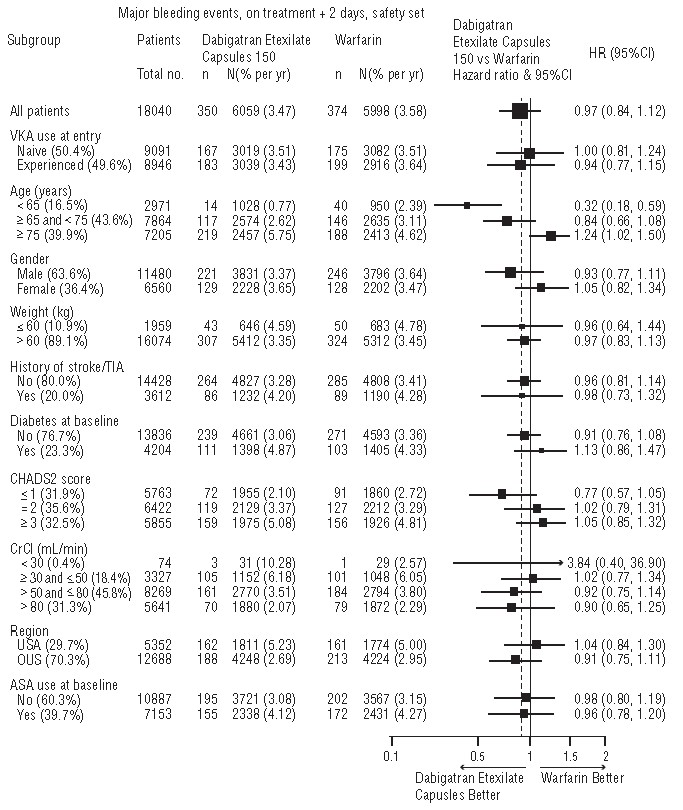
Note: The figure above presents effects in various subgroups all of which are baseline characteristics and all of which were pre-specified. The 95% confidence limits that are shown do not take into account how many comparisons were made, nor do they reflect the effect of a particular factor after adjustment for all other factors. Apparent homogeneity or heterogeneity among groups should not be over-interpreted.
Gastrointestinal Adverse Reactions
Patients on dabigatran etexilate capsules 150 mg had an increased incidence of gastrointestinal adverse reactions (35% vs 24% on warfarin). These were commonly dyspepsia (including abdominal pain upper, abdominal pain, abdominal discomfort, and epigastric discomfort) and gastritis-like symptoms (including GERD, esophagitis, erosive gastritis, gastric hemorrhage, hemorrhagic gastritis, hemorrhagic erosive gastritis, and gastrointestinal ulcer).
Hypersensitivity Reactions
In the RE-LY study, drug hypersensitivity (including urticaria, rash, and pruritus), allergic edema, anaphylactic reaction, and anaphylactic shock were reported in <0.1% of patients receiving dabigatran etexilate capsules.
Treatment and Reduction in the Risk of Recurrence of Deep Venous Thrombosis and Pulmonary Embolism
Dabigatran etexilate capsules were studied in 4,387 patients in 4 pivotal, parallel, randomized, double-blind trials. Three of these trials were active-controlled (warfarin) (RE-COVER, RE-COVER II, and RE-MEDY), and one study (RE-SONATE) was placebo-controlled. The demographic characteristics were similar among the 4 pivotal studies and between the treatment groups within these studies. Approximately 60% of the treated patients were male, with a mean age of 55.1 years. The majority of the patients were white (87.7%), 10.3% were Asian, and 1.9% were black with a mean CrCl of 105.6 mL/min.
Bleeding events for the 4 pivotal studies were classified as major bleeding events if at least one of the following criteria applied: fatal bleeding, symptomatic bleeding in a critical area or organ (intraocular, intracranial, intraspinal or intramuscular with compartment syndrome, retroperitoneal bleeding, intra-articular bleeding, or pericardial bleeding), bleeding causing a fall in hemoglobin level of 2 g/dL (1.24 mmol/L or more, or leading to transfusion of 2 or more units of whole blood or red cells).
RE-COVER and RE-COVER II studies compared dabigatran etexilate capsules 150 mg twice daily and warfarin for the treatment of deep vein thrombosis and pulmonary embolism. Patients received 5 to 10 days of an approved parenteral anticoagulant therapy followed by 6 months, with mean exposure of 164 days, of oral only treatment; warfarin was overlapped with parenteral therapy. Table 4 shows the number of patients experiencing bleeding events in the pooled analysis of RE-COVER and RE-COVER II studies during the full treatment including parenteral and oral only treatment periods after randomization.
Table 4 Bleeding Events in RE-COVER and RE-COVER II Treated Patients
| Bleeding Events-Full Treatment Period Including Parenteral Treatment | |||
| Dabigatran etexilate capsules 150 mg twice daily N (%) | Warfarin N (%) | Hazard Ratio (95% CI) c | |
| Patients | N=2,553 | N=2,554 | |
| Major bleeding event a | 37 (1.4) | 51 (2.0) | 0.73 (0.48, 1.11) |
| Fatal bleeding | 1 (0.04) | 2 (0.1) | |
| Bleeding in a critical area or organ | 7 (0.3) | 15 (0.6) | |
| Fall in hemoglobin ≥2 g/dL or transfusion ≥2 units of whole blood or packed red blood cells | 32 (1.3) | 38 (1.5) | |
| Bleeding sites for MBE b | |||
| Intracranial | 2 (0.1) | 5 (0.2) | |
| Retroperitoneal | 2 (0.1) | 1 (0.04) | |
| Intraarticular | 2 (0.1) | 4 (0.2) | |
| Intramuscular | 2 (0.1) | 6 (0.2) | |
| Gastrointestinal | 15 (0.6) | 14 (0.5) | |
| Urogenital | 7 (0.3) | 14 (0.5) | |
| Other | 8 (0.3) | 8 (0.3) | |
| Clinically relevant non-major bleeding | 101 (4.0) | 170 (6.7) | 0.58 (0.46, 0.75) |
| Any bleeding | 411 (16.1) | 567 (22.7) | 0.70 (0.61, 0.79) |
Note: MBE can belong to more than one criterion.
a Patients with at least one MBE.
b Bleeding site based on investigator assessment. Patients can have more than one site of bleeding.
c Confidence interval
The rate of any gastrointestinal bleeds in patients receiving dabigatran etexilate capsules 150 mg in the full treatment period was 3.1% (2.4% on warfarin).
The RE-MEDY and RE-SONATE studies provided safety information on the use of dabigatran etexilate capsules for the reduction in the risk of recurrence of deep vein thrombosis and pulmonary embolism.
RE-MEDY was an active-controlled study (warfarin) in which 1,430 patients received dabigatran etexilate capsules 150 mg twice daily following 3 to 12 months of oral anticoagulant regimen. Patients in the treatment studies who rolled over into the RE-MEDY study had a combined treatment duration of up to more than 3 years, with mean exposure of 473 days. Table 5 shows the number of patients experiencing bleeding events in the study.
Table 5 Bleeding Events in RE-MEDY Treated Patients
| Dabigatran etexilate capsules 150 mg twice daily N (%) | Warfarin N (%) | Hazard Ratio (95% CI) c | |
| Patients | N=1,430 | N=1,426 | |
| Major bleeding event a | 13 (0.9) | 25 (1.8) | 0.54 (0.25, 1.16) |
| Fatal bleeding | 0 | 1 (0.1) | |
| Bleeding in a critical area or organ | 7 (0.5) | 11 (0.8) | |
| Fall in hemoglobin ≥2 g/dL or transfusion ≥2 units of whole blood or packed red blood cells | 7 (0.5) | 16 (1.1) | |
| Bleeding sites for MBE b | |||
| Intracranial | 2 (0.1) | 4 (0.3) | |
| Intraocular | 4 (0.3) | 2 (0.1) | |
| Retroperitoneal | 0 | 1 (0.1) | |
| Intraarticular | 0 | 2 (0.1) | |
| Intramuscular | 0 | 4 (0.3) | |
| Gastrointestinal | 4 (0.3) | 8 (0.6) | |
| Urogenital | 1 (0.1) | 1 (0.1) | |
| Other | 2 (0.1) | 4 (0.3) | |
| Clinically relevant non-major bleeding | 71 (5.0) | 125 (8.8) | 0.56 (0.42, 0.75) |
| Any bleeding | 278 (19.4) | 373 (26.2) | 0.71 (0.61, 0.83) |
Note: MBE can belong to more than one criterion.
a Patients with at least one MBE.
b Bleeding site based on investigator assessment. Patients can have more than one site of bleeding.
c Confidence interval
In the RE-MEDY study, the rate of any gastrointestinal bleeds in patients receiving dabigatran etexilate capsules 150 mg was 3.1% (2.2% on warfarin).
RE-SONATE was a placebo-controlled study in which 684 patients received dabigatran etexilate capsules 150 mg twice daily following 6 to 18 months of oral anticoagulant regimen. Patients in the treatment studies who rolled over into the RE-SONATE study had combined treatment duration up to 9 months, with mean exposure of 165 days. Table 6 shows the number of patients experiencing bleeding events in the study.
Table 6 Bleeding Events in RE-SONATE Treated Patients
| Dabigatran etexilate capsules 150 mg twice daily N (%) | Placebo N (%) | Hazard Ratio (95% CI) c | |
| Patients | N=684 | N=659 | |
| Major bleeding event a | 2 (0.3) | 0 | |
| Bleeding in a critical area or organ | 0 | 0 | |
| Gastrointestinal b | 2 (0.3) | 0 | |
| Clinically relevant non-major bleeding | 34 (5.0) | 13 (2.0) | 2.54 (1.34, 4.82) |
| Any bleeding | 72 (10.5) | 40 (6.1) | 1.77 (1.20, 2.61) |
Note: MBE can belong to more than one criterion.
a Patients with at least one MBE.
b Bleeding site based on investigator assessment. Patients can have more than one site of bleeding.
c Confidence interval
In the RE-SONATE study, the rate of any gastrointestinal bleeds in patients receiving dabigatran etexilate capsules 150 mg was 0.7% (0.3% on placebo).
Clinical Myocardial Infarction Events
In the active-controlled VTE studies, a higher rate of clinical myocardial infarction was reported in patients who received dabigatran etexilate capsules [20 (0.66 per 100 patient-years)] than in those who received warfarin [5 (0.17 per 100 patient-years)]. In the placebo-controlled study, a similar rate of nonfatal and fatal clinical myocardial infarction was reported in patients who received dabigatran etexilate capsules [1 (0.32 per 100 patient-years)] and in those who received placebo [1 (0.34 per 100 patient-years)].
Gastrointestinal Adverse Reactions
In the four pivotal studies, patients on dabigatran etexilate capsules 150 mg had a similar incidence of gastrointestinal adverse reactions (24.7% vs 22.7% on warfarin). Dyspepsia (including abdominal pain upper, abdominal pain, abdominal discomfort, and epigastric discomfort) occurred in patients on dabigatran etexilate capsules 7.5% vs 5.5% on warfarin, and gastritis-like symptoms (including gastritis, GERD, esophagitis, erosive gastritis and gastric hemorrhage) occurred at 3% vs 1.7%, respectively.
Hypersensitivity Reactions
In the 4 pivotal studies, drug hypersensitivity (including urticaria, rash, and pruritus), allergic edema, anaphylactic reaction, and anaphylactic shock were reported in 0.1% of patients receiving dabigatran etexilate capsules.
Prophylaxis of Deep Vein Thrombosis and Pulmonary Embolism Following Hip Replacement Surgery
Dabigatran etexilate capsules was studied in 5,476 patients, randomized and treated in two double-blind, active-controlled non-inferiority trials (RE-NOVATE and RE-NOVATE II). The demographic characteristics were similar across the two studies and between the treatment groups within these studies. Approximately 45.3% of the treated patients were male, with a mean age of 63.2 years. The majority of the patients were white (96.1%), 3.6% were Asian, and 0.3% were black with a mean CrCl of 92 mL/min.
Bleeding events for the RE-NOVATE and RE-NOVATE II studies were classified as major bleeding events if at least one of the following criteria applied: fatal bleeding, symptomatic bleeding in a critical area or organ (intraocular, intracranial, intraspinal or retroperitoneal bleeding), bleeding causing a fall in hemoglobin level of 2 g/dL (1.24 mmol/L) or more, or leading to transfusion of 2 or more units of whole blood or red cells, requiring treatment cessation or leading to re-operation.
The RE-NOVATE study compared dabigatran etexilate capsules 75 mg taken orally 1 to 4 hours after surgery followed by 150 mg once daily, dabigatran etexilate capsules 110 mg taken orally 1 to 4 hours after surgery followed by 220 mg once daily and subcutaneous enoxaparin 40 mg once daily initiated the evening before surgery for the prophylaxis of deep vein thrombosis and pulmonary embolism in patients who had undergone hip replacement surgery. The RE-NOVATE II study compared dabigatran etexilate capsules 110 mg taken orally 1 to 4 hours after surgery followed by 220 mg once daily and subcutaneous enoxaparin 40 mg once daily initiated the evening before surgery for the prophylaxis of deep vein thrombosis and pulmonary embolism in patients who had undergone hip replacement surgery. In the RE-NOVATE and RE-NOVATE II studies, patients received 28 to 35 days of dabigatran etexilate capsules or enoxaparin with median exposure of 33 days. Tables 7 and 8 show the number of patients experiencing bleeding events in the analysis of RE-NOVATE and RE-NOVATE II.
Table 7 Bleeding Events in RE-NOVATE Treated Patients
| Dabigatran Etexilate Capsules 220 mg N (%) | Enoxaparin N (%) | |
| Patients | N=1,146 | N=1,154 |
| Major bleeding event | 23 (2.0) | 18 (1.6) |
| Clinically relevant non-major bleeding | 48 (4.2) | 40 (3.5) |
| Any bleeding | 141 (12.3) | 132 (11.4) |
Table 8 Bleeding Events in RE-NOVATE II Treated Patients
| Dabigatran Etexilate Capsules 220 mg N (%) | Enoxaparin N (%) | |
| Patients | N=1,010 | N=1,003 |
| Major bleeding event | 14 (1.4) | 9 (0.9) |
| Clinically relevant non-major bleeding | 26 (2.6) | 20 (2.0) |
| Any bleeding | 98 (9.7) | 83 (8.3) |
In the two studies, the rate of major gastrointestinal bleeds in patients receiving dabigatran etexilate capsules and enoxaparin was the same (0.1%) and for any gastrointestinal bleeds was 1.4% for dabigatran etexilate capsules 220 mg and 0.9% for enoxaparin.
Gastrointestinal Adverse Reactions
In the two studies, the incidence of gastrointestinal adverse reactions for patients on dabigatran etexilate capsules 220 mg and enoxaparin was 39.5% and 39.5%, respectively. Dyspepsia (including abdominal pain upper, abdominal pain, abdominal discomfort, and epigastric discomfort) occurred in patients on dabigatran etexilate capsules 220 mg in 4.1% vs. 3.8% on enoxaparin, and gastritis-like symptoms (including gastritis, GERD, esophagitis, erosive gastritis and gastric hemorrhage) occurred at 0.6% vs 1%, respectively.
Hypersensitivity Reactions
In the two studies, drug hypersensitivity (such as urticaria, rash, and pruritus) was reported in 0.3% of patients receiving dabigatran etexilate capsules 220 mg.
Clinical Myocardial Infarction Events
In the two studies, clinical myocardial infarction was reported in 2 (0.1%) of patients who received dabigatran etexilate capsules 220 mg and 6 (0.3%) of patients who received enoxaparin.
Pediatric use information is approved for Boehringer Ingelheim Pharmaceuticals, Inc.’s Pradaxa (dabigatran etexilate) capsules. However, due to Boehringer Ingelheim Pharmaceuticals, Inc.’s marketing exclusivity rights, this drug product is not labeled with that information.
Postmarketing Experience
The following adverse reactions have been identified during post approval use of dabigatran etexilate capsules. Because these reactions are reported voluntarily from a population of uncertain size, it is not always possible to reliably estimate their frequency or establish a causal relationship to drug exposure.
Blood and Lymphatic System Disorders: Agranulocytosis, neutropenia, thrombocytopenia
Gastrointestinal Disorders: Esophageal ulcer
Immune System Disorders: Angioedema
Renal and Urinary Disorders: Anticoagulant-related nephropathy
Skin and Subcutaneous Tissue Disorders: Alopecia
DRUG INTERACTIONS
Reduction of Risk of Stroke and Systemic Embolism in Non-valvular Atrial Fibrillation in Adult Patients
The concomitant use of dabigatran etexilate capsules with P-gp inducers (e.g., rifampin) reduces exposure to dabigatran and should generally be avoided [see Clinical Pharmacology (12.3) ] .
P-gp inhibition and impaired renal function are the major independent factors that result in increased exposure to dabigatran [see Clinical Pharmacology (12.3) ] . Concomitant use of P-gp inhibitors in patients with renal impairment is expected to produce increased exposure of dabigatran compared to that seen with either factor alone.
In patients with moderate renal impairment (CrCl 30 to 50 mL/min), reduce the dosage of dabigatran etexilate capsules to 75 mg twice daily when administered concomitantly with the P-gp inhibitors dronedarone or systemic ketoconazole. The use of the P-gp inhibitors verapamil, amiodarone, quinidine, clarithromycin, and ticagrelor does not require a dosage adjustment of dabigatran etexilate capsules. These results should not be extrapolated to other P-gp inhibitors [see Warnings and Precautions (5.5) , Use in Specific Populations (8.6) , and Clinical Pharmacology (12.3) ] .
The concomitant use of dabigatran etexilate capsules and P-gp inhibitors in patients with severe renal impairment (CrCl 15 to 30 mL/min) should be avoided [see Warnings and Precautions (5.5) , Use in Specific Populations (8.6) , and Clinical Pharmacology (12.3) ] .
7.2 Treatment and Reduction in the Risk of Recurrence of Deep Venous Thrombosis and Pulmonary Embolism in Adult Patients
Prophylaxis of Deep Vein Thrombosis and Pulmonary Embolism in Adult Patients Following Hip Replacement Surgery
In patients with CrCl ≥50 mL/min who have concomitant administration of P-gp inhibitors such as dronedarone or systemic ketoconazole, it may be helpful to separate the timing of administration of dabigatran and the P-gp inhibitor by several hours. The concomitant use of dabigatran etexilate capsules and P-gp inhibitors in patients with CrCl <50 mL/min should be avoided [see Warnings and Precautions (5.5 ), Use in Specific Populations (8.6 ) and Clinical Pharmacology (12.2 , 12.3 )].
Pediatric use information is approved for Boehringer Ingelheim Pharmaceuticals, Inc.’s Pradaxa (dabigatran etexilate) capsules. However, due to Boehringer Ingelheim Pharmaceuticals, Inc.’s marketing exclusivity rights, this drug product is not labeled with that information.
DESCRIPTION
The chemical name for dabigatran etexilate mesylate, a direct thrombin inhibitor, is β-Alanine, N -[[2-[[[4-[[[(hexyloxy)carbonyl]amino]iminomethyl]phenyl]amino]methyl]-1-methyl-1 H -benzimidazol-5-yl]carbonyl]- N -2-pyridinyl-ethyl ester, methanesulfonate. The molecular formula is C 34 H 41 N 7 O 5 ●CH 4 O 3 S and the molecular weight is 723.86 g/mol. The structural formula is:
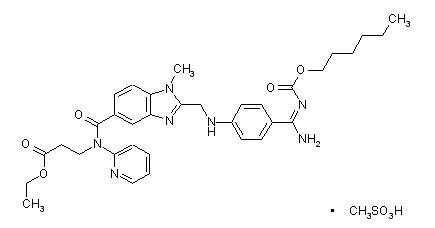
Dabigatran etexilate mesylate is a yellow to white powder. A saturated solution in pure water has a solubility of 1.8 mg/mL. It is freely soluble in methanol, slightly soluble in ethanol, and sparingly soluble in isopropanol, very slightly soluble in acetone, practically insoluble in ethyl acetate.
Dabigatran etexilate capsules are supplied in 75 mg, 110 mg, and 150 mg strengths for oral administration. Each capsule contains dabigatran etexilate mesylate as the active ingredient: 172.97 mg dabigatran etexilate mesylate, which is equivalent to 150 mg of dabigatran etexilate, 126.86 mg dabigatran etexilate mesylate, which is equivalent to 110 mg dabigatran etexilate, or 86.49 mg dabigatran etexilate mesylate which is equivalent to 75 mg dabigatran etexilate. The capsule fill also contains the following inactive ingredients: colloidal silicon dioxide, croscarmellose sodium, fumaric acid, magnesium stearate and mannitol. The capsule shell is composed of FD&C blue No.1, hypromellose, iron oxide red, iron oxide yellow, titanium dioxide and edible black ink which consists of non-volatile ingredients ammonium hydroxide, iron oxide black, potassium hydroxide, propylene glycol and shellac.
CLINICAL PHARMACOLOGY
Mechanism of Action
Dabigatran and its acyl glucuronides are competitive, direct thrombin inhibitors. Because thrombin (serine protease) enables the conversion of fibrinogen into fibrin during the coagulation cascade, its inhibition prevents the development of a thrombus. Both free and clot-bound thrombin, and thrombin-induced platelet aggregation are inhibited by the active moieties.
Pharmacodynamics
At recommended therapeutic doses, dabigatran etexilate prolongs the coagulation markers such as aPTT, ECT, TT, and dTT. INR is relatively insensitive to the exposure to dabigatran and cannot be interpreted the same way as used for warfarin monitoring.
Adults
The aPTT test provides an approximation of dabigatran etexilate capsules anticoagulant effect. The average time course for effects on aPTT, following approved dosing regimens in patients with various degrees of renal impairment is shown in Figure 2. The curves represent mean levels without confidence intervals; variations should be expected when measuring aPTT. While advice cannot be provided on the level of recovery of aPTT needed in any particular clinical setting, the curves can be used to estimate the time to get to a particular level of recovery, even when the time since the last dose of dabigatran etexilate capsules is not precisely known. In the RE-LY trial, the median (10 th to 90 th percentile) trough aPTT in patients receiving the 150 mg dose was 52 (40 to 76) seconds.
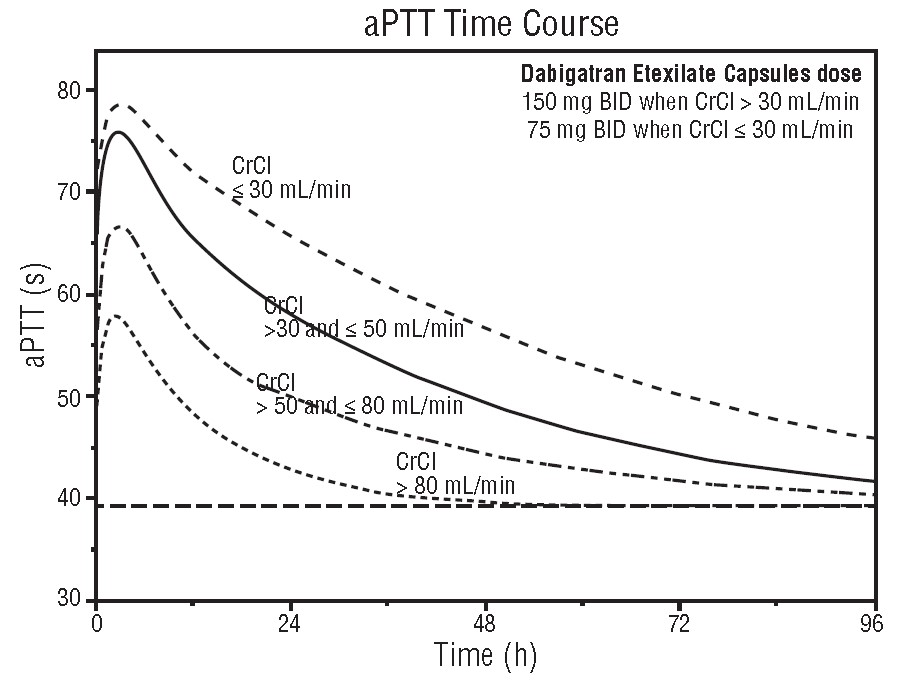
•Simulations based on PK data from a study in subjects with renal impairment and PK/aPTT relationships derived from the RE-LY study; aPTT prolongation in RE-LY was measured centrally in citrate plasma using PTT Reagent Roche Diagnostics GmbH, Mannheim, Germany. There may be quantitative differences between various established methods for aPTT assessment.
The degree of anticoagulant activity can also be assessed by the ecarin clotting time (ECT). This test is a more specific measure of the effect of dabigatran than activated partial thromboplastin time (aPTT). In the RE-LY trial, the median (10 th to 90 th percentile) trough ECT in patients receiving the 150 mg dose was 63 (44 to 103) seconds.
In orthopedic hip surgery patients, maximum aPTT response (E max ) to dabigatran and baseline aPTT were higher shortly after surgery than at later time points (e.g. ≥3 days after surgery).
Cardiac Electrophysiology
No prolongation of the QTc interval was observed with dabigatran etexilate at doses up to 600 mg.
Pediatric use information is approved for Boehringer Ingelheim Pharmaceuticals, Inc.’s Pradaxa (dabigatran etexilate) capsules. However, due to Boehringer Ingelheim Pharmaceuticals, Inc.’s marketing exclusivity rights, this drug product is not labeled with that information.
Pharmacokinetics
Dabigatran etexilate mesylate is absorbed as the dabigatran etexilate ester. The ester is then hydrolyzed, forming dabigatran, the active moiety. Dabigatran is metabolized to four different acyl glucuronides and both the glucuronides and dabigatran have similar pharmacological activity. Pharmacokinetics described here refer to the sum of dabigatran and its glucuronides. Dabigatran displays dose-proportional pharmacokinetics in healthy adult subjects and adult patients in the range of doses from 10 to 400 mg. Given twice daily, dabigatran’s accumulation factor in adults is approximately two.
Absorption
The absolute bioavailability of dabigatran following oral administration of dabigatran etexilate is approximately 3% to 7%. Dabigatran etexilate is a substrate of the efflux transporter P-gp. After oral administration of dabigatran etexilate in healthy volunteers, C max occurs at 1-hour post-administration in the fasted state. Coadministration of dabigatran etexilate capsules with a high-fat meal delays the time to C max by approximately 2 hours but has no effect on the bioavailability of dabigatran; dabigatran etexilate capsules may be administered with or without food.
The oral bioavailability of dabigatran etexilate increases by 75% when the powder is taken without the capsule shell compared to the intact capsule formulation based on a single-dose relative bioavailability study. Dabigatran etexilate capsules should therefore not be broken, chewed, or opened before administration.
Distribution
Dabigatran is approximately 35% bound to human plasma proteins. The red blood cell to plasma partitioning of dabigatran measured as total radioactivity is less than 0.3. The volume of distribution of dabigatran is 50 to 70 L.
Elimination
Dabigatran is eliminated primarily in the urine. Renal clearance of dabigatran is 80% of total clearance after intravenous administration. After oral administration of radiolabeled dabigatran, 7% of radioactivity is recovered in urine and 86% in feces. The half-life of dabigatran in healthy adult subjects is 12 to 17 hours.
Metabolism
After oral administration, dabigatran etexilate is converted to dabigatran. The cleavage of the dabigatran etexilate by esterase-catalyzed hydrolysis to the active principal dabigatran is the predominant metabolic reaction. Dabigatran is not a substrate, inhibitor, or inducer of CYP450 enzymes. Dabigatran is subject to conjugation, forming pharmacologically active acyl glucuronides. Four positional isomers, 1-O, 2-O, 3-O, and 4-O-acylglucuronide exist, and each accounts for less than 10% of total dabigatran in plasma.
Specific Populations
Renal Impairment
An open, parallel-group, single-center study compared dabigatran pharmacokinetics in healthy adult subjects and adult patients with mild to moderate renal impairment receiving a single dose of dabigatran etexilate capsules 150 mg. Exposure to dabigatran increases with severity of renal function impairment (Table 10). Similar findings were observed in the RE-LY, RE-COVER and RE-NOVATE II trials.
| + Patients with severe renal impairment were not studied in RE-LY, RE-COVER and RE-NOVATE II. Dosing recommendations in subjects with severe renal impairment are based on pharmacokinetic modeling [see Dosage and Administration (2.2, 2.4) and Use in Specific Populations (8.6)] . | ||||
| Renal Function | CrCl (mL/min) | Increase in AUC | Increase in C max | t 1/2 (h) |
| Normal | ≥ 80 | 1x | 1x | 13 |
| Mild | 50 to 80 | 1.5x | 1.1x | 15 |
| Moderate | 30 to 50 | 3.2x | 1.7x | 18 |
| Severe + | 15 to 30 | 6.3x | 2.1x | 27 |
Hepatic Impairment
Administration of dabigatran etexilate capsules in adult patients with moderate hepatic impairment (Child-Pugh B) showed a large inter-subject variability, but no evidence of a consistent change in exposure or pharmacodynamics.
Drug Interactions
A summary of the effect of coadministered drugs on dabigatran exposure in healthy adult subjects is shown in Figures 3.1 and 3.2.
In the orthopedic hip surgery patients, limited clinical data with P-gp inhibitors is available.
Figure 3.1 Effect of P-gp Inhibitor or Inducer (rifampicin) Drugs on Peak and Total Exposure to Dabigatran (C max and AUC). Shown are the Geometric Mean Ratios (Ratio) and 90% Confidence Interval (90% CI). The Perpetrator and Dabigatran Etexilate Dosage and Dosage Frequency are given as well as the Time of Perpetrator Dosage in Relation to Dabigatran Etexilate Dosage (Time Difference)
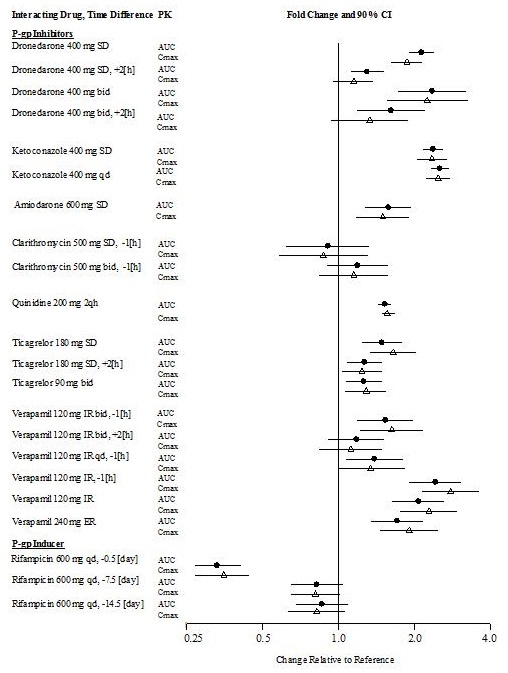
Figure 3.2 Effect of Non-P-gp Inhibitor or Inducer, Other Drugs, on Peak and Total Exposure to Dabigatran (C max and AUC). Shown are the Geometric Mean Ratios (Ratio) and 90% Confidence Interval (90% CI). The Perpetrator and Dabigatran Etexilate Dosage and Dosage Frequency are given as well as the Time of Perpetrator Dosage in Relation to Dabigatran Etexilate Dosage (Time Difference)
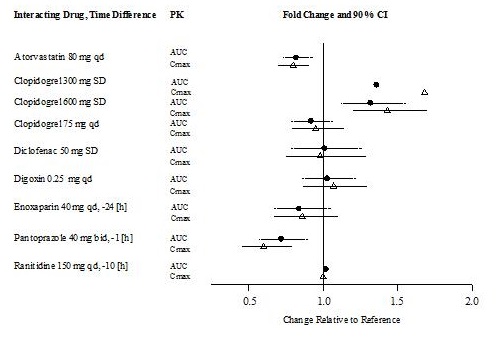
In RE-LY, dabigatran plasma samples were also collected. The concomitant use of proton pump inhibitors, H2 antagonists, and digoxin did not appreciably change the trough concentration of dabigatran.
Impact of Dabigatran on Other Drugs In clinical studies exploring CYP3A4, CYP2C9, P-gp and other pathways, dabigatran did not meaningfully alter the pharmacokinetics of amiodarone, atorvastatin, clarithromycin, diclofenac, clopidogrel, digoxin, pantoprazole, or ranitidine.
Pediatric use information is approved for Boehringer Ingelheim Pharmaceuticals, Inc.’s Pradaxa (dabigatran etexilate) capsules. However, due to Boehringer Ingelheim Pharmaceuticals, Inc.’s marketing exclusivity rights, this drug product is not labeled with that information.
NONCLINICAL TOXICOLOGY
Carcinogenesis, Mutagenesis, Impairment of Fertility
Dabigatran was not carcinogenic when administered by oral gavage to mice and rats for up to 2 years. The highest doses tested (200 mg/kg/day) in mice and rats were approximately 3.6 and 6 times, respectively, the human exposure at MRHD of 300 mg/day based on AUC comparisons.
Dabigatran was not mutagenic in in vitro tests, including bacterial reversion tests, mouse lymphoma assay and chromosomal aberration assay in human lymphocytes, and the in vivo micronucleus assay in rats.
In the rat fertility study with oral gavage doses of 15, 70, and 200 mg/kg, males were treated for 29 days prior to mating, during mating up to scheduled termination, and females were treated 15 days prior to mating through gestation Day 6. No adverse effects on male or female fertility were observed at 200 mg/kg or 9 to 12 times the human exposure at MRHD of 300 mg/day based on AUC comparisons. However, the number of implantations decreased in females receiving 70 mg/kg, or 3 times the human exposure at MRHD based on AUC comparisons.
CLINICAL STUDIES
Reduction of Risk of Stroke and Systemic Embolism in Non-valvular Atrial Fibrillation in Adult Patients
The clinical evidence for the efficacy of dabigatran etexilate capsules was derived from RE-LY (Randomized Evaluation of Long-term Anticoagulant Therapy), a multi-center, multi-national, randomized, parallel group trial comparing two blinded dosages of dabigatran etexilate capsules (110 mg twice daily and 150 mg twice daily) with open-label warfarin (dosed to target INR of 2 to 3) in patients with non-valvular, persistent, paroxysmal, or permanent atrial fibrillation and one or more of the following additional risk factors:
- Previous stroke, transient ischemic attack (TIA), or systemic embolism
- Left ventricular ejection fraction <40%
- Symptomatic heart failure, ≥ New York Heart Association Class 2
- Age ≥75 years
- Age ≥65 years and one of the following: diabetes mellitus, coronary artery disease (CAD), or hypertension
The primary objective of this study was to determine if dabigatran etexilate capsules was non-inferior to warfarin in reducing the occurrence of the composite endpoint, stroke (ischemic and hemorrhagic) and systemic embolism. The study was designed to ensure that dabigatran etexilate capsules preserved more than 50% of warfarin’s effect as established by previous randomized, placebo-controlled trials of warfarin in atrial fibrillation. Statistical superiority was also analyzed.
A total of 18,113 patients were randomized and followed for a median of 2 years. The patients’ mean age was 71.5 years and the mean CHADS 2 score was 2.1. The patient population was 64% male, 70% Caucasian, 16% Asian, and 1% black. Twenty percent of patients had a history of a stroke or TIA and 50% were vitamin K antagonist (VKA) naïve, defined as less than 2 months total lifetime exposure to a VKA. Thirty-two percent of the population had never been exposed to a VKA. Concomitant diseases of patients in this trial included hypertension 79%, diabetes 23%, and CAD 28%. At baseline, 40% of patients were on aspirin and 6% were on clopidogrel. For patients randomized to warfarin, the mean percentage of time in therapeutic range (INR 2 to 3) was 64%.
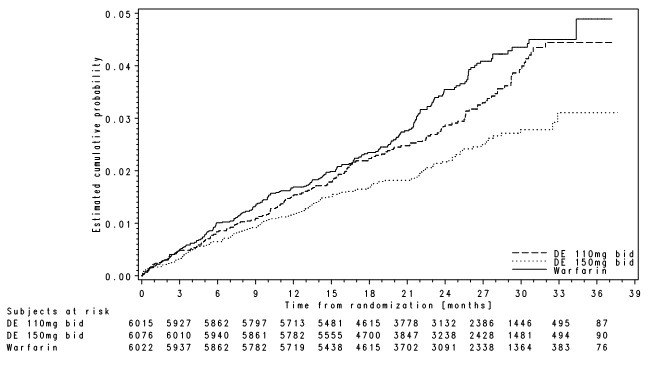
Relative to warfarin and to dabigatran etexilate capsules 110 mg twice daily, dabigatran etexilate capsules 150 mg twice daily significantly reduced the primary composite endpoint of stroke and systemic embolism (see Table 11 and Figure 4).
| • Randomized ITT | |||
| Dabigatran etexilate capsules 150 mg twice daily | Dabigatran etexilate capsules 110 mg twice daily | Warfarin | |
| Patients randomized | 6,076 | 6,015 | 6,022 |
| Patients (% per yr) with events | 135 (1.12%) | 183 (1.54%) | 203 (1.72%) |
| Hazard ratio vs warfarin (95% CI) | 0.65 (0.52, 0.81) | 0.89 (0.73, 1.09) | |
| P-value for superiority | 0.0001 | 0.27 | |
| Hazard ratio vs Dabigatran etexilate capsules 110 mg (95% CI) | 0.72 (0.58, 0.91) | ||
| P-value for superiority | 0.005 | ||
Figure 4 Kaplan-Meier Curve Estimate of Time to First Stroke or Systemic Embolism
The contributions of the components of the composite endpoint, including stroke by subtype, are shown in Table 12. The treatment effect was primarily a reduction in stroke. Dabigatran etexilate capsules 150 mg twice daily was superior in reducing ischemic and hemorrhagic strokes relative to warfarin.
| Dabigatran etexilate capsules 150 mg twice daily | Warfarin | Hazard ratio vs. warfarin (95% CI) | |
| Patients randomized | 6,076 | 6,022 | |
| Stroke | 123 | 187 | 0.64 (0.51, 0.81) |
| Ischemic stroke | 104 | 134 | 0.76 (0.59, 0.98) |
| Hemorrhagic stroke | 12 | 45 | 0.26 (0.14, 0.49) |
| Systemic embolism | 13 | 21 | 0.61 (0.30, 1.21) |
In the RE-LY trial, the rate of all-cause mortality was lower on dabigatran etexilate capsules 150 mg than on warfarin (3.6% per year versus 4.1% per year). The rate of vascular death was lower on dabigatran etexilate capsules 150 mg compared to warfarin (2.3% per year versus 2.7% per year). Non-vascular death rates were similar in the treatment arms.
The efficacy of dabigatran etexilate capsules 150 mg twice daily was generally consistent across major subgroups (see Figure 5).
Figure 5 Stroke and Systemic Embolism Hazard Ratios by Baseline Characteristics•
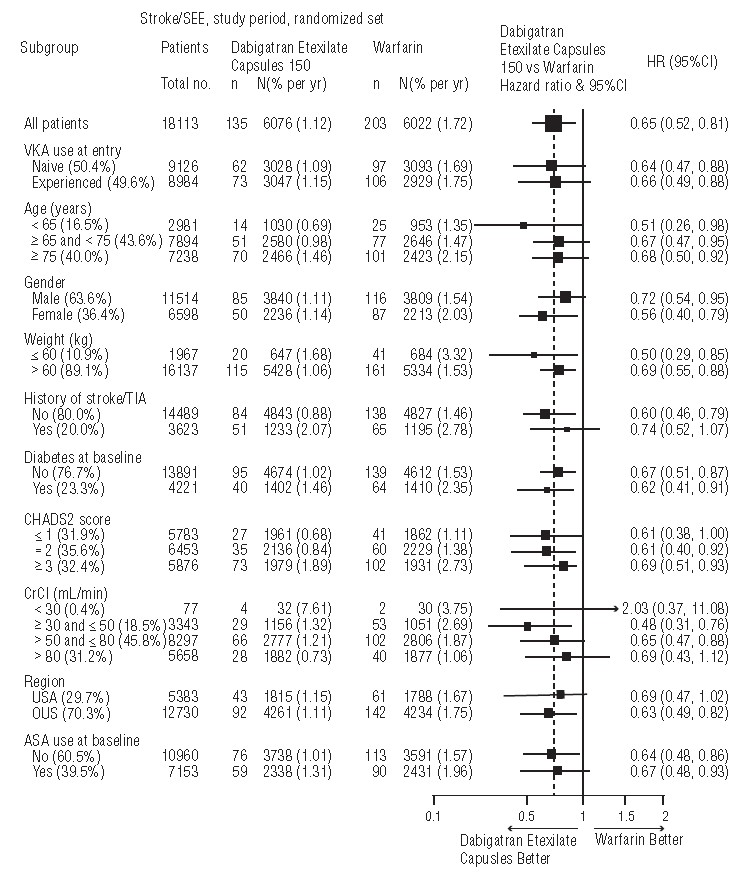
• Randomized ITT Note: The figure above presents effects in various subgroups all of which are baseline characteristics and all of which were pre-specified. The 95% confidence limits that are shown do not take into account how many comparisons were made, nor do they reflect the effect of a particular factor after adjustment for all other factors. Apparent homogeneity or heterogeneity among groups should not be over-interpreted.
In RE-LY, a higher rate of clinical myocardial infarction was reported in patients who received dabigatran etexilate capsules (0.7 per 100 patient-years for 150 mg dose) than in those who received warfarin (0.6).
14.2 Treatment and Reduction in the Risk of Recurrence of Deep Venous Thrombosis and Pulmonary Embolism in Adult Patients
In the randomized, parallel group, double-blind trials, RE-COVER and RE-COVER II, patients with deep vein thrombosis and pulmonary embolism received dabigatran etexilate capsules 150 mg twice daily or warfarin (dosed to target INR of 2 to 3) following initial treatment with an approved parenteral anticoagulant for 5 to 10 days.
In RE-COVER, the median treatment duration during the oral only treatment period was 174 days. A total of 2,539 patients (30.9% patients with symptomatic PE with or without DVT and 68.9% with symptomatic DVT only) were treated with a mean age of 54.7 years. The patient population was 58.4% male, 94.8% white, 2.6% Asian, and 2.6% black. The concomitant diseases of patients in this trial included hypertension (35.9%), diabetes mellitus (8.3%), coronary artery disease (6.5%), active cancer (4.8%), and gastric or duodenal ulcer (4.4%). Concomitant medications included agents acting on renin-angiotensin system (25.2%), vasodilators (28.4%), serum lipid-reducing agents (18.2%), NSAIDs (21%), beta-blockers (14.8%), calcium channel blockers (8.5%), ASA (8.6%), and platelet inhibitors excluding ASA (0.6%). Patients randomized to warfarin had a mean percentage of time in the INR target range of 2.0 to 3.0 of 60% in RE-COVER study.
In RE-COVER II, the median treatment duration during the oral only treatment period was 174 days. A total of 2,568 patients (31.8% patients with symptomatic PE with or without DVT and 68.1% with symptomatic DVT only) were treated with a mean age of 54.9 years. The patient population was 60.6% male, 77.6% white, 20.9% Asian, and 1.5% black. The concomitant diseases of patients in this trial included hypertension (35.1%), diabetes mellitus (9.8%), coronary artery disease (7.1%), active cancer (3.9%), and gastric or duodenal ulcer (3.8%). Concomitant medications included agents acting on renin-angiotensin system (24.2%), vasodilators (28.6%), serum lipid-reducing agents (20%), NSAIDs (22.3%), beta-blockers (14.8%), calcium channel blockers (10.8%), ASA (9.8%), and platelet inhibitors excluding ASA (0.8%). Patients randomized to warfarin had a mean percentage of time in the INR target range of 2.0 to 3.0 of 57% in RE-COVER II study.
In studies RE-COVER and RE-COVER II, the protocol specified non-inferiority margin (2.75) for the hazard ratio was derived based on the upper limit of the 95% confidence interval of the historical warfarin effect. Dabigatran etexilate capsules was demonstrated to be non-inferior to warfarin (dosed to target INR of 2 to 3) (Table 13) based on the primary composite endpoint (fatal PE or symptomatic non-fatal PE and/or DVT) and retains at least 66.9% (RE-COVER) and 63.9% (RE-COVER II) of the historical warfarin effect, respectively.
Table 13 Primary Efficacy Endpoint for RE-COVER and RE-COVER II – Modified ITT a Population
| Dabigatran etexilate capsules 150 mg twice daily N (%) | Warfarin N (%) | Hazard ratio vs warfarin (95% CI) | |
| RE-COVER | N=1,274 | N=1,265 | |
| Primary Composite Endpoint b | 34 (2.7) | 32 (2.5) | 1.05 (0.65, 1.70) |
| Fatal PE c | 1 (0.1) | 3 (0.2) | |
| Symptomatic non-fatal PE c | 16 (1.3) | 8 (0.6) | |
| Symptomatic recurrent DVT c | 17 (1.3) | 23 (1.8) | |
| RE-COVER II | N=1,279 | N=1,289 | |
| Primary Composite Endpoint b | 34 (2.7) | 30 (2.3) | 1.13 (0.69, 1.85) |
| Fatal PE c | 3 (0.2) | 0 | |
| Symptomatic non-fatal PE c | 9 (0.7) | 15 (1.2) | |
| Symptomatic recurrent DVT c | 30 (2.3) | 17 (1.3) |
a Modified ITT analyses population consists of all randomized patients who received at least one dose of study medication.
b Number of patients with one or more event.
c Number of events. For patients with multiple events each event is counted independently.
In the randomized, parallel-group, double-blind, pivotal trial, RE-MEDY, patients received dabigatran etexilate capsules 150 mg twice daily or warfarin (dosed to target INR of 2 to 3) following 3 to 12 months of treatment with anticoagulation therapy for an acute VTE. The median treatment duration during the treatment period was 534 days. A total of 2,856 patients were treated with a mean age of 54.6 years. The patient population was 61% male, and 90.1% white, 7.9% Asian and 2% black. The concomitant diseases of patients in this trial included hypertension (38.6%), diabetes mellitus (9%), coronary artery disease (7.2%), active cancer (4.2%), and gastric or duodenal ulcer (3.8%). Concomitant medications included agents acting on renin-angiotensin system (27.9%), vasodilators (26.7%), serum lipid reducing agents (20.6%), NSAIDs (18.3%), beta-blockers (16.3%), calcium channel blockers (11.1%), aspirin (7.7%), and platelet inhibitors excluding ASA (0.9%). Patients randomized to warfarin had a mean percentage of time in the INR target range of 2.0 to 3.0 of 62% in the study.
In study RE-MEDY, the protocol specified non-inferiority margin (2.85) for the hazard ratio was derived based on the point estimate of the historical warfarin effect. Dabigatran etexilate capsules were demonstrated to be non-inferior to warfarin (dosed to target INR of 2 to 3) (Table 14) based on the primary composite endpoint (fatal PE or symptomatic non-fatal PE and/or DVT) and retains at least 63% of the historical warfarin effect. If the non-inferiority margin was derived based on the 50% retention of the upper limit of the 95% confidence interval, dabigatran etexilate capsules was demonstrated to retain at least 33.4% of the historical warfarin effect based on the composite primary endpoint.
Table 14 Primary Efficacy Endpoint for RE-MEDY – Modified ITT a Population
| Dabigatran etexilate capsules 150 mg twice daily N=1,430 N (%) | Warfarin N=1,426 N (%) | Hazard ratio vs warfarin (95% CI) | |
| Primary Composite Endpoint b | 26 (1.8) | 18 (1.3) | 1.44 (0.78, 2.64) |
| Fatal PE c | 1 (0.07) | 1 (0.07) | |
| Symptomatic non-fatal PE c | 10 (0.7) | 5 (0.4) | |
| Symptomatic recurrent DVT c | 17 (1.2) | 13 (0.9) |
a Modified ITT analyses population consists of all randomized patients who received at least one dose of study medication.
b Number of patients with one or more event.
c Number of events. For patients with multiple events each event is counted independently.
In a randomized, parallel-group, double-blind, pivotal trial, RE-SONATE, patients received dabigatran etexilate capsules 150 mg twice daily or placebo following 6 to 18 months of treatment with anticoagulation therapy for an acute VTE. The median treatment duration was 182 days. A total of 1,343 patients were treated with a mean age of 55.8 years. The patient population was 55.5% male, 89% white, 9.3% Asian, and 1.7% black. The concomitant diseases of patients in this trial included hypertension (38.8%), diabetes mellitus (8%), coronary artery disease (6%), history of cancer (6%), gastric or duodenal ulcer (4.5%), and heart failure (4.6%). Concomitant medications included agents acting on renin-angiotensin system (28.7%), vasodilators (19.4%), beta-blockers (18.5%), serum lipid reducing agents (17.9%), NSAIDs (12.1%), calcium channel blockers (8.9%), aspirin (8.3%), and platelet inhibitors excluding ASA (0.7%). Based on the outcome of the primary composite endpoint (fatal PE, unexplained death, or symptomatic non-fatal PE and/or DVT), dabigatran etexilate capsules was superior to placebo (Table 15).
Table 15 Primary Efficacy Endpoint for RE-SONATE – Modified ITT a Population
| Dabigatran etexilate capsules 150 mg twice daily N=681 N (%) | Placebo N=662 N (%) | Hazard ratio vs placebo (95% CI) | |
| Primary Composite Endpoint b | 3 (0.4) | 37 (5.6) | 0.08 (0.02, 0.25) p-value <0.0001 |
| Fatal PE and unexplained death c | 0 | 2 (0.3) | |
| Symptomatic non-fatal PE c | 1 (0.1) | 14 (2.1) | |
| Symptomatic recurrent DVT c | 2 (0.3) | 23 (3.5) |
a Modified ITT analyses population consists of all randomized patients who received at least one dose of study medication.
b Number of patients with one or more events.
c Number of events. For patients with multiple events each event is counted independently.
14.3 Prophylaxis of Deep Vein Thrombosis and Pulmonary Embolism in Adult Patients Following Hip Replacement Surgery
In the randomized, parallel-group, double-blind, non-inferiority trials, RE-NOVATE and RE-NOVATE II patients received dabigatran etexilate capsules 75 mg orally 1 to 4 hours after surgery followed by 150 mg daily (RE-NOVATE), dabigatran etexilate capsules 110 mg orally 1 to 4 hours after surgery followed by 220 mg daily (RE-NOVATE and RE-NOVATE II) or subcutaneous enoxaparin 40 mg once daily initiated the evening before surgery (RE-NOVATE and RE-NOVATE II) for the prophylaxis of deep vein thrombosis and pulmonary embolism in patients who have undergone hip replacement surgery.
Overall, in RE-NOVATE and RE-NOVATE II, the median treatment duration was 33 days for dabigatran etexilate capsules and 33 days for enoxaparin. A total of 5,428 patients were treated with a mean age of 63.2 years. The patient population was 45.3% male, 96.1% white, 3.6% Asian, and 0.4 % black. The concomitant diseases of patients in these trials included hypertension (46.1%), venous insufficiency (15.4%), coronary artery disease (8.2%), diabetes mellitus (7.9%), reduced renal function (5.3%), heart failure (3.4%), gastric or duodenal ulcer (3%), VTE (2.7%), and malignancy (0.1%). Concomitant medications included cardiac therapy (69.7%), NSAIDs (68%), vasoprotectives (29.7%), agents acting on renin-angiotensin system (29.1%), beta-blockers (21.5%), diuretics (20.8%), lipid modifying agents (18.2%), any antithrombin/anticoagulant (16%), calcium channel blockers (13.6%), low molecular weight heparin (7.8%), aspirin (7%), platelet inhibitors excluding ASA (6.9%), other antihypertensives (6.7%), and peripheral vasodilators (2.6%).
For efficacy evaluation all patients were to have bilateral venography of the lower extremities at 3 days after last dose of study drug unless an endpoint event had occurred earlier in the study. In the primary efficacy analysis, dabigatran etexilate capsules 110 mg orally 1 to 4 hours after surgery followed by 220 mg daily was non-inferior to enoxaparin 40 mg once daily in a composite endpoint of confirmed VTE (proximal or distal DVT on venogram, confirmed symptomatic DVT, or confirmed PE) and all cause death during the treatment period (Tables 16 and 17). In the studies 2628 (76.5%) patients in RE-NOVATE and 1572 (78.9%) patients in RE-NOVATE II had evaluable venograms at study completion.
Table 16 Primary Efficacy Endpoint for RE-NOVATE
| Dabigatran Etexilate Capsules 220 mg N (%) | Enoxaparin N(%) | |
| Number of Patients a | N=880 | N= 897 |
| Primary Composite Endpoint | 53 (6.0) | 60 (6.7) |
| Risk difference (%) vs enoxaparin (95% CI) | -0.7 (-2.9, 1.6) | |
| Number of Patients | N=909 | N=917 |
| Composite endpoint of major VTE b and VTE related mortality | 28 (3.1) | 36 (3.9) |
| Number of Patients | N=905 | N=914 |
| Proximal DVT | 23 (2.5) | 33 (3.6) |
| Number of Patients | N=874 | N=894 |
| Total DVT | 46 (5.3) | 57 (6.4) |
| Number of Patients | N=1,137 | N=1,142 |
| Symptomatic DVT | 6 (0.5) | 1 (0.1) |
| PE | 5 (0.4) | 3 (0.3) |
| Death | 3 (0.3) | 0 |
a Full Analysis Set (FAS): The FAS included all randomized patients who received at least one subcutaneous injection or one oral dose of study medication, underwent surgery and subjects for whom the presence or absence of an efficacy outcome at the end of the study was known, i.e., an evaluable negative venogram for both distal and proximal DVT in both legs or any of the following: positive venography in one or both legs, or confirmed symptomatic DVT, PE, or death during the treatment period.
b VTE is defined as proximal DVT and PE
Table 17 Primary Efficacy Endpoint for RE-NOVATE II
| Dabigatran Etexilate Capsules 220 mg N (%) | Enoxaparin N (%) | |
| Number of Patients a | N=792 | N=786 |
| Primary Composite Endpoint | 61 (7.7) | 69 (8.8) |
| Risk difference (%) vs enoxaparin (95% CI) | -1.1 (-3.8, 1.6) | |
| Number of Patients | N=805 | N=795 |
| Composite endpoint of major VTE b and VTE related mortality | 18 (2.2) | 33 (4.2) |
| Number of Patients | N=804 | N=793 |
| Proximal DVT | 17 (2.1) | 31 (3.9) |
| Number of Patients | N=791 | N=784 |
| Total DVT | 60 (7.6) | 67 (8.5) |
| Number of Patients | N=1,001 | N=992 |
| Symptomatic DVT | 0 | 4 (0.4) |
| PE | 1 (0.1) | 2 (0.2) |
| Death | 0 | 1 (0.1) |
a Full Analysis Set (FAS): The FAS included all randomized patients who received at least one subcutaneous injection or one oral dose of study medication, underwent surgery and subjects for whom the presence or absence of an efficacy outcome at the end of the study was known, i.e., an evaluable negative venogram for both distal and proximal DVT in both legs or any of the following: positive venography in one or both legs, or confirmed symptomatic DVT, PE, or death during the treatment period.
b VTE is defined as proximal DVT and PE
Pediatric use information is approved for Boehringer Ingelheim Pharmaceuticals, Inc.’s Pradaxa (dabigatran etexilate) capsules. However, due to Boehringer Ingelheim Pharmaceuticals, Inc.’s marketing exclusivity rights, this drug product is not labeled with that information.
HOW SUPPLIED/STORAGE AND HANDLING
Dabigatran etexilate capsules 75 mg have a hypromellose capsule shell with a buff opaque body, light blue opaque cap, imprinted "APO" on cap and "D75" on body in black ink. Filled with light yellow to yellow colored powder. The capsules are supplied in the packages listed:
- NDC 60505-4347-6 Bottle of 60 capsules with child-resistant cap
- NDC 60505-4347-2 Carton of 60 capsules (10 x 6 unit-dose blister cards)
Dabigatran etexilate capsules 110 mg have a hypromellose capsule shell with a buff opaque body, light blue opaque cap, imprinted "APO" on cap and "D110" on body in black ink. Filled with light yellow to yellow colored powder. The capsules are supplied in the packages listed:
- NDC 60505-4349-6 Bottle of 60 capsules with child-resistant cap
- NDC 60505-4349-2 Carton of 60 capsules (10 x 6 unit-dose blister cards)
Dabigatran etexilate capsules 150 mg have a hypromellose capsule shell with a buff opaque body, light blue opaque cap, imprinted "APO" on cap and "D150" on body in black ink. Filled with light yellow to yellow colored powder. The capsules are supplied in the packages listed:
- NDC 60505-4348-6 Bottle of 60 capsules with child-resistant cap
- NDC 60505-4348-2 Carton of 60 capsules (10 x 6 unit-dose blister cards)
Bottles
Store at 20°C to 25°C (68°F to 77°F); excursions permitted from 15°C to 30°C (59°F to 86°F). [See USP Controlled Room Temperature]. Once opened, the product must be used within 4 months. Keep the bottle tightly closed. Store in the original package to protect from moisture.
Blisters
Store at 20°C to 25°C (68°F to 77°F); excursions permitted to 15°C to 30°C (59°F to 86°F) [see USP Controlled Room Temperature]. Store in the original package to protect from moisture.
Mechanism of Action
Dabigatran and its acyl glucuronides are competitive, direct thrombin inhibitors. Because thrombin (serine protease) enables the conversion of fibrinogen into fibrin during the coagulation cascade, its inhibition prevents the development of a thrombus. Both free and clot-bound thrombin, and thrombin-induced platelet aggregation are inhibited by the active moieties.
