Get your patient on Desflurane - Desflurane liquid (Desflurane)
Desflurane - Desflurane liquid prescribing information

Contraindications (4) 11/2022
Warnings and Precautions; Malignant Hyperthermia (5.1) 11/2022
INDICATIONS AND USAGE
Desflurane, USP, Liquid for Inhalation, a general anesthetic, is an inhalation agent indicated:
- for induction and/or maintenance of anesthesia in adults (1.1 )
- for maintenance of anesthesia in pediatric patients following induction with agents other than Desflurane, USP, Liquid for Inhalation and intubation.
Induction of Anesthesia
Desflurane, USP, Liquid for Inhalation is indicated as an inhalation agent for induction of anesthesia for inpatient and outpatient surgery in adults.
Desflurane, USP, Liquid for Inhalation is contraindicated as an inhalation agent for the induction of anesthesia in pediatric patients because of a high incidence of moderate to severe upper airway adverse events.
Maintenance of Anesthesia
Desflurane, USP, Liquid for Inhalation is indicated as an inhalation agent for maintenance of anesthesia for inpatient and outpatient surgery in adults and in pediatric patients.
After induction of anesthesia with agents other than Desflurane, USP, Liquid for Inhalation, and tracheal intubation, Desflurane, USP, Liquid for Inhalation is indicated for maintenance of anesthesia in infants and children. Desflurane, USP, Liquid for Inhalation is not approved for maintenance of anesthesia in non-intubated children due to an increased incidence of respiratory adverse reactions, including coughing, laryngospasm, and secretions [See Warnings and Precautions (5.3) and Clinical Studies (14.5) ] .
DOSAGE AND ADMINISTRATION
Only persons trained in the administration of general anesthesia should administer Desflurane, USP, Liquid for Inhalation. Only a vaporizer specifically designed and designated for use with desflurane should be utilized for its administration. Facilities for maintenance of a patent airway, artificial ventilation, oxygen enrichment, and circulatory resuscitation must be immediately available.
Desflurane, USP, Liquid for Inhalation is administered by inhalation. The administration of general anesthesia must be individualized based on the patient’s response. Hypotension and respiratory depression increase as anesthesia with Desflurane, USP, Liquid for Inhalation is deepened. The minimum alveolar concentration (MAC) of Desflurane, USP, Liquid for Inhalation decreases with increasing patient age. The MAC for Desflurane, USP, Liquid for Inhalation is also reduced by concomitant N 2 O administration (See Table 1 ) . The dose should be adjusted accordingly. The following table provides mean relative potency based upon age and effect of N 2 O in predominately ASA physical status I or II patients.
Benzodiazepines and opioids decrease the MAC of Desflurane, USP, Liquid for Inhalation [See Drug Interactions (7.1, Table 3) ] . Desflurane, USP, Liquid for Inhalation also decreases the doses of neuromuscular blocking agents required [See Drug Interactions (7.2, Table 4) ] . The dose should be adjusted accordingly.
Effect of Age on Minimum Alveolar Concentration of Desflurane Mean ± SD (percent atmospheres) | ||||
Age | N | O 2 100% | N | N 2 O 60%/40% O 2 |
2 weeks | 6 | 9.2 ± 0 | ||
10 weeks | 5 | 9.4 ± 0.4 | ||
9 months | 4 | 10 ± 0.7 | 5 | 7.5 ± 0.8 |
2 years | 3 | 9.1 ± 0.6 | ||
3 years | 5 | 6.4 ± 0.4 | ||
4 years | 4 | 8.6 ± 0.6 | ||
7 years | 5 | 8.1 ± 0.6 | ||
25 years | 4 | 7.3 ± 0 | 4 | 4 ± 0.3 |
45 years | 4 | 6 ± 0.3 | 6 | 2.8 ± 0.6 |
70 years | 6 | 5.2 ± 0.6 | 6 | 1.7 ± 0.4 |
N = number of crossover pairs (using up-and-down method of quantal response) | ||||
Preanesthetic Medication
Issues such as whether or not to premedicate and the choice of premedication(s) must be individualized. In clinical studies, patients scheduled to be anesthetized with Desflurane, USP, Liquid for Inhalation frequently received IV preanesthetic medication, such as opioid and/or benzodiazepine.
Induction
In adults, some premedicated with opioid, a frequent starting concentration was 3% Desflurane, USP, Liquid for Inhalation, increased in 0.5% to 1% increments every 2 to 3 breaths. End-tidal concentrations of 4% to 11%, Desflurane, USP, Liquid for Inhalation with and without N 2 O, produced anesthesia within 2 minutes to 4 minutes. When Desflurane, USP, Liquid for Inhalation was tested as the primary anesthetic induction agent, the incidence of upper airway irritation (apnea, breathholding, laryngospasm, coughing and secretions) was high. During induction in adults, the overall incidence of oxyhemoglobin desaturation (SpO 2 < 90%) was 6% [See Adverse Reactions (6.1) ].
After induction in adults with an intravenous drug such as thiopental or propofol, Desflurane, USP, Liquid for Inhalation can be started at approximately 0.5 to 1 MAC, whether the carrier gas is O 2 or N 2 O/O 2 .
Inspired concentrations of Desflurane, USP, Liquid for Inhalation greater than 12% have been safely administered to patients, particularly during induction of anesthesia. Such concentrations will proportionately dilute the concentration of oxygen; therefore, maintenance of an adequate concentration of oxygen may require a reduction of nitrous oxide or air if these gases are used concurrently.
Maintenance
Surgical levels of anesthesia in adults may be maintained with concentrations of 2.5% to 8.5% Desflurane, USP, Liquid for Inhalation with or without the concomitant use of nitrous oxide. In children, surgical levels of anesthesia may be maintained with concentrations of 5.2% to 10% Desflurane, USP, Liquid for Inhalation with or without the concomitant use of nitrous oxide.
During the maintenance of anesthesia with inflow rates of 2 L/min or more, the alveolar concentration of Desflurane, USP, Liquid for Inhalation will usually be within 10% of the inspired concentration [F A /F I , see Figure 2 in Clinical Pharmacology (12.3) ] .
During the maintenance of anesthesia, increasing concentrations of Desflurane, USP, Liquid for Inhalation produce dose-dependent decreases in blood pressure. Excessive decreases in blood pressure may be due to depth of anesthesia and in such instances may be corrected by decreasing the inspired concentration of Desflurane, USP, Liquid for Inhalation.
Concentrations of Desflurane, USP, Liquid for Inhalation exceeding 1 MAC may increase heart rate. Thus with this drug, an increased heart rate may not serve reliably as a sign of inadequate anesthesia.
Maintenance of Anesthesia in Intubated Pediatric Patients
Desflurane, USP, Liquid for Inhalation is indicated for maintenance of anesthesia in infants and children after induction of anesthesia with agents other thanDesflurane, USP, Liquid for Inhalation, and tracheal intubation.
Desflurane, USP, Liquid for Inhalation, with or without N 2 O, and halothane, with or without N 2 O were studied in three clinical trials of pediatric patients aged 2 weeks to 12 years (median 2 years) and ASA physical status I or II. The concentration of Desflurane, USP, Liquid for Inhalation required for maintenance of general anesthesia is age-dependent [See Clinical Studies (14.5) ] .
Changes in blood pressure during maintenance of and recovery from anesthesia with Desflurane, USP, Liquid for Inhalation/N 2 O/O 2 are similar to those observed with halothane/N 2 O/O 2 . Heart rate during maintenance of anesthesia is approximately 10 beats per minute faster with desflurane than with halothane. Patients were judged fit for discharge from post-anesthesia care units within one hour with both Desflurane, USP, Liquid for Inhalation and halothane. There were no differences in the incidence of nausea and vomiting between patients receiving Desflurane, USP, Liquid for Inhalation or halothane.
Recovery
The recovery from general anesthesia should be assessed carefully before patients are discharged from the post anesthesia care unit (PACU).
Use in Patients with Coronary Artery Disease
In patients with coronary artery disease, maintenance of normal hemodynamics is important to prevent myocardial ischemia. A rapid increase in desflurane concentration is associated with marked increase in pulse rate, mean arterial pressure and levels of epinephrine and norepinephrine. Desflurane, USP, Liquid for Inhalation should not be used as the sole agent for anesthetic induction in patients with coronary artery disease or patients where increases in heart rate or blood pressure are undesirable. It should be used with other medications, preferably intravenous opioids and hypnotics [See Clinical Studies (14.2) ] .
Neurosurgical Use
Desflurane, USP, Liquid for Inhalation may produce a dose-dependent increase in cerebrospinal fluid pressure (CSFP) when administered to patients with intracranial space occupying lesions. Desflurane, USP, Liquid for Inhalation should be administered at 0.8 MAC or less, and in conjunction with a barbiturate induction and hyperventilation (hypocapnia) until cerebral decompression in patients with known or suspected increases in CSFP. Appropriate attention must be paid to maintain cerebral perfusion pressure [See Clinical Studies (14.4) ] .
Observations Related to Vaporizer Use
Yellow discoloration of Desflurane, USP, Liquid for Inhalation sometimes accompanied by particulates, has been observed through the vaporizer sight glass or after draining the vaporizer. The presence of discoloration or particulates in these situations does not alter the quality or efficacy of Desflurane, USP, Liquid for Inhalation. If observed, refer to the respective vaporizer Instructions For Use (IFU) for recommended actions or contact Sandoz Product Surveillance.
DOSAGE FORMS AND STRENGTHS
Desflurane, USP, Liquid for Inhalation is a colorless, non-flammable, volatile liquid (below 22.8°C) for inhalation, 100% desflurane.
USE IN SPECIFIC POPULATIONS
- Geriatric Use: The minimum alveolar concentration (MAC) of desflurane decreases with increasing patient age. (8.5 )
Pregnancy
Risk Summary
There are no adequate and well-controlled studies in pregnant women. In animal reproduction studies, embryo-fetal toxicity (reduced viable fetuses and/or increased post-implantation loss) was noted in pregnant rats and rabbits administered 1 MAC desflurane for 4 hours a day (4 MAC-hours/day) during organogenesis.
Published studies in pregnant primates demonstrate that the administration of anesthetic and sedation drugs that block NMDA receptors and/or potentiate GABA activity during the period of peak brain development increases neuronal apoptosis in the developing brain of the offspring when used for longer than 3 hours. There are no data on pregnancy exposures in primates corresponding to periods prior to the third trimester in humans [See Data] .
The estimated background risk of major birth defects and miscarriage for the indicated population is unknown. All pregnancies have a background risk of birth defect, loss, or other adverse outcomes. In the U.S. general population, the estimated background risk of major birth defects and miscarriage in clinically recognized pregnancies is 2% to 4% and 15% to 20%, respectively.
Clinical Considerations
Labor or Delivery
The safety of desflurane during labor or delivery has not been demonstrated. Desflurane is a uterine-relaxant.
Data
Animal Data
Pregnant rats were exposed to 8.2% desflurane (1 MAC; 60% oxygen) for 0.5, 1, or 4 hours (0.5, 1, or 4 MAC-hours) per day during organogenesis (Gestation Day 6 to 15).
Embryo-fetal toxicity (increased post-implantation loss and reduced viable fetuses) was noted in the 4 hour treatment group in the presence of maternal toxicity (reduced body weight gain). There was no evidence of malformations in any group.
Pregnant rabbits were exposed to 8.9% desflurane (1 MAC; 60% oxygen) for 0.5, 1, or 3 hours per day during organogenesis (Gestation Days 6 to 18). Fetal toxicity (reduced viable fetuses) was noted in the 3 hour treatment group in the presence of maternal toxicity (reduced body weight). There was no evidence of malformations in any group.
Pregnant rats were exposed to 8.2% desflurane (1 MAC; 60% oxygen) for 0.5, 1, or 4 hours per day from late gestation and through lactation (Gestation Day 15 to Lactation Day 21). Pup body weights were reduced in the 4 hours per day group in the presence of maternal toxicity (increased mortality and reduced body weight gain). This study did not evaluate neurobehavioral function including learning and memory or reproductive behavior in the first generation (F1) pups.
In a published study in primates, administration of an anesthetic dose of ketamine for 24 hours on Gestation Day 122 increased neuronal apoptosis in the developing brain of the fetus. In other published studies, administration of either isoflurane or propofol for 5 hours on Gestation Day 120 resulted in increased neuronal and oligodendrocyte apoptosis in the developing brain of the offspring. With respect to brain development, this time period corresponds to the third trimester of gestation in the human. The clinical significance of these findings is not clear; however, studies in juvenile animals suggest neuroapoptosis correlates with long-term cognitive deficits [See Warnings and Precautions (5.7) , Use in Specific Populations (8.4) , and Nonclinical Toxicology (13.2) ] .
Lactation
It is not known whether this drug is excreted in human milk. Because many drugs are excreted in human milk, caution should be exercised when desflurane is administered to a nursing woman.
Pediatric Use
Respiratory Adverse Reactions in Pediatric Patients
Desflurane is indicated for maintenance of anesthesia in infants and children after induction of anesthesia with agents other than desflurane, and tracheal intubation.
Is not approved for maintenance of anesthesia in non-intubated children due to an increased incidence of respiratory adverse reactions, including coughing (26%), laryngospasm (13%) and secretions (12%) [See Clinical Studies (14.5) ] .
Children, particularly if 6 years old or younger, who are under an anesthetic maintenance of desflurane delivered via laryngeal mask airway (LMA™ mask) are at increased risk for adverse respiratory reactions, e.g., coughing and laryngospasm, especially with removal of the laryngeal mask airway under deep anesthesia [See Clinical Studies (14.5) ] . Therefore, closely monitor these patients for signs and symptoms associated with laryngospasm and treat accordingly.
When desflurane is used for maintenance of anesthesia in children with asthma or a history of recent upper airway infection, there is an increased risk for airway narrowing and increases in airway resistance. Therefore, closely monitor these patients for signs and symptoms associated with airway narrowing and treat accordingly.
Published juvenile animal studies demonstrate that the administration of anesthetic and sedation drugs, such as desflurane, that either block NMDA receptors or potentiate the activity of GABA during the period of rapid brain growth or synaptogenesis, results in widespread neuronal and oligodendrocyte cell loss in the developing brain and alterations in synaptic morphology and neurogenesis. Based on comparisons across species, the window of vulnerability to these changes is believed to correlate with exposures in the third trimester of gestation through the first several months of life, but may extend out to approximately 3 years of age in humans.
In primates, exposure to 3 hours of ketamine that produced a light surgical plane of anesthesia did not increase neuronal cell loss, however, treatment regimens of 5 hours or longer of isoflurane increased neuronal cell loss. Data from isoflurane-treated rodents and ketamine-treated primates suggest that the neuronal and oligodendrocyte cell losses are associated with prolonged cognitive deficits in learning and memory. The clinical significance of these nonclinical findings is not known, and healthcare providers should balance the benefits of appropriate anesthesia in pregnant women, neonates, and young children who require procedures with the potential risks suggested by the nonclinical data [See Warnings and Precautions (5.7) , Use in Specific Populations (8.1) , and Nonclinical Toxicology (13.2) ] .
Geriatric Use
The minimum alveolar concentration (MAC) of desflurane decreases with increasing patient age. The dose should be adjusted accordingly. The average MAC for desflurane in a 70 year old patient is two-thirds the MAC for a 20 year old patient [See Dosage and Administration (2) Table 1 and Clinical Studies (14.3) ] .
Renal Impairment
Concentrations of 1% to 4% desflurane in nitrous oxide/oxygen have been used in patients with chronic renal or hepatic impairment and during renal transplantation surgery.
Because of minimal metabolism, a need for dose adjustment in patients with renal and hepatic impairment is not to be expected.
Nine patients receiving desflurane (N=9) were compared to 9 patients receiving isoflurane, all with chronic renal insufficiency (serum creatinine 1.5 mg/dL to 6.9 mg/dL). No differences in hematological or biochemical tests, including renal function evaluation, were seen between the two groups. Similarly, no differences were found in a comparison of patients receiving either desflurane (N=28) or isoflurane (N=30) undergoing renal transplant.
Hepatic Impairment
Eight patients receiving desflurane were compared to six patients receiving isoflurane, all with chronic hepatic disease (viral hepatitis, alcoholic hepatitis, or cirrhosis). No differences in hematological or biochemical tests, including hepatic enzymes and hepatic function evaluation, were seen.
CONTRAINDICATIONS
The use of Desflurane, USP, Liquid for Inhalation is contraindicated in the following conditions:
- Known or suspected genetic susceptibility to malignant hyperthermia [See Warnings and Precautions (5.1), Clinical Pharmacology (12.5)] .
- Patients in whom general anesthesia is contraindicated.
- Induction of anesthesia in pediatric patients.
- Patients with known sensitivity to Desflurane, USP, Liquid for Inhalation or to other halogenated agents [See Warnings and Precautions (5.6) ] .
- Patients with a history of moderate to severe hepatic dysfunction following anesthesia with Desflurane, USP, Liquid for Inhalation or other halogenated agents and not otherwise explained [See Warnings and Precautions (5.6) ] .
WARNINGS AND PRECAUTIONS
- Malignant Hyperthermia: Malignant hyperthermia may occur, especially in individuals with known or suspected susceptibility based on genetic factors or family history. Discontinue triggering agents, administer intravenous dantrolene sodium, and apply supportive therapies. (5.1 )
- Perioperative Hyperkalemia: Perioperative hyperkalemia may occur. Patients with latent or overt neuromuscular disease, particularly with Duchenne muscular dystrophy, appear to be most vulnerable. Early, aggressive intervention is recommended. (5.2 )
- Respiratory Adverse Reactions in Pediatric Patients:
- Not approved for maintenance of anesthesia in non-intubated children due to an increased incidence of respiratory adverse reactions. Monitor and treat accordingly. (5.3 ) - May cause airway narrowing and increased airway resistance in children with asthma or a history of recent upper airway infection. Monitor and treat accordingly.(5.3 )
- QTc Prolongation: Carefully monitor cardiac rhythm when administering desflurane to susceptible patients. (5.4 )
- Interactions with Desiccated Carbon Dioxide (CO 2 ) Absorbents: May react with desiccated CO 2 absorbents to produce carbon monoxide. Replace desiccated CO 2 absorbent before administration of desflurane. (5.5 )
- Hepatobiliary Disorders: May cause sensitivity hepatitis in patients sensitized by previous exposure to halogenated anesthetics. Approach repeated anesthesia with caution (5.6 )
- Pediatric Neurotoxicity: In developing animals, exposures greater than 3 hours cause neurotoxicity. Weigh benefits against potential risks when considering elective procedures in children under 3 years old. (5.7 )
- Postoperative Agitation in Children: May cause postoperative agitation during emergence from anesthesia in children. (5.9 )
Malignant Hyperthermia
In susceptible individuals, volatile anesthetic agents, including desflurane, may trigger malignant hyperthermia, a skeletal muscle hypermetabolic state leading to high oxygen demand. Fatal outcomes of malignant hyperthermia have been reported.
The risk of developing malignant hyperthermia increases with the concomitant administration of succinylcholine and volatile anesthetic agents. Desflurane can induce malignant hyperthermia in patients with known or suspected susceptibility based on genetic factors or family history, including those with certain inherited ryanodine receptor ( RYR1 ) or dihydropyridine receptor ( CACNA1S ) variants [See Contraindications (4), Clinical Pharmacology (12.5)] .
Signs consistent with malignant hyperthermia may include hyperthermia, hypoxia, hypercapnia, muscle rigidity (e.g., jaw muscle spasm), tachycardia (e.g., particularly that unresponsive to deepening anesthesia or analgesic medication administration), tachypnea, cyanosis, arrhythmias, hypovolemia, and hemodynamic instability. Skin mottling, coagulopathies, and renal failure may occur later in the course of the hypermetabolic process.
Successful treatment of malignant hyperthermia depends on early recognition of the clinical signs. If malignant hyperthermia is suspected, discontinue all triggering agents (i.e., volatile anesthetic agents and succinylcholine), administer intravenous dantrolene sodium, and initiate supportive therapies. Consult prescribing information for intravenous dantrolene sodium for additional information on patient management. Supportive therapies include administration of supplemental oxygen and respiratory support based on clinical need, maintenance of hemodynamic stability and adequate urinary output, management of fluid and electrolyte balance, correction of acid base derangements, and institution of measures to control rising temperature.
Perioperative Hyperkalemia
Use of inhaled anesthetic agents has been associated with rare increases in serum potassium levels that have resulted in cardiac arrhythmias and death in pediatric patients during the postoperative period. Patients with latent as well as overt neuromuscular disease, particularly Duchenne muscular dystrophy, appear to be most vulnerable. Concomitant use of succinylcholine has been associated with most, but not all, of these cases. These patients also experienced significant elevations in serum creatinine kinase levels and, in some cases, changes in urine consistent with myoglobinuria. Despite the similarity in presentation to malignant hyperthermia, none of these patients exhibited signs or symptoms of muscle rigidity or hypermetabolic state. Early and aggressive intervention to treat the hyperkalemia and resistant arrhythmias is recommended, as is subsequent evaluation for latent neuromuscular disease.
Respiratory Adverse Reactions in Pediatric Patients
Desflurane is not approved for maintenance of anesthesia in non-intubated children due to an increased incidence of respiratory adverse reactions, including coughing, laryngospasm and secretions [See Clinical Studies (14.5) ] .
Children, particularly if 6 years old or younger, who are under an anesthetic maintenance of desflurane delivered via laryngeal mask airway (LMA™ mask) are at increased risk for adverse respiratory reactions, e.g., coughing and laryngospasm, especially with removal of the laryngeal mask airway under deep anesthesia [See Clinical Studies (14.5) ] . Therefore, closely monitor these patients for signs and symptoms associated with laryngospasm and treat accordingly.
When desflurane is used for maintenance of anesthesia in children with asthma or a history of recent upper airway infection, there is an increased risk for airway narrowing and increases in airway resistance. Therefore, closely monitor these patients for signs and symptoms associated with airway narrowing and treat accordingly .
QTc Prolongation
QTc prolongation, associated with torsade de pointes, has been reported [See Adverse Reactions (6.2 )]. Carefully monitor cardiac rhythm when administering desflurane to susceptible patients (e.g., patients with congenital Long QT Syndrome or patients taking drugs that can prolong the QT interval).
Interactions with Desiccated Carbon Dioxide Absorbents
Desflurane like some other inhalation anesthetics, can react with desiccated carbon dioxide (CO 2 ) absorbents to produce carbon monoxide that may result in elevated levels of carboxyhemoglobin in some patients. Case reports suggest that barium hydroxide lime and soda lime become desiccated when fresh gases are passed through the CO 2 canister at high flow rates over many hours or days. When a clinician suspects that CO 2 absorbent may be desiccated, it should be replaced before the administration of desflurane.
Hepatobiliary Disorders
With the use of halogenated anesthetics, disruption of hepatic function, icterus and fatal liver necrosis have been reported; such reactions appear to indicate hypersensitivity. As with other halogenated anesthetic agents, desflurane may cause sensitivity hepatitis in patients who have been sensitized by previous exposure to halogenated anesthetics [See Contraindications (4) ] . Cirrhosis, viral hepatitis or other pre-existing hepatic disease may be a reason to select an anesthetic other than a halogenated anesthetic. As with all halogenated anesthetics, repeated anesthesia within a short period of time should be approached with caution.
Pediatric Neurotoxicity
Published animal studies demonstrate that the administration of anesthetic and sedation drugs that block NMDA receptors and/or potentiate GABA activity increase neuronal apoptosis in the developing brain and result in long-term cognitive deficits when used for longer than 3 hours. The clinical significance of these findings is not clear. However, based on the available data, the window of vulnerability to these changes is believed to correlate with exposures in the third trimester of gestation through the first several months of life, but may extend out to approximately three years of age in humans. [See Use in Specific Populations (8.1 , 8.4 ), Nonclinical Toxicology (13.2) ] .
Some published studies in children suggest that similar deficits may occur after repeated or prolonged exposures to anesthetic agents early in life and may result in adverse cognitive or behavioral effects. These studies have substantial limitations, and it is not clear if the observed effects are due to the anesthetic/sedation drug administration or other factors such as the surgery or underlying illness.
Anesthetic and sedation drugs are a necessary part of the care of children needing surgery, other procedures, or tests that cannot be delayed, and no specific medications have been shown to be safer than any other. Decisions regarding the timing of any elective procedures requiring anesthesia should take into consideration the benefits of the procedure weighed against the potential risks.
Laboratory Findings
Transient elevations in glucose and white blood cell count may occur as with use of other anesthetic agents.
Postoperative Agitation in Children
Emergence from anesthesia in children may evoke a brief state of agitation that may hinder cooperation.
ADVERSE REACTIONS
Most common adverse reactions (incidence>10%) are coughing, breath holding, apnea, nausea, vomiting. (6)
To report SUSPECTED ADVERSE REACTIONS, contact Sandoz Inc. at 1-800-525-8747 or FDA at 1-800-FDA-1088 or www.fda.gov/medwatch .
Clinical Trials Experience
Because clinical trials are conducted under widely varying conditions, adverse reaction rates observed in the clinical trials of a drug cannot be directly compared to rates in the clinical trials of another drug and may not reflect the rates observed in practice.
Adverse event information is derived from controlled clinical trials, the majority of which were conducted in the United States. The studies were conducted using a variety of premedications, other anesthetics, and surgical procedures of varying length. Most adverse events reported were mild and transient, and may reflect the surgical procedures, patient characteristics (including disease) and/or medications administered.
Of the 2,143 patients exposed to desflurane in clinical trials, 370 adults and 152 children were induced with desflurane alone and 987 patients were maintained principally with desflurane. The frequencies given reflect the percent of patients with the event. Each patient was counted once for each type of adverse event. They are presented in alphabetical order according to body system.
Frequency of Events Occurring in Greater Than 1% of Clinical Trial Patients (in Reports Deemed “Probably Causally Related”) | |
Induction (use as a mask inhalation agent) | |
Adult Patients (N=370): | Coughing 34%, breathholding 30%, apnea 15%, increased secretions Incidence of events 3% to 10% , laryngospasm, oxyhemoglobin desaturation (SpO 2 < 90%), pharyngitis. |
Maintenance or Recovery Adult and Intubated Pediatric Patients (N=687): | |
| Body as a Whole | Headache |
| Cardiovascular | Bradycardia, hypertension, nodal arrhythmia, tachycardia |
| Digestive | Nausea 27%, vomiting 16% |
| Nervous system | Increased salivation |
| Respiratory | Apnea, breathholding, cough increased, laryngospasm, pharyngitis |
| Special Senses | Conjunctivitis (conjunctival hyperemia) |
Frequency of Events Occurring in Less Than 1% of Patients (in Reports Deemed “Probably Causally Related”) Reported in 3 or more patients, regardless of severity Adverse reactions reported only from postmarketing experience or in the literature, not seen in clinical trials, are considered rare and are italicized. | |
| Cardiovascular | Arrhythmia, bigeminy, abnormal electrocardiogram, myocardial ischemia, vasodilation |
| Digestive | Hepatitis |
| Nervous System | Agitation, dizziness |
| Respiratory | Asthma, dyspnea, hypoxia |
Frequency of Events Occurring in Less Than 1% of Clinical Trial Patients (in Reports Deemed “Causal Relationship Unknown”) Reported in 3 or more patients, regardless of severity | |
| Body as a Whole | Fever |
| Cardiovascular | Hemorrhage, myocardial infarction |
| Metabolic and Nutrition | Increased creatinine phosphokinase |
| Musculoskeletal System | Myalgia |
| Skin and Appendages | Pruritus |
Post-Marketing Experience
The following adverse reactions have been identified during post-approval use of desflurane. Because these reactions are reported voluntarily from a population of uncertain size, it is not possible to reliably estimate their frequency or establish a causal relationship to drug exposure.
Blood and Lymphatic System Disorders : Coagulopathy
Metabolism and Nutrition Disorders : Hyperkalemia, Hypokalemia, metabolic acidosis
Nervous System Disorders : Convulsion, Post-operative agitation in children
Eye Disorders: Ocular icterus
Cardiac Disorders: Cardiac arrest, QTc prolongation, torsade de pointes, ventricular failure, ventricular hypokinesia, atrial fibrillation
Vascular Disorders: Malignant hypertension, hemorrhage, hypotension, shock
Respiratory, Thoracic and Mediastinal Disorders: Respiratory arrest, respiratory failure, respiratory distress, bronchospasm, hemoptysis
Gastrointestinal Disorders : Pancreatitis acute, abdominal pain
Hepatobiliary Disorders: Hepatic failure, hepatic necrosis, hepatitis, cytolytic hepatitis, cholestasis, jaundice, hepatic function abnormal, liver disorder
Skin and Subcutaneous Tissue Disorder : Urticaria, erythema
Musculoskeletal, Connective Tissue and Bone Disorders: Rhabdomyolysis
General Disorders and Administration Site Conditions: Hyperthermia malignant, asthenia, malaise
Investigations: Electrocardiogram ST-T change, electrocardiogram T-wave inversion, tranaminases increased, alanine aminotransferase increased, aspartate aminotransferase increased, blood bilirubin increased, coagulation test abnormal, ammonia increased
Injury, Poisoning, and Procedural Complications•: Tachyarrhythmia, palpitations, eye burns, blindness transient, encephalopathy, ulcerative keratitis, ocular hyperemia, visual acuity reduced, eye irritation, eye pain, dizziness, migraine, fatigue, accidental exposure, skin burning sensation, drug administration error
•Reactions categorized within this System Organ Class (SOC) were accidental exposures to non-patients.
DRUG INTERACTIONS
No clinically significant adverse interactions with commonly used preanesthetic drugs, or drugs used during anesthesia (muscle relaxants, intravenous agents, and local anesthetic agents) were reported in clinical trials. The effect of desflurane on the disposition of other drugs has not been determined. Similar to isoflurane, desflurane does not predispose to premature ventricular arrhythmias in the presence of exogenously infused epinephrine in swine.
Benzodiazepines and Opioids (MAC Reduction)
Benzodiazepines and opioids decrease the amount of desflurane (MAC) needed to produce anesthesia. This effect is shown in Table 3 for intravenous midazolam (25 mcg/kg to 50 mcg/kg) and intravenous fentanyl (3 mcg/kg to 6 mcg/kg) in patients of two different age groups.
Desflurane MAC with Fentanyl or Midazolam Mean ± SD (percent reduction) | ||
Dose | 18 to 30 years | 31 to 65 years |
No fentanyl | 6.4 ± 0 | 6.3 ± 0.4 |
3 mcg/kg fentanyl | 3.5 ± 1.9 (46%) | 3.1 ± 0.6 (51%) |
6 mcg/kg fentanyl | 3 ± 1.2 (53%) | 2.3 ± 1 (64%) |
No midazolam | 6.9 ± 0.1 | 5.9 ± 0.6 |
25 mcg/kg midazolam | 4.9 ± 0.9 (16%) | |
50 mcg/kg midazolam | 4.9 ± 0.5 (17%) | |
Neuromuscular Blocking Agents
Anesthetic concentrations of desflurane at equilibrium (administered for 15 or more minutes before testing) reduced the ED 95 of succinylcholine by approximately 30% and that of atracurium and pancuronium by approximately 50% compared to N 2 O/opioid anesthesia (See Table 4 ) . The effect of desflurane on duration of nondepolarizing neuromuscular blockade has not been studied.
Dosage of Muscle Relaxant Causing 95% Depression in Neuromuscular Blockade | ||||
Desflurane Concentration | Mean ED 95 (mcg/kg) | |||
Pancuronium | Atracurium | Succinylcholine | Vecuronium | |
0.65 MAC 60% N 2 O/O 2 | 26 | 133 | ||
1.25 MAC 60% N 2 O/O 2 | 18 | 119 | ||
1.25 MAC O 2 | 22 | 120 | 360 | 19 |
Dosage reduction of neuromuscular blocking agents during induction of anesthesia may result in delayed onset of conditions suitable for endotracheal intubation or inadequate muscle relaxation, because potentiation of neuromuscular blocking agents requires equilibration of muscle with the delivered partial pressure of desflurane.
Among nondepolarizing drugs, pancuronium, atracurium, and vecuronium interactions have been studied. In the absence of specific guidelines:
- For endotracheal intubation, do not reduce the dose of nondepolarizing muscle relaxants or succinylcholine.
- During maintenance of anesthesia, the dose of nondepolarizing muscle relaxants is likely to be reduced compared to that during N 2 O/opioid anesthesia. Administration of supplemental doses of muscle relaxants should be guided by the response to nerve stimulation.
Concomitant use with N 2 O
Concomitant administration of N 2 O reduces the MAC of desflurane [See Dosage and Administration (2), Table 1 ] .
DESCRIPTION
Desflurane, USP, Liquid for Inhalation, a nonflammable liquid administered via vaporizer, is a general inhalation anesthetic. It is (±)1,2,2,2-tetrafluoroethyl difluoromethyl ether:
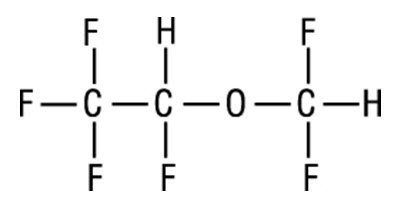
Some physical constants are:
Molecular weight | 168.04 |
Specific gravity (at 20°C/4°C) | 1.465 |
Vapor pressure in mmHg | 669 mmHg @ 20°C |
731 mmHg @ 22°C | |
757 mmHg @ 22.8°C (boiling point;1atm) | |
764 mmHg @ 23°C | |
798 mmHg @ 24°C | |
869 mmHg @ 26°C |
Partition coefficients at 37°C:
Blood/Gas | 0.424 |
Olive Oil/Gas | 18.7 |
Brain/Gas | 0.54 |
Mean Component/Gas Partition Coefficients:
Polypropylene (Y piece) | 6.7 |
Polyethylene (circuit tube) | 16.2 |
Latex rubber (bag) | 19.3 |
Latex rubber (bellows) | 10.4 |
Polyvinylchloride (endotracheal tube) | 34.7 |
Desflurane, USP is nonflammable as defined by the requirements of International Electrotechnical Commission 601-2-13.
Desflurane, USP is a colorless, volatile liquid below 22.8°C. Data indicate that desflurane, USP is stable when stored under normal room lighting conditions according to instructions.
Desflurane, USP is chemically stable. The only known degradation reaction is through prolonged direct contact with soda lime producing low levels of fluoroform (CHF 3 ). The amount of CHF 3 obtained is similar to that produced with MAC-equivalent doses of isoflurane. No discernible degradation occurs in the presence of strong acids.
Desflurane, USP does not corrode stainless steel, brass, aluminum, anodized aluminum, nickel plated brass, copper, or beryllium.
CLINICAL PHARMACOLOGY
Pharmacodynamics
Changes in the clinical effects of desflurane rapidly follow changes in the inspired concentration. The duration of anesthesia and selected recovery measures for desflurane are given in the following tables:
In 178 female outpatients undergoing laparoscopy, premedicated with fentanyl (1.5 mcg/kg to 2 mcg/kg), anesthesia was initiated with propofol 2.5 mg/kg, desflurane/N 2 O 60% in O 2 or desflurane/O 2 alone. Anesthesia was maintained with either propofol 1.5 mg/kg/hr to 9 mg/kg/hr, desflurane 2.6% to 8.4% in N 2 O 60% in O 2 , or desflurane 3.1% to 8.9% in O 2 .
Emergence and Recovery After Outpatient Laparoscopy 178 Females, Ages 20 to 47 Times in Minutes: Mean ± SD (Range) | ||||
Induction: | Propofol | Propofol | Desflurane/N 2 O | Desflurane/O 2 |
Maintenance: | Propofol/N 2 O | Desflurane/N 2 O | Desflurane/N 2 O | Desflurane/O 2 |
Number of Pts: | N = 48 | N = 44 | N = 43 | N = 43 |
Median age | 30 (20 to 43) | 26 (21 to 47) | 29 (21 to 42) | 30 (20 to 40) |
Anesthetic time | 49 ± 53 (8 to 336) | 45 ± 35 (11 to 178) | 44 ± 29 (14 to 149) | 41 ± 26 (19 to 126) |
Time to open eyes | 7 ± 3 (2 to 19) | 5 ± 2 Differences were statistically significant (p < 0.05) by Dunnett’s procedure comparing all treatments to the propofol-propofol/N 2O (induction and maintenance) group. Results for comparisons greater than one hour after anesthesia show no differences between groups and considerable variability within groups. (2 to 10) | 5 ± 2 (2 to 12) | 4 ± 2 (1 to 11) |
Time to state name | 9 ± 4 (4 to 22) | 8 ± 3 (3 to 18) | 7 ± 3 (3 to 16) | 7 ± 3 (2 to 15) |
Time to stand | 80 ± 34 (40 to 200) | 86 ± 55 (30 to 320) | 81 ± 38 (35 to 190) | 77 ± 38 (35 to 200) |
Time to walk | 110 ± 6 (47 to 285) | 122 ± 85 (37 to 375) | 108 ± 59 (48 to 220) | 108 ± 66 (49 to 250) |
Time to fit for discharge | 152 ± 75 (66 to 375) | 157 ± 80 (73 to 385) | 150 ± 66 (68 to 310) | 155 ± 73 (69 to 325) |
In 88 unpremedicated outpatients, anesthesia was initiated with thiopental 3mg/kg to 9 mg/kg or desflurane in O 2 . Anesthesia was maintained with isoflurane 0.7% to 1.4% in N 2 O 60%, desflurane 1.8% to 7.7% in N 2 O 60%, or desflurane 4.4% to 11.9% in O 2 .
Emergence and Recovery Times in Outpatient Surgery 46 Males, 42 Females, Ages 19 to 70 Times in Minutes: Mean ± SD (Range) | ||||
Induction: | Thiopental | Thiopental | Thiopental | Desflurane/O 2 |
Maintenance: | Isoflurane/N 2 O | Desflurane/N 2 O | Desflurane/O 2 | Desflurane/O 2 |
Number of Pts: | N = 23 | N = 21 | N = 23 | N = 21 |
Median age | 43 (20 to 70) | 40 (22 to 67) | 43 (19 to 70) | 41 (21 to 64) |
Anesthetic time | 49 ± 23 (11 to 94) | 50 ± 19 (16 to 80) | 50 ± 27 (16 to 113) | 51 ± 23 (19 to 117) |
Time to open eyes | 13 ± 7 (5 to 33) | 9 ± 3 Differences were statistically significant (p < 0.05) by Dunnett’s procedure comparing all treatments to the thiopental-isoflurane/N 2O (induction and maintenance) group. Results for comparisons greater than one hour after anesthesia show no differences between groups and considerable variability within groups. (4 to 16) | 12 ± 8 (4 to 39) | 8 ± 2 (4 to 13) |
Time to state name | 17 ± 10 (6 to 44) | 11 ± 4 (6 to 19) | 15 ± 10 (6 to 46) | 9 ± 3 (5 to 14) |
Time to walk | 195 ± 67 (124 to 365) | 176 ± 60 (101 to 315) | 168 ± 34 (119 to 258) | 181 ± 42 (92 to 252) |
Time to fit for discharge | 205 ± 53 (153 to 365) | 202 ± 41 (144 to 315) | 197 ± 35 (155 to 280) | 194 ± 37 (134 to 288) |
Recovery from anesthesia was assessed at 30 minutes, 60 minutes, and 90 minutes following 0.5 MAC desflurane (3%) or isoflurane (0.6%) in N 2 O 60% using subjective and objective tests. At 30 minutes after anesthesia, only 43% of patients in the isoflurane group were able to perform the psychometric tests compared to 76% in the desflurane group (p < 0.05).
Recovery Tests: Percent of Preoperative Baseline Values | ||||
16 Males, 22 Females, Ages 20 to 65 Percent: Mean ± SD | ||||
60 minutes After Anesthesia | 90 minutes After Anesthesia | |||
Maintenance: | Desflurane/N 2 O | Isoflurane/N 2 O | Desflurane/N 2 O | Isoflurane/N 2 O |
Confusion Visual analog scale (values from 0 to 100; 100 = baseline) | 66 ± 6 | 47 ± 8 | 75 ± 7 Differences were statistically significant (p < 0.05) using a two-sample t-test | 56 ± 8 |
Fatigue | 70 ± 9 | 33 ± 6 | 89 ± 12 | 47 ± 8 |
Drowsiness | 66 ± 5 | 36 ± 8 | 76 ± 7 | 49 ± 9 |
Clumsiness | 65 ± 5 | 49 ± 8 | 80 ± 7 | 57 ± 9 |
Comfort | 59 ± 7 | 30 ± 6 | 60 ± 8 | 31 ± 7 |
DSST DSST = Digit Symbol Substitution Test score | 74 ± 4 | 50 ± 9 | 75 ± 4 | 55 ± 7 |
Trieger Tests Trieger Test = Dot Connecting Test | 67 ± 5 | 74 ± 6 | 90 ± 6 | 83 ± 7 |
Desflurane was studied in twelve volunteers receiving no other drugs. Hemodynamic effects during controlled ventilation (PaCO 2 38 mmHg) were:
Hemodynamic Effects of Desflurane During Controlled Ventilation | ||||||||
12 Male Volunteers, Ages 16 to 26 Mean ± SD (Range) | ||||||||
Heart Rate (beats/min) | Mean Arterial Pressure (mmHg) | Cardiac Index (L/min/m 2 ) | ||||||
Total MAC Equivalent | End-Tidal % Des/O 2 | End-Tidal % Des/N 2 O | O 2 | N 2 O | O 2 | N 2 O | O 2 | N 2 O |
0 | 0% / 21% | 0% / 0% | 69 ± 4 (63 to 76) | 70 ± 6 (62 to 85) | 85 ± 9 (74 to 102) | 85 ± 9 (74 to 102) | 3.7 ± 0.4 (3.0 to 4.2) | 3.7 ± 0.4 (3.0 to 4.2) |
0.8 | 6% / 94% | 3% / 60% | 73 ± 5 (67 to 80) | 77 ± 8 (67 to 97) | 61 ± 5 Differences were statistically significant (p < 0.05) compared to awake values, Newman-Keul’s method of multiple comparison. (55 to 70) | 69 ± 5 (62 to 80) | 3.2 ± 0.5 (2.6 to 4.0) | 3.3 ± 0.5 (2.6 to 4.1) |
1.2 | 9% / 91% | 6% / 60% | 80 ± 5 (72 to 84) | 77 ± 7 (67 to 90) | 59 ± 8 (44 to 71) | 63 ± 8 (47 to 74) | 3.4 ± 0.5 (2.6 to 4.1) | 3.1 ± 0.4 (2.6 to 3.8) |
1.7 | 12% / 88% | 9% / 60% | 94 ± 14 (78 to 109) | 79 ± 9 (61 to 91) | 51 ± 12 (31 to 66) | 59 ± 6 (46 to 68) | 3.5 ± 0.9 (1.7 to 4.7) | 3.0 ± 0.4 (2.4 to 3.6) |
When the same volunteers breathed spontaneously during desflurane anesthesia, systemic vascular resistance and mean arterial blood pressure decreased; cardiac index, heart rate, stroke volume, and central venous pressure (CVP) increased compared to values when the volunteers were conscious. Cardiac index, stroke volume, and CVP were greater during spontaneous ventilation than during controlled ventilation.
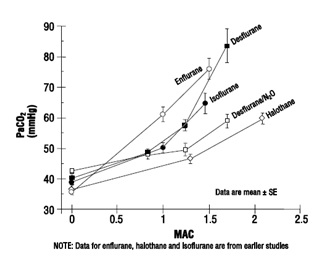
During spontaneous ventilation in the same volunteers, increasing the concentration of desflurane from 3% to 12% decreased tidal volume and increased arterial carbon dioxide tension and respiratory rate. The combination of N 2 O 60% with a given concentration of desflurane gave results similar to those with desflurane alone. Respiratory depression produced by desflurane is similar to that produced by other potent inhalation agents.
The use of desflurane concentrations higher than 1.5 MAC may produce apnea.
Figure 1. PaCO2 During Spontaneous Ventilation in Unstimulated Volunteers
Pharmacokinetics
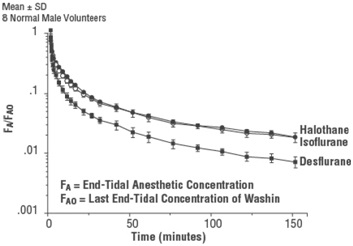
Due to the volatile nature of desflurane in plasma samples, the washin-washout profile of desflurane was used as a surrogate of plasma pharmacokinetics. Desflurane is a volatile liquid inhalation anesthetic minimally biotransformed in the liver in humans. Less than 0.02% of the desflurane absorbed can be recovered as urinary metabolites (compared to 0.2% for isoflurane). Eight healthy male volunteers first breathed 70% N 2 O/30% O 2 for 30 minutes and then a mixture of desflurane 2%, isoflurane 0.4%, and halothane 0.2% for another 30 minutes. During this time, inspired and end-tidal concentrations (F I and F A ) were measured. The F A /F I (washin) value at 30 minutes for desflurane was 0.91, compared to 1.00 for N 2 O, 0.74 for isoflurane, and 0.58 for halothane (See Figure 2 ) . The washin rates for halothane and isoflurane were similar to literature values. The washin was faster for desflurane than for isoflurane and halothane at all time points. The F A /F AO (washout) value at 5 minutes was 0.12 for desflurane, 0.22 for isoflurane, and 0.25 for halothane (See Figure 3 ) . The washout for desflurane was more rapid than that for isoflurane and halothane at all elimination time points. By 5 days, the F A /F AO for desflurane is 1/20th of that for halothane or isoflurane.
Figure 2. Desflurane Washin
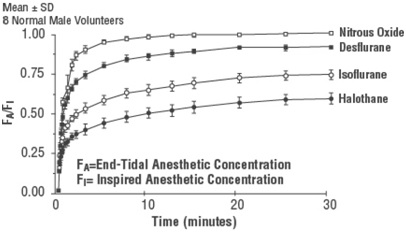
Figure 3. Desflurane Washout
Pharmacogenomics
RYR1 and CACNA1S are polymorphic genes and multiple pathogenic variants have been associated with malignant hyperthermia susceptibility (MHS) in patients receiving volatile anesthetic agents, including desflurane. Case reports as well as ex- vivo studies have identified multiple variants in RYR1 and CACNA1S associated with MHS. Variant pathogenicity should be assessed based on prior clinical experience, functional studies, prevalence information, or other evidence [See Contraindications (4), Warnings and Precautions (5.1)] .
NONCLINICAL TOXICOLOGY
Carcinogenesis, Mutagenesis, Impairment of Fertility
Carcinogenesis: Long-term studies in animals to evaluate the carcinogenic potential of desflurane have not been conducted.
Mutagenesis: In vitro and in vivo genotoxicity studies did not demonstrate mutagenicity or chromosomal damage by desflurane. Tests for genotoxicity included the Ames mutation assay, the metaphase analysis of human lymphocytes, and the mouse micronucleus assay.
Impairment of Fertility: In a study in which male animals were administered 8.2% desflurane (60% oxygen) for either 0.5, 1, or 4 hours per day beginning 63 days prior to mating and female animals were administered the same doses of desflurane for 14 days prior to mating through Lactation Day 21, there were no adverse effects on fertility in the 1 hour per day treatment group. However, reduced male and female fertility was noted in the 4 hour a day group. A dose dependent increase in mortality and decreased body weight gain was noted in all treatment groups.
Animal Toxicology and/or Pharmacology
Published studies in animals demonstrate that the use of anesthetic agents during the period of rapid brain growth or synaptogenesis results in widespread neuronal and oligodendrocyte cell loss in the developing brain and alterations in synaptic morphology and neurogenesis. Based on comparisons across species, the window of vulnerability to these changes is believed to correlate with exposures in the third trimester through the first several months of life, but may extend out to approximately 3 years of age in humans.
In primates, exposure to 3 hours of an anesthetic regimen that produced a light surgical plane of anesthesia did not increase neuronal cell loss, however, treatment regimens of 5 hours or longer increased neuronal cell loss. Data in rodents and in primates suggest that the neuronal and oligodendrocyte cell losses are associated with subtle but prolonged cognitive deficits in learning and memory. The clinical significance of these nonclinical findings is not known, and healthcare providers should balance the benefits of appropriate anesthesia in neonates and young children who require procedures against the potential risks suggested by the nonclinical data [See Warnings and Precautions (5.7) and Use in Specific Populations (8.1 , 8.4 )] .
CLINICAL STUDIES
The efficacy of desflurane was evaluated in 1,843 patients including ambulatory (N=1,061), cardiovascular (N=277), geriatric (N=103), neurosurgical (N=40), and pediatric (N=235) patients. Clinical experience with these patients and with 1,087 control patients in these studies not receiving desflurane is described below. Although desflurane can be used in adults for the inhalation induction of anesthesia via mask, it produces a high incidence of respiratory irritation (coughing, breathholding, apnea, increased secretions, laryngospasm). Oxyhemoglobin saturation below 90% occurred in 6% of patients (from pooled data, N = 370 adults).
Ambulatory Surgery
Desflurane plus N 2 O was compared to isoflurane plus N 2 O in multicenter studies (21 sites) of 792 ASA physical status I, II, or III patients aged 18 to 76 years (median 32).
Induction
Anesthetic induction begun with thiopental and continued with desflurane was associated with a 7% incidence of oxyhemoglobin saturation of 90% or less (from pooled data, N = 307) compared with 5% in patients in whom anesthesia was induced with thiopental and isoflurane (from pooled data, N = 152).
Maintenance & Recovery
Desflurane with or without N 2 O or other anesthetics was generally well tolerated. There were no differences between desflurane and the other anesthetics studied in the times that patients were judged fit for discharge.
In one outpatient study, patients received a standardized anesthetic consisting of thiopental 4.2 mg/kg to 4.4 mg/kg, fentanyl 3.5 mcg/kg to 4 mcg/kg, vecuronium 0.05 mg/kg to 0.07 mg/kg, and N 2 O 60% in oxygen with either desflurane 3% or isoflurane 0.6%. Emergence times were significantly different; but times to sit up and discharge were not different (See Table 5).
Recovery Profiles After Desflurane 3% in N 2 O 60% vs Isoflurane 0.6% in N 2 O 60% in Outpatients 16 Males, 22 Females, Ages 20 to 65 Mean ± SD | ||
Isoflurane | Desflurane | |
Number | 21 | 17 |
Anesthetic time (min) | 127 ± 80 | 98 ± 55 |
Recovery time to: | ||
Follow commands (min) | 11.1 ± 7.9 | 6.5 ± 2.3 Difference was statistically significant from the isoflurane group (p < 0.05), unadjusted for multiple comparisons. |
Sit up (min) | 113 ± 27 | 95 ± 56 |
Fit for discharge (min) | 231 ± 40 | 207 ± 54 |
Cardiovascular Surgery
Desflurane was compared to isoflurane, sufentanil or fentanyl for the anesthetic management of coronary artery bypass graft (CABG), abdominal aortic aneurysm, peripheral vascular and carotid endarterectomy surgery in 7 studies at 15 centers involving a total of 558 patients. In all patients except the desflurane vs. sufentanil study, the volatile anesthetics were supplemented with intravenous opioids, usually fentanyl. Blood pressure and heart rate were controlled by changes in concentration of the volatile anesthetics or opioids and cardiovascular drugs if necessary. Oxygen (100%) was the carrier gas in 253 of 277 desflurane cases (24 of 277 received N 2 O/O 2 ).
Cardiovascular Patients by Agent and Type of Surgery 418 Males, 140 Females, Ages 27 to 87 (Median 64) | ||||||
Type of Surgery | 13 Centers | 1 Center | 1 Center | |||
Isoflurane | Desflurane | Sufentanil | Desflurane | Fentanyl | Desflurane | |
CABG | 58 | 57 | 100 | 100 | 25 | 25 |
Abd Aorta | 29 | 25 | ||||
Periph Vasc | 24 | 24 | ||||
Carotid Art | 45 | 46 | ||||
Total | 156 | 152 | 100 | 100 | 25 | 25 |
No differences were found in cardiovascular outcome (death, myocardial infarction, ventricular tachycardia or fibrillation, heart failure) among desflurane and the other anesthetics.
Induction
Desflurane should not be used as the sole agent for anesthetic induction in patients with coronary artery disease or any patients where increases in heart rate or blood pressure are undesirable. In the desflurane vs. sufentanil study, anesthetic induction with desflurane without opioids was associated with new transient ischemia in 14 patients vs. 0 in the sufentanil group. In the desflurane group, mean heart rate, arterial pressure, and pulmonary blood pressure increased and stroke volume decreased in contrast to no change in the sufentanil group. Cardiovascular drugs were used frequently in both groups: especially esmolol in the desflurane group (56% vs. 0%) and phenylephrine in the sufentanil group (43% vs. 27%). When 10 mcg/kg of fentanyl was used to supplement induction of anesthesia at one other center, continuous 2-lead ECG analysis showed a low incidence of myocardial ischemia and no difference between desflurane and isoflurane. If desflurane is to be used in patients with coronary artery disease, it should be used in combination with other medications for induction of anesthesia, preferably intravenous opioids and hypnotics.
Maintenance & Recovery
In studies where desflurane or isoflurane anesthesia was supplemented with fentanyl, there were no differences in hemodynamic variables or the incidence of myocardial ischemia in the patients anesthetized with desflurane compared to those anesthetized with isoflurane.
During the precardiopulmonary bypass period, in the desflurane vs. sufentanil study where the desflurane patients received no intravenous opioid, more desflurane patients required cardiovascular adjuvants to control hemodynamics than the sufentanil patients. During this period, the incidence of ischemia detected by ECG or echocardiography was not statistically different between desflurane (18 of 99) and sufentanil (9 of 98) groups. However, the duration and severity of ECG-detected myocardial ischemia was significantly less in the desflurane group. The incidence of myocardial ischemia after cardiopulmonary bypass and in the ICU did not differ between groups.
Geriatric Surgery
Desflurane plus N 2 O was compared to isoflurane plus N 2 O in a multicenter study (6 sites) of 203 ASA physical status II or III elderly patients, aged 57 to 91 years (median 71).
Induction
Most patients were premedicated with fentanyl (mean 2 mcg/kg), preoxygenated, and received thiopental (mean 4.3 mg/kg IV) or thiamylal (mean 4 mg/kg IV) followed by succinylcholine (mean 1.4 mg/kg IV) for intubation.
Maintenance & Recovery
Heart rate and arterial blood pressure remained within 20% of preinduction baseline values during administration of desflurane 0.5% to 7.7% (average 3.6%) with 50% to 60% N 2 O. Induction, maintenance, and recovery cardiovascular measurements did not differ from those during isoflurane/N 2 O administration nor did the postoperative incidence of nausea and vomiting differ. The most common cardiovascular adverse event was hypotension occurring in 8% of the desflurane patients and 6% of the isoflurane patients.
Neurosurgery
Desflurane was studied in 38 patients aged 26 to 76 years (median 48 years), ASA physical status II or III undergoing neurosurgical procedures for intracranial lesions.
Induction
Induction consisted of standard neuroanesthetic techniques including hyperventilation and thiopental.
Maintenance
No change in cerebrospinal fluid pressure (CSFP) was observed in 8 patients who had intracranial tumors when the dose of desflurane was 0.5 MAC in N 2 O 50%. In another study of 9 patients with intracranial tumors, 0.8 MAC desflurane/air/O 2 did not increase CSFP above post induction baseline values. In a different study of 10 patients receiving 1.1 MAC desflurane/air/O 2 , CSFP increased 7 mmHg (range 3 mmHg to 13 mmHg increase, with final values of 11 mmHg to 26 mmHg) above the pre-drug values.
All volatile anesthetics may increase intracranial pressure in patients with intracranial space occupying lesions. In such patients, desflurane should be administered at 0.8 MAC or less, and in conjunction with a barbiturate induction and hyperventilation (hypocapnia) in the period before cranial decompression. Appropriate attention must be paid to maintain cerebral perfusion pressure. The use of a lower dose of desflurane and the administration of a barbiturate and mannitol would be predicted to lessen the effect of desflurane on CSFP.
Under hypocapnic conditions (PaCO 2 27 mmHg) desflurane 1 and 1.5 MAC did not increase cerebral blood flow (CBF) in 9 patients undergoing craniotomies. CBF reactivity to increasing PaCO 2 from 27 mmHg to 35 mmHg was also maintained at 1.25 MAC desflurane/air/O 2 .
Pediatric Surgery
In a clinical safety trial conducted in children aged 2 to 16 years (mean 7.4 years), following induction with another agent, desflurane and isoflurane (in N 2 O/O 2 ) were compared when delivered via face mask or laryngeal mask airway (LMA™ mask) for maintenance of anesthesia, after induction with intravenous propofol or inhaled sevoflurane, in order to assess the relative incidence of respiratory adverse events.
Maintenance in Nonintubated Pediatric Patients (Face Mask or LMA™ mask Used; N=300) All Respiratory Events Minor, moderate and severe respiratory events (>1% of All Pediatric Patients) | ||||
All Ages (N=300) | 2 to 6 yr (N=150) | 7 to 11 yr (N=81) | 12 to 16 yr (N=69) | |
Any respiratory events | 39% | 42% | 33% | 39% |
Airway obstruction | 4% | 5% | 4% | 3% |
Breath-holding | 3% | 2% | 3% | 4% |
Coughing | 26% | 33% | 19% | 22% |
Laryngospasm | 13% | 16% | 7% | 13% |
Secretion | 12% | 13% | 10% | 12% |
Non-specific desaturation | 2% | 2% | 1% | 1% |
Desflurane was associated with higher rates (compared with isoflurane) of coughing, laryngospasm and secretions with an overall rate of respiratory events of 39%. Of the pediatric patients exposed to desflurane, 5% experienced severe laryngospasm (associated with significant desaturation; i.e. SpO 2 of <90% for >15 seconds, or requiring succinylcholine), across all ages, 2 to 16 years old. Individual age group incidences of severe laryngospasm were 9% for 2 to 6 years old, 1% for 7 to 11 years old, and 1% for 12 to 16 years old. Removal of LMA™ mask under deep anesthesia (MAC range 0.6 to 2.3 with a mean of 1.12 MAC) was associated with a further increase in frequency of respiratory adverse events as compared to awake LMA™ mask removal or LMA™ mask removal under deep anesthesia with the comparator. The frequency and severity of non-respiratory adverse events were comparable between the two groups.
The incidence of respiratory events under these conditions was highest in children aged 2 to 6 years. Therefore, similar studies in children under the age of 2 years were not initiated.
HOW SUPPLIED/STORAGE AND HANDLING
Desflurane, USP, Liquid for Inhalation, NDC 0781-6172-22, is available in amber-colored glass bottle containing 240 mL desflurane, USP. Each individual bottle is supplied in a carton of 6, NDC 0781-6172-86.
Safety and Handling
Occupational Caution
There is no specific work exposure limit established for Desflurane, USP, Liquid for Inhalation. However, the National Institute for Occupational Safety and Health Administration (NIOSH) recommends that no worker should be exposed at ceiling concentrations greater than 2 ppm of any halogenated anesthetic agent over a sampling period not to exceed one hour.
Principle routes of exposure include:
Skin contact – May cause skin irritation. In case of contact, immediately flush skin with plenty of water. Remove contaminated clothing and shoes. Seek medical attention if irritation develops.
Eye contact – May cause eye irritation. In case of contact, immediately flush eyes with plenty of water for at least 15 minutes. Seek medical attention if irritation develops.
Ingestion – No specific hazards other than therapeutic effects. Do NOT induce vomiting unless directed to do so by medical personnel. Never give anything by mouth to an unconscious person. If large quantities of this material are swallowed, seek medical attention immediately.
Inhalation – If individuals smell vapors, or experience dizziness or headaches, they should be moved to an area with fresh air. Individuals could also experience the following: Cardiovascular effects: may include fluctuations in heart rate, changes in blood pressure, chest pain. Respiratory effects: may include shortness of breath, bronchospasms, laryngospasms, respiratory depression. Gastrointestinal effects: may include nausea, upset stomach, loss of appetite. Nervous System effects: may include ataxia, tremor, disturbance of speech, lethargy, headache, dizziness, blurred vision.
The predicted effects of acute overexposure by inhalation of Desflurane, USP, Liquid for Inhalation include headache, dizziness or (in extreme cases) unconsciousness [See Overdosage (10) ] .
There are no documented adverse effects of chronic exposure to halogenated anesthetic vapors ( W aste A nesthetic G ases or WAGs) in the workplace. Although results of some epidemiological studies suggest a link between exposure to halogenated anesthetics and increased health problems (particularly spontaneous abortion), the relationship is not conclusive. Since exposure to WAGs is one possible factor in the findings for these studies, operating room personnel, and pregnant women in particular, should minimize exposure. Precautions include adequate general ventilation in the operating room, the use of a well-designed and well-maintained scavenging system; work practices to minimize leaks and spills while the anesthetic agent is in use, and routine equipment maintenance to minimize leaks.
Consistent with clinical data, concentrations would need to reach 2% to 3% in inspired air before individuals would likely experience dizziness or other physiologic effects.
Storage
Store at 20º to 25ºC (68º to 77ºF) [See USP Controlled Room Temperature] . Desflurane, USP, Liquid for Inhalation has been demonstrated to be stable for the period defined by the expiration dating on the label. Preserve in tight, light-resistant container. Replace the cap securely after each use.
