Dextroamphetamine Saccharate, Amphetamine Aspartate Monohydrate, Dextroamphetamine Sulfate And Amphetamine Sulfate - Dextroamphetamine Saccharate, Amphetamine Aspartate Monohydrate, Dextroamphetamine Sulfate And Amphetamine Sulfate capsule, Extended Release prescribing information

WARNING: ABUSE, MISUSE, AND ADDICTION
Dextroamphetamine Saccharate, Amphetamine Aspartate Monohydrate, Dextroamphetamine Sulfate, and Amphetamine Sulfate Extended-Release Capsules have a high potential for abuse and misuse, which can lead to the development of a substance use disorder, including addiction. Misuse and abuse of CNS stimulants, including Dextroamphetamine Saccharate, Amphetamine Aspartate Monohydrate, Dextroamphetamine Sulfate, and Amphetamine Sulfate Extended-Release Capsules, can result in overdose and death [see Overdosage (10)] , and this risk is increased with higher doses or unapproved methods of administration, such as snorting or injection.
Before prescribing Dextroamphetamine Saccharate, Amphetamine Aspartate Monohydrate, Dextroamphetamine Sulfate, and Amphetamine Sulfate Extended-Release Capsule, assess each patient’s risk for abuse, misuse, and addiction. Educate patients and their families about these risks, proper storage of the drug, and proper disposal of any unused drug. Throughout Dextroamphetamine Saccharate, Amphetamine Aspartate Monohydrate, Dextroamphetamine Sulfate, and Amphetamine Sulfate Extended-Release Capsule treatment, reassess each patient’s risk of abuse, misuse, and addiction and frequently monitor for signs and symptoms of abuse, misuse, and addiction [see Warnings and Precautions (5.1), Drug Abuse and Dependence (9.2)] .
1 INDICATIONS AND USAGE
Dextroamphetamine Saccharate, Amphetamine Aspartate Monohydrate, Dextroamphetamine Sulfate, and Amphetamine Sulfate Extended-Release Capsules, a CNS stimulant, is indicated for the treatment of attention deficit hyperactivity disorder (ADHD) in adults and pediatric patients 6 years and older. (1 )
Attention Deficit Hyperactivity Disorder
Dextroamphetamine Saccharate, Amphetamine Aspartate Monohydrate, Dextroamphetamine Sulfate, and Amphetamine Sulfate Extended-Release Capsules are indicated for the treatment of attention deficit hyperactivity disorder (ADHD) in adults and pediatric patients 6 years and older.
2 DOSAGE AND ADMINISTRATION
• Pediatric patients (ages 6 to 17): 10 mg once daily in the morning. Maximum dose for children 6 to 12 years of age is 30 mg once daily. (2.2 , 2.3 , 2.4 ) • Adults: 20 mg once daily in the morning. (2.5 ) • Pediatric patients (ages 6 to 17) with severe renal impairment: 5 mg once daily in the morning. Maximum dose for children 6 to 12 years of age with severe renal impairment is 20 mg once daily. (2.6 , 8.6 ) • Adults with severe renal impairment: 15 mg once daily in the morning. (2.6 , 8.6 ) • Patients with ESRD: not recommended. (2.6 , 8.6 )
Pretreatment Screening
Prior to treating patients with Dextroamphetamine Saccharate, Amphetamine Aspartate Monohydrate, Dextroamphetamine Sulfate, and Amphetamine Sulfate Extended-Release Capsules, assess:
• for the presence of cardiac disease (i.e., perform a careful history, family history of sudden death or ventricular arrhythmia, and physical exam) [see Warnings and Precautions (5.2) ] .
• the family history and clinically evaluate patients for motor or verbal tics or Tourette’s syndrome before initiating Dextroamphetamine Saccharate, Amphetamine Aspartate Monohydrate, Dextroamphetamine Sulfate, and Amphetamine Sulfate Extended-Release Capsules [see Warnings and Precautions (5.9) ] .
General Administration Information
Individualize the dosage according to the therapeutic needs and response of the patient. Administer Dextroamphetamine Saccharate, Amphetamine Aspartate Monohydrate, Dextroamphetamine Sulfate, and Amphetamine Sulfate Extended-Release Capsules at the lowest effective dosage.
Based on bioequivalence data, patients taking divided doses of immediate-release Dextroamphetamine Saccharate, Amphetamine Aspartate Monohydrate, Dextroamphetamine Sulfate, and Amphetamine Sulfate Tablets, (for example, twice daily), may be switched to Dextroamphetamine Saccharate, Amphetamine Aspartate Monohydrate, Dextroamphetamine Sulfate, and Amphetamine Sulfate Extended-Release Capsules at the same total daily dose taken once daily. Titrate at weekly intervals to appropriate efficacy and tolerability as indicated.
Dextroamphetamine Saccharate, Amphetamine Aspartate Monohydrate, Dextroamphetamine Sulfate, and Amphetamine Sulfate Extended-Release Capsules extended-release capsules may be taken whole, or the capsule may be opened and the entire contents sprinkled on applesauce. If the patient is using the sprinkle administration method, the sprinkled applesauce should be consumed immediately; it should not be stored. Patients should take the applesauce with sprinkled beads in its entirety without chewing. The dose of a single capsule should not be divided. The contents of the entire capsule should be taken, and patients should not take anything less than one capsule per day.
Dextroamphetamine Saccharate, Amphetamine Aspartate Monohydrate, Dextroamphetamine Sulfate, and Amphetamine Sulfate Extended-Release Capsules may be taken orally with or without food.
Dextroamphetamine Saccharate, Amphetamine Aspartate Monohydrate, Dextroamphetamine Sulfate, and Amphetamine Sulfate Extended-Release Capsules should be given upon awakening. Afternoon doses should be avoided because of the potential for insomnia.
Recommended Dosage in Pediatric Patients 6 to 12 Years
In pediatric patients 6 to 12 years of age with ADHD and are either starting treatment for the first time or switching from another medication, start with 10 mg once daily in the morning; daily dosage may be adjusted in increments of 5 mg or 10 mg at weekly intervals. When in the judgment of the clinician a lower initial dose is appropriate, patients may begin treatment with 5 mg once daily in the morning. The maximum recommended dose for children 6 to 12 years of age is 30 mg/day; doses greater than 30 mg/day have not been studied in children. Dextroamphetamine Saccharate, Amphetamine Aspartate Monohydrate, Dextroamphetamine Sulfate, and Amphetamine Sulfate Extended-Release Capsules have not been studied in children under 6 years of age.
Recommended Dosage in Pediatric Patients 13 to 17 Years
The recommended starting dose for pediatric patients 13 to 17 years of age with ADHD and are either starting treatment for the first time or switching from another medication is 10 mg/day. The dose may be increased to 20 mg/day after one week if ADHD symptoms are not adequately controlled.
Recommended Dosage in Adults
In adults with ADHD who are either starting treatment for the first time or switching from another medication, the recommended dose is 20 mg/day.
Dosage in Patients with Renal Impairment
In adult patients with severe renal impairment (GFR 15 to <30 mL/min/1.73 m 2 ), the recommended dose is 15 mg once daily in the morning. In pediatric patients (6 to 17 years of age) with severe renal impairment, the recommended dose is 5 mg once daily. The maximum dose for children 6 to 12 years of age with severe renal impairment is 20 mg once daily. Dextroamphetamine Saccharate, Amphetamine Aspartate Monohydrate, Dextroamphetamine Sulfate, and Amphetamine Sulfate Extended-Release Capsules are not recommended in patients with end stage renal disease (ESRD) (GFR < 15 mL/min/1.73m 2 ) [see Use in Specific Populations (8.6) , Clinical Pharmacology (12.3) ] .
Dosage Modification Due to Drug Interactions
Agents that alter urinary pH can impact excretion and alter blood levels of amphetamines. Acidifying agents (e.g., ascorbic acid) decrease blood levels; adjust Dextroamphetamine Saccharate, Amphetamine Aspartate Monohydrate, Dextroamphetamine Sulfate, and Amphetamine Sulfate Extended-Release Capsules dosage based on clinical response [see Drug Interactions (7) ] .
3 DOSAGE FORMS AND STRENGTHS
Dextroamphetamine Saccharate, Amphetamine Aspartate Monohydrate, Dextroamphetamine Sulfate, and Amphetamine Sulfate Extended-Release Capsules are available as:
5 mg – Hard Gelatin Capsules, Blue Opaque Cap Printed with “G AMP XR 5 mg” and White Opaque Body Printed with ''029'' contains off-white to beige colored pellets.
10 mg – Hard Gelatin Capsules, Blue Opaque Cap Printed with “G AMP XR 10 mg” and White Opaque Body Printed with ''030'' contains off-white to beige colored pellets.
15 mg – Hard Gelatin Capsules, White Opaque Cap Printed with “G AMP XR 15mg” and Blue Opaque Body Printed with ''031'' contains off-white to beige colored pellets.
20 mg – Hard Gelatin Capsules, Gold Opaque Cap Printed with “G AMP XR 20mg” and Gold Opaque Body Printed with ''032'' contains off-white to beige colored pellets.
25 mg – Hard Gelatin Capsules, White Opaque Cap Printed with “G AMP XR 25 mg” and Gold Opaque Body Printed with ''033'' contains off-white to beige colored pellets.
30 mg – Hard Gelatin Capsules, Gold Opaque Cap Printed with “G AMP XR 30 mg” and Orange transparent Body Printed with ''034'' contains off-white to beige colored pellets.
8 USE IN SPECIFIC POPULATIONS
Pregnancy
Pregnancy Exposure Registry
There is a pregnancy exposure registry that monitors pregnancy outcomes in women exposed to Dextroamphetamine Saccharate, Amphetamine Aspartate Monohydrate, Dextroamphetamine Sulfate, and Amphetamine Sulfate Extended-Release Capsules during pregnancy. Healthcare providers are encouraged to register patients by calling the National Pregnancy Registry for Psychostimulants at 1-866-961-2388 or visiting online at https://womensmentalhealth.org/clinical-and-research-programs/pregnancyregistry/othermedications /.
Risk Summary
Available data from published epidemiologic studies and postmarketing reports on use of prescription amphetamine in pregnant women have not identified a drug-associated risk of major birth defects and miscarriage (see Data). Adverse pregnancy outcomes, including premature delivery and low birth weight, have been seen in infants born to mothers taking amphetamines during pregnancy (see Clinical Considerations) .
No apparent effects on morphological development were observed in embryo-fetal development studies, with oral administration of amphetamine to rats and rabbits during organogenesis at doses 2 and 12 times, respectively, the maximum recommended human dose (MRHD) of 20 mg/day given to adolescents, on a mg/m 2 basis. However, in a pre- and post-natal development study, amphetamine ( d- to l- ratio of 3:1) administered orally to pregnant rats during gestation and lactation caused a decrease in pup survival and a decrease in pup body weight that correlated with a delay in developmental landmarks at clinically relevant doses of amphetamine. In addition, adverse effects on reproductive performance were observed in pups whose mothers were treated with amphetamine. Long-term neurochemical and behavioral effects have also been reported in animal developmental studies using clinically relevant doses of amphetamine (see Data) .
The estimated background risk of major birth defects and miscarriage for the indicated population is unknown. All pregnancies have a background risk of birth defect, loss, or other adverse outcomes. In the U.S. general population, the estimated background risk of major birth defects and miscarriage in clinically recognized pregnancies is 2 to 4% and 15 to 20%, respectively.
Clinical Considerations
Fetal/Neonatal Adverse Reactions
Amphetamines, such as Dextroamphetamine Saccharate, Amphetamine Aspartate Monohydrate, Dextroamphetamine Sulfate, and Amphetamine Sulfate Extended-Release Capsules, cause vasoconstriction and thereby may decrease placental perfusion. In addition, amphetamines can stimulate uterine contractions, increasing the risk of premature delivery. Infants born to mothers taking amphetamines during pregnancy have an increased risk of premature delivery and low birth weight.
Monitor infants born to mothers taking amphetamines for symptoms of withdrawal such as feeding difficulties, irritability, agitation, and excessive drowsiness.
Data
Animal Data
Amphetamine ( d- to l- enantiomer ratio of 3:1) had no apparent effects on embryofetal morphological development or survival when administered orally to pregnant rats and rabbits throughout the period of organogenesis at doses of up to 6 and 16 mg/kg/day, respectively. These doses are approximately 2 and 12 times, respectively, the maximum recommended human dose (MRHD) of 20 mg/day given to adolescents, on a mg/m 2 basis. Fetal malformations and death have been reported in mice following parenteral administration of d- amphetamine doses of 50 mg/kg/day (approximately 10 times the MRHD given to adolescents on a mg/m 2 basis) or greater to pregnant animals. Administration of these doses was also associated with severe maternal toxicity.
A study was conducted in which pregnant rats received daily oral doses of amphetamine ( d - to l - enantiomer ratio of 3:1) of 2, 6, and 10 mg/kg from gestation Day 6 to lactation Day 20. These doses are approximately 0.8, 2, and 4 times the MRHD of 20 mg/day given to adolescents, on a mg/m 2 basis. All doses caused hyperactivity and decreased weight gain in the dams. A decrease in pup survival was seen at all doses. A decrease in pup body weight was seen at 6 and 10 mg/kg which correlated with delays in developmental landmarks, such as preputial separation and vaginal opening. Increased pup locomotor activity was seen at 10 mg/kg on Day 22 postpartum but not at 5 weeks postweaning. When pups were tested for reproductive performance at maturation, gestational weight gain, number of implantations, and number of delivered pups were decreased in the group whose mothers had been given 10 mg/kg.
A number of studies from the literature in rodents indicate that prenatal or early postnatal exposure to amphetamine ( d- or d , l- ) at doses similar to those used clinically can result in long-term neurochemical and behavioral alterations. Reported behavioral effects include learning and memory deficits, altered locomotor activity, and changes in sexual function.
Lactation
Risk Summary
Based on limited case reports in published literature, amphetamine ( d- or d , l- ) is present in human milk, at relative infant doses of 2% to 13.8% of the maternal weight-adjusted dosage and a milk/plasma ratio ranging between 1.9 and 7.5. There are no reports of adverse effects on the breastfed infant. Long-term neurodevelopmental effects on infants from amphetamine exposure are unknown. It is possible that large dosages of amphetamine might interfere with milk production, especially in women whose lactation is not well established. Because of the potential for serious adverse reactions in nursing infants, advise patients that breastfeeding is not recommended during treatment with Dextroamphetamine Saccharate, Amphetamine Aspartate Monohydrate, Dextroamphetamine Sulfate, and Amphetamine Sulfate Extended-Release Capsules.
Pediatric Use
The safety and effectiveness of Dextroamphetamine Saccharate, Amphetamine Aspartate Monohydrate, Dextroamphetamine Sulfate, and Amphetamine Sulfate Extended-Release Capsules have been established in pediatric patients with ADHD 6 years of age and older.
The safety and efficacy of Dextroamphetamine Saccharate, Amphetamine Aspartate Monohydrate, Dextroamphetamine Sulfate, and Amphetamine Sulfate Extended-Release Capsules in pediatric patients less than 6 years of age have not been established. Long-term effects of amphetamines in pediatric patients has not been well established.
Long-Term Growth Suppression
Growth should be monitored during treatment with stimulants, including Dextroamphetamine Saccharate, Amphetamine Aspartate Monohydrate, Dextroamphetamine Sulfate, and Amphetamine Sulfate Extended-Release Capsules, and pediatric patients aged 6 to 17 years who are not growing or gaining weight as expected may need to have their treatment interrupted [see Warnings and Precautions (5.5) ] .
Juvenile Animal Toxicity Data
Juvenile rats treated with mixed amphetamine salts early in the postnatal period through sexual maturation demonstrated transient changes in motor activity. Learning and memory was impaired at approximately 6 times the maximum recommended human dose (MRHD) given to children on a mg/m 2 basis. No recovery was seen following a drug-free period. A delay in sexual maturation was observed at a dose approximately 6 times the MRHD given to children on a mg/m2 basis, although there was no effect on fertility.
In a juvenile developmental study, rats received daily oral doses of amphetamine ( d to l enantiomer ratio of 3:1) of 2, 6, or 20 mg/kg on Days 7 to 13 of age; from Day 14 to approximately Day 60 of age these doses were given b.i.d. for total daily doses of 4, 12, or 40 mg/kg. The latter doses are approximately 0.6, 2, and 6 times the MRHD of 30 mg/day, given to children on a mg/m 2 basis. Post dosing hyperactivity was seen at all doses; motor activity measured prior to the daily dose was decreased during the dosing period but the decreased motor activity was largely absent after an 18 day drug-free recovery period. Performance in the Morris water maze test for learning and memory was impaired at the 40 mg/kg dose, and sporadically at the lower doses, when measured prior to the daily dose during the treatment period; no recovery was seen after a 19 day drug-free period. A delay in the developmental milestones of vaginal opening and preputial separation was seen at 40 mg/kg but there was no effect on fertility.
Geriatric Use
Dextroamphetamine Saccharate, Amphetamine Aspartate Monohydrate, Dextroamphetamine Sulfate, and Amphetamine Sulfate Extended-Release Capsules have not been studied in the geriatric population.
Renal Impairment
Due to reduced clearance of amphetamines in patients with severe renal impairment (GFR 15 to <30 mL/min/1.73m 2 ), the recommended dose should be reduced. Dextroamphetamine Saccharate, Amphetamine Aspartate Monohydrate, Dextroamphetamine Sulfate, and Amphetamine Sulfate Extended-Release Capsules are not recommended in patients with ESRD (GFR < 15 ml/min/1.73m 2 ) [see Dosage and Administration (2.6) , Clinical Pharmacology (12.3) ].
d -Amphetamine is not dialyzable.
4 CONTRAINDICATIONS
Dextroamphetamine Saccharate, Amphetamine Aspartate Monohydrate, Dextroamphetamine Sulfate, and Amphetamine Sulfate Extended-Release Capsules administration is contraindicated in patients:
• known to be hypersensitive to amphetamine, or other components of Dextroamphetamine Saccharate, Amphetamine Aspartate Monohydrate, Dextroamphetamine Sulfate, and Amphetamine Sulfate Extended-Release Capsules. Hypersensitivity reactions such as angioedema and anaphylactic reactions have been reported in patients treated with other amphetamine products [see Adverse Reactions (6.2) ] . • taking monoamine oxidase inhibitors (MAOIs), or within 14 days of stopping MAOIs (including MAOIs such as linezolid or intravenous methylene blue), because of an increased risk of hypertensive crisis [see Warnings and Precautions (5.8) , Drug Interactions (7.1) ].
5 WARNINGS AND PRECAUTIONS
• Risks to Patients with Serious Cardiac Disease: Avoid use in patients with known structural cardiac abnormalities, cardiomyopathy, serious cardiac arrhythmias, coronary artery disease, or other serious cardiac disease. (5.2 )
• Increased Blood Pressure and Heart Rate: Monitor blood pressure and pulse at appropriate intervals. (5.3 ) • Psychiatric Adverse Reactions: Prior to initiating Dextroamphetamine Saccharate, Amphetamine Aspartate Monohydrate, Dextroamphetamine Sulfate, and Amphetamine Sulfate Extended-Release Capsules, screen patients for risk factors for developing a manic episode. If new psychotic or manic symptoms occur, consider discontinuing Dextroamphetamine Saccharate, Amphetamine Aspartate Monohydrate, Dextroamphetamine Sulfate, and Amphetamine Sulfate Extended-Release Capsules. (5.4 ) • Long-Term Suppression of Growth in Pediatric Patients: Closely monitor growth (height and weight) in pediatric patients. Pediatric patients not growing or gaining height or weight as expected may need to have their treatment interrupted. (5.5 ) • Seizures: May lower the convulsive threshold. Discontinue in the presence of seizures. (5.6 ) • Peripheral Vasculopathy, Including Raynaud’s Phenomenon: Careful observation for digital changes is necessary during Dextroamphetamine Saccharate, Amphetamine Aspartate Monohydrate, Dextroamphetamine Sulfate, and Amphetamine Sulfate Extended-Release Capsules treatment. Further clinical evaluation (e.g., rheumatology referral) may be appropriate for patients who develop signs or symptoms of peripheral vasculopathy. (5.7 ) • Serotonin Syndrome: Increased risk when coadministered with serotonergic agents (e.g., SSRIs, SNRIs, triptans), but also during overdosage situations. If it occurs, discontinue Dextroamphetamine Saccharate, Amphetamine Aspartate Monohydrate, Dextroamphetamine Sulfate, and Amphetamine Sulfate Extended-Release Capsules and initiate supportive treatment. (4 , 5.8 , 10 ) • Motor and Verbal Tics, and Worsening of Tourette’s Syndrome: Before initiating Dextroamphetamine Saccharate, Amphetamine Aspartate Monohydrate, Dextroamphetamine Sulfate, and Amphetamine Sulfate Extended-Release Capsules, assess the family history and clinically evaluate patients for tics or Tourette’s syndrome. Regularly monitor patients for the emergence or worsening of tics or Tourette’s syndrome. Discontinue treatment if clinically appropriate. (5.9 )
Abuse, Misuse, and Addiction
Dextroamphetamine Saccharate, Amphetamine Aspartate Monohydrate, Dextroamphetamine Sulfate, and Amphetamine Sulfate Extended-Release Capsules have a high potential for abuse and misuse. The use of Dextroamphetamine Saccharate, Amphetamine Aspartate Monohydrate, Dextroamphetamine Sulfate, and Amphetamine Sulfate Extended-Release Capsules exposes individuals to the risks of abuse and misuse, which can lead to the development of a substance use disorder, including addiction. Dextroamphetamine Saccharate, Amphetamine Aspartate Monohydrate, Dextroamphetamine Sulfate, and Amphetamine Sulfate Extended-Release Capsules can be diverted for non-medical use into illicit channels or distribution [see Drug Abuse and Dependence (9.2)] . Misuse and abuse of CNS stimulants, including Dextroamphetamine Saccharate, Amphetamine Aspartate Monohydrate, Dextroamphetamine Sulfate, and Amphetamine Sulfate Extended-Release Capsules, can result in overdose and death [see Overdosage (10)] , and this risk is increased with higher doses or unapproved methods of administration, such as snorting or injection.
Before prescribing Dextroamphetamine Saccharate, Amphetamine Aspartate Monohydrate, Dextroamphetamine Sulfate, and Amphetamine Sulfate Extended-Release Capsules, assess each patient’s risk for abuse, misuse, and addiction. Educate patients and their families about these risks and proper disposal of any unused drug. Advise patients to store Dextroamphetamine Saccharate, Amphetamine Aspartate Monohydrate, Dextroamphetamine Sulfate, and Amphetamine Sulfate Extended-Release Capsules in a safe place, preferably locked, and instruct patients to not give Dextroamphetamine Saccharate, Amphetamine Aspartate Monohydrate, Dextroamphetamine Sulfate, and Amphetamine Sulfate Extended-Release Capsules to anyone else. Throughout Dextroamphetamine Saccharate, Amphetamine Aspartate Monohydrate, Dextroamphetamine Sulfate, and Amphetamine Sulfate Extended-Release Capsules treatment, reassess each patient’s risk of abuse, misuse, and addiction and frequently monitor for signs and symptoms of abuse, misuse, and addiction.
Risks to Patients with Serious Cardiac Disease
Sudden death has been reported in patients with structural cardiac abnormalities or other serious cardiac disease who were treated with CNS stimulants at the recommended ADHD dosage. Avoid Dextroamphetamine Saccharate, Amphetamine Aspartate Monohydrate, Dextroamphetamine Sulfate, and Amphetamine Sulfate Extended-Release Capsules use in patients with known structural cardiac abnormalities, cardiomyopathy, serious cardiac arrhythmia, coronary artery disease, or other serious cardiac disease.
Increased Blood Pressure and Heart Rate
CNS stimulants may cause an increase in blood pressure (mean increase approximately 2 to 4 mmHg) and heart rate (mean increase approximately 3 to 6 bpm).
Monitor all Dextroamphetamine Saccharate, Amphetamine Aspartate Monohydrate, Dextroamphetamine Sulfate, and Amphetamine Sulfate Extended-Release Capsules-treated patients for hypertension and tachycardia.
Psychiatric Adverse Reactions
Exacerbation of Pre-Existing Psychosis
Administration of stimulants may exacerbate symptoms of behavior disturbance and thought disorder in patients with pre-existing psychotic disorder.
Induction of a Manic Episode in Patients with Bipolar Disease
CNS stimulants may induce a manic or mixed episode in patients. Prior to initiating Dextroamphetamine Saccharate, Amphetamine Aspartate Monohydrate, Dextroamphetamine Sulfate, and Amphetamine Sulfate Extended-Release Capsules treatment, screen patients for risk factors for developing a manic episode (e.g., comorbid or history of depressive symptoms or a family history of suicide, bipolar disorder, or depression).
New Psychotic or Manic Symptoms
CNS stimulants, at the recommended dosage, may cause psychotic or manic symptoms (e.g., hallucinations, delusional thinking, or mania) in patients without a prior history of psychotic illness or mania. In a pooled analysis of multiple short-term, placebo-controlled studies of CNS stimulants, psychotic or manic symptoms occurred in approximately 0.1% of CNS stimulant-treated patients compared to 0% of placebo-treated patients. If such symptoms occur, consider discontinuing Dextroamphetamine Saccharate, Amphetamine Aspartate Monohydrate, Dextroamphetamine Sulfate, and Amphetamine Sulfate Extended-Release Capsules.
Long-Term Suppression of Growth in Pediatric Patients
CNS stimulants have been associated with weight loss and slowing of growth rate in pediatric patients. Closely monitor growth (weight and height) in Dextroamphetamine Saccharate, Amphetamine Aspartate Monohydrate, Dextroamphetamine Sulfate, and Amphetamine Sulfate Extended-Release Capsules-treated pediatric patients treated with CNS stimulants.
In a controlled trial of Dextroamphetamine Saccharate, Amphetamine Aspartate Monohydrate, Dextroamphetamine Sulfate, and Amphetamine Sulfate Extended-Release Capsules in adolescents, mean weight change from baseline within the initial 4 weeks of therapy was -1.1 lbs. and -2.8 lbs., respectively, for patients receiving 10 and 20 mg Dextroamphetamine Saccharate, Amphetamine Aspartate Monohydrate, Dextroamphetamine Sulfate, and Amphetamine Sulfate Extended-Release Capsules. Higher doses were associated with greater weight loss within the initial 4 weeks of treatment. Chronic use of amphetamines can be expected to cause a similar suppression of growth [see Adverse Reactions (6.1) ] .
Pediatric patients who are not growing or gaining weight as expected may need to have their treatment interrupted.
Seizures
There is some clinical evidence that stimulants may lower the convulsive threshold in patients with prior history of seizures, in patients with prior EEG abnormalities in the absence of seizures, and very rarely, in patients without a history of seizures and no prior EEG evidence of seizures. In the presence of seizures, Dextroamphetamine Saccharate, Amphetamine Aspartate Monohydrate, Dextroamphetamine Sulfate, and Amphetamine Sulfate Extended-Release Capsules should be discontinued.
Peripheral Vasculopathy, Including Raynaud’s Phenomenon
CNS stimulants, including Dextroamphetamine Saccharate, Amphetamine Aspartate Monohydrate, Dextroamphetamine Sulfate, and Amphetamine Sulfate Extended-Release Capsules, used to treat ADHD are associated with peripheral vasculopathy, including Raynaud’s phenomenon. Signs and symptoms are usually intermittent and mild; however, sequelae have included digital ulceration and/or soft tissue breakdown. Effects of peripheral vasculopathy, including Raynaud’s phenomenon, were observed in post-marketing reports and at the therapeutic dosage of CNS stimulants in all age groups throughout the course of treatment. Signs and symptoms generally improved after dosage reduction or discontinuation of the CNS stimulant.
Careful observation for digital changes is necessary during Dextroamphetamine Saccharate, Amphetamine Aspartate Monohydrate, Dextroamphetamine Sulfate, and Amphetamine Sulfate Extended-Release Capsules treatment. Further clinical evaluation (e.g., rheumatology referral) may be appropriate for Dextroamphetamine Saccharate, Amphetamine Aspartate Monohydrate, Dextroamphetamine Sulfate, and Amphetamine Sulfate Extended-Release Capsules-treated patients who develop signs or symptoms of peripheral vasculopathy.
Serotonin Syndrome
Serotonin syndrome, a potentially life-threatening reaction, may occur when amphetamines are used in combination with other drugs that affect the serotonergic neurotransmitter systems such as MAOIs, selective serotonin reuptake inhibitors (SSRIs), serotonin norepinephrine reuptake inhibitors (SNRIs), triptans, tricyclic antidepressants, fentanyl, lithium, tramadol, tryptophan, buspirone, and St. John’s Wort [see Drug Interactions (7.1) ] . Amphetamines and amphetamine derivatives are known to be metabolized, to some degree, by cytochrome P450 2D6 (CYP2D6) and display minor inhibition of CYP2D6 metabolism [see Clinical Pharmacology (12.3) ] . The potential for a pharmacokinetic interaction exists with the coadministration of CYP2D6 inhibitors which may increase the risk with increased exposure to Dextroamphetamine Saccharate, Amphetamine Aspartate Monohydrate, Dextroamphetamine Sulfate, and Amphetamine Sulfate Extended-Release Capsules. In these situations, consider an alternative nonserotonergic drug or an alternative drug that does not inhibit CYP2D6 [see Drug Interactions (7.1) ] . Serotonin syndrome symptoms may include mental status changes (e.g., agitation, hallucinations, delirium, and coma), autonomic instability (e.g., tachycardia, labile blood pressure, dizziness, diaphoresis, flushing, hyperthermia), neuromuscular symptoms (e.g., tremor, rigidity, myoclonus, hyperreflexia, incoordination), seizures, and/or gastrointestinal symptoms (e.g., nausea, vomiting, diarrhea).
Concomitant use of Dextroamphetamine Saccharate, Amphetamine Aspartate Monohydrate, Dextroamphetamine Sulfate, and Amphetamine Sulfate Extended-Release Capsules with MAOI drugs is contraindicated [see Contraindications (4) ] .
Discontinue treatment with Dextroamphetamine Saccharate, Amphetamine Aspartate Monohydrate, Dextroamphetamine Sulfate, and Amphetamine Sulfate Extended-Release Capsules and any concomitant serotonergic agents immediately if symptoms of serotonin syndrome occur, and initiate supportive symptomatic treatment. Concomitant use of Dextroamphetamine Saccharate, Amphetamine Aspartate Monohydrate, Dextroamphetamine Sulfate, and Amphetamine Sulfate Extended-Release Capsules with other serotonergic drugs or CYP2D6 inhibitors should be used only if the potential benefit justifies the potential risk. If clinically warranted, consider initiating Dextroamphetamine Saccharate, Amphetamine Aspartate Monohydrate, Dextroamphetamine Sulfate, and Amphetamine Sulfate Extended-Release Capsules with lower doses, monitoring patients for the emergence of serotonin syndrome during drug initiation or titration, and informing patients of the increased risk for serotonin syndrome.
Motor and Verbal Tics, and Worsening of Tourette’s Syndrome
CNS stimulants, including amphetamine, have been associated with the onset or exacerbation of motor and verbal tics. Worsening of Tourette’s syndrome has also been reported [see Adverse Reactions (6.2)] .
Before initiating Dextroamphetamine Saccharate, Amphetamine Aspartate Monohydrate, Dextroamphetamine Sulfate, and Amphetamine Sulfate Extended-Release Capsules, assess the family history and clinically evaluate patients for tics or Tourette’s syndrome. Regularly monitor Dextroamphetamine Saccharate, Amphetamine Aspartate Monohydrate, Dextroamphetamine Sulfate, and Amphetamine Sulfate Extended-Release Capsules-treated patients for the emergence or worsening of tics or Tourette’s syndrome, and discontinue treatment if clinically appropriate.
6 ADVERSE REACTIONS
The following adverse reactions are discussed in greater detail in other sections of the labeling:
• Abuse, Misuse, and Addiction [see Boxed Warning , Warnings and Precautions (5.1) , Drug Abuse and Dependence (9.2 , 9.3 )] • Risks to Patients with Serious Cardiac Disease [see Warnings and Precautions (5.2) ] • Increased Blood Pressure and Heart Rate [see Warnings and Precautions (5.3) ] • Psychiatric Adverse Reactions [see Warnings and Precautions (5.4) ] • Long-Term Suppression of Growth in Pediatric Patients [see Warnings and Precautions (5.5) ] • Seizures [see Warnings and Precautions (5.6) ] • Peripheral Vasculopathy, including Raynaud’s Phenomenon [see Warnings and Precautions (5.7) ] • Serotonin Syndrome [see Warnings and Precautions (5.8) ] • Motor and Verbal Tics, and Worsening of Tourette’s Syndrome [see Warnings and Precautions (5.9) ]
Clinical Trials Experience
Because clinical trials are conducted under widely varying conditions, adverse reaction rates observed in the clinical trials of a drug cannot be directly compared to rates in the clinical trials of another drug and may not reflect the rates observed in practice.
The premarketing development program for Dextroamphetamine Saccharate, Amphetamine Aspartate Monohydrate, Dextroamphetamine Sulfate, and Amphetamine Sulfate Extended-Release Capsules included exposures in a total of 1,315 participants in clinical trials (635 pediatric patients, 350 adolescent patients, 248 adult patients, and 82 healthy adult subjects). Of these, 635 patients (ages 6 to 12) were evaluated in two controlled clinical studies, one open-label clinical study, and two single-dose clinical pharmacology studies (N=40). Safety data on all patients are included in the discussion that follows. Adverse reactions were assessed by collecting adverse reactions, results of physical examinations, vital signs, weights, laboratory analyses, and ECGs.
Adverse reactions during exposure were obtained primarily by general inquiry and recorded by clinical investigators using terminology of their own choosing. Consequently, it is not possible to provide a meaningful estimate of the proportion of individuals experiencing adverse reactions without first grouping similar types of reactions into a smaller number of standardized event categories. In the tables and listings that follow, COSTART terminology has been used to classify reported adverse reactions.
The stated frequencies of adverse reactions represent the proportion of individuals who experienced, at least once, a treatment-emergent adverse event of the type listed.
Adverse Reactions Leading to Discontinuation of Treatment
In two placebo-controlled studies of up to 5 weeks duration among children with ADHD, 2.4% (10/425) of Dextroamphetamine Saccharate, Amphetamine Aspartate Monohydrate, Dextroamphetamine Sulfate, and Amphetamine Sulfate Extended-Release Capsules-treated patients discontinued due to adverse reactions (including three patients with loss of appetite, one of whom also reported insomnia) compared to 2.7% (7/259) receiving placebo.
The most frequent adverse reactions leading to discontinuation of Dextroamphetamine Saccharate, Amphetamine Aspartate Monohydrate, Dextroamphetamine Sulfate, and Amphetamine Sulfate Extended-Release Capsules in controlled and uncontrolled, multiple-dose clinical trials of children (N=595) were anorexia (loss of appetite) (2.9%), insomnia (1.5%), weight loss (1.2%), emotional lability (1%), and depression (0.7%). Over half of these patients were exposed to Dextroamphetamine Saccharate, Amphetamine Aspartate Monohydrate, Dextroamphetamine Sulfate, and Amphetamine Sulfate Extended-Release Capsules for 12 months or more.
In a separate placebo-controlled 4 week study in adolescents with ADHD, five patients (2.1%) discontinued treatment due to adverse events among Dextroamphetamine Saccharate, Amphetamine Aspartate Monohydrate, Dextroamphetamine Sulfate, and Amphetamine Sulfate Extended-Release Capsules-treated patients (N=233) compared to none who received placebo (N=54). The most frequent adverse event leading to discontinuation and considered to be drug-related (i.e., leading to discontinuation in at least 1% of Dextroamphetamine Saccharate, Amphetamine Aspartate Monohydrate, Dextroamphetamine Sulfate, and Amphetamine Sulfate Extended-Release Capsules-treated patients and at a rate at least twice that of placebo) was insomnia (1.3%, n=3).
In one placebo-controlled 4 week study among adults with ADHD with doses 20 to 60 mg, 23 patients (12.0%) discontinued treatment due to adverse events among Dextroamphetamine Saccharate, Amphetamine Aspartate Monohydrate, Dextroamphetamine Sulfate, and Amphetamine Sulfate Extended-Release Capsules-treated patients (N=191) compared to one patient (1.6%) who received placebo (N=64). The most frequent adverse events leading to discontinuation and considered to be drug-related (i.e.. leading to discontinuation in at least 1% of Dextroamphetamine Saccharate, Amphetamine Aspartate Monohydrate, Dextroamphetamine Sulfate, and Amphetamine Sulfate Extended-Release Capsules-treated patients and at a rate at least twice that of placebo) were insomnia (5.2%, n=10), anxiety (2.1%, n=4), nervousness (1.6%, n=3), dry mouth (1.6%, n=3), anorexia (1.6%, n=3), tachycardia (1.6%, n=3), headache (1.6%, n=3), and asthenia (1.0%, n=2).
Adverse Reactions Occurring in Controlled Trials
Adverse reactions reported in a 3 week clinical trial of children and a 4 week clinical trial in adolescents and adults, respectively, treated with Dextroamphetamine Saccharate, Amphetamine Aspartate Monohydrate, Dextroamphetamine Sulfate, and Amphetamine Sulfate Extended-Release Capsules or placebo are presented in the tables below.
Table 1. Adverse Reactions Reported by 2% or More of Children (6 to 12 Years Old) Receiving Dextroamphetamine Saccharate, Amphetamine Aspartate Monohydrate, Dextroamphetamine Sulfate, and Amphetamine Sulfate Extended-Release Capsules with Higher Incidence Than on Placebo in a 584-Patient Clinical Study
| Body System | Preferred Term | Dextroamphetamine Saccharate, Amphetamine Aspartate Monohydrate, Dextroamphetamine Sulfate, and Amphetamine Sulfate Extended-Release Capsules (n=374) | Placebo (n=210) |
| General | Abdominal Pain (stomachache) | 14% | 10% |
| Fever | 5% | 2% | |
| Infection | 4% | 2% | |
| Accidental Injury | 3% | 2% | |
| Asthenia (fatigue) | 2% | 0% | |
| Digestive System | Loss of Appetite | 22% | 2% |
| Vomiting | 7% | 4% | |
| Nausea | 5% | 3% | |
| Dyspepsia | 2% | 1% | |
| Nervous System | Insomnia Emotional Lability Nervousness Dizziness | 17% 9% 6% 2% | 2% 2% 2% 0% |
| Metabolic/Nutritional | Weight Loss | 4% | 0% |
Table 2. Adverse Reactions Reported by 5% or More of Adolescents (13 to 17 Years Old) Weighing ≤ 75 kg/165 lbs Receiving Dextroamphetamine Saccharate, Amphetamine Aspartate Monohydrate, Dextroamphetamine Sulfate, and Amphetamine Sulfate Extended-Release Capsules with Higher Incidence Than Placebo in a 287 Patient Clinical Forced Weekly-Dose Titration Study•
| Body System | Preferred Term | Dextroamphetamine Saccharate, Amphetamine Aspartate Monohydrate, Dextroamphetamine Sulfate, and Amphetamine Sulfate Extended-Release Capsules (n=233) | Placebo (n=54) |
| General | Abdominal Pain (stomachache) | 11% | 2% |
| Digestive System | Loss of Appetite b | 36% | 2% |
| Nervous System | Insomnia b Nervousness | 12% 6% | 4% 6% a |
| Metabolic/Nutritional | Weight Loss b | 9% | 0% |
Note: The following reactions did not meet the criterion for inclusion in Table 2 but were reported by 2 to 4% of adolescent patients receiving Dextroamphetamine Saccharate, Amphetamine Aspartate Monohydrate, Dextroamphetamine Sulfate, and Amphetamine Sulfate Extended-Release Capsules with a higher incidence than patients receiving placebo in this study: accidental injury, asthenia (fatigue), dry mouth, dyspepsia, emotional lability, nausea, somnolence, and vomiting.
•Included doses up to 40 mg.
a Appears the same due to rounding.
b Dose-related adverse reactions.
Table 3. Adverse Reactions Reported by 5% or More of Adults Receiving Dextroamphetamine Saccharate, Amphetamine Aspartate Monohydrate, Dextroamphetamine Sulfate, and Amphetamine Sulfate Extended-Release Capsules with Higher Incidence Than on Placebo in a 255 Patient Clinical Forced Weekly-Dose Titration Study•
| Body System | Preferred Term | Dextroamphetamine Saccharate, Amphetamine Aspartate Monohydrate, Dextroamphetamine Sulfate, and Amphetamine Sulfate Extended-Release Capsules (n=191) | Placebo (n=64) |
| General | Headache Asthenia | 26% 6% | 13% 5% |
| Digestive System | Dry Mouth Loss of Appetite Nausea Diarrhea | 35% 33% 8% 6% | 5% 3% 3% 0% |
| Nervous System | Insomnia Agitation Anxiety Dizziness Nervousness | 27% 8% 8% 7% 13% | 13% 5% 5% 0% 13% a |
| Cardiovascular System | Tachycardia | 6% | 3% |
| Metabolic/Nutritional | Weight Loss | 10% | 0% |
| Urogenital System | Urinary Tract Infection | 5% | 0% |
Note: The following reactions did not meet the criterion for inclusion in Table 3 but were reported by 2% to 4% of adult patients receiving Dextroamphetamine Saccharate, Amphetamine Aspartate Monohydrate, Dextroamphetamine Sulfate, and Amphetamine Sulfate Extended-Release Capsules with a higher incidence than patients receiving placebo in this study: infection, photosensitivity reaction, constipation, tooth disorder (e.g., teeth clenching, tooth infection), emotional lability, libido decreased, somnolence, speech disorder (e.g., stuttering, excessive speech), palpitation, twitching, dyspnea, sweating, dysmenorrhea, and impotence.
•Included doses up to 60 mg.
a Appears the same due to rounding.
Hypertension In a controlled 4 week outpatient clinical study of adolescents with ADHD, isolated systolic blood pressure elevations ≥15 mmHg were observed in 7/64 (11%) placebo-treated patients and 7/100 (7%) patients receiving Dextroamphetamine Saccharate, Amphetamine Aspartate Monohydrate, Dextroamphetamine Sulfate, and Amphetamine Sulfate Extended-Release Capsules 10 or 20 mg. Isolated elevations in diastolic blood pressure ≥ 8 mmHg were observed in 16/64 (25%) placebo-treated patients and 22/100 (22%) Dextroamphetamine Saccharate, Amphetamine Aspartate Monohydrate, Dextroamphetamine Sulfate, and Amphetamine Sulfate Extended-Release Capsules-treated patients. Similar results were observed at higher doses [see Warnings and Precautions (5.2) ] .
In a single-dose pharmacokinetic study in 23 adolescents with ADHD, isolated increases in systolic blood pressure (above the upper 95% CI for age, gender, and stature) were observed in 2/17 (12%) and 8/23 (35%), subjects administered 10 mg and 20 mg Dextroamphetamine Saccharate, Amphetamine Aspartate Monohydrate, Dextroamphetamine Sulfate, and Amphetamine Sulfate Extended-Release Capsules, respectively. Higher single doses were associated with a greater increase in systolic blood pressure. All increases were transient, appeared maximal at 2 to 4 hours postdose and, not associated with symptoms.
Adverse Reactions Associated with the Use of Amphetamine, Dextroamphetamine Saccharate, Amphetamine Aspartate Monohydrate, Dextroamphetamine Sulfate, and Amphetamine Sulfate Extended-Release Capsules, or Dextroamphetamine Saccharate, Amphetamine Aspartate Monohydrate, Dextroamphetamine Sulfate, and Amphetamine Sulfate Tablets
The following adverse reactions have been identified during postapproval use of amphetamine, Dextroamphetamine Saccharate, Amphetamine Aspartate Monohydrate, Dextroamphetamine Sulfate, and Amphetamine Sulfate Extended-Release Capsules, or Dextroamphetamine Saccharate, Amphetamine Aspartate Monohydrate, Dextroamphetamine Sulfate, and Amphetamine Sulfate Tablets. Because these reactions are reported voluntarily from a population of uncertain size, it is not always possible to reliably estimate their frequency or establish a causal relationship to drug exposure.
Allergic: Urticaria, rash, hypersensitivity reactions including angioedema and anaphylaxis. Serious skin rashes, including Stevens-Johnson syndrome and toxic epidermal necrolysis have been reported.
Cardiovascular: Palpitations. There have been isolated reports of cardiomyopathy associated with chronic amphetamine use.
Central Nervous System: Psychotic episodes at recommended doses, overstimulation, restlessness, irritability, euphoria, dyskinesia, dysphoria, depression, tremor, motor and verbal tics, aggression, anger, logorrhea, dermatillomania, paresthesia (including formication), and bruxism.
Endocrine: Impotence, changes in libido, frequent or prolonged erections.
Eye Disorders: Vision blurred, mydriasis.
Gastrointestinal: Unpleasant taste, constipation, intestinal ischemia, and other gastrointestinal disturbances.
Musculoskeletal and Connective Tissue Disorders: Rhabdomyolysis.
Skin: Alopecia.
Vascular Disorders: Raynaud’s phenomenon.
7 DRUG INTERACTIONS
• Alkalinizing agents (GI antacids and urinary): These agents increase blood levels of amphetamine. (2.7 , 7.1 ) • Acidifying agents (GI and urinary): These agents reduce blood levels of amphetamine. (7.1 )
Clinically Important Interactions with Amphetamines
Table 4: Drugs Having Clinically Important Interactions with Amphetamine
| Monoamine Oxidase Inhibitors (MAOIs) | |
| Clinical Impact | Concomitant use of MAOIs and CNS stimulants can cause hypertensive crisis. Potential outcomes include death, stroke, myocardial infarction, aortic dissection, ophthalmological complications, eclampsia, pulmonary edema, and renal failure. |
| Intervention | Do not administer Dextroamphetamine Saccharate, Amphetamine Aspartate Monohydrate, Dextroamphetamine Sulfate, and Amphetamine Sulfate Extended-Release Capsules concomitantly or within 14 days after discontinuing MAOI [see Contraindications (4) ] . |
| Serotonergic Drugs | |
| Clinical Impact | The concomitant use of Dextroamphetamine Saccharate, Amphetamine Aspartate Monohydrate, Dextroamphetamine Sulfate, and Amphetamine Sulfate Extended-Release Capsules and serotonergic drugs increases the risk of serotonin syndrome. |
| Intervention | Initiate with lower doses and monitor patients for signs and symptoms of serotonin syndrome, particularly during Dextroamphetamine Saccharate, Amphetamine Aspartate Monohydrate, Dextroamphetamine Sulfate, and Amphetamine Sulfate Extended-Release Capsules initiation or dosage increase. If serotonin syndrome occurs, discontinue Dextroamphetamine Saccharate, Amphetamine Aspartate Monohydrate, Dextroamphetamine Sulfate, and Amphetamine Sulfate Extended-Release Capsules and the concomitant serotonergic drug(s) [see Warnings and Precautions (5.8) ] . |
| CYP2D6 Inhibitors | |
| Clinical Impact | The concomitant use of Dextroamphetamine Saccharate, Amphetamine Aspartate Monohydrate, Dextroamphetamine Sulfate, and Amphetamine Sulfate Extended-Release Capsules and CYP2D6 inhibitors may increase the exposure of Dextroamphetamine Saccharate, Amphetamine Aspartate Monohydrate, Dextroamphetamine Sulfate, and Amphetamine Sulfate Extended-Release Capsules compared to the use of the drug alone and increase the risk of serotonin syndrome. |
| Intervention | Initiate with lower doses and monitor patients for signs and symptoms of serotonin syndrome particularly during Dextroamphetamine Saccharate, Amphetamine Aspartate Monohydrate, Dextroamphetamine Sulfate, and Amphetamine Sulfate Extended-Release Capsules initiation and after a dosage increase. If serotonin syndrome occurs, discontinue Dextroamphetamine Saccharate, Amphetamine Aspartate Monohydrate, Dextroamphetamine Sulfate, and Amphetamine Sulfate Extended-Release Capsules and the CYP2D6 inhibitor [see Warnings and Precautions (5.8) , and Overdosage (10) ] . |
| Alkalinizing Agents | |
| Clinical Impact | Increase blood levels and potentiate the action of amphetamine. |
| Intervention | Co-administration of Dextroamphetamine Saccharate, Amphetamine Aspartate Monohydrate, Dextroamphetamine Sulfate, and Amphetamine Sulfate Extended-Release Capsules and gastrointestinal or urinary alkalinizing agents should be avoided. |
| Acidifying Agents | |
| Clinical Impact | Lower blood levels and efficacy of amphetamines. |
| Intervention | Increase dose based on clinical response. |
| Tricyclic Antidepressants | |
| Clinical Impact | May enhance the activity of tricyclic or sympathomimetic agents causing striking and sustained increases in the concentration of d -amphetamine in the brain; cardiovascular effects can be potentiated. |
| Intervention | Monitor frequently and adjust or use alternative therapy based on clinical response. |
| Proton Pump Inhibitors | |
| Clinical Impact | Time to maximum concentration (T max ) of amphetamine is decreased compared to when administered alone. |
| Intervention | Monitor patients for changes in clinical effect and adjust therapy based on clinical response. |
Drug-Laboratory Test Interactions
Amphetamines can cause a significant elevation in plasma corticosteroid levels. This increase is greatest in the evening. Amphetamines may interfere with urinary steroid determinations.
11 DESCRIPTION
Dextroamphetamine Saccharate, Amphetamine Aspartate Monohydrate, Dextroamphetamine Sulfate, and Amphetamine Sulfate Extended-Release Capsules contain mixed salts of a single-entity amphetamine, a CNS stimulant. Dextroamphetamine Saccharate, Amphetamine Aspartate Monohydrate, Dextroamphetamine Sulfate, and Amphetamine Sulfate Extended-Release Capsules contain equal amounts (by weight) of four salts: dextroamphetamine sulfate USP, amphetamine sulfate USP, dextroamphetamine saccharate and amphetamine (D,L)-aspartate monohydrate. This results in a 3.1:1 mixture of dextro- to levo- amphetamine base equivalent.
The 5 mg, 10 mg, 15 mg, 20 mg, 25 mg and 30 mg strength extended-release capsules are for oral administration. Dextroamphetamine Saccharate, Amphetamine Aspartate Monohydrate, Dextroamphetamine Sulfate, and Amphetamine Sulfate Extended-Release Capsule contains two types of drug-containing beads (immediate-release and delayed-release) which prolong the release of amphetamine compared to the Dextroamphetamine Saccharate, Amphetamine Aspartate Monohydrate, Dextroamphetamine Sulfate, and Amphetamine Sulfate (immediate-release) tablet formulation.
Each capsule contains:
| Capsule Strength | 5 mg | 10 mg | 15 mg | 20 mg | 25 mg | 30 mg |
| Dextroamphetamine Saccharate | 1.25 mg | 2.5 mg | 3.75 mg | 5.0 mg | 6.25 mg | 7.5 mg |
| Amphetamine (D,L)-Aspartate Monohydrate | 1.25 mg | 2.5 mg | 3.75 mg | 5.0 mg | 6.25 mg | 7.5 mg |
| Dextroamphetamine Sulfate, USP | 1.25 mg | 2.5 mg | 3.75 mg | 5.0 mg | 6.25 mg | 7.5 mg |
| Amphetamine Sulfate, USP | 1.25 mg | 2.5 mg | 3.75 mg | 5.0 mg | 6.25 mg | 7.5 mg |
| Total amphetamine base equivalence | 3.1 mg | 6.3 mg | 9.4 mg | 12.5 mg | 15.6 mg | 18.8 mg |
| d -amphetamine base equivalence | 2.4 mg | 4.7 mg | 7.1 mg | 9.5 mg | 11.9 mg | 14.2 mg |
| l -amphetamine base equivalence | 0.75 mg | 1.5 mg | 2.3 mg | 3.0 mg | 3.8 mg | 4.5 mg |
Inactive Ingredients and Colors
The inactive ingredients in Dextroamphetamine Saccharate, Amphetamine Aspartate Monohydrate, Dextroamphetamine Sulfate, and Amphetamine Sulfate Extended-Release Capsules include: gelatin, hypromellose, iron oxide red, iron oxide yellow, methacrylic acid and ethyl acrylate copolymer dispersion, polyethylene glycol, polysorbate, sugar spheres, talc, titanium dioxide and triethyl citrate. The 5 mg, 10 mg, and 15 mg capsules also contain FD&C Blue #1 and FD&C Red #3. The 20 mg and 25 mg capsules also contain yellow iron oxide. The 30 mg capsules also contain D&C Yellow #10, FD&C Yellow #6, and yellow iron oxide. In addition, capsule imprinting ink contains black iron oxide, polyethylene glycol and shellac glaze.
12 CLINICAL PHARMACOLOGY
Mechanism of Action
Amphetamines are non-catecholamine sympathomimetic amines with CNS stimulant activity. The mode of therapeutic action in ADHD is not known.
Pharmacodynamics
Amphetamines block the reuptake of norepinephrine and dopamine into the presynaptic neuron and increase the release of these monoamines into the extraneuronal space.
Pharmacokinetics
Pharmacokinetic studies of Dextroamphetamine Saccharate, Amphetamine Aspartate Monohydrate, Dextroamphetamine Sulfate, and Amphetamine Sulfate Extended-Release Capsules have been conducted in healthy adult and pediatric (children aged 6 to 12 yrs) subjects, adolescent (13 to 17 yrs), and children with ADHD. Both Dextroamphetamine Saccharate, Amphetamine Aspartate Monohydrate, Dextroamphetamine Sulfate, and Amphetamine Sulfate (immediate-release) tablets and Dextroamphetamine Saccharate, Amphetamine Aspartate Monohydrate, Dextroamphetamine Sulfate, and Amphetamine Sulfate extended-release capsules contain d -amphetamine and l -amphetamine salts in the ratio of 3:1. Following administration of Dextroamphetamine Saccharate, Amphetamine Aspartate Monohydrate, Dextroamphetamine Sulfate, and Amphetamine Sulfate Tablets (immediate-release), the peak plasma concentrations occurred in about 3 hours for both d -amphetamine and l -amphetamine.
The time to reach maximum plasma concentration (T max ) for Dextroamphetamine Saccharate, Amphetamine Aspartate Monohydrate, Dextroamphetamine Sulfate, and Amphetamine Sulfate Extended-Release Capsules is about 7 hours, which is about 4 hours longer compared to Dextroamphetamine Saccharate, Amphetamine Aspartate Monohydrate, Dextroamphetamine Sulfate, and Amphetamine Sulfate Tablets (immediate-release). This is consistent with the extended-release nature of the product.
Figure 1: Mean d-amphetamine and l-amphetamine Plasma Concentrations Following Administration of Dextroamphetamine Saccharate, Amphetamine Aspartate Monohydrate, Dextroamphetamine Sulfate, and Amphetamine Sulfate Extended-Release Capsules 20 mg (8 am) and Dextroamphetamine Saccharate, Amphetamine Aspartate Monohydrate, Dextroamphetamine Sulfate, and Amphetamine Sulfate Tablets (immediate-release) 10 mg Twice Daily (8 am and 12 noon) in the Fed State.
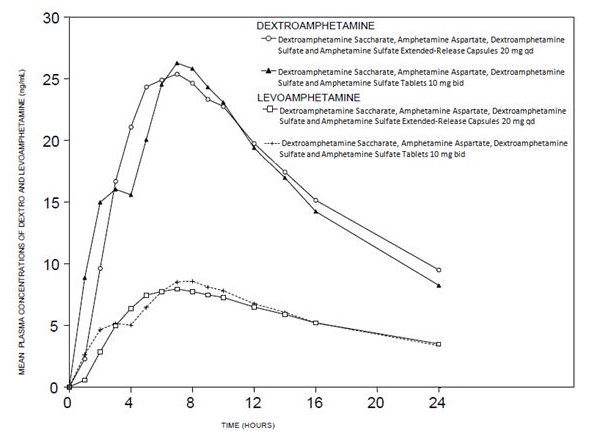
A single dose of Dextroamphetamine Saccharate, Amphetamine Aspartate Monohydrate, Dextroamphetamine Sulfate, and Amphetamine Sulfate Extended-Release Capsules 20 mg provided comparable plasma concentration profiles of both d -amphetamine and l -amphetamine to Dextroamphetamine Saccharate, Amphetamine Aspartate Monohydrate, Dextroamphetamine Sulfate, and Amphetamine Sulfate Tablets (immediate-release) 10 mg twice daily administered 4 hours apart.
The mean elimination half-life for d -amphetamine is 10 hours in adults; 11 hours in adolescents aged 13 to 17 years and weighing less than or equal to 75 kg/165 lbs; and 9 hours in children aged 6 to 12 years. For the l -amphetamine, the mean elimination half-life in adults is 13 hours; 13 to 14 hours in adolescents; and 11 hours in children aged 6 to 12 years. On a mg/kg body weight basis, children have a higher clearance than adolescents or adults (see Special Populations below).
Dextroamphetamine Saccharate, Amphetamine Aspartate Monohydrate, Dextroamphetamine Sulfate, and Amphetamine Sulfate Extended-Release Capsules demonstrates linear pharmacokinetics over the dose range of 20 to 60 mg in adults and adolescents weighing greater than 75 kg/165 lbs, over the dose range of 10 to 40 mg in adolescents weighing less than or equal to 75 kg/165 lbs, and 5 to 30 mg in children aged 6 to 12 years. There is no unexpected accumulation at steady state in children.
Food does not affect the extent of absorption of d -amphetamine and l -amphetamine, but prolongs T max by 2.5 hours (from 5.2 hrs at fasted state to 7.7 hrs after a high-fat meal) for d -amphetamine and 2.7 hrs (from 5.6 hours at fasted state to 8.3 hrs after a high fat meal) for l -amphetamine after administration of Dextroamphetamine Saccharate, Amphetamine Aspartate Monohydrate, Dextroamphetamine Sulfate, and Amphetamine Sulfate Extended-Release Capsules 30 mg. Opening the capsule and sprinkling the contents on applesauce results in comparable absorption to the intact capsule taken in the fasted state. Equal doses Dextroamphetamine Saccharate, Amphetamine Aspartate Monohydrate, Dextroamphetamine Sulfate, and Amphetamine Sulfate Extended-Release Capsule strengths are bioequivalent.
Metabolism and Excretion
Amphetamine is reported to be oxidized at the 4 position of the benzene ring to form 4-hydroxyamphetamine, or on the side chain α or β carbons to form alpha-hydroxy-amphetamine or norephedrine, respectively. Norephedrine and 4-hydroxy-amphetamine are both active and each is subsequently oxidized to form 4-hydroxy-norephedrine. Alpha-hydroxy-amphetamine undergoes deamination to form phenylacetone, which ultimately forms benzoic acid and its glucuronide and the glycine conjugate hippuric acid. Although the enzymes involved in amphetamine metabolism have not been clearly defined, CYP2D6 is known to be involved with formation of 4-hydroxy-amphetamine. Since CYP2D6 is genetically polymorphic, population variations in amphetamine metabolism are a possibility.
Amphetamine is known to inhibit monoamine oxidase, whereas the ability of amphetamine and its metabolites to inhibit various P450 isozymes and other enzymes has not been adequately elucidated. In vitro experiments with human microsomes indicate minor inhibition of CYP2D6 by amphetamine and minor inhibition of CYP1A2, 2D6, and 3A4 by one or more metabolites. However, due to the probability of auto-inhibition and the lack of information on the concentration of these metabolites relative to in vivo concentrations, no predications regarding the potential for amphetamine or its metabolites to inhibit the metabolism of other drugs by CYP isozymes in vivo can be made.
With normal urine pHs, approximately half of an administered dose of amphetamine is recoverable in urine as derivatives of alpha-hydroxy-amphetamine and approximately another 30 to 40% of the dose is recoverable in urine as amphetamine itself. Since amphetamine has a pKa of 9.9, urinary recovery of amphetamine is highly dependent on pH and urine flow rates. Alkaline urine pHs result in less ionization and reduced renal elimination, and acidic pHs and high flow rates result in increased renal elimination with clearances greater than glomerular filtration rates, indicating the involvement of active secretion. Urinary recovery of amphetamine has been reported to range from 1 to 75%, depending on urinary pH, with the remaining fraction of the dose hepatically metabolized. Consequently, both hepatic and renal dysfunction have the potential to inhibit the elimination of amphetamine and result in prolonged exposures. In addition, drugs that effect urinary pH are known to alter the elimination of amphetamine, and any decrease in amphetamine’s metabolism that might occur due to drug interactions or genetic polymorphisms is more likely to be clinically significant when renal elimination is decreased [see Drug Interactions (7) ].
Special Populations
Comparison of the pharmacokinetics of d- and l -amphetamine after oral administration of Dextroamphetamine Saccharate, Amphetamine Aspartate Monohydrate, Dextroamphetamine Sulfate, and Amphetamine Sulfate Extended-Release Capsules in children (6 to 12 years) and adolescent (13 to 17 years) ADHD patients and healthy adult volunteers indicates that body weight is the primary determinant of apparent differences in the pharmacokinetics of d - and l -amphetamine across the age range. Systemic exposure measured by area under the curve to infinity (AUC ∞ ) and maximum plasma concentration (C max ) decreased with increases in body weight, while oral volume of distribution (V Z /F), oral clearance (CL/F), and elimination half-life (t 1/2 ) increased with increases in body weight.
Pediatric Patients
On a mg/kg weight basis, children eliminated amphetamine faster than adults. The elimination half-life (t 1/2 ) is approximately 1 hour shorter for d-amphetamine and 2 hours shorter for l-amphetamine in children than in adults. However, children had higher systemic exposure to amphetamine (C max and AUC) than adults for a given dose of Dextroamphetamine Saccharate, Amphetamine Aspartate Monohydrate, Dextroamphetamine Sulfate, and Amphetamine Sulfate Extended-Release Capsules, which was attributed to the higher dose administered to children on a mg/kg body weight basis compared to adults. Upon dose normalization on a mg/kg basis, children showed 30% less systemic exposure compared to adults.
Gender
Systemic exposure to amphetamine was 20 to 30% higher in women (N=20) than in men (N=20) due to the higher dose administered to women on a mg/kg body weight basis. When the exposure parameters (C max and AUC) were normalized by dose (mg/kg), these differences diminished. Age and gender had no direct effect on the pharmacokinetics of d - and l -amphetamine.
Race
Formal pharmacokinetic studies for race have not been conducted. However, amphetamine pharmacokinetics appeared to be comparable among Caucasians (N=33), Blacks (N=8) and Hispanics (N=10).
Patients with Renal Impairment
The effect of renal impairment on d- and l- amphetamine after administration of Dextroamphetamine Saccharate, Amphetamine Aspartate Monohydrate, Dextroamphetamine Sulfate, and Amphetamine Sulfate Extended-Release Capsules has not been studied. The impact of renal impairment on the disposition of amphetamine is expected to be similar between oral administration of lisdexamfetamine and Dextroamphetamine Saccharate, Amphetamine Aspartate Monohydrate, Dextroamphetamine Sulfate, and Amphetamine Sulfate Extended-Release Capsules.
In a pharmacokinetic study of lisdexamfetamine in adult subjects with normal and impaired renal function, mean d-amphetamine clearance was reduced from 0.7 L/hr/kg in normal subjects to 0.4 L/hr/kg in subjects with severe renal impairment (GFR 15 to <30mL/min/1.73m 2 ). Dialysis did not significantly affect the clearance of d- amphetamine [see Use in Specific Populations (8.6) ].
13 NONCLINICAL TOXICOLOGY
Carcinogenesis, Mutagenesis, Impairment of Fertility
Carcinogenesis
No evidence of carcinogenicity was found in studies in which d,l -amphetamine (enantiomer ratio of 1:1) was administered to mice and rats in the diet for 2 years at doses of up to 30 mg/kg/day in male mice, 19 mg/kg/day in female mice, and 5 mg/kg/day in male and female rats. These doses are approximately 2.4, 1.5, and 0.8 times, respectively, the maximum recommended human dose of 30 mg/day given to children, on a mg/m 2 basis.
Mutagenesis
Amphetamine, in the enantiomer ratio d- to l- ratio of 3:1, was not clastogenic in the mouse bone marrow micronucleus test in vivo and was negative when tested in the E. coli component of the Ames test in vitro . d,l -Amphetamine (1:1 enantiomer ratio) has been reported to produce a positive response in the mouse bone marrow micronucleus test, an equivocal response in the Ames test, and negative responses in the in vitro sister chromatid exchange and chromosomal aberration assays.
Impairment of Fertility
Amphetamine, in the enantiomer ratio d - to l - ratio of 3:1, did not adversely affect fertility or early embryonic development in the rat at doses of up to 20 mg/kg/day (approximately 8 times the maximum recommended human dose of 20 mg/day given to adolescents, on a mg/m 2 basis).
Animal Toxicology and/or Pharmacology
Acute administration of high doses of amphetamine ( d- or d,l- ) has been shown to produce long-lasting neurotoxic effects, including irreversible nerve fiber damage, in rodents. The significance of these findings to humans is unknown.
14 CLINICAL STUDIES
Pediatric Patients
A double-blind, randomized, placebo-controlled, parallel-group study was conducted in children aged 6 to 12 (N=584) who met DSM-IV ® criteria for ADHD (either the combined type or the hyperactive-impulsive type). Patients were randomized to fixed-dose treatment groups receiving final doses of 10, 20, or 30 mg of Dextroamphetamine Saccharate, Amphetamine Aspartate Monohydrate, Dextroamphetamine Sulfate, and Amphetamine Sulfate Extended-Release Capsules or placebo once daily in the morning for three weeks. Significant improvements in patient behavior, based upon teacher ratings of attention and hyperactivity, were observed for all Dextroamphetamine Saccharate, Amphetamine Aspartate Monohydrate, Dextroamphetamine Sulfate, and Amphetamine Sulfate Extended-Release Capsules doses compared to patients who received placebo, for all three weeks, including the first week of treatment, when all Dextroamphetamine Saccharate, Amphetamine Aspartate Monohydrate, Dextroamphetamine Sulfate, and Amphetamine Sulfate Extended-Release Capsules subjects were receiving a dose of 10 mg/day. Patients who received Dextroamphetamine Saccharate, Amphetamine Aspartate Monohydrate, Dextroamphetamine Sulfate, and Amphetamine Sulfate Extended-Release Capsules showed behavioral improvements in both morning and afternoon assessments compared to patients on placebo.
In a classroom analogue study, patients (N=51) receiving fixed doses of 10, 20, or 30 mg Dextroamphetamine Saccharate, Amphetamine Aspartate Monohydrate, Dextroamphetamine Sulfate, and Amphetamine Sulfate Extended-Release Capsules demonstrated statistically significant improvements in teacher-rated behavior and performance measures, compared to patients treated with placebo.
A double-blind, randomized, multi-center, parallel-group, placebo-controlled study was conducted in adolescents aged 13 to 17 (N=327) who met DSM-IV ® criteria for ADHD. The primary cohort of patients (n=287, weighing ≤ 75kg/165lbs) were randomized to fixed-dose treatment groups and received four weeks of treatment. Patients were randomized to receive final doses of 10, 20, 30, and 40 mg Dextroamphetamine Saccharate, Amphetamine Aspartate Monohydrate, Dextroamphetamine Sulfate, and Amphetamine Sulfate Extended-Release Capsules or placebo once daily in the morning. Patients randomized to doses greater than 10 mg were titrated to their final doses by 10 mg each week. The secondary cohort consisted of 40 subjects weighing >75kg/165lbs who were randomized to fixed-dose treatment groups receiving final doses of 50 and 60 mg Dextroamphetamine Saccharate, Amphetamine Aspartate Monohydrate, Dextroamphetamine Sulfate, and Amphetamine Sulfate Extended-Release Capsules or placebo once daily in the morning for 4 weeks. The primary efficacy variable was the Attention Deficit Hyperactivity Disorder-Rating Scale IV (ADHD-RS-IV) total score for the primary cohort. The ADHD-RS-IV is an 18-item scale that measures the core symptoms of ADHD. Improvements in the primary cohort were statistically significantly greater in all four primary cohort active treatment groups (Dextroamphetamine Saccharate, Amphetamine Aspartate Monohydrate, Dextroamphetamine Sulfate, and Amphetamine Sulfate Extended-Release Capsules, 10 mg, 20 mg, 30 mg, and 40 mg) compared with the placebo group. There was not adequate evidence that doses greater than 20 mg/day conferred additional benefit.
Adult Patients
A double-blind, randomized, placebo-controlled, parallel-group study was conducted in adults (N=255) who met DSM-IV ® criteria for ADHD. Patients were randomized to fixed-dose treatment groups receiving final doses of 20, 40, or 60 mg of Dextroamphetamine Saccharate, Amphetamine Aspartate Monohydrate, Dextroamphetamine Sulfate, and Amphetamine Sulfate Extended-Release Capsules or placebo once daily in the morning for four weeks. Significant improvements, measured with the Attention Deficit Hyperactivity Disorder-Rating Scale (ADHD-RS), an 18- item scale that measures the core symptoms of ADHD, were observed at endpoint for all Dextroamphetamine Saccharate, Amphetamine Aspartate Monohydrate, Dextroamphetamine Sulfate, and Amphetamine Sulfate Extended-Release Capsules doses compared to patients who received placebo for all four weeks. There was not adequate evidence that doses greater than 20 mg/day conferred additional benefit.
16 HOW SUPPLIED/STORAGE AND HANDLING
Dextroamphetamine Saccharate, Amphetamine Aspartate Monohydrate, Dextroamphetamine Sulfate, and Amphetamine Sulfate Extended-Release Capsules are available as:
5 mg – Hard Gelatin Capsules, Blue Opaque Cap Printed with “G AMP XR 5 mg” and White Opaque Body Printed with ''029'' contains off-white to beige colored pellets.
Bottles of 100 NDC 70010-029-01
10 mg – Hard Gelatin Capsules, Blue Opaque Cap Printed with “G AMP XR 10 mg” and White Opaque Body Printed with ''030'' contains off-white to beige colored pellets.
Bottles of 100 NDC 70010-030-01
15 mg – Hard Gelatin Capsules, White Opaque Cap Printed with “G AMP XR 15 mg” and Blue Opaque Body Printed with ''031'' contains off-white to beige colored pellets.
Bottles of 100 NDC 70010-031-01
20 mg – Hard Gelatin Capsules, Gold Opaque Cap Printed with “G AMP XR 20 mg” and Gold Opaque Body Printed with ''032'' contains off-white to beige colored pellets.
Bottles of 100 NDC 70010-032-01
25 mg – Hard Gelatin Capsules, White Opaque Cap Printed with “G AMP XR 25 mg” and Gold Opaque Body Printed with ''033'' contains off-white to beige colored pellets
Bottles of 100 NDC 70010-033-01
30 mg – Hard Gelatin Capsules, Gold Opaque Cap Printed with “G AMP XR 30 mg” and Orange transparent Body Printed with ''034'' contains off-white to beige colored pellets
Bottles of 100 NDC 70010-034-01
Dispense in a tight, light-resistant container as defined in the USP.
Store at 20° to 25°C (68° to 77°F); excursions permitted between 15° to 30°C (59° to 86°F) [see USP Controlled Room Temperature].
Mechanism of Action
Amphetamines are non-catecholamine sympathomimetic amines with CNS stimulant activity. The mode of therapeutic action in ADHD is not known.
