Get your patient on Doxepin Hydrochloride - Doxepin Hydrochloride capsule (Doxepin Hydrochloride)
Doxepin Hydrochloride - Doxepin Hydrochloride capsule prescribing information

WARNING: SUICIDAL THOUGHTS AND BEHAVIORS
Antidepressants increase the risk of suicidal thoughts and behavior in pediatric and young adult patients in short-term studies. Closely monitor all antidepressant-treated patients for clinical worsening and emergence of suicidal thoughts and behaviors [see Warnings and Precautions (5.1) ]. Doxepin hydrochloride capsules are not approved for use in pediatric patients [see Use in Specific Populations (8.4) ].
INDICATIONS AND USAGE
Doxepin hydrochloride capsules are indicated for the treatment of major depressive disorder (MDD) in adults.
DOSAGE AND ADMINISTRATION
- Prior to initiating treatment with doxepin hydrochloride capsules, screen patients for a personal or family history of bipolar disorder, mania, or hypomania. (2.1 )
- Recommended starting oral dosage is 25 mg three times daily or 75 mg once daily. (2.2 )
- Recommended target total dosage range is between 75 mg/day and 150 mg/day (may be given once daily or in divided doses). (2.2 )
- Maximum recommended dosage is 100 mg three times daily. (2.2 )
- Wait at least 14 days after discontinuation of a monoamine oxidase inhibitor (MAOI) before initiating therapy with doxepin hydrochloride capsules. (2.3 )
- See the Full Prescribing Information for dosage modifications intended to reduce the risk of anticholinergic effects, for strong CYP2D6 inhibitors, and in known CYP2D6 and CYP2C19 poor metabolizers. (2.4 , 2.5 , 2.6 )
- When discontinuing doxepin hydrochloride capsules, gradually reduce the dosage until discontinued. (2.7 )
Screen for Bipolar Disorder Prior to Starting Doxepin Hydrochloride Capsules
Prior to initiating treatment with doxepin hydrochloride capsules, screen patients for a personal or family history of bipolar disorder, mania, or hypomania [see Warnings and Precautions (5.5) ].
Recommended Dosage
The recommended starting oral dosage for doxepin hydrochloride capsule is 25 mg three times daily or 75 mg once daily. The recommended target total oral dosage range for doxepin hydrochloride capsule is between 75 mg/day and 150 mg/day (may be given once daily or in divided doses). The maximum recommended oral dosage for doxepin hydrochloride capsule is 100 mg three times daily.
Switching Patients to or from a Monoamine Oxidase Inhibitor
Wait at least 14 days after discontinuation of a monoamine oxidase inhibitor (MAOI) before initiating therapy with doxepin hydrochloride capsules [see Contraindications (4) , Warnings and Precautions (5.2) , and Drug Interactions (7) ] .
Wait at least 14 days after discontinuation of doxepin hydrochloride capsules before initiating therapy with an MAOI [see Contraindications (4) , Warnings and Precautions (5.2) , and Drug Interactions (7) ].
Dosage Modifications Intended to Reduce the Risk of Anticholinergic Effects
If anticholinergiceffects (e.g., dry mouth, blurred vision, constipation) develop, reduce the doxepin hydrochloride capsules dosage [see Adverse Reactions (6.1) ].
Dosage Modifications for Strong CYP2D6 Inhibitors
Reducethe doxepin hydrochloride capsules dosage based on doxepin plasma concentrations when used concomitantly with strong CYP2D6 inhibitors [see Drug Interactions (7) ].
Dosage Modifications in Known CYP2D6 and CYP2C19 Poor Metabolizers
Reducethe doxepin hydrochloride capsules dosage based on doxepin plasma concentrations in patients who are known CYP2D6 and CYP2C19 poormetabolizers [see Use in Specific Populations (8.7) ].
Discontinuation of Doxepin Hydrochloride Capsules Treatment
Whendiscontinuing doxepin hydrochloride capsules, gradually reduce the dosage until discontinued [see Adverse Reactions (6) ] .
DOSAGE FORMS AND STRENGTHS
Capsules:
- Doxepin hydrochloride capsules USP, 10 mg: size “4” hard gelatin capsule with buff opaque cap and buff opaque body, imprinted “10” on cap with black ink and plain body filled with white to of white powder.
- Doxepin hydrochloride capsules USP, 25 mg: size "3" hard gelatin capsule with ivory opaque cap and white opaque body, imprinted "25" on cap with black ink and plain body filled with white to off white powder.
- Doxepin hydrochloride capsules USP, 50 mg: size "3" hard gelatin capsule with ivory opaque cap and ivory opaque body, imprinted "50" on cap with black ink and plain body filled with white to off white powder.
- Doxepin hydrochloride capsules USP, 75 mg: size "2" hard gelatin capsule with brite lite green opaque cap and brite lite green opaque body, imprinted "75" on cap with black ink and plain body filled with white to off white powder.
- Doxepin hydrochloride capsules USP, 100 mg: size "1" hard gelatin capsule with brite lite green opaque cap and white opaque body, imprinted "100" on cap with black ink and plain body filled with white to off white powder.
Active ingredients in the capsules include: 10 mg, 25, mg, 50 mg, 75 mg, and 100 mg of doxepin.
USE IN SPECIFIC POPULATIONS
- Pregnancy : Neonates exposed to TCAs, including doxepin hydrochloride, late in the third trimester have developed poor adaptation (respiratory distress, temperature instability, feeding difficulty, hypotonia, irritability). Monitor neonates who were exposed to doxepin hydrochloride in the third trimester of pregnancy for poor neonatal adaptation syndrome. (8.1 )
- Lactation : Breastfeeding not recommended. (8.2 )
- Geriatric Use : May cause confusion and oversedation. (8.5 )
- CYP2C19 and CYP2D6 Poor Metabolizers : Increased risk of doxepin hydrochloride-associated adverse reactions. (8.7 )
Pregnancy
Pregnancy Exposure Registry
There is a pregnancy exposure registry that monitors pregnancy outcomes in women exposed to antidepressants, including doxepin hydrochloride, during pregnancy. Health care providers are encouraged to advise patients to register by calling the National Pregnancy Registry for Antidepressants 1-866-961-2388 or visiting online at https://womensmentalhealth.org/clinical-and-researchprograms/pregnancyregistry/antidepressants.
Risk Summary
Available data from published epidemiological studies and postmarketing reports have not established an increased risk for major birth defects or miscarriage with doxepin hydrochloride use (see Data). There are risks (see Clinical Considerations) :
- To the mother associated with untreated depression in pregnancy.
- Poor neonate adaptation from exposure to tricyclic antidepressants (TCAs), including doxepin hydrochloride, during the third trimester of pregnancy .
Animal reproduction toxicity of doxepin has not been fully characterized.
The background risk of major birth defects and miscarriage for the indicated population is unknown. All pregnancies have a background risk of major birth defect, loss, or other adverse outcomes. In the U.S. general population, the estimated background risk of major birth defects and miscarriage in clinically recognized pregnancies is 2 to 4% and 15 to 20%, respectively.
Clinical Considerations
Disease-associated Maternal and/or Embryofetal Risk
Women who discontinue antidepressants during pregnancy are more likely to experience a relapse of MDD than women who continue antidepressants. This finding is from a prospective longitudinal study of 201 pregnant women with a history of MDD who were euthymic and taking antidepressants at the beginning of pregnancy. Consider the risk of untreated MDD when considering discontinuation of doxepin hydrochloride drugs during pregnancy and the postpartum period.
Fetal/Neonatal Adverse Reactions
Neonates previously exposed to TCAs, including doxepin hydrochloride, late in the third trimester during pregnancy have developed complications requiring prolonged hospitalization, respiratory support, and tube feeding. Such complications can arise immediately upon delivery. Reported clinical findings have included respiratory distress, cyanosis, apnea, seizures, temperature instability, feeding difficulty, vomiting, hypoglycemia, hypotonia, hypertonia, hyperreflexia, tremor, jitteriness, irritability, and constant crying. These findings are consistent with either direct toxic effects of TCAs or possibly a drug discontinuation syndrome. Monitor neonates who were exposed to doxepin hydrochloride in the third trimester of pregnancy for poor neonatal adaptation syndrome.
Data
Human Data: Published epidemiological studies of pregnant women exposed to TCAs, including doxepin hydrochloride, have not established an association with major birth defects, miscarriage, or adverse maternal outcomes. Methodological limitations of these observational studies include small sample size and lack of adequate controls.
Lactation
Risk Summary
Data from published literature report the presence of doxepin and nordoxepin in human milk. There are reports of excessive sedation, respiratory depression, poor suckling and swallowing and hypotonia in breastfed infants exposed to doxepin at doses used to treat MDD. There are no data on the effects of doxepin on milk production.
Because of the potential for serious adverse reactions, including excess sedation and respiratory depression in a breastfed infant, advise patients that breastfeeding is not recommended during doxepin hydrochloride treatment.
Pediatric Use
The safety and effectiveness of doxepin hydrochloride in pediatric patients have not been established.
Antidepressants increase the risk of suicidal thoughts and behaviors in pediatric patients [see Warnings and Precautions (5.1) ] .
Geriatric Use
Clinical studies of doxepin hydrochloride did not include sufficient numbers of patients 65 years of age and older to determine whether they respond differently from younger adult patients.
Sedating drugs, including doxepin hydrochloride, may cause confusion and oversedation in geriatric patients. The recommended starting doxepin hydrochloride dosage in geriatric patients is generally lower than those of younger adult patients .
Hepatic Impairment
The effect of hepatic impairment (HI) on the pharmacokinetics of doxepin has not been studied. Doxepin is primarily metabolized in the liver. Doxepin hydrochloride-treated patients with HI may have a greater systemic doxepin exposure than those with normal liver function. Consider obtaining doxepin concentrations in patients with HI and modifying the dosage as appropriate.
Use in Genomic Subgroups
The recommended doxepin hydrochloride dosage in CYP2C19 and CYP2D6 poor metabolizers is lower than the recommended dosage in CYP2C19 and CYP2D6 normal metabolizers [see Dosage and Administration (2.6) ].
According to the literature, doxepin is primarily metabolized by CYP2D6 and/or CYP2C19; thus, the use of doxepin hydrochloride in CYP2D6 and/or CYP2C19 poor metabolizers will likely result in higher doxepin exposures and an increased risk of doxepin hydrochloride-associated adverse reactions.
CONTRAINDICATIONS
Doxepin hydrochloride capsules are contraindicated in patients:
- With hypersensitivity to doxepin (hypersensitivity reactions have included tongue edema and urticaria). The possibility of cross sensitivity with other dibenzoxepines should be kept in mind.
- With glaucoma [see Warnings and Precautions (5.3) ].
- With current or past urinary retention [see Adverse Reactions (6.1) ].
- Taking MAOIs, or within 14 days of stopping MAOIs (including the MAOIs linezolid or intravenous methylene blue) because of an increased risk of serotonin syndrome [see Warnings and Precautions (5.2) and Drug Interactions (7) ].
WARNINGS AND PRECAUTIONS
- Suicidal Thoughts and Behaviors : Monitor for clinical worsening and suicide thoughts and behaviors. Consider changing the therapeutic regimen, including possibly discontinuing doxepin hydrochloride, in patients who are experiencing emergent suicidal thoughts or behaviors. (5.1 )
- Serotonin Syndrome : Risk increases with concomitant use of other serotonergic drugs. Monitor all patients taking doxepin hydrochloride for the emergence of serotonin syndrome. Discontinue doxepin hydrochloride and any concomitant serotonergic agents immediately and initiate supportive treatment if serotonin syndrome occurs. (5.2 , 7 )
- Angle-Closure Glaucoma : Avoid use of doxepin hydrochloride in patients with untreated anatomically narrow angles. (5.3 )
- Sedation and Driving Risks : Because doxepin hydrochloride can cause sedation, warn patients against driving a car or operating dangerous machinery while taking doxepin hydrochloride. (5.4 )
- Activation of Mania or Hypomania : Prior to initiating antidepressant therapy, screen for bipolar disorder. doxepin hydrochloride is not approved for use in treating bipolar depression. (5.5 )
Suicidal Thoughts and Behaviors in Adolescents and Young Adults
In pooled analyses of placebo-controlled trials of antidepressant drugs including tricyclic antidepressants and other antidepressant classes that included approximately 77,000 adult patients and 4,500 pediatric patients (doxepin hydrochloride is not approved for use in pediatric patients), the incidence of suicidal thoughts and behaviors in antidepressant-treated patients age 24 years and younger was greater than in placebo-treated patients. There was considerable variation in risk of suicidal thoughts and behaviors among drugs, but there was an increased risk identified in young patients for most drugs studied. The drug-placebo differences in the number of cases of suicidal thoughts and behaviors per 1,000 patients treated are provided in Table 1.
Table 1: Risk Differences of the Number of Patients of Suicidal Thoughts and Behaviors in the Pooled Placebo-Controlled Trials of Antidepressants in Pediatric and Adult Patients
| Age Range | Drug-Placebo Difference in Number of Patients of Suicidal Thoughts or Behaviors per 1,000 Patients Treated |
| Increases Compared to Placebo | |
| < 18 years old | 14 additional patients |
| 18 to 24 years old | 5 additional patients |
| Decreases Compared to Placebo | |
| 25 to 64 years old | 1 fewer patient |
| ≥ 65 years old | 6 fewer patients |
It is unknown whether the risk of suicidal thoughts and behaviors in pediatric and young adults extends to longer-term use, i.e., beyond four months. However, there is substantial evidence from placebo-controlled maintenance trials in adults with MDD that antidepressants delay the recurrence of depression.
Monitor all doxepin hydrochloride-treated patients for clinical worsening and emergence of suicidal thoughts and behaviors, especially during the initial few months of doxepin hydrochloride therapy, and at times of dosage changes. Counsel family members or caregivers of patients to monitor for changes in behavior and to alert the health care provider. Consider changing the therapeutic regimen, including possibly discontinuing doxepin hydrochloride, in patients who are experiencing emergent suicidal thoughts or behaviors.
Serotonin Syndrome
Tricyclic antidepressants,including doxepin hydrochloride, can precipitate serotonin syndrome, a potentially life-threatening condition. This risk is increased with concomitantuse of other serotonergic drugs (e.g., other tricyclic antidepressants, SSRIs, serotonin norepinephrine reuptake inhibitors, triptans,tetracyclic antidepressants, opioids), lithium, tryptophan, buspirone, and St. John’s Wort) and with drugs that impair metabolism of serotonin (e.g., MAOIs intended totreat psychiatric disorders and others, such as linezolid or intravenous methylene blue) [see Drug Interactions (7) ] .
Serotonin syndrome symptomsmay include mental status changes (e.g., confusion, agitation, hallucinations, delirium, and coma), autonomic instability (e.g., tachycardia,labile blood pressure, hyperthermia, diaphoresis, and flushing), neuromuscular abnormalities (e.g., tremor, rigidity, clonus, and hyperreflexia), seizures and gastrointestinalsigns and symptoms (e.g., nausea, vomiting, diarrhea). Patients should be monitored for the emergence of serotoninsyndrome.
The concomitantuse of doxepin hydrochloride with MAOIs is contraindicated. The use of doxepin hydrochloride within 14 days of discontinuing treatmentwith an MAOI intended to treat psychiatric disorders is contraindicated. Starting doxepin hydrochloride in a patient who is being treated withan MAOI such as linezolid or intravenous methylene blue is contraindicated. No reports involved the administration of methylene blue by other routes (such as oral or local tissue injection). If it isnecessary to initiate treatment with a MAOI such as linezolid or intravenous methylene blue in a patient taking doxepin hydrochloridecapsules, discontinue doxepin hydrochloride capsules before initiating treatment with the MAOI [see Dosage and Administration (2.4) and Drug Interactions (7) ] .
Monitorall patients taking doxepin hydrochloride capsules for the emergence of serotonin syndrome. Discontinue doxepin hydrochloride treatment and any concomitantserotonergic agents immediately if the above symptoms occur, and initiate supportive symptomatic treatment. If concomitant use ofdoxepin hydrochloride with other serotonergic drugs (besides MAOIs which are contraindicated) is clinically warranted, inform patients of the increased risk forserotonin syndrome and monitor for symptoms.
Angle-Closure Glaucoma
The pupillary dilation that occurs following use of many antidepressant drugs including doxepin hydrochloride may trigger an angle closure glaucoma attack in a patient with anatomically narrow angles who does not have a patent iridectomy. Patients may wish to be examined to determine whether they are susceptible to angle closure, and have a prophylactic procedure (e.g., iridectomy), if they are susceptible.
Doxepin hydrochloride capsules are contraindicated in patients with glaucoma. Avoid use of doxepin hydrochloride capsules in patients with untreated anatomically narrow angles.
Sedation and Driving Risks
Because doxepin hydrochloride can cause sedation, warn patients of the risk of sedation and caution patients against driving a car or operating dangerous machinery while taking doxepin hydrochloride capsules. Also caution patients that their response to alcohol may be potentiated.
Sedating drugs, including doxepin hydrochloride, may cause oversedation in geriatric patients.
Activation of Mania or Hypomania
In patientswith bipolar disorder, treating MDD with doxepin hydrochloride may precipitate a mixed/manic episode. Prior to initiating treatment with doxepin hydrochloride capsules,screen patients for any personal or family history of bipolar disorder, mania, or hypomania. Doxepin hydrochloride is not approved for use intreating bipolar depression.
Risk of Seizures
Caution should be used when doxepin hydrochloride is given to patients with a history of seizure disorder, because this drug may lower the seizure threshold. Patients with a history of seizures should be monitored during doxepin hydrochloride use to identify recurrence of seizures or increase in frequency of seizures.
Psychosis
In patients with schizophrenia, treatment with doxepin hydrochloride for MDD may activate psychosis. If this occurs, stop doxepin hydrochloride and consider alternative treatment options.
ADVERSE REACTIONS
The following clinically significant adverse reactions are described elsewhere in the labeling:
- Suicidal Thoughts and Behaviors in Adolescents and Young Adults [see Warnings and Precautions (5.1) ]
- Serotonin Syndrome [see Warnings and Precautions (5.2) ]
- Angle-Closure Glaucoma [see Warnings and Precautions (5.3) ]
- Sedation and Driving Risks [see Warnings and Precautions (5.4) ]
- Activation of Mania or Hypomania [see Warnings and Precautions (5.5) ]
- Risk of Seizures [see Warnings and Precautions (5.6) ]
- Psychosis [see Warnings and Precautions (5.7) ]
Clinical Trials Experience
Because clinical trials are conducted under widely varying conditions, adverse reaction rates observed in the clinical trials of a drug cannot be directly compared to rates in the clinical trials of another drug and may not reflect the rates observed in practice.
Adverse reactions (≥ 2% of doxepin hydrochloride-treated patients) in 1,635 doxepin hydrochloride-treated patients with MDD in clinical trials included somnolence (17%), dry mouth (15%), dizziness (6%), constipation (5%), fatigue (5%), blurred vision (3%), tachycardia (3%), hypotension (3%), insomnia (2%), tremor (2%), nausea (2%), hyperhidrosis (2%), and increased weight (2%).
Other Adverse Reactions Observed in Clinical Trials
Other adverse reactions that occurred at an incidence of < 2% in patients treated with doxepin hydrochloride in clinical trials were:
- Ear and Labyrinth Disorders : Tinnitus.
- Gastrointestinal Disorders : Diarrhea, dyspepsia, vomiting.
- General Disorders and Administration Site Conditions : Asthenia, edema, chills.
- Metabolism and Nutrition Disorders : Decreased appetite.
- Nervous System Disorders : Ataxia, paresthesia, headache, extrapyramidal disorder.
- Psychiatric Disorders : Agitation, confusional state, libido decreased.
- Pulmonary Disorders : Asthma exacerbation.
- Renal and Urinary Disorders : Urinary retention.
- Reproductive System and Breast Disorders : Breast enlargement.
- Skin & Subcutaneous Tissue Disorders : Rash, pruritus.
- Vascular Disorders : Flushing.
Postmarketing Experience
The following adverse reactions have been identified during post-approval use of doxepin hydrochloride. Because these reactions are reported voluntarily from a population of uncertain size, it is not always possible to reliably estimate their frequency or establish a causal relationship to drug exposure.
- Blood and Lymphatic System Disorders : Agranulocytosis, leukopenia, thrombocytopenia, eosinophilia, purpura.
- Cardiac Disorders : Conduction disorder, arrhythmia.
- Endocrine Disorders : Inappropriate antidiuretic hormone secretion.
- Eye Disorders : Angle-closure glaucoma, mydriasis.
- Gastrointestinal Disorders : Aphthous stomatitis, abdominal pain upper.
- General Disorders and Administration Site Conditions : Facial edema, hyperpyrexia.
- Hepatobiliary Disorders : Jaundice.
- Investigations : Blood glucose increased.
- Nervous System Disorders : Hypoesthesia, dysgeusia, convulsion, tardive dyskinesia, serotonin syndrome.
- Psychiatric Disorders : Hallucination, disorientation.
- Reproductive System and Breast Disorders : Testicular swelling, gynecomastia, galactorrhea.
- Skin and Subcutaneous Tissue Disorders : Photosensitivity reaction, tongue edema, alopecia, urticaria.
- Vascular Disorders : Hypertension.
Withdrawal syndrome occurred after stopping doxepin hydrochloride [see Drug Abuse and Dependence (9.3) ].
The following adverse reaction has been reported with use with other tricyclic antidepressants: decreased blood glucose.
DRUG INTERACTIONS
Table 2 describe the clinically significant drug interactions of doxepin hydrochloride with other drugs or classes.
Table 2: Clinically Significant Drug Interactions with Doxepin Hydrochloride
| Monoamine Oxidase Inhibitors | |
| Prevention or Management | Doxepin hydrochloride is contraindicated in patients taking monoamine oxidase inhibitors (MAOIs), including MAOIs such as linezolid or intravenous methylene blue. The use of doxepin hydrochloride within 14 days of discontinuation of an MAOI or the use of MAOI within 14 days of discontinuation of doxepin hydrochloride is contraindicated. Starting doxepin hydrochloride in a patient who is being treated with an MAOI is contraindicated. |
| Clinical Effect(s) | Concomitant use of doxepin hydrochloride and MAOIs increases the risk of serotonin syndrome [see Warnings and Precautions (5.2) ] . |
| Other Serotonergic Drugs (Besides MAOIs) | |
| Prevention or Management | Monitor patients for signs and symptoms of serotonin syndrome, particularly during treatment initiation and dosage increases. If serotonin syndrome occurs, consider discontinuation of doxepin hydrochloride and/or concomitant serotonergic drugs [see Warnings and Precautions (5.2) ]. |
| Mechanism and Clinical Effect(s) | Concomitant use of doxepin hydrochloride with other serotonergic drugs increases the risk of serotonin syndrome [see Warnings and Precautions (5.2) ]. |
| Strong CYP2D6 Inhibitors | |
| Prevention or Management | Monitor doxepin plasma concentrations and reduce the doxepin hydrochloride dosage or the strong CYP2D6 inhibitor as appropriate [see Dosage and Administration (2.5) ]. |
| Mechanism and Clinical Effect(s) | Concomitant use of doxepin hydrochloride with strong CYP2D6 inhibitors may increase the exposures of doxepin [see Clinical Pharmacology (12.3) ] which may increase the risk of doxepin hydrochloride related adverse reactions [see Warnings and Precautions (5) and Adverse Reactions (6) ] . |
| Examples | See www.fda.gov/CYPandTransporterInteractingDrugs for examples of strong CYP2D6 Inhibitors. |
| Carbamazepine | |
| Prevention or Management | Monitor doxepin plasma concentrations and consider increasing the doxepin hydrochloride dosage in patients taking carbamazepine. |
| Mechanism and Clinical Effect(s) | Concomitant use of carbamazepine with doxepin hydrochloride decreases the exposure of doxepin [see Clinical Pharmacology (12.3) ] which could lead to reduced treatment effect. |
| Cimetidine | |
| Prevention or Management | Monitor doxepin plasma concentrations and consider reducing the doxepin hydrochloride dosage in patients taking cimetidine. |
| Mechanism and Clinical Effect(s) | Concomitant use of doxepin hydrochloride with cimetidine may increase the exposures of doxepin [see Clinical Pharmacology (12.3) ] which may increase the risk of doxepin hydrochloride-related anticholinergic effects (e.g., dry mouth, blurred vision, constipation) [see Adverse Reactions (6.1) ] . |
| Alcohol | |
| Prevention or Management | Avoid concomitant use with alcohol. |
| Mechanism and Clinical Effect(s) | doxepin hydrochloride may potentiate the sedative effects of alcohol [see Warnings and Precautions (5.4) ]. |
| CNS Depressants | |
| Prevention or Management | Dosage reduction of doxepin hydrochloride and/or the CNS depressant may be needed based on clinical response and tolerability. |
| Mechanism and Clinical Effect(s) | When concomitantly administered with doxepin hydrochloride, the sedative effects of CNS depressant may be potentiated [see Warnings and Precautions (5.4) ]. |
| Tolazamide | |
| Prevention or Management | Monitor glucose levels and reduce the doxepin hydrochloride dosage as appropriate. |
| Clinical Effect(s) | Doxepin hydrochloride may cause severe hypoglycemia when concomitantly used with tolazamide. |
DESCRIPTION
Doxepin is a tricyclic antidepressant.
The molecular formula of doxepin hydrochloride, USP is C 19 H 21 NO•HCl with a molecular weight of 315.84. It is a white crystalline solid soluble in water, lower alcohols and chloroform. Doxepin is a dibenzoxepin derivative. Specifically, it is an isomeric mixture of: 1-Propanamine, 3-dibenz[ b , e ]oxepin-11(6 H )ylidene- N , N -dimethyl-, hydrochloride. It structural formula of doxepin is shown below.
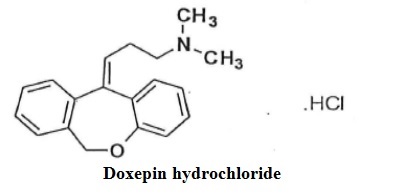
Doxepin hydrochloride capsules, USP are for oral administration.
Active ingredients for the capsules include: 10 mg, 25 mg, 50 mg, 75 mg, and 100 mg of doxepin (equivalent to 11.30 mg, 28.26 mg, 56.52 mg, 84.78 mg, and 113.05 mg of doxepin hydrochloride, respectively).
Inactive ingredients: magnesium stearate, pregelatinised starch, silicified microcrystalline cellulose and sodium lauryl sulfate.
The hard gelatin capsule shells contain gelatin, sodium lauryl sulfate and titanium dioxide. In addition, the 10 mg, 25 mg and 50 mg capsule shells contains FD&C Yellow No. 5 and FD&C Red 40; and 75 mg and 100 mg capsules shells contains D&C Yellow 10 and FD&C Green 3.
The imprinting black ink contains black iron oxide, potassium hydroxide and shellac.
Meets USP Dissolution Test 3.
CLINICAL PHARMACOLOGY
Mechanism of Action
The mechanism of action of the doxepin hydrochloride in the treatment of MDD in adult patients is not well understood.
Pharmacodynamics
The exposure-response relationship and time course of pharmacodynamic response for the safety and effectiveness of doxepin have not been fully characterized.
Pharmacokinetics
Absorption
In healthy volunteers, a single oral doxepin hydrochloride dose of 75 mg resulted in peak plasma doxepin concentrations that ranged from 8.8 ng/mL to 45.8 ng/mL (mean 26.1 ng/mL). Peak levels were reached between 2 and 4 hours (mean 2.9 hours) after doxepin hydrochloride administration. Peak levels for the primary active metabolite N-desmethyldoxepin (nordoxepin) ranged from 4.8 ng/mL to 14.5 ng/mL (mean 9.7 ng/mL) and were achieved between 2 and 10 hours after doxepin hydrochloride administration.
Distribution
The mean apparent volume of distribution for doxepin was approximately 20 L/kg. The protein binding for doxepin was approximately 76%.
Elimination
In healthy volunteers, the plasma elimination half-life of doxepin ranged from 8 to 24 hours (mean 17 hours). The half-life of nordoxepin ranged from 33 to 80 hours (mean 51 hours). The mean plasma clearance for doxepin was approximately 0.84 L/hour/kg.
Metabolism
After oral doxepin hydrochloride capsules administration, approximately 55% to 87% of doxepin undergoes first-pass metabolism in the liver, forming the primary active metabolite nordoxepin. Metabolic pathways of doxepin include demethylation, N-oxidation, hydroxylation and glucuronide formation.
Excretion
Doxepin is excreted primarily in the urine, mainly as its metabolites, either free or in conjugate form.
Specific Populations
Patients with Hepatic Impairment: Specific clinical studies have not been performed to evaluate the pharmacokinetics of doxepin in patients with hepatic impairment. Patients with hepatic impairment may have a greater systemic doxepin exposure than those with normal liver function [see Use in Specific Populations (8.6) ].
Patients with Renal Impairment: The extent of renal excretion of doxepin is unknown. Specific clinical studies have not been performed to evaluate the pharmacokinetics of doxepin in patients with renal impairment compared to those with normal renal function.
Drug Interaction Studies
Carbamazepine : After concomitant use of doxepin hydrochloride and carbamazepine, the combined exposure of doxepin and nordoxepin (12 hours after the last dose) was decreased by 55% compared to that after the use of doxepin hydrochloride alone [see Drug Interactions (7) ].
Strong CYP2D6 Inhibitors : CYP2D6 contributes to the metabolism of doxepin and concomitant use of doxepin hydrochloride with strong CYP2D6 inhibitors may increase doxepin exposure [see Drug Interactions (7) ].
Cimetidine: Cimetidine is a non-specific inhibitor of CYP1A2, 2C19, 2D6, and 3A4. When cimetidine 300 mg twice daily was administered concomitantly with a single 6 mg dose of another oral doxepin product, there was approximately a 2-fold increase in doxepin C max and AUC compared to doxepin without cimetidine [see Drug Interactions (7) ] .
CYP2D6 Substrates: Concomitant use of doxepin hydrochloride and other CYP2D6 substrates may have impact on the plasma doxepin concentrations. The clinical significance of this possible impact is unknown.
NONCLINICAL TOXICOLOGY
Carcinogenesis, Mutagenesis, Impairment of Fertility
Carcinogenesis
The carcinogenic potential of doxepin in animals has not been fully characterized.
Mutagenesis
The mutagenetic potential of doxepin in animals has not been fully characterized.
Impairment of Fertility
Doxepin had no effect on female fertility in rats at oral doses up to 25 mg/kg/day (1.6x the human dose of 150 mg/day on a mg/m 2 basis for a 60 kg human).
Insemination and conception were reduced in untreated female rats mated with male rats administered doxepin at 25 mg/kg/day for a period of ≥ 7 months.
HOW SUPPLIED/STORAGE AND HANDLING
How Supplied
Doxepin hydrochloride capsules, USP are available as capsules containing doxepin hydrochloride, USP equivalent to 10 mg, 25 mg, 50 mg, 75 mg or 100 mg of doxepin.
Doxepin hydrochloride capsules USP, 10 mg are supplied as size "4" hard gelatin capsule with buff opaque cap and buff opaque body, imprinted "10" on cap with black ink and plain body filled with white to off white powder. They are available as follows:
Bottles of 100 with child-resistant closure: NDC 42571-420-01
Bottles of 1000: NDC 42571-420-13
Doxepin hydrochloride capsules USP, 25 mg are supplied as size "3" hard gelatin capsule with ivory opaque cap and white opaque body, imprinted "25" on cap with black ink and plain body filled with white to off white powder. They are available as follows:
Bottles of 100 with child-resistant closure: NDC 42571-421-01
Bottles of 1000: NDC 42571-421-13
Doxepin hydrochloride capsules USP, 50 mg are supplied as size "3" hard gelatin capsule with ivory opaque cap and ivory opaque body, imprinted "50" on cap with black ink and plain body filled with white to off white powder. They are available as follows:
Bottles of 100 with child-resistant closure: NDC 42571-422-01
Bottles of 1000: NDC 42571-422-13
Doxepin hydrochloride capsules USP, 75 mg are supplied as size "2" hard gelatin capsule with brite lite green opaque cap and brite lite green opaque body, imprinted "75" on cap with black ink and plain body filled with white to off white powder. They are available as follows:
Bottles of 100 with child-resistant closure: NDC 42571-423-01
Bottles of 1000: NDC 42571-423-13
Doxepin hydrochloride capsules USP, 100 mg are supplied as size "1" hard gelatin capsule with brite lite green opaque cap and white opaque body, imprinted "100" on cap with black ink and plain body filled with white to off white powder. They are available as follows:
Bottles of 100 with child-resistant closure: NDC 42571-424-01
Bottles of 1000: NDC 42571-424-13
Store doxepin hydrochloride capsules at 20° to 25°C (68° to 77°F) [see USP Controlled Room Temperature]. Protect from light.
Dispense in a tight, light-resistant container as defined in the USP using a child-resistant closure. Keep container tightly closed.
Mechanism of Action
The mechanism of action of the doxepin hydrochloride in the treatment of MDD in adult patients is not well understood.
