Get your patient on Doxepin Hydrochloride - Doxepin Hydrochloride tablet (Doxepin Hydrochloride)
Doxepin Hydrochloride - Doxepin Hydrochloride tablet prescribing information

INDICATIONS AND USAGE
Doxepin tablets are indicated for the treatment of insomnia characterized by difficulty with sleep maintenance. The clinical trials performed in support of efficacy were up to 3 months in duration.
DOSAGE AND ADMINISTRATION
The dose of doxepin tablets should be individualized.
Dosing in Adults
The recommended dose of doxepin tablets for adults is 6 mg once daily. A 3 mg once daily dose may be appropriate for some patients, if clinically indicated.
Dosing in the Elderly
The recommended starting dose of doxepin tablets in elderly patients (≥65 years old) is 3 mg once daily. The daily dose can be increased to 6 mg, if clinically indicated.
Administration
Doxepin tablets should be taken within 30 minutes of bedtime. To minimize the potential for next day effects, doxepin tablets should not be taken within 3 hours of a meal [see Clinical Pharmacology (12.3) ]. The total doxepin tablets dose should not exceed 6 mg per day.
DOSAGE FORMS AND STRENGTHS
Doxepin tablets are an immediate-release, oval-shaped, tablet for oral administration available in strengths of 3 mg and 6 mg. The tablets are white (3 mg) or light yellow (6 mg) and are debossed with “134” or “135”, respectively, on one side and “m” on the other side. Doxepin tablets are not scored.
USE IN SPECIFIC POPULATIONS
- Pregnancy: Third trimester use may increase the risk for symptoms of poor adaptation (respiratory distress, temperature instability, feeding difficulties, hypotonia, tremor, irritability) in the neonate. (8.1 )
- Lactation: Breastfeeding not recommended. (8.2 )
- Pediatric Use: Safety and effectiveness have not been evaluated. (8.4 )
- Geriatric Use: The recommended starting dose is 3 mg. Monitor prior to considering dose escalation. (2.2 , 8.5 )
- Use in Patients with Comorbid Illness: Initiate treatment with 3 mg in patients with hepatic impairment or tendency to urinary retention. (8.6 , 4.3 )
Pregnancy
Risk Summary Available data from published epidemiologic studies and postmarketing reports have not established an increased risk of major birth defects or miscarriage (see Data). There are risks of poor neonatal adaptation with exposure to tricyclic antidepressants (TCAs), including doxepin, during pregnancy (see Clinical Considerations). In animal reproduction studies, oral administration of doxepin to rats and rabbits during the period of organogenesis caused adverse developmental effects at doses 65 and 23 times the maximum recommended human dose (MRHD) of 6 mg/day based on AUC, respectively. Oral administration of doxepin to pregnant rats during pregnancy and lactation resulted in decreased pup survival and a delay in pup growth at doses 60 times the MRHD based on AUC (see Data). The estimated background risk of major birth defects and miscarriage for the indicated population is unknown. All pregnancies have a background risk of major birth defect, loss, or other adverse outcomes. In the U.S. general population, the estimated background risk of major birth defects and miscarriage in clinically recognized pregnancies is 2 to 4% and 15 to 20%, respectively. Clinical Considerations Fetal/Neonatal adverse reactions Neonates exposed to TCAs, including doxepin, late in the third trimester have developed complications requiring prolonged hospitalization, respiratory support, and tube feeding. Such complications can arise immediately upon delivery. Reported clinical findings have included respiratory distress, cyanosis, apnea, seizures, temperature instability, feeding difficulty, vomiting, hypoglycemia, hypotonia, hyperreflexia, tremor, jitteriness, irritability and constant crying. These findings are consistent with either direct toxic effects of TCAs or possibly a drug discontinuation syndrome. Monitor neonates who were exposed to doxepin in the third trimester of pregnancy for poor neonatal adaptation syndrome. Data Human Data Published epidemiologic studies of pregnant women exposed to TCAs, including doxepin, have not established an association with major birth defects, miscarriage or adverse maternal outcomes. Methodological limitations of these observational studies include small sample size and lack of adequate controls. Animal Data When doxepin (30, 100, and 150 mg/kg/day) was administered orally to pregnant rats during the period of organogenesis, developmental toxicity (increased incidences of fetal structural abnormalities consisting of non-ossified bones in the skull and sternum and decreased fetal body weights) and maternal toxicity were noted at ≥100 mg/kg/day, which produced plasma exposures (AUCs) of doxepin and nordoxepin (the primary metabolite in humans) approximately 65 and 53 times, respectively, the plasma AUCs at the MRHD. The plasma exposures at the no-effect dose for embryo-fetal developmental toxicity in rats (30 mg/kg/day) are approximately 6 and 5 times the plasma AUCs for doxepin and nordoxepin, respectively, at the MRHD. When doxepin (10, 30, and 60 mg/kg/day) was administered orally to pregnant rabbits during the period of organogenesis, fetal body weights were reduced at the highest dose in the absence of maternal toxicity, which produced plasma AUCs of doxepin and nordoxepin approximately 23 and 56 times, respectively, the plasma AUCs at the MRHD. The plasma exposures at the no-effect dose for developmental effects (30 mg/kg/day) are approximately 8 and 25 times the plasma AUCs for doxepin and nordoxepin, respectively, at the MRHD. Oral administration of doxepin (10, 30, and 100 mg/kg/day) to rats throughout pregnancy and lactation resulted in decreased pup survival and transient growth delay at the highest dose, which produced plasma AUCs of doxepin and nordoxepin approximately 60 and 39 times, respectively, the plasma AUCs at the MRHD. The plasma exposures at the no-effect dose for adverse effects on pre-and postnatal development in rats (30 mg/kg/day) are approximately 2 and 1 times the plasma AUCs for doxepin and nordoxepin, respectively, at the MRHD.
Lactation
Risk Summary Data from the published literature report the presence of doxepin and nordoxepin in human milk. There are reports of excess sedation, respiratory depression, poor sucking and swallowing, and hypotonia in breastfed infants exposed to doxepin. There are no data on the effects of doxepin on milk production. Because of the potential for serious adverse reactions, including excess sedation and respiratory depression in a breastfed infant, clinicians should advise patients that breastfeeding is not recommended during treatment with doxepin. Clinical Considerations Infants exposed to doxepin through breast milk should be monitored for excess sedation, respiratory depression and hypotonia.
Females and Males of Reproductive Potential
Infertility Based on results from animal fertility studies conducted in rats, doxepin may reduce fertility in females and males of reproductive potential [see Nonclinical Toxicology (13.1 )] . It is unknown if the effects are reversible.
Pediatric Use
The safety and effectiveness of doxepin in pediatric patients have not been evaluated.
Geriatric Use
A total of 362 subjects who were ≥ 65 years and 86 subjects who were ≥ 75 years received doxepin in controlled clinical studies. No overall differences in safety or effectiveness were observed between these subjects and younger adult subjects. Greater sensitivity of some older individuals cannot be ruled out. Sleep-promoting drugs may cause confusion and over-sedation in the elderly. A starting dose of 3 mg is recommended in this population and evaluation prior to considering dose escalation is recommended [see Dosage and Administration (2.2) ].
Use in Patients with Hepatic Impairment
Patients with hepatic impairment may display higher doxepin concentrations than healthy individuals. Initiate doxepin treatment with 3 mg in patients with hepatic impairment and monitor closely for adverse daytime effects. [see Clinical Pharmacology (12.3 )]
Use in Patients with Sleep Apnea
Doxepin has not been studied in patients with obstructive sleep apnea. Since hypnotics have the capacity to depress respiratory drive, precautions should be taken if doxepin is prescribed to patients with compromised respiratory function. In patients with severe sleep apnea, doxepin is ordinarily not recommended for use.
CONTRAINDICATIONS
- Hypersensitivity to doxepin hydrochloride, inactive ingredients, or other dibenzoxepines. (4.1 )
- Co-administration with Monoamine Oxidase Inhibitors (MAOIs): Do not administer if patient is taking MAOIs or has used MAOIs within the past two weeks. (4.2 )
- Untreated narrow angle glaucoma or severe urinary retention. (4.3 )
Hypersensitivity
Doxepin is contraindicated in individuals who have shown hypersensitivity to doxepin HCl, any of its inactive ingredients, or other dibenzoxepines.
Co-administration with Monoamine Oxidase Inhibitors (MAOIs)
Serious side effects and even death have been reported following the concomitant use of certain drugs with MAO inhibitors. Do not administer doxepin if patient is currently on MAOIs or has used MAOIs within the past two weeks. The exact length of time may vary depending on the particular MAOI dosage and duration of treatment.
Glaucoma and Urinary Retention
Doxepin is contraindicated in individuals with untreated narrow angle glaucoma or severe urinary retention.
WARNINGS AND PRECAUTIONS
- Need to Evaluate for Co-morbid Diagnoses: Reevaluate if insomnia persists after 7 to 10 days of use. (5.1 )
- Abnormal thinking, behavioral changes, complex behaviors: May include “Sleep-driving” and hallucinations. Immediately evaluate any new onset behavioral changes. (5.2 )
- Depression: Worsening of depression or suicidal thinking may occur. Prescribe the least amount feasible to avoid intentional overdose. (5.3 )
- CNS-depressant effects: Use can impair alertness and motor coordination. Avoid engaging in hazardous activities such as operating a motor vehicle or heavy machinery after taking drug. (5.4 ) Do not use with alcohol. (5.4 , 7.3 )
- Potential additive effects when used in combination with CNS depressants or sedating antihistamines. Dose reduction may be needed. (5.4 , 7.4 )
- Patients with severe sleep apnea: Doxepin is ordinarily not recommended for use in this population. (8.7 )
Need to Evaluate for Comorbid Diagnoses
Because sleep disturbances may be the presenting manifestation of a physical and/or psychiatric disorder, symptomatic treatment of insomnia should be initiated only after careful evaluation of the patient. The failure of insomnia to remit after 7 to 10 days of treatment may indicate the presence of a primary psychiatric and/or medical illness that should be evaluated. Exacerbation of insomnia or the emergence of new cognitive or behavioral abnormalities may be the consequence of an unrecognized psychiatric or physical disorder. Such findings have emerged during the course of treatment with hypnotic drugs.
Abnormal Thinking and Behavioral Changes
Complex behaviors such as “sleep-driving” (i.e., driving while not fully awake after ingestion of a hypnotic, with amnesia for the event) have been reported with hypnotics. These events can occur in hypnotic-naive as well as in hypnotic-experienced persons. Although behaviors such as “sleep-driving” may occur with hypnotics alone at therapeutic doses, the use of alcohol and other CNS depressants with hypnotics appears to increase the risk of such behaviors, as does the use of hypnotics at doses exceeding the maximum recommended dose. Due to the risk to the patient and the community, discontinuation of doxepin should be strongly considered for patients who report a “sleep-driving” episode. Other complex behaviors (e.g., preparing and eating food, making phone calls, or having sex) have been reported in patients who are not fully awake after taking a hypnotic. As with “sleep-driving”, patients usually do not remember these events. Amnesia, anxiety and other neuro-psychiatric symptoms may occur unpredictably.
Suicide Risk and Worsening of Depression
In primarily depressed patients, worsening of depression, including suicidal thoughts and actions (including completed suicides), has been reported in association with the use of hypnotics. Doxepin, the active ingredient in doxepin tablets, is an antidepressant at doses 10- to 100-fold higher than in doxepin. Antidepressants increased the risk compared to placebo of suicidal thinking and behavior (suicidality) in children, adolescents, and young adults in short-term studies of major depressive disorder (MDD) and other psychiatric disorders. Risk from the lower dose of doxepin in doxepin tablets can not be excluded. It can rarely be determined with certainty whether a particular instance of the abnormal behaviors listed above is drug induced, spontaneous in origin, or a result of an underlying psychiatric or physical disorder. Nonetheless, the emergence of any new behavioral sign or symptom of concern requires careful and immediate evaluation.
CNS Depressant Effects
After taking doxepin, patients should confine their activities to those necessary to prepare for bed. Patients should avoid engaging in hazardous activities, such as operating a motor vehicle or heavy machinery, at night after taking doxepin, and should be cautioned about potential impairment in the performance of such activities that may occur the day following ingestion. When taken with doxepin, the sedative effects of alcoholic beverages, sedating antihistamines, and other CNS depressants may be potentiated [see Warnings and Precautions (5.2) and Drug Interactions (7.3 , 7.4 )]. Patients should not consume alcohol with doxepin [see Warnings and Precautions (5.2) and Drug Interactions (7.3 )]. Patients should be cautioned about potential additive effects of doxepin used in combination with CNS depressants or sedating antihistamines [see Warnings and Precautions (5.2) and Drug Interactions (7.4) ].
ADVERSE REACTIONS
The following serious adverse reactions are discussed in greater detail in other sections of labeling:
- Abnormal thinking and behavioral changes [see Warnings and Precautions (5.2)] .
- Suicide risk and worsening of depression [see Warnings and Precautions (5.3) ] .
- CNS Depressant effects [see Warnings and Precautions (5.4) ] .
Clinical Trials Experience
The pre-marketing development program for doxepin tablets included doxepin HCl exposures in 1017 subjects (580 insomnia patients and 437 healthy subjects) from 12 studies conducted in the United States. 863 of these subjects (580 insomnia patients and 283 healthy subjects) participated in six randomized, placebo-controlled efficacy studies with doxepin doses of 1 mg, 3 mg, and 6 mg for up to 3-months in duration. Because clinical studies are conducted under widely varying conditions, adverse reaction rates observed in the clinical trials of a drug cannot be directly compared to rates in the clinical trials of another drug and may not reflect the rates observed in practice. However, data from the doxepin studies provide the physician with a basis for estimating the relative contributions of drug and non-drug factors to adverse reaction incidence rates in the populations studied. Associated with Discontinuation of Treatment The percentage of subjects discontinuing Phase 1, 2, and 3 trials for an adverse reaction was 0.6% in the placebo group compared to 0.4%, 1.0%, and 0.7% in the doxepin 1 mg, 3 mg, and 6 mg groups, respectively. No reaction that resulted in discontinuation occurred at a rate greater than 0.5%. Adverse Reactions Observed at an Incidence of ≥ 2% in Controlled Trials Table 1 shows the incidence of treatment-emergent adverse reactions from three long-term (28 to 85 days) placebo-controlled studies of doxepin in adult (N=221) and elderly (N=494) subjects with chronic insomnia. Reactions reported by Investigators were classified using a modified MedDRA dictionary of preferred terms for purposes of establishing incidence. The table includes only reactions that occurred in 2% or more of subjects who received doxepin 3 mg or 6 mg in which the incidence in subjects treated with doxepin was greater than the incidence in placebo-treated subjects.
Table 1 Incidence (%) of Treatment-Emergent Adverse Reactions in Long-term Placebo-Controlled Clinical Trials
| System Organ Class Preferred Term• | Placebo (N=278) | Doxepin 3 mg (N=157) | Doxepin 6 mg (N=203) |
| Nervous System Disorders | |||
| Somnolence/Sedation | 4 | 6 | 9 |
| Infections and Infestations | |||
| Upper Respiratory Tract Infection/Nasopharyngitis | 2 | 4 | 2 |
| Gastroenteritis | 0 | 2 | 0 |
| Gastrointestinal Disorders | |||
| Nausea | 1 | 2 | 2 |
| Vascular Disorders | |||
| Hypertension | 0 | 3 | < 1 |
| • Includes reactions that occurred at a rate of ≥2% in any doxepin-treated group and at a higher rate than placebo. | |||
The most common treatment-emergent adverse reaction in the placebo and each of the doxepin dose groups was somnolence/sedation.
Studies Pertinent to Safety Concerns for Sleep-promoting Drugs
Residual Pharmacological Effect in Insomnia Trials Five randomized, placebo-controlled studies in adults and the elderly assessed next-day psychomotor function within 1 hour of awakening utilizing the digit-symbol substitution test (DSST), symbol copying test (SCT), and visual analog scale (VAS) for sleepiness, following night time administration of doxepin. In a one-night, double-blind study conducted in 565 healthy adult subjects experiencing transient insomnia, doxepin 6 mg showed modest negative changes in SCT and VAS. In a 35-day, double-blind, placebo-controlled, parallel group study of doxepin 3 and 6 mg in 221 adults with chronic insomnia, small decreases in the DSST and SCT occurred in the 6 mg group. In a 3-month, double-blind, placebo-controlled, parallel group study in 240 elderly subjects with chronic insomnia, doxepin 1 mg and 3 mg was comparable to placebo on DSST, SCT, and VAS.
Other Reactions Observed During the Pre-marketing Evaluation of Doxepin
Doxepin was administered to 1017 subjects in clinical trials in the United States. Treatment-emergent adverse reactions recorded by clinical investigators were standardized using a modified MedDRA dictionary of preferred terms. The following is a list of MedDRA terms that reflect treatment-emergent adverse reactions reported by subjects treated with doxepin. Adverse reactions are further categorized by body system and listed in order of decreasing frequency according to the following definitions: Frequent adverse reactions are those that occurred on one or more occasions in at least 1/100 subjects; Infrequent adverse reactions are those that occurred in fewer than 1/100 subjects and more than 1/1000 subjects. Rare adverse reactions are those that occurred in fewer than 1/1000 subjects. Adverse reactions that are listed in Table 1 are not included in the following listing of frequent, infrequent, and rare AEs. Blood and Lymphatic System Disorders : Infrequent: anemia; Rare: thrombocythemia. Cardiac Disorders : Rare: atrioventricular block, palpitations, tachycardia, ventricular extrasystoles. Ear and Labyrinth Disorders : Rare: ear pain, hypoacusis, motion sickness, tinnitus, tympanic membrane perforation. Eye Disorders : Infrequent: eye redness, vision blurred; Rare: blepharospasm, diplopia, eye pain, lacrimation decreased. Gastrointestinal Disorders : Infrequent: abdominal pain, dry mouth, gastroesophageal reflux disease, vomiting; Rare: dyspepsia, constipation, gingival recession, haematochezia, lip blister. General Disorders and Administration Site Conditions : Infrequent: asthenia, chest pain, fatigue; Rare: chills, gait abnormal, edema peripheral. Hepatobiliary Disorders : Rare: hyperbilirubinemia. Immune System Disorders : Rare: hypersensitivity. Infections and Infestations : Infrequent: bronchitis, fungal infection, laryngitis, sinusitis, tooth infection, urinary tract infection, viral infection; Rare: cellulitis staphylococcal, eye infection, folliculitis, gastroenteritis viral, herpes zoster, infective tenosynovitis, influenza, lower respiratory tract infection, onychomycosis, pharyngitis, pneumonia. Injury, Poisoning and Procedural Complications : Infrequent: back injury, fall, joint sprain; Rare: bone fracture, skin laceration. Investigations : Infrequent: blood glucose increased; Rare: alanine aminotransferase increased, blood pressure decreased, blood pressure increased, electrocardiogram ST-T segment abnormal, electrocardiogram QRS complex abnormal, heart rate decreased, neutrophil count decreased, QRS axis abnormal, transaminases increased. Metabolism and Nutrition Disorders : Infrequent: anorexia, decreased appetite, hyperkalemia, hypermagnesemia, increased appetite; Rare: hypokalemia. Musculoskeletal and Connective Tissue Disorders : Infrequent: arthralgia, back pain, myalgia, neck pain, pain in extremity; Rare: joint range of motion decreased, muscle cramp, sensation of heaviness. Neoplasms Benign, Malignant and Unspecified (Including Cysts and Polyps) : Rare: lung adenocarcinoma stage I, malignant melanoma. Nervous System Disorders : Frequent: dizziness; Infrequent: dysgeusia, lethargy, parasthesia, syncope; Rare: ageusia, ataxia, cerebrovascular accident, disturbance in attention, migraine, sleep paralysis, syncope vasovagal, tremor. Psychiatric Disorders : Infrequent: abnormal dreams, adjustment disorder, anxiety, depression; Rare: confusional state, elevated mood, insomnia, libido decreased, nightmare. Reproductive System and Breast Disorders : Rare: breast cyst, dysmenorrhea. Renal and Urinary Disorders : Rare: dysuria, enuresis, hemoglobinuria, nocturia. Respiratory, Thoracic and Mediastinal Disorders : Infrequent: nasal congestion, pharyngolaryngeal pain, sinus congestion, wheezing; Rare: cough, crackles lung, nasopharyngeal disorder, rhinorrhea, dyspnea. Skin and Subcutaneous Tissue Disorders: Infrequent: skin irritation; Rare: cold sweat, dermatitis, erythema, hyperhidrosis, pruritis, rash, rosacea. Surgical and Medical Procedures: Rare: arthrodesis. Vascular Disorders : Infrequent: pallor; Rare: blood pressure inadequately controlled, hematoma, hot flush. In addition, the reactions below have been reported for other tricyclics and may be idiosyncratic (not related to dose). Allergic : photosensitization, skin rash. Hematologic : agranulocytosis, eosinophilia, leukopenia, purpura, thrombocytopenia.
DRUG INTERACTIONS
- MAO inhibitors: Doxepin should not be administered in patients on MAOIs within the past two weeks. (4.2 )
- Cimetidine: Increases exposure to doxepin. (7.2 )
- Alcohol: Sedative effects may be increased with doxepin. (7.3 , 5.4 )
- CNS Depressants and Sedating Antihistamines: Sedative effects may be increased with doxepin (7.4 , 5.4 )
- Tolazamide: A case of severe hypoglycemia has been reported. (7.5 )
Cytochrome P450 Isozymes
Doxepin is primarily metabolized by hepatic cytochrome P450 isozymes CYP2C19 and CYP2D6, and to a lesser extent, by CYP1A2 and CYP2C9. Inhibitors of these isozymes may increase the exposure of doxepin. Doxepin is not an inhibitor of any CYP isozymes at therapeutically relevant concentrations. The ability of doxepin to induce CYP isozymes is not known.
Cimetidine
Doxepin exposure is doubled with concomitant administration of cimetidine, a nonspecific inhibitor of CYP isozymes. A maximum dose of 3 mg is recommended in adults and elderly when cimetidine is co-administered with doxepin [see Clinical Pharmacology (12.3 )]
Alcohol
When taken with doxepin, the sedative effects of alcohol may be potentiated [see Warnings and Precautions (5.2 , 5.4 )].
CNS Depressants and Sedating Antihistamines
When taken with doxepin, the sedative effects of sedating antihistamines and CNS depressants may be potentiated [see Warnings and Precautions (5.2 , 5.4 ) ].
Tolazamide
A case of severe hypoglycemia has been reported in a type II diabetic patient maintained on tolazamide (1 g/day) 11 days after the addition of oral doxepin (75 mg/day).
DESCRIPTION
Doxepin is available in 3 mg and 6 mg strength tablets for oral administration. Each tablet contains 3.39 mg or 6.78 mg doxepin hydrochloride, USP equivalent to 3 mg and 6 mg of doxepin, respectively. Chemically, doxepin hydrochloride, USP is an (E) and (Z) geometric, isomeric mixture of 1-propanamine, 3-dibenz[ b ,e]oxepin-11(6 H )ylidene- N,N -dimethyl-hydrochloride. It has the following structure:
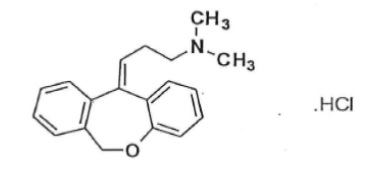
Doxepin hydrochloride USP is a white or almost white crystalline powder, that is freely soluble in water, ethanol and dichloromethane, soluble in chloroform and in methanol. It has a molecular weight of 315.84 and molecular formula of C 19 H 21 NO•HCl. Each doxepin tablet includes the following inactive ingredients: colloidal silicon dioxide, crospovidone, magnesium stearate and microcrystalline cellulose. The 6 mg tablet contains D&C Yellow No. 10 alum lake.
CLINICAL PHARMACOLOGY
Mechanism of Action
The mechanism of action of doxepin in sleep maintenance is unclear; however, doxepin’s effect could be mediated through antagonism of the H1 receptor.
Pharmacodynamics
Doxepin has high binding affinity to the H1 receptor (Ki < 1 nM).
Cardiac Electrophysiology In a thorough QTc prolongation clinical study in healthy subjects, doxepin had no effect on QT intervals or other electrocardiographic parameters after multiple daily doses up to 50 mg.
Pharmacokinetics
Absorption The median time to peak concentrations (T max ) of doxepin occurred at 3.5 hours postdose after oral administration of a 6 mg dose to fasted healthy subjects. Peak plasma concentrations (C max ) of doxepin increased in approximately a dose-proportional manner for 3 mg and 6 mg doses. The AUC was increased by 41% and C max by 15% when 6 mg doxepin was administered with a high fat meal. Additionally, compared to the fasted state, T max was delayed by approximately 3 hours. Therefore, for faster onset and to minimize the potential for next day effects, it is recommended that doxepin not be taken within 3 hours of a meal [ see Dosage and Administration (2.3)]. Distribution Doxepin is widely distributed throughout the body tissues. The mean apparent volume of distribution following a single 6 mg oral dose of doxepin to healthy subjects was 11,930 liters. Doxepin is approximately 80% bound to plasma proteins. Metabolism Following oral administration, doxepin is extensively metabolized by oxidation and demethylation.The primary metabolite is N-desmethyldoxepin (nordoxepin). The primary metabolite undergoes further biotransformation to glucuronide conjugates. In vitro studies have shown that CYP2C19 and CYP2D6 are the major enzymes involved in doxepin metabolism, and that CYP1A2 and CYP2C9 are involved to a lesser extent. Doxepin appears not to have inhibitory effects on human CYP enzymes at therapeutic concentrations. The potential of doxepin to induce metabolizing enzymes is not known. Doxepin is not a Pgp substrate. Excretion Doxepin is excreted in the urine mainly in the form of glucuronide conjugates. Less than 3% of a doxepin dose is excreted in the urine as parent compound or nordoxepin. The apparent terminal half-life (t ½) of doxepin was 15.3 hours and for nordoxepin was 31 hours.
Drug Interactions Since doxepin is metabolized by CYP2C19 and CYP2D6, inhibitors of these CYP isozymes may increase the exposure of doxepin. Cimetidine The effect of cimetidine, a non-specific inhibitor of CYP1A2, 2C19, 2D6, and 3A4, on doxepin plasma concentrations was evaluated in healthy subjects. When cimetidine 300 mg BID was co-administered with a single dose of doxepin 6 mg, there was approximately a 2 fold increase in doxepin C max and AUC compared to doxepin given alone. A maximum dose of doxepin in adults and elderly should be 3 mg, when doxepin is co-administered with cimetidine. Sertraline The effect of sertraline HCl, a selective serotonin reuptake inhibitor, on doxepin plasma concentrations was evaluated in a daytime study conducted with 24 healthy subjects. Following co-administration of doxepin 6 mg with sertraline 50 mg (at steady-state), the doxepin mean AUC and C max estimates were approximately 21% and 32% higher, respectively, than those obtained following administration of doxepin alone. Psychomotor function as measured by the digit symbol substitution test and symbol copy test performance was decreased more at 2-4 hours post dosing for the combination of sertraline and doxepin as compared to doxepin alone, but subjective measures of alertness were comparable for the two treatments.
Special Populations Renal Impairment The effects of renal impairment on doxepin pharmacokinetics have not been studied. Because only small amounts of doxepin and nordoxepin are eliminated in the urine, renal impairment would not be expected to result in significantly altered doxepin concentrations. Hepatic Impairment The effects of doxepin in patients with hepatic impairment have not been studied. Because doxepin is extensively metabolized by hepatic enzymes, patients with hepatic impairment may display higher doxepin concentrations than healthy individuals. Poor Metabolizers of CYPs Poor metabolizers of CYP2C19 and CYP2D6 may have higher doxepin plasma levels than normal subjects.
NONCLINICAL TOXICOLOGY
Carcinogenesis, Mutagenesis, Impairment of Fertility
Carcinogenesis No evidence of carcinogenic potential was observed when doxepin was administered orally to hemizygous Tg.rasH2 mice for 26 weeks at doses of 25, 50, 75, and 100 mg/kg/day. Mutagenesis Doxepin was negative in in vitro (bacterial reverse mutation, chromosomal aberration in human lymphocytes) and in vivo (rat micronucleus) assays. Impairment of Fertility When doxepin (10, 30 and 100 mg/kg/day) was orally administered to male and female rats prior to, during and after mating, adverse effects on fertility (increased copulatory interval and decreased corpora lutea, implantation, viable embryos and litter size) and sperm parameters (increased percentages of abnormal sperm and decreased sperm motility) were observed. The plasma exposures (AUC) for doxepin and nordoxepin at the no-effect dose for adverse effects on reproductive performance and fertility in rats (10 mg/kg/day) are less than those in humans at the maximum recommended human dose of 6 mg/day.
CLINICAL STUDIES
Controlled Clinical Trials
The efficacy of doxepin for improving sleep maintenance was supported by six randomized, double-blind studies up to 3 months in duration that included 1,423 subjects, 18 to 93 years of age, with chronic (N=858) or transient (N=565) insomnia. Doxepin was evaluated at doses of 1 mg, 3 mg, and 6 mg relative to placebo in inpatient (sleep laboratory) and outpatient settings. The primary efficacy measures for assessment of sleep maintenance were the objective and subjective time spent awake after sleep onset (respectively, objective Wake After Sleep Onset [WASO] and subjective WASO). Subjects in studies of chronic insomnia were required to have at least a 3-month history of insomnia.
Chronic Insomnia Adults A randomized, double-blind, parallel-group study was conducted in adults (N = 221) with chronic insomnia. Doxepin 3 mg and 6 mg was compared to placebo out to 30 days. Doxepin 3 mg and 6 mg were superior to placebo on objective WASO. Doxepin 3 mg was superior to placebo on subjective WASO at night 1 only. Doxepin 6 mg was superior to placebo on subjective WASO at night 1, and nominally superior at some later time points out to Day 30. Elderly Elderly subjects with chronic insomnia were assessed in two parallel-group studies. The first randomized, double-blind study assessed doxepin 1 mg and 3 mg relative to placebo for 3 months in inpatient and outpatient settings in elderly subjects (N=240) with chronic insomnia. Doxepin 3 mg was superior to placebo on objective WASO. The second randomized, double-blind study assessed doxepin 6 mg relative to placebo for 4 weeks in an outpatient setting in elderly subjects (N=254) with chronic insomnia. On subjective WASO, doxepin 6 mg was superior to placebo. Transient Insomnia Healthy adult subjects (N=565) experiencing transient insomnia during the first night in a sleep laboratory were evaluated in a randomized, double-blind, parallel-group, single-dose study of doxepin 6 mg relative to placebo. Doxepin 6 mg was superior to placebo on objective WASO and subjective WASO. Withdrawal Effects Potential withdrawal effects were assessed in a 35-day double blind study of adults with chronic insomnia who were randomized to placebo, doxepin 3 mg, or doxepin 6 mg. There was no indication of a withdrawal syndrome after discontinuation of doxepin treatment (3 mg or 6 mg), as measured by the Tyrer’s Symptom Checklist. Discontinuation-period emergent nausea and vomiting occurred in 5% of subjects treated with 6 mg doxepin, versus 0% in 3 mg and placebo subjects. Rebound Insomnia Effects Rebound insomnia, defined as a worsening in WASO compared with baseline following discontinuation of treatment, was assessed in a double-blind, 35-day study in adults with chronic insomnia. Doxepin 3 mg and 6 mg showed no evidence of rebound insomnia.
HOW SUPPLIED/STORAGE AND HANDLING
How Supplied
Doxepin 3 mg tablets are oval shaped, white, identified with debossed markings of “134” on one side and “m” on the other side, and are supplied as: NDC 72205-052-30 Bottle of 30 NDC 72205-052-91 Bottle of 100 NDC 72205-052-05 Bottle of 500 Doxepin 6 mg tablets are oval shaped, light yellow, identified with debossed markings of “135” on one side and “m” on the other side, and are supplied as: NDC 72205-053-30 Bottle of 30 NDC 72205-053-91 Bottle of 100 NDC 72205-053-05 Bottle of 500
Storage and Handling
Store at 20° to 25°C (68° to 77°F); excursions permitted between 15° to 30°C (59° to 86°F) [see USP Controlled Room Temperature]. Protect from light.
Mechanism of Action
The mechanism of action of doxepin in sleep maintenance is unclear; however, doxepin’s effect could be mediated through antagonism of the H1 receptor.
