Get your patient on Lactulose - Lactulose powder, For Solution (Lactulose)
Lactulose - Lactulose powder, For Solution prescribing information

INDICATIONS AND USAGE
Lactulose for Oral Solution is indicated for the treatment of constipation. In patients with a history of chronic constipation, lactulose therapy increases the number of bowel movements per day and the number of days on which bowel movements occur.
DOSAGE AND ADMINISTRATION
The usual adult dosage is 10 g to 20 g of lactulose daily. The dose may be increased to 40 g daily if necessary. Twenty-four to 48 hours may be required to produce a normal bowel movement.
CONTRAINDICATIONS
Since Lactulose for Oral Solution contains galactose (less than 0.3 g/10 g as a total sum with lactose), it is contraindicated in patients who require a low galactose diet.
ADVERSE REACTIONS
Precise frequency data are not available.
Initial dosing may produce flatulence and intestinal cramps, which are usually transient. Excessive dosage can lead to diarrhea with potential complications such as loss of fluids, hypokalemia, and hypernatremia.
Nausea and vomiting have been reported.
Drug Interactions
Results of preliminary studies in humans and rats suggest that nonabsorbable antacids given concurrently with lactulose may inhibit the desired lactulose-induced drop in colonic pH. Therefore, a possible lack of desired effect of treatment should be taken into consideration before such drugs are given concomitantly with lactulose.
DESCRIPTION
Lactulose for Oral Solution is a synthetic disaccharide in the form of crystals for reconstitution prior to use for oral administration. Each 10 g of lactulose contains less than 0.3 g galactose and lactose as a total sum. The pH range is 3.0 to 7.0.
Lactulose is a colonic acidifier which promotes laxation.
The chemical name for lactulose is 4-O-β-D-Galactopyranosyl-D-fructofuranose. It has the following structural formula:
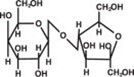
The molecular formula is C 12 H 22 O 11 . The molecular weight is 342.30. It is freely soluble in water.
CLINICAL PHARMACOLOGY
Lactulose is poorly absorbed from the gastrointestinal tract and no enzyme capable of hydrolysis of this disaccharide is present in human gastrointestinal tissue. As a result, oral doses of lactulose reach the colon virtually unchanged. In the colon, lactulose is broken down primarily to lactic acid, and also to small amounts of formic and acetic acids, by the action of colonic bacteria, which results in an increase in osmotic pressure and slight acidification of the colonic contents. This in turn causes an increase in stool water content and softens the stool.
Since lactulose does not exert its effect until it reaches the colon, and since transit time through the colon may be slow, 24 to 48 hours may be required to produce desired bowel movement.
Lactulose given orally to man and experimental animals resulted in only small amounts reaching the blood. Urinary excretion has been determined to be 3% or less and is essentially complete within 24 hours.
HOW SUPPLIED
Lactulose for Oral Solution is available in single dose packets of 10 g (NDC 0121-0965-01) and single dose packets of 20 g (NDC 0121-1930-01). The packets are supplied as follows:
NDC 0121-0965-30 (Carton of thirty 10 g packets)
NDC 0121-1930-30 (Carton of thirty 20 g packets)
STORE AT ROOM TEMPERATURE, 15°-30°C (59°-86°F).
To report SUSPECTED ADVERSE REACTIONS, contact PAI Pharma at 1-800-845-8210 or FDA at 1-800-FDA-1088 or www.fda.gov/medwatch.
Manufactured for: PAI Pharma Greenville, SC 29605
Issued: November 2024 IN791624
