Get your patient on Levetiracetam - Levetiracetam tablet (Levetiracetam)
Levetiracetam - Levetiracetam tablet prescribing information

INDICATIONS AND USAGE
1.1 Partial Onset Seizures
Levetiracetam tablets are indicated as adjunctive therapy in the treatment of partial onset seizures in adults and children 1 month of age and older with epilepsy.
1.2 Myoclonic Seizures in Patients with Juvenile Myoclonic Epilepsy
Levetiracetam tablets are indicated as adjunctive therapy in the treatment of myoclonic seizures in adults and adolescents 12 years of age and older with juvenile myoclonic epilepsy.
1.3 Primary Generalized Tonic-Clonic Seizures
Levetiracetam tablets are indicated as adjunctive therapy in the treatment of primary generalized tonic-clonic seizures in adults and children 6 years of age and older with idiopathic generalized epilepsy.
DOSAGE AND ADMINISTRATION
2.1 Important Administration Instructions
Levetiracetam tablets are given orally with or without food. The levetiracetam dosing regimen depends on the indication, age group, dosage form (tablets or oral solution), and renal function.
Prescribe the oral solution for pediatric patients with body weight ≤ 20 kg. Prescribe the oral solution or tablets for pediatric patients with body weight above 20 kg.
When using the oral solution in pediatric patients, dosing is weight-based (mg per kg) using a calibrated measuring device (not a household teaspoon or tablespoon).
Levetiracetam tablets should be swallowed whole. Levetiracetam tablets should not be chewed or crushed.
2.2 Partial Onset Seizures
Adults 16 Years and Older
In clinical trials, daily doses of 1000 mg, 2000 mg, and 3000 mg, given as twice-daily dosing were shown to be effective. Although in some studies there was a tendency toward greater response with higher dose [see Clinical Studies (14.1) ], a consistent increase in response with increased dose has not been shown.
Treatment should be initiated with a daily dose of 1000 mg/day, given as twice-daily dosing (500 mg twice daily). Additional dosing increments may be given (1000 mg/day additional every 2 weeks) to a maximum recommended daily dose of 3000 mg. Doses greater than 3000 mg/day have been used in open-label studies for periods of 6 months and longer. There is no evidence that doses greater than 3000 mg/day confer additional benefit.
Pediatric Patients
1 Month to < 6 Months
Treatment should be initiated with a daily dose of 14 mg/kg in 2 divided doses (7 mg/kg twice daily). The daily dose should be increased every 2 weeks by increments of 14 mg/kg to the recommended daily dose of 42 mg/kg (21 mg/kg twice daily). In the clinical trial, the mean daily dose was 35 mg/kg in this age group. The effectiveness of lower doses has not been studied.
6 Months to <4 Years:
Treatment should be initiated with a daily dose of 20 mg/kg in 2 divided doses (10 mg/kg twice daily). The daily dose should be increased in 2 weeks by an increment of 20 mg/kg to the recommended daily dose of 50 mg/kg (25 mg/kg twice daily). If a patient cannot tolerate a daily dose of 50 mg/kg, the daily dose may be reduced. In the clinical trial, the mean daily dose was 47 mg/kg in this age group.
4 Years to < 16 Years
Treatment should be initiated with a daily dose of 20 mg/kg in 2 divided doses (10 mg/kg twice daily). The daily dose should be increased every 2 weeks by increments of 20 mg/kg to the recommended daily dose of 60 mg/kg (30 mg/kg twice daily). If a patient cannot tolerate a daily dose of 60 mg/kg, the daily dose may be reduced. In the clinical efficacy trial, the mean daily dose was 44 mg/kg. The maximum daily dose was 3000 mg/day.
For levetiracetam tablet dosing in pediatric patients weighing 20 to 40 kg, treatment should be initiated with a daily dose of 500 mg given as twice daily dosing (250 mg twice daily). The daily dose should be increased every 2 weeks by increments of 500 mg to a maximum recommended daily dose of 1500 mg (750 mg twice daily).
For levetiracetam tablet dosing in pediatric patients weighing more than 40 kg, treatment should be initiated with a daily dose of 1000 mg/day given as twice daily dosing (500 mg twice daily). The daily dose should be increased every 2 weeks by increments of 1000 mg/day to a maximum recommended daily dose of 3000 mg (1500 mg twice daily).
Levetiracetam Oral Solution Weight-Based Dosing Calculation for Pediatric Patients
The following calculation should be used to determine the appropriate daily dose of oral solution for pediatric patients:
Daily dose (mg/kg/day) x patient weight (kg)
Total daily dose (mL/day) = ----------------------------------------------------------
100 mg/mL
2.3 Myoclonic Seizures in Patients 12 Years of Age and Older with Juvenile Myoclonic Epilepsy
Treatment should be initiated with a dose of 1000 mg/day, given as twice-daily dosing (500 mg twice daily). Dosage should be increased by 1000 mg/day every 2 weeks to the recommended daily dose of 3000 mg. The effectiveness of doses lower than 3000 mg/day has not been studied.
2.4 Primary Generalized Tonic-Clonic Seizures
Adults 16 Years and Older
Treatment should be initiated with a dose of 1000 mg/day, given as twice-daily dosing (500 mg twice daily). Dosage should be increased by 1000 mg/day every 2 weeks to the recommended daily dose of 3000 mg. The effectiveness of doses lower than 3000 mg/day has not been adequately studied.
Pediatric Patients Ages 6 to <16 Years
Treatment should be initiated with a daily dose of 20 mg/kg in 2 divided doses (10 mg/kg twice daily). The daily dose should be increased every 2 weeks by increments of 20 mg/kg to the recommended daily dose of 60 mg/kg (30 mg/kg twice daily). The effectiveness of doses lower than 60 mg/kg/day has not been adequately studied. Patients with body weight ≤20 kg should be dosed with oral solution. Patients with body weight above 20 kg can be dosed with either tablets or oral solution [see Dosage and Administration (2.1) ]. Only whole tablets should be administered.
2.5 Adult Patients with Impaired Renal Function
Levetiracetam tablets dosing must be individualized according to the patient’s renal function status. Recommended doses and adjustment for dose for adults are shown in Table 1. In order to calculate the dose recommended for patients with renal impairment, creatinine clearance adjusted for body surface area must be calculated. To do this an estimate of the patient’s creatinine clearance (CLcr) in mL/min must first be calculated using the following formula:
[140-age (years)] x weight (kg)
CLcr= ----------------------------------------- (x 0.85 for female patients)
72 x serum creatinine (mg/dL)
Then CLcr is adjusted for body surface area (BSA) as follows:
CLcr (mL/min)
CLcr (mL/min/1.73m 2 )= ---------------------------- x 1.73
BSA subject (m 2 )
Table 1: Dosing Adjustment Regimen For Adult Patients With Impaired Renal Function
| Group | Creatinine Clearance (mL/min/1.73m 2 ) | Dosage (mg) | Frequency |
| Normal | > 80 | 500 to 1,500 | Every 12 hours |
| Mild | 50 to 80 | 500 to 1,000 | Every 12 hours |
| Moderate | 30 to 50 | 250 to 750 | Every 12 hours |
| Severe | < 30 | 250 to 500 | Every 12 hours |
| ESRD patients using dialysis | ---- | 500 to 1,000 1 | Every 24 hours 1 |
1 Following dialysis, a 250 to 500 mg supplemental dose is recommended.
DOSAGE FORMS AND STRENGTHS
Levetiracetam tablets USP, 1000 mg are beige, oval shaped, biconvex, film coated tablets debossed with '248' on one side and 'RDY' on other side, 'RD' and 'Y' separated with bisect line.
USE IN SPECIFIC POPULATIONS
Pregnancy
Levetiracetam levels may decrease during pregnancy [see Warnings and Precautions (5.9) ].
Pregnancy Category C
There are no adequate and well-controlled studies in pregnant women. In animal studies, levetiracetam produced evidence of developmental toxicity, including teratogenic effects, at doses similar to or greater than human therapeutic doses. levetiracetam should be used during pregnancy only if the potential benefit justifies the potential risk to the fetus.
Oral administration of levetiracetam to female rats throughout pregnancy and lactation led to increased incidences of minor fetal skeletal abnormalities and retarded offspring growth pre- and/or postnatally at doses ≥350 mg/kg/day (equivalent to the maximum recommended human dose of 3000 mg [MRHD] on a mg/m 2 basis) and with increased pup mortality and offspring behavioral alterations at a dose of 1800 mg/kg/day (6 times the MRHD on a mg/m 2 basis). The developmental no effect dose was 70 mg/kg/day (0.2 times the MRHD on a mg/m 2 basis). There was no overt maternal toxicity at the doses used in this study.
Oral administration of levetiracetam to pregnant rabbits during the period of organogenesis resulted in increased embryofetal mortality and increased incidences of minor fetal skeletal abnormalities at doses ≥600 mg/kg/day (4 times MRHD on a mg/m 2 basis) and in decreased fetal weights and increased incidences of fetal malformations at a dose of 1800 mg/kg/day (12 times the MRHD on a mg/m 2 basis). The developmental no effect dose was 200 mg/kg/day (equivalent to the MRHD on a mg/m 2 basis). Maternal toxicity was also observed at 1800 mg/kg/day.
When levetiracetam was administered orally to pregnant rats during the period of organogenesis, fetal weights were decreased and the incidence of fetal skeletal variations was increased at a dose of 3600 mg/kg/day (12 times the MRHD). 1200 mg/kg/day (4 times the MRHD) was a developmental no effect dose. There was no evidence of maternal toxicity in this study.
Treatment of rats with levetiracetam during the last third of gestation and throughout lactation produced no adverse developmental or maternal effects at doses of up to 1800 mg/kg/day (6 times the MRHD on a mg/m 2 basis).
Pregnancy Registries
To provide information regarding the effects of in utero exposure to levetiracetam, physicians are advised to recommend that pregnant patients taking levetiracetam enroll in the North American Antiepileptic Drug (NAAED) pregnancy registry. This can be done by calling the toll free number 1-888-233-2334, and must be done by the patients themselves. Information on the registry can also be found at the website http://www.aedpregnancyregistry.org/ .
Labor and Delivery
The effect of levetiracetam on labor and delivery in humans is unknown.
Nursing Mothers
Levetiracetam is excreted in human milk. Because of the potential for serious adverse reactions in nursing infants from levetiracetam, a decision should be made whether to discontinue nursing or discontinue the drug, taking into account the importance of the drug to the mother.
Pediatric Use
The safety and effectiveness of levetiracetam in the adjunctive treatment of partial onset seizures in pediatric patients age 1 month to 16 years old with epilepsy have been established [see Clinical Studies (14.1) ]. The dosing recommendation in these pediatric patients varies according to age group and is weight-based [see Dosage and Administration (2.2) ].
The safety and effectiveness of levetiracetam as adjunctive treatment of myoclonic seizures in adolescents 12 years of age and older with juvenile myoclonic epilepsy have been established [see Clinical Studies (14.2) ].
The safety and effectiveness of levetiracetam as adjunctive therapy in the treatment of primary generalized tonic-clonic seizures in pediatric patients 6 years of age and older with idiopathic generalized epilepsy have been established [see Clinical Studies (14.3) ].
A 3-month, randomized, double-blind, placebo-controlled study was performed to assess the neurocognitive and behavioral effects of levetiracetam as adjunctive therapy in 98 (levetiracetam N=64, placebo N=34) pediatric patients, ages 4 to 16 years old, with partial seizures that were inadequately controlled. The target dose was 60 mg/kg/day. Neurocognitive effects were measured by the Leiter-R Attention and Memory (AM) Battery, which measures various aspects of a child's memory and attention. Although no substantive differences were observed between the placebo and drug treated groups in the median change from baseline in this battery, the study was not adequate to assess formal statistical non-inferiority of the drug and placebo. The Achenbach Child Behavior Checklist (CBCL/6 to 18), a standardized validated tool used to assess a child’s competencies and behavioral/emotional problems, was also assessed in this study. An analysis of the CBCL/6 to 18 indicated on average a worsening in levetiracetam treated patients in aggressive behavior, one of the eight syndrome scores. [see Warnings and Precautions (5.1) ]
Studies of levetiracetam in juvenile rats (dosing from day 4 through day 52 of age) and dogs (dosing from week 3 through week 7 of age) at doses of up to 1800 mg/kg/day (approximately 7 and 24 times, respectively, the maximum recommended pediatric dose of 60 mg/kg/day on a mg/m 2 basis) did not indicate a potential for age-specific toxicity.
Geriatric Use
There were 347 subjects in clinical studies of levetiracetam that were 65 and over. No overall differences in safety were observed between these subjects and younger subjects. There were insufficient numbers of elderly subjects in controlled trials of epilepsy to adequately assess the effectiveness of levetiracetam in these patients. Levetiracetam is known to be substantially excreted by the kidney, and the risk of adverse reactions to this drug may be greater in patients with impaired renal function. Because elderly patients are more likely to have decreased renal function, care should be taken in dose selection, and it may be useful to monitor renal function [see Clinical Pharmacology (12.3) ].
8.6 Use in Patients with Impaired Renal Function
Clearance of levetiracetam is decreased in patients with renal impairment and is correlated with creatinine clearance [see Clinical Pharmacology (12.3) ]. Dose adjustment is recommended for patients with impaired renal function and supplemental doses should be given to patients after dialysis [see Dosage and Administration (2.5) ].
CONTRAINDICATIONS
None.
WARNINGS AND PRECAUTIONS
5.1 Psychiatric Reactions
In some patients levetiracetam causes behavioral abnormalities. The incidences of behavioral abnormalities in the myoclonic and primary generalized tonic-clonic seizure studies were comparable to those of the adult and pediatric partial onset seizure studies.
A total of 13.3% of adult levetiracetam-treated patients and 37.6% of pediatric levetiracetam-treated patients (4 to 16 years of age) compared to 6.2% and 18.6% of adult and pediatric placebo patients respectively, experienced non-psychotic behavioral symptoms (reported as aggression, agitation, anger, anxiety, apathy, depersonalization, depression, emotional lability, hostility, hyperkinesias, irritability, nervousness, neurosis, and personality disorder). A randomized double-blind, placebo-controlled study was performed to assess the neurocognitive and behavioral effects of levetiracetam as adjunctive therapy in pediatric patients (4 to 16 years of age). The results from an exploratory analysis indicated a worsening in levetiracetam-treated patients on aggressive behavior (one of eight behavior dimensions) as measured in a standardized and systematic way using a validated instrument, the Achenbach Child Behavior Checklist (CBCL/6 to 18).
In pediatric patients 1 month to < 4 years of age, irritability was reported in 11.7% of the levetiracetam-treated patients compared to 0% of placebo patients.
A total of 1.7% of adult levetiracetam-treated patients discontinued treatment due to behavioral adverse events, compared to 0.2% of placebo patients. The treatment dose was reduced in 0.8% of adult levetiracetam-treated patients and in 0.5% of placebo patients. Overall, 10.9% of levetiracetam-treated pediatric patients experienced behavioral symptoms associated with discontinuation or dose reduction, compared to 6.2% of placebo patients.
One percent of adult levetiracetam-treated patients, 2% of children 4 to 16 years of age, and 17% of children 1 month to <4 years of age experienced psychotic symptoms, compared to 0.2%, 2%, and 5% respectively, in the placebo patients. In the controlled study that assessed the neurocognitive and behavioral effects of levetiracetam in pediatric patients 4 to 16 years of age, 1 (1.6%) levetiracetam-treated patient experienced paranoia compared to no placebo patients. There were 2 (3.1%) levetiracetam-treated patients that experienced confusional state compared to no placebo patients [see Use in Specific Populations (8.4) ].
Two (0.3%) adult levetiracetam-treated patients were hospitalized and their treatment was discontinued due to psychosis. Both events, reported as psychosis, developed within the first week of treatment and resolved within 1 to 2 weeks following treatment discontinuation. There was no difference between drug and placebo-treated patients in the incidence of the pediatric patients who discontinued treatment due to psychotic and non-psychotic adverse reactions.
The above psychiatric signs symptoms should be monitored.
5.2 Suicidal Behavior and Ideation
Antiepileptic drugs (AEDs), including levetiracetam, increase the risk of suicidal thoughts or behavior in patients taking these drugs for any indication. Patients treated with any AED for any indication should be monitored for the emergence or worsening of depression, suicidal thoughts or behavior, and/or any unusual changes in mood or behavior.
Pooled analyses of 199 placebo-controlled clinical trials (mono- and adjunctive therapy) of 11 different AEDs showed that patients randomized to one of the AEDs had approximately twice the risk (adjusted Relative Risk 1.8, 95% CI:1.2, 2.7) of suicidal thinking or behavior compared to patients randomized to placebo. In these trials, which had a median treatment duration of 12 weeks, the estimated incidence rate of suicidal behavior or ideation among 27,863 AED-treated patients was 0.43%, compared to 0.24% among 16,029 placebo-treated patients, representing an increase of approximately one case of suicidal thinking or behavior for every 530 patients treated. There were four suicides in drug-treated patients in the trials and none in placebo-treated patients, but the number is too small to allow any conclusion about drug effect on suicide.
The increased risk of suicidal thoughts or behavior with AEDs was observed as early as one week after starting drug treatment with AEDs and persisted for the duration of treatment assessed. Because most trials included in the analysis did not extend beyond 24 weeks, the risk of suicidal thoughts or behavior beyond 24 weeks could not be assessed.
The risk of suicidal thoughts or behavior was generally consistent among drugs in the data analyzed. The finding of increased risk with AEDs of varying mechanisms of action and across a range of indications suggests that the risk applies to all AEDs used for any indication. The risk did not vary substantially by age (5 to 100 years) in the clinical trials analyzed. Table 2 shows absolute and relative risk by indication for all evaluated AEDs.
| Table 2 | Risk by indication for antiepileptic drugs in the pooled analysis | |||
| Indication | Placebo Patients with Events Per 1000 Patients | Drug Patients with Events Per 1000 Patients | Relative Risk: Incidence of Events in Drug Patients/Incidence in Placebo Patients | Risk Difference: Additional Drug Patients with Events Per 1000 Patients |
| Epilepsy | 1 | 3.4 | 3.5 | 2.4 |
| Psychiatric | 5.7 | 8.5 | 1.5 | 2.9 |
| Other | 1 | 1.8 | 1.9 | 0.9 |
| Total | 2.4 | 4.3 | 1.8 | 1.9 |
The relative risk for suicidal thoughts or behavior was higher in clinical trials for epilepsy than in clinical trials for psychiatric or other conditions, but the absolute risk differences were similar for the epilepsy and psychiatric indications.
Anyone considering prescribing levetiracetam or any other AED must balance the risk of suicidal thoughts or behaviors with the risk of untreated illness. Epilepsy and many other illnesses for which AEDs are prescribed are themselves associated with morbidity and mortality and an increased risk of suicidal thoughts and behavior. Should suicidal thoughts and behavior emerge during treatment, the prescriber needs to consider whether the emergence of these symptoms in any given patient may be related to the illness being treated.
Patients, their caregivers, and families should be informed that AEDs increase the risk of suicidal thoughts and behavior and should be advised of the need to be alert for the emergence or worsening of the signs and symptoms of depression, any unusual changes in mood or behavior, or the emergence of suicidal thoughts, behavior, or thoughts about self-harm. Behaviors of concern should be reported immediately to healthcare providers.
5.3 Somnolence and Fatigue
In some patients, levetiracetam causes somnolence and fatigue. The incidences of somnolence and fatigue provided below are from controlled adult partial onset seizure studies. In general, the incidences of somnolence and fatigue in the pediatric partial onset seizure studies, and in pediatric and adult myoclonic and primary generalized tonic-clonic seizure studies were comparable to those of the adult partial onset seizure studies.
In controlled trials of adult patients with epilepsy experiencing partial onset seizures, 14.8% of levetiracetam-treated patients reported somnolence, compared to 8.4% of placebo patients. There was no clear dose response up to 3000 mg/day. In a study where there was no titration, about 45% of patients receiving 4000 mg/day reported somnolence. The somnolence was considered serious in 0.3% of the treated patients, compared to 0% in the placebo group. About 3% of levetiracetam-treated patients discontinued treatment due to somnolence, compared to 0.7% of placebo patients. In 1.4% of treated patients and in 0.9% of placebo patients the dose was reduced, while 0.3% of the treated patients were hospitalized due to somnolence.
In controlled trials of adult patients with epilepsy experiencing partial onset seizures, 14.7% of levetiracetam-treated patients reported asthenia, compared to 9.1% of placebo patients. Treatment was discontinued due to asthenia in 0.8% of treated patients as compared to 0.5% of placebo patients. In 0.5% of treated patients and in 0.2% of placebo patients the dose was reduced due to asthenia.
Somnolence and asthenia occurred most frequently within the first 4 weeks of treatment.
Patients should be monitored for these signs symptoms and advised not to drive or operate machinery until they have gained sufficient experience on levetiracetam to gauge whether it adversely affects their ability to drive or operate machinery.
5.4 Serious Dermatological Reactions
Serious dermatological reactions, including Stevens-Johnson syndrome (SJS) and toxic epidermal necrolysis (TEN), have been reported in both children and adults treated with levetiracetam. The median time of onset is reported to be 14 to 17 days, but cases have been reported at least four months after initiation of treatment. Recurrence of the serious skin reactions following rechallenge with levetiracetam has also been reported. Levetiracetam should be discontinued at the first sign of a rash, unless the rash is clearly not drug-related. If signs or symptoms suggest SJS/TEN, use of this drug should not be resumed and alternative therapy should be considered.
5.5 Coordination Difficulties
Coordination difficulties were only observed in the adult partial onset seizure studies. A total of 3.4% of adult levetiracetam-treated patients experienced coordination difficulties, (reported as either ataxia, abnormal gait, or incoordination) compared to 1.6% of placebo patients. A total of 0.4% of patients in controlled trials discontinued levetiracetam treatment due to ataxia, compared to 0% of placebo patients. In 0.7% of treated patients and in 0.2% of placebo patients the dose was reduced due to coordination difficulties, while one of the treated patients was hospitalized due to worsening of pre-existing ataxia. These events occurred most frequently within the first 4 weeks of treatment.
Patients should be monitored for these signs and symptoms and advised not to drive or operate machinery until they have gained sufficient experience on levetiracetam to gauge whether it could adversely affect their ability to drive or operate machinery.
5.6 Withdrawal Seizures
Antiepileptic drugs, including levetiracetam, should be withdrawn gradually to minimize the potential of increased seizure frequency.
5.7 Hematologic Abnormalities
Partial Onset Seizures
Adults
Minor, but statistically significant, decreases compared to placebo in total mean RBC count (0.03 x 10 6 /mm 3 ), mean hemoglobin (0.09 g/dL), and mean hematocrit (0.38%), were seen in levetiracetam-treated patients in controlled trials.
A total of 3.2% of treated and 1.8% of placebo patients had at least one possibly significant (≤2.8 x 10 9 /L) decreased WBC, and 2.4% of treated and 1.4% of placebo patients had at least one possibly significant (≤1 x 10 9 /L) decreased neutrophil count. Of the treated patients with a low neutrophil count, all but one rose towards or to baseline with continued treatment. No patient was discontinued secondary to low neutrophil counts
Pediatric Patients 4 Years to < 16 Years
Statistically significant decreases in WBC and neutrophil counts were seen in levetiracetam-treated patients as compared to placebo. The mean decreases from baseline in the levetiracetam-treated group were -0.4 x 10 9 /L and -0.3 x 10 9 /L, respectively, whereas there were small increases in the placebo group. Mean relative lymphocyte counts increased by 1.7% in levetiracetam-treated patients, compared to a decrease of 4% in placebo patients (statistically significant).
In the controlled trial, more levetiracetam-treated patients had a possibly clinically significant abnormally low WBC value (3% levetiracetam-treated versus 0% placebo) however, there was no apparent difference between treatment groups with respect to neutrophil count (5% levetiracetam-treated versus 4.2% placebo). No patient was discontinued secondary to low WBC or neutrophil counts.
In the controlled cognitive and neuropsychological safety study, two subjects (6.1%) in the placebo group and 5 subjects (8.6%) in the levetiracetam-treated group had high eosinophil count values that were possibly clinically significant (≥10% or ≥0.7X10 9 /L).
Juvenile Myoclonic Epilepsy
Although there were no obvious hematologic abnormalities observed in patients with JME, the limited number of patients makes any conclusion tentative. The data from the partial seizure patients should be considered to be relevant for JME patients.
5.8 Blood Pressure Increases
In a randomized, placebo-controlled study in patients aged 1 month to <4 years of age, a significantly higher risk of at least one measured increase in diastolic blood pressure was observed in the levetiracetam-treated patients (17%) compared to the placebo-treated patients (2%). There was no overall difference in mean diastolic blood pressure between the treatment groups. This disparity between the levetiracetam and placebo treatment groups was not observed in the studies of older children or in adults.
5.9 Seizure Control during Pregnancy
Physiological changes may gradually decrease plasma levels of levetiracetam throughout pregnancy. This decrease is more pronounced during the third trimester. It is recommended that patients be monitored carefully during pregnancy. Close monitoring should continue through the postpartum period especially if the dose was changed during pregnancy.
ADVERSE REACTIONS
The following adverse reactions are discussed in more details in other sections of labeling:
- Psychiatric Symptoms [see Warnings and Precautions (5.1) ]
- Suicidal Behavior and Ideation [see Warnings and Precautions (5.2) ]
- Somnolence and Fatigue [see Warnings and Precautions (5.3) ]
- Serious Dermatological Reactions [see Warnings and Precautions (5.4) ]
- Coordination Difficulties [see Warnings and Precautions (5.5) ]
- Withdrawal Seizures [see Warnings and Precautions (5.6) ]
- Hematologic Abnormalities [see Warnings and Precautions (5.7) ]
- Blood Pressure Increases [see Warnings and Precautions (5.8) ]
- Seizure Control During Pregnancy [see Warnings and Precautions (5.9) ]
6.1 Clinical Trials Experience
Because clinical trials are conducted under widely varying conditions, adverse reaction rates observed in the clinical trials of a drug cannot be directly compared to rates in the clinical trials of another drug and may not reflect the rates observed in practice.
The prescriber should be aware that the adverse reaction incidence figures in the following tables, obtained when levetiracetam was added to concurrent AED therapy, cannot be used to predict the frequency of adverse reactions in the course of usual medical practice where patient characteristics and other factors may differ from those prevailing during clinical trials. Similarly, the cited frequencies cannot be directly compared with figures obtained from other clinical investigations involving different treatments, uses, or investigators. An inspection of these frequencies, however, does provide the prescriber with one basis to estimate the relative contribution of drug and non-drug factors to the adverse reaction incidences in the population studied.
Partial Onset Seizures
Adults
In controlled clinical studies in adults with partial onset seizures, the most frequently reported adverse reactions in patients receiving levetiracetam in combination with other AEDs were somnolence, asthenia, infection and dizziness. Of the most frequently reported adverse reactions in adults experiencing partial onset seizures, asthenia, somnolence and dizziness appeared to occur predominantly during the first 4 weeks of treatment with levetiracetam.
Table 3 lists adverse reactions that occurred in at least 1% of adult epilepsy patients treated with levetiracetam participating in placebo-controlled studies and were numerically more common than in patients treated with placebo. In these studies, either levetiracetam or placebo was added to concurrent AED therapy. Adverse reactions were usually mild to moderate in intensity.
Table 3: Incidence (%) Of Adverse Reactions In Placebo-Controlled, Add-On Studies In Adults Experiencing Partial Onset Seizures By Body System (Adverse Reactions Occurred In At Least 1% Of Levetiracetam-Treated Patients And Occurred More Frequently Than Placebo-Treated Patients)
| Body System/ Adverse Reaction | Levetiracetam (N=769) % | Placebo (N=439) % |
| Body as a Whole | ||
| Asthenia | 15 | 9 |
| Headache | 14 | 13 |
| Infection | 13 | 8 |
| Pain | 7 | 6 |
| Digestive System | ||
| Anorexia | 3 | 2 |
| Nervous System | ||
| Somnolence | 15 | 8 |
| Dizziness | 9 | 4 |
| Depression | 4 | 2 |
| Nervousness | 4 | 2 |
| Ataxia | 3 | 1 |
| Vertigo | 3 | 1 |
| Amnesia | 2 | 1 |
| Anxiety | 2 | 1 |
| Hostility | 2 | 1 |
| Paresthesia | 2 | 1 |
| Emotional Lability | 2 | 0 |
| Respiratory System | ||
| Pharyngitis | 6 | 4 |
| Rhinitis | 4 | 3 |
| Cough Increased | 2 | 1 |
| Sinusitis | 2 | 1 |
| Special Senses | ||
| Diplopia | 2 | 1 |
In controlled adult clinical studies, 15% of patients receiving levetiracetam and 12% receiving placebo either discontinued or had a dose reduction as a result of an adverse event. Table 4 lists the most common (>1%) adverse reactions that resulted in discontinuation or dose reduction and that occurred more frequently in levetiracetam-treated patients than in placebo-treated patients.
Table 4: Adverse Reactions That Most Commonly Resulted In Discontinuation Or Dose Reduction That Occurred More Frequently In Levetiracetam-Treated Patients In Placebo-Controlled Studies In Adult Patients Experiencing Partial Onset Seizures
| Adverse Reaction | Levetiracetam (N=769) % | Placebo (N=439) % |
| Dizziness | 1 | 0 |
| Somnolence | 4 | 2 |
Pediatric Patients 4 Years to <16 Years
The adverse reaction data presented below was obtained from a pooled analysis of two controlled pediatric clinical studies in children 4 to 16 years of age with partial onset seizures. The adverse reactions most frequently reported with the use of levetiracetam in combination with other AEDs, not seen at an equivalent frequency among placebo-treated patients, were fatigue, aggression, nasal congestion, decreased appetite, and irritability.
Table 5 lists adverse reactions from the pooled pediatric controlled studies (4 to 16 years of age) that occurred in at least 2% of pediatric levetiracetam-treated patients and were numerically more common than in pediatric patients treated with placebo. In these studies, either levetiracetam or placebo was added to concurrent AED therapy. Adverse reactions were usually mild to moderate in intensity.
Table 5: Incidence (%) Of Adverse Reactions In Pooled Placebo-Controlled, Add-On Studies In Pediatric Patients Ages 4 to 16 Years Experiencing Partial Onset Seizures By Body System (Adverse Reactions Occurred In At Least 2% Of Levetiracetam-Treated Patients And Occurred More Frequently Than Placebo-Treated Patients)
| Body System/ Adverse Reaction | Levetiracetam (N=165) % | Placebo (N=131) % |
| Ear and Labyrinth Disorders | ||
| Ear Pain | 2 | 1 |
| Eye Disorders | ||
| Conjunctivitis | 2 | 0 |
| Gastrointestinal Disorders | ||
| Vomiting | 15 | 12 |
| Abdominal Pain Upper | 9 | 8 |
| Diarrhea | 6 | 5 |
| Constipation | 3 | 1 |
| General Disorders and Administration Site Conditions | ||
| Fatigue | 11 | 5 |
| Infections and Infestations | ||
| Nasopharyngitis | 15 | 12 |
| Influenza | 3 | 1 |
| Gastroenteritis | 2 | 0 |
| Rhinitis | 2 | 0 |
| Injury, Poisoning and Procedural Complications | ||
| Head Injury | 4 | 0 |
| Contusion | 3 | 1 |
| Fall | 3 | 2 |
| Joint Sprain | 2 | 1 |
| Metabolism and Nutrition Disorders | ||
| Decreased Appetite | 8 | 2 |
| Anorexia | 4 | 3 |
| Musculoskeletal and Connective Tissue Disorders | ||
| Arthralgia | 2 | 0 |
| Neck Pain | 2 | 1 |
| Nervous System | ||
| Headache | 19 | 15 |
| Somnolence | 13 | 9 |
| Dizziness | 7 | 5 |
| Lethargy | 6 | 2 |
| Sedation | 2 | 1 |
| Psychiatric Disorders | ||
| Aggression | 10 | 5 |
| Abnormal Behavior | 7 | 4 |
| Irritability | 7 | 1 |
| Insomnia | 5 | 3 |
| Agitation | 4 | 1 |
| Depression | 3 | 1 |
| Mood Altered | 3 | 1 |
| Affect Lability | 2 | 1 |
| Anxiety | 2 | 1 |
| Confusional State | 2 | 0 |
| Mood Swings | 2 | 1 |
| Respiratory, Thoracic and Mediastinal Disorders | ||
| Cough | 9 | 5 |
| Nasal Congestion | 9 | 2 |
| Pharyngolaryngeal Pain | 7 | 4 |
In the well controlled pooled pediatric clinical studies in patients 4 to 16 years of age, 7% of patients receiving levetiracetam and 9% receiving placebo discontinued as a result of an adverse event.
Pediatric Patients 1 Month to < 4 Years
In the 7-day, controlled pediatric clinical study in children 1 month to less than 4 years of age with partial onset seizures, the adverse reactions most frequently reported with the use of levetiracetam in combination with other AEDs, not seen at an equivalent frequency among placebo-treated patients, were somnolence and irritability. Because of the shorter exposure period, incidences of adverse reactions are expected to be lower then in other pediatric studies in older patients. Therefore, other controlled pediatric data, presented above, should also be considered to apply to this age group.
Table 6 lists adverse reactions that occurred in at least 5% of pediatric epilepsy patients (ages 1 month to < 4 years) treated with levetiracetam participating in the placebo-controlled study and were numerically more common than in patients treated with placebo. In this study, either levetiracetam or placebo was added to concurrent AED therapy. Adverse reactions were usually mild to moderate in intensity.
Table 6: Incidence (%) Of Adverse Reactions In A Placebo-Controlled, Add-On Study In Pediatric Patients Ages 1 Month to < 4 Years Experiencing Partial Onset Seizures By Body System (Adverse Reactions Occurred In At Least 5% Of Levetiracetam-Treated Patients And Occurred More Frequently Than Placebo-Treated Patients)
| Body System/ Adverse Reaction | Levetiracetam (N=60) % | Placebo (N=56) % |
| Nervous System | ||
| Somnolence | 13 | 2 |
| Psychiatric Disorders | ||
| Irritability | 12 | 0 |
In the 7-day controlled pediatric clinical study in patients 1 month to < 4 years of age, 3% of patients receiving levetiracetam and 2% receiving placebo either discontinued or had a dose reduction as a result of an adverse event. There was no adverse event that resulted in discontinuation for more than one patient.
Myoclonic Seizures
Although the pattern of adverse reactions in this study seems somewhat different from that seen in patients with partial seizures, this is likely due to the much smaller number of patients in this study compared to partial seizure studies. The adverse reaction pattern for patients with JME is expected to be essentially the same as for patients with partial seizures.
In the well-controlled clinical study that included both adolescent (12 to 16 years of age) and adult patients with myoclonic seizures, the most frequently reported adverse reactions in patients using levetiracetam in combination with other AEDs, not seen at an equivalent frequency among placebo-treated patients, were somnolence, neck pain, and pharyngitis.
Table 7 lists adverse reactions that occurred in at least 5% of juvenile myoclonic epilepsy patients experiencing myoclonic seizures treated with levetiracetam and were numerically more common than in patients treated with placebo. In this study, either levetiracetam or placebo was added to concurrent AED therapy. Adverse reactions were usually mild to moderate in intensity.
Table 7: Incidence (%) Of Adverse Reactions In A Placebo-Controlled, Add-On Study In Patients 12 Years Of Age And Older With Myoclonic Seizures By Body System (Adverse Reactions Occurred In At Least 5% Of Levetiracetam-Treated Patients And Occurred More Frequently Than Placebo-Treated Patients)
| Body System/ Adverse Reaction | Levetiracetam (N=60) % | Placebo (N=60) % |
| Ear and labyrinth disorders | ||
| Vertigo | 5 | 3 |
| Infections and infestations | ||
| Pharyngitis | 7 | 0 |
| Influenza | 5 | 2 |
| Musculoskeletal and connective tissue disorders | ||
| Neck pain | 8 | 2 |
| Nervous system disorders | ||
| Somnolence | 12 | 2 |
| Psychiatric disorders | ||
| Depression | 5 | 2 |
In the placebo-controlled study, 8% of patients receiving levetiracetam and 2% receiving placebo either discontinued or had a dose reduction as a result of an adverse reaction. The adverse reactions that led to discontinuation or dose reduction in the well-controlled study and occurred more frequently in levetiracetam-treated patients than in placebo-treated patients are presented in Table 8.
Table 8: Adverse Reactions That Resulted In Discontinuation Or Dose Reduction That Occurred More Frequently in Levetiracetam-Treated Patients In The Placebo-Controlled Study In Patients With Juvenile Myoclonic Epilepsy
| Adverse Reaction | Levetiracetam (N=60) % | Placebo (N=60) % |
| Anxiety | 3 | 2 |
| Depressed mood | 2 | 0 |
| Depression | 2 | 0 |
| Diplopia | 2 | 0 |
| Hypersomnia | 2 | 0 |
| Insomnia | 2 | 0 |
| Irritability | 2 | 0 |
| Nervousness | 2 | 0 |
| Somnolence | 2 | 0 |
Primary Generalized Tonic-Clonic Seizures
Although the pattern of adverse reactions in this study seems somewhat different from that seen in patients with partial seizures, this is likely due to the much smaller number of patients in this study compared to partial seizure studies. The adverse reaction pattern for patients with PGTC seizures is expected to be essentially the same as for patients with partial seizures.
In the well-controlled clinical study that included patients 4 years of age and older with primary generalized tonic-clonic (PGTC) seizures, the most frequently reported adverse reaction in patients using levetiracetam in combination with other AEDs, not seen at an equivalent frequency among placebo-treated patients, was nasopharyngitis.
Table 9 lists adverse reactions that occurred in at least 5% of idiopathic generalized epilepsy patients experiencing PGTC seizures treated with levetiracetam and were numerically more common than in patients treated with placebo. In this study, either levetiracetam or placebo was added to concurrent AED therapy. Adverse reactions were usually mild to moderate in intensity.
Table 9: Incidence (%) Of Adverse Reactions In A Placebo-Controlled, Add-On Study In Patients 4 Years Of Age And Older With PGTC Seizures By MedDRA System Organ Class (Adverse Reactions Occurred In At Least 5% Of Levetiracetam-Treated Patients And Occurred More Frequently Than Placebo-Treated Patients)
| Body System/ Adverse Reaction | Levetiracetam (N=79) % | Placebo (N=84) % |
| Gastrointestinal disorders | ||
| Diarrhea | 8 | 7 |
| General disorders and administration site conditions | ||
| Fatigue | 10 | 8 |
| Infections and infestations | ||
| Nasopharyngitis | 14 | 5 |
| Psychiatric disorders | ||
| Irritability | 6 | 2 |
| Mood Swings | 5 | 1 |
In the placebo-controlled study, 5% of patients receiving levetiracetam and 8% receiving placebo either discontinued or had a dose reduction during the treatment period as a result of an adverse reaction.
This study was too small to adequately characterize the adverse reactions that could be expected to result in discontinuation of treatment in this population. It is expected that the adverse reactions that would lead to discontinuation in this population would be similar to those resulting in discontinuation in other epilepsy trials (see tables 4 and 8).
In addition, the following adverse reactions were seen in other well-controlled adult studies of levetiracetam: balance disorder, disturbance in attention, eczema, memory impairment, myalgia, and vision blurred.
Comparison of Gender, Age and Race
The overall adverse reaction profile of levetiracetam was similar between females and males. There are insufficient data to support a statement regarding the distribution of adverse experience reports by age and race.
6.2 Postmarketing Experience
The following adverse reactions have been identified during postapproval use of levetiracetam. Because these reactions are reported voluntarily from a population of uncertain size, it is not always possible to reliably estimate their frequency or establish a causal relationship to drug exposure.
In addition to the adverse reactions listed above, [see Adverse Reactions (6.1) ], the following adverse events have been reported in patients receiving marketed levetiracetam worldwide. The listing is alphabetized: abnormal liver function test, erythema multiforme, hepatic failure, hepatitis, leukopenia, neutropenia, pancreatitis, pancytopenia (with bone marrow suppression identified in some of these cases), thrombocytopenia, and weight loss. Alopecia has been reported with levetiracetam use; recovery was observed in majority of cases where levetiracetam was discontinued.
DRUG INTERACTIONS
No significant pharmacokinetic interactions were observed between levetiracetam or its major metabolite and concomitant medications via human liver cytochrome P450 isoforms, epoxide hydrolase, UDP-glucuronidation enzymes, P-glycoprotein, or renal tubular secretion [see Clinical Pharmacology (12.3) ].
DESCRIPTION
Levetiracetam USP is an antiepileptic drug available as beige colored tablets in 1000 mg strength for oral administration.
The chemical name of levetiracetam USP, a single enantiomer, is (-)-(S)-a-ethyl-2-oxo-1-pyrrolidine acetamide, its molecular formula is C 8 H 14 N 2 O 2 and its molecular weight is 170.21. Levetiracetam USP is chemically unrelated to existing antiepileptic drugs (AEDs). It has the following structural formula:
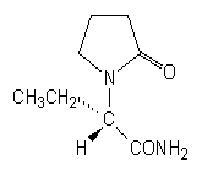
Levetiracetam USP is a white to off-white crystalline powder. It is very soluble in water, freely soluble in methanol, chloroform and ethanol. Soluble in acetonitrile and practically insoluble in n-hexane.
Levetiracetam tablets USP contain the labeled amount of levetiracetam USP. Inactive ingredients: magnesium stearate, povidone, and film coating agent contains hypromellose 3cp, hypromellose 6cp, iron oxide yellow, iron oxide red, polyethylene glycol 400, polysorbate 80 and titanium dioxide.
CLINICAL PHARMACOLOGY
Mechanism of Action
The precise mechanism(s) by which levetiracetam exerts its antiepileptic effect is unknown. The antiepileptic activity of levetiracetam was assessed in a number of animal models of epileptic seizures. Levetiracetam did not inhibit single seizures induced by maximal stimulation with electrical current or different chemoconvulsants and showed only minimal activity in submaximal stimulation and in threshold tests. Protection was observed, however, against secondarily generalized activity from focal seizures induced by pilocarpine and kainic acid, two chemoconvulsants that induce seizures that mimic some features of human complex partial seizures with secondary generalization. Levetiracetam also displayed inhibitory properties in the kindling model in rats, another model of human complex partial seizures, both during kindling development and in the fully kindled state. The predictive value of these animal models for specific types of human epilepsy is uncertain.
In vitro and in vivo recordings of epileptiform activity from the hippocampus have shown that levetiracetam inhibits burst firing without affecting normal neuronal excitability, suggesting that levetiracetam may selectively prevent hypersynchronization of epileptiform burst firing and propagation of seizure activity.
Levetiracetam at concentrations of up to 10 μM did not demonstrate binding affinity for a variety of known receptors, such as those associated with benzodiazepines, GABA (gamma-aminobutyric acid), glycine, NMDA (N-methyl-D-aspartate), re-uptake sites, and second messenger systems. Furthermore, in vitro studies have failed to find an effect of levetiracetam on neuronal voltage-gated sodium or T-type calcium currents and levetiracetam does not appear to directly facilitate GABAergic neurotransmission. However, in vitro studies have demonstrated that levetiracetam opposes the activity of negative modulators of GABA- and glycine-gated currents and partially inhibits N-type calcium currents in neuronal cells.
A saturable and stereoselective neuronal binding site in rat brain tissue has been described for levetiracetam. Experimental data indicate that this binding site is the synaptic vesicle protein SV2A, thought to be involved in the regulation of vesicle exocytosis. Although the molecular significance of levetiracetam binding to SV2A is not understood, levetiracetam and related analogs showed a rank order of affinity for SV2A which correlated with the potency of their antiseizure activity in audiogenic seizure-prone mice. These findings suggest that the interaction of levetiracetam with the SV2A protein may contribute to the antiepileptic mechanism of action of the drug.
Pharmacodynamics
Effects on QTc Interval The effect of levetiracetam on QTc prolongation was evaluated in a randomized, double-blind, positive-controlled (moxifloxacin 400 mg) and placebo-controlled crossover study of levetiracetam (1000 mg or 5000 mg) in 52 healthy subjects. The upper bound of the 90% confidence interval for the largest placebo-adjusted, baseline-corrected QTc was below 10 milliseconds. Therefore, there was no evidence of significant QTc prolongation in this study.
Pharmacokinetics
Absorption and Distribution
Absorption of levetiracetam is rapid, with peak plasma concentrations occurring in about an hour following oral administration in fasted subjects. The oral bioavailability of levetiracetam tablets is 100% and the tablets and oral solution are bioequivalent in rate and extent of absorption. Food does not affect the extent of absorption of levetiracetam but it decreases C max by 20% and delays T max by 1.5 hours. The pharmacokinetics of levetiracetam are linear over the dose range of 500 to 5000 mg. Steady state is achieved after 2 days of multiple twice-daily dosing. Levetiracetam and its major metabolite are less than 10% bound to plasma proteins; clinically significant interactions with other drugs through competition for protein binding sites are therefore unlikely.
Metabolism
Levetiracetam is not extensively metabolized in humans. The major metabolic pathway is the enzymatic hydrolysis of the acetamide group, which produces the carboxylic acid metabolite, ucb L057 (24% of dose) and is not dependent on any liver cytochrome P450 isoenzymes. The major metabolite is inactive in animal seizure models. Two minor metabolites were identified as the product of hydroxylation of the 2-oxo-pyrrolidine ring (2% of dose) and opening of the 2-oxo-pyrrolidine ring in position 5 (1% of dose). There is no enantiomeric interconversion of levetiracetam or its major metabolite.
Elimination
Levetiracetam plasma half-life in adults is 7 ± 1 hour and is unaffected by either dose or repeated administration. Levetiracetam is eliminated from the systemic circulation by renal excretion as unchanged drug which represents 66% of administered dose. The total body clearance is 0.96 mL/min/kg and the renal clearance is 0.6 mL/min/kg. The mechanism of excretion is glomerular filtration with subsequent partial tubular reabsorption. The metabolite ucb L057 is excreted by glomerular filtration and active tubular secretion with a renal clearance of 4 mL/min/kg. Levetiracetam elimination is correlated to creatinine clearance. Levetiracetam clearance is reduced in patients with impaired renal function [see Use in Specific Populations (8.6) and Dosage and Administration (2.5) ].
Specific Populations:
Elderly
Pharmacokinetics of levetiracetam were evaluated in 16 elderly subjects (age 61 to 88 years) with creatinine clearance ranging from 30 to 74 mL/min. Following oral administration of twice-daily dosing for 10 days, total body clearance decreased by 38% and the half-life was 2.5 hours longer in the elderly compared to healthy adults. This is most likely due to the decrease in renal function in these subjects.
Pediatric Patients
Pharmacokinetics of levetiracetam were evaluated in 24 pediatric patients (age 6 to 12 years) after single dose (20 mg/kg). The body weight adjusted apparent clearance of levetiracetam was approximately 40% higher than in adults.
A repeat dose pharmacokinetic study was conducted in pediatric patients (age 4 to 12 years) at doses of 20 mg/kg/day, 40 mg/kg/day, and 60 mg/kg/day. The evaluation of the pharmacokinetic profile of levetiracetam and its metabolite (ucb L057) in 14 pediatric patients demonstrated rapid absorption of levetiracetam at all doses with a T max of about 1 hour and a t 1/2 of 5 hours across the three dosing levels. The pharmacokinetics of levetiracetam in children was linear between 20 to 60 mg/kg/day. The potential interaction of levetiracetam with other AEDs was also evaluated in these patients. Levetiracetam had no significant effect on the plasma concentrations of carbamazepine, valproic acid, topiramate or lamotrigine. However, there was about a 22% increase of apparent clearance of levetiracetam when it was co-administered with an enzyme-inducing AED (e.g. carbamazepine).
Population pharmacokinetic analysis showed that body weight was significantly correlated to the clearance of levetiracetam in pediatric patients; clearance increased with an increase in body weight.
Pregnancy
Levetiracetam levels may decrease during pregnancy.
Gender
Levetiracetam C max and AUC were 20% higher in women (N=11) compared to men (N=12). However, clearances adjusted for body weight were comparable.
Race
Formal pharmacokinetic studies of the effects of race have not been conducted. Cross study comparisons involving Caucasians (N=12) and Asians (N=12), however, show that pharmacokinetics of levetiracetam were comparable between the two races. Because levetiracetam is primarily renally excreted and there are no important racial differences in creatinine clearance, pharmacokinetic differences due to race are not expected.
Renal Impairment
The disposition of levetiracetam was studied in adult subjects with varying degrees of renal function. Total body clearance of levetiracetam is reduced in patients with impaired renal function by 40% in the mild group (CLcr = 50 to 80 mL/min), 50% in the moderate group (CLcr = 30 to 50 mL/min) and 60% in the severe renal impairment group (CLcr <30 mL/min). Clearance of levetiracetam is correlated with creatinine clearance.
In anuric (end stage renal disease) patients, the total body clearance decreased 70% compared to normal subjects (CLcr >80 mL/min). Approximately 50% of the pool of levetiracetam in the body is removed during a standard 4- hour hemodialysis procedure.
Dosage should be reduced in patients with impaired renal function receiving levetiracetam, and supplemental doses should be given to patients after dialysis [see Dosage and Administration (2.5) ].
Hepatic Impairment
In subjects with mild (Child-Pugh A) to moderate (Child-Pugh B) hepatic impairment, the pharmacokinetics of levetiracetam were unchanged. In patients with severe hepatic impairment (Child-Pugh C), total body clearance was 50% that of normal subjects, but decreased renal clearance accounted for most of the decrease. No dose adjustment is needed for patients with hepatic impairment.
Drug Interactions:
In vitro data on metabolic interactions indicate that levetiracetam is unlikely to produce, or be subject to, pharmacokinetic interactions. Levetiracetam and its major metabolite, at concentrations well above C max levels achieved within the therapeutic dose range, are neither inhibitors of, nor high affinity substrates for, human liver cytochrome P450 isoforms, epoxide hydrolase or UDP-glucuronidation enzymes. In addition, levetiracetam does not affect the in vitro glucuronidation of valproic acid.
Potential pharmacokinetic interactions of or with levetiracetam were assessed in clinical pharmacokinetic studies (phenytoin, valproate, warfarin, digoxin, oral contraceptive, probenecid) and through pharmacokinetic screening in the placebo-controlled clinical studies in epilepsy patients.
Phenytoin
Levetiracetam (3000 mg daily) had no effect on the pharmacokinetic disposition of phenytoin in patients with refractory epilepsy. Pharmacokinetics of levetiracetam were also not affected by phenytoin.
Valproate
Levetiracetam (1500 mg twice daily) did not alter the pharmacokinetics of valproate in healthy volunteers. Valproate 500 mg twice daily did not modify the rate or extent of levetiracetam absorption or its plasma clearance or urinary excretion. There also was no effect on exposure to and the excretion of the primary metabolite, ucb L057.
Other Antiepileptic Drugs
Potential drug interactions between levetiracetam and other AEDs (carbamazepine, gabapentin, lamotrigine, phenobarbital, phenytoin, primidone and valproate) were also assessed by evaluating the serum concentrations of levetiracetam and these AEDs during placebo-controlled clinical studies. These data indicate that levetiracetam does not influence the plasma concentration of other AEDs and that these AEDs do not influence the pharmacokinetics of levetiracetam.
Effect of AEDs in Pediatric Patients
There was about a 22% increase of apparent total body clearance of levetiracetam when it was co-administered with enzyme-inducing AEDs. Dose adjustment is not recommended. Levetiracetam had no effect on plasma concentrations of carbamazepine, valproate, topiramate, or lamotrigine.
Oral Contraceptives
Levetiracetam (500 mg twice daily) did not influence the pharmacokinetics of an oral contraceptive containing 0.03 mg ethinyl estradiol and 0.15 mg levonorgestrel, or of the luteinizing hormone and progesterone levels, indicating that impairment of contraceptive efficacy is unlikely. Coadministration of this oral contraceptive did not influence the pharmacokinetics of levetiracetam.
Digoxin
Levetiracetam (1000 mg twice daily) did not influence the pharmacokinetics and pharmacodynamics (ECG) of digoxin given as a 0.25 mg dose every day. Coadministration of digoxin did not influence the pharmacokinetics of levetiracetam.
Warfarin
Levetiracetam (1000 mg twice daily) did not influence the pharmacokinetics of R and S warfarin. Prothrombin time was not affected by levetiracetam. Coadministration of warfarin did not affect the pharmacokinetics of levetiracetam.
Probenecid
Probenecid, a renal tubular secretion blocking agent, administered at a dose of 500 mg four times a day, did not change the pharmacokinetics of levetiracetam 1000 mg twice daily. C ss max of the metabolite, ucb L057, was approximately doubled in the presence of probenecid while the fraction of drug excreted unchanged in the urine remained the same. Renal clearance of ucb L057 in the presence of probenecid decreased 60%, probably related to competitive inhibition of tubular secretion of ucb L057. The effect of levetiracetam on probenecid was not studied.
NONCLINICAL TOXICOLOGY
Carcinogenesis, Mutagenesis, Impairment Of Fertility
Carcinogenesis
Rats were dosed with levetiracetam in the diet for 104 weeks at doses of 50, 300 and 1800 mg/kg/day. The highest dose is 6 times the maximum recommended daily human dose (MRHD) of 3000 mg on a mg/m 2 basis and it also provided systemic exposure (AUC) approximately 6 times that achieved in humans receiving the MRHD. There was no evidence of carcinogenicity. In mice, oral administration of levetiracetam for 80 weeks (doses up to 960 mg/kg/day) or 2 years (doses up to 4000 mg/kg/day, lowered to 3000 mg/kg/day after 45 weeks due to intolerability) was not associated with an increase in tumors. The highest dose tested in mice for 2 years (3000 mg/kg/day) is approximately 5 times the MRHD on a mg/m 2 basis.
Mutagenesis
Levetiracetam was not mutagenic in the Ames test or in mammalian cells in vitro in the Chinese hamster ovary/HGPRT locus assay. It was not clastogenic in an in vitro analysis of metaphase chromosomes obtained from Chinese hamster ovary cells or in an in vivo mouse micronucleus assay. The hydrolysis product and major human metabolite of levetiracetam (ucb L057) was not mutagenic in the Ames test or the in vitro mouse lymphoma assay.
Impairment of Fertility
No adverse effects on male or female fertility or reproductive performance were observed in rats at oral doses up to 1800 mg/kg/day (6 times the maximum recommended human dose on a mg/m 2 or systemic exposure [AUC] basis).
CLINICAL STUDIES
In the following studies, statistical significance versus placebo indicates a p value <0.05.
14.1 Partial Onset Seizures
Effectiveness in Partial Onset Seizures in Adults with Epilepsy
The effectiveness of levetiracetam as adjunctive therapy (added to other antiepileptic drugs) in adults was established in three multicenter, randomized, double-blind, placebo-controlled clinical studies in patients who had refractory partial onset seizures with or without secondary generalization. The tablet formulation was used in all these studies. In these studies, 904 patients were randomized to placebo, 1000 mg, 2000 mg, or 3000 mg/day. Patients enrolled in Study 1 or Study 2 had refractory partial onset seizures for at least two years and had taken two or more classical AEDs. Patients enrolled in Study 3 had refractory partial onset seizures for at least 1 year and had taken one classical AED. At the time of the study, patients were taking a stable dose regimen of at least one and could take a maximum of two AEDs. During the baseline period, patients had to have experienced at least two partial onset seizures during each 4-week period.
Study 1
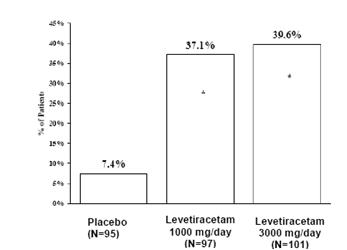
Study 1 was a double-blind, placebo-controlled, parallel-group study conducted at 41 sites in the United States comparing levetiracetam 1000 mg/day (N=97), levetiracetam 3000 mg/day (N=101), and placebo (N=95) given in equally divided doses twice daily. After a prospective baseline period of 12 weeks, patients were randomized to one of the three treatment groups described above. The 18-week treatment period consisted of a 6-week titration period, followed by a 12-week fixed dose evaluation period, during which concomitant AED regimens were held constant. The primary measure of effectiveness was a between group comparison of the percent reduction in weekly partial seizure frequency relative to placebo over the entire randomized treatment period (titration + evaluation period). Secondary outcome variables included the responder rate (incidence of patients with ≥50% reduction from baseline in partial onset seizure frequency). The results of the analysis of Study 1 are displayed in Table 10.
Table 10: Reduction In Mean Over Placebo In Weekly Frequency Of Partial Onset Seizures In Study 1
| Placebo(N=95) | Levetiracetam 3000 mg/day (N=101) | Levetiracetam1000 mg/day (N=97) | |
| Percent reduction in partial seizure frequency over placebo | – | 26.1%• | 30.1%• |
•statistically significant versus placebo
The percentage of patients (y-axis) who achieved ≥50% reduction in weekly seizure rates from baseline in partial onset seizure frequency over the entire randomized treatment period (titration + evaluation period) within the three treatment groups (x-axis) is presented in Figure 1.
Figure 1: Responder Rate (≥50% Reduction From Baseline) In Study 1
•statistically significant versus placebo
Study 2
Study 2 was a double-blind, placebo-controlled, crossover study conducted at 62 centers in Europe comparing levetiracetam 1000 mg/day (N=106), levetiracetam 2000 mg/day (N=105), and placebo (N=111) given in equally divided doses twice daily.
The first period of the study (Period A) was designed to be analyzed as a parallel-group study. After a prospective baseline period of up to 12 weeks, patients were randomized to one of the three treatment groups described above. The 16-week treatment period consisted of the 4-week titration period followed by a 12-week fixed dose evaluation period, during which concomitant AED regimens were held constant. The primary measure of effectiveness was a between group comparison of the percent reduction in weekly partial seizure frequency relative to placebo over the entire randomized treatment period (titration + evaluation period).
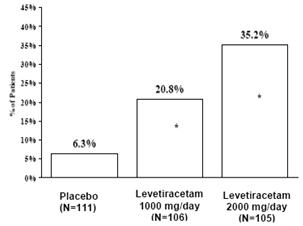
Secondary outcome variables included the responder rate (incidence of patients with ≥50% reduction from baseline in partial onset seizure frequency). The results of the analysis of Period A are displayed in Table 11.
Table 11: Reduction In Mean Over Placebo In Weekly Frequency Of Partial Onset Seizures In Study 2: Period A
| Placebo (N=111) | Levetiracetam 1000 mg/day (N=106) | Levetiracetam 2000 mg/day (N=105) | |
| Percent reduction in partial seizure frequency over placebo | – | 17.1%• | 21.4%• |
•statistically significant versus placebo
The percentage of patients (y-axis) who achieved ≥50% reduction in weekly seizure rates from baseline in partial onset seizure frequency over the entire randomized treatment period (titration + evaluation period) within the three treatment groups (x-axis) is presented in Figure 2.
Figure 2: Responder Rate (≥50% Reduction From Baseline) In Study 2: Period A
•statistically significant versus placebo
The comparison of levetiracetam 2000 mg/day to levetiracetam 1000 mg/day for responder rate was statistically significant (P=0.02). Analysis of the trial as a cross-over yielded similar results.
Study 3
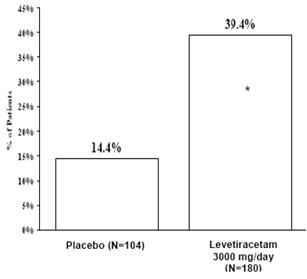
Study 3 was a double-blind, placebo-controlled, parallel-group study conducted at 47 centers in Europe comparing levetiracetam 3000 mg/day (N=180) and placebo (N=104) in patients with refractory partial onset seizures, with or without secondary generalization, receiving only one concomitant AED. Study drug was given in two divided doses. After a prospective baseline period of 12 weeks, patients were randomized to one of two treatment groups described above. The 16-week treatment period consisted of a 4-week titration period, followed by a 12-week fixed dose evaluation period, during which concomitant AED doses were held constant. The primary measure of effectiveness was a between group comparison of the percent reduction in weekly seizure frequency relative to placebo over the entire randomized treatment period (titration + evaluation period). Secondary outcome variables included the responder rate (incidence of patients with ≥50% reduction from baseline in partial onset seizure frequency). Table 12 displays the results of the analysis of Study 3.
Table 12: Reduction In Mean Over Placebo In Weekly Frequency Of Partial Onset Seizures In Study 3
| Placebo (N=104) | Levetiracetam 1000 mg/day (N=106) | |
| Percent reduction in partial seizure frequency over placebo | – | 23%• |
•statistically significant versus placebo
The percentage of patients (y-axis) who achieved ≥50% reduction in weekly seizure rates from baseline in partial onset seizure frequency over the entire randomized treatment period (titration + evaluation period) within the two treatment groups (x-axis) is presented in Figure 3.
Figure 3: Responder Rate (≥50% Reduction From Baseline) In Study 3
•statistically significant versus placebo
Effectiveness in Partial Onset Seizures in Pediatric Patients 4 Years to 16 Years with Epilepsy
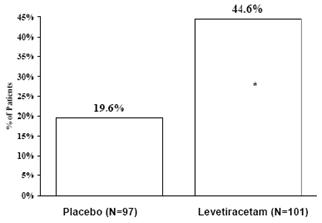
The effectiveness of levetiracetam as adjunctive therapy (added to other antiepileptic drugs) in pediatric patients was established in one multicenter, randomized double-blind, placebo-controlled study, conducted at 60 sites in North America, in children 4 to 16 years of age with partial seizures uncontrolled by standard antiepileptic drugs (AEDs). Eligible patients on a stable dose of 1 to 2 AEDs, who still experienced at least 4 partial onset seizures during the 4 weeks prior to screening, as well as at least 4 partial onset seizures in each of the two 4-week baseline periods, were randomized to receive either levetiracetam or placebo. The enrolled population included 198 patients (levetiracetam N=101, placebo N=97) with refractory partial onset seizures, whether or not secondarily generalized. The study consisted of an 8-week baseline period and 4-week titration period followed by a 10week evaluation period. Dosing was initiated at a dose of 20 mg/kg/day in two divided doses. During the treatment period, levetiracetam doses were adjusted in 20 mg/kg/day increments, at 2-week intervals to the target dose of 60 mg/kg/day. The primary measure of effectiveness was a between group comparison of the percent reduction in weekly partial seizure frequency relative to placebo over the entire 14-week randomized treatment period (titration + evaluation period). Secondary outcome variables included the responder rate (incidence of patients with ≥ 50% reduction from baseline in partial onset seizure frequency per week). Table 13 displays the results of this study.
Table 13: Reduction In Mean Over Placebo In Weekly Frequency Of Partial Onset Seizures
| Placebo (N=97) | Levetiracetam (N=101) | |
| Percent reduction in partial seizure frequency over placebo | - | 26.8%• |
•statistically significant versus placebo
The percentage of patients (y-axis) who achieved ≥ 50% reduction in weekly seizure rates from baseline in partial onset seizure frequency over the entire randomized treatment period (titration + evaluation period) within the two treatment groups (x-axis) is presented in Figure 4.
Figure 4: Responder Rate (≥ 50% Reduction From Baseline)
•statistically significant versus placebo
Effectiveness in Partial Onset Seizures in Pediatric Patients 1 Month to <4 Years with Epilepsy
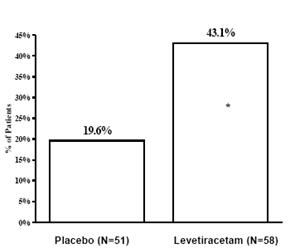
The effectiveness of levetiracetam as adjunctive therapy in pediatric patients was established in one multicenter, randomized double-blind, placebo-controlled study, conducted at 62 sites in North America, South America, and Europe in children 1 month to less than 4 years of age with partial seizures, uncontrolled by standard epileptic drugs (AEDs). Eligible patients on a stable dose of 1 to 2 AEDs, who experienced at least 2 partial onset seizures during the 48-hour baseline video EEG were randomized to receive either levetiracetam or placebo. The enrolled population included 116 patients (levetiracetam N=60, placebo N=56) with refractory partial onset seizures, whether or not secondarily generalized. Randomization was stratified by age range as follows: 1 month to less than 6 months of age (N=4 treated with levetiracetam), 6 months to less than 1 year of age (N=8 treated with levetiracetam), 1 year to less than 2 years of age (N=20 treated with levetiracetam), and 2 years to less than 4 years of age (N=28 treated with levetiracetam). The study consisted of a 5-day evaluation period which included a 1-day titration period followed by a 4-day maintenance period. levetiracetam dosing was determined by age and weight as follows: children 1 month to less than 6 months old were randomized to a target dose of 40 mg/kg/day, and children 6 months to less than 4 years old were randomized to a target dose of 50 mg/kg/day. The primary measure of effectiveness was the responder rate (percent of patients with ≥ 50% reduction from baseline in average daily partial onset seizure frequency) assessed by a blinded central reader using a 48-hour video EEG performed during the last two days of the 4-day maintenance period. A total of 109 patients were included in the efficacy analysis. A statistically significant difference between levetiracetam and placebo was observed (see Figure 5). The treatment effect associated with levetiracetam was consistent across age groups.
Figure 5: Responder Rate For All Subjects Ages 1 Month to < 4 Years (≥ 50% Reduction From Baseline)
•statistically significant versus placebo
14.2 Myoclonic Seizures in Patients with Juvenile Myoclonic Epilepsy
Effectiveness of Myoclonic Seizures in Patients ≥12 Years of Age with Juvenile Myoclonic Epilepsy (JME)
The effectiveness of levetiracetam as adjunctive therapy (added to other antiepileptic drugs) in patients 12 years of age and older with juvenile myoclonic epilepsy (JME) experiencing myoclonic seizures was established in one multicenter, randomized, double-blind, placebo-controlled study, conducted at 37 sites in 14 countries. Of the 120 patients enrolled, 113 had a diagnosis of confirmed or suspected JME. Eligible patients on a stable dose of 1 antiepileptic drug (AED) experiencing one or more myoclonic seizures per day for at least 8 days during the prospective 8-week baseline period were randomized to either levetiracetam or placebo (levetiracetam N=60, placebo N=60). Patients were titrated over 4 weeks to a target dose of 3000 mg/day and treated at a stable dose of 3000 mg/day over 12 weeks (evaluation period). Study drug was given in 2 divided doses.
The primary measure of effectiveness was the proportion of patients with at least 50% reduction in the number of days per week with one or more myoclonic seizures during the treatment period (titration + evaluation periods) as compared to baseline. Table 14 displays the results for the 113 patients with JME in this study.
Table 14: Responder Rate (≥ 50% Reduction From Baseline) In Myoclonic Seizure Days Per Week for Patients with JME
| Placebo (N=59) | Levetiracetam (N=54) | |
| Percentage of responders | 23.7% | 60.4%• |
•statistically significant versus placebo
14.3 Primary Generalized Tonic-Clonic Seizures
Effectiveness in Primary Generalized Tonic-Clonic Seizures in Patients ≥6 Years of Age
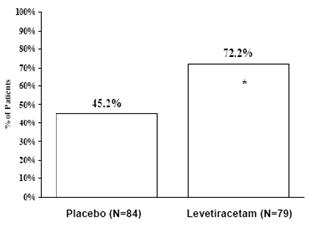
The effectiveness of levetiracetam as adjunctive therapy (added to other antiepileptic drugs) in patients 6 years of age and older with idiopathic generalized epilepsy experiencing primary generalized tonic-clonic (PGTC) seizures was established in one multicenter, randomized, double-blind, placebo-controlled study, conducted at 50 sites in 8 countries. Eligible patients on a stable dose of 1 or 2 antiepileptic drugs (AEDs) experiencing at least 3 PGTC seizures during the 8-week combined baseline period (at least one PGTC seizure during the 4 weeks prior to the prospective baseline period and at least one PGTC seizure during the 4-week prospective baseline period) were randomized to either levetiracetam or placebo. The 8-week combined baseline period is referred to as “baseline” in the remainder of this section. The population included 164 patients (levetiracetam N=80, placebo N=84) with idiopathic generalized epilepsy (predominately juvenile myoclonic epilepsy, juvenile absence epilepsy, childhood absence epilepsy, or epilepsy with Grand Mal seizures on awakening) experiencing primary generalized tonic-clonic seizures. Each of these syndromes of idiopathic generalized epilepsy was well represented in this patient population. Patients were titrated over 4 weeks to a target dose of 3000 mg/day for adults or a pediatric target dose of 60 mg/kg/day and treated at a stable dose of 3000 mg/day (or 60 mg/kg/day for children) over 20 weeks (evaluation period). Study drug was given in 2 equally divided doses per day.
The primary measure of effectiveness was the percent reduction from baseline in weekly PGTC seizure frequency for levetiracetam and placebo treatment groups over the treatment period (titration + evaluation periods). There was a statistically significant decrease from baseline in PGTC frequency in the levetiracetam-treated patients compared to the placebo-treated patients.
Table 15: Median Percent Reduction From Baseline In PGTC Seizure Frequency Per Week
| Placebo (N=84) | Levetiracetam (N=78) | |
| Percentage reduction in PGTC seizure frequency | 44.6% | 77.6%• |
•statistically significant versus placebo
The percentage of patients (y-axis) who achieved ≥50% reduction in weekly seizure rates from baseline in PGTC seizure frequency over the entire randomized treatment period (titration + evaluation period) within the two treatment groups (x-axis) is presented in Figure 6.
Figure 6: Responder Rate (≥50% Reduction From Baseline) In PGTC Seizure Frequency Per Week
•statistically significant versus placebo
HOW SUPPLIED/STORAGE AND HANDLING
16.1 How Supplied
Levetiracetam tablets USP, 1000 mg are beige, oval shaped, biconvex, film coated tablets debossed with '248' on one side and 'RDY' on other side, 'RD' and 'Y' separated with bisect line. They are supplied in bottles of 30's, 60's, 100's, 500's and unit dose package of 10 (1 x 10).
Bottles of 30 NDC 55111-248-30
Bottles of 60 NDC 55111-248-60
Bottles of 100 NDC 55111-248-01
Bottles of 500 NDC 55111-248-05
Unit dose package of 10 (1 x 10) NDC 55111-248-79
Pharmacist: Dispense in a tight light-resistant container with a child-resistant closure.
16.2 Storage
Store levetiracetam tablets at 20° to 25°C (68° to 77°F); excursions permitted to 15° to 30°C (59° to 86°F) [see USP Controlled Room Temperature].
Mechanism of Action
The precise mechanism(s) by which levetiracetam exerts its antiepileptic effect is unknown. The antiepileptic activity of levetiracetam was assessed in a number of animal models of epileptic seizures. Levetiracetam did not inhibit single seizures induced by maximal stimulation with electrical current or different chemoconvulsants and showed only minimal activity in submaximal stimulation and in threshold tests. Protection was observed, however, against secondarily generalized activity from focal seizures induced by pilocarpine and kainic acid, two chemoconvulsants that induce seizures that mimic some features of human complex partial seizures with secondary generalization. Levetiracetam also displayed inhibitory properties in the kindling model in rats, another model of human complex partial seizures, both during kindling development and in the fully kindled state. The predictive value of these animal models for specific types of human epilepsy is uncertain.
In vitro and in vivo recordings of epileptiform activity from the hippocampus have shown that levetiracetam inhibits burst firing without affecting normal neuronal excitability, suggesting that levetiracetam may selectively prevent hypersynchronization of epileptiform burst firing and propagation of seizure activity.
Levetiracetam at concentrations of up to 10 μM did not demonstrate binding affinity for a variety of known receptors, such as those associated with benzodiazepines, GABA (gamma-aminobutyric acid), glycine, NMDA (N-methyl-D-aspartate), re-uptake sites, and second messenger systems. Furthermore, in vitro studies have failed to find an effect of levetiracetam on neuronal voltage-gated sodium or T-type calcium currents and levetiracetam does not appear to directly facilitate GABAergic neurotransmission. However, in vitro studies have demonstrated that levetiracetam opposes the activity of negative modulators of GABA- and glycine-gated currents and partially inhibits N-type calcium currents in neuronal cells.
A saturable and stereoselective neuronal binding site in rat brain tissue has been described for levetiracetam. Experimental data indicate that this binding site is the synaptic vesicle protein SV2A, thought to be involved in the regulation of vesicle exocytosis. Although the molecular significance of levetiracetam binding to SV2A is not understood, levetiracetam and related analogs showed a rank order of affinity for SV2A which correlated with the potency of their antiseizure activity in audiogenic seizure-prone mice. These findings suggest that the interaction of levetiracetam with the SV2A protein may contribute to the antiepileptic mechanism of action of the drug.
