Get your patient on Methylphenidate Hydrochloride (La)- Methylphenidate Hydrochloride capsule, Extended Release (Methylphenidate Hydrochloride)
Methylphenidate Hydrochloride (La)- Methylphenidate Hydrochloride capsule, Extended Release prescribing information

WARNING: ABUSE AND DEPENDENCE
CNS stimulants, including methylphenidate hydrochloride extended-release capsules (LA), other methylphenidate-containing products, and amphetamines, have a high potential for abuse and dependence. Assess the risk of abuse prior to prescribing, and monitor for signs of abuse and dependence while on therapy [see Warning and Precautions (5.1) , Drug Abuse and Dependence (9.2 , 9.3) ] .
INDICATIONS AND USAGE
Methylphenidate hydrochloride extended-release capsules (LA) is indicated for the treatment of Attention Deficit Hyperactivity Disorder (ADHD), in pediatric patients 6 to 12 years of age [see Clinical Studies (14) ] .
DOSAGE AND ADMINISTRATION
- Administer orally once daily in the morning (2.2 ).
- Capsules may be swallowed whole, or opened and the entire contents sprinkled on applesauce (2.2 ).
- Should not be crushed, chewed, or divided (2.2 ).
- Patients new to methylphenidate: Start at 20 mg daily, titrating the dose weekly in 10-mg increments. Doses above 60 mg daily are not recommended (2.3 ).
- For patients currently using methylphenidate hydrochloride tablets or methylphenidate hydrochloride extended-release tablets: Dosage is based on current dose regimen (2.4 ).
- If switching from other methylphenidate products, discontinue treatment and titrate with methylphenidate hydrochloride extended-release capsules (LA) (2.4 ).
Pretreatment Screening
Prior to initiating treatment with central nervous system (CNS) stimulants, including methylphenidate hydrochloride extended-release capsules (LA), assess for the presence of cardiac disease (i.e., perform a careful history, including family history of sudden death or ventricular arrhythmia, and physical examination) [see Warnings and Precautions (5.2) ] .
Assess the risk of abuse prior to prescribing, and monitor for signs of abuse and dependence while on therapy. Maintain careful prescription records, educate patients about abuse, monitor for signs of abuse and overdose, and periodically reevaluate the need for methylphenidate hydrochloride extended-release capsules (LA) use [see Boxed Warning , Warnings and Precautions (5.1) , Drug Abuse and Dependence (9.2 , 9.3) ].
General Dosing Information
The recommended starting dose for methylphenidate hydrochloride extended-release capsules (LA) is 20 mg once daily. Increase dosage gradually, in increments of 10 mg weekly. Daily dosage above 60 mg is not recommended. When a lower initial dose is appropriate, patients may begin treatment with 10 mg.
Administer methylphenidate hydrochloride extended-release capsules (LA) orally once daily in the morning. Methylphenidate hydrochloride extended-release capsules (LA) may be swallowed as whole capsules or may be administered by sprinkling the capsule contents on a small amount of applesauce (see specific instructions below). Methylphenidate hydrochloride extended-release capsules (LA) and/or their contents should not be crushed, chewed, or divided.
The capsules may be carefully opened and the beads sprinkled over a spoonful of applesauce. The applesauce should not be warm because it could affect the modified release properties of this formulation. The mixture of drug and applesauce should be consumed immediately in its entirety. The drug and applesauce mixture should not be stored for future use.
Pharmacological treatment of ADHD may be needed for extended periods. Periodically reevaluate the long-term use of methylphenidate hydrochloride tablets and methylphenidate hydrochloride extended-release tablets, and adjust dosage as needed.
Patients Currently Using Methylphenidate Hydrochloride Tablets or Methylphenidate Hydrochloride Extended-Release Tablets
The recommended dose of methylphenidate hydrochloride extended-release capsules (LA) for patients currently taking methylphenidate hydrochloride tablets twice daily or methylphenidate hydrochloride extended-release tablets (SR) is provided below.
| Previous Methylphenidate Hydrochloride Tablets or Methylphenidate Hydrochloride Extended-Release Tablets Dose | Recommended Methylphenidate Hydrochloride Extended-Release Capsules (LA) Dose |
|---|---|
| 5 mg methylphenidate hydrochloride tablets twice daily | 10 mg once daily |
| 10 mg methylphenidate hydrochloride tablets twice daily or 20 mg methylphenidate hydrochloride extended-release tablets | 20 mg once daily |
| 15 mg methylphenidate hydrochloride tablets twice daily | 30 mg once daily |
| 20 mg methylphenidate hydrochloride tablets twice daily or 40 mg of methylphenidate hydrochloride extended-release tablets | 40 mg once daily |
| 30 mg methylphenidate hydrochloride tablets twice daily or 60 mg of methylphenidate hydrochloride extended-release tablets | 60 mg once daily |
Switching From Other Methylphenidate Products
If switching from other methylphenidate products, discontinue that treatment, and titrate with methylphenidate hydrochloride extended-release capsules (LA) using the titration schedule.
Do not substitute for other methylphenidate products on a milligram-per-milligram basis, because different methylphenidate base compositions and differing pharmacokinetic profiles [see Description (11) , Clinical Pharmacology (12.3) ] .
Clinical judgment should be used when selecting the starting dose. Daily dosage above 60 mg is not recommended.
Dose Reduction and Discontinuation
If paradoxical worsening of symptoms or other adverse reactions occur, reduce the dosage, or, if necessary, discontinue methylphenidate hydrochloride extended-release capsules (LA). If improvement is not observed after appropriate dosage adjustment over a one-month period, the drug should be discontinued.
DOSAGE FORMS AND STRENGTHS
- 10 mg extended-release capsules white/light green (imprinted mayne 609 on both the body and cap)
- 20 mg extended-release capsules white/white (imprinted mayne 610 on both the body and cap)
- 30 mg extended-release capsules white/light blue, (imprinted mayne 611 on both body and cap)
- 40 mg extended-release capsules white/dark blue, (imprinted mayne 612 on both body and cap)
- 60 mg extended-release capsules light yellow/dark yellow (imprinted mayne 614 on both body and cap)
USE IN SPECIFIC POPULATIONS
Pregnancy
Pregnancy Exposure Registry
There is a pregnancy exposure registry that monitors pregnancy outcomes in women exposed to ADHD medications, including methylphenidate hydrochloride extended-release capsules (LA) during pregnancy. Healthcare providers are encouraged to register patients by calling the National Pregnancy registry for ADHD medications at 1-866-961-2388 or visit https://womensmentalhealth.org/adhd-medications/.
Risk Summary
Published studies and postmarketing reports on methylphenidate use during pregnancy have not identified a drug-associated risk of major birth defects, miscarriage or adverse maternal or fetal outcomes. There may be risks to the fetus associated with the use of CNS stimulants use during pregnancy (see Clinical Considerations ) . No effects on morphological development were observed in embryo-fetal development studies with oral administration of methylphenidate to pregnant rats and rabbits during organogenesis at doses up to 10 and 15 times, respectively, the maximum recommended human dose (MRHD) of 60 mg/day given to adolescents on a mg/m 2 basis. However, spina bifida was observed in rabbits at a dose 52 times the MRHD given to adolescents. A decrease in pup body weight was observed in a pre- and post-natal development study with oral administration of methylphenidate to rats throughout pregnancy and lactation at doses 6 times the MRHD given to adolescents (see Data ) .
The estimated background risk of major birth defects and miscarriage for the indicated population is unknown. All pregnancies have a background risk of birth defect, loss, or other adverse outcomes. In the U.S. general population, the estimated background risk of major birth defects and miscarriage in clinically recognized pregnancies is 2% to 4% and 15% to 20%, respectively.
Clinical Considerations
Fetal/Neonatal Adverse Reactions
CNS stimulants, such as methylphenidate hydrochloride extended-release capsules (LA), can cause vasoconstriction and thereby decrease placental perfusion. No fetal and/or neonatal adverse reactions have been reported with the use of therapeutic doses of methylphenidate during pregnancy; however, premature delivery and low birth weight infants have been reported in amphetamine-dependent mothers.
Data
Animal Data
In embryo-fetal development studies conducted in rats and rabbits, methylphenidate was administered orally at doses of up to 75 and 200 mg/kg/day, respectively, during the period of organogenesis. Malformations (increased incidence of fetal spina bifida) were observed in rabbits at the highest dose, which is approximately 52 times the MRHD of 60 mg/day given to adolescents on a mg/m 2 basis. The no effect level for embryo-fetal development in rabbits was 60 mg/kg/day (15 times the MRHD given to adolescents on a mg/m 2 basis). There was no evidence of morphological development effects in rats, although increased incidences of fetal skeletal variations were seen at the highest dose level (10 times the MRHD of 60 mg/day given to adolescents on a mg/m 2 basis), which was also maternally toxic. The no effect level for embryo-fetal development in rats was 25 mg/kg/day (3 times the MRHD on a mg/m 2 basis). When methylphenidate was administered to rats throughout pregnancy and lactation at doses of up to 45 mg/kg/day, offspring body weight gain was decreased at the highest dose (6 times the MRHD of 60 mg/day given to adolescents on a mg/m 2 basis), but no other effects on postnatal development were observed. The no effect level for pre- and postnatal development in rats was 15 mg/kg/day (~2 times the MRHD given to adolescents on a mg/m 2 basis).
Lactation
Risk Summary
Limited published literature, based on milk sampling from seven mothers reports that methylphenidate is present in human milk, which resulted in infant doses of 0.16% to 0.7% of the maternal weight-adjusted dosage and a milk/plasma ratio ranging between 1.1 and 2.7. There are no reports of adverse effects on the breastfed infant and no effects on milk production. Long-term neurodevelopmental effects on infants from stimulant exposure are unknown. The developmental and health benefits of breastfeeding should be considered along with the mother's clinical need for methylphenidate hydrochloride extended-release capsules (LA) and any potential adverse effects on the breastfed infant from methylphenidate hydrochloride extended-release capsules (LA) or from the underlying maternal condition.
Clinical Considerations
Monitor breastfeeding infants for adverse reactions, such as agitation, insomnia, anorexia, and reduced weight gain.
Pediatric Use
The safety and effectiveness of methylphenidate hydrochloride extended-release capsules (LA) for the treatment of ADHD have been established in pediatric patients 6 to 12 years.
The safety and effectiveness of methylphenidate hydrochloride extended-release capsules (LA) in pediatric patients less than 6 years have not been established. The long-term efficacy of methylphenidate hydrochloride extended-release capsules (LA) in pediatric patients has not been established.
Long-Term Suppression of Growth
Growth should be monitored during treatment with stimulants, including methylphenidate hydrochloride extended release-capsules (LA). Pediatric patients who are not growing or gaining weight as expected may need to have their treatment interrupted [see Warnings and Precautions (5.7) ] .
Juvenile Animal Toxicity Data
Rats treated with methylphenidate early in the postnatal period through sexual maturation demonstrated a decrease in spontaneous locomotor activity in adulthood. A deficit in acquisition of a specific learning task was observed in females only. The doses at which these findings were observed are at least 4 times the MRHD of 60 mg/day given to children on a mg/m 2 basis.
In a study conducted in young rats, methylphenidate was administered orally at doses of up to 100 mg/kg/day for 9 weeks, starting early in the postnatal period (postnatal Day 7) and continuing through sexual maturity (postnatal Week 10). When these animals were tested as adults (postnatal Weeks 13 to 14), decreased spontaneous locomotor activity was observed in males and females previously treated with 50 mg/kg/day (approximately 4 times the MRHD of 60 mg/day given to children on a mg/m 2 basis) or greater, and a deficit in the acquisition of a specific learning task was seen in females exposed to the highest dose (8 times the MRHD given to children on a mg/m 2 basis). The no effect level for juvenile neurobehavioral development in rats was 5 mg/kg/day (approximately 0.5 times the MRHD given to children on a mg/m 2 basis). The clinical significance of the long-term behavioral effects observed in rats is unknown.
Geriatric Use
Methylphenidate hydrochloride extended-release capsules (LA) has not been studied in the geriatric population.
CONTRAINDICATIONS
- Hypersensitivity to methylphenidate or other components of methylphenidate hydrochloride extended-release capsules (LA). Hypersensitivity reactions, such as angioedema and anaphylactic reactions, have been reported in patients treated with methylphenidate [see Adverse Reactions (6.1) ].
- Concomitant treatment with monoamine oxidase inhibitors (MAOIs), or within 14 days following discontinuation of treatment with an MAOI, because of the risk of hypertensive crises [s ee Drug Interactions (7.1) ].
WARNINGS AND PRECAUTIONS
- Serious Cardiovascular Events : Sudden death has been reported in association with CNS-stimulant treatment at usual doses in pediatric patients with structural cardiac abnormalities or other serious heart problems. In adults, sudden death, stroke, and myocardial infarction have been reported. Avoid use in patients with known structural cardiac abnormalities, cardiomyopathy, serious heart rhythm arrhythmias, or coronary artery disease (5.2 ).
- Blood Pressure and Heart Rate Increases : Monitor blood pressure and pulse. Consider the benefits and risk in patients for whom an increase in blood pressure or heart rate would be problematic (5.3 ).
- Psychiatric Adverse Reactions : Use of stimulants may cause psychotic or manic symptoms in patients with no prior history or exacerbation of symptoms in patients with preexisting psychiatric illness. Evaluate for preexisting psychotic or bipolar disorder prior to methylphenidate hydrochloride extended-release capsules (LA) use (5.4 ).
- Priapism : Cases of painful and prolonged penile erections and priapism have been reported with methylphenidate products. Immediate medical attention should be sought if signs or symptoms of prolonged penile erections or priapism are observed (5.5 ).
- Peripheral Vasculopathy, including Raynaud's Phenomenon : Stimulants used to treat ADHD are associated with peripheral vasculopathy, including Raynaud's phenomenon. Careful observation for digital changes is necessary during treatment with ADHD stimulants (5.6 ).
- Long-Term Suppression of Growth : Monitor height and weight at appropriate intervals in pediatric patients (5.7 ).
Potential for Abuse and Dependence
CNS stimulants, including methylphenidate hydrochloride extended-release capsules (LA), other methylphenidate-containing products, and amphetamines, have a high potential for abuse and dependence. Assess the risk of abuse prior to prescribing, and monitor for signs of abuse and dependence while on therapy [see Boxed Warning , Drug Abuse and Dependence (9.2 , 9.3) ].
Serious Cardiovascular Reactions
Sudden death, stroke, and myocardial infarction have been reported in adults with CNS-stimulant treatment at recommended doses. Sudden death has been reported in pediatric patients with structural cardiac abnormalities and other serious heart problems taking CNS stimulants at recommended doses for ADHD. Avoid use in patients with known structural cardiac abnormalities, cardiomyopathy, serious heart rhythm abnormalities, coronary artery disease, and other serious heart problems. Further evaluate patients who develop exertional chest pain, unexplained syncope, or arrhythmias during methylphenidate hydrochloride extended-release capsules (LA) treatment.
Blood Pressure and Heart Rate Increases
CNS stimulants cause an increase in blood pressure (mean increase approximately 2 to 4 mmHg) and heart rate (mean increase approximately 3 to 6 beats per minute). Individuals may have larger increases. Monitor all patients for hypertension and tachycardia.
Psychiatric Adverse Reactions
Exacerbation of Preexisting Psychosis
CNS stimulants may exacerbate symptoms of behavior disturbance and thought disorder in patients with a preexisting psychotic disorder.
Induction of a Manic Episode in Patients with Bipolar Disorder
CNS stimulants may induce a manic or mixed mood episode in patients. Prior to initiating treatment, screen patients for risk factors for developing a manic episode (e.g., comorbid or history of depressive symptoms or a family history of suicide, bipolar disorder, or depression).
New Psychotic or Manic Symptoms
CNS stimulants, at recommended doses, may cause psychotic or manic symptoms (e.g., hallucinations, delusional thinking, or mania) in patients without a prior history of psychotic illness or mania. If such symptoms occur, consider discontinuing methylphenidate hydrochloride extended-release capsules (LA). In a pooled analysis of multiple short-term, placebo-controlled studies of CNS stimulants, psychotic or manic symptoms occurred in approximately 0.1% of CNS stimulant-treated patients, compared to 0 in placebo-treated patients.
Priapism
Prolonged and painful erections, sometimes requiring surgical intervention, have been reported with methylphenidate products in both pediatric and adult patients. Priapism was not reported with drug initiation but developed after some time on the drug, often subsequent to an increase in dose. Priapism has also appeared during a period of drug withdrawal (drug holidays or during discontinuation). Patients who develop abnormally sustained or frequent and painful erections should seek immediate medical attention.
Peripheral Vasculopathy, Including Raynaud's Phenomenon
CNS Stimulants, including methylphenidate hydrochloride extended-release capsules (LA), used to treat ADHD are associated with peripheral vasculopathy, including Raynaud's phenomenon. Signs and symptoms are usually intermittent and mild; however, very rare sequelae include digital ulceration and/or soft tissue breakdown. Effects of peripheral vasculopathy, including Raynaud's phenomenon, were observed in post-marketing reports at different times and at therapeutic doses in all age groups throughout the course of treatment. Signs and symptoms generally improve after reduction in dose or discontinuation of drug. Careful observation for digital changes is necessary during treatment with ADHD stimulants. Further clinical evaluation (e.g., rheumatology referral) may be appropriate for certain patients.
Long-Term Suppression of Growth
CNS stimulants have been associated with weight loss and slowing of growth rate in pediatric patients.
Careful follow-up of weight and height in pediatric patients ages 7 to 10 years who were randomized to either methylphenidate or non-medication treatment groups over 14 months, as well as in naturalistic subgroups of newly methylphenidate-treated and non-medication treated patients over 36 months (to the ages of 10-13 years), suggests that consistently medicated pediatric patients (i.e., treatment for 7 days per week throughout the year) have a temporary slowing in growth rate (on average, a total of about 2 cm less growth in height and 2.7 kg less growth in weight over 3 years), without evidence of growth rebound during this period of development.
Closely monitor growth (weight and height) in pediatric patients treated with CNS stimulants, including methylphenidate hydrochloride extended-release capsules (LA). Patients who are not growing or gaining height or weight as expected may need to have their treatment interrupted.
ADVERSE REACTIONS
The following are discussed in more detail in other sections of the labeling:
- Abuse and Dependence [see Boxed Warning , Warnings and Precautions (5.1) , Drug Abuse and Dependence (9.2 , 9.3) ]
- Known hypersensitivity to methylphenidate or other ingredients of methylphenidate hydrochloride extended-release capsules (LA) [see Contraindications (4) ]
- Hypertensive crisis when used concomitantly with Monoamine Oxidase Inhibitors [see Contraindications (4) , Drug Interactions (7.1) ]
- Serious Cardiovascular Reactions [see Warnings and Precautions (5.2) ]
- Blood Pressure and Heart Rate Increases [see Warnings and Precautions (5.3) ]
- Psychiatric Adverse Reactions [see Warnings and Precautions (5.4) ]
- Priapism [see Warnings and Precautions (5.5) ]
- Peripheral Vasculopathy, Including Raynaud's Phenomenon [see Warnings and Precautions (5.6) ]
- Long-Term Suppression of Growth [see Warnings and Precautions (5.7) ]
Clinical Trial Experience
Because clinical trials are conducted under widely varying conditions, adverse reaction rates observed in the clinical trials of a drug cannot be directly compared to rates in the clinical trials of another drug and may not reflect the rates observed in practice.
The clinical program for methylphenidate hydrochloride extended-release capsules (LA) consisted of 6 studies: 2 controlled clinical studies conducted in children with ADHD aged 6 to 12 years and 4 clinical pharmacology studies conducted in healthy adult volunteers. These studies included a total of 256 subjects; 195 children with ADHD and 61 healthy adult volunteers. The subjects received methylphenidate hydrochloride extended-release capsules (LA) in doses of 10 to 40 mg per day. Safety of methylphenidate hydrochloride extended-release capsules (LA) was assessed by evaluating frequency and nature of adverse events, routine laboratory tests, vital signs, and body weight. A placebo-controlled, double-blind, parallel-group study was conducted to evaluate the efficacy and safety of methylphenidate hydrochloride extended-release capsules (LA) in children with ADHD aged 6 to 12 years. All subjects received methylphenidate hydrochloride extended-release capsules (LA) for up to 4 weeks, and had their dose optimally adjusted, prior to entering the double-blind phase of the trial. In the 2-week double-blind treatment phase of this study, patients received either placebo or methylphenidate hydrochloride extended-release capsules (LA) at their individually-titrated dose (range, 10 to 40 mg).
Adverse reactions with an incidence greater than 5% during the initial 4-week single-blind methylphenidate hydrochloride extended-release capsules (LA) titration period of this study were headache, insomnia, upper abdominal pain, appetite decreased, and anorexia.
Adverse reactions with an incidence greater than 2% among methylphenidate hydrochloride extended-release capsules (LA) -treated subjects, during the 2-week double-blind phase of the clinical study, are shown in Table 2:
| Preferred Term | Methylphenidate Hydrochloride Extended-Release Capsules (LA) N = 65 N (%) | Placebo N = 71 N (%) |
|---|---|---|
| Anorexia | 2 (3.1) | 0 (0.0) |
| Insomnia | 2 (3.1) | 0 (0.0) |
Adverse Events Associated with Discontinuation of Treatment
In the 2-week double-blind treatment phase of a placebo-controlled parallel-group study in children with ADHD, one methylphenidate hydrochloride extended-release capsules (LA)-treated subject (1/65, 1.5%) discontinued due to an adverse event (depressed mood).
In the single-blind titration period of this study, subjects received methylphenidate hydrochloride extended-release capsules (LA) for up to 4 weeks. During this period a total of 6 subjects (6/161, 3.7%) discontinued due to adverse events. The adverse events leading to discontinuation were anger (2 patients), hypomania, anxiety, depressed mood, fatigue, migraine, and lethargy.
Postmarketing Experience
The following adverse reactions have been identified during the post approval use of methylphenidate products. Because these reactions were reported voluntarily from a population of uncertain size, it is not always possible to estimate their frequency reliably or to establish a causal relationship to drug exposure.
Adverse Reactions Reported With Methylphenidate Hydrochloride Tablets, Methylphenidate Hydrochloride Extended-Release Tablets, and Methylphenidate Hydrochloride Extended- Release Capsules (LA)
Infections and Infestations: nasopharyngitis
Blood and the Lymphatic System Disorders: leukopenia, thrombocytopenia, anemia
Immune System Disorders: hypersensitivity reactions, including angioedema and anaphylaxis
Metabolism and Nutrition Disorders: decreased appetite, reduced weight gain, and suppression of growth during prolonged use in children
Psychiatric Disorders: insomnia, anxiety, restlessness, agitation, psychosis (sometimes with visual and tactile hallucinations), depressed mood
Nervous System Disorders: headache, dizziness, tremor, dyskinesia, including choreoathetoid movements, drowsiness, convulsions, cerebrovascular disorders (including vasculitis, cerebral hemorrhages and cerebrovascular accidents), serotonin syndrome in combination with serotonergic drugs
Eye Disorders: blurred vision, difficulties in visual accommodation
Cardiac Disorders: tachycardia, palpitations, increased blood pressure, arrhythmias, angina pectoris
Respiratory, Thoracic, and Mediastinal Disorders: cough
Gastrointestinal Disorders: dry mouth, nausea, vomiting, abdominal pain, dyspepsia
Hepatobiliary Disorders: abnormal liver function, ranging from transaminase elevation to severe hepatic injury
Skin and Subcutaneous Tissue Disorders: hyperhidrosis, pruritus, urticaria, exfoliative dermatitis, scalp hair loss, erythema multiforme rash, thrombocytopenic purpura
Musculoskeletal and connective tissue disorders: arthralgia, muscle cramps, rhabdomyolysis
Investigations: weight loss (adult ADHD patients)
Adverse Reactions Reported with Other Methylphenidate-Containing Products
The list below shows adverse reactions not listed with methylphenidate hydrochloride tablets, methylphenidate hydrochloride extended-release tablets, or methylphenidate hydrochloride extended-release capsules (LA) formulations that have been reported with other methylphenidate-containing products.
Blood and Lymphatic Disorders : pancytopenia
Immune System Disorders: hypersensitivity reactions, such as auricular swelling, bullous conditions, eruptions, exanthemas
Psychiatric Disorders: affect lability, mania, disorientation, libido changes,
Nervous System Disorders: migraine
Eye Disorders: diplopia, mydriasis
Cardiac Disorders: sudden cardiac death, myocardial infarction, bradycardia, extrasystole
Vascular Disorders: peripheral coldness, Raynaud's phenomenon
Respiratory, Thoracic, and Mediastinal Disorders: pharyngolaryngeal pain, dyspnea
Gastrointestinal Disorders: diarrhea, constipation
Skin and Subcutaneous Tissue Disorders: angioneurotic edema, erythema, fixed drug eruption
Musculoskeletal, Connective Tissue, and Bone Disorders: myalgia, muscle twitching
Renal and Urinary Disorders: hematuria
Reproductive System and Breast Disorders: gynecomastia
General Disorders: fatigue, hyperpyrexia
Urogenital Disorders: priapism
DRUG INTERACTIONS
Clinically Important Drug Interactions With Methylphenidate Hydrochloride Extended-Release Capsules (LA)
Table 3 presents clinically important drug interactions with methylphenidate hydrochloride extended-release capsules (LA)
| Monoamine Oxidase Inhibitors (MAOI) | |
| Clinical Impact | Concomitant use of MAOIs and CNS stimulants, including methylphenidate hydrochloride extended-release capsules (LA), can cause hypertensive crisis. Potential outcomes include death, stroke, myocardial infarction, aortic dissection, ophthalmological complications, eclampsia, pulmonary edema, and renal failure [see Contraindications (4) ] . |
| Intervention | Concomitant use of methylphenidate hydrochloride extended-release capsules (LA) with MAOIs or within 14 days after discontinuing MAOI treatment is contraindicated. |
| Examples | selegiline, tranylcypromine, isocarboxazid, phenelzine, linezolid, methylene blue |
| Antihypertensive Drugs | |
| Clinical Impact | Methylphenidate hydrochloride extended-release capsules (LA) may decrease the effectiveness of drugs used to treat hypertension [see Warnings and Precautions (5.3) ] . |
| Intervention | Monitor blood pressure and adjust the dosage of the antihypertensive drug as needed. |
| Examples | Potassium-sparing and thiazide diuretics, calcium channel blockers, angiotensin-converting-enzyme (ACE) inhibitors, angiotensin II receptor blockers (ARBs), beta blockers, centrally acting alpha-2 receptor agonists. |
| Halogenated Anesthetics | |
| Clinical Impact | Concomitant use of halogenated anesthetics and methylphenidate hydrochloride extended-release capsules (LA) may increase the risk of sudden blood pressure and heart rate increase during surgery. |
| Intervention | Avoid use of methylphenidate hydrochloride extended-release capsules (LA) in patients being treated with anesthetics on the day of surgery. |
| Examples | halothane, isoflurane, enflurane, desflurane, sevoflurane |
| Risperidone | |
| Clinical Impact | Combined use of methylphenidate with risperidone when there is a change, whether an increase or decrease, in dosage of either or both medications, may increase the risk of extrapyramidal symptoms (EPS) |
| Intervention | Monitor for signs of EPS |
DESCRIPTION
Methylphenidate hydrochloride extended-release capsules (LA) contains methylphenidate hydrochloride USP, a CNS stimulant.
Methylphenidate hydrochloride extended-release capsules (LA) is an extended-release formulation of methylphenidate for oral administration with a bi-modal release profile. Each bead-filled methylphenidate hydrochloride extended-release capsule (LA) contains half the dose as immediate-release beads and half as enteric-coated beads, thus providing an immediate release of methylphenidate and a second delayed release of methylphenidate.
The active substance in methylphenidate hydrochloride extended-release capsules (LA) is methyl α-phenyl-2-piperidineacetate hydrochloride, and its structural formula is
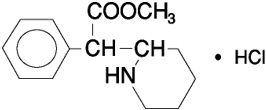
Methylphenidate hydrochloride USP is a white, odorless, fine crystalline powder. Its solutions are acid to litmus. It is freely soluble in water and in methanol, soluble in alcohol, and slightly soluble in chloroform and in acetone. Its molecular weight is 269.77 g/mol.
Inactive ingredients: Sugar spheres (which contain sucrose and starch (corn)), hypromellose, cellulose acetate butyrate, hypromellose acetate succinate, acetyltributyl citrate, acetone, talc, and purified water. Opaque gelatin capsules contain: titanium dioxide and gelatin. The 10mg capsule contains FD&C Green#3, FD&C#40, and FD&C Yellow #6. The 30 and 40 mg capsules contain D&C Red #28 and FD&C Blue #1. The 60 mg capsules contain iron oxide yellow and sodium lauryl sulfate. The capsules are imprinted with black ink which contains black iron oxide, shellac and potassium hydroxide. The 60 mg black imprinting ink also contains ammonium hydroxide and propylene glycol.
CLINICAL PHARMACOLOGY
Mechanism of Action
Methylphenidate hydrochloride is a CNS stimulant. The mode of therapeutic action in ADHD is not known.
Pharmacodynamics
Methylphenidate is a racemic mixture comprised of the d- and l-threo enantiomers. The d-threo enantiomer is more pharmacologically active than the l-threo enantiomer. Methylphenidate blocks the reuptake of norepinephrine and dopamine into the presynaptic neuron and increase the release of these monoamines into the extraneuronal space.
Cardiac Electrophysiology
A formal QT study has not been conducted in patients taking methylphenidate hydrochloride extended-release capsules (LA).
The effect of dexmethylphenidate, the pharmacologically active d -enantiomer of methylphenidate hydrochloride tablets, on the QT interval was evaluated in a double-blind, placebo- and open-label active (moxifloxacin)-controlled study following single doses of dexmethylphenidate XR 40mg (maximum recommended adult total daily dosage) in 75 healthy volunteers. Electrocardiograms were collected up to 12 hours postdose. Frederica's method for heart rate correction was employed to derive the corrected QT interval (QTcF). The maximum mean prolongation of QTcF intervals was less than 5 ms, and the upper limit of the 90% confidence interval was below 10 ms for all time matched comparisons versus placebo. This was below the threshold of clinical concern and there was no evident-exposure response relationship.
Pharmacokinetics
Methylphenidate hydrochloride extended-release capsules (LA) produces a bi-modal plasma concentration-time profile (i.e., 2 distinct peaks approximately 4 hours apart) when administered orally to children diagnosed with ADHD and healthy adults.
No accumulation of methylphenidate is expected following multiple once daily oral dosing with methylphenidate hydrochloride extended-release capsules (LA), however, there is a slight upward trend in the methylphenidate area under the curve and peak plasma concentrations (C max1 and C max2 ) after oral administration of methylphenidate hydrochloride extended-release capsules (LA) 20 mg and 40 mg to adults.
Absorption
The absolute oral bioavailability of methylphenidate in children was 22 ± 8% for d-methylphenidate and 5 ± 3% for l- methylphenidate. The relative bioavailability of methylphenidate hydrochloride extended-release capsules (LA) given once daily is comparable to the same total dose of methylphenidate hydrochloride tablets given in 2 doses 4 hours apart in both children and adults.
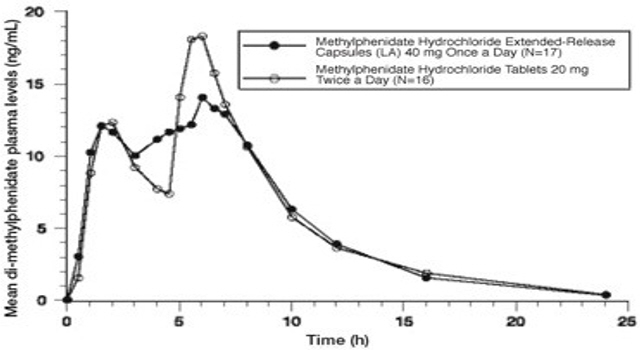
The initial rate of absorption for methylphenidate hydrochloride extended-release capsules (LA) is similar to that of methylphenidate hydrochloride tablets as shown by the similar rate parameters between the 2 formulations, i.e., initial lag time (T lag ), first peak concentration (C max1 ), and time to the first peak (T max1 ), which is reached in 1 to 3 hours. The mean time to the interpeak minimum (T minip ), and time to the second peak (T max2 ) are also similar for methylphenidate hydrochloride extended-release capsules (LA) given once daily and methylphenidate hydrochloride tablets given in 2 doses 4 hours apart (see Figure 1 and Table 1 ), although the ranges observed are greater for methylphenidate hydrochloride extended-release capsules (LA).
Methylphenidate hydrochloride extended-release capsules (LA) given once daily exhibits a lower second peak concentration (C max2 ), higher interpeak minimum concentrations (C minip ), and less peak and trough fluctuations than methylphenidate hydrochloride tablets given in 2 doses given 4 hours apart. This is due to an earlier onset and more prolonged absorption from the delayed-release beads (see Figure 1 and Table 4 ).
Figure 1: Mean Plasma Concentration Time-profile of Methylphenidate After a Single Dose of Methylphenidate Hydrochloride Extended-Release Capsule (LA) 40 mg and Methylphenidate Hydrochloride Tablets 20 mg Given in Two Doses 4 Hours Apart
| Population | Children | Adult Males | ||
|---|---|---|---|---|
| Formulation | Methylphenidate Hydrochloride Tablets | Methylphenidate Hydrochloride Extended-Release Capsules (LA) | Methylphenidate Hydrochloride Tablets | Methylphenidate Hydrochloride Extended-Release Capsules (LA) |
| Dose N | 10 mg & 10 mg 21 | 20 mg 18 | 10 mg & 10 mg 9 | 20 mg 8 |
| T lag (h) | 0.24 ± 0.44 0 – 1 | 0.28 ± 0.46 0 - 1 | 1.0 ± 0.5 0.7 - 1.3 | 0.7 ± 0.2 0.3 - 1.0 |
| T max1 (h) | 1.8 ± 0.6 1 – 3 | 2.0 ± 0.8 1 - 3 | 1.9 ± 0.4 1.3 - 2.7 | 2.0 ± 0.9 1.3 - 4.0 |
| C max1 (ng/mL) | 10.2 ± 4.2 4.2 - 20.2 | 10.3 ± 5.1 5.5 - 26.6 | 4.3 ± 2.3 1.8 - 7.5 | 5.3 ± 0.9 3.8 - 6.9 |
| T minip (h) | 4.0 ± 0.2 4 – 5 | 4.5 ± 1.2 2 - 6 | 3.8 ± 0.4 3.3 - 4.3 | 3.6 ± 0.6 2.7 - 4.3 |
| C minip (ng/mL) | 5.8 ± 2.7 3.1 - 14.4 | 6.1 ± 4.1 2.9 - 21.0 | 1.2 ± 1.4 0.0 - 3.7 | 3.0 ± 0.8 1.7 - 4.0 |
| T max2 (h) | 5.6 ± 0.7 5 – 8 | 6.6 ± 1.5 5 - 11 | 5.9 ± 0.5 5.0 - 6.5 | 5.5 ± 0.8 4.3 - 6.5 |
| C max2 (ng/mL) | 15.3 ± 7.0 6.2 - 32.8 | 10.2 ± 5.9 4.5 - 31.1 | 5.3 ± 1.4 3.6 - 7.2 | 6.2 ± 1.6 3.9 - 8.3 |
| AUC (0-∞) (ng/mL × h-1) | 102.4 ± 54.6 40.5 - 261.6 | 86.6 ± 64.0 N = 15 43.3 - 301.44 | 37.8 ± 21.9 14.3 - 85.3 | 45.8 ± 10.0 34.0 - 61.6 |
| t 1/2 (h) | 2.5 ± 0.8 1.8 - 5.3 | 2.4 ± 0.7 1.5 - 4.0 | 3.5 ± 1.9 1.3 - 7.7 | 3.3 ± 0.4 3.0 - 4.2 |
Effect of Food
Administration times relative to meals and meal composition may need to be individually titrated.
When methylphenidate hydrochloride extended-release capsules (LA) was administered with a high fat breakfast to adults, methylphenidate hydrochloride extended-release capsules (LA) had a longer lag time until absorption began and variable delays in the time until the first peak concentration, the time until the interpeak minimum, and the time until the second peak. The first peak concentration and the extent of absorption were unchanged after food relative to the fasting state, although the second peak was approximately 25% lower. The effect of a high fat lunch was not examined.
There were no differences in the pharmacokinetics of methylphenidate hydrochloride extended-release capsules (LA) when administered with applesauce, compared to administration in the fasting condition. There is no evidence of dose dumping in the presence or absence of food.
Effect of Alcohol
An in vitro study was conducted to explore the effect of alcohol on the release characteristics of methylphenidate from the methylphenidate hydrochloride extended-release capsules (LA) 40 mg dosage form. At an alcohol concentration of 40% there was a 98% release of methylphenidate in the first hour. The results with the 40 mg capsule are considered to be representative of the other available capsule strengths.
Distribution
Binding to plasma proteins is low (10% to 33%). The volume of distribution was 2.65 ± 1.11 L/kg for d- methylphenidate and 1.80 ± 0.91 L/kg for l-methylphenidate.
Elimination
The systemic clearance is 0.40 ± 0.12 L/h/kg for d-methylphenidate and 0.73 ± 0.28 L/h/kg for l-methylphenidate. In studies with methylphenidate hydrochloride extended-release capsules (LA) and methylphenidate hydrochloride tablets in adults, methylphenidate from methylphenidate hydrochloride tablets is eliminated from plasma with an average half-life of about 3.5 hours, (range, 1.3 to 7.7 hours). In children the average half-life is about 2.5 hours, with a range of about 1.5 to 5.0 hours. The rapid half-life in both children and adults may result in un-measurable concentrations between the morning and mid-day doses with methylphenidate hydrochloride tablets. No accumulation of methylphenidate is expected following multiple once a day oral dosing with methylphenidate hydrochloride extended-release capsules (LA). The half-life of ritalinic acid is about 3 to 4 hours.
Metabolism
The absolute oral bioavailability of methylphenidate in children was 22 ± 8% for d-methylphenidate and 5 ± 3% for l- methylphenidate, suggesting pronounced presystemic metabolism. Biotransformation of methylphenidate by the carboxylesterase CES1A1 is rapid and extensive leading to the main, de-esterified metabolite α-phenyl-2-piperidine acetic acid (ritalinic acid), which has little or no pharmacologic activity. Only small amounts of hydroxylated metabolites (e.g., hydroxymethylphenidate and hydroxyritalinic acid) are detectable in plasma. Therapeutic activity is principally due to the parent compound.
Excretion
After oral administration of an immediate release formulation of methylphenidate, 78% to 97% of the dose is excreted in the urine and 1% to 3% in the feces in the form of metabolites within 48 to 96 hours. Only small quantities (less than 1%) of unchanged methylphenidate appear in the urine. Most of the dose is excreted in the urine as ritalinic acid (60% to 86%), the remainder being accounted for by minor metabolite.
Studies in Specific Populations
Male and Female Patients
There were no apparent gender differences in the pharmacokinetics of methylphenidate between healthy male and female adults when administered methylphenidate hydrochloride extended-release capsules (LA).
Racial or Ethnic Groups
There is insufficient experience with the use of methylphenidate hydrochloride extended-release capsules (LA) to detect ethnic variations in pharmacokinetics.
Pediatric Patients
The pharmacokinetics of methylphenidate hydrochloride extended-release capsules (LA) was examined in 18 children with ADHD between 7 and 12 years of age. Fifteen of these children were between 10 and 12 years of age. The time until the between peak minimum, and the time until the second peak were delayed and more variable in children compared to adults. After a 20-mg dose of methylphenidate hydrochloride extended-release capsules (LA), concentrations in children were approximately twice the concentrations observed in 18 to 35 year old adults. This higher exposure is almost completely due to the smaller body size and total volume of distribution in children, as apparent clearance normalized to body weight is independent of age.
Patients with Renal Impairment
Methylphenidate hydrochloride extended-release capsules (LA) has not been studied in renally-impaired patients. Renal impairment is expected to have minimal effect on the pharmacokinetics of methylphenidate since less than 1% of a radiolabeled dose is excreted in the urine as unchanged compound, and the major metabolite (ritalinic acid), has little or no pharmacologic activity.
Patients with Hepatic Impairment
Methylphenidate hydrochloride extended-release capsules (LA) has not been studied in patients with hepatic impairment. Hepatic impairment is expected to have minimal effect on the pharmacokinetics of methylphenidate since it is metabolized primarily to ritalinic acid by nonmicrosomal hydrolytic esterases that are widely distributed throughout the body.
NONCLINICAL TOXICOLOGY
Carcinogenesis, Mutagenesis, and Impairment of Fertility
Carcinogenesis
In a lifetime carcinogenicity study carried out in B6C3F1 mice, methylphenidate caused an increase in hepatocellular adenomas, and in males only, an increase in hepatoblastomas at a daily dose of approximately 60 mg/kg/day. This dose is approximately 2 times the (MRHD) of 60 mg/day given to children on a mg/m 2 basis. Hepatoblastoma is a relatively rare rodent malignant tumor type. There was no increase in total malignant hepatic tumors. The mouse strain used is sensitive to the development of hepatic tumors, and the significance of these results to humans is unknown.
Methylphenidate did not cause any increase in tumors in a lifetime carcinogenicity study carried out in F344 rats; the highest dose used was approximately 45 mg/kg/day, which is approximately 4 times the MRHD (children) on a mg/m 2 basis.
In a 24-week carcinogenicity study in the transgenic mouse strain p53+/-, which is sensitive to genotoxic carcinogens, there was no evidence of carcinogenicity. Male and female mice were fed diets containing the same concentration of methylphenidate as in the lifetime carcinogenicity study; the high-dose groups were exposed to 60 to 74 mg/kg/day of methylphenidate.
Mutagenesis
Methylphenidate was not mutagenic in the in vitro Ames reverse mutation assay, in the in vitro mouse lymphoma cell forward mutation assay, or in the in vitro chromosomal aberration assay using human lymphocytes. Sister chromatid exchanges and chromosome aberrations were increased, indicative of a weak clastogenic response, in an in vitro assay in cultured Chinese Hamster Ovary cells. Methylphenidate was negative in vivo in males and females in the mouse bone marrow micronucleus assay.
Impairment of Fertility
Methylphenidate did not impair fertility in male or female mice that were fed diets containing the drug in an 18-week continuous breeding study. The study was conducted at doses up to 160 mg/kg/day, approximately 10 times the maximum recommended dose of 60 mg/day given to adolescents on a mg/m 2 basis.
CLINICAL STUDIES
Children and Adolescents
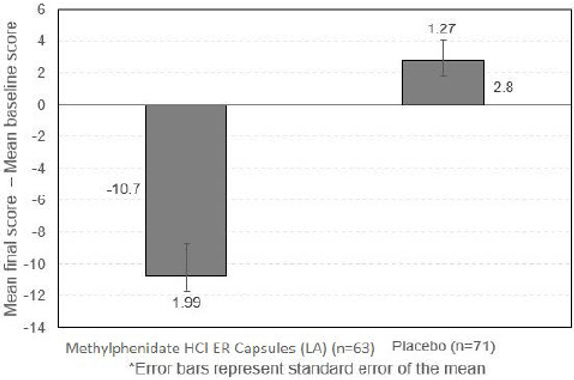
Methylphenidate hydrochloride extended-release capsules (LA) was evaluated in a randomized, double-blind, placebo-controlled, parallel group clinical study in which 134 children, ages 6 to 12, with DSM-IV diagnoses of ADHD received a single morning dose of methylphenidate hydrochloride extended-release capsules (LA)in the range of 10 to 40 mg/day, or placebo, for up to 2 weeks. The doses used were the optimal doses established in a previous individual dose titration phase. In that titration phase, 53 of 164 patients (32%) started on a daily dose of 10 mg and 111 of 164 patients (68%) started on a daily dose of 20 mg or higher. The patient's regular schoolteacher completed the Conners ADHD/DSM-IV Scale for Teachers (CADS-T) at baseline and the end of each week. The CADS-T assesses symptoms of hyperactivity and inattention. The change from baseline of the (CADS-T) scores during the last week of treatment was analyzed as the primary efficacy parameter. Patients treated with methylphenidate hydrochloride extended-release capsules (LA) showed a statistically significant improvement in symptom scores from baseline [Mean (final score - baseline) = -10.7 points)] over patients who received placebo [Mean (final score - baseline) = +2.8 points ]. The lower the final score on the CADS-T scale from baseline, the less severe the disease is. This demonstrates that a single morning dose of methylphenidate hydrochloride extended-release capsules (LA) exerts a treatment effect in ADHD.
| Figure 2: CADS-T Total Subscale - Mean Change From Baseline• |
 |
HOW SUPPLIED/STORAGE AND HANDLING
10 mg white/light green capsules (imprinted mayne 609 on both the body and the cap)
| Bottles of 100 | NDC 51862-609-01 |
20 mg white/white capsules (imprinted mayne 610 on both the body and cap
| Bottles of 100 | NDC 51862-610-01 |
30 mg white/light blue capsules (imprinted mayne 611 on both the body and cap
| Bottles of 100 | NDC 51862-611-01 |
40 mg white/dark blue capsules (imprinted mayne 612 on both the body and cap)
| Bottles of 100 | NDC 51862-612-01 |
60 mg light yellow/dark yellow capsules (imprinted mayne 614 on both the body and cap)
| Bottles of 30 | NDC 51862-614-30 |
Store at 20°C to 25°C (68°F to 77°F); excursions permitted between 15°C to 30°C (59°F and 86°F). [See USP controlled room temperature].
Dispense in tight container (USP).
Disposal
Comply with local laws and regulations on drug disposal of CNS stimulants. Dispose of remaining, unused, or expired methylphenidate hydrochloride extended-release capsules (LA) by a medicine takeback program or by an authorized collector registered with the Drug Enforcement Administration. If no take-back program or authorized collector is available, mix methylphenidate hydrochloride extended-release capsules (LA) with an undesirable, nontoxic substance to make it less appealing to children and pets. Place the mixture in a container, such as a sealed plastic bag and discard methylphenidate hydrochloride extended-release capsules (LA) in the household trash.
Mechanism of Action
Methylphenidate hydrochloride is a CNS stimulant. The mode of therapeutic action in ADHD is not known.
