Oxazepam Prescribing Information
- Concomitant use of benzodiazepines and opioids may result in profound sedation, respiratory depression, coma, and death.
- Reserve concomitant prescribing of these drugs for use in patients for whom alternative treatment options are inadequate.
- Limit dosages and durations to the minimum required.
- Follow patients for signs and symptoms of respiratory depression and sedation[seeandWARNINGSRisks from Concomitant Use with Opioids:Concomitant use of benzodiazepines, including oxazepam, and opioids may result in profound sedation, respiratory depression, coma, and death. Because of these risks, reserve concomitant prescribing of these drugs in patients for whom alternative treatment options are inadequate.
Observational studies have demonstrated that concomitant use of opioid analgesics and benzodiazepines increases the risk of drug-related mortality compared to use of opioids alone. If a decision is made to prescribe oxazepam concomitantly with opioids, prescribe the lowest effective dosages and minimum durations of concomitant use, and follow patients closely for signs and symptoms of respiratory depression and sedation. In patients already receiving an opioid analgesic, prescribe a lower initial dose of oxazepam than indicated in the absence of an opioid and titrate based on clinical response. If an opioid is initiated in a patient already taking oxazepam, prescribe a lower initial dose of the opioid and titrate based upon clinical response.
Advise both patients and caregivers about the risks of respiratory depression and sedation when oxazepam is used with opioids. Advise patients not to drive or operate heavy machinery until the effects of concomitant use with the opioid have been determined
[seePRECAUTIONS:Drug Interactions].Abuse, Misuse, and Addiction:The use of benzodiazepines, including oxazepam, exposes users to the risks of abuse, misuse, and addiction, which can lead to overdose or death. Abuse and misuse of benzodiazepines often (but not always) involve the use of doses greater than the maximum recommended dosage and commonly involve concomitant use of other medications, alcohol, and/or illicit substances, which is associated with an increased frequency of serious adverse outcomes, including respiratory depression, overdose, or death[see.DRUG ABUSE AND DEPENDENCE: Abuse]Before prescribing oxazepam and throughout treatment, assess each patient’s risk for abuse, misuse, and addiction (e.g., using a standardized screening tool). Use of oxazepam, particularly in patients at elevated risk, necessitates counseling about the risks and proper use of oxazepam along with monitoring for signs and symptoms of abuse, misuse, and addiction. Prescribe the lowest effective dosage; avoid or minimize concomitant use of CNS depressants and other substances associated with abuse, misuse, and addiction (e.g., opioid analgesics, stimulants); and advise patients on the proper disposal of unused drug. If a substance use disorder is suspected, evaluate the patient and institute (or refer them for) early treatment, as appropriate.
Dependence and Withdrawal Reactions:To reduce the risk of withdrawal reactions, use a gradual taper to discontinue oxazepam or reduce the dosage (a patient-specific plan should be used to taper the dose)[see.DOSAGE AND ADMINISTRATION: Discontinuation or Dosage Reduction of Oxazepam]Patients at an increased risk of withdrawal adverse reactions after benzodiazepine discontinuation or rapid dosage reduction include those who take higher dosages, and those who have had longer durations of use.
Acute Withdrawal ReactionsThe continued use of benzodiazepines, including oxazepam, may lead to clinically significant physical dependence. Abrupt discontinuation or rapid dosage reduction of oxazepam after continued use, or administration of flumazenil (a benzodiazepine antagonist) may precipitate acute withdrawal reactions, which can be life-threatening (e.g., seizures)
[seeDRUG ABUSE AND DEPENDENCE: Dependence].Protracted Withdrawal SyndromeIn some cases, benzodiazepine users have developed a protracted withdrawal syndrome with withdrawal symptoms lasting weeks to more than 12 months
[see.DRUG ABUSE AND DEPENDENCE: Dependence]As with other CNS-acting drugs, patients should be cautioned against driving automobiles or operating dangerous machinery until it is known that they do not become drowsy or dizzy on oxazepam therapy.
Patients should be warned that the effects of alcohol or other CNS-depressant drugs may be additive to those of Oxazepam, possibly requiring adjustment of dosage or elimination of such agents.
Neonatal Sedation and Withdrawal SyndromeUse of oxazepam late in pregnancy can result in sedation (respiratory depression, lethargy, hypotonia) and/or withdrawal symptoms (hyperreflexia, irritability, restlessness, tremors, inconsolable crying, and feeding difficulties) in the neonate
[seePRECAUTIONS, Pregnancy].Monitor neonates exposed to oxazepam during pregnancy or labor for signs of sedation and monitor neonates exposed to oxazepam during pregnancy for signs of withdrawal; manage these neonates accordingly..]PRECAUTIONSGeneralAlthough hypotension has occurred only rarely, oxazepam should be administered with caution to patients in whom a drop in blood pressure might lead to cardiac complications. This is particularly true in the elderly patient.
Information for PatientsAdvise the patient to read the FDA-approved patient labeling (Medication Guide).
Risks from Concomitant Use with OpioidsAdvise both patients and caregivers about the risks of potentially fatal respiratory depression and sedation when oxazepam is used with opioids and not to use such drugs concomitantly unless supervised by a health care provider. Advise patients not to drive or operate heavy machinery until the effects of concomitant use with the opioid have been determined
[seeandWARNINGS: Risks from Concomitant Use with OpioidsPRECAUTIONS: Drug Interactions].Abuse, Misuse, and AddictionInform patients that the use of oxazepam, even at recommended dosages, exposes users to risks of abuse, misuse, and addiction, which can lead to overdose and death, especially when used in combination with other medications (e.g., opioid analgesics), alcohol, and/or illicit substances. Inform patients about the signs and symptoms of benzodiazepine abuse, misuse, and addiction; to seek medical help if they develop these signs and/or symptoms; and on the proper disposal of unused drug
[seeandWARNINGS: Abuse, Misuse, and AddictionDRUG ABUSE AND DEPENDENCE].Withdrawal ReactionsInform patients that the continued use of oxazepam may lead to clinically significant physical dependence and that abrupt discontinuation or rapid dosage reduction of oxazepam may precipitate acute withdrawal reactions, which can be life-threatening. Inform patients that in some cases, patients taking benzodiazepines have developed a protracted withdrawal syndrome with withdrawal symptoms lasting weeks to more than 12 months. Instruct patients that discontinuation or dosage reduction of oxazepam may require a slow taper
[seeandWARNINGS: Dependence and Withdrawal ReactionsDRUG ABUSE AND DEPENDENCE].PregnancyAdvise pregnant females that use of oxazepam late in pregnancy can result in sedation (respiratory depression, lethargy, hypotonia) and/or withdrawal symptoms (hyperreflexia, irritability, restlessness, tremors, inconsolable crying, and feeding difficulties) in newborns
[seeWarnings, Neonatal Sedation and WithdrawalSyndromeand Precautions, Pregnancy]. Instruct patients to inform their healthcare provider if they are pregnant.Advise patients that there is a pregnancy exposure registry that monitors pregnancy outcomes in women exposed to oxazepam during pregnancy
[seePrecautions, Pregnancy].NursingInstruct patients to notify their healthcare provider if they are breastfeeding or intend to breastfeed. Instruct breastfeeding patients using oxazepam to monitor infants for excessive sedation, poor feeding and poor weight gain, and to seek medical attention if they notice these signs
[seePrecautions, Nursing Mothers].Drug InteractionsThe concomitant use of benzodiazepines and opioids increases the risk of respiratory depression because of actions at different receptor sites in the CNS that control respiration. Benzodiazepines interact at GABAA sites and opioids interact primarily at mu receptors. When benzodiazepines and opioids are combined, the potential for benzodiazepines to significantly worsen opioid-related respiratory depression exists. Limit dosage and duration of concomitant use of benzodiazepines and opioids, and monitor patients closely for respiratory depression and sedation.
PregnancyPregnancy Exposure Registry
There is a pregnancy registry that monitors pregnancy outcomes in women exposed to psychiatric medications, including oxazepam during pregnancy. Healthcare providers are encouraged to register patients by calling the National Pregnancy Registry for Psychiatric Medications at 1-866-961-2388 or visiting online at https://womensmentalhealth.org/pregnancyregistry/.
Risk Summary
Neonates born to mothers using benzodiazepines late in pregnancy have been reported to experience symptoms of sedation and/or neonatal withdrawal
[seeWARNINGS, Neonatal Sedation and Withdrawal SyndromeandPRECAUTIONS: Clinical Considerations].Available data from published observational studies of pregnant women exposed to benzodiazepines do not report a clear association with benzodiazepines and major birth defects
[see Data].The estimated background risk of major birth defects and miscarriage for the indicated population is unknown. All pregnancies have a background risk of birth defect, loss, or other adverse outcomes. In the U.S. general population, the estimated risk of major birth defects and of miscarriage in clinically recognized pregnancies is 2% to 4% and 15% to 20%, respectively.
Clinical Considerations
Fetal/Neonatal Adverse ReactionsBenzodiazepines cross the placenta and may produce respiratory depression, hypotonia and sedation in neonates. Monitor neonates exposed to oxazepam during pregnancy or labor for signs of sedation, respiratory depression, hypotonia, and feeding problems. Monitor neonates exposed to oxazepam during pregnancy for signs of withdrawal. Manage these neonates accordingly
[seeWARNINGS, Neonatal Sedation and Withdrawal Syndrome].Data
Human DataPublished data from observational studies on the use of benzodiazepines during pregnancy do not report a clear association with benzodiazepines and major birth defects. Although early studies reported an increased risk of congenital malformations with diazepam and chlordiazepoxide, there was no consistent pattern noted. In addition, the majority of more recent case-control and cohort studies of benzodiazepine use during pregnancy, which were adjusted for confounding exposures to alcohol, tobacco and other medications, have not confirmed these findings.
Animal DataReproductive studies in animals were performed in mice, rats, and two strains of rabbits. Occasional anomalies (reduction of tarsals, tibia, metatarsals, malrotated limbs, gastroschisis, malformed skull, and microphthalmia) were seen in drug-treated rabbits without relationship to dosage. Although all of these anomalies were not present in the concurrent control group, they have been reported to occur randomly in historical controls. At doses of 40 mg/kg and higher, there was evidence of fetal resorption and increased fetal loss in rabbits which was not seen at lower doses.
Nursing MothersRisk Summary
Oxazepam is present in breast milk. There are reports of sedation, poor feeding and poor weight gain in infants exposed to benzodiazepines through breast milk
[see Clinical Considerations].The effects of oxazepam on milk production are unknown. The developmental and health benefits of breastfeeding should be considered along with the mother’s clinical need for oxazepam and any potential adverse effects on the breastfed infant from oxazepam or from the underlying maternal condition.Clinical Considerations
Infants exposed to oxazepam through breast milk should be monitored for sedation, poor feeding and poor weight gain.
Pediatric UseSafety and effectiveness in pediatric patients under 6 years of age have not been established. Absolute dosage for pediatric patients 6 to 12 years of age is not established.
Geriatric UseClinical studies of oxazepam were not adequate to determine whether subjects aged 65 and over respond differently than younger subjects. Age (less than 80 years old) does not appear to have a clinically significant effect on oxazepam kinetics
[seeCLINICAL PHARMACOLOGY].Clinical circumstances, some of which may be more common in the elderly, such as hepatic or renal impairment, should be considered. Greater sensitivity of some older individuals to the effects of oxazepam (e.g., sedation, hypotension, paradoxical excitation) cannot be ruled out
[seeandPRECAUTIONS: GeneralIn general, dose selection for oxazepam for elderly patients should be cautious, usually starting at the lower end of the dosing rangeADVERSE REACTIONS].[see.DOSAGE AND ADMINISTRATION] - The use of benzodiazepines, including oxazepam, exposes users to risks of abuse, misuse, and addiction, which can lead to overdose or death. Abuse and misuse of benzodiazepines commonly involve concomitant use of other medications, alcohol, and/or illicit substances, which is associated with an increased frequency of serious adverse outcomes. Before prescribing oxazepam and throughout treatment, assess each patient’s risk for abuse, misuse, and addiction[see.]PRECAUTIONSGeneral
Although hypotension has occurred only rarely, oxazepam should be administered with caution to patients in whom a drop in blood pressure might lead to cardiac complications. This is particularly true in the elderly patient.
Information for PatientsAdvise the patient to read the FDA-approved patient labeling (Medication Guide).
Risks from Concomitant Use with OpioidsAdvise both patients and caregivers about the risks of potentially fatal respiratory depression and sedation when oxazepam is used with opioids and not to use such drugs concomitantly unless supervised by a health care provider. Advise patients not to drive or operate heavy machinery until the effects of concomitant use with the opioid have been determined
[seeandWARNINGS: Risks from Concomitant Use with OpioidsPRECAUTIONS: Drug Interactions].Abuse, Misuse, and AddictionInform patients that the use of oxazepam, even at recommended dosages, exposes users to risks of abuse, misuse, and addiction, which can lead to overdose and death, especially when used in combination with other medications (e.g., opioid analgesics), alcohol, and/or illicit substances. Inform patients about the signs and symptoms of benzodiazepine abuse, misuse, and addiction; to seek medical help if they develop these signs and/or symptoms; and on the proper disposal of unused drug
[seeandWARNINGS: Abuse, Misuse, and AddictionDRUG ABUSE AND DEPENDENCE].Withdrawal ReactionsInform patients that the continued use of oxazepam may lead to clinically significant physical dependence and that abrupt discontinuation or rapid dosage reduction of oxazepam may precipitate acute withdrawal reactions, which can be life-threatening. Inform patients that in some cases, patients taking benzodiazepines have developed a protracted withdrawal syndrome with withdrawal symptoms lasting weeks to more than 12 months. Instruct patients that discontinuation or dosage reduction of oxazepam may require a slow taper
[seeandWARNINGS: Dependence and Withdrawal ReactionsDRUG ABUSE AND DEPENDENCE].PregnancyAdvise pregnant females that use of oxazepam late in pregnancy can result in sedation (respiratory depression, lethargy, hypotonia) and/or withdrawal symptoms (hyperreflexia, irritability, restlessness, tremors, inconsolable crying, and feeding difficulties) in newborns
[seeWarnings, Neonatal Sedation and WithdrawalSyndromeand Precautions, Pregnancy]. Instruct patients to inform their healthcare provider if they are pregnant.Advise patients that there is a pregnancy exposure registry that monitors pregnancy outcomes in women exposed to oxazepam during pregnancy
[seePrecautions, Pregnancy].NursingInstruct patients to notify their healthcare provider if they are breastfeeding or intend to breastfeed. Instruct breastfeeding patients using oxazepam to monitor infants for excessive sedation, poor feeding and poor weight gain, and to seek medical attention if they notice these signs
[seePrecautions, Nursing Mothers].Drug InteractionsThe concomitant use of benzodiazepines and opioids increases the risk of respiratory depression because of actions at different receptor sites in the CNS that control respiration. Benzodiazepines interact at GABAA sites and opioids interact primarily at mu receptors. When benzodiazepines and opioids are combined, the potential for benzodiazepines to significantly worsen opioid-related respiratory depression exists. Limit dosage and duration of concomitant use of benzodiazepines and opioids, and monitor patients closely for respiratory depression and sedation.
PregnancyPregnancy Exposure Registry
There is a pregnancy registry that monitors pregnancy outcomes in women exposed to psychiatric medications, including oxazepam during pregnancy. Healthcare providers are encouraged to register patients by calling the National Pregnancy Registry for Psychiatric Medications at 1-866-961-2388 or visiting online at https://womensmentalhealth.org/pregnancyregistry/.
Risk Summary
Neonates born to mothers using benzodiazepines late in pregnancy have been reported to experience symptoms of sedation and/or neonatal withdrawal
[seeWARNINGS, Neonatal Sedation and Withdrawal SyndromeandPRECAUTIONS: Clinical Considerations].Available data from published observational studies of pregnant women exposed to benzodiazepines do not report a clear association with benzodiazepines and major birth defects
[see Data].The estimated background risk of major birth defects and miscarriage for the indicated population is unknown. All pregnancies have a background risk of birth defect, loss, or other adverse outcomes. In the U.S. general population, the estimated risk of major birth defects and of miscarriage in clinically recognized pregnancies is 2% to 4% and 15% to 20%, respectively.
Clinical Considerations
Fetal/Neonatal Adverse ReactionsBenzodiazepines cross the placenta and may produce respiratory depression, hypotonia and sedation in neonates. Monitor neonates exposed to oxazepam during pregnancy or labor for signs of sedation, respiratory depression, hypotonia, and feeding problems. Monitor neonates exposed to oxazepam during pregnancy for signs of withdrawal. Manage these neonates accordingly
[seeWARNINGS, Neonatal Sedation and Withdrawal Syndrome].Data
Human DataPublished data from observational studies on the use of benzodiazepines during pregnancy do not report a clear association with benzodiazepines and major birth defects. Although early studies reported an increased risk of congenital malformations with diazepam and chlordiazepoxide, there was no consistent pattern noted. In addition, the majority of more recent case-control and cohort studies of benzodiazepine use during pregnancy, which were adjusted for confounding exposures to alcohol, tobacco and other medications, have not confirmed these findings.
Animal DataReproductive studies in animals were performed in mice, rats, and two strains of rabbits. Occasional anomalies (reduction of tarsals, tibia, metatarsals, malrotated limbs, gastroschisis, malformed skull, and microphthalmia) were seen in drug-treated rabbits without relationship to dosage. Although all of these anomalies were not present in the concurrent control group, they have been reported to occur randomly in historical controls. At doses of 40 mg/kg and higher, there was evidence of fetal resorption and increased fetal loss in rabbits which was not seen at lower doses.
Nursing MothersRisk Summary
Oxazepam is present in breast milk. There are reports of sedation, poor feeding and poor weight gain in infants exposed to benzodiazepines through breast milk
[see Clinical Considerations].The effects of oxazepam on milk production are unknown. The developmental and health benefits of breastfeeding should be considered along with the mother’s clinical need for oxazepam and any potential adverse effects on the breastfed infant from oxazepam or from the underlying maternal condition.Clinical Considerations
Infants exposed to oxazepam through breast milk should be monitored for sedation, poor feeding and poor weight gain.
Pediatric UseSafety and effectiveness in pediatric patients under 6 years of age have not been established. Absolute dosage for pediatric patients 6 to 12 years of age is not established.
Geriatric UseClinical studies of oxazepam were not adequate to determine whether subjects aged 65 and over respond differently than younger subjects. Age (less than 80 years old) does not appear to have a clinically significant effect on oxazepam kinetics
[seeCLINICAL PHARMACOLOGY].Clinical circumstances, some of which may be more common in the elderly, such as hepatic or renal impairment, should be considered. Greater sensitivity of some older individuals to the effects of oxazepam (e.g., sedation, hypotension, paradoxical excitation) cannot be ruled out
[seeandPRECAUTIONS: GeneralIn general, dose selection for oxazepam for elderly patients should be cautious, usually starting at the lower end of the dosing rangeADVERSE REACTIONS].[see.DOSAGE AND ADMINISTRATION] - The continued use of benzodiazepines, including oxazepam, may lead to clinically significant physical dependence. The risks of dependence and withdrawal increase with longer treatment duration and higher daily dose. Abrupt discontinuation or rapid dosage reduction of oxazepam after continued use may precipitate acute withdrawal reactions, which can be life-threatening. To reduce the risk of withdrawal reactions, use a gradual taper to discontinue oxazepam or reduce the dosage[seeandDOSAGE AND ADMINISTRATION
Because of the flexibility of this product and the range of emotional disturbances responsive to it, dosage should be individualized for maximum beneficial effects.
OxazepamUsual DoseMild-to-moderate anxiety, with associated tension, irritability, agitation, or related symptoms of functional origin or secondary to organic disease. 10 to 15 mg, 3 or 4 times daily Severe anxiety syndromes, agitation, or anxiety associated with depression. 15 to 30 mg, 3 or 4 times daily Older patients with anxiety, tension, irritability and agitation. Initial dosage: 10 mg, 3 times daily.
If necessary, increase cautiously to 15 mg, 3 or 4 times daily.Alcoholics with acute inebriation, tremulousness, or anxiety on withdrawal. 15 to 30 mg, 3 or 4 times daily This product is not indicated in pediatric patients under 6 years of age. Absolute dosage for pediatric patients 6 to 12 years of age is not established.
Discontinuation or Dosage Reduction of OxazepamTo reduce the risk of withdrawal reactions, use a gradual taper to discontinue oxazepam or reduce the dosage. If a patient develops withdrawal reactions, consider pausing the taper or increasing the dosage to the previous tapered dosage level. Subsequently decrease the dosage more slowly
[seeandWARNINGS: Dependence and Withdrawal ReactionsDRUG ABUSE AND DEPENDENCE: Dependence].].WARNINGSRisks from Concomitant Use with Opioids:Concomitant use of benzodiazepines, including oxazepam, and opioids may result in profound sedation, respiratory depression, coma, and death. Because of these risks, reserve concomitant prescribing of these drugs in patients for whom alternative treatment options are inadequate.Observational studies have demonstrated that concomitant use of opioid analgesics and benzodiazepines increases the risk of drug-related mortality compared to use of opioids alone. If a decision is made to prescribe oxazepam concomitantly with opioids, prescribe the lowest effective dosages and minimum durations of concomitant use, and follow patients closely for signs and symptoms of respiratory depression and sedation. In patients already receiving an opioid analgesic, prescribe a lower initial dose of oxazepam than indicated in the absence of an opioid and titrate based on clinical response. If an opioid is initiated in a patient already taking oxazepam, prescribe a lower initial dose of the opioid and titrate based upon clinical response.
Advise both patients and caregivers about the risks of respiratory depression and sedation when oxazepam is used with opioids. Advise patients not to drive or operate heavy machinery until the effects of concomitant use with the opioid have been determined
[seePRECAUTIONS:Drug Interactions].Abuse, Misuse, and Addiction:The use of benzodiazepines, including oxazepam, exposes users to the risks of abuse, misuse, and addiction, which can lead to overdose or death. Abuse and misuse of benzodiazepines often (but not always) involve the use of doses greater than the maximum recommended dosage and commonly involve concomitant use of other medications, alcohol, and/or illicit substances, which is associated with an increased frequency of serious adverse outcomes, including respiratory depression, overdose, or death[see.DRUG ABUSE AND DEPENDENCE: Abuse]Before prescribing oxazepam and throughout treatment, assess each patient’s risk for abuse, misuse, and addiction (e.g., using a standardized screening tool). Use of oxazepam, particularly in patients at elevated risk, necessitates counseling about the risks and proper use of oxazepam along with monitoring for signs and symptoms of abuse, misuse, and addiction. Prescribe the lowest effective dosage; avoid or minimize concomitant use of CNS depressants and other substances associated with abuse, misuse, and addiction (e.g., opioid analgesics, stimulants); and advise patients on the proper disposal of unused drug. If a substance use disorder is suspected, evaluate the patient and institute (or refer them for) early treatment, as appropriate.
Dependence and Withdrawal Reactions:To reduce the risk of withdrawal reactions, use a gradual taper to discontinue oxazepam or reduce the dosage (a patient-specific plan should be used to taper the dose)[see.DOSAGE AND ADMINISTRATION: Discontinuation or Dosage Reduction of Oxazepam]Patients at an increased risk of withdrawal adverse reactions after benzodiazepine discontinuation or rapid dosage reduction include those who take higher dosages, and those who have had longer durations of use.
Acute Withdrawal ReactionsThe continued use of benzodiazepines, including oxazepam, may lead to clinically significant physical dependence. Abrupt discontinuation or rapid dosage reduction of oxazepam after continued use, or administration of flumazenil (a benzodiazepine antagonist) may precipitate acute withdrawal reactions, which can be life-threatening (e.g., seizures)
[seeDRUG ABUSE AND DEPENDENCE: Dependence].Protracted Withdrawal SyndromeIn some cases, benzodiazepine users have developed a protracted withdrawal syndrome with withdrawal symptoms lasting weeks to more than 12 months
[see.DRUG ABUSE AND DEPENDENCE: Dependence]As with other CNS-acting drugs, patients should be cautioned against driving automobiles or operating dangerous machinery until it is known that they do not become drowsy or dizzy on oxazepam therapy.
Patients should be warned that the effects of alcohol or other CNS-depressant drugs may be additive to those of Oxazepam, possibly requiring adjustment of dosage or elimination of such agents.
Neonatal Sedation and Withdrawal SyndromeUse of oxazepam late in pregnancy can result in sedation (respiratory depression, lethargy, hypotonia) and/or withdrawal symptoms (hyperreflexia, irritability, restlessness, tremors, inconsolable crying, and feeding difficulties) in the neonate
[seePRECAUTIONS, Pregnancy].Monitor neonates exposed to oxazepam during pregnancy or labor for signs of sedation and monitor neonates exposed to oxazepam during pregnancy for signs of withdrawal; manage these neonates accordingly.
Oxazepam capsules are indicated for the management of anxiety disorders or for the short-term relief of the symptoms of anxiety. Anxiety or tension associated with the stress of everyday life usually does not require treatment with an anxiolytic.
Anxiety associated with depression is also responsive to oxazepam therapy.
This product has been found particularly useful in the management of anxiety, tension, agitation and irritability in older patients.
Alcoholics with acute tremulousness, inebriation, or with anxiety associated with alcohol withdrawal are responsive to therapy.
The effectiveness of oxazepam in long-term use, that is, more than 4 months, has not been assessed by systematic clinical studies. The physician should periodically reassess the usefulness of the drug for the individual patient.
Because of the flexibility of this product and the range of emotional disturbances responsive to it, dosage should be individualized for maximum beneficial effects.
Oxazepam | Usual Dose |
| Mild-to-moderate anxiety, with associated tension, irritability, agitation, or related symptoms of functional origin or secondary to organic disease. | 10 to 15 mg, 3 or 4 times daily |
| Severe anxiety syndromes, agitation, or anxiety associated with depression. | 15 to 30 mg, 3 or 4 times daily |
| Older patients with anxiety, tension, irritability and agitation. | Initial dosage: 10 mg, 3 times daily. If necessary, increase cautiously to 15 mg, 3 or 4 times daily. |
| Alcoholics with acute inebriation, tremulousness, or anxiety on withdrawal. | 15 to 30 mg, 3 or 4 times daily |
This product is not indicated in pediatric patients under 6 years of age. Absolute dosage for pediatric patients 6 to 12 years of age is not established.
To reduce the risk of withdrawal reactions, use a gradual taper to discontinue oxazepam or reduce the dosage. If a patient develops withdrawal reactions, consider pausing the taper or increasing the dosage to the previous tapered dosage level. Subsequently decrease the dosage more slowly
Observational studies have demonstrated that concomitant use of opioid analgesics and benzodiazepines increases the risk of drug-related mortality compared to use of opioids alone. If a decision is made to prescribe oxazepam concomitantly with opioids, prescribe the lowest effective dosages and minimum durations of concomitant use, and follow patients closely for signs and symptoms of respiratory depression and sedation. In patients already receiving an opioid analgesic, prescribe a lower initial dose of oxazepam than indicated in the absence of an opioid and titrate based on clinical response. If an opioid is initiated in a patient already taking oxazepam, prescribe a lower initial dose of the opioid and titrate based upon clinical response.
Advise both patients and caregivers about the risks of respiratory depression and sedation when oxazepam is used with opioids. Advise patients not to drive or operate heavy machinery until the effects of concomitant use with the opioid have been determined
Before prescribing oxazepam and throughout treatment, assess each patient’s risk for abuse, misuse, and addiction (e.g., using a standardized screening tool). Use of oxazepam, particularly in patients at elevated risk, necessitates counseling about the risks and proper use of oxazepam along with monitoring for signs and symptoms of abuse, misuse, and addiction. Prescribe the lowest effective dosage; avoid or minimize concomitant use of CNS depressants and other substances associated with abuse, misuse, and addiction (e.g., opioid analgesics, stimulants); and advise patients on the proper disposal of unused drug. If a substance use disorder is suspected, evaluate the patient and institute (or refer them for) early treatment, as appropriate.
Patients at an increased risk of withdrawal adverse reactions after benzodiazepine discontinuation or rapid dosage reduction include those who take higher dosages, and those who have had longer durations of use.
The continued use of benzodiazepines, including oxazepam, may lead to clinically significant physical dependence. Abrupt discontinuation or rapid dosage reduction of oxazepam after continued use, or administration of flumazenil (a benzodiazepine antagonist) may precipitate acute withdrawal reactions, which can be life-threatening (e.g., seizures)
In some cases, benzodiazepine users have developed a protracted withdrawal syndrome with withdrawal symptoms lasting weeks to more than 12 months
As with other CNS-acting drugs, patients should be cautioned against driving automobiles or operating dangerous machinery until it is known that they do not become drowsy or dizzy on oxazepam therapy.
Patients should be warned that the effects of alcohol or other CNS-depressant drugs may be additive to those of Oxazepam, possibly requiring adjustment of dosage or elimination of such agents.
Use of oxazepam late in pregnancy can result in sedation (respiratory depression, lethargy, hypotonia) and/or withdrawal symptoms (hyperreflexia, irritability, restlessness, tremors, inconsolable crying, and feeding difficulties) in the neonate
Observational studies have demonstrated that concomitant use of opioid analgesics and benzodiazepines increases the risk of drug-related mortality compared to use of opioids alone. If a decision is made to prescribe oxazepam concomitantly with opioids, prescribe the lowest effective dosages and minimum durations of concomitant use, and follow patients closely for signs and symptoms of respiratory depression and sedation. In patients already receiving an opioid analgesic, prescribe a lower initial dose of oxazepam than indicated in the absence of an opioid and titrate based on clinical response. If an opioid is initiated in a patient already taking oxazepam, prescribe a lower initial dose of the opioid and titrate based upon clinical response.
Advise both patients and caregivers about the risks of respiratory depression and sedation when oxazepam is used with opioids. Advise patients not to drive or operate heavy machinery until the effects of concomitant use with the opioid have been determined
Before prescribing oxazepam and throughout treatment, assess each patient’s risk for abuse, misuse, and addiction (e.g., using a standardized screening tool). Use of oxazepam, particularly in patients at elevated risk, necessitates counseling about the risks and proper use of oxazepam along with monitoring for signs and symptoms of abuse, misuse, and addiction. Prescribe the lowest effective dosage; avoid or minimize concomitant use of CNS depressants and other substances associated with abuse, misuse, and addiction (e.g., opioid analgesics, stimulants); and advise patients on the proper disposal of unused drug. If a substance use disorder is suspected, evaluate the patient and institute (or refer them for) early treatment, as appropriate.
Patients at an increased risk of withdrawal adverse reactions after benzodiazepine discontinuation or rapid dosage reduction include those who take higher dosages, and those who have had longer durations of use.
The continued use of benzodiazepines, including oxazepam, may lead to clinically significant physical dependence. Abrupt discontinuation or rapid dosage reduction of oxazepam after continued use, or administration of flumazenil (a benzodiazepine antagonist) may precipitate acute withdrawal reactions, which can be life-threatening (e.g., seizures)
In some cases, benzodiazepine users have developed a protracted withdrawal syndrome with withdrawal symptoms lasting weeks to more than 12 months
As with other CNS-acting drugs, patients should be cautioned against driving automobiles or operating dangerous machinery until it is known that they do not become drowsy or dizzy on oxazepam therapy.
Patients should be warned that the effects of alcohol or other CNS-depressant drugs may be additive to those of Oxazepam, possibly requiring adjustment of dosage or elimination of such agents.
Use of oxazepam late in pregnancy can result in sedation (respiratory depression, lethargy, hypotonia) and/or withdrawal symptoms (hyperreflexia, irritability, restlessness, tremors, inconsolable crying, and feeding difficulties) in the neonate
Oxazepam is a schedule IV controlled substance.
Oxazepam is a benzodiazepine and a CNS depressant with a potential for abuse and addiction. Abuse is the intentional, nontherapeutic use of a drug, even once, for its desirable psychological or physiological effects. Misuse is the intentional use, for therapeutic purposes, of a drug by an individual in a way other than prescribed by a health care provider or for whom it was not prescribed. Drug addiction is a cluster of behavioral, cognitive, and physiological phenomena that may include a strong desire to take the drug, difficulties in controlling drug use (e.g., continuing drug use despite harmful consequences, giving a higher priority to drug use than other activities and obligations), and possible tolerance or physical dependence. Even taking benzodiazepines as prescribed may put patients at risk for abuse and misuse of their medication. Abuse and misuse may lead to addiction.
Abuse and misuse of benzodiazepines often (but not always) involve the use of doses greater than the maximum recommended dosage and commonly involve concomitant use of other medications, alcohol, and/or illicit substances, which is associated with an increased frequency of serious adverse outcomes, including respiratory depression, overdose, or death. Benzodiazepines are often sought by individuals who abuse drugs and other substances, and by individuals with addictive disorders
The following adverse reactions have occurred with benzodiazepine abuse and/or misuse: abdominal pain, amnesia, anorexia, anxiety, aggression, ataxia, blurred vision, confusion, depression, disinhibition, disorientation, dizziness, euphoria, impaired concentration and memory, indigestion, irritability, muscle pain, slurred speech, tremors, and vertigo.
The following severe adverse reactions have occurred with benzodiazepine abuse and/or misuse: delirium, paranoia, suicidal ideation and behavior, seizures, coma, breathing difficulty, and death. Death is more often associated with polysubstance use (especially benzodiazepines with other CNS depressants such as opioids and alcohol).
Oxazepam may produce physical dependence from continued therapy. Physical dependence is a state that develops as a result of physiological adaptation in response to repeated drug use, manifested by withdrawal signs and symptoms after abrupt discontinuation or a significant dose reduction of a drug. Abrupt discontinuation or rapid dosage reduction of benzodiazepines or administration of flumazenil, a benzodiazepine antagonist, may precipitate acute withdrawal reactions, including seizures, which can be life-threatening. Patients at an increased risk of withdrawal adverse reactions after benzodiazepine discontinuation or rapid dosage reduction include those who take higher dosages (i.e., higher and/or more frequent doses) and those who have had longer durations of use
To reduce the risk of withdrawal reactions, use a gradual taper to discontinue oxazepam or reduce the dosage
Acute withdrawal signs and symptoms associated with benzodiazepines have included abnormal involuntary movements, anxiety, blurred vision, depersonalization, depression, derealization, dizziness, fatigue, gastrointestinal adverse reactions (e.g., nausea, vomiting, diarrhea, weight loss, decreased appetite), headache, hyperacusis, hypertension, irritability, insomnia, memory impairment, muscle pain and stiffness, panic attacks, photophobia, restlessness, tachycardia, and tremor. More severe acute withdrawal signs and symptoms, including life-threatening reactions, have included catatonia, convulsions, delirium tremens, depression, hallucinations, mania, psychosis, seizures, and suicidality.
Protracted withdrawal syndrome associated with benzodiazepines is characterized by anxiety, cognitive impairment, depression, insomnia, formication, motor symptoms (e.g., weakness, tremor, muscle twitches), paresthesia, and tinnitus that persists beyond 4 to 6 weeks after initial benzodiazepine withdrawal. Protracted withdrawal symptoms may last weeks to more than 12 months. As a result, there may be difficulty in differentiating withdrawal symptoms from potential re-emergence or continuation of symptoms for which the benzodiazepine was being used.
Tolerance to oxazepam may develop from continued therapy. Tolerance is a physiological state characterized by a reduced response to a drug after repeated administration (i.e., a higher dose of a drug is required to produce the same effect that was once obtained at a lower dose). Tolerance to the therapeutic effect of oxazepam may develop; however, little tolerance develops to the amnestic reactions and other cognitive impairments caused by benzodiazepines.
Oxazepam is a schedule IV controlled substance.
Oxazepam is a benzodiazepine and a CNS depressant with a potential for abuse and addiction. Abuse is the intentional, nontherapeutic use of a drug, even once, for its desirable psychological or physiological effects. Misuse is the intentional use, for therapeutic purposes, of a drug by an individual in a way other than prescribed by a health care provider or for whom it was not prescribed. Drug addiction is a cluster of behavioral, cognitive, and physiological phenomena that may include a strong desire to take the drug, difficulties in controlling drug use (e.g., continuing drug use despite harmful consequences, giving a higher priority to drug use than other activities and obligations), and possible tolerance or physical dependence. Even taking benzodiazepines as prescribed may put patients at risk for abuse and misuse of their medication. Abuse and misuse may lead to addiction.
Abuse and misuse of benzodiazepines often (but not always) involve the use of doses greater than the maximum recommended dosage and commonly involve concomitant use of other medications, alcohol, and/or illicit substances, which is associated with an increased frequency of serious adverse outcomes, including respiratory depression, overdose, or death. Benzodiazepines are often sought by individuals who abuse drugs and other substances, and by individuals with addictive disorders
The following adverse reactions have occurred with benzodiazepine abuse and/or misuse: abdominal pain, amnesia, anorexia, anxiety, aggression, ataxia, blurred vision, confusion, depression, disinhibition, disorientation, dizziness, euphoria, impaired concentration and memory, indigestion, irritability, muscle pain, slurred speech, tremors, and vertigo.
The following severe adverse reactions have occurred with benzodiazepine abuse and/or misuse: delirium, paranoia, suicidal ideation and behavior, seizures, coma, breathing difficulty, and death. Death is more often associated with polysubstance use (especially benzodiazepines with other CNS depressants such as opioids and alcohol).
Oxazepam may produce physical dependence from continued therapy. Physical dependence is a state that develops as a result of physiological adaptation in response to repeated drug use, manifested by withdrawal signs and symptoms after abrupt discontinuation or a significant dose reduction of a drug. Abrupt discontinuation or rapid dosage reduction of benzodiazepines or administration of flumazenil, a benzodiazepine antagonist, may precipitate acute withdrawal reactions, including seizures, which can be life-threatening. Patients at an increased risk of withdrawal adverse reactions after benzodiazepine discontinuation or rapid dosage reduction include those who take higher dosages (i.e., higher and/or more frequent doses) and those who have had longer durations of use
To reduce the risk of withdrawal reactions, use a gradual taper to discontinue oxazepam or reduce the dosage
Acute withdrawal signs and symptoms associated with benzodiazepines have included abnormal involuntary movements, anxiety, blurred vision, depersonalization, depression, derealization, dizziness, fatigue, gastrointestinal adverse reactions (e.g., nausea, vomiting, diarrhea, weight loss, decreased appetite), headache, hyperacusis, hypertension, irritability, insomnia, memory impairment, muscle pain and stiffness, panic attacks, photophobia, restlessness, tachycardia, and tremor. More severe acute withdrawal signs and symptoms, including life-threatening reactions, have included catatonia, convulsions, delirium tremens, depression, hallucinations, mania, psychosis, seizures, and suicidality.
Protracted withdrawal syndrome associated with benzodiazepines is characterized by anxiety, cognitive impairment, depression, insomnia, formication, motor symptoms (e.g., weakness, tremor, muscle twitches), paresthesia, and tinnitus that persists beyond 4 to 6 weeks after initial benzodiazepine withdrawal. Protracted withdrawal symptoms may last weeks to more than 12 months. As a result, there may be difficulty in differentiating withdrawal symptoms from potential re-emergence or continuation of symptoms for which the benzodiazepine was being used.
Tolerance to oxazepam may develop from continued therapy. Tolerance is a physiological state characterized by a reduced response to a drug after repeated administration (i.e., a higher dose of a drug is required to produce the same effect that was once obtained at a lower dose). Tolerance to the therapeutic effect of oxazepam may develop; however, little tolerance develops to the amnestic reactions and other cognitive impairments caused by benzodiazepines.
History of previous hypersensitivity reaction to oxazepam. Oxazepam is not indicated in psychoses.
The necessity for discontinuation of therapy due to undesirable effects has been rare. Transient mild drowsiness is commonly seen in the first few days of therapy. If it persists, the dosage should be reduced. In few instances, dizziness, vertigo, headache and rarely syncope have occurred either alone or together with drowsiness. Mild paradoxical reactions; i.e., excitement, stimulation of affect, have been reported in psychiatric patients; these reactions may be secondary to relief of anxiety and usually appear in the first two weeks of therapy.
Other side effects occurring during oxazepam therapy include rare instances of minor diffuse skin rashes - morbilliform, urticarial, and maculopapular, nausea, lethargy, edema, slurred speech, tremor, and altered libido. Such side effects have been infrequent and are generally controlled with reduction of dosage. A case of an extensive fixed drug eruption also has been reported.
Although rare, leukopenia and hepatic dysfunction including jaundice have been reported during therapy. Periodic blood counts and liver-function tests are advisable.
Ataxia with oxazepam has been reported in rare instances and does not appear to be specifically related to dose or age.
Although the following side reactions have not as yet been reported with oxazepam, they have occurred with related compounds (chlordiazepoxide and diazepam): paradoxical excitation with severe rage reactions, hallucinations, menstrual irregularities, change in EEG pattern, blood dyscrasias including agranulocytosis, blurred vision, diplopia, incontinence, stupor, disorientation, fever and euphoria.
Transient amnesia or memory impairment has been reported in association with the use of benzodiazepines.
Oxazepam, USP is the first of a chemical series of compounds known as the 3-hydroxybenzodiazepinones. A therapeutic agent providing versatility and flexibility in control of common emotional disturbances, this product exerts prompt action in a wide variety of disorders associated with anxiety, tension, agitation, and irritability, and anxiety associated with depression. In tolerance and toxicity studies on several animal species, this product reveals significantly greater safety factors than related compounds (chlordiazepoxide and diazepam) and manifests a wide separation of effective doses and doses inducing side effects.
Oxazepam capsules, USP contain 10 mg, 15 mg or 30 mg oxazepam, USP and the following inactive ingredients: corn starch, croscarmellose sodium, hypromellose 2910, lactose monohydrate, magnesium stearate, and sodium lauryl sulfate. The capsule shells contain gelatin, methylparaben, propylparaben, and titanium dioxide. In addition, the 10 mg capsule shells contain D&C Red No. 28 and FD&C Red No. 40, the 15 mg capsule shells contain D&C Yellow No. 10 and FD&C Red No. 40, and the 30 mg capsule shells contain D&C Red No. 28, FD&C Blue No. 1, and FD&C Red No. 40. The imprinting ink, for the 10 mg and 15 mg capsules, contains black iron oxide, FD&C Blue No. 1 Brilliant Blue FCF Aluminum Lake, FD&C Blue No. 2 Indigo Carmine Aluminum Lake, FD&C Red No. 40 Allura Red AC Aluminum Lake, D&C Yellow No. 10 Aluminum Lake, shellac, and may also contain propylene glycol. The imprinting ink, for the 30 mg capsules, contains ethyl acetate, FD&C Blue No. 1 Aluminum Lake, and shellac.
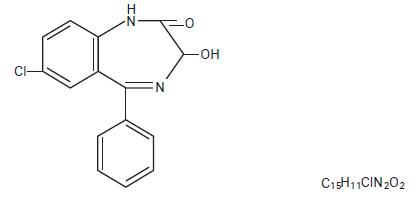
Oxazepam, USP is 7-chloro-1,3-dihydro-3-hydroxy-5-phenyl-2