Get your patient on Promethazine Hydrochloride And Phenylephrine Hydrochloride - Promethazine Hydrochloride And Phenylephrine Hydrochloride solution (Promethazine Hydrochloride And Phenylephrine Hydrochloride)
Promethazine Hydrochloride And Phenylephrine Hydrochloride - Promethazine Hydrochloride And Phenylephrine Hydrochloride solution prescribing information

WARNING
PROMETHAZINE HYDROCHLORIDE SHOULD NOT BE USED IN PEDIATRIC PATIENTS LESS THAN 2 YEARS OF AGE BECAUSE OF THE POTENTIAL FOR FATAL RESPIRATORY DEPRESSION.
POSTMARKETING CASES OF RESPIRATORY DEPRESSION, INCLUDING FATALITIES, HAVE BEEN REPORTED WITH USE OF PROMETHAZINE HYDROCHLORIDE IN PEDIATRIC PATIENTS LESS THAN 2 YEARS OF AGE. A WIDE RANGE OF WEIGHT-BASED DOSES OF PROMETHAZINE HYDROCHLORIDE HAVE RESULTED IN RESPIRATORY DEPRESSION IN THESE PATIENTS.
CAUTION SHOULD BE EXERCISED WHEN ADMINISTERING PROMETHAZINE HYDROCHLORIDE TO PEDIATRIC PATIENTS 2 YEARS OF AGE AND OLDER. IT IS RECOMMENDED THAT THE LOWEST EFFECTIVE DOSE OF PROMETHAZINE HYDROCHLORIDE BE USED IN PEDIATRIC PATIENTS 2 YEARS OF AGE AND OLDER AND CONCOMITANT ADMINISTRATION OF OTHER DRUGS WITH RESPIRATORY DEPRESSANT EFFECTS BE AVOIDED.
INDICATIONS AND USAGE
Promethazine hydrochloride and phenylephrine hydrochloride oral solution is indicated for the temporary relief of upper respiratory symptoms, including nasal congestion, associated with allergy or the common cold.
DOSAGE AND ADMINISTRATION
Promethazine hydrochloride and phenylephrine hydrochloride oral solution is contraindicated for children under 2 years of age (see WARNINGS – Black Box Warning and Use In Pediatric Patients ).
The recommended doses are given in the following table:
Adults And Children 12 Years And Over
1 teaspoonful (5 mL) every 4 to 6 hours, not to exceed 6 teaspoonsful (30 mL) in 24 hours.
Children 6 To Under 12 Years Of Age
½ to 1 teaspoonful (2.5 to 5 mL) every 4 to 6 hours, not to exceed 6 teaspoonsful (30 mL) in 24 hours.
Children 2 To Under 6 Years Of Age
¼ to ½ teaspoonful (1.25 to 2.5 mL) every 4 to 6 hours.
CONTRAINDICATIONS
Promethazine is contraindicated in comatose states, and in individuals known to be hypersensitive or to have had an idiosyncratic reaction to promethazine or to other phenothiazines.
Antihistamines are contraindicated for use in the treatment of lower respiratory tract symptoms, including asthma.
Phenylephrine is contraindicated in patients with hypertension or with peripheral vascular insufficiency (ischemia may result with risk of gangrene or thrombosis of compromised vascular beds).
Phenylephrine should not be used in patients known to be hypersensitive to the drug or in those receiving a monoamine oxidase inhibitor (MAOI).
ADVERSE REACTIONS
Promethazine
Central Nervous System – Drowsiness is the most prominent CNS effect of this drug. Sedation, somnolence, blurred vision, dizziness; confusion, disorientation, and extrapyramidal symptoms such as oculogyric crisis, torticollis, and tongue protrusion; lassitude, tinnitus, incoordination, fatigue, euphoria, nervousness, diplopia, insomnia, tremors, convulsive seizures, excitation, catatonic-like states, hysteria. Hallucinations have also been reported.
Cardiovascular – Increased or decreased blood pressure, tachycardia, bradycardia, faintness.
Dermatologic – Dermatitis, photosensitivity, urticaria.
Hematologic – Leukopenia, thrombocytopenia, thrombocytopenic purpura, agranulocytosis.
Gastrointestinal – Dry mouth, nausea, vomiting, jaundice.
Respiratory – Asthma, nasal stuffiness, respiratory depression (potentially fatal) and apnea (potentially fatal). (See WARNINGS – Promethazine; Respiratory Depression .)
Other – Angioneurotic edema. Neuroleptic malignant syndrome (potentially fatal) has also been reported. (See WARNINGS – Promethazine; Neuroleptic Malignant Syndrome .)
Paradoxical Reactions – Hyperexcitability and abnormal movements have been reported in patients following a single administration of promethazine HCl. Consideration should be given to the discontinuation of promethazine HCl and to the use of other drugs if these reactions occur. Respiratory depression, nightmares, delirium, and agitated behavior have also been reported in some of these patients.
Phenylephrine
Nervous System – Restlessness, anxiety, nervousness, and dizziness.
Cardiovascular – Hypertension (see " WARNINGS ").
Other – Precordial pain, respiratory distress, tremor, and weakness.
To report SUSPECTED ADVERSE REACTIONS, contact Allucent at 1-866-511-6754 or FDA at 1-800-FDA-1088 or www.fda.gov/medwatch.
Drug Interactions
Promethazine
CNS Depressants
Promethazine may increase, prolong, or intensify the sedative action of other central nervous system depressants, such as alcohol, sedatives/hypnotics (including barbiturates), narcotics, narcotic analgesics, general anesthetics, tricyclic antidepressants, and tranquilizers; therefore, such agents should be avoided or administered in reduced dosage to patients receiving promethazine HCl. When given concomitantly with promethazine, the dose of barbiturates should be reduced by at least one-half, and the dose of narcotics should be reduced by one-quarter to one-half. Dosage must be individualized. Excessive amounts of promethazine HCl relative to a narcotic may lead to restlessness and motor hyperactivity in the patient with pain; these symptoms usually disappear with adequate control of the pain.
Epinephrine
Because of the potential for promethazine to reverse epinephrine's vasopressor effect, epinephrine should NOT be used to treat hypotension associated with promethazine overdose.
Anticholinergics
Concomitant use of other agents with anticholinergic properties should be undertaken with caution.
Monoamine Oxidase Inhibitors (MAOI)
Drug interactions, including an increased incidence of extrapyramidal effects, have been reported when some MAOI and phenothiazines are used concomitantly.
Phenylephrine
Drug
Phenylephrine with prior administration of monoamine oxidase inhibitors (MAOI).
Effect
Cardiac pressor response potentiated.
May cause acute hypertensive crisis.
Drug
Phenylephrine with tricyclic antidepressants.
Effect
Pressor response increased.
Drug
Phenylephrine with ergot alkaloids.
Effect
Excessive rise in blood pressure.
Drug
Phenylephrine with bronchodilator sympathomimetic agents and with epinephrine or other sympathomimetics.
Effect
Tachycardia or other arrhythmias may occur.
Drug
Phenylephrine with atropine sulfate.
Effect
Reflex bradycardia blocked; pressor response enhanced.
Drug
Phenylephrine with prior administration of propranolol or other β-adrenergic blockers.
Effect
Cardiostimulating effects blocked.
Drug
Phenylephrine with prior administration of phentolamine or other α-adrenergic blockers.
Effect
Pressor response decreased.
Drug
Phenylephrine with diet preparations, such as amphetamines or phenylpropanolamine.
Effect
Synergistic adrenergic response.
DESCRIPTION
Each 5 mL (one teaspoonful), for oral administration contains: Promethazine hydrochloride 6.25 mg; phenylephrine hydrochloride 5 mg. Alcohol 7%.
Inactive Ingredients: Apricot peach flavor, ascorbic acid, citric acid, FD&C yellow #6, menthol, methylparaben, propylene glycol, propylparaben, purified water, saccharin sodium, sodium benzoate, sodium citrate and sucrose.
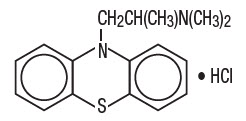
Promethazine hydrochloride, a phenothiazine derivative, is chemically designated as (±)-10-[2- (Dimethylamino)propyl] phenothiazine monohydrochloride.
Promethazine hydrochloride occurs as a white to faint yellow, practically odorless, crystalline powder which slowly oxidizes and turns blue on prolonged exposure to air. It is soluble in water and freely soluble in alcohol. It has a molecular weight of 320.88, a molecular formula of C 17 H 20 N 2 S∙HCl, and the following structural formula:
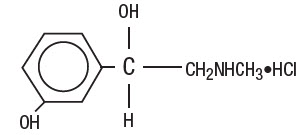
Phenylephrine hydrochloride is a sympathomimetic amine salt which is chemically designated as (-)-m- Hydroxy-α-[(methylamino)methyl] benzyl alcohol hydrochloride. It occurs as white or nearly white crystals, having a bitter taste. It is freely soluble in water and alcohol. Phenylephrine hydrochloride is subject to oxidation and must be protected from light and air. It has a molecular weight of 203.67, a molecular formula of C 9 H 13 NO 2 ∙HCl, and the following structural formula:
CLINICAL PHARMACOLOGY
Promethazine
Promethazine is a phenothiazine derivative which differs structurally from the antipsychotic phenothiazines by the presence of a branched side chain and no ring substitution. It is thought that this configuration is responsible for its relative lack (1/10 that of chlorpromazine) of dopamine antagonist properties.
Promethazine is an H 1 receptor blocking agent. In addition to its antihistaminic action, it provides clinically useful sedative and antiemetic effects.
Promethazine is well absorbed from the gastrointestinal tract. Clinical effects are apparent within 20 minutes after oral administration and generally last four to six hours, although they may persist as long as 12 hours. Promethazine is metabolized by the liver to a variety of compounds; the sulfoxides of promethazine and N-demethylpromethazine are the predominant metabolites appearing in the urine.
Phenylephrine
Phenylephrine is a potent postsynaptic α-receptor agonist with little effect on β-receptors of the heart. Phenylephrine has no effect on β-adrenergic receptors of the bronchi or peripheral blood vessels. A direct action at receptors accounts for the greater part of its effects, only a small part being due to its ability to release norepinephrine.
Therapeutic doses of phenylephrine mainly cause vasoconstriction. Phenylephrine increases resistance and, to a lesser extent, decreases capacitance of blood vessels. Total peripheral resistance is increased, resulting in increased systolic and diastolic blood pressure. Pulmonary arterial pressure is usually increased, and renal blood flow is usually decreased. Local vasoconstriction and hemostasis occur following topical application or infiltration of phenylephrine into tissues. The main effect of phenylephrine on the heart is bradycardia; it produces a positive inotropic effect on the myocardium in doses greater than those usually used therapeutically. Rarely, the drug may increase the irritability of the heart, causing arrhythmias. Cardiac output is decreased slightly. Phenylephrine increases the work of the heart by increasing peripheral arterial resistance.
Phenylephrine has a mild central stimulant effect.
Following oral administration or topical application of phenylephrine to the mucosa, constriction of blood vessels in the nasal mucosa relieves nasal congestion associated with allergy or head colds. Following oral administration, nasal decongestion may occur within 15 or 20 minutes and may persist for up to 4 hours.
Phenylephrine is irregularly absorbed from and readily metabolized in the gastrointestinal tract. Phenylephrine is metabolized in the liver and intestine by monoamine oxidase. The metabolites and their route and rate of excretion have not been identified. The pharmacologic action of phenylephrine is terminated at least partially by uptake of the drug into tissues.
HOW SUPPLIED
This preparation is a yellowish-orange oral solution with odor of apricot peach. Each 5 mL (one teaspoonful) contains promethazine hydrochloride 6.25 mg, phenylephrine hydrochloride 5 mg, and alcohol 7 percent, and is available as:
NDC 64950-345-16: 16 fl oz (473 mL) bottle
Keep tightly closed. Protect from light.
Store at 20°C to 25°C (68°F to 77°F) [see USP Controlled Room Temperature].
Dispense in a tight, light-resistant container with a child-resistant closure as defined in the USP.
