Get your patient on Sevoflurane - Sevoflurane liquid (Sevoflurane)
Sevoflurane - Sevoflurane liquid prescribing information

INDICATIONS AND USAGE
Sevoflurane is indicated for induction and maintenance of general anesthesia in adult and pediatric patients for inpatient and outpatient surgery.
Sevoflurane should be administered only by persons trained in the administration of general anesthesia. Facilities for maintenance of a patent airway, artificial ventilation, oxygen enrichment, and circulatory resuscitation must be immediately available. Since level of anesthesia may be altered rapidly, only vaporizers producing predictable concentrations of sevoflurane should be used.
DOSAGE AND ADMINISTRATION
The concentration of sevoflurane being delivered from a vaporizer should be known. This may be accomplished by using a vaporizer calibrated specifically for sevoflurane. The administration of general anesthesia must be individualized based on the patient's response.
Replacement of Desiccated CO 2 Absorbents
When a clinician suspects that the CO 2 absorbent may be desiccated, it should be replaced. The exothermic reaction that occurs with sevoflurane and CO 2 absorbents is increased when the CO 2 absorbent becomes desiccated, such as after an extended period of dry gas flow through the CO 2 absorbent canisters (see PRECAUTIONS ).
Pre-anesthetic Medication
No specific premedication is either indicated or contraindicated with sevoflurane. The decision as to whether or not to premedicate and the choice of premedication is left to the discretion of the anesthesiologist.
Induction
Sevoflurane has a nonpungent odor and does not cause respiratory irritability; it is suitable for mask induction in pediatrics and adults.
Maintenance
Surgical levels of anesthesia can usually be achieved with concentrations of 0.5% to 3% sevoflurane with or without the concomitant use of nitrous oxide. Sevoflurane can be administered with any type of anesthesia circuit.
| Age of Patient (years) | Sevoflurane in Oxygen | Sevoflurane in 65% N 2 O/35% O 2 |
| 0 to 1 months # | 3.3% | |
| 1 to less than 6 months | 3% | |
| 6 months to less than 3 years | 2.8% | 2% @ |
| 3 to 12 | 2.5% | |
| 25 | 2.6% | 1.4% |
| 40 | 2.1% | 1.1% |
| 60 | 1.7% | 0.9% |
| 80 | 1.4% | 0.7% |
| # Neonates are full-term gestational age. MAC in premature infants has not been determined. @ In 1 to less than 3 year old pediatric patients, 60% N 2 O/40% O 2 was used. | ||
CONTRAINDICATIONS
- Known or suspected genetic susceptibility to malignant hyperthermia. (see WARNINGS- Malignant Hyperthermia, CLINICAL PHARMACOLOGY – Pharmacogenomics ).
- Known or suspected sensitivity to sevoflurane or to other halogenated inhalational anesthetics.
ADVERSE REACTIONS
Clinical Trials Experience
Adverse events are derived from controlled clinical studies conducted in the United States, Canada, and Europe. The reference drugs were isoflurane, enflurane, and propofol in adults and halothane in pediatric patients. The studies were conducted using a variety of premedications, other anesthetics, and surgical procedures of varying length. Most adverse events reported were mild and transient, and may reflect the surgical procedures, patient characteristics (including disease) and/or medications administered.
Of the 5182 patients enrolled in the clinical studies, 2906 were exposed to sevoflurane, including 118 adults and 507 pediatric patients who underwent mask induction. Each patient was counted once for each type of adverse event. Adverse events reported in patients in clinical studies and considered to be possibly or probably related to sevoflurane are presented within each body system in order of decreasing frequency in the following listings. One case of malignant hyperthermia was reported in pre-registration clinical studies.
Adverse Events During the Induction Period (from Onset of Anesthesia by Mask Induction to Surgical Incision) Incidence > 1%
Adult Patients (N = 118)
Cardiovascular
Bradycardia 5%, Hypotension 4%, Tachycardia 2%
Nervous System
Agitation 7%
Respiratory System
Laryngospasm 8%, Airway obstruction 8%, Breathholding 5%, Cough Increased 5%
Pediatric Patients (N = 507)
Cardiovascular
Tachycardia 6%, Hypotension 4%
Nervous System
Agitation 15%
Respiratory System
Breathholding 5%, Cough Increased 5%, Laryngospasm 3%, Apnea 2%
Digestive System
Increased salivation 2%
Adverse Events During Maintenance and Emergence Periods, Incidence > 1% (N = 2906)
Body as a whole
Fever 1%, Shivering 6%, Hypothermia 1%, Movement 1%, Headache 1%
Cardiovascular
Hypotension 11%, Hypertension 2%, Bradycardia 5%, Tachycardia 2%
Nervous System
Somnolence 9%, Agitation 9%, Dizziness 4%, Increased salivation 4%
Digestive System
Nausea 25%, Vomiting 18%
Respiratory System
Cough increased 11%, Breathholding 2%, Laryngospasm 2%
Adverse Events, All Patients in Clinical Studies (N = 2906), All Anesthetic Periods, Incidence < 1% (Reported in 3 or More Patients)
Body as a whole
Asthenia, Pain
Cardiovascular
Arrhythmia, Ventricular Extrasystoles, Supraventricular Extrasystoles, Complete AV Block, Bigeminy, Hemorrhage, Inverted T Wave, Atrial Fibrillation, Atrial Arrhythmia, Second Degree AV Block, Syncope, S-T Depressed
Nervous System
Crying, Nervousness, Confusion, Hypertonia, Dry Mouth, Insomnia
Respiratory System
Sputum Increased, Apnea, Hypoxia, Wheezing, Bronchospasm, Hyperventilation, Pharyngitis, Hiccup, Hypoventilation, Dyspnea, Stridor
Metabolism and Nutrition
Increases in LDH, AST, ALT, BUN, Alkaline Phosphatase, Creatinine, Bilirubinemia, Glycosuria, Fluorosis, Albuminuria, Hypophosphatemia, Acidosis, Hyperglycemia
Hemic and Lymphatic System
Leucocytosis, Thrombocytopenia
Skin and Special Senses
Amblyopia, Pruritus, Taste Perversion, Rash, Conjunctivitis
Urogenital
Urination Impaired, Urine Abnormality, Urinary Retention, Oliguria
See WARNINGS for information regarding malignant hyperthermia.
Post-Marketing Experience
The following adverse events have been identified during post-approval use of sevoflurane USP. Due to the spontaneous nature of these reports, the actual incidence and relationship of sevoflurane USP to these events cannot be established with certainty.
Central Nervous System
- Seizures - Post-marketing reports indicate that sevoflurane use has been associated with seizures. The majority of cases were in children and young adults, most of whom had no medical history of seizures. Several cases reported no concomitant medications, and at least one case was confirmed by EEG. Although many cases were single seizures that resolved spontaneously or after treatment, cases of multiple seizures have also been reported. Seizures have occurred during, or soon after sevoflurane induction, during emergence, and during post-operative recovery up to a day following anesthesia.
- Delirium
Cardiac
- Cardiac arrest
- QT prolongation associated with Torsade de Pointe
- Bradycardia in patients with Down syndrome
Hepatic
- Cases of mild, moderate and severe post-operative hepatic dysfunction or hepatitis with or without jaundice have been reported. Histological evidence was not provided for any of the reported hepatitis cases. In most of these cases, patients had underlying hepatic conditions or were under treatment with drugs known to cause hepatic dysfunction. Most of the reported events were transient and resolved spontaneously (see PRECAUTIONS ).
- Hepatic necrosis
- Hepatic failure
Other
- Malignant hyperthermia (see CONTRAINDICATIONS , WARNINGS )
- Allergic reactions, such as rash, urticaria, pruritus, bronchospasm, and anaphylactic reactions (see CONTRAINDICATIONS )
- Reports of hypersensitivity (including contact dermatitis, rash, dyspnea, wheezing, chest discomfort, swelling face, or anaphylactic reaction) have been received, particularly in association with long-term occupational exposure to inhaled anesthetic agents, including sevoflurane (see SAFETY AND HANDLING - Occupational Caution ).
Laboratory Findings
- Transient elevations in glucose, liver function tests, and white blood cell count may occur as with use of other anesthetic agents.
Drug Interactions
In clinical studies, no significant adverse reactions occurred with other drugs commonly used in the perioperative period, including: central nervous system depressants, autonomic drugs, skeletal muscle relaxants, anti-infective agents, hormones and synthetic substitutes, blood derivatives, and cardiovascular drugs.
Epinephrine
Epinephrine administered with sevoflurane may increase the risk of ventricular arrhythmias. Monitor the electrocardiogram and blood pressure and ensure emergency medications to treat ventricular arrhythmias are readily available.
Calcium antagonists
Sevoflurane may lead to marked hypotension in patients treated with calcium antagonists. Blood pressure should be closely monitored and emergency medications to treat hypotension should be readily available when calcium antagonists are used concomitantly with sevoflurane.
In animals, impairment of atrioventricular conduction has been observed when verapamil and sevoflurane are administered concomitantly.
Succinylcholine
See WARNINGS - Perioperative Hyperkalemia .
Non-selective MAO-inhibitors
Concomitant use of MAO inhibitors and inhalational anesthetics may increase the risk of hemodynamic instability during surgery or medical procedures.
Intravenous Anesthetics
Sevoflurane administration is compatible with barbiturates, propofol, and other commonly used intravenous anesthetics.
Benzodiazepines and Opioids
Benzodiazepines and opioids would be expected to decrease the MAC of sevoflurane in the same manner as with other inhalational anesthetics. Sevoflurane administration is compatible with benzodiazepines and opioids as commonly used in surgical practice.
Nitrous Oxide
As with other halogenated volatile anesthetics, the anesthetic requirement for sevoflurane is decreased when administered in combination with nitrous oxide. Using 50% N 2 O, the MAC equivalent dose requirement is reduced approximately 50% in adults, and approximately 25% in pediatric patients (see DOSAGE AND ADMINISTRATION ).
Neuromuscular Blocking Agents
As is the case with other volatile anesthetics, sevoflurane increases both the intensity and duration of neuromuscular blockade induced by nondepolarizing muscle relaxants. When used to supplement alfentanil-N 2 O anesthesia, sevoflurane and isoflurane equally potentiate neuromuscular block induced with pancuronium, vecuronium or atracurium. Therefore, during sevoflurane anesthesia, the dosage adjustments for these muscle relaxants are similar to those required with isoflurane.
Potentiation of neuromuscular blocking agents requires equilibration of muscle with delivered partial pressure of sevoflurane. Reduced doses of neuromuscular blocking agents during induction of anesthesia may result in delayed onset of conditions suitable for endotracheal intubation or inadequate muscle relaxation.
Among available nondepolarizing agents, only vecuronium, pancuronium and atracurium interactions have been studied during sevoflurane anesthesia. In the absence of specific guidelines:
- For endotracheal intubation, do not reduce the dose of nondepolarizing muscle relaxants.
- During maintenance of anesthesia, the required dose of nondepolarizing muscle relaxants is likely to be reduced compared to that during N 2 O/opioid anesthesia. Administration of supplemental doses of muscle relaxants should be guided by the response to nerve stimulation.
The effect of sevoflurane on the duration of depolarizing neuromuscular blockade induced by succinylcholine has not been studied.
DESCRIPTION
Sevoflurane USP, volatile liquid for inhalation, a nonflammable and nonexplosive liquid administered by vaporization, is a halogenated general inhalation anesthetic drug. Sevoflurane is fluoromethyl 2,2,2,-trifluoro-1-(trifluoromethyl) ethyl ether and its structural formula is:
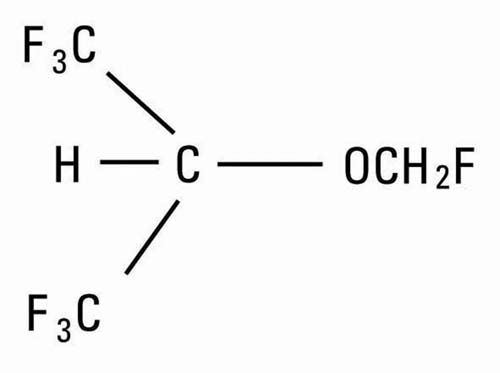
Sevoflurane, Physical Constants are:
| Molecular weight | 200.05 |
| Boiling point at 760 mmHg | 58.6°C |
| Specific gravity at 20°C | 1.520 to 1.525 |
| Vapor pressure in mm Hg | 157 mmHg at 20°C 197 mmHg at 25°C 317 mmHg at 36°C |
Distribution Partition Coefficients at 37°C:
| Blood/Gas | 0.63 to 0.69 |
| Water/Gas | 0.36 |
| Olive Oil/Gas | 47 to 54 |
| Brain/Gas | 1.15 |
Mean Component/Gas Partition Coefficients at 25°C for Polymers Used Commonly in Medical Applications:
| Conductive rubber | 14.0 |
| Butyl rubber | 7.7 |
| Polyvinylchloride | 17.4 |
| Polyethylene | 1.3 |
Sevoflurane is nonflammable and nonexplosive as defined by the requirements of International Electrotechnical Commission 601-2-13.
Sevoflurane is a clear, colorless, liquid containing no additives. Sevoflurane is not corrosive to stainless steel, brass, aluminum, nickel-plated brass, chrome-plated brass or copper beryllium. Sevoflurane is nonpungent. It is miscible with ethanol, ether, chloroform, and benzene, and it is slightly soluble in water. Sevoflurane is stable when stored under normal room lighting conditions according to instructions. No discernible degradation of sevoflurane occurs in the presence of strong acids or heat. When in contact with alkaline CO 2 absorbents (e.g., Baralyme ® and to a lesser extent soda lime) within the anesthesia machine, sevoflurane can undergo degradation under certain conditions. Degradation of sevoflurane is minimal, and degradants are either undetectable or present in non-toxic amounts when used as directed with fresh absorbents. Sevoflurane degradation and subsequent degradant formation are enhanced by increasing absorbent temperature increased sevoflurane concentration, decreased fresh gas flow and desiccated CO 2 absorbents (especially with potassium hydroxide containing absorbents e.g., Baralyme).
Sevoflurane alkaline degradation occurs by two pathways. The first results from the loss of hydrogen fluoride with the formation of pentafluoroisopropenyl fluoromethyl ether, (PIFE, C 4 H 2 F 6 O), also known as Compound A, and trace amounts of pentafluoromethoxy isopropyl fluoromethyl ether, (PMFE, C 5 H 6 F 6 O), also known as Compound B. The second pathway for degradation of sevoflurane, which occurs primarily in the presence of desiccated CO 2 absorbents, is discussed later.
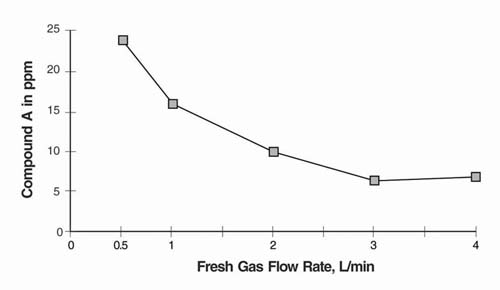
In the first pathway, the defluorination pathway, the production of degradants in the anesthesia circuit results from the extraction of the acidic proton in the presence of a strong base (KOH and/or NaOH) forming an alkene (Compound A) from sevoflurane similar to formation of 2-bromo-2-chloro-1,1-difluoro ethylene (BCDFE) from halothane. Laboratory simulations have shown that the concentration of these degradants is inversely correlated with the fresh gas flow rate (See Figure 1 ).
Figure 1. Fresh Gas Flow Rate versus Compound A Levels in a Circle Absorber System
Since the reaction of carbon dioxide with absorbents is exothermic, the temperature increase will be determined by quantities of CO 2 absorbed, which in turn will depend on fresh gas flow in the anesthesia circle system, metabolic status of the patient, and ventilation. The relationship of temperature produced by varying levels of CO 2 and Compound A production is illustrated in the following in vitro simulation where CO 2 was added to a circle absorber system.
Figure 2. Carbon Dioxide Flow versus Compound A and Maximum Temperature
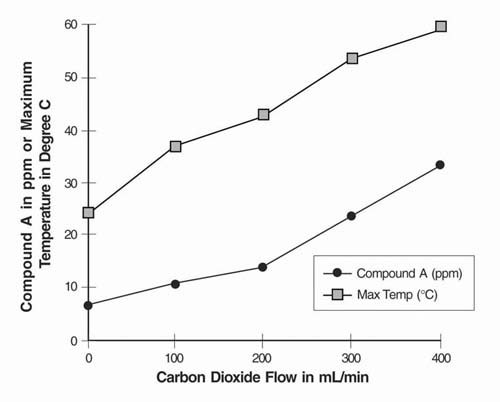
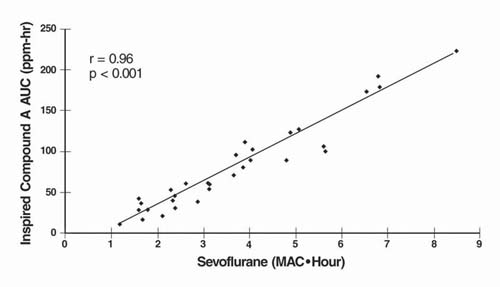
Compound A concentration in a circle absorber system increases as a function of increasing CO 2 absorbent temperature and composition (Baralyme producing higher levels than soda lime), increased body temperature, and increased minute ventilation, and decreasing fresh gas flow rates. It has been reported that the concentration of Compound A increases significantly with prolonged dehydration of Baralyme. Compound A exposure in patients also has been shown to rise with increased sevoflurane concentrations and duration of anesthesia. In a clinical study in which sevoflurane was administered to patients under low flow conditions for ≥ 2 hours at flow rates of 1 Liter/minute, Compound A levels were measured in an effort to determine the relationship between MAC hours and Compound A levels produced. The relationship between Compound A levels and sevoflurane exposure are shown in Figure 2a .
Figure 2a. ppm·hr versus MAC·hr at Flow Rate of 1 L/min
Compound A has been shown to be nephrotoxic in rats after exposures that have varied in duration from one to three hours. No histopathologic change was seen at a concentration of up to 270 ppm for one hour. Sporadic single cell necrosis of proximal tubule cells has been reported at a concentration of 114 ppm after a 3-hour exposure to Compound A in rats. The LC 50 reported at 1 hour is 1050-1090 ppm (male-female) and, at 3 hours, 350-490 ppm (male-female).
An experiment was performed comparing sevoflurane plus 75 or 100 ppm Compound A with an active control to evaluate the potential nephrotoxicity of Compound A in non-human primates. A single 8-hour exposure of Sevoflurane in the presence of Compound A produced single-cell renal tubular degeneration and single-cell necrosis in cynomolgus monkeys. These changes are consistent with the increased urinary protein, glucose level and enzymic activity noted on days one and three on the clinical pathology evaluation. This nephrotoxicity produced by Compound A is dose and duration of exposure dependent.
At a fresh gas flow rate of 1 L/min, mean maximum concentrations of Compound A in the anesthesia circuit in clinical settings are approximately 20 ppm (0.002%) with soda lime and 30 ppm (0.003%) with Baralyme in adult patients; mean maximum concentrations in pediatric patients with soda lime are about half those found in adults. The highest concentration observed in a single patient with Baralyme was 61 ppm (0.0061%) and 32 ppm (0.0032%) with soda lime. The levels of Compound A at which toxicity occurs in humans is not known.
The second pathway for degradation of sevoflurane occurs primarily in the presence of desiccated CO 2 absorbents and leads to the dissociation of sevoflurane into hexafluoroisopropanol (HFIP) and formaldehyde. HFIP is inactive, non-genotoxic, rapidly glucuronidated and cleared by the liver. Formaldehyde is present during normal metabolic processes. Upon exposure to a highly desiccated absorbent, formaldehyde can further degrade into methanol and formate. Formate can contribute to the formation of carbon monoxide in the presence of high temperature that can be associated with desiccated Baralyme ® . Methanol can react with Compound A to form the methoxy addition product Compound B. Compound B can undergo further HF elimination to form Compounds C, D, and E.
Sevoflurane degradants were observed in the respiratory circuit of an experimental anesthesia machine using desiccated CO 2 absorbents and maximum sevoflurane concentrations (8%) for extended periods of time (>2 hours). Concentrations of formaldehyde observed with desiccated soda lime in this experimental anesthesia respiratory circuit were consistent with levels that could potentially result in respiratory irritation. Although KOH containing CO 2 absorbents are no longer commercially available, in the laboratory experiments, exposure of sevoflurane to the desiccated KOH containing CO 2 absorbent, Baralyme, resulted in the detection of substantially greater degradant levels.
CLINICAL PHARMACOLOGY
Sevoflurane is an inhalational anesthetic agent for use in induction and maintenance of general anesthesia. Minimum alveolar concentration (MAC) of sevoflurane in oxygen for a 40-year-old adult is 2.1%. The MAC of sevoflurane decreases with age (see DOSAGE AND ADMINISTRATION for details).
Pharmacokinetics
Uptake and Distribution
Solubility
Because of the low solubility of sevoflurane in blood (blood/gas partition coefficient @ 37°C =0.63 to 0.69), a minimal amount of sevoflurane is required to be dissolved in the blood before the alveolar partial pressure is in equilibrium with the arterial partial pressure. Therefore there is a rapid rate of increase in the alveolar (end-tidal) concentration (F A ) toward the inspired concentration (F I ) during induction.
Induction of Anesthesia
In a study in which seven healthy male volunteers were administered 70% N 2 O/30%O 2 for 30 minutes followed by 1.0% sevoflurane and 0.6% isoflurane for another 30 minutes the F A /F I ratio was greater for sevoflurane than isoflurane at all time points. The time for the concentration in the alveoli to reach 50% of the inspired concentration was 4 to 8 minutes for isoflurane and approximately 1 minute for sevoflurane.
F A /F I data from this study were compared with F A /F I data of other halogenated anesthetic agents from another study. When all data were normalized to isoflurane, the uptake and distribution of sevoflurane was shown to be faster than isoflurane and halothane, but slower than desflurane. The results are depicted in Figure 3 .
Recovery from Anesthesia
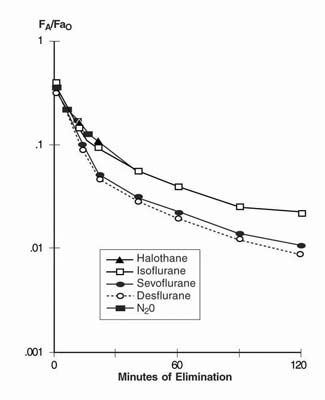
The low solubility of sevoflurane facilitates rapid elimination via the lungs. The rate of elimination is quantified as the rate of change of the alveolar (end-tidal) concentration following termination of anesthesia (F A ), relative to the last alveolar concentration (Fa O ) measured immediately before discontinuance of the anesthetic. In the healthy volunteer study described above, rate of elimination of sevoflurane was similar compared with desflurane, but faster compared with either halothane or isoflurane. These results are depicted in Figure 4 .
Figure 3. Ratio of Concentration of Anesthetic in Alveolar Gas to Inspired Gas
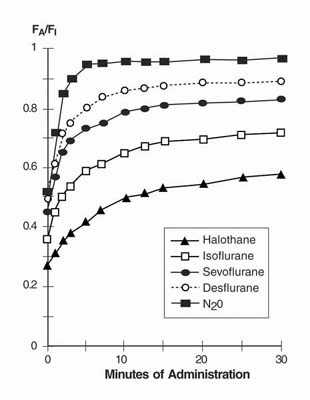
Figure 4. Concentration of Anesthetic in Alveolar Gas Following Termination of Anesthesia
Protein Binding
The effects of sevoflurane on the displacement of drugs from serum and tissue proteins have not been investigated. Other fluorinated volatile anesthetics have been shown to displace drugs from serum and tissue proteins in vitro . The clinical significance of this is unknown. Clinical studies have shown no untoward effects when sevoflurane is administered to patients taking drugs that are highly bound and have a small volume of distribution (e.g., phenytoin).
Metabolism
Sevoflurane is metabolized by cytochrome P450 2E1, to hexafluoroisopropanol (HFIP) with release of inorganic fluoride and CO 2 . Once formed HFIP is rapidly conjugated with glucuronic acid and eliminated as a urinary metabolite. No other metabolic pathways for sevoflurane have been identified. In vivo metabolism studies suggest that approximately 5% of the sevoflurane dose may be metabolized.
Cytochrome P450 2E1 is the principal isoform identified for sevoflurane metabolism and this may be induced by chronic exposure to isoniazid and ethanol. This is similar to the metabolism of isoflurane and enflurane and is distinct from that of methoxyflurane which is metabolized via a variety of cytochrome P450 isoforms. The metabolism of sevoflurane is not inducible by barbiturates. As shown in Figure 5 , inorganic fluoride concentrations peak within 2 hours of the end of sevoflurane anesthesia and return to baseline concentrations within 48 hours post-anesthesia in the majority of cases (67%). The rapid and extensive pulmonary elimination of sevoflurane minimizes the amount of anesthetic available for metabolism.
Figure 5. Serum Inorganic Fluoride Concentrations for Sevoflurane and Other Volatile Anesthetics
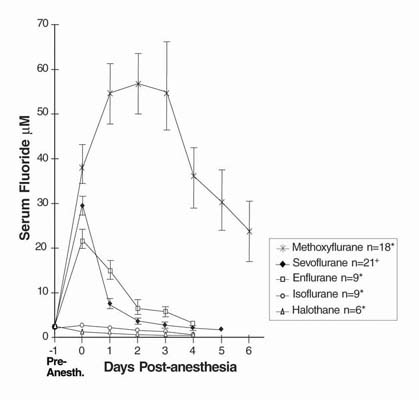
Legend: Pre-Anesth. = Pre-anesthesia
Elimination
Up to 3.5% of the sevoflurane dose appears in the urine as inorganic fluoride. Studies on fluoride indicate that up to 50% of fluoride clearance is nonrenal (via fluoride being taken up into bone).
Pharmacokinetics of Fluoride Ion
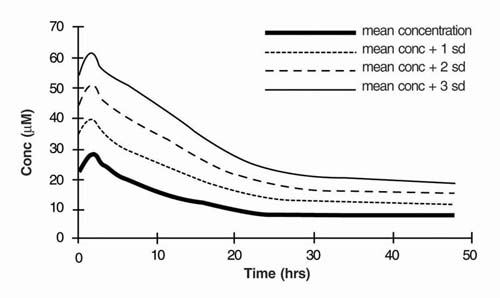
Fluoride ion concentrations are influenced by the duration of anesthesia, the concentration of sevoflurane administered, and the composition of the anesthetic gas mixture. In studies where anesthesia was maintained purely with sevoflurane for periods ranging from 1 to 6 hours, peak fluoride concentrations ranged between 12 µM and 90 µM. As shown in Figure 6 , peak concentrations occur within 2 hours of the end of anesthesia and are less than 25 µM (475 ng/mL) for the majority of the population after 10 hours. The half-life is in the range of 15 to 23 hours.
It has been reported that following administration of methoxyflurane, serum inorganic fluoride concentrations >50 µM were correlated with the development of vasopressin-resistant, polyuric, renal failure. In clinical studies with sevoflurane, there were no reports of toxicity associated with elevated fluoride ion levels.
Figure 6. Fluoride Ion Concentrations Following Administration of Sevoflurane (mean MAC =1.27, mean duration =2.06 hr) Mean Fluoride Ion Concentrations (n =48)
Fluoride Concentrations After Repeat Exposure and in Special Populations
Fluoride concentrations have been measured after single, extended, and repeat exposure to sevoflurane in normal surgical and special patient populations, and pharmacokinetic parameters were determined.
Compared with healthy individuals, the fluoride ion half-life was prolonged in patients with renal impairment, but not in the elderly. A study in 8 patients with hepatic impairment suggests a slight prolongation of the half-life. The mean half-life in patients with renal impairment averaged approximately 33 hours (range 21 to 61 hours) as compared to a mean of approximately 21 hours (range 10 to 48 hours) in normal healthy individuals. The mean half-life in the elderly (greater than 65 years) approximated 24 hours (range 18 to 72 hours). The mean half-life in individuals with hepatic impairment was 23 hours (range 16 to 47 hours). Mean maximal fluoride values (C max ) determined in individual studies of special populations are displayed below.
| n | Age (yr) | Duration (hr) | Dose (MAC·hr) | C max (µM) | |
| PEDIATRIC PATIENTS | |||||
| Anesthetic | |||||
| Sevoflurane-O 2 | 76 | 0 to 11 | 0.8 | 1.1 | 12.6 |
| Sevoflurane-O 2 | 40 | 1 to 11 | 2.2 | 3.0 | 16.0 |
| Sevoflurane/N 2 O | 25 | 5 to 13 | 1.9 | 2.4 | 21.3 |
| Sevoflurane/N 2 O | 42 | 0 to 18 | 2.4 | 2.2 | 18.4 |
| Sevoflurane/N 2 O | 40 | 1 to 11 | 2.0 | 2.6 | 15.5 |
| ELDERLY | 33 | 65 to 93 | 2.6 | 1.4 | 25.6 |
| RENAL | 21 | 29 to 83 | 2.5 | 1.0 | 26.1 |
| HEPATIC | 8 | 42 to 79 | 3.6 | 2.2 | 30.6 |
| OBESE | 35 | 24 to 73 | 3.0 | 1.7 | 38.0 |
| n = number of patients studied. | |||||
Pharmacodynamics
Changes in the depth of sevoflurane anesthesia rapidly follow changes in the inspired concentration.
In the sevoflurane clinical program, the following recovery variables were evaluated:
1. Time to events measured from the end of study drug:
- Time to removal of the endotracheal tube (extubation time)
- Time required for the patient to open his/her eyes on verbal command (emergence time)
- Time to respond to simple command (e.g., squeeze my hand) or demonstrates purposeful movement (response to command time, orientation time)
2. Recovery of cognitive function and motor coordination was evaluated based on:
- psychomotor performance tests (Digit Symbol Substitution Test [DSST], Trieger Dot Test)
- the results of subjective (Visual Analog Scale [VAS]) and objective (objective pain-discomfort scale [OPDS]) measurements
- time to administration of the first post-anesthesia analgesic medication
- assessments of post-anesthesia patient status
3. Other recovery times were:
- time to achieve an Aldrete Score of ≥8
- time required for the patient to be eligible for discharge from the recovery area, per standard criteria at site
- time when the patient was eligible for discharge from the hospital
- time when the patient was able to sit up or stand without dizziness
Some of these variables are summarized as follows:
| Time to End-Point (min) | Sevoflurane Mean ± SEM | Halothane Mean ± SEM |
| Induction | 2.0 ± 0.2 (n = 294) | 2.7 ± 0.2 (n = 252) |
| Emergence | 11.3 ± 0.7 (n = 293) | 15.8 ± 0.8 (n = 252) |
| Response to command | 13.7 ± 1.0 (n = 271) | 19.3 ± 1.1 (n = 230) |
| First analgesia | 52.2 ± 8.5 (n = 216) | 67.6 ± 10.6 (n = 150) |
| Eligible for recovery discharge | 76.5 ± 2.0 (n = 292) | 81.1 ± 1.9 (n = 246) |
| n = number of patients with recording of events. | ||
| Time to Parameter: (min) | Sevoflurane Mean ± SEM | Isoflurane Mean ± SEM |
| Emergence | 7.7 ± 0.3 (n = 395) | 9.1 ± 0.3 (n = 348) |
| Response to command | 8.1 ± 0.3 (n = 395) | 9.7 ± 0.3 (n = 345) |
| First analgesia | 42.7 ± 3.0 (n = 269) | 52.9 ± 4.2 (n = 228) |
| Eligible for recovery discharge | 87.6 ± 5.3 (n = 244) | 79.1 ± 5.2 (n = 252) |
| n = number of patients with recording of recovery events. | ||
| Parameter | No. of Studies | Sevoflurane Mean ± SEM | Propofol Mean ± SEM |
| Mean maintenance anesthesia exposure | 3 | 1.0 MAC·hr. ± 0.8 (n = 259) | 7.2 mg/kg/hr ± 2.6 (n = 258) |
| Time to induction: (min) | 1 | 3.1 ± 0.18• (n = 93) | 2.2 ± 0.18•• (n = 93) |
| Time to emergence: (min) | 3 | 8.6 ± 0.57 (n = 255) | 11.0 ± 0.57 (n = 260) |
| Time to respond to command: (min) | 3 | 9.9 ± 0.60 (n = 257) | 12.1 ± 0.60 (n = 260) |
| Time to first analgesia: (min) | 3 | 43.8 ± 3.79 (n = 177) | 57.9 ± 3.68 (n = 179) |
| Time to eligibility for recovery discharge: (min) | 3 | 116.0 ± 4.15 (n = 257) | 115.6 ± 3.98 (n = 261) |
| • Propofol induction of one sevoflurane group = mean of 178.8 mg ± 72.5 SD (n = 165) •• Propofol induction of all propofol groups = mean of 170.2 mg ± 60.6 SD (n = 245) n = number of patients with recording of events. | |||
Cardiovascular Effects
Sevoflurane was studied in 14 healthy volunteers (18 to 35 years old) comparing sevoflurane-O 2 (Sevo/O 2 ) to sevoflurane-N 2 O/O 2 (Sevo/N 2 O/O 2 ) during 7 hours of anesthesia. During controlled ventilation, hemodynamic parameters measured are shown in Figure 7 to Figure 10 :
Figure 7. Heart Rate
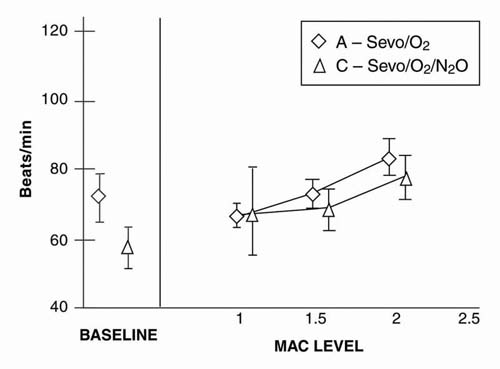
Figure 8. Mean Arterial Pressure
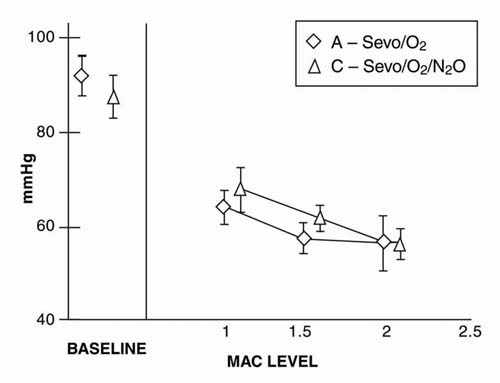
Figure 9. Systemic Vascular Resistance
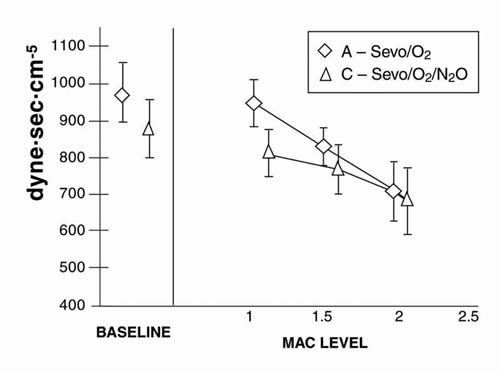
Figure 10. Cardiac Index
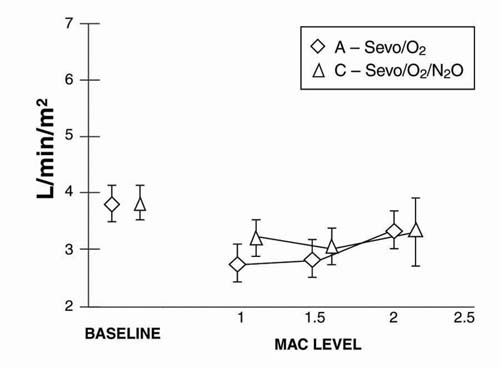
Sevoflurane is a dose-related cardiac depressant. Sevoflurane does not produce increases in heart rate at doses less than 2 MAC.
A study investigating the epinephrine induced arrhythmogenic effect of sevoflurane versus isoflurane in adult patients undergoing transsphenoidal hypophysectomy demonstrated that the threshold dose of epinephrine (i.e., the dose at which the first sign of arrhythmia was observed) producing multiple ventricular arrhythmias was 5 mcg/kg with both sevoflurane and isoflurane. Consequently, the interaction of sevoflurane with epinephrine appears to be equal to that seen with isoflurane.
Pharmacogenomics
RYR1 and CACNA1S are polymorphic genes, and multiple pathogenic variants have been associated with malignant hyperthermia susceptibility (MHS) in patients receiving volatile anesthetic agents, including sevoflurane. Case reports as well as ex-vivo studies have identified multiple variants in RYR1 and CACNA1S associated with MHS. Variant pathogenicity should be assessed based on prior clinical experience, functional studies, prevalence information, or other evidence (see CONTRAINDICATIONS, WARNINGS - Malignant Hyperthermia ).
HOW SUPPLIED
Sevoflurane USP is a volatile, clear and colorless inhalation liquid, and is packaged in Type III amber glass bottles containing 250 mL sevoflurane, NDC # 0781-6160-43. Each individual bottle is supplied in a carton of 6, NDC 0781-6160-86.
