Get your patient on Tenormin - Atenolol tablet (Atenolol)
Tenormin - Atenolol tablet prescribing information

INDICATIONS AND USAGE
Hypertension
TENORMIN is indicated for the treatment of hypertension, to lower blood pressure. Lowering blood pressure lowers the risk of fatal and non-fatal cardiovascular events, primarily strokes and myocardial infarctions. These benefits have been seen in controlled trials of antihypertensive drugs from a wide variety of pharmacologic classes including atenolol.
Control of high blood pressure should be part of comprehensive cardiovascular risk management, including, as appropriate, lipid control, diabetes management, antithrombotic therapy, smoking cessation, exercise, and limited sodium intake. Many patients will require more than 1 drug to achieve blood pressure goals. For specific advice on goals and management, see published guidelines, such as those of the National High Blood Pressure Education Program’s Joint National Committee on Prevention, Detection, Evaluation, and Treatment of High Blood Pressure (JNC).
Numerous antihypertensive drugs, from a variety of pharmacologic classes and with different mechanisms of action, have been shown in randomized controlled trials to reduce cardiovascular morbidity and mortality, and it can be concluded that it is blood pressure reduction, and not some other pharmacologic property of the drugs, that is largely responsible for those benefits. The largest and most consistent cardiovascular outcome benefit has been a reduction in the risk of stroke, but reductions in myocardial infarction and cardiovascular mortality also have been seen regularly.
Elevated systolic or diastolic pressure causes increased cardiovascular risk, and the absolute risk increase per mmHg is greater at higher blood pressures, so that even modest reductions of severe hypertension can provide substantial benefit. Relative risk reduction from blood pressure reduction is similar across populations with varying absolute risk, so the absolute benefit is greater in patients who are at higher risk independent of their hypertension (for example, patients with diabetes or hyperlipidemia), and such patients would be expected to benefit from more aggressive treatment to a lower blood pressure goal.
Some antihypertensive drugs have smaller blood pressure effects (as monotherapy) in black patients, and many antihypertensive drugs have additional approved indications and effects (e.g., on angina, heart failure, or diabetic kidney disease). These considerations may guide selection of therapy.
TENORMIN may be administered with other antihypertensive agents.
Angina Pectoris Due to Coronary Atherosclerosis
TENORMIN is indicated for the long-term management of patients with angina pectoris.
Acute Myocardial Infarction
TENORMIN is indicated in the management of hemodynamically stable patients with definite or suspected acute myocardial infarction to reduce cardiovascular mortality. Treatment can be initiated as soon as the patient’s clinical condition allows. (See DOSAGE AND ADMINISTRATION , CONTRAINDICATIONS , and WARNINGS . ) In general, there is no basis for treating patients like those who were excluded from the ISIS-1 trial (blood pressure less than 100 mm Hg systolic, heart rate less than 50 bpm) or have other reasons to avoid beta blockade. As noted above, some subgroups (e.g., elderly patients with systolic blood pressure below 120 mm Hg) seemed less likely to benefit.
DOSAGE AND ADMINISTRATION
Hypertension
The initial dose of TENORMIN is 50 mg given as one tablet a day either alone or added to diuretic therapy. The full effect of this dose will usually be seen within one to two weeks. If an optimal response is not achieved, the dosage should be increased to TENORMIN 100 mg given as one tablet a day. Increasing the dosage beyond 100 mg a day is unlikely to produce any further benefit.
TENORMIN may be used alone or concomitantly with other antihypertensive agents including thiazide-type diuretics, hydralazine, prazosin, and alpha-methyldopa.
Angina Pectoris
The initial dose of TENORMIN is 50 mg given as one tablet a day. If an optimal response is not achieved within one week, the dosage should be increased to TENORMIN 100 mg given as one tablet a day. Some patients may require a dosage of 200 mg once a day for optimal effect.
Twenty-four hour control with once daily dosing is achieved by giving doses larger than necessary to achieve an immediate maximum effect. The maximum early effect on exercise tolerance occurs with doses of 50 mg to 100 mg, but at these doses the effect at 24 hours is attenuated, averaging about 50% to 75% of that observed with once a day oral doses of 200 mg.
Acute Myocardial Infarction
In patients with definite or suspected acute myocardial infarction, treatment with TENORMIN I.V. Injection should be initiated as soon as possible after the patient's arrival in the hospital and after eligibility is established. Such treatment should be initiated in a coronary care or similar unit immediately after the patient's hemodynamic condition has stabilized. Treatment should begin with the intravenous administration of 5 mg TENORMIN over 5 minutes followed by another 5 mg intravenous injection 10 minutes later. TENORMIN I.V. Injection should be administered under carefully controlled conditions including monitoring of blood pressure, heart rate, and electrocardiogram. Dilutions of TENORMIN I.V. Injection in Dextrose Injection USP, Sodium Chloride Injection USP, or Sodium Chloride and Dextrose Injection may be used. These admixtures are stable for 48 hours if they are not used immediately.
In patients who tolerate the full intravenous dose (10 mg), TENORMIN Tablets 50 mg should be initiated 10 minutes after the last intravenous dose followed by another 50 mg oral dose 12 hours later. Thereafter, TENORMIN can be given orally either 100 mg once daily or 50 mg twice a day for a further 6 to 9 days or until discharge from the hospital. If bradycardia or hypotension requiring treatment or any other untoward effects occur, TENORMIN should be discontinued. (See full prescribing information prior to initiating therapy with TENORMIN Tablets.)
Data from other beta-blocker trials suggest that if there is any question concerning the use of I.V. beta-blocker or clinical estimate that there is a contraindication, the I.V. beta-blocker may be eliminated and patients fulfilling the safety criteria may be given TENORMIN Tablets 50 mg twice daily or 100 mg once a day for at least seven days (if the I.V. dosing is excluded).
Although the demonstration of efficacy of TENORMIN is based entirely on data from the first seven postinfarction days, data from other beta-blocker trials suggest that treatment with beta-blockers that are effective in the postinfarction setting may be continued for one to three years if there are no contraindications.
TENORMIN is an additional treatment to standard coronary care unit therapy.
Elderly Patients or Patients with Renal Impairment
TENORMIN is excreted by the kidneys; consequently dosage should be adjusted in cases of severe impairment of renal function. In general, dose selection for an elderly patient should be cautious, usually starting at the low end of the dosing range, reflecting greater frequency of decreased hepatic, renal, or cardiac function, and of concomitant disease or other drug therapy. Evaluation of patients with hypertension or myocardial infarction should always include assessment of renal function. Atenolol excretion would be expected to decrease with advancing age.
No significant accumulation of TENORMIN occurs until creatinine clearance falls below 35 mL/min/1.73m 2 . Accumulation of atenolol and prolongation of its half-life were studied in subjects with creatinine clearance between 5 mL/min and 105 mL/min. Peak plasma levels were significantly increased in subjects with creatinine clearances below 30 mL/min.
The following maximum oral dosages are recommended for elderly, renally-impaired patients and for patients with renal impairment due to other causes:
Creatinine Clearance (mL/min/1.73m 2 ) | Atenolol Elimination Half-Life (h) | Maximum Dosage |
15-35 | 16-27 | 50 mg daily |
<15 | >27 | 25 mg daily |
Some renally-impaired or elderly patients being treated for hypertension may require a lower starting dose of TENORMIN: 25 mg given as one tablet a day. If this 25 mg dose is used, assessment of efficacy must be made carefully. This should include measurement of blood pressure just prior to the next dose ("trough" blood pressure) to ensure that the treatment effect is present for a full 24 hours.
Although a similar dosage reduction may be considered for elderly and/or renally-impaired patients being treated for indications other than hypertension, data are not available for these patient populations.
Patients on hemodialysis should be given 25 mg or 50 mg after each dialysis; this should be done under hospital supervision as marked falls in blood pressure can occur.
Cessation of Therapy in Patients with Angina Pectoris
If withdrawal of TENORMIN therapy is planned, it should be achieved gradually and patients should be carefully observed and advised to limit physical activity to a minimum.
CONTRAINDICATIONS
TENORMIN is contraindicated in sinus bradycardia, heart block greater than first degree, cardiogenic shock, and overt cardiac failure. (See WARNINGS . )
TENORMIN is contraindicated in those patients with a history of hypersensitivity to the atenolol or any of the drug product’s components.
ADVERSE REACTIONS
Most adverse effects have been mild and transient.
The frequency estimates in the following table were derived from controlled studies in hypertensive patients in which adverse reactions were either volunteered by the patient (US studies) or elicited, e.g., by checklist (foreign studies). The reported frequency of elicited adverse effects was higher for both TENORMIN and placebo-treated patients than when these reactions were volunteered. Where frequency of adverse effects of TENORMIN and placebo is similar, causal relationship to TENORMIN is uncertain.
Volunteered (US Studies) | Total − Volunteered and Elicited (Foreign + US Studies) | |||
Atenolol (n=164) % | Placebo (n=206) % | Atenolol (n=399) % | Placebo (n=407) % | |
CARDIOVASCULAR | ||||
Bradycardia | 3 | 0 | 3 | 0 |
Cold Extremities | 0 | 0.5 | 12 | 5 |
Postural Hypotension | 2 | 1 | 4 | 5 |
Leg Pain | 0 | 0.5 | 3 | 1 |
CENTRAL NERVOUS SYSTEM/ NEUROMUSCULAR | ||||
Dizziness | 4 | 1 | 13 | 6 |
Vertigo | 2 | 0.5 | 2 | 0.2 |
Light-headedness | 1 | 0 | 3 | 0.7 |
Tiredness | 0.6 | 0.5 | 26 | 13 |
Fatigue | 3 | 1 | 6 | 5 |
Lethargy | 1 | 0 | 3 | 0.7 |
Drowsiness | 0.6 | 0 | 2 | 0.5 |
Depression | 0.6 | 0.5 | 12 | 9 |
Dreaming | 0 | 0 | 3 | 1 |
GASTROINTESTINAL | ||||
Diarrhea | 2 | 0 | 3 | 2 |
Nausea | 4 | 1 | 3 | 1 |
RESPIRATORY (See WARNINGS ) | ||||
Wheeziness | 0 | 0 | 3 | 3 |
Dyspnea | 0.6 | 1 | 6 | 4 |
Acute Myocardial Infarction
In a series of investigations in the treatment of acute myocardial infarction, bradycardia and hypotension occurred more commonly, as expected for any beta-blocker, in atenolol-treated patients than in control patients. However, these usually responded to atropine and/or to withholding further dosage of atenolol. The incidence of heart failure was not increased by atenolol. Inotropic agents were infrequently used. The reported frequency of these and other events occurring during these investigations is given in the following table.
In a study of 477 patients, the following adverse events were reported during either intravenous and/or oral atenolol administration:
Conventional Therapy Plus Atenolol (n=244) | Conventional Therapy Alone (n=233) | |||
Bradycardia | 43 | (18%) | 24 | (10%) |
Hypotension | 60 | (25%) | 34 | (15%) |
Bronchospasm | 3 | (1.2%) | 2 | (0.9%) |
Heart Failure | 46 | (19%) | 56 | (24%) |
Heart Block | 11 | (4.5%) | 10 | (4.3%) |
| BBB + Major Axis Deviation | 16 | (6.6%) | 28 | (12%) |
Supraventricular Tachycardia | 28 | (11.5%) | 45 | (19%) |
Atrial Fibrillation | 12 | (5%) | 29 | (11%) |
Atrial Flutter | 4 | (1.6%) | 7 | (3%) |
Ventricular Tachycardia | 39 | (16%) | 52 | (22%) |
Cardiac Reinfarction | 0 | (0%) | 6 | (2.6%) |
Total Cardiac Arrests | 4 | (1.6%) | 16 | (6.9%) |
Nonfatal Cardiac Arrests | 4 | (1.6%) | 12 | (5.1%) |
Deaths | 7 | (2.9%) | 16 | (6.9%) |
Cardiogenic Shock | 1 | (0.4%) | 4 | (1.7%) |
Development of Ventricular Septal Defect | 0 | (0%) | 2 | (0.9%) |
Development of Mitral Regurgitation | 0 | (0%) | 2 | (0.9%) |
Renal Failure | 1 | (0.4%) | 0 | (0%) |
Pulmonary Emboli | 3 | (1.2%) | 0 | (0%) |
In the subsequent International Study of Infarct Survival (ISIS-1) including over 16,000 patients of whom 8,037 were randomized to receive TENORMIN treatment, the dosage of intravenous and subsequent oral TENORMIN was either discontinued or reduced for the following reasons:
Reasons for Reduced Dosage | ||||
I.V. Atenolol Reduced Dose (<5 mg) Full dosage was 10 mg and some patients received less than 10 mg but more than 5 mg. | Oral Partial Dose | |||
Hypotension/Bradycardia | 105 | (1.3%) | 1168 | (14.5%) |
Cardiogenic Shock | 4 | (.04%) | 35 | (.44%) |
Reinfarction | 0 | (0%) | 5 | (.06%) |
Cardiac Arrest | 5 | (.06%) | 28 | (.34%) |
Heart Block (> first degree) | 5 | (.06%) | 143 | (1.7%) |
Cardiac Failure | 1 | (.01%) | 233 | (2.9%) |
Arrhythmias | 3 | (.04%) | 22 | (.27%) |
Bronchospasm | 1 | (.01%) | 50 | (.62%) |
During postmarketing experience with TENORMIN, the following have been reported in temporal relationship to the use of the drug: elevated liver enzymes and/or bilirubin, hallucinations, headache, impotence, Peyronie's disease, postural hypotension which may be associated with syncope, psoriasiform rash or exacerbation of psoriasis, psychoses, purpura, reversible alopecia, thrombocytopenia, visual disturbance, sick sinus syndrome, and dry mouth. TENORMIN, like other beta-blockers, has been associated with the development of antinuclear antibodies (ANA), lupus syndrome, and Raynaud’s phenomenon.
POTENTIAL ADVERSE EFFECTS
In addition, a variety of adverse effects have been reported with other beta-adrenergic blocking agents, and may be considered potential adverse effects of TENORMIN.
Hematologic: Agranulocytosis.
Allergic: Fever, combined with aching and sore throat, laryngospasm, and respiratory distress.
Central Nervous System: Reversible mental depression progressing to catatonia; an acute reversible syndrome characterized by disorientation of time and place; short-term memory loss; emotional lability with slightly clouded sensorium; and, decreased performance on neuropsychometrics.
Gastrointestinal: Mesenteric arterial thrombosis, ischemic colitis.
Other: Erythematous rash.
Miscellaneous: There have been reports of skin rashes and/or dry eyes associated with the use of beta-adrenergic blocking drugs. The reported incidence is small, and in most cases, the symptoms have cleared when treatment was withdrawn. Discontinuance of the drug should be considered if any such reaction is not otherwise explicable. Patients should be closely monitored following cessation of therapy. (See DOSAGE AND ADMINISTRATION ).
The oculomucocutaneous syndrome associated with the beta-blocker practolol has not been reported with TENORMIN. Furthermore, a number of patients who had previously demonstrated established practolol reactions were transferred to TENORMIN therapy with subsequent resolution or quiescence of the reaction.
To report SUSPECTED ADVERSE REACTIONS, contact Almatica Pharma, LLC at 1-877-447-7979 or FDA at 1-800-FDA-1088 or www.fda.gov/medwatch for voluntary reporting of adverse reactions.
Drug Interactions
Catecholamine-depleting drugs (e.g., reserpine) may have an additive effect when given with beta-blocking agents. Patients treated with TENORMIN plus a catecholamine depletor should therefore be closely observed for evidence of hypotension and/or marked bradycardia which may produce vertigo, syncope, or postural hypotension.
Calcium channel blockers may also have an additive effect when given with TENORMIN (see WARNINGS ).
Disopyramide is a Type I antiarrhythmic drug with potent negative inotropic and chronotropic effects. Disopyramide has been associated with severe bradycardia, asystole and heart failure when administered with beta-blockers.
Amiodarone is an antiarrhythmic agent with negative chronotropic properties that may be additive to those seen with beta-blockers.
Beta-blockers may exacerbate the rebound hypertension which can follow the withdrawal of clonidine. If the two drugs are coadministered, the beta-blocker should be withdrawn several days before the gradual withdrawal of clonidine. If replacing clonidine by beta-blocker therapy, the introduction of beta-blockers should be delayed for several days after clonidine administration has stopped.
Concomitant use of prostaglandin synthase inhibiting drugs, e.g., indomethacin, may decrease the hypotensive effects of beta-blockers.
Information on concurrent usage of atenolol and aspirin is limited. Data from several studies, i.e., TIMI-II, ISIS-2, currently do not suggest any clinical interaction between aspirin and beta-blockers in the acute myocardial infarction setting.
While taking beta-blockers, patients with a history of anaphylactic reaction to a variety of allergens may have a more severe reaction on repeated challenge, either accidental, diagnostic or therapeutic. Such patients may be unresponsive to the usual doses of epinephrine used to treat the allergic reaction.
Both digitalis glycosides and beta-blockers slow atrioventricular conduction and decrease heart rate. Concomitant use can increase the risk of bradycardia.
DESCRIPTION
TENORMIN ® (atenolol), a synthetic, beta 1 -selective (cardioselective) adrenoreceptor blocking agent, may be chemically described as benzeneacetamide, 4 -[2'-hydroxy-3'-[(1- methylethyl) amino] propoxy]-. The molecular and structural formulas are:
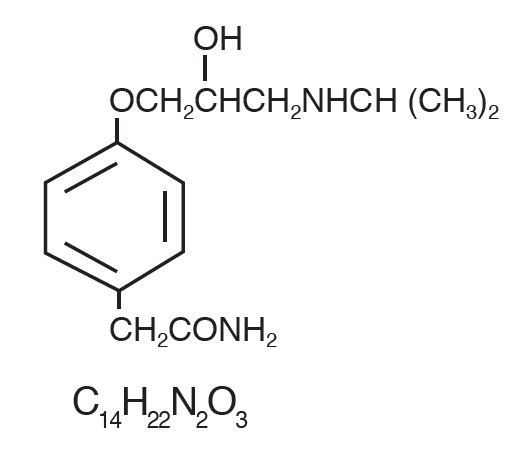
Atenolol (free base) has a molecular weight of 266. It is a relatively polar hydrophilic compound with a water solubility of 26.5 mg/mL at 37°C and a log partition coefficient (octanol/water) of 0.23. It is freely soluble in 1N HCl (300 mg/mL at 25°C) and less soluble in chloroform (3 mg/mL at 25°C).
TENORMIN is available as 25 mg, 50 mg and 100 mg tablets for oral administration.
Inactive Ingredients: Magnesium stearate, microcrystalline cellulose, povidone, sodium starch glycolate.
CLINICAL PHARMACOLOGY
TENORMIN is a beta 1 -selective (cardioselective) beta-adrenergic receptor blocking agent without membrane stabilizing or intrinsic sympathomimetic (partial agonist) activities. This preferential effect is not absolute, however, and at higher doses, TENORMIN inhibits beta 2 -adrenoreceptors, chiefly located in the bronchial and vascular musculature.
Pharmacokinetics and Metabolism
In man, absorption of an oral dose is rapid and consistent but incomplete. Approximately 50% of an oral dose is absorbed from the gastrointestinal tract, the remainder being excreted unchanged in the feces. Peak blood levels are reached between two (2) and four (4) hours after ingestion. Unlike propranolol or metoprolol, but like nadolol, TENORMIN undergoes little or no metabolism by the liver, and the absorbed portion is eliminated primarily by renal excretion. Over 85% of an intravenous dose is excreted in urine within 24 hours compared with approximately 50% for an oral dose. TENORMIN also differs from propranolol in that only a small amount (6% to 16%) is bound to proteins in the plasma. This kinetic profile results in relatively consistent plasma drug levels with about a 4-fold interpatient variation.
The elimination half-life of oral TENORMIN is approximately 6 to 7 hours, and there is no alteration of the kinetic profile of the drug by chronic administration. Following intravenous administration, peak plasma levels are reached within 5 minutes. Declines from peak levels are rapid (5- to 10-fold) during the first 7 hours; thereafter, plasma levels decay with a half-life similar to that of orally administered drug. Following oral doses of 50 mg or 100 mg, both beta-blocking and antihypertensive effects persist for at least 24 hours. When renal function is impaired, elimination of TENORMIN is closely related to the glomerular filtration rate; significant accumulation occurs when the creatinine clearance falls below 35 mL/min/1.73m 2 . (See DOSAGE AND ADMINISTRATION . )
Pharmacodynamics
In standard animal or human pharmacological tests, beta-adrenoreceptor blocking activity of TENORMIN has been demonstrated by: (1) reduction in resting and exercise heart rate and cardiac output, (2) reduction of systolic and diastolic blood pressure at rest and on exercise, (3) inhibition of isoproterenol induced tachycardia, and (4) reduction in reflex orthostatic tachycardia.
A significant beta-blocking effect of TENORMIN, as measured by reduction of exercise tachycardia, is apparent within one hour following oral administration of a single dose. This effect is maximal at about 2 to 4 hours, and persists for at least 24 hours. Maximum reduction in exercise tachycardia occurs within 5 minutes of an intravenous dose. For both orally and intravenously administered drug, the duration of action is dose related and also bears a linear relationship to the logarithm of plasma TENORMIN concentration. The effect on exercise tachycardia of a single 10 mg intravenous dose is largely dissipated by 12 hours, whereas beta-blocking activity of single oral doses of 50 mg and 100 mg is still evident beyond 24 hours following administration. However, as has been shown for all beta-blocking agents, the antihypertensive effect does not appear to be related to plasma level.
In normal subjects, the beta 1 selectivity of TENORMIN has been shown by its reduced ability to reverse the beta 2 -mediated vasodilating effect of isoproterenol as compared to equivalent beta-blocking doses of propranolol. In asthmatic patients, a dose of TENORMIN producing a greater effect on resting heart rate than propranolol resulted in much less increase in airway resistance. In a placebo controlled comparison of approximately equipotent oral doses of several beta-blockers, TENORMIN produced a significantly smaller decrease of FEV 1 than nonselective beta-blockers such as propranolol and, unlike those agents, did not inhibit bronchodilation in response to isoproterenol.
Consistent with its negative chronotropic effect due to beta blockade of the SA node, TENORMIN increases sinus cycle length and sinus node recovery time. Conduction in the AV node is also prolonged. TENORMIN is devoid of membrane stabilizing activity, and increasing the dose well beyond that producing beta blockade does not further depress myocardial contractility. Several studies have demonstrated a moderate (approximately 10%) increase in stroke volume at rest and during exercise.
In controlled clinical trials, TENORMIN, given as a single daily oral dose, was an effective antihypertensive agent providing 24-hour reduction of blood pressure. TENORMIN has been studied in combination with thiazide type diuretics, and the blood pressure effects of the combination are approximately additive. TENORMIN is also compatible with methyldopa, hydralazine, and prazosin, each combination resulting in a larger fall in blood pressure than with the single agents. The dose range of TENORMIN is narrow and increasing the dose beyond 100 mg once daily is not associated with increased antihypertensive effect. The mechanisms of the antihypertensive effects of beta-blocking agents have not been established. Several possible mechanisms have been proposed and include: (1) competitive antagonism of catecholamines at peripheral (especially cardiac) adrenergic neuron sites, leading to decreased cardiac output, (2) a central effect leading to reduced sympathetic outflow to the periphery, and (3) suppression of renin activity. The results from long-term studies have not shown any diminution of the antihypertensive efficacy of TENORMIN with prolonged use.
By blocking the positive chronotropic and inotropic effects of catecholamines and by decreasing blood pressure, atenolol generally reduces the oxygen requirements of the heart at any given level of effort, making it useful for many patients in the long-term management of angina pectoris. On the other hand, atenolol can increase oxygen requirements by increasing left ventricular fiber length and end diastolic pressure, particularly in patients with heart failure.
In a multicenter clinical trial (ISIS-1) conducted in 16,027 patients with suspected myocardial infarction, patients presenting within 12 hours (mean = 5 hours) after the onset of pain were randomized to either conventional therapy plus TENORMIN (n = 8,037), or conventional therapy alone (n = 7,990). Patients with a heart rate of < 50 bpm or systolic blood pressure < 100 mm Hg, or with other contraindications to beta blockade were excluded. Thirty-eight percent of each group were treated within 4 hours of onset of pain. The mean time from onset of pain to entry was 5.0 ± 2.7 hours in both groups. Patients in the TENORMIN group were to receive TENORMIN I.V. Injection 5 mg to 10 mg given over 5 minutes plus TENORMIN Tablets 50 mg every 12 hours orally on the first study day (the first oral dose administered about 15 minutes after the I.V. dose) followed by either TENORMIN Tablets 100 mg once daily or TENORMIN Tablets 50 mg twice daily on days 2 to 7. The groups were similar in demographic and medical history characteristics and in electrocardiographic evidence of myocardial infarction, bundle branch block, and first degree atrioventricular block at entry.
During the treatment period (days 0 to 7), the vascular mortality rates were 3.89% in the TENORMIN group (313 deaths) and 4.57% in the control group (365 deaths). This absolute difference in rates, 0.68%, is statistically significant at the P < 0.05 level. The absolute difference translates into a proportional reduction of 15% (3.89-4.57/4.57 = -0.15). The 95% confidence limits are 1% to 27%. Most of the difference was attributed to mortality in days 0 to 1 (TENORMIN - 121 deaths; control - 171 deaths).
Despite the large size of the ISIS-1 trial, it is not possible to identify clearly subgroups of patients most likely or least likely to benefit from early treatment with atenolol. Good clinical judgment suggests, however, that patients who are dependent on sympathetic stimulation for maintenance of adequate cardiac output and blood pressure are not good candidates for beta blockade. Indeed, the trial protocol reflected that judgment by excluding patients with blood pressure consistently below 100 mm Hg systolic. The overall results of the study are compatible with the possibility that patients with borderline blood pressure (less than 120 mm Hg systolic), especially if over 60 years of age, are less likely to benefit.
The mechanism through which atenolol improves survival in patients with definite or suspected acute myocardial infarction is unknown, as is the case for other beta-blockers in the postinfarction setting. Atenolol, in addition to its effects on survival, has shown other clinical benefits including reduced frequency of ventricular premature beats, reduced chest pain, and reduced enzyme elevation.
Atenolol Geriatric Pharmacology:
In general, elderly patients present higher atenolol plasma levels with total clearance values about 50% lower than younger subjects. The half-life is markedly longer in the elderly compared to younger subjects. The reduction in atenolol clearance follows the general trend that the elimination of renally excreted drugs is decreased with increasing age.
HOW SUPPLIED
TENORMIN Tablets
Tablets of 25 mg atenolol are round, flat, uncoated white tablets identified with "T" debossed on one side and 107 debossed on the other side, supplied in bottles of 90 tablets (NDC 52427-429-90).
Tablets of 50 mg atenolol are round, flat, uncoated white tablets identified with "TENORMIN" debossed on one side and 105 debossed on the other side, bisected, supplied in bottles of 90 tablets (NDC 52427-430-90).
Tablets of 100 mg atenolol are round, flat, uncoated white tablets identified with "TENORMIN" debossed on one side and 101 debossed on the other side, supplied in bottles of 90 tablets (NDC 52427-431-90).
Store at controlled room temperature, 20°C to 25°C (68°F to 77°F) [see USP]. Dispense in well-closed, light-resistant containers.
