Get your patient on Tri - Lo - Estarylla - Norgestimate And Ethinyl Estradiol (Norgestimate And Ethinyl Estradiol)
Tri - Lo - Estarylla - Norgestimate And Ethinyl Estradiol prescribing information

WARNING: CIGARETTE SMOKING and SERIOUS CARDIOVASCULAR EVENTS
Cigarette smoking increases the risk of serious cardiovascular events from combination oral contraceptive (COC) use. This risk increases with age, particularly in women over 35 years of age, and with the number of cigarettes smoked. For this reason, COCs are contraindicated in women who are over 35 years of age and smoke [see CONTRAINDICATIONS (4) ].
RECENT MAJOR CHANGES
Warnings and Precautions (5.11 ) 11/2021
INDICATIONS AND USAGE
Tri-Lo-Estarylla (norgestimate and ethinyl estradiol tablets) is an estrogen/progestin COC, indicated for use by women to prevent pregnancy. (1.1 )
Oral Contraception
Tri-Lo-Estarylla (norgestimate and ethinyl estradiol tablets) are indicated for use by females of reproductive potential to prevent pregnancy [see CLINICAL STUDIES (14) ].
DOSAGE AND ADMINISTRATION
How to Start Tri-Lo-Estarylla
Tri-Lo-Estarylla is dispensed in a blister pack [see HOW SUPPLIED/STORAGE AND HANDLING (16) ]. Tri-Lo-Estarylla may be started using either a Day 1 start or a Sunday start (see Table 1 ). For the first cycle of a Sunday Start regimen, an additional method of contraception should be used until after the first 7 consecutive days of administration.
How to Take Tri-Lo-Estarylla
- Table 1: Instructions for Administration of Tri-Lo-Estarylla
Starting COCs in women not currently using hormonal contraception (Day 1 Start or Sunday Start) Important: Consider the possibility of ovulation and conception prior to initiation of this product. Tablet Color:
| Day 1 Start:
|
Sunday Start:
| |
Switching to Tri-Lo-Estarylla from another oral contraceptive | Start on the same day that a new pack of the previous oral contraceptive would have started. |
Switching from another contraceptive method to Tri-Lo-Estarylla | Start Tri-Lo-Estarylla: |
|
|
|
|
|
|
|
|
|
|
Complete instructions to facilitate patient counseling on proper tablet usage are located in the FDA-Approved Patient Labeling.
Starting Tri-Lo-Estarylla after Abortion or Miscarriage
Starting Tri-Lo-Estarylla after Abortion or Miscarriage
First Trimester
First-trimester
- After a first-trimester abortion or miscarriage, Tri-Lo-Estarylla may be started immediately. An additional method of contraception is not needed if Tri-Lo-Estarylla is started immediately.
- If Tri-Lo-Estarylla is not started within 5 days after termination of the pregnancy, the patient should use additional non-hormonal contraception (such as condoms and spermicide) for the first seven days of her first cycle pack of Tri-Lo-Estarylla.
Second Trimester
Second-trimester
- Do not start until 4 weeks after a second-trimester abortion or miscarriage, due to the increased risk of thromboembolic disease. Start Tri-Lo-Estarylla, following the instructions in Table 1 for Day 1 or Sunday start, as desired. If using Sunday start, use additional non-hormonal contraception (such as condoms and spermicide) for the first seven days of the patient's first cycle pack of Tri-Lo-Estarylla. [See CONTRAINDICATIONS (4) , WARNINGS AND PRECAUTIONS (5.1) , and FDA-APPROVED PATIENT LABELING .]
Starting Tri-Lo-Estarylla after childbirth
Starting Tri-Lo-Estarylla after Childbirth
- Do not start until 4 weeks after delivery, due to the increased risk of thromboembolic disease. Start contraceptive therapy with Tri-Lo-Estarylla following the instructions in Table 1 for women not currently using hormonal contraception.
- Tri-Lo-Estarylla is not recommended for use in lactating women [see USE IN SPECIFIC POPULATIONS (8.3) ].
- If the woman has not yet had a period postpartum, consider the possibility of ovulation and conception occurring prior to use of Tri-Lo-Estarylla. [See CONTRAINDICATIONS (4) , WARNINGS AND PRECAUTIONS (5.1) , USE IN SPECIFIC POPULATIONS (8.1 and 8.3) , and FDA-Approved Patient Labeling ].
BEFORE YOU START TAKING YOUR PILLS
- DECIDE WHAT TIME OF DAY YOU WANT TO TAKE YOUR PILL. It is important to take it at about the same time every day.
- The 28-pill pack has 21 white, light blue, and blue "active" pills (with hormones) to take for 3 weeks. This is followed by 1 week of green "reminder" pills (without hormones).
- ALSO FIND:
- where on the pack to start taking pills,
- in what order to take the pills (follow the arrows),
- The week numbers as shown in the diagram below.
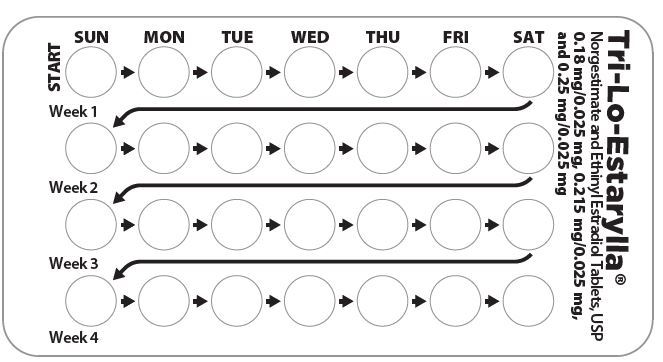
- BE SURE YOU HAVE READY AT ALL TIMES: ANOTHER KIND OF BIRTH CONTROL (such as condoms or spermicide) to use as a back-up method in case you miss pills. AN EXTRA, FULL PILL PACK.
After childbirth
Missed Tablets
Table 2: Instructions for Missed Tri-Lo-Estarylla Tablets
| Take the tablet as soon as possible. Continue taking one tablet a day until the pack is finished. |
| Take the two missed tablets as soon as possible and the next two active tablets the next day. Continue taking one tablet a day until the pack is finished. Additional non-hormonal contraception (such as condoms and spermicide) should be used as back-up if the patient has sex within 7 days after missing tablets. |
| Day 1 start: Throw out the rest of the pack and start a new pack that same day. Sunday start: Continue taking one tablet a day until Sunday, then throw out the rest of the pack and start a new pack that same day. Additional non-hormonal contraception (such as condoms and spermicide) should be used as back-up if the patient has sex within 7 days after missing tablets. |
Advice in Case of Gastrointestinal Disturbances
In case of severe vomiting or diarrhea, absorption may not be complete and additional contraceptive measures should be taken. If vomiting or diarrhea occurs within 3 to 4 hours after taking an active tablet, handle this as a missed tablet [see FDA-Approved Patient Labeling ].
DOSAGE FORMS AND STRENGTHS
Tri-Lo-Estarylla tablets are available in a blister card. Each blister card contains 28 tablets in the following order:
- 7 white, round, coated tablets imprinted "SZ" on one side and "T5" on the other side contains 0.18 mg norgestimate and 0.025 mg ethinyl estradiol.
- 7 light blue, round, coated tablets imprinted "SZ" on one side and "T6" on the other side contains 0.215 mg norgestimate and 0.025 mg ethinyl estradiol.
- 7 blue, round, coated tablets imprinted "SZ" on one side and "T7" on the other side contains 0.25 mg norgestimate and 0.025 mg ethinyl estradiol.
- 7 green, round, coated tablets imprinted "SZ" on one side and "J1" on the other side contains inert ingredients.
USE IN SPECIFIC POPULATIONS
Nursing mothers: Not recommended; can decrease milk production. (8.3 )
Pregnancy
There is little or no increased risk of birth defects in women who inadvertently use COCs during early pregnancy. Epidemiologic studies and meta-analyses have not found an increased risk of genital or non-genital birth defects (including cardiac anomalies and limb reduction defects) following exposure to low dose COCs prior to conception or during early pregnancy.
Do not administer COCs to induce withdrawal bleeding as a test for pregnancy. Do not use COCs during pregnancy to treat threatened or habitual abortion.
Nursing Mothers
Advise the nursing mother to use other forms of contraception, when possible, until she has weaned her child. COCs can reduce milk production in breastfeeding mothers. This is less likely to occur once breastfeeding is well-established; however, it can occur at any time in some women. Small amounts of oral contraceptive steroids and/or metabolites are present in breast milk.
Pediatric Use
Safety and efficacy of norgestimate and ethinyl estradiol have been established in women of reproductive age. Efficacy is expected to be the same for post-pubertal adolescents under the age of 18 and for users 18 years and older. Use of this product before menarche is not indicated.
Geriatric Use
Norgestimate and ethinyl estradiol has not been studied in postmenopausal women and is not indicated in this population.
Hepatic Impairment
The pharmacokinetics of norgestimate and ethinyl estradiol has not been studied in subjects with hepatic impairment. However, steroid hormones may be poorly metabolized in patients with hepatic impairment. Acute or chronic disturbances of liver function may necessitate the discontinuation of COC use until markers of liver function return to normal and COC causation has been excluded. [See CONTRAINDICATIONS (4) and WARNINGS AND PRECAUTIONS (5.2) . ]
Renal Impairment
The pharmacokinetics of norgestimate and ethinyl estradiol has not been studied in women with renal impairment.
CONTRAINDICATIONS
Tri-Lo-Estarylla is contraindicated in females who are known to have or develop the following conditions:
- A high risk of arterial or venous thrombotic diseases. Examples include women who are known to:
- Smoke, if over age 35 [see BOXED WARNING and WARNINGS AND PRECAUTIONS (5.1) ]
- Have deep vein thrombosis or pulmonary embolism, now or in the past [see WARNINGS AND PRECAUTIONS (5.1) ]
- Have inherited or acquired hypercoagulopathies [see WARNINGS AND PRECAUTIONS (5.1) ]
- Have cerebrovascular disease [see WARNINGS AND PRECAUTIONS (5.1) ]
- Have coronary artery disease [see WARNINGS AND PRECAUTIONS (5.1) ]
- Have thrombogenic valvular or thrombogenic rhythm diseases of the heart (for example, subacute bacterial endocarditis with valvular disease, or atrial fibrillation) [see WARNINGS AND PRECAUTIONS (5.1) ]
- Have uncontrolled hypertension [see WARNINGS AND PRECAUTIONS (5.4) ]
- Have diabetes mellitus with vascular disease [see WARNINGS AND PRECAUTIONS (5.6) ]
- Have headaches with focal neurological symptoms or migraine headaches with aura [see WARNINGS AND PRECAUTIONS (5.7) ]
- Women over age 35 with any migraine headaches [see WARNINGS AND PRECAUTIONS (5.7) ]
- Liver tumors, benign or malignant, or liver disease [see WARNINGS AND PRECAUTIONS (5.2) ]
- Undiagnosed abnormal uterine bleeding [see WARNINGS AND PRECAUTIONS (5.8) ]
- Pregnancy, because there is no reason to use COCs during pregnancy [see WARNINGS AND PRECAUTIONS (5.9) and USE IN SPECIFIC POPULATIONS (8.1) ]
- Current diagnosis of, or history of, breast cancer, which may be hormone-sensitive [see WARNINGS AND PRECAUTIONS (5.11) ]
- Use of Hepatitis C drug combinations containing ombitasvir/paritaprevir/ritonavir, with or without dasabuvir, due to the potential for ALT elevations [see WARNINGS AND PRECAUTIONS (5.3) ]
WARNINGS AND PRECAUTIONS
- Thromboembolic Disorders and Other Vascular Problems: Stop norgestimate and ethinyl estradiol if a thrombotic event occurs. Stop at least 4 weeks before and through 2 weeks after major surgery. Start no earlier than 4 weeks after delivery, in women who are not breastfeeding. (5.1 )
- Liver disease: Discontinue norgestimate and ethinyl estradiol if jaundice occurs. (5.2 )
- High blood pressure: If used in women with well-controlled hypertension, monitor blood pressure and stop norgestimate and ethinyl estradiol if blood pressure rises significantly. (5.4 )
- Carbohydrate and lipid metabolic effects: Monitor prediabetic and diabetic women taking norgestimate and ethinyl estradiol. Consider an alternate contraceptive method for women with uncontrolled dyslipidemia. (5.6 )
- Headache: Evaluate significant change in headaches and discontinue norgestimate and ethinyl estradiol if indicated. (5.7 )
- Bleeding Irregularities and Amenorrhea: Evaluate irregular bleeding or amenorrhea. (5.8 )
Thromboembolic Disorders and Other Vascular Problems
- Stop norgestimate and ethinyl estradiol if an arterial thrombotic event or venous thrombotic (VTE) event occurs.
- Stop norgestimate and ethinyl estradiol if there is unexplained loss of vision, proptosis, diplopia, papilledema, or retinal vascular lesions. Evaluate for retinal vein thrombosis immediately [see ADVERSE REACTIONS (6.2) ].
- If feasible, stop norgestimate and ethinyl estradiol at least 4 weeks before and through 2 weeks after major surgery or other surgeries known to have an elevated risk of VTE as well as during and following prolonged immobilization.
- Start norgestimate and ethinyl estradiol no earlier than 4 weeks after delivery, in women who are not breastfeeding. The risk of postpartum VTE decreases after the third postpartum week, whereas the risk of ovulation increases after the third postpartum week.
- The use of COCs increases the risk of VTE. However, pregnancy increases the risk of VTE as much or more than the use of COCs. The risk of VTE in women using COCs is 3 to 9 cases per 10,000 woman-years. The risk of VTE is highest during the first year of use of COCs and when restarting hormonal contraception after a break of 4 weeks or longer. The risk of thromboembolic disease due to COCs gradually disappears after use is discontinued.
- Use of COCs also increases the risk of arterial thromboses such as strokes and myocardial infarctions, especially in women with other risk factors for these events. COCs have been shown to increase both the relative and attributable risks of cerebrovascular events (thrombotic and hemorrhagic strokes). This risk increases with age, particularly in women over 35 years of age who smoke.
- Use COCs with caution in women with cardiovascular disease risk factors.
Liver Disease
Impaired Liver Function
Impaired Liver Function
Do not use norgestimate and ethinyl estradiol in women with liver disease, such as acute viral hepatitis or severe (decompensated) cirrhosis of liver [see CONTRAINDICATIONS (4) ]. Acute or chronic disturbances of liver function may necessitate the discontinuation of COC use until markers of liver function return to normal and COC causation has been excluded. Discontinue norgestimate and ethinyl estradiol if jaundice develops.
Liver Tumors
Liver Tumors
Norgestimate and ethinyl estradiol is contraindicated in women with benign and malignant liver tumors [see CONTRAINDICATIONS (4) ]. Hepatic adenomas are associated with COC use. An estimate of the attributable risk is 3.3 cases/100,000 COC users. Rupture of hepatic adenomas may cause death through intra-abdominal hemorrhage.
Studies have shown an increased risk of developing hepatocellular carcinoma in long-term (>8 years) COC users. However, the risk of liver cancers in COC users is less than one case per million users.
Risk of Liver Enzyme Elevations with Concomitant Hepatitis C Treatment
During clinical trials with the Hepatitis C combination drug regimen that contains ombitasvir/paritaprevir/ritonavir, with or without dasabuvir, ALT elevations greater than 5 times the upper limit of normal (ULN), including some cases greater than 20 times the ULN, were significantly more frequent in women using ethinyl estradiol-containing medications, such as COCs. Discontinue norgestimate and ethinyl estradiol prior to starting therapy with the combination drug regimen ombitasvir/paritaprevir/ritonavir, with or without dasabuvir [see CONTRAINDICATIONS (4) ]. Norgestimate and ethinyl estradiol can be restarted approximately 2 weeks following completion of treatment with the Hepatitis C combination drug regimen.
High Blood Pressure
Norgestimate and ethinyl estradiol is contraindicated in women with uncontrolled hypertension or hypertension with vascular disease [see CONTRAINDICATIONS (4) ] . For women with well-controlled hypertension, monitor blood pressure and stop norgestimate and ethinyl estradiol if blood pressure rises significantly.
An increase in blood pressure has been reported in women taking COCs, and this increase is more likely in older women with extended duration of use. The incidence of hypertension increases with increasing concentrations of progestin.
Gallbladder Disease
Studies suggest a small increased relative risk of developing gallbladder disease among COC users. Use of COCs may worsen existing gallbladder disease. A past history of COC-related cholestasis predicts an increased risk with subsequent COC use. Women with a history of pregnancy-related cholestasis may be at an increased risk for COC related cholestasis.
Carbohydrate and Lipid Metabolic Effects
Carefully monitor prediabetic and diabetic women who take norgestimate and ethinyl estradiol. COCs may decrease glucose tolerance.
Consider alternative contraception for women with uncontrolled dyslipidemia. A small proportion of women will have adverse lipid changes while on COCs.
Women with hypertriglyceridemia, or a family history thereof, may be at an increased risk of pancreatitis when using COCs.
Headache
If a woman taking norgestimate and ethinyl estradiol develops new headaches that are recurrent, persistent, or severe, evaluate the cause and discontinue norgestimate and ethinyl estradiol if indicated.
Consider discontinuation of norgestimate and ethinyl estradiol in the case of increased frequency or severity of migraine during COC use (which may be prodromal of a cerebrovascular event).
Bleeding Irregularities and Amenorrhea
Unscheduled Bleeding and Spotting
Unscheduled Bleeding and Spotting
Unscheduled (breakthrough or intracyclic) bleeding and spotting sometimes occur in patients on COCs, especially during the first three months of use. If bleeding persists or occurs after previously regular cycles, check for causes such as pregnancy or malignancy. If pathology and pregnancy are excluded, bleeding irregularities may resolve over time or with a change to a different contraceptive product.
In the clinical trial of norgestimate and ethinyl estradiol, the frequency and duration of unscheduled bleeding and/or spotting was assessed in 1,673 women (11,015 evaluable cycles). A total of 3 (0.2%) women discontinued norgestimate and ethinyl estradiol, at least in part, due to bleeding or spotting. Based on data from the clinical trials, 7 to 17% of women using norgestimate and ethinyl estradiol experienced unscheduled bleeding per cycle in the first year. The percent of women who experienced unscheduled bleeding tended to decrease over time.
Amenorrhea and Oligomenorrhea
Amenorrhea and Oligomenorrhea
Women who use norgestimate and ethinyl estradiol may experience amenorrhea. Some women may experience amenorrhea or oligomenorrhea after discontinuation of COCs, especially when such a condition was pre-existent.
If scheduled (withdrawal) bleeding does not occur, consider the possibility of pregnancy. If the patient has not adhered to the prescribed dosing schedule (missed one or more active tablets or started taking them on a day later than she should have), consider the possibility of pregnancy at the time of the first missed period and take appropriate diagnostic measures. If the patient has adhered to the prescribed regimen and misses two consecutive periods, rule out pregnancy.
COC Use Before or During Early Pregnancy
Extensive epidemiological studies have revealed no increased risk of birth defects in women who have used oral contraceptives prior to pregnancy. Studies also do not suggest a teratogenic effect, particularly in so far as cardiac anomalies and limb reduction defects are concerned, when oral contraceptives are taken inadvertently during early pregnancy. Discontinue norgestimate and ethinyl estradiol use if pregnancy is confirmed.
Administration of COCs to induce withdrawal bleeding should not be used as a test for pregnancy [see USE IN SPECIFIC POPULATIONS (8.1) ].
Depression
Carefully observe women with a history of depression and discontinue norgestimate and ethinyl estradiol if depression recurs to a serious degree.
Malignant Neoplasms
Breast Cancer
Tri-Lo-Estarylla is contraindicated in females who currently have or have had breast cancer because breast cancer may be hormonally sensitive [see Contraindications (4)].
Epidemiology studies have not found a consistent association between use of combined oral contraceptives (COCs) and breast cancer risk. Studies do not show an association between ever (current or past) use of COCs and risk of breast cancer. However, some studies report a smallincrease in the risk of breast cancer among current or recent users (<6 months since last use) and current users with longer duration of COC use [see Postmarketing Experience (6.2)].
Cervical Cancer
Some studies suggest that COC use has beenassociated with an increase in the risk of cervical cancer or intraepithelial neoplasia. However, there continues to be controversy about the extent to which such findings may be due to differences in sexual behavior and other factors.
Effect on Binding Globulins
The estrogen component of COCs may raise the serum concentrations of thyroxine-binding globulin, sex hormone-binding globulin, and cortisol-binding globulin. The dose of replacement thyroid hormone or cortisol therapy may need to be increased.
Monitoring
A woman who is taking COCs should have a yearly visit with her healthcare provider for a blood pressure check and for other indicated healthcare.
Hereditary Angioedema
In women with hereditary angioedema, exogenous estrogens may induce or exacerbate symptoms of angioedema.
Chloasma
Chloasma may occasionally occur, especially in women with a history of chloasma gravidarum. Women with a tendency to chloasma should avoid exposure to the sun or ultraviolet radiation while taking norgestimate and ethinyl estradiol.
Risk of Allergic Reactions Due to Tartrazine
This product contains FD&C Yellow No. 5 (tartrazine) which may cause allergic-type reactions (including bronchial asthma) in certain susceptible persons. Although the overall incidence of FD&C Yellow No. 5 (tartrazine) sensitivity in the general population is low, it is frequently seen in patients who also have aspirin hypersensitivity.
ADVERSE REACTIONS
The following serious adverse reactions with the use of COCs are discussed elsewhere in labeling:
- Serious cardiovascular events and stroke [see BOXED WARNING and WARNINGS AND PRECAUTIONS (5.1) ]
- Vascular events [see WARNINGS AND PRECAUTIONS (5.1) ]
- Liver disease [see WARNINGS AND PRECAUTIONS (5.2) ]
Adverse reactions commonly reported by COC users are:
- Irregular uterine bleeding
- Nausea
- Breast tenderness
- Headache
Clinical Trial Experience
Because clinical trials are conducted under widely varying conditions, adverse reaction rates observed in the clinical trials of a drug cannot be directly compared to rates in the clinical trials of another drug and may not reflect the rates observed in clinical practice.
The safety of norgestimate and ethinyl estradiol was evaluated in 1,723 subjects who participated in a randomized, partially blinded, multicenter, active-controlled clinical trial of norgestimate and ethinyl estradiol for contraception. This trial examined healthy, nonpregnant, volunteers aged 18 to 45 (nonsmoker if 35 to 45 years of age), who were sexually active with regular coitus. Subjects were followed for up to 13 28-day cycles.
Common Adverse Reactions
Common Adverse Reactions (≥ 2% of subjects)
The most common adverse reactions reported by at least 2% of the 1,723 women using the 28-day regimen were the following in order of decreasing incidence: headache/migraine (30.5%), nausea/vomiting (16.3%); breast issues (including tenderness, pain, enlargement, swelling, discharge, discomfort, cyst, and nipple pain) (10.3%), abdominal pain (9.2%), menstrual disorders (including dysmenorrhea, menstrual discomfort, menstrual disorder) (9.2%), mood disorders (including depression, mood altered, mood swings and depressed mood) (7.6%); acne (5.1%), vulvovaginal infection (3.5%), abdominal distension (2.8%), weight increased (2.4%) , fatigue (2.1%).
Adverse Reactions Leading to Study Discontinuation
Adverse Reactions Leading to Study Discontinuation
In the clinical trial of norgestimate and ethinyl estradiol 4% of subjects discontinued the trial due to an adverse reaction. The most common adverse reactions leading to discontinuation were headache/migraine (1.2%), nausea/vomiting (0.7%), cervical dysplasia (0.7%), abdominal pain (0.4%), ovarian cyst (0.3%), acne (0.2%), flatulence (0.2%) and depression (0.2%).
Serious Adverse Reactions
Serious Adverse Reactions
Carcinoma of the cervix in situ (1 subject) and cervical dysplasia (1 subject).
Postmarketing Experience
Post Marketing Experience
Five studies that compared breast cancer risk between ever-users (current or past use) of COCs and never-users of COCs reported no association between ever use of COCs and breast cancer risk, with effect estimates ranging from 0.90 - 1.12 (Figure 2). Three studies compared breast cancer risk between current or recent COC users (<6 months since last use) and never users of COCs (Figure 2). One of these studies reported no association between breast cancer risk and COC use. The other two studies found an increased relative risk of 1.19 - 1.33 with current or recent use. Both of these studies found an increased risk of breast cancer with current use of longer duration, with relative risks ranging from 1.03 with less than one year of COC use to approximately 1.4 with more than 8-10 years of COC use.
Figure 2: Risk of Breast Cancer with Combined Oral Contraceptive Use
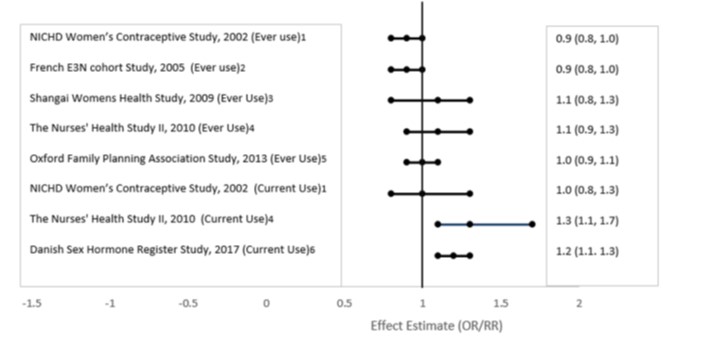
RR = relative risk; OR = odds ratio; HR = hazard ratio. “ever COC” are females with current or past COC use; “never COC use” are females that never used COCs.
The following additional adverse drug reactions have been reported from worldwide postmarketing experience with norgestimate/ethinyl estradiol. Because these reactions are reported voluntarily from a population of uncertain size, it is not always possible to reliably estimate their frequency or establish a causal relationship to drug exposure.
Infections and Infestations: Urinary tract infection
Neoplasms Benign, Malignant and Unspecified (Including Cysts and Polyps): Breast cancer, benign breast neoplasm, hepatic adenoma, focal nodular hyperplasia, breast cyst
Immune System Disorders: Hypersensitivity
Metabolism and Nutrition Disorders: Dyslipidemia
Psychiatric Disorders: Anxiety, insomnia
Nervous System Disorders: Syncope, convulsion, paresthesia, dizziness
Eye Disorders: Visual impairment, dry eye, contact lens intolerance
Ear and Labyrinth Disorders: Vertigo
Cardiac Disorders: Tachycardia, palpitations
Vascular Events: Deep vein thrombosis, pulmonary embolism, retinal vascular thrombosis, hot flush
Arterial Events: Arterial thromboembolism, myocardial infarction, cerebrovascular accident
Respiratory, Thoracic and Mediastinal Disorders: Dyspnea
Gastrointestinal Disorders: Pancreatitis, abdominal distension, diarrhea, constipation
Hepatobiliary Disorders: Hepatitis
Skin and Subcutaneous Tissue Disorders: Angioedema, erythema nodosum, hirsutism, night sweats, hyperhidrosis, photosensitivity reaction, urticaria, pruritus, acne
Musculoskeletal, Connective Tissue, and Bone Disorders: Muscle spasms, pain in extremity, myalgia, back pain
Reproductive System and Breast Disorders: Ovarian cyst, suppressed lactation, vulvovaginal dryness
General Disorders and Administration Site Conditions: Chest pain, asthenic conditions.
DRUG INTERACTIONS
Consult the labeling of concurrently used drugs to obtain further information about interactions with hormonal contraceptives or the potential for enzyme alterations.
No drug-drug interaction studies were conducted with norgestimate and ethinyl estradiol.
Effects of Other Drugs on Combined Oral Contraceptives
Substances decreasing the plasma concentrations of COCs
Substances Decreasing the Plasma Concentrations of COCs
Drugs or herbal products that induce certain enzymes, including cytochrome P450 3A4 (CYP3A4), may decrease the plasma concentrations of COCs and potentially diminish the effectiveness of COCs or increase breakthrough bleeding. Some drugs or herbal products that may decrease the effectiveness of COCs include phenytoin, barbiturates, carbamazepine, bosentan, felbamate, griseofulvin, oxcarbazepine, rifampicin, topiramate, rifabutin, rufinamide, aprepitant and products containing St. John's wort. Interactions between COCs and other drugs may lead to breakthrough bleeding and/or contraceptive failure. Counsel women to use an alternative method of contraception or a back-up method when enzyme inducers are used with COCs, and to continue back-up contraception for 28 days after discontinuing the enzyme inducer to ensure contraceptive reliability.
Colesevelam
Colesevelam
Colesevelam, a bile acid sequestrant, given together with a COC, has been shown to significantly decrease the AUC of ethinyl estradiol (EE). The drug interaction between the contraceptive and colesevelam was decreased when the two drug products were given 4 hours apart.
Substances increasing the plasma concentrations of COCs
Substances Increasing the Plasma Concentrations of COCs
Co-administration of atorvastatin or rosuvastatin and certain COCs containing EE increase AUC values for EE by approximately 20 to 25%. Ascorbic acid and acetaminophen may increase plasma EE concentrations, possibly by inhibition of conjugation. CYP3A4 inhibitors such as itraconazole, voriconazole, fluconazole, grapefruit juice, or ketoconazole may increase plasma hormone concentrations.
Human Immunodeficiency Virus (HIV)
Human Immunodeficiency Virus (HIV)/Hepatitis C Virus (HCV) Protease Inhibitors and Non-nucleoside Reverse Transcriptase Inhibitors
Significant changes (increase or decrease) in the plasma concentrations of estrogen and/or progestin have been noted in some cases of co-administration with HIV protease inhibitors (decrease [e.g., nelfinavir, ritonavir, darunavir/ritonavir, (fos)amprenavir/ritonavir, lopinavir/ritonavir, and tipranavir/ritonavir] or increase [e.g., indinavir and atazanavir/ritonavir])/HCV protease inhibitors (decrease [e.g., boceprevir and telaprevir]) or with non-nucleoside reverse transcriptase inhibitors (decrease [e.g., nevirapine] or increase [e.g., etravirine]).
Effects of Combined Oral Contraceptives on Other Drugs
- COCs containing EE may inhibit the metabolism of other compounds (e.g., cyclosporine, prednisolone, theophylline, tizanidine, and voriconazole) and increase their plasma concentrations.
- COCs have been shown to decrease plasma concentrations of acetaminophen, clofibric acid, morphine, salicylic acid, temazepam and lamotrigine. Significant decrease in plasma concentration of lamotrigine has been shown, likely due to induction of lamotrigine glucuronidation. This may reduce seizure control; therefore, dosage adjustments of lamotrigine may be necessary. Women on thyroid hormone replacement therapy may need increased doses of thyroid hormone because the serum concentration of thyroid-binding globulin increases with use of COCs.
Interference with Laboratory Tests
The use of contraceptive steroids may influence the results of certain laboratory tests, such as coagulation factors, lipids, glucose tolerance, and binding proteins.
Concomitant Use with HCV Combination Therapy ? Liver Enzyme Elevation
Do not co-administer norgestimate and ethinyl estradiol with HCV drug combinations containing ombitasvir/paritaprevir/ritonavir, with or without dasabuvir, due to potential for ALT elevations [see WARNINGS AND PRECAUTIONS (5.3) ]
DESCRIPTION
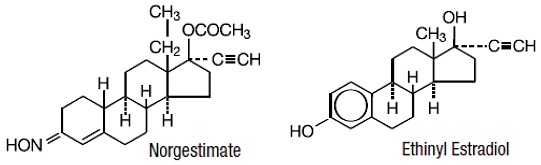
Tri-Lo-Estarylla (norgestimate and ethinyl estradiol tablets, USP) is a combination oral contraceptive containing the progestational compound norgestimate and the estrogenic compound ethinyl estradiol. Norgestimate is designated as (18,19-Dinor-17-pregn-4-en-20-yn-3-one,17-(acetyloxy)-13-ethyl-, oxime,(17α)-(+)-) and ethinyl estradiol is designated as (19-nor-17α-pregna,1,3,5(10)-trien-20-yne-3,17-diol).
- Each active white tablet contains 0.18 mg of norgestimate and 0.025 mg of ethinyl estradiol. Inactive ingredients include crospovidone, lactose anhydrous, magnesium stearate, polyethylene glycol, polyvinyl alcohol, pregelatinised starch, talc, and titanium dioxide.
- Each active light blue tablet contains 0.215 mg of norgestimate and 0.025 mg of ethinyl estradiol. Inactive ingredients include crospovidone, FD&C Blue No.2 indigo carmine aluminum lake, FD&C Blue No.1 brilliant blue aluminum lake, FD&C Yellow No.5 tartrazine aluminum lake, lactose anhydrous, magnesium stearate, polyethylene glycol, polyvinyl alcohol, pregelatinised starch, talc, and titanium dioxide.
- Each active blue tablet contains 0.25 mg of norgestimate and 0.025 mg of ethinyl estradiol. Inactive ingredients include crospovidone, FD&C Blue No.2 indigo carmine aluminum lake, FD&C Blue No.1 brilliant blue aluminum lake, FD&C Yellow No.6 sunset yellow fcf aluminum lake, lactose anhydrous, magnesium stearate, polyethylene glycol, polyvinyl alcohol, pregelatinised starch, talc, and titanium dioxide.
- Each green placebo tablet contains only inert ingredients, as follows: crospovidone, FD&C Blue No.2 indigo carmine aluminum lake, FD&C Yellow No.5 tartrazine aluminum lake, lactose anhydrous, lecithin (soya), magnesium stearate, polyethylene glycol, polyvinyl alcohol, pregelatinised starch, talc, and titanium dioxide.
CLINICAL PHARMACOLOGY
Mechanism of Action
COCs lower the risk of becoming pregnant primarily by suppressing ovulation. Other possible mechanisms may include cervical mucus changes that inhibit sperm penetration and endometrial changes that reduce the likelihood of implantation.
Pharmacodynamics
No specific pharmacodynamic studies were conducted with norgestimate and ethinyl estradiol.
Pharmacokinetics
Absorption
Absorption
Norgestimate (NGM) and EE are rapidly absorbed following oral administration. NGM is rapidly and completely metabolized by first pass (intestinal and/or hepatic) mechanisms to norelgestromin (NGMN) and norgestrel (NG), which are the major active metabolites of NGM. Mean pharmacokinetic parameters for NGMN, NG and EE during three cycles of administration of norgestimate and ethinyl estradiol are summarized in Table 3.
Peak serum concentrations of NGMN and EE were generally reached by 2 hours after administration of norgestimate and ethinyl estradiol. Accumulation following multiple dosing of the 0.180 mg NGM / 0.025 mg EE dose is approximately 1.5 to 2 fold for NGMN and approximately 1.5 fold for EE compared with single dose administration, in agreement with that predicted based on linear kinetics of NGMN and EE. The pharmacokinetics of NGMN is dose proportional following NGM doses of 0.180 to 0.250 mg. Steady-state conditions for NGMN following each NGM dose and for EE were achieved during the three cycle study. Non-linear accumulation (4.5–14.5 fold) of NG was observed as a result of high affinity binding to SHBG, which limits its biological activity.
Table 3 Summary of NGMN, NG and EE pharmacokinetic parameters.
Table 3: Mean (SD) Pharmacokinetic Parameters of Norgestimate and Ethinyl Estradiol During a Three Cycle Study
| Analyte 1 | Cycle | Day | C max | t max (h) | AUC 0–24h | t 1/2 (h) |
|---|---|---|---|---|---|---|
NGMN(2, 3, 4) | 1 | 1 | 0.91 (0.27) | 1.8 (1) | 5.86 (1.54) | NC |
3 | 7 | 1.42 (0.43) | 1.8 (0.7) | 11.3 (3.2) | NC | |
14 | 1.57 (0.39) | 1.8 (0.7) | 13.9 (3.7) | NC | ||
21 | 1.82 (0.54) | 1.5 (0.7) | 16.1 (4.8) | 28.1 (10.6) | ||
NG(2, 3, 4) | 1 | 1 | 0.32 (0.14) | 2 (1.1) | 2.44 (2.04) | NC |
3 | 7 | 1.64 (0.89) | 1.9 (0.9) | 27.9 (18.1) | NC | |
14 | 2.11 (1.13) | 4 (6.3) | 40.7 (24.8) | NC | ||
21 | 2.79 (1.42) | 1.7 (1.2) | 49.9 (27.6) | 36.4 (10.2) | ||
EE(2, 3, 5) | 1 | 1 | 55.6 (18.1) | 1.7 (0.5) | 421 (118) | NC |
3 | 7 | 91.1 (36.7) | 1.3 (0.3) | 782 (329) | NC | |
14 | 96.9 (38.5) | 1.3 (0.3) | 796 (273) | NC | ||
21 | 95.9 (38.9) | 1.3 (0.6) | 771 (303) | 17.7 (4.4) |
1 NGMN = Norelgestromin, NG = norgestrel, EE = ethinyl estradiol
2 C max = peak serum concentration, t max = time to reach peak serum concentration, AUC 0–24h = area under serum concentration vs. time curve from 0 to 24 hours, t 1/2 = elimination half-life.
3 units for all analytes; h = hours
4 units for NGMN and NG – C max = ng/mL, AUC 0–24h = h•ng/mL
5 units for EE only – C max = pg/mL, AUC 0–24h = h•pg/mL
NC = not calculated
Food Effect
Food Effect
The effect of food on the pharmacokinetics of norgestimate and ethinyl estradiol has not been studied.
Distribution
Distribution
NGMN and NG are highly bound (>97%) to serum proteins. NGMN is bound to albumin and not to SHBG, while NG is bound primarily to SHBG. EE is extensively bound (>97%) to serum albumin and induces an increase in the serum concentrations of SHBG.
Metabolism
Metabolism
NGM is extensively metabolized by first-pass mechanisms in the gastrointestinal tract and/or liver. NGM's primary active metabolite is NGMN. Subsequent hepatic metabolism of NGMN occurs and metabolites include NG, which is also active and various hydroxylated and conjugated metabolites. Although NGMN and its metabolites inhibit a variety of P450 enzymes in human liver microsomes, under the recommended dosing regimen, the in vivo concentrations of NGMN and its metabolites, even at the peak serum levels, are relatively low compared to the inhibitory constant (Ki). EE is also metabolized to various hydroxylated products and their glucuronide and sulfate conjugates.
Excretion
Excretion
Following 3 cycles of administration of norgestimate and ethinyl estradiol, the mean (± SD) elimination half-life values, at steady-state, for NGMN, NG and EE were 28.1 (± 10.6) hours, 36.4 (± 10.2) hours and 17.7 (± 4.4) hours, respectively ( Table 2 ). The metabolites of NGMN and EE are eliminated by renal and fecal pathways.
Use in Specific Populations
Use in Specific Populations
Effects of Body Weight, Body Surface Area, and Age
Effects of Body Weight, Body Surface Area, and Age
The effects of body weight, body surface area, age and race on the pharmacokinetics of NGMN, NG and EE were evaluated in 79 healthy women using pooled data following single dose administration of NGM 0.180 or 0.250 mg / EE 0.025 mg tablets in four pharmacokinetic studies. Increasing body weight and body surface area were each associated with decreases in C max and AUC 0–24h values for NGMN and EE and increases in CL/F (oral clearance) for EE. Increasing body weight by 10 kg is predicted to reduce the following parameters: NGMN C max by 9% and AUC 0–24h by 19%, NG C max by 12% and AUC 0–24h by 46%, EE C max by 13% and AUC 0–24h by 12%. These changes were statistically significant. Increasing age was associated with slight decreases (6% with increasing age by 5 years) in C max and AUC 0–24h for NGMN and were statistically significant, but there was no significant effect for NG or EE. Only a small to moderate fraction (5 to 40%) of the overall variability in the pharmacokinetics of NGMN and EE following norgestimate and ethinyl estradiol tablets may be explained by any or all of the above demographic parameters.
NONCLINICAL TOXICOLOGY
Carcinogenesis, Mutagenesis, Impairment of Fertility
[See WARNINGS AND PRECAUTIONS (5.2 , 5.11 ) and USE IN SPECIFIC POPULATIONS (8.1) .]
CLINICAL STUDIES
In an active controlled clinical trial lasting 12 months, 1,673 women, 18 to 45 years old completed 11,003 cycles of norgestimate and ethinyl estradiol use and a total of 20 pregnancies were reported in norgestimate and ethinyl estradiol users. The racial demographic of those treated with norgestimate and ethinyl estradiol was: Caucasian (86%), African-American (6%), Asian (2%), and Other (6%). There were no exclusions on the basis of weight; the weight range for women treated was 90 to 240 lbs, with a mean weight of about 142 lbs. The pregnancy rate in women aged 18 to 35 years was approximately 2.6 pregnancies per 100 woman-years of use.
HOW SUPPLIED/STORAGE AND HANDLING
How Supplied
Tri-Lo-Estarylla (norgestimate and ethinyl estradiol tablets, USP) are available in a blister card:
Each blister card (28 tablets) contains in the following order:
- 7 white, round, coated tablets imprinted "SZ" on one side and "T5" on the other side contains 0.18 mg of the progestational compound, norgestimate, together with 0.025 mg of the estrogenic compound, ethinyl estradiol.
- 7 light blue, round, coated tablets imprinted "SZ" on one side and "T6" on the other side contains 0.215 mg of the progestational compound, norgestimate, together with 0.025 mg of the estrogenic compound, ethinyl estradiol.
- 7 blue, round, coated tablets imprinted "SZ" on one side and "T7" on the other side contains 0.25 mg of the progestational compound, norgestimate, together with 0.025 mg of the estrogenic compound, ethinyl estradiol.
- 7 green, round, coated tablets imprinted "SZ" on one side and "J1" on the other side contains inert ingredients.
NDC 70700-120-85, Carton containing three blister cards.
Storage Conditions
- Store at 20° to 25°C (68° to 77°F) [see USP Controlled Room Temperature].
- Protect from light.
- Keep out of the reach of children.
Instructions For Use
Tri-Lo-Estarylla (norgestimate and ethinyl estradiol tablets, USP)
(nor-JES-ti-mate, ETH-i-nil es-tra-DYE-ol)
Important Information about taking Tri-Lo-Estarylla
- Take 1 pill every day at the same time. Take the pills in the order directed on your pill dispenser.
- Do not skip your pills, even if you do not have sex often. If you miss pills (including starting the pack late) you could get pregnant. The more pills you miss, the more likely you are to get pregnant.
- If you have trouble remembering to take Tri-Lo-Estarylla, talk to your healthcare provider. When you first start taking Tri-Lo-Estarylla, spotting or light bleeding in between your periods may occur. Contact your healthcare provider if this does not go away after a few months.
- You may feel sick to your stomach (nauseous), especially during the first few months of taking Tri-Lo-Estarylla . If you feel sick to your stomach, do not stop taking the pill. The problem will usually go away. If your nausea does not go away, call your healthcare provider.
- Missing pills can also cause spotting or light bleeding, even when you take the missed pills later. On the days you take 2 pills to make up for missed pills (see What should I do if I miss any Tri-Lo-Estarylla pills? below), you could also feel a little sick to your stomach.
- It is not uncommon to miss a period. However, if you miss a period and have not taken Tri-Lo-Estarylla according to directions, or miss 2 periods in a row, or feel like you may be pregnant, call your healthcare provider. If you have a positive pregnancy test, you should stop taking Tri-Lo-Estarylla.
- If you have vomiting or diarrhea within 3 to 4 hours of taking your pill, take another pill of the same color from your extra pill dispenser. If you do not have an extra pill dispenser, take the next pill in your pill dispenser. Continue taking all your remaining pills in order. Start the first pill of your next pill dispenser the day after finishing your current pill dispenser. This will be 1 day earlier than originally scheduled. Continue on your new schedule.
- If you have vomiting or diarrhea for more than 1 day, your birth control pills may not work as well. Use an additional birth control method, like condoms and a spermicide, until you check with your healthcare provider.
- Stop taking Tri-Lo-Estarylla at least 4 weeks before you have major surgery and do not restart after the surgery without asking your healthcare provider. Be sure to use other forms of contraception (like condoms and spermicide) during this time period.
Before you start taking Tri-Lo-Estarylla:
- Decide what time of day you want to take your pill. It is important to take it at the same time every day and in the order as directed on your pill dispenser.
- Have backup contraception (condoms and spermicide) available and if possible, an extra full pack of pills as needed.
When should I start taking Tri-Lo-Estarylla?
If you start taking Tri-Lo-Estarylla and you have not used a hormonal birth control method before:
- There are 2 ways to start taking your birth control pills. You can either start on a Sunday (Sunday Start) or on the first day (Day 1) of your natural menstrual period (Day 1 Start). Your healthcare provider should tell you when to start taking your birth control pill.
- If you use the Sunday Start, use non-hormonal back-up contraception such as condoms and spermicide for the first 7 days that you take Tri-Lo-Estarylla. You do not need back-up contraception if you use the Day 1 Start.
If you start taking Tri-Lo-Estarylla and you are switching from another birth control pill:
- Start your new Tri-Lo-Estarylla pack on the same day that you would start the next pack of your previous birth control method.
- Do not continue taking the pills from your previous birth control pack.
If you start taking Tri-Lo-Estarylla and previously used a vaginal ring or transdermal patch:
- Start using Tri-Lo-Estarylla on the day you would have reapplied the next ring or patch.
If you start taking Tri-Lo-Estarylla and you are switching from a progestin-only method such as an implant or injection:
- Start taking Tri-Lo-Estarylla on the day of removal of your implant or on the day when you would have had your next injection.
If you start taking Tri-Lo-Estarylla and you are switching from an intrauterine device or system (IUD or IUS):
- Start taking Tri-Lo-Estarylla on the day of removal of your IUD or IUS.
- You do not need back-up contraception if your IUD or IUS is removed on the first day (Day 1) of your period. If your IUD or IUS is removed on any other day, use non-hormonal back-up contraception such as condoms and spermicide for the first 7 days that you take Tri-Lo-Estarylla.
Keep a calendar to track your period:
If this is the first time you are taking birth control pills, read, "When should I start taking Tri-Lo-Estarylla?" above. Follow these instructions for either a Sunday Start or a Day 1 Start.
Sunday Start:
You will use a Sunday Start if your healthcare provider told you to take your first pill on a Sunday.
- Take pill 1 on the Sunday after your period starts .
- If your period starts on a Sunday, take pill "1" that day and refer to Day 1 Start instructions below.
- Take 1 pill every day in the order on the pill dispenser at the same time each day for 28 days.
- After taking the last pill on Day 28 from the pill dispenser, start taking the first pill from a new pack, on the same day of the week as the first pack (Sunday). Take the first pill in the new pack whether or not you are having your period.
- Use non-hormonal back-up contraception such as condoms and spermicide for the first 7 days of the first cycle that you take Tri-Lo-Estarylla TM .
Day 1 Start:
You will use a Day 1 Start if your doctor told you to take your first pill (Day 1) on the first day of your period .
- Take 1 pill every day in the order of the blister pack, at the same time each day, for 28 days.
- After taking the last pill on Day 28 from the pill blister pack, start taking the first pill from a new pack, on the same day of the week as the first pack. Take the first pill in the new pack whether or not you are having your period.
Tri-Lo-Estarylla TM comes in blister pack. Read the instructions below for using your blister pack.
Each new blister pack has 28 pills
- 7 white pills with hormone, for Days 1 to 7
- 7 light blue pills with hormone, for Days 8 to 14
- 7 blue pills with hormones, for Days 15 to 21
- 7 green pills (without hormones), for Days 22 to 28.
BEFORE YOU START TAKING YOUR PILLS
- DECIDE WHAT TIME OF DAY YOU WANT TO TAKE YOUR PILL. It is important to take it at about the same time every day.
- The 28-pill pack has 21 white, light blue, and blue "active" pills (with hormones) to take for 3 weeks. This is followed by 1 week of green "reminder" pills (without hormones).
- 3. ALSO FIND:
- 1) where on the pack to start taking pills,
- 2) in what order to take the pills (follow the arrows),
- 3) The week numbers as shown in the diagram below.
4) BE SURE YOU HAVE READY AT ALL TIMES: ANOTHER KIND OF BIRTH CONTROL (such as condoms or spermicide) to use as a back-up method in case you miss pills. AN EXTRA, FULL PILL PACK.
What should I do if I miss any Tri-Lo-Estarylla pills?
If you miss 1 pill in Weeks 1, 2, or 3, follow these steps:
- Take it as soon as you remember. Take the next pill at your regular time. This means you may take 2 pills in 1 day.
- Then continue taking 1 pill every day until you finish the pack.
- You do not need to use a back-up birth control method if you have sex.
If you miss 2 pills in Week 1 or Week 2 of your pack, follow these steps:
- Take the 2 missed pills as soon as possible and the next 2 pills the next day.
- Then continue to take 1 pill every day until you finish the pack.
- Use a non-hormonal birth control method (such as a condom and spermicide) as a back-up if you have sex during the first 7 days after missing your pills.
If you miss 2 pills in a row in Week 3, or you miss 3 or more pills in a row during Weeks 1, 2, or 3 of the pack, follow these steps:
- If you are a Day 1 Starter:
- Throw out the rest of the pill pack and start a new pack that same day.
- You may not have your period this month but this is expected. However, if you miss your period 2 months in a row, call your healthcare provider because you might be pregnant.
- You could become pregnant if you have sex during the first 7 days after you restart your pills. You MUST use a non-hormonal birth control method (such as a condom and spermicide) as a back-up if you have sex during the first 7 days after you restart your pills.
- If you are a Sunday Starter:
- Keep taking 1 pill every day until Sunday. On Sunday, throw out the rest of the pack and start a new pack of pills that same day.
- Use a non-hormonal birth control method (such as a condom and spermicide) as a back-up if you have sex during the first 7 days after you restart your pills.
If you have any questions or are unsure about the information in this leaflet, call your healthcare provider.
This Patient Information and Instructions for Use has been approved by the U.S. Food and Drug Administration.
Manufactured by Laboratorios Leon Farma S.A., Spain
for Xiromed, LLC. Florham Park, NJ 07932
Product of Spain
PIL-121-03
Rev. 02/2023
Mechanism of Action
COCs lower the risk of becoming pregnant primarily by suppressing ovulation. Other possible mechanisms may include cervical mucus changes that inhibit sperm penetration and endometrial changes that reduce the likelihood of implantation.
