Ultravist - Iopromide injection prescribing information

WARNING: NOT FOR INTRATHECAL USE
Inadvertent intrathecal administration may cause death, convulsions, cerebral hemorrhage, coma, paralysis, arachnoiditis, acute renal failure, cardiac arrest, seizures, rhabdomyolysis, hyperthermia, and brain edema. [See Contraindications (4 ).]
- Warnings and Precautions, Thyroid Dysfunction in Pediatric Patients 0 to 3 Years of Age (5.6 ) 4/2023
INDICATIONS AND USAGE
ULTRAVIST ® injection is an iodinated contrast agent indicated In
Adults
- For Computed Tomography (CT) of the head and body (intrathoracic, intra-abdominal and retroperitoneal regions) for the evaluation of neoplastic and non-neoplastic lesions in adults.
- The usefulness of contrast enhancement for the investigation of the retrobulbar space and of low grade or infiltrative glioma has not been demonstrated.
Pediatric Patients
- For Computed Tomography (CT) of the head and body
For use only with an automated contrast injection system, contrast management system, or contrast media transfer set approved or cleared for use with this contrast agent in this Imaging Bulk Package.
DOSAGE AND ADMINISTRATION
- Individualize the volume and concentration of ULTRAVIST injection to be used for a vascular procedure, according to the specific dosing tables. Adjust the dose accounting for factors such as age, body weight, size of the vessel and the rate of blood flow within the vessel. (2.1 , 2.2 , 2.3 )
- For Intravenous use, only (2.4 )
- Not for direct infusion (2.4 )
Important Administration Instructions
- ULTRAVIST IMAGING BULK PACKAGE is for intravenous use only not for direct infusion.
- Visually inspect ULTRAVIST injection for particulate matter and/or discoloration, whenever solution and container permit. Do not administer ULTRAVIST injection if particulate matter (including crystals) and/or discoloration is observed or if containers are defective. As ULTRAVIST injection is a highly concentrated solution, crystallization (milky-cloudy appearance and/or sediment at bottom, or floating crystals) may occur.
- Use sterile technique for all handling and administration of ULTRAVIST.
- Determine the volume and concentration of ULTRAVIST injection to be used considering factors such as age, body weight, size of the vessel and the rate of blood flow within the vessel; consider also extent of opacification required, structure(s) or area to be examined, disease processes affecting the patient, and equipment and technique to be employed. Specific dose adjustments for age, gender, weight and renal function have not been studied for ULTRAVIST injection. As with all iodinated contrast agents, lower doses may have less risk. The efficacy of ULTRAVIST injection below doses recommended has not been established.
- Administer ULTRAVIST at or close to body temperature.
Do not mix or inject ULTRAVIST injection in intravenous administration lines containing other drugs or total nutritional admixtures. ULTRAVIST can be mixed with saline when used in a power injector suitable for simultaneous injection of contrast and saline [see Dosage and Administration (2.2 )] .
- The maximum recommended total dose of iodine in adults is 86 grams; a maximum recommended total dose of iodine has not been established for pediatric patients.
- Hydrate patients, as appropriate, prior to and following the administration of ULTRAVIST injection [see Warnings and Precautions (5.2 )].
Intravenous Procedures
- Computed Tomography (CT) (300 mg Iodine per mL and 370 mg Iodine per mL): see Table 1 .
Table 1: Suggested ULTRAVIST injection Dosing for Adult Intravenous Contrast Administration | ||
Contrast Computed Tomography (300 mg Iodine per mL) | Contrast Computed Tomography (370 mg Iodine per mL) | |
Head | 50 ml to 200 mL | 41 ml to 162 mL |
Body Single Contrast Phase | ||
Bolus Injection | 50 ml to 200 mL | 41 ml to 162 mL |
Rapid Infusion | 100 ml to 200 mL | 81 ml to 162 mL |
Body Multiple Phase Contrast | 50 ml to 200 mL total volume Phase 1: 100% contrast Phase 2 : 20-60% contrast, using a power injector suitable for simultaneous injection of contrast and saline | 41 ml to 162 mL total volume Phase 1: 100% contrast, Phase 2: 20-60% contrast, using a power injector suitable for simultaneous injection of contrast and saline |
Maximum Total Dose | 200 mL (60 g iodine) | 162 mL (60 g iodine) |
Pediatric Dosing
The recommended dose in children over 2 years of age for Computerized Tomography of the head and body (300 mg Iodine per mL):
- 1 to 2 milliliters per kilogram (mL/kg) injected intravenously.
- [see Use in Specific Populations (8.4 ) and Clinical Pharmacology (12.3 )] .
Do not exceed the adult dose (200 mL)
Imaging Bulk Package Preparation Instructions
ULTRAVIST Imaging Bulk Package is for use only with an automated contrast injection system, contrast management system, or contrast media transfer set approved or cleared for use with this contrast agent in this Imaging Bulk Package. Please see drug and device labeling for information on devices indicated for use with this Imaging Bulk Package and techniques to help assure safe use.
- The ULTRAVIST Imaging Bulk Package is to be used only in a room designated for radiological procedures that involve intravascular administration of a contrast agent.
- Utilize aseptic technique for penetrating the container closure of the ULTRAVIST Imaging Bulk Package and transferring ULTRAVIST injection. The container closure may be penetrated only one time with a suitable sterile component of the automated contrast injection system, contrast management system, or contrast media transfer set approved or cleared for use with this contrast agent in this this Imaging Bulk Package.
- Once the ULTRAVIST Imaging Bulk Package is punctured, do not be remove it from the work area during the entire period of use. Maintain the bottle in an inverted position such that container contents are in continuous contact with the dispensing set.
- A maximum use time of 10 hours from initial puncture is permitted to complete fluid transfer. Discard any unused ULTRAVIST injection 10 hours after initial puncture of the Imaging Bulk Package.
- After the container closure is punctured, if the integrity of the Imaging Bulk Package and the delivery system cannot be assured through direct continuous supervision, the Imaging Bulk Package and all associated disposables for the automated contrast injection system, contrast management system, or contrast media transfer set should be discarded.
- Storage temperature of Imaging Bulk Package after the closure has been entered should not exceed 25°C (77°F) excursions permitted to 15–30°C (59–86°F); however, it is desirable that the contents be warmed to body temperature prior to injection.
DOSAGE FORMS AND STRENGTHS
ULTRAVIST injection is a nonionic, sterile, clear, colorless to slightly yellow, odorless, pyrogen-free aqueous solution of iopromide available as an Imaging Bulk Package in two strengths:
300 mg Iodine per mL provides 623.4 mg/mL iopromide
370 mg Iodine per mL provides 768.86 mg/mL iopromide
USE IN SPECIFIC POPULATIONS
- Lactation: Advise lactating women that interruption of breast feeding is not necessary, however, a lactating woman may consider interrupting breastfeeding and pumping and discarding breast milk for 12 to 24 hours after ULTRAVIST Injection administration to minimize exposure to the breastfed infant (8.2 )
- The safety and efficacy of ULTRAVIST injection has been established in the pediatric population over 2 years of age. (8.4 )
Pregnancy
Risk Summary
There are no data on ULTRAVIST Injection use in pregnant women to evaluate for a drug-associated risk of major birth defects, miscarriage, or adverse maternal or fetal outcomes. Iopromide crosses the placenta and reaches fetal tissues in small amounts (see Data). In animal reproduction studies, intravenous administration of iopromide to pregnant rats and rabbits during organogenesis at doses up to 0.35 and 0.7 times, respectively, the maximum recommended human dose based on body surface area resulted in no relevant adverse developmental effects (see Data). .
The estimated background risk of major birth defects and miscarriage for the indicated population is unknown. All pregnancies have a background risk of birth defects, loss, or other adverse outcomes. In the U.S. general population, the estimated background risk of major birth defects and miscarriage in clinically recognized pregnancies is 2 to 4% and 15 to 20%, respectively.
Data
Human Data
Limited case reports demonstrate that intravenously administered iodinated contrast agents, including iopromide, cross the placenta and are visualized in the digestive tract of exposed infants after birth.
Animal Data
Reproduction studies performed with intravenous iopromide in rats (day 6 to 15 of gestation) and rabbits (day 6 to 18 of gestation) at doses up to dose levels of 0, 0.37, 1.11 and 3.7 g I/iodine per kg (2.2 times the maximum recommended dose for a 50 kg human, or approximately 0.7corresponding to doses up to 0.35 times the(rats) and 0.7 times (rabbits) the maximum human recommended dose following normalization of the data tobased on body surface area estimates) have revealed no evidence of direct harm to the fetus. Embryolethality. Iopromide was not teratogenic at any dose level in rats and rabbits and embryolethality was observed in rabbits that received 3.7 g I/iodine per kg, but this was considered to have been secondary to maternal toxicity.
Lactation
Risk Summary
There are no data on the presence of iopromide in human milk, the effects on the breastfed infant, or the effects on milk production. Iodinated contrast agents are poorly excreted into human milk and are poorly absorbed by the gastrointestinal tract of a breastfed infant. The developmental and health benefits of breastfeeding should be considered along with the mother’s clinical need for ULTRAVIST Injection and any potential adverse effects on the breastfed infant from ULTRAVIST Injection or from the underlying maternal condition (see Clinical Considerations).
Clinical Considerations
Interruption of breastfeeding after exposure to iodinated contrast agents is not necessary because the potential exposure of the breastfed infant to iodine is small. However, a lactating woman may consider interrupting breastfeeding and pumping and discarding breast milk for 12 to 24 hours (approximately 5 elimination half-lives) after ULTRAVIST Injection administration in order to minimize drug exposure to a breast fed infant.
Pediatric Use
The safety and efficacy of ULTRAVIST injection 300 mg iodine per mL have been established in pediatric patients over 2 years of age for CT of the body and head. Use of ULTRAVIST injection in these age groups is supported by evidence from adequate and well controlled studies of ULTRAVIST injection in adults and additional safety data obtained in literature and other reports in a total of 274 pediatric patients. Of these, there were 131 children (2–12 years), 57 adolescents, and 86 children of unreported or other ages. There were 148 females, 94 males and 32 in whom gender was not reported. The racial distribution was: Caucasian 93 (33.9%), Black 1 (0.4%), Asian 6 (2.2%), and unknown 174 (63.5%). Eighty-seven of these patients were evaluated in intravenous contrast computerized tomography (CT) (n=87).
In these pediatric patients, a concentration of 300 mg iodine per mL was employed for intravenous contrast CT. Most pediatric patients received initial volumes of 1–2 mL/kg.
Optimal doses of ULTRAVIST injection have not been established because different injection volumes, concentrations and injection rates were not studied. The relationship of the volume of injection with respect to the size of the target vascular bed has not been established. The potential need for dose adjustment on the basis of immature renal function has not been established. In the pediatric population, the pharmacokinetic parameters have not been established.
Pediatric patients at higher risk of experiencing an adverse reaction during and after administration of any contrast agent include those with asthma, a sensitivity to medication and/or allergens, cyanotic and acyanotic heart disease, congestive heart failure, or a serum creatinine greater than 1.5 mg/dL.
Thyroid function tests indicative of thyroid dysfunction, characterized by hypothyroidism or transient thyroid suppression have been reported following iodinated contrast media administration in pediatric patients, including term and preterm neonates; some patients were treated for hypothyroidism. After exposure to iodinated contrast media, individualize thyroid function monitoring in pediatric patients 0 to 3 years of age based on underlying risk factors, especially in term and preterm neonates [see Warnings and Precautions (5.6 ) and Adverse Reactions (6.2 )].
The injection rates in small vascular beds, and the relationship of the dose by volume or concentration in small pediatric patients have not been established. Exercise caution in selecting the dose.
The safety and effectiveness of ULTRAVIST injection 300 iodine per mL have not been established in pediatric patients below the age of two for CT of the body and head . The safety and effectiveness of ULTRAVIST injection 370 mg iodine per mL have not been established in pediatric patients of any age for CT of the body and head
Geriatric Use
Middle-aged and elderly patients, without significantly impaired renal function, who received ULTRAVIST injection in doses corresponding to 9–30 g iodine, had mean steady-state volumes of distribution that ranged between 30–40 L. Mean total and renal clearances were between 81–125 mL/min and 70–115 mL/min respectively in these patients, and were similar to the values found in the young volunteers. The distribution phase half-life in this patient population was 0.1 hour, the main elimination phase half-life was 2.3 hours, and the terminal elimination phase half-life was 40 hours. The urinary excretion (97% of the dose) and fecal excretion (2%) was comparable to that observed in young healthy volunteers, suggesting that, compared to the renal route, biliary and/or gastrointestinal excretion is not significant for iopromide.
Renal Impairment
In patients with renal impairment, opacification of the calyces and pelves by iopromide may be delayed due to slower renal excretion of iopromide.
A pharmacokinetic study in patients with mild (n=2), moderate (n=6), and severe (n=3) renal impairment was conducted. The total clearance of iopromide was decreased proportionately to the baseline decrease in creatinine clearance. The plasma AUC increased about 2-fold in patients with moderate renal impairment and 6-fold in patients with severe renal impairment compared to subjects with normal renal function. The terminal half-life increased from 2.2 hrs for subjects with normal renal function to 11.6 hrs in patients with severe renal impairment. The peak plasma concentration of iopromide was not influenced by the extent of renal impairment. Exercise caution and use the lowest necessary dose of ULTRAVIST injection in patients with renal dysfunction [see Warnings and Precautions (5.2 )] .
CONTRAINDICATIONS
- Do not administer ULTRAVIST injection intrathecally. Inadvertent intrathecal administration may cause death, convulsions, cerebral hemorrhage, coma, paralysis, arachnoiditis, acute renal failure, cardiac arrest, seizures, rhabdomyolysis, hyperthermia, and brain edema.
- Preparatory dehydration (for example, prolonged fasting and the administration of a laxative) before ULTRAVIST injection is contraindicated in pediatric patients because of risk of acute renal failure.
WARNINGS AND PRECAUTIONS
- Anaphylactoid Reactions: Life-threatening or fatal anaphylactoid reactions may occur during or after ULTRAVIST injection administration, particularly in patients with allergic disorders. (5.1 )
- Contrast Induced Acute Kidney Injury : Acute renal failure may occur following ULTRAVIST injection administration, particularly in patients with renal insufficiency, diabetes, multiple myeloma. Exercise caution and use the lowest necessary dose of ULTRAVIST injection in patients with renal dysfunction. (5.2 )
- Cardiovascular Reactions : Hemodynamic disturbances including shock and cardiac arrest may occur during or shortly after administration of ULTRAVIST injection.(5.3 )
- Thromboembolic Complications : Angiography may be associated with local and distal organ damage, ischemia, thromboembolism and organ failure. In angiographic procedures, consider the possibility of dislodging plaques or damaging or perforating the vessel wall. The physicochemical properties of the contrast agent, the dose and the speed of injection can influence the reactions. (5.4 )
- Thyroid Dysfunction in Pediatric Patients 0 to 3 Years of Age : Individualize thyroid function monitoring based on risk factors such as prematurity (5.6 )
Hypersensitivity Reactions
Life-threatening or fatal, hypersensitivity reactions, may occur during or after ULTRAVIST injection administration. Manifestations include respiratory arrest, laryngospasm, bronchospasm, angioedema, and shock. Increased risk is associated with a history of previous reaction to a contrast agent (3-fold), a known sensitivity to iodine and known allergic disorders (that is, bronchial asthma, hay fever and food allergies) or other hypersensitivities (2-fold).
Monitor all patients for hypersensitivity reactions. Emergency facilities and personnel trained in the treatment of hypersensitivity reactions should be available for at least 30 to 60 minutes after ULTRAVIST injection administration.
Contrast Induced Acute Kidney Injury
Acute kidney injury, including renal failure, may occur after intravascular administration of ULTRAVIST injection. Risk factors include: pre-existing renal insufficiency, dehydration, diabetes mellitus, congestive heart failure, advanced vascular disease, elderly age, concomitant use of nephrotoxic or diuretic medications, multiple myeloma / paraproteinemia, repetitive and/or large doses of ULTRAVIST injection.
Use the lowest necessary dose of ULTRAVIST injection in patients with renal impairment. Hydrate patients, as appropriate, prior to and following ULTRAVIST injection administration.
Cardiovascular Reactions
ULTRAVIST injection increases the circulatory osmotic load and may induce acute or delayed hemodynamic disturbances in patients with congestive heart failure, severely impaired renal function, combined renal and hepatic disease, combined renal and cardiac disease, particularly when repetitive and/or large doses are administered [see Drug Interactions (7 )] .
Among patients who have had cardiovascular reactions, most deaths occurred from the start of injection to 10 minutes later; the main feature was cardiac arrest with cardiovascular disease as the main underlying factor. Reports of hypotensive collapse and shock have been published.
The administration of ULTRAVIST injection may cause pulmonary edema in patients with heart failure. Based upon published reports, deaths from the administration of iodinated contrast agents range from 6.6 per 1 million (0.00066 percent) to 1 in 10,000 patients (0.01 percent). Observe patients with preexisting cardiovascular disease for several hours following ULTRAVIST injection administration.
Thromboembolic Complications
- Angiography may be associated with local and distal organ damage, ischemia, thromboembolism and organ failure including stroke, brachial plexus palsy, chest pain, myocardial infarction, sinus arrest, hepato-renal function abnormalities. For these reasons, meticulous angiographic techniques are recommended, including close attention to guide wire and catheter manipulation, use of manifold systems and/or three-way stopcocks, frequent catheter flushing with heparinized saline solutions and minimizing the length of the procedure. In angiographic procedures, consider the possibility of dislodging plaques or damaging or perforating the vessel wall with resultant pseudoaneurysms, hemorrhage at puncture site, dissection of coronary artery during catheter manipulations and contrast agent injection. The physicochemical properties of the contrast agent, the dose and the speed of injection can influence the reactions. Test injections to ensure proper catheter placement are suggested. Increased thrombosis and activation of the complement system has also occurred. Specialized personnel, and adequate equipment and facilities for immediate resuscitation and cardioversion are necessary. Monitor electrocardiograms and vital signs throughout the procedure.
- Exercise care when performing venography in patients with suspected thrombosis, phlebitis, severe ischemic disease, local infection, venous thrombosis or a totally obstructed venous system.
- Clotting may occur when blood remains in contact with syringes containing iodinated contrast agents.
Avoid angiography whenever possible in patients with homocystinuria because of the risk of inducing thrombosis and embolism [see Clinical Pharmacology (12.2 )].
Reactions in Patients with Hyperthyroidism, Pheochromocytoma, or Sickle Cell Disease
Thyroid storm in patients with hyperthyroidism. Thyroid storm has occurred after the intravascular use of iodinated contrast agents in patients with hyperthyroidism, or with an autonomously functioning thyroid nodule. Evaluate the risk in such patients before use of any iodinated contrast agent.
Hypertensive crises in patients with pheochromocytoma. Administer iodinated contrast agents with extreme caution in patients with known or suspected pheochromocytoma. Inject the minimum amount of contrast necessary. Assess the blood pressure throughout the procedure, and have measures for treatment of a hypertensive crisis readily available.
Sickle cell disease. Contrast agents may promote sickling in individuals who are homozygous for sickle cell disease when administered intravascularly.
Thyroid Dysfunction in Pediatric Patients 0 to 3 Years of Age
Thyroid dysfunction characterized by hypothyroidism or transient thyroid suppression has been reported after both single exposure and multiple exposures to iodinated contrast media (ICM) in pediatric patients 0 to 3 years of age.
Younger age, very low birth weight, prematurity, underlying medial conditions affecting thyroid function, admission to neonatal or pediatric intensive care units, and congenital cardiac conditions are associated with an increased risk of hypothyroidism after ICM exposure. Pediatric patients with congenital cardiac conditions may be at the greatest risk given that they often require high doses of contrast during invasive cardiac procedures.
An underactive thyroid during early life may be harmful for cognitive and neurological development and may require thyroid hormone replacement therapy. After exposure to ICM, individualize thyroid function monitoring based on underlying risk factors, especially in term and preterm neonates.
The safety and effectiveness of ULTRAVIST in pediatric patients younger than 2 years of age have not been established, and ULTRAVIST is not approved for use in pediatric patients younger than 2 years of age [see Use in Specific Populations (8.4 )].
Extravasation
Extravasation of ULTRAVIST injection may cause tissue necrosis and/or compartment syndrome, particularly in patients with severe arterial or venous disease.
Increased Radiation Exposure
The decision to use contrast enhancement is associated with risk and increased radiation exposure. Use contrast after a careful evaluation of clinical, other radiologic data, and the results of non-contrast CT findings, taking into account the increased radiation dose and other risks.
Interference with Image Interpretation
As with other iodinated contrast agents, the use of ULTRAVIST injection may obscure some lesions which were seen on non-contrast CT scans. Calcified lesions are less likely to enhance. The enhancement of tumors after therapy may decrease. The opacification of the inferior vermis following contrast agent administration has resulted in false-positive diagnosis. Cerebral infarctions of recent onset may be better visualized with contrast enhancement. However, older infarctions may be obscured by the contrast agent.
In patients with normal blood-brain barriers and renal failure, iodinated contrast agents have been associated with blood-brain barrier disruption and accumulation of contrast in the brain. Accumulation of contrast in the brain also occurs in patients where the blood-brain barrier is known or suspected to be disrupted.
Severe Cutaneous Adverse Reactions
Severe cutaneous adverse reactions (SCAR) may develop from 1 hour to several weeks after intravascular contrast agent administration. These reactions include Stevens-Johnson syndrome and toxic epidermal necrolysis (SJS/TEN), acute generalized exanthematous pustulosis (AGEP) and drug reaction with eosinophilia and systemic symptoms (DRESS). Reaction severity may increase and time to onset may decrease with repeat administration of contrast agent; prophylactic medications may not prevent or mitigate severe cutaneous adverse reactions. Avoid administering ULTRAVIST to patients with a history of a severe cutaneous adverse reaction to ULTRAVIST.
ADVERSE REACTIONS
The most important adverse drug reactions in patients receiving ULTRAVIST are anaphylactoid shock, contrast induced acute kidney injury, coma, cerebral infarction, stroke, brain edema, convulsion, arrhythmia, cardiac arrest, myocardial ischemia, myocardial infarction, cardiac failure, bradycardia, cyanosis, hypotension, shock, dyspnea, pulmonary edema, respiratory insufficiency and aspiration.
Clinical Trials Experience
Because clinical trials are conducted under widely varying conditions, adverse reaction rates observed in the clinical trials of a drug cannot be directly compared to rates in the clinical trials of another drug and may not reflect or predict the rates observed in practice.
The following table of incidence of reactions is based upon controlled clinical trials in which ULTRAVIST injection was administered to 1142 patients. This listing includes all reported adverse reactions regardless of attribution.
Adverse reactions are listed by System Organ Class and in decreasing order of occurrence for rates greater than 1% in the ULTRAVIST injection group: see Table 2 .
Table 2: Adverse Reactions Reported in > 1% of Patients Who Received ULTRAVIST injection in Clinical Trials | ||
System Organ Class | Adverse Reaction | ULTRAVIST injection |
N=1142 (%) | ||
Nervous system disorders | Headache | 46 (4) |
Dysgeusia | 15 (1.3) | |
Eye disorders | Abnormal Vision | 12 (1.1) |
Cardiac disorders | Chest pain | 18 (1.6) |
Vascular disorders | Vasodilatation | 30 (2.6) |
Gastrointestinal disorders | Nausea | 42 (3.7) |
Vomiting | 22 (1.9) | |
Musculoskeletal and connective tissue disorders | Back pain | 22 (1.9) |
Renal and urinary disorders | Urinary urgency | 21 (1.8) |
General disorders and administration site conditions | Injection site and infusion site reactions (hemorrhage, hematoma, pain, edema, erythema, rash) | 41 (3.7) |
Pain | 13 (1.4) | |
One or more adverse reactions were recorded in 273 of 1142 (24%) patients during the clinical trials, coincident with the administration of ULTRAVIST injection or within the defined duration of the study follow-up period (24–72 hours). ULTRAVIST injection is often associated with sensations of warmth and/or pain.
Serious, life-threatening and fatal reactions have been associated with the administration of iodine-containing contrast media, including ULTRAVIST injection. In clinical trials 7/1142 patients given ULTRAVIST injection died 5 days or later after drug administration. Also, 10/1142 patients given ULTRAVIST injection had serious adverse events.
The following adverse reactions were observed in ≤1% of the subjects receiving ULTRAVIST injection:
Cardiac disorders : atrioventricular block (complete), bradycardia, ventricular extrasystole
Gastrointestinal disorders : abdominal discomfort, abdominal pain, abdominal pain upper, constipation, diarrhea, dry mouth, dyspepsia, gastrointestinal disorder, gastrointestinal pain, salivation increased, stomach discomfort, rectal tenesmus
General disorders and administration site conditions : asthenia, chest discomfort, chills, excessive thirst, extravasation, feeling hot, hyperhidrosis, malaise, edema peripheral, pyrexia
Immune system disorders : asthma, face edema
Investigations : blood lactate dehydrogenase increased, blood urea increased, hemoglobin increased, white blood cell count increased
Musculoskeletal and connective tissue disorders : arthralgia, musculoskeletal pain, myasthenia, neck pain, pain in extremity
Nervous system disorders : agitation, confusion, convulsion, dizziness, hypertonia, hypesthesia, incoordination, neuropathy, somnolence, speech disorder, tremor, paresthesia, visual field defect
Psychiatric disorders : anxiety
Renal and urinary disorders : dysuria, renal pain, urinary retention
Respiratory, thoracic and mediastinal disorders : apnea, cough increased, dyspnea, hypoxia, pharyngeal edema, pharyngitis, pleural effusion, pulmonary hypertension, respiratory disorder, sore throat
Skin and subcutaneous tissue disorders : erythema, pruritus, rash, urticaria
Vascular disorders : coronary artery thrombosis, flushing, hypertension, hypotension, peripheral vascular disorder, syncope, vascular anomaly
Postmarketing Experience
The following adverse reactions have been identified during post approval use of ULTRAVIST injection. Because these reactions are reported voluntarily from a population of uncertain size, it is not always possible to reliably estimate their frequency or establish a causal relationship to drug exposure.
Adverse reactions reported in foreign postmarketing surveillance and other trials with the use of ULTRAVIST injection include:
Cardiac disorders : cardiac arrest, ventricular fibrillation, atrial fibrillation, tachycardia, palpitations, congestive heart failure, myocardial infarction, angina pectoris
Ear and labyrinth disorders: vertigo, tinnitus
Endocrine disorders: hyperthyroidism, thyrotoxic crisis, hypothyroidism
Eye disorders: mydriasis, lacrimation disorder
Gastrointestinal disorders: dysphagia, swelling of salivary glands
Immune system disorders: anaphylactoid reaction (including fatal cases), respiratory arrest, anaphylactoid shock, angioedema, laryngeal edema, laryngospasm, bronchospasm, hypersensitivity
Musculoskeletal and connective tissue disorders: compartment syndrome in case of extravasation
Nervous system disorders: cerebral ischemia/infarction, paralysis, paresis, transient cortical blindness, aphasia, coma, unconsciousness, amnesia, hypotonia, aggravation of myasthenia gravis symptoms
Renal and urinary disorders: renal failure, hematuria
Respiratory, thoracic and mediastinal disorders: pulmonary edema, acute respiratory distress syndrome, asthma
Skin and subcutaneous tissue disorders: Reactions range from mild (e.g. rash, erythema, pruritus, urticaria and skin discoloration) to severe [e.g. Stevens-Johnson Syndrome and toxic epidermal necrolysis (SJS/TEN), acute generalized exanthematous pustulosis (AGEP) and drug reaction with eosinophilia and systemic symptoms (DRESS)].
Vascular disorders: vasospasm
Pediatrics
The overall character, quality, and severity of adverse reactions in pediatric patients are generally similar to those reported in adult patients. Additional adverse reactions reported in pediatric patients from foreign marketing surveillance or other information are: epistaxis, angioedema, migraine, joint disorder (effusion), muscle cramps, mucous membrane disorder (mucosal swelling), conjunctivitis, hypoxia, fixed eruptions, vertigo, diabetes insipidus, and brain edema [see Use in Specific Populations (8.4 )].
DRUG INTERACTIONS
Drug-Drug Interactions
In patients with renal impairment, biguanides can cause lactic acidosis. ULTRAVIST injection appears to increase the risk of biguanide induced lactic acidosis, possibly as a result of worsening renal function [see Warnings and Precautions (5.2 )].
Patients on beta-blockers may be unresponsive to the usual doses of epinephrine used to treat allergic reactions. Because of the risk of hypersensitivity reactions, use caution when administering iodinated contrast agents to patients taking beta-blockers.
Interleukins are associated with an increased prevalence of delayed hypersensitivity reactions after iodinated contrast agent administration. These reactions include fever, chills, nausea, vomiting, pruritus, rash, diarrhea, hypotension, edema, and oliguria.
Renal toxicity has been reported in a few patients with liver dysfunction who were given an oral cholecystographic agent followed by intravascular contrast agents. Administration of any intravascular contrast agent should therefore be postponed in patients who have recently received a cholecystographic contrast agent.
Do not mix other drugs with ULTRAVIST injection except saline [see How Supplied/Storage and Handling (16 )].
Drug-Laboratory Test Interactions
Thyroid Function Tests:
The results of protein bound iodine and radioactive iodine uptake studies, which depend on iodine estimation, will not accurately reflect thyroid function for at least 16 days following administration of iodinated contrast agents. However, thyroid function tests which do not depend on iodine estimations, for example, T 3 resin uptake and total or free thyroxine (T 4 ) assays are not affected.
Laboratory Assay of Coagulation Parameters, Fibrinolysis and Complement System:
The effect of iopromide on coagulation factors in in vitro assays increased with the administered dose. Coagulation, fibrinolysis and complement activation were evaluated with standard citrated human plasma in the following assays: thrombin time, thrombin coagulase time, calcium thromboplastin time, partial thromboplastin time, plasminogen, thrombin, alpha-2 antiplasmin and factor XIIa activity. Thrombin inhibition was almost complete. Data on reversibility are not available. The thrombin time increased from approximately 20 seconds at an iopromide concentration of 10 mg Iodine per mL, up to 100 seconds at an iopromide concentration of 70 mg Iodine per mL.
The PTT increased from approximately 50 seconds at an iopromide concentration of 10 mg Iodine per mL, up to approximately 100 seconds at an iopromide concentration of 70 mg Iodine per mL. A similar increase was noted in the thrombin coagulase time. Lesser effects were noted in the calcium thromboplastin time. Coagulation time increased from 13.5 to 23 seconds at the highest iopromide concentration of 70 mg Iodine per mL. The Hageman factor split products decreased by about 20% over the range of 10 to 70 mg Iodine per mL of iopromide. Plasminogen was relatively stable. There was no evidence of activation of fibrinolysis. The complement alternate pathway was activated. Factor B conversion increased in a dose dependent manner. The duration of these effects was not studied.
In vitro studies with human blood showed that iopromide had a slight effect on coagulation and fibrinolysis. No Factor XIIa formation could be demonstrated. The complement alternate pathway also can be activated.
DESCRIPTION
ULTRAVIST (iopromide) injection is a nonionic, water soluble x-ray contrast agent for intravascular administration. The chemical name for iopromide is N,N' -Bis(2,3-dihydroxypropyl) –2,4,6–triiodo–5– [(methoxyacetyl)amino] – N -methyl–1,3-benzenedicarboxamide. Iopromide has a molecular weight of 791.12 (iodine content 48.12%).
Iopromide has the following structural formula:
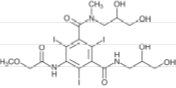
ULTRAVIST injection is a nonionic sterile, clear, colorless to slightly yellow, odorless, pyrogen-free aqueous solution of iopromide, containing 2.42 mg/mL tromethamine buffer and 0.1 mg/mL edetate calcium disodium stabilizer.
ULTRAVIST is available as an Imaging Bulk Package in two strengths:
300 mg Iodine per mL provides 623.4 mg/mL iopromide
370 mg Iodine per mL provides 768.86 mg/mL iopromide
During the manufacture of ULTRAVIST injection, sodium hydroxide or hydrochloric acid may be added for pH adjustment. ULTRAVIST injection has a pH of 7.4 (6.5–8) at 25± 2°C, is sterilized by autoclaving and contains no preservatives.
The iodine concentrations (mg Iodine per mL) available have the following physicochemical properties:
Property | ULTRAVIST INJECTION | ULTRAVIST INJECTION | |
300 mg Iodine per mL | 370 mg Iodine per mL | ||
Osmolality•(mOsmol/kg water) | @ 37°C | 607 | 774 |
Osmolarity•(mOsmol/L) | @ 37°C | 428 | 496 |
Viscosity (cP) | @ 20°C @ 37°C | 9.2 4.9 | 22 10 |
Density (g/mL) | @ 20°C @ 37°C | 1.330 1.322 | 1.409 1.399 |
•Osmolality was measured by vapor-pressure osmometry. Osmolarity was calculated from the measured osmolal concentrations.
Solutions of ULTRAVIST injection 300 mg Iodine per mL and 370 mg Iodine per mL have osmolalities respectively 2.1 and 2.7 times that of plasma (285 mOsmol/kg water).
CLINICAL PHARMACOLOGY
Mechanism of Action
ULTRAVIST injection is a nonionic, water soluble, tri-iodinated x-ray contrast agent for intravascular administration.
Intravascular injection of ULTRAVIST injection opacifies those vessels in the path of flow of the contrast agent, permitting radiographic visualization of the internal structures until significant hemodilution occurs.
Pharmacodynamics
Following ULTRAVIST injection administration, the degree of contrast enhancement is directly related to the iodine content in the administered dose; peak iodine plasma levels occur immediately following rapid intravenous injection. Iodine plasma levels fall rapidly within 5 to 10 minutes. This can be accounted for by the dilution in the vascular and extravascular fluid compartments.
Intravascular Contrast: Contrast enhancement appears to be greatest immediately after bolus injections (15 seconds to 120 seconds). Thus, greatest enhancement may be detected by a series of consecutive two-to-three second scans performed within 30 to 90 seconds after injection (that is, dynamic computed tomographic imaging).
ULTRAVIST injection may be visualized in the renal parenchyma within 30–60 seconds following rapid intravenous injection. Opacification of the calyces and pelves in patients with normal renal function becomes apparent within 1–3 minutes, with peak contrast occurring within 5–15 minutes.
In contrast CT, some performance characteristics are different in the brain and body. In contrast CT of the body, iodinated contrast agents diffuse rapidly from the vascular into the extravascular space. Following the administration of iodinated contrast agents, the increase in tissue density to x-rays is related to blood flow, the concentration of the contrast agent, and the extraction of the contrast agent by various interstitial tissues. Contrast enhancement is thus due to any relative differences in extravascular diffusion between adjacent tissues.
In the normal brain with an intact blood-brain barrier, contrast is generally due to the presence of iodinated contrast agent within the intravascular space. The radiographic enhancement of vascular lesions, such as arteriovenous malformations and aneurysms, depends on the iodine content of the circulating blood pool.
In tissues with a break in the blood-brain barrier, contrast agent accumulates within interstitial brain tissue. The time to maximum contrast enhancement can vary from the time that peak blood iodine levels are reached to 1 hour after intravenous bolus administration. This delay suggests that radiographic contrast enhancement is at least in part dependent on the accumulation of iodine containing medium within the lesion and outside the blood pool. The mechanism by which this occurs is not clear.
For information on coagulation parameters, fibrinolysis and complement system [see Drug Interactions (7.2 )] .
Pharmacokinetics
Distribution
After intravenous administration to healthy young volunteers, plasma iopromide concentration time profile shows an initial distribution phase with a half-life of 0.24 hour; a main elimination phase with a half-life of 2 hours; and a terminal elimination phase with a half-life of 6.2 hours. The total volume of distribution at steady state is about 16 L suggesting distribution into extracellular space. Plasma protein binding of iopromide is 1%.
Iodinated contrast agents may cross the blood-brain barrier [see Warnings and Precautions (5.8 )] .
Metabolism
Iopromide is not metabolized.
Elimination
The amounts excreted unchanged in urine represent 97% of the dose in young healthy subjects. Only 2% of the dose is recovered in the feces. Similar recoveries in urine and feces are observed in middle-aged and elderly patients. This finding suggests that, compared to the renal route, biliary and/or gastrointestinal excretion is not important for iopromide. During the slower terminal phase, only 3% of the dose is eliminated; 97% of the dose is disposed of during the earlier phases, the largest part of which occurs during the main elimination phase. The ratio of the renal clearance of iopromide to the creatinine clearance is 0.82 suggesting that iopromide is mainly excreted by glomerular filtration. Additional tubular reabsorption is possible. Pharmacokinetics of iopromide at intravenous doses up to 80 g iodine, are dose proportionate and first order.
The mean total and renal clearances are 107 mL/min and 104 mL/min, respectively.
Specific Populations
A pharmacokinetic study was conducted in 11 patients with renal impairment [see Use in Specific Populations (8.6 )] .
NONCLINICAL TOXICOLOGY
Carcinogenesis, Mutagenesis, Impairment of Fertility
Long-term animal studies have not been performed with iopromide to evaluate carcinogenic potential or effects on fertility. Iopromide was not genotoxic in a series of studies including the Ames test, an in vitro human lymphocytes analysis of chromosomal aberrations, an in vivo mouse micro-nucleus assay, and in an in vivo mouse dominant lethal assay.
CLINICAL STUDIES
ULTRAVIST injection was administered to 708 patients; 1 patient was less than 18 years of age, 347 patients were between 18 and 59 years of age, and 360 patients were equal to or greater than 60 years of age; the mean age was 56.6 years (range 17–88). Of the 708 patients, 446 (63%) were male and 262 (37%) were female. The racial distribution was: Caucasian 463 (65.4%), Black 95 (13.4%), Hispanic 36 (5.1%), Asian 11 (1.6 %), and other or unknown 103 (14.5%). Efficacy assessment was based on the global evaluation of the quality of the radiographs by rating visualization as either excellent, good, poor, or no image, and on the ability to make a diagnosis. Contrast CT of head and body was evaluated in three randomized, double-blind clinical trials of ULTRAVIST injection, 300 mg Iodine per mL, in 95 patients with vascular disorders. Visualization ratings were good or excellent in 99% of the patients; a radiologic diagnosis was made in the majority of the patients. A confirmation of contrast CT findings by other diagnostic methods was not obtained.
ULTRAVIST injection was evaluated in a blinded reader trial for CT of the head and body. Among the 382 patients who were evaluated with ULTRAVIST injection 370 mg Iodine per mL, visualization ratings were good or excellent in approximately 97% of patients.
HOW SUPPLIED/STORAGE AND HANDLING
ULTRAVIST injection is a sterile, clear, colorless to slightly yellow, odorless, pyrogen-free aqueous solution available in two strengths.
ULTRAVIST injection 300 mg Iodine per mL Imaging Bulk Package (Multiple-Dose container)
200 mL fill/250 mL bottles (carton of 10) NDC 50419-344-23
500 mL fill/500 mL bottles (carton of 8) NDC 50419-344-65
ULTRAVIST injection 370 mg Iodine per mL Imaging Bulk Package (Multiple-Dose container)
200 mL fill/250 mL bottles (carton of 10) NDC 50419-346-28
500 mL fill/500 mL bottles (carton of 8) NDC 50419-346-65
STORAGE
Store ULTRAVIST injection Imaging Bulk Package at 25°C (77°F); excursions permitted to 15–30°C (59–86°F) and protected from light [see USP Controlled Room Temperature] .
Mechanism of Action
ULTRAVIST injection is a nonionic, water soluble, tri-iodinated x-ray contrast agent for intravascular administration.
Intravascular injection of ULTRAVIST injection opacifies those vessels in the path of flow of the contrast agent, permitting radiographic visualization of the internal structures until significant hemodilution occurs.
