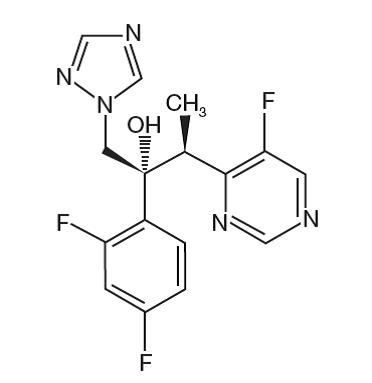
Voriconazole
Voriconazole Prescribing Information
Dosage and Administration (
2.3 Recommended Dosing Regimen in AdultsSee
See
See
Infection | Loading Dose | Maintenance Dose*,† | |
|---|---|---|---|
Intravenous infusion | Intravenous infusion | Oral tablets‡ | |
Invasive Aspergillosis§ | 6 mg/kg every 12 hours for the first 24 hours | 4 mg/kg every 12 hours | 200 mg every 12 hours |
Candidemia in nonneutropenic patients and other deep tissue Candida infections | 6 mg/kg every 12 hours for the first 24 hours | 3 to 4 mg/kg every 12 hours¶ | 200 mg every 12 hours |
Esophageal Candidiasis | Not Evaluated# | Not Evaluated# | 200 mg every 12 hours |
Scedosporiosis and Fusariosis | 6 mg/kg every 12 hours for the first 24 hours | 4 mg/kg every 12 hours | 200 mg every 12 hours |
*Increase dose when voriconazole is co-administered with phenytoin or efavirenz (7); Decrease dose in patients with hepatic impairment (2.5) †In healthy volunteer studies, the 200 mg oral every 12 hours dose provided an exposure (AUCτ) similar to a 3 mg/kg intravenous infusion every 12 hours dose; the 300 mg oral every 12 hours dose provided an exposure (AUCτ) similar to a 4 mg/kg intravenous infusion every 12 hours dose (12). ‡Adult patients who weigh less than 40 kg should receive half of the oral maintenance dose. §In a clinical study of IA, the median duration of intravenous voriconazole therapy was 10 days (range 2 to 85 days). The median duration of oral voriconazole therapy was 76 days (range 2 to 232 days) (14.1). ¶In clinical trials, patients with candidemia received 3 mg/kg intravenous infusion every 12 hours as primary therapy, while patients with other deep tissue Candidainfections received 4 mg/kg every 12 hours as salvage therapy. Appropriate dose should be based on the severity and nature of the infection.#Not evaluated in patients with EC.
2.4 Recommended Dosing Regimen in Pediatric PatientsThe recommended dosing regimen for pediatric patients 2 to less than 12 years of age and 12 to 14 years of age with body weight less than 50 kg is shown in
- Table 2: Recommended Dosing Regimen for Pediatric Patients 2 to less than 12 years of age and 12 to 14 years of age with body weight less than 50 kgˆ
Loading Dose | Maintenance Dose | ||
|---|---|---|---|
Intravenous infusion | Intravenous infusion | Oral tablets | |
Invasive Aspergillosis* | 9 mg/kg every 12 hours for the first 24 hours | 8 mg/kg every 12 hours after the first 24 hours | 9 mg/kg every 12 hours (maximum dose of 350 mg every 12 hours) |
Candidemia in nonneutropenics and other deep tissue Candida infections† | |||
Scedosporiosis and Fusariosis | |||
Esophageal Candidiasis† | Not Evaluated | 4 mg/kg every 12 hours | 9mg/kg every 12 hours (maximum dose of 350 mg every 12 hours) |
- ˆBased on a population pharmacokinetic analysis in 112 immunocompromised pediatric patients aged 2 to less than 12 years of age and 26 immunocompromised pediatric patients aged 12 to less than 17 years of age.
* In the Phase 3 clinical trials, patients with IA received intravenous (IV) treatment for at least 6 weeks and up to a maximum of 12 weeks. Patients received IV treatment for at least the first 7 days of therapy and then could be switched to oral voriconazole therapy. †Study treatment for primary or salvage invasive candidiasis and candidemia (ICC) or EC consisted of intravenous voriconazole, with an option to switch to oral therapy after at least 5 days of IV therapy, based on subjects meeting switch criteria. For subjects with primary or salvage ICC, voriconazole was administered for at least 14 days after the last positive culture. A maximum of 42 days of treatment was permitted. Patients with primary or salvage EC were treated for at least 7 days after the resolution of clinical signs and symptoms. A maximum of 42 days of treatment was permitted.
Initiate therapy with an intravenous infusion regimen. Consider an oral regimen only after there is a significant clinical improvement. Note that an 8 mg/kg intravenous dose will provide voriconazole exposure approximately 2-fold higher than a 9 mg/kg oral dose.
The oral dose recommendation for children is based on studies in which voriconazole was administered as the powder for oral suspension formulation. Bioequivalence between the voriconazole powder for oral suspension and voriconazole tablets has not been investigated in a pediatric population.
Oral bioavailability may be limited in pediatric patients 2 to 12 years with malabsorption and very low body weight for age. In that case, intravenous voriconazole administration is recommended.
Use the optimal method for titrating dosage recommended for adults
Contraindications (
4 CONTRAINDICATIONS● Voriconazole tablets are contraindicated in patients with known hypersensitivity to voriconazole or its excipients. There is no information regarding cross-sensitivity between voriconazole and other azole antifungal agents. Caution should be used when prescribing voriconazole to patients with hypersensitivity to other azoles.
● Coadministration of pimozide, quinidine or ivabradine with voriconazole is contraindicated because increased plasma concentrations of these drugs can lead to QT prolongation and rare occurrences of torsade de pointes
● Coadministration of voriconazole with sirolimus is contraindicated because voriconazole significantly increases sirolimus concentrations
● Coadministration of voriconazole with rifampin, carbamazepine, long-acting barbiturates or St. John’s Wort is contraindicated because these drugs are likely to decrease plasma voriconazole concentrations significantly
● Coadministration of standard doses of voriconazole with efavirenz doses of 400 mg every 24 hours or higher is contraindicated, because efavirenz significantly decreases plasma voriconazole concentrations in healthy subjects at these doses. Voriconazole also significantly increases efavirenz plasma concentrations
● Coadministration of voriconazole with high-dose ritonavir (400 mg every 12 hours) is contraindicated because ritonavir (400 mg every 12 hours) significantly decreases plasma voriconazole concentrations. Coadministration of voriconazole and low-dose ritonavir (100 mg every 12 hours) should be avoided, unless an assessment of the benefit/risk to the patient justifies the use of voriconazole
● Coadministration of voriconazole with rifabutin is contraindicated since voriconazole significantly increases rifabutin plasma concentrations and rifabutin also significantly decreases voriconazole plasma concentrations
● Coadministration of voriconazole with ergot alkaloids (ergotamine and dihydroergotamine) is contraindicated because voriconazole may increase the plasma concentration of ergot alkaloids, which may lead to ergotism
● Coadministration of voriconazole with naloxegol is contraindicated because voriconazole may increase plasma concentrations of naloxegol which may precipitate opioid withdrawal symptoms
● Coadministration of voriconazole with tolvaptan is contraindicated because voriconazole may increase tolvaptan plasma concen
● Coadministration of voriconazole with venetoclax at initiation and during the ramp-up phase is contraindicated in patients with chronic lymphocytic leukemia (CLL) or small lymphocytic lymphoma (SLL) due to the potential for increased risk of tumor lysis syndrome
● Coadministration of voriconazole with lurasidone is contraindicated since it may result in significant increases in lurasidone exposure and the potential for serious adverse reactions
Voriconazole tablets are an azole antifungal indicated for the treatment of adults and pediatric patients 2 years of age and older with:
• Invasive aspergillosis ()1.1 Invasive AspergillosisVoriconazole tablets are indicated in adults and pediatric patients (2 years of age and older) for the treatment of invasive aspergillosis (IA). In clinical trials, the majority of isolates recovered were
Aspergillus fumigatus. There was a small number of cases of culture-proven disease due to species ofAspergillusother thanA. fumigatus [see Clinical Studies (14.1, 14.5)and Microbiology (12.4)].• Candidemia in non-neutropenics and other deep tissueCandidainfections ()1.2 Candidemia in Non-neutropenic Patients and Other Deep TissueCandidaInfectionsVoriconazole tablets are indicated in adults and pediatric patients (2 years of age and older) for the treatment of candidemia in non-neutropenic patients and the following
Candidainfections: disseminated infections in skin and infections in abdomen, kidney, bladder wall, and wounds[see Clinical Studies (14.2, 14.5)and Microbiology (12.4)].• Esophageal candidiasis ()1.3 Esophageal CandidiasisVoriconazole tablets are indicated in adults and pediatric patients (2 years of age and older) for the treatment of esophageal candidiasis (EC)
[see Clinical Studies (14.3, 14.5)and Microbiology (12.4)].• Serious fungal infections caused byScedosporium apiospermumandFusariumspecies includingFusarium solani, in patients intolerant of, or refractory to, other therapy ()1.4 Scedosporiosis and FusariosisVoriconazole tablets are indicated for the treatment of serious fungal infections caused by
Scedosporium apiospermum(asexual form ofPseudallescheria boydii) andFusarium spp.includingFusarium solani, in adults and pediatric patients (2 years of age and older) intolerant of, or refractory to, other therapy[see Clinical Studies (14.4)and Microbiology (12.4)].
• Dosage in Adults ()2.3 Recommended Dosing Regimen in AdultsInvasive Aspergillosis and Serious Fungal Infections due to Fusariumspp. and Scedosporium apiospermumSee
Table 1.Therapy must be initiated with the specified loading dose regimen of intravenous voriconazole on Day 1 followed by the recommended maintenance dose (RMD) regimen. Intravenous treatment should be continued for at least 7 days. Once the patient has clinically improved and can tolerate medication given by mouth, the oral tablet form or oral suspension form of voriconazole may be utilized. The recommended oral maintenance dose of 200 mg achieves a voriconazole exposure similar to 3 mg/kg intravenously; a 300 mg oral dose achieves an exposure similar to 4 mg/kg intravenously[see Clinical Pharmacology (12.3)].Candidemia in Non-neutropenic Patients and Other Deep Tissue Candida InfectionsSee
Table 1.Patients should be treated for at least 14 days following resolution of symptoms or following last positive culture, whichever is longer.Esophageal CandidiasisSee
Table 1. Patients should be treated for a minimum of 14 days and for at least 7 days following resolution of symptoms.Table 1: Recommended Dosing Regimen (Adults) InfectionLoading DoseMaintenance Dose*,†Intravenous infusionIntravenous infusionOral tablets‡Invasive Aspergillosis§6 mg/kg every 12 hours for the first 24 hours4 mg/kg every 12 hours200 mg every 12 hoursCandidemia in nonneutropenic patients and other deep tissue Candida infections6 mg/kg every 12 hours for the first 24 hours3 to 4 mg/kg every 12 hours¶200 mg every 12 hoursEsophageal CandidiasisNot Evaluated#Not Evaluated#200 mg every 12 hoursScedosporiosis and Fusariosis6 mg/kg every 12 hours for the first 24 hours4 mg/kg every 12 hours200 mg every 12 hours*Increase dose when voriconazole is co-administered with phenytoin or efavirenz (7); Decrease dose in patients with hepatic impairment (2.5) †In healthy volunteer studies, the 200 mg oral every 12 hours dose provided an exposure (AUCτ) similar to a 3 mg/kg intravenous infusion every 12 hours dose; the 300 mg oral every 12 hours dose provided an exposure (AUCτ) similar to a 4 mg/kg intravenous infusion every 12 hours dose (12). ‡Adult patients who weigh less than 40 kg should receive half of the oral maintenance dose. §In a clinical study of IA, the median duration of intravenous voriconazole therapy was 10 days (range 2 to 85 days). The median duration of oral voriconazole therapy was 76 days (range 2 to 232 days) (14.1). ¶In clinical trials, patients with candidemia received 3 mg/kg intravenous infusion every 12 hours as primary therapy, while patients with other deep tissue Candidainfections received 4 mg/kg every 12 hours as salvage therapy. Appropriate dose should be based on the severity and nature of the infection.#Not evaluated in patients with EC.
Method for Adjusting the Dosing Regimen in Adults• If patient's response is inadequate, the oral maintenance dose may be increased from 200 mg every 12 hours (similar to 3 mg/kg intravenously every 12 hours) to 300 mg every 12 hours (similar to 4 mg/kg intravenously every 12 hours).• For adult patients weighing less than 40 kg, the oral maintenance dose may be increased from 100 mg every 12 hours to 150 mg every 12 hours.• If patient is unable to tolerate 300 mg orally every 12 hours, reduce the oral maintenance dose by 50 mg steps to a minimum of 200 mg every 12 hours (or to 100 mg every 12 hours for adult patients weighing less than 40 kg).• If patient is unable to tolerate 4 mg/kg intravenously every 12 hours, reduce the intravenous maintenance dose to 3 mg/kg every 12 hours.
Infection | Loading Dose | Maintenance Dose | |
|---|---|---|---|
Intravenous infusion | Intravenous infusion | Oral tablets | |
Invasive Aspergillosis | 6 mg/kg every 12 hours for the first 24 hours | 4 mg/kg every 12 hours | 200 mg every 12 hours |
Candidemia in nonneutropenics and other deep tissue Candida infections | 3 to 4 mg/kg every 12 hours | 200 mg every 12 hours | |
Scedosporiosis and Fusariosis | 4 mg/kg every 12 hours | 200 mg every 12 hours | |
Esophageal Candidiasis | Not Evaluated | Not Evaluated | 200 mg every 12 hours |
• Adult patients weighing less than 40 kg: oral maintenance dose 100 mg or 150 mg every 12 hours• Hepatic Impairment: Use half the maintenance dose in adult patients with mild to moderate hepatic impairment (Child-Pugh Class A and B) ()2.5 Dosage Modifications in Patients With Hepatic ImpairmentAdultsThe maintenance dose of voriconazole should be reduced in adult patients with mild to moderate hepatic impairment, Child-Pugh Class A and B. There are no PK data to allow for dosage adjustment recommendations in patients with severe hepatic impairment (Child-Pugh Class C).
Duration of therapy should be based on the severity of the patient's underlying disease, recovery from immunosuppression, and clinical response.
Adult patients with baseline liver function tests (ALT, AST) of up to 5 times the upper limit of normal (ULN) were included in the clinical program. Dose adjustments are not necessary for adult patients with this degree of abnormal liver function, but continued monitoring of liver function tests for further elevations is recommended
[see Warnings and Precautions ].It is recommended that the recommended voriconazole loading dose regimens be used, but that the maintenance dose be halved in adult patients with mild to moderate hepatic cirrhosis (Child-Pugh Class A and B)
[see Clinical Pharmacology ].Voriconazole has not been studied in adult patients with severe hepatic cirrhosis (Child-Pugh Class C) or in patients with chronic hepatitis B or chronic hepatitis C disease. Voriconazole has been associated with elevations in liver function tests and with clinical signs of liver damage, such as jaundice. Voriconazole tablets should only be used in patients with severe hepatic impairment if the benefit outweighs the potential risk. Patients with hepatic impairment must be carefully monitored for drug toxicity.
Pediatric PatientsDosage adjustment of voriconazole tablets in pediatric patients with hepatic impairment has not been established
[see Use in Specific Populations ].• Renal Impairment: Avoid intravenous administration in adult patients with moderate to severe renal impairment (creatinine clearance <50 mL/min) ()2.6 Dosage Modifications in Patients With Renal ImpairmentAdult PatientsThe pharmacokinetics of orally administered voriconazole tablets are not significantly affected by renal impairment. Therefore, no adjustment is necessary for
oraldosing in patients with mild to severe renal impairment[see Clinical Pharmacology ].In patients with moderate or severe renal impairment (creatinine clearance <50 mL/min) who are receiving an intravenous infusion of voriconazole, accumulation of the intravenous vehicle, SBECD, occurs. Oral voriconazole should be administered to these patients, unless an assessment of the benefit/risk to the patient justifies the use of intravenous voriconazole. Serum creatinine levels should be closely monitored in these patients, and, if increases occur, consideration should be given to changing to oral voriconazole therapy
[see Warnings and Precautions ].Voriconazole and the intravenous vehicle, SBECD, are dialyzable. A 4-hour hemodialysis session does not remove a sufficient amount of voriconazole to warrant dose adjustment
[see Clinical Pharmacology ].Pediatric PatientsDosage adjustment of voriconazole in pediatric patients with renal impairment has not been established
[see Use in Specific Populations ].• Dosage in Pediatric Patients 2 years of age and older ()2.4 Recommended Dosing Regimen in Pediatric PatientsThe recommended dosing regimen for pediatric patients 2 to less than 12 years of age and 12 to 14 years of age with body weight less than 50 kg is shown in
Table 2.For pediatric patients 12 to 14 years of age with a body weight greater than or equal to 50 kg and those 15 years of age and above regardless of body weight, administer the adult dosing regimen of voriconazole[see Dosage and Administration (2.3)].- Table 2: Recommended Dosing Regimen for Pediatric Patients 2 to less than 12 years of age and 12 to 14 years of age with body weight less than 50 kgˆ
Loading DoseMaintenance DoseIntravenous infusionIntravenous infusionOral tabletsInvasive Aspergillosis*9 mg/kg every 12 hours for the first 24 hours8 mg/kg every 12 hours after the first 24 hours9 mg/kg every 12 hours (maximum dose of 350 mg every 12 hours)Candidemia in nonneutropenics and other deep tissue Candida infections†Scedosporiosis and FusariosisEsophageal Candidiasis†Not Evaluated4 mg/kg every 12 hours9mg/kg every 12 hours(maximum dose of 350 mg every 12 hours)- ˆBased on a population pharmacokinetic analysis in 112 immunocompromised pediatric patients aged 2 to less than 12 years of age and 26 immunocompromised pediatric patients aged 12 to less than 17 years of age.
* In the Phase 3 clinical trials, patients with IA received intravenous (IV) treatment for at least 6 weeks and up to a maximum of 12 weeks. Patients received IV treatment for at least the first 7 days of therapy and then could be switched to oral voriconazole therapy. †Study treatment for primary or salvage invasive candidiasis and candidemia (ICC) or EC consisted of intravenous voriconazole, with an option to switch to oral therapy after at least 5 days of IV therapy, based on subjects meeting switch criteria. For subjects with primary or salvage ICC, voriconazole was administered for at least 14 days after the last positive culture. A maximum of 42 days of treatment was permitted. Patients with primary or salvage EC were treated for at least 7 days after the resolution of clinical signs and symptoms. A maximum of 42 days of treatment was permitted.
Initiate therapy with an intravenous infusion regimen. Consider an oral regimen only after there is a significant clinical improvement. Note that an 8 mg/kg intravenous dose will provide voriconazole exposure approximately 2-fold higher than a 9 mg/kg oral dose.
The oral dose recommendation for children is based on studies in which voriconazole was administered as the powder for oral suspension formulation. Bioequivalence between the voriconazole powder for oral suspension and voriconazole tablets has not been investigated in a pediatric population.
Oral bioavailability may be limited in pediatric patients 2 to 12 years with malabsorption and very low body weight for age. In that case, intravenous voriconazole administration is recommended.
Method for Adjusting the Dosing Regimen in Pediatric PatientsPediatric Patients 2 to less than 12 years of age and 12 to 14 years of age with body weight less than 50 kgIf patient response is inadequate and the patient is able to tolerate the initial intravenous maintenance dose, the maintenance dose may be increased by 1 mg/kg steps. If patient response is inadequate and the patient is able to tolerate the oral maintenance dose, the dose may be increased by 1 mg/kg steps (0.0025 mL/kg) steps or 50 mg (1.25 mL) steps to a maximum of 350 mg every 12 hours. If patients are unable to tolerate the initial intravenous maintenance dose, reduce the dose by 1 mg/kg steps. If patients are unable to tolerate the oral maintenance dose, reduce the dose by 1 mg/kg or 50 mg steps.Pediatric patients 12 to 14 years of age weighing greater than or equal to 50 kg and 15 years of age and older regardless of body weightUse the optimal method for titrating dosage recommended for adults
[see Dosage and Administration (2.3)].• For pediatric patients 2 to less than 12 years of age and 12 to 14 years of age weighing less than 50 kg see Table below.
Infection | Loading Dose | Maintenance Dose | |
|---|---|---|---|
Intravenous infusion | Intravenous infusion | Oral tablets | |
Invasive Aspergillosis | 9 mg/kg every 12 hours for the first 24 hours | 8 mg/kg every 12 hours after the first 24 hours | 9 mg/kg every 12 hours (maximum dose of 350 mg every 12 hours) |
Candidemia in nonneutropenics and other deep tissue Candida infections | |||
Scedosporiosis and Fusariosis | |||
Esophageal Candidiasis | Not Evaluated | 4 mg/kg every 12 hours | 9 mg/kg every 12 hours (maximum dose of 350 mg every 12 hours) |
• For pediatric patients aged 12 to 14 years weighing greater than or equal to 50 kg and those aged 15 years and older regardless of body weight use adult dosage. ()2.4 Recommended Dosing Regimen in Pediatric PatientsThe recommended dosing regimen for pediatric patients 2 to less than 12 years of age and 12 to 14 years of age with body weight less than 50 kg is shown in
Table 2.For pediatric patients 12 to 14 years of age with a body weight greater than or equal to 50 kg and those 15 years of age and above regardless of body weight, administer the adult dosing regimen of voriconazole[see Dosage and Administration (2.3)].- Table 2: Recommended Dosing Regimen for Pediatric Patients 2 to less than 12 years of age and 12 to 14 years of age with body weight less than 50 kgˆ
Loading DoseMaintenance DoseIntravenous infusionIntravenous infusionOral tabletsInvasive Aspergillosis*9 mg/kg every 12 hours for the first 24 hours8 mg/kg every 12 hours after the first 24 hours9 mg/kg every 12 hours (maximum dose of 350 mg every 12 hours)Candidemia in nonneutropenics and other deep tissue Candida infections†Scedosporiosis and FusariosisEsophageal Candidiasis†Not Evaluated4 mg/kg every 12 hours9mg/kg every 12 hours(maximum dose of 350 mg every 12 hours)- ˆBased on a population pharmacokinetic analysis in 112 immunocompromised pediatric patients aged 2 to less than 12 years of age and 26 immunocompromised pediatric patients aged 12 to less than 17 years of age.
* In the Phase 3 clinical trials, patients with IA received intravenous (IV) treatment for at least 6 weeks and up to a maximum of 12 weeks. Patients received IV treatment for at least the first 7 days of therapy and then could be switched to oral voriconazole therapy. †Study treatment for primary or salvage invasive candidiasis and candidemia (ICC) or EC consisted of intravenous voriconazole, with an option to switch to oral therapy after at least 5 days of IV therapy, based on subjects meeting switch criteria. For subjects with primary or salvage ICC, voriconazole was administered for at least 14 days after the last positive culture. A maximum of 42 days of treatment was permitted. Patients with primary or salvage EC were treated for at least 7 days after the resolution of clinical signs and symptoms. A maximum of 42 days of treatment was permitted.
Initiate therapy with an intravenous infusion regimen. Consider an oral regimen only after there is a significant clinical improvement. Note that an 8 mg/kg intravenous dose will provide voriconazole exposure approximately 2-fold higher than a 9 mg/kg oral dose.
The oral dose recommendation for children is based on studies in which voriconazole was administered as the powder for oral suspension formulation. Bioequivalence between the voriconazole powder for oral suspension and voriconazole tablets has not been investigated in a pediatric population.
Oral bioavailability may be limited in pediatric patients 2 to 12 years with malabsorption and very low body weight for age. In that case, intravenous voriconazole administration is recommended.
Method for Adjusting the Dosing Regimen in Pediatric PatientsPediatric Patients 2 to less than 12 years of age and 12 to 14 years of age with body weight less than 50 kgIf patient response is inadequate and the patient is able to tolerate the initial intravenous maintenance dose, the maintenance dose may be increased by 1 mg/kg steps. If patient response is inadequate and the patient is able to tolerate the oral maintenance dose, the dose may be increased by 1 mg/kg steps (0.0025 mL/kg) steps or 50 mg (1.25 mL) steps to a maximum of 350 mg every 12 hours. If patients are unable to tolerate the initial intravenous maintenance dose, reduce the dose by 1 mg/kg steps. If patients are unable to tolerate the oral maintenance dose, reduce the dose by 1 mg/kg or 50 mg steps.Pediatric patients 12 to 14 years of age weighing greater than or equal to 50 kg and 15 years of age and older regardless of body weightUse the optimal method for titrating dosage recommended for adults
[see Dosage and Administration (2.3)].• Dosage adjustment of voriconazole in pediatric patients with renal or hepatic impairment has not been established.,2.5 Dosage Modifications in Patients With Hepatic ImpairmentAdultsThe maintenance dose of voriconazole should be reduced in adult patients with mild to moderate hepatic impairment, Child-Pugh Class A and B. There are no PK data to allow for dosage adjustment recommendations in patients with severe hepatic impairment (Child-Pugh Class C).
Duration of therapy should be based on the severity of the patient's underlying disease, recovery from immunosuppression, and clinical response.
Adult patients with baseline liver function tests (ALT, AST) of up to 5 times the upper limit of normal (ULN) were included in the clinical program. Dose adjustments are not necessary for adult patients with this degree of abnormal liver function, but continued monitoring of liver function tests for further elevations is recommended
[see Warnings and Precautions ].It is recommended that the recommended voriconazole loading dose regimens be used, but that the maintenance dose be halved in adult patients with mild to moderate hepatic cirrhosis (Child-Pugh Class A and B)
[see Clinical Pharmacology ].Voriconazole has not been studied in adult patients with severe hepatic cirrhosis (Child-Pugh Class C) or in patients with chronic hepatitis B or chronic hepatitis C disease. Voriconazole has been associated with elevations in liver function tests and with clinical signs of liver damage, such as jaundice. Voriconazole tablets should only be used in patients with severe hepatic impairment if the benefit outweighs the potential risk. Patients with hepatic impairment must be carefully monitored for drug toxicity.
Pediatric PatientsDosage adjustment of voriconazole tablets in pediatric patients with hepatic impairment has not been established
[see Use in Specific Populations ].)2.6 Dosage Modifications in Patients With Renal ImpairmentAdult PatientsThe pharmacokinetics of orally administered voriconazole tablets are not significantly affected by renal impairment. Therefore, no adjustment is necessary for
oraldosing in patients with mild to severe renal impairment[see Clinical Pharmacology ].In patients with moderate or severe renal impairment (creatinine clearance <50 mL/min) who are receiving an intravenous infusion of voriconazole, accumulation of the intravenous vehicle, SBECD, occurs. Oral voriconazole should be administered to these patients, unless an assessment of the benefit/risk to the patient justifies the use of intravenous voriconazole. Serum creatinine levels should be closely monitored in these patients, and, if increases occur, consideration should be given to changing to oral voriconazole therapy
[see Warnings and Precautions ].Voriconazole and the intravenous vehicle, SBECD, are dialyzable. A 4-hour hemodialysis session does not remove a sufficient amount of voriconazole to warrant dose adjustment
[see Clinical Pharmacology ].Pediatric PatientsDosage adjustment of voriconazole in pediatric patients with renal impairment has not been established
[see Use in Specific Populations ].
Voriconazole tablets, 50 mg are white to off-white, round, biconvex, film coated tablets with 'SZ' debossed on one side and '132' debossed on the other side.
Voriconazole tablets, 200 mg are white to off-white, capsule shaped, biconvex, film coated tablets with 'SZ' debossed on one side and '133' debossed on the other side.
• Pediatrics: Safety and effectiveness in patients younger than 2 years has not been established ()8.4 Pediatric UseThe safety and effectiveness of voriconazole have been established in pediatric patients 2 years of age and older based on evidence from adequate and well-controlled studies in adult and pediatric patients and additional pediatric pharmacokinetic and safety data. A total of 105 pediatric patients aged 2 to less than 12 [N=26] and aged 12 to less than 18 [N=79] from two, non-comparative Phase 3 pediatric studies and eight adult therapeutic trials provided safety information for voriconazole use in the pediatric population
[see Adverse Reactions , Clinical Pharmacology , and Clinical Studies ].Safety and effectiveness in pediatric patients below the age of 2 years has not been established. Therefore, voriconazole is not recommended for pediatric patients less than 2 years of age.
A higher frequency of liver enzyme elevations was observed in the pediatric patients
[see Dosage and Administration , Warnings and Precautions , and Adverse Reactions ].The frequency of phototoxicity reactions is higher in the pediatric population. Squamous cell carcinoma has been reported in patients who experience photosensitivity reactions. Stringent measures for photoprotection are warranted. Sun avoidance and dermatologic follow-up are recommended in pediatric patients experiencing photoaging injuries, such as lentigines or ephelides, even after treatment discontinuation
[see Warnings and Precautions ].Voriconazole has not been studied in pediatric patients with hepatic or renal impairment
[see Dosage and Administration and Warnings and Precautions ( 5.1, 5.10)].
● Voriconazole tablets are contraindicated in patients with known hypersensitivity to voriconazole or its excipients. There is no information regarding cross-sensitivity between voriconazole and other azole antifungal agents. Caution should be used when prescribing voriconazole to patients with hypersensitivity to other azoles.
● Coadministration of pimozide, quinidine or ivabradine with voriconazole is contraindicated because increased plasma concentrations of these drugs can lead to QT prolongation and rare occurrences of torsade de pointes
7 DRUG INTERACTIONSVoriconazole is metabolized by cytochrome P450 isoenzymes, CYP2C19, CYP2C9, and CYP3A4. Therefore, inhibitors or inducers of these isoenzymes may increase or decrease voriconazole plasma concentrations, respectively. Voriconazole is a strong inhibitor of CYP3A4, and also inhibits CYP2C19 and CYP2C9. Therefore, voriconazole may increase the plasma concentrations of substances metabolized by these CYP450 isoenzymes.
Drug/Drug Class (Mechanism of Interaction by the Drug) | Voriconazole Plasma Exposure (Cmaxand AUCτafter 200 mg every 12 hours) | Recommendations for Voriconazole Dosage Adjustment/Comments |
|---|---|---|
Rifampin*and Rifabutin* | Significantly Reduced | Contraindicated |
Efavirenz (400 mg every 24 hours)† | Significantly Reduced | Contraindicated |
Efavirenz (300 mg every 24 hours)† | Slight Decrease in AUC τ | When voriconazole is coadministered with efavirenz, voriconazole oral maintenance dose should be increased to 400 mg every 12 hours and efavirenz should be decreased to 300 mg every 24 hours. |
High-dose Ritonavir (400 mg every 12 hours)† | Significantly Reduced | Contraindicated |
Low-dose Ritonavir (100 mg every 12 hours)† | Reduced | Coadministration of voriconazole and low-dose ritonavir (100 mg every 12 hours) should be avoided, unless an assessment of the benefit/risk to the patient justifies the use of voriconazole. |
Carbamazepine | Not Studied In Vivo orIn Vitro , but Likely to Result in Significant Reduction | Contraindicated |
Long Acting Barbiturates (e.g., phenobarbital, mephobarbital) | Not Studied In Vivo orIn Vitro , but Likely to Result in Significant Reduction | Contraindicated |
Phenytoin* | Significantly Reduced | Increase voriconazole maintenance dose from 4 mg/kg to 5 mg/kg IV every 12 hours or from 200 mg to 400 mg orally every 12 hours (100 mg to 200 mg orally every 12 hours in patients weighing less than 40 kg). |
Letermovir (CYP2C9/2C19 Induction) | Reduced | If concomitant administration of voriconazole with letermovir cannot be avoided, monitor for reduced effectiveness of voriconazole. |
St. John's Wort | Significantly Reduced | Contraindicated |
Oral Contraceptives†containing ethinyl estradiol and norethindrone (CYP2C19 Inhibition) | Increased | Monitoring for adverse reactions and toxicity related to voriconazole is recommended when coadministered with oral contraceptives. |
Fluconazole†(CYP2C9, CYP2C19 and CYP3A4 Inhibition) | Significantly Increased | Avoid concomitant administration of voriconazole and fluconazole. Monitoring for adverse reactions and toxicity related to voriconazole is started within 24 hours after the last dose of fluconazole. |
Other HIV Protease Inhibitors | In Vivo Studies Showed No Significant Effects of Indinavir on Voriconazole Exposure | No dosage adjustment in the voriconazole dosage needed when coadministered with indinavir. |
In Vitro Studies Demonstrated Potential for Inhibition of Voriconazole Metabolism(Increased Plasma Exposure) | Frequent monitoring for adverse reactions and toxicity related to voriconazole when coadministered with other HIV protease inhibitors. | |
Other NNRTIs‡ | In Vitro Studies Demonstrated Potential for Inhibition of Voriconazole Metabolism by Delavirdine and Other NNRTIs (Increased Plasma Exposure) | Frequent monitoring for adverse reactions and toxicity related to voriconazole. |
A Voriconazole-Efavirenz Drug Interaction Study Demonstrated the Potential for the Metabolism of Voriconazole to be Induced by Efavirenz and Other NNRTIs | Careful assessment of voriconazole effectiveness. |
* Results based on
† Results based on in vivoclinical study following repeat oral dosing with 400 mg every 12 hours for 1 day, then 200 mg every 12 hours for at least 2 days voriconazole to healthy subjects
‡ Non-Nucleoside Reverse Transcriptase Inhibitors
Drug/Drug Class (Mechanism of Interaction by Voriconazole) | Drug Plasma Exposure (Cmaxand AUCτ) | Recommendations for Drug Dosage Adjustment/Comments |
|---|---|---|
Sirolimus* | Significantly Increased | Contraindicated |
Rifabutin* | Significantly Increased | Contraindicated |
Efavirenz (400 mg every 24 hours)† | Significantly Increased | Contraindicated |
Efavirenz (300 mg every 24 hours)† | Slight Increase in AUCτ | When voriconazole is coadministered with efavirenz, voriconazole oral maintenance dose should be increased to 400 mg every 12 hours and efavirenz should be decreased to 300 mg every 24 hours. |
High-dose Ritonavir (400 mg every 12 hours)†(CYP3A4 Inhibition) | No Significant Effect of Voriconazole on Ritonavir Cmaxor AUCτ | Contraindicated because of significant reduction of voriconazole Cmaxand AUCτ. |
Low-dose Ritonavir (100 mg every 12 hours)† | Slight Decrease in Ritonavir Cmaxand AUCτ | Coadministration of voriconazole and low-dose ritonavir (100 mg every 12 hours) should be avoided (due to the reduction in voriconazole Cmaxand AUCτ) unless an assessment of the benefit/risk to the patient justifies the use of voriconazole. |
Pimozide, Quinidine, Ivabradine | Not Studied In Vivo orIn Vitro , but Drug Plasma Exposure Likely to be Increased | Contraindicated because of potential for QT prolongation and rare occurrence oftorsade de pointes. |
Ergot Alkaloids | Not Studied In Vivo orIn Vitro , but Drug Plasma Exposure Likely to be Increased | Contraindicated |
Naloxegol (CYP3A4 Inhibition) | Not Studied In Vivo orIn Vitro , but Drug Plasma Exposure Likely to be Increased which may Increase the Risk of Adverse Reactions | Contraindicated |
Tolvaptan (CYP3A4 Inhibition) | Although Not Studied Clinically, Voriconazole is Likely to Significantly Increase the Plasma Concentrations of Tolvaptan | Contraindicated |
Lurasidone (CYP3A4 Inhibition) | Not Studied In Vivo orIn Vitro , but Voriconazoleis Likely to Significantly Increase the Plasma Concentrations of Lurasidone | Contraindicated |
Finerenone (CYP3A4 Inhibition) | Not Studied In Vivo orIn Vitro , but Voriconazoleis Likely to Significantly Increase the Plasma Concentrations of Finerenone | Contraindicated |
Venetoclax (CYP3A4 Inhibition) | Not Studied In Vivo orIn Vitro , but Venetoclax Plasma Exposure Likely to be Significantly Increased | Coadministration of voriconazole is contraindicated at initiation and during the ramp-up phase in patients with chronic lymphocytic leukemia (CLL) or small lymphocytic lymphoma (SLL). Refer to the venetoclax labeling for safety monitoring and dose reduction in the steady daily dosing phase in CLL/SLL patients.For patients with acute myeloid leukemia (AML), dose reduction and safety monitoring are recommended across all dosing phases when coadministering voriconazole with venetoclax. Refer to the venetoclax prescribing information for dosing instructions. |
Lemborexant (CYP3A4 Inhibition) | Not Studied In Vivo orIn Vitro , but Drug Plasma Exposure Likely to be Increased | Avoid concomitant use of voriconazole with lemborexant. |
Glasdegib (CYP3A4 Inhibition) | Not Studied In Vivo orIn Vitro , but Drug Plasma Exposure Likely to be Increased | Consider alternative therapies. If concomitant use cannot be avoided, monitor patients for increased risk of adverse reactions including QTc interval prolongation |
Tyrosine kinase inhibitors (including but not limited to axitinib, bosutinib, cabozantinib, ceritinib, cobimetinib, dabrafenib, dasatinib, nilotinib, sunitinib, ibrutinib, ribociclib) (CYP3A4 Inhibition) | Not Studied In Vivo orIn Vitro , but Drug Plasma Exposure Likely to be Increased | Avoid concomitant use of voriconazole. If concomitant use cannot be avoided, dose reduction of the tyrosine kinase inhibitor is recommended. Refer to the prescribing information for the relevant product. |
Cyclosporine* | AUCτSignificantly Increased; No Significant Effect on Cmax | When initiating therapy with voriconazole in patients already receiving cyclosporine, reduce the cyclosporine dose to one-half of the starting dose and follow with frequent monitoring of cyclosporine blood levels. Increased cyclosporine levels have been associated with nephrotoxicity. When voriconazole is discontinued, cyclosporine concentrations must be frequently monitored and the dose increased as necessary. |
Methadone‡(CYP3A4 Inhibition) | Increased | Increased plasma concentrations of methadone have been associated with toxicity including QT prolongation. Frequent monitoring for adverse reactions and toxicity related to methadone is recommended during coadministration. Dose reduction of methadone may be needed. |
Fentanyl (CYP3A4 Inhibition) | Increased | Reduction in the dose of fentanyl and other long-acting opiates metabolized by CYP3A4 should be considered when coadministered with voriconazole. Extended and frequent monitoring for opiate-associated adverse reactions may be necessary. |
Alfentanil (CYP3A4 Inhibition) | Significantly Increased | An increase in the incidence of delayed and persistent alfentanil-associated nausea and vomiting were observed when coadministered with voriconazole. Reduction in the dose of alfentanil and other opiates metabolized by CYP3A4 (e.g., sufentanil) should be considered when coadministered with voriconazole. A longer period for monitoring respiratory and other opiate-associated adverse reactions may be necessary. |
Oxycodone (CYP3A4 Inhibition) | Significantly Increased | Increased visual effects (heterophoria and miosis) of oxycodone were observed when coadministered with voriconazole. Reduction in the dose of oxycodone and other long-acting opiates metabolized by CYP3A4 should be considered when coadministered with voriconazole. Extended and frequent monitoring for opiate-associated adverse reactions may be necessary. |
NSAIDs§including. ibuprofen and diclofenac | Increased | Frequent monitoring for adverse reactions and toxicity related to NSAIDs. Dose reduction of NSAIDs may be needed. |
Tacrolimus* | Significantly Increased | When initiating therapy with voriconazole in patients already receiving tacrolimus, reduce the tacrolimus dose to one-third of the starting dose and follow with frequent monitoring of tacrolimus blood levels. Increased tacrolimus levels have been associated with nephrotoxicity. When voriconazole is discontinued, tacrolimus concentrations must be frequently monitored and the dose increased as necessary. |
Phenytoin* | Significantly Increased | Frequent monitoring of phenytoin plasma concentrations and frequent monitoring of adverse effects related to phenytoin. |
Oral Contraceptives containing ethinyl estradiol and norethindrone (CYP3A4 Inhibition)† | Increased | Monitoring for adverse reactions related to oral contraceptives is recommended during coadministration. |
Prednisolone and other corticosteroids (CYP3A4 Inhibition) | In Vivo Studies Showed No Significant Effects of Voriconazole on Prednisolone ExposureNot Studied In vitro orIn vivo for Other Corticosteroids, but Drug Exposure Likely to be Increased | No dosage adjustment for prednisolone when coadministered with voriconazole [see Clinical Pharmacology ]. |
Warfarin* Other Oral Coumarin Anticoagulants (CYP2C9/3A4 Inhibition) | Prothrombin Time Significantly Increased Not Studied In Vivo orIn Vitro for other Oral Coumarin Anticoagulants, but Drug Plasma Exposure Likely to be Increased | If patients receiving coumarin preparations are treated simultaneously with voriconazole, the prothrombin time or other suitable anticoagulation tests should be monitored at close intervals and the dosage of anticoagulants adjusted accordingly. |
Ivacaftor (CYP3A4 Inhibition) | Not Studied In Vivo orIn Vitro , but Drug Plasma Exposure Likely to be Increased which may Increase the Risk of Adverse Reactions | Dose reduction of ivacaftor is recommended. Refer to the prescribing information for ivacaftor |
Eszopiclone (CYP3A4 Inhibition) | Not Studied In Vivo orIn Vitro , but Drug Plasma Exposure Likely to be Increased which may Increase the Sedative Effect of Eszopiclone | Dose reduction of eszopiclone is recommended. Refer to the prescribing information for eszopiclone. |
Omeprazole* | Significantly Increased | When initiating therapy with voriconazole in patients already receiving omeprazole doses of 40 mg or greater, reduce the omeprazole dose by one-half. The metabolism of other proton pump inhibitors that are CYP2C19 substrates may also be inhibited by voriconazole and may result in increased plasma concentrations of other proton pump inhibitors. |
Other HIV Protease Inhibitors | In Vivo Studies Showed No Significant Effects on Indinavir Exposure | No dosage adjustment for indinavir when coadministered with voriconazole. |
In Vitro Studies Demonstrated Potential for Voriconazole to Inhibit Metabolism(Increased Plasma Exposure) | Frequent monitoring for adverse reactions and toxicity related to other HIV protease inhibitors. | |
Other NNRTIs¶ | A Voriconazole-Efavirenz Drug Interaction Study Demonstrated the Potential for Voriconazole to Inhibit Metabolism of Other NNRTIs | Frequent monitoring for adverse reactions and toxicity related to NNRTI. |
Tretinoin (CYP3A4 Inhibition) | Although Not Studied, Voriconazole may Increase Tretinoin Concentrations and Increase the Risk of Adverse Reactions | Frequent monitoring for signs and symptoms of pseudotumor cerebri or hypercalcemia. |
Midazolam (CYP3A4 Inhibition) Other benzodiazepines including triazolam and alprazolam (CYP3A4 Inhibition) | Significantly Increased In Vitro Studies Demonstrated Potential for Voriconazole to Inhibit Metabolism(Increased Plasma Exposure) | Increased plasma exposures may increase the risk of adverse reactions and toxicities related to benzodiazepines. Refer to drug-specific labeling for details. |
HMG-CoA Reductase Inhibitors (Statins) | In Vitro Studies Demonstrated Potential for Voriconazole to Inhibit Metabolism(Increased Plasma Exposure) | Frequent monitoring for adverse reactions and toxicity related to statins. Increased statin concentrations in plasma have been associated with rhabdomyolysis. Adjustment of the statin dosage may be needed. |
Dihydropyridine Calcium Channel Blockers | In Vitro Studies Demonstrated Potential for Voriconazole to Inhibit Metabolism(Increased Plasma Exposure) | Frequent monitoring for adverse reactions and toxicity related to calcium channel blockers. Adjustment of calcium channel blocker dosage may be needed. |
Sulfonylurea Oral Hypoglycemics | Not Studied In Vivo orIn Vitro , but Drug Plasma Exposure Likely to be Increased | Frequent monitoring of blood glucose and for signs and symptoms of hypoglycemia. Adjustment of oral hypoglycemic drug dosage may be needed. |
Vinca Alkaloids | Not Studied In Vivo orIn Vitro , but Drug Plasma Exposure Likely to be Increased | Frequent monitoring for adverse reactions and toxicity (i.e., neurotoxicity) related to vinca alkaloids. Reserve azole antifungals, including voriconazole, for patients receiving a vinca alkaloid who have no alternative antifungal treatment options. |
Everolimus | Not Studied In Vivo orIn Vitro , but Drug Plasma Exposure Likely to be Increased | Concomitant administration of voriconazole and everolimus is not recommended. |
* Results based on
† Results based on in vivoclinical study following repeat oral dosing with 400 mg every 12 hours for 1 day, then 200 mg every 12 hours for at least 2 days voriconazole to healthy subjects‡ Results based on in vivoclinical study following repeat oral dosing with 400 mg every 12 hours for 1 day, then 200 mg every 12 hours for 4 days voriconazole to subjects receiving a methadone maintenance dose (30 to 100 mg every 24 hours)
§ Non-Steroidal Anti-Inflammatory Drug
¶ Non-Nucleoside Reverse Transcriptase Inhibitors
• CYP3A4, CYP2C9, and CYP2C19 inhibitors and inducers: Adjust voriconazole dosage and monitor for adverse reactions or lack of efficacy• Voriconazole may increase the concentrations and activity of drugs that are CYP3A4, CYP2C9 and CYP2C19 substrates. Reduce dosage of these other drugs and monitor for adverse reactions• Phenytoin or Efavirenz: With co-administration, increase maintenance oral and intravenous dosage of voriconazole
● Coadministration of voriconazole with sirolimus is contraindicated because voriconazole significantly increases sirolimus concentrations
7 DRUG INTERACTIONSVoriconazole is metabolized by cytochrome P450 isoenzymes, CYP2C19, CYP2C9, and CYP3A4. Therefore, inhibitors or inducers of these isoenzymes may increase or decrease voriconazole plasma concentrations, respectively. Voriconazole is a strong inhibitor of CYP3A4, and also inhibits CYP2C19 and CYP2C9. Therefore, voriconazole may increase the plasma concentrations of substances metabolized by these CYP450 isoenzymes.
Drug/Drug Class (Mechanism of Interaction by the Drug) | Voriconazole Plasma Exposure (Cmaxand AUCτafter 200 mg every 12 hours) | Recommendations for Voriconazole Dosage Adjustment/Comments |
|---|---|---|
Rifampin*and Rifabutin* | Significantly Reduced | Contraindicated |
Efavirenz (400 mg every 24 hours)† | Significantly Reduced | Contraindicated |
Efavirenz (300 mg every 24 hours)† | Slight Decrease in AUC τ | When voriconazole is coadministered with efavirenz, voriconazole oral maintenance dose should be increased to 400 mg every 12 hours and efavirenz should be decreased to 300 mg every 24 hours. |
High-dose Ritonavir (400 mg every 12 hours)† | Significantly Reduced | Contraindicated |
Low-dose Ritonavir (100 mg every 12 hours)† | Reduced | Coadministration of voriconazole and low-dose ritonavir (100 mg every 12 hours) should be avoided, unless an assessment of the benefit/risk to the patient justifies the use of voriconazole. |
Carbamazepine | Not Studied In Vivo orIn Vitro , but Likely to Result in Significant Reduction | Contraindicated |
Long Acting Barbiturates (e.g., phenobarbital, mephobarbital) | Not Studied In Vivo orIn Vitro , but Likely to Result in Significant Reduction | Contraindicated |
Phenytoin* | Significantly Reduced | Increase voriconazole maintenance dose from 4 mg/kg to 5 mg/kg IV every 12 hours or from 200 mg to 400 mg orally every 12 hours (100 mg to 200 mg orally every 12 hours in patients weighing less than 40 kg). |
Letermovir (CYP2C9/2C19 Induction) | Reduced | If concomitant administration of voriconazole with letermovir cannot be avoided, monitor for reduced effectiveness of voriconazole. |
St. John's Wort | Significantly Reduced | Contraindicated |
Oral Contraceptives†containing ethinyl estradiol and norethindrone (CYP2C19 Inhibition) | Increased | Monitoring for adverse reactions and toxicity related to voriconazole is recommended when coadministered with oral contraceptives. |
Fluconazole†(CYP2C9, CYP2C19 and CYP3A4 Inhibition) | Significantly Increased | Avoid concomitant administration of voriconazole and fluconazole. Monitoring for adverse reactions and toxicity related to voriconazole is started within 24 hours after the last dose of fluconazole. |
Other HIV Protease Inhibitors | In Vivo Studies Showed No Significant Effects of Indinavir on Voriconazole Exposure | No dosage adjustment in the voriconazole dosage needed when coadministered with indinavir. |
In Vitro Studies Demonstrated Potential for Inhibition of Voriconazole Metabolism(Increased Plasma Exposure) | Frequent monitoring for adverse reactions and toxicity related to voriconazole when coadministered with other HIV protease inhibitors. | |
Other NNRTIs‡ | In Vitro Studies Demonstrated Potential for Inhibition of Voriconazole Metabolism by Delavirdine and Other NNRTIs (Increased Plasma Exposure) | Frequent monitoring for adverse reactions and toxicity related to voriconazole. |
A Voriconazole-Efavirenz Drug Interaction Study Demonstrated the Potential for the Metabolism of Voriconazole to be Induced by Efavirenz and Other NNRTIs | Careful assessment of voriconazole effectiveness. |
* Results based on
† Results based on in vivoclinical study following repeat oral dosing with 400 mg every 12 hours for 1 day, then 200 mg every 12 hours for at least 2 days voriconazole to healthy subjects
‡ Non-Nucleoside Reverse Transcriptase Inhibitors
Drug/Drug Class (Mechanism of Interaction by Voriconazole) | Drug Plasma Exposure (Cmaxand AUCτ) | Recommendations for Drug Dosage Adjustment/Comments |
|---|---|---|
Sirolimus* | Significantly Increased | Contraindicated |
Rifabutin* | Significantly Increased | Contraindicated |
Efavirenz (400 mg every 24 hours)† | Significantly Increased | Contraindicated |
Efavirenz (300 mg every 24 hours)† | Slight Increase in AUCτ | When voriconazole is coadministered with efavirenz, voriconazole oral maintenance dose should be increased to 400 mg every 12 hours and efavirenz should be decreased to 300 mg every 24 hours. |
High-dose Ritonavir (400 mg every 12 hours)†(CYP3A4 Inhibition) | No Significant Effect of Voriconazole on Ritonavir Cmaxor AUCτ | Contraindicated because of significant reduction of voriconazole Cmaxand AUCτ. |
Low-dose Ritonavir (100 mg every 12 hours)† | Slight Decrease in Ritonavir Cmaxand AUCτ | Coadministration of voriconazole and low-dose ritonavir (100 mg every 12 hours) should be avoided (due to the reduction in voriconazole Cmaxand AUCτ) unless an assessment of the benefit/risk to the patient justifies the use of voriconazole. |
Pimozide, Quinidine, Ivabradine | Not Studied In Vivo orIn Vitro , but Drug Plasma Exposure Likely to be Increased | Contraindicated because of potential for QT prolongation and rare occurrence oftorsade de pointes. |
Ergot Alkaloids | Not Studied In Vivo orIn Vitro , but Drug Plasma Exposure Likely to be Increased | Contraindicated |
Naloxegol (CYP3A4 Inhibition) | Not Studied In Vivo orIn Vitro , but Drug Plasma Exposure Likely to be Increased which may Increase the Risk of Adverse Reactions | Contraindicated |
Tolvaptan (CYP3A4 Inhibition) | Although Not Studied Clinically, Voriconazole is Likely to Significantly Increase the Plasma Concentrations of Tolvaptan | Contraindicated |
Lurasidone (CYP3A4 Inhibition) | Not Studied In Vivo orIn Vitro , but Voriconazoleis Likely to Significantly Increase the Plasma Concentrations of Lurasidone | Contraindicated |
Finerenone (CYP3A4 Inhibition) | Not Studied In Vivo orIn Vitro , but Voriconazoleis Likely to Significantly Increase the Plasma Concentrations of Finerenone | Contraindicated |
Venetoclax (CYP3A4 Inhibition) | Not Studied In Vivo orIn Vitro , but Venetoclax Plasma Exposure Likely to be Significantly Increased | Coadministration of voriconazole is contraindicated at initiation and during the ramp-up phase in patients with chronic lymphocytic leukemia (CLL) or small lymphocytic lymphoma (SLL). Refer to the venetoclax labeling for safety monitoring and dose reduction in the steady daily dosing phase in CLL/SLL patients.For patients with acute myeloid leukemia (AML), dose reduction and safety monitoring are recommended across all dosing phases when coadministering voriconazole with venetoclax. Refer to the venetoclax prescribing information for dosing instructions. |
Lemborexant (CYP3A4 Inhibition) | Not Studied In Vivo orIn Vitro , but Drug Plasma Exposure Likely to be Increased | Avoid concomitant use of voriconazole with lemborexant. |
Glasdegib (CYP3A4 Inhibition) | Not Studied In Vivo orIn Vitro , but Drug Plasma Exposure Likely to be Increased | Consider alternative therapies. If concomitant use cannot be avoided, monitor patients for increased risk of adverse reactions including QTc interval prolongation |
Tyrosine kinase inhibitors (including but not limited to axitinib, bosutinib, cabozantinib, ceritinib, cobimetinib, dabrafenib, dasatinib, nilotinib, sunitinib, ibrutinib, ribociclib) (CYP3A4 Inhibition) | Not Studied In Vivo orIn Vitro , but Drug Plasma Exposure Likely to be Increased | Avoid concomitant use of voriconazole. If concomitant use cannot be avoided, dose reduction of the tyrosine kinase inhibitor is recommended. Refer to the prescribing information for the relevant product. |
Cyclosporine* | AUCτSignificantly Increased; No Significant Effect on Cmax | When initiating therapy with voriconazole in patients already receiving cyclosporine, reduce the cyclosporine dose to one-half of the starting dose and follow with frequent monitoring of cyclosporine blood levels. Increased cyclosporine levels have been associated with nephrotoxicity. When voriconazole is discontinued, cyclosporine concentrations must be frequently monitored and the dose increased as necessary. |
Methadone‡(CYP3A4 Inhibition) | Increased | Increased plasma concentrations of methadone have been associated with toxicity including QT prolongation. Frequent monitoring for adverse reactions and toxicity related to methadone is recommended during coadministration. Dose reduction of methadone may be needed. |
Fentanyl (CYP3A4 Inhibition) | Increased | Reduction in the dose of fentanyl and other long-acting opiates metabolized by CYP3A4 should be considered when coadministered with voriconazole. Extended and frequent monitoring for opiate-associated adverse reactions may be necessary. |
Alfentanil (CYP3A4 Inhibition) | Significantly Increased | An increase in the incidence of delayed and persistent alfentanil-associated nausea and vomiting were observed when coadministered with voriconazole. Reduction in the dose of alfentanil and other opiates metabolized by CYP3A4 (e.g., sufentanil) should be considered when coadministered with voriconazole. A longer period for monitoring respiratory and other opiate-associated adverse reactions may be necessary. |
Oxycodone (CYP3A4 Inhibition) | Significantly Increased | Increased visual effects (heterophoria and miosis) of oxycodone were observed when coadministered with voriconazole. Reduction in the dose of oxycodone and other long-acting opiates metabolized by CYP3A4 should be considered when coadministered with voriconazole. Extended and frequent monitoring for opiate-associated adverse reactions may be necessary. |
NSAIDs§including. ibuprofen and diclofenac | Increased | Frequent monitoring for adverse reactions and toxicity related to NSAIDs. Dose reduction of NSAIDs may be needed. |
Tacrolimus* | Significantly Increased | When initiating therapy with voriconazole in patients already receiving tacrolimus, reduce the tacrolimus dose to one-third of the starting dose and follow with frequent monitoring of tacrolimus blood levels. Increased tacrolimus levels have been associated with nephrotoxicity. When voriconazole is discontinued, tacrolimus concentrations must be frequently monitored and the dose increased as necessary. |
Phenytoin* | Significantly Increased | Frequent monitoring of phenytoin plasma concentrations and frequent monitoring of adverse effects related to phenytoin. |
Oral Contraceptives containing ethinyl estradiol and norethindrone (CYP3A4 Inhibition)† | Increased | Monitoring for adverse reactions related to oral contraceptives is recommended during coadministration. |
Prednisolone and other corticosteroids (CYP3A4 Inhibition) | In Vivo Studies Showed No Significant Effects of Voriconazole on Prednisolone ExposureNot Studied In vitro orIn vivo for Other Corticosteroids, but Drug Exposure Likely to be Increased | No dosage adjustment for prednisolone when coadministered with voriconazole [see Clinical Pharmacology ]. |
Warfarin* Other Oral Coumarin Anticoagulants (CYP2C9/3A4 Inhibition) | Prothrombin Time Significantly Increased Not Studied In Vivo orIn Vitro for other Oral Coumarin Anticoagulants, but Drug Plasma Exposure Likely to be Increased | If patients receiving coumarin preparations are treated simultaneously with voriconazole, the prothrombin time or other suitable anticoagulation tests should be monitored at close intervals and the dosage of anticoagulants adjusted accordingly. |
Ivacaftor (CYP3A4 Inhibition) | Not Studied In Vivo orIn Vitro , but Drug Plasma Exposure Likely to be Increased which may Increase the Risk of Adverse Reactions | Dose reduction of ivacaftor is recommended. Refer to the prescribing information for ivacaftor |
Eszopiclone (CYP3A4 Inhibition) | Not Studied In Vivo orIn Vitro , but Drug Plasma Exposure Likely to be Increased which may Increase the Sedative Effect of Eszopiclone | Dose reduction of eszopiclone is recommended. Refer to the prescribing information for eszopiclone. |
Omeprazole* | Significantly Increased | When initiating therapy with voriconazole in patients already receiving omeprazole doses of 40 mg or greater, reduce the omeprazole dose by one-half. The metabolism of other proton pump inhibitors that are CYP2C19 substrates may also be inhibited by voriconazole and may result in increased plasma concentrations of other proton pump inhibitors. |
Other HIV Protease Inhibitors | In Vivo Studies Showed No Significant Effects on Indinavir Exposure | No dosage adjustment for indinavir when coadministered with voriconazole. |
In Vitro Studies Demonstrated Potential for Voriconazole to Inhibit Metabolism(Increased Plasma Exposure) | Frequent monitoring for adverse reactions and toxicity related to other HIV protease inhibitors. | |
Other NNRTIs¶ | A Voriconazole-Efavirenz Drug Interaction Study Demonstrated the Potential for Voriconazole to Inhibit Metabolism of Other NNRTIs | Frequent monitoring for adverse reactions and toxicity related to NNRTI. |
Tretinoin (CYP3A4 Inhibition) | Although Not Studied, Voriconazole may Increase Tretinoin Concentrations and Increase the Risk of Adverse Reactions | Frequent monitoring for signs and symptoms of pseudotumor cerebri or hypercalcemia. |
Midazolam (CYP3A4 Inhibition) Other benzodiazepines including triazolam and alprazolam (CYP3A4 Inhibition) | Significantly Increased In Vitro Studies Demonstrated Potential for Voriconazole to Inhibit Metabolism(Increased Plasma Exposure) | Increased plasma exposures may increase the risk of adverse reactions and toxicities related to benzodiazepines. Refer to drug-specific labeling for details. |
HMG-CoA Reductase Inhibitors (Statins) | In Vitro Studies Demonstrated Potential for Voriconazole to Inhibit Metabolism(Increased Plasma Exposure) | Frequent monitoring for adverse reactions and toxicity related to statins. Increased statin concentrations in plasma have been associated with rhabdomyolysis. Adjustment of the statin dosage may be needed. |
Dihydropyridine Calcium Channel Blockers | In Vitro Studies Demonstrated Potential for Voriconazole to Inhibit Metabolism(Increased Plasma Exposure) | Frequent monitoring for adverse reactions and toxicity related to calcium channel blockers. Adjustment of calcium channel blocker dosage may be needed. |
Sulfonylurea Oral Hypoglycemics | Not Studied In Vivo orIn Vitro , but Drug Plasma Exposure Likely to be Increased | Frequent monitoring of blood glucose and for signs and symptoms of hypoglycemia. Adjustment of oral hypoglycemic drug dosage may be needed. |
Vinca Alkaloids | Not Studied In Vivo orIn Vitro , but Drug Plasma Exposure Likely to be Increased | Frequent monitoring for adverse reactions and toxicity (i.e., neurotoxicity) related to vinca alkaloids. Reserve azole antifungals, including voriconazole, for patients receiving a vinca alkaloid who have no alternative antifungal treatment options. |
Everolimus | Not Studied In Vivo orIn Vitro , but Drug Plasma Exposure Likely to be Increased | Concomitant administration of voriconazole and everolimus is not recommended. |
* Results based on
† Results based on in vivoclinical study following repeat oral dosing with 400 mg every 12 hours for 1 day, then 200 mg every 12 hours for at least 2 days voriconazole to healthy subjects‡ Results based on in vivoclinical study following repeat oral dosing with 400 mg every 12 hours for 1 day, then 200 mg every 12 hours for 4 days voriconazole to subjects receiving a methadone maintenance dose (30 to 100 mg every 24 hours)
§ Non-Steroidal Anti-Inflammatory Drug
¶ Non-Nucleoside Reverse Transcriptase Inhibitors
• CYP3A4, CYP2C9, and CYP2C19 inhibitors and inducers: Adjust voriconazole dosage and monitor for adverse reactions or lack of efficacy• Voriconazole may increase the concentrations and activity of drugs that are CYP3A4, CYP2C9 and CYP2C19 substrates. Reduce dosage of these other drugs and monitor for adverse reactions• Phenytoin or Efavirenz: With co-administration, increase maintenance oral and intravenous dosage of voriconazole
12.3 PharmacokineticsThe pharmacokinetics of voriconazole have been characterized in healthy subjects, special populations and patients.
The pharmacokinetics of voriconazole are non-linear due to saturation of its metabolism. The interindividual variability of voriconazole pharmacokinetics is high. Greater than proportional increase in exposure is observed with increasing dose. It is estimated that, on average, increasing the oral dose from 200 mg every 12 hours to 300 mg every 12 hours leads to an approximately 2.5-fold increase in exposure (AUCτ); similarly, increasing the intravenous dose from 3 mg/kg every 12 hours to 4 mg/kg every 12 hours produces an approximately 2.5-fold increase in exposure (
- Table 12: Geometric Mean (%CV) Plasma Voriconazole Pharmacokinetic Parameters in Adults Receiving Different Dosing Regimens
6 mg/kg IV (loading dose) | 3 mg/kg IV every 12 hours | 4 mg/kg IV every 12 hours | 400 mg Oral (loading dose) | 200 mg Oral every 12 hours | 300 mg Oral every 12 hours | |
|---|---|---|---|---|---|---|
| Note: Parameters were estimated based on non-compartmental analysis from 5 pharmacokinetic studies. AUC12= area under the curve over 12 hour dosing interval, Cmax= maximum plasma concentration, Cmin= minimum plasma concentration. CV = coefficient of variation | ||||||
N | 35 | 23 | 40 | 17 | 48 | 16 |
AUC12(mcg∙h/mL) | 13.9 (32) | 13.7 (53) | 33.9 (54) | 9.31 (38) | 12.4 (78) | 34 (53) |
Cmax(mcg/mL) | 3.13 (20) | 3.03 (25) | 4.77 (36) | 2.30 (19) | 2.31 (48) | 4.74 (35) |
Cmin(mcg/mL) | -- | 0.46 (97) | 1.73 (74) | -- | 0.46 (120) | 1.63 (79) |
When the recommended intravenous loading dose regimen is administered to healthy subjects, plasma concentrations close to steady state are achieved within the first 24 hours of dosing (e.g., 6 mg/kg IV every 12 hours on day 1 followed by 3 mg/kg IV every 12 hours). Without the loading dose, accumulation occurs during twice daily multiple dosing with steady state plasma voriconazole concentrations being achieved by day 6 in the majority of subjects.
The pharmacokinetic properties of voriconazole are similar following administration by the intravenous and oral routes. Based on a population pharmacokinetic analysis of pooled data in healthy subjects (N=207), the oral bioavailability of voriconazole is estimated to be 96% (CV 13%). Bioequivalence was established between the 200 mg tablet and the 40 mg/mL oral suspension when administered as a 400 mg every 12 hours loading dose followed by a 200 mg every 12 hours maintenance dose.
Maximum plasma concentrations (Cmax) are achieved 1 to 2 hours after dosing. When multiple doses of voriconazole are administered with high-fat meals, the mean Cmaxand AUCτare reduced by 34% and 24%, respectively when administered as a tablet and by 58% and 37% respectively when administered as the oral suspension
In healthy subjects, the absorption of voriconazole is not affected by coadministration of oral ranitidine, cimetidine, or omeprazole, drugs that are known to increase gastric pH.
The volume of distribution at steady state for voriconazole is estimated to be 4.6 L/kg, suggesting extensive distribution into tissues. Plasma protein binding is estimated to be 58% and was shown to be independent of plasma concentrations achieved following single and multiple oral doses of 200 mg or 300 mg (approximate range: 0.9 to 15 mcg/mL). Varying degrees of hepatic and renal impairment do not affect the protein binding of voriconazole.
The major metabolite of voriconazole is the N-oxide, which accounts for 72% of the circulating radiolabelled metabolites in plasma. Since this metabolite has minimal antifungal activity, it does not contribute to the overall efficacy of voriconazole.
Voriconazole is eliminated via hepatic metabolism with less than 2% of the dose excreted unchanged in the urine. After administration of a single radiolabelled dose of either oral or IV voriconazole, preceded by multiple oral or IV dosing, approximately 80% to 83% of the radioactivity is recovered in the urine. The majority (>94%) of the total radioactivity is excreted in the first 96 hours after both oral and intravenous dosing.
As a result of non-linear pharmacokinetics, the terminal half-life of voriconazole is dose dependent and therefore not useful in predicting the accumulation or elimination of voriconazole.
In a multiple oral dose study, the mean Cmaxand AUCτfor healthy young females were 83% and 113% higher, respectively, than in healthy young males (18 to 45 years), after tablet dosing. In the same study, no significant differences in the mean Cmaxand AUCτwere observed between healthy elderly males and healthy elderly females (>65 years). In a similar study, after dosing with the oral suspension, the mean AUC for healthy young females was 45% higher than in healthy young males whereas the mean Cmaxwas comparable between genders. The steady state trough voriconazole concentrations (Cmin) seen in females were 100% and 91% higher than in males receiving the tablet and the oral suspension, respectively.
In the clinical program, no dosage adjustment was made on the basis of gender. The safety profile and plasma concentrations observed in male and female subjects were similar. Therefore, no dosage adjustment based on gender is necessary.
In an oral multiple dose study the mean Cmaxand AUCτin healthy elderly males (≥65 years) were 61% and 86% higher, respectively, than in young males (18 to 45 years). No significant differences in the mean Cmaxand AUCτwere observed between healthy elderly females (≥65 years) and healthy young females (18 to 45 years).
In the clinical program, no dosage adjustment was made on the basis of age. An analysis of pharmacokinetic data obtained from 552 patients from 10 voriconazole clinical trials showed that the median voriconazole plasma concentrations in the elderly patients (>65 years) were approximately 80% to 90% higher than those in the younger patients (≤65 years) after either IV or oral administration. However, the safety profile of voriconazole in young and elderly subjects was similar and, therefore, no dosage adjustment is necessary for the elderly
The recommended doses in pediatric patients were based on a population pharmacokinetic analysis of data obtained from 112 immunocompromised pediatric patients aged 2 to less than 12 years and 26 immunocompromised pediatric patients aged 12 to less than 17 years.
A comparison of the pediatric and adult population pharmacokinetic data indicated that the predicted total exposure (AUC12) in pediatric patients aged 2 to less than 12 years following administration of a 9 mg/kg intravenous loading dose was comparable to that in adults following a 6 mg/kg intravenous loading dose. The predicted total exposures in pediatric patients aged 2 to less than 12 years following intravenous maintenance doses of 4 and 8 mg/kg twice daily were comparable to those in adults following 3 and 4 mg/kg IV twice daily, respectively.
The predicted total exposure in pediatric patients aged 2 to less than 12 years following an oral maintenance dose of 9 mg/kg (maximum of 350 mg) twice daily was comparable to that in adults following 200 mg oral twice daily. An 8 mg/kg intravenous dose will provide voriconazole exposure approximately 2-fold higher than a 9 mg/kg oral dose in pediatric patients aged 2 to less than 12 years.
Voriconazole exposures in the majority of pediatric patients aged 12 to less than 17 years were comparable to those in adults receiving the same dosing regimens. However, lower voriconazole exposure was observed in some pediatric patients aged 12 to less than 17 years with low body weight compared to adults
Limited voriconazole trough plasma samples were collected in pediatric patients aged 2 to less than 18 years with IA or invasive candidiasis including candidemia, and EC in two prospective, open-label, non-comparative, multicenter clinical studies. In eleven pediatric patients aged 2 to less than 12 years and aged 12 to 14 years, with body weight less than 50 kg, who received 9 mg/kg intravenously every 12 hours as a loading dose on the first day of treatment, followed by 8 mg/kg every 12 hours as an intravenous maintenance dose, or 9 mg/kg every 12 hours as an oral maintenance dose, the mean trough concentration of voriconazole was 3.6 mcg/mL (range 0.3 to 10.7 mcg/mL). In four pediatric patients aged 2 to less than 12 years and aged 12 to 14 years, with body weight less than 50 kg, who received 4 mg/kg intravenously every 12 hours, the mean trough concentration of voriconazole was 0.9 mcg/mL (range 0.3 to 1.6 mcg/mL)
After a single oral dose (200 mg) of voriconazole in 8 patients with mild (Child-Pugh Class A) and 4 patients with moderate (Child-Pugh Class B) hepatic impairment, the mean systemic exposure (AUC) was 3.2-fold higher than in age and weight matched controls with normal hepatic function. There was no difference in mean peak plasma concentrations (Cmax) between the groups. When only the patients with mild (Child-Pugh Class A) hepatic impairment were compared to controls, there was still a 2.3-fold increase in the mean AUC in the group with hepatic impairment compared to controls.
In an oral multiple dose study, AUCτwas similar in 6 subjects with moderate hepatic impairment (Child-Pugh Class B) given a lower maintenance dose of 100 mg twice daily compared to 6 subjects with normal hepatic function given the standard 200 mg twice daily maintenance dose. The mean peak plasma concentrations (Cmax) were 20% lower in the hepatically impaired group. No pharmacokinetic data are available for patients with severe hepatic cirrhosis (Child-Pugh Class C)
In a single oral dose (200 mg) study in 24 subjects with normal renal function and mild to severe renal impairment, systemic exposure (AUC) and peak plasma concentration (Cmax) of voriconazole were not significantly affected by renal impairment. Therefore, no adjustment is necessary for oral dosing in patients with mild to severe renal impairment.
In a multiple dose study of IV voriconazole (6 mg/kg IV loading dose × 2, then 3 mg/kg IV × 5.5 days) in 7 patients with moderate renal dysfunction (creatinine clearance 30 to 50 mL/min), the systemic exposure (AUC) and peak plasma concentrations (Cmax) were not significantly different from those in 6 subjects with normal renal function.
However, in patients with moderate renal dysfunction (creatinine clearance 30 to 50 mL/min), accumulation of the intravenous vehicle, SBECD, occurs. The mean systemic exposure (AUC) and peak plasma concentrations (Cmax) of SBECD were increased 4-fold and almost 50%, respectively, in the moderately impaired group compared to the normal control group.
A pharmacokinetic study in subjects with renal failure undergoing hemodialysis showed that voriconazole is dialyzed with clearance of 121 mL/min. The intravenous vehicle, SBECD, is hemodialyzed with clearance of 55 mL/min. A 4-hour hemodialysis session does not remove a sufficient amount of voriconazole to warrant dose adjustment
The observed voriconazole pharmacokinetics in patients at risk of aspergillosis (mainly patients with malignant neoplasms of lymphatic or hematopoietic tissue) were similar to healthy subjects.
Voriconazole is metabolized by the human hepatic cytochrome P450 enzymes CYP2C19, CYP2C9, and CYP3A4. Results of
Rifampin (600 mg once daily) decreased the steady state Cmaxand AUCτof voriconazole (200 mg every 12 hours × 7 days) by an average of 93% and 96%, respectively, in healthy subjects. Doubling the dose of voriconazole to 400 mg every 12 hours does not restore adequate exposure to voriconazole during coadministration with rifampin
The effect of the coadministration of voriconazole and ritonavir (400 mg and 100 mg) was investigated in two separate studies. High-dose ritonavir (400 mg every 12 hours for 9 days) decreased the steady state Cmaxand AUCτof oral voriconazole (400 mg every 12 hours for 1 day, then 200 mg every 12 hours for 8 days) by an average of 66% and 82%, respectively, in healthy subjects. Low-dose ritonavir (100 mg every 12 hours for 9 days) decreased the steady state Cmaxand AUCτof oral voriconazole (400 mg every 12 hours for 1 day, then 200 mg every 12 hours for 8 days) by an average of 24% and 39%, respectively, in healthy subjects. Although repeat oral administration of voriconazole did not have a significant effect on steady state Cmaxand AUCτof high-dose ritonavir in healthy subjects, steady state Cmaxand AUCτof low-dose ritonavir decreased slightly by 24% and 14% respectively, when administered concomitantly with oral voriconazole in healthy subjects
In an independent published study in healthy volunteers who were given multiple oral doses of St. John's Wort (300 mg LI 160 extract three times daily for 15 days) followed by a single 400 mg oral dose of voriconazole, a 59% decrease in mean voriconazole AUC0–∞was observed. In contrast, coadministration of single oral doses of St. John's Wort and voriconazole had no appreciable effect on voriconazole AUC0–∞. Long-term use of St. John's Wort could lead to reduced voriconazole exposure
Concurrent administration of oral voriconazole (400 mg every 12 hours for 1 day, then 200 mg every 12 hours for 2.5 days) and oral fluconazole (400 mg on day 1, then 200 mg every 24 hours for 4 days) to 6 healthy male subjects resulted in an increase in Cmaxand AUCτof voriconazole by an average of 57% (90% CI: 20%, 107%) and 79% (90% CI: 40%, 128%), respectively. In a follow-on clinical study involving 8 healthy male subjects, reduced dosing and/or frequency of voriconazole and fluconazole did not eliminate or diminish this effect
Coadministration of oral letermovir with oral voriconazole decreased the steady state Cmaxand AUC0-12of voriconazole by an average of 39% and 44%, respectively
Cimetidine (400 mg every 12 hours × 8 days) increased voriconazole steady state Cmaxand AUCτby an average of 18% (90% CI: 6%, 32%) and 23% (90% CI: 13%, 33%), respectively, following oral doses of 200 mg every 12 hours × 7 days to healthy subjects.
Ranitidine (150 mg every 12 hours) had no significant effect on voriconazole Cmaxand AUCτfollowing oral doses of 200 mg every 12 hours × 7 days to healthy subjects.
Coadministration of
Repeat dose administration of oral voriconazole (400 mg every 12 hours for 1 day, then 200 mg every 12 hours for 8 days) increased the Cmaxand AUC of sirolimus (2 mg single dose) an average of 7-fold (90% CI: 5.7, 7.5) and 11-fold (90% CI: 9.9, 12.6), respectively, in healthy male subjects
Coadministration of multiple doses of oral voriconazole (400 mg every 12 hours on day 1, 200 mg every 12 hours on day 2) with a single 20 mcg/kg intravenous dose of alfentanil with concomitant naloxone resulted in a 6-fold increase in mean alfentanil AUC0–∞and a 4-fold prolongation of mean alfentanil elimination half-life, compared to when alfentanil was given alone
In an independent published study, concomitant use of voriconazole (400 mg every 12 hours on Day 1, then 200 mg every 12 hours on Day 2) with a single intravenous dose of fentanyl (5 mcg/kg) resulted in an increase in the mean AUC0–∞of fentanyl by 1.4-fold (range 0.81- to 2.04-fold)
In an independent published study, coadministration of multiple doses of oral voriconazole (400 mg every 12 hours, on Day 1 followed by five doses of 200 mg every 12 hours on Days 2 to 4) with a single 10 mg oral dose of oxycodone on Day 3 resulted in an increase in the mean Cmaxand AUC0–∞of oxycodone by 1.7-fold (range 1.4- to 2.2-fold) and 3.6-fold (range 2.7- to 5.6-fold), respectively. The mean elimination half-life of oxycodone was also increased by 2-fold (range 1.4- to 2.5-fold)
In stable renal transplant recipients receiving chronic cyclosporine therapy, concomitant administration of oral voriconazole (200 mg every 12 hours for 8 days) increased cyclosporine Cmaxand AUCτan average of 1.1 times (90% CI: 0.9, 1.41) and 1.7 times (90% CI: 1.5, 2), respectively, as compared to when cyclosporine was administered without voriconazole
Repeat dose administration of oral voriconazole (400 mg every 12 hours for 1 day, then 200 mg every 12 hours for 4 days) increased the Cmaxand AUCτof pharmacologically active Rmethadone by 31% (90% CI: 22%, 40%) and 47% (90% CI: 38%, 57%), respectively, in subjects receiving a methadone maintenance dose (30 to 100 mg every 24 hours). The Cmaxand AUC of (S)-methadone increased by 65% (90% CI: 53%, 79%) and 103% (90% CI: 85%, 124%), respectively
Repeat oral dose administration of voriconazole (400 mg every 12 hours × 1 day, then 200 mg every 12 hours × 6 days) increased tacrolimus (0.1 mg/kg single dose) Cmaxand AUCτin healthy subjects by an average of 2-fold (90% CI: 1.9, 2.5) and 3-fold (90% CI: 2.7, 3.8), respectively
Coadministration of voriconazole (300 mg every 12 hours × 12 days) with warfarin (30 mg single dose) significantly increased maximum prothrombin time by approximately 2 times that of placebo in healthy subjects
In two independent published studies, single doses of ibuprofen (400 mg) and diclofenac (50 mg) were coadministered with the last dose of voriconazole (400 mg every 12 hours on Day 1, followed by 200 mg every 12 hours on Day 2). Voriconazole increased the mean Cmaxand AUC of the pharmacologically active isomer, S (+)-ibuprofen by 20% and 100%, respectively. Voriconazole increased the mean Cmaxand AUC of diclofenac by 114% and 78%, respectively
Voriconazole (200 mg every 12 hours × 30 days) increased Cmaxand AUC of prednisolone (60 mg single dose) by an average of 11% and 34%, respectively, in healthy subjects
Voriconazole (200 mg every 12 hours × 12 days) had no significant effect on steady state Cmaxand AUCτof digoxin (0.25 mg once daily for 10 days) in healthy subjects.
Voriconazole (200 mg every 12 hours × 5 days) had no significant effect on the Cmaxand AUCτof mycophenolic acid and its major metabolite, mycophenolic acid glucuronide after administration of a 1 gram single oral dose of mycophenolate mofetil.
Rifabutin (300 mg once daily) decreased the Cmaxand AUCτof voriconazole at 200 mg twice daily by an average of 67% (90% CI: 58%, 73%) and 79% (90% CI: 71%, 84%), respectively, in healthy subjects. During coadministration with rifabutin (300 mg once daily), the steady state Cmaxand AUCτof voriconazole following an increased dose of 400 mg twice daily were on average approximately 2 times higher, compared with voriconazole alone at 200 mg twice daily. Coadministration of voriconazole at 400 mg twice daily with rifabutin 300 mg twice daily increased the Cmaxand AUCτof rifabutin by an average of 3-times (90% CI: 2.2, 4) and 4 times (90% CI: 3.5, 5.4), respectively, compared to rifabutin given alone
Standard doses of voriconazole and efavirenz (400 mg every 24 hours or higher) must not be coadministered
The pharmacokinetics of adjusted doses of voriconazole and efavirenz were studied in healthy male subjects following administration of voriconazole (400 mg PO every 12 hours on Days 2 to 7) with efavirenz (300 mg PO every 24 hours on Days 1 to 7), relative to steady state administration of voriconazole (400 mg for 1 day, then 200 mg PO every 12 hours for 2 days) or efavirenz (600 mg every 24 hours for 9 days). Coadministration of voriconazole 400 mg every 12 hours with efavirenz 300 mg every 24 hours, decreased voriconazole AUCτby 7% (90% CI: -23%, 13%) and increased Cmaxby 23% (90% CI: -1%, 53%); efavirenz AUCτwas increased by 17% (90% CI: 6%, 29%) and Cmaxwas equivalent
Repeat dose administration of phenytoin (300 mg once daily) decreased the steady state Cmaxand AUCτof orally administered voriconazole (200 mg every 12 hours × 14 days) by an average of 50% and 70%, respectively, in healthy subjects. Administration of a higher voriconazole dose (400 mg every 12 hours × 7 days) with phenytoin (300 mg once daily) resulted in comparable steady state voriconazole Cmaxand AUCτestimates as compared to when voriconazole was given at 200 mg every 12 hours without phenytoin
Repeat dose administration of voriconazole (400 mg every 12 hours × 10 days) increased the steady state Cmaxand AUCτof phenytoin (300 mg once daily) by an average of 70% and 80%, respectively, in healthy subjects. The increase in phenytoin Cmaxand AUC when coadministered with voriconazole may be expected to be as high as 2 times the Cmaxand AUC estimates when phenytoin is given without voriconazole
Coadministration of omeprazole (40 mg once daily × 10 days) with oral voriconazole (400 mg every 12 hours × 1 day, then 200 mg every 12 hours × 9 days) increased the steady state Cmaxand AUCτof voriconazole by an average of 15% (90% CI: 5%, 25%) and 40% (90% CI: 29%, 55%), respectively, in healthy subjects. No dosage adjustment of voriconazole is recommended.
Coadministration of voriconazole (400 mg every 12 hours × 1 day, then 200 mg × 6 days) with omeprazole (40 mg once daily × 7 days) to healthy subjects significantly increased the steady state Cmaxand AUCτof omeprazole an average of 2 times (90% CI: 1.8, 2.6) and 4 times (90% CI: 3.3, 4.4), respectively, as compared to when omeprazole is given without voriconazole
Coadministration of oral voriconazole (400 mg every 12 hours for 1 day, then 200 mg every 12 hours for 3 days) and oral contraceptive (Ortho-Novum1/35®consisting of 35 mcg ethinyl estradiol and 1 mg norethindrone, every 24 hours) to healthy female subjects at steady state increased the Cmaxand AUCτof ethinyl estradiol by an average of 36% (90% CI: 28%, 45%) and 61% (90% CI: 50%, 72%), respectively, and that of norethindrone by 15% (90% CI: 3%, 28%) and 53% (90% CI: 44%, 63%), respectively in healthy subjects. Voriconazole Cmaxand AUCτincreased by an average of 14% (90% CI: 3%, 27%) and 46% (90% CI: 32%, 61%), respectively
Repeat dose administration of indinavir (800 mg TID for 10 days) had no significant effect on voriconazole Cmaxand AUC following repeat dose administration (200 mg every 12 hours for 17 days) in healthy subjects.
Repeat dose administration of voriconazole (200 mg every 12 hours for 7 days) did not have a significant effect on steady state Cmaxand AUCτof indinavir following repeat dose administration (800 mg TID for 7 days) in healthy subjects.
● Coadministration of voriconazole with rifampin, carbamazepine, long-acting barbiturates or St. John’s Wort is contraindicated because these drugs are likely to decrease plasma voriconazole concentrations significantly
7 DRUG INTERACTIONSVoriconazole is metabolized by cytochrome P450 isoenzymes, CYP2C19, CYP2C9, and CYP3A4. Therefore, inhibitors or inducers of these isoenzymes may increase or decrease voriconazole plasma concentrations, respectively. Voriconazole is a strong inhibitor of CYP3A4, and also inhibits CYP2C19 and CYP2C9. Therefore, voriconazole may increase the plasma concentrations of substances metabolized by these CYP450 isoenzymes.
Drug/Drug Class (Mechanism of Interaction by the Drug) | Voriconazole Plasma Exposure (Cmaxand AUCτafter 200 mg every 12 hours) | Recommendations for Voriconazole Dosage Adjustment/Comments |
|---|---|---|
Rifampin*and Rifabutin* | Significantly Reduced | Contraindicated |
Efavirenz (400 mg every 24 hours)† | Significantly Reduced | Contraindicated |
Efavirenz (300 mg every 24 hours)† | Slight Decrease in AUC τ | When voriconazole is coadministered with efavirenz, voriconazole oral maintenance dose should be increased to 400 mg every 12 hours and efavirenz should be decreased to 300 mg every 24 hours. |
High-dose Ritonavir (400 mg every 12 hours)† | Significantly Reduced | Contraindicated |
Low-dose Ritonavir (100 mg every 12 hours)† | Reduced | Coadministration of voriconazole and low-dose ritonavir (100 mg every 12 hours) should be avoided, unless an assessment of the benefit/risk to the patient justifies the use of voriconazole. |
Carbamazepine | Not Studied In Vivo orIn Vitro , but Likely to Result in Significant Reduction | Contraindicated |
Long Acting Barbiturates (e.g., phenobarbital, mephobarbital) | Not Studied In Vivo orIn Vitro , but Likely to Result in Significant Reduction | Contraindicated |
Phenytoin* | Significantly Reduced | Increase voriconazole maintenance dose from 4 mg/kg to 5 mg/kg IV every 12 hours or from 200 mg to 400 mg orally every 12 hours (100 mg to 200 mg orally every 12 hours in patients weighing less than 40 kg). |
Letermovir (CYP2C9/2C19 Induction) | Reduced | If concomitant administration of voriconazole with letermovir cannot be avoided, monitor for reduced effectiveness of voriconazole. |
St. John's Wort | Significantly Reduced | Contraindicated |
Oral Contraceptives†containing ethinyl estradiol and norethindrone (CYP2C19 Inhibition) | Increased | Monitoring for adverse reactions and toxicity related to voriconazole is recommended when coadministered with oral contraceptives. |
Fluconazole†(CYP2C9, CYP2C19 and CYP3A4 Inhibition) | Significantly Increased | Avoid concomitant administration of voriconazole and fluconazole. Monitoring for adverse reactions and toxicity related to voriconazole is started within 24 hours after the last dose of fluconazole. |
Other HIV Protease Inhibitors | In Vivo Studies Showed No Significant Effects of Indinavir on Voriconazole Exposure | No dosage adjustment in the voriconazole dosage needed when coadministered with indinavir. |
In Vitro Studies Demonstrated Potential for Inhibition of Voriconazole Metabolism(Increased Plasma Exposure) | Frequent monitoring for adverse reactions and toxicity related to voriconazole when coadministered with other HIV protease inhibitors. | |
Other NNRTIs‡ | In Vitro Studies Demonstrated Potential for Inhibition of Voriconazole Metabolism by Delavirdine and Other NNRTIs (Increased Plasma Exposure) | Frequent monitoring for adverse reactions and toxicity related to voriconazole. |
A Voriconazole-Efavirenz Drug Interaction Study Demonstrated the Potential for the Metabolism of Voriconazole to be Induced by Efavirenz and Other NNRTIs | Careful assessment of voriconazole effectiveness. |
* Results based on
† Results based on in vivoclinical study following repeat oral dosing with 400 mg every 12 hours for 1 day, then 200 mg every 12 hours for at least 2 days voriconazole to healthy subjects
‡ Non-Nucleoside Reverse Transcriptase Inhibitors
Drug/Drug Class (Mechanism of Interaction by Voriconazole) | Drug Plasma Exposure (Cmaxand AUCτ) | Recommendations for Drug Dosage Adjustment/Comments |
|---|---|---|
Sirolimus* | Significantly Increased | Contraindicated |
Rifabutin* | Significantly Increased | Contraindicated |
Efavirenz (400 mg every 24 hours)† | Significantly Increased | Contraindicated |
Efavirenz (300 mg every 24 hours)† | Slight Increase in AUCτ | When voriconazole is coadministered with efavirenz, voriconazole oral maintenance dose should be increased to 400 mg every 12 hours and efavirenz should be decreased to 300 mg every 24 hours. |
High-dose Ritonavir (400 mg every 12 hours)†(CYP3A4 Inhibition) | No Significant Effect of Voriconazole on Ritonavir Cmaxor AUCτ | Contraindicated because of significant reduction of voriconazole Cmaxand AUCτ. |
Low-dose Ritonavir (100 mg every 12 hours)† | Slight Decrease in Ritonavir Cmaxand AUCτ | Coadministration of voriconazole and low-dose ritonavir (100 mg every 12 hours) should be avoided (due to the reduction in voriconazole Cmaxand AUCτ) unless an assessment of the benefit/risk to the patient justifies the use of voriconazole. |
Pimozide, Quinidine, Ivabradine | Not Studied In Vivo orIn Vitro , but Drug Plasma Exposure Likely to be Increased | Contraindicated because of potential for QT prolongation and rare occurrence oftorsade de pointes. |
Ergot Alkaloids | Not Studied In Vivo orIn Vitro , but Drug Plasma Exposure Likely to be Increased | Contraindicated |
Naloxegol (CYP3A4 Inhibition) | Not Studied In Vivo orIn Vitro , but Drug Plasma Exposure Likely to be Increased which may Increase the Risk of Adverse Reactions | Contraindicated |
Tolvaptan (CYP3A4 Inhibition) | Although Not Studied Clinically, Voriconazole is Likely to Significantly Increase the Plasma Concentrations of Tolvaptan | Contraindicated |
Lurasidone (CYP3A4 Inhibition) | Not Studied In Vivo orIn Vitro , but Voriconazoleis Likely to Significantly Increase the Plasma Concentrations of Lurasidone | Contraindicated |
Finerenone (CYP3A4 Inhibition) | Not Studied In Vivo orIn Vitro , but Voriconazoleis Likely to Significantly Increase the Plasma Concentrations of Finerenone | Contraindicated |
Venetoclax (CYP3A4 Inhibition) | Not Studied In Vivo orIn Vitro , but Venetoclax Plasma Exposure Likely to be Significantly Increased | Coadministration of voriconazole is contraindicated at initiation and during the ramp-up phase in patients with chronic lymphocytic leukemia (CLL) or small lymphocytic lymphoma (SLL). Refer to the venetoclax labeling for safety monitoring and dose reduction in the steady daily dosing phase in CLL/SLL patients.For patients with acute myeloid leukemia (AML), dose reduction and safety monitoring are recommended across all dosing phases when coadministering voriconazole with venetoclax. Refer to the venetoclax prescribing information for dosing instructions. |
Lemborexant (CYP3A4 Inhibition) | Not Studied In Vivo orIn Vitro , but Drug Plasma Exposure Likely to be Increased | Avoid concomitant use of voriconazole with lemborexant. |
Glasdegib (CYP3A4 Inhibition) | Not Studied In Vivo orIn Vitro , but Drug Plasma Exposure Likely to be Increased | Consider alternative therapies. If concomitant use cannot be avoided, monitor patients for increased risk of adverse reactions including QTc interval prolongation |
Tyrosine kinase inhibitors (including but not limited to axitinib, bosutinib, cabozantinib, ceritinib, cobimetinib, dabrafenib, dasatinib, nilotinib, sunitinib, ibrutinib, ribociclib) (CYP3A4 Inhibition) | Not Studied In Vivo orIn Vitro , but Drug Plasma Exposure Likely to be Increased | Avoid concomitant use of voriconazole. If concomitant use cannot be avoided, dose reduction of the tyrosine kinase inhibitor is recommended. Refer to the prescribing information for the relevant product. |
Cyclosporine* | AUCτSignificantly Increased; No Significant Effect on Cmax | When initiating therapy with voriconazole in patients already receiving cyclosporine, reduce the cyclosporine dose to one-half of the starting dose and follow with frequent monitoring of cyclosporine blood levels. Increased cyclosporine levels have been associated with nephrotoxicity. When voriconazole is discontinued, cyclosporine concentrations must be frequently monitored and the dose increased as necessary. |
Methadone‡(CYP3A4 Inhibition) | Increased | Increased plasma concentrations of methadone have been associated with toxicity including QT prolongation. Frequent monitoring for adverse reactions and toxicity related to methadone is recommended during coadministration. Dose reduction of methadone may be needed. |
Fentanyl (CYP3A4 Inhibition) | Increased | Reduction in the dose of fentanyl and other long-acting opiates metabolized by CYP3A4 should be considered when coadministered with voriconazole. Extended and frequent monitoring for opiate-associated adverse reactions may be necessary. |
Alfentanil (CYP3A4 Inhibition) | Significantly Increased | An increase in the incidence of delayed and persistent alfentanil-associated nausea and vomiting were observed when coadministered with voriconazole. Reduction in the dose of alfentanil and other opiates metabolized by CYP3A4 (e.g., sufentanil) should be considered when coadministered with voriconazole. A longer period for monitoring respiratory and other opiate-associated adverse reactions may be necessary. |
Oxycodone (CYP3A4 Inhibition) | Significantly Increased | Increased visual effects (heterophoria and miosis) of oxycodone were observed when coadministered with voriconazole. Reduction in the dose of oxycodone and other long-acting opiates metabolized by CYP3A4 should be considered when coadministered with voriconazole. Extended and frequent monitoring for opiate-associated adverse reactions may be necessary. |
NSAIDs§including. ibuprofen and diclofenac | Increased | Frequent monitoring for adverse reactions and toxicity related to NSAIDs. Dose reduction of NSAIDs may be needed. |
Tacrolimus* | Significantly Increased | When initiating therapy with voriconazole in patients already receiving tacrolimus, reduce the tacrolimus dose to one-third of the starting dose and follow with frequent monitoring of tacrolimus blood levels. Increased tacrolimus levels have been associated with nephrotoxicity. When voriconazole is discontinued, tacrolimus concentrations must be frequently monitored and the dose increased as necessary. |
Phenytoin* | Significantly Increased | Frequent monitoring of phenytoin plasma concentrations and frequent monitoring of adverse effects related to phenytoin. |
Oral Contraceptives containing ethinyl estradiol and norethindrone (CYP3A4 Inhibition)† | Increased | Monitoring for adverse reactions related to oral contraceptives is recommended during coadministration. |
Prednisolone and other corticosteroids (CYP3A4 Inhibition) | In Vivo Studies Showed No Significant Effects of Voriconazole on Prednisolone ExposureNot Studied In vitro orIn vivo for Other Corticosteroids, but Drug Exposure Likely to be Increased | No dosage adjustment for prednisolone when coadministered with voriconazole [see Clinical Pharmacology ]. |
Warfarin* Other Oral Coumarin Anticoagulants (CYP2C9/3A4 Inhibition) | Prothrombin Time Significantly Increased Not Studied In Vivo orIn Vitro for other Oral Coumarin Anticoagulants, but Drug Plasma Exposure Likely to be Increased | If patients receiving coumarin preparations are treated simultaneously with voriconazole, the prothrombin time or other suitable anticoagulation tests should be monitored at close intervals and the dosage of anticoagulants adjusted accordingly. |
Ivacaftor (CYP3A4 Inhibition) | Not Studied In Vivo orIn Vitro , but Drug Plasma Exposure Likely to be Increased which may Increase the Risk of Adverse Reactions | Dose reduction of ivacaftor is recommended. Refer to the prescribing information for ivacaftor |
Eszopiclone (CYP3A4 Inhibition) | Not Studied In Vivo orIn Vitro , but Drug Plasma Exposure Likely to be Increased which may Increase the Sedative Effect of Eszopiclone | Dose reduction of eszopiclone is recommended. Refer to the prescribing information for eszopiclone. |
Omeprazole* | Significantly Increased | When initiating therapy with voriconazole in patients already receiving omeprazole doses of 40 mg or greater, reduce the omeprazole dose by one-half. The metabolism of other proton pump inhibitors that are CYP2C19 substrates may also be inhibited by voriconazole and may result in increased plasma concentrations of other proton pump inhibitors. |
Other HIV Protease Inhibitors | In Vivo Studies Showed No Significant Effects on Indinavir Exposure | No dosage adjustment for indinavir when coadministered with voriconazole. |
In Vitro Studies Demonstrated Potential for Voriconazole to Inhibit Metabolism(Increased Plasma Exposure) | Frequent monitoring for adverse reactions and toxicity related to other HIV protease inhibitors. | |
Other NNRTIs¶ | A Voriconazole-Efavirenz Drug Interaction Study Demonstrated the Potential for Voriconazole to Inhibit Metabolism of Other NNRTIs | Frequent monitoring for adverse reactions and toxicity related to NNRTI. |
Tretinoin (CYP3A4 Inhibition) | Although Not Studied, Voriconazole may Increase Tretinoin Concentrations and Increase the Risk of Adverse Reactions | Frequent monitoring for signs and symptoms of pseudotumor cerebri or hypercalcemia. |
Midazolam (CYP3A4 Inhibition) Other benzodiazepines including triazolam and alprazolam (CYP3A4 Inhibition) | Significantly Increased In Vitro Studies Demonstrated Potential for Voriconazole to Inhibit Metabolism(Increased Plasma Exposure) | Increased plasma exposures may increase the risk of adverse reactions and toxicities related to benzodiazepines. Refer to drug-specific labeling for details. |
HMG-CoA Reductase Inhibitors (Statins) | In Vitro Studies Demonstrated Potential for Voriconazole to Inhibit Metabolism(Increased Plasma Exposure) | Frequent monitoring for adverse reactions and toxicity related to statins. Increased statin concentrations in plasma have been associated with rhabdomyolysis. Adjustment of the statin dosage may be needed. |
Dihydropyridine Calcium Channel Blockers | In Vitro Studies Demonstrated Potential for Voriconazole to Inhibit Metabolism(Increased Plasma Exposure) | Frequent monitoring for adverse reactions and toxicity related to calcium channel blockers. Adjustment of calcium channel blocker dosage may be needed. |
Sulfonylurea Oral Hypoglycemics | Not Studied In Vivo orIn Vitro , but Drug Plasma Exposure Likely to be Increased | Frequent monitoring of blood glucose and for signs and symptoms of hypoglycemia. Adjustment of oral hypoglycemic drug dosage may be needed. |
Vinca Alkaloids | Not Studied In Vivo orIn Vitro , but Drug Plasma Exposure Likely to be Increased | Frequent monitoring for adverse reactions and toxicity (i.e., neurotoxicity) related to vinca alkaloids. Reserve azole antifungals, including voriconazole, for patients receiving a vinca alkaloid who have no alternative antifungal treatment options. |
Everolimus | Not Studied In Vivo orIn Vitro , but Drug Plasma Exposure Likely to be Increased | Concomitant administration of voriconazole and everolimus is not recommended. |
* Results based on
† Results based on in vivoclinical study following repeat oral dosing with 400 mg every 12 hours for 1 day, then 200 mg every 12 hours for at least 2 days voriconazole to healthy subjects‡ Results based on in vivoclinical study following repeat oral dosing with 400 mg every 12 hours for 1 day, then 200 mg every 12 hours for 4 days voriconazole to subjects receiving a methadone maintenance dose (30 to 100 mg every 24 hours)
§ Non-Steroidal Anti-Inflammatory Drug
¶ Non-Nucleoside Reverse Transcriptase Inhibitors
• CYP3A4, CYP2C9, and CYP2C19 inhibitors and inducers: Adjust voriconazole dosage and monitor for adverse reactions or lack of efficacy• Voriconazole may increase the concentrations and activity of drugs that are CYP3A4, CYP2C9 and CYP2C19 substrates. Reduce dosage of these other drugs and monitor for adverse reactions• Phenytoin or Efavirenz: With co-administration, increase maintenance oral and intravenous dosage of voriconazole
12.3 PharmacokineticsThe pharmacokinetics of voriconazole have been characterized in healthy subjects, special populations and patients.
The pharmacokinetics of voriconazole are non-linear due to saturation of its metabolism. The interindividual variability of voriconazole pharmacokinetics is high. Greater than proportional increase in exposure is observed with increasing dose. It is estimated that, on average, increasing the oral dose from 200 mg every 12 hours to 300 mg every 12 hours leads to an approximately 2.5-fold increase in exposure (AUCτ); similarly, increasing the intravenous dose from 3 mg/kg every 12 hours to 4 mg/kg every 12 hours produces an approximately 2.5-fold increase in exposure (
- Table 12: Geometric Mean (%CV) Plasma Voriconazole Pharmacokinetic Parameters in Adults Receiving Different Dosing Regimens
6 mg/kg IV (loading dose) | 3 mg/kg IV every 12 hours | 4 mg/kg IV every 12 hours | 400 mg Oral (loading dose) | 200 mg Oral every 12 hours | 300 mg Oral every 12 hours | |
|---|---|---|---|---|---|---|
| Note: Parameters were estimated based on non-compartmental analysis from 5 pharmacokinetic studies. AUC12= area under the curve over 12 hour dosing interval, Cmax= maximum plasma concentration, Cmin= minimum plasma concentration. CV = coefficient of variation | ||||||
N | 35 | 23 | 40 | 17 | 48 | 16 |
AUC12(mcg∙h/mL) | 13.9 (32) | 13.7 (53) | 33.9 (54) | 9.31 (38) | 12.4 (78) | 34 (53) |
Cmax(mcg/mL) | 3.13 (20) | 3.03 (25) | 4.77 (36) | 2.30 (19) | 2.31 (48) | 4.74 (35) |
Cmin(mcg/mL) | -- | 0.46 (97) | 1.73 (74) | -- | 0.46 (120) | 1.63 (79) |
When the recommended intravenous loading dose regimen is administered to healthy subjects, plasma concentrations close to steady state are achieved within the first 24 hours of dosing (e.g., 6 mg/kg IV every 12 hours on day 1 followed by 3 mg/kg IV every 12 hours). Without the loading dose, accumulation occurs during twice daily multiple dosing with steady state plasma voriconazole concentrations being achieved by day 6 in the majority of subjects.
The pharmacokinetic properties of voriconazole are similar following administration by the intravenous and oral routes. Based on a population pharmacokinetic analysis of pooled data in healthy subjects (N=207), the oral bioavailability of voriconazole is estimated to be 96% (CV 13%). Bioequivalence was established between the 200 mg tablet and the 40 mg/mL oral suspension when administered as a 400 mg every 12 hours loading dose followed by a 200 mg every 12 hours maintenance dose.
Maximum plasma concentrations (Cmax) are achieved 1 to 2 hours after dosing. When multiple doses of voriconazole are administered with high-fat meals, the mean Cmaxand AUCτare reduced by 34% and 24%, respectively when administered as a tablet and by 58% and 37% respectively when administered as the oral suspension
In healthy subjects, the absorption of voriconazole is not affected by coadministration of oral ranitidine, cimetidine, or omeprazole, drugs that are known to increase gastric pH.
The volume of distribution at steady state for voriconazole is estimated to be 4.6 L/kg, suggesting extensive distribution into tissues. Plasma protein binding is estimated to be 58% and was shown to be independent of plasma concentrations achieved following single and multiple oral doses of 200 mg or 300 mg (approximate range: 0.9 to 15 mcg/mL). Varying degrees of hepatic and renal impairment do not affect the protein binding of voriconazole.
The major metabolite of voriconazole is the N-oxide, which accounts for 72% of the circulating radiolabelled metabolites in plasma. Since this metabolite has minimal antifungal activity, it does not contribute to the overall efficacy of voriconazole.
Voriconazole is eliminated via hepatic metabolism with less than 2% of the dose excreted unchanged in the urine. After administration of a single radiolabelled dose of either oral or IV voriconazole, preceded by multiple oral or IV dosing, approximately 80% to 83% of the radioactivity is recovered in the urine. The majority (>94%) of the total radioactivity is excreted in the first 96 hours after both oral and intravenous dosing.
As a result of non-linear pharmacokinetics, the terminal half-life of voriconazole is dose dependent and therefore not useful in predicting the accumulation or elimination of voriconazole.
In a multiple oral dose study, the mean Cmaxand AUCτfor healthy young females were 83% and 113% higher, respectively, than in healthy young males (18 to 45 years), after tablet dosing. In the same study, no significant differences in the mean Cmaxand AUCτwere observed between healthy elderly males and healthy elderly females (>65 years). In a similar study, after dosing with the oral suspension, the mean AUC for healthy young females was 45% higher than in healthy young males whereas the mean Cmaxwas comparable between genders. The steady state trough voriconazole concentrations (Cmin) seen in females were 100% and 91% higher than in males receiving the tablet and the oral suspension, respectively.
In the clinical program, no dosage adjustment was made on the basis of gender. The safety profile and plasma concentrations observed in male and female subjects were similar. Therefore, no dosage adjustment based on gender is necessary.
In an oral multiple dose study the mean Cmaxand AUCτin healthy elderly males (≥65 years) were 61% and 86% higher, respectively, than in young males (18 to 45 years). No significant differences in the mean Cmaxand AUCτwere observed between healthy elderly females (≥65 years) and healthy young females (18 to 45 years).
In the clinical program, no dosage adjustment was made on the basis of age. An analysis of pharmacokinetic data obtained from 552 patients from 10 voriconazole clinical trials showed that the median voriconazole plasma concentrations in the elderly patients (>65 years) were approximately 80% to 90% higher than those in the younger patients (≤65 years) after either IV or oral administration. However, the safety profile of voriconazole in young and elderly subjects was similar and, therefore, no dosage adjustment is necessary for the elderly
The recommended doses in pediatric patients were based on a population pharmacokinetic analysis of data obtained from 112 immunocompromised pediatric patients aged 2 to less than 12 years and 26 immunocompromised pediatric patients aged 12 to less than 17 years.
A comparison of the pediatric and adult population pharmacokinetic data indicated that the predicted total exposure (AUC12) in pediatric patients aged 2 to less than 12 years following administration of a 9 mg/kg intravenous loading dose was comparable to that in adults following a 6 mg/kg intravenous loading dose. The predicted total exposures in pediatric patients aged 2 to less than 12 years following intravenous maintenance doses of 4 and 8 mg/kg twice daily were comparable to those in adults following 3 and 4 mg/kg IV twice daily, respectively.
The predicted total exposure in pediatric patients aged 2 to less than 12 years following an oral maintenance dose of 9 mg/kg (maximum of 350 mg) twice daily was comparable to that in adults following 200 mg oral twice daily. An 8 mg/kg intravenous dose will provide voriconazole exposure approximately 2-fold higher than a 9 mg/kg oral dose in pediatric patients aged 2 to less than 12 years.
Voriconazole exposures in the majority of pediatric patients aged 12 to less than 17 years were comparable to those in adults receiving the same dosing regimens. However, lower voriconazole exposure was observed in some pediatric patients aged 12 to less than 17 years with low body weight compared to adults
Limited voriconazole trough plasma samples were collected in pediatric patients aged 2 to less than 18 years with IA or invasive candidiasis including candidemia, and EC in two prospective, open-label, non-comparative, multicenter clinical studies. In eleven pediatric patients aged 2 to less than 12 years and aged 12 to 14 years, with body weight less than 50 kg, who received 9 mg/kg intravenously every 12 hours as a loading dose on the first day of treatment, followed by 8 mg/kg every 12 hours as an intravenous maintenance dose, or 9 mg/kg every 12 hours as an oral maintenance dose, the mean trough concentration of voriconazole was 3.6 mcg/mL (range 0.3 to 10.7 mcg/mL). In four pediatric patients aged 2 to less than 12 years and aged 12 to 14 years, with body weight less than 50 kg, who received 4 mg/kg intravenously every 12 hours, the mean trough concentration of voriconazole was 0.9 mcg/mL (range 0.3 to 1.6 mcg/mL)
After a single oral dose (200 mg) of voriconazole in 8 patients with mild (Child-Pugh Class A) and 4 patients with moderate (Child-Pugh Class B) hepatic impairment, the mean systemic exposure (AUC) was 3.2-fold higher than in age and weight matched controls with normal hepatic function. There was no difference in mean peak plasma concentrations (Cmax) between the groups. When only the patients with mild (Child-Pugh Class A) hepatic impairment were compared to controls, there was still a 2.3-fold increase in the mean AUC in the group with hepatic impairment compared to controls.
In an oral multiple dose study, AUCτwas similar in 6 subjects with moderate hepatic impairment (Child-Pugh Class B) given a lower maintenance dose of 100 mg twice daily compared to 6 subjects with normal hepatic function given the standard 200 mg twice daily maintenance dose. The mean peak plasma concentrations (Cmax) were 20% lower in the hepatically impaired group. No pharmacokinetic data are available for patients with severe hepatic cirrhosis (Child-Pugh Class C)
In a single oral dose (200 mg) study in 24 subjects with normal renal function and mild to severe renal impairment, systemic exposure (AUC) and peak plasma concentration (Cmax) of voriconazole were not significantly affected by renal impairment. Therefore, no adjustment is necessary for oral dosing in patients with mild to severe renal impairment.
In a multiple dose study of IV voriconazole (6 mg/kg IV loading dose × 2, then 3 mg/kg IV × 5.5 days) in 7 patients with moderate renal dysfunction (creatinine clearance 30 to 50 mL/min), the systemic exposure (AUC) and peak plasma concentrations (Cmax) were not significantly different from those in 6 subjects with normal renal function.
However, in patients with moderate renal dysfunction (creatinine clearance 30 to 50 mL/min), accumulation of the intravenous vehicle, SBECD, occurs. The mean systemic exposure (AUC) and peak plasma concentrations (Cmax) of SBECD were increased 4-fold and almost 50%, respectively, in the moderately impaired group compared to the normal control group.
A pharmacokinetic study in subjects with renal failure undergoing hemodialysis showed that voriconazole is dialyzed with clearance of 121 mL/min. The intravenous vehicle, SBECD, is hemodialyzed with clearance of 55 mL/min. A 4-hour hemodialysis session does not remove a sufficient amount of voriconazole to warrant dose adjustment
The observed voriconazole pharmacokinetics in patients at risk of aspergillosis (mainly patients with malignant neoplasms of lymphatic or hematopoietic tissue) were similar to healthy subjects.
Voriconazole is metabolized by the human hepatic cytochrome P450 enzymes CYP2C19, CYP2C9, and CYP3A4. Results of
Rifampin (600 mg once daily) decreased the steady state Cmaxand AUCτof voriconazole (200 mg every 12 hours × 7 days) by an average of 93% and 96%, respectively, in healthy subjects. Doubling the dose of voriconazole to 400 mg every 12 hours does not restore adequate exposure to voriconazole during coadministration with rifampin
The effect of the coadministration of voriconazole and ritonavir (400 mg and 100 mg) was investigated in two separate studies. High-dose ritonavir (400 mg every 12 hours for 9 days) decreased the steady state Cmaxand AUCτof oral voriconazole (400 mg every 12 hours for 1 day, then 200 mg every 12 hours for 8 days) by an average of 66% and 82%, respectively, in healthy subjects. Low-dose ritonavir (100 mg every 12 hours for 9 days) decreased the steady state Cmaxand AUCτof oral voriconazole (400 mg every 12 hours for 1 day, then 200 mg every 12 hours for 8 days) by an average of 24% and 39%, respectively, in healthy subjects. Although repeat oral administration of voriconazole did not have a significant effect on steady state Cmaxand AUCτof high-dose ritonavir in healthy subjects, steady state Cmaxand AUCτof low-dose ritonavir decreased slightly by 24% and 14% respectively, when administered concomitantly with oral voriconazole in healthy subjects
In an independent published study in healthy volunteers who were given multiple oral doses of St. John's Wort (300 mg LI 160 extract three times daily for 15 days) followed by a single 400 mg oral dose of voriconazole, a 59% decrease in mean voriconazole AUC0–∞was observed. In contrast, coadministration of single oral doses of St. John's Wort and voriconazole had no appreciable effect on voriconazole AUC0–∞. Long-term use of St. John's Wort could lead to reduced voriconazole exposure
Concurrent administration of oral voriconazole (400 mg every 12 hours for 1 day, then 200 mg every 12 hours for 2.5 days) and oral fluconazole (400 mg on day 1, then 200 mg every 24 hours for 4 days) to 6 healthy male subjects resulted in an increase in Cmaxand AUCτof voriconazole by an average of 57% (90% CI: 20%, 107%) and 79% (90% CI: 40%, 128%), respectively. In a follow-on clinical study involving 8 healthy male subjects, reduced dosing and/or frequency of voriconazole and fluconazole did not eliminate or diminish this effect
Coadministration of oral letermovir with oral voriconazole decreased the steady state Cmaxand AUC0-12of voriconazole by an average of 39% and 44%, respectively
Cimetidine (400 mg every 12 hours × 8 days) increased voriconazole steady state Cmaxand AUCτby an average of 18% (90% CI: 6%, 32%) and 23% (90% CI: 13%, 33%), respectively, following oral doses of 200 mg every 12 hours × 7 days to healthy subjects.
Ranitidine (150 mg every 12 hours) had no significant effect on voriconazole Cmaxand AUCτfollowing oral doses of 200 mg every 12 hours × 7 days to healthy subjects.
Coadministration of
Repeat dose administration of oral voriconazole (400 mg every 12 hours for 1 day, then 200 mg every 12 hours for 8 days) increased the Cmaxand AUC of sirolimus (2 mg single dose) an average of 7-fold (90% CI: 5.7, 7.5) and 11-fold (90% CI: 9.9, 12.6), respectively, in healthy male subjects
Coadministration of multiple doses of oral voriconazole (400 mg every 12 hours on day 1, 200 mg every 12 hours on day 2) with a single 20 mcg/kg intravenous dose of alfentanil with concomitant naloxone resulted in a 6-fold increase in mean alfentanil AUC0–∞and a 4-fold prolongation of mean alfentanil elimination half-life, compared to when alfentanil was given alone
In an independent published study, concomitant use of voriconazole (400 mg every 12 hours on Day 1, then 200 mg every 12 hours on Day 2) with a single intravenous dose of fentanyl (5 mcg/kg) resulted in an increase in the mean AUC0–∞of fentanyl by 1.4-fold (range 0.81- to 2.04-fold)
In an independent published study, coadministration of multiple doses of oral voriconazole (400 mg every 12 hours, on Day 1 followed by five doses of 200 mg every 12 hours on Days 2 to 4) with a single 10 mg oral dose of oxycodone on Day 3 resulted in an increase in the mean Cmaxand AUC0–∞of oxycodone by 1.7-fold (range 1.4- to 2.2-fold) and 3.6-fold (range 2.7- to 5.6-fold), respectively. The mean elimination half-life of oxycodone was also increased by 2-fold (range 1.4- to 2.5-fold)
In stable renal transplant recipients receiving chronic cyclosporine therapy, concomitant administration of oral voriconazole (200 mg every 12 hours for 8 days) increased cyclosporine Cmaxand AUCτan average of 1.1 times (90% CI: 0.9, 1.41) and 1.7 times (90% CI: 1.5, 2), respectively, as compared to when cyclosporine was administered without voriconazole
Repeat dose administration of oral voriconazole (400 mg every 12 hours for 1 day, then 200 mg every 12 hours for 4 days) increased the Cmaxand AUCτof pharmacologically active Rmethadone by 31% (90% CI: 22%, 40%) and 47% (90% CI: 38%, 57%), respectively, in subjects receiving a methadone maintenance dose (30 to 100 mg every 24 hours). The Cmaxand AUC of (S)-methadone increased by 65% (90% CI: 53%, 79%) and 103% (90% CI: 85%, 124%), respectively
Repeat oral dose administration of voriconazole (400 mg every 12 hours × 1 day, then 200 mg every 12 hours × 6 days) increased tacrolimus (0.1 mg/kg single dose) Cmaxand AUCτin healthy subjects by an average of 2-fold (90% CI: 1.9, 2.5) and 3-fold (90% CI: 2.7, 3.8), respectively
Coadministration of voriconazole (300 mg every 12 hours × 12 days) with warfarin (30 mg single dose) significantly increased maximum prothrombin time by approximately 2 times that of placebo in healthy subjects
In two independent published studies, single doses of ibuprofen (400 mg) and diclofenac (50 mg) were coadministered with the last dose of voriconazole (400 mg every 12 hours on Day 1, followed by 200 mg every 12 hours on Day 2). Voriconazole increased the mean Cmaxand AUC of the pharmacologically active isomer, S (+)-ibuprofen by 20% and 100%, respectively. Voriconazole increased the mean Cmaxand AUC of diclofenac by 114% and 78%, respectively
Voriconazole (200 mg every 12 hours × 30 days) increased Cmaxand AUC of prednisolone (60 mg single dose) by an average of 11% and 34%, respectively, in healthy subjects
Voriconazole (200 mg every 12 hours × 12 days) had no significant effect on steady state Cmaxand AUCτof digoxin (0.25 mg once daily for 10 days) in healthy subjects.
Voriconazole (200 mg every 12 hours × 5 days) had no significant effect on the Cmaxand AUCτof mycophenolic acid and its major metabolite, mycophenolic acid glucuronide after administration of a 1 gram single oral dose of mycophenolate mofetil.
Rifabutin (300 mg once daily) decreased the Cmaxand AUCτof voriconazole at 200 mg twice daily by an average of 67% (90% CI: 58%, 73%) and 79% (90% CI: 71%, 84%), respectively, in healthy subjects. During coadministration with rifabutin (300 mg once daily), the steady state Cmaxand AUCτof voriconazole following an increased dose of 400 mg twice daily were on average approximately 2 times higher, compared with voriconazole alone at 200 mg twice daily. Coadministration of voriconazole at 400 mg twice daily with rifabutin 300 mg twice daily increased the Cmaxand AUCτof rifabutin by an average of 3-times (90% CI: 2.2, 4) and 4 times (90% CI: 3.5, 5.4), respectively, compared to rifabutin given alone
Standard doses of voriconazole and efavirenz (400 mg every 24 hours or higher) must not be coadministered
The pharmacokinetics of adjusted doses of voriconazole and efavirenz were studied in healthy male subjects following administration of voriconazole (400 mg PO every 12 hours on Days 2 to 7) with efavirenz (300 mg PO every 24 hours on Days 1 to 7), relative to steady state administration of voriconazole (400 mg for 1 day, then 200 mg PO every 12 hours for 2 days) or efavirenz (600 mg every 24 hours for 9 days). Coadministration of voriconazole 400 mg every 12 hours with efavirenz 300 mg every 24 hours, decreased voriconazole AUCτby 7% (90% CI: -23%, 13%) and increased Cmaxby 23% (90% CI: -1%, 53%); efavirenz AUCτwas increased by 17% (90% CI: 6%, 29%) and Cmaxwas equivalent
Repeat dose administration of phenytoin (300 mg once daily) decreased the steady state Cmaxand AUCτof orally administered voriconazole (200 mg every 12 hours × 14 days) by an average of 50% and 70%, respectively, in healthy subjects. Administration of a higher voriconazole dose (400 mg every 12 hours × 7 days) with phenytoin (300 mg once daily) resulted in comparable steady state voriconazole Cmaxand AUCτestimates as compared to when voriconazole was given at 200 mg every 12 hours without phenytoin
Repeat dose administration of voriconazole (400 mg every 12 hours × 10 days) increased the steady state Cmaxand AUCτof phenytoin (300 mg once daily) by an average of 70% and 80%, respectively, in healthy subjects. The increase in phenytoin Cmaxand AUC when coadministered with voriconazole may be expected to be as high as 2 times the Cmaxand AUC estimates when phenytoin is given without voriconazole
Coadministration of omeprazole (40 mg once daily × 10 days) with oral voriconazole (400 mg every 12 hours × 1 day, then 200 mg every 12 hours × 9 days) increased the steady state Cmaxand AUCτof voriconazole by an average of 15% (90% CI: 5%, 25%) and 40% (90% CI: 29%, 55%), respectively, in healthy subjects. No dosage adjustment of voriconazole is recommended.
Coadministration of voriconazole (400 mg every 12 hours × 1 day, then 200 mg × 6 days) with omeprazole (40 mg once daily × 7 days) to healthy subjects significantly increased the steady state Cmaxand AUCτof omeprazole an average of 2 times (90% CI: 1.8, 2.6) and 4 times (90% CI: 3.3, 4.4), respectively, as compared to when omeprazole is given without voriconazole
Coadministration of oral voriconazole (400 mg every 12 hours for 1 day, then 200 mg every 12 hours for 3 days) and oral contraceptive (Ortho-Novum1/35®consisting of 35 mcg ethinyl estradiol and 1 mg norethindrone, every 24 hours) to healthy female subjects at steady state increased the Cmaxand AUCτof ethinyl estradiol by an average of 36% (90% CI: 28%, 45%) and 61% (90% CI: 50%, 72%), respectively, and that of norethindrone by 15% (90% CI: 3%, 28%) and 53% (90% CI: 44%, 63%), respectively in healthy subjects. Voriconazole Cmaxand AUCτincreased by an average of 14% (90% CI: 3%, 27%) and 46% (90% CI: 32%, 61%), respectively
Repeat dose administration of indinavir (800 mg TID for 10 days) had no significant effect on voriconazole Cmaxand AUC following repeat dose administration (200 mg every 12 hours for 17 days) in healthy subjects.
Repeat dose administration of voriconazole (200 mg every 12 hours for 7 days) did not have a significant effect on steady state Cmaxand AUCτof indinavir following repeat dose administration (800 mg TID for 7 days) in healthy subjects.
● Coadministration of standard doses of voriconazole with efavirenz doses of 400 mg every 24 hours or higher is contraindicated, because efavirenz significantly decreases plasma voriconazole concentrations in healthy subjects at these doses. Voriconazole also significantly increases efavirenz plasma concentrations
7 DRUG INTERACTIONSVoriconazole is metabolized by cytochrome P450 isoenzymes, CYP2C19, CYP2C9, and CYP3A4. Therefore, inhibitors or inducers of these isoenzymes may increase or decrease voriconazole plasma concentrations, respectively. Voriconazole is a strong inhibitor of CYP3A4, and also inhibits CYP2C19 and CYP2C9. Therefore, voriconazole may increase the plasma concentrations of substances metabolized by these CYP450 isoenzymes.
Drug/Drug Class (Mechanism of Interaction by the Drug) | Voriconazole Plasma Exposure (Cmaxand AUCτafter 200 mg every 12 hours) | Recommendations for Voriconazole Dosage Adjustment/Comments |
|---|---|---|
Rifampin*and Rifabutin* | Significantly Reduced | Contraindicated |
Efavirenz (400 mg every 24 hours)† | Significantly Reduced | Contraindicated |
Efavirenz (300 mg every 24 hours)† | Slight Decrease in AUC τ | When voriconazole is coadministered with efavirenz, voriconazole oral maintenance dose should be increased to 400 mg every 12 hours and efavirenz should be decreased to 300 mg every 24 hours. |
High-dose Ritonavir (400 mg every 12 hours)† | Significantly Reduced | Contraindicated |
Low-dose Ritonavir (100 mg every 12 hours)† | Reduced | Coadministration of voriconazole and low-dose ritonavir (100 mg every 12 hours) should be avoided, unless an assessment of the benefit/risk to the patient justifies the use of voriconazole. |
Carbamazepine | Not Studied In Vivo orIn Vitro , but Likely to Result in Significant Reduction | Contraindicated |
Long Acting Barbiturates (e.g., phenobarbital, mephobarbital) | Not Studied In Vivo orIn Vitro , but Likely to Result in Significant Reduction | Contraindicated |
Phenytoin* | Significantly Reduced | Increase voriconazole maintenance dose from 4 mg/kg to 5 mg/kg IV every 12 hours or from 200 mg to 400 mg orally every 12 hours (100 mg to 200 mg orally every 12 hours in patients weighing less than 40 kg). |
Letermovir (CYP2C9/2C19 Induction) | Reduced | If concomitant administration of voriconazole with letermovir cannot be avoided, monitor for reduced effectiveness of voriconazole. |
St. John's Wort | Significantly Reduced | Contraindicated |
Oral Contraceptives†containing ethinyl estradiol and norethindrone (CYP2C19 Inhibition) | Increased | Monitoring for adverse reactions and toxicity related to voriconazole is recommended when coadministered with oral contraceptives. |
Fluconazole†(CYP2C9, CYP2C19 and CYP3A4 Inhibition) | Significantly Increased | Avoid concomitant administration of voriconazole and fluconazole. Monitoring for adverse reactions and toxicity related to voriconazole is started within 24 hours after the last dose of fluconazole. |
Other HIV Protease Inhibitors | In Vivo Studies Showed No Significant Effects of Indinavir on Voriconazole Exposure | No dosage adjustment in the voriconazole dosage needed when coadministered with indinavir. |
In Vitro Studies Demonstrated Potential for Inhibition of Voriconazole Metabolism(Increased Plasma Exposure) | Frequent monitoring for adverse reactions and toxicity related to voriconazole when coadministered with other HIV protease inhibitors. | |
Other NNRTIs‡ | In Vitro Studies Demonstrated Potential for Inhibition of Voriconazole Metabolism by Delavirdine and Other NNRTIs (Increased Plasma Exposure) | Frequent monitoring for adverse reactions and toxicity related to voriconazole. |
A Voriconazole-Efavirenz Drug Interaction Study Demonstrated the Potential for the Metabolism of Voriconazole to be Induced by Efavirenz and Other NNRTIs | Careful assessment of voriconazole effectiveness. |
* Results based on
† Results based on in vivoclinical study following repeat oral dosing with 400 mg every 12 hours for 1 day, then 200 mg every 12 hours for at least 2 days voriconazole to healthy subjects
‡ Non-Nucleoside Reverse Transcriptase Inhibitors
Drug/Drug Class (Mechanism of Interaction by Voriconazole) | Drug Plasma Exposure (Cmaxand AUCτ) | Recommendations for Drug Dosage Adjustment/Comments |
|---|---|---|
Sirolimus* | Significantly Increased | Contraindicated |
Rifabutin* | Significantly Increased | Contraindicated |
Efavirenz (400 mg every 24 hours)† | Significantly Increased | Contraindicated |
Efavirenz (300 mg every 24 hours)† | Slight Increase in AUCτ | When voriconazole is coadministered with efavirenz, voriconazole oral maintenance dose should be increased to 400 mg every 12 hours and efavirenz should be decreased to 300 mg every 24 hours. |
High-dose Ritonavir (400 mg every 12 hours)†(CYP3A4 Inhibition) | No Significant Effect of Voriconazole on Ritonavir Cmaxor AUCτ | Contraindicated because of significant reduction of voriconazole Cmaxand AUCτ. |
Low-dose Ritonavir (100 mg every 12 hours)† | Slight Decrease in Ritonavir Cmaxand AUCτ | Coadministration of voriconazole and low-dose ritonavir (100 mg every 12 hours) should be avoided (due to the reduction in voriconazole Cmaxand AUCτ) unless an assessment of the benefit/risk to the patient justifies the use of voriconazole. |
Pimozide, Quinidine, Ivabradine | Not Studied In Vivo orIn Vitro , but Drug Plasma Exposure Likely to be Increased | Contraindicated because of potential for QT prolongation and rare occurrence oftorsade de pointes. |
Ergot Alkaloids | Not Studied In Vivo orIn Vitro , but Drug Plasma Exposure Likely to be Increased | Contraindicated |
Naloxegol (CYP3A4 Inhibition) | Not Studied In Vivo orIn Vitro , but Drug Plasma Exposure Likely to be Increased which may Increase the Risk of Adverse Reactions | Contraindicated |
Tolvaptan (CYP3A4 Inhibition) | Although Not Studied Clinically, Voriconazole is Likely to Significantly Increase the Plasma Concentrations of Tolvaptan | Contraindicated |
Lurasidone (CYP3A4 Inhibition) | Not Studied In Vivo orIn Vitro , but Voriconazoleis Likely to Significantly Increase the Plasma Concentrations of Lurasidone | Contraindicated |
Finerenone (CYP3A4 Inhibition) | Not Studied In Vivo orIn Vitro , but Voriconazoleis Likely to Significantly Increase the Plasma Concentrations of Finerenone | Contraindicated |
Venetoclax (CYP3A4 Inhibition) | Not Studied In Vivo orIn Vitro , but Venetoclax Plasma Exposure Likely to be Significantly Increased | Coadministration of voriconazole is contraindicated at initiation and during the ramp-up phase in patients with chronic lymphocytic leukemia (CLL) or small lymphocytic lymphoma (SLL). Refer to the venetoclax labeling for safety monitoring and dose reduction in the steady daily dosing phase in CLL/SLL patients.For patients with acute myeloid leukemia (AML), dose reduction and safety monitoring are recommended across all dosing phases when coadministering voriconazole with venetoclax. Refer to the venetoclax prescribing information for dosing instructions. |
Lemborexant (CYP3A4 Inhibition) | Not Studied In Vivo orIn Vitro , but Drug Plasma Exposure Likely to be Increased | Avoid concomitant use of voriconazole with lemborexant. |
Glasdegib (CYP3A4 Inhibition) | Not Studied In Vivo orIn Vitro , but Drug Plasma Exposure Likely to be Increased | Consider alternative therapies. If concomitant use cannot be avoided, monitor patients for increased risk of adverse reactions including QTc interval prolongation |
Tyrosine kinase inhibitors (including but not limited to axitinib, bosutinib, cabozantinib, ceritinib, cobimetinib, dabrafenib, dasatinib, nilotinib, sunitinib, ibrutinib, ribociclib) (CYP3A4 Inhibition) | Not Studied In Vivo orIn Vitro , but Drug Plasma Exposure Likely to be Increased | Avoid concomitant use of voriconazole. If concomitant use cannot be avoided, dose reduction of the tyrosine kinase inhibitor is recommended. Refer to the prescribing information for the relevant product. |
Cyclosporine* | AUCτSignificantly Increased; No Significant Effect on Cmax | When initiating therapy with voriconazole in patients already receiving cyclosporine, reduce the cyclosporine dose to one-half of the starting dose and follow with frequent monitoring of cyclosporine blood levels. Increased cyclosporine levels have been associated with nephrotoxicity. When voriconazole is discontinued, cyclosporine concentrations must be frequently monitored and the dose increased as necessary. |
Methadone‡(CYP3A4 Inhibition) | Increased | Increased plasma concentrations of methadone have been associated with toxicity including QT prolongation. Frequent monitoring for adverse reactions and toxicity related to methadone is recommended during coadministration. Dose reduction of methadone may be needed. |
Fentanyl (CYP3A4 Inhibition) | Increased | Reduction in the dose of fentanyl and other long-acting opiates metabolized by CYP3A4 should be considered when coadministered with voriconazole. Extended and frequent monitoring for opiate-associated adverse reactions may be necessary. |
Alfentanil (CYP3A4 Inhibition) | Significantly Increased | An increase in the incidence of delayed and persistent alfentanil-associated nausea and vomiting were observed when coadministered with voriconazole. Reduction in the dose of alfentanil and other opiates metabolized by CYP3A4 (e.g., sufentanil) should be considered when coadministered with voriconazole. A longer period for monitoring respiratory and other opiate-associated adverse reactions may be necessary. |
Oxycodone (CYP3A4 Inhibition) | Significantly Increased | Increased visual effects (heterophoria and miosis) of oxycodone were observed when coadministered with voriconazole. Reduction in the dose of oxycodone and other long-acting opiates metabolized by CYP3A4 should be considered when coadministered with voriconazole. Extended and frequent monitoring for opiate-associated adverse reactions may be necessary. |
NSAIDs§including. ibuprofen and diclofenac | Increased | Frequent monitoring for adverse reactions and toxicity related to NSAIDs. Dose reduction of NSAIDs may be needed. |
Tacrolimus* | Significantly Increased | When initiating therapy with voriconazole in patients already receiving tacrolimus, reduce the tacrolimus dose to one-third of the starting dose and follow with frequent monitoring of tacrolimus blood levels. Increased tacrolimus levels have been associated with nephrotoxicity. When voriconazole is discontinued, tacrolimus concentrations must be frequently monitored and the dose increased as necessary. |
Phenytoin* | Significantly Increased | Frequent monitoring of phenytoin plasma concentrations and frequent monitoring of adverse effects related to phenytoin. |
Oral Contraceptives containing ethinyl estradiol and norethindrone (CYP3A4 Inhibition)† | Increased | Monitoring for adverse reactions related to oral contraceptives is recommended during coadministration. |
Prednisolone and other corticosteroids (CYP3A4 Inhibition) | In Vivo Studies Showed No Significant Effects of Voriconazole on Prednisolone ExposureNot Studied In vitro orIn vivo for Other Corticosteroids, but Drug Exposure Likely to be Increased | No dosage adjustment for prednisolone when coadministered with voriconazole [see Clinical Pharmacology ]. |
Warfarin* Other Oral Coumarin Anticoagulants (CYP2C9/3A4 Inhibition) | Prothrombin Time Significantly Increased Not Studied In Vivo orIn Vitro for other Oral Coumarin Anticoagulants, but Drug Plasma Exposure Likely to be Increased | If patients receiving coumarin preparations are treated simultaneously with voriconazole, the prothrombin time or other suitable anticoagulation tests should be monitored at close intervals and the dosage of anticoagulants adjusted accordingly. |
Ivacaftor (CYP3A4 Inhibition) | Not Studied In Vivo orIn Vitro , but Drug Plasma Exposure Likely to be Increased which may Increase the Risk of Adverse Reactions | Dose reduction of ivacaftor is recommended. Refer to the prescribing information for ivacaftor |
Eszopiclone (CYP3A4 Inhibition) | Not Studied In Vivo orIn Vitro , but Drug Plasma Exposure Likely to be Increased which may Increase the Sedative Effect of Eszopiclone | Dose reduction of eszopiclone is recommended. Refer to the prescribing information for eszopiclone. |
Omeprazole* | Significantly Increased | When initiating therapy with voriconazole in patients already receiving omeprazole doses of 40 mg or greater, reduce the omeprazole dose by one-half. The metabolism of other proton pump inhibitors that are CYP2C19 substrates may also be inhibited by voriconazole and may result in increased plasma concentrations of other proton pump inhibitors. |
Other HIV Protease Inhibitors | In Vivo Studies Showed No Significant Effects on Indinavir Exposure | No dosage adjustment for indinavir when coadministered with voriconazole. |
In Vitro Studies Demonstrated Potential for Voriconazole to Inhibit Metabolism(Increased Plasma Exposure) | Frequent monitoring for adverse reactions and toxicity related to other HIV protease inhibitors. | |
Other NNRTIs¶ | A Voriconazole-Efavirenz Drug Interaction Study Demonstrated the Potential for Voriconazole to Inhibit Metabolism of Other NNRTIs | Frequent monitoring for adverse reactions and toxicity related to NNRTI. |
Tretinoin (CYP3A4 Inhibition) | Although Not Studied, Voriconazole may Increase Tretinoin Concentrations and Increase the Risk of Adverse Reactions | Frequent monitoring for signs and symptoms of pseudotumor cerebri or hypercalcemia. |
Midazolam (CYP3A4 Inhibition) Other benzodiazepines including triazolam and alprazolam (CYP3A4 Inhibition) | Significantly Increased In Vitro Studies Demonstrated Potential for Voriconazole to Inhibit Metabolism(Increased Plasma Exposure) | Increased plasma exposures may increase the risk of adverse reactions and toxicities related to benzodiazepines. Refer to drug-specific labeling for details. |
HMG-CoA Reductase Inhibitors (Statins) | In Vitro Studies Demonstrated Potential for Voriconazole to Inhibit Metabolism(Increased Plasma Exposure) | Frequent monitoring for adverse reactions and toxicity related to statins. Increased statin concentrations in plasma have been associated with rhabdomyolysis. Adjustment of the statin dosage may be needed. |
Dihydropyridine Calcium Channel Blockers | In Vitro Studies Demonstrated Potential for Voriconazole to Inhibit Metabolism(Increased Plasma Exposure) | Frequent monitoring for adverse reactions and toxicity related to calcium channel blockers. Adjustment of calcium channel blocker dosage may be needed. |
Sulfonylurea Oral Hypoglycemics | Not Studied In Vivo orIn Vitro , but Drug Plasma Exposure Likely to be Increased | Frequent monitoring of blood glucose and for signs and symptoms of hypoglycemia. Adjustment of oral hypoglycemic drug dosage may be needed. |
Vinca Alkaloids | Not Studied In Vivo orIn Vitro , but Drug Plasma Exposure Likely to be Increased | Frequent monitoring for adverse reactions and toxicity (i.e., neurotoxicity) related to vinca alkaloids. Reserve azole antifungals, including voriconazole, for patients receiving a vinca alkaloid who have no alternative antifungal treatment options. |
Everolimus | Not Studied In Vivo orIn Vitro , but Drug Plasma Exposure Likely to be Increased | Concomitant administration of voriconazole and everolimus is not recommended. |
* Results based on
† Results based on in vivoclinical study following repeat oral dosing with 400 mg every 12 hours for 1 day, then 200 mg every 12 hours for at least 2 days voriconazole to healthy subjects‡ Results based on in vivoclinical study following repeat oral dosing with 400 mg every 12 hours for 1 day, then 200 mg every 12 hours for 4 days voriconazole to subjects receiving a methadone maintenance dose (30 to 100 mg every 24 hours)
§ Non-Steroidal Anti-Inflammatory Drug
¶ Non-Nucleoside Reverse Transcriptase Inhibitors
• CYP3A4, CYP2C9, and CYP2C19 inhibitors and inducers: Adjust voriconazole dosage and monitor for adverse reactions or lack of efficacy• Voriconazole may increase the concentrations and activity of drugs that are CYP3A4, CYP2C9 and CYP2C19 substrates. Reduce dosage of these other drugs and monitor for adverse reactions• Phenytoin or Efavirenz: With co-administration, increase maintenance oral and intravenous dosage of voriconazole
12.3 PharmacokineticsThe pharmacokinetics of voriconazole have been characterized in healthy subjects, special populations and patients.
The pharmacokinetics of voriconazole are non-linear due to saturation of its metabolism. The interindividual variability of voriconazole pharmacokinetics is high. Greater than proportional increase in exposure is observed with increasing dose. It is estimated that, on average, increasing the oral dose from 200 mg every 12 hours to 300 mg every 12 hours leads to an approximately 2.5-fold increase in exposure (AUCτ); similarly, increasing the intravenous dose from 3 mg/kg every 12 hours to 4 mg/kg every 12 hours produces an approximately 2.5-fold increase in exposure (
- Table 12: Geometric Mean (%CV) Plasma Voriconazole Pharmacokinetic Parameters in Adults Receiving Different Dosing Regimens
6 mg/kg IV (loading dose) | 3 mg/kg IV every 12 hours | 4 mg/kg IV every 12 hours | 400 mg Oral (loading dose) | 200 mg Oral every 12 hours | 300 mg Oral every 12 hours | |
|---|---|---|---|---|---|---|
| Note: Parameters were estimated based on non-compartmental analysis from 5 pharmacokinetic studies. AUC12= area under the curve over 12 hour dosing interval, Cmax= maximum plasma concentration, Cmin= minimum plasma concentration. CV = coefficient of variation | ||||||
N | 35 | 23 | 40 | 17 | 48 | 16 |
AUC12(mcg∙h/mL) | 13.9 (32) | 13.7 (53) | 33.9 (54) | 9.31 (38) | 12.4 (78) | 34 (53) |
Cmax(mcg/mL) | 3.13 (20) | 3.03 (25) | 4.77 (36) | 2.30 (19) | 2.31 (48) | 4.74 (35) |
Cmin(mcg/mL) | -- | 0.46 (97) | 1.73 (74) | -- | 0.46 (120) | 1.63 (79) |
When the recommended intravenous loading dose regimen is administered to healthy subjects, plasma concentrations close to steady state are achieved within the first 24 hours of dosing (e.g., 6 mg/kg IV every 12 hours on day 1 followed by 3 mg/kg IV every 12 hours). Without the loading dose, accumulation occurs during twice daily multiple dosing with steady state plasma voriconazole concentrations being achieved by day 6 in the majority of subjects.
The pharmacokinetic properties of voriconazole are similar following administration by the intravenous and oral routes. Based on a population pharmacokinetic analysis of pooled data in healthy subjects (N=207), the oral bioavailability of voriconazole is estimated to be 96% (CV 13%). Bioequivalence was established between the 200 mg tablet and the 40 mg/mL oral suspension when administered as a 400 mg every 12 hours loading dose followed by a 200 mg every 12 hours maintenance dose.
Maximum plasma concentrations (Cmax) are achieved 1 to 2 hours after dosing. When multiple doses of voriconazole are administered with high-fat meals, the mean Cmaxand AUCτare reduced by 34% and 24%, respectively when administered as a tablet and by 58% and 37% respectively when administered as the oral suspension
In healthy subjects, the absorption of voriconazole is not affected by coadministration of oral ranitidine, cimetidine, or omeprazole, drugs that are known to increase gastric pH.
The volume of distribution at steady state for voriconazole is estimated to be 4.6 L/kg, suggesting extensive distribution into tissues. Plasma protein binding is estimated to be 58% and was shown to be independent of plasma concentrations achieved following single and multiple oral doses of 200 mg or 300 mg (approximate range: 0.9 to 15 mcg/mL). Varying degrees of hepatic and renal impairment do not affect the protein binding of voriconazole.
The major metabolite of voriconazole is the N-oxide, which accounts for 72% of the circulating radiolabelled metabolites in plasma. Since this metabolite has minimal antifungal activity, it does not contribute to the overall efficacy of voriconazole.
Voriconazole is eliminated via hepatic metabolism with less than 2% of the dose excreted unchanged in the urine. After administration of a single radiolabelled dose of either oral or IV voriconazole, preceded by multiple oral or IV dosing, approximately 80% to 83% of the radioactivity is recovered in the urine. The majority (>94%) of the total radioactivity is excreted in the first 96 hours after both oral and intravenous dosing.
As a result of non-linear pharmacokinetics, the terminal half-life of voriconazole is dose dependent and therefore not useful in predicting the accumulation or elimination of voriconazole.
In a multiple oral dose study, the mean Cmaxand AUCτfor healthy young females were 83% and 113% higher, respectively, than in healthy young males (18 to 45 years), after tablet dosing. In the same study, no significant differences in the mean Cmaxand AUCτwere observed between healthy elderly males and healthy elderly females (>65 years). In a similar study, after dosing with the oral suspension, the mean AUC for healthy young females was 45% higher than in healthy young males whereas the mean Cmaxwas comparable between genders. The steady state trough voriconazole concentrations (Cmin) seen in females were 100% and 91% higher than in males receiving the tablet and the oral suspension, respectively.
In the clinical program, no dosage adjustment was made on the basis of gender. The safety profile and plasma concentrations observed in male and female subjects were similar. Therefore, no dosage adjustment based on gender is necessary.
In an oral multiple dose study the mean Cmaxand AUCτin healthy elderly males (≥65 years) were 61% and 86% higher, respectively, than in young males (18 to 45 years). No significant differences in the mean Cmaxand AUCτwere observed between healthy elderly females (≥65 years) and healthy young females (18 to 45 years).
In the clinical program, no dosage adjustment was made on the basis of age. An analysis of pharmacokinetic data obtained from 552 patients from 10 voriconazole clinical trials showed that the median voriconazole plasma concentrations in the elderly patients (>65 years) were approximately 80% to 90% higher than those in the younger patients (≤65 years) after either IV or oral administration. However, the safety profile of voriconazole in young and elderly subjects was similar and, therefore, no dosage adjustment is necessary for the elderly
The recommended doses in pediatric patients were based on a population pharmacokinetic analysis of data obtained from 112 immunocompromised pediatric patients aged 2 to less than 12 years and 26 immunocompromised pediatric patients aged 12 to less than 17 years.
A comparison of the pediatric and adult population pharmacokinetic data indicated that the predicted total exposure (AUC12) in pediatric patients aged 2 to less than 12 years following administration of a 9 mg/kg intravenous loading dose was comparable to that in adults following a 6 mg/kg intravenous loading dose. The predicted total exposures in pediatric patients aged 2 to less than 12 years following intravenous maintenance doses of 4 and 8 mg/kg twice daily were comparable to those in adults following 3 and 4 mg/kg IV twice daily, respectively.
The predicted total exposure in pediatric patients aged 2 to less than 12 years following an oral maintenance dose of 9 mg/kg (maximum of 350 mg) twice daily was comparable to that in adults following 200 mg oral twice daily. An 8 mg/kg intravenous dose will provide voriconazole exposure approximately 2-fold higher than a 9 mg/kg oral dose in pediatric patients aged 2 to less than 12 years.
Voriconazole exposures in the majority of pediatric patients aged 12 to less than 17 years were comparable to those in adults receiving the same dosing regimens. However, lower voriconazole exposure was observed in some pediatric patients aged 12 to less than 17 years with low body weight compared to adults
Limited voriconazole trough plasma samples were collected in pediatric patients aged 2 to less than 18 years with IA or invasive candidiasis including candidemia, and EC in two prospective, open-label, non-comparative, multicenter clinical studies. In eleven pediatric patients aged 2 to less than 12 years and aged 12 to 14 years, with body weight less than 50 kg, who received 9 mg/kg intravenously every 12 hours as a loading dose on the first day of treatment, followed by 8 mg/kg every 12 hours as an intravenous maintenance dose, or 9 mg/kg every 12 hours as an oral maintenance dose, the mean trough concentration of voriconazole was 3.6 mcg/mL (range 0.3 to 10.7 mcg/mL). In four pediatric patients aged 2 to less than 12 years and aged 12 to 14 years, with body weight less than 50 kg, who received 4 mg/kg intravenously every 12 hours, the mean trough concentration of voriconazole was 0.9 mcg/mL (range 0.3 to 1.6 mcg/mL)
After a single oral dose (200 mg) of voriconazole in 8 patients with mild (Child-Pugh Class A) and 4 patients with moderate (Child-Pugh Class B) hepatic impairment, the mean systemic exposure (AUC) was 3.2-fold higher than in age and weight matched controls with normal hepatic function. There was no difference in mean peak plasma concentrations (Cmax) between the groups. When only the patients with mild (Child-Pugh Class A) hepatic impairment were compared to controls, there was still a 2.3-fold increase in the mean AUC in the group with hepatic impairment compared to controls.
In an oral multiple dose study, AUCτwas similar in 6 subjects with moderate hepatic impairment (Child-Pugh Class B) given a lower maintenance dose of 100 mg twice daily compared to 6 subjects with normal hepatic function given the standard 200 mg twice daily maintenance dose. The mean peak plasma concentrations (Cmax) were 20% lower in the hepatically impaired group. No pharmacokinetic data are available for patients with severe hepatic cirrhosis (Child-Pugh Class C)
In a single oral dose (200 mg) study in 24 subjects with normal renal function and mild to severe renal impairment, systemic exposure (AUC) and peak plasma concentration (Cmax) of voriconazole were not significantly affected by renal impairment. Therefore, no adjustment is necessary for oral dosing in patients with mild to severe renal impairment.
In a multiple dose study of IV voriconazole (6 mg/kg IV loading dose × 2, then 3 mg/kg IV × 5.5 days) in 7 patients with moderate renal dysfunction (creatinine clearance 30 to 50 mL/min), the systemic exposure (AUC) and peak plasma concentrations (Cmax) were not significantly different from those in 6 subjects with normal renal function.
However, in patients with moderate renal dysfunction (creatinine clearance 30 to 50 mL/min), accumulation of the intravenous vehicle, SBECD, occurs. The mean systemic exposure (AUC) and peak plasma concentrations (Cmax) of SBECD were increased 4-fold and almost 50%, respectively, in the moderately impaired group compared to the normal control group.
A pharmacokinetic study in subjects with renal failure undergoing hemodialysis showed that voriconazole is dialyzed with clearance of 121 mL/min. The intravenous vehicle, SBECD, is hemodialyzed with clearance of 55 mL/min. A 4-hour hemodialysis session does not remove a sufficient amount of voriconazole to warrant dose adjustment
The observed voriconazole pharmacokinetics in patients at risk of aspergillosis (mainly patients with malignant neoplasms of lymphatic or hematopoietic tissue) were similar to healthy subjects.
Voriconazole is metabolized by the human hepatic cytochrome P450 enzymes CYP2C19, CYP2C9, and CYP3A4. Results of
Rifampin (600 mg once daily) decreased the steady state Cmaxand AUCτof voriconazole (200 mg every 12 hours × 7 days) by an average of 93% and 96%, respectively, in healthy subjects. Doubling the dose of voriconazole to 400 mg every 12 hours does not restore adequate exposure to voriconazole during coadministration with rifampin
The effect of the coadministration of voriconazole and ritonavir (400 mg and 100 mg) was investigated in two separate studies. High-dose ritonavir (400 mg every 12 hours for 9 days) decreased the steady state Cmaxand AUCτof oral voriconazole (400 mg every 12 hours for 1 day, then 200 mg every 12 hours for 8 days) by an average of 66% and 82%, respectively, in healthy subjects. Low-dose ritonavir (100 mg every 12 hours for 9 days) decreased the steady state Cmaxand AUCτof oral voriconazole (400 mg every 12 hours for 1 day, then 200 mg every 12 hours for 8 days) by an average of 24% and 39%, respectively, in healthy subjects. Although repeat oral administration of voriconazole did not have a significant effect on steady state Cmaxand AUCτof high-dose ritonavir in healthy subjects, steady state Cmaxand AUCτof low-dose ritonavir decreased slightly by 24% and 14% respectively, when administered concomitantly with oral voriconazole in healthy subjects
In an independent published study in healthy volunteers who were given multiple oral doses of St. John's Wort (300 mg LI 160 extract three times daily for 15 days) followed by a single 400 mg oral dose of voriconazole, a 59% decrease in mean voriconazole AUC0–∞was observed. In contrast, coadministration of single oral doses of St. John's Wort and voriconazole had no appreciable effect on voriconazole AUC0–∞. Long-term use of St. John's Wort could lead to reduced voriconazole exposure
Concurrent administration of oral voriconazole (400 mg every 12 hours for 1 day, then 200 mg every 12 hours for 2.5 days) and oral fluconazole (400 mg on day 1, then 200 mg every 24 hours for 4 days) to 6 healthy male subjects resulted in an increase in Cmaxand AUCτof voriconazole by an average of 57% (90% CI: 20%, 107%) and 79% (90% CI: 40%, 128%), respectively. In a follow-on clinical study involving 8 healthy male subjects, reduced dosing and/or frequency of voriconazole and fluconazole did not eliminate or diminish this effect
Coadministration of oral letermovir with oral voriconazole decreased the steady state Cmaxand AUC0-12of voriconazole by an average of 39% and 44%, respectively
Cimetidine (400 mg every 12 hours × 8 days) increased voriconazole steady state Cmaxand AUCτby an average of 18% (90% CI: 6%, 32%) and 23% (90% CI: 13%, 33%), respectively, following oral doses of 200 mg every 12 hours × 7 days to healthy subjects.
Ranitidine (150 mg every 12 hours) had no significant effect on voriconazole Cmaxand AUCτfollowing oral doses of 200 mg every 12 hours × 7 days to healthy subjects.
Coadministration of
Repeat dose administration of oral voriconazole (400 mg every 12 hours for 1 day, then 200 mg every 12 hours for 8 days) increased the Cmaxand AUC of sirolimus (2 mg single dose) an average of 7-fold (90% CI: 5.7, 7.5) and 11-fold (90% CI: 9.9, 12.6), respectively, in healthy male subjects
Coadministration of multiple doses of oral voriconazole (400 mg every 12 hours on day 1, 200 mg every 12 hours on day 2) with a single 20 mcg/kg intravenous dose of alfentanil with concomitant naloxone resulted in a 6-fold increase in mean alfentanil AUC0–∞and a 4-fold prolongation of mean alfentanil elimination half-life, compared to when alfentanil was given alone
In an independent published study, concomitant use of voriconazole (400 mg every 12 hours on Day 1, then 200 mg every 12 hours on Day 2) with a single intravenous dose of fentanyl (5 mcg/kg) resulted in an increase in the mean AUC0–∞of fentanyl by 1.4-fold (range 0.81- to 2.04-fold)
In an independent published study, coadministration of multiple doses of oral voriconazole (400 mg every 12 hours, on Day 1 followed by five doses of 200 mg every 12 hours on Days 2 to 4) with a single 10 mg oral dose of oxycodone on Day 3 resulted in an increase in the mean Cmaxand AUC0–∞of oxycodone by 1.7-fold (range 1.4- to 2.2-fold) and 3.6-fold (range 2.7- to 5.6-fold), respectively. The mean elimination half-life of oxycodone was also increased by 2-fold (range 1.4- to 2.5-fold)
In stable renal transplant recipients receiving chronic cyclosporine therapy, concomitant administration of oral voriconazole (200 mg every 12 hours for 8 days) increased cyclosporine Cmaxand AUCτan average of 1.1 times (90% CI: 0.9, 1.41) and 1.7 times (90% CI: 1.5, 2), respectively, as compared to when cyclosporine was administered without voriconazole
Repeat dose administration of oral voriconazole (400 mg every 12 hours for 1 day, then 200 mg every 12 hours for 4 days) increased the Cmaxand AUCτof pharmacologically active Rmethadone by 31% (90% CI: 22%, 40%) and 47% (90% CI: 38%, 57%), respectively, in subjects receiving a methadone maintenance dose (30 to 100 mg every 24 hours). The Cmaxand AUC of (S)-methadone increased by 65% (90% CI: 53%, 79%) and 103% (90% CI: 85%, 124%), respectively
Repeat oral dose administration of voriconazole (400 mg every 12 hours × 1 day, then 200 mg every 12 hours × 6 days) increased tacrolimus (0.1 mg/kg single dose) Cmaxand AUCτin healthy subjects by an average of 2-fold (90% CI: 1.9, 2.5) and 3-fold (90% CI: 2.7, 3.8), respectively
Coadministration of voriconazole (300 mg every 12 hours × 12 days) with warfarin (30 mg single dose) significantly increased maximum prothrombin time by approximately 2 times that of placebo in healthy subjects
In two independent published studies, single doses of ibuprofen (400 mg) and diclofenac (50 mg) were coadministered with the last dose of voriconazole (400 mg every 12 hours on Day 1, followed by 200 mg every 12 hours on Day 2). Voriconazole increased the mean Cmaxand AUC of the pharmacologically active isomer, S (+)-ibuprofen by 20% and 100%, respectively. Voriconazole increased the mean Cmaxand AUC of diclofenac by 114% and 78%, respectively
Voriconazole (200 mg every 12 hours × 30 days) increased Cmaxand AUC of prednisolone (60 mg single dose) by an average of 11% and 34%, respectively, in healthy subjects
Voriconazole (200 mg every 12 hours × 12 days) had no significant effect on steady state Cmaxand AUCτof digoxin (0.25 mg once daily for 10 days) in healthy subjects.
Voriconazole (200 mg every 12 hours × 5 days) had no significant effect on the Cmaxand AUCτof mycophenolic acid and its major metabolite, mycophenolic acid glucuronide after administration of a 1 gram single oral dose of mycophenolate mofetil.
Rifabutin (300 mg once daily) decreased the Cmaxand AUCτof voriconazole at 200 mg twice daily by an average of 67% (90% CI: 58%, 73%) and 79% (90% CI: 71%, 84%), respectively, in healthy subjects. During coadministration with rifabutin (300 mg once daily), the steady state Cmaxand AUCτof voriconazole following an increased dose of 400 mg twice daily were on average approximately 2 times higher, compared with voriconazole alone at 200 mg twice daily. Coadministration of voriconazole at 400 mg twice daily with rifabutin 300 mg twice daily increased the Cmaxand AUCτof rifabutin by an average of 3-times (90% CI: 2.2, 4) and 4 times (90% CI: 3.5, 5.4), respectively, compared to rifabutin given alone
Standard doses of voriconazole and efavirenz (400 mg every 24 hours or higher) must not be coadministered
The pharmacokinetics of adjusted doses of voriconazole and efavirenz were studied in healthy male subjects following administration of voriconazole (400 mg PO every 12 hours on Days 2 to 7) with efavirenz (300 mg PO every 24 hours on Days 1 to 7), relative to steady state administration of voriconazole (400 mg for 1 day, then 200 mg PO every 12 hours for 2 days) or efavirenz (600 mg every 24 hours for 9 days). Coadministration of voriconazole 400 mg every 12 hours with efavirenz 300 mg every 24 hours, decreased voriconazole AUCτby 7% (90% CI: -23%, 13%) and increased Cmaxby 23% (90% CI: -1%, 53%); efavirenz AUCτwas increased by 17% (90% CI: 6%, 29%) and Cmaxwas equivalent
Repeat dose administration of phenytoin (300 mg once daily) decreased the steady state Cmaxand AUCτof orally administered voriconazole (200 mg every 12 hours × 14 days) by an average of 50% and 70%, respectively, in healthy subjects. Administration of a higher voriconazole dose (400 mg every 12 hours × 7 days) with phenytoin (300 mg once daily) resulted in comparable steady state voriconazole Cmaxand AUCτestimates as compared to when voriconazole was given at 200 mg every 12 hours without phenytoin
Repeat dose administration of voriconazole (400 mg every 12 hours × 10 days) increased the steady state Cmaxand AUCτof phenytoin (300 mg once daily) by an average of 70% and 80%, respectively, in healthy subjects. The increase in phenytoin Cmaxand AUC when coadministered with voriconazole may be expected to be as high as 2 times the Cmaxand AUC estimates when phenytoin is given without voriconazole
Coadministration of omeprazole (40 mg once daily × 10 days) with oral voriconazole (400 mg every 12 hours × 1 day, then 200 mg every 12 hours × 9 days) increased the steady state Cmaxand AUCτof voriconazole by an average of 15% (90% CI: 5%, 25%) and 40% (90% CI: 29%, 55%), respectively, in healthy subjects. No dosage adjustment of voriconazole is recommended.
Coadministration of voriconazole (400 mg every 12 hours × 1 day, then 200 mg × 6 days) with omeprazole (40 mg once daily × 7 days) to healthy subjects significantly increased the steady state Cmaxand AUCτof omeprazole an average of 2 times (90% CI: 1.8, 2.6) and 4 times (90% CI: 3.3, 4.4), respectively, as compared to when omeprazole is given without voriconazole
Coadministration of oral voriconazole (400 mg every 12 hours for 1 day, then 200 mg every 12 hours for 3 days) and oral contraceptive (Ortho-Novum1/35®consisting of 35 mcg ethinyl estradiol and 1 mg norethindrone, every 24 hours) to healthy female subjects at steady state increased the Cmaxand AUCτof ethinyl estradiol by an average of 36% (90% CI: 28%, 45%) and 61% (90% CI: 50%, 72%), respectively, and that of norethindrone by 15% (90% CI: 3%, 28%) and 53% (90% CI: 44%, 63%), respectively in healthy subjects. Voriconazole Cmaxand AUCτincreased by an average of 14% (90% CI: 3%, 27%) and 46% (90% CI: 32%, 61%), respectively
Repeat dose administration of indinavir (800 mg TID for 10 days) had no significant effect on voriconazole Cmaxand AUC following repeat dose administration (200 mg every 12 hours for 17 days) in healthy subjects.
Repeat dose administration of voriconazole (200 mg every 12 hours for 7 days) did not have a significant effect on steady state Cmaxand AUCτof indinavir following repeat dose administration (800 mg TID for 7 days) in healthy subjects.
● Coadministration of voriconazole with high-dose ritonavir (400 mg every 12 hours) is contraindicated because ritonavir (400 mg every 12 hours) significantly decreases plasma voriconazole concentrations. Coadministration of voriconazole and low-dose ritonavir (100 mg every 12 hours) should be avoided, unless an assessment of the benefit/risk to the patient justifies the use of voriconazole
7 DRUG INTERACTIONSVoriconazole is metabolized by cytochrome P450 isoenzymes, CYP2C19, CYP2C9, and CYP3A4. Therefore, inhibitors or inducers of these isoenzymes may increase or decrease voriconazole plasma concentrations, respectively. Voriconazole is a strong inhibitor of CYP3A4, and also inhibits CYP2C19 and CYP2C9. Therefore, voriconazole may increase the plasma concentrations of substances metabolized by these CYP450 isoenzymes.
Drug/Drug Class (Mechanism of Interaction by the Drug) | Voriconazole Plasma Exposure (Cmaxand AUCτafter 200 mg every 12 hours) | Recommendations for Voriconazole Dosage Adjustment/Comments |
|---|---|---|
Rifampin*and Rifabutin* | Significantly Reduced | Contraindicated |
Efavirenz (400 mg every 24 hours)† | Significantly Reduced | Contraindicated |
Efavirenz (300 mg every 24 hours)† | Slight Decrease in AUC τ | When voriconazole is coadministered with efavirenz, voriconazole oral maintenance dose should be increased to 400 mg every 12 hours and efavirenz should be decreased to 300 mg every 24 hours. |
High-dose Ritonavir (400 mg every 12 hours)† | Significantly Reduced | Contraindicated |
Low-dose Ritonavir (100 mg every 12 hours)† | Reduced | Coadministration of voriconazole and low-dose ritonavir (100 mg every 12 hours) should be avoided, unless an assessment of the benefit/risk to the patient justifies the use of voriconazole. |
Carbamazepine | Not Studied In Vivo orIn Vitro , but Likely to Result in Significant Reduction | Contraindicated |
Long Acting Barbiturates (e.g., phenobarbital, mephobarbital) | Not Studied In Vivo orIn Vitro , but Likely to Result in Significant Reduction | Contraindicated |
Phenytoin* | Significantly Reduced | Increase voriconazole maintenance dose from 4 mg/kg to 5 mg/kg IV every 12 hours or from 200 mg to 400 mg orally every 12 hours (100 mg to 200 mg orally every 12 hours in patients weighing less than 40 kg). |
Letermovir (CYP2C9/2C19 Induction) | Reduced | If concomitant administration of voriconazole with letermovir cannot be avoided, monitor for reduced effectiveness of voriconazole. |
St. John's Wort | Significantly Reduced | Contraindicated |
Oral Contraceptives†containing ethinyl estradiol and norethindrone (CYP2C19 Inhibition) | Increased | Monitoring for adverse reactions and toxicity related to voriconazole is recommended when coadministered with oral contraceptives. |
Fluconazole†(CYP2C9, CYP2C19 and CYP3A4 Inhibition) | Significantly Increased | Avoid concomitant administration of voriconazole and fluconazole. Monitoring for adverse reactions and toxicity related to voriconazole is started within 24 hours after the last dose of fluconazole. |
Other HIV Protease Inhibitors | In Vivo Studies Showed No Significant Effects of Indinavir on Voriconazole Exposure | No dosage adjustment in the voriconazole dosage needed when coadministered with indinavir. |
In Vitro Studies Demonstrated Potential for Inhibition of Voriconazole Metabolism(Increased Plasma Exposure) | Frequent monitoring for adverse reactions and toxicity related to voriconazole when coadministered with other HIV protease inhibitors. | |
Other NNRTIs‡ | In Vitro Studies Demonstrated Potential for Inhibition of Voriconazole Metabolism by Delavirdine and Other NNRTIs (Increased Plasma Exposure) | Frequent monitoring for adverse reactions and toxicity related to voriconazole. |
A Voriconazole-Efavirenz Drug Interaction Study Demonstrated the Potential for the Metabolism of Voriconazole to be Induced by Efavirenz and Other NNRTIs | Careful assessment of voriconazole effectiveness. |
* Results based on
† Results based on in vivoclinical study following repeat oral dosing with 400 mg every 12 hours for 1 day, then 200 mg every 12 hours for at least 2 days voriconazole to healthy subjects
‡ Non-Nucleoside Reverse Transcriptase Inhibitors
Drug/Drug Class (Mechanism of Interaction by Voriconazole) | Drug Plasma Exposure (Cmaxand AUCτ) | Recommendations for Drug Dosage Adjustment/Comments |
|---|---|---|
Sirolimus* | Significantly Increased | Contraindicated |
Rifabutin* | Significantly Increased | Contraindicated |
Efavirenz (400 mg every 24 hours)† | Significantly Increased | Contraindicated |
Efavirenz (300 mg every 24 hours)† | Slight Increase in AUCτ | When voriconazole is coadministered with efavirenz, voriconazole oral maintenance dose should be increased to 400 mg every 12 hours and efavirenz should be decreased to 300 mg every 24 hours. |
High-dose Ritonavir (400 mg every 12 hours)†(CYP3A4 Inhibition) | No Significant Effect of Voriconazole on Ritonavir Cmaxor AUCτ | Contraindicated because of significant reduction of voriconazole Cmaxand AUCτ. |
Low-dose Ritonavir (100 mg every 12 hours)† | Slight Decrease in Ritonavir Cmaxand AUCτ | Coadministration of voriconazole and low-dose ritonavir (100 mg every 12 hours) should be avoided (due to the reduction in voriconazole Cmaxand AUCτ) unless an assessment of the benefit/risk to the patient justifies the use of voriconazole. |
Pimozide, Quinidine, Ivabradine | Not Studied In Vivo orIn Vitro , but Drug Plasma Exposure Likely to be Increased | Contraindicated because of potential for QT prolongation and rare occurrence oftorsade de pointes. |
Ergot Alkaloids | Not Studied In Vivo orIn Vitro , but Drug Plasma Exposure Likely to be Increased | Contraindicated |
Naloxegol (CYP3A4 Inhibition) | Not Studied In Vivo orIn Vitro , but Drug Plasma Exposure Likely to be Increased which may Increase the Risk of Adverse Reactions | Contraindicated |
Tolvaptan (CYP3A4 Inhibition) | Although Not Studied Clinically, Voriconazole is Likely to Significantly Increase the Plasma Concentrations of Tolvaptan | Contraindicated |
Lurasidone (CYP3A4 Inhibition) | Not Studied In Vivo orIn Vitro , but Voriconazoleis Likely to Significantly Increase the Plasma Concentrations of Lurasidone | Contraindicated |
Finerenone (CYP3A4 Inhibition) | Not Studied In Vivo orIn Vitro , but Voriconazoleis Likely to Significantly Increase the Plasma Concentrations of Finerenone | Contraindicated |
Venetoclax (CYP3A4 Inhibition) | Not Studied In Vivo orIn Vitro , but Venetoclax Plasma Exposure Likely to be Significantly Increased | Coadministration of voriconazole is contraindicated at initiation and during the ramp-up phase in patients with chronic lymphocytic leukemia (CLL) or small lymphocytic lymphoma (SLL). Refer to the venetoclax labeling for safety monitoring and dose reduction in the steady daily dosing phase in CLL/SLL patients.For patients with acute myeloid leukemia (AML), dose reduction and safety monitoring are recommended across all dosing phases when coadministering voriconazole with venetoclax. Refer to the venetoclax prescribing information for dosing instructions. |
Lemborexant (CYP3A4 Inhibition) | Not Studied In Vivo orIn Vitro , but Drug Plasma Exposure Likely to be Increased | Avoid concomitant use of voriconazole with lemborexant. |
Glasdegib (CYP3A4 Inhibition) | Not Studied In Vivo orIn Vitro , but Drug Plasma Exposure Likely to be Increased | Consider alternative therapies. If concomitant use cannot be avoided, monitor patients for increased risk of adverse reactions including QTc interval prolongation |
Tyrosine kinase inhibitors (including but not limited to axitinib, bosutinib, cabozantinib, ceritinib, cobimetinib, dabrafenib, dasatinib, nilotinib, sunitinib, ibrutinib, ribociclib) (CYP3A4 Inhibition) | Not Studied In Vivo orIn Vitro , but Drug Plasma Exposure Likely to be Increased | Avoid concomitant use of voriconazole. If concomitant use cannot be avoided, dose reduction of the tyrosine kinase inhibitor is recommended. Refer to the prescribing information for the relevant product. |
Cyclosporine* | AUCτSignificantly Increased; No Significant Effect on Cmax | When initiating therapy with voriconazole in patients already receiving cyclosporine, reduce the cyclosporine dose to one-half of the starting dose and follow with frequent monitoring of cyclosporine blood levels. Increased cyclosporine levels have been associated with nephrotoxicity. When voriconazole is discontinued, cyclosporine concentrations must be frequently monitored and the dose increased as necessary. |
Methadone‡(CYP3A4 Inhibition) | Increased | Increased plasma concentrations of methadone have been associated with toxicity including QT prolongation. Frequent monitoring for adverse reactions and toxicity related to methadone is recommended during coadministration. Dose reduction of methadone may be needed. |
Fentanyl (CYP3A4 Inhibition) | Increased | Reduction in the dose of fentanyl and other long-acting opiates metabolized by CYP3A4 should be considered when coadministered with voriconazole. Extended and frequent monitoring for opiate-associated adverse reactions may be necessary. |
Alfentanil (CYP3A4 Inhibition) | Significantly Increased | An increase in the incidence of delayed and persistent alfentanil-associated nausea and vomiting were observed when coadministered with voriconazole. Reduction in the dose of alfentanil and other opiates metabolized by CYP3A4 (e.g., sufentanil) should be considered when coadministered with voriconazole. A longer period for monitoring respiratory and other opiate-associated adverse reactions may be necessary. |
Oxycodone (CYP3A4 Inhibition) | Significantly Increased | Increased visual effects (heterophoria and miosis) of oxycodone were observed when coadministered with voriconazole. Reduction in the dose of oxycodone and other long-acting opiates metabolized by CYP3A4 should be considered when coadministered with voriconazole. Extended and frequent monitoring for opiate-associated adverse reactions may be necessary. |
NSAIDs§including. ibuprofen and diclofenac | Increased | Frequent monitoring for adverse reactions and toxicity related to NSAIDs. Dose reduction of NSAIDs may be needed. |
Tacrolimus* | Significantly Increased | When initiating therapy with voriconazole in patients already receiving tacrolimus, reduce the tacrolimus dose to one-third of the starting dose and follow with frequent monitoring of tacrolimus blood levels. Increased tacrolimus levels have been associated with nephrotoxicity. When voriconazole is discontinued, tacrolimus concentrations must be frequently monitored and the dose increased as necessary. |
Phenytoin* | Significantly Increased | Frequent monitoring of phenytoin plasma concentrations and frequent monitoring of adverse effects related to phenytoin. |
Oral Contraceptives containing ethinyl estradiol and norethindrone (CYP3A4 Inhibition)† | Increased | Monitoring for adverse reactions related to oral contraceptives is recommended during coadministration. |
Prednisolone and other corticosteroids (CYP3A4 Inhibition) | In Vivo Studies Showed No Significant Effects of Voriconazole on Prednisolone ExposureNot Studied In vitro orIn vivo for Other Corticosteroids, but Drug Exposure Likely to be Increased | No dosage adjustment for prednisolone when coadministered with voriconazole [see Clinical Pharmacology ]. |
Warfarin* Other Oral Coumarin Anticoagulants (CYP2C9/3A4 Inhibition) | Prothrombin Time Significantly Increased Not Studied In Vivo orIn Vitro for other Oral Coumarin Anticoagulants, but Drug Plasma Exposure Likely to be Increased | If patients receiving coumarin preparations are treated simultaneously with voriconazole, the prothrombin time or other suitable anticoagulation tests should be monitored at close intervals and the dosage of anticoagulants adjusted accordingly. |
Ivacaftor (CYP3A4 Inhibition) | Not Studied In Vivo orIn Vitro , but Drug Plasma Exposure Likely to be Increased which may Increase the Risk of Adverse Reactions | Dose reduction of ivacaftor is recommended. Refer to the prescribing information for ivacaftor |
Eszopiclone (CYP3A4 Inhibition) | Not Studied In Vivo orIn Vitro , but Drug Plasma Exposure Likely to be Increased which may Increase the Sedative Effect of Eszopiclone | Dose reduction of eszopiclone is recommended. Refer to the prescribing information for eszopiclone. |
Omeprazole* | Significantly Increased | When initiating therapy with voriconazole in patients already receiving omeprazole doses of 40 mg or greater, reduce the omeprazole dose by one-half. The metabolism of other proton pump inhibitors that are CYP2C19 substrates may also be inhibited by voriconazole and may result in increased plasma concentrations of other proton pump inhibitors. |
Other HIV Protease Inhibitors | In Vivo Studies Showed No Significant Effects on Indinavir Exposure | No dosage adjustment for indinavir when coadministered with voriconazole. |
In Vitro Studies Demonstrated Potential for Voriconazole to Inhibit Metabolism(Increased Plasma Exposure) | Frequent monitoring for adverse reactions and toxicity related to other HIV protease inhibitors. | |
Other NNRTIs¶ | A Voriconazole-Efavirenz Drug Interaction Study Demonstrated the Potential for Voriconazole to Inhibit Metabolism of Other NNRTIs | Frequent monitoring for adverse reactions and toxicity related to NNRTI. |
Tretinoin (CYP3A4 Inhibition) | Although Not Studied, Voriconazole may Increase Tretinoin Concentrations and Increase the Risk of Adverse Reactions | Frequent monitoring for signs and symptoms of pseudotumor cerebri or hypercalcemia. |
Midazolam (CYP3A4 Inhibition) Other benzodiazepines including triazolam and alprazolam (CYP3A4 Inhibition) | Significantly Increased In Vitro Studies Demonstrated Potential for Voriconazole to Inhibit Metabolism(Increased Plasma Exposure) | Increased plasma exposures may increase the risk of adverse reactions and toxicities related to benzodiazepines. Refer to drug-specific labeling for details. |
HMG-CoA Reductase Inhibitors (Statins) | In Vitro Studies Demonstrated Potential for Voriconazole to Inhibit Metabolism(Increased Plasma Exposure) | Frequent monitoring for adverse reactions and toxicity related to statins. Increased statin concentrations in plasma have been associated with rhabdomyolysis. Adjustment of the statin dosage may be needed. |
Dihydropyridine Calcium Channel Blockers | In Vitro Studies Demonstrated Potential for Voriconazole to Inhibit Metabolism(Increased Plasma Exposure) | Frequent monitoring for adverse reactions and toxicity related to calcium channel blockers. Adjustment of calcium channel blocker dosage may be needed. |
Sulfonylurea Oral Hypoglycemics | Not Studied In Vivo orIn Vitro , but Drug Plasma Exposure Likely to be Increased | Frequent monitoring of blood glucose and for signs and symptoms of hypoglycemia. Adjustment of oral hypoglycemic drug dosage may be needed. |
Vinca Alkaloids | Not Studied In Vivo orIn Vitro , but Drug Plasma Exposure Likely to be Increased | Frequent monitoring for adverse reactions and toxicity (i.e., neurotoxicity) related to vinca alkaloids. Reserve azole antifungals, including voriconazole, for patients receiving a vinca alkaloid who have no alternative antifungal treatment options. |
Everolimus | Not Studied In Vivo orIn Vitro , but Drug Plasma Exposure Likely to be Increased | Concomitant administration of voriconazole and everolimus is not recommended. |
* Results based on
† Results based on in vivoclinical study following repeat oral dosing with 400 mg every 12 hours for 1 day, then 200 mg every 12 hours for at least 2 days voriconazole to healthy subjects‡ Results based on in vivoclinical study following repeat oral dosing with 400 mg every 12 hours for 1 day, then 200 mg every 12 hours for 4 days voriconazole to subjects receiving a methadone maintenance dose (30 to 100 mg every 24 hours)
§ Non-Steroidal Anti-Inflammatory Drug
¶ Non-Nucleoside Reverse Transcriptase Inhibitors
• CYP3A4, CYP2C9, and CYP2C19 inhibitors and inducers: Adjust voriconazole dosage and monitor for adverse reactions or lack of efficacy• Voriconazole may increase the concentrations and activity of drugs that are CYP3A4, CYP2C9 and CYP2C19 substrates. Reduce dosage of these other drugs and monitor for adverse reactions• Phenytoin or Efavirenz: With co-administration, increase maintenance oral and intravenous dosage of voriconazole
12.3 PharmacokineticsThe pharmacokinetics of voriconazole have been characterized in healthy subjects, special populations and patients.
The pharmacokinetics of voriconazole are non-linear due to saturation of its metabolism. The interindividual variability of voriconazole pharmacokinetics is high. Greater than proportional increase in exposure is observed with increasing dose. It is estimated that, on average, increasing the oral dose from 200 mg every 12 hours to 300 mg every 12 hours leads to an approximately 2.5-fold increase in exposure (AUCτ); similarly, increasing the intravenous dose from 3 mg/kg every 12 hours to 4 mg/kg every 12 hours produces an approximately 2.5-fold increase in exposure (
- Table 12: Geometric Mean (%CV) Plasma Voriconazole Pharmacokinetic Parameters in Adults Receiving Different Dosing Regimens
6 mg/kg IV (loading dose) | 3 mg/kg IV every 12 hours | 4 mg/kg IV every 12 hours | 400 mg Oral (loading dose) | 200 mg Oral every 12 hours | 300 mg Oral every 12 hours | |
|---|---|---|---|---|---|---|
| Note: Parameters were estimated based on non-compartmental analysis from 5 pharmacokinetic studies. AUC12= area under the curve over 12 hour dosing interval, Cmax= maximum plasma concentration, Cmin= minimum plasma concentration. CV = coefficient of variation | ||||||
N | 35 | 23 | 40 | 17 | 48 | 16 |
AUC12(mcg∙h/mL) | 13.9 (32) | 13.7 (53) | 33.9 (54) | 9.31 (38) | 12.4 (78) | 34 (53) |
Cmax(mcg/mL) | 3.13 (20) | 3.03 (25) | 4.77 (36) | 2.30 (19) | 2.31 (48) | 4.74 (35) |
Cmin(mcg/mL) | -- | 0.46 (97) | 1.73 (74) | -- | 0.46 (120) | 1.63 (79) |
When the recommended intravenous loading dose regimen is administered to healthy subjects, plasma concentrations close to steady state are achieved within the first 24 hours of dosing (e.g., 6 mg/kg IV every 12 hours on day 1 followed by 3 mg/kg IV every 12 hours). Without the loading dose, accumulation occurs during twice daily multiple dosing with steady state plasma voriconazole concentrations being achieved by day 6 in the majority of subjects.
The pharmacokinetic properties of voriconazole are similar following administration by the intravenous and oral routes. Based on a population pharmacokinetic analysis of pooled data in healthy subjects (N=207), the oral bioavailability of voriconazole is estimated to be 96% (CV 13%). Bioequivalence was established between the 200 mg tablet and the 40 mg/mL oral suspension when administered as a 400 mg every 12 hours loading dose followed by a 200 mg every 12 hours maintenance dose.
Maximum plasma concentrations (Cmax) are achieved 1 to 2 hours after dosing. When multiple doses of voriconazole are administered with high-fat meals, the mean Cmaxand AUCτare reduced by 34% and 24%, respectively when administered as a tablet and by 58% and 37% respectively when administered as the oral suspension
In healthy subjects, the absorption of voriconazole is not affected by coadministration of oral ranitidine, cimetidine, or omeprazole, drugs that are known to increase gastric pH.
The volume of distribution at steady state for voriconazole is estimated to be 4.6 L/kg, suggesting extensive distribution into tissues. Plasma protein binding is estimated to be 58% and was shown to be independent of plasma concentrations achieved following single and multiple oral doses of 200 mg or 300 mg (approximate range: 0.9 to 15 mcg/mL). Varying degrees of hepatic and renal impairment do not affect the protein binding of voriconazole.
The major metabolite of voriconazole is the N-oxide, which accounts for 72% of the circulating radiolabelled metabolites in plasma. Since this metabolite has minimal antifungal activity, it does not contribute to the overall efficacy of voriconazole.
Voriconazole is eliminated via hepatic metabolism with less than 2% of the dose excreted unchanged in the urine. After administration of a single radiolabelled dose of either oral or IV voriconazole, preceded by multiple oral or IV dosing, approximately 80% to 83% of the radioactivity is recovered in the urine. The majority (>94%) of the total radioactivity is excreted in the first 96 hours after both oral and intravenous dosing.
As a result of non-linear pharmacokinetics, the terminal half-life of voriconazole is dose dependent and therefore not useful in predicting the accumulation or elimination of voriconazole.
In a multiple oral dose study, the mean Cmaxand AUCτfor healthy young females were 83% and 113% higher, respectively, than in healthy young males (18 to 45 years), after tablet dosing. In the same study, no significant differences in the mean Cmaxand AUCτwere observed between healthy elderly males and healthy elderly females (>65 years). In a similar study, after dosing with the oral suspension, the mean AUC for healthy young females was 45% higher than in healthy young males whereas the mean Cmaxwas comparable between genders. The steady state trough voriconazole concentrations (Cmin) seen in females were 100% and 91% higher than in males receiving the tablet and the oral suspension, respectively.
In the clinical program, no dosage adjustment was made on the basis of gender. The safety profile and plasma concentrations observed in male and female subjects were similar. Therefore, no dosage adjustment based on gender is necessary.
In an oral multiple dose study the mean Cmaxand AUCτin healthy elderly males (≥65 years) were 61% and 86% higher, respectively, than in young males (18 to 45 years). No significant differences in the mean Cmaxand AUCτwere observed between healthy elderly females (≥65 years) and healthy young females (18 to 45 years).
In the clinical program, no dosage adjustment was made on the basis of age. An analysis of pharmacokinetic data obtained from 552 patients from 10 voriconazole clinical trials showed that the median voriconazole plasma concentrations in the elderly patients (>65 years) were approximately 80% to 90% higher than those in the younger patients (≤65 years) after either IV or oral administration. However, the safety profile of voriconazole in young and elderly subjects was similar and, therefore, no dosage adjustment is necessary for the elderly
The recommended doses in pediatric patients were based on a population pharmacokinetic analysis of data obtained from 112 immunocompromised pediatric patients aged 2 to less than 12 years and 26 immunocompromised pediatric patients aged 12 to less than 17 years.
A comparison of the pediatric and adult population pharmacokinetic data indicated that the predicted total exposure (AUC12) in pediatric patients aged 2 to less than 12 years following administration of a 9 mg/kg intravenous loading dose was comparable to that in adults following a 6 mg/kg intravenous loading dose. The predicted total exposures in pediatric patients aged 2 to less than 12 years following intravenous maintenance doses of 4 and 8 mg/kg twice daily were comparable to those in adults following 3 and 4 mg/kg IV twice daily, respectively.
The predicted total exposure in pediatric patients aged 2 to less than 12 years following an oral maintenance dose of 9 mg/kg (maximum of 350 mg) twice daily was comparable to that in adults following 200 mg oral twice daily. An 8 mg/kg intravenous dose will provide voriconazole exposure approximately 2-fold higher than a 9 mg/kg oral dose in pediatric patients aged 2 to less than 12 years.
Voriconazole exposures in the majority of pediatric patients aged 12 to less than 17 years were comparable to those in adults receiving the same dosing regimens. However, lower voriconazole exposure was observed in some pediatric patients aged 12 to less than 17 years with low body weight compared to adults
Limited voriconazole trough plasma samples were collected in pediatric patients aged 2 to less than 18 years with IA or invasive candidiasis including candidemia, and EC in two prospective, open-label, non-comparative, multicenter clinical studies. In eleven pediatric patients aged 2 to less than 12 years and aged 12 to 14 years, with body weight less than 50 kg, who received 9 mg/kg intravenously every 12 hours as a loading dose on the first day of treatment, followed by 8 mg/kg every 12 hours as an intravenous maintenance dose, or 9 mg/kg every 12 hours as an oral maintenance dose, the mean trough concentration of voriconazole was 3.6 mcg/mL (range 0.3 to 10.7 mcg/mL). In four pediatric patients aged 2 to less than 12 years and aged 12 to 14 years, with body weight less than 50 kg, who received 4 mg/kg intravenously every 12 hours, the mean trough concentration of voriconazole was 0.9 mcg/mL (range 0.3 to 1.6 mcg/mL)
After a single oral dose (200 mg) of voriconazole in 8 patients with mild (Child-Pugh Class A) and 4 patients with moderate (Child-Pugh Class B) hepatic impairment, the mean systemic exposure (AUC) was 3.2-fold higher than in age and weight matched controls with normal hepatic function. There was no difference in mean peak plasma concentrations (Cmax) between the groups. When only the patients with mild (Child-Pugh Class A) hepatic impairment were compared to controls, there was still a 2.3-fold increase in the mean AUC in the group with hepatic impairment compared to controls.
In an oral multiple dose study, AUCτwas similar in 6 subjects with moderate hepatic impairment (Child-Pugh Class B) given a lower maintenance dose of 100 mg twice daily compared to 6 subjects with normal hepatic function given the standard 200 mg twice daily maintenance dose. The mean peak plasma concentrations (Cmax) were 20% lower in the hepatically impaired group. No pharmacokinetic data are available for patients with severe hepatic cirrhosis (Child-Pugh Class C)
In a single oral dose (200 mg) study in 24 subjects with normal renal function and mild to severe renal impairment, systemic exposure (AUC) and peak plasma concentration (Cmax) of voriconazole were not significantly affected by renal impairment. Therefore, no adjustment is necessary for oral dosing in patients with mild to severe renal impairment.
In a multiple dose study of IV voriconazole (6 mg/kg IV loading dose × 2, then 3 mg/kg IV × 5.5 days) in 7 patients with moderate renal dysfunction (creatinine clearance 30 to 50 mL/min), the systemic exposure (AUC) and peak plasma concentrations (Cmax) were not significantly different from those in 6 subjects with normal renal function.
However, in patients with moderate renal dysfunction (creatinine clearance 30 to 50 mL/min), accumulation of the intravenous vehicle, SBECD, occurs. The mean systemic exposure (AUC) and peak plasma concentrations (Cmax) of SBECD were increased 4-fold and almost 50%, respectively, in the moderately impaired group compared to the normal control group.
A pharmacokinetic study in subjects with renal failure undergoing hemodialysis showed that voriconazole is dialyzed with clearance of 121 mL/min. The intravenous vehicle, SBECD, is hemodialyzed with clearance of 55 mL/min. A 4-hour hemodialysis session does not remove a sufficient amount of voriconazole to warrant dose adjustment
The observed voriconazole pharmacokinetics in patients at risk of aspergillosis (mainly patients with malignant neoplasms of lymphatic or hematopoietic tissue) were similar to healthy subjects.
Voriconazole is metabolized by the human hepatic cytochrome P450 enzymes CYP2C19, CYP2C9, and CYP3A4. Results of
Rifampin (600 mg once daily) decreased the steady state Cmaxand AUCτof voriconazole (200 mg every 12 hours × 7 days) by an average of 93% and 96%, respectively, in healthy subjects. Doubling the dose of voriconazole to 400 mg every 12 hours does not restore adequate exposure to voriconazole during coadministration with rifampin
The effect of the coadministration of voriconazole and ritonavir (400 mg and 100 mg) was investigated in two separate studies. High-dose ritonavir (400 mg every 12 hours for 9 days) decreased the steady state Cmaxand AUCτof oral voriconazole (400 mg every 12 hours for 1 day, then 200 mg every 12 hours for 8 days) by an average of 66% and 82%, respectively, in healthy subjects. Low-dose ritonavir (100 mg every 12 hours for 9 days) decreased the steady state Cmaxand AUCτof oral voriconazole (400 mg every 12 hours for 1 day, then 200 mg every 12 hours for 8 days) by an average of 24% and 39%, respectively, in healthy subjects. Although repeat oral administration of voriconazole did not have a significant effect on steady state Cmaxand AUCτof high-dose ritonavir in healthy subjects, steady state Cmaxand AUCτof low-dose ritonavir decreased slightly by 24% and 14% respectively, when administered concomitantly with oral voriconazole in healthy subjects
In an independent published study in healthy volunteers who were given multiple oral doses of St. John's Wort (300 mg LI 160 extract three times daily for 15 days) followed by a single 400 mg oral dose of voriconazole, a 59% decrease in mean voriconazole AUC0–∞was observed. In contrast, coadministration of single oral doses of St. John's Wort and voriconazole had no appreciable effect on voriconazole AUC0–∞. Long-term use of St. John's Wort could lead to reduced voriconazole exposure
Concurrent administration of oral voriconazole (400 mg every 12 hours for 1 day, then 200 mg every 12 hours for 2.5 days) and oral fluconazole (400 mg on day 1, then 200 mg every 24 hours for 4 days) to 6 healthy male subjects resulted in an increase in Cmaxand AUCτof voriconazole by an average of 57% (90% CI: 20%, 107%) and 79% (90% CI: 40%, 128%), respectively. In a follow-on clinical study involving 8 healthy male subjects, reduced dosing and/or frequency of voriconazole and fluconazole did not eliminate or diminish this effect
Coadministration of oral letermovir with oral voriconazole decreased the steady state Cmaxand AUC0-12of voriconazole by an average of 39% and 44%, respectively
Cimetidine (400 mg every 12 hours × 8 days) increased voriconazole steady state Cmaxand AUCτby an average of 18% (90% CI: 6%, 32%) and 23% (90% CI: 13%, 33%), respectively, following oral doses of 200 mg every 12 hours × 7 days to healthy subjects.
Ranitidine (150 mg every 12 hours) had no significant effect on voriconazole Cmaxand AUCτfollowing oral doses of 200 mg every 12 hours × 7 days to healthy subjects.
Coadministration of
Repeat dose administration of oral voriconazole (400 mg every 12 hours for 1 day, then 200 mg every 12 hours for 8 days) increased the Cmaxand AUC of sirolimus (2 mg single dose) an average of 7-fold (90% CI: 5.7, 7.5) and 11-fold (90% CI: 9.9, 12.6), respectively, in healthy male subjects
Coadministration of multiple doses of oral voriconazole (400 mg every 12 hours on day 1, 200 mg every 12 hours on day 2) with a single 20 mcg/kg intravenous dose of alfentanil with concomitant naloxone resulted in a 6-fold increase in mean alfentanil AUC0–∞and a 4-fold prolongation of mean alfentanil elimination half-life, compared to when alfentanil was given alone
In an independent published study, concomitant use of voriconazole (400 mg every 12 hours on Day 1, then 200 mg every 12 hours on Day 2) with a single intravenous dose of fentanyl (5 mcg/kg) resulted in an increase in the mean AUC0–∞of fentanyl by 1.4-fold (range 0.81- to 2.04-fold)
In an independent published study, coadministration of multiple doses of oral voriconazole (400 mg every 12 hours, on Day 1 followed by five doses of 200 mg every 12 hours on Days 2 to 4) with a single 10 mg oral dose of oxycodone on Day 3 resulted in an increase in the mean Cmaxand AUC0–∞of oxycodone by 1.7-fold (range 1.4- to 2.2-fold) and 3.6-fold (range 2.7- to 5.6-fold), respectively. The mean elimination half-life of oxycodone was also increased by 2-fold (range 1.4- to 2.5-fold)
In stable renal transplant recipients receiving chronic cyclosporine therapy, concomitant administration of oral voriconazole (200 mg every 12 hours for 8 days) increased cyclosporine Cmaxand AUCτan average of 1.1 times (90% CI: 0.9, 1.41) and 1.7 times (90% CI: 1.5, 2), respectively, as compared to when cyclosporine was administered without voriconazole
Repeat dose administration of oral voriconazole (400 mg every 12 hours for 1 day, then 200 mg every 12 hours for 4 days) increased the Cmaxand AUCτof pharmacologically active Rmethadone by 31% (90% CI: 22%, 40%) and 47% (90% CI: 38%, 57%), respectively, in subjects receiving a methadone maintenance dose (30 to 100 mg every 24 hours). The Cmaxand AUC of (S)-methadone increased by 65% (90% CI: 53%, 79%) and 103% (90% CI: 85%, 124%), respectively
Repeat oral dose administration of voriconazole (400 mg every 12 hours × 1 day, then 200 mg every 12 hours × 6 days) increased tacrolimus (0.1 mg/kg single dose) Cmaxand AUCτin healthy subjects by an average of 2-fold (90% CI: 1.9, 2.5) and 3-fold (90% CI: 2.7, 3.8), respectively
Coadministration of voriconazole (300 mg every 12 hours × 12 days) with warfarin (30 mg single dose) significantly increased maximum prothrombin time by approximately 2 times that of placebo in healthy subjects
In two independent published studies, single doses of ibuprofen (400 mg) and diclofenac (50 mg) were coadministered with the last dose of voriconazole (400 mg every 12 hours on Day 1, followed by 200 mg every 12 hours on Day 2). Voriconazole increased the mean Cmaxand AUC of the pharmacologically active isomer, S (+)-ibuprofen by 20% and 100%, respectively. Voriconazole increased the mean Cmaxand AUC of diclofenac by 114% and 78%, respectively
Voriconazole (200 mg every 12 hours × 30 days) increased Cmaxand AUC of prednisolone (60 mg single dose) by an average of 11% and 34%, respectively, in healthy subjects
Voriconazole (200 mg every 12 hours × 12 days) had no significant effect on steady state Cmaxand AUCτof digoxin (0.25 mg once daily for 10 days) in healthy subjects.
Voriconazole (200 mg every 12 hours × 5 days) had no significant effect on the Cmaxand AUCτof mycophenolic acid and its major metabolite, mycophenolic acid glucuronide after administration of a 1 gram single oral dose of mycophenolate mofetil.
Rifabutin (300 mg once daily) decreased the Cmaxand AUCτof voriconazole at 200 mg twice daily by an average of 67% (90% CI: 58%, 73%) and 79% (90% CI: 71%, 84%), respectively, in healthy subjects. During coadministration with rifabutin (300 mg once daily), the steady state Cmaxand AUCτof voriconazole following an increased dose of 400 mg twice daily were on average approximately 2 times higher, compared with voriconazole alone at 200 mg twice daily. Coadministration of voriconazole at 400 mg twice daily with rifabutin 300 mg twice daily increased the Cmaxand AUCτof rifabutin by an average of 3-times (90% CI: 2.2, 4) and 4 times (90% CI: 3.5, 5.4), respectively, compared to rifabutin given alone
Standard doses of voriconazole and efavirenz (400 mg every 24 hours or higher) must not be coadministered
The pharmacokinetics of adjusted doses of voriconazole and efavirenz were studied in healthy male subjects following administration of voriconazole (400 mg PO every 12 hours on Days 2 to 7) with efavirenz (300 mg PO every 24 hours on Days 1 to 7), relative to steady state administration of voriconazole (400 mg for 1 day, then 200 mg PO every 12 hours for 2 days) or efavirenz (600 mg every 24 hours for 9 days). Coadministration of voriconazole 400 mg every 12 hours with efavirenz 300 mg every 24 hours, decreased voriconazole AUCτby 7% (90% CI: -23%, 13%) and increased Cmaxby 23% (90% CI: -1%, 53%); efavirenz AUCτwas increased by 17% (90% CI: 6%, 29%) and Cmaxwas equivalent
Repeat dose administration of phenytoin (300 mg once daily) decreased the steady state Cmaxand AUCτof orally administered voriconazole (200 mg every 12 hours × 14 days) by an average of 50% and 70%, respectively, in healthy subjects. Administration of a higher voriconazole dose (400 mg every 12 hours × 7 days) with phenytoin (300 mg once daily) resulted in comparable steady state voriconazole Cmaxand AUCτestimates as compared to when voriconazole was given at 200 mg every 12 hours without phenytoin
Repeat dose administration of voriconazole (400 mg every 12 hours × 10 days) increased the steady state Cmaxand AUCτof phenytoin (300 mg once daily) by an average of 70% and 80%, respectively, in healthy subjects. The increase in phenytoin Cmaxand AUC when coadministered with voriconazole may be expected to be as high as 2 times the Cmaxand AUC estimates when phenytoin is given without voriconazole
Coadministration of omeprazole (40 mg once daily × 10 days) with oral voriconazole (400 mg every 12 hours × 1 day, then 200 mg every 12 hours × 9 days) increased the steady state Cmaxand AUCτof voriconazole by an average of 15% (90% CI: 5%, 25%) and 40% (90% CI: 29%, 55%), respectively, in healthy subjects. No dosage adjustment of voriconazole is recommended.
Coadministration of voriconazole (400 mg every 12 hours × 1 day, then 200 mg × 6 days) with omeprazole (40 mg once daily × 7 days) to healthy subjects significantly increased the steady state Cmaxand AUCτof omeprazole an average of 2 times (90% CI: 1.8, 2.6) and 4 times (90% CI: 3.3, 4.4), respectively, as compared to when omeprazole is given without voriconazole
Coadministration of oral voriconazole (400 mg every 12 hours for 1 day, then 200 mg every 12 hours for 3 days) and oral contraceptive (Ortho-Novum1/35®consisting of 35 mcg ethinyl estradiol and 1 mg norethindrone, every 24 hours) to healthy female subjects at steady state increased the Cmaxand AUCτof ethinyl estradiol by an average of 36% (90% CI: 28%, 45%) and 61% (90% CI: 50%, 72%), respectively, and that of norethindrone by 15% (90% CI: 3%, 28%) and 53% (90% CI: 44%, 63%), respectively in healthy subjects. Voriconazole Cmaxand AUCτincreased by an average of 14% (90% CI: 3%, 27%) and 46% (90% CI: 32%, 61%), respectively
Repeat dose administration of indinavir (800 mg TID for 10 days) had no significant effect on voriconazole Cmaxand AUC following repeat dose administration (200 mg every 12 hours for 17 days) in healthy subjects.
Repeat dose administration of voriconazole (200 mg every 12 hours for 7 days) did not have a significant effect on steady state Cmaxand AUCτof indinavir following repeat dose administration (800 mg TID for 7 days) in healthy subjects.
● Coadministration of voriconazole with rifabutin is contraindicated since voriconazole significantly increases rifabutin plasma concentrations and rifabutin also significantly decreases voriconazole plasma concentrations
7 DRUG INTERACTIONSVoriconazole is metabolized by cytochrome P450 isoenzymes, CYP2C19, CYP2C9, and CYP3A4. Therefore, inhibitors or inducers of these isoenzymes may increase or decrease voriconazole plasma concentrations, respectively. Voriconazole is a strong inhibitor of CYP3A4, and also inhibits CYP2C19 and CYP2C9. Therefore, voriconazole may increase the plasma concentrations of substances metabolized by these CYP450 isoenzymes.
Drug/Drug Class (Mechanism of Interaction by the Drug) | Voriconazole Plasma Exposure (Cmaxand AUCτafter 200 mg every 12 hours) | Recommendations for Voriconazole Dosage Adjustment/Comments |
|---|---|---|
Rifampin*and Rifabutin* | Significantly Reduced | Contraindicated |
Efavirenz (400 mg every 24 hours)† | Significantly Reduced | Contraindicated |
Efavirenz (300 mg every 24 hours)† | Slight Decrease in AUC τ | When voriconazole is coadministered with efavirenz, voriconazole oral maintenance dose should be increased to 400 mg every 12 hours and efavirenz should be decreased to 300 mg every 24 hours. |
High-dose Ritonavir (400 mg every 12 hours)† | Significantly Reduced | Contraindicated |
Low-dose Ritonavir (100 mg every 12 hours)† | Reduced | Coadministration of voriconazole and low-dose ritonavir (100 mg every 12 hours) should be avoided, unless an assessment of the benefit/risk to the patient justifies the use of voriconazole. |
Carbamazepine | Not Studied In Vivo orIn Vitro , but Likely to Result in Significant Reduction | Contraindicated |
Long Acting Barbiturates (e.g., phenobarbital, mephobarbital) | Not Studied In Vivo orIn Vitro , but Likely to Result in Significant Reduction | Contraindicated |
Phenytoin* | Significantly Reduced | Increase voriconazole maintenance dose from 4 mg/kg to 5 mg/kg IV every 12 hours or from 200 mg to 400 mg orally every 12 hours (100 mg to 200 mg orally every 12 hours in patients weighing less than 40 kg). |
Letermovir (CYP2C9/2C19 Induction) | Reduced | If concomitant administration of voriconazole with letermovir cannot be avoided, monitor for reduced effectiveness of voriconazole. |
St. John's Wort | Significantly Reduced | Contraindicated |
Oral Contraceptives†containing ethinyl estradiol and norethindrone (CYP2C19 Inhibition) | Increased | Monitoring for adverse reactions and toxicity related to voriconazole is recommended when coadministered with oral contraceptives. |
Fluconazole†(CYP2C9, CYP2C19 and CYP3A4 Inhibition) | Significantly Increased | Avoid concomitant administration of voriconazole and fluconazole. Monitoring for adverse reactions and toxicity related to voriconazole is started within 24 hours after the last dose of fluconazole. |
Other HIV Protease Inhibitors | In Vivo Studies Showed No Significant Effects of Indinavir on Voriconazole Exposure | No dosage adjustment in the voriconazole dosage needed when coadministered with indinavir. |
In Vitro Studies Demonstrated Potential for Inhibition of Voriconazole Metabolism(Increased Plasma Exposure) | Frequent monitoring for adverse reactions and toxicity related to voriconazole when coadministered with other HIV protease inhibitors. | |
Other NNRTIs‡ | In Vitro Studies Demonstrated Potential for Inhibition of Voriconazole Metabolism by Delavirdine and Other NNRTIs (Increased Plasma Exposure) | Frequent monitoring for adverse reactions and toxicity related to voriconazole. |
A Voriconazole-Efavirenz Drug Interaction Study Demonstrated the Potential for the Metabolism of Voriconazole to be Induced by Efavirenz and Other NNRTIs | Careful assessment of voriconazole effectiveness. |
* Results based on
† Results based on in vivoclinical study following repeat oral dosing with 400 mg every 12 hours for 1 day, then 200 mg every 12 hours for at least 2 days voriconazole to healthy subjects
‡ Non-Nucleoside Reverse Transcriptase Inhibitors
Drug/Drug Class (Mechanism of Interaction by Voriconazole) | Drug Plasma Exposure (Cmaxand AUCτ) | Recommendations for Drug Dosage Adjustment/Comments |
|---|---|---|
Sirolimus* | Significantly Increased | Contraindicated |
Rifabutin* | Significantly Increased | Contraindicated |
Efavirenz (400 mg every 24 hours)† | Significantly Increased | Contraindicated |
Efavirenz (300 mg every 24 hours)† | Slight Increase in AUCτ | When voriconazole is coadministered with efavirenz, voriconazole oral maintenance dose should be increased to 400 mg every 12 hours and efavirenz should be decreased to 300 mg every 24 hours. |
High-dose Ritonavir (400 mg every 12 hours)†(CYP3A4 Inhibition) | No Significant Effect of Voriconazole on Ritonavir Cmaxor AUCτ | Contraindicated because of significant reduction of voriconazole Cmaxand AUCτ. |
Low-dose Ritonavir (100 mg every 12 hours)† | Slight Decrease in Ritonavir Cmaxand AUCτ | Coadministration of voriconazole and low-dose ritonavir (100 mg every 12 hours) should be avoided (due to the reduction in voriconazole Cmaxand AUCτ) unless an assessment of the benefit/risk to the patient justifies the use of voriconazole. |
Pimozide, Quinidine, Ivabradine | Not Studied In Vivo orIn Vitro , but Drug Plasma Exposure Likely to be Increased | Contraindicated because of potential for QT prolongation and rare occurrence oftorsade de pointes. |
Ergot Alkaloids | Not Studied In Vivo orIn Vitro , but Drug Plasma Exposure Likely to be Increased | Contraindicated |
Naloxegol (CYP3A4 Inhibition) | Not Studied In Vivo orIn Vitro , but Drug Plasma Exposure Likely to be Increased which may Increase the Risk of Adverse Reactions | Contraindicated |
Tolvaptan (CYP3A4 Inhibition) | Although Not Studied Clinically, Voriconazole is Likely to Significantly Increase the Plasma Concentrations of Tolvaptan | Contraindicated |
Lurasidone (CYP3A4 Inhibition) | Not Studied In Vivo orIn Vitro , but Voriconazoleis Likely to Significantly Increase the Plasma Concentrations of Lurasidone | Contraindicated |
Finerenone (CYP3A4 Inhibition) | Not Studied In Vivo orIn Vitro , but Voriconazoleis Likely to Significantly Increase the Plasma Concentrations of Finerenone | Contraindicated |
Venetoclax (CYP3A4 Inhibition) | Not Studied In Vivo orIn Vitro , but Venetoclax Plasma Exposure Likely to be Significantly Increased | Coadministration of voriconazole is contraindicated at initiation and during the ramp-up phase in patients with chronic lymphocytic leukemia (CLL) or small lymphocytic lymphoma (SLL). Refer to the venetoclax labeling for safety monitoring and dose reduction in the steady daily dosing phase in CLL/SLL patients.For patients with acute myeloid leukemia (AML), dose reduction and safety monitoring are recommended across all dosing phases when coadministering voriconazole with venetoclax. Refer to the venetoclax prescribing information for dosing instructions. |
Lemborexant (CYP3A4 Inhibition) | Not Studied In Vivo orIn Vitro , but Drug Plasma Exposure Likely to be Increased | Avoid concomitant use of voriconazole with lemborexant. |
Glasdegib (CYP3A4 Inhibition) | Not Studied In Vivo orIn Vitro , but Drug Plasma Exposure Likely to be Increased | Consider alternative therapies. If concomitant use cannot be avoided, monitor patients for increased risk of adverse reactions including QTc interval prolongation |
Tyrosine kinase inhibitors (including but not limited to axitinib, bosutinib, cabozantinib, ceritinib, cobimetinib, dabrafenib, dasatinib, nilotinib, sunitinib, ibrutinib, ribociclib) (CYP3A4 Inhibition) | Not Studied In Vivo orIn Vitro , but Drug Plasma Exposure Likely to be Increased | Avoid concomitant use of voriconazole. If concomitant use cannot be avoided, dose reduction of the tyrosine kinase inhibitor is recommended. Refer to the prescribing information for the relevant product. |
Cyclosporine* | AUCτSignificantly Increased; No Significant Effect on Cmax | When initiating therapy with voriconazole in patients already receiving cyclosporine, reduce the cyclosporine dose to one-half of the starting dose and follow with frequent monitoring of cyclosporine blood levels. Increased cyclosporine levels have been associated with nephrotoxicity. When voriconazole is discontinued, cyclosporine concentrations must be frequently monitored and the dose increased as necessary. |
Methadone‡(CYP3A4 Inhibition) | Increased | Increased plasma concentrations of methadone have been associated with toxicity including QT prolongation. Frequent monitoring for adverse reactions and toxicity related to methadone is recommended during coadministration. Dose reduction of methadone may be needed. |
Fentanyl (CYP3A4 Inhibition) | Increased | Reduction in the dose of fentanyl and other long-acting opiates metabolized by CYP3A4 should be considered when coadministered with voriconazole. Extended and frequent monitoring for opiate-associated adverse reactions may be necessary. |
Alfentanil (CYP3A4 Inhibition) | Significantly Increased | An increase in the incidence of delayed and persistent alfentanil-associated nausea and vomiting were observed when coadministered with voriconazole. Reduction in the dose of alfentanil and other opiates metabolized by CYP3A4 (e.g., sufentanil) should be considered when coadministered with voriconazole. A longer period for monitoring respiratory and other opiate-associated adverse reactions may be necessary. |
Oxycodone (CYP3A4 Inhibition) | Significantly Increased | Increased visual effects (heterophoria and miosis) of oxycodone were observed when coadministered with voriconazole. Reduction in the dose of oxycodone and other long-acting opiates metabolized by CYP3A4 should be considered when coadministered with voriconazole. Extended and frequent monitoring for opiate-associated adverse reactions may be necessary. |
NSAIDs§including. ibuprofen and diclofenac | Increased | Frequent monitoring for adverse reactions and toxicity related to NSAIDs. Dose reduction of NSAIDs may be needed. |
Tacrolimus* | Significantly Increased | When initiating therapy with voriconazole in patients already receiving tacrolimus, reduce the tacrolimus dose to one-third of the starting dose and follow with frequent monitoring of tacrolimus blood levels. Increased tacrolimus levels have been associated with nephrotoxicity. When voriconazole is discontinued, tacrolimus concentrations must be frequently monitored and the dose increased as necessary. |
Phenytoin* | Significantly Increased | Frequent monitoring of phenytoin plasma concentrations and frequent monitoring of adverse effects related to phenytoin. |
Oral Contraceptives containing ethinyl estradiol and norethindrone (CYP3A4 Inhibition)† | Increased | Monitoring for adverse reactions related to oral contraceptives is recommended during coadministration. |
Prednisolone and other corticosteroids (CYP3A4 Inhibition) | In Vivo Studies Showed No Significant Effects of Voriconazole on Prednisolone ExposureNot Studied In vitro orIn vivo for Other Corticosteroids, but Drug Exposure Likely to be Increased | No dosage adjustment for prednisolone when coadministered with voriconazole [see Clinical Pharmacology ]. |
Warfarin* Other Oral Coumarin Anticoagulants (CYP2C9/3A4 Inhibition) | Prothrombin Time Significantly Increased Not Studied In Vivo orIn Vitro for other Oral Coumarin Anticoagulants, but Drug Plasma Exposure Likely to be Increased | If patients receiving coumarin preparations are treated simultaneously with voriconazole, the prothrombin time or other suitable anticoagulation tests should be monitored at close intervals and the dosage of anticoagulants adjusted accordingly. |
Ivacaftor (CYP3A4 Inhibition) | Not Studied In Vivo orIn Vitro , but Drug Plasma Exposure Likely to be Increased which may Increase the Risk of Adverse Reactions | Dose reduction of ivacaftor is recommended. Refer to the prescribing information for ivacaftor |
Eszopiclone (CYP3A4 Inhibition) | Not Studied In Vivo orIn Vitro , but Drug Plasma Exposure Likely to be Increased which may Increase the Sedative Effect of Eszopiclone | Dose reduction of eszopiclone is recommended. Refer to the prescribing information for eszopiclone. |
Omeprazole* | Significantly Increased | When initiating therapy with voriconazole in patients already receiving omeprazole doses of 40 mg or greater, reduce the omeprazole dose by one-half. The metabolism of other proton pump inhibitors that are CYP2C19 substrates may also be inhibited by voriconazole and may result in increased plasma concentrations of other proton pump inhibitors. |
Other HIV Protease Inhibitors | In Vivo Studies Showed No Significant Effects on Indinavir Exposure | No dosage adjustment for indinavir when coadministered with voriconazole. |
In Vitro Studies Demonstrated Potential for Voriconazole to Inhibit Metabolism(Increased Plasma Exposure) | Frequent monitoring for adverse reactions and toxicity related to other HIV protease inhibitors. | |
Other NNRTIs¶ | A Voriconazole-Efavirenz Drug Interaction Study Demonstrated the Potential for Voriconazole to Inhibit Metabolism of Other NNRTIs | Frequent monitoring for adverse reactions and toxicity related to NNRTI. |
Tretinoin (CYP3A4 Inhibition) | Although Not Studied, Voriconazole may Increase Tretinoin Concentrations and Increase the Risk of Adverse Reactions | Frequent monitoring for signs and symptoms of pseudotumor cerebri or hypercalcemia. |
Midazolam (CYP3A4 Inhibition) Other benzodiazepines including triazolam and alprazolam (CYP3A4 Inhibition) | Significantly Increased In Vitro Studies Demonstrated Potential for Voriconazole to Inhibit Metabolism(Increased Plasma Exposure) | Increased plasma exposures may increase the risk of adverse reactions and toxicities related to benzodiazepines. Refer to drug-specific labeling for details. |
HMG-CoA Reductase Inhibitors (Statins) | In Vitro Studies Demonstrated Potential for Voriconazole to Inhibit Metabolism(Increased Plasma Exposure) | Frequent monitoring for adverse reactions and toxicity related to statins. Increased statin concentrations in plasma have been associated with rhabdomyolysis. Adjustment of the statin dosage may be needed. |
Dihydropyridine Calcium Channel Blockers | In Vitro Studies Demonstrated Potential for Voriconazole to Inhibit Metabolism(Increased Plasma Exposure) | Frequent monitoring for adverse reactions and toxicity related to calcium channel blockers. Adjustment of calcium channel blocker dosage may be needed. |
Sulfonylurea Oral Hypoglycemics | Not Studied In Vivo orIn Vitro , but Drug Plasma Exposure Likely to be Increased | Frequent monitoring of blood glucose and for signs and symptoms of hypoglycemia. Adjustment of oral hypoglycemic drug dosage may be needed. |
Vinca Alkaloids | Not Studied In Vivo orIn Vitro , but Drug Plasma Exposure Likely to be Increased | Frequent monitoring for adverse reactions and toxicity (i.e., neurotoxicity) related to vinca alkaloids. Reserve azole antifungals, including voriconazole, for patients receiving a vinca alkaloid who have no alternative antifungal treatment options. |
Everolimus | Not Studied In Vivo orIn Vitro , but Drug Plasma Exposure Likely to be Increased | Concomitant administration of voriconazole and everolimus is not recommended. |
* Results based on
† Results based on in vivoclinical study following repeat oral dosing with 400 mg every 12 hours for 1 day, then 200 mg every 12 hours for at least 2 days voriconazole to healthy subjects‡ Results based on in vivoclinical study following repeat oral dosing with 400 mg every 12 hours for 1 day, then 200 mg every 12 hours for 4 days voriconazole to subjects receiving a methadone maintenance dose (30 to 100 mg every 24 hours)
§ Non-Steroidal Anti-Inflammatory Drug
¶ Non-Nucleoside Reverse Transcriptase Inhibitors
• CYP3A4, CYP2C9, and CYP2C19 inhibitors and inducers: Adjust voriconazole dosage and monitor for adverse reactions or lack of efficacy• Voriconazole may increase the concentrations and activity of drugs that are CYP3A4, CYP2C9 and CYP2C19 substrates. Reduce dosage of these other drugs and monitor for adverse reactions• Phenytoin or Efavirenz: With co-administration, increase maintenance oral and intravenous dosage of voriconazole
12.3 PharmacokineticsThe pharmacokinetics of voriconazole have been characterized in healthy subjects, special populations and patients.
The pharmacokinetics of voriconazole are non-linear due to saturation of its metabolism. The interindividual variability of voriconazole pharmacokinetics is high. Greater than proportional increase in exposure is observed with increasing dose. It is estimated that, on average, increasing the oral dose from 200 mg every 12 hours to 300 mg every 12 hours leads to an approximately 2.5-fold increase in exposure (AUCτ); similarly, increasing the intravenous dose from 3 mg/kg every 12 hours to 4 mg/kg every 12 hours produces an approximately 2.5-fold increase in exposure (
- Table 12: Geometric Mean (%CV) Plasma Voriconazole Pharmacokinetic Parameters in Adults Receiving Different Dosing Regimens
6 mg/kg IV (loading dose) | 3 mg/kg IV every 12 hours | 4 mg/kg IV every 12 hours | 400 mg Oral (loading dose) | 200 mg Oral every 12 hours | 300 mg Oral every 12 hours | |
|---|---|---|---|---|---|---|
| Note: Parameters were estimated based on non-compartmental analysis from 5 pharmacokinetic studies. AUC12= area under the curve over 12 hour dosing interval, Cmax= maximum plasma concentration, Cmin= minimum plasma concentration. CV = coefficient of variation | ||||||
N | 35 | 23 | 40 | 17 | 48 | 16 |
AUC12(mcg∙h/mL) | 13.9 (32) | 13.7 (53) | 33.9 (54) | 9.31 (38) | 12.4 (78) | 34 (53) |
Cmax(mcg/mL) | 3.13 (20) | 3.03 (25) | 4.77 (36) | 2.30 (19) | 2.31 (48) | 4.74 (35) |
Cmin(mcg/mL) | -- | 0.46 (97) | 1.73 (74) | -- | 0.46 (120) | 1.63 (79) |
When the recommended intravenous loading dose regimen is administered to healthy subjects, plasma concentrations close to steady state are achieved within the first 24 hours of dosing (e.g., 6 mg/kg IV every 12 hours on day 1 followed by 3 mg/kg IV every 12 hours). Without the loading dose, accumulation occurs during twice daily multiple dosing with steady state plasma voriconazole concentrations being achieved by day 6 in the majority of subjects.
The pharmacokinetic properties of voriconazole are similar following administration by the intravenous and oral routes. Based on a population pharmacokinetic analysis of pooled data in healthy subjects (N=207), the oral bioavailability of voriconazole is estimated to be 96% (CV 13%). Bioequivalence was established between the 200 mg tablet and the 40 mg/mL oral suspension when administered as a 400 mg every 12 hours loading dose followed by a 200 mg every 12 hours maintenance dose.
Maximum plasma concentrations (Cmax) are achieved 1 to 2 hours after dosing. When multiple doses of voriconazole are administered with high-fat meals, the mean Cmaxand AUCτare reduced by 34% and 24%, respectively when administered as a tablet and by 58% and 37% respectively when administered as the oral suspension
In healthy subjects, the absorption of voriconazole is not affected by coadministration of oral ranitidine, cimetidine, or omeprazole, drugs that are known to increase gastric pH.
The volume of distribution at steady state for voriconazole is estimated to be 4.6 L/kg, suggesting extensive distribution into tissues. Plasma protein binding is estimated to be 58% and was shown to be independent of plasma concentrations achieved following single and multiple oral doses of 200 mg or 300 mg (approximate range: 0.9 to 15 mcg/mL). Varying degrees of hepatic and renal impairment do not affect the protein binding of voriconazole.
The major metabolite of voriconazole is the N-oxide, which accounts for 72% of the circulating radiolabelled metabolites in plasma. Since this metabolite has minimal antifungal activity, it does not contribute to the overall efficacy of voriconazole.
Voriconazole is eliminated via hepatic metabolism with less than 2% of the dose excreted unchanged in the urine. After administration of a single radiolabelled dose of either oral or IV voriconazole, preceded by multiple oral or IV dosing, approximately 80% to 83% of the radioactivity is recovered in the urine. The majority (>94%) of the total radioactivity is excreted in the first 96 hours after both oral and intravenous dosing.
As a result of non-linear pharmacokinetics, the terminal half-life of voriconazole is dose dependent and therefore not useful in predicting the accumulation or elimination of voriconazole.
In a multiple oral dose study, the mean Cmaxand AUCτfor healthy young females were 83% and 113% higher, respectively, than in healthy young males (18 to 45 years), after tablet dosing. In the same study, no significant differences in the mean Cmaxand AUCτwere observed between healthy elderly males and healthy elderly females (>65 years). In a similar study, after dosing with the oral suspension, the mean AUC for healthy young females was 45% higher than in healthy young males whereas the mean Cmaxwas comparable between genders. The steady state trough voriconazole concentrations (Cmin) seen in females were 100% and 91% higher than in males receiving the tablet and the oral suspension, respectively.
In the clinical program, no dosage adjustment was made on the basis of gender. The safety profile and plasma concentrations observed in male and female subjects were similar. Therefore, no dosage adjustment based on gender is necessary.
In an oral multiple dose study the mean Cmaxand AUCτin healthy elderly males (≥65 years) were 61% and 86% higher, respectively, than in young males (18 to 45 years). No significant differences in the mean Cmaxand AUCτwere observed between healthy elderly females (≥65 years) and healthy young females (18 to 45 years).
In the clinical program, no dosage adjustment was made on the basis of age. An analysis of pharmacokinetic data obtained from 552 patients from 10 voriconazole clinical trials showed that the median voriconazole plasma concentrations in the elderly patients (>65 years) were approximately 80% to 90% higher than those in the younger patients (≤65 years) after either IV or oral administration. However, the safety profile of voriconazole in young and elderly subjects was similar and, therefore, no dosage adjustment is necessary for the elderly
The recommended doses in pediatric patients were based on a population pharmacokinetic analysis of data obtained from 112 immunocompromised pediatric patients aged 2 to less than 12 years and 26 immunocompromised pediatric patients aged 12 to less than 17 years.
A comparison of the pediatric and adult population pharmacokinetic data indicated that the predicted total exposure (AUC12) in pediatric patients aged 2 to less than 12 years following administration of a 9 mg/kg intravenous loading dose was comparable to that in adults following a 6 mg/kg intravenous loading dose. The predicted total exposures in pediatric patients aged 2 to less than 12 years following intravenous maintenance doses of 4 and 8 mg/kg twice daily were comparable to those in adults following 3 and 4 mg/kg IV twice daily, respectively.
The predicted total exposure in pediatric patients aged 2 to less than 12 years following an oral maintenance dose of 9 mg/kg (maximum of 350 mg) twice daily was comparable to that in adults following 200 mg oral twice daily. An 8 mg/kg intravenous dose will provide voriconazole exposure approximately 2-fold higher than a 9 mg/kg oral dose in pediatric patients aged 2 to less than 12 years.
Voriconazole exposures in the majority of pediatric patients aged 12 to less than 17 years were comparable to those in adults receiving the same dosing regimens. However, lower voriconazole exposure was observed in some pediatric patients aged 12 to less than 17 years with low body weight compared to adults
Limited voriconazole trough plasma samples were collected in pediatric patients aged 2 to less than 18 years with IA or invasive candidiasis including candidemia, and EC in two prospective, open-label, non-comparative, multicenter clinical studies. In eleven pediatric patients aged 2 to less than 12 years and aged 12 to 14 years, with body weight less than 50 kg, who received 9 mg/kg intravenously every 12 hours as a loading dose on the first day of treatment, followed by 8 mg/kg every 12 hours as an intravenous maintenance dose, or 9 mg/kg every 12 hours as an oral maintenance dose, the mean trough concentration of voriconazole was 3.6 mcg/mL (range 0.3 to 10.7 mcg/mL). In four pediatric patients aged 2 to less than 12 years and aged 12 to 14 years, with body weight less than 50 kg, who received 4 mg/kg intravenously every 12 hours, the mean trough concentration of voriconazole was 0.9 mcg/mL (range 0.3 to 1.6 mcg/mL)
After a single oral dose (200 mg) of voriconazole in 8 patients with mild (Child-Pugh Class A) and 4 patients with moderate (Child-Pugh Class B) hepatic impairment, the mean systemic exposure (AUC) was 3.2-fold higher than in age and weight matched controls with normal hepatic function. There was no difference in mean peak plasma concentrations (Cmax) between the groups. When only the patients with mild (Child-Pugh Class A) hepatic impairment were compared to controls, there was still a 2.3-fold increase in the mean AUC in the group with hepatic impairment compared to controls.
In an oral multiple dose study, AUCτwas similar in 6 subjects with moderate hepatic impairment (Child-Pugh Class B) given a lower maintenance dose of 100 mg twice daily compared to 6 subjects with normal hepatic function given the standard 200 mg twice daily maintenance dose. The mean peak plasma concentrations (Cmax) were 20% lower in the hepatically impaired group. No pharmacokinetic data are available for patients with severe hepatic cirrhosis (Child-Pugh Class C)
In a single oral dose (200 mg) study in 24 subjects with normal renal function and mild to severe renal impairment, systemic exposure (AUC) and peak plasma concentration (Cmax) of voriconazole were not significantly affected by renal impairment. Therefore, no adjustment is necessary for oral dosing in patients with mild to severe renal impairment.
In a multiple dose study of IV voriconazole (6 mg/kg IV loading dose × 2, then 3 mg/kg IV × 5.5 days) in 7 patients with moderate renal dysfunction (creatinine clearance 30 to 50 mL/min), the systemic exposure (AUC) and peak plasma concentrations (Cmax) were not significantly different from those in 6 subjects with normal renal function.
However, in patients with moderate renal dysfunction (creatinine clearance 30 to 50 mL/min), accumulation of the intravenous vehicle, SBECD, occurs. The mean systemic exposure (AUC) and peak plasma concentrations (Cmax) of SBECD were increased 4-fold and almost 50%, respectively, in the moderately impaired group compared to the normal control group.
A pharmacokinetic study in subjects with renal failure undergoing hemodialysis showed that voriconazole is dialyzed with clearance of 121 mL/min. The intravenous vehicle, SBECD, is hemodialyzed with clearance of 55 mL/min. A 4-hour hemodialysis session does not remove a sufficient amount of voriconazole to warrant dose adjustment
The observed voriconazole pharmacokinetics in patients at risk of aspergillosis (mainly patients with malignant neoplasms of lymphatic or hematopoietic tissue) were similar to healthy subjects.
Voriconazole is metabolized by the human hepatic cytochrome P450 enzymes CYP2C19, CYP2C9, and CYP3A4. Results of
Rifampin (600 mg once daily) decreased the steady state Cmaxand AUCτof voriconazole (200 mg every 12 hours × 7 days) by an average of 93% and 96%, respectively, in healthy subjects. Doubling the dose of voriconazole to 400 mg every 12 hours does not restore adequate exposure to voriconazole during coadministration with rifampin
The effect of the coadministration of voriconazole and ritonavir (400 mg and 100 mg) was investigated in two separate studies. High-dose ritonavir (400 mg every 12 hours for 9 days) decreased the steady state Cmaxand AUCτof oral voriconazole (400 mg every 12 hours for 1 day, then 200 mg every 12 hours for 8 days) by an average of 66% and 82%, respectively, in healthy subjects. Low-dose ritonavir (100 mg every 12 hours for 9 days) decreased the steady state Cmaxand AUCτof oral voriconazole (400 mg every 12 hours for 1 day, then 200 mg every 12 hours for 8 days) by an average of 24% and 39%, respectively, in healthy subjects. Although repeat oral administration of voriconazole did not have a significant effect on steady state Cmaxand AUCτof high-dose ritonavir in healthy subjects, steady state Cmaxand AUCτof low-dose ritonavir decreased slightly by 24% and 14% respectively, when administered concomitantly with oral voriconazole in healthy subjects
In an independent published study in healthy volunteers who were given multiple oral doses of St. John's Wort (300 mg LI 160 extract three times daily for 15 days) followed by a single 400 mg oral dose of voriconazole, a 59% decrease in mean voriconazole AUC0–∞was observed. In contrast, coadministration of single oral doses of St. John's Wort and voriconazole had no appreciable effect on voriconazole AUC0–∞. Long-term use of St. John's Wort could lead to reduced voriconazole exposure
Concurrent administration of oral voriconazole (400 mg every 12 hours for 1 day, then 200 mg every 12 hours for 2.5 days) and oral fluconazole (400 mg on day 1, then 200 mg every 24 hours for 4 days) to 6 healthy male subjects resulted in an increase in Cmaxand AUCτof voriconazole by an average of 57% (90% CI: 20%, 107%) and 79% (90% CI: 40%, 128%), respectively. In a follow-on clinical study involving 8 healthy male subjects, reduced dosing and/or frequency of voriconazole and fluconazole did not eliminate or diminish this effect
Coadministration of oral letermovir with oral voriconazole decreased the steady state Cmaxand AUC0-12of voriconazole by an average of 39% and 44%, respectively
Cimetidine (400 mg every 12 hours × 8 days) increased voriconazole steady state Cmaxand AUCτby an average of 18% (90% CI: 6%, 32%) and 23% (90% CI: 13%, 33%), respectively, following oral doses of 200 mg every 12 hours × 7 days to healthy subjects.
Ranitidine (150 mg every 12 hours) had no significant effect on voriconazole Cmaxand AUCτfollowing oral doses of 200 mg every 12 hours × 7 days to healthy subjects.
Coadministration of
Repeat dose administration of oral voriconazole (400 mg every 12 hours for 1 day, then 200 mg every 12 hours for 8 days) increased the Cmaxand AUC of sirolimus (2 mg single dose) an average of 7-fold (90% CI: 5.7, 7.5) and 11-fold (90% CI: 9.9, 12.6), respectively, in healthy male subjects
Coadministration of multiple doses of oral voriconazole (400 mg every 12 hours on day 1, 200 mg every 12 hours on day 2) with a single 20 mcg/kg intravenous dose of alfentanil with concomitant naloxone resulted in a 6-fold increase in mean alfentanil AUC0–∞and a 4-fold prolongation of mean alfentanil elimination half-life, compared to when alfentanil was given alone
In an independent published study, concomitant use of voriconazole (400 mg every 12 hours on Day 1, then 200 mg every 12 hours on Day 2) with a single intravenous dose of fentanyl (5 mcg/kg) resulted in an increase in the mean AUC0–∞of fentanyl by 1.4-fold (range 0.81- to 2.04-fold)
In an independent published study, coadministration of multiple doses of oral voriconazole (400 mg every 12 hours, on Day 1 followed by five doses of 200 mg every 12 hours on Days 2 to 4) with a single 10 mg oral dose of oxycodone on Day 3 resulted in an increase in the mean Cmaxand AUC0–∞of oxycodone by 1.7-fold (range 1.4- to 2.2-fold) and 3.6-fold (range 2.7- to 5.6-fold), respectively. The mean elimination half-life of oxycodone was also increased by 2-fold (range 1.4- to 2.5-fold)
In stable renal transplant recipients receiving chronic cyclosporine therapy, concomitant administration of oral voriconazole (200 mg every 12 hours for 8 days) increased cyclosporine Cmaxand AUCτan average of 1.1 times (90% CI: 0.9, 1.41) and 1.7 times (90% CI: 1.5, 2), respectively, as compared to when cyclosporine was administered without voriconazole
Repeat dose administration of oral voriconazole (400 mg every 12 hours for 1 day, then 200 mg every 12 hours for 4 days) increased the Cmaxand AUCτof pharmacologically active Rmethadone by 31% (90% CI: 22%, 40%) and 47% (90% CI: 38%, 57%), respectively, in subjects receiving a methadone maintenance dose (30 to 100 mg every 24 hours). The Cmaxand AUC of (S)-methadone increased by 65% (90% CI: 53%, 79%) and 103% (90% CI: 85%, 124%), respectively
Repeat oral dose administration of voriconazole (400 mg every 12 hours × 1 day, then 200 mg every 12 hours × 6 days) increased tacrolimus (0.1 mg/kg single dose) Cmaxand AUCτin healthy subjects by an average of 2-fold (90% CI: 1.9, 2.5) and 3-fold (90% CI: 2.7, 3.8), respectively
Coadministration of voriconazole (300 mg every 12 hours × 12 days) with warfarin (30 mg single dose) significantly increased maximum prothrombin time by approximately 2 times that of placebo in healthy subjects
In two independent published studies, single doses of ibuprofen (400 mg) and diclofenac (50 mg) were coadministered with the last dose of voriconazole (400 mg every 12 hours on Day 1, followed by 200 mg every 12 hours on Day 2). Voriconazole increased the mean Cmaxand AUC of the pharmacologically active isomer, S (+)-ibuprofen by 20% and 100%, respectively. Voriconazole increased the mean Cmaxand AUC of diclofenac by 114% and 78%, respectively
Voriconazole (200 mg every 12 hours × 30 days) increased Cmaxand AUC of prednisolone (60 mg single dose) by an average of 11% and 34%, respectively, in healthy subjects
Voriconazole (200 mg every 12 hours × 12 days) had no significant effect on steady state Cmaxand AUCτof digoxin (0.25 mg once daily for 10 days) in healthy subjects.
Voriconazole (200 mg every 12 hours × 5 days) had no significant effect on the Cmaxand AUCτof mycophenolic acid and its major metabolite, mycophenolic acid glucuronide after administration of a 1 gram single oral dose of mycophenolate mofetil.
Rifabutin (300 mg once daily) decreased the Cmaxand AUCτof voriconazole at 200 mg twice daily by an average of 67% (90% CI: 58%, 73%) and 79% (90% CI: 71%, 84%), respectively, in healthy subjects. During coadministration with rifabutin (300 mg once daily), the steady state Cmaxand AUCτof voriconazole following an increased dose of 400 mg twice daily were on average approximately 2 times higher, compared with voriconazole alone at 200 mg twice daily. Coadministration of voriconazole at 400 mg twice daily with rifabutin 300 mg twice daily increased the Cmaxand AUCτof rifabutin by an average of 3-times (90% CI: 2.2, 4) and 4 times (90% CI: 3.5, 5.4), respectively, compared to rifabutin given alone
Standard doses of voriconazole and efavirenz (400 mg every 24 hours or higher) must not be coadministered
The pharmacokinetics of adjusted doses of voriconazole and efavirenz were studied in healthy male subjects following administration of voriconazole (400 mg PO every 12 hours on Days 2 to 7) with efavirenz (300 mg PO every 24 hours on Days 1 to 7), relative to steady state administration of voriconazole (400 mg for 1 day, then 200 mg PO every 12 hours for 2 days) or efavirenz (600 mg every 24 hours for 9 days). Coadministration of voriconazole 400 mg every 12 hours with efavirenz 300 mg every 24 hours, decreased voriconazole AUCτby 7% (90% CI: -23%, 13%) and increased Cmaxby 23% (90% CI: -1%, 53%); efavirenz AUCτwas increased by 17% (90% CI: 6%, 29%) and Cmaxwas equivalent
Repeat dose administration of phenytoin (300 mg once daily) decreased the steady state Cmaxand AUCτof orally administered voriconazole (200 mg every 12 hours × 14 days) by an average of 50% and 70%, respectively, in healthy subjects. Administration of a higher voriconazole dose (400 mg every 12 hours × 7 days) with phenytoin (300 mg once daily) resulted in comparable steady state voriconazole Cmaxand AUCτestimates as compared to when voriconazole was given at 200 mg every 12 hours without phenytoin
Repeat dose administration of voriconazole (400 mg every 12 hours × 10 days) increased the steady state Cmaxand AUCτof phenytoin (300 mg once daily) by an average of 70% and 80%, respectively, in healthy subjects. The increase in phenytoin Cmaxand AUC when coadministered with voriconazole may be expected to be as high as 2 times the Cmaxand AUC estimates when phenytoin is given without voriconazole
Coadministration of omeprazole (40 mg once daily × 10 days) with oral voriconazole (400 mg every 12 hours × 1 day, then 200 mg every 12 hours × 9 days) increased the steady state Cmaxand AUCτof voriconazole by an average of 15% (90% CI: 5%, 25%) and 40% (90% CI: 29%, 55%), respectively, in healthy subjects. No dosage adjustment of voriconazole is recommended.
Coadministration of voriconazole (400 mg every 12 hours × 1 day, then 200 mg × 6 days) with omeprazole (40 mg once daily × 7 days) to healthy subjects significantly increased the steady state Cmaxand AUCτof omeprazole an average of 2 times (90% CI: 1.8, 2.6) and 4 times (90% CI: 3.3, 4.4), respectively, as compared to when omeprazole is given without voriconazole
Coadministration of oral voriconazole (400 mg every 12 hours for 1 day, then 200 mg every 12 hours for 3 days) and oral contraceptive (Ortho-Novum1/35®consisting of 35 mcg ethinyl estradiol and 1 mg norethindrone, every 24 hours) to healthy female subjects at steady state increased the Cmaxand AUCτof ethinyl estradiol by an average of 36% (90% CI: 28%, 45%) and 61% (90% CI: 50%, 72%), respectively, and that of norethindrone by 15% (90% CI: 3%, 28%) and 53% (90% CI: 44%, 63%), respectively in healthy subjects. Voriconazole Cmaxand AUCτincreased by an average of 14% (90% CI: 3%, 27%) and 46% (90% CI: 32%, 61%), respectively
Repeat dose administration of indinavir (800 mg TID for 10 days) had no significant effect on voriconazole Cmaxand AUC following repeat dose administration (200 mg every 12 hours for 17 days) in healthy subjects.
Repeat dose administration of voriconazole (200 mg every 12 hours for 7 days) did not have a significant effect on steady state Cmaxand AUCτof indinavir following repeat dose administration (800 mg TID for 7 days) in healthy subjects.
● Coadministration of voriconazole with ergot alkaloids (ergotamine and dihydroergotamine) is contraindicated because voriconazole may increase the plasma concentration of ergot alkaloids, which may lead to ergotism
7 DRUG INTERACTIONSVoriconazole is metabolized by cytochrome P450 isoenzymes, CYP2C19, CYP2C9, and CYP3A4. Therefore, inhibitors or inducers of these isoenzymes may increase or decrease voriconazole plasma concentrations, respectively. Voriconazole is a strong inhibitor of CYP3A4, and also inhibits CYP2C19 and CYP2C9. Therefore, voriconazole may increase the plasma concentrations of substances metabolized by these CYP450 isoenzymes.
Drug/Drug Class (Mechanism of Interaction by the Drug) | Voriconazole Plasma Exposure (Cmaxand AUCτafter 200 mg every 12 hours) | Recommendations for Voriconazole Dosage Adjustment/Comments |
|---|---|---|
Rifampin*and Rifabutin* | Significantly Reduced | Contraindicated |
Efavirenz (400 mg every 24 hours)† | Significantly Reduced | Contraindicated |
Efavirenz (300 mg every 24 hours)† | Slight Decrease in AUC τ | When voriconazole is coadministered with efavirenz, voriconazole oral maintenance dose should be increased to 400 mg every 12 hours and efavirenz should be decreased to 300 mg every 24 hours. |
High-dose Ritonavir (400 mg every 12 hours)† | Significantly Reduced | Contraindicated |
Low-dose Ritonavir (100 mg every 12 hours)† | Reduced | Coadministration of voriconazole and low-dose ritonavir (100 mg every 12 hours) should be avoided, unless an assessment of the benefit/risk to the patient justifies the use of voriconazole. |
Carbamazepine | Not Studied In Vivo orIn Vitro , but Likely to Result in Significant Reduction | Contraindicated |
Long Acting Barbiturates (e.g., phenobarbital, mephobarbital) | Not Studied In Vivo orIn Vitro , but Likely to Result in Significant Reduction | Contraindicated |
Phenytoin* | Significantly Reduced | Increase voriconazole maintenance dose from 4 mg/kg to 5 mg/kg IV every 12 hours or from 200 mg to 400 mg orally every 12 hours (100 mg to 200 mg orally every 12 hours in patients weighing less than 40 kg). |
Letermovir (CYP2C9/2C19 Induction) | Reduced | If concomitant administration of voriconazole with letermovir cannot be avoided, monitor for reduced effectiveness of voriconazole. |
St. John's Wort | Significantly Reduced | Contraindicated |
Oral Contraceptives†containing ethinyl estradiol and norethindrone (CYP2C19 Inhibition) | Increased | Monitoring for adverse reactions and toxicity related to voriconazole is recommended when coadministered with oral contraceptives. |
Fluconazole†(CYP2C9, CYP2C19 and CYP3A4 Inhibition) | Significantly Increased | Avoid concomitant administration of voriconazole and fluconazole. Monitoring for adverse reactions and toxicity related to voriconazole is started within 24 hours after the last dose of fluconazole. |
Other HIV Protease Inhibitors | In Vivo Studies Showed No Significant Effects of Indinavir on Voriconazole Exposure | No dosage adjustment in the voriconazole dosage needed when coadministered with indinavir. |
In Vitro Studies Demonstrated Potential for Inhibition of Voriconazole Metabolism(Increased Plasma Exposure) | Frequent monitoring for adverse reactions and toxicity related to voriconazole when coadministered with other HIV protease inhibitors. | |
Other NNRTIs‡ | In Vitro Studies Demonstrated Potential for Inhibition of Voriconazole Metabolism by Delavirdine and Other NNRTIs (Increased Plasma Exposure) | Frequent monitoring for adverse reactions and toxicity related to voriconazole. |
A Voriconazole-Efavirenz Drug Interaction Study Demonstrated the Potential for the Metabolism of Voriconazole to be Induced by Efavirenz and Other NNRTIs | Careful assessment of voriconazole effectiveness. |
* Results based on
† Results based on in vivoclinical study following repeat oral dosing with 400 mg every 12 hours for 1 day, then 200 mg every 12 hours for at least 2 days voriconazole to healthy subjects
‡ Non-Nucleoside Reverse Transcriptase Inhibitors
Drug/Drug Class (Mechanism of Interaction by Voriconazole) | Drug Plasma Exposure (Cmaxand AUCτ) | Recommendations for Drug Dosage Adjustment/Comments |
|---|---|---|
Sirolimus* | Significantly Increased | Contraindicated |
Rifabutin* | Significantly Increased | Contraindicated |
Efavirenz (400 mg every 24 hours)† | Significantly Increased | Contraindicated |
Efavirenz (300 mg every 24 hours)† | Slight Increase in AUCτ | When voriconazole is coadministered with efavirenz, voriconazole oral maintenance dose should be increased to 400 mg every 12 hours and efavirenz should be decreased to 300 mg every 24 hours. |
High-dose Ritonavir (400 mg every 12 hours)†(CYP3A4 Inhibition) | No Significant Effect of Voriconazole on Ritonavir Cmaxor AUCτ | Contraindicated because of significant reduction of voriconazole Cmaxand AUCτ. |
Low-dose Ritonavir (100 mg every 12 hours)† | Slight Decrease in Ritonavir Cmaxand AUCτ | Coadministration of voriconazole and low-dose ritonavir (100 mg every 12 hours) should be avoided (due to the reduction in voriconazole Cmaxand AUCτ) unless an assessment of the benefit/risk to the patient justifies the use of voriconazole. |
Pimozide, Quinidine, Ivabradine | Not Studied In Vivo orIn Vitro , but Drug Plasma Exposure Likely to be Increased | Contraindicated because of potential for QT prolongation and rare occurrence oftorsade de pointes. |
Ergot Alkaloids | Not Studied In Vivo orIn Vitro , but Drug Plasma Exposure Likely to be Increased | Contraindicated |
Naloxegol (CYP3A4 Inhibition) | Not Studied In Vivo orIn Vitro , but Drug Plasma Exposure Likely to be Increased which may Increase the Risk of Adverse Reactions | Contraindicated |
Tolvaptan (CYP3A4 Inhibition) | Although Not Studied Clinically, Voriconazole is Likely to Significantly Increase the Plasma Concentrations of Tolvaptan | Contraindicated |
Lurasidone (CYP3A4 Inhibition) | Not Studied In Vivo orIn Vitro , but Voriconazoleis Likely to Significantly Increase the Plasma Concentrations of Lurasidone | Contraindicated |
Finerenone (CYP3A4 Inhibition) | Not Studied In Vivo orIn Vitro , but Voriconazoleis Likely to Significantly Increase the Plasma Concentrations of Finerenone | Contraindicated |
Venetoclax (CYP3A4 Inhibition) | Not Studied In Vivo orIn Vitro , but Venetoclax Plasma Exposure Likely to be Significantly Increased | Coadministration of voriconazole is contraindicated at initiation and during the ramp-up phase in patients with chronic lymphocytic leukemia (CLL) or small lymphocytic lymphoma (SLL). Refer to the venetoclax labeling for safety monitoring and dose reduction in the steady daily dosing phase in CLL/SLL patients.For patients with acute myeloid leukemia (AML), dose reduction and safety monitoring are recommended across all dosing phases when coadministering voriconazole with venetoclax. Refer to the venetoclax prescribing information for dosing instructions. |
Lemborexant (CYP3A4 Inhibition) | Not Studied In Vivo orIn Vitro , but Drug Plasma Exposure Likely to be Increased | Avoid concomitant use of voriconazole with lemborexant. |
Glasdegib (CYP3A4 Inhibition) | Not Studied In Vivo orIn Vitro , but Drug Plasma Exposure Likely to be Increased | Consider alternative therapies. If concomitant use cannot be avoided, monitor patients for increased risk of adverse reactions including QTc interval prolongation |
Tyrosine kinase inhibitors (including but not limited to axitinib, bosutinib, cabozantinib, ceritinib, cobimetinib, dabrafenib, dasatinib, nilotinib, sunitinib, ibrutinib, ribociclib) (CYP3A4 Inhibition) | Not Studied In Vivo orIn Vitro , but Drug Plasma Exposure Likely to be Increased | Avoid concomitant use of voriconazole. If concomitant use cannot be avoided, dose reduction of the tyrosine kinase inhibitor is recommended. Refer to the prescribing information for the relevant product. |
Cyclosporine* | AUCτSignificantly Increased; No Significant Effect on Cmax | When initiating therapy with voriconazole in patients already receiving cyclosporine, reduce the cyclosporine dose to one-half of the starting dose and follow with frequent monitoring of cyclosporine blood levels. Increased cyclosporine levels have been associated with nephrotoxicity. When voriconazole is discontinued, cyclosporine concentrations must be frequently monitored and the dose increased as necessary. |
Methadone‡(CYP3A4 Inhibition) | Increased | Increased plasma concentrations of methadone have been associated with toxicity including QT prolongation. Frequent monitoring for adverse reactions and toxicity related to methadone is recommended during coadministration. Dose reduction of methadone may be needed. |
Fentanyl (CYP3A4 Inhibition) | Increased | Reduction in the dose of fentanyl and other long-acting opiates metabolized by CYP3A4 should be considered when coadministered with voriconazole. Extended and frequent monitoring for opiate-associated adverse reactions may be necessary. |
Alfentanil (CYP3A4 Inhibition) | Significantly Increased | An increase in the incidence of delayed and persistent alfentanil-associated nausea and vomiting were observed when coadministered with voriconazole. Reduction in the dose of alfentanil and other opiates metabolized by CYP3A4 (e.g., sufentanil) should be considered when coadministered with voriconazole. A longer period for monitoring respiratory and other opiate-associated adverse reactions may be necessary. |
Oxycodone (CYP3A4 Inhibition) | Significantly Increased | Increased visual effects (heterophoria and miosis) of oxycodone were observed when coadministered with voriconazole. Reduction in the dose of oxycodone and other long-acting opiates metabolized by CYP3A4 should be considered when coadministered with voriconazole. Extended and frequent monitoring for opiate-associated adverse reactions may be necessary. |
NSAIDs§including. ibuprofen and diclofenac | Increased | Frequent monitoring for adverse reactions and toxicity related to NSAIDs. Dose reduction of NSAIDs may be needed. |
Tacrolimus* | Significantly Increased | When initiating therapy with voriconazole in patients already receiving tacrolimus, reduce the tacrolimus dose to one-third of the starting dose and follow with frequent monitoring of tacrolimus blood levels. Increased tacrolimus levels have been associated with nephrotoxicity. When voriconazole is discontinued, tacrolimus concentrations must be frequently monitored and the dose increased as necessary. |
Phenytoin* | Significantly Increased | Frequent monitoring of phenytoin plasma concentrations and frequent monitoring of adverse effects related to phenytoin. |
Oral Contraceptives containing ethinyl estradiol and norethindrone (CYP3A4 Inhibition)† | Increased | Monitoring for adverse reactions related to oral contraceptives is recommended during coadministration. |
Prednisolone and other corticosteroids (CYP3A4 Inhibition) | In Vivo Studies Showed No Significant Effects of Voriconazole on Prednisolone ExposureNot Studied In vitro orIn vivo for Other Corticosteroids, but Drug Exposure Likely to be Increased | No dosage adjustment for prednisolone when coadministered with voriconazole [see Clinical Pharmacology ]. |
Warfarin* Other Oral Coumarin Anticoagulants (CYP2C9/3A4 Inhibition) | Prothrombin Time Significantly Increased Not Studied In Vivo orIn Vitro for other Oral Coumarin Anticoagulants, but Drug Plasma Exposure Likely to be Increased | If patients receiving coumarin preparations are treated simultaneously with voriconazole, the prothrombin time or other suitable anticoagulation tests should be monitored at close intervals and the dosage of anticoagulants adjusted accordingly. |
Ivacaftor (CYP3A4 Inhibition) | Not Studied In Vivo orIn Vitro , but Drug Plasma Exposure Likely to be Increased which may Increase the Risk of Adverse Reactions | Dose reduction of ivacaftor is recommended. Refer to the prescribing information for ivacaftor |
Eszopiclone (CYP3A4 Inhibition) | Not Studied In Vivo orIn Vitro , but Drug Plasma Exposure Likely to be Increased which may Increase the Sedative Effect of Eszopiclone | Dose reduction of eszopiclone is recommended. Refer to the prescribing information for eszopiclone. |
Omeprazole* | Significantly Increased | When initiating therapy with voriconazole in patients already receiving omeprazole doses of 40 mg or greater, reduce the omeprazole dose by one-half. The metabolism of other proton pump inhibitors that are CYP2C19 substrates may also be inhibited by voriconazole and may result in increased plasma concentrations of other proton pump inhibitors. |
Other HIV Protease Inhibitors | In Vivo Studies Showed No Significant Effects on Indinavir Exposure | No dosage adjustment for indinavir when coadministered with voriconazole. |
In Vitro Studies Demonstrated Potential for Voriconazole to Inhibit Metabolism(Increased Plasma Exposure) | Frequent monitoring for adverse reactions and toxicity related to other HIV protease inhibitors. | |
Other NNRTIs¶ | A Voriconazole-Efavirenz Drug Interaction Study Demonstrated the Potential for Voriconazole to Inhibit Metabolism of Other NNRTIs | Frequent monitoring for adverse reactions and toxicity related to NNRTI. |
Tretinoin (CYP3A4 Inhibition) | Although Not Studied, Voriconazole may Increase Tretinoin Concentrations and Increase the Risk of Adverse Reactions | Frequent monitoring for signs and symptoms of pseudotumor cerebri or hypercalcemia. |
Midazolam (CYP3A4 Inhibition) Other benzodiazepines including triazolam and alprazolam (CYP3A4 Inhibition) | Significantly Increased In Vitro Studies Demonstrated Potential for Voriconazole to Inhibit Metabolism(Increased Plasma Exposure) | Increased plasma exposures may increase the risk of adverse reactions and toxicities related to benzodiazepines. Refer to drug-specific labeling for details. |
HMG-CoA Reductase Inhibitors (Statins) | In Vitro Studies Demonstrated Potential for Voriconazole to Inhibit Metabolism(Increased Plasma Exposure) | Frequent monitoring for adverse reactions and toxicity related to statins. Increased statin concentrations in plasma have been associated with rhabdomyolysis. Adjustment of the statin dosage may be needed. |
Dihydropyridine Calcium Channel Blockers | In Vitro Studies Demonstrated Potential for Voriconazole to Inhibit Metabolism(Increased Plasma Exposure) | Frequent monitoring for adverse reactions and toxicity related to calcium channel blockers. Adjustment of calcium channel blocker dosage may be needed. |
Sulfonylurea Oral Hypoglycemics | Not Studied In Vivo orIn Vitro , but Drug Plasma Exposure Likely to be Increased | Frequent monitoring of blood glucose and for signs and symptoms of hypoglycemia. Adjustment of oral hypoglycemic drug dosage may be needed. |
Vinca Alkaloids | Not Studied In Vivo orIn Vitro , but Drug Plasma Exposure Likely to be Increased | Frequent monitoring for adverse reactions and toxicity (i.e., neurotoxicity) related to vinca alkaloids. Reserve azole antifungals, including voriconazole, for patients receiving a vinca alkaloid who have no alternative antifungal treatment options. |
Everolimus | Not Studied In Vivo orIn Vitro , but Drug Plasma Exposure Likely to be Increased | Concomitant administration of voriconazole and everolimus is not recommended. |
* Results based on
† Results based on in vivoclinical study following repeat oral dosing with 400 mg every 12 hours for 1 day, then 200 mg every 12 hours for at least 2 days voriconazole to healthy subjects‡ Results based on in vivoclinical study following repeat oral dosing with 400 mg every 12 hours for 1 day, then 200 mg every 12 hours for 4 days voriconazole to subjects receiving a methadone maintenance dose (30 to 100 mg every 24 hours)
§ Non-Steroidal Anti-Inflammatory Drug
¶ Non-Nucleoside Reverse Transcriptase Inhibitors
• CYP3A4, CYP2C9, and CYP2C19 inhibitors and inducers: Adjust voriconazole dosage and monitor for adverse reactions or lack of efficacy• Voriconazole may increase the concentrations and activity of drugs that are CYP3A4, CYP2C9 and CYP2C19 substrates. Reduce dosage of these other drugs and monitor for adverse reactions• Phenytoin or Efavirenz: With co-administration, increase maintenance oral and intravenous dosage of voriconazole
● Coadministration of voriconazole with naloxegol is contraindicated because voriconazole may increase plasma concentrations of naloxegol which may precipitate opioid withdrawal symptoms
7 DRUG INTERACTIONSVoriconazole is metabolized by cytochrome P450 isoenzymes, CYP2C19, CYP2C9, and CYP3A4. Therefore, inhibitors or inducers of these isoenzymes may increase or decrease voriconazole plasma concentrations, respectively. Voriconazole is a strong inhibitor of CYP3A4, and also inhibits CYP2C19 and CYP2C9. Therefore, voriconazole may increase the plasma concentrations of substances metabolized by these CYP450 isoenzymes.
Drug/Drug Class (Mechanism of Interaction by the Drug) | Voriconazole Plasma Exposure (Cmaxand AUCτafter 200 mg every 12 hours) | Recommendations for Voriconazole Dosage Adjustment/Comments |
|---|---|---|
Rifampin*and Rifabutin* | Significantly Reduced | Contraindicated |
Efavirenz (400 mg every 24 hours)† | Significantly Reduced | Contraindicated |
Efavirenz (300 mg every 24 hours)† | Slight Decrease in AUC τ | When voriconazole is coadministered with efavirenz, voriconazole oral maintenance dose should be increased to 400 mg every 12 hours and efavirenz should be decreased to 300 mg every 24 hours. |
High-dose Ritonavir (400 mg every 12 hours)† | Significantly Reduced | Contraindicated |
Low-dose Ritonavir (100 mg every 12 hours)† | Reduced | Coadministration of voriconazole and low-dose ritonavir (100 mg every 12 hours) should be avoided, unless an assessment of the benefit/risk to the patient justifies the use of voriconazole. |
Carbamazepine | Not Studied In Vivo orIn Vitro , but Likely to Result in Significant Reduction | Contraindicated |
Long Acting Barbiturates (e.g., phenobarbital, mephobarbital) | Not Studied In Vivo orIn Vitro , but Likely to Result in Significant Reduction | Contraindicated |
Phenytoin* | Significantly Reduced | Increase voriconazole maintenance dose from 4 mg/kg to 5 mg/kg IV every 12 hours or from 200 mg to 400 mg orally every 12 hours (100 mg to 200 mg orally every 12 hours in patients weighing less than 40 kg). |
Letermovir (CYP2C9/2C19 Induction) | Reduced | If concomitant administration of voriconazole with letermovir cannot be avoided, monitor for reduced effectiveness of voriconazole. |
St. John's Wort | Significantly Reduced | Contraindicated |
Oral Contraceptives†containing ethinyl estradiol and norethindrone (CYP2C19 Inhibition) | Increased | Monitoring for adverse reactions and toxicity related to voriconazole is recommended when coadministered with oral contraceptives. |
Fluconazole†(CYP2C9, CYP2C19 and CYP3A4 Inhibition) | Significantly Increased | Avoid concomitant administration of voriconazole and fluconazole. Monitoring for adverse reactions and toxicity related to voriconazole is started within 24 hours after the last dose of fluconazole. |
Other HIV Protease Inhibitors | In Vivo Studies Showed No Significant Effects of Indinavir on Voriconazole Exposure | No dosage adjustment in the voriconazole dosage needed when coadministered with indinavir. |
In Vitro Studies Demonstrated Potential for Inhibition of Voriconazole Metabolism(Increased Plasma Exposure) | Frequent monitoring for adverse reactions and toxicity related to voriconazole when coadministered with other HIV protease inhibitors. | |
Other NNRTIs‡ | In Vitro Studies Demonstrated Potential for Inhibition of Voriconazole Metabolism by Delavirdine and Other NNRTIs (Increased Plasma Exposure) | Frequent monitoring for adverse reactions and toxicity related to voriconazole. |
A Voriconazole-Efavirenz Drug Interaction Study Demonstrated the Potential for the Metabolism of Voriconazole to be Induced by Efavirenz and Other NNRTIs | Careful assessment of voriconazole effectiveness. |
* Results based on
† Results based on in vivoclinical study following repeat oral dosing with 400 mg every 12 hours for 1 day, then 200 mg every 12 hours for at least 2 days voriconazole to healthy subjects
‡ Non-Nucleoside Reverse Transcriptase Inhibitors
Drug/Drug Class (Mechanism of Interaction by Voriconazole) | Drug Plasma Exposure (Cmaxand AUCτ) | Recommendations for Drug Dosage Adjustment/Comments |
|---|---|---|
Sirolimus* | Significantly Increased | Contraindicated |
Rifabutin* | Significantly Increased | Contraindicated |
Efavirenz (400 mg every 24 hours)† | Significantly Increased | Contraindicated |
Efavirenz (300 mg every 24 hours)† | Slight Increase in AUCτ | When voriconazole is coadministered with efavirenz, voriconazole oral maintenance dose should be increased to 400 mg every 12 hours and efavirenz should be decreased to 300 mg every 24 hours. |
High-dose Ritonavir (400 mg every 12 hours)†(CYP3A4 Inhibition) | No Significant Effect of Voriconazole on Ritonavir Cmaxor AUCτ | Contraindicated because of significant reduction of voriconazole Cmaxand AUCτ. |
Low-dose Ritonavir (100 mg every 12 hours)† | Slight Decrease in Ritonavir Cmaxand AUCτ | Coadministration of voriconazole and low-dose ritonavir (100 mg every 12 hours) should be avoided (due to the reduction in voriconazole Cmaxand AUCτ) unless an assessment of the benefit/risk to the patient justifies the use of voriconazole. |
Pimozide, Quinidine, Ivabradine | Not Studied In Vivo orIn Vitro , but Drug Plasma Exposure Likely to be Increased | Contraindicated because of potential for QT prolongation and rare occurrence oftorsade de pointes. |
Ergot Alkaloids | Not Studied In Vivo orIn Vitro , but Drug Plasma Exposure Likely to be Increased | Contraindicated |
Naloxegol (CYP3A4 Inhibition) | Not Studied In Vivo orIn Vitro , but Drug Plasma Exposure Likely to be Increased which may Increase the Risk of Adverse Reactions | Contraindicated |
Tolvaptan (CYP3A4 Inhibition) | Although Not Studied Clinically, Voriconazole is Likely to Significantly Increase the Plasma Concentrations of Tolvaptan | Contraindicated |
Lurasidone (CYP3A4 Inhibition) | Not Studied In Vivo orIn Vitro , but Voriconazoleis Likely to Significantly Increase the Plasma Concentrations of Lurasidone | Contraindicated |
Finerenone (CYP3A4 Inhibition) | Not Studied In Vivo orIn Vitro , but Voriconazoleis Likely to Significantly Increase the Plasma Concentrations of Finerenone | Contraindicated |
Venetoclax (CYP3A4 Inhibition) | Not Studied In Vivo orIn Vitro , but Venetoclax Plasma Exposure Likely to be Significantly Increased | Coadministration of voriconazole is contraindicated at initiation and during the ramp-up phase in patients with chronic lymphocytic leukemia (CLL) or small lymphocytic lymphoma (SLL). Refer to the venetoclax labeling for safety monitoring and dose reduction in the steady daily dosing phase in CLL/SLL patients.For patients with acute myeloid leukemia (AML), dose reduction and safety monitoring are recommended across all dosing phases when coadministering voriconazole with venetoclax. Refer to the venetoclax prescribing information for dosing instructions. |
Lemborexant (CYP3A4 Inhibition) | Not Studied In Vivo orIn Vitro , but Drug Plasma Exposure Likely to be Increased | Avoid concomitant use of voriconazole with lemborexant. |
Glasdegib (CYP3A4 Inhibition) | Not Studied In Vivo orIn Vitro , but Drug Plasma Exposure Likely to be Increased | Consider alternative therapies. If concomitant use cannot be avoided, monitor patients for increased risk of adverse reactions including QTc interval prolongation |
Tyrosine kinase inhibitors (including but not limited to axitinib, bosutinib, cabozantinib, ceritinib, cobimetinib, dabrafenib, dasatinib, nilotinib, sunitinib, ibrutinib, ribociclib) (CYP3A4 Inhibition) | Not Studied In Vivo orIn Vitro , but Drug Plasma Exposure Likely to be Increased | Avoid concomitant use of voriconazole. If concomitant use cannot be avoided, dose reduction of the tyrosine kinase inhibitor is recommended. Refer to the prescribing information for the relevant product. |
Cyclosporine* | AUCτSignificantly Increased; No Significant Effect on Cmax | When initiating therapy with voriconazole in patients already receiving cyclosporine, reduce the cyclosporine dose to one-half of the starting dose and follow with frequent monitoring of cyclosporine blood levels. Increased cyclosporine levels have been associated with nephrotoxicity. When voriconazole is discontinued, cyclosporine concentrations must be frequently monitored and the dose increased as necessary. |
Methadone‡(CYP3A4 Inhibition) | Increased | Increased plasma concentrations of methadone have been associated with toxicity including QT prolongation. Frequent monitoring for adverse reactions and toxicity related to methadone is recommended during coadministration. Dose reduction of methadone may be needed. |
Fentanyl (CYP3A4 Inhibition) | Increased | Reduction in the dose of fentanyl and other long-acting opiates metabolized by CYP3A4 should be considered when coadministered with voriconazole. Extended and frequent monitoring for opiate-associated adverse reactions may be necessary. |
Alfentanil (CYP3A4 Inhibition) | Significantly Increased | An increase in the incidence of delayed and persistent alfentanil-associated nausea and vomiting were observed when coadministered with voriconazole. Reduction in the dose of alfentanil and other opiates metabolized by CYP3A4 (e.g., sufentanil) should be considered when coadministered with voriconazole. A longer period for monitoring respiratory and other opiate-associated adverse reactions may be necessary. |
Oxycodone (CYP3A4 Inhibition) | Significantly Increased | Increased visual effects (heterophoria and miosis) of oxycodone were observed when coadministered with voriconazole. Reduction in the dose of oxycodone and other long-acting opiates metabolized by CYP3A4 should be considered when coadministered with voriconazole. Extended and frequent monitoring for opiate-associated adverse reactions may be necessary. |
NSAIDs§including. ibuprofen and diclofenac | Increased | Frequent monitoring for adverse reactions and toxicity related to NSAIDs. Dose reduction of NSAIDs may be needed. |
Tacrolimus* | Significantly Increased | When initiating therapy with voriconazole in patients already receiving tacrolimus, reduce the tacrolimus dose to one-third of the starting dose and follow with frequent monitoring of tacrolimus blood levels. Increased tacrolimus levels have been associated with nephrotoxicity. When voriconazole is discontinued, tacrolimus concentrations must be frequently monitored and the dose increased as necessary. |
Phenytoin* | Significantly Increased | Frequent monitoring of phenytoin plasma concentrations and frequent monitoring of adverse effects related to phenytoin. |
Oral Contraceptives containing ethinyl estradiol and norethindrone (CYP3A4 Inhibition)† | Increased | Monitoring for adverse reactions related to oral contraceptives is recommended during coadministration. |
Prednisolone and other corticosteroids (CYP3A4 Inhibition) | In Vivo Studies Showed No Significant Effects of Voriconazole on Prednisolone ExposureNot Studied In vitro orIn vivo for Other Corticosteroids, but Drug Exposure Likely to be Increased | No dosage adjustment for prednisolone when coadministered with voriconazole [see Clinical Pharmacology ]. |
Warfarin* Other Oral Coumarin Anticoagulants (CYP2C9/3A4 Inhibition) | Prothrombin Time Significantly Increased Not Studied In Vivo orIn Vitro for other Oral Coumarin Anticoagulants, but Drug Plasma Exposure Likely to be Increased | If patients receiving coumarin preparations are treated simultaneously with voriconazole, the prothrombin time or other suitable anticoagulation tests should be monitored at close intervals and the dosage of anticoagulants adjusted accordingly. |
Ivacaftor (CYP3A4 Inhibition) | Not Studied In Vivo orIn Vitro , but Drug Plasma Exposure Likely to be Increased which may Increase the Risk of Adverse Reactions | Dose reduction of ivacaftor is recommended. Refer to the prescribing information for ivacaftor |
Eszopiclone (CYP3A4 Inhibition) | Not Studied In Vivo orIn Vitro , but Drug Plasma Exposure Likely to be Increased which may Increase the Sedative Effect of Eszopiclone | Dose reduction of eszopiclone is recommended. Refer to the prescribing information for eszopiclone. |
Omeprazole* | Significantly Increased | When initiating therapy with voriconazole in patients already receiving omeprazole doses of 40 mg or greater, reduce the omeprazole dose by one-half. The metabolism of other proton pump inhibitors that are CYP2C19 substrates may also be inhibited by voriconazole and may result in increased plasma concentrations of other proton pump inhibitors. |
Other HIV Protease Inhibitors | In Vivo Studies Showed No Significant Effects on Indinavir Exposure | No dosage adjustment for indinavir when coadministered with voriconazole. |
In Vitro Studies Demonstrated Potential for Voriconazole to Inhibit Metabolism(Increased Plasma Exposure) | Frequent monitoring for adverse reactions and toxicity related to other HIV protease inhibitors. | |
Other NNRTIs¶ | A Voriconazole-Efavirenz Drug Interaction Study Demonstrated the Potential for Voriconazole to Inhibit Metabolism of Other NNRTIs | Frequent monitoring for adverse reactions and toxicity related to NNRTI. |
Tretinoin (CYP3A4 Inhibition) | Although Not Studied, Voriconazole may Increase Tretinoin Concentrations and Increase the Risk of Adverse Reactions | Frequent monitoring for signs and symptoms of pseudotumor cerebri or hypercalcemia. |
Midazolam (CYP3A4 Inhibition) Other benzodiazepines including triazolam and alprazolam (CYP3A4 Inhibition) | Significantly Increased In Vitro Studies Demonstrated Potential for Voriconazole to Inhibit Metabolism(Increased Plasma Exposure) | Increased plasma exposures may increase the risk of adverse reactions and toxicities related to benzodiazepines. Refer to drug-specific labeling for details. |
HMG-CoA Reductase Inhibitors (Statins) | In Vitro Studies Demonstrated Potential for Voriconazole to Inhibit Metabolism(Increased Plasma Exposure) | Frequent monitoring for adverse reactions and toxicity related to statins. Increased statin concentrations in plasma have been associated with rhabdomyolysis. Adjustment of the statin dosage may be needed. |
Dihydropyridine Calcium Channel Blockers | In Vitro Studies Demonstrated Potential for Voriconazole to Inhibit Metabolism(Increased Plasma Exposure) | Frequent monitoring for adverse reactions and toxicity related to calcium channel blockers. Adjustment of calcium channel blocker dosage may be needed. |
Sulfonylurea Oral Hypoglycemics | Not Studied In Vivo orIn Vitro , but Drug Plasma Exposure Likely to be Increased | Frequent monitoring of blood glucose and for signs and symptoms of hypoglycemia. Adjustment of oral hypoglycemic drug dosage may be needed. |
Vinca Alkaloids | Not Studied In Vivo orIn Vitro , but Drug Plasma Exposure Likely to be Increased | Frequent monitoring for adverse reactions and toxicity (i.e., neurotoxicity) related to vinca alkaloids. Reserve azole antifungals, including voriconazole, for patients receiving a vinca alkaloid who have no alternative antifungal treatment options. |
Everolimus | Not Studied In Vivo orIn Vitro , but Drug Plasma Exposure Likely to be Increased | Concomitant administration of voriconazole and everolimus is not recommended. |
* Results based on
† Results based on in vivoclinical study following repeat oral dosing with 400 mg every 12 hours for 1 day, then 200 mg every 12 hours for at least 2 days voriconazole to healthy subjects‡ Results based on in vivoclinical study following repeat oral dosing with 400 mg every 12 hours for 1 day, then 200 mg every 12 hours for 4 days voriconazole to subjects receiving a methadone maintenance dose (30 to 100 mg every 24 hours)
§ Non-Steroidal Anti-Inflammatory Drug
¶ Non-Nucleoside Reverse Transcriptase Inhibitors
• CYP3A4, CYP2C9, and CYP2C19 inhibitors and inducers: Adjust voriconazole dosage and monitor for adverse reactions or lack of efficacy• Voriconazole may increase the concentrations and activity of drugs that are CYP3A4, CYP2C9 and CYP2C19 substrates. Reduce dosage of these other drugs and monitor for adverse reactions• Phenytoin or Efavirenz: With co-administration, increase maintenance oral and intravenous dosage of voriconazole
● Coadministration of voriconazole with tolvaptan is contraindicated because voriconazole may increase tolvaptan plasma concen
7 DRUG INTERACTIONSVoriconazole is metabolized by cytochrome P450 isoenzymes, CYP2C19, CYP2C9, and CYP3A4. Therefore, inhibitors or inducers of these isoenzymes may increase or decrease voriconazole plasma concentrations, respectively. Voriconazole is a strong inhibitor of CYP3A4, and also inhibits CYP2C19 and CYP2C9. Therefore, voriconazole may increase the plasma concentrations of substances metabolized by these CYP450 isoenzymes.
Drug/Drug Class (Mechanism of Interaction by the Drug) | Voriconazole Plasma Exposure (Cmaxand AUCτafter 200 mg every 12 hours) | Recommendations for Voriconazole Dosage Adjustment/Comments |
|---|---|---|
Rifampin*and Rifabutin* | Significantly Reduced | Contraindicated |
Efavirenz (400 mg every 24 hours)† | Significantly Reduced | Contraindicated |
Efavirenz (300 mg every 24 hours)† | Slight Decrease in AUC τ | When voriconazole is coadministered with efavirenz, voriconazole oral maintenance dose should be increased to 400 mg every 12 hours and efavirenz should be decreased to 300 mg every 24 hours. |
High-dose Ritonavir (400 mg every 12 hours)† | Significantly Reduced | Contraindicated |
Low-dose Ritonavir (100 mg every 12 hours)† | Reduced | Coadministration of voriconazole and low-dose ritonavir (100 mg every 12 hours) should be avoided, unless an assessment of the benefit/risk to the patient justifies the use of voriconazole. |
Carbamazepine | Not Studied In Vivo orIn Vitro , but Likely to Result in Significant Reduction | Contraindicated |
Long Acting Barbiturates (e.g., phenobarbital, mephobarbital) | Not Studied In Vivo orIn Vitro , but Likely to Result in Significant Reduction | Contraindicated |
Phenytoin* | Significantly Reduced | Increase voriconazole maintenance dose from 4 mg/kg to 5 mg/kg IV every 12 hours or from 200 mg to 400 mg orally every 12 hours (100 mg to 200 mg orally every 12 hours in patients weighing less than 40 kg). |
Letermovir (CYP2C9/2C19 Induction) | Reduced | If concomitant administration of voriconazole with letermovir cannot be avoided, monitor for reduced effectiveness of voriconazole. |
St. John's Wort | Significantly Reduced | Contraindicated |
Oral Contraceptives†containing ethinyl estradiol and norethindrone (CYP2C19 Inhibition) | Increased | Monitoring for adverse reactions and toxicity related to voriconazole is recommended when coadministered with oral contraceptives. |
Fluconazole†(CYP2C9, CYP2C19 and CYP3A4 Inhibition) | Significantly Increased | Avoid concomitant administration of voriconazole and fluconazole. Monitoring for adverse reactions and toxicity related to voriconazole is started within 24 hours after the last dose of fluconazole. |
Other HIV Protease Inhibitors | In Vivo Studies Showed No Significant Effects of Indinavir on Voriconazole Exposure | No dosage adjustment in the voriconazole dosage needed when coadministered with indinavir. |
In Vitro Studies Demonstrated Potential for Inhibition of Voriconazole Metabolism(Increased Plasma Exposure) | Frequent monitoring for adverse reactions and toxicity related to voriconazole when coadministered with other HIV protease inhibitors. | |
Other NNRTIs‡ | In Vitro Studies Demonstrated Potential for Inhibition of Voriconazole Metabolism by Delavirdine and Other NNRTIs (Increased Plasma Exposure) | Frequent monitoring for adverse reactions and toxicity related to voriconazole. |
A Voriconazole-Efavirenz Drug Interaction Study Demonstrated the Potential for the Metabolism of Voriconazole to be Induced by Efavirenz and Other NNRTIs | Careful assessment of voriconazole effectiveness. |
* Results based on
† Results based on in vivoclinical study following repeat oral dosing with 400 mg every 12 hours for 1 day, then 200 mg every 12 hours for at least 2 days voriconazole to healthy subjects
‡ Non-Nucleoside Reverse Transcriptase Inhibitors
Drug/Drug Class (Mechanism of Interaction by Voriconazole) | Drug Plasma Exposure (Cmaxand AUCτ) | Recommendations for Drug Dosage Adjustment/Comments |
|---|---|---|
Sirolimus* | Significantly Increased | Contraindicated |
Rifabutin* | Significantly Increased | Contraindicated |
Efavirenz (400 mg every 24 hours)† | Significantly Increased | Contraindicated |
Efavirenz (300 mg every 24 hours)† | Slight Increase in AUCτ | When voriconazole is coadministered with efavirenz, voriconazole oral maintenance dose should be increased to 400 mg every 12 hours and efavirenz should be decreased to 300 mg every 24 hours. |
High-dose Ritonavir (400 mg every 12 hours)†(CYP3A4 Inhibition) | No Significant Effect of Voriconazole on Ritonavir Cmaxor AUCτ | Contraindicated because of significant reduction of voriconazole Cmaxand AUCτ. |
Low-dose Ritonavir (100 mg every 12 hours)† | Slight Decrease in Ritonavir Cmaxand AUCτ | Coadministration of voriconazole and low-dose ritonavir (100 mg every 12 hours) should be avoided (due to the reduction in voriconazole Cmaxand AUCτ) unless an assessment of the benefit/risk to the patient justifies the use of voriconazole. |
Pimozide, Quinidine, Ivabradine | Not Studied In Vivo orIn Vitro , but Drug Plasma Exposure Likely to be Increased | Contraindicated because of potential for QT prolongation and rare occurrence oftorsade de pointes. |
Ergot Alkaloids | Not Studied In Vivo orIn Vitro , but Drug Plasma Exposure Likely to be Increased | Contraindicated |
Naloxegol (CYP3A4 Inhibition) | Not Studied In Vivo orIn Vitro , but Drug Plasma Exposure Likely to be Increased which may Increase the Risk of Adverse Reactions | Contraindicated |
Tolvaptan (CYP3A4 Inhibition) | Although Not Studied Clinically, Voriconazole is Likely to Significantly Increase the Plasma Concentrations of Tolvaptan | Contraindicated |
Lurasidone (CYP3A4 Inhibition) | Not Studied In Vivo orIn Vitro , but Voriconazoleis Likely to Significantly Increase the Plasma Concentrations of Lurasidone | Contraindicated |
Finerenone (CYP3A4 Inhibition) | Not Studied In Vivo orIn Vitro , but Voriconazoleis Likely to Significantly Increase the Plasma Concentrations of Finerenone | Contraindicated |
Venetoclax (CYP3A4 Inhibition) | Not Studied In Vivo orIn Vitro , but Venetoclax Plasma Exposure Likely to be Significantly Increased | Coadministration of voriconazole is contraindicated at initiation and during the ramp-up phase in patients with chronic lymphocytic leukemia (CLL) or small lymphocytic lymphoma (SLL). Refer to the venetoclax labeling for safety monitoring and dose reduction in the steady daily dosing phase in CLL/SLL patients.For patients with acute myeloid leukemia (AML), dose reduction and safety monitoring are recommended across all dosing phases when coadministering voriconazole with venetoclax. Refer to the venetoclax prescribing information for dosing instructions. |
Lemborexant (CYP3A4 Inhibition) | Not Studied In Vivo orIn Vitro , but Drug Plasma Exposure Likely to be Increased | Avoid concomitant use of voriconazole with lemborexant. |
Glasdegib (CYP3A4 Inhibition) | Not Studied In Vivo orIn Vitro , but Drug Plasma Exposure Likely to be Increased | Consider alternative therapies. If concomitant use cannot be avoided, monitor patients for increased risk of adverse reactions including QTc interval prolongation |
Tyrosine kinase inhibitors (including but not limited to axitinib, bosutinib, cabozantinib, ceritinib, cobimetinib, dabrafenib, dasatinib, nilotinib, sunitinib, ibrutinib, ribociclib) (CYP3A4 Inhibition) | Not Studied In Vivo orIn Vitro , but Drug Plasma Exposure Likely to be Increased | Avoid concomitant use of voriconazole. If concomitant use cannot be avoided, dose reduction of the tyrosine kinase inhibitor is recommended. Refer to the prescribing information for the relevant product. |
Cyclosporine* | AUCτSignificantly Increased; No Significant Effect on Cmax | When initiating therapy with voriconazole in patients already receiving cyclosporine, reduce the cyclosporine dose to one-half of the starting dose and follow with frequent monitoring of cyclosporine blood levels. Increased cyclosporine levels have been associated with nephrotoxicity. When voriconazole is discontinued, cyclosporine concentrations must be frequently monitored and the dose increased as necessary. |
Methadone‡(CYP3A4 Inhibition) | Increased | Increased plasma concentrations of methadone have been associated with toxicity including QT prolongation. Frequent monitoring for adverse reactions and toxicity related to methadone is recommended during coadministration. Dose reduction of methadone may be needed. |
Fentanyl (CYP3A4 Inhibition) | Increased | Reduction in the dose of fentanyl and other long-acting opiates metabolized by CYP3A4 should be considered when coadministered with voriconazole. Extended and frequent monitoring for opiate-associated adverse reactions may be necessary. |
Alfentanil (CYP3A4 Inhibition) | Significantly Increased | An increase in the incidence of delayed and persistent alfentanil-associated nausea and vomiting were observed when coadministered with voriconazole. Reduction in the dose of alfentanil and other opiates metabolized by CYP3A4 (e.g., sufentanil) should be considered when coadministered with voriconazole. A longer period for monitoring respiratory and other opiate-associated adverse reactions may be necessary. |
Oxycodone (CYP3A4 Inhibition) | Significantly Increased | Increased visual effects (heterophoria and miosis) of oxycodone were observed when coadministered with voriconazole. Reduction in the dose of oxycodone and other long-acting opiates metabolized by CYP3A4 should be considered when coadministered with voriconazole. Extended and frequent monitoring for opiate-associated adverse reactions may be necessary. |
NSAIDs§including. ibuprofen and diclofenac | Increased | Frequent monitoring for adverse reactions and toxicity related to NSAIDs. Dose reduction of NSAIDs may be needed. |
Tacrolimus* | Significantly Increased | When initiating therapy with voriconazole in patients already receiving tacrolimus, reduce the tacrolimus dose to one-third of the starting dose and follow with frequent monitoring of tacrolimus blood levels. Increased tacrolimus levels have been associated with nephrotoxicity. When voriconazole is discontinued, tacrolimus concentrations must be frequently monitored and the dose increased as necessary. |
Phenytoin* | Significantly Increased | Frequent monitoring of phenytoin plasma concentrations and frequent monitoring of adverse effects related to phenytoin. |
Oral Contraceptives containing ethinyl estradiol and norethindrone (CYP3A4 Inhibition)† | Increased | Monitoring for adverse reactions related to oral contraceptives is recommended during coadministration. |
Prednisolone and other corticosteroids (CYP3A4 Inhibition) | In Vivo Studies Showed No Significant Effects of Voriconazole on Prednisolone ExposureNot Studied In vitro orIn vivo for Other Corticosteroids, but Drug Exposure Likely to be Increased | No dosage adjustment for prednisolone when coadministered with voriconazole [see Clinical Pharmacology ]. |
Warfarin* Other Oral Coumarin Anticoagulants (CYP2C9/3A4 Inhibition) | Prothrombin Time Significantly Increased Not Studied In Vivo orIn Vitro for other Oral Coumarin Anticoagulants, but Drug Plasma Exposure Likely to be Increased | If patients receiving coumarin preparations are treated simultaneously with voriconazole, the prothrombin time or other suitable anticoagulation tests should be monitored at close intervals and the dosage of anticoagulants adjusted accordingly. |
Ivacaftor (CYP3A4 Inhibition) | Not Studied In Vivo orIn Vitro , but Drug Plasma Exposure Likely to be Increased which may Increase the Risk of Adverse Reactions | Dose reduction of ivacaftor is recommended. Refer to the prescribing information for ivacaftor |
Eszopiclone (CYP3A4 Inhibition) | Not Studied In Vivo orIn Vitro , but Drug Plasma Exposure Likely to be Increased which may Increase the Sedative Effect of Eszopiclone | Dose reduction of eszopiclone is recommended. Refer to the prescribing information for eszopiclone. |
Omeprazole* | Significantly Increased | When initiating therapy with voriconazole in patients already receiving omeprazole doses of 40 mg or greater, reduce the omeprazole dose by one-half. The metabolism of other proton pump inhibitors that are CYP2C19 substrates may also be inhibited by voriconazole and may result in increased plasma concentrations of other proton pump inhibitors. |
Other HIV Protease Inhibitors | In Vivo Studies Showed No Significant Effects on Indinavir Exposure | No dosage adjustment for indinavir when coadministered with voriconazole. |
In Vitro Studies Demonstrated Potential for Voriconazole to Inhibit Metabolism(Increased Plasma Exposure) | Frequent monitoring for adverse reactions and toxicity related to other HIV protease inhibitors. | |
Other NNRTIs¶ | A Voriconazole-Efavirenz Drug Interaction Study Demonstrated the Potential for Voriconazole to Inhibit Metabolism of Other NNRTIs | Frequent monitoring for adverse reactions and toxicity related to NNRTI. |
Tretinoin (CYP3A4 Inhibition) | Although Not Studied, Voriconazole may Increase Tretinoin Concentrations and Increase the Risk of Adverse Reactions | Frequent monitoring for signs and symptoms of pseudotumor cerebri or hypercalcemia. |
Midazolam (CYP3A4 Inhibition) Other benzodiazepines including triazolam and alprazolam (CYP3A4 Inhibition) | Significantly Increased In Vitro Studies Demonstrated Potential for Voriconazole to Inhibit Metabolism(Increased Plasma Exposure) | Increased plasma exposures may increase the risk of adverse reactions and toxicities related to benzodiazepines. Refer to drug-specific labeling for details. |
HMG-CoA Reductase Inhibitors (Statins) | In Vitro Studies Demonstrated Potential for Voriconazole to Inhibit Metabolism(Increased Plasma Exposure) | Frequent monitoring for adverse reactions and toxicity related to statins. Increased statin concentrations in plasma have been associated with rhabdomyolysis. Adjustment of the statin dosage may be needed. |
Dihydropyridine Calcium Channel Blockers | In Vitro Studies Demonstrated Potential for Voriconazole to Inhibit Metabolism(Increased Plasma Exposure) | Frequent monitoring for adverse reactions and toxicity related to calcium channel blockers. Adjustment of calcium channel blocker dosage may be needed. |
Sulfonylurea Oral Hypoglycemics | Not Studied In Vivo orIn Vitro , but Drug Plasma Exposure Likely to be Increased | Frequent monitoring of blood glucose and for signs and symptoms of hypoglycemia. Adjustment of oral hypoglycemic drug dosage may be needed. |
Vinca Alkaloids | Not Studied In Vivo orIn Vitro , but Drug Plasma Exposure Likely to be Increased | Frequent monitoring for adverse reactions and toxicity (i.e., neurotoxicity) related to vinca alkaloids. Reserve azole antifungals, including voriconazole, for patients receiving a vinca alkaloid who have no alternative antifungal treatment options. |
Everolimus | Not Studied In Vivo orIn Vitro , but Drug Plasma Exposure Likely to be Increased | Concomitant administration of voriconazole and everolimus is not recommended. |
* Results based on
† Results based on in vivoclinical study following repeat oral dosing with 400 mg every 12 hours for 1 day, then 200 mg every 12 hours for at least 2 days voriconazole to healthy subjects‡ Results based on in vivoclinical study following repeat oral dosing with 400 mg every 12 hours for 1 day, then 200 mg every 12 hours for 4 days voriconazole to subjects receiving a methadone maintenance dose (30 to 100 mg every 24 hours)
§ Non-Steroidal Anti-Inflammatory Drug
¶ Non-Nucleoside Reverse Transcriptase Inhibitors
• CYP3A4, CYP2C9, and CYP2C19 inhibitors and inducers: Adjust voriconazole dosage and monitor for adverse reactions or lack of efficacy• Voriconazole may increase the concentrations and activity of drugs that are CYP3A4, CYP2C9 and CYP2C19 substrates. Reduce dosage of these other drugs and monitor for adverse reactions• Phenytoin or Efavirenz: With co-administration, increase maintenance oral and intravenous dosage of voriconazole
● Coadministration of voriconazole with venetoclax at initiation and during the ramp-up phase is contraindicated in patients with chronic lymphocytic leukemia (CLL) or small lymphocytic lymphoma (SLL) due to the potential for increased risk of tumor lysis syndrome
7 DRUG INTERACTIONSVoriconazole is metabolized by cytochrome P450 isoenzymes, CYP2C19, CYP2C9, and CYP3A4. Therefore, inhibitors or inducers of these isoenzymes may increase or decrease voriconazole plasma concentrations, respectively. Voriconazole is a strong inhibitor of CYP3A4, and also inhibits CYP2C19 and CYP2C9. Therefore, voriconazole may increase the plasma concentrations of substances metabolized by these CYP450 isoenzymes.
Drug/Drug Class (Mechanism of Interaction by the Drug) | Voriconazole Plasma Exposure (Cmaxand AUCτafter 200 mg every 12 hours) | Recommendations for Voriconazole Dosage Adjustment/Comments |
|---|---|---|
Rifampin*and Rifabutin* | Significantly Reduced | Contraindicated |
Efavirenz (400 mg every 24 hours)† | Significantly Reduced | Contraindicated |
Efavirenz (300 mg every 24 hours)† | Slight Decrease in AUC τ | When voriconazole is coadministered with efavirenz, voriconazole oral maintenance dose should be increased to 400 mg every 12 hours and efavirenz should be decreased to 300 mg every 24 hours. |
High-dose Ritonavir (400 mg every 12 hours)† | Significantly Reduced | Contraindicated |
Low-dose Ritonavir (100 mg every 12 hours)† | Reduced | Coadministration of voriconazole and low-dose ritonavir (100 mg every 12 hours) should be avoided, unless an assessment of the benefit/risk to the patient justifies the use of voriconazole. |
Carbamazepine | Not Studied In Vivo orIn Vitro , but Likely to Result in Significant Reduction | Contraindicated |
Long Acting Barbiturates (e.g., phenobarbital, mephobarbital) | Not Studied In Vivo orIn Vitro , but Likely to Result in Significant Reduction | Contraindicated |
Phenytoin* | Significantly Reduced | Increase voriconazole maintenance dose from 4 mg/kg to 5 mg/kg IV every 12 hours or from 200 mg to 400 mg orally every 12 hours (100 mg to 200 mg orally every 12 hours in patients weighing less than 40 kg). |
Letermovir (CYP2C9/2C19 Induction) | Reduced | If concomitant administration of voriconazole with letermovir cannot be avoided, monitor for reduced effectiveness of voriconazole. |
St. John's Wort | Significantly Reduced | Contraindicated |
Oral Contraceptives†containing ethinyl estradiol and norethindrone (CYP2C19 Inhibition) | Increased | Monitoring for adverse reactions and toxicity related to voriconazole is recommended when coadministered with oral contraceptives. |
Fluconazole†(CYP2C9, CYP2C19 and CYP3A4 Inhibition) | Significantly Increased | Avoid concomitant administration of voriconazole and fluconazole. Monitoring for adverse reactions and toxicity related to voriconazole is started within 24 hours after the last dose of fluconazole. |
Other HIV Protease Inhibitors | In Vivo Studies Showed No Significant Effects of Indinavir on Voriconazole Exposure | No dosage adjustment in the voriconazole dosage needed when coadministered with indinavir. |
In Vitro Studies Demonstrated Potential for Inhibition of Voriconazole Metabolism(Increased Plasma Exposure) | Frequent monitoring for adverse reactions and toxicity related to voriconazole when coadministered with other HIV protease inhibitors. | |
Other NNRTIs‡ | In Vitro Studies Demonstrated Potential for Inhibition of Voriconazole Metabolism by Delavirdine and Other NNRTIs (Increased Plasma Exposure) | Frequent monitoring for adverse reactions and toxicity related to voriconazole. |
A Voriconazole-Efavirenz Drug Interaction Study Demonstrated the Potential for the Metabolism of Voriconazole to be Induced by Efavirenz and Other NNRTIs | Careful assessment of voriconazole effectiveness. |
* Results based on
† Results based on in vivoclinical study following repeat oral dosing with 400 mg every 12 hours for 1 day, then 200 mg every 12 hours for at least 2 days voriconazole to healthy subjects
‡ Non-Nucleoside Reverse Transcriptase Inhibitors
Drug/Drug Class (Mechanism of Interaction by Voriconazole) | Drug Plasma Exposure (Cmaxand AUCτ) | Recommendations for Drug Dosage Adjustment/Comments |
|---|---|---|
Sirolimus* | Significantly Increased | Contraindicated |
Rifabutin* | Significantly Increased | Contraindicated |
Efavirenz (400 mg every 24 hours)† | Significantly Increased | Contraindicated |
Efavirenz (300 mg every 24 hours)† | Slight Increase in AUCτ | When voriconazole is coadministered with efavirenz, voriconazole oral maintenance dose should be increased to 400 mg every 12 hours and efavirenz should be decreased to 300 mg every 24 hours. |
High-dose Ritonavir (400 mg every 12 hours)†(CYP3A4 Inhibition) | No Significant Effect of Voriconazole on Ritonavir Cmaxor AUCτ | Contraindicated because of significant reduction of voriconazole Cmaxand AUCτ. |
Low-dose Ritonavir (100 mg every 12 hours)† | Slight Decrease in Ritonavir Cmaxand AUCτ | Coadministration of voriconazole and low-dose ritonavir (100 mg every 12 hours) should be avoided (due to the reduction in voriconazole Cmaxand AUCτ) unless an assessment of the benefit/risk to the patient justifies the use of voriconazole. |
Pimozide, Quinidine, Ivabradine | Not Studied In Vivo orIn Vitro , but Drug Plasma Exposure Likely to be Increased | Contraindicated because of potential for QT prolongation and rare occurrence oftorsade de pointes. |
Ergot Alkaloids | Not Studied In Vivo orIn Vitro , but Drug Plasma Exposure Likely to be Increased | Contraindicated |
Naloxegol (CYP3A4 Inhibition) | Not Studied In Vivo orIn Vitro , but Drug Plasma Exposure Likely to be Increased which may Increase the Risk of Adverse Reactions | Contraindicated |
Tolvaptan (CYP3A4 Inhibition) | Although Not Studied Clinically, Voriconazole is Likely to Significantly Increase the Plasma Concentrations of Tolvaptan | Contraindicated |
Lurasidone (CYP3A4 Inhibition) | Not Studied In Vivo orIn Vitro , but Voriconazoleis Likely to Significantly Increase the Plasma Concentrations of Lurasidone | Contraindicated |
Finerenone (CYP3A4 Inhibition) | Not Studied In Vivo orIn Vitro , but Voriconazoleis Likely to Significantly Increase the Plasma Concentrations of Finerenone | Contraindicated |
Venetoclax (CYP3A4 Inhibition) | Not Studied In Vivo orIn Vitro , but Venetoclax Plasma Exposure Likely to be Significantly Increased | Coadministration of voriconazole is contraindicated at initiation and during the ramp-up phase in patients with chronic lymphocytic leukemia (CLL) or small lymphocytic lymphoma (SLL). Refer to the venetoclax labeling for safety monitoring and dose reduction in the steady daily dosing phase in CLL/SLL patients.For patients with acute myeloid leukemia (AML), dose reduction and safety monitoring are recommended across all dosing phases when coadministering voriconazole with venetoclax. Refer to the venetoclax prescribing information for dosing instructions. |
Lemborexant (CYP3A4 Inhibition) | Not Studied In Vivo orIn Vitro , but Drug Plasma Exposure Likely to be Increased | Avoid concomitant use of voriconazole with lemborexant. |
Glasdegib (CYP3A4 Inhibition) | Not Studied In Vivo orIn Vitro , but Drug Plasma Exposure Likely to be Increased | Consider alternative therapies. If concomitant use cannot be avoided, monitor patients for increased risk of adverse reactions including QTc interval prolongation |
Tyrosine kinase inhibitors (including but not limited to axitinib, bosutinib, cabozantinib, ceritinib, cobimetinib, dabrafenib, dasatinib, nilotinib, sunitinib, ibrutinib, ribociclib) (CYP3A4 Inhibition) | Not Studied In Vivo orIn Vitro , but Drug Plasma Exposure Likely to be Increased | Avoid concomitant use of voriconazole. If concomitant use cannot be avoided, dose reduction of the tyrosine kinase inhibitor is recommended. Refer to the prescribing information for the relevant product. |
Cyclosporine* | AUCτSignificantly Increased; No Significant Effect on Cmax | When initiating therapy with voriconazole in patients already receiving cyclosporine, reduce the cyclosporine dose to one-half of the starting dose and follow with frequent monitoring of cyclosporine blood levels. Increased cyclosporine levels have been associated with nephrotoxicity. When voriconazole is discontinued, cyclosporine concentrations must be frequently monitored and the dose increased as necessary. |
Methadone‡(CYP3A4 Inhibition) | Increased | Increased plasma concentrations of methadone have been associated with toxicity including QT prolongation. Frequent monitoring for adverse reactions and toxicity related to methadone is recommended during coadministration. Dose reduction of methadone may be needed. |
Fentanyl (CYP3A4 Inhibition) | Increased | Reduction in the dose of fentanyl and other long-acting opiates metabolized by CYP3A4 should be considered when coadministered with voriconazole. Extended and frequent monitoring for opiate-associated adverse reactions may be necessary. |
Alfentanil (CYP3A4 Inhibition) | Significantly Increased | An increase in the incidence of delayed and persistent alfentanil-associated nausea and vomiting were observed when coadministered with voriconazole. Reduction in the dose of alfentanil and other opiates metabolized by CYP3A4 (e.g., sufentanil) should be considered when coadministered with voriconazole. A longer period for monitoring respiratory and other opiate-associated adverse reactions may be necessary. |
Oxycodone (CYP3A4 Inhibition) | Significantly Increased | Increased visual effects (heterophoria and miosis) of oxycodone were observed when coadministered with voriconazole. Reduction in the dose of oxycodone and other long-acting opiates metabolized by CYP3A4 should be considered when coadministered with voriconazole. Extended and frequent monitoring for opiate-associated adverse reactions may be necessary. |
NSAIDs§including. ibuprofen and diclofenac | Increased | Frequent monitoring for adverse reactions and toxicity related to NSAIDs. Dose reduction of NSAIDs may be needed. |
Tacrolimus* | Significantly Increased | When initiating therapy with voriconazole in patients already receiving tacrolimus, reduce the tacrolimus dose to one-third of the starting dose and follow with frequent monitoring of tacrolimus blood levels. Increased tacrolimus levels have been associated with nephrotoxicity. When voriconazole is discontinued, tacrolimus concentrations must be frequently monitored and the dose increased as necessary. |
Phenytoin* | Significantly Increased | Frequent monitoring of phenytoin plasma concentrations and frequent monitoring of adverse effects related to phenytoin. |
Oral Contraceptives containing ethinyl estradiol and norethindrone (CYP3A4 Inhibition)† | Increased | Monitoring for adverse reactions related to oral contraceptives is recommended during coadministration. |
Prednisolone and other corticosteroids (CYP3A4 Inhibition) | In Vivo Studies Showed No Significant Effects of Voriconazole on Prednisolone ExposureNot Studied In vitro orIn vivo for Other Corticosteroids, but Drug Exposure Likely to be Increased | No dosage adjustment for prednisolone when coadministered with voriconazole [see Clinical Pharmacology ]. |
Warfarin* Other Oral Coumarin Anticoagulants (CYP2C9/3A4 Inhibition) | Prothrombin Time Significantly Increased Not Studied In Vivo orIn Vitro for other Oral Coumarin Anticoagulants, but Drug Plasma Exposure Likely to be Increased | If patients receiving coumarin preparations are treated simultaneously with voriconazole, the prothrombin time or other suitable anticoagulation tests should be monitored at close intervals and the dosage of anticoagulants adjusted accordingly. |
Ivacaftor (CYP3A4 Inhibition) | Not Studied In Vivo orIn Vitro , but Drug Plasma Exposure Likely to be Increased which may Increase the Risk of Adverse Reactions | Dose reduction of ivacaftor is recommended. Refer to the prescribing information for ivacaftor |
Eszopiclone (CYP3A4 Inhibition) | Not Studied In Vivo orIn Vitro , but Drug Plasma Exposure Likely to be Increased which may Increase the Sedative Effect of Eszopiclone | Dose reduction of eszopiclone is recommended. Refer to the prescribing information for eszopiclone. |
Omeprazole* | Significantly Increased | When initiating therapy with voriconazole in patients already receiving omeprazole doses of 40 mg or greater, reduce the omeprazole dose by one-half. The metabolism of other proton pump inhibitors that are CYP2C19 substrates may also be inhibited by voriconazole and may result in increased plasma concentrations of other proton pump inhibitors. |
Other HIV Protease Inhibitors | In Vivo Studies Showed No Significant Effects on Indinavir Exposure | No dosage adjustment for indinavir when coadministered with voriconazole. |
In Vitro Studies Demonstrated Potential for Voriconazole to Inhibit Metabolism(Increased Plasma Exposure) | Frequent monitoring for adverse reactions and toxicity related to other HIV protease inhibitors. | |
Other NNRTIs¶ | A Voriconazole-Efavirenz Drug Interaction Study Demonstrated the Potential for Voriconazole to Inhibit Metabolism of Other NNRTIs | Frequent monitoring for adverse reactions and toxicity related to NNRTI. |
Tretinoin (CYP3A4 Inhibition) | Although Not Studied, Voriconazole may Increase Tretinoin Concentrations and Increase the Risk of Adverse Reactions | Frequent monitoring for signs and symptoms of pseudotumor cerebri or hypercalcemia. |
Midazolam (CYP3A4 Inhibition) Other benzodiazepines including triazolam and alprazolam (CYP3A4 Inhibition) | Significantly Increased In Vitro Studies Demonstrated Potential for Voriconazole to Inhibit Metabolism(Increased Plasma Exposure) | Increased plasma exposures may increase the risk of adverse reactions and toxicities related to benzodiazepines. Refer to drug-specific labeling for details. |
HMG-CoA Reductase Inhibitors (Statins) | In Vitro Studies Demonstrated Potential for Voriconazole to Inhibit Metabolism(Increased Plasma Exposure) | Frequent monitoring for adverse reactions and toxicity related to statins. Increased statin concentrations in plasma have been associated with rhabdomyolysis. Adjustment of the statin dosage may be needed. |
Dihydropyridine Calcium Channel Blockers | In Vitro Studies Demonstrated Potential for Voriconazole to Inhibit Metabolism(Increased Plasma Exposure) | Frequent monitoring for adverse reactions and toxicity related to calcium channel blockers. Adjustment of calcium channel blocker dosage may be needed. |
Sulfonylurea Oral Hypoglycemics | Not Studied In Vivo orIn Vitro , but Drug Plasma Exposure Likely to be Increased | Frequent monitoring of blood glucose and for signs and symptoms of hypoglycemia. Adjustment of oral hypoglycemic drug dosage may be needed. |
Vinca Alkaloids | Not Studied In Vivo orIn Vitro , but Drug Plasma Exposure Likely to be Increased | Frequent monitoring for adverse reactions and toxicity (i.e., neurotoxicity) related to vinca alkaloids. Reserve azole antifungals, including voriconazole, for patients receiving a vinca alkaloid who have no alternative antifungal treatment options. |
Everolimus | Not Studied In Vivo orIn Vitro , but Drug Plasma Exposure Likely to be Increased | Concomitant administration of voriconazole and everolimus is not recommended. |
* Results based on
† Results based on in vivoclinical study following repeat oral dosing with 400 mg every 12 hours for 1 day, then 200 mg every 12 hours for at least 2 days voriconazole to healthy subjects‡ Results based on in vivoclinical study following repeat oral dosing with 400 mg every 12 hours for 1 day, then 200 mg every 12 hours for 4 days voriconazole to subjects receiving a methadone maintenance dose (30 to 100 mg every 24 hours)
§ Non-Steroidal Anti-Inflammatory Drug
¶ Non-Nucleoside Reverse Transcriptase Inhibitors
• CYP3A4, CYP2C9, and CYP2C19 inhibitors and inducers: Adjust voriconazole dosage and monitor for adverse reactions or lack of efficacy• Voriconazole may increase the concentrations and activity of drugs that are CYP3A4, CYP2C9 and CYP2C19 substrates. Reduce dosage of these other drugs and monitor for adverse reactions• Phenytoin or Efavirenz: With co-administration, increase maintenance oral and intravenous dosage of voriconazole
● Coadministration of voriconazole with lurasidone is contraindicated since it may result in significant increases in lurasidone exposure and the potential for serious adverse reactions
7 DRUG INTERACTIONSVoriconazole is metabolized by cytochrome P450 isoenzymes, CYP2C19, CYP2C9, and CYP3A4. Therefore, inhibitors or inducers of these isoenzymes may increase or decrease voriconazole plasma concentrations, respectively. Voriconazole is a strong inhibitor of CYP3A4, and also inhibits CYP2C19 and CYP2C9. Therefore, voriconazole may increase the plasma concentrations of substances metabolized by these CYP450 isoenzymes.
Drug/Drug Class (Mechanism of Interaction by the Drug) | Voriconazole Plasma Exposure (Cmaxand AUCτafter 200 mg every 12 hours) | Recommendations for Voriconazole Dosage Adjustment/Comments |
|---|---|---|
Rifampin*and Rifabutin* | Significantly Reduced | Contraindicated |
Efavirenz (400 mg every 24 hours)† | Significantly Reduced | Contraindicated |
Efavirenz (300 mg every 24 hours)† | Slight Decrease in AUC τ | When voriconazole is coadministered with efavirenz, voriconazole oral maintenance dose should be increased to 400 mg every 12 hours and efavirenz should be decreased to 300 mg every 24 hours. |
High-dose Ritonavir (400 mg every 12 hours)† | Significantly Reduced | Contraindicated |
Low-dose Ritonavir (100 mg every 12 hours)† | Reduced | Coadministration of voriconazole and low-dose ritonavir (100 mg every 12 hours) should be avoided, unless an assessment of the benefit/risk to the patient justifies the use of voriconazole. |
Carbamazepine | Not Studied In Vivo orIn Vitro , but Likely to Result in Significant Reduction | Contraindicated |
Long Acting Barbiturates (e.g., phenobarbital, mephobarbital) | Not Studied In Vivo orIn Vitro , but Likely to Result in Significant Reduction | Contraindicated |
Phenytoin* | Significantly Reduced | Increase voriconazole maintenance dose from 4 mg/kg to 5 mg/kg IV every 12 hours or from 200 mg to 400 mg orally every 12 hours (100 mg to 200 mg orally every 12 hours in patients weighing less than 40 kg). |
Letermovir (CYP2C9/2C19 Induction) | Reduced | If concomitant administration of voriconazole with letermovir cannot be avoided, monitor for reduced effectiveness of voriconazole. |
St. John's Wort | Significantly Reduced | Contraindicated |
Oral Contraceptives†containing ethinyl estradiol and norethindrone (CYP2C19 Inhibition) | Increased | Monitoring for adverse reactions and toxicity related to voriconazole is recommended when coadministered with oral contraceptives. |
Fluconazole†(CYP2C9, CYP2C19 and CYP3A4 Inhibition) | Significantly Increased | Avoid concomitant administration of voriconazole and fluconazole. Monitoring for adverse reactions and toxicity related to voriconazole is started within 24 hours after the last dose of fluconazole. |
Other HIV Protease Inhibitors | In Vivo Studies Showed No Significant Effects of Indinavir on Voriconazole Exposure | No dosage adjustment in the voriconazole dosage needed when coadministered with indinavir. |
In Vitro Studies Demonstrated Potential for Inhibition of Voriconazole Metabolism(Increased Plasma Exposure) | Frequent monitoring for adverse reactions and toxicity related to voriconazole when coadministered with other HIV protease inhibitors. | |
Other NNRTIs‡ | In Vitro Studies Demonstrated Potential for Inhibition of Voriconazole Metabolism by Delavirdine and Other NNRTIs (Increased Plasma Exposure) | Frequent monitoring for adverse reactions and toxicity related to voriconazole. |
A Voriconazole-Efavirenz Drug Interaction Study Demonstrated the Potential for the Metabolism of Voriconazole to be Induced by Efavirenz and Other NNRTIs | Careful assessment of voriconazole effectiveness. |
* Results based on
† Results based on in vivoclinical study following repeat oral dosing with 400 mg every 12 hours for 1 day, then 200 mg every 12 hours for at least 2 days voriconazole to healthy subjects
‡ Non-Nucleoside Reverse Transcriptase Inhibitors
Drug/Drug Class (Mechanism of Interaction by Voriconazole) | Drug Plasma Exposure (Cmaxand AUCτ) | Recommendations for Drug Dosage Adjustment/Comments |
|---|---|---|
Sirolimus* | Significantly Increased | Contraindicated |
Rifabutin* | Significantly Increased | Contraindicated |
Efavirenz (400 mg every 24 hours)† | Significantly Increased | Contraindicated |
Efavirenz (300 mg every 24 hours)† | Slight Increase in AUCτ | When voriconazole is coadministered with efavirenz, voriconazole oral maintenance dose should be increased to 400 mg every 12 hours and efavirenz should be decreased to 300 mg every 24 hours. |
High-dose Ritonavir (400 mg every 12 hours)†(CYP3A4 Inhibition) | No Significant Effect of Voriconazole on Ritonavir Cmaxor AUCτ | Contraindicated because of significant reduction of voriconazole Cmaxand AUCτ. |
Low-dose Ritonavir (100 mg every 12 hours)† | Slight Decrease in Ritonavir Cmaxand AUCτ | Coadministration of voriconazole and low-dose ritonavir (100 mg every 12 hours) should be avoided (due to the reduction in voriconazole Cmaxand AUCτ) unless an assessment of the benefit/risk to the patient justifies the use of voriconazole. |
Pimozide, Quinidine, Ivabradine | Not Studied In Vivo orIn Vitro , but Drug Plasma Exposure Likely to be Increased | Contraindicated because of potential for QT prolongation and rare occurrence oftorsade de pointes. |
Ergot Alkaloids | Not Studied In Vivo orIn Vitro , but Drug Plasma Exposure Likely to be Increased | Contraindicated |
Naloxegol (CYP3A4 Inhibition) | Not Studied In Vivo orIn Vitro , but Drug Plasma Exposure Likely to be Increased which may Increase the Risk of Adverse Reactions | Contraindicated |
Tolvaptan (CYP3A4 Inhibition) | Although Not Studied Clinically, Voriconazole is Likely to Significantly Increase the Plasma Concentrations of Tolvaptan | Contraindicated |
Lurasidone (CYP3A4 Inhibition) | Not Studied In Vivo orIn Vitro , but Voriconazoleis Likely to Significantly Increase the Plasma Concentrations of Lurasidone | Contraindicated |
Finerenone (CYP3A4 Inhibition) | Not Studied In Vivo orIn Vitro , but Voriconazoleis Likely to Significantly Increase the Plasma Concentrations of Finerenone | Contraindicated |
Venetoclax (CYP3A4 Inhibition) | Not Studied In Vivo orIn Vitro , but Venetoclax Plasma Exposure Likely to be Significantly Increased | Coadministration of voriconazole is contraindicated at initiation and during the ramp-up phase in patients with chronic lymphocytic leukemia (CLL) or small lymphocytic lymphoma (SLL). Refer to the venetoclax labeling for safety monitoring and dose reduction in the steady daily dosing phase in CLL/SLL patients.For patients with acute myeloid leukemia (AML), dose reduction and safety monitoring are recommended across all dosing phases when coadministering voriconazole with venetoclax. Refer to the venetoclax prescribing information for dosing instructions. |
Lemborexant (CYP3A4 Inhibition) | Not Studied In Vivo orIn Vitro , but Drug Plasma Exposure Likely to be Increased | Avoid concomitant use of voriconazole with lemborexant. |
Glasdegib (CYP3A4 Inhibition) | Not Studied In Vivo orIn Vitro , but Drug Plasma Exposure Likely to be Increased | Consider alternative therapies. If concomitant use cannot be avoided, monitor patients for increased risk of adverse reactions including QTc interval prolongation |
Tyrosine kinase inhibitors (including but not limited to axitinib, bosutinib, cabozantinib, ceritinib, cobimetinib, dabrafenib, dasatinib, nilotinib, sunitinib, ibrutinib, ribociclib) (CYP3A4 Inhibition) | Not Studied In Vivo orIn Vitro , but Drug Plasma Exposure Likely to be Increased | Avoid concomitant use of voriconazole. If concomitant use cannot be avoided, dose reduction of the tyrosine kinase inhibitor is recommended. Refer to the prescribing information for the relevant product. |
Cyclosporine* | AUCτSignificantly Increased; No Significant Effect on Cmax | When initiating therapy with voriconazole in patients already receiving cyclosporine, reduce the cyclosporine dose to one-half of the starting dose and follow with frequent monitoring of cyclosporine blood levels. Increased cyclosporine levels have been associated with nephrotoxicity. When voriconazole is discontinued, cyclosporine concentrations must be frequently monitored and the dose increased as necessary. |
Methadone‡(CYP3A4 Inhibition) | Increased | Increased plasma concentrations of methadone have been associated with toxicity including QT prolongation. Frequent monitoring for adverse reactions and toxicity related to methadone is recommended during coadministration. Dose reduction of methadone may be needed. |
Fentanyl (CYP3A4 Inhibition) | Increased | Reduction in the dose of fentanyl and other long-acting opiates metabolized by CYP3A4 should be considered when coadministered with voriconazole. Extended and frequent monitoring for opiate-associated adverse reactions may be necessary. |
Alfentanil (CYP3A4 Inhibition) | Significantly Increased | An increase in the incidence of delayed and persistent alfentanil-associated nausea and vomiting were observed when coadministered with voriconazole. Reduction in the dose of alfentanil and other opiates metabolized by CYP3A4 (e.g., sufentanil) should be considered when coadministered with voriconazole. A longer period for monitoring respiratory and other opiate-associated adverse reactions may be necessary. |
Oxycodone (CYP3A4 Inhibition) | Significantly Increased | Increased visual effects (heterophoria and miosis) of oxycodone were observed when coadministered with voriconazole. Reduction in the dose of oxycodone and other long-acting opiates metabolized by CYP3A4 should be considered when coadministered with voriconazole. Extended and frequent monitoring for opiate-associated adverse reactions may be necessary. |
NSAIDs§including. ibuprofen and diclofenac | Increased | Frequent monitoring for adverse reactions and toxicity related to NSAIDs. Dose reduction of NSAIDs may be needed. |
Tacrolimus* | Significantly Increased | When initiating therapy with voriconazole in patients already receiving tacrolimus, reduce the tacrolimus dose to one-third of the starting dose and follow with frequent monitoring of tacrolimus blood levels. Increased tacrolimus levels have been associated with nephrotoxicity. When voriconazole is discontinued, tacrolimus concentrations must be frequently monitored and the dose increased as necessary. |
Phenytoin* | Significantly Increased | Frequent monitoring of phenytoin plasma concentrations and frequent monitoring of adverse effects related to phenytoin. |
Oral Contraceptives containing ethinyl estradiol and norethindrone (CYP3A4 Inhibition)† | Increased | Monitoring for adverse reactions related to oral contraceptives is recommended during coadministration. |
Prednisolone and other corticosteroids (CYP3A4 Inhibition) | In Vivo Studies Showed No Significant Effects of Voriconazole on Prednisolone ExposureNot Studied In vitro orIn vivo for Other Corticosteroids, but Drug Exposure Likely to be Increased | No dosage adjustment for prednisolone when coadministered with voriconazole [see Clinical Pharmacology ]. |
Warfarin* Other Oral Coumarin Anticoagulants (CYP2C9/3A4 Inhibition) | Prothrombin Time Significantly Increased Not Studied In Vivo orIn Vitro for other Oral Coumarin Anticoagulants, but Drug Plasma Exposure Likely to be Increased | If patients receiving coumarin preparations are treated simultaneously with voriconazole, the prothrombin time or other suitable anticoagulation tests should be monitored at close intervals and the dosage of anticoagulants adjusted accordingly. |
Ivacaftor (CYP3A4 Inhibition) | Not Studied In Vivo orIn Vitro , but Drug Plasma Exposure Likely to be Increased which may Increase the Risk of Adverse Reactions | Dose reduction of ivacaftor is recommended. Refer to the prescribing information for ivacaftor |
Eszopiclone (CYP3A4 Inhibition) | Not Studied In Vivo orIn Vitro , but Drug Plasma Exposure Likely to be Increased which may Increase the Sedative Effect of Eszopiclone | Dose reduction of eszopiclone is recommended. Refer to the prescribing information for eszopiclone. |
Omeprazole* | Significantly Increased | When initiating therapy with voriconazole in patients already receiving omeprazole doses of 40 mg or greater, reduce the omeprazole dose by one-half. The metabolism of other proton pump inhibitors that are CYP2C19 substrates may also be inhibited by voriconazole and may result in increased plasma concentrations of other proton pump inhibitors. |
Other HIV Protease Inhibitors | In Vivo Studies Showed No Significant Effects on Indinavir Exposure | No dosage adjustment for indinavir when coadministered with voriconazole. |
In Vitro Studies Demonstrated Potential for Voriconazole to Inhibit Metabolism(Increased Plasma Exposure) | Frequent monitoring for adverse reactions and toxicity related to other HIV protease inhibitors. | |
Other NNRTIs¶ | A Voriconazole-Efavirenz Drug Interaction Study Demonstrated the Potential for Voriconazole to Inhibit Metabolism of Other NNRTIs | Frequent monitoring for adverse reactions and toxicity related to NNRTI. |
Tretinoin (CYP3A4 Inhibition) | Although Not Studied, Voriconazole may Increase Tretinoin Concentrations and Increase the Risk of Adverse Reactions | Frequent monitoring for signs and symptoms of pseudotumor cerebri or hypercalcemia. |
Midazolam (CYP3A4 Inhibition) Other benzodiazepines including triazolam and alprazolam (CYP3A4 Inhibition) | Significantly Increased In Vitro Studies Demonstrated Potential for Voriconazole to Inhibit Metabolism(Increased Plasma Exposure) | Increased plasma exposures may increase the risk of adverse reactions and toxicities related to benzodiazepines. Refer to drug-specific labeling for details. |
HMG-CoA Reductase Inhibitors (Statins) | In Vitro Studies Demonstrated Potential for Voriconazole to Inhibit Metabolism(Increased Plasma Exposure) | Frequent monitoring for adverse reactions and toxicity related to statins. Increased statin concentrations in plasma have been associated with rhabdomyolysis. Adjustment of the statin dosage may be needed. |
Dihydropyridine Calcium Channel Blockers | In Vitro Studies Demonstrated Potential for Voriconazole to Inhibit Metabolism(Increased Plasma Exposure) | Frequent monitoring for adverse reactions and toxicity related to calcium channel blockers. Adjustment of calcium channel blocker dosage may be needed. |
Sulfonylurea Oral Hypoglycemics | Not Studied In Vivo orIn Vitro , but Drug Plasma Exposure Likely to be Increased | Frequent monitoring of blood glucose and for signs and symptoms of hypoglycemia. Adjustment of oral hypoglycemic drug dosage may be needed. |
Vinca Alkaloids | Not Studied In Vivo orIn Vitro , but Drug Plasma Exposure Likely to be Increased | Frequent monitoring for adverse reactions and toxicity (i.e., neurotoxicity) related to vinca alkaloids. Reserve azole antifungals, including voriconazole, for patients receiving a vinca alkaloid who have no alternative antifungal treatment options. |
Everolimus | Not Studied In Vivo orIn Vitro , but Drug Plasma Exposure Likely to be Increased | Concomitant administration of voriconazole and everolimus is not recommended. |
* Results based on
† Results based on in vivoclinical study following repeat oral dosing with 400 mg every 12 hours for 1 day, then 200 mg every 12 hours for at least 2 days voriconazole to healthy subjects‡ Results based on in vivoclinical study following repeat oral dosing with 400 mg every 12 hours for 1 day, then 200 mg every 12 hours for 4 days voriconazole to subjects receiving a methadone maintenance dose (30 to 100 mg every 24 hours)
§ Non-Steroidal Anti-Inflammatory Drug
¶ Non-Nucleoside Reverse Transcriptase Inhibitors
• CYP3A4, CYP2C9, and CYP2C19 inhibitors and inducers: Adjust voriconazole dosage and monitor for adverse reactions or lack of efficacy• Voriconazole may increase the concentrations and activity of drugs that are CYP3A4, CYP2C9 and CYP2C19 substrates. Reduce dosage of these other drugs and monitor for adverse reactions• Phenytoin or Efavirenz: With co-administration, increase maintenance oral and intravenous dosage of voriconazole
7 DRUG INTERACTIONSVoriconazole is metabolized by cytochrome P450 isoenzymes, CYP2C19, CYP2C9, and CYP3A4. Therefore, inhibitors or inducers of these isoenzymes may increase or decrease voriconazole plasma concentrations, respectively. Voriconazole is a strong inhibitor of CYP3A4, and also inhibits CYP2C19 and CYP2C9. Therefore, voriconazole may increase the plasma concentrations of substances metabolized by these CYP450 isoenzymes.
Drug/Drug Class (Mechanism of Interaction by the Drug) | Voriconazole Plasma Exposure (Cmaxand AUCτafter 200 mg every 12 hours) | Recommendations for Voriconazole Dosage Adjustment/Comments |
|---|---|---|
Rifampin*and Rifabutin* | Significantly Reduced | Contraindicated |
Efavirenz (400 mg every 24 hours)† | Significantly Reduced | Contraindicated |
Efavirenz (300 mg every 24 hours)† | Slight Decrease in AUC τ | When voriconazole is coadministered with efavirenz, voriconazole oral maintenance dose should be increased to 400 mg every 12 hours and efavirenz should be decreased to 300 mg every 24 hours. |
High-dose Ritonavir (400 mg every 12 hours)† | Significantly Reduced | Contraindicated |
Low-dose Ritonavir (100 mg every 12 hours)† | Reduced | Coadministration of voriconazole and low-dose ritonavir (100 mg every 12 hours) should be avoided, unless an assessment of the benefit/risk to the patient justifies the use of voriconazole. |
Carbamazepine | Not Studied In Vivo orIn Vitro , but Likely to Result in Significant Reduction | Contraindicated |
Long Acting Barbiturates (e.g., phenobarbital, mephobarbital) | Not Studied In Vivo orIn Vitro , but Likely to Result in Significant Reduction | Contraindicated |
Phenytoin* | Significantly Reduced | Increase voriconazole maintenance dose from 4 mg/kg to 5 mg/kg IV every 12 hours or from 200 mg to 400 mg orally every 12 hours (100 mg to 200 mg orally every 12 hours in patients weighing less than 40 kg). |
Letermovir (CYP2C9/2C19 Induction) | Reduced | If concomitant administration of voriconazole with letermovir cannot be avoided, monitor for reduced effectiveness of voriconazole. |
St. John's Wort | Significantly Reduced | Contraindicated |
Oral Contraceptives†containing ethinyl estradiol and norethindrone (CYP2C19 Inhibition) | Increased | Monitoring for adverse reactions and toxicity related to voriconazole is recommended when coadministered with oral contraceptives. |
Fluconazole†(CYP2C9, CYP2C19 and CYP3A4 Inhibition) | Significantly Increased | Avoid concomitant administration of voriconazole and fluconazole. Monitoring for adverse reactions and toxicity related to voriconazole is started within 24 hours after the last dose of fluconazole. |
Other HIV Protease Inhibitors | In Vivo Studies Showed No Significant Effects of Indinavir on Voriconazole Exposure | No dosage adjustment in the voriconazole dosage needed when coadministered with indinavir. |
In Vitro Studies Demonstrated Potential for Inhibition of Voriconazole Metabolism(Increased Plasma Exposure) | Frequent monitoring for adverse reactions and toxicity related to voriconazole when coadministered with other HIV protease inhibitors. | |
Other NNRTIs‡ | In Vitro Studies Demonstrated Potential for Inhibition of Voriconazole Metabolism by Delavirdine and Other NNRTIs (Increased Plasma Exposure) | Frequent monitoring for adverse reactions and toxicity related to voriconazole. |
A Voriconazole-Efavirenz Drug Interaction Study Demonstrated the Potential for the Metabolism of Voriconazole to be Induced by Efavirenz and Other NNRTIs | Careful assessment of voriconazole effectiveness. |
* Results based on
† Results based on in vivoclinical study following repeat oral dosing with 400 mg every 12 hours for 1 day, then 200 mg every 12 hours for at least 2 days voriconazole to healthy subjects
‡ Non-Nucleoside Reverse Transcriptase Inhibitors
Drug/Drug Class (Mechanism of Interaction by Voriconazole) | Drug Plasma Exposure (Cmaxand AUCτ) | Recommendations for Drug Dosage Adjustment/Comments |
|---|---|---|
Sirolimus* | Significantly Increased | Contraindicated |
Rifabutin* | Significantly Increased | Contraindicated |
Efavirenz (400 mg every 24 hours)† | Significantly Increased | Contraindicated |
Efavirenz (300 mg every 24 hours)† | Slight Increase in AUCτ | When voriconazole is coadministered with efavirenz, voriconazole oral maintenance dose should be increased to 400 mg every 12 hours and efavirenz should be decreased to 300 mg every 24 hours. |
High-dose Ritonavir (400 mg every 12 hours)†(CYP3A4 Inhibition) | No Significant Effect of Voriconazole on Ritonavir Cmaxor AUCτ | Contraindicated because of significant reduction of voriconazole Cmaxand AUCτ. |
Low-dose Ritonavir (100 mg every 12 hours)† | Slight Decrease in Ritonavir Cmaxand AUCτ | Coadministration of voriconazole and low-dose ritonavir (100 mg every 12 hours) should be avoided (due to the reduction in voriconazole Cmaxand AUCτ) unless an assessment of the benefit/risk to the patient justifies the use of voriconazole. |
Pimozide, Quinidine, Ivabradine | Not Studied In Vivo orIn Vitro , but Drug Plasma Exposure Likely to be Increased | Contraindicated because of potential for QT prolongation and rare occurrence oftorsade de pointes. |
Ergot Alkaloids | Not Studied In Vivo orIn Vitro , but Drug Plasma Exposure Likely to be Increased | Contraindicated |
Naloxegol (CYP3A4 Inhibition) | Not Studied In Vivo orIn Vitro , but Drug Plasma Exposure Likely to be Increased which may Increase the Risk of Adverse Reactions | Contraindicated |
Tolvaptan (CYP3A4 Inhibition) | Although Not Studied Clinically, Voriconazole is Likely to Significantly Increase the Plasma Concentrations of Tolvaptan | Contraindicated |
Lurasidone (CYP3A4 Inhibition) | Not Studied In Vivo orIn Vitro , but Voriconazoleis Likely to Significantly Increase the Plasma Concentrations of Lurasidone | Contraindicated |
Finerenone (CYP3A4 Inhibition) | Not Studied In Vivo orIn Vitro , but Voriconazoleis Likely to Significantly Increase the Plasma Concentrations of Finerenone | Contraindicated |
Venetoclax (CYP3A4 Inhibition) | Not Studied In Vivo orIn Vitro , but Venetoclax Plasma Exposure Likely to be Significantly Increased | Coadministration of voriconazole is contraindicated at initiation and during the ramp-up phase in patients with chronic lymphocytic leukemia (CLL) or small lymphocytic lymphoma (SLL). Refer to the venetoclax labeling for safety monitoring and dose reduction in the steady daily dosing phase in CLL/SLL patients.For patients with acute myeloid leukemia (AML), dose reduction and safety monitoring are recommended across all dosing phases when coadministering voriconazole with venetoclax. Refer to the venetoclax prescribing information for dosing instructions. |
Lemborexant (CYP3A4 Inhibition) | Not Studied In Vivo orIn Vitro , but Drug Plasma Exposure Likely to be Increased | Avoid concomitant use of voriconazole with lemborexant. |
Glasdegib (CYP3A4 Inhibition) | Not Studied In Vivo orIn Vitro , but Drug Plasma Exposure Likely to be Increased | Consider alternative therapies. If concomitant use cannot be avoided, monitor patients for increased risk of adverse reactions including QTc interval prolongation |
Tyrosine kinase inhibitors (including but not limited to axitinib, bosutinib, cabozantinib, ceritinib, cobimetinib, dabrafenib, dasatinib, nilotinib, sunitinib, ibrutinib, ribociclib) (CYP3A4 Inhibition) | Not Studied In Vivo orIn Vitro , but Drug Plasma Exposure Likely to be Increased | Avoid concomitant use of voriconazole. If concomitant use cannot be avoided, dose reduction of the tyrosine kinase inhibitor is recommended. Refer to the prescribing information for the relevant product. |
Cyclosporine* | AUCτSignificantly Increased; No Significant Effect on Cmax | When initiating therapy with voriconazole in patients already receiving cyclosporine, reduce the cyclosporine dose to one-half of the starting dose and follow with frequent monitoring of cyclosporine blood levels. Increased cyclosporine levels have been associated with nephrotoxicity. When voriconazole is discontinued, cyclosporine concentrations must be frequently monitored and the dose increased as necessary. |
Methadone‡(CYP3A4 Inhibition) | Increased | Increased plasma concentrations of methadone have been associated with toxicity including QT prolongation. Frequent monitoring for adverse reactions and toxicity related to methadone is recommended during coadministration. Dose reduction of methadone may be needed. |
Fentanyl (CYP3A4 Inhibition) | Increased | Reduction in the dose of fentanyl and other long-acting opiates metabolized by CYP3A4 should be considered when coadministered with voriconazole. Extended and frequent monitoring for opiate-associated adverse reactions may be necessary. |
Alfentanil (CYP3A4 Inhibition) | Significantly Increased | An increase in the incidence of delayed and persistent alfentanil-associated nausea and vomiting were observed when coadministered with voriconazole. Reduction in the dose of alfentanil and other opiates metabolized by CYP3A4 (e.g., sufentanil) should be considered when coadministered with voriconazole. A longer period for monitoring respiratory and other opiate-associated adverse reactions may be necessary. |
Oxycodone (CYP3A4 Inhibition) | Significantly Increased | Increased visual effects (heterophoria and miosis) of oxycodone were observed when coadministered with voriconazole. Reduction in the dose of oxycodone and other long-acting opiates metabolized by CYP3A4 should be considered when coadministered with voriconazole. Extended and frequent monitoring for opiate-associated adverse reactions may be necessary. |
NSAIDs§including. ibuprofen and diclofenac | Increased | Frequent monitoring for adverse reactions and toxicity related to NSAIDs. Dose reduction of NSAIDs may be needed. |
Tacrolimus* | Significantly Increased | When initiating therapy with voriconazole in patients already receiving tacrolimus, reduce the tacrolimus dose to one-third of the starting dose and follow with frequent monitoring of tacrolimus blood levels. Increased tacrolimus levels have been associated with nephrotoxicity. When voriconazole is discontinued, tacrolimus concentrations must be frequently monitored and the dose increased as necessary. |
Phenytoin* | Significantly Increased | Frequent monitoring of phenytoin plasma concentrations and frequent monitoring of adverse effects related to phenytoin. |
Oral Contraceptives containing ethinyl estradiol and norethindrone (CYP3A4 Inhibition)† | Increased | Monitoring for adverse reactions related to oral contraceptives is recommended during coadministration. |
Prednisolone and other corticosteroids (CYP3A4 Inhibition) | In Vivo Studies Showed No Significant Effects of Voriconazole on Prednisolone ExposureNot Studied In vitro orIn vivo for Other Corticosteroids, but Drug Exposure Likely to be Increased | No dosage adjustment for prednisolone when coadministered with voriconazole [see Clinical Pharmacology ]. |
Warfarin* Other Oral Coumarin Anticoagulants (CYP2C9/3A4 Inhibition) | Prothrombin Time Significantly Increased Not Studied In Vivo orIn Vitro for other Oral Coumarin Anticoagulants, but Drug Plasma Exposure Likely to be Increased | If patients receiving coumarin preparations are treated simultaneously with voriconazole, the prothrombin time or other suitable anticoagulation tests should be monitored at close intervals and the dosage of anticoagulants adjusted accordingly. |
Ivacaftor (CYP3A4 Inhibition) | Not Studied In Vivo orIn Vitro , but Drug Plasma Exposure Likely to be Increased which may Increase the Risk of Adverse Reactions | Dose reduction of ivacaftor is recommended. Refer to the prescribing information for ivacaftor |
Eszopiclone (CYP3A4 Inhibition) | Not Studied In Vivo orIn Vitro , but Drug Plasma Exposure Likely to be Increased which may Increase the Sedative Effect of Eszopiclone | Dose reduction of eszopiclone is recommended. Refer to the prescribing information for eszopiclone. |
Omeprazole* | Significantly Increased | When initiating therapy with voriconazole in patients already receiving omeprazole doses of 40 mg or greater, reduce the omeprazole dose by one-half. The metabolism of other proton pump inhibitors that are CYP2C19 substrates may also be inhibited by voriconazole and may result in increased plasma concentrations of other proton pump inhibitors. |
Other HIV Protease Inhibitors | In Vivo Studies Showed No Significant Effects on Indinavir Exposure | No dosage adjustment for indinavir when coadministered with voriconazole. |
In Vitro Studies Demonstrated Potential for Voriconazole to Inhibit Metabolism(Increased Plasma Exposure) | Frequent monitoring for adverse reactions and toxicity related to other HIV protease inhibitors. | |
Other NNRTIs¶ | A Voriconazole-Efavirenz Drug Interaction Study Demonstrated the Potential for Voriconazole to Inhibit Metabolism of Other NNRTIs | Frequent monitoring for adverse reactions and toxicity related to NNRTI. |
Tretinoin (CYP3A4 Inhibition) | Although Not Studied, Voriconazole may Increase Tretinoin Concentrations and Increase the Risk of Adverse Reactions | Frequent monitoring for signs and symptoms of pseudotumor cerebri or hypercalcemia. |
Midazolam (CYP3A4 Inhibition) Other benzodiazepines including triazolam and alprazolam (CYP3A4 Inhibition) | Significantly Increased In Vitro Studies Demonstrated Potential for Voriconazole to Inhibit Metabolism(Increased Plasma Exposure) | Increased plasma exposures may increase the risk of adverse reactions and toxicities related to benzodiazepines. Refer to drug-specific labeling for details. |
HMG-CoA Reductase Inhibitors (Statins) | In Vitro Studies Demonstrated Potential for Voriconazole to Inhibit Metabolism(Increased Plasma Exposure) | Frequent monitoring for adverse reactions and toxicity related to statins. Increased statin concentrations in plasma have been associated with rhabdomyolysis. Adjustment of the statin dosage may be needed. |
Dihydropyridine Calcium Channel Blockers | In Vitro Studies Demonstrated Potential for Voriconazole to Inhibit Metabolism(Increased Plasma Exposure) | Frequent monitoring for adverse reactions and toxicity related to calcium channel blockers. Adjustment of calcium channel blocker dosage may be needed. |
Sulfonylurea Oral Hypoglycemics | Not Studied In Vivo orIn Vitro , but Drug Plasma Exposure Likely to be Increased | Frequent monitoring of blood glucose and for signs and symptoms of hypoglycemia. Adjustment of oral hypoglycemic drug dosage may be needed. |
Vinca Alkaloids | Not Studied In Vivo orIn Vitro , but Drug Plasma Exposure Likely to be Increased | Frequent monitoring for adverse reactions and toxicity (i.e., neurotoxicity) related to vinca alkaloids. Reserve azole antifungals, including voriconazole, for patients receiving a vinca alkaloid who have no alternative antifungal treatment options. |
Everolimus | Not Studied In Vivo orIn Vitro , but Drug Plasma Exposure Likely to be Increased | Concomitant administration of voriconazole and everolimus is not recommended. |
* Results based on
† Results based on in vivoclinical study following repeat oral dosing with 400 mg every 12 hours for 1 day, then 200 mg every 12 hours for at least 2 days voriconazole to healthy subjects‡ Results based on in vivoclinical study following repeat oral dosing with 400 mg every 12 hours for 1 day, then 200 mg every 12 hours for 4 days voriconazole to subjects receiving a methadone maintenance dose (30 to 100 mg every 24 hours)
§ Non-Steroidal Anti-Inflammatory Drug
¶ Non-Nucleoside Reverse Transcriptase Inhibitors
• CYP3A4, CYP2C9, and CYP2C19 inhibitors and inducers: Adjust voriconazole dosage and monitor for adverse reactions or lack of efficacy• Voriconazole may increase the concentrations and activity of drugs that are CYP3A4, CYP2C9 and CYP2C19 substrates. Reduce dosage of these other drugs and monitor for adverse reactions• Phenytoin or Efavirenz: With co-administration, increase maintenance oral and intravenous dosage of voriconazole