Get your patient on Zomig - Zolmitriptan spray, Metered (Zolmitriptan)
Zomig - Zolmitriptan spray, Metered prescribing information

INDICATIONS AND USAGE
ZOMIG Nasal Spray is indicated for the acute treatment of migraine with or without aura in adults and pediatric patients 12 years of age and older.
Limitations of Use
- Only use ZOMIG if a clear diagnosis of migraine has been established. If a patient has no response to ZOMIG treatment for the first migraine attack, reconsider the diagnosis of migraine before ZOMIG is administered to treat any subsequent attacks.
- ZOMIG is not indicated for the prevention of migraine attacks.
- Safety and effectiveness of ZOMIG have not been established for cluster headache.
- Not recommended in patients with moderate or severe hepatic impairment [see Dosage and Administration (2.2) ] .
DOSAGE AND ADMINISTRATION
Dosing Information
The recommended starting dose for ZOMIG nasal spray in adult and pediatric patients 12 years of age and older is 2.5 mg. As the individual response to ZOMIG nasal spray may vary, the dose should be adjusted on an individual basis. The maximum recommended single dose of ZOMIG is 5 mg.
If the migraine has not resolved by 2 hours after taking ZOMIG, or returns after a transient improvement, another dose may be administered at least 2 hours after the previous dose.
The maximum daily dose should not exceed 10 mg in any 24-hour period.
The safety of ZOMIG in the treatment of an average of more than four headaches in a 30-day period has not been established.
Dosing in Patients with Hepatic Impairment
ZOMIG nasal spray is not recommended in patients with moderate to severe hepatic impairment because of increased zolmitriptan blood levels in these patients and elevation of blood pressure in some of these patients. The recommended dosage of ZOMIG nasal spray in patients with mild hepatic impairment is the same as for patients with normal hepatic function [see Dosage and Administration (2.1) , Warnings and Precautions (5.8) , Use in Specific Populations (8.6) and Clinical Pharmacology (12.3) ] .
Dosing in Patients taking Cimetidine
If ZOMIG is co-administered with cimetidine, limit the maximum single dose of ZOMIG to 2.5 mg, not to exceed 5 mg in any 24-hour period [see Drug Interactions (7.4) and Clinical Pharmacology (12.3)] .
DOSAGE FORMS AND STRENGTHS
Nasal Spray 2.5 mg and 5 mg.
USE IN SPECIFIC POPULATIONS
Pregnancy
Risk Summary There are no adequate data on the developmental risk associated with the use of ZOMIG in pregnant women. In reproductive toxicity studies in rats and rabbits, oral administration of zolmitriptan to pregnant animals resulted in embryolethality and fetal abnormalities (malformations and variations) at clinically relevant exposures.
In the U.S. general population, the estimated background risk of major birth defects and miscarriage in clinically recognized pregnancies is 2% to 4% and 15% to 20%, respectively. The estimated rates of major birth defects (2.2%-2.9%) and miscarriage (17%) among deliveries to women with migraine are similar to rates reported in women without migraine.
Clinical Considerations Disease-Associated Maternal and/or Embryo/Fetal Risk
Published data have suggested that women with migraine may be at increased risk of preeclampsia during pregnancy.
Data Animal Data When zolmitriptan was administered to pregnant rats during the period of organogenesis at oral doses of 100, 400, and 1200 mg/kg/day (plasma exposures (AUCs) ≈280, 1100, and 5000 times the human AUC at the maximum recommended human dose (MRHD) of 10 mg/day), there was a dose-related increase in embryolethality. A no-effect dose for embryolethality was not established. When zolmitriptan was administered to pregnant rabbits during the period of organogenesis at oral doses of 3, 10, and 30 mg/kg/day (plasma AUCs ≈1, 11, and 42 times the human AUC at the MRHD), there were increases in embryolethality and in fetal malformations and variations. The no-effect dose for adverse effects on embryo-fetal development was associated with a plasma AUC similar to that in humans at the MRHD. When female rats were given zolmitriptan during gestation, parturition, and lactation at oral doses of 25, 100, and 400 mg/kg/day (plasma AUCs ≈70, 280, and 1100 times that in human at the MRHD), an increased incidence of hydronephrosis was found in the offspring. The no-effect dose was associated with a plasma AUC ≈280 times that in humans at the MRHD.
Lactation
Risk Summary There are no data on the presence of zolmitriptan or its metabolites in human milk, the effects on the breastfed infant, or the effects of zolmitriptan and its metabolites on milk production. In rats, oral dosing with zolmitriptan resulted in levels in milk up to 4 times that in maternal plasma.
The developmental and health benefits of breastfeeding should be considered along with the mother's clinical need for ZOMIG and any potential adverse effects on the breastfed infant from ZOMIG or from the underlying maternal condition.
Pediatric Use
Safety and effectiveness of ZOMIG in pediatric patients under 12 years of age have not been established.
The efficacy of ZOMIG nasal spray in the acute treatment of migraine in pediatric patients 12 to 17 years of age was established in a placebo-controlled study with a total of 81 pediatric patients receiving ZOMIG 2.5 mg and 229 pediatric patients receiving ZOMIG 5 mg [see Clinical Studies (14.2) ] .
In an earlier study with a different design, ZOMIG 5 mg nasal spray was evaluated in the acute treatment of migraine headache in 171 pediatric patients 12 to 17 years of age. In that study, the efficacy of ZOMIG nasal spray was not established.
The safety of ZOMIG nasal spray in the acute treatment of migraine in pediatric patients 12 to 17 years of age was established in two placebo-controlled studies with a total of 81 pediatric patients receiving ZOMIG 2.5 mg and 431 pediatric patients receiving ZOMIG 5 mg [see Adverse Reactions (6.1) ] .
The safety profile of ZOMIG nasal spray in pediatric patients 12 to 17 years of age is similar to the profile observed in adults [see Adverse Reactions (6.1) ] .
In the postmarketing experience with triptans, including ZOMIG, there is a limited number of reports that describe pediatric patients who have experienced clinically serious adverse events; those that were reported are similar in nature to those reported rarely in adults.
Geriatric Use
Clinical studies of ZOMIG did not include sufficient numbers of subjects aged 65 and over to determine whether they respond differently from younger subjects. Other reported clinical experience has not identified differences in responses between the elderly and younger patients. In general, dose selection for an elderly patient should be cautious, usually starting at the low end of the dosing range, reflecting the greater frequency of decreased hepatic, renal, or cardiac function, and of concomitant disease or other drug therapy. Geriatric patients who have other cardiovascular risk factors (e.g., diabetes, hypertension, smoking, obesity, strong family history of coronary artery disease) should have a cardiovascular evaluation prior to receiving ZOMIG [see Warnings and Precautions (5.1) ] . The pharmacokinetics of zolmitriptan were similar in geriatric patients (aged > 65 years) compared to younger patients [see Clinical Pharmacology (12.3) ] .
Hepatic Impairment
The effect of hepatic disease on the pharmacokinetics of zolmitriptan nasal spray has not been evaluated. After oral administration, zolmitriptan blood levels were increased in patients with moderate to severe hepatic impairment, and significant elevation in blood pressure was observed in some of these patients [see Warnings and Precautions (5.8) ] . ZOMIG nasal spray is not recommended in patients with moderate to severe hepatic impairment [see Dosage and Administration (2.2) and Clinical Pharmacology (12.3) ] .
CONTRAINDICATIONS
ZOMIG is contraindicated in patients with:
- Ischemic coronary artery disease (angina pectoris, history of myocardial infarction, or documented silent ischemia), other significant underlying cardiovascular disease, or coronary artery vasospasm including Prinzmetal's angina [see Warnings and Precautions (5.1) ]
- Wolff-Parkinson-White Syndrome or arrhythmias associated with other cardiac accessory conduction pathway disorders [see Warnings and Precautions (5.2) ]
- History of stroke, transient ischemic attack (TIA) or history of hemiplegic or basilar migraine because these patients are at higher risk of stroke [see Warnings and Precautions (5.4) ]
- Peripheral vascular disease (PVD) [see Warnings and Precautions (5.5) ]
- Ischemic bowel disease [see Warnings and Precautions (5.5) ]
- Uncontrolled hypertension [see Warnings and Precautions (5.8) ]
- Recent use (i.e., within 24 hours) of another 5-HT 1 agonist, ergotamine-containing medication, or ergot-type medication (such as dihydroergotamine or methysergide) [see Drug Interactions (7.1 , 7.3) ]
- Concurrent administration of an MAO-A inhibitor or recent discontinuation of a MAO-A inhibitor (that is within 2 weeks) [see Drug Interactions (7.2) and Clinical Pharmacology (12.3) ]
- Known hypersensitivity to ZOMIG (angioedema and anaphylaxis seen) [see Adverse Reactions (6.2) ]
WARNINGS AND PRECAUTIONS
Myocardial Ischemia, Myocardial Infarction, and Prinzmetal's Angina
ZOMIG is contraindicated in patients with ischemic or vasospastic coronary artery disease (CAD). There have been rare reports of serious cardiac adverse reactions, including acute myocardial infarction, occurring within a few hours following administration of ZOMIG. Some of these reactions occurred in patients without known CAD. 5-HT 1 agonists including ZOMIG may cause coronary artery vasospasm (Prinzmetal's Angina), even in patients without a history of CAD.
Perform a cardiovascular evaluation in triptan-naïve patients who have multiple cardiovascular risk factors (e.g., increased age, diabetes, hypertension, smoking, obesity, strong family history of CAD) prior to receiving ZOMIG. Do not administer ZOMIG if there is evidence of CAD or coronary artery vasospasm [see Contraindications (4) ] . For patients with multiple cardiovascular risk factors who have a negative cardiovascular evaluation, consider administrating the first ZOMIG dose in a medically-supervised setting and performing an electrocardiogram (ECG) immediately following ZOMIG administration. For such patients, consider periodic cardiovascular evaluation in intermittent long-term users of ZOMIG.
Arrhythmias
Life-threatening disturbances of cardiac rhythm including ventricular tachycardia and ventricular fibrillation leading to death have been reported within a few hours following the administration of 5-HT 1 agonists. Discontinue ZOMIG if these disturbances occur. Patients with Wolff-Parkinson-White Syndrome or arrhythmias associated with other cardiac accessory conduction pathway disorders should not receive ZOMIG [see Contraindications (4) ] .
Chest, Throat, Neck and/or Jaw Pain/Tightness/Pressure
As with other 5-HT 1 agonists, sensations of tightness, pain, pressure, and heaviness in the precordium, throat, neck, and jaw commonly occur after treatment with ZOMIG and is usually non-cardiac in origin. However, if a cardiac origin is suspected, patients should be evaluated. Patients shown to have CAD and those with Prinzmetal's variant angina should not receive 5-HT 1 agonists [see Contraindications (4) ] .
Cerebrovascular Events
Cerebral hemorrhage, subarachnoid hemorrhage, and stroke have occurred in patients treated with 5-HT 1 agonists, and some have resulted in fatalities. In a number of cases, it appears possible that the cerebrovascular events were primary, the 5-HT 1 agonist having been administered in the incorrect belief that the symptoms experienced were a consequence of migraine, when they were not. Discontinue ZOMIG if a cerebrovascular event occurs.
As with other acute migraine therapies, before treating headaches in patients not previously diagnosed as migraineurs, and in migraineurs who present with symptoms atypical for migraine, other potentially serious neurological conditions should be excluded. ZOMIG should not be administered to patients with a history of stroke or transient ischemic attack [see Contraindications (4) ] .
Other Vasospasm Reactions
5-HT 1 agonists, including ZOMIG, may cause non-coronary vasospastic reactions, such as peripheral vascular ischemia, gastrointestinal vascular ischemia and infarction (presenting with abdominal pain and bloody diarrhea), splenic infarction, and Raynaud's syndrome. In patients who experience symptoms or signs suggestive of vasospasm reaction following the use of any 5-HT 1 agonist, the suspected vasospasm reaction should be ruled out before receiving additional ZOMIG doses [see Contraindications (4) ] .
Reports of transient and permanent blindness and significant partial vision loss have been reported with the use of 5-HT 1 agonists. Since visual disorders may be part of a migraine attack, a causal relationship between these events and the use of 5-HT 1 agonists have not been clearly established.
Medication Overuse Headache
Overuse of acute migraine drugs (e.g. ergotamine, triptans, opioids, or a combination of drugs for 10 or more days per month) may lead to exacerbation of headache (medication overuse headache). Medication overuse headache may present as migraine-like daily headaches, or as a marked increase in frequency of migraine attacks. Detoxification of patients, including withdrawal of the overused drugs, and treatment of withdrawal symptoms (which often includes a transient worsening of headache) may be necessary.
Serotonin Syndrome
Serotonin syndrome may occur with triptans, including ZOMIG, particularly during co-administration with selective serotonin reuptake inhibitors (SSRIs), serotonin norepinephrine reuptake inhibitors (SNRIs), tricyclic antidepressants (TCAs), and MAO inhibitors [see Drug Interactions (7.5) ] . Serotonin syndrome symptoms may include mental status changes (e.g., agitation, hallucinations, coma), autonomic instability (e.g., tachycardia, labile blood pressure, hyperthermia), neuromuscular aberrations (e.g., hyperreflexia, incoordination), and/or gastrointestinal symptoms (e.g., nausea, vomiting, diarrhea). The onset of symptoms usually rapidly occurs within minutes to hours of receiving a new or a greater dose of a serotonergic medication. ZOMIG treatment should be discontinued if serotonin syndrome is suspected [see Drug Interactions (7.5) and Patient Counseling Information (17) ] .
Increase in Blood Pressure
Significant elevations in systemic blood pressure have been reported in patients treated with 5-HT 1 agonists including patients without a history of hypertension. Very rarely these increases in blood pressure have been associated with significant clinical events. In healthy subjects treated with 5 mg of ZOMIG oral tablet, an increase of 1 and 5 mm Hg in the systolic and diastolic blood pressure, respectively, was seen. In a study of patients with moderate to severe liver impairment, 7 of 27 patients experienced 20 to 80 mm Hg elevations in systolic and/or diastolic blood pressure after a dose of 10 mg of ZOMIG oral tablet. As with all triptans, blood pressure should be monitored in ZOMIG-treated patients. ZOMIG is contraindicated in patients with uncontrolled hypertension [see Contraindications (4) ] .
ADVERSE REACTIONS
The following adverse reactions are discussed in more detail in other sections of labeling:
- Myocardial Ischemia, Myocardial Infarction, and Prinzmetal's Angina [see Warnings and Precautions (5.1) ]
- Arrhythmias [see Warnings and Precautions (5.2) ]
- Chest, Throat, Neck and/or Jaw Pain/Tightness/Pressure [see Warnings and Precautions (5.3)]
- Cerebrovascular Events [see Warnings and Precautions (5.4)]
- Other Vasospasm Reactions [see Warnings and Precautions (5.5)]
- Medication Overuse Headache [see Warnings and Precautions (5.6) ]
- Serotonin Syndrome [see Warnings and Precautions (5.7) ]
- Increase in Blood Pressure [see Warnings and Precautions (5.8) ]
Clinical Trials Experience
Because clinical studies are conducted under widely varying conditions, adverse reaction rates observed in the clinical studies of a drug cannot be directly compared to rates in the clinical studies of another drug and may not reflect the rates observed in practice.
Adults Among 460 patients treating 1180 single attacks with ZOMIG nasal spray in a blinded placebo controlled trial (Study 1), there was a low withdrawal rate related to adverse reactions: 5 mg (1.3%), 2.5 mg (0%), and placebo (0.4%). None of the withdrawals were due to a serious event. One patient was withdrawn due to abnormal ECG changes from baseline that were incidentally found 23 days after the last dose of ZOMIG nasal spray.
The most common adverse reactions (≥ 5% and > placebo) in any dosage strength in clinical trials for ZOMIG nasal spray were: unusual taste, paresthesia, hyperesthesia, and dizziness. The incidence of adverse reactions was generally dose-related.
Table 1 lists the adverse reactions from the controlled clinical trial (Study 1) that occurred in ≥ 2% of patients in either the 2.5 or 5 mg ZOMIG nasal spray dose groups and with an incidence greater than placebo.
Table 1: Adverse reactions In a Placebo-Controlled Study In Adult Patients with Migraine (Study 1)
| Body System Adverse Reaction | Placebo (N=228) | ZOMIG 2.5 mg (N=224) | ZOMIG 5 mg (N=236) |
| Atypical Sensations | |||
| Hyperesthesia | 0% | 1% | 5% |
| Paraesthesia | 6% | 5% | 10% |
| Warm Sensation | 2% | 4% | 0% |
| Ear/Nose/Throat | |||
| Disorder/Discomfort of nasal cavity | 2% | 1% | 3% |
| Pain and Pressure Sensations | |||
| Pain Location Specified | 1% | 2% | 4% |
| Throat Pain | 1% | 4% | 4% |
| Throat Tightness | 1% | <1% | 2% |
| Digestive | |||
| Dry Mouth | <1% | 3% | 2% |
| Nausea | 1% | 1% | 4% |
| Neurological | |||
| Dizziness | 4% | 6% | 3% |
| Somnolence | 2% | 1% | 4% |
| Other | |||
| Unusual Taste | 3% | 17% | 21% |
| Asthenia | 1% | 3% | 3% |
In Study 1, adverse reactions occurring in ≥ 1% and < 2% of patients in all attacks in either ZOMIG nasal spray dose group and with incidence greater than that of placebo were: abdominal pain, chills, throat pressure, facial edema, chest pressure, palpitation, dysphagia, arthralgia, myalgia, and depersonalization.
The incidence of adverse reactions in controlled clinical trials was not affected by gender, weight, or age of the patients (18-39 vs. 40-65 years of age), or presence of aura. There were insufficient data to assess the impact of race on the incidence of adverse reactions.
Local Adverse Reactions: Among 460 patients using ZOMIG 2.5 mg or 5 mg in the controlled clinical trial, approximately 3% noted local irritation or soreness at the site of administration. Adverse reactions of any kind, perceived in the nasopharynx (which may include systemic effects of triptans) were severe in about 1% of patients and approximately 57% resolved in 1 hour. Nasopharyngeal examinations, in a subset of patients participating in two long term trials of up to one-year duration, failed to demonstrate any clinically significant changes with repeated use of ZOMIG nasal spray.
All nasopharyngeal adverse reactions with an incidence of ≥ 2% of patients in any ZOMIG nasal spray dose groups are included in Table 1.
Other Adverse Reactions: In the paragraphs that follow, the frequencies of less commonly reported adverse clinical reactions are presented. Because the reports include reactions observed in open and uncontrolled studies, the role of ZOMIG in their causation cannot be reliably determined. Furthermore, variability associated with adverse reaction reporting, the terminology used to describe adverse reactions, etc., limit the value of the quantitative frequency estimates provided. Reaction frequencies are calculated as the number of patients who used ZOMIG nasal spray and reported a reaction divided by the total number of patients exposed to ZOMIG nasal spray (n=3059). All reported reactions are included except those already listed in the previous table, those too general to be informative, and those not reasonably associated with the use of the drug. Reactions are further classified within body system categories and enumerated in order of decreasing frequency using the following definitions: infrequent adverse reactions are those occurring in 1/100 to 1/1,000 patients and rare adverse reactions are those occurring in fewer than 1/1,000 patients.
General: Infrequent: allergic reactions. Cardiovascular: Infrequent: arrhythmias, hypertension, syncope and tachycardia. Rare: angina pectoris and myocardial infarct. Digestive: Rare: stomatitis. Neurological: Infrequent: agitation, amnesia, anxiety, depression, insomnia, and nervousness. Rare: convulsions. Respiratory: Infrequent: bronchitis, increased cough, dyspnea, epistaxis, laryngeal edema, pharyngitis, rhinitis, and sinusitis. Skin: Infrequent: pruritus, rash, and urticaria. Urogenital: Infrequent: polyuria and urinary urgency. Rare: urinary frequency. Special senses: Infrequent: tinnitus. Rare: conjunctivitis, dry eye, and visual field defect.
The adverse reaction profile seen with ZOMIG nasal spray is similar to that seen with ZOMIG tablets and ZOMIG-ZMT tablets except for the occurrence of local adverse reactions from the nasal spray (see ZOMIG tablet/ZOMIG-ZMT oral disintegrating tablet Prescribing Information) .
Pediatric Patients 12 to 17 Years of Age The safety of ZOMIG nasal spray in the acute treatment of migraine in pediatric patients 12 to 17 years of age was established in two studies [see Pediatric Use (8.4) and Clinical Studies (14.2) ] . The most common adverse reactions (incidence of ≥ 2% of pediatric patients receiving 2.5 mg and 5 mg ZOMIG nasal spray and numerically greater than placebo) after a single dose are summarized in Table 2. Dysgeusia (unusual taste) was the most common adverse reaction, with a numerically greater incidence for patients receiving ZOMIG compared to placebo (10% vs. 2%). Other common adverse reactions were nasal discomfort, dizziness, oropharyngeal pain, and nausea.
Table 2 lists the adverse reactions from the pooled placebo-controlled studies that occurred in ≥ 2% of pediatric patients 12 to 17 years of age in either the 2.5 mg or 5 mg ZOMIG dose groups and with an incidence greater than placebo.
Table 2: Adverse reactions in Pooled Placebo-Controlled Studies In Pediatric Patients 12 to 17years of Age with Migraine
| Adverse Reaction | Placebo (N=437) | ZOMIG 2.5 mg (N=81) | ZOMIG 5 mg (N=431) |
| Unusual taste | 2% | 6% | 10% |
| Nasal discomfort | 1% | 3% | 3% |
| Dizziness | 1% | 0% | 2% |
| Oropharyngeal pain | 2% | 0% | 2% |
| Nausea | 1% | 1% | 2% |
The adverse reaction profile was similar across gender. There were insufficient data to assess the impact of race on the incidence of adverse reactions.
Postmarketing Experience
The following adverse reactions were identified during post approval use of ZOMIG. Because these reactions are reported voluntarily from a population of uncertain size, it is not always possible to reliably estimate their frequency or establish a causal relationship to drug exposure.
The reactions enumerated include all except those already listed in the Clinical Trials Experience section above or the Warnings and Precautions section.
Hypersensitivity Reactions: There have been reports of anaphylaxis, anaphylactoid, and hypersensitivity reactions including angioedema in patients receiving ZOMIG. ZOMIG is contraindicated in patients with a history of hypersensitivity reaction to ZOMIG.
DRUG INTERACTIONS
Ergot-containing drugs
Ergot-containing drugs have been reported to cause prolonged vasospastic reactions. Because these effects may be additive, use of ergotamine-containing or ergot-type medications (like dihydroergotamine or methysergide) and ZOMIG within 24 hours of each other is contraindicated [see Contraindications (4) ] .
MAO-A Inhibitors
MAO-A inhibitors increase the systemic exposure of zolmitriptan. Therefore, the use of ZOMIG in patients receiving MAO-A inhibitors is contraindicated [see Contraindications (4) and Clinical Pharmacology (12.3) ] .
5-HT 1B/1D agonists (e.g. triptans)
Concomitant use of other 5-HT 1B/1D agonists (including triptans) within 24 hours of ZOMIG treatment is contraindicated because the risk of vasospastic reactions may be additive [see Contraindications (4) ] .
Cimetidine
Following administration of cimetidine, the half-life and AUC of ZOMIG and its active metabolites were approximately doubled [see Clinical Pharmacology (12.3) ] . If cimetidine and ZOMIG are used concomitantly, limit the maximum single dose of ZOMIG to 2.5 mg, not to exceed 5 mg in any 24-hour period [see Dosage and Administration (2.3) and Clinical Pharmacology (12.3) ] .
Selective Serotonin Reuptake Inhibitors/Serotonin Norepinephrine Reuptake Inhibitors and Serotonin Syndrome
Cases of life-threatening serotonin syndrome have been reported during combined use of selective serotonin reuptake inhibitors (SSRIs) or serotonin norepinephrine reuptake inhibitors (SNRIs) and triptans [see Warnings and Precautions (5.7) ] .
DESCRIPTION
ZOMIG ® (zolmitriptan) Nasal Spray contains zolmitriptan, which is a selective 5-hydroxytryptamine 1B/1D (5-HT 1B/1D ) receptor agonist. Zolmitriptan is chemically designated as (S)-4-[[3-[2-(dimethylamino) ethyl]-1H-indol-5-yl]methyl]-2-oxazolidinone and has the following chemical structure:
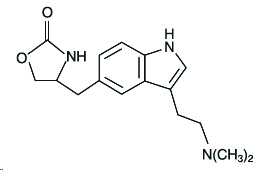
The empirical formula is C 16 H 21 N 3 O 2 , representing a molecular weight of 287.36. Zolmitriptan is a white to almost white powder that is readily soluble in water. ZOMIG Nasal Spray is supplied as a clear to pale yellow solution of zolmitriptan, buffered to a pH 5.0. Each ZOMIG Nasal Spray contains 2.5 mg or 5 mg of zolmitriptan in a 100-μL unit dose aqueous buffered solution containing citric acid, anhydrous, USP, disodium phosphate dodecahydrate USP and purified water USP.
ZOMIG Nasal Spray is hypertonic. The osmolarity of ZOMIG Nasal Spray for 2.5 mg is 360 to 420 mOsmol, and for 5 mg is 420 to 470 mOsmol.
CLINICAL PHARMACOLOGY
Mechanism of Action
Zolmitriptan binds with high affinity to human recombinant 5-HT 1D and 5-HT 1B receptors, and moderate affinity for 5-HT 1A receptors. The N-desmethyl metabolite also has high affinity for 5-HT 1B/1D and moderate affinity for 5-HT 1A receptors.
Current theories proposed to explain the etiology of migraine headache suggest that symptoms are due to local cranial vasodilatation and/or to the release of sensory neuropeptides (vasoactive intestinal peptide, substance P and calcitonin gene-related peptide) through nerve endings in the trigeminal system. The therapeutic activity of ZOMIG for the treatment of migraine headache is thought to be due to the agonist effects at the 5-HT 1B/1D receptors on intracranial blood vessels (including the arterio-venous anastomoses) and sensory nerves of the trigeminal system which result in cranial vessel constriction and inhibition of pro-inflammatory neuropeptide release.
Pharmacokinetics
Absorption, Distribution, Metabolism, and Excretion Absorption Zolmitriptan nasal spray is rapidly absorbed via the nasopharynx as detected in a Photon Emission Tomography (PET) study using 11 C zolmitriptan. The mean relative bioavailability of the nasal spray formulation is 102%, compared with the oral tablet. Zolmitriptan was detected in plasma by 5 minutes and peak plasma concentration generally was achieved by 3 hours. The time at which maximum plasma concentrations were observed was similar after single (1 day) or multiple (4 days) nasal dosing. Plasma concentrations of zolmitriptan are sustained for 4 to 6 hours after dosing. Zolmitriptan and its active N-desmethyl metabolite display linear kinetics after single or multiple doses of ZOMIG nasal spray over the dose range of 0.1 to 10 mg.
The pharmacokinetics of the N-desmethyl metabolite are similar to that of zolmitriptan for all nasal spray dosages. The N-desmethyl metabolite is detected in plasma by 15 minutes and peak plasma concentration is generally achieved by 3 hours after administration.
Food has no significant effect on the bioavailability of zolmitriptan.
Distribution Plasma protein binding of zolmitriptan is 25% over the concentration range of 10-1000 ng/mL. The mean apparent volume of distribution for zolmitriptan nasal spray formulation is 8.4 L/kg.
Metabolism Zolmitriptan is converted to an active N-desmethyl metabolite such that the metabolite concentrations are about two-thirds that of zolmitriptan. Because the 5HT 1B/1D potency of the metabolite is 2 to 6 times that of the parent compound, the metabolite may contribute a substantial portion of the overall effect after ZOMIG administration.
Excretion The mean elimination half-life for zolmitriptan and N-desmethyl metabolite following single or multiple nasal spray administration are approximately 3 hours, similar to the half-life values seen after oral tablet administration.
In a study with orally administered zolmitriptan, total radioactivity recovered in urine and feces was 65% and 30% of the administered dose, respectively. In urine, unchanged zolmitriptan and N-desmethyl metabolite accounted for 8% and 4% of the dose, respectively, whereas the inactive indole acetic acid and N-oxide metabolites accounted for 31% and 7% of the dose, respectively.
Mean total plasma clearance for zolmitriptan nasal spray is 25.9 mL/min/kg, of which one-sixth is renal clearance. The renal clearance is greater than the glomerular filtration rate suggesting renal tubular secretion.
Specific Populations
Age: The pharmacokinetics of orally administered zolmitriptan in healthy elderly non-migraineur volunteers (age 65-76 yrs) was similar to those in younger non-migraineur volunteers (age 18-39 yrs).
Sex: Mean plasma concentrations of orally administered zolmitriptan were up to 1.5-fold higher in females than males.
Race: There are no significant differences in the pharmacokinetics of orally administered zolmitriptan in Japanese and Caucasians.
Renal Impairment: The effect of renal impairment on the pharmacokinetics of zolmitriptan nasal spray has not been evaluated. After orally dosing zolmitriptan, renal clearance was reduced by 25% in patients with severe renal impairment (Clcr ≥ 5 ≤ 25 mL/min) compared with the normal group (Clcr ≥ 70 mL/min); no significant change in clearance was observed in the moderately renally impaired group (Clcr ≥ 26 ≤ 50 mL/min).
Hepatic Impairment: The effect of hepatic disease on the pharmacokinetics of zolmitriptan nasal spray has not been evaluated. In patients with severe hepatic impairment, the mean C max , T max , and AUC of zolmitriptan dosed orally were increased 1.5-fold, 2-fold (2 vs. 4 hours), and 3-fold, respectively, compared to subjects with normal hepatic function. Seven out of 27 patients experienced 20 to 80 mm Hg elevations in systolic and/or diastolic blood pressure after a 10 mg ZOMIG dose [see Dosage and Administration (2.2) and Use in Specific Populations (8.6) ] .
Hypertensive Patients: No differences in the pharmacokinetics of oral zolmitriptan or its effects on blood pressure were seen in mild to moderate hypertensive volunteers compared with normotensive controls.
Drug Interactions All drug interaction studies were performed in healthy volunteers using a single 10 mg dose of zolmitriptan and a single dose of the other drug except where otherwise noted. Eight drug interaction studies have been performed with zolmitriptan tablets and one study (xylometazoline) was performed with nasal spray.
Xylometazoline: An in vivo drug interaction study with ZOMIG nasal spray indicated that 1 spray (100 μL dose) of xylometazoline (0.1% w/v), a decongestant, administered 30 minutes prior to a 5 mg nasal dose of zolmitriptan did not alter the pharmacokinetics of zolmitriptan.
Fluoxetine: The pharmacokinetics of zolmitriptan, as well as its effect on blood pressure, were unaffected by 4 weeks of pre-treatment with oral fluoxetine (20 mg/day).
MAO Inhibitors: Following one week of administration of moclobemide (150 mg twice-daily), a specific MAO-A inhibitor, there was an increase of about 25% in both C max and AUC for zolmitriptan and a 3-fold increase in the C max and AUC of the active N-desmethyl metabolite of zolmitriptan [see Contraindications (4) and Drug Interactions (7.2) ] .
Selegiline, a selective MAO-B inhibitor, at a dose of 10 mg/day for 1 week, had no effect on the pharmacokinetics of zolmitriptan and its metabolite.
Propranolol: C max and AUC of zolmitriptan increased 1.5-fold after one week of dosing with propranolol (160 mg/day). C max and AUC of the N-desmethyl metabolite were reduced by 30% and 15%, respectively. There were no interactive effects on blood pressure or pulse rate following administration of propranolol with zolmitriptan.
Acetaminophen: A single 1g dose of acetaminophen does not alter the pharmacokinetics of zolmitriptan and its N-desmethyl metabolite. However, zolmitriptan delayed the T max of acetaminophen by one hour.
Metoclopramide: A single 10 mg dose of metoclopramide had no effect on the pharmacokinetics of zolmitriptan or its metabolites.
Oral Contraceptives: Retrospective analysis of pharmacokinetic data across studies indicated that mean C max and AUC of zolmitriptan were 30% and 50% higher, respectively, and T max was delayed by one-half hour in females taking oral contraceptives compared to females not taking oral contraceptives. The effect of zolmitriptan on the pharmacokinetics of oral contraceptives has not been studied.
Cimetidine: Following the administration of cimetidine, the half-life and AUC of a 5 mg dose of zolmitriptan and its active metabolite were approximately doubled. A dosage adjustment is therefore required [see Drug Interactions (7.4) ] .
NONCLINICAL TOXICOLOGY
Carcinogenesis, Mutagenesis, Impairment of Fertility
Carcinogenesis Zolmitriptan was administered to mice and rats at doses up to 400 mg/kg/day. Mice were dosed for 85 weeks (males) and 92 weeks (females); rats were dosed for 101 weeks (males) and 86 weeks (females). There was no evidence of drug-induced tumors in mice at plasma exposures (AUC) up to approximately 700 times that in humans at the maximum recommended human dose (MRHD) of 10 mg/day. In rats, there was an increase in the incidence of thyroid follicular cell hyperplasia and thyroid follicular cell adenomas in male rats receiving 400 mg/kg/day. No increase in tumors was observed in rats at 100 mg/kg/day, a dose associated with a plasma AUC ≈700 times that in humans at the MRHD.
Mutagenesis Zolmitriptan was positive in an in vitro bacterial reverse mutation (Ames) assay and in an in vitro chromosomal aberration assay in human lymphocytes. Zolmitriptan was negative in an in vitro mammalian gene cell mutation (CHO/HGPRT) assay and in oral in vivo micronucleus assays in mouse and rat.
Impairment of Fertility Studies of male and female rats administered zolmitriptan prior to and during mating and up to implantation showed no impairment of fertility at oral doses up to 400 mg/kg/day. The plasma exposure (AUC) at this dose was approximately 3000 times that in humans at the MRHD.
CLINICAL STUDIES
Adults
The efficacy of ZOMIG nasal spray 2.5 mg and 5 mg in the acute treatment of migraine headache with or without aura in adults was demonstrated in Study 1, a randomized, outpatient, double-blind, placebo-controlled trial.
In Study 1, patients were instructed to treat a moderate to severe headache. Headache response, defined as a reduction in headache severity from moderate or severe pain to mild or no pain, was assessed 15, 30, 45 minutes and 1, 2, and 4 hours after dosing. Pain-free response rates and associated symptoms such as nausea, photophobia, and phonophobia were also assessed. A dose of escape medication was allowed 4 to 24 hours after the initial treatment for persistent and recurrent headache.
In Study 1, of the patients taking ZOMIG nasal spray 2.5 mg or 5 mg, 83% were female and 99% were Caucasian, with a mean age of 41 years (range 18 to 65 years).
The two-hour headache response rates in patients treated with ZOMIG nasal spray were significantly higher among patients receiving ZOMIG nasal spray at all doses, compared with placebo (see Table 3).
Table 3: First Attack Data: Percentage of Adult Patients with Headache Response to ZOMIG Nasal Spray (Mild or No Headache) 2 Hours Following Treatment in Study 1
| PLACEBO (N=218) | ZOMIG 2.5 mg (N=219) | ZOMIG 5 mg (N=228) |
| 31% | 55%• | 69%• |
•p < 0.001 in comparison with placebo
The estimated probability of achieving an initial headache response following treatment with ZOMIG nasal spray is depicted in Figure 1.
Figure 1: Estimated probability of achieving an initial headache response after treatment in Study 1
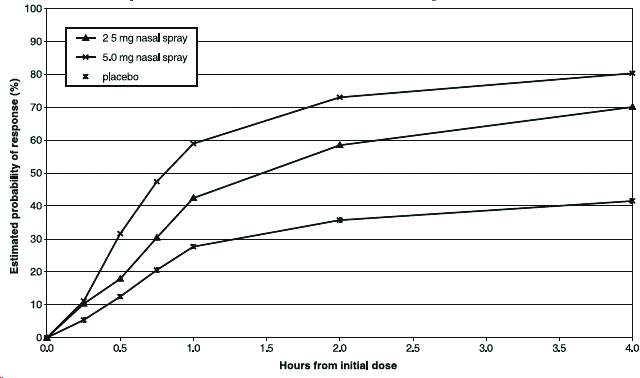
Note: Figure 1 shows the Kaplan-Meier plot of the probability over time of obtaining headache response (moderate or severe headache improving to mild or no pain) following treatment with ZOMIG nasal spray. The estimates displayed are based on a placebo controlled, outpatient trial providing evidence of efficacy. Patients not achieving headache response or taking additional treatment prior to 4 hours were censored to 4 hours.
For patients with migraine associated photophobia, phonophobia, and nausea at baseline, there was a decreased incidence of these symptoms following administration of ZOMIG nasal spray as compared with placebo.
Four to 24 hours following the initial dose of study treatment, patients were allowed to use additional treatment for pain relief in the form of a second dose of study treatment or other medication. The estimated probability of patients taking a second dose or other medication for migraine over the 24 hours following the initial dose of study treatment is summarized in Figure 2.
Figure 2: Estimated probability of patients taking an escape medication within the 24 hours following the initial dose of study treatment in Study 1
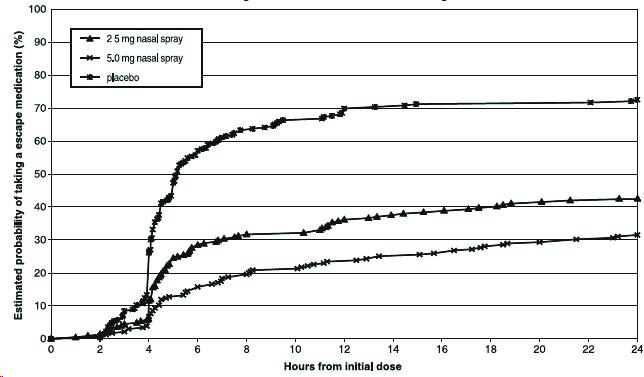
•This Kaplan-Meier plot is based on data obtained from the placebo controlled clinical trial. Patients not using additional treatments were censored at 24 hours. The plot includes both patients who had headache response at 2 hours and those who had no response to the initial dose. It should be noted that the protocol did not allow remedication within 4 hours post dose.
The efficacy of ZOMIG was unaffected by presence of aura; presence of headache upon awakening, relationship to menses; gender, age or weight of the patient; or presence of pre-treatment nausea.
The efficacy of ZOMIG nasal spray 5 mg was further supported by an interim analysis of another similarly designed trial. The 2-hour headache response rates for the first 210 subjects in that study for ZOMIG 5 mg and placebo were 70% and 47%, respectively (N=108 and 102, respectively, p=0.0006).
Pediatric Patients 12 to 17 Years of Age
The efficacy of ZOMIG nasal spray in the acute treatment of migraine headache with or without aura in pediatrics patients 12 to 17 years of age was demonstrated in Study 2, a randomized, double-blind, placebo-controlled trial with a single-blind run-in period.
Patients had to have an established diagnosis of migraine (history indicating the presence of migraine for at least 1 year) with or without aura with a typical untreated migraine headache attack lasting 3 hours or more. The study included treatment of a single migraine headache attack with 1 dose of single-blind placebo during the 30-day run-in period. If the patient met all conditions for randomization, including a lack of response to the placebo run-in, a subsequent single migraine headache attack was treated with 1 blinded dose of either ZOMIG nasal spray 5 mg, 2.5 mg, or matching placebo.
In Study 2, of the patients taking ZOMIG nasal spray 2.5 mg or 5 mg, 62% were female and 93% were Caucasian, with a mean age of 14 years (range 12 to 17 years).
Study 2 evaluated the proportion of pediatric patients 12 to 17 years of age who had no headache pain at 2 hours following treatment. Headache response (defined as a reduction in migraine-related headache pain severity from moderate or severe pain to mild or no pain) and the absence of nausea, photophobia, and phonophobia at 2 hours post treatment were also assessed. As shown in Table 4, the percentage of pediatric patients 12 to 17 years of age with no headache pain at 2 hours following treatment was significantly higher for ZOMIG nasal spray 5 mg than placebo.
Table 4: Percentage of Pediatric Patients 12 to 17 Years of Age with No Headache Pain, With Headache Response, No Nausea, No Photophobia, and No Phonophobia Two Hours after Treatment in Study 2
| Two Hours Following Treatment | |||
| Placebo (N=253) | ZOMIG 2.5 mg (N=81) | ZOMIG 5 mg (N=229) | |
| No Headache Pain | 17% | 25% | 30%• |
| With Headache Response | 39% | 53%• | 51%• |
| No Photophobia | 44% | 66%• | 56%• |
| No Phonophobia | 48% | 61%• | 58%• |
| No Nausea | 66% | 70% | 72% |
•p < 0.05 in comparison with placebo
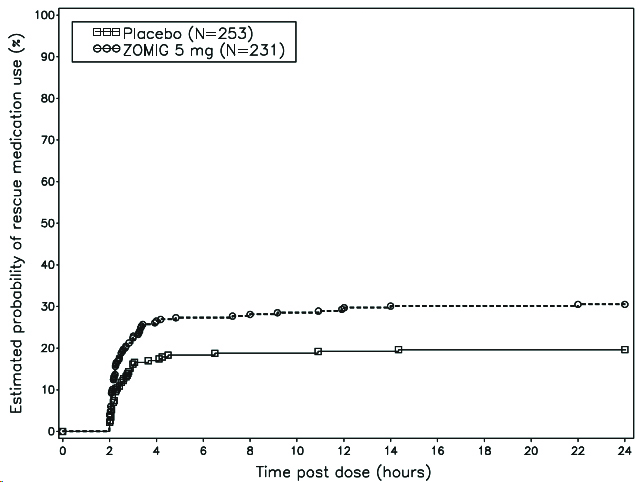
Two to 24 hours following the initial dose of study treatment, patients were allowed to use their usual medication for pain relief. The estimated probability of patients taking escape medication during the first 24 hours following the initial dose of study treatment is summarized in Figure 3.
Figure 3: Estimated Probability of Pediatric Patients 12 to 17 Years of Age Taking an Escape Medication Within the 24 Hours Following the Initial Dose of Study Treatment in Study 2
HOW SUPPLIED/STORAGE AND HANDLING
The ZOMIG Nasal Spray device is a blue-colored plastic device with a gray protection cap, labeled to indicate the nominal dose. Each ZOMIG Nasal Spray device administers a single dose of ZOMIG.
ZOMIG Nasal Spray is supplied as a clear to pale yellow solution of zolmitriptan, buffered to a pH 5.0. Each ZOMIG Nasal Spray device contains 2.5 mg or 5 mg of zolmitriptan in a 100 μL unit dose aqueous buffered solution containing citric acid, anhydrous, USP, disodium phosphate dodecahydrate USP and purified water USP.
2.5 mg ZOMIG ® Nasal Spray is supplied in boxes of 6 single-use nasal spray units. (NDC 64896-083-12).
5 mg ZOMIG ® Nasal Spray is supplied in boxes of 6 single-use nasal spray units. (NDC 64896-084-12).
Each ZOMIG ® Nasal Spray single dose unit spray supplies 2.5 and 5 mg, respectively, of zolmitriptan. The ZOMIG ® Nasal Spray unit must be discarded after use.
Store at controlled room temperature, 20-25°C (68-77°F) [see USP].
Instructions for Use
ZOMIG® (Zo-mig) (zolmitriptan) Nasal Spray
Important: For use in your nose only. Do not spray in your eyes.
Note: There is only 1 dose in the nasal sprayer. Do not try to prime the nasal sprayer or you will lose the dose. Do not press the plunger until you have put the tip into your nostril or you will lose the dose.
Steps for using ZOMIG Nasal Spray
Step 1. Remove the ZOMIG Nasal Spray unit from the single use package it comes in. Do not remove the unit until you are ready to use it. The unit contains only 1 spray.
Step 2. Blow your nose gently to clear your nasal passages before use.
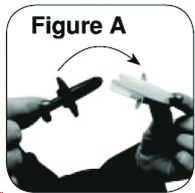
Step 3. Remove the protective cap (See Figure A).
Step 4. Keeping your head in an upright position, gently close 1 nostril with your index finger and breathe out gently through your mouth. (See Figure B). Either nostril can be used.

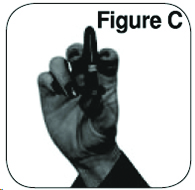
Step 5. With your other hand, hold the container with your thumb supporting the container at the bottom, and your index and middle fingers on each side of the nozzle. (See Figure C).
Insert the tip of the sprayer device into your open nostril as far as feels comfortable and tilt your head slightly (See Figure D).
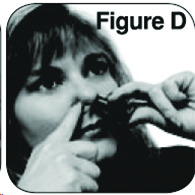
Do not press the plunger yet.
Step 6. Breathe in gently through your nose and at the same time press the plunger firmly with your thumb to release your dose of ZOMIG Nasal Spray (See Figure D).
The plunger may feel stiff and you may hear a click. Keep your head slightly tilted back and remove the tip from your nose. Breathe gently through your mouth for 5 to 10 seconds. You may feel liquid in your nose or the back of your throat. This is normal.
Step 7. Dispose the ZOMIG Nasal Spray device after completing the full dose or as soon as it becomes outdated or no longer needed. Dispose of properly. Keep out of reach of children. Do not reuse.
This Patient Information and Instructions for Use have been approved by the U.S. Food and Drug Administration.
ZOMIG is a registered trademark of the AstraZeneca group of companies.
Other brands mentioned are trademarks of their respective owners and are not trademarks of the AstraZeneca group of companies. The makers of these brands are not affiliated with AstraZeneca or its products.
Revised 04/2019
Distributed by: Amneal Specialty, a division of Amneal Pharmaceuticals LLC Bridgewater, NJ 08807
Mechanism of Action
Zolmitriptan binds with high affinity to human recombinant 5-HT 1D and 5-HT 1B receptors, and moderate affinity for 5-HT 1A receptors. The N-desmethyl metabolite also has high affinity for 5-HT 1B/1D and moderate affinity for 5-HT 1A receptors.
Current theories proposed to explain the etiology of migraine headache suggest that symptoms are due to local cranial vasodilatation and/or to the release of sensory neuropeptides (vasoactive intestinal peptide, substance P and calcitonin gene-related peptide) through nerve endings in the trigeminal system. The therapeutic activity of ZOMIG for the treatment of migraine headache is thought to be due to the agonist effects at the 5-HT 1B/1D receptors on intracranial blood vessels (including the arterio-venous anastomoses) and sensory nerves of the trigeminal system which result in cranial vessel constriction and inhibition of pro-inflammatory neuropeptide release.
