Get your patient on Azelastine - Azelastine spray, Metered (Azelastine)
Azelastine - Azelastine spray, Metered prescribing information

INDICATIONS AND USAGE
Azelastine HCl Nasal Spray is indicated for the treatment of the symptoms of seasonal allergic rhinitis in adults and pediatric patients 5 years and older, and for the treatment of the symptoms of vasomotor rhinitis in adults and adolescent patients 12 years and older.
DOSAGE AND ADMINISTRATION
- For intranasal use only (2.3 )
- Seasonal allergic rhinitis:
o Pediatric patients 5 to 11 years of age: 1 spray per nostril twice daily (2.1 )
o Adults and adolescents 12 years of age and older: 1 or 2 sprays per nostril twice daily (2.1 )
Seasonal Allergic Rhinitis
The recommended dosage of Azelastine HCl Nasal Spray in adults and adolescent patients 12 years and older with seasonal allergic rhinitis is one or two sprays per nostril twice daily. The recommended dosage of Azelastine HCl Nasal Spray in pediatric patients 5 years to 11 years of age is one spray per nostril twice daily.
Vasomotor Rhinitis
The recommended dosage of Azelastine HCl Nasal Spray in adults and adolescent patients 12 years and older with vasomotor rhinitis is two sprays per nostril twice daily.
Important Administration Instructions
Administer Azelastine HCl Nasal Spray by the intranasal route only.
Priming : Prime Azelastine HCl Nasal Spray before initial use by releasing 4 sprays or until a fine mist appears. When Azelastine HCl Nasal Spray has not been used for 3 or more days, reprime with 2 sprays or until a fine mist appears. Avoid spraying Azelastine HCl Nasal Spray into the eyes.
DOSAGE FORMS AND STRENGTHS
Azelastine HCl Nasal Spray is a nasal spray. Each spray of Azelastine HCl Nasal Spray delivers a volume of 0.137 mL solution containing 137 mcg of azelastine hydrochloride, USP.
USE IN SPECIFIC POPULATIONS
Pregnancy
Risk Summary Limited data from postmarketing experience over decades of use with Azelastine HCl Nasal Spray in pregnant women have not identified any drug associated risks of miscarriage, birth defects, or other adverse maternal or fetal outcomes. In animal reproduction studies, there was no evidence of fetal harm at oral doses approximately 5 times the clinical daily dose. Oral administration of azelastine hydrochloride to pregnant mice, rats, and rabbits, during the period of organogenesis, produced developmental toxicity that included structural abnormalities, decreased embryo-fetal survival, and decreased fetal body weights at doses 270 times and higher than the maximum recommended human daily intranasal dose (MRHDID) of 1.096 mg. However, the relevance of these findings in animals to pregnant women was considered questionable based upon the high animal to human dose multiple.
The estimated background risk of major birth defects and miscarriage for the indicated populations is unknown. All pregnancies have a background risk of birth defect, loss, or other adverse outcomes. In the U.S. general population, the estimated background risk of major birth defects and miscarriage in clinically recognized pregnancies is 2-4% and 15-20%, respectively.
Data
Animal Data
In an embryo-fetal development study in mice dosed during the period of organogenesis, azelastine hydrochloride caused embryo-fetal death, structural abnormalities (cleft palate; short or absent tail; fused, absent or branched ribs), delayed ossification, and decreased fetal weight at approximately 300 times the maximum recommended human daily intranasal dose (MRHDID) in adults (on a mg/m 2 basis at a maternal oral dose of 68.6 mg/kg/day), which also caused maternal toxicity as evidenced by decreased maternal body weight. Neither fetal nor maternal effects occurred in mice at approximately 15 times the MRHDID in adults (on a mg/m 2 basis at a maternal oral dose of 3 mg/kg/day).
In an embryo-fetal development study in pregnant rats dosed during the period of organogenesis from gestation days 7 to 17, azelastine hydrochloride caused structural abnormalities (oligo-and brachydactylia), delayed ossification, and skeletal variations, in the absence of maternal toxicity, at approximately 270 times the MRHDID in adults (on a mg/m 2 basis at a maternal oral dose of 30 mg/kg/day). Azelastine hydrochloride caused embryo-fetal death and decreased fetal weight and severe maternal toxicity at approximately 610 times the MRHDID (on a mg/m 2 basis at a maternal oral dose of 68.6 mg/kg/day). Neither fetal nor maternal effects occurred at approximately 20 times the MRHDID (on a mg/m 2 basis at a maternal oral dose of 2 mg/kg/day).
In an embryo-fetal development study in pregnant rabbits dosed during the period of organogenesis from gestation days 6 to 18, azelastine hydrochloride caused abortion, delayed ossification and decreased fetal weight and severe maternal toxicity at approximately 530 times the MRHDID in adults (on a mg/m 2 basis at a maternal oral dose of 30 mg/kg/day). Neither fetal nor maternal effects occurred at approximately 5 times the MRHDID (on a mg/m 2 basis at a maternal oral dose of 0.3 mg/kg/day).
In a prenatal and postnatal development study in pregnant rats dosed from late in the gestation period and through the lactation period from gestation day 17 through lactation day 21, azelastine hydrochloride produced no adverse developmental effects on pups at maternal doses up to approximately 270 times the MRHDID (on mg/m 2 basis at a maternal dose of 30 mg/kg/day).
Lactation
Risk Summary There are no data on the presence of azelastine hydrochloride in human milk, the effects on the breastfed infant, or the effects on milk production. Breastfed infants should be monitored for signs of milk rejection during Azelastine HCl Nasal Spray use by lactating women (see Clinical Considerations). The developmental and health benefits of breastfeeding should be considered along with the mother’s clinical need for Azelastine HCl Nasal Spray and any potential adverse effects on the breastfed infant from Azelastine HCl Nasal Spray or from the underlying maternal condition.
Clinical Considerations
Monitoring for Adverse Reactions
Breastfed infants of lactating women treated with Azelastine HCl Nasal Spray should be monitored for possible signs of milk rejection related to the bitter taste of azelastine hydrochloride.
Pediatric Use
The safety and effectiveness of Azelastine HCl Nasal Spray for the treatment of symptoms of seasonal allergic rhinitis have been established for patients 5 years and older [ see Adverse Reactions (6.1 ) and Clinical Studies (14.1 ) ]. The safety and effectiveness of Azelastine HCl Nasal Spray for the treatment of vasomotor rhinitis have been established for patients 12 years and older [ see Adverse Reactions (6.1 ) and Clinical Studies (14.2 ) ]. The safety and effectiveness of Azelastine HCl Nasal Spray in pediatric patients below the age of 5 years with seasonal allergic rhinitis and in pediatric patients below the age of 12 years with vasomotor rhinitis have not been established.
Geriatric Use
Clinical trials of Azelastine HCl Nasal Spray did not include sufficient numbers of patients aged 65 and over to determine whether they respond differently from younger patients. Other reported clinical experience has not identified differences in responses between the elderly and younger patients. In general, dose selection for an elderly patient should be cautious, usually starting at the low end of the dosing range, reflecting the greater frequency of decreased hepatic, renal, or cardiac function, and of concomitant disease or other drug therapy.
CONTRAINDICATIONS
None.
WARNINGS AND PRECAUTIONS
- Somnolence: Avoid engaging in hazardous occupations requiring complete mental alertness such as driving or operating machinery when taking Azelastine HCl Nasal Spray. (5.1 )
- Alcohol and other central nervous system (CNS) depressants: Avoid concurrent use with Azelastine HCl Nasal Spray because further decreased alertness and impairment of CNS performance may occur. (5.1 )
Somnolence in Activities Requiring Mental Alertness
In clinical trials, the occurrence of somnolence has been reported in some patients taking Azelastine HCl Nasal Spray [ see Adverse Reactions (6.1 ) ]. Patients should be cautioned against engaging in hazardous occupations requiring complete mental alertness and motor coordination such as operating machinery or driving a motor vehicle after administration of Azelastine HCl Nasal Spray. Concurrent use of Azelastine HCl Nasal Spray with alcohol or other central nervous system depressants should be avoided because additional reductions in alertness and additional impairment of central nervous system performance may occur [ see Drug Interactions (7.1 ) ].
ADVERSE REACTIONS
Use of Azelastine HCl Nasal Spray has been associated with somnolence [ see Warnings and Precautions (5.1 ) ].
Clinical Trials Experience
Because clinical trials are conducted under widely varying conditions, adverse reaction rates observed in clinical trials of a drug cannot be directly compared to rates in the clinical trials of another drug and may not reflect rates observed in practice. Seasonal Allergic Rhinitis Azelastine HCl Nasal Spray Two Sprays Per Nostril Twice Daily Adverse experience information for Azelastine HCl Nasal Spray is derived from six placebo-and active-controlled, 2-day to 8-week clinical trials which included 391 patients, 12 years of age and older, with seasonal allergic rhinitis who received Azelastine HCl Nasal Spray at a dose of 2 sprays per nostril twice daily. In placebo-controlled efficacy trials, the incidence of discontinuation due to adverse reactions in patients receiving Azelastine HCl Nasal Spray and vehicle placebo was 2.2% and 2.8%, respectively. Table 1 contains adverse reactions that were reported with frequencies ≥2% in the Azelastine HCl Nasal Spray 2 sprays per nostril twice daily treatment group and more frequently than placebo.
| Table 1: Adverse Reactions Reported in ≥2% Incidence in Placebo-Controlled Trials in Patients with Seasonal Allergic Rhinitis [n (%)] | ||
| Azelastine HCl Nasal Spray N = 391 | Vehicle Placebo N = 353 | |
| Bitter Taste | 77 (19.7%) | 2 (0.6%) |
| Headache | 58 (14.8%) | 45 (12.7%) |
| Somnolence | 45 (11.5%) | 19 (5.4%) |
| Nasal Burning | 16 (4.1%) | 6 (1.7%) |
| Pharyngitis | 15 (3.8%) | 10 (2.8%) |
| Paroxysmal Sneezing | 12 (3.1%) | 4 (1.1%) |
| Dry Mouth | 11 (2.8%) | 6 (1.7%) |
| Nausea | 11 (2.8%) | 4 (1.1%) |
| Rhinitis | 9 (2.3%) | 5 (1.4%) |
| Fatigue | 9 (2.3%) | 5 (1.4%) |
| Dizziness | 8 (2.0%) | 5 (1.4%) |
| Epistaxis | 8 (2.0%) | 5 (1.4%) |
| Weight Increase | 8 (2.0%) | 0 (0.0%) |
Azelastine HCl Nasal Spray
One Spray Per Nostril Twice Daily
Adverse experience information for Azelastine HCl Nasal Spray at a dose of one spray per nostril twice daily is derived from two placebo-controlled 2-week clinical studies which included 276 patients 12 years of age and older with seasonal allergic rhinitis. The incidence of discontinuation due to adverse reactions in patients receiving Azelastine HCl Nasal Spray and vehicle placebo was 0.0% and 0.8%, respectively. Bitter taste was reported in 8.3% of patients compared to none in the placebo group. Somnolence was reported in 0.4% of patients compared to none in the placebo group.
A total of 176 patients 5 to 11 years of age were exposed to Azelastine HCl Nasal Spray at a dose of 1 spray each nostril twice daily in 3 placebo-controlled studies. In these studies, adverse reactions that occurred more frequently in patients treated with Azelastine HCl Nasal Spray than with placebo, and that were not represented in the adult adverse reactions table above include rhinitis/cold symptoms (17.0% vs. 9.5%), cough (11.4% vs. 8.3%), conjunctivitis (5.1% vs. 1.8%), and asthma (4.5% vs. 4.1%).
Adverse Reactions <2% in Azelastine HCl Nasal Spray One or Two Sprays Per Nostril Twice Daily
The following reactions were observed infrequently (<2% and exceeding placebo incidence) in patients who received Azelastine HCl Nasal Spray dosed at 1 or 2 sprays per nostril twice daily in U.S. clinical trials.
Cardiovascular: flushing, hypertension, tachycardia.
Dermatological: contact dermatitis, eczema, hair and follicle infection, furunculosis, skin laceration.
Digestive: constipation, gastroenteritis, glossitis, ulcerative stomatitis, vomiting, increased SGPT, aphthous stomatitis, diarrhea, toothache.
Metabolic and Nutritional: increased appetite.
Musculoskeletal: myalgia, temporomandibular dislocation, rheumatoid arthritis.
Neurological: hyperkinesia, hypoesthesia, vertigo.
Psychological: anxiety, depersonalization, depression, nervousness, sleep disorder, thinking abnormal.
Respiratory: bronchospasm, coughing, throat burning, laryngitis, bronchitis, dry throat, nocturnal dyspnea, nasopharyngitis, nasal congestion, pharyngolaryngeal pain, sinusitis, nasal dryness, paranasal sinus hypersecretion, post nasal drip.
Special Senses: conjunctivitis, eye abnormality, eye pain, watery eyes, taste loss.
Urogenital: albuminuria, amenorrhea, breast pain, hematuria, increased urinary frequency.
Whole Body: allergic reaction, back pain, herpes simplex, viral infection, malaise, pain in extremities, abdominal pain, pyrexia.
Vasomotor Rhinitis
Adverse experience information for Azelastine HCl Nasal Spray is derived from two placebo-controlled clinical studies which included 216 patients 12 years and older with vasomotor rhinitis who received Azelastine HCl Nasal Spray at a dose of 2 sprays per nostril twice daily for up to 28 days. The incidence of discontinuation due to adverse reactions in patients receiving Azelastine HCl Nasal Spray and vehicle placebo was 2.8% and 2.9%, respectively.
The following adverse reactions were reported with frequencies ≥ 2% in the Azelastine HCl Nasal Spray treatment group and more frequently than placebo.
| Table 2: Adverse Reactions Reported in ≥2% Incidence in Placebo-Controlled Trials in Patients with Vasomotor Rhinitis [n (%)] | ||
| Azelastine HCl Nasal Spray N = 216 | Vehicle Placebo N = 210 | |
| Bitter Taste | 42 (19.4%) | 5 (2.4%) |
| Headache | 17 (7.9%) | 16 (7.6%) |
| Dysesthesia | 17 (7.9%) | 7 (3.3%) |
| Rhinitis | 12 (5.6%) | 5 (2.4%) |
| Epistaxis | 7 (3.2%) | 5 (2.4%) |
| Sinusitis | 7 (3.2%) | 4 (1.9%) |
| Somnolence | 7 (3.2%) | 2 (1.0%) |
Reactions observed infrequently (<2% and exceeding placebo incidence) in patients who received Azelastine HCl Nasal Spray (2 sprays/nostril twice daily) in U.S. clinical trials in vasomotor rhinitis were similar to those observed in U.S. clinical trials in seasonal allergic rhinitis.
In controlled trials involving nasal and oral azelastine hydrochloride formulations, there were infrequent occurrences of hepatic transaminase elevations.
Postmarketing Experience
During the post approval use of Azelastine HCl Nasal Spray, the following adverse reactions have been identified. Because these reactions are reported voluntarily from a population of uncertain size, it is not always possible to reliably estimate their frequency or establish a causal relationship to drug exposure. Adverse reactions reported include: anaphylaxis, application site irritation, atrial fibrillation, chest pain, confusion, dyspnea, facial edema, involuntary muscle contractions, nasal sores, palpitations, paresthesia, parosmia, pruritus, rash, disturbance or loss of sense of smell and/or taste, tolerance, urinary retention, vision abnormal and xerophthalmia.
DRUG INTERACTIONS
Central Nervous System Depressants
Concurrent use of Azelastine HCl Nasal Spray with alcohol or other central nervous system depressants should be avoided because reductions in alertness and impairment of central nervous system performance may occur [ see Warnings and Precautions (5.1 ) ].
DESCRIPTION
Azelastine HCl Nasal Spray, 137 micrograms (mcg), is an antihistamine formulated as a metered-spray solution for intranasal administration. Azelastine hydrochloride occurs as a white, almost odorless, crystalline powder with a bitter taste. It has a molecular weight of 418.37. It is sparingly soluble in water, methanol, and propylene glycol and slightly soluble in ethanol, octanol, and glycerine. It has a melting point of about 225°C and the pH of a saturated solution is between 5.0 and 5.4. Its chemical name is (±)-1-(2H)-phthalazinone,4-[(4chlorophenyl) methyl]-2-(hexahydro-1-methyl-1H-azepin-4-yl)-, monohydrochloride. Its molecular formula is C 22 H 24 ClN 3 O•HCl with the following chemical structure: 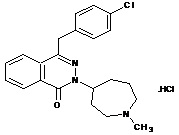 Azelastine HCl Nasal Spray contains 0.1% azelastine hydrochloride, USP in an aqueous solution at pH 6.8 ± 0.3. It also contains benzalkonium chloride (125 mcg/mL), edetate disodium, hypromellose, citric acid, dibasic sodium phosphate, sodium chloride, and purified water.
After priming [ see Dosage and Administration (2.3) ], each metered spray delivers a 0.137 mL mean volume containing 137 mcg of azelastine hydrochloride, USP (equivalent to 125 mcg of azelastine base). The bottle can deliver 200 metered sprays.
CLINICAL PHARMACOLOGY
Mechanism of Action
Azelastine hydrochloride, a phthalazinone derivative, exhibits histamine H 1 -receptor antagonist activity in isolated tissues, animal models, and humans. Azelastine HCl Nasal Spray is administered as a racemic mixture with no difference in pharmacologic activity noted between the enantiomers in in vitro studies. The major metabolite, desmethylazelastine, also possesses H 1 -receptor antagonist activity.
Pharmacodynamics
Cardiac Electrophysiology:
In a placebo-controlled study (95 subjects with allergic rhinitis), there was no evidence of an effect of Azelastine HCl Nasal Spray (2 sprays per nostril twice daily for 56 days) on cardiac repolarization as represented by the corrected QT interval (QTc) of the electrocardiogram. Following multiple dose oral administration of azelastine 4 mg or 8 mg twice daily, the mean change in QTc was 7.2 msec and 3.6 msec, respectively.
Interaction studies investigating the cardiac repolarization effects of concomitantly administered oral azelastine hydrochloride and erythromycin or ketoconazole were conducted. These drugs had no effect on QTc based on analysis of serial electrocardiograms. At a dose approximately 8 times the maximum recommended dose, azelastine hydrochloride does not prolong the QTc interval to any clinically relevant extent.
Pharmacokinetics
Absorption: After intranasal administration, the systemic bioavailability of azelastine hydrochloride is approximately 40%. Maximum plasma concentrations (C max ) are achieved in 2 to 3 hours.
Azelastine hydrochloride administered intranasally at doses above two sprays per nostril twice daily for 29 days resulted in greater than proportional increases in C max and area under the curve (AUC) for azelastine.
Distribution : Based on intravenous and oral administration, the steady-state volume of distribution is 14.5 L/kg. In vitro studies with human plasma indicate that the plasma protein binding of azelastine and its metabolite, desmethylazelastine, are approximately 88% and 97%, respectively.
Metabolism: Azelastine is oxidatively metabolized to the principal active metabolite, desmethylazelastine, by the cytochrome P450 enzyme system. The specific P450 isoforms responsible for the biotransformation of azelastine have not been identified. After intranasal dosing of azelastine hydrochloride to steady-state, plasma concentrations of desmethylazelastine range from 20 to 50% of azelastine concentrations. Limited data indicate that the metabolite profile is similar when azelastine hydrochloride is administered via the intranasal or oral route.
Elimination: Based on intravenous and oral administration, the elimination half-life and plasma clearance are 22 hours and 0.5 L/h/kg, respectively. Approximately 75% of an oral dose of radiolabeled azelastine hydrochloride was excreted in the feces with less than 10% as unchanged azelastine.
Special Populations:
Hepatic Impairment: Following oral administration, pharmacokinetic parameters were not influenced by hepatic impairment.
Renal Impairment: Based on oral, single-dose studies, renal insufficiency (creatinine clearance <50 mL/min) resulted in a 70 to 75% higher C max and AUC compared to normal subjects. Time to maximum concentration was unchanged.
Age: Following oral administration, pharmacokinetic parameters were not influenced by age.
Gender: Following oral administration, pharmacokinetic parameters were not influenced by gender.
Race: The effect of race has not been evaluated.
Drug-Drug Interactions:
Erythromycin: No significant pharmacokinetic interaction was observed with the coadministration of orally administered azelastine (4 mg twice daily) with erythromycin (500 mg three times daily for 7 days). In this study, co-administration of orally administered azelastine with erythromycin resulted in C max of 5.36 ± 2.6 ng/mL and AUC of 49.7 ± 24 ngh/mL for azelastine, whereas, administration of azelastine alone resulted in C max of 5.57 ± 2.7 ng/mL and AUC of 48.4 ± 24 ngh/mL for azelastine.
Cimetidine and Ranitidine: In a multiple-dose, steady-state drug interaction trial in healthy subjects, cimetidine (400 mg twice daily) increased orally administered mean azelastine (4 mg twice daily) concentrations by approximately 65%. No pharmacokinetic interaction was observed with co-administration of orally administered azelastine (4 mg twice daily) with ranitidine hydrochloride (150 mg twice daily). Oral co-administration of azelastine with ranitidine resulted in C max of 8.89 ±3.28 ng/mL and AUC of 88.22 ± 40.43 ngh/mL for azelastine, whereas, azelastine when administered alone resulted in C max of 7.83 ± 4.06 ng/mL and AUC of 80.09 ± 43.55 ngh/mL for azelastine.
Theophylline: No significant pharmacokinetic interaction was observed with the coadministration of an oral 4 mg dose of azelastine hydrochloride twice daily and theophylline 300 mg or 400 mg twice daily.
NONCLINICAL TOXICOLOGY
Carcinogenesis, Mutagenesis, Impairment of Fertility
Two-year carcinogenicity studies in Crl: CD (SD) BR rats and NMRI mice were conducted to assess the carcinogenic potential of azelastine hydrochloride. No evidence of tumorigenicity was observed in rats at doses up to 30 mg/kg day (approximately 270 and 240 times the MRHDID for adults and children, respectively, on a mg/m 2 basis). No evidence for tumorigenicity was observed in mice at doses up to 25 mg/kg (approximately 110 and 100 times the MRHDID for adults and children, respectively, on a mg/m 2 basis).
Azelastine hydrochloride showed no genotoxic effects in the Ames test, DNA repair test, mouse lymphoma forward mutation assay, mouse micronucleus test, or chromosomal aberration test in rat bone marrow.
There were no effects on male or female fertility and reproductive performance in male and female rats at oral doses up to 30 mg/kg (approximately 270 times the MRHDID in adults on a mg/m 2 basis). At 68.6 mg/kg (approximately 610 times the MRHDID on a mg/m 2 basis), the duration of estrous cycles was prolonged and copulatory activity and the number of pregnancies were decreased. The numbers of corpora lutea and implantations were decreased; however, preimplantation loss was not increased.
CLINICAL STUDIES
Seasonal Allergic Rhinitis
Two Sprays Per Nostril Twice Daily
The efficacy and safety of Azelastine HCl Nasal Spray were evaluated in three placebo-controlled clinical trials of Azelastine HCl Nasal Spray including 322 patients with seasonal allergic rhinitis who received two sprays per nostril twice a day for up to 4 weeks. These trials included 55 pediatric patients ages 12 to 16 years. Assessment of efficacy was based on the 12-hour reflective Total Symptom Complex (TSC) and Major Symptom Complex (MSC). The MSC was calculated as the average of individual symptoms of nose blows, sneezes, runny nose/sniffles, itchy nose, and watery eyes as assessed by patients on a 0 to 5 categorical scale. Azelastine HCl Nasal Spray two sprays per nostril twice daily demonstrated a greater decrease in the MSC than placebo (Table 3).
Table 3: Mean Change from Baseline in Reflective MSC• in Adults and Adolescents ≥12 Years with Seasonal Allergic Rhinitis Treated with Azelastine HCl Nasal Spray Two Sprays Per Nostril Twice Daily Versus Placebo
| Treatment | N | Baseline LS Mean (SD) | Change from Baseline (SD) | Treatment Difference | P-value | |
| Trial 1: 12 Hour AM and PM Reflective MSC | ||||||
| Azelastine HCl Nasal Spray | 63 | 11.48 (4.13) | -3.05 (3.51) | 1.98 | <0.01 | |
| Placebo Nasal Spray | 60 | 10.84 (4.53) | -1.07 (3.52) | |||
| Trial 2: 12 Hour AM and PM Reflective MSC | ||||||
| Azelastine HCl Nasal Spray | 63 | 12.50 (4.5) | -4.10 (3.46) | 2.03 | <0.01 | |
| Placebo Nasal Spray | 63 | 12.18 (4.64) | -2.07 (4.01) | |||
| Trial 3: 12 Hour AM and PM Reflective MSC | ||||||
| Azelastine HCl Nasal Spray | 66 | 12.04 (4.03) | -3.31 (3.74) | 1.35 | 0.04 | |
| Placebo Nasal Spray | 66 | 11.66 (3.96) | -1.96 (3.57) | |||
• Major Symptom Comlex (MSC): Average of individual symptoms of nose blows, sneezes, runny nose/sniffles, itchy nose, and watery eyes as assessed by patients on a 0 to 5 categorical scale.
In dose-ranging trials, administration of Azelastine HCl Nasal Spray two sprays per nostril twice daily resulted in a statistically significant decrease in symptoms compared to saline placebo within 3 hours after initial dosing and persisted over the 12-hour dosing interval.
One Spray Per Nostril Twice Daily
The efficacy and safety of Azelastine HCl Nasal Spray were evaluated in two placebo-controlled clinical trials of Azelastine HCl Nasal Spray including 275 patients with seasonal allergic rhinitis who received one spray per nostril twice a day for up to 2 weeks. Assessment of efficacy was based on the 12hour reflective Total Nasal Symptom Score [rTNSS]. rTNSS is calculated as the sum of the patients scoring of four individual nasal symptoms (runny nose, sneezing, itchy nose, and nasal congestion) as assessed by patients on a 0 to3 categorical scale. The primary efficacy endpoint was the change from Baseline to Day 14 in rTNSS. The mean change from baseline in rTNSS was greater in patients receiving Azelastine HCl Nasal Spray one spray per nostril twice daily than those receiving placebo (Table 4).
Table 4: Mean Change from Baseline in Reflective TNSS• in Adults and Adolescents ≥12 years with Seasonal Allergic Rhinitis Treated with Azelastine HCl Nasal Spray One Spray Per Nostril Twice Daily Versus Placebo
| Treatment | N | Baseline LS Mean (SD) | Change from Baseline (SD) | Treatment Difference | P-value | |
| Trial 4: 12 Hour AM and PM Reflective TNSS | ||||||
| Azelastine HCl Nasal Spray | 138 | 16.34 (4.22) | -2.69 (4.79) | 1.38 | 0.01 | |
| Placebo Nasal Spray | 141 | 17.21 (4.32) | -1.31 (4.29) | |||
| Trial 5: 12 Hour AM and PM Reflective TNSS | ||||||
| Azelastine HCl Nasal Spray | 137 | 16.62 (4.20) | -3.68 (4.16) | 1.18 | 0.02 | |
| Placebo Nasal Spray | 136 | 16.84 (4.77) | -2.50 (4.01) | |||
• Total Nasal Symptom Score (TNSS): Average of individual symptoms of runny nose, sneezing, itchy nose, and nasal congestion as assessed by patients on a 0 to 3 categorical scale.
Two-week studies comparing the efficacy (and safety) of Azelastine HCl Nasal Spray two sprays per nostril twice daily versus one spray per nostril twice daily were not conducted.
Vasomotor Rhinitis
The efficacy and safety of Azelastine HCl Nasal Spray were evaluated in two placebo-controlled clinical trials of Azelastine HCl Nasal Spray including 216 patients with vasomotor rhinitis who received two sprays per nostril twice a day for up to 4 weeks. These patients had vasomotor rhinitis for at least one year, negative skin tests to indoor and outdoor aeroallergens, negative nasal smears for eosinophils, and negative sinus X-rays. Azelastine HCl Nasal Spray demonstrated a significantly greater decrease in a symptom complex comprised of rhinorrhea, post nasal drip, nasal congestion, and sneezing compared to placebo.
HOW SUPPLIED/STORAGE AND HANDLING
Azelastine HCl Nasal Spray , 137 mcg is supplied as a 30-mL package (NDC 67877-477-50) delivering 200 metered sprays in a high-density polyethylene (HDPE) bottle fitted with a metered-dose spray pump unit. The spray pump unit consists of a nasal spray pump fitted with a white safety clip and a transparent plastic dust cover. The net content of the bottle is 30 mL (net weight 30 gm of solution). Each bottle contains 30 mg (1 mg/mL) of azelastine hydrochloride, USP. After priming [ see Dosage and Administration (2.3 ) ], each spray delivers a fine mist containing a mean volume of 0.137 mL solution containing 137 mcg of azelastine hydrochloride, USP. The correct amount of medication in each spray cannot be assured before the initial priming and after 200 sprays have been used, even though the bottle is not completely empty. The bottle should be discarded after 200 sprays have been used. Azelastine HCl Nasal Spray should not be used after the expiration date “EXP” printed on the medicine label and carton.
Storage:
Store at controlled room temperature 20° to 25°C (68° to 77°F). Protect from freezing.
Mechanism of Action
Azelastine hydrochloride, a phthalazinone derivative, exhibits histamine H 1 -receptor antagonist activity in isolated tissues, animal models, and humans. Azelastine HCl Nasal Spray is administered as a racemic mixture with no difference in pharmacologic activity noted between the enantiomers in in vitro studies. The major metabolite, desmethylazelastine, also possesses H 1 -receptor antagonist activity.
