Get your patient on Epkinly (Epcoritamab-Bysp)
Epkinly patient education
Patient toolkit
Dosage & administration

Epkinly prescribing information

WARNING: CYTOKINE RELEASE SYNDROME AND IMMUNE EFFECTOR CELL-ASSOCIATED NEUROTOXICITY SYNDROME
Cytokine release syndrome (CRS), including serious or fatal reactions, can occur in patients receiving EPKINLY. Initiate treatment with the EPKINLY step-up dosage schedule to reduce the incidence and severity of CRS. Withhold EPKINLY until CRS resolves or permanently discontinue based on severity [see Dosage and Administration (2.1 , 2.2 , 2.6) and Warnings and Precautions (5.1) ] .
Immune Effector Cell-Associated Neurotoxicity Syndrome (ICANS), including life-threatening and fatal reactions, can occur with EPKINLY. Monitor patients for neurological signs or symptoms of ICANS during treatment. Withhold EPKINLY until ICANS resolves or permanently discontinue based on severity [see Dosage and Administration (2.1 , 2.2 , 2.6) and Warnings and Precautions (5.2) ] .
INDICATIONS AND USAGE
EPKINLY is a bispecific CD20-directed CD3 T-cell engager indicated:
- For the treatment of adult patients with relapsed or refractory diffuse large B-cell lymphoma (DLBCL), not otherwise specified, including DLBCL arising from indolent lymphoma, and high-grade B-cell lymphoma after two or more lines of systemic therapy. (1.1 ) This indication is approved under accelerated approval based on response rate and durability of response. Continued approval for this indication may be contingent upon verification and description of clinical benefit in a confirmatory trial(s).
- In combination with lenalidomide and rituximab for the treatment of adult patients with relapsed or refractory follicular lymphoma (FL). (1.2 )
- As monotherapy for the treatment of adult patients with relapsed or refractory FL after two or more lines of systemic therapy. (1.2 )
DLBCL and High-grade B-cell Lymphoma
EPKINLY is indicated for the treatment of adult patients with relapsed or refractory diffuse large B-cell lymphoma (DLBCL), not otherwise specified, including DLBCL arising from indolent lymphoma, and high-grade B-cell lymphoma after two or more lines of systemic therapy.
This indication is approved under accelerated approval based on response rate and durability of response [see Clinical Studies (14.1) ]. Continued approval for this indication may be contingent upon verification and description of clinical benefit in a confirmatory trial(s).
Follicular Lymphoma
EPKINLY is indicated in combination with lenalidomide and rituximab for the treatment of adult patients with relapsed or refractory follicular lymphoma (FL).
EPKINLY is indicated as monotherapy for the treatment of adult patients with relapsed or refractory FL after two or more lines of systemic therapy.
DOSAGE AND ADMINISTRATION
DLBCL and High-grade B-cell Lymphoma
| Cycle Cycle = 28 days | Day | Dose of EPKINLY | |
|---|---|---|---|
| Cycle 1 | 1 | Step-up dose 1 | 0.16 mg |
| 8 | Step-up dose 2 | 0.8 mg | |
| 15 | First full dose | 48 mg | |
| 22 | 48 mg | ||
| Cycles 2 and 3 | 1, 8, 15 and 22 | 48 mg | |
| Cycles 4 to 9 | 1 and 15 | 48 mg | |
| Cycle 10 and beyond | 1 | 48 mg | |
EPKINLY as Monotherapy for FL
| Cycle Cycle = 28 days | Day | Dose of EPKINLY | |
|---|---|---|---|
| Cycle 1 | 1 | Step-up dose 1 | 0.16 mg |
| 8 | Step-up dose 2 | 0.8 mg | |
| 15 | Step-up dose 3 | 3 mg | |
| 22 | First full dose | 48 mg | |
| Cycles 2 and 3 | 1, 8, 15 and 22 | 48 mg | |
| Cycles 4 to 9 | 1 and 15 | 48 mg | |
| Cycle 10 and beyond | 1 | 48 mg | |
EPKINLY in Combination with Lenalidomide and Rituximab for FL
| Cycle Cycle = 28 days | Day | Dose of EPKINLY | |
|---|---|---|---|
| Cycle 1 | 1 | Step-up dose 1 | 0.16 mg |
| 8 | Step-up dose 2 | 0.8 mg | |
| 15 | Step-up dose 3 | 3 mg | |
| 22 | First full dose | 48 mg | |
| Cycles 2 and 3 | 1, 8, 15, and 22 | 48 mg | |
| Cycles 4 to 12 | 1 | 48 mg | |
- Monitor all patients for signs and symptoms of CRS and ICANS. (2.1 )
- For patients with DLBCL or high-grade B-cell lymphoma, assess whether hospitalization or outpatient monitoring is appropriate after administration of the Cycle 1 Day 15 dosage of 48 mg. (2.1 )
- For patients with FL, assess whether hospitalization or outpatient monitoring is appropriate after administration of the Cycle 1 Day 22 dosage of 48 mg. (2.1 )
- Administer premedications, post-medications, and prophylaxis as recommended. (2.4 , 2.5 )
- Dosages of EPKINLY 0.16 mg and 0.8 mg require dilution prior to administration. (2.7 , 2.8 )
- See Full Prescribing Information for instructions on preparation and administration. (2.7 , 2.8 , 2.9 , 2.10 )
Important Dosing Information
- Certain doses of EPKINLY require dilution prior to administration. There are 2 available methods to prepare diluted EPKINLY:
- Empty sterile vial method as described in subsection 2.7 [see Dosage and Administration (2.7) ] , or
- Sterile syringe method as described in subsection 2.8 [see Dosage and Administration (2.8) ] .
- Preparation of 3 mg and 48 mg EPKINLY doses does not require dilution. [see Dosage and Administration (2.9) ] .
- EPKINLY should only be administered by a qualified healthcare professional with appropriate medical support to manage severe reactions such as CRS and ICANS [see Warnings and Precautions (5.1 , 5.2) ] .
- Administer EPKINLY to well-hydrated patients.
- Premedicate before each dose in Cycle 1 [see Dosage and Administration (2.4) ] .
- Administer EPKINLY subcutaneously according to the recommended step-up dosage schedule to reduce the incidence and severity of CRS [see Dosage and Administration (2.2) ] .
- Due to the risk of CRS and ICANS, monitor all patients for signs and symptoms [see Dosage and Administration (2.6) ] . Assess whether hospitalization or outpatient monitoring is appropriate based on comorbidities or other situational factors for the first 48 mg dosage of EPKINLY for patients with:
- DLBCL or high-grade B-cell lymphoma: on Cycle 1 Day 15 [see Dosage and Administration (2.2) ].
- FL: on Cycle 1 Day 22 [see Dosage and Administration (2.2) ].
Recommended Dosage
EPKINLY is for subcutaneous injection only.
The recommended DLBCL dosage for Cycle 1 consists of 2 step-up doses, and the recommended FL dosage (monotherapy or in combination with lenalidomide and rituximab) consists of 3 step-up doses.
EPKINLY as Monotherapy:
Administer EPKINLY in 28-day cycles until disease progression or unacceptable toxicity.
| Indication | Cycle Cycle = 28 days. | Day | Dose of EPKINLY | |
|---|---|---|---|---|
| DLBCL or High-grade B-cell Lymphoma | Cycle 1 | 1 | Step-up dose 1 | 0.16 mg |
| 8 | Step-up dose 2 | 0.8 mg | ||
| 15 | First full dose | 48 mg | ||
| 22 | 48 mg | |||
| Cycles 2 and 3 | 1, 8, 15 and 22 | 48 mg | ||
| Cycles 4 to 9 | 1 and 15 | 48 mg | ||
| Cycle 10 and beyond | 1 | 48 mg | ||
| Indication | Cycle Cycle = 28 days. | Day | Dose of EPKINLY | |
|---|---|---|---|---|
| Follicular Lymphoma | Cycle 1 | 1 | Step-up dose 1 | 0.16 mg |
| 8 | Step-up dose 2 | 0.8 mg | ||
| 15 | Step-up dose 3 | 3 mg | ||
| 22 | First full dose | 48 mg | ||
| Cycles 2 and 3 | 1, 8, 15 and 22 | 48 mg | ||
| Cycles 4 to 9 | 1 and 15 | 48 mg | ||
| Cycle 10 and beyond | 1 | 48 mg | ||
EPKINLY in Combination with Lenalidomide and Rituximab:
Administer EPKINLY in 28-day cycles for a total of 12 cycles or until disease progression or unacceptable toxicity, whichever occurs first.
| Indication | Cycle Cycle = 28 days. | Day | Dose of EPKINLY | |
|---|---|---|---|---|
| Follicular Lymphoma | Cycle 1 | 1 | Step-up dose 1 | 0.16 mg |
| 8 | Step-up dose 2 | 0.8 mg | ||
| 15 | Step-up dose 3 | 3 mg | ||
| 22 | First full dose | 48 mg | ||
| Cycles 2 and 3 | 1, 8, 15, and 22 | 48 mg | ||
| Cycles 4 to 12 | 1 | 48 mg | ||
Administer EPKINLY in combination with lenalidomide 20 mg (Days 1 to 21 in Cycles 1 to 12) and rituximab 375 mg/m 2 (Cycles 1 to 5) [see Clinical Studies (14.2) ]. Refer to the lenalidomide prescribing information and rituximab prescribing information for the respective dosage recommendations, including lenalidomide dosage recommendations for patients with renal insufficiency.
Restarting EPKINLY after Dosage Delay
If a dose of EPKINLY is delayed, restart therapy based on the recommendations made in Table 4 for patients with DLBCL or high-grade B-cell lymphoma, or Table 5 for patients with FL [see Dosage and Administration (2.2) ] .
| Last Dose Administered | Time Since the Last Dose Administered | Action for Next Dose(s) Administer pretreatment medication prior to EPKINLY dose and monitor patients accordingly [see Dosage and Administration (2.4 , 2.6) ]. |
|---|---|---|
| 0.16 mg (e.g., on Cycle 1 Day 1) | More than 8 days | Repeat Cycle 1 schedule starting at step-up dose 1 (0.16 mg). Following the repeat of Cycle 1 schedule, resume the planned treatment schedule. |
| 0.8 mg (e.g., on Cycle 1 Day 8) | 14 days or less | Administer 48 mg, then resume the planned treatment schedule. |
| More than 14 days | Repeat Cycle 1 schedule starting at step-up dose 1 (0.16 mg). Following the repeat of Cycle 1 schedule, resume the planned treatment schedule. | |
| 48 mg (e.g., on Cycle 1 Day 15 onwards) | 6 weeks or less | Administer 48 mg, then resume the planned treatment schedule. |
| More than 6 weeks | Repeat Cycle 1 schedule starting at step-up dose 1 (0.16 mg). Following the repeat of Cycle 1 schedule, resume the planned treatment schedule. |
| Last Dose Administered | Time Since the Last Dose Administered | Action for Next Dose(s) Administer pretreatment medication prior to EPKINLY dose and monitor patients accordingly [see Dosage and Administration (2.4 , 2.6) ]. |
|---|---|---|
| 0.16 mg (e.g., on Cycle 1 Day 1) | More than 8 days | Repeat Cycle 1 schedule starting at step-up dose 1 (0.16 mg). Following the repeat of Cycle 1 schedule, resume the planned treatment schedule. |
| 0.8 mg (e.g., on Cycle 1 Day 8) | More than 8 days | Repeat Cycle 1 schedule starting at step-up dose 1 (0.16 mg). Following the repeat of Cycle 1 schedule, resume the planned treatment schedule. |
| 3 mg (e.g., on Cycle 1 Day 15) | 14 days or less | Administer 48 mg, then resume the planned treatment schedule. |
| More than 14 days | Repeat Cycle 1 schedule starting at step-up dose 1 (0.16 mg). Following the repeat of Cycle 1 schedule, resume the planned treatment schedule. | |
| 48 mg (e.g., on Cycle 1 Day 22 onwards) | 6 weeks or less | Administer 48 mg, then resume the planned treatment schedule. |
| More than 6 weeks | Repeat Cycle 1 schedule starting at step-up dose 1 (0.16 mg). Following the repeat of Cycle 1 schedule, resume the planned treatment schedule. |
Recommended Pre- and Post-Administration Medications
Administer pre- and post-administration medications as outlined in Table 6 to reduce the risk of CRS [see Warnings and Precautions (5.1) ] .
| Cycle | Patients requiring medication | Medication | Administration |
|---|---|---|---|
| Cycle 1 | All patients |
|
|
|
| ||
| Cycle 2+ | Patients who experienced Grade 2 or 3 Patients will be permanently discontinued from EPKINLY after Grade 4 CRS. CRS with previous dose |
|
|
Recommended Prophylaxis
Pneumocystis jirovecii pneumonia (PJP)
Provide PJP prophylaxis during treatment with EPKINLY.
Herpesvirus
Consider providing prophylaxis against herpesvirus during treatment with EPKINLY to prevent herpes simplex and herpes zoster.
Thromboprophylaxis
Refer to the lenalidomide prescribing information for recommendations on prophylaxis for venous and arterial thrombotic events.
Dosage Modifications and Management of Adverse Reactions
See Tables 7 and 8 for recommended actions for adverse reactions of CRS and ICANS, respectively. See Tables 9 and 10 for recommended actions for other adverse reactions following administration of EPKINLY given as monotherapy and in combination with lenalidomide and rituximab, respectively.
Cytokine Release Syndrome (CRS)
Identify CRS based on clinical presentation [see Warnings and Precautions (5.1) ] . Evaluate for and treat other causes of fever, hypotension, and hypoxia.
If CRS is suspected, withhold EPKINLY until CRS resolves. Manage according to the recommendations in Table 7 and consider further management per current practice guidelines. Administer supportive therapy for CRS, which may include intensive care for severe or life-threatening CRS.
| Grade Based on American Society for Transplantation and Cellular Therapy (ASTCT) 2019 grading for CRS. | Presenting Symptoms | Actions |
|---|---|---|
| Grade 1 | Temperature ≥ 100.4°F (38°C) Premedication may mask fever, therefore if clinical presentation is consistent with CRS, follow these management guidelines. |
|
| Grade 2 | Temperature ≥ 100.4°F (38°C)with: Hypotension not requiring vasopressors and/or Hypoxia requiring low-flow oxygen Low-flow oxygen defined as oxygen delivered at < 6L/minute; high-flow oxygen defined as oxygen delivered at ≥ 6 L/minute. by nasal cannula or blow-by. |
|
| Grade 3 | Temperature ≥ 100.4°F (38°C)with: Hypotension requiring a vasopressor (with or without vasopressin) and/or Hypoxia requiring high-flow oxygenby nasal cannula, face mask, non-rebreather mask, or Venturi mask. |
|
Recurrent Grade 3 CRS
| ||
| Grade 4 | Temperature ≥ 100.4°F (38°C)with: Hypotension requiring multiple vasopressors (excluding vasopressin) and/or Hypoxia requiring oxygen by positive pressure (e.g., CPAP, BiPAP, intubation and mechanical ventilation). |
|
Immune Effector Cell-Associated Neurological Toxicity Syndrome (ICANS)
Monitor patients for signs and symptoms of ICANS [see Warnings and Precautions (5.2) ] . At the first sign of ICANS, withhold EPKINLY and consider neurology evaluation. Rule out other causes of neurologic symptoms. Provide supportive therapy, which may include intensive care, for ICANS [see Warnings and Precautions (5.2) ]. Manage ICANS according to the recommendations in Table 8 and consider further management per current practice guidelines.
| Grade Based on American Society for Transplantation and Cellular Therapy (ASTCT) 2019 grading for ICANS. | Presenting Symptoms Management is determined by the most severe event, not attributable to any other cause. | Actions |
|---|---|---|
| Grade 1 | ICE score 7-9 If patient is arousable and able to perform Immune Effector Cell-Associated Encephalopathy (ICE) Assessment, assess: Orientation (oriented to year, month, city, hospital = 4 points); Naming (names 3 objects, e.g., point to clock, pen, button = 3 points); Following Commands (e.g., "show me 2 fingers" or "close your eyes and stick out your tongue" = 1 point); Writing (ability to write a standard sentence = 1 point); and Attention (count backwards from 100 by ten = 1 point). If patient is unarousable and unable to perform ICE Assessment (Grade 4 ICANS) = 0 points. , Or depressed level of consciousness Not attributable to any other cause. : awakens spontaneously. |
|
| Grade 2 | ICE score 3-6, Or depressed level of consciousness: awakens to voice. |
|
| Grade 3 | ICE score 0-2, Or depressed level of consciousness: awakens only to tactile stimulus, Or seizures,either:
| First Occurrence of Grade 3 ICANS
|
Recurrent Grade 3 ICANS
| ||
| Grade 4 | ICE score 0, Or depressed level of consciousness: either:
|
|
| Adverse Reaction Based on National Cancer Institute Common Terminology Criteria for Adverse Events (NCI CTCAE), Version 5.0. | Severity | Action |
|---|---|---|
| Infections [see Warnings and Precautions (5.3) ] | Grades 1-4 |
|
| Neutropenia [see Warnings and Precautions (5.4) ] | Absolute neutrophil count less than 0.5 × 10 9 /L |
|
| Thrombocytopenia [see Warnings and Precautions (5.4) ] | Platelet count less than 50 × 10 9 /L |
|
| Other Adverse Reactions [see Adverse Reactions (6.1) ] | Grade 3 or higher |
|
| Adverse Reaction | Severity Based on National Cancer Institute Common Terminology Criteria for Adverse Events (NCI CTCAE), Version 5.0. | Action Refer to lenalidomide prescribing information for additional toxicity guidelines. |
|---|---|---|
| Neutropenia [see Warnings and Precautions (5.4) ] | Absolute neutrophil count less than 0.5 × 10 9 /L |
|
| Febrile Neutropenia [see Warnings and Precautions (5.4) ] | Grade 3 or higher |
|
| Thrombocytopenia [see Warnings and Precautions (5.4) ] | Platelet count less than 50 × 10 9 /L |
|
| Other Adverse Reactions [see Adverse Reactions (6.1) ] | Grade 3 |
|
| Grade 4 |
|
Preparation of Diluted EPKINLY using the Vial Method
Read this entire section carefully before preparation of EPKINLY. Certain doses of EPKINLY require dilution prior to administration. Follow the preparation instructions provided below, as improper preparation may lead to improper dose. This section describes preparation of diluted EPKINLY using empty sterile vial method. For preparation using sterile syringe method, see subsection 2.8 [see Dosage and Administration (2.8) ] .
EPKINLY is prepared and administered by a healthcare provider as a subcutaneous injection. The administration of EPKINLY takes place over the course of 28-day cycles, following the step-up dosage schedule in Section 2.2.
Parenteral drug products should be inspected visually for particulate matter and discoloration prior to administration, whenever solution and container permit.
Use aseptic technique to prepare EPKINLY. Filtration of the diluted solution is not required.
0.16 mg Dose Preparation Instructions ( 2 dilutions required ) – Empty Sterile Vial Method
Use an appropriately sized syringe, vial, and needle for each transfer step.
1. Prepare EPKINLY vial
|
2. Perform first dilution
|
3. Perform second dilution
|
4. Withdraw dose
|
5. Label syringe
|
Discard the vial containing unused EPKINLY.
0.8 mg Dose Preparation Instructions ( 1 dilution required ) – Empty Sterile Vial Method
Use an appropriately sized syringe, vial, and needle for each transfer step.
1. Prepare EPKINLY vial
|
2. Perform dilution
|
3. Withdraw dose
|
4. Label syringe
|
Discard the vial containing unused EPKINLY.
Preparation of Diluted EPKINLY using the Syringe Method
Read this entire section carefully before preparation of EPKINLY. Certain doses of EPKINLY require dilution prior to administration. Follow the preparation instructions provided below, as improper preparation may lead to improper dose.
EPKINLY is prepared and administered by a healthcare provider as a subcutaneous injection. The administration of EPKINLY takes place over the course of 28-day cycles, following the step-up dosage schedule in Section 2.2.
Parenteral drug products should be inspected visually for particulate matter and discoloration prior to administration, whenever solution and container permit.
Use aseptic technique to prepare EPKINLY. Filtration of the diluted solution is not required.
0.16 mg Dose Preparation Instructions ( 2 dilutions required ) – Sterile Syringe Method
Use an appropriately sized syringe and needle for each transfer step.
1. Prepare EPKINLY vial
|
2. Perform first dilution
|
3. Perform second dilution
|
4. Withdraw dose
|
5. Label syringe
|
Discard the vial containing unused EPKINLY.
0.8 mg Dose Preparation Instructions ( 1 dilution required ) – Sterile Syringe Method
Use an appropriately sized syringe and needle for each transfer step.
1. Prepare EPKINLY vial
|
2. Perform dilution
|
3. Withdraw dose
|
4. Label syringe
|
Discard the vial containing unused EPKINLY.
Preparation of 3 mg and 48 mg EPKINLY Doses
Parenteral drug products should be inspected visually for particulate matter and discoloration prior to administration, whenever solution and container permit.
Use aseptic technique to prepare EPKINLY.
3 mg Dose Preparation Instructions (No dilution required)
EPKINLY 3 mg dose is required for patients with FL only [see Dosage and Administration (2.2) ] .
1. Prepare EPKINLY vial
|
| DO NOT invert, vortex, or vigorously shake the vial. |
2. Withdraw dose
|
3. Label syringe
|
Discard the vial containing unused EPKINLY.
48 mg Dose Preparation Instructions ( No dilution required )
EPKINLY 48 mg/0.8 mL vial is supplied as ready-to-use solution that does not need dilution prior to administration.
1. Prepare EPKINLY vial
|
| DO NOT invert, vortex, or vigorously shake the vial. |
2. Withdraw dose
|
3. Label syringe
|
Discard the vial containing unused EPKINLY.
Storage and Administration
Storage of EPKINLY Solution in the Syringe
Use EPKINLY solution in the syringe immediately. If not used immediately, store the solution refrigerated at 2°C to 8°C (36°F to 46°F) for up to 24 hours or at room temperature at 20°C to 25°C (68°F to 77°F) for up to 12 hours. The total storage time from the start of dose preparation to administration should not exceed 24 hours. Protect from direct sunlight. Discard unused EPKINLY solution beyond the allowable storage time.
Administration of EPKINLY
To minimize injection pain, allow EPKINLY solution to equilibrate to room temperature for no more than 1 hour before administration. Inject the required volume of EPKINLY into the subcutaneous tissue of the lower part of the abdomen (preferred injection site) or the thigh.
Change of injection site from the left or right side or vice versa is recommended, especially during the weekly administrations (Cycles 1 to 3). Do not inject into tattoos or scars or areas where the skin is red, bruised, tender, hard, or not intact.
DOSAGE FORMS AND STRENGTHS
EPKINLY is a clear to slightly opalescent, colorless to slightly yellow solution for subcutaneous injection:
- Injection: 4 mg/0.8 mL in a single-dose vial
- Injection: 48 mg/0.8 mL in a single-dose vial
USE IN SPECIFIC POPULATIONS
Lactation : Advise not to breastfeed. (8.2 )
Pregnancy
Risk Summary
Based on the mechanism of action, EPKINLY may cause fetal harm when administered to a pregnant woman [see Clinical Pharmacology (12.1) ] . There are no available data on the use of EPKINLY in pregnant women to evaluate for a drug-associated risk. No animal reproductive or developmental toxicity studies have been conducted with epcoritamab-bysp.
Epcoritamab-bysp causes T-cell activation and cytokine release; immune activation may compromise pregnancy maintenance. In addition, based on expression of CD20 on B-cells and the finding of B-cell depletion in non-pregnant animals, epcoritamab-bysp can cause B-cell lymphocytopenia in infants exposed to epcoritamab-bysp in-utero. Human immunoglobulin G (IgG) is known to cross the placenta; therefore, EPKINLY has the potential to be transmitted from the mother to the developing fetus. Advise women of the potential risk to the fetus.
In the U.S. general population, the estimated background risk of major birth defects and miscarriage in clinically recognized pregnancies is 2% to 4% and 15% to 20%, respectively.
Lactation
Risk Summary
There is no information regarding the presence of epcoritamab-bysp in human milk, the effect on the breastfed child, or milk production. Because maternal IgG is present in human milk, and there is potential for epcoritamab-bysp absorption leading to serious adverse reactions in a breastfed child, advise women not to breastfeed during treatment with EPKINLY and for 4 months after the last dose.
Females and Males of Reproductive Potential
EPKINLY may cause fetal harm when administered to a pregnant woman [see Use in Specific Populations (8.1) ] .
Pregnancy Testing
Verify pregnancy status in females of reproductive potential prior to initiating EPKINLY.
Contraception
Females
Advise females of reproductive potential to use effective contraception during treatment with EPKINLY and for 4 months after the last dose.
Pediatric Use
The safety and efficacy of EPKINLY in pediatric patients have not been established.
Geriatric Use
LBCL
In patients with relapsed or refractory LBCL who received EPKINLY in EPCORE NHL-1, 77 (49%) were 65 years of age and older, and 29 (19%) were 75 years of age or older. No clinically meaningful differences in safety or efficacy were observed between patients with relapsed or refractory LBCL who were 65 years of age and older compared with younger adult patients.
FL
In patients with relapsed or refractory FL who received EPKINLY in combination with lenalidomide and rituximab in EPCORE FL-1, 88 (36%) were 65 years of age or older and 20 (8%) were 75 years of age or older. No clinically meaningful differences in safety or efficacy were observed between patients who were 65 years of age and older compared with younger patients.
In patients with relapsed or refractory FL who received EPKINLY in EPCORE NHL-1, 66 (52%) were 65 years of age or older, and 16 (13%) were 75 years of age and older.
In patients with relapsed or refractory FL, there was a higher rate of fatal adverse reactions, primarily infections, including COVID-19, in patients older than 65 years of age compared to younger adult patients. No overall difference in efficacy was observed in patients with relapsed or refractory FL who were 65 years of age and older compared with younger patients.
CONTRAINDICATIONS
None.
WARNINGS AND PRECAUTIONS
- Infections: Can cause fatal or serious infections. Monitor patients for signs or symptoms of infection, including opportunistic infections, and treat appropriately. (5.3 )
- Cytopenias: Monitor complete blood cell counts during treatment. (5.4 )
- Embryo-Fetal Toxicity: May cause fetal harm. Advise females of reproductive potential of the potential risk to the fetus and to use effective contraception. (5.5 , 8.1 , 8.3 )
Cytokine Release Syndrome
EPKINLY can cause CRS, including serious or fatal reactions [see Adverse Reactions (6.1) ] .
Relapsed or Refractory Large B-cell Lymphoma
CRS occurred in 51% (80/157) of patients with LBCL receiving EPKINLY at the recommended dosage schedule in EPCORE NHL-1, with Grade 1 CRS occurring in 37%, Grade 2 in 17%, and Grade 3 in 2.5% of patients. Recurrent CRS occurred in 31% of these patients. Most CRS events (92%) occurred during Cycle 1. In Cycle 1, CRS events occurred in 6% of patients after the 0.16 mg dose, 12% after the 0.8 mg dose, 43% after the first 48 mg dose, and 5% after the next 48 mg dose. The median time to onset of CRS from the most recent EPKINLY dose was 24 hours (range: 0 to 10 days). The median time to onset after the first 48 mg dose was 21 hours (range: 0 to 7 days).
For patients with LBCL, assess whether hospitalization or outpatient monitoring for the first 48 mg dose (Cycle 1 Day 15) is appropriate based on comorbidities or other situational factors [see Dosage and Administration (2.1) ]. During outpatient monitoring after the first 48 mg dose, patients should remain in proximity to a healthcare facility that can assess and manage CRS.
Relapsed or Refractory Follicular Lymphoma
CRS occurred in 49% (42/86) of patients with FL receiving EPKINLY monotherapy at the recommended dosage schedule in EPCORE NHL-1, with Grade 1 CRS occurring in 45% and Grade 2 in 9% of patients. Recurrent CRS occurred in 48% of patients. Most CRS events (88%) occurred during Cycle 1. In Cycle 1, CRS events occurred in 12% of patients after the 0.16 mg dose, 6% after the 0.8 mg dose, 15% after the 3 mg dose, and 37% after the first 48 mg dose. The median time to onset of CRS from the most recent EPKINLY dose was 59 hours (range: 0.1 to 7 days). The median time to onset after the first 48 mg dose was 61 hours (range: 0.1 to 7 days).
CRS occurred in 24% (32/131) of patients with FL receiving EPKINLY at the recommended dosage schedule in combination with lenalidomide and rituximab in EPCORE FL-1, with Grade 1 CRS occurring in 19%, Grade 2 in 5% of patients, and serious adverse reactions due to CRS in 12%. Recurrent CRS occurred in 41% of patients. Most CRS events (88%) occurred during Cycle 1. In Cycle 1, CRS occurred in 5% of patients after the 0.16 mg dose, 3.8% after the 0.8 mg dose, 2.3% after the 3 mg dose, and 18% after the first 48 mg dose. The median time to onset of CRS from the most recent EPKINLY dose was 78 hours (range: 0.2 to 12 days). The median time to onset after the first 48 mg dose was 41 hours (range: 0.3 to 12 days).
For patients with FL, assess whether hospitalization or outpatient monitoring for the first 48 mg dose (Cycle 1 Day 22) is appropriate based on comorbidities or other situational factors [see Dosage and Administration (2.1) ] . During outpatient monitoring after the first 48 mg dose, patients should remain in proximity to a healthcare facility that can assess and manage CRS.
Among patients with LBCL or FL who experienced CRS, signs and symptoms included pyrexia, hypotension, hypoxia, dyspnea, chills, and tachycardia. CRS resolved in 98% of patients, after a median duration of 2 days (range: < 1 to 27 days). Concurrent neurological adverse reactions associated with CRS occurred in 2.5% of patients with LBCL, 4.7% of patients with FL receiving EPKINLY monotherapy, and 1.5% of patients receiving EPKINLY in combination with lenalidomide and rituximab. Concurrent neurological adverse reactions included headache, confusional state, tremors, dizziness, and ataxia.
Initiate EPKINLY according to the recommended step-up dosage schedule. Administer pretreatment medications to reduce the risk of CRS and monitor patients for potential CRS accordingly [see Dosage and Administration (2.2 , 2.3 , 2.4) ] . At the first signs or symptoms of CRS, immediately evaluate patients for hospitalization, manage per current practice guidelines, and administer supportive care as appropriate. Withhold or discontinue EPKINLY based on the severity of CRS [see Dosage and Administration (2.6) ] .
Patients who experience CRS (or other adverse reactions that impair consciousness) should be evaluated and advised not to drive and to refrain from operating heavy or potentially dangerous machinery until resolution.
Immune Effector Cell-Associated Neurotoxicity Syndrome
EPKINLY can cause life-threatening and fatal immune effector cell-associated neurotoxicity syndrome (ICANS) [see Adverse Reactions (6.1) ] .
Relapsed or Refractory Large B-cell Lymphoma
ICANS occurred in 6% (10/157) of patients with LBCL receiving EPKINLY at the recommended dosage schedule in EPCORE NHL-1, with Grade 1 ICANS in 4.5% and Grade 2 ICANS in 1.3% of patients. There was one (0.6%) fatal ICANS occurrence. Of the 10 ICANS events, 9 occurred within Cycle 1 of EPKINLY treatment, with a median time to onset of ICANS of 16.5 days (range: 8 to 141 days) from the start of treatment. Relative to the most recent administration of EPKINLY, the median time to onset of ICANS was 3 days (range: 1 to 13 days). The median duration of ICANS was 4 days (range: 0 to 8 days) with ICANS resolving in 90% of patients with supportive care.
Relapsed or Refractory Follicular Lymphoma
ICANS occurred in 6% (8/127) of patients with FL receiving EPKINLY monotherapy following the 2-step up dosage schedule in EPCORE NHL-1, with Grade 1 ICANS in 3.9% and Grade 2 ICANS in 2.4% of patients. The median time to onset of ICANS was 22 days (range: 14 to 66 days) from the start of treatment. Relative to the most recent administration of EPKINLY, the median time to onset of ICANS was 3 days (range: 0.4 to 7 days). The median duration of ICANS was 2 days (range: 1 to 7 days) with ICANS resolving in 100% of patients.
Among patients with FL who received EPKINLY at the recommended dosage schedule in combination with lenalidomide and rituximab in EPCORE FL-1, ICANS occurred in 0.8% (1/131, Grade 1).
For patients with LBCL or FL, clinical manifestations of ICANS included, but were not limited to confusional state, lethargy, tremor, dysgraphia, aphasia, and non-convulsive status epilepticus. The onset of ICANS can be concurrent with CRS, following resolution of CRS, or in the absence of CRS. Monitor patients for potential ICANS following EPKINLY. At the first signs or symptoms of ICANS, immediately evaluate patient and provide supportive therapy based on severity. Withhold or discontinue EPKINLY per recommendations and consider further management per current practice guidelines [see Dosage and Administration (2.6) ] .
Patients who experience signs or symptoms of ICANS or any other adverse reactions that impair cognition or consciousness should be evaluated, including potential neurology evaluation, and patients at increased risk should be advised not to drive and to refrain from operating heavy or potentially dangerous machinery until resolution.
Infections
EPKINLY can cause fatal and serious infections [see Adverse Reactions (6.1) ] .
Serious infections, including opportunistic infections, were reported in 15% of patients with LBCL receiving EPKINLY at the recommended dosage schedule in EPCORE NHL-1 and were most commonly due to sepsis (4.5%) and pneumonia (3.2%). Fatal infections occurred in 1.3% of patients and were due to COVID-19.
Serious infections, including opportunistic infections, were reported in 40% of patients with FL receiving EPKINLY monotherapy following the 2-step up dosage schedule in EPCORE NHL-1 and were most commonly due to COVID-19 (20%), pneumonia (13%), and urinary tract infections (3%). Fatal infections occurred in 6% of patients and included COVID-19 (5%), pneumonia (0.8%), and sepsis (0.8%).
Among 243 patients with FL who received EPKINLY in combination with lenalidomide and rituximab in EPCORE FL-1, serious infections occurred in 28% of patients. The most common serious infections were pneumonia (15%), COVID-19 (7%), opportunistic infections (5%) and upper respiratory infections (3.3%). The most common opportunistic infections of any grade were CMV infection (7%) and herpesvirus infection (7%).
Progressive multifocal leukoencephalopathy (PML), including fatal cases, has occurred in patients treated with EPKINLY. Across a broader clinical trial population, PML was reported in 0.4% (11/3072) of patients, including in the first-line treatment setting. Of the 11 cases of PML, six resulted in fatal outcomes and one was unresolved at the time of death.
Monitor patients for signs and symptoms of infection and treat appropriately. Avoid administration of EPKINLY in patients with active infections. Provide PJP prophylaxis during treatment with EPKINLY, and consider initiating prophylaxis against herpesvirus [see Dosage and Administration (2.5) ].
Consider monitoring immunoglobulin levels during treatment and administration of immunoglobulin treatment as appropriate.
Withhold or consider permanent discontinuation of EPKINLY based on severity [see Dosage and Administration (2.6) ] .
Cytopenias
EPKINLY can cause serious or severe cytopenias, including neutropenia, lymphopenia, anemia, and thrombocytopenia [see Adverse Reactions (6.1) ] .
In patients with LBCL who received EPKINLY at the recommended dosage schedule, Grade 3 or 4 decreased neutrophils occurred in 32% (Grade 4, 14%), decreased hemoglobin in 12% (Grade 4, 0%), and decreased platelets in 12% (Grade 4, 7%) of patients. Febrile neutropenia occurred in 2.5% (Grade 4, 0.6%).
In patients with FL who received EPKINLY monotherapy following the 2-step up dosage schedule, Grade 3 or 4 decreased neutrophils occurred in 30% (Grade 4, 17%), decreased hemoglobin in 10% (Grade 4, 0%), and decreased platelets in 8% of patients (Grade 4, 4%). Febrile neutropenia occurred in 3.1% (Grade 4, 0%).
In patients with FL who received EPKINLY in combination with lenalidomide and rituximab, Grade 3 or 4 decreased neutrophils occurred in 67% (Grade 4, 41%), decreased lymphocytes in 62% (Grade 4, 13%), decreased hemoglobin in 7%, and decreased platelets in 10% (Grade 4, 4.1%) of patients. Febrile neutropenia occurred in 6% (Grade 4, 2.1%).
Monitor complete blood counts throughout treatment. Based on the severity of cytopenias, temporarily withhold or permanently discontinue EPKINLY [see Dosage and Administration (2.6) ]. Consider prophylactic granulocyte colony-stimulating factor administration as applicable.
Embryo-Fetal Toxicity
Based on its mechanism of action, EPKINLY may cause fetal harm when administered to a pregnant woman. Advise pregnant women of the potential risk to the fetus. Advise females of reproductive potential to use effective contraception during treatment with EPKINLY and for 4 months after the last dose [see Use in Specific Populations (8.1 , 8.3) ] .
ADVERSE REACTIONS
The following clinically significant adverse reactions are described elsewhere in the labeling:
- Cytokine Release Syndrome [see Warnings and Precautions (5.1) ].
- Immune Effector Cell-Associated Neurotoxicity Syndrome [see Warnings and Precautions (5.2) ].
- Infections [see Warnings and Precautions (5.3) ].
- Cytopenias [see Warnings and Precautions (5.4) ].
Clinical Trials Experience
Because clinical trials are conducted under widely varying conditions, adverse reaction rates observed in the clinical trials of a drug cannot be directly compared to rates in the clinical trials of another drug and may not reflect the rates observed in practice.
Relapsed or Refractory Large B-cell Lymphoma (LBCL)
EPCORE NHL-1
The safety of EPKINLY was evaluated in EPCORE NHL-1, a single-arm study of patients with relapsed or refractory LBCL after two or more lines of systemic therapy, including DLBCL not otherwise specified, DLBCL arising from indolent lymphoma, high grade B-cell lymphoma, and other B-cell lymphomas [see Clinical Studies (14.1) ] . A total of 157 patients with LBCL received EPKINLY via subcutaneous injection until disease progression or unacceptable toxicities according to the following 28-day cycle schedule:
- Cycle 1: EPKINLY 0.16 mg on Day 1, 0.8 mg on Day 8, 48 mg on Days 15 and 22
- Cycles 2-3: EPKINLY 48 mg on Days 1, 8, 15, and 22
- Cycles 4-9: EPKINLY 48 mg on Days 1 and 15
- Cycles 10 and beyond: EPKINLY 48 mg on Day 1
Of the 157 patients treated, the median age was 64 years (range: 20 to 83), 60% were male, and 97% had an ECOG performance status of 0 or 1. Race was reported in 133 (85%) patients; of these patients, 61% were White, 19% were Asian, and 0.6% were Native Hawaiian or Other Pacific Islander. There were no Black or African American or Hispanic or Latino patients treated in the clinical trial as reported. The median number of prior therapies was 3 (range: 2 to 11). The study excluded patients with CNS involvement of lymphoma, allogeneic HSCT or solid organ transplant, an ongoing active infection, and any patients with known impaired T-cell immunity.
The median duration of exposure for patients receiving EPKINLY was 5 cycles (range: 1 to 20 cycles).
Serious adverse reactions occurred in 54% of patients who received EPKINLY. Serious adverse reactions in ≥ 2% of patients included CRS, infections (including sepsis, COVID-19, pneumonia, and upper respiratory tract infections), pleural effusion, febrile neutropenia, fever, and ICANS. Fatal adverse reactions occurred in 3.8% of patients who received EPKINLY, including COVID-19 (1.3%), hepatotoxicity (0.6%), ICANS (0.6%), myocardial infarction (0.6%), and pulmonary embolism (0.6%).
Permanent discontinuation of EPKINLY due to an adverse reaction occurred in 3.8% of patients. Adverse reactions which resulted in permanent discontinuation of EPKINLY included COVID-19, CRS, ICANS, pleural effusion, and fatigue.
Dosage interruptions of EPKINLY due to an adverse reaction occurred in 34% of patients who received EPKINLY. Adverse reactions which required dosage interruption in ≥ 3% of patients included CRS, neutropenia, sepsis, and thrombocytopenia.
The most common (≥ 20%) adverse reactions were CRS, fatigue, musculoskeletal pain, injection site reactions, pyrexia, abdominal pain, nausea, and diarrhea. The most common Grade 3 to 4 laboratory abnormalities (≥ 10%) were decreased lymphocyte count, decreased neutrophil count, decreased white blood cell count, decreased hemoglobin, and decreased platelets.
Table 11 summarizes the adverse reactions in EPCORE NHL-1.
| EPKINLY (N=157) | ||
|---|---|---|
| Adverse Reaction Adverse reactions were graded based on CTCAE Version 5.0 | All Grades (%) | Grade 3 or 4 (%) |
| Immune system disorders | ||
| Cytokine release syndrome CRS was graded using ASTCT consensus criteria (Lee et al., 2019). | 51 | 2.5 Only grade 3 adverse reactions occurred. |
| General disorders and administration site conditions | ||
| Fatigue Fatigue includes asthenia, fatigue, lethargy. | 29 | 2.5 |
| Injection site reactions Injection site reaction includes injection site erythema, injection site hypertrophy, injection site inflammation, injection site mass, injection site pain, injection site pruritus, injection site rash, injection site reaction, injection site swelling, injection site urticaria. | 27 | 0 |
| Pyrexia | 24 | 0 |
| Edema Edema includes edema, edema peripheral, face edema, generalized edema, peripheral swelling. | 14 | 1.9 |
| Musculoskeletal and connective tissue disorders | ||
| Musculoskeletal pain Musculoskeletal pain includes back pain, bone pain, flank pain, musculoskeletal chest pain, musculoskeletal pain, myalgia, neck pain, non-cardiac chest pain, pain, pain in extremity, spinal pain. | 28 | 1.3 |
| Gastrointestinal disorders | ||
| Abdominal pain Abdominal pain includes abdominal discomfort, abdominal pain, abdominal pain lower, abdominal pain upper, abdominal tenderness. | 23 | 1.9 |
| Diarrhea | 20 | 0 |
| Nausea | 20 | 1.3 |
| Vomiting | 12 | 0.6 |
| Skin and subcutaneous disorders | ||
| Rash Rash includes dermatitis bullous, erythema, palmar erythema, penile erythema, rash, rash erythematous, rash maculo-papular, rash pustular, recall phenomenon, seborrheic dermatitis, skin exfoliation. | 15 | 0.6 |
| Nervous system disorder | ||
| Headache | 13 | 0.6 |
| Metabolism and nutrition disorders | ||
| Decreased appetite | 12 | 0.6 |
| Cardiac disorders | ||
| Cardiac arrhythmias Cardiac arrhythmias includes bradycardia, sinus bradycardia, sinus tachycardia, supraventricular extrasystoles, supraventricular tachycardia, tachycardia. | 10 | 0.6 |
Clinically relevant adverse reactions in < 10% of patients who received EPKINLY included ICANS, sepsis, pleural effusion, COVID-19, pneumonia (including pneumonia and COVID-19 pneumonia), tumor flare, febrile neutropenia, upper respiratory tract infections, and tumor lysis syndrome.
Table 12 summarizes laboratory abnormalities in EPCORE NHL-1.
| Laboratory Abnormality Laboratory abnormalities were graded based on CTCAE Version 5.0 | EPKINLY The denominator used to calculate the rate varied from 146 to 153 based on the number of patients with a baseline value and at least one post-treatment value. | |
|---|---|---|
| All Grades (%) | Grade 3 or 4 (%) | |
| Hematology | ||
| Lymphocyte count decreased | 87 | 77 |
| Hemoglobin decreased | 62 | 12 |
| White blood cells decreased | 53 | 22 |
| Neutrophils decreased | 50 | 32 |
| Platelets decreased | 48 | 12 |
| Chemistry | ||
| Sodium decreased | 56 | 2.6 |
| Phosphate decreased CTCAE Version 5.0 does not include numeric thresholds for grading of hypophosphatemia; all grades represent patients with lab value < Lower Limit of Normal (LLN). | 56 | N/A |
| Aspartate aminotransferase increased | 48 | 4.6 |
| Alanine aminotransferase increased | 45 | 5.3 |
| Potassium decreased | 34 | 5.3 |
| Magnesium decreased | 31 | 0 |
| Creatinine increased | 24 | 3.3 |
| Potassium increased | 21 | 1.3 |
Relapsed or Refractory Follicular Lymphoma (FL)
EPCORE FL-1
The safety of EPKINLY in combination with lenalidomide and rituximab was evaluated in EPCORE FL-1, an open-label, randomized, multicenter trial that included patients with relapsed or refractory FL after at least one line of systemic therapy [see Clinical Studies (14.2) ] . The study excluded patients with transformed lymphoma, absolute neutrophil count < 1.0 × 10 9 /L, platelet count < 70 × 10 9 /L (or < 50 × 10 9 /L if bone marrow infiltration by lymphoma or splenomegaly), known active infection, creatinine clearance < 50 mL/min, alanine or aspartate transaminase > 3 times the upper limit of normal, and clinically significant cardiovascular disease. Patients were randomized to receive EPKINLY in combination with lenalidomide and rituximab (N=243) or lenalidomide and rituximab alone (N=238). Patients received EPKINLY via subcutaneous injection in 28-day cycles for a total of 12 cycles or until disease progression or unacceptable toxicity, whichever occurred first. Of the 243 patients who received EPKINLY, 131 received the recommended 3 step-up dosage schedule.
The recommended EPKINLY dosage schedule was:
- Cycle 1: EPKINLY 0.16 mg on Day 1, 0.8 mg on Day 8, 3 mg on Day 15, and 48 mg on Day 22
- Cycles 2-3: EPKINLY 48 mg on Days 1, 8, 15, and 22
- Cycles 4-12: EPKINLY 48 mg on Day 1
In both treatment arms, lenalidomide was given orally at a dose of 20 mg once daily from Days 1 to 21 for 12 cycles. Rituximab was administered intravenously at a dose of 375 mg/m 2 on Days 1, 8, 15, and 22 of Cycle 1, followed by administration on Day 1 of Cycles 2 to 5.
Safety results are based on all 243 patients who received EPKINLY, with the exception of data for CRS and ICANS which are based on patients who received EPKINLY at the recommended dosage schedule. The median duration of exposure in this arm was 10 cycles for EPKINLY and 9 cycles for lenalidomide.
Serious adverse reactions occurred in 51% of these patients, including serious infections in 28% of patients and serious CRS in 12% of patients. Fatal adverse reactions within 60 days of last treatment occurred in 0.8% of patients.
Adverse reactions led to permanent discontinuation of EPKINLY in 6% of patients and dose interruption in 75% of patients, with infection as a leading cause. Adverse reactions leading to interruption of EPKINLY in ≥ 5% of patients included respiratory tract infections, CRS, and rash.
In the EPKINLY arm, adverse reactions led to lenalidomide dose interruption in 72%, dose reduction in 22%, and permanent discontinuation in 15%.
The most common (≥ 20%) adverse reactions in the EPKINLY arm were rash, upper respiratory tract infections, fatigue, injection site reactions, constipation, diarrhea, CRS, pneumonia, COVID-19, and fever. The most common Grade 3 to 4 laboratory abnormalities (≥ 10%) were decreases in neutrophil count, lymphocyte count, and platelets.
Table 13 summarizes select adverse reactions in EPCORE FL-1.
| Adverse Reaction Adverse reactions were graded using CTCAE Version 5.0. CRS was graded using ASTCT consensus criteria (Lee et al., 2019). | EPKINLY + Lenalidomide and Rituximab | Lenalidomide and Rituximab | ||
|---|---|---|---|---|
| All Grades (%) | Grade 3 or 4 (%) | All Grades (%) | Grade 3 or 4 (%) | |
| This table includes a combination of grouped and ungrouped terms. | ||||
| (N=131) | (N=238) | |||
| Immune system disorders | ||||
| Cytokine release syndrome | 24 The frequency of CRS is based on 131 patients who received EPKINLY at the recommended dosage schedule [see Dosage and Administration (2.2) ] . Grade 1 CRS: 19%; Grade 2 CRS: 5%. The frequency of CRS among the 243 patients who received either the 2-step up or 3-step up dosage schedule was the following: Any grade CRS 35%; Grade 1 CRS: 28%; Grade 2 CRS: 7%. | 0 | 0.8 | 0 |
| (N=243) | (N=238) | |||
| Skin and subcutaneous tissue disorders | ||||
| Rash Rash includes blister, dermatitis, erythema, rash, skin exfoliation, skin reaction, toxic skin eruption, urticaria and related terms. | 46 | 11 Only Grade 3 adverse reactions occurred. | 34 | 6 |
| Infections and infestations | ||||
| Upper respiratory tract infections Upper respiratory tract infections include sinusitis, laryngitis, nasopharyngitis, pharyngitis, rhinitis, rhinovirus infection, upper respiratory tract infection, and related terms. | 33 | 3.3 | 18 | 0.4 |
| Pneumonia Pneumonia includes pneumonia, COVID-19 pneumonia, pneumonia fungal, Pneumocystis jirovecii pneumonia, pneumonia cytomegaloviral, and related terms. | 24 | 16 | 8 Includes one case with a fatal outcome. | 4.6 |
| COVID-19 COVID-19 includes COVID-19, COVID-19 pneumonia, coronavirus infection, coronavirus pneumonia. | 23 | 5 | 13 | 1.3 |
| General disorders and administration site conditions | ||||
| Fatigue Fatigue includes asthenia, fatigue, lethargy, malaise. | 31 | 4.9 | 24 | 2.1 |
| Injection site reactions | 27 | 0 | 0.4 | 0 |
| Fever | 23 | 0.4 | 11 | 1.3 |
| Gastrointestinal disorders | ||||
| Constipation | 26 | 0.8 | 21 | 0 |
| Mucositis Mucositis includes gingival pain, glossitis, mouth ulceration, mucosal infection, mucosal inflammation, oral discomfort, oral mucosal exfoliation, oropharyngeal pain, stomatitis. | 12 | 0 | 3.4 | 0 |
| Nervous system disorders | ||||
| Neurological changes Neurological changes include brain fog, cognitive disorder, confusional state, disturbance in attention, dysphonia, epilepsy, essential tremor, gait disturbance, hypoacusis, lethargy, loss of consciousness, memory impairment, somnolence, syncope, tremor, vertigo, and ICANS. | 15 | 1.2 | 8 | 1.3 |
| Headache | 11 | 0 | 3.8 | 0 |
| Psychiatric disorders | ||||
| Insomnia | 14 | 0 | 2.9 | 0 |
Other clinically relevant adverse reactions include:
Gastrointestinal disorders: diarrhea (26%), nausea (16%), abdominal pain (11%), vomiting (4.1%)
Musculoskeletal and connective tissue disorders: musculoskeletal pain (14%), arthralgia (8%)
Nervous system disorders: peripheral neuropathy (12%), dizziness (7%), ICANS (0.8%)
General disorders: edema (12%)
Infections: cytomegalovirus infection (7%), herpesvirus infection (7%), sepsis (2.9%)
Blood and lymphatic system disorders: febrile neutropenia (6%)
Neoplasms: tumor flare (1.2%)
Table 14 summarizes laboratory abnormalities in EPCORE FL-1. Grade 4 laboratory abnormalities in ≥ 2% of the EPKINLY arm included decreases in neutrophils (41%), lymphocytes (13%), and platelets decreased (4.1%).
| Laboratory Abnormality | EPKINLY + Lenalidomide and Rituximab The denominator used to calculate the rate varied from 240 to 242 in the EPKINLY arm, and 225 to 236 in the comparator arm, based on the number of patients with a baseline value and at least one post-treatment value. | Lenalidomide and Rituximab | ||
|---|---|---|---|---|
| All Grades (%) | Grade 3 or 4 (%) | All Grades (%) | Grade 3 or 4 (%) | |
| Laboratory abnormalities were graded based on CTCAE Version 5.0 | ||||
| Hematology | ||||
| Neutrophils decreased | 86 | 67 | 75 | 41 |
| Lymphocytes decreased | 86 | 62 | 56 | 15 |
| Hemoglobin decreased | 66 | 7 | 52 | 4.7 |
| Platelets decreased | 50 | 10 | 37 | 7 |
| Chemistry | ||||
| Alanine aminotransferase increased | 58 | 7 | 36 | 0.9 |
| Phosphate decreased CTCAE Version 5.0 does not include numeric thresholds for grading of hypophosphatemia; all grades represent patients with lab value < Lower Limit of Normal (LLN). | 49 | N/A | 28 | N/A |
| Sodium decreased | 43 | 4.1 | 23 | 2.6 |
| Potassium decreased | 41 | 9 | 20 | 4.7 |
| Aspartate aminotransferase increased | 40 | 2.9 | 29 | 0.9 |
EPCORE NHL-1
The safety of EPKINLY as monotherapy was evaluated in EPCORE NHL-1, a single-arm study of patients with relapsed or refractory FL after two or more lines of systemic therapy who received EPKINLY following a 2-step up dosage schedule (N=127) [see Clinical Studies (14.2) ] . A separate dose optimization cohort evaluated the recommended 3-step up dosage schedule for CRS mitigation (N=86), where EPKINLY was administered via subcutaneous injection until disease progression or unacceptable toxicities according to the following 28-day cycle schedule:
- Cycle 1: EPKINLY 0.16 mg on Day 1, 0.8 mg on Day 8, 3 mg on Day 15, and 48 mg on Day 22
- Cycle 2-3: EPKINLY 48 mg on Days 1, 8, 15, and 22
- Cycles 4-9: EPKINLY 48 mg on Days 1 and 15
- Cycles 10 and beyond: EPKINLY 48 mg on Day 1
With the exception of CRS, the safety results presented below and in Tables 15 and 16 represent data from patients who received the 2-step up dosage schedule. The data presented for CRS reflects the 86 patients who received the recommended 3-step up dosage schedule. The study excluded patients with CNS involvement of lymphoma, allogeneic HSCT or solid organ transplant, ongoing active infection, any patients with known impaired T-cell immunity, creatinine clearance < 45 ml/min, alanine aminotransferase > 3 times the upper limit of normal, and a cardiac ejection fraction < 45%.
Recommended 3-step up Dosage Schedule
Of the 86 patients with relapsed or refractory FL who received EPKINLY following the recommended 3-step up dosage schedule, the median age was 63 years (range: 33 to 90), 57% were male, and 100% had an ECOG performance status of 0 or 1.
The median duration of exposure was 5 cycles (range: 1 to 12 cycles). CRS occurred in 49% of patients, with Grade 1 CRS occurring in 45% and Grade 2 in 9% of patients. Serious adverse reactions due to CRS occurred in 28% of patients who received EPKINLY. Dose interruptions due to CRS occurred in 19% of patients who received EPKINLY.
2-step up Dosage Schedule
Of the 127 patients with relapsed or refractory FL who received EPKINLY following a 2-step up dosage schedule, the median age was 65 years (range: 39 to 84), 62% were male, and 95% had an ECOG performance status of 0 or 1 [see Clinical Studies (14.2) ] . The median duration of exposure for patients receiving EPKINLY was 8 cycles (range: 1 to 33 cycles).
Serious adverse reactions occurred in 66% of patients who received EPKINLY. Serious adverse reactions in ≥ 5% of patients included CRS, COVID-19, pneumonia, and second primary malignancies.
Fatal adverse reactions occurred in 9% of patients who received EPKINLY, including COVID-19 (5%), pneumonitis (1.6%), cardiac failure (0.8%), pneumonia (0.8%), and sepsis (0.8%).
Permanent discontinuation of EPKINLY due to an adverse reaction occurred in 19% of patients who received EPKINLY. Adverse reactions which resulted in permanent discontinuation of EPKINLY in ≥ 2% of patients included COVID-19, Hepatitis E, pneumonitis, and second primary malignancy.
Dosage interruptions of EPKINLY due to an adverse reaction occurred in 59% of patients who received EPKINLY. Adverse reactions which required dosage interruption in ≥ 5% of patients included COVID-19, CRS, pneumonia, upper respiratory tract infection, and fatigue.
The most common (≥ 20%) adverse reactions were injection site reactions, CRS, COVID-19, fatigue, upper respiratory tract infection, musculoskeletal pain, rash, diarrhea, pyrexia, cough, and headache. The most common Grade 3 to 4 laboratory abnormalities (≥ 10%) were decreased lymphocyte count, decreased neutrophil count, decreased white blood cell count, and decreased hemoglobin.
Table 15 summarizes the adverse reactions in EPCORE NHL-1.
| Adverse Reaction Adverse reactions were graded based on CTCAE Version 5.0. | EPKINLY | |
|---|---|---|
| All Grades (%) | Grade 3 or 4 (%) | |
| (N=86) The frequency of CRS is based on 86 patients with FL who received the recommended 3-step up dosage schedule in EPCORE NHL-1 [see Dosage and Administration (2.2) ] . | ||
| Immune system disorders | ||
| Cytokine release syndrome CRS was graded using ASTCT consensus criteria (Lee et al., 2019). The frequency of CRS based on the 127 patients with FL who received the 2-step up dosage schedule in EPCORE NHL-1 was the following: Any grade CRS 66%; Grade 1 CRS: 50%; Grade 2 CRS: 26%; Grade 3 CRS: 1.6%. | 49 | 0 |
| (N=127) | ||
| General disorders and administration site conditions | ||
| Injection site reactions Includes related grouped terms. | 58 | 0 |
| Fatigue | 37 | 5 Only Grade 3 adverse reactions occurred. |
| Pyrexia | 26 | 2 |
| Edema | 17 | 0 |
| Infections and Infestations | ||
| COVID-19 COVID-19 includes COVID-19, COVID-19 pneumonia, SARS-CoV-2 test positive. | 40 | 19 |
| Upper respiratory tract infection Upper respiratory tract infection includes preferred terms with upper respiratory infection and sinusitis, laryngitis viral, nasopharyngitis, oropharyngitis fungal, pharyngitis, rhinitis, rhinovirus infection, tonsillitis. | 29 | 2 |
| Pneumonia Pneumonia includes preferred terms with pneumonia, bronchopulmonary aspergillosis, infectious pleural effusion, infective exacerbation of bronchiectasis, Pneumocystis jirovecii pneumonia, pneumonia respiratory syncytial viral. | 17 | 13 |
| Urinary tract infection | 13 | 5 |
| Herpesvirus infection Herpesvirus infection includes herpes simplex, herpes simplex reactivation, herpes virus infection, herpes zoster, oral herpes, varicella zoster virus infection. | 12 | 1.6 |
| Musculoskeletal and connective tissue disorders | ||
| Musculoskeletal pain | 28 | 0.8 |
| Arthralgia | 14 | 0.8 |
| Skin and subcutaneous disorders | ||
| Rash | 28 | 0 |
| Gastrointestinal disorders | ||
| Diarrhea | 26 | 1.6 |
| Nausea | 17 | 0 |
| Abdominal pain | 17 | 0.8 |
| Constipation | 16 | 0 |
| Mucositis Mucositis includes aphthous ulcer, mouth ulceration, mucosal inflammation, oral pain, oropharyngeal pain, stomatitis, tongue ulceration. | 12 | 0 |
| Respiratory disorders | ||
| Cough | 20 | 0 |
| Dyspnea | 17 | 0 |
| Nervous system disorders | ||
| Headache | 20 | 0 |
| Neurological changes Neurological changes includes amnesia, aphasia, balance disorder, brain fog, confusional state, dysphonia, encephalopathy, extrapyramidal disorder, hallucination, hypoacusis, memory impairment, mental status changes, tremor, vertigo. | 13 | 0 |
| Peripheral neuropathy and paresthesia Peripheral neuropathy and paresthesia includes bell's palsy, hypoesthesia, neuralgia, neuropathy peripheral, paresthesia, peripheral sensory neuropathy, polyneuropathy. | 13 | 1.6 |
| Dizziness | 11 | 0 |
| Psychiatric disorders | ||
| Insomnia | 13 | 0 |
| Renal and urinary disorders | ||
| Renal insufficiency Renal insufficiency includes acute kidney injury, blood creatinine increased, renal impairment. | 10 | 1.6 |
Clinically relevant adverse reactions in < 10% of patients (N=127) who received EPKINLY included vomiting, pruritus, hepatotoxicity, ICANS, lower respiratory tract infections, cardiac arrhythmias, respiratory tract infections, pneumonitis, second primary malignancy, vision changes, cellulitis, febrile neutropenia, cardiac failure, cytomegalovirus infection and sepsis.
Table 16 summarizes laboratory abnormalities in EPCORE NHL-1.
| Laboratory Abnormality Laboratory abnormalities were graded based on CTCAE Version 5.0 | EPKINLY The denominator used to calculate the rate varied from 123 to 127 based on the number of patients with a baseline value and at least one post-treatment value. (N=127) | |
|---|---|---|
| All Grades | Grade 3 or 4 (%) | |
| Hematology | ||
| Lymphocytes decreased | 94 | 82 |
| Hemoglobin decreased | 59 | 10 |
| White blood cells decreased | 58 | 19 |
| Neutrophils decreased | 55 | 30 |
| Platelets decreased | 49 | 8 |
| Chemistry | ||
| Sodium decreased | 51 | 1.6 |
| ALT increased | 47 | 8 |
| AST increased | 44 | 6 |
| Creatinine increased | 36 | 0.8 |
| Alkaline phosphatase increased | 29 | 0 |
| Bilirubin increased | 28 | 1.6 |
| Potassium decreased | 20 | 3.1 |
| Magnesium decreased | 20 | 0.8 |
The following adverse reactions have been reported following administration of epcoritamab-bysp: hypogammaglobulinemia.
Postmarketing Experience
The following adverse reaction has been identified during post-approval use of EPKINLY. Because these reactions are reported voluntarily from a population of uncertain size, it is not always possible to reliably estimate their frequency or establish a causal relationship to drug exposure.
- Immune system disorders : Hemophagocytic Lymphohistiocytosis (HLH)
DRUG INTERACTIONS
For certain CYP substrates, minimal changes in the concentration may lead to serious adverse reactions. Monitor for toxicity or drug concentrations of such CYP substrates when co-administered with EPKINLY.
Epcoritamab-bysp causes release of cytokines [see Clinical Pharmacology (12.2) ] that may suppress activity of CYP enzymes, resulting in increased exposure of CYP substrates. Increased exposure of CYP substrates is more likely to occur after the first dose of EPKINLY and up to 14 days after the first 48 mg dose, and during and after CRS [see Warnings and Precautions (5.1) ] .
DESCRIPTION
Epcoritamab-bysp is a bispecific CD20-directed CD3 T-cell engager; it is a humanized bispecific IgG1 antibody. Epcoritamab-bysp is manufactured in Chinese hamster ovary (CHO) cells using recombinant DNA technology and has an approximate molecular weight of 149 kDa.
EPKINLY (epcoritamab-bysp) injection for subcutaneous use is a sterile, preservative-free, clear to slightly opalescent, colorless to slightly yellow solution, free of visible particles.
Each single-dose 4 mg/0.8 mL vial contains epcoritamab-bysp (4 mg), acetic acid (0.19 mg), polysorbate 80 (0.32 mg), sodium acetate (1.7 mg), sorbitol (21.9 mg) and Water for Injection, USP. The pH is 5.5.
Each single-dose 48 mg/0.8 mL vial contains epcoritamab-bysp (48 mg), acetic acid (0.19 mg), polysorbate 80 (0.32 mg), sodium acetate (1.7 mg), sorbitol (21.9 mg) and Water for Injection, USP. The pH is 5.5.
CLINICAL PHARMACOLOGY
Mechanism of Action
Epcoritamab-bysp is a T-cell engaging bispecific antibody that binds to the CD3 receptor expressed on the surface of T-cells and CD20 expressed on the surface of lymphoma cells and healthy B-lineage cells.
In vitro, epcoritamab-bysp activated T-cells, caused the release of proinflammatory cytokines, and induced lysis of B-cells.
In nonclinical studies, the combination of epcoritamab-bysp and rituximab resulted in both T-cell mediated cytotoxicity and natural killer (NK) cell mediated antibody-dependent cellular cytotoxicity (ADCC).
Pharmacodynamics
Circulating B-Cell Count
Circulating B-cells decreased to undetectable levels (< 10 cells/microliter) after administration of the approved recommended dosage of EPKINLY in patients who had detectable B-cells at treatment initiation by Cycle 1 Day 15 and the depletion was sustained while patients remained on treatment.
Cytokine Concentrations
Plasma concentrations of cytokines (IL-2, IL-6, IL-10, TNF-α, and IFN-γ) were measured. Transient elevation of circulating cytokines was observed at dose levels of 0.04 mg and above. After administration of the approved recommended dosages of EPKINLY, cytokine levels increased within 24 hours after the first dose on Cycle 1 Day 1, generally reached maximum levels after the first 48 mg dose, and returned to baseline prior to the second 48 mg full dose.
Pharmacokinetics
Pharmacokinetic (PK) parameters were evaluated at the approved recommended dosage (48 mg) and are presented as geometric mean (CV%) unless otherwise specified.
Epcoritamab-bysp area under the concentration-time curve (AUC) increased more than proportionally over a full dosage range from 1.5 to 60 mg (0.03125 to 1.25 times the approved recommended dosage).
Epcoritamab-bysp maximum concentration (10.2 mcg/mL [43.2%]) is achieved after the first dose of the Q2W regimen (i.e., the first dose of Cycle 4). No clinically significant differences in pharmacokinetic parameters were observed between patients with relapsed or refractory LBCL and patients with relapsed or refractory FL. PK exposures are summarized for the recommended dosage of EPKINLY in Table 17.
| C avg (mcg/mL) Values are geometric mean with geometric CV%. | C max (mcg/mL) | C trough (mcg/mL) | |
|---|---|---|---|
| First full 48 mg dose First full 48 mg dose is on the first day of Week 3 in subjects with relapsed or refractory LBCL and on the first day of Week 4 in subjects with relapsed or refractory FL. | 1.3 (113.3%) | 1.7 (106.7%) | 1.4 (100.9%) |
| End of weekly dosing (end of Cycle 3) | 9.1 (45.9%) | 9.9 (43.4%) | 7.8 (52.4%) |
| End of every 2-week dosing (end of Cycle 9) | 5.3 (57%) | 6.7 (49.4%) | 3.6 (81.5%) |
| Steady state Steady state values are approximated at Cycle 15 (Week 60). with every 4-week dosing | 2.4 (73.3%) | 4.2 (59.8%) | 1.1 (134.1%) |
Absorption
The median (range) T max of epcoritamab-bysp after the first full dose and end of the weekly dosing regimen (end of Cycle 3) treatment doses were 4 (0.3 to 7) days and 2.3 (0.3 to 3.2) days, respectively.
Distribution
The apparent total volume of distribution is 25.6 L (82%).
Elimination
The half-life of full dose epcoritamab-bysp (48 mg) was approximately 22 days (58%) at the end of Cycle 3, with apparent total clearance of approximately 0.53 L/day (40%) after the end of Cycle 3.
Metabolism
Epcoritamab-bysp is expected to be metabolized into small peptides by catabolic pathways.
Specific Populations
No clinically significant differences in the PK of epcoritamab-bysp were observed based on age (20 to 89 years), sex, race (White or Asian), mild to moderate renal impairment (creatinine clearance [CLcr] 30 to < 90 mL/min as estimated by Cockcroft-Gault formula), and mild hepatic impairment (total bilirubin ≤ ULN and AST > ULN, or total bilirubin 1 to 1.5 times ULN and any AST) after accounting for differences in bodyweight.
The effects of severe renal impairment (CLcr 15 to < 30 mL/min), end-stage renal disease (CLcr < 15 mL/min), or moderate to severe hepatic impairment (total bilirubin > 1.5 times ULN and any AST) on the PK of epcoritamab-bysp are unknown.
Body Weight
In patients who received the recommended dosage of EPKINLY, geometric mean average concentration following the first full 48 mg dose was 31% lower in the higher body weight (BW) group (85 to 172 kg) and 13% higher in the lower BW group (39 to 65 kg) compared to patients with BW of 65 to less than 85 kg.
Drug Interaction Studies
No clinical studies evaluating the drug interaction potential of epcoritamab-bysp have been conducted.
Immunogenicity
The observed incidence of anti-drug antibodies is highly dependent on the sensitivity and specificity of the assay. Differences in assay methods preclude meaningful comparisons of the incidence of anti-drug antibodies (ADA) in the study described below with the incidence of ADA in other studies, including those of epcoritamab-bysp.
Anti-epcoritamab-bysp antibodies developed in 2.6% of patients (4 of 156) with LBCL and 4.2% of patients (8 of 190) with FL treated with EPKINLY in EPCORE NHL-1 (up to 10 cycles) [see Clinical Studies (14.1 , 14.2) ] using an electrochemiluminescence immunoassay (ECLIA). Anti-epcoritamab-bysp antibodies developed in 2.1% of patients (5 of 236) with FL treated with EPKINLY in combination with lenalidomide and rituximab in EPCORE FL-1 (up to 12 cycles) [see Clinical Studies (14.2) ] using an ECLIA. Because of the low occurrence of anti-drug antibodies, the effect of these antibodies on the PK, pharmacodynamics, safety, and effectiveness of epcoritamab-bysp is unknown.
NONCLINICAL TOXICOLOGY
Carcinogenesis, Mutagenesis, Impairment of Fertility
No carcinogenicity or genotoxicity studies have been conducted with epcoritamab-bysp.
No dedicated studies have been conducted to evaluate the effects of epcoritamab-bysp on fertility.
CLINICAL STUDIES
DLBCL and High-grade B-cell Lymphoma
The efficacy of EPKINLY was evaluated in EPCORE NHL-1 (Study GCT3013-01; NCT03625037), an open-label, multi-cohort, multicenter, single-arm trial in 157 patients with relapsed or refractory large B-cell lymphoma (LBCL) after two or more lines of systemic therapy. The study excluded patients with CNS involvement of lymphoma, allogeneic HSCT or solid organ transplant, ongoing active infection, and any patients with known impaired T-cell immunity. Patients received EPKINLY monotherapy at the recommended 2-step up dosage schedule:
- Cycle 1: EPKINLY 0.16 mg on Day 1, 0.8 mg on Day 8, 48 mg on Days 15 and 22
- Cycles 2-3: EPKINLY 48 mg on Days 1, 8, 15, and 22
- Cycles 4-9: EPKINLY 48 mg on Days 1 and 15
- Cycles 10 and beyond: EPKINLY 48 mg on Day 1
Patients continued to receive EPKINLY until disease progression or unacceptable toxicity. In the setting of a suspected tumor flare reaction, continued treatment was permitted.
The efficacy population includes 148 patients with DLBCL, not otherwise specified (NOS), including DLBCL arising from indolent lymphoma, and high-grade B-cell lymphoma. Of the 148 patients, the median age was 65 years (range: 22 to 83), 62% were male, 97% had an ECOG performance status of 0 or 1, and 3% had an ECOG performance status of 2. Race was reported in 125 (84%) patients; of these patients, 61% were White, 20% were Asian, and 0.7% were Native Hawaiian or Other Pacific Islander. There were no Black or African American or Hispanic or Latino patients treated in the clinical trial as reported. The diagnosis was DLBCL NOS in 86%, including 27% with DLBCL transformed from indolent lymphoma, and high-grade B-cell lymphoma in 14%. The median number of prior therapies was 3 (range: 2 to 11), with 30% receiving 2 prior therapies, 30% receiving 3 prior therapies, and 40% receiving 4 or more prior therapies. Eighteen percent had prior autologous HSCT, and 39% had prior chimeric antigen receptor (CAR) T-cell therapy. Eighty-two percent of patients had disease refractory to last therapy and 29% of patients were refractory to CAR T-cell therapy.
Efficacy was established based on overall response rate (ORR) and duration of response as assessed by an Independent Review Committee (IRC) using Lugano 2014 criteria. The efficacy results are summarized in Table 18.
| Endpoint Determined by Lugano criteria (2014) as assessed by independent review committee (IRC). | EPKINLY (N=148) |
|---|---|
| ORR = overall response rate; CI = confidence interval; CR = complete response; PR = partial response; DOR = duration of response; NR = not reached. | |
| ORR Early response assessments were evaluated in the context of potential flare reactions. Of 90 patients who achieved an objective response, 9 patients had early flare reactions identified with objective response demonstrated on subsequent imaging per Lugano criteria. , n (%) | 90 (61) |
| (95% CI) | (52.5, 68.7) |
| CR, n (%) | 56 (38) |
| (95% CI) | (30.0, 46.2) |
| PR, n (%) | 34 (23) |
| (95% CI) | (16.5, 30.6) |
| DOR | |
| Median (95% CI), months | 15.6 (9.7, NR) |
| 9-month estimate Kaplan-Meier estimate. (95% CI), % | 63 (51.5, 72.4) |
The median time to response was 1.4 months (range: 1 to 8.4 months). Among responders, the median follow-up for DOR was 9.8 months (range: 0.0 to 17.3 months).
Follicular Lymphoma
EPKINLY in Combination with Lenalidomide and Rituximab for FL
The efficacy of EPKINLY in combination with lenalidomide and rituximab was evaluated in EPCORE FL-1 (Study M20-638; NCT05409066), an open-label, randomized, multicenter, global trial in patients with relapsed or refractory FL after at least one line of systemic therapy. Patients were randomized to receive EPKINLY in combination with lenalidomide and rituximab, or lenalidomide and rituximab alone. The study excluded patients with known CNS involvement by lymphoma, prior allograft, and known active infection. Patients received EPKINLY via subcutaneous injection in 28-day cycles for a total of 12 cycles or until disease progression or unacceptable toxicity, whichever occurred first.
The recommended EPKINLY dosage schedule was:
- Cycle 1: EPKINLY 0.16 mg on Day 1, 0.8 mg on Day 8, 3 mg on Day 15 and 48 mg on Day 22
- Cycles 2-3: EPKINLY 48 mg on Days 1, 8, 15, and 22
- Cycles 4-12: EPKINLY 48 mg on Day 1
In both treatment arms, lenalidomide was given orally at a dose of 20 mg once daily from Days 1 to 21 for 12 cycles and Rituximab was administered intravenously at a dose of 375 mg/m 2 on Days 1, 8, 15, and 22 of Cycle 1, followed by administration on Day 1 of Cycles 2 to 5.
Of all patients randomized, the median age was 61 years (range: 24 to 89 years), with 40% being age 65 or older; 57% were male; 72% were White, 24% Asian, and 2% were Black; and 98% had an ECOG performance status of 0 or 1. The median number of prior lines of systemic therapy was 1 (range: 1 to 7) with 24% receiving 2 prior lines and 17% receiving 3 or more prior lines of therapy. Forty-one percent had progressive disease within 24 months of first systemic therapy.
Efficacy was established based on progression free survival (PFS) and overall response rate (ORR) as assessed by Independent Review Committee (IRC) using Lugano 2014 criteria.
The efficacy results, based on a prespecified interim analysis, are summarized in Table 19 and the Kaplan-Meier plot of PFS presented in Figure 1. The results are based on a median duration of follow-up of 10.4 months in the intention-to-treat population.
| Outcome per IRC | EPKINLY + Lenalidomide and Rituximab (N=243) | Lenalidomide and Rituximab (N=245) |
|---|---|---|
| PFS = progression free survival; CI = confidence interval; NR = not reached; ORR = overall response rate; CR = complete response. | ||
| PFS | ||
| Number of events, n (%) | 23 (9) | 75 (31) |
| Progressive disease | 19 (83) | 63 (84) |
| Death | 4 (17) | 12 (16) |
| Median (95% CI), months | NR (21.9, NR) | 11.2 (10.5, NR) |
| Hazard ratio Cox proportional hazards hazard ratio stratified by disease history and region. (95% CI) | 0.21 (0.13, 0.33) | |
| P-value Log-rank p-value (one sided) stratified by disease history and region. | < 0.0001 | |
| ORR, n (%) | 216 (89) | 181 (74) |
| (95% CI) | (84, 93) | (68, 79) |
| P-value P-value is based on a prespecified analysis of the first 232 patients randomized. , P-value (one sided) is from a Cochran-Mantel-Haenszel test stratified by disease history and region. | < 0.0001 | |
| CR, n (%) | 181 (74) | 106 (43) |
| (95% CI) | (69, 80) | (37, 50) |
| P-value | < 0.0001 | |
Figure 1: Kaplan-Meier Plot of PFS per IRC
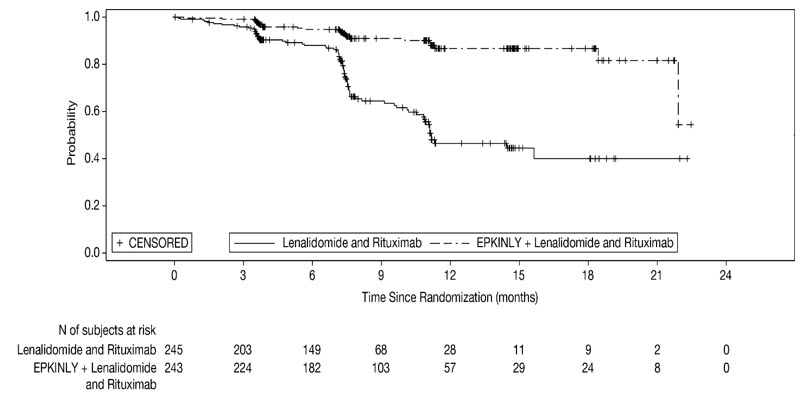
After a median duration of follow-up of 14.8 months overall, the median overall survival had not been reached in either arm with a total of 35 deaths: 10 (4%) deaths in the EPKINLY arm and 25 (10%) deaths in the lenalidomide and rituximab arm.
EPKINLY as Monotherapy for FL
The efficacy of EPKINLY as monotherapy was evaluated in EPCORE NHL-1 (Study GCT3013-01; NCT03625037), an open-label, multi-cohort, multicenter, single-arm trial that included patients with relapsed or refractory follicular lymphoma (FL) after at least 2 lines of systemic therapy. The study excluded patients with CNS involvement of lymphoma, allogeneic HSCT or solid organ transplant, ongoing active infection, any patients with known impaired T-cell immunity, creatinine clearance < 45 mL/min, alanine aminotransferase > 3 times the upper limit of normal, and a cardiac ejection fraction < 45%. Patients received EPKINLY monotherapy following a 2-step up dosage schedule:
- Cycle 1: EPKINLY 0.16 mg on Day 1, 0.8 mg on Day 8, 48 mg on Days 15 and 22
- Cycles 2-3: EPKINLY 48 mg on Days 1, 8, 15, and 22
- Cycles 4-9: EPKINLY 48 mg on Days 1 and 15
- Cycles 10 and beyond: EPKINLY 48 mg on Day 1
Patients continued to receive EPKINLY until disease progression or unacceptable toxicity.
Among the 127 patients with FL, the median age was 65 years (range: 39 to 84), 52% were 65 years of age or older, and 62% were male. Race was reported in 85 (67%) patients; of these patients, 89% were White, and 8% were Asian. A total of 85% had stage III-IV disease, 25% had bulky disease, 95% had an ECOG performance status of 0 or 1, and 6% had an ECOG performance status of 2. The median number of prior therapies was 3 (range: 2 to 9), with 36% receiving 2 prior lines of systemic therapy, 32% receiving 3 prior therapies, and 32% receiving 4 or more prior therapies.
Seventy-nine percent of patients were refractory to prior anti-CD20 monoclonal antibody therapy, 70% were refractory to both anti-CD20 monoclonal antibody and alkylator therapy, 21% had prior rituximab plus lenalidomide therapy, 19% received prior autologous HSCT, and 5% received prior chimeric antigen receptor (CAR) T-cell therapy. Fifty-two percent of patients had progression of disease within 24 months of first systemic therapy.
Efficacy was established based on overall response rate (ORR) determined by Lugano 2014 criteria as assessed by Independent Review Committee (IRC) and duration of response. The median follow-up for DOR was 14.8 months. The efficacy results are summarized in Table 20.
| Endpoint Determined by Lugano criteria (2014) as assessed by independent review committee (IRC). | EPKINLY (N=127) |
|---|---|
| ORR = overall response rate; CI = confidence interval; CR = complete response; PR = partial response; DOR = duration of response; NR = not reached. | |
| ORR, n (%) | 104 (82) |
| (95% CI) | (74.1, 88.2) |
| CR, n (%) | 76 (60) |
| (95% CI) | (50.8, 68.4) |
| PR, n (%) | 28 (22) |
| (95% CI) | (15.2, 30.3) |
| DOR | |
| Median (95% CI), months | NR (13.7, NR) |
| 12-month estimate Kaplan-Meier estimate. % (95% CI) | 68.4 (57.6, 77.0) |
The median time to first response was 1.4 months (range: 1 to 3 months).
In a separate dose optimization cohort in EPCORE NHL-1, 86 patients received the recommended 3-step up dosage schedule in Cycle 1 [see Adverse Reactions (6.1) ] . The efficacy results in this cohort were comparable to the primary efficacy population.
HOW SUPPLIED/STORAGE AND HANDLING
How Supplied
EPKINLY (epcoritamab-bysp) injection is a sterile, preservative-free, clear to slightly opalescent, colorless to slightly yellow solution, free of visible particles, supplied in glass vials as follows:
| Carton contents | NDC number |
|---|---|
| One 4 mg/0.8 mL single-dose vial | NDC 82705-002-01 |
| One 48 mg/0.8 mL single-dose vial | NDC 82705-010-01 |
The vial stopper is not made with natural rubber latex.
Storage and Handling
Store refrigerated at 2°C to 8°C (36°F to 46°F). Keep in the original carton to protect from light. Do not freeze. Do not shake.
Mechanism of Action
Epcoritamab-bysp is a T-cell engaging bispecific antibody that binds to the CD3 receptor expressed on the surface of T-cells and CD20 expressed on the surface of lymphoma cells and healthy B-lineage cells.
In vitro, epcoritamab-bysp activated T-cells, caused the release of proinflammatory cytokines, and induced lysis of B-cells.
In nonclinical studies, the combination of epcoritamab-bysp and rituximab resulted in both T-cell mediated cytotoxicity and natural killer (NK) cell mediated antibody-dependent cellular cytotoxicity (ADCC).
