Get your patient on Estring (Estradiol)
Estring patient education
Patient toolkit
Dosage & administration

Estring prescribing information

INDICATIONS AND USAGE
ESTRING is indicated for the treatment of moderate to severe symptoms of vulvar and vaginal atrophy due to menopause.
DOSAGE AND ADMINISTRATION
One ESTRING (estradiol vaginal system) is to be inserted as deeply as possible into the upper one-third of the vaginal vault. The ring is to remain in place continuously for three months, after which it is to be removed and, if appropriate, replaced by a new ring.
Should the ring be removed or fall out at any time during the 90-day treatment period, the ring should be rinsed in lukewarm water and re-inserted by the patient, or, if necessary, by a physician or nurse.
Retention of the ring for greater than 90 days does not represent overdosage but will result in progressively greater underdosage with the attendant risk of loss of efficacy and increasing risk of vaginal infections and/or erosions.
Instructions for Use
ESTRING (estradiol vaginal system) insertion
The ring should be pressed into an oval and inserted into the upper third of the vaginal vault. The exact position is not critical. When ESTRING is in place, the patient should not feel anything. If the patient feels discomfort, ESTRING is probably not far enough inside. Gently push ESTRING further into the vagina.
ESTRING use
ESTRING should be left in place continuously for 90 days and then, if continuation of therapy is deemed appropriate, replaced by a new ESTRING.
The patient should not feel ESTRING when it is in place and it should not interfere with sexual intercourse. Straining at defecation may make ESTRING move down in the lower part of the vagina. If so, it may be pushed up again with a finger.
If ESTRING is expelled totally from the vagina, it should be rinsed in lukewarm water and reinserted by the patient (or doctor/nurse if necessary).
ESTRING removal
ESTRING may be removed by hooking a finger through the ring and pulling it out.
For patient instructions, see Patient Information .
CONTRAINDICATIONS
ESTRING is contraindicated in women with any of the following conditions:
- Abnormal genital bleeding with unknown etiology.
- Known or suspected estrogen-dependent neoplasia.
- Active DVT, PE, or a history of these conditions.
- Active arterial thromboembolic disease (for example, stroke and MI), or a history of these conditions.
- Known anaphylactic reaction or angioedema or hypersensitivity to ESTRING.
- Known liver impairment or disease.
- Protein C, protein S, or antithrombin deficiency, or other known thrombophilic disorders.
ADVERSE REACTIONS
See WARNINGS and PRECAUTIONS
Because clinical trials are conducted under widely varying conditions, adverse reaction rates observed in the clinical trials of a drug cannot be directly compared to rates in the clinical trials of another drug and may not reflect the rates observed in practice.
In the two ESTRING controlled studies, discontinuation of treatment due to an adverse event was required by 5.4 percent of patients receiving ESTRING and 3.9 percent of patients receiving conjugated estrogens vaginal cream. The most common reasons for withdrawal from ESTRING treatment due to an adverse event were vaginal discomfort and gastrointestinal symptoms.
The adverse events reported with a frequency of 3 percent or greater in the two pivotal controlled studies by patients receiving ESTRING or conjugated estrogens vaginal cream are listed in Table 3.
| ADVERSE EVENT | ESTRING (n = 257) % | Conjugated Estrogens Vaginal Cream (n = 129) % |
|---|---|---|
Musculoskeletal | ||
Back Pain | 6 | 8 |
Arthritis | 4 | 2 |
Arthralgia | 3 | 5 |
Skeletal Pain | 2 | 4 |
CNS/Peripheral Nervous System | ||
Headache | 13 | 16 |
Psychiatric | ||
Insomnia | 4 | 0 |
Gastrointestinal | ||
Abdominal Pain | 4 | 2 |
Nausea | 3 | 2 |
Respiratory | ||
Upper Respiratory Tract Infection | 5 | 6 |
Sinusitis | 4 | 3 |
Pharyngitis | 1 | 3 |
Urinary | ||
Urinary Tract Infection | 2 | 7 |
Female Reproductive | ||
Leukorrhea | 7 | 3 |
Vaginitis | 5 | 2 |
Vaginal Discomfort/Pain | 5 | 5 |
Vaginal Hemorrhage | 4 | 5 |
Asymptomatic Genital Bacterial Growth | 4 | 6 |
Breast Pain | 1 | 7 |
Resistance Mechanisms | ||
Genital Moniliasis | 6 | 7 |
Body as a Whole | ||
Flu-Like Symptoms | 3 | 2 |
Hot Flushes | 2 | 3 |
Allergy | 1 | 4 |
Miscellaneous | ||
Family Stress | 2 | 3 |
Postmarketing Experience
Cases of toxic shock syndrome (TSS) have been reported in women using vaginal rings. TSS is a rare, but serious disease that may cause death. Warning signs of TSS include fever, nausea, vomiting, diarrhea, muscle pain, dizziness, faintness, or a sunburn-rash on face and body.
Vaginal erosion, vaginal ulceration, adherence of the vaginal ring to the vaginal wall:
- Cases of ring adherence to the vaginal wall, making ring removal difficult, have occurred. Some cases have required surgical removal of vaginal rings.
- Cases of vaginal erosion and vaginal ulceration that may manifest as vaginal irritation, erythema. abrasion or spotting have occurred.
Vaginal wall ulceration or erosion should be carefully evaluated. If an ulceration or erosion has occurred, consideration should be given to leaving the ring out and not replacing it until healing is complete in order to prevent the ring from adhering to the healing tissue.
Cases of bowel obstruction and vaginal ring use have been reported. Persistent abdominal complaints consistent with obstruction should be carefully evaluated.
Cases of hypersensitivity have been reported.
The following additional adverse events were reported at least once by patients receiving ESTRING in the worldwide clinical program, which includes controlled and uncontrolled studies. A causal relationship with ESTRING has not been established.
Body as a Whole : allergic reaction
CNS/Peripheral Nervous System : dizziness
Gastrointestinal : enlarged abdomen, vomiting
Metabolic/Nutritional Disorders : weight decrease or increase
Musculoskeletal : arthropathy (including arthrosis)
Psychiatric : depression, decreased libido, nervousness
Reproductive : breast engorgement, breast enlargement, intermenstrual bleeding, genital edema, vulval disorder
Skin/Appendages : pruritus, pruritus ani
Urinary : micturition frequency, urethral disorder
Vascular : thrombophlebitis
Vision : abnormal vision
DESCRIPTION
ESTRING ® (estradiol vaginal system) is a slightly opaque ring with a whitish core containing a drug reservoir of 2 mg estradiol. Estradiol, silicone polymers, barium sulfate and silicone fluid (as dispersing agent) are combined to form the ring. When placed in the vagina, ESTRING releases estradiol, approximately 7.5 mcg per day, in a consistent stable manner over 90 days. ESTRING has the following dimensions: outer diameter 55 mm; cross-sectional diameter 9 mm; core diameter 2 mm. One ESTRING should be inserted into the upper third of the vaginal vault, to be worn continuously for three months.
Estradiol is chemically described as estra-1, 3, 5(10)-triene-3, 17β-diol. The molecular formula of estradiol is C 18 H 24 O 2 and the structural formula is:

The molecular weight of estradiol is 272.39.
CLINICAL PHARMACOLOGY
Endogenous estrogens are largely responsible for the development and maintenance of the female reproductive system and secondary sexual characteristics. Although circulating estrogens exist in a dynamic equilibrium of metabolic interconversions, estradiol is the principal intracellular human estrogen and is substantially more potent than its metabolites, estrone and estriol, at the receptor level.
The primary source of estrogen in normally cycling adult women is the ovarian follicle, which secretes 70 to 500 mcg of estradiol daily, depending on the phase of the menstrual cycle. After menopause, most endogenous estrogen is produced by conversion of androstenedione, secreted by the adrenal cortex, to estrone in the peripheral tissues. Thus, estrone and the sulfate conjugated form, estrone sulfate, are the most abundant circulating estrogens in postmenopausal women.
Estrogens act through binding to nuclear receptors in estrogen-responsive tissues. To date, two estrogen receptors have been identified. These vary in proportion from tissue to tissue.
Circulating estrogens modulate the pituitary secretion of the gonadotropins, luteinizing hormone (LH) and follicle stimulating hormone (FSH), through a negative feedback mechanism. Estrogens act to reduce the elevated levels of these hormones seen in postmenopausal women.
Pharmacokinetics
Absorption
Estrogens used in therapeutics are well absorbed through the skin, mucous membranes, and the gastrointestinal (GI) tract. The vaginal delivery of estrogens circumvents first-pass metabolism.
In a Phase I study of 14 postmenopausal women, the insertion of ESTRING (estradiol vaginal system) rapidly increased serum estradiol (E 2 ) levels. The time to attain peak serum estradiol levels (T max ) was 0.5 to 1 hour. Peak serum estradiol concentrations post-initial burst declined rapidly over the next 24 hours and were virtually indistinguishable from the baseline mean (range: 5 to 22 pg/mL). Serum levels of estradiol and estrone (E 1 ) over the following 12 weeks during which the ring was maintained in the vaginal vault remained relatively unchanged (See Table 1 ).
The initial estradiol peak post-application of the second ring in the same women resulted in ~38 percent lower C max , apparently due to reduced systemic absorption via the treated vaginal epithelium. The relative systemic exposure from the initial peak of ESTRING accounted for approximately 4 percent of the total estradiol exposure over the 12-week period.
The release of estradiol from ESTRING was demonstrated in a Phase II study of 222 postmenopausal women who inserted up to four rings consecutively at three-month intervals. Systemic delivery of estradiol from ESTRING resulted in mean steady state serum estradiol estimates of 7.8, 7.0, 7.0, 8.1 pg/mL at weeks 12, 24, 36, and 48, respectively. Similar reproducibility is also seen in levels of estrone. The systemic exposure to estradiol and estrone was within the range observed in untreated women after the first eight hours.
In postmenopausal women, mean dose of estradiol systemically absorbed unchanged from ESTRING is ~8 percent [95 percent CI: 2.8–12.8 percent] of the daily amount released locally.
| Estrogen | C max (pg/mL) | C ss–48 hr (pg/mL) | C ss–4w (pg/mL) | C ss–12w (pg/mL) |
|---|---|---|---|---|
Estradiol (E 2 ) | 63.2 n=14 | 11.2 | 9.5 | 8.0 |
Baseline-adjusted E 2 Based on means | 55.6 | 3.6 | 2.0 | 0.4 |
Estrone (E 1 ) | 66.3 | 52.5 | 43.8 | 47.0 |
Baseline-adjusted E 1 | 20.0 | 6.2 | -2.4 | 0.8 |
Distribution
The distribution of exogenous estrogens is similar to that of endogenous estrogens. Estrogens are widely distributed in the body and are generally found in higher concentrations in the sex hormone target organs. Estrogens circulate in the blood largely bound to sex hormone binding globulin (SHBG) and albumin.
Metabolism
Exogenous estrogens are metabolized in the same manner as endogenous estrogens. Circulating estrogens exist in a dynamic equilibrium of metabolic interconversions. These transformations take place mainly in the liver. Estradiol is converted reversibly to estrone, and both can be converted to estriol, which is a major urinary metabolite. Estrogens also undergo enterohepatic recirculation via sulfate and glucuronide conjugation in the liver, biliary secretion of conjugates into the intestine, and hydrolysis in the intestine followed by reabsorption. In postmenopausal women, a significant proportion of the circulating estrogens exist as sulfate conjugates, especially estrone sulfate, which serves as a circulating reservoir for the formation of more active estrogens.
Excretion
Estradiol, estrone, and estriol are excreted in the urine along with glucuronide and sulfate conjugates.
Special Populations
No pharmacokinetic studies were conducted with ESTRING in specific populations, including women with renal or hepatic impairment.
Drug Interactions
No formal drug interactions studies have been done with ESTRING.
In vitro and in vivo studies have shown that systemic estrogens are metabolized partially by cytochrome P450 3A4 (CYP3A4). Therefore, inducers or inhibitors of CYP3A4 may affect estrogen metabolism. Inducers of CYP3A4 such as St. John's Wort ( Hypericum perforatum ) preparations, phenobarbital, carbamazepine, and rifampin may reduce plasma concentrations of estrogens, possibly resulting in a decrease in systemic effects and/or changes in the uterine bleeding profile. Inhibitors of CYP3A4 such as erythromycin, clarithromycin, ketoconazole, itraconazole, ritonavir and grapefruit juice may increase plasma concentrations of estrogens and may result in side effects.
CLINICAL STUDIES
Effects on Vulvar and Vaginal Atrophy
Two controlled studies have demonstrated the efficacy of ESTRING (estradiol vaginal system) in the treatment of postmenopausal urogenital symptoms due to estrogen deficiency.
In a U.S. study where ESTRING was compared with conjugated estrogens vaginal cream, no difference in efficacy between the treatment groups was found with respect to improvement in the physician's global assessment of vaginal symptoms (83 percent and 82 percent of patients receiving ESTRING and cream, respectively) and in the patient's global assessment of vaginal symptoms (83 percent and 82 percent of patients receiving ESTRING and cream, respectively) after 12 weeks of treatment. In an Australian study, ESTRING was also compared with conjugated estrogens vaginal cream and no difference in the physician's assessment of improvement of vaginal mucosal atrophy (79 percent and 75 percent for ESTRING and cream, respectively) or in the patient's assessment of improvement in vaginal dryness (82 percent and 76 percent for ESTRING and cream, respectively) after 12 weeks of treatment.
In the U.S. study, symptoms of dysuria and urinary urgency improved in 74 percent and 65 percent, respectively, of patients receiving ESTRING as assessed by the patient. In the Australian study, symptoms of dysuria and urinary urgency improved in 90 percent and 71 percent, respectively, of patients receiving ESTRING as assessed by the patient.
In both studies, ESTRING and conjugated estrogens vaginal cream had a similar ability to reduce vaginal pH levels and to mature the vaginal mucosa (as measured cytologically using the maturation index and/or the maturation value) after 12 weeks of treatment. In supportive studies, ESTRING was also shown to have a similar significant treatment effect on the maturation of the urethral mucosa.
Endometrial overstimulation, as evaluated in non-hysterectomized patients participating in the U.S. study by the progestogen challenge test and pelvic sonogram, was reported for none of the 58 (0 percent) patients receiving ESTRING and 4 of the 35 patients (11 percent) receiving conjugated estrogens vaginal cream.
Of the U.S. women who completed 12 weeks of treatment, 95 percent rated product comfort for ESTRING as excellent or very good compared with 65 percent of patients receiving conjugated estrogens vaginal cream, 95 percent of ESTRING patients judged the product to be very easy or easy to use compared with 88 percent of cream patients, and 82 percent gave ESTRING an overall rating of excellent or very good compared with 58 percent for the cream.
Women's Health Initiative Trial with Oral Conjugated Estrogen
The Women’s Health Initiative (WHI) estrogen-alone trial enrolled predominantly healthy postmenopausal women to assess the risks and benefits of daily oral conjugated estrogen (CE) (0.625 mg)-alone compared to placebo in the prevention of certain chronic diseases. The primary endpoint was the incidence of coronary heart disease (CHD) (defined as nonfatal MI, silent MI and CHD death), with invasive breast cancer as the primary adverse outcome. A “global index” included the earliest occurrence of CHD, invasive breast cancer, stroke, PE, colorectal cancer, hip fracture, or death due to other cause.
The WHI oral CE-alone trial included 10,739 women (average 63 years of age, range 50 to 79; 75 percent White, 15 percent Black, 6 percent Hispanic, 4 other races), with an average follow-up of 7.1 years. The WHI oral CE-alone trial was stopped early because an increased risk of stroke was observed in the oral CE group. The stroke events were centrally adjudicated. The use of oral CE-alone, compared to placebo, increased the risk for ischemic stroke, and this excess risk was present in all subgroups of women examined. 1
No overall difference for centrally adjudicated primary CHD events (nonfatal MI, silent MI and CHD death) and invasive breast cancer incidence were seen in women who received oral CE-alone compared to those who received placebo after an average follow-up of 7.1 years. 1,2
The results of the WHI oral CE-alone trial are presented in Table 2.
| Event | Relative Ratio (95% CI) In the WHI studies, hazard ratios were estimated using Cox proportional hazards models comparing treatment to placebo; however, they are described here as relative risks. Nominal confidence intervals unadjusted for multiple looks and multiple comparisons. | Risk Difference (CE vs placebo/10,000 WYs) |
|---|---|---|
CHD events Nonfatal MI CHD death | 0.94 (0.78-1.14) 0.97 (0.79-1.21) 1.00 (0.77-1.31) | -3 (55 vs 58) -1 (44 vs 45) 0 (29 vs 29) |
All strokes | 1.35 (1.07-1.70) | 11 (45 vs 34) |
Deep vein thrombosis Not included in “global index.” | 1.48 (1.06-2.07) | 7 (23 vs 15) |
Pulmonary embolism | 1.35 (0.89-2.05) | 4 (14 vs 10) |
Invasive breast cancer Includes metastatic and non-metastatic breast cancer with the exception of in situ cancer. | 0.79 (0.61-1.02) | -7 (28 vs 35) |
Colorectal cancer | 1.15 (0.81-1.64) | 2 (17 vs 15) |
Hip fracture | 0.67 (0.46-0.96) | -6 (13 vs 19) |
Vertebral fractures | 0.64 (0.44-0.93) | -6 (12 vs 18) |
Total fractures | 0.72 (0.64-0.80) | -61 (153 vs 214) |
Overall mortality , All deaths, except from breast or colorectal cancer, definite or probable CHD, PE or cerebrovascular disease. | 1.03 (0.88-1.21) | 3 (80 vs 77) |
Global index A subset of the events was combined in a “global index,” defined as the earliest occurrence of CHD events, invasive breast cancer, stroke, PE, colorectal cancer, hip fracture, or death due to other causes. | 1.03 (0.93-1.13) | 4 (208 vs 204) |
Women's Health Initiative Memory Study with Oral Conjugated Estrogen
The Women’s Health Initiative Memory Study (WHIMS) estrogen-alone ancillary study of the WHI trial enrolled 2,947 predominantly healthy hysterectomized postmenopausal women 65 to 79 years of age and older to evaluate the effects of daily oral CE (0.625 mg)-alone on the incidence of probable dementia (primary outcome) compared to placebo. In the WHIMS, 45% of the women were 65 to 69 years of age; 36% were 70 to 74 years of age; and 19% were 75 years of age and older. Probable dementia as defined in this study included Alzheimer’s disease (AD), vascular dementia (VaD) and mixed type of dementia (having features of both AD and VaD). The most common classification of probable dementia in the treatment and placebo groups was AD.
In the WHIMS, after an average follow-up of 5.2 years, the relative risk of probable dementia for women in the oral CE-alone group versus the placebo group was 1.49 (95% CI, 0.83-2.66). The absolute risk of probable dementia for oral CE-alone group versus the placebo group was 37 versus 25 cases per 10,000 women-years.
Because WHIMS was conducted in women 65 to 79 years of age, it is unknown whether the findings in WHIMS apply to younger postmenopausal women. 3
HOW SUPPLIED
Each ESTRING (estradiol vaginal system) contains 2 mg estradiol to deliver 7.5 mcg of estradiol per day over 90 days, and is individually packaged in a heat-sealed rectangular pouch consisting of three layers, from outside to inside: polyester, aluminum foil, and low-density polyethylene, respectively. The pouch is provided with a tear-off notch on one side.
NDC 0013-1042-01 ESTRING (estradiol vaginal system) delivers 7.5 mcg per day – one vaginal system (contains 2 mg estradiol to deliver 7.5 mcg of estradiol per day over 90 days).
STORAGE
Store at controlled room temperature 15° to 25 °C (59 °F to 77 °F).
INSTRUCTIONS FOR USE:
How should I use ESTRING?
ESTRING is a local estrogen therapy used after menopause to treat moderate to severe menopausal changes in and around the vagina. ESTRING PROVIDES RELIEF OF LOCAL SYMPTOMS OF MENOPAUSE ONLY.
Estrogens should be used only as long as needed. You and your healthcare provider should talk regularly (for example, every 3 to 6 months) about whether you still need treatment with ESTRING.
ESTRING INSERTION
ESTRING can be inserted and removed by you or your doctor or healthcare provider. To insert ESTRING yourself, choose the position that is most comfortable for you: standing with one leg up, squatting, or lying down.

- After washing and drying your hands, remove ESTRING from its pouch using the tear-off notch on the side. (Since the ring becomes slippery when wet, be sure your hands are dry before handling it.)
- Hold ESTRING between your thumb and index finger and press the opposite sides of the ring together as shown.
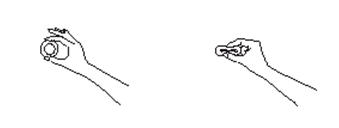
- Gently push the compressed ring into your vagina as far as you can.
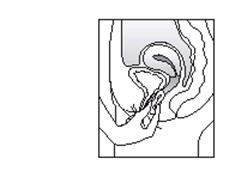
ESTRING PLACEMENT
The exact position of ESTRING is not critical, as long as it is placed in the upper third of the vagina.

When ESTRING is in place, you should not feel anything. If you feel uncomfortable, ESTRING is probably not far enough inside. Use your finger to gently push ESTRING further into your vagina.
There is no danger of ESTRING being pushed too far up in the vagina or getting lost. ESTRING can only be inserted as far as the end of the vagina, where the cervix (the narrow, lower end of the uterus) will block ESTRING from going any further (See diagram of Female Anatomy).
ESTRING USE
Once inserted, ESTRING should remain in place in the vagina for 90 days.
Most women and their partners experience no discomfort with ESTRING in place during intercourse, so it is NOT necessary that the ring be removed. If ESTRING should cause you or your partner any discomfort, you may remove it prior to intercourse (See ESTRING Removal, below). Be sure to reinsert ESTRING as soon as possible afterwards.
ESTRING may slide down into the lower part of the vagina as a result of the abdominal pressure or straining that sometimes accompanies constipation. If this should happen, gently guide ESTRING back into place with your finger.
There have been rare reports of ESTRING falling out in some women following intense straining or coughing. If this should occur, simply wash ESTRING with lukewarm (NOT hot) water and reinsert it.
ESTRING DRUG DELIVERY
Once in the vagina, ESTRING begins to release estradiol immediately. ESTRING will continue to release a low, continuous dose of estradiol for the full 90 days it remains in place.

It will take about 2 to 3 weeks to restore the tissue of the vagina and urinary tract to a healthier condition and to feel the full effect of ESTRING in relieving vaginal and urinary symptoms. If your symptoms persist for more than a few weeks after beginning ESTRING therapy, contact your doctor or healthcare provider.
One of the most frequently reported effects associated with the use of ESTRING is an increase in vaginal secretions. These secretions are like those that occur normally prior to menopause and indicate that ESTRING is working. However, if the secretions are associated with a bad odor or vaginal itching or discomfort, be sure to contact your doctor or healthcare provider.
ESTRING REMOVAL
After 90 days there will no longer be enough estradiol in the ring to maintain its full effect in relieving your vaginal or urinary symptoms. ESTRING should be removed at that time and replaced with a new ESTRING, if your doctor determines that you need to continue your therapy.
To remove ESTRING:
- Wash and dry your hands thoroughly.
- Assume a comfortable position, either standing with one leg up, squatting, or lying down.
- Loop your finger through the ring and gently pull it out.
- Discard the used ring in a waste receptacle. (Do not flush ESTRING.)

If you have any additional questions about removing ESTRING, contact your doctor or healthcare provider.

LAB-1533-4.0 Revised 4/2026
