Get your patient on Estrogel (Estradiol)
Estrogel patient education
Patient toolkit
Dosage & administration

Estrogel prescribing information

WARNING: ENDOMETRIAL CANCER, CARDIOVASCULAR DISORDERS, PROBABLE DEMENTIA and BREAST CANCER
Estrogen-Alone Therapy
Endometrial Cancer
There is an increased risk of endometrial cancer in a woman with a uterus who uses unopposed estrogens. Adding a progestogen to estrogen therapy has been shown to reduce the risk of endometrial hyperplasia, which may be a precursor to endometrial cancer. Perform adequate diagnostic measures, including directed or random endometrial sampling when indicated, to rule out malignancy in postmenopausal women with undiagnosed, persistent, or recurring abnormal genital bleeding [see Warnings and Precautions (5.2 )] .
Cardiovascular Disorders and Probable Dementia
The Women's Health Initiative (WHI) estrogen-alone substudy reported increased risks of stroke and deep vein thrombosis (DVT) in postmenopausal women (50 to 79 years of age) during 7.1 years of treatment with daily oral conjugated estrogens (CE) [0.625 mg]-alone, relative to placebo [see Warnings and Precautions (5.1 ), and Clinical Studies (14.3 )].
The WHI Memory Study (WHIMS) estrogen-alone ancillary study of WHI reported an increased risk of developing probable dementia in postmenopausal women 65 years of age or older during 5.2 years of treatment with daily CE (0.625 mg)-alone, relative to placebo. It is unknown whether this finding applies to younger postmenopausal women [see Warnings and Precautions (5.3 ), Use in Specific Populations (8.5 ), and Clinical Studies (14.4 )] .
Do not use estrogen-alone therapy for the prevention of cardiovascular disease or dementia [see Warnings and Precautions (5.1 , 5.3 ), and Clinical Studies (14.3 , 14.4 )] .
Only daily oral 0.625 mg CE was studied in the estrogen-alone substudy of the WHI. Therefore, the relevance of the WHI findings regarding adverse cardiovascular events and dementia to lower CE doses, other routes of administration, or other estrogen-alone products is not known. Without such data, it is not possible to definitively exclude these risks or determine the extent of these risks for other products. Discuss with your patient the benefits and risks of estrogen-alone therapy, taking into account her individual risk profile.
Prescribe estrogens with or without progestogens at the lowest effective doses and for the shortest duration consistent with treatment goals and risks for the individual woman.
Estrogen Plus Progestin Therapy
Cardiovascular Disorders and Probable Dementia
The WHI estrogen plus progestin substudy reported increased risks of pulmonary embolism (PE), DVT, stroke and myocardial infarction (MI) in postmenopausal women (50 to 79 years of age) during 5.6 years of treatment with daily oral CE (0.625 mg) combined with medroxyprogesterone acetate (MPA) [2.5 mg], relative to placebo [see Warnings and Precautions (5.1 ), and Clinical Studies (14.3 )].
The WHIMS estrogen plus progestin ancillary study of WHI reported an increased risk of developing probable dementia in postmenopausal women 65 years of age or older during 4 years of treatment with daily CE (0.625 mg) combined with MPA (2.5 mg), relative to placebo. It is unknown whether this finding applies to younger postmenopausal women [see Warnings and Precautions (5.3 ), Use in Specific Populations (8.5 ), and Clinical Studies (14.4 )] .
Do not use estrogen plus progestogen therapy for the prevention of cardiovascular disease or dementia [see Warnings and Precautions (5.1 , 5.3 ), and Clinical Studies (14.3 , 14.4 )].
Breast Cancer
The WHI estrogen plus progestin substudy also demonstrated an increased risk of invasive breast cancer [see Warnings and Precautions (5.2 ), and Clinical Studies (14.4 )] .
Only daily oral 0.625 mg CE and 2.5 mg MPA were studied in the estrogen plus progestin substudy of the WHI. Therefore, the relevance of the WHI findings regarding adverse cardiovascular events, dementia and breast cancer to lower CE plus other MPA doses, other routes of administration, or other estrogen plus progestogen products is not known. Without such data, it is not possible to definitively exclude these risks or determine the extent of these risks for other products. Discuss with your patient the benefits and risks of estrogen plus progestogen therapy, taking into account her individual risk profile.
Prescribe estrogens with or without progestogens at the lowest effective doses and for the shortest duration consistent with treatment goals and risks for the individual woman.
INDICATIONS AND USAGE
EstroGel 0.06% is an estrogen indicated for:
Treatment of Moderate to Severe Vasomotor Symptoms due to Menopause.
Treatment of Moderate to Severe Symptoms of Vulvar and Vaginal Atrophy due to Menopause.
Limitation of Use When prescribing solely for the treatment of moderate to severe symptoms of vulvar and vaginal atrophy due to menopause, first consider the use of topical vaginal products.
DOSAGE AND ADMINISTRATION
Generally, when estrogen is prescribed for a postmenopausal woman with a uterus, consider addition of a progestogen to reduce the risk of endometrial cancer. Generally, a woman without a uterus does not need to use a progestogen in addition to her estrogen therapy. In some cases, however, hysterectomized women with a history of endometriosis may need a progestogen [see Warnings and Precautions (5.2 , 5.14 )] .
Use estrogen-alone, or in combination with a progestogen at the lowest effective dose and for the shortest duration consistent with treatment goals and risks for the individual woman. Reevaluate postmenopausal women periodically as clinically appropriate to determine if treatment is still necessary.
2.1 Treatment of Moderate to Severe Vasomotor Symptoms due to Menopause.
EstroGel 0.06% 1.25 g per day is the single approved dose for the treatment of moderate to severe vasomotor symptoms due to menopause. The lowest effective dose of EstroGel 0.06% for this indication has not been determined.
Before using the canister for the first time, it must be primed. Remove the large canister cover, and fully depress the pump 5 times. Discard the unused gel by thoroughly rinsing down the sink or placing it in the household trash. After priming, the pump is ready to use.
The recommended area of application is the arm. Apply a thin layer over the entire arm on the inside and outside from wrist to shoulder.
2.2 Treatment of Moderate to Severe Symptoms of Vulvar and Vaginal Atrophy due to Menopause.
EstroGel 0.06% 1.25 g per day is the single approved dose for the treatment of moderate to severe symptoms of vulvar and vaginal atrophy due to menopause. The lowest effective dose of EstroGel 0.06% for this indication has not been determined. When prescribing solely for the treatment of moderate to severe symptoms of vulvar and vaginal atrophy, first consider the use of topical vaginal products.
Before using the canister for the first time, it must be primed. Remove the large canister cover, and fully depress the pump 5 times. Discard the unused gel by thoroughly rinsing down the sink or placing it in the household trash. After priming, the pump is ready to use.
The recommended area of application is the arm. Apply a thin layer over the entire arm on the inside and outside from wrist to shoulder.
DOSAGE FORMS AND STRENGTHS
EstroGel 0.06% is an estradiol transdermal gel. One pump depression delivers 1.25 g of gel that contains 0.75 mg estradiol.
USE IN SPECIFIC POPULATIONS
Pregnancy
Risk Summary EstroGel is not indicated for use in pregnancy. There are no data with the use of EstroGel in pregnant women, however, epidemiologic studies and meta-analysis have not found an increased risk of genital or non-genital birth defects (including cardiac anomalities and limb-reduction defects) following exposure to combined hormonal contraceptives (estrogens and progestins) before conception or during early pregnancy.
In the U.S. general population, the estimated background rate of major birth defects and miscarriage in clinically recognized pregnancies is 2% to 4% and 15% to 20%, respectively.
Lactation
Estrogens are present in human milk and can reduce milk production in breast-feeding women. This reduction can occur at any time but is less likely to occur once breast-feeding is well established. The development and health benefits of breastfeeding should be considered along with the mother’s clinical need for EstroGel and any potential adverse effects on the breastfed child from EstroGel or from the underlying maternal condition.
Pediatric Use
EstroGel is not indicated for use in pediatric patients. Clinical studies have not been conducted in the pediatric population.
Geriatric Use
There have not been sufficient numbers of geriatric women involved in clinical studies utilizing EstroGel to determine whether those over 65 years of age differ from younger subjects in their response to EstroGel. The Women’s Health Initiative Studies
In the WHI estrogen-alone substudy (daily CE [0.625 mg]-alone versus placebo), there was a higher relative risk of stroke in women greater than 65 years of age [see Warnings and Precautions (5.1 ) and Clinical Studies (14.3 )] .
In the WHI estrogen plus progestin substudy (daily CE [0.625 mg] plus MPA [2.5 mg] versus placebo), there was a higher relative risk of nonfatal stroke and invasive breast cancer in women greater than 65 years of age [see Warnings and Precautions (5.1 ) and Clinical Studies (14.3 )] . The Women’s Health Initiative Memory Study
In the WHIMS ancillary studies of postmenopausal women 65 to 79 years of age, there was an increased risk of developing probable dementia in women receiving estrogen-alone or estrogen plus progestin when compared to placebo [see Warnings and Precautions (5.3 ), and Clinical Studies (14.4 )] .
Since both ancillary studies were conducted in women 65 to 79 years of age, it is unknown whether these findings apply to younger postmenopausal women 8 [see Warnings and Precautions (5.3 ), and Clinical Studies (14.4 )] .
CONTRAINDICATIONS
EstroGel is contraindicated in women with any of the following conditions:
- Undiagnosed abnormal genital bleeding [see Warning and Precautions (5.2 )] .
- Breast cancer or a history of breast cancer [see Warning and Precautions (5.2 )] .
- Estrogen-dependent neoplasia [see Warning and Precautions (5.2 )] .
- Active DVT, PE, or history of these conditions [see Warning and Precautions (5.1 )].
- Active arterial thromboembolic disease (for example, stroke or MI), or a history of these conditions [see Warning and Precautions (5.1 )] .
- Known anaphylactic reaction, angioedema, or hypersensitivity to EstroGel
- Hepatic impairment or disease
- Protein C, protein S, or antithrombin deficiency, or other known thrombophilic disorders
WARNINGS AND PRECAUTIONS
Cardiovascular Disorders
Increased risks of stroke and DVT are reported with estrogen-alone therapy. Increased risks of PE, DVT, stroke and MI are reported with estrogen plus progestin therapy. Immediately discontinue estrogen with or without progestogen if any of these occur or are suspected.
Manage appropriately any risk factors for arterial vascular disease (for example, hypertension, diabetes mellitus, tobacco use, hypercholesterolemia, and obesity) and/or venous thromboembolism (VTE) (for example, personal history or family history of VTE, obesity, and systemic lupus erythematosus).
Stroke
The WHI estrogen-alone substudy reported a statistically significant increased risk of stroke in women 50 to 79 years of age receiving daily CE (0.625 mg)-alone compared to women in the same age group receiving placebo (45 versus 33 per 10,000 women-years, respectively). The increase in risk was demonstrated in year 1 and persisted [see Clinical Studies (14.3 )] . Immediately discontinue estrogen-alone therapy if a stroke occurs or is suspected.
Subgroup analysis of women 50 to 59 years of age suggest no increased risk of stroke for those women receiving CE (0.625 mg)-alone versus those receiving placebo (18 versus 21 per 10,000 women-years). 1
The WHI estrogen plus progestin substudy reported a statistically significant increased risk of stroke in women 50 to 79 years of age receiving daily CE (0.625 mg) plus MPA (2.5 mg) compared to women in the same age group receiving placebo (33 versus 25 per 10,000 women-years) [see Clinical Studies (14.3 )] . The increase in risk was demonstrated after the first year and persisted. 1 Immediately discontinue estrogen with or without progestogen therapy if a stroke occurs or is suspected.
Coronary Heart Disease
The WHI estrogen-alone substudy reported no overall effect on coronary heart disease (CHD) events (defined as nonfatal MI, silent MI, or CHD death) in women receiving estrogen-alone compared to placebo 2 [see Clinical Studies (14.3 )] .
Subgroup analyses of women 50 to 59 years of age, who were less than 10 years since menopause, suggest a reduction (not statistically significant) of CHD events in those women receiving CE (0.625 mg)-alone compared to placebo) (8 versus 16 per 10,000 women-years). 1
The WHI estrogen plus progestin substudy reported an increased risk (not statistically significant) of CHD events in those women receiving daily CE (0.625 mg) plus MPA (2.5 mg) compared to women receiving placebo (41 versus 34 per 10,000 women-years). 1 An increase in relative risk was demonstrated in year 1, and a trend toward decreasing relative risk was reported in years 2 through 5 [see Clinical Studies (14.3 )] .
In postmenopausal women with documented heart disease (n = 2,763, average 66.7 years of age), in a controlled clinical trial of secondary prevention of cardiovascular disease (Heart and Estrogen/Progestin Replacement Study; HERS), treatment with daily CE (0.625 mg) plus MPA (2.5 mg) demonstrated no cardiovascular benefit. During an average follow-up of 4.1 years, treatment with CE plus MPA did not reduce the overall rate of CHD events in postmenopausal women with established CHD. There were more CHD events in the CE plus MPA-treated group than in the placebo group in year 1, but not during the subsequent years. Two thousand, three hundred twenty-one (2,321) women from the original HERS trial agreed to participate in an open-label extension of the original HERS, HERS II. Average follow up in HERS II was an additional 2.7 years, for a total of 6.8 years overall. Rates of CHD events were comparable among women in the CE plus MPA group and the placebo group in HERS, HERS II, and overall.
Venous Thromboembolism
In the WHI estrogen-alone substudy, the risk of VTE (DVT and PE) was increased for women receiving daily CE (0.625 mg)-alone compared to placebo (30 versus 22 per 10,000 women years), although only the increased risk of DVT reached statistical significance (23 versus 15 per 10,000 women-years). The increase in VTE risk was demonstrated during the first 2 years 3 [see Clinical Studies (14.3 )]. Immediately discontinue estrogen-alone therapy if a VTE occurs or is suspected.
The WHI estrogen plus progestin substudy reported a statistically significant 2‑fold greater rate of VTE in women receiving daily CE (0.625 mg) plus MPA (2.5 mg) compared to women receiving placebo (35 versus 17 per 10,000 women‑years). Statistically significant increases in risk for both DVT (26 versus 13 per 10,000 women-years) and PE (18 versus 8 per 10,000 women-years) were also demonstrated. The increase in VTE risk was demonstrated during the first year and persisted 4 [see Clinical Studies (14.3 )] . Immediately discontinue estrogen plus progestogen therapy if a VTE occurs or is suspected.
If feasible, discontinue estrogens at least 4 to 6 weeks before any surgery of the type associated with an increased risk of thromboembolism, or during periods of prolonged immobilization.
Malignant Neoplasms
Endometrial Cancer
An increased risk of endometrial cancer has been reported with the use of unopposed estrogen therapy in women with a uterus. The reported endometrial cancer risk among unopposed estrogen users is about 2- to 12- fold greater than in nonusers, and appears dependent on duration of treatment and on estrogen dose. Most studies show no significant increased risk associated with use of estrogens for less than 1 year. The greatest risk appears to be associated with prolonged use, with increased risks of 15- to 24- fold for 5 to 10 years or more, and this risk has been shown to persist for at least 8 to 15 years after estrogen therapy is discontinued.
Clinical surveillance of all women using estrogen-alone or estrogen plus progestogen therapy is important. Perform adequate diagnostic measures, including directed or random endometrial sampling when indicated, to rule out malignancy in postmenopausal women with undiagnosed persistent or recurring abnormal genital bleeding with unknown etiology.
There is no evidence that the use of natural estrogens results in a different endometrial risk profile than synthetic estrogens of equivalent estrogen dose. Adding a progestogen to estrogen therapy in postmenopausal women has been shown to reduce the risk of endometrial hyperplasia, which may be a precursor to endometrial cancer.
Breast Cancer
The WHI substudy of daily CE (0.625 mg)-alone provided information about breast cancer in estrogen-alone users. In the WHI estrogen-alone substudy, after an average follow-up of 7.1 years, daily CE (0.625 mg)-alone was not associated with an increased risk of invasive breast cancer [relative risk (RR) 0.8] ) 5 compared to placebo [see Clinical Studies (14.3 )] .
After a mean follow-up of 5.6 years, the WHI substudy of daily CE (0.625 mg) plus MPA (2.5 mg) reported an increased risk of invasive breast cancer in women who took daily CE plus MPA compared to placebo.
In this substudy, prior use of estrogen-alone or estrogen plus progestin therapy was reported by 26 percent of the women. The relative risk of invasive breast cancer was 1.24, and the absolute risk was 41 versus 33 cases per 10,000 women-years, for CE plus MPA compared with placebo [see Clinical Studies (14.3 )] . Among women who reported prior use of hormone therapy, the relative risk of invasive breast cancer was 1.86, and the absolute risk was 46 versus 25 cases per 10,000 women-years, for CE plus MPA compared with placebo. Among women who reported no prior use of hormone therapy, the relative risk of invasive breast cancer was 1.09, and the absolute risk was 40 versus 36 cases per 10,000 women-years for CE plus MPA compared with placebo. In the same substudy, invasive breast cancers were larger, were more likely to be node positive, and were diagnosed at a more advanced stage in the CE (0.625 mg) plus MPA (2.5 mg) group compared with the placebo group. Metastatic disease was rare, with no apparent difference between the two groups. Other prognostic factors, such as histologic subtype, grade and hormone receptor status did not differ between the groups 6 [see Clinical Studies (14.3 )] .
Consistent with the WHI clinical trials, observational studies have also reported an increased risk of breast cancer with estrogen plus progestin therapy, and a smaller increased risk for estrogen-alone therapy, after several years of use. One large meta-analysis of prospective cohort studies reported increased risks that were dependent upon duration of use and could last up to >10 years after discontinuation of estrogen plus progestin therapy and estrogen-alone therapy. Extension of the WHI trials also demonstrated increased breast cancer risk associated with estrogen plus progestin therapy. Observational studies also suggest that the risk of breast cancer was greater, and became apparent earlier, with estrogen plus progestin therapy as compared to estrogen-alone therapy. These studies have not generally found significant variation in the risk of breast cancer among different estrogen plus progestin combinations, doses, or routes of administration.
The use of estrogen-alone and estrogen plus progestin therapy has been reported to result in an increase in abnormal mammograms requiring further evaluation.
Have all women receive yearly breast examinations by a healthcare provider and perform monthly breast self-examinations. In addition, base the scheduling of mammography examinations on patient age, risk factors, and prior mammogram results.
Ovarian Cancer
The CE plus MPA substudy of WHI reported that estrogen plus progestin increased the risk of ovarian cancer. After an average follow-up of 5.6 years, the relative risk for CE plus MPA versus placebo was 1.58 (95 percent CI, 0.77-3.24), but it was not statistically significant. The absolute risk for CE plus MPA versus placebo was 4 versus 3 cases per 10,000 women-years. 7
A meta-analysis of 17 prospective and 35 retrospective epidemiology studies found that women who used hormonal therapy for menopausal symptoms had an increased risk for ovarian cancer. The primary analysis, using case-control comparisons, included 12,110 cancer cases from the 17 prospective studies. The relative risks associated with current use of hormonal therapy was 1.41 (95% confidence interval [CI] 1.32 to 1.50); there was no difference in the risk estimates by duration of the exposure (less than 5 years [median of 3 years] vs. greater than 5 years [median 10 years] of use before the cancer diagnosis). The relative risk associated with combined current and recent use (discontinued use within 5 years before cancer diagnosis) was 1.37 (95% CI 1.27 – 1.48), and the elevated risk was significant for both estrogen-alone and estrogen plus progestin products. The exact duration of hormone therapy use associated with an increased risk of ovarian cancer, however, is unknown.
Probable Dementia
In the WHI Memory Study (WHIMS) estrogen-alone ancillary study, a population of 2,947 hysterectomized women 65 to 79 years of age was randomized to daily CE (0.625 mg) alone or placebo.
After an average follow-up of 5.2 years, 28 women in the estrogen-alone group and 19 women in the placebo group were diagnosed with probable dementia. The relative risk of probable dementia for CE-alone versus placebo was 1.49 (95 percent CI, 0.83-2.66). The absolute risk of probable dementia for CE-alone versus placebo was 37 versus 25 cases per 10,000 women-years 8 [see Use in Specific Populations (8.5 ), and Clinical Studies (14.4 )] .
In the WHIMS estrogen plus progestin ancillary study, a population of 4,532 postmenopausal women 65 to 79 years of age was randomized to daily CE (0.625 mg) plus MPA (2.5 mg) or placebo. After an average follow-up of 4 years, 40 women in the CE plus MPA group and 21 women in the placebo group were diagnosed with probable dementia. The relative risk of probable dementia for CE plus MPA versus placebo was 2.05 (95 percent CI, 1.21-3.48). The absolute risk of probable dementia for CE plus MPA versus placebo was 45 versus 22 cases per 10,000 women-years 8 [see Use in Specific Populations (8.5 ), and Clinical Studies (14.4 )] .
When data from the two populations in the WHIMS estrogen-alone and estrogen plus progestin ancillary studies were pooled as planned in the WHIMS protocol, the reported overall relative risk for probable dementia was 1.76 (95 percent CI, 1.19-2.60). Since both ancillary studies were conducted in women 65 to 79 years of age, it is unknown whether these findings apply to younger postmenopausal women [see Use in Specific Populations (8.5 ), and Clinical Studies (14.4 )] .
Gallbladder Disease
A 2- to 4-fold increase in the risk of gallbladder disease requiring surgery in postmenopausal women receiving estrogens has been reported.
Hypercalcemia
Estrogen administration may lead to severe hypercalcemia in women with breast cancer and bone metastases. Discontinue estrogens, including EstroGel if hypercalcemia occurs, and take appropriate measures to reduce the serum calcium level.
Visual Abnormalities
Retinal vascular thrombosis has been reported in women receiving estrogens. Discontinue EstroGel pending examination if there is sudden partial or complete loss of vision or a sudden onset of proptosis, diplopia, or migraine. Permanently discontinue estrogens, including EstroGel. if examination reveals papilledema or retinal vascular lesions.
5.7 Addition of a Progestogen When a Woman Has Not Had a Hysterectomy
Studies of the addition of a progestogen for 10 or more days of a cycle of estrogen administration, or daily with estrogen in a continuous regimen, have reported a lowered incidence of endometrial hyperplasia than would be induced by estrogen treatment alone. Endometrial hyperplasia may be a precursor to endometrial cancer.
There are, however, possible risks that may be associated with the use of progestogens with estrogens compared to estrogen alone regimens. These include an increased risk of breast cancer.
Elevated Blood Pressure
In a small number of case reports, substantial increases in blood pressure have been attributed to idiosyncratic reactions to estrogens. In a large, randomized, placebo controlled clinical trial, a generalized effect of estrogens on blood pressure was not seen.
5.9 Exacerbation of Hypertriglyceridemia
In women with pre-existing hypertriglyceridemia, estrogen therapy may be associated with elevations of plasma triglycerides leading to pancreatitis. Discontinue EstroGel if pancreatitis occurs.
Hepatic Impairment and/or Past History of Cholestatic Jaundice
Estrogens may be poorly metabolized in women with hepatic impairment. Exercise caution in any woman with a history of cholestatic jaundice associated with past estrogen use or with pregnancy. In the case of recurrence of cholestatic jaundice, discontinue EstroGel.
5.11 Exacerbation of Hypothyroidism
Estrogen administration leads to increased thyroid-binding globulin (TBG) levels. Women with normal thyroid function can compensate for the increased TBG by making more thyroid hormone, thus maintaining free T 4 and T 3 serum concentrations in the normal range. Women dependent on thyroid hormone replacement therapy who are also receiving estrogens may require increased doses of their thyroid replacement therapy. Monitor thyroid function in these women during treatment with EstroGel to maintain their free thyroid hormone levels in an acceptable range.
Fluid Retention
Estrogens may cause some degree of fluid retention. Monitor any woman with a condition(s) that might predispose her to fluid retention, such as cardiac or renal impairment., Discontinue estrogen-alone therapy, including EstroGel, with evidence of medically concerning fluid retention.
Hypocalcemia
Estrogen-induced hypocalcemia may occur in women with hypoparathyroidism. Consider whether the benefits of estrogen therapy, including EstroGel, outweigh the risks in women.
Exacerbation of Endometriosis
A few cases of malignant transformation of residual endometrial implants have been reported in women treated post-hysterectomy with estrogen-alone therapy. Consider the addition of progestogen therapy for women known to have residual endometriosis post-hysterectomy.
Hereditary Angioedema
Exogenous estrogens may exacerbate symptoms of angioedema in women with hereditary angioedema. Consider whether the benefits of estrogen therapy, including EstroGel, outweigh the risks in such women.
Exacerbation of Other Conditions
Estrogen therapy, including EstroGel, may cause an exacerbation of asthma, diabetes mellitus, epilepsy, migraine, porphyria, systemic lupus erythematosus, and hepatic hemangiomas. Consider whether the benefits of estrogen therapy outweigh the risks in women with such conditions.
Alcohol-based Products are Flammable
Avoid fire, flame, or smoking until EstroGel has dried.
Moisturizer Lotion Application
Use of moisturizing lotion one hour after application of EstroGel significantly increased estradiol absorption [see Clinical Pharmacology (12.3 )] .
Laboratory Tests
Serum follicle stimulating hormone (FSH) and estradiol levels have not been shown to be useful in the management of postmenopausal women with moderate to severe vasomotor symptoms and moderate to severe symptoms of vulvar and vaginal atrophy.
Drug-Laboratory Test Interactions
- Accelerated prothrombin time, partial thromboplastin time, and platelet aggregation time; increased platelet count; increased factors II, VII antigen, VIII antigen, VIII coagulant activity, IX, X, XII, VII-X complex, II-VII-X complex, and beta‑thromboglobulin; decreased levels of anti-factor Xa and antithrombin III, decreased antithrombin III activity; increased levels of fibrinogen and fibrinogen activity; increased plasminogen antigen and activity.
- Increased thyroid-binding globulin (TBG) levels leading to increased circulating total thyroid hormone levels, as measured by protein-bound iodine (PBI), T 4 levels (by column or by radioimmunoassay) or T 3 levels by radioimmunoassay. T 3 resin uptake is decreased, reflecting the elevated TBG. Free T 4 and T 3 concentrations are unaltered. Women on thyroid-replacement therapy may require higher doses of thyroid hormone.
- Other binding proteins may be elevated in serum (for example, corticosteroid-binding globulin [CBG], sex hormone-binding globulin [SHBG]), leading to increased total circulating corticosteroids and sex steroids, respectively. Free hormone concentrations, such as testosterone and estradiol, may be decreased. Other plasma proteins may be increased (angiotensinogen/renin substrate, alpha‑1‑antitrypsin, ceruloplasmin).
- Increased plasma high-density lipoprotein (HDL) and HDL 2 cholesterol subfraction concentrations, reduced low-density lipoprotein (LDL) cholesterol concentration, increased triglyceride levels.
- Impaired glucose tolerance.
ADVERSE REACTIONS
The following serious adverse reactions are discussed elsewhere in the labeling:
- Cardiovascular Disorders [see Boxed Warning , and Warnings and Precautions (5.1 )]
- Malignant Neoplasms [see Boxed Warning , and Warnings and Precautions (5.2 )]
Clinical Trials Experience
Because clinical trials are conducted under widely varying conditions, adverse reaction rates observed in the clinical trials of a drug cannot be directly compared to rates in the clinical trials of another drug and may not reflect the rates observed in clinical practice.
EstroGel was studied in 2 well-controlled, 12-week clinical trials. Incidence of adverse drug reactions ≥5 percent for 1.25 g EstroGel 0.06% and placebo is given in Table 1.
Body System/ Adverse Drug Reactions | EstroGel 0.06% 1.25 g /day (n=168) | Placebo (n=73) |
BODY AS A WHOLE | ||
Headache | 9.5 | 2.7 |
DIGESTIVE SYSTEM | ||
Flatulence | 5.4 | 4.1 |
UROGENITAL SYSTEM | ||
Breast pain | 10.7 | 8.2 |
In 2 controlled clinical trials, application site reactions were reported by 0.6 percent of patients who received 1.25 g of EstroGel. Other skin reactions, such as pruritus and rash, were also noted.
Postmarketing Experience
The following adverse reactions have been identified during post-approval use of EstroGel. Because these reactions are reported voluntarily from a population of uncertain size, it is not always possible to reliably estimate their frequency or establish a causal relationship to drug exposure. Genitourinary system
Endometrial cancer Breast
Pain; tenderness; breast cancer Cardiovascular
Deep vein thrombosis; myocardial ischemia; phlebitis Gastrointestinal
Nausea; abdominal distension; diarrhea; stomach discomfort Skin
Alopecia; rash; pruritus; application site: dryness, pain, discoloration, reaction, rash Eyes
Retinal vein occlusion Central nervous system
Headache; dizziness; insomnia; hypoesthesia; meningioma; aphasia; bradyphrenia; paresthesia Miscellaneous
Drug ineffective; hot flush; arthralgia; night sweats; drug effect decreased; pain in extremity; fatigue; weight increased; pain; hypersensitivity; dyspnea; malignant mesenchymoma; angioedema; hepatitis acute; face edema; accidental exposure; myoclonus; gait disturbance; flushing
DRUG INTERACTIONS
In vitro and in vivo studies have shown that estrogens are metabolized partially by cytochrome P450 3A4 (CYP3A4). Therefore, inducers or inhibitors of CYP3A4 may affect estrogen drug metabolism. Inducers of CYP3A4, such as St. John’s wort ( Hypericum perforatum ) preparations, phenobarbital, carbamazepine, and rifampin, may reduce plasma concentrations of estrogens, possibly resulting in a decrease in therapeutic effects and/or changes in the uterine bleeding profile. Inhibitors of CYP3A4 such as erythromycin, clarithromycin, ketoconazole, itraconazole, ritonavir, and grapefruit juice may increase plasma concentrations of estrogen and may result in adverse reactions.
DESCRIPTION
EstroGel (estradiol gel) contains 0.06 percent estradiol in an absorptive hydroalcoholic gel base for topical application. It is a clear, colorless gel, which is odorless when dry. One pump depression of EstroGel delivers 1.25 g of gel containing 0.75 mg estradiol.
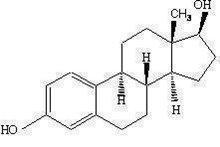
Estradiol is a white crystalline powder, chemically described as estra‑1,3,5(10)-triene-3,17β-diol. It has an empirical formula of C 18 H 24 O 2 and molecular weight of 272.39. The structural formula is:
The active component of the gel is estradiol. The remaining components of the gel (purified water, alcohol, triethanolamine and carbomer 974P) are pharmacologically inactive.
CLINICAL PHARMACOLOGY
Mechanism of Action
Endogenous estrogens are largely responsible for the development and maintenance of the female reproductive system and secondary sexual characteristics. Although circulating estrogens exist in a dynamic equilibrium of metabolic interconversions, estradiol is the principal intracellular human estrogen and is substantially more potent than its metabolites, estrone and estriol, at the receptor level.
The primary source of estrogen in normally cycling adult women is the ovarian follicle, which secretes 70 to 500 mcg of estradiol daily, depending on the phase of the menstrual cycle. After menopause, most endogenous estrogen is produced by conversion of androstenedione, secreted by the adrenal cortex, to estrone in the peripheral tissues. Thus, estrone and the sulfate conjugated form, estrone sulfate, are the most abundant circulating estrogens in postmenopausal women.
Estrogens act through binding to nuclear receptors in estrogen-responsive tissues. To date, 2 estrogen receptors have been identified. These vary in proportion from tissue to tissue.
Circulating estrogens modulate the pituitary secretion of the gonadotropins, luteinizing hormone (LH) and FSH through a negative feedback mechanism. Estrogens act to reduce the elevated levels of these hormones seen in postmenopausal women.
Pharmacodynamics
Generally, a serum estrogen concentration does not predict an individual woman’s therapeutic response to EstroGel nor her risk for adverse outcomes. Likewise, exposure comparisons across different estrogen products to infer efficacy or safety for the individual woman may not be valid.
Pharmacokinetics
Absorption
Estradiol is transported across intact skin and into the systemic circulation by a passive diffusion process. The rate of diffusion across the stratum corneum is the rate-limiting factor. When EstroGel is applied to the skin, it dries in 2 to 5 minutes.
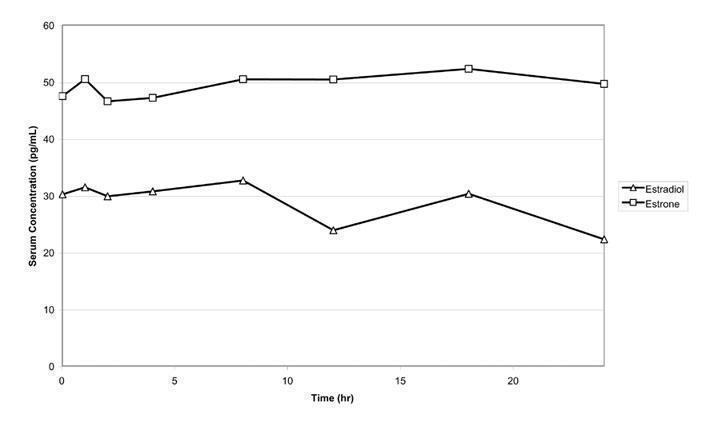
EstroGel 1.25 g (containing 0.75 mg of estradiol) was administered to 24 postmenopausal women once daily on the posterior surface of 1 arm from wrist to shoulder for 14 consecutive days. Mean maximal serum concentrations of estradiol and estrone on Day 14 were 46.4 pg/mL and 64.2 pg/mL, respectively. The time‑averaged serum estradiol and estrone concentrations over the 24-hour dose interval after administration of 1.25 g EstroGel on Day 14 are 28.3 pg/mL and 48.6 pg/mL, respectively. Mean concentration-time profiles for unadjusted estradiol and estrone on Day 14 are shown in Figure 1.
FIGURE 1 Mean Serum Concentration-time Profiles for Unadjusted Estradiol and Estrone After Multiple-dose Applications of 1.25 g EstroGel 0.06% for 14 Days
The serum concentrations of estradiol following 2.5 g EstroGel applications (1.25 g on each arm from wrist to shoulder) appeared to reach steady state after the third daily application. Distribution
The distribution of exogenous estrogens is similar to that of endogenous estrogens. Estrogens are widely distributed in the body and are generally found in higher concentrations in the sex hormone target organs. Estrogens circulate in blood largely bound to SHBG and albumin. Metabolism
Exogenous estrogens are metabolized in the same manner as endogenous estrogens. Circulating estrogens exist in a dynamic equilibrium of metabolic interconversions. These transformations take place mainly in the liver. Estradiol is converted reversibly to estrone, and both can be converted to estriol, which is a major urinary metabolite. Estrogens also undergo enterohepatic recirculation via sulfate and glucuronide conjugation in the liver, biliary secretion of conjugates into the intestine, and hydrolysis in the intestine followed by reabsorption. In postmenopausal women, a significant proportion of the circulating estrogens exist as sulfate conjugates, especially estrone sulfate, which serves as a circulating reservoir for the formation of more active estrogens. Although the clinical significance has not been determined, estradiol from EstroGel does not go through first pass liver metabolism. Excretion
Estradiol, estrone, and estriol are excreted in the urine along with glucuronide and sulfate conjugates.
The apparent terminal exponential half-life for estradiol was about 36 hours following administration of 1.25 g EstroGel.
Effect of Application Site Washing
The effect of application site washing on the serum concentrations of estradiol was determined in 24 healthy postmenopausal women who applied 1.25 g of EstroGel once daily for 14 consecutive days. Site washing 1 hour after the application resulted in a 22 percent mean decrease in average 24-hour serum concentrations of estradiol. Potential for Estradiol Transfer
The effect of estradiol transfer was evaluated in 24 healthy postmenopausal women who topically applied 1.25 g of EstroGel once daily on the posterior surface of 1 arm from wrist to shoulder for a period of 14 consecutive days. On each day, 1 hour after gel application, a cohort of 24 non-dosed healthy postmenopausal females directly contacted the dosed cohort at the site of gel application for 15 minutes. No change in endogenous mean serum concentrations of estradiol was observed in the non-dosed cohort after direct skin-to-skin contact with subjects administered EstroGel. Effect of Moisturizer Lotion/Sunscreen on Estradiol Absorption
The effect of sunscreen and moisturizer lotion on estradiol absorption from 0.06% estradiol topical gel was evaluated in a randomized, open-label, three-period crossover study in 42 healthy postmenopausal women. The study results showed that repeated daily application of sunscreen for 7 days at 1 hour after the administration of 0.06% estradiol topical gel decreased the mean AUC 0-24h and C max of estradiol by 16%. Repeated daily application of moisturizer lotion for 7 days at 1 hour after the administration of 0.06% estradiol topical gel increased the mean AUC 0-24h and C max of estradiol by 38% and 73%, respectively.
The effect of daily application of sunscreen/moisturizer lotion on estradiol absorption, when sunscreen/moisturizer lotion is applied before administration of 0.06% estradiol topical gel, was not studied.
NONCLINICAL TOXICOLOGY
Carcinogenesis, Mutagenesis, Impairment of Fertility
Long-term, continuous administration of natural and synthetic estrogens in certain animal species increases the frequency of carcinomas of the breast, uterus, cervix, vagina, testis, and liver.
CLINICAL STUDIES
Effects on Vasomotor Symptoms in Postmenopausal Women
In a placebo-controlled study, 145 postmenopausal women between 29 and 67 years of age (81.4 percent were White) were randomly assigned to receive 1.25 g of EstroGel (containing 0.75 mg of estradiol) or placebo gel for 12 weeks. Efficacy was assessed at 4 and 12 weeks of treatment. A statistically significant reduction in the frequency and severity of moderate to severe hot flushes was shown at Weeks 4 and 12. (See Table 2)
| Mean Change from Baseline in the Number and Severity of Hot Flushes per Day, ITT Population, LOCF | Number of Hot Flushes/Day (Moderate to Severe) | Severity Score/Day (Mild, Moderate, Severe) | ||
Placebo n=73 | EstroGel 0.06% 1.25 g n=72 | Placebo n=73 | EstroGel 0.06% 1.25 g n=72 | |
Baseline Mean (SD) | 11.01 (5.66) | 10.33 (3.07) | 2.30 (0.24) | 2.36 (0.29) |
Week 4 Primary timepoint. Mean (SD) Mean change from baseline (SD) Diff. vs placebo P value P values from Elteren’s nonparametric test. | 5.95 (5.17) -5.06 (4.91) | 4.43 (4.13) -5.91 (3.68) 0.85 0.019 Statistically significantly different from placebo. | 2.00 (0.63) -0.31 (0.62) | 1.73 (0.73) -0.63 (0.71) 0.32 0.005 |
Week 12 Mean (SD) Mean change from baseline (SD) Diff. vs placebo P value | 5.17 (6.52) -5.84 (4.52) | 2.79 (3.70) -7.55 (3.52) 1.71 0.043 | 1.76 (0.84) -0.54 (0.84) | 1.33 (0.97) -1.03 (0.94) 0.49 <0.001 |
Effects on Vulvar and Vaginal Atrophy in Postmenopausal Women
Results of the vaginal wall cytology showed a significant ( P ≤0.001) increase from baseline in the percent of superficial epithelial cells at Week 12 for 1.25 g EstroGel. In contrast, no significant change from baseline was observed in the placebo group.
Women’s Health Initiative Studies
The WHI enrolled approximately 27,000 predominantly healthy postmenopausal women in two substudies to assess the risks and benefits of daily oral CE (0.625 mg)‑alone or in combination with MPA (2.5 mg) compared to placebo in the prevention of certain chronic diseases. The primary endpoint was the incidence of CHD (defined as nonfatal MI, silent MI, and CHD death), with invasive breast cancer as the primary adverse outcome. A “global index” included the earliest occurrence of CHD, invasive breast cancer, stroke, PE, endometrial cancer (only in the CE plus MPA substudy), colorectal cancer, hip fracture, or death due to other causes. These substudies did not evaluate the effects of CE-alone or CE plus MPA on menopausal symptoms. WHI Estrogen-Alone Substudy
The WHI estrogen-alone substudy was stopped early because an increased risk of stroke was observed, and it was deemed that no further information would be obtained regarding the risks and benefits of estrogen-alone in predetermined primary endpoints. Results of the estrogen-alone substudy, which included 10,739 women (average 63 years of age, range 50-79; 75.3 percent White, 15.1 percent Black, 6.1 percent Hispanic, 3.6 percent Other), after an average follow-up of 7.1 years are presented in Table 3.
| Relative and Absolute Risk Seen in the Estrogen-Alone Substudy of WHI a | |||
Event | Relative Risk CE vs. Placebo (95% nCI b ) | CE n = 5,310 | Placebo n = 5,429 |
Absolute Risk per 10,000 Women-Years | |||
CHD events c | 0.95 (0.78-1.16) | 54 | 57 |
Non-fatal MI c | 0.91 (0.73-1.14) | 40 | 43 |
CHD death c | 1.01 (0.71-1.43) | 16 | 16 |
All strokes c Ischemic stroke c | 1.33 (1.05-1.68) 1.55 (1.19-2.01) | 45 38 | 33 25 |
Deep vein thrombosis c,d | 1.47 (1.06-2.06) | 23 | 15 |
Pulmonary embolism c | 1.37 (0.90-2.07) | 14 | 10 |
Invasive breast cancer c | 0.80 (0.62-1.04) | 28 | 34 |
Colorectal cancer c | 1.08 (0.75-1.55) | 17 | 16 |
Hip fracture c | 0.65 (0.45-0.94) | 12 | 19 |
Vertebral fractures c,d | 0.64 (0.44-0.93) | 11 | 18 |
Lower arm/wrist fractures c,d | 0.58 (0.47-0.72) | 35 | 59 |
Total fractures c,d | 0.71 (0.64-0.80) | 144 | 197 |
Death due to other causes e,f | 1.08 (0.88-1.32) | 53 | 50 |
Overall mortality c,d | 1.04 (0.88-1.22) | 79 | 75 |
Global index g | 1.02 (0.92-1.13) | 206 | 201 |
| a Adapted from numerous WHI publications. WHI publications can be viewed at www.nhlbi.nih.gov/whi. b Nominal confidence intervals unadjusted for multiple looks and multiple comparisons. c Results are based on centrally adjudicated data for an average follow-up of 7.1 years. d Not included in “global index”. e Results are based on an average follow-up of 6.8 years. f All deaths, except from breast or colorectal cancer, definite or probable CHD, PE or cerebrovascular disease. g A subset of the events was combined in a "global index," defined as the earliest occurrence of CHD events, invasive breast cancer, stroke, pulmonary embolism, endometrial cancer, colorectal cancer, hip fracture, or death due to other causes. | |||
For those outcomes included in the WHI “global index” that reached statistical significance, the absolute excess risk per 10,000 women-years in the group treated with CE-alone was 12 more strokes, while the absolute risk reduction per 10,000 women‑years was 7 fewer hip fractures. 9 The absolute excess risk of events included in the "global index" was a non-significant 5 events per 10,000 women-years. There was no difference between the groups in terms of all-cause mortality .
No overall difference for primary CHD events (nonfatal MI, silent MI, and CHD death) and invasive breast cancer in women receiving CE-alone compared with placebo was reported in final centrally adjudicated results from the estrogen-alone substudy, after an average follow-up of 7.1 years. See Table 3 .
Centrally adjudicated results for stroke events from the estrogen-alone substudy, after an average follow-up of 7.1 years, reported no significant difference in the distribution of stroke subtype or severity, including fatal strokes, in women receiving CE-alone compared to placebo. Estrogen-alone therapy increased the risk of ischemic stroke, and this excess risk was present in all subgroups of women examined. 10
Timing of initiation of estrogen-alone therapy relative to the start of menopause may affect the overall risk benefit profile. The WHI estrogen-alone substudy stratified by age showed in women 50 to 59 years of age a non-significant trend toward reduced risk for CHD [hazard ratio (HR) 0.63 (95 percent CI, 0.36-1.09)] and overall mortality [HR 0.71 (95 percent CI, 0.46-1.11)] . WHI Estrogen Plus Progestin Substudy
The WHI estrogen plus progestin substudy was stopped early. According to the predefined stopping rule, after an average follow-up of 5.6 years of treatment, the increased risk of invasive breast cancer and cardiovascular events exceeded the specified benefits included in the “global index.” The absolute excess risk of events included in the “global index” was 19 per 10,000 women-years.
For those outcomes included in the WHI “global index” that reached statistical significance after 5.6 years of follow-up, the absolute excess risks per 10,000 women-years in the group treated with CE plus MPA were 7 more CHD events, 8 more strokes, 10 more PEs, and 8 more invasive breast cancers, while the absolute risk reduction per 10,000 women-years were 6 fewer colorectal cancers and 5 fewer hip fractures .
Results of the CE plus MPA substudy, which included 16,608 women (average 63 years of age, range 50-79; 83.9 percent White, 6.8 percent Black, 5.4 percent Hispanic, 3.9 percent Other), are presented in Table 4. These results reflect centrally adjudicated data after an average follow-up of 5.6 years.
| Relative and Absolute Risk Seen in the Estrogen Plus Progestin Substudy of WHI at an Average of 5.6 Years a,b | |||
Event | Relative Risk CE/MPA vs. Placebo (95% nCI c ) | CE/MPA n = 8,506 | Placebo n = 8,102 |
Absolute Risk per 10,000 Women-Years | |||
CHD events Non-fatal MI CHD death | 1.23 (0.99-1.53) 1.28 (1.00-1.63) 1.10 (0.70-1.75) | 41 31 8 | 34 25 8 |
All strokes Ischemic stroke | 1.31 (1.03-1.68) 1.44 (1.09-1.90) | 33 26 | 25 18 |
Deep vein thrombosis d | 1.95 (1.43-2.67) | 26 | 13 |
Pulmonary embolism | 2.13 (1.45-3.11) | 18 | 8 |
Invasive breast cancer e | 1.24 (1.01-1.54) | 41 | 33 |
Colorectal cancer | 0.61 (0.42-0.87) | 10 | 16 |
Endometrial cancer d | 0.81 (0.48-1.36) | 6 | 7 |
Cervical cancer d | 1.44 (0.47-4.42) | 2 | 1 |
Hip fracture | 0.67 (0.47-0.96) | 11 | 16 |
Vertebral fractures d | 0.65 (0.46-0.92) | 11 | 17 |
Lower arm/wrist fractures d | 0.71 (0.59-0.85) | 44 | 62 |
Total fractures | 0.76 (0.69-0.83) | 152 | 199 |
Overall mortality f | 1.00 (0.83-1.19) | 52 | 52 |
Global Index g | 1.13 (1.02-1.25) | 184 | 165 |
| a Adapted from numerous WHI publications. WHI publications can be viewed at www.nhlbi.nih.gov/whi. b Results are based on centrally adjudicated data. c Nominal confidence intervals unadjusted for multiple looks and multiple comparisons. d Not included in “global index”. e Includes metastatic and non-metastatic breast cancer, with the exception of in situ breast cancer. f All deaths, except from breast or colorectal cancer, definite or probable CHD, PE or cerebrovascular disease. g A subset of the events was combined in a "global index," defined as the earliest occurrence of CHD events, invasive breast cancer, stroke, pulmonary embolism, endometrial cancer, colorectal cancer, hip fracture, or death due to other causes. | |||
Timing of initiation of estrogen plus progestin therapy relative to the start of menopause may affect the overall risk benefit profile. The WHI estrogen plus progestin substudy stratified by age showed in women 50 to 59 years of age a non-significant trend toward reduced risk for overall mortality [HR 0.69 (95 percent CI, 0.44-1.07)] .
Women's Health Initiative Memory Study
The WHIMS estrogen-alone ancillary study of WHI enrolled 2,947 predominantly healthy hysterectomized postmenopausal women 65 years of age and older (45 percent were 65 to 69 years of age, 36 percent were 70 to 74 years of age, and 19 percent were 75 years of age and older) to evaluate the effects of daily CE (0.625 mg)-alone on the incidence of probable dementia (primary outcome) compared to placebo.
After an average follow-up of 5.2 years, the relative risk of probable dementia for CE-alone versus placebo was 1.49 (95 percent CI, 0.83-2.66). The absolute risk of probable dementia for CE-alone versus placebo was 37 versus 25 cases per 10,000 women-years. Probable dementia as defined in the study included Alzheimer’s disease (AD), vascular dementia (VaD) and mixed type (having features of both AD and VaD). The most common classification of probable dementia in the treatment group and the placebo group was AD. Since the ancillary study was conducted in women 65 to 79 years of age, it is unknown whether these findings apply to younger postmenopausal women [see Warnings and Precautions (5.3 ), and Use in Specific Populations (8.5 )].
The WHIMS estrogen plus progestin ancillary study enrolled 4,532 predominantly healthy postmenopausal women 65 years of age and older (47 percent were 65 to 69 years of age, 35 percent were 70 to 74 years of age, and 18 percent were 75 years of age and older) to evaluate the effects of daily CE (0.625 mg) plus MPA (2.5 mg) on the incidence of probable dementia (primary outcome) compared to placebo.
After an average follow-up of 4 years, the relative risk of probable dementia for CE plus MPA versus placebo was 2.05 (95 percent CI, 1.21-3.48). The absolute risk of probable dementia for CE plus MPA versus placebo was 45 versus 22 cases per 10,000 women-years. Probable dementia as defined in the study included AD, VaD and mixed type (having features of both AD and VaD). The most common classification of probable dementia in the treatment group and the placebo group was AD. Since the ancillary study was conducted in women 65 to 79 years of age, it is unknown whether these findings apply to younger postmenopausal women [see Warnings and Precautions (5.3 ), and Use in Specific Populations (8.5 )].
When data from the two populations were pooled as planned in the WHIMS protocol, the reported overall relative risk for probable dementia was 1.76 (95 percent CI, 1.19-2.60). Differences between groups became apparent in the first year of treatment. It is unknown whether these findings apply to younger postmenopausal women [see Warnings and Precautions (5.3 ), and Use in Specific Populations (8.5 )].
HOW SUPPLIED/STORAGE AND HANDLING
How Supplied
EstroGel is a clear, colorless, hydroalcoholic 0.06 percent estradiol gel supplied in a non aerosol, metered-dose pump. The pump consists of an LDPE inner liner encased in rigid plastic with a resealable polypropylene cap. EstroGel is available in a 50-gram (1.75 oz) size. Each individually packaged 50-gram pump contains 50 grams of gel and can deliver 30 metered 1.25-g doses.
NDC: 17139-617-40............................. (50-gram pump)
Storage and Handling
Keep out of reach of children.
Store at 20° to 25°C (68° to 77°F); excursions permitted to 15° to 30°C (59° to 86°F) [See USP Controlled Room Temperature].
Mechanism of Action
Endogenous estrogens are largely responsible for the development and maintenance of the female reproductive system and secondary sexual characteristics. Although circulating estrogens exist in a dynamic equilibrium of metabolic interconversions, estradiol is the principal intracellular human estrogen and is substantially more potent than its metabolites, estrone and estriol, at the receptor level.
The primary source of estrogen in normally cycling adult women is the ovarian follicle, which secretes 70 to 500 mcg of estradiol daily, depending on the phase of the menstrual cycle. After menopause, most endogenous estrogen is produced by conversion of androstenedione, secreted by the adrenal cortex, to estrone in the peripheral tissues. Thus, estrone and the sulfate conjugated form, estrone sulfate, are the most abundant circulating estrogens in postmenopausal women.
Estrogens act through binding to nuclear receptors in estrogen-responsive tissues. To date, 2 estrogen receptors have been identified. These vary in proportion from tissue to tissue.
Circulating estrogens modulate the pituitary secretion of the gonadotropins, luteinizing hormone (LH) and FSH through a negative feedback mechanism. Estrogens act to reduce the elevated levels of these hormones seen in postmenopausal women.
