Get your patient on Femring - Estradiol Acetate ring (Estradiol Acetate)
Femring - Estradiol Acetate ring prescribing information

WARNING: ENDOMETRIAL CANCER, CARDIOVASCULAR DISORDERS, BREAST CANCER AND PROBABLE DEMENTIA
Estrogen-Alone Therapy
Endometrial Cancer
There is an increased risk of endometrial cancer in a woman with a uterus who uses unopposed estrogens. Adding a progestin to estrogen therapy has been shown to reduce the risk of endometrial hyperplasia, which may be a precursor to endometrial cancer. Adequate diagnostic measures, including directed or random endometrial sampling when indicated, should be undertaken to rule out malignancy in postmenopausal women with undiagnosed persistent or recurring abnormal genital bleeding [see Warnings and Precautions (5.2) ] .
Cardiovascular Disorders and Probable Dementia
Estrogen-alone therapy should not be used for the prevention of cardiovascular disease or dementia [see Warnings and Precautions (5.1 , 5.3 ), and Clinical Studies (14.3 , 14.4 )] .
The Women’s Health Initiative (WHI) estrogen-alone substudy reported increased risks of stroke and deep vein thrombosis (DVT) in postmenopausal women (50 to 79 years of age) during 7.1 years of treatment with daily oral conjugated estrogens (CE) [0.625 mg]-alone, relative to placebo [see Warnings and Precautions (5.1) , and Clinical Studies (14.3) ].
The WHI Memory Study (WHIMS) estrogen-alone ancillary study of the WHI reported an increased risk of developing probable dementia in postmenopausal women 65 years of age or older during 5.2 years of treatment with daily CE (0.625 mg)-alone, relative to placebo. It is unknown whether this finding applies to younger postmenopausal women [see Warnings and Precautions (5.3) , Use in Specific Populations (8.5) , and Clinical Studies (14.4) ].
In the absence of comparable data, these risks should be assumed to be similar for other doses of CE and other dosage forms of estrogens.
Estrogens with or without progestins should be prescribed at the lowest effective doses and for the shortest duration consistent with treatment goals and risks for the individual woman.
Estrogen Plus Progestin Therapy
Cardiovascular Disorders and Probable Dementia
Estrogen plus progestin therapy should not be used for the prevention of cardiovascular disease or dementia [see Warnings and Precautions (5.1 , 5.3 ) and Clinical Studies (14.3 , 14.4 )] .
The WHI estrogen plus progestin substudy reported increased risks of DVT, pulmonary embolism (PE), stroke and myocardial infarction (MI) in postmenopausal women (50 to 79 years of age) during 5.6 years of treatment with daily oral CE (0.625 mg) combined with medroxyprogesterone acetate (MPA) [2.5 mg], relative to placebo [see Warnings and Precautions (5.1) , and Clinical Studies (14.3) ] .
The WHIMS estrogen plus progestin ancillary study of the WHI reported increased risk of developing probable dementia in postmenopausal women 65 years of age or older during 4 years of treatment with daily CE (0.625 mg) combined with MPA (2.5 mg), relative to placebo. It is unknown whether this finding applies to younger postmenopausal women [see Warnings and Precautions (5.3) , Use in Specific Populations (8.5) and Clinical Studies (14.4) ] .
Breast Cancer
The WHI estrogen plus progestin substudy also demonstrated an increased risk of invasive breast cancer [see Warnings and Precautions (5.3) , and Clinical Studies (14.3) ].
In the absence of comparable data, these risks should be assumed to be similar for other doses of CE and MPA and other combinations and dosage forms of estrogens and progestins.
Estrogens with or without progestins should be prescribed at the lowest effective doses and for the shortest duration consistent with treatment goals and risks for the individual woman.
Warnings and Precautions, Malignant Neoplasms (5.2 ) 11/2023
INDICATIONS AND USAGE
Femring is an estrogen indicated for:
Treatment of Moderate to Severe Vasomotor Symptoms due to Menopause.
Treatment of Moderate to Severe Vulvar and Vaginal Atrophy due to Menopause.
DOSAGE AND ADMINISTRATION
Generally, when estrogen is prescribed for a postmenopausal woman with a uterus, a progestin should also be considered to reduce the risk of endometrial cancer.
A woman without a uterus does not need a progestin. In some cases, however, hysterectomized women with a history of endometriosis may need a progestin [see Warnings and Precautions (5.2 , 5.14 )].
Use of estrogen-alone, or in combination with a progestin, should be with the lowest effective dose and for the shortest duration consistent with treatment goals and risks for the individual woman. Postmenopausal women should be re-evaluated periodically as clinically appropriate to determine if treatment is still necessary.
Treatment of Moderate to Severe Vasomotor Symptoms due to Menopause
Start therapy with 0.05 mg/day. Dosage adjustment should be guided by the clinical response.
Therapy should be started at the lowest effective dose and the shortest duration consistent with treatment goals. Attempts to taper or discontinue the medication should be made at 3 to 6 month intervals.
Treatment of Moderate to Severe Vulvar and Vaginal Atrophy due to Menopause.
Start therapy with 0.05 mg/day. Dosage adjustment should be guided by the clinical response.
Therapy should be started at the lowest effective dose and the shortest duration consistent with treatment goals. Attempts to taper or discontinue the medication should be made at 3 to 6 month intervals.
DOSAGE FORMS AND STRENGTHS
The following two strengths of Femring are available:
Femring (0.05 mg/day): Each off-white, soft, flexible ring has a central core that contains 12.4 mg of estradiol acetate, which releases at a rate equivalent to 0.05 mg of estradiol per day for 3 months.
Femring (0.10 mg/day): Each off-white, soft, flexible ring has a central core that contains 24.8 mg of estradiol acetate, which releases at a rate equivalent to 0.10 mg of estradiol per day for 3 months.
USE IN SPECIFIC POPULATIONS
- Nursing Mothers: Estrogen administration to nursing women has been shown to decrease the quantity and quality of breast milk (8.3 )
- Geriatric Use: An increased risk of probable dementia in women over 65 years of age was reported in the Women’s Health Initiative Memory ancillary studies of the Women’s Health Initiative (5.3 , 8.5 )
Pregnancy
Femring should not be used during pregnancy [see Contraindications (4) ] . There appears to be little or no increased risk of birth defects in children born to women who have used estrogens and progestins as an oral contraceptive inadvertently during early pregnancy.
Nursing Mothers
Femring should not be used during lactation. Estrogen administration to nursing women has been shown to decrease the quantity and quality of the breast milk. Detectable amounts of estrogens have been identified in the breast milk of women receiving estrogen-alone therapy. Caution should be exercised when Femring is administered to a nursing woman.
Pediatric Use
Femring is not indicated in children. Clinical studies have not been conducted in the pediatric population.
Geriatric Use
There have not been sufficient numbers of geriatric women involved in clinical studies utilizing Femring to determine whether those over 65 years of age differ from younger subjects in their response to Femring.
The Women’s Health Initiative Studies
In the WHI estrogen-alone substudy (daily CE [0.625 mg]-alone versus placebo), there was a higher relative risk of stroke in women greater than 65 years of age [see Clinical Studies (14.2) ].
In the WHI estrogen plus progestin substudy (daily CE [0.625 mg] plus MPA [2.5 mg] versus placebo), there was a higher relative risk of nonfatal stroke and invasive breast cancer in women greater than 65 years of age [see Clinical Studies (14.2) ] .
The Women’s Health Initiative Memory Study
In the WHIMS ancillary studies of postmenopausal women 65 to 79 years of age, there was an increased risk of developing probable dementia in women receiving estrogen-alone or estrogen plus progestin when compared to placebo [see Warnings and Precautions (5.3) , and Clinical Studies (14.4) ] .
Since both ancillary studies were conducted in women 65 to 79 years of age, it is unknown whether these findings apply to younger postmenopausal women 8 [see Warnings and Precautions (5.3) , and Clinical Studies (14.4) ] .
Renal Impairment
The effect of renal impairment on the pharmacokinetics of Femring has not been studied.
Hepatic Impairment
The effect of hepatic impairment on the pharmacokinetics of Femring has not been studied.
CONTRAINDICATIONS
Femring is contraindicated in women with any of the following conditions:
- Undiagnosed abnormal genital bleeding
- Known, suspected, or history of breast cancer
- Known or suspected estrogen-dependent neoplasia
- Active DVT, PE, or history of these conditions
- Active arterial thromboembolic disease (for example, stroke and MI), or a history of these conditions
- Known anaphylactic reaction or angioedema to Femring
- Known liver impairment or disease
- Known protein C, protein S, or antithrombin deficiency, or other known thrombophilic disorders
- Known or suspected pregnancy
WARNINGS AND PRECAUTIONS
Femring is used only in the vagina, however, the risks associated with oral estrogens should be taken into account.
Cardiovascular Disorders
An increased risk of stroke and DVT has been reported with estrogen-alone therapy. An increased risk of PE, DVT, stroke, and MI has been reported with estrogen plus progestin therapy. Should any of these occur or be suspected, estrogen with or without progestin therapy should be discontinued immediately.
Risk factors for arterial vascular disease (for example, hypertension, diabetes mellitus, tobacco use, hypercholesterolemia, and obesity) and/or venous thromboembolism (VTE) (for example, personal history or family history of VTE, obesity, and systemic lupus erythematosus) should be managed appropriately.
Stroke
In the WHI estrogen-alone substudy, a statistically significant increased risk of stroke was reported in women 50 to 79 years of age receiving daily CE (0.625 mg)-alone compared to women in the same age group receiving placebo (45 versus 33 per 10,000 women-years). The increase in risk was demonstrated in year 1 and persisted [see Clinical Studies (14.3) ] . Should a stroke occur or be suspected, estrogen-alone therapy should be discontinued immediately.
Subgroup analyses of women 50 to 59 years of age suggest no increased risk of stroke for those women receiving CE (0.625 mg)-alone versus those receiving placebo (18 versus 21 per 10,000 women-years). 1
In the WHI estrogen plus progestin substudy, a statistically significant increased risk of stroke was reported in women 50 to 79 years of age receiving daily CE (0.625 mg) plus MPA (2.5 mg) compared to women in the same age group receiving placebo (33 versus 25 per 10,000 women-years) [see Clinical Studies (14.3) ] . The increase in risk was demonstrated after the first year and persisted. 1 Should a stroke occur or be suspected, estrogen plus progestin therapy should be discontinued immediately.
Coronary Heart Disease
In the WHI estrogen-alone substudy, no overall effect on coronary heart disease (CHD) events (defined as nonfatal MI, silent MI, or CHD death) was reported in women receiving estrogen-alone compared to placebo 2 [see Clinical Studies (14.3) ].
Subgroup analyses of women 50 to 59 years of age suggest a statistically non-significant reduction in CHD events (CE [0.625 mg]-alone compared to placebo) in women with less than 10 years since menopause (8 versus 16 per 10,000 woman-years). 1
In the WHI estrogen plus progestin substudy, there was a statistically non-significant increased risk of CHD events reported in women receiving daily CE (0.625 mg) plus MPA (2.5 mg) compared to women receiving placebo (41 versus 34 per 10,000 women-years). 1 An increase in relative risk was demonstrated in year 1, and a trend toward decreasing relative risk was reported in years 2 through 5 [see Clinical Studies (14.3) ].
In postmenopausal women with documented heart disease (n = 2,763, average 66.7 years of age), in a controlled clinical trial of secondary prevention of cardiovascular disease (Heart and Estrogen/Progestin Replacement Study; HERS) treatment with daily CE (0.625 mg) plus MPA (2.5 mg) demonstrated no cardiovascular benefit. During an average follow-up of 4.1 years, treatment with CE plus MPA did not reduce the overall rate of CHD events in postmenopausal women with established CHD. There were more CHD events in the CE plus MPA-treated group than in the placebo group in year 1, but not during the subsequent years. Two thousand, three hundred and twenty-one (2,321) women from the original HERS trial agreed to participate in an open label extension of HERS, HERS II. Average follow-up in HERS II was an additional 2.7 years, for a total of 6.8 years overall. Rates of CHD events were comparable among women in the CE plus MPA group and the placebo group in HERS, HERS II, and overall.
Venous Thromboembolism
In the WHI estrogen-alone substudy, the risk of VTE (DVT and PE), was increased for women receiving daily CE (0.625 mg)-alone compared to placebo (30 versus 22 per 10,000 women-years), although only the increased risk of DVT reached statistical significance (23 versus 15 per 10,000 women-years). The increase in VTE risk was demonstrated during the first 2 years 3 [see Clinical Studies (14.3) ] . Should a VTE occur or be suspected, estrogen-alone therapy should be discontinued immediately.
In the WHI estrogen plus progestin substudy, a statistically significant 2-fold greater rate of VTE was reported in women receiving daily CE (0.625 mg) plus MPA (2.5 mg) compared to women receiving placebo (35 versus 17 per 10,000 women-years). Statistically significant increases in risk for both DVT (26 versus 13 per 10,000 women-years) and PE (18 versus 8 per 10,000 women-years) were also demonstrated. The increase in VTE risk was demonstrated during the first year and persisted 4 [see Clinical Studies (14.3) ] . Should a VTE occur or be suspected, estrogen plus progestin therapy should be discontinued immediately.
If feasible, estrogens should be discontinued at least 4 to 6 weeks before surgery of the type associated with an increased risk of thromboembolism, or during periods of prolonged immobilization.
Malignant Neoplasms
Endometrial Cancer
An increased risk of endometrial cancer has been reported with the use of unopposed estrogen therapy in a woman with a uterus. The reported endometrial cancer risk among unopposed estrogen users is about 2 to 12 times greater than in non-users, and appears dependent on duration of treatment and on estrogen dose. Most studies show no significant increased risk associated with use of estrogens for less than 1 year. The greatest risk appears associated with prolonged use, with increased risks of 15- to 24-fold for 5 to 10 years or more. This risk has been shown to persist for at least 8 to 15 years after estrogen therapy is discontinued.
Clinical surveillance of all women using estrogen-alone or estrogen plus progestin therapy is important. Adequate diagnostic measures, including directed or random endometrial sampling when indicated, should be undertaken to rule out malignancy in postmenopausal women with undiagnosed persistent or recurring abnormal genital bleeding.
There is no evidence that the use of natural estrogens results in a different endometrial risk profile than synthetic estrogens of equivalent estrogen dose. Adding a progestin to estrogen therapy in postmenopausal women has been shown to reduce the risk of endometrial hyperplasia, which may be a precursor to endometrial cancer.
Breast Cancer
The WHI substudy of daily CE (0.625 mg)-alone provided information about breast cancer in estrogen-alone users. In the WHI estrogen-alone substudy, after an average follow up of 7.1 years, daily CE-alone was not associated with an increased risk of invasive breast cancer (relative risk [RR] 0.80) 5 [see Clinical Studies (14.3) ] .
After a mean follow-up of 5.6 years, the estrogen plus progestin substudy reported an increased risk of invasive breast cancer in women who took daily CE plus MPA. In this substudy, prior use of estrogen-alone or estrogen plus progestin therapy was reported by 26 percent of the women. The relative risk of invasive breast cancer was 1.24, and the absolute risk was 41 versus 33 cases per 10,000 women-years for CE plus MPA compared with placebo. Among women who reported prior use of hormone therapy, the relative risk of invasive breast cancer was 1.86 and the absolute risk was 46 versus 25 cases per 10,000 women-years for CE plus MPA compared with placebo. Among women who reported no prior use of hormone therapy, the relative risk of invasive breast cancer was 1.09, and the absolute risk was 40 versus 36 cases per 10,000 women-years for CE plus MPA compared with placebo. In the same substudy, invasive breast cancers were larger, were more likely to be node positive, and were diagnosed at a more advanced stage in the CE (0.625 mg) plus MPA (2.5 mg) group compared with the placebo group. Metastatic disease was rare with no apparent difference between the two groups. Other prognostic factors, such as histologic subtype, grade and hormone receptor status did not differ between the groups 6 [see Clinical Studies (14.3) ] .
Consistent with the WHI clinical trial, observational studies have also reported an increased risk of breast cancer for estrogen plus progestin therapy, and a smaller increased risk for estrogen-alone therapy, after several years of use. One large meta-analysis of prospective cohort studies reported increased risks that were dependent upon duration of use and could last up to >10 years after discontinuation of estrogen plus progestin therapy and estrogen-alone therapy. Extension of the WHI trials also demonstrated increased breast cancer risk associated with estrogen plus progestin therapy. Observational studies also suggest that the risk of breast cancer was greater, and became apparent earlier, with estrogen plus progestin therapy as compared to estrogen-alone therapy. However, these studies have not found significant variation in the risk of breast cancer among different estrogen plus progestin combinations, doses, or routes of administration.
The use of estrogen-alone and estrogen plus progestin has been reported to result in an increase in abnormal mammograms requiring further evaluation.
All women should receive yearly breast examinations by a healthcare provider and perform monthly breast self-examinations. In addition, mammography examinations should be scheduled based on patient age, risk factors and prior mammogram results.
Ovarian Cancer
The WHI estrogen plus progestin substudy reported a statistically non-significant increased risk of ovarian cancer. After an average follow-up of 5.6 years, the relative risk for ovarian cancer for CE plus MPA versus placebo was 1.58 (95 percent CI, 0.77-3.24). The absolute risk for CE plus MPA versus placebo was 4 versus 3 cases per 10,000 women-years. 7
A meta-analysis of 17 prospective and 35 retrospective epidemiology studies found that women who used hormonal therapy for menopausal symptoms had an increased risk for ovarian cancer. The primary analysis, using case-control comparisons, included 12,110 cancer cases from the 17 prospective studies. The relative risks associated with current use of hormonal therapy was 1.41 (95% confidence interval [CI] 1.32 to 1.50); there was no difference in the risk estimates by duration of the exposure (less than 5 years [median of 3 years] vs. greater than 5 years [median of 10 years] of use before the cancer diagnosis). The relative risk associated with combined current and recent use (discontinued use within 5 years before cancer diagnosis) was 1.37 (95% CI 1.27-1.48), and the elevated risk was significant for both estrogen-alone and estrogen plus progestin products. The exact duration of hormone therapy use associated with an increased risk of ovarian cancer, however, is unknown.
Probable Dementia
In the WHIMS estrogen-alone ancillary study of WHI, a population of 2,947 hysterectomized women 65 to 79 years of age was randomized to daily CE (0.625 mg)-alone or placebo.
After an average follow-up of 5.2 years, 28 women in the estrogen-alone group and 19 women in the placebo group were diagnosed with probable dementia. The relative risk of probable dementia for CE-alone versus placebo was 1.49 (95 percent CI, 0.83-2.66). The absolute risk of probable dementia for CE-alone versus placebo was 37 versus 25 cases per 10,000 women-years 8 [see Use in Specific Populations (8.5) , and Clinical Studies (14.4) ].
In the WHIMS estrogen plus progestin ancillary study, a population of 4,532 postmenopausal women 65 to 79 years of age was randomized to daily CE (0.625 mg) plus MPA (2.5 mg) or placebo.
After an average follow-up of 4 years, 40 women in the CE plus MPA group and 21 women in the placebo group were diagnosed with probable dementia. The relative risk of probable dementia for CE plus MPA versus placebo was 2.05 (95 percent CI, 1.21-3.48). The absolute risk of probable dementia for CE plus MPA versus placebo was 45 versus 22 cases per 10,000 women-years 8 [see Use in Specific Populations (8.5) , and Clinical Studies (14.4) ] .
When data from the two populations in the WHIMS estrogen-alone and estrogen plus progestin ancillary studies were pooled as planned in the WHIMS protocol, the reported overall relative risk for probable dementia was 1.76 (95 percent CI, 1.19-2.60). Since both ancillary substudies were conducted in women aged 65 to 79 years, it is unknown whether these findings apply to younger postmenopausal women 8 [see Use in Specific Populations (8.5) and Clinical Studies (14.4) ] .
Gallbladder Disease
A 2- to 4-fold increase in the risk of gallbladder disease requiring surgery in postmenopausal women receiving estrogens has been reported.
Hypercalcemia
Estrogen administration may lead to severe hypercalcemia in women with breast cancer and bone metastases. If hypercalcemia occurs, use of the drug should be stopped and appropriate measures taken to reduce the serum calcium level.
Visual Abnormalities
Retinal vascular thrombosis has been reported in women receiving estrogens. Discontinue medication pending examination if there is sudden partial or complete loss of vision, or a sudden onset of proptosis, diplopia, or migraine. If examination reveals papilledema or retinal vascular lesions, estrogens should be permanently discontinued.
Addition of a Progestin When a Woman Has Not Had a Hysterectomy
Studies of the addition of a progestin for 10 or more days of a cycle of estrogen administration, or daily with estrogen in a continuous regimen, have reported a lowered incidence of endometrial hyperplasia than would be induced by estrogen treatment alone. Endometrial hyperplasia may be a precursor to endometrial cancer. There are, however, possible risks that may be associated with the use of progestins with estrogens compared to estrogen-alone regimens. These include an increased risk of breast cancer.
Elevated Blood Pressure
In a small number of case reports, substantial increases in blood pressure have been attributed to idiosyncratic reactions to estrogens. In a large, randomized, placebo-controlled clinical trial, a generalized effect of estrogen therapy on blood pressure was not seen.
Hypertriglyceridemia
In women with pre-existing hypertriglyceridemia, estrogen therapy may be associated with elevations of plasma triglycerides leading to pancreatitis. Consider discontinuation of treatment if pancreatitis occurs.
Hepatic Impairment and/or a Past History of Cholestatic Jaundice
Estrogens may be poorly metabolized in women with impaired liver function. For women with a history of cholestatic jaundice associated with past estrogen use or with pregnancy, caution should be exercised and in the case of recurrence, medication should be discontinued.
Hypothyroidism
Estrogen administration leads to increased thyroid-binding globulin (TBG) levels. Women with normal thyroid function can compensate for the increased TBG by making more thyroid hormone, thus maintaining free T 4 and T 3 serum concentrations in the normal range. Women dependent on thyroid hormone replacement therapy who are also receiving estrogens may require increased doses of their thyroid replacement therapy. These women should have their thyroid function monitored in order to maintain their free thyroid hormone levels in an acceptable range.
Fluid Retention
Estrogens may cause some degree of fluid retention. Women with conditions that might be influenced by this factor, such as cardiac or renal impairment, warrant careful observation when estrogen-alone is prescribed.
Hypocalcemia
Estrogen therapy should be used with caution in women with hypoparathyroidism as estrogen-induced hypocalcemia may occur.
Exacerbation of Endometriosis
A few cases of malignant transformation of residual endometrial implants have been reported in women treated post-hysterectomy with estrogen-alone therapy. For women known to have residual endometriosis post-hysterectomy, the addition of progestin should be considered.
Hereditary Angioedema
Exogenous estrogens may exacerbate symptoms of angioedema in women with hereditary angioedema.
Exacerbation of Other Conditions
Estrogen therapy may cause an exacerbation of asthma, diabetes mellitus, epilepsy, migraine, porphyria, systemic lupus erythematosus and hepatic hemangiomas, and should be used with caution in women with these conditions.
Laboratory Tests
Serum follicle stimulating hormone (FSH) and estradiol levels have not been shown to be useful in the management of moderate to severe vasomotor symptoms and moderate to severe vulvar and vaginal atrophy due to menopause.
Drug-Laboratory Test Interactions
Accelerated prothrombin time, partial thromboplastin time, and platelet aggregation time; increased platelet count; increased factors II, VII antigen, VIII antigen, VIII coagulant activity, IX, X, XII, VII-X complex, II-VII-X complex, and beta-thromboglobulin; decreased levels of antifactor Xa and antithrombin III, decreased antithrombin III activity; increased levels of fibrinogen and fibrinogen activity; increased plasminogen antigen and activity.
Increased TBG levels leading to increased circulating total thyroid hormone levels as measured by protein-bound iodine (PBI), T 4 levels (by column or by radioimmunoassay) or T 3 levels by radioimmunoassay. T 3 resin uptake is decreased, reflecting the elevated TBG. Free T 4 and free T 3 concentrations are unaltered. Women on thyroid replacement therapy may require higher doses of thyroid hormone.
Other binding proteins may be elevated in serum, for example, corticosteroid binding globulin (CBG), sex hormone-binding globulin (SHBG), leading to increased total circulating corticosteroids and sex steroids, respectively. Free hormone concentrations, such as testosterone and estradiol, may be decreased. Other plasma proteins may be increased (angiotensinogen/renin substrate, alpha-1-antitrypsin, ceruloplasmin).
Increased plasma high-density lipoprotein (HDL) and HDL 2 cholesterol subfraction concentrations, reduced low-density lipoprotein (LDL) cholesterol concentration, increased triglycerides levels.
Impaired glucose tolerance.
Vaginal Use and Expulsion
Femring may not be suitable for women with conditions that make the vagina more susceptible to vaginal irritation or ulceration, or make expulsions more likely, such as narrow vagina, vaginal stenosis, vaginal infection, cervical prolapse, rectoceles and cystoceles. If local treatment of a vaginal infection is required, Femring can remain in place during treatment.
ADVERSE REACTIONS
The following serious adverse reactions are discussed elsewhere in the labeling:
- Cardiovascular Disorders [see Boxed Warning , Warnings and Precautions (5.1) ].
- Malignant Neoplasms [see Boxed Warning , Warnings and Precautions (5.2) ].
Clinical Trials Experience
Because clinical trials are conducted under widely varying conditions, adverse reaction rates observed in the clinical trials of a drug cannot be directly compared to rates in the clinical trials of another drug and may not reflect the rates observed in practice.
In a 13-week clinical trial that included 225 postmenopausal women treated with Femring and 108 women treated with placebo vaginal rings, adverse reactions that occurred at a rate of ≥ 2 percent are summarized in Table 1 .
| AE = adverse event; NOS = not otherwise specified | |||
Adverse Event | Placebo (n = 108) | Estradiol 0.05 mg/day (n = 113) | Estradiol 0.10 mg/day (n = 112) |
n (percent) | n (percent) | n (percent) | |
Headache (NOS) | 10 (9.3) | 8 (7.1) | 11 (9.8) |
Intermenstrual Bleeding | 2 (1.9) | 9 (8.0) | 11 (9.8) |
Vaginal Candidiasis | 3 (2.8) | 7 (6.2) | 12 (10.7) |
Breast Tenderness | 2 (1.9) | 7 (6.2) | 12 (10.7) |
Back Pain | 4 (3.7) | 7 (6.2) | 4 (3.6) |
Abdominal Distension | 3 (2.8) | 8 (7.1) | 3 (2.7) |
Sinusitis (NOS) | 2 (1.9) | 2 (1.8) | 4 (3.6) |
Uterine Pain | 1 (0.9) | 2 (1.8) | 5 (4.5) |
Urinary Tract Infection (NOS) | 2 (1.9) | 1 (0.9) | 4 (3.6) |
Postmarketing Experience
- A few cases of toxic shock syndrome (TSS) have been reported in women using vaginal rings. TSS is a rare, but serious disease that may cause death. Warning signs of TSS include fever, nausea, vomiting, diarrhea, muscle pain, dizziness, faintness, or a sunburn-rash on face and body.
- Cases of ring adherence to the vaginal or bladder wall, making ring removal difficult, have been reported in women using vaginal rings and may require surgical removal of the device. Women should be carefully evaluated for vaginal or bladder wall ulceration or erosion. Cases of vaginal erosion and vaginal ulceration have been reported with other estradiol vaginal rings. If an ulceration or erosion has occurred, consideration should be given to leaving the ring out and not replacing it until healing is complete to prevent the ring from adhering to the vaginal tissue.
- A few cases of bowel obstruction associated with vaginal ring use have been reported. Persistent abdominal complaints consistent with obstruction should be carefully evaluated.
- A few cases of inadvertent ring insertion into the urinary bladder, which may require surgical removal, have been reported for women using vaginal rings. Persistent unexplained urinary symptoms should be carefully evaluated.
The following additional adverse reactions have been identified during post-approval use of Femring. Because these reactions are reported voluntarily from a population of uncertain size, it is not always possible to reliably estimate their frequency or establish a causal relationship to drug exposure.
Genitourinary system Uterine cancer, vaginal hemorrhage, ovarian cyst, irregular menstruation, metrorrhagia, menorrhagia, dysmenorrhea, uterine enlargement.
Breasts Breast cancer, fibrocystic breast disease, breast disorder, breast mass, breast enlargement, breast pain, nipple pain, breast discharge.
Cardiovascular Chest pain, increased blood pressure, irregular heart rate, pulmonary embolism, cerebrovascular accident (stroke), hemiparesis, transient ischemic attack, thrombosis.
Gastrointestinal Abdominal pain, pancreatitis, cholecystitis, cholelithiasis, vomiting.
Skin Generalized erythema, erythema multiforme, erythema nodosum, rash, hirsutism, pruritis.
Eyes Blindness, contact lens intolerance.
Central Nervous System Dizziness, headache, depression, nervousness, mood disturbances, irritability.
Miscellaneous Medical device complication, back pain, angioedema, weight increased/decreased, edema, libido increased/decreased, urticaria, hypersensitivity, anaphylaxis.
DRUG INTERACTIONS
No drug interaction studies have been conducted for Femring.
Metabolic Interactions
In vitro and in vivo studies have shown that estrogens are metabolized partially by cytochrome P450 3A4 (CYP3A4). Therefore, inducers or inhibitors of CYP3A4 may affect estrogen drug metabolism. Inducers of CYP3A4 such as St. John’s wort ( Hypericum perforatum ) preparations, phenobarbital, carbamazepine and rifampin may decrease the plasma concentration of estrogens, possibly resulting in a decrease in therapeutic effects and/or changes in the uterine bleeding profile. Inhibitors of CYP3A4 such as erythromycin, clarithromycin, ketoconazole, itraconazole, ritonavir and grapefruit juice may increase the plasma concentration of estrogens and may result in side effects.
DESCRIPTION
Femring (estradiol acetate vaginal ring) is an off-white, soft, flexible ring with a central core containing estradiol acetate.
Femring is made of cured silicone elastomer composed of dimethyl polysiloxane silanol, silica (diatomaceous earth), normal propyl orthosilicate, stannous octoate; barium sulfate and estradiol acetate. The rings have the following dimensions: outer diameter 56 mm, cross-sectional diameter 7.6 mm, core diameter 2 mm.
Femring is available in two strengths: Femring 0.05 mg/day has a central core that contains 12.4 mg of estradiol acetate, which releases at a rate equivalent to 0.05 mg of estradiol per day for 3 months. Femring 0.10 mg/day has a central core that contains 24.8 mg of estradiol acetate, which releases at a rate equivalent to 0.10 mg of estradiol per day for 3 months.
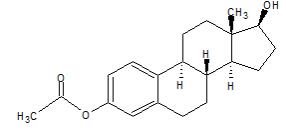
Estradiol acetate is chemically described as estra-1,3,5(10)-triene-3,17β-diol-3-acetate. The molecular formula of estradiol acetate is C 20 H 26 O 3 and the molecular weight of estradiol acetate is 314.42.
CLINICAL PHARMACOLOGY
Mechanism of Action
Endogenous estrogens are largely responsible for the development and maintenance of the female reproductive system and secondary sexual characteristics. Although circulating estrogens exist in a dynamic equilibrium of metabolic interconversions, estradiol is the principal intracellular human estrogen and is substantially more potent than its metabolites, estrone and estriol, at the receptor level.
The primary source of estrogen in normally cycling adult women is the ovarian follicle, which secretes 70 to 500 mcg of estradiol daily, depending on the phase of the menstrual cycle. After menopause, most endogenous estrogen is produced by conversion of androstenedione, which is secreted by the adrenal cortex, to estrone in the peripheral tissues. Thus, estrone and the sulfate conjugated form, estrone sulfate, are the most abundant circulating estrogens in postmenopausal women.
Estrogens act through binding to nuclear receptors in estrogen-responsive tissues. To date, two estrogen receptors have been identified. These vary in proportion from tissue to tissue.
Circulating estrogens modulate the pituitary secretion of the gonadotropins, luteinizing hormone (LH) and FSH through a negative feedback mechanism. Estrogens act to reduce the elevated levels of these hormones seen in postmenopausal women.
Pharmacodynamics
There are no pharmacodynamic data for Femring.
Pharmacokinetics
Absorption
Estradiol acetate is hydrolyzed to estradiol which is absorbed through the vaginal mucosa as evidenced by the mean time to maximum concentration (t max ) for estradiol of about 1 hour (range 0.25 to 1.5 hrs). After achieving the Cmax the estradiol concentration starts declining during the first 24 to 48 hours and then at a relatively constant rate for the remainder of the 3-month dosing interval (see Figure 1 for results from rings stored for 16 months). In vitro studies have shown that this initial release is higher as the rings age upon storage.
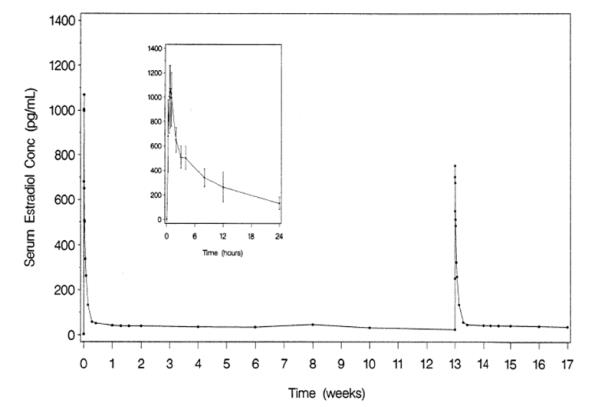
Following administration of Femring (0.05 mg/day estradiol), average serum estradiol concentration was 40.6 pg/mL; the corresponding apparent in vivo estradiol delivery rate was 0.052 mg/day. Following administration of Femring (0.10 mg/day estradiol), average serum estradiol concentration was 76 pg/mL; apparent in vivo delivery rate was 0.097 mg/day. Results are summarized in Table 2 below.
Dose (as estradiol) | Number of subjects | C max (pg/mL) | T max (hour) | C avg (pg/mL) | |
Estradiol 1 | 25 | 1129 (25) | 0.9 (41) | 40.6 (26) | |
0.05 mg/day | Estrone 1 | 25 | 141 (25) | 6.2 (84) | 35.9 (21) |
Estrone sulfate 1 | 25 | 2365 (44) | 9.3 (39) | 494.6 (48) | |
Estradiol 2 | 12 | 1665 (23) | 0.7 (90) | -- 4 | |
0.10 mg/day | Estradiol 3 | 11 | -- | -- | 76.0 (24) |
Estrone 3 | 11 | -- | -- | 45.7 (25) | |
• Relative Standard Deviation, 1 Study 1, 2 Study 2, 3 Study 3, 4 -- Not determined | |||||
Consistent with the avoidance of first pass metabolism achieved by vaginal estradiol administration, serum estradiol concentrations were slightly higher than estrone concentrations.
Distribution
The distribution of exogenous estrogens is similar to that of endogenous estrogens. Estrogens are widely distributed in the body and are generally found in higher concentrations in the sex hormone target organs. Estrogens circulate in the blood largely bound to SHBG and albumin.
Metabolism
Exogenous estrogens are metabolized in the same manner as endogenous estrogens. Circulating estrogens exist in a dynamic equilibrium of metabolic interconversions. These transformations take place mainly in the liver. Estradiol is converted reversibly to estrone, and both can be converted to estriol, which is a major urinary metabolite. Estrogens also undergo enterohepatic recirculation via sulfate and glucuronide conjugation in the liver, biliary secretion of conjugates into the intestine, and hydrolysis in the intestine followed by reabsorption. In postmenopausal women, a significant proportion of the circulating estrogens exist as sulfate conjugates, especially estrone sulfate, which serves as a circulating reservoir for the formation of more active estrogens.
Excretion
Estradiol, estrone, and estriol are excreted in the urine along with glucuronide and sulfate conjugates.
The estradiol apparent elimination half-life value is 21 to 26 hours.
Use in Specific Populations
No pharmacokinetic studies were conducted with Femring in specific populations, including women with renal or hepatic impairment.
NONCLINICAL TOXICOLOGY
Carcinogenesis, Mutagenesis, Impairment of Fertility
Long-term continuous administration of natural and synthetic estrogens in certain animal species increases the frequency of carcinomas of the breast, uterus, cervix, vagina, testis, and liver.
Estradiol acetate was assayed for mutation in four histidine-requiring strains of Salmonella typhimurium and in one tryptophan-requiring strain of Escherichia coli . Estradiol acetate did not induce mutations in any of the bacterial strains tested under the conditions employed.
CLINICAL STUDIES
Effects on Vasomotor Symptoms
A 13-week double-blind, placebo-controlled clinical trial was conducted to evaluate the efficacy of 2 doses of the vaginal ring in the treatment of moderate to severe vasomotor symptoms in 333 postmenopausal women between 29 and 85 years of age (mean age 51.7 years, 77 percent were Caucasian) who had at least 7 moderate to severe hot flushes daily or at least 56 moderate to severe hot flushes per week before randomization. Patients were randomized to receive either placebo, Femring 0.05 mg/day or Femring 0.10 mg/day. Femring 0.05 mg/day and Femring 0.10 mg/day were shown to be statistically better than placebo at weeks 4 and 12 for relief of both the frequency and severity of moderate to severe vasomotor symptoms. Frequency results are shown in Table 3 . Severity results are shown in Table 4 .
Visit | Placebo (n = 105) | Estradiol 0.05 mg/day (n = 111) | Estradiol 0.10 mg/day (n = 109) |
Baseline [1] | |||
Mean (SD) | 83.62 (60.42) | 73.83 (24.53) | 75.11 (25.44) |
Week 4 | |||
Mean (SD) | 51.14 (51.19) | 21.59• (27.76) | 11.37• (19.43) |
Mean Change from Baseline (SD) | -32.48 (46.25) | -52.24• (32.92) | -63.75• (26.68) |
p value vs. Placebo (95 percent CI) [2] | <0.001 (-30.7, -8.8) | <0.001 (-42.2, -20.3) | |
Week 12 | |||
Mean (SD) | 42.21 (41.13) | 15.48• (25.42) | 8.25• (16.58) |
Mean Change from Baseline (SD) | -41.41 (65.61) | -58.36• (31.36) | -66.87• (27.44) |
p value vs. Placebo (95 percent CI) [2] | 0.006 (-30.5, -3.4) | <0.001 (-39.1, -11.8) | |
•Denotes statistical significance at the 0.050 level. [1] The baseline number of moderate to severe vasomotor symptoms (MSVS) is the weekly average number of MSVS during the two weeks between screening and randomization. [2] p values and confidence intervals are from a two-way ANOVA with factors for treatment and study center for the difference between treatment groups in the mean change from baseline. Confidence intervals are adjusted for multiple comparisons within each timepoint using Dunnett’s method. ITT = intent to treat; LOCF = last observation carried forward; CI = confidence interval | |||
Visit | Placebo (n = 105) | Estradiol 0.05 mg/day (n = 111) | Estradiol 0.10 mg/day (n = 109) |
Baseline [1] | |||
Mean (SD) | 2.51 (0.26) | 2.46 (0.23) | 2.48 (0.24) |
Week 4 | |||
Mean (SD) | 2.23 (0.71) | 1.67• (1.07) | 1.15• (1.14) |
Mean Change from Baseline (SD) | -0.28 (0.69) | - 0.79• (1.08) | -1.33• (1.10) |
p value vs. Placebo (95 percent CI) [2] | <0.001 (-0.8, -0.2) | <0.001 (-1.3, -0.8) | |
Week 12 | |||
Mean (SD) | 2.00 (0.96) | 1.41• (1.17) | 0.92• (1.09) |
Mean Change from Baseline (SD) | -0.51 (0.94) | -1.06• (1.16) | -1.56• (1.06) |
p value vs. Placebo (95 percent CI) [2] | <0.001 (-0.9, -0.2) | <0.001 (-1.4, -0.7) | |
•Denotes statistical significance at the 0.050 level. [1] The baseline severity of moderate to severe vasomotor symptoms (MSVS) is the average severity of MSVS during the two weeks between screening and randomization. [2] p values and confidence intervals are from a two-way ANOVA with factors for treatment and study center for the difference between treatment groups in the mean change from baseline. Confidence intervals are adjusted for multiple comparisons within each timepoint using Dunnett’s method. ITT = intent to treat; LOCF = last observation carried forward; CI = confidence interval | |||
Effects on Vulvar and Vaginal Atrophy
In the same 13-week clinical trial, vaginal superficial cells increased by a mean of 16.0 percent and 18.9 percent for Femring 0.05 mg/day and Femring 0.10 mg/day, respectively, as compared to 1.11 percent for placebo at week 13. A corresponding reduction in parabasal cells was observed at week 13. Vaginal pH decreased for Femring 0.05 mg/day and Femring 0.10 mg/day by a mean of 0.73 and 0.60, respectively, compared to a mean decrease of 0.25 in the placebo group.
Women’s Health Initiative Studies
The WHI enrolled approximately 27,000 predominantly healthy postmenopausal women in two substudies to assess the risks and benefits of daily oral CE (0.625 mg)-alone or in combination with MPA (2.5 mg) compared to placebo in the prevention of certain chronic diseases. The primary endpoint was the incidence of CHD (defined as nonfatal MI, silent MI and CHD death), with invasive breast cancer as the primary adverse outcome. A “global index” included the earliest occurrence of CHD, invasive breast cancer, stroke, PE, endometrial cancer (only in the CE plus MPA substudy), colorectal cancer, hip fracture, or death due to other cause. These substudies did not evaluate the effects of CE-alone or CE plus MPA on menopausal symptoms.
WHI Estrogen-Alone Substudy
The WHI estrogen-alone substudy was stopped early because an increased risk of stroke was observed, and it was deemed that no further information would be obtained regarding the risks and benefits of estrogen-alone in predetermined primary endpoints.
Results of the estrogen-alone substudy, which included 10,739 women (average 63 years of age, range 50 to 79; 75.3 percent White, 15.1 percent Black, 6.1 percent Hispanic, 3.6 percent Other), after an average follow-up of 7.1 years, are presented in Table 5 .
| a Adapted from numerous WHI publications. WHI publications can be viewed at www.nhlbi.nih.gov/whi. b Nominal confidence intervals unadjusted for multiple looks and multiple comparisons. c Results are based on centrally adjudicated data for an average follow-up of 7.1 years. d Not included in “global index”. e Results are based on an average follow-up of 6.8 years. f All deaths, except from breast or colorectal cancer, definite or probable CHD, PE or cerebrovascular disease. g A subset of the events was combined in a “global index” defined as the earliest occurrence of CHD events, invasive breast cancer, stroke, PE, colorectal cancer, hip fracture, or death due to other causes. | ||||
Event | Relative Risk CE vs. Placebo (95 percent nCI b ) | CE n = 5,310 | Placebo n = 5,429 | |
Absolute Risk per 10,000 Women-Years | ||||
CHD events c | 0.95 (0.78-1.16) | 54 | 57 | |
Non-fatal MI c | 0.91 (0.73-1.14) | 40 | 43 | |
CHD death c | 1.01 (0.71-1.43) | 16 | 16 | |
All strokes c | 1.33 (1.05-1.68) | 45 | 33 | |
Ischemic stroke c | 1.55 (1.19-2.01) | 38 | 25 | |
Deep vein thrombosis c,d | 1.47 (1.06-2.06) | 23 | 15 | |
Pulmonary embolism c | 1.37 (0.90-2.07) | 14 | 10 | |
Invasive breast cancer c | 0.80 (0.62-1.04) | 28 | 34 | |
Colorectal cancer c | 1.08 (0.75-1.55) | 17 | 16 | |
Hip fracture c | 0.65 (0.45-0.94) | 12 | 19 | |
Vertebral fractures c,d | 0.64 (0.44-0.93) | 11 | 18 | |
Lower arm/wrist fractures c,d | 0.58 (0.47-0.72) | 35 | 59 | |
Total fractures c,d | 0.71 (0.64-0.80) | 144 | 197 | |
Deaths due to other causes e,f | 1.08 (0.88-1.32) | 53 | 50 | |
Overall Mortality c,d | 1.04 (0.88-1.22) | 79 | 75 | |
Global Index g | 1.02 (0.92-1.13) | 206 | 201 | |
For those outcomes included in the WHI “global index” that reached statistical significance, the absolute excess risk per 10,000 women-years in the group treated with CE-alone were 12 more strokes, while the absolute risk reduction per 10,000 women-years was 7 fewer hip fractures. 9 The absolute excess risk of events included in the “global index” was a non-significant 5 events per 10,000 women-years. There was no difference between the groups in terms of all-cause mortality .
No overall difference for primary CHD events (nonfatal MI, silent MI and CHD death) and invasive breast cancer incidence in women receiving CE-alone compared with placebo was reported in final centrally adjudicated results from the estrogen-alone substudy, after an average follow-up of 7.1 years. See Table 5.
Centrally adjudicated results for stroke events from the estrogen-alone substudy, after an average follow-up of 7.1 years, reported no significant difference in distribution of stroke subtype or severity, including fatal strokes, in women receiving CE-alone compared to placebo. Estrogen-alone therapy increased the risk of ischemic stroke, and this excess was present in all subgroups of women examined. 10 See Table 5.
Timing of the initiation of estrogen-alone therapy relative to the start of menopause may affect the overall risk benefit profile. The WHI estrogen-alone substudy stratified by age, showed in women 50 to 59 years of age, a non-significant trend toward reduced risk for CHD [hazard ratio (HR) 0.63 (95 percent CI, 0.36-1.09)] and overall mortality [HR 0.71 (95 percent CI, 0.46-1.11)] .
WHI Estrogen Plus Progestin Substudy
The WHI estrogen plus progestin substudy was stopped early. According to the predefined stopping rule, after an average follow-up of 5.6 years of treatment, the increased risk of breast cancer and cardiovascular events exceeded the specified benefits included in the “global index”. The absolute excess risk of events included in the “global index” was 19 per 10,000 women-years.
For those outcomes included in the WHI “global index” that reached statistical significance after 5.6 years of follow-up, the absolute excess risks per 10,000 women-years in the group treated with CE plus MPA were 7 more CHD events, 8 more strokes, 10 more PEs, and 8 more invasive breast cancers, while the absolute risk reductions per 10,000 women-years were 6 fewer colorectal cancers and 5 fewer hip fractures.
Results of the CE plus MPA substudy, which included 16,608 women (average 63 years of age, range 50 to 79; 83.9 percent White, 6.8 percent Black, 5.4 percent Hispanic, 3.9 percent Other) are presented in Table 6 . These results reflect centrally adjudicated data after an average follow-up of 5.6 years.
| a Adapted from numerous WHI publications. WHI publications can be viewed at www.nhlbi.nih.gov/whi. b Results are based on centrally adjudicated data. c Nominal confidence intervals unadjusted for multiple looks and multiple comparisons. d Not included in “global index”. e Includes metastatic and non-metastatic breast cancer with the exception of in situ cancer. f All deaths, except from breast or colorectal cancer, definite or probable CHD, PE or cerebrovascular disease. g A subset of the events was combined in a “global index” defined as the earliest occurrence of CHD events, invasive breast cancer, stroke, PE, colorectal cancer, hip fracture, or death due to other causes. | |||
Event | Relative Risk CE/MPA vs. Placebo (95% nCI c ) | CE/MPA n = 8,506 | Placebo n = 8,102 |
Absolute Risk per 10,000 Women-Years | |||
CHD events | 1.23 (0.99-1.53) | 41 | 34 |
Non-fatal MI | 1.28 (1.00-1.63) | 31 | 25 |
CHD death | 1.10 (0.70-1.75) | 8 | 8 |
All strokes | 1.31 (1.03-1.68) | 33 | 25 |
Ischemic stroke | 1.44 (1.09-1.90) | 26 | 18 |
Deep vein thrombosis d | 1.95 (1.43-2.67) | 26 | 13 |
Pulmonary embolism | 2.13 (1.45-3.11) | 18 | 8 |
Invasive breast cancer e | 1.24 (1.01-1.54) | 41 | 33 |
Colorectal cancer | 0.61 (0.42-0.87) | 10 | 16 |
Endometrial cancer d | 0.81 (0.48-1.36) | 6 | 7 |
Cervical cancer d | 1.44 (0.47-4.42) | 2 | 1 |
Hip fracture | 0.67 (0.47-0.96) | 11 | 16 |
Vertebral fractures d | 0.65 (0.46-0.92) | 11 | 17 |
Lower arm/wrist fractures d | 0.71 (0.59-0.85) | 44 | 62 |
Total fractures d | 0.76 (0.69-0.83) | 152 | 199 |
Overall Mortality c,f | 1.00 (0.83-1.19) | 52 | 52 |
Global Index g | 1.13 (1.02-1.25) | 184 | 165 |
Timing of initiation of estrogen plus progestin therapy relative to the start of menopause may affect the overall risk benefit profile. The WHI estrogen plus progestin substudy stratified by age showed in women 50 to 59 years of age a non-significant trend toward reduced risk for overall mortality [HR 0.69 (95 percent CI, 0.44-1.07)] .
Women’s Health Initiative Memory Study
The WHIMS estrogen-alone ancillary study of WHI enrolled 2,947 predominantly healthy hysterectomized postmenopausal women 65 to 79 years of age and older (45 percent were 65 to 69 years of age; 36 percent were 70 to 74 years of age; 19 percent were 75 years of age and older) to evaluate the effects of daily CE (0.625 mg)-alone on the incidence of probable dementia (primary outcome) compared to placebo.
After an average follow-up of 5.2 years, the relative risk of probable dementia for CE-alone versus placebo was 1.49 (95 percent CI, 0.83-2.66). The absolute risk of probable dementia for CE-alone versus placebo was 37 versus 25 cases per 10,000 women-years. Probable dementia as defined in this study included Alzheimer’s disease (AD), vascular dementia (VaD) and mixed types (having features of both AD and VaD). The most common classification of probable dementia in the treatment group and the placebo group was AD. Since the ancillary study was conducted in women 65 to 79 years of age, it is unknown whether these findings apply to younger postmenopausal women [see Warnings and Precautions (5.3) , and Use in Specific Populations (8.5) ].
The WHIMS estrogen plus progestin ancillary study of WHI enrolled 4,532 predominantly healthy postmenopausal women 65 years of age and older (47 percent were 65 to 69 years of age, 35 percent were 70 to 74 years of age, and 18 percent were 75 years of age and older) to evaluate the effects of CE (0.625 mg) plus MPA (2.5 mg) on the incidence of probable dementia (primary outcome) compared to placebo.
After an average follow-up of 4 years, the relative risk of probable dementia for CE plus MPA versus placebo was 2.05 (95 percent CI, 1.21-3.48). The absolute risk of probable dementia for CE plus MPA versus placebo was 45 versus 22 per 10,000 women-years. Probable dementia as defined in this study included AD, VaD and mixed types (having features of both AD and VaD). The most common classification of probable dementia in the treatment group and the placebo group was AD. Since the substudy was conducted in women 65 to 79 years of age, it is unknown whether these findings apply to younger postmenopausal women [see Warnings and Precautions (5.3) , and Use in Specific Populations (8.5) ] .
When data from the two populations were pooled as planned in the WHIMS protocol, the reported overall relative risk for probable dementia was 1.76 (95 percent CI, 1.19-2.60). Differences between groups became apparent in the first year of treatment. It is unknown whether these findings apply to younger postmenopausal women [see Warnings and Precautions (5.3) , and Use in Specific Populations (8.5) ] .
HOW SUPPLIED/STORAGE AND HANDLING
How Supplied
Each Femring (estradiol acetate vaginal ring) is individually packaged in a pouch consisting of one side medical grade paper and the other side polyester/polyethylene laminate.
N 72495-201-05 Femring 0.05 mg/day (estradiol acetate vaginal ring) is available in single units. N 72495-202-10 Femring 0.10 mg/day (estradiol acetate vaginal ring) is available in single units.
Storage and Handling
Store at 20º C to 25º C (68º F to 77º F); excursions permitted to -20º C to 40º C (-4º F to 104º F).
Do not store unpouched. Insert immediately upon removal from the protective pouch.
Mechanism of Action
Endogenous estrogens are largely responsible for the development and maintenance of the female reproductive system and secondary sexual characteristics. Although circulating estrogens exist in a dynamic equilibrium of metabolic interconversions, estradiol is the principal intracellular human estrogen and is substantially more potent than its metabolites, estrone and estriol, at the receptor level.
The primary source of estrogen in normally cycling adult women is the ovarian follicle, which secretes 70 to 500 mcg of estradiol daily, depending on the phase of the menstrual cycle. After menopause, most endogenous estrogen is produced by conversion of androstenedione, which is secreted by the adrenal cortex, to estrone in the peripheral tissues. Thus, estrone and the sulfate conjugated form, estrone sulfate, are the most abundant circulating estrogens in postmenopausal women.
Estrogens act through binding to nuclear receptors in estrogen-responsive tissues. To date, two estrogen receptors have been identified. These vary in proportion from tissue to tissue.
Circulating estrogens modulate the pituitary secretion of the gonadotropins, luteinizing hormone (LH) and FSH through a negative feedback mechanism. Estrogens act to reduce the elevated levels of these hormones seen in postmenopausal women.
