Get your patient on Metronidazole - Metronidazole capsule (Metronidazole)
Metronidazole - Metronidazole capsule prescribing information

WARNING
Metronidazole has been shown to be carcinogenic in mice and rats (see PRECAUTIONS ). Unnecessary use of the drug should be avoided. Its use should be reserved for the conditions described in the INDICATIONS AND USAGE section below.
INDICATIONS AND USAGE
Symptomatic Trichomoniasis . Metronidazole capsules 375 mg are indicated for the treatment of T. vaginalis infection in females and males when the presence of the trichomonad has been confirmed by appropriate laboratory procedures (wet smears and/or cultures).
Asymptomatic Trichomoniasis . Metronidazole capsules 375 mg are indicated in the treatment of asymptomatic T. vaginalis infection in females when the organism is associated with endocervicitis, cervicitis, or cervical erosion. Since there is evidence that presence of the trichomonad can interfere with accurate assessment of abnormal cytological smears, additional smears should be performed after eradication of the parasite.
Treatment of Asymptomatic Sexual Partners . T. vaginalis infection is a venereal disease. Therefore, asymptomatic sexual partners of treated patients should be treated simultaneously if the organism has been found to be present, in order to prevent reinfection of the partner. The decision as to whether to treat an asymptomatic male partner who has a negative culture or one for whom no culture has been attempted is an individual one. In making this decision, it should be noted that there is evidence that a woman may become reinfected if her sexual partner is not treated. Also, since there can be considerable difficulty in isolating the organism from the asymptomatic male carrier, negative smears and cultures cannot be relied upon in this regard. In any event, the sexual partner should be treated with metronidazole in cases of reinfection.
Amebiasis . Metronidazole capsules 375 mg are indicated in the treatment of acute intestinal amebiasis (amebic dysentery) and amebic liver abscess.
In amebic liver abscess, metronidazole capsules 375 mg therapy does not obviate the need for aspiration or drainage of pus.
Anaerobic Bacterial Infections . Metronidazole capsules 375 mg are indicated in the treatment of serious infections caused by susceptible anaerobic bacteria. Indicated surgical procedures should be performed in conjunction with metronidazole therapy. In a mixed aerobic and anaerobic infection, antimicrobials appropriate for the treatment of the aerobic infection should be used in addition to metronidazole capsules 375 mg.
INTRA-ABDOMINAL INFECTIONS, including peritonitis, intra-abdominal abscess, and liver abscess, caused by Bacteroides species including the B. fragilis group ( B. fragilis, B. distasonis, B. ovatus, B. thetaiotaomicron, B. vulgatus ), Clostridium species, Eubacterium species, Peptococcus species, or Peptostreptococcus species.
SKIN AND SKIN STRUCTURE INFECTIONS caused by Bacteroides species including the B. fragilis group, Clostridium species, Peptococcus species, Peptostreptococcus species, or Fusobacterium species.
GYNECOLOGIC INFECTIONS, including endometritis, endomyometritis, tubo-ovarian abscess, and postsurgical vaginal cuff infection, caused by Bacteroides species including the B. fragilis group, Clostridium species, Peptococcus species , Peptostreptococcus species, or Fusobacterium species.
BACTERIAL SEPTICEMIA caused by Bacteroides species including the B. fragilis group or Clostridium species.
BONE AND JOINT INFECTIONS (as adjunctive therapy) caused by Bacteroides species including the B. fragilis group.
CENTRAL NERVOUS SYSTEM (CNS) INFECTIONS, including meningitis and brain abscess, caused by Bacteroides species including the B. fragilis group.
LOWER RESPIRATORY TRACT INFECTIONS, including pneumonia, empyema, and lung abscess, caused by Bacteroides species including the B. fragilis group.
ENDOCARDITIS caused by Bacteroides species including the B. fragilis group.
To reduce the development of drug-resistant bacteria and maintain the effectiveness of metronidazole capsules 375 mg and other antibacterial drugs, metronidazole capsules 375 mg should be used only to treat or prevent infections that are proven or strongly suspected to be caused by susceptible bacteria. When culture and susceptibility information are available, they should be considered in selecting or modifying antibacterial therapy. In the absence of such data, local epidemiology and susceptibility patterns may contribute to the empiric selection of therapy.
DOSAGE AND ADMINISTRATION
Trichomoniasis
In the Female: Seven-day course of treatment (375 mg two times daily for seven consecutive days).
A seven-day course of treatment may minimize reinfection by protecting the patient long enough for the sexual contacts to obtain treatment. Pregnant patients should not be treated during the first trimester (see CONTRAINDICATIONS and PRECAUTIONS ).
When repeat courses of the drug are required, it is recommended that an interval of four to six weeks elapse between courses and that the presence of the trichomonad be reconfirmed by appropriate laboratory measures. Total and differential leukocyte counts should be made before and after re-treatment.
In the Male: Treatment should be individualized as it is for the female.
Amebiasis:
Adults:
For acute intestinal amebiasis (acute amebic dysentery): 750 mg orally three times daily for 5 to 10 days.
For amebic liver abscess: 750 mg orally three times daily for 5 to 10 days.
Pediatric patients: 35 to 50 mg/kg/24 hours, divided into three doses, orally for 10 days.
Anaerobic Bacterial Infections
In the treatment of most serious anaerobic infections, intravenous metronidazole is usually administered initially.
The usual adult oral dosage is 7.5 mg/kg every 6 hours (approximately 500 mg for a 70 kg adult). A maximum of 4 g should not be exceeded during a 24-hour period.
The usual duration of therapy is 7 to 10 days; however, infections of the bone and joint, lower respiratory tract, and endocardium may require longer treatment.
Dosage Adjustments
Patients with Severe Hepatic impairment
For amebiasis patients with severe (Child-Pugh C) hepatic impairment, pharmacokinetic modeling and simulation indicate that the metronidazole capsules 375 mg dose should be reduced by 50%. Therefore, the dosage regimen of metronidazole capsules 375 mg in Child Pugh C patients with amebiasis is 375 mg q8h for 5 to 10 days (see CLINICAL PHARMACOLOGY and PRECAUTIONS ).
For trichomoniasis patients with severe (Child-Pugh C) hepatic impairment, pharmacokinetic modeling and simulation indicate that the frequency of metronidazole administration should be reduced from every 12 hours to every 24 hours. Therefore, the dosage regiment of metronidazole capsules 375 mg in Child Pugh C patients with trichomoniasis is 375 mg q24h for 7 days (see CLINICAL PHARMACOLOGY and PRECAUTIONS ).
Patients Undergoing Hemodialysis
Hemodialysis removes significant amounts of metronidazole and its metabolites from systemic circulation. The clearance of metronidazole will depend on the type of dialysis membrane used, the duration of the dialysis session, and other factors. If the administration of metronidazole cannot be separated from a hemodialysis session, supplementation of metronidazole dosage following the hemodialysis session should be considered, depending on the patient’s clinical situation (see CLINICAL PHARMACOLOGY ).
CONTRAINDICATIONS
Hypersensitivity
Metronidazole capsules 375 mg are contraindicated in patients with a prior history of hypersensitivity to metronidazole or other nitroimidazole derivatives.
In patients with trichomoniasis, metronidazole capsules 375 mg are contraindicated during the first trimester of pregnancy (see PRECAUTIONS ).
Psychotic Reaction with Disulfiram
Use of oral metronidazole is associated with psychotic reactions in alcoholic patients who were using disulfiram concurrently. Do not administer metronidazole to patients who have taken disulfiram within the last two weeks (see PRECAUTIONS , Drug Interactions ).
Interaction with Alcohol
Use of oral metronidazole is associated with a disulfiram-like reaction to alcohol, including abdominal cramps, nausea, vomiting, headaches, and flushing. Discontinue consumption of alcohol or products containing propylene glycol during and for at least three days after therapy with metronidazole (see PRECAUTIONS , Drug Interactions ).
Cockayne Syndrome Metronidazole capsules 375 mg are contraindicated in patients with Cockayne syndrome. Severe irreversible hepatotoxicity/acute liver failure with fatal outcomes have been reported after initiation of metronidazole in patients with Cockayne syndrome (see ADVERSE REACTIONS ).
ADVERSE REACTIONS
The following reactions have been reported during treatment with metronidazole:
Central Nervous System: The most serious adverse reactions reported in patients treated with metronidazole have been convulsive seizures, encephalopathy, aseptic meningitis, optic and peripheral neuropathy, the latter characterized mainly by numbness or paresthesia of an extremity. Since persistent peripheral neuropathy has been reported in some patients receiving prolonged administration of metronidazole, patients should be specifically warned about these reactions and should be told to stop the drug and report immediately to their physicians if any neurologic symptoms occur. In addition, patients have reported headache, syncope, dizziness, vertigo, incoordination, ataxia, tinnitus, hearing impairment, hearing loss, confusion, dysarthria, irritability, depression, weakness, and insomnia (see WARNINGS ).
Gastrointestinal: The most common adverse reactions reported have been referable to the gastrointestinal tract, particularly nausea, sometimes accompanied by headache, anorexia, and occasionally vomiting; diarrhea; epigastric distress; abdominal cramping; and constipation.
Mouth: A sharp, unpleasant metallic taste is not unusual. Furry tongue, glossitis, and stomatitis have occurred; these may be associated with a sudden overgrowth of Candida which may occur during therapy.
Dermatologic: Dermatitis bullous, fixed drug eruption, erythematous rash and pruritus.
Hematopoietic: Reversible neutropenia (leukopenia); rarely, reversible thrombocytopenia.
Cardiovascular: QT prolongation has been reported, particularly when metronidazole was administered with drugs with the potential for prolonging the QT interval. Flattening of the T-wave may be seen in electrocardiographic tracings.
Hypersensitivity: Toxic epidermal necrolysis (TEN), Stevens-Johnson Syndrome (SJS), drug reaction with eosinophilia and systemic symptoms (DRESS), acute generalized exanthematous pustulosis (AGEP) (see WARNINGS ), urticaria, erythematous rash, flushing, nasal congestion, dryness of the mouth (or vagina or vulva), and fever.
Renal: Dysuria, cystitis, polyuria, incontinence, and a sense of pelvic pressure. Instances of darkened urine have been reported by approximately one patient in 100,000. Although the pigment which is probably responsible for this phenomenon has not been positively identified, it is almost certainly a metabolite of metronidazole and seems to have no clinical significance.
Hepatic: Cases of severe irreversible hepatotoxicity/acute liver failure, including cases with fatal outcomes with very rapid onset after initiation of systemic use of metronidazole, have been reported in patients with Cockayne syndrome (latency from drug start to signs of liver failure as short as 2 days) (see CONTRAINDICATIONS ).
Other: Proliferation of Candida in the vagina, dyspareunia, decrease of libido, proctitis, and fleeting joint pains sometimes resembling “serum sickness.” Rare cases of pancreatitis, which generally abated on withdrawal of the drug, have been reported.
Patients with Crohn’s disease are known to have an increased incidence of gastrointestinal and certain extraintestinal cancers. There have been some reports in the medical literature of breast and colon cancer in Crohn’s disease patients who have been treated with metronidazole at high doses for extended periods of time. A cause and effect relationship has not been established. Crohn’s disease is not an approved indication for metronidazole capsules 375 mg.
To report SUSPECTED ADVERSE REACTIONS, contact Alembic Pharmaceuticals Limited at 1-866-210-9797 or FDA at 1-800-FDA-1088 or www.fda.gov/medwatch.
DESCRIPTION
Metronidazole capsules USP 375 mg is an oral formulation of the synthetic nitroimidazole antimicrobial agent, 2-methyl-5-nitro-1 H -imidazole-1-ethanol, which has the following structural formula:
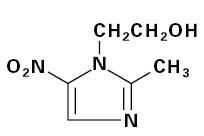
Metronidazole capsules USP 375 mg contain 375 mg of metronidazole USP. Inactive ingredients include corn starch, FD&C Yellow No. 5, gelatin, iron oxide black, magnesium stearate and titanium dioxide.
CLINICAL PHARMACOLOGY
Absorption
Disposition of metronidazole in the body is similar for both oral and intravenous dosage forms.
Metronidazole capsules 375 mg have been shown to have a rate and extent of absorption similar to metronidazole tablets and were bioequivalent at an equal single dose of 750 mg. In a study conducted with 23 adult, healthy, female volunteers, oral administration of two 375 mg metronidazole capsules under fasted conditions produced a mean (±1 SD) peak plasma concentration (C max ) of 21.4 (±2.8) mcg/mL with a mean T max of 1.6 (± 0.7) hours and a mean area under the plasma concentration-time curve (AUC) of 223 (±44) mcg·hr/mL. In the same study, three 250 mg metronidazole tablets produced a mean C max of 20.4 (± 3.8) mcg/mL with a mean T max of 1.4 (± 0.4) hours and a mean AUC of 218 (± 50) mcg·hr/mL.
Administration of metronidazole capsules 375 mg with food does not affect the extent of absorption of metronidazole; however, the presence of food results in a lower C max and a delayed T max compared to fasted conditions. In a study of 14 healthy, adult, female volunteers, administration of metronidazole capsules 375 mg under fasting conditions produced a mean C max of 10.9 (± 1.5) mcg/mL, a mean T max of 1.5 (± 1.4) hours, and a mean AUC of 110 (± 34) mcg·hr/mL compared to a mean C max of 8.6 (± 1.6) mcg/mL, a mean T max of 4.2 (± 1.7) hours, and a mean AUC of 99 (± 14) mcg·hr/mL under fed conditions.
Distribution
Metronidazole is the major component appearing in the plasma, with lesser quantities of metabolites also being present. Less than 20% of the circulating metronidazole is bound to plasma proteins. Metronidazole appears in cerebrospinal fluid, saliva, and breast milk in concentrations similar to those found in plasma. Bactericidal concentrations of metronidazole have also been detected in pus from hepatic abscesses.
Metabolism/Excretion
The major route of elimination of metronidazole and its metabolites is via the urine (60% to 80% of the dose), with fecal excretion accounting for 6% to 15% of the dose. The metabolites that appear in the urine result primarily from side-chain oxidation [1-(ß-hydroxyethyl)-2-hydroxymethyl-5-nitroimidazole and 2-methyl-5-nitroimidazole-1-yl-acetic acid] and glucuronide conjugation, with unchanged metronidazole accounting for approximately 20% of the total. Both the parent compound and the hydroxyl metabolite possess in vitro antimicrobial activity against most strains of anaerobic bacteria and in vitro trichomonacidal activity.
Renal clearance of metronidazole is approximately 10 mL/min/1.73 m 2 . The average elimination half-life of metronidazole in healthy subjects is eight hours.
Renal Impairment
Decreased renal function does not alter the single-dose pharmacokinetics of metronidazole.
Subjects with end-stage renal disease (ESRD; CL CR =8.1±9.1 mL/min) and who received a single intravenous infusion of metronidazole 500 mg had no significant change in metronidazole pharmacokinetics but had 2-fold higher C max of hydroxy-metronidazole and 5-fold higher C max of metronidazole acetate, compared to healthy subjects with normal renal function (CL CR =126±16 mL/min). Thus, on account of the potential accumulation of metronidazole metabolites in ESRD patients, monitoring for metronidazole associated adverse events is recommended (see PRECAUTIONS ).
Effect of Dialysis
Following a single intravenous infusion or oral dose of metronidazole 500 mg, the clearance of metronidazole was investigated in ESRD subjects undergoing hemodialysis or continuous ambulatory peritoneal dialysis (CAPD). A hemodialysis session lasting for 4 to 8 hours removed 40% to 65% of the administered metronidazole dose, depending on the type of dialyzer membrane used and the duration of the dialysis session. If the administration of metronidazole cannot be separated from the dialysis session, supplementation of metronidazole dose following hemodialysis should be considered (see DOSAGE AND ADMINISTRATION ). A peritoneal dialysis session lasting for 7.5 hours removed approximately 10% of the administered metronidazole dose. No adjustment in metronidazole dose is needed in ESRD patients undergoing CAPD.
Hepatic Impairment
Following a single intravenous infusion of 500 mg metronidazole, the mean AUC 24 of metronidazole was higher by 114% in patients with severe (Child-Pugh C) hepatic impairment, and by 54% and 53% in patients with mild (Child-Pugh A) and moderate (Child-Pugh B) hepatic impairment, respectively, compared to healthy control subjects. There were no significant changes in the AUC 24 of hydroxy-metronidazole in these hepatically impaired patients. Pharmacokinetic modeling and simulation indicates the metronidazole dosage in amebiasis should be reduced by 50% and the dosage interval for trichomoniasis should be increased from every 12 hours to every 24 hours in patients with severe (Child-Pugh C) hepatic impairment. No dosage adjustment is needed for patients with mild to moderate hepatic impairment. Patients with hepatic impairment should be monitored for metronidazole associated adverse events (see PRECAUTIONS and DOSAGE AND ADMINISTRATION ).
Geriatric Patients
Following a single 500 mg oral or IV dose of metronidazole, subjects >70 years old with no apparent renal or hepatic dysfunction had a 40% to 80% higher mean AUC of hydroxy-metronidazole (active metabolite), with no apparent increase in the mean AUC of metronidazole (parent compound), compared to young healthy controls <40 years old. In geriatric patients, monitoring for metronidazole associated adverse events is recommended (see PRECAUTIONS ).
Pediatric Patients
In one study, newborn infants appeared to demonstrate diminished capacity to eliminate metronidazole. The elimination half-life, measured during the first 3 days of life, was inversely related to gestational age. In infants whose gestational ages were between 28 and 40 weeks, the corresponding elimination half-lives ranged from 109 to 22.5 hours.
Microbiology
Mechanism of Action
Metronidazole, a nitroimidazole, exerts antibacterial effects in an anaerobic environment against most obligate anaerobes. Once metronidazole enters the organism by passive diffusion and activated in the cytoplasm of susceptible anaerobic bacteria, it is reduced; this process includes intra-cellular electron transport proteins such as ferredoxin, transfer of an electron to the nitro group of the metronidazole, and formation of a short-lived nitroso free radical. Because of this alteration of the metronidazole molecule, a concentration gradient is created and maintained which promotes the drug’s intracellular transport. The reduced form of metronidazole and free radicals can interact with DNA leading to inhibition of DNA synthesis and DNA degradation leading to death of the bacteria. The precise mechanism of action of metronidazole is unclear.
Resistance
A potential for development of resistance exists against metronidazole.
Resistance may be due to multiple mechanisms that include decreased uptake of the drug, altered reduction efficiency, overexpression of the efflux pumps, inactivation of the drug, and/or increased DNA damage repair.
Metronidazole does not possess any clinically relevant activity against facultative anaerobes or obligate aerobes.
Antimicrobial activity Metronidazole has been shown to be active against most isolates of the following bacteria both in vitro and in clinical infections as described in the INDICATIONS AND USAGE section.
Gram-positive anaerobes:
Clostridium species
Eubacterium species
Peptococcus species
Peptostreptococcus species
Gram-negative anaerobes:
Bacteroides fragilis group (B. fragilis, B. distasonis, B. ovatus, B. thetaiotaomicron, B.vulgatus) Fusobacterium species
Protozoal parasites:
Entamoeba histolytica
Trichomonas vaginalis
The following in vitro data are available, but their clinical significance is unknown. Metronidazole exhibits in vitro minimal inhibitory concentrations (MICs) of 8 mcg/mL or less against most (≥90%) isolates of the following bacteria; however, the safety and effectiveness of metronidazole in treating clinical infections due to these bacteria have not been established in adequate and well-controlled clinical trials.
Gram-negative anaerobes
Bacteroides fragilis group ( B. caccae, B. uniformis )
Prevotella species ( P. bivia, P. buccae, P. disiens )
Susceptibility Testing:
For specific information regarding susceptibility test interpretive criteria and associated test methods and quality control standards recognized by FDA for this drug, please see: https://www.fda.gov/STIC.
HOW SUPPLIED
Metronidazole capsules USP 375 mg have an opaque grey / opaque yellow size ‘1’ hard gelatin capsules, linearly imprinted with ‘HP66’ on body and ‘HP66’ on cap in black ink, filled with off-white to yellowish white powder.
NDC Number Size
62332-018-30 Bottle of 30 62332-018-50 Bottle of 50 62332-018-31 Bottle of 100 62332-018-71 Bottle of 500 62332-018-91 Bottle of 1000
Storage and Stability: Store at 20° - 25°C (68° - 77°F). [See USP Controlled Room Temperature]. Dispense in a well-closed, child resistant container.
Manufactured by:
Alembic Pharmaceuticals Limited (Formulation Division), Panelav 389350, Gujarat, India Manufactured for: Alembic Pharmaceuticals, Inc. Bedminster, NJ 07921, USA
Revised: 02/2025
