Get your patient on Nextletol (Bempedoic Acid)
Nextletol patient education
Patient toolkit
Dosage & administration

Nextletol prescribing information

| Indications and Usage (1 ) | 11/2025 |
INDICATIONS AND USAGE
NEXLETOL is indicated:
- to reduce the risk of major adverse cardiovascular events (cardiovascular death, myocardial infarction, stroke, or coronary revascularization) in adults at increased risk for these events who are unable to take recommended statin therapy (including those not taking a statin).
- as an adjunct to diet and exercise, in combination with other low-density lipoprotein cholesterol (LDL-C) lowering therapies, or alone when concomitant LDL-C lowering therapy is not possible, to reduce LDL-C in adults with hypercholesterolemia, including heterozygous familial hypercholesterolemia (HeFH).
DOSAGE AND ADMINISTRATION
Administer 180 mg orally once daily with or without food. (2.1 )
Recommended Dosage
The recommended dosage of NEXLETOL is 180 mg administered orally once daily. NEXLETOL can be taken with or without food.
After initiation of NEXLETOL, analyze lipid levels within 8 to 12 weeks.
DOSAGE FORMS AND STRENGTHS
NEXLETOL is available as:
- Tablets: 180 mg, white to off-white, oval shaped, debossed with "180" on one side and "ESP" on the other side.
USE IN SPECIFIC POPULATIONS
- Pregnancy: Based on mechanism of action, may cause fetal harm. (8.1 )
Pregnancy
Risk Summary
Discontinue NEXLETOL when pregnancy is recognized unless the benefits of therapy outweigh the potential risks to the fetus.
There are insufficient data on NEXLETOL use in pregnant women to evaluate for a drug-associated risk of major birth defects, miscarriage, or adverse maternal or fetal outcomes. In animal reproduction studies, bempedoic acid was not teratogenic in rats and rabbits when administered at doses resulting in exposures up to 11 and 12 times, respectively, the human exposures at the maximum clinical dose, based on AUC (see Data ) . NEXLETOL decreases cholesterol synthesis and possibly the synthesis of other biologically active substances derived from cholesterol; therefore, NEXLETOL may cause fetal harm when administered to pregnant women based on the mechanism of action [see Clinical Pharmacology (12.1) ] . In addition, treatment of hypercholesterolemia is not generally necessary during pregnancy. Atherosclerosis is a chronic process and the discontinuation of lipid-lowering drugs during pregnancy should have little impact on the outcome of long-term therapy of primary hypercholesterolemia for most patients.
The estimated background risk of major birth defects and miscarriage for the indicated population is unknown. In the U.S. general population, the estimated background risk of major birth defects and miscarriage in clinically recognized pregnancies is 2-4% and 15-20%, respectively.
Report pregnancies to the Esperion Therapeutics, Inc. Adverse Event reporting line at 1-833-377-7633.
Data
Animal Data
Bempedoic acid was not teratogenic when given orally at doses of 60 and 80 mg/kg/day, resulting in 11 and 12 times the systemic exposure in humans at the maximum recommended human dose (MRHD) of 180 mg to pregnant rats and rabbits, respectively. In an embryofetal development study in rats, bempedoic acid was given orally to pregnant rats at 10, 30, and 60 mg/kg/day during the period of organogenesis from gestation day 6 to 17. There were increases in the incidence of non-adverse fetal skeletal variations (bent long bones and bent scapula and incomplete ossification) at doses ≥ 10 mg/kg/day (less than the clinical exposure) in the absence of maternal toxicity. At maternally toxic doses, bempedoic acid caused decreases in the numbers of viable fetuses, increases in post-implantation loss, and increased total resorptions at 60 mg/kg/day (11 times MRHD) and reduced fetal body weight at ≥ 30 mg/kg/day (4 times the MRHD). No adverse development effects were observed when bempedoic acid was given to pregnant rabbits during the period of organogenesis (gestation day 6 to 18) at doses up to 80 mg/kg/day (12 times MRHD).
In a pre- and post-natal development study in pregnant rats given oral doses of bempedoic acid at 5, 10, 20, 30 and 60 mg/kg/day throughout pregnancy and lactation (gestation day 6 to lactation day 20), there were adverse effects on delivery in the presence of maternal toxicity, including: increases in stillborn pups, reductions in numbers of live pups, pup survival, pup growth and slight delays in learning and memory at ≥ 10 mg/kg/day (at exposures equivalent to the MRHD).
Lactation
Risk Summary
Bempedoic acid was detected in breast milk of lactating women who received six consecutive daily doses of 180 mg bempedoic acid. The mean daily infant dose of bempedoic acid through breast milk was approximately 0.03 mg/day (95% CI: 0.02; 0.05) with a mean calculated daily infant oral dosage of 0.012 mg/kg/day based on a standard infant milk intake of 150 mL/kg/day. The mean (SD) relative infant dose (RID) was approximately 0.5 (0.2)% of the maternal weight-adjusted dosage (see Data ) . Concentrations of ESP15228, the active metabolite, in breast milk were below the limit of quantitation (20 ng/mL) in 7 of 8 subjects studied. There is no information regarding the effects of NEXLETOL on the breastfed infant, or the effects on milk production. NEXLETOL decreases cholesterol synthesis and possibly the synthesis of other biologically active substances derived from cholesterol and may cause harm to the breastfed infant . The developmental and health benefits of breastfeeding should be considered along with the mother's clinical need for NEXLETOL and any potential adverse effects on the breastfed infant from NEXLETOL or from the underlying maternal condition [see Clinical Pharmacology (12.1) ].
Data
A lactation study in 8 healthy lactating women evaluated the concentrations of bempedoic acid in mature breast milk. NEXLETOL 180 mg oral tablet was given once daily for six consecutive days. The geometric mean estimate of bempedoic acid C max in breast milk was 118 ng/mL (range: 79.6 to 251 ng/mL) with a median T max of about 3 hours.
Pediatric Use
The safety and effectiveness of NEXLETOL have not been established in pediatric patients.
Geriatric Use
Of the 3,009 adult patients in the primary hypercholesterolemia trials of NEXLETOL, 1,753 (58%) were 65 years of age and older, while 478 (16%) were 75 years of age and older.
Of the 13,970 adult patients in the cardiovascular outcomes trial [see Clinical Studies (14.1) ] , 8,204 (59%) were 65 years of age and older, while 2,107 (15%) were 75 years of age and older.
No overall differences in safety or effectiveness of NEXLETOL have been observed between patients 65 years of age and older and younger adult patients.
Hepatic Impairment
No dosage adjustment is necessary in patients with mild or moderate hepatic impairment (Child-Pugh A or B) [see Clinical Pharmacology (12.3) ] . Patients with severe hepatic impairment (Child-Pugh C) have not been studied.
CONTRAINDICATIONS
NEXLETOL is contraindicated in patients with a prior serious hypersensitivity reaction to bempedoic acid or any of the excipients in NEXLETOL. Serious hypersensitivity reactions, such as angioedema, have occurred [see Adverse Reactions (6.2) ].
WARNINGS AND PRECAUTIONS
Hyperuricemia: Elevations in serum uric acid have occurred. Assess uric acid levels periodically as clinically indicated. Monitor for signs and symptoms of hyperuricemia, and initiate treatment with urate-lowering drugs as appropriate. (5.1 )
Tendon Rupture: Tendon rupture has occurred. Discontinue NEXLETOL at the first sign of tendon rupture. Avoid NEXLETOL in patients who have a history of tendon disorders or tendon rupture. (5.2 )
Hyperuricemia
NEXLETOL inhibits renal tubular OAT2 and may increase blood uric acid levels [see Clinical Pharmacology (12.3) ] . In the primary hypercholesterolemia trials [see Clinical Studies (14.2) ] , 26% of NEXLETOL-treated patients with normal baseline uric acid values (versus 9.5% placebo) experienced hyperuricemia one or more times, and 3.5% of patients experienced clinically significant hyperuricemia reported as an adverse reaction (versus 1.1% placebo). Increases in uric acid levels usually occurred within the first 4 weeks of treatment initiation, persisted throughout treatment, and returned to baseline following discontinuation of treatment. After 12 weeks of treatment, the mean placebo-adjusted increase in uric acid compared to baseline was 0.8 mg/dL for patients treated with NEXLETOL. In the cardiovascular outcomes trial [see Clinical Studies (14.1) ], 16.4% of NEXLETOL-treated patients experienced clinically significant hyperuricemia reported as an adverse reaction (versus 8.2% placebo).
Elevated blood uric acid may lead to the development of gout. In the primary hypercholesterolemia trials, gout was reported in 1.5% of patients treated with NEXLETOL and 0.4% of patients treated with placebo. In the cardiovascular outcomes trial, gout was reported in 3.2% of patients treated with NEXLETOL and 2.2% treated with placebo.
Advise patients to contact their healthcare provider if symptoms of hyperuricemia occur. Assess serum uric acid when clinically indicated. Monitor patients for signs and symptoms of hyperuricemia, and initiate treatment with urate-lowering drugs as appropriate.
Tendon Rupture
NEXLETOL is associated with an increased risk of tendon rupture or injury. In the primary hypercholesterolemia trials [see Clinical Studies (14.2) ] , tendon rupture occurred in 0.5% of patients treated with NEXLETOL versus 0% of placebo-treated patients and involved the rotator cuff (the shoulder), biceps tendon, or Achilles tendon. Tendon rupture occurred within weeks to months of starting NEXLETOL. In the cardiovascular outcomes trial [see Clinical Studies (14.1) ] , tendon rupture events occurred in 1.2% of NEXLETOL-treated patients versus 0.9% of placebo-treated patients. Tendon rupture may occur more frequently in patients over 60 years of age, in those taking corticosteroid or fluoroquinolone drugs, in patients with renal failure, and in patients with previous tendon disorders.
Discontinue NEXLETOL immediately if the patient experiences rupture of a tendon. Consider discontinuing NEXLETOL if the patient experiences joint pain, swelling, or inflammation. Advise patients to rest at the first sign of tendinitis or tendon rupture and to contact their healthcare provider if tendinitis or tendon rupture symptoms occur. Consider alternative therapy in patients with a history of tendon disorders or tendon rupture.
ADVERSE REACTIONS
The following clinically significant adverse reactions are described elsewhere in the labeling:
- Hyperuricemia [see Warnings and Precautions (5.1) ]
- Tendon Rupture [see Warnings and Precautions (5.2) ]
Clinical Trials Experience
Because clinical trials are conducted under widely varying conditions, adverse reaction rates observed in the clinical trials of a drug cannot be directly compared to rates in the clinical trials of another drug and may not reflect the rates observed in clinical practice.
The data in Table 1 reflect exposure to NEXLETOL in two placebo-controlled primary hypercholesterolemia trials that included 2,009 patients treated with NEXLETOL for 52 weeks (median treatment duration of 52 weeks) [see Clinical Studies (14.2) ] . The mean age for NEXLETOL-treated patients was 65 years, 29% were female, 95% were White, 3% were Black or African American, 1% were Asian, and 1% were other races; 3% identified as Hispanic or Latino ethnicity. All patients received NEXLETOL 180 mg orally once daily plus maximally tolerated statin therapy alone or in combination with other lipid-lowering therapies. At baseline, 97% of patients had CVD and about 4% had a diagnosis of HeFH. Patients on simvastatin 40 mg/day or higher were excluded from the trials.
In the primary hypercholesterolemia trials, adverse reactions led to discontinuation of treatment in 11% of NEXLETOL-treated patients and 8% of placebo-treated patients. The most common reasons for NEXLETOL treatment discontinuation were muscle spasms (0.5% versus 0.3% placebo), diarrhea (0.4% versus 0.1% placebo), and pain in extremity (0.3% versus 0.0% placebo). Adverse reactions reported in at least 2% of NEXLETOL-treated patients and more frequently than in placebo-treated patients are shown in Table 1.
| Adverse Reaction | Placebo Background therapy included statin and ± other lipid-lowering therapies (N = 999) % | NEXLETOL (N = 2,009) % |
|---|---|---|
| Upper respiratory tract infection | 4.0 | 4.5 |
| Muscle spasms | 2.3 | 3.6 |
| Hyperuricemia Grouped term that includes other related terms | 1.1 | 3.5 |
| Back pain | 2.2 | 3.3 |
| Abdominal pain or discomfort | 2.2 | 3.1 |
| Bronchitis | 2.5 | 3.0 |
| Pain in extremity | 1.7 | 3.0 |
| Anemia | 1.9 | 2.8 |
| Elevated liver enzymes | 0.8 | 2.1 |
In the cardiovascular outcomes trial, in which 7,001 patients were exposed to NEXLETOL and 6,964 patients were exposed to placebo for a median of 3.1 years [see Clinical Studies, (14.1) ] , adverse reactions led to discontinuation of treatment in 11% of NEXLETOL-treated patients and 10% of placebo-treated patients. Adverse reactions reported in at least 2% of NEXLETOL-treated patients and 0.5% greater than placebo are shown in Table 2.
| Adverse Reaction | Placebo (N=6,964) % | NEXLETOL (N=7,001) % |
|---|---|---|
| Hyperuricemia Grouped term that includes other related terms | 8 | 16 |
| Renal impairment Renal impairment includes laboratory related terms including glomerular filtration rate decreased, blood creatinine increased and hematuria | 9 | 11 |
| Anemia | 4 | 5 |
| Elevated liver enzymes | 3 | 4 |
| Muscle spasms | 3 | 4 |
| Gout | 2 | 3 |
| Cholelithiasis | 1 | 2 |
Other Adverse Reactions
Tendon Rupture
In the hypercholesterolemia trials, tendon rupture occurred in 0.5% of NEXLETOL-treated patients versus 0% of placebo-treated patients. In the cardiovascular outcomes trial, tendon rupture events occurred in 1.2% of NEXLETOL-treated patients versus 0.9% of placebo-treated patients.
Gout
In the hypercholesterolemia trials, gout occurred in 1.5% of NEXLETOL-treated patients versus 0.4% of placebo-treated patients. In the cardiovascular outcomes trial, gout occurred in 3.2% of NEXLETOL-treated patients versus 2.2% of placebo-treated patients.
Laboratory Tests
NEXLETOL was associated with persistent changes in multiple laboratory tests that occurred within the first 4 weeks of treatment and returned to baseline following discontinuation of treatment.
Increase in Creatinine and Blood Urea Nitrogen
In the hypercholesterolemia trials, there was a mean increase in serum creatinine of 0.05 mg/dL compared to baseline with NEXLETOL at Week 12. Approximately 3.8% of patients treated with NEXLETOL had blood urea nitrogen values that doubled (versus 1.5% placebo), and about 2.2% of patients had creatinine values that increased by 0.5 mg/dL (versus 1.1% placebo). In the cardiovascular outcomes trial, 7.1% of patients had creatinine values that increased by 0.5 mg/dL (versus 5.5% placebo) and 9.5% of patients in the NEXLETOL group had BUN values that increased ≥ 2× baseline (versus 6.2% placebo).
Decrease in Hemoglobin and Leukocytes
In the hypercholesterolemia trials, approximately 5.1% of patients treated with NEXLETOL (versus 2.3% placebo) had decreases in hemoglobin levels of 2 or more g/dL and below the lower limit of normal on one or more occasion. Anemia was reported in 2.8% of patients treated with NEXLETOL and 1.9% of patients treated with placebo. Approximately 9.0% of NEXLETOL-treated patients with normal baseline leukocyte count had a decrease to less than the lower limit of normal on one or more occasion (versus 6.7% placebo). Leukocyte decrease was generally asymptomatic and did not require medical intervention. In the hypercholesterolemia trials, there was a small imbalance in skin or soft tissue infections, including cellulitis (0.8% versus 0.4%), but there was no imbalance in other infections.
In the cardiovascular outcomes trial, 10.8% of patients (versus 7.4% placebo) had a decrease in hemoglobin of 2 or more g/dL and below the lower limit of normal. Anemia was reported in 4.7% of patients treated with NEXLETOL and 3.9% of patients treated with placebo. There were 9.3% of NEXLETOL-treated patients with a leukocyte count below the lower limit of normal (and normal at baseline) at any point (versus 6.8% placebo).
Increase in Platelet Count
In the hypercholesterolemia trials, approximately 10.1% of patients (versus 4.7% placebo) had increases in platelet counts of 100× 10 9 /L or more on one or more occasion. In the cardiovascular outcomes trial, 18.6% of patients in the NEXLETOL-treated group (versus 10.2% placebo) had an increase in platelet count of 100 × 10 9 /L or more. Platelet count increase was asymptomatic and did not result in increased risk for thromboembolic events.
Increase in Liver Enzymes
In the hypercholesterolemia trials, increases in hepatic transaminases (AST and/or ALT) were observed with NEXLETOL. In most cases, the elevations were transient and resolved or improved with continued therapy or after discontinuation of therapy. Increases to more than 3× the upper limit of normal (ULN) in AST occurred in 1.4% of patients treated with NEXLETOL versus 0.4% of placebo patients, and increases to more than 5× ULN occurred in 0.4% of NEXLETOL-treated versus 0.2% of placebo-treated patients. Increases in ALT occurred with similar incidence between NEXLETOL- and placebo-treated patients. Elevations in transaminases were generally asymptomatic and not associated with elevations ≥ 2× ULN in bilirubin or with cholestasis.
In the cardiovascular outcomes trial, the incidence of repeated and confirmed ALT and/or AST >3× ULN was 1.6% in the NEXLETOL-treated group (versus 1.0% placebo). A higher percentage of patients in the NEXLETOL-treated group had hepatic enzyme elevations versus placebo (4.5% versus 3.0%, respectively).
Increase in Creatine Kinase
In the hypercholesterolemia trials, approximately 1.0% of patients (versus 0.6% placebo) had elevations of CK levels of 5 or more times the normal value on one or more occasions, and 0.4% of patients (versus 0.2% placebo) had elevations of CK levels of 10 or more times.
Postmarketing Experience
The following adverse reactions have been identified during post approval use of NEXLETOL. Because these reactions are reported voluntarily from a population of uncertain size, it is not always possible to reliably estimate their frequency or establish a causal relationship to drug exposure.
Immune System Disorders: Hypersensitivity reactions including: angioedema, wheezing, rash, and urticaria.
DRUG INTERACTIONS
Table 3 includes a list of drugs with clinically important drug interactions when administered concomitantly with NEXLETOL and instructions for preventing or managing them.
| Simvastatin | |
| Clinical Impact: | Concomitant use of NEXLETOL with simvastatin causes an increase in simvastatin concentration and may increase the risk of simvastatin-related myopathy [see Clinical Pharmacology (12.3) ] . |
| Intervention : | Avoid concomitant use of NEXLETOL with simvastatin greater than 20 mg. |
| Pravastatin | |
| Clinical Impact: | Concomitant use of NEXLETOL with pravastatin causes an increase in pravastatin concentration and may increase the risk of pravastatin-related myopathy [see Clinical Pharmacology (12.3) ] . |
| Intervention: | Avoid concomitant use of NEXLETOL with pravastatin greater than 40 mg. |
| Fibrates | |
| Clinical Impact: | Concomitant administration of fibrates with NEXLETOL resulted in increased triglycerides and decreased high-density lipoprotein cholesterol (HDL-C) in some patients in clinical studies and post-marketing reports. Reversibility of both increased triglycerides and decreased HDL-C levels was observed when either NEXLETOL or fibrate therapy was discontinued. |
| Intervention: | Monitor triglycerides and HDL-C four weeks after initial concomitant use of NEXLETOL and a fibrate and periodically thereafter. If increased triglycerides or decreased HDL-C levels are detected, discontinue NEXLETOL or fibrate therapy based on clinical judgment. Monitor triglycerides and HDL-C levels until levels return to baseline. |
DESCRIPTION
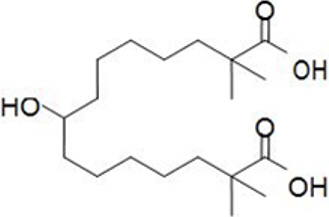
NEXLETOL tablets, for oral use, contain bempedoic acid, an adenosine triphosphate-citrate lyase (ACL) inhibitor. The chemical name for bempedoic acid is 8-hydroxy-2,2,14,14-tetramethyl-pentadecanedioic acid. The molecular formula is C 19 H 36 O 5 , and the molecular weight is 344.5 grams per mole. Bempedoic acid is a white to off-white crystalline powder that is highly soluble in ethanol, isopropanol and pH 8 phosphate buffer, and insoluble in water and aqueous solutions below pH 5.
Structural formula:
Each film-coated tablet of NEXLETOL contains 180 mg of bempedoic acid and the following inactive ingredients: colloidal silicon dioxide, hydroxyl propyl cellulose, lactose monohydrate, magnesium stearate, microcrystalline cellulose, and sodium starch glycolate. The film coating comprises of partially hydrolyzed polyvinyl alcohol, polyethylene glycol, talc, and titanium dioxide.
CLINICAL PHARMACOLOGY
Mechanism of Action
Bempedoic acid is an adenosine triphosphate-citrate lyase (ACL) inhibitor that lowers LDL-C by inhibition of cholesterol synthesis in the liver. ACL is an enzyme upstream of 3-hydroxy-3-methyl-glutaryl-coenzyme A (HMG-CoA) reductase in the cholesterol biosynthesis pathway. Bempedoic acid and its active metabolite, ESP15228, require coenzyme A (CoA) activation by very long-chain acyl-CoA synthetase 1 (ACSVL1) to ETC-1002-CoA and ESP15228-CoA, respectively. ACSVL1 is expressed primarily in the liver. Inhibition of ACL by ETC-1002-CoA results in decreased cholesterol synthesis in the liver and lowers LDL-C in blood via upregulation of low-density lipoprotein receptors.
Pharmacodynamics
Administration of bempedoic acid alone, or in combination with other lipid modifying agents, decreases LDL-C, non-high density lipoprotein cholesterol (non-HDL-C), apolipoprotein B (apo B), and total cholesterol (TC) in patients with hypercholesterolemia.
Cardiac Electrophysiology
At a dose of 240 mg (1.3 times the approved recommended dose), bempedoic acid does not prolong the QT interval to any clinically relevant extent.
Pharmacokinetics
Bempedoic acid pharmacokinetic parameters are presented as the mean [± standard deviation (SD)] unless otherwise specified. The steady-state maximum plasma concentration (C max ) and area under the curve (AUC) following multiple-dose administration of bempedoic acid at 180 mg/day were 20.6 ± 6.1 µg/mL and 289.0 ± 96.4 µg∙h/mL, respectively. Bempedoic acid steady-state pharmacokinetics were generally linear over a range of > 60 mg to 220 mg (approximately 33% to 122% of the recommended dosage of 180 mg daily). There were no time-dependent changes in bempedoic acid pharmacokinetics following repeat administration at the recommended dosage, and bempedoic acid steady-state was achieved after 7 days. The mean accumulation ratio was approximately 2.3-fold.
The steady-state C max and AUC of the active metabolite (ESP15228) of bempedoic acid were 2.8 ± 0.9 µg/mL and 51.2 ± 17.2 µg∙h/mL, respectively. ESP15228 likely made a minor contribution to the overall clinical activity of bempedoic acid based on systemic exposure, relative potency, and pharmacokinetic properties.
Absorption
Pharmacokinetic data indicate that bempedoic acid is absorbed with a median time to maximum concentration of 3.5 hours when administered as NEXLETOL 180 mg tablets.
Effect of Food
Concomitant food administration had no effect on the oral bioavailability of bempedoic acid.
Distribution
The bempedoic acid apparent volume of distribution (V/F) was 18 L. Plasma protein binding of bempedoic acid, its glucuronide and its active metabolite, ESP15228, were 99.3%, 98.8% and 99.2%, respectively. Bempedoic acid does not partition into blood cells.
Elimination
The steady-state clearance (CL/F) of bempedoic acid was 11.2 mL/min after once-daily dosing; renal clearance of unchanged bempedoic acid represented less than 2% of total clearance. The mean ± SD half-life for bempedoic acid in humans was 21 ± 11 hours at steady-state.
Metabolism
The primary route of elimination for bempedoic acid is through metabolism of the acyl glucuronide. Bempedoic acid is also reversibly converted to an active metabolite (ESP15228) based on aldo-keto reductase activity observed in vitro from human liver. Mean plasma AUC metabolite/parent drug ratio for ESP15228 following repeat-dose administration was 18% and remained constant over time. Both compounds are converted to inactive glucuronide conjugates in vitro by UGT2B7. Bempedoic acid, ESP15228 and their respective conjugated forms were detected in plasma with bempedoic acid accounting for the majority (46%) of the AUC 0-48h and its glucuronide being the next most prevalent (30%). ESP15228 and its glucuronide represented 10% and 11% of the plasma AUC 0-48h , respectively.
Excretion
Following single oral administration of 240 mg of bempedoic acid (1.3 times the approved recommended dose), approximately 70% of the total dose (bempedoic acid and its metabolites) was recovered in urine, primarily as the acyl glucuronide conjugate of bempedoic acid, and approximately 30% was recovered in feces. Less than 5% of the administered dose was excreted as unchanged bempedoic acid in feces and urine combined.
Specific Populations
No clinically significant differences in the pharmacokinetics of bempedoic acid were observed based on age, gender, race, weight, renal impairment (mild, moderate, and severe renal impairment or renal failure), or mild (Child-Pugh Class A) and moderate (Child-Pugh Class B) hepatic impairment. The effect of severe (Child-Pugh Class C) hepatic impairment on bempedoic acid pharmacokinetics is unknown.
Drug Interaction Studies
Cytochrome P450 Substrates
In vitro metabolic interaction studies suggest that bempedoic acid, as well as its active metabolite and glucuronide forms are not metabolized by and do not interact with cytochrome P450 enzymes.
Transporter-mediated Drug Interactions
In vitro drug interaction studies suggest bempedoic acid, as well as its active metabolite and glucuronide form, are not substrates of commonly characterized drug transporters with the exception of bempedoic acid glucuronide, which is an OAT3 substrate. Bempedoic acid weakly inhibits OAT3 at high multiples of clinically relevant concentrations, and bempedoic acid and its glucuronide weakly inhibit OATP1B1, and OATP1B3 at clinically relevant concentrations. Bempedoic acid weakly inhibits OAT2 in vitro , which is likely the mechanism responsible for minor elevations in serum creatinine and uric acid [see Adverse Reactions (6.1) ] .
Probenecid
Administration of bempedoic acid 180 mg with steady-state probenecid resulted in a 1.7- and a 1.2-fold increase in bempedoic acid AUC and C max , respectively. AUC and C max for bempedoic acid active metabolite (ESP15228) were increased 1.9- and 1.5-fold, respectively. These elevations are not clinically meaningful and do not impact dosing recommendations.
Statins
The pharmacokinetic interactions between bempedoic acid (at systemic exposure relevant to the indicated CVD population) and simvastatin 20 mg, atorvastatin 10 mg, pravastatin 40 mg, and rosuvastatin 10 mg were evaluated in clinical trials.
Simvastatin: Administration of simvastatin 20 mg with 240 mg of bempedoic acid or 40 mg with 180 mg of bempedoic acid in healthy subjects at steady-state resulted in approximately 2-fold (91% for 20 mg and 96% for 40 mg) and 1.5-fold (54% for 20 mg and 52% for 40 mg) increases in simvastatin acid AUC and C max , respectively [see Drug Interactions (7) ] .
Pravastatin: Administration of pravastatin 40 mg with steady-state bempedoic acid 240 mg in healthy subjects resulted in 99% (2-fold) and 104% (2-fold) increases in pravastatin acid AUC and C max , respectively [see Drug Interactions (7) ] .
Atorvastatin and Rosuvastatin: Elevations of 1.7-fold in AUC of atorvastatin, and rosuvastatin and/or their major metabolites were observed, suggesting a weak interaction. These elevations were generally within the individual statin exposures and do not impact dosing recommendations.
Ezetimibe
Increases in AUC and C max for ezetimibe were less than 20% when a single dose of ezetimibe was taken with steady-state bempedoic acid. Total ezetimibe (ezetimibe and its glucuronide form) and ezetimibe glucuronide AUC and C max increased approximately 1.6- and 1.8-fold, respectively. These elevations are not clinically meaningful and do not impact dosing recommendations.
Warfarin
In vitro studies indicate that bempedoic acid is not an inhibitor or inducer of CYP2C9. Because warfarin is primarily eliminated through CYP2C9, its pharmacokinetics is not expected to be altered by bempedoic acid.
Other
Bempedoic acid had no effect on the pharmacokinetics of metformin or the oral contraceptive Ortho-Novum 1/35.
NONCLINICAL TOXICOLOGY
Carcinogenesis, Mutagenesis, Impairment of Fertility
Bempedoic acid was negative for mutagenicity in an in vitro Ames assay and negative for clastogenicity in the vitro human lymphocyte chromosome aberration assay. Bempedoic acid was negative in both in vivo mouse micronucleus and in vivo rat bone marrow micronucleus/liver comet assay. In a 2-year rat carcinogenicity study, Wistar rats were given oral doses of bempedoic acid at 3, 10 and 30 mg/kg/day. An increased incidence of liver hepatocellular adenomas and hepatocellular adenomas combined with carcinomas, thyroid gland follicular cell adenoma and follicular cell adenomas combined with carcinomas, and pancreatic islet cell adenomas combined with carcinomas were observed in male rats at the dose of 30 mg/kg/day (exposure equivalent to the maximum recommended human dose (MRHD), based on AUC). In a 2-year mice carcinogenicity study, CD-1 mice were given oral doses of bempedoic acid at 25, 75 and 150 mg/kg/day. Bempedoic acid-related increases in the incidence of liver hepatocellular adenomas, hepatocellular carcinomas and hepatocellular adenomas combined with carcinomas in male mice were observed at 75 and 150 mg/kg/day (exposures equivalent to the MRHD). Observations of liver and thyroid tumors are consistent with PPAR alpha agonism in rodents. The human relevance of pancreatic islet cell tumor findings is unknown.
In fertility and early embryofetal development study in rats, bempedoic acid was given orally to male and female rats at 10, 30 and 60 mg/kg/day. Males were dosed for 28 days prior to mating and females were dosed 14 days prior to mating through gestation day 7. No adverse effects on fertility were observed in females in the absence of maternal toxicity. No effects were observed on male fertility outcomes, but decreases in sperm counts were observed at 60 mg/kg/day (9 times the MRHD).
CLINICAL STUDIES
Cardiovascular Outcomes Trial in Adults With CVD or at High Risk for CVD
Trial 1 (NCT02993406) was a randomized, double-blind, placebo-controlled, event-driven trial in 13,970 adult patients with established CVD (70%) or at high risk for a CVD event but without CVD (30%) who were not receiving recommended statin dosages. Patients with established CVD had documented history of coronary artery disease, symptomatic peripheral arterial disease, and/or cerebrovascular atherosclerotic disease. Patients without established CVD were considered at high risk for CVD based on meeting at least one of the following criteria:
- Diabetes mellitus (type 1 or type 2) in females over 65 years of age or males over 60 years of age;
- A Reynolds Risk score > 30% or a SCORE Risk score > 7.5% over 10 years. Reynolds risk score and SCORE risk score evaluate a 10-year risk of having a cardiovascular (CV) event. The Reynolds risk score is based on the following risk factors: sex, age, smoking status, systolic blood pressure, total cholesterol, HDL cholesterol, high sensitivity C-reactive protein (hsCRP), and familial history of CVD events. LDL-C is an additional risk factor considered in SCORE risk score; or
- A coronary artery calcium score >400 Agatston units at any time in the past.
Patients were randomized 1:1 to receive either oral NEXLETOL 180 mg per day (n = 6,992) or placebo (n = 6,978), alone or as an add on to other background lipid-lowering therapies. Background therapy could include less than low-intensity statin dosages. Overall, 95.3% of adult patients were followed until the end of the trial or death. The median follow-up duration was 3.4 years.
Baseline Demographics and Disease Characteristics
At baseline, the mean age was 66 years (range 21 to 92 years), 59% were 65 years of age and older, 15% were 75 years of age and older, 48% were female, 91% were White, 2% were Black or African American, 4% were American Indian or Alaska Native, 2% were Asian, and 1% were other races; 17% identified as Hispanic or Latino ethnicity.
Selected additional baseline characteristics included hypertension (85%), diabetes mellitus (46%), current tobacco user (22%), eGFR < 60 mL/min per 1.73 m 2 (21%), and a mean body mass index of 30 kg/m 2 . The mean baseline LDL-C was 139 mg/dL. At baseline, 38% of patients were taking at least one lipid-modifying therapy, including less than low-intensity statin dosages (23%), ezetimibe (12%), or fibrates (5%). Most patients were taking at least one other CV medication including acetylsalicylic acid (57%), selective beta blockers (52%), angiotensin converting enzyme inhibitors (40%), or angiotensin receptor blockers (32%).
Efficacy Results
The risk for the primary composite endpoint (MACE-4: time to first occurrence of CV death, nonfatal myocardial infarction, nonfatal stroke, or coronary revascularization; p= 0.0037) and the key secondary composite endpoint (MACE-3: time to first occurrence of CV death, nonfatal myocardial infarction, or nonfatal stroke; p= 0.0058) was significantly reduced in NEXLETOL-treated patients compared to placebo-treated patients (see Table 4 ). The difference between the NEXLETOL and placebo groups in mean percent change in LDL-C from baseline to Month 6 was -20% (95% CI: -21%, -19%).
| NEXLETOL N=6,992 | Placebo N=6,978 | NEXLETOL vs. Placebo | |
|---|---|---|---|
| Endpoint | n (%) | n (%) | Hazard Ratio (95% CI) |
| CI = confidence interval; MACE = major adverse cardiac event. a Hazard ratio and corresponding 95% CI were based on a Cox proportional hazard model fitting treatment as explanatory variable. This table also presents the time to first occurrence for each of the components of MACE-4; patients may have been included in more than one category | |||
| Primary Composite Endpoint | |||
| Cardiovascular death, non-fatal myocardial infarction, non-fatal stroke, coronary revascularization (MACE-4) | 819 (11.7) | 927 (13.3) | 0.87 (0.79, 0.96) |
| Key Secondary Endpoint | |||
| Cardiovascular death, non-fatal myocardial infarction, non-fatal stroke (MACE-3) | 575 (8.2) | 663 (9.5) | 0.85 (0.76, 0.96) |
| Components of Primary Composite Endpoint | |||
| Non-fatal myocardial infarction | 236 (3.4) | 317 (4.5) | 0.73 (0.62, 0.87) |
| Coronary revascularization | 435 (6.2) | 529 (7.6) | 0.81 (0.72, 0.92) |
| Non-fatal stroke | 119 (1.7) | 144 (2.1) | 0.82 (0.64, 1.05) |
| Cardiovascular death | 269 (3.8) | 257 (3.7) | 1.04 (0.88, 1.24) |
The Kaplan-Meier estimates of the cumulative incidence of the MACE-4 and MACE-3 endpoints are shown in Figure 1 and 2 below.
Figure 1: Cumulative Incidence of Primary Composite Endpoint (MACE-4) Over 4.5 Years in Adults with Established CVD or at High Risk for CVD (Trial 1)
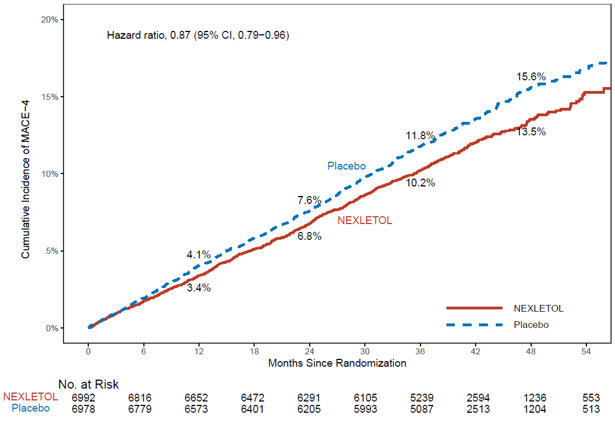
MACE = major adverse cardiac event MACE-4 was defined as the time to first occurrence of the composite endpoint of CV death, nonfatal MI, nonfatal stroke, or coronary revascularization.
Figure 2: Cumulative Incidence of Composite Endpoint (MACE-3) Over 4.5 Years in Adults with Established CVD or at High Risk for CVD (Trial 1)
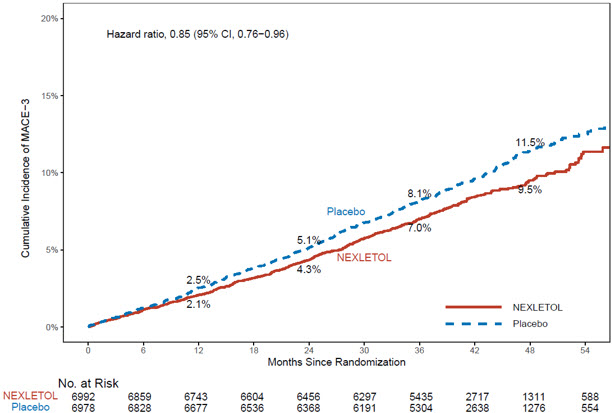
MACE = major adverse cardiac event MACE-3 was defined as time to first occurrence of the composite endpoint of CV death, nonfatal MI, or nonfatal stroke.
Primary Hypercholesterolemia Trials in Adults
The efficacy of NEXLETOL as an adjunct to diet and statin therapy, to reduce elevated LDL-C in adults with primary hypercholesterolemia (including HeFH) was investigated in two multi-center, randomized, double-blind, placebo-controlled trials that enrolled 3,009 adult patients with HeFH or established CVD who were on maximally tolerated statin therapy (Trials 2 and 3). Demographics and baseline disease characteristics were balanced between the treatment arms in these trials. In both trials, the maximum LDL-C lowering effects occurred at Week 4. These results were consistent across all subgroups studied in any of the trials, including age, sex, race, ethnicity, region, history of diabetes, baseline LDL-C, body mass index (BMI), HeFH status, and background therapies.
Trial 2 (NCT02666664)
Trial 2 was a multi-center, randomized, double-blind, placebo-controlled, primary hypercholesterolemia (52-week) trial in adult patients with HeFH and/or CVD. Efficacy of NEXLETOL was evaluated at Week 12. The trial included 2,230 patients randomized 2:1 to receive either oral NEXLETOL (n = 1,488) or placebo (n = 742) as add-on to a maximally tolerated lipid-lowering therapy. Maximally tolerated lipid-lowering therapy was defined as a maximally tolerated statin dose alone or in combination with other lipid-lowering therapies. Patients were stratified by presence of HeFH and by baseline statin intensity. Patients on simvastatin 40 mg per day or higher and patients taking PCSK9 inhibitors were excluded from the trial.
Baseline Demographics and Disease Characteristics: Overall, the mean age at baseline was 66 years (range: 24 to 88 years), 61% were 65 years of age and older, 27% were female, 96% were White, 3% were Black or African American , and 1% were Asian; 2% identified as Hispanic or Latino ethnicity. Ninety-five percent (95%) of patients had established CVD, and 5% of patients had HeFH. Twenty-nine percent (29%) of patients had diabetes at baseline. The mean baseline LDL-C was 103.2 mg/dL. At the time of randomization, all patients were receiving statin therapy and 50% were receiving high-intensity statin therapy.
Efficacy Results: The primary efficacy outcome measure of the trial was the percent change from baseline to Week 12 in LDL-C. The difference between the NEXLETOL and placebo groups in mean percent change in LDL-C from baseline to Week 12 was -18% (95% CI: -20%, -16%; p < 0.001). High-density lipoprotein (HDL) and triglycerides (TG) were examined as exploratory endpoints and were not included in the statistical hierarchy. The difference between the NEXLETOL and placebo groups in mean percent change from baseline to Week 12 was -6% for HDL and median percent change from baseline to Week 12 was +3% for TG. For additional results see Table 4 and Figure 3 .
| LDL-C 4.3% of subjects on NEXLETOL and 2.3% of patients on placebo had missing LDL-C data at primary endpoint (Week 12). By the end of the trial (Week 52), 8.3% of patients on NEXLETOL and 7.7% of patients on placebo had missing LDL-C measurements. , Percent change from baseline was analyzed using analysis of covariance (ANCOVA), with treatment and randomization strata (HeFH versus CVD, and high intensity statin versus other statin) as factors and baseline lipid parameter as a covariate. Missing data for LDL-C, non-HDL-C, TC and apo B were imputed through multiple imputation using a pattern mixture model (PMM) account for treatment adherence. | Non-HDL-C | apo B | TC | |
|---|---|---|---|---|
| apo B = apolipoprotein B; CI = confidence interval; HDL-C = high-density lipoprotein cholesterol; LDL-C = low-density lipoprotein cholesterol; TC = total cholesterol. | ||||
| Background statin: atorvastatin, simvastatin, pravastatin, and/or other lipid-lowering therapies | ||||
| NEXLETOL (180 mg/day; n = 1488 Number of randomized subjects at baseline ) | -17 | -12 | -9 | -10 |
| Placebo (n = 742) | 2 | 2 | 3 | 1 |
| Mean Difference from Placebo (95% CI) | -18 (-20, -16) | -13 (-15, -12) | -12 (-14, -10) | -11 (-13, -10) |
Trial 3 (NCT02991118)
Trial 3 was a multi-center, randomized, double-blind, placebo-controlled, primary hypercholesterolemia (52-week) trial in patients with HeFH and/or CVD. Efficacy of NEXLETOL was evaluated at Week 12. The trial included 779 patients randomized 2:1 to receive either oral NEXLETOL (n = 522) or placebo (n = 257) as add-on to a maximally tolerated lipid-lowering therapy. Maximally tolerated lipid-lowering therapy was defined as a maximally tolerated statin dose alone or in combination with other lipid-lowering therapies. Patients were stratified by presence of HeFH and baseline statin intensity. Patients on simvastatin 40 mg/day or higher were excluded from the trial.
Baseline Demographics and Disease Characteristics: Overall, the mean age at baseline was 64 years (range: 28 to 91 years), 51% were 65 years of age and older, 36% were female, 94% were White, 5% were Black or African American, and 1% were Asian; 8% identified as Hispanic or Latino ethnicity. Ninety-five percent (95%) of patients had established CVD, and 5% of patients had HeFH. Thirty percent (30%) of patients had diabetes at baseline. The mean baseline LDL-C was 120.4 mg/dL. At the time of randomization, 90% of patients were receiving statin therapy, 53% were receiving high-intensity statin therapy, and 0.3% were receiving PCSK9 inhibitors.
Efficacy Results: The primary efficacy outcome measure of the trial was the percent change from baseline to Week 12 in LDL-C. The difference between the NEXLETOL and placebo groups in mean percent change in LDL-C from baseline to Week 12 was -17% (95% CI: -21%, -14%; p < 0.001). HDL and TG were exploratory endpoints and not included in the statistical hierarchy. The difference between the NEXLETOL and placebo groups in mean percent change from baseline to Week 12 was -6% for HDL and the median percent change from baseline was -2% for TG. For additional results see Table 5 and Figure 3 .
| LDL-C 4.6% of patients on NEXLETOL and 1.6% of patients on placebo had missing LDL-C data at primary endpoint (Week 12). By the end of the trial (Week 52), 10.5% of patients on NEXLETOL and 7.8% of patients on placebo had missing LDL-C measurements. , Percent change from baseline was analyzed using analysis of covariance (ANCOVA), with treatment and randomization strata (HeFH versus CVD, and high intensity statin versus other statin) as factors and baseline lipid parameter as a covariate. Missing data for LDL-C, non-HDL-C, TC and apo B were imputed through multiple imputation using a pattern mixture model (PMM) account for treatment adherence. | Non-HDL-C | apo B | TC | |
|---|---|---|---|---|
| apo B = apolipoprotein B; CI = confidence interval; HDL-C = high-density lipoprotein cholesterol; LDL-C = low-density lipoprotein cholesterol; TC = total cholesterol. | ||||
| Background statin: atorvastatin, simvastatin, rosuvastatin, pravastatin, fluvastatin, pitavastatin, and lovastatin ± other lipid-lowering therapies | ||||
| NEXLETOL (180 mg/day; n = 522 Number of randomized patients at baseline ) | -15 | -11 | -9 | -10 |
| Placebo (n = 257) | 2 | 2 | 4 | 1 |
| Difference from Placebo (95% CI) | -17 (-21, -14) | -13 (-16, -10) | -13 (-16, -10) | -11 (-14, -9) |
Figure 3: Mean Percent Change from Baseline in LDL-C Over 52 Weeks in Adult Patients with HeFH and/or CVD on Maximally Tolerated Statin Treated with NEXLETOL or Placebo (Trial 2 and Trial 3)
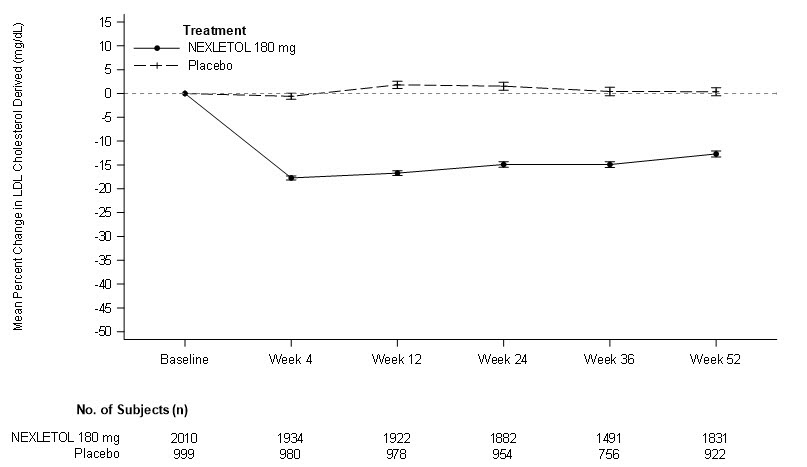
LDL-C derived is calculated from the Friedewald equation: LDL-C = TC - HDL-C - TG/5 in mg/dL. The error bars represent standard error.
HOW SUPPLIED/STORAGE AND HANDLING
How Supplied
NEXLETOL tablets are supplied as follows:
| Tablet Strength | Description | Package Configuration | NDC No. |
|---|---|---|---|
| 180 mg | White to off white and oval, debossed with "180" on one side and "ESP" on the other side | Bottle of 30 tablets with child-resistant cap | 72426-118-03 |
Storage and Handling
Store at 68°F to 77°F (20°C to 25°C); excursions permitted to 59°F to 86°F (15°C to 30°C) [see USP Controlled Room Temperature] . Store and dispense in the original package.
Mechanism of Action
Bempedoic acid is an adenosine triphosphate-citrate lyase (ACL) inhibitor that lowers LDL-C by inhibition of cholesterol synthesis in the liver. ACL is an enzyme upstream of 3-hydroxy-3-methyl-glutaryl-coenzyme A (HMG-CoA) reductase in the cholesterol biosynthesis pathway. Bempedoic acid and its active metabolite, ESP15228, require coenzyme A (CoA) activation by very long-chain acyl-CoA synthetase 1 (ACSVL1) to ETC-1002-CoA and ESP15228-CoA, respectively. ACSVL1 is expressed primarily in the liver. Inhibition of ACL by ETC-1002-CoA results in decreased cholesterol synthesis in the liver and lowers LDL-C in blood via upregulation of low-density lipoprotein receptors.
