Get your patient on Nystatin - Nystatin cream (Nystatin)
Nystatin - Nystatin cream prescribing information

INDICATIONS & USAGE
Nystatin cream is indicated in the treatment of cutaneous or mucocutaneous mycotic infections caused by Candida albicans and other susceptible Candida species. This cream is not indicated for systemic, oral, intravaginal or ophthalmic use.
DOSAGE & ADMINISTRATION
Adults and Pediatric Patients (Neonates and Older) Apply liberally to affected areas twice daily or as indicated until healing is complete.
CONTRAINDICATIONS
Nystatin cream is contraindicated in patients with a history of hypersensitivity to any of its components.
ADVERSE REACTIONS
The frequency of adverse events reported in patients using nystatin cream is less than 0.1%. The more common events that were reported include allergic reactions, burning, itching, rash, eczema, and pain on application. (See PRECAUTIONS: General.)
DESCRIPTION
Nystatin is a polyene antifungal antibiotic obtained from Streptomyces nursei .
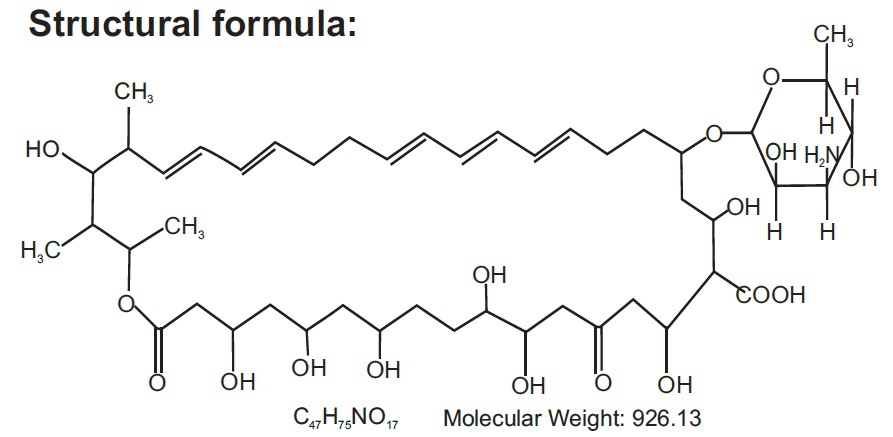
Nystatin cream is for dermatologic use. Nystatin cream for topical use, contains 100,000 USP Nystatin Units in an aqueous cream base containing aluminium hydroxide, ceteareth-15, polyethylene glycol monostearate, glycerol monostearate, propylene glycol, purified water, simethicone emulsion, non-crystallizing sorbitol solution, titanium dioxide, white petrolatum with methyl paraben and propyl paraben as preservatives.
CLINICAL PHARMACOLOGY
Pharmacokinetics Nystatin is not absorbed from intact skin or mucous membrane. Microbiology Nystatin is an antibiotic which is both fungistatic and fungicidal in vitro against a wide variety of yeasts and yeast-like fungi, including Candida albicans, C. parapsilosis, C. tropicalis, C. guilliermondi, C. pseudotropicalis, C. krusei, Torulopsis glabrata, Tricophyton rubrum, T. mentagrophytes . Nystatin acts by binding to sterols in the cell membrane of susceptible species resulting in a change in membrane permeability and the subsequent leakage of intracellular components. On repeated subculturing with increasing levels of nystatin, Candida albicans does not develop resistance to nystatin. Generally, resistance to nystatin does not develop during therapy. However, other species of Candida (C. tropicalis, C. guilliermondi, C. krusei, and C. stellatoides ) become quite resistant on treatment with Nystatin and simultaneously become cross resistant to amphotericin as well. This resistance is lost when the antibiotic is removed. Nystatin exhibits no appreciable activity against bacteria, protozoa, or viruses.
HOW SUPPLIED
Nystatin Cream USP is a yellow to light green cream. It is supplied as: 15 gram Tube NDC 33342-469-15 30 gram Tube NDC 33342-469-30
Store at 20° to 25°C (68° to 77°F); excursions permitted between 15° to 30°C (59° to 86°F) [See USP Controlled Room Temperature]. Avoid freezing. Manufactured for: Macleods Pharma USA, Inc.
Princeton, NJ 08540
Manufacturer: Macleods Pharmaceuticals Limited At Oxalis Labs Baddi, Himachal Pradesh, INDIA
Rev. 08/2021
