Get your patient on Reyvow (Lasmiditan)
Patient education
Patient education materials
Dosing resources
Clinical information
Insurance resources
Prior authorization & coverage support
Financial assistance & copay programs
Other resources
Dosage & administration

Reyvow prescribing information

INDICATIONS AND USAGE
REYVOW ® is indicated for the acute treatment of migraine with or without aura in adults.
Limitations of Use
REYVOW is not indicated for the preventive treatment of migraine.
DOSAGE AND ADMINISTRATION
The recommended dose of REYVOW is 50 mg, 100 mg, or 200 mg taken orally, as needed. No more than one dose should be taken in 24 hours, and REYVOW should not be taken unless the patient can wait at least 8 hours between dosing and driving or operating machinery [see Warnings and Precautions (5.1 )] .
A second dose of REYVOW has not been shown to be effective for the same migraine attack.
The safety of treating an average of more than 4 migraine attacks in a 30-day period has not been established.
REYVOW may be taken with or without food.
Administer tablets whole; do not split, crush, or chew.
DOSAGE FORMS AND STRENGTHS
REYVOW (lasmiditan) tablets are available in two strengths:
- 50 mg tablet: light gray, oval, film coated, tablets with “L-50” debossed on one side and “4312” on the other
- 100 mg tablet: light purple, oval, film coated, tablets with “L-100” debossed on one side and “4491” on the other
USE IN SPECIFIC POPULATIONS
Pregnancy
Pregnancy Exposure Registry
There is a pregnancy exposure registry that monitors pregnancy outcomes in women exposed to REYVOW during pregnancy. Healthcare providers are encouraged to register pregnant patients, or pregnant women may enroll themselves in the registry by calling 1-833-464-4724. To learn more please call or visit www.migrainepregnancyregistry.com.
Risk Summary
There are no adequate data on the developmental risk associated with the use of REYVOW in pregnant women. In animal studies, adverse effects on development (increased incidences of fetal abnormalities, increased embryofetal and offspring mortality, decreased fetal body weight) occurred at maternal exposures less than (rabbit) or greater than (rat) those observed clinically (see Data) .
In the U.S. general population, the estimated background risk of major birth defects and of miscarriage in clinically recognized pregnancies is 2% to 4% and 15% to 20%, respectively. The estimated rates of major birth defects (2.2% to 2.9%) and miscarriage (17%) among deliveries to women with migraine are similar to rates reported in women without migraine.
Clinical Considerations
Disease-Associated Maternal and/or Embryo/Fetal Risk
Published data have suggested that women with migraine may be at increased risk for preeclampsia and gestational hypertension during pregnancy.
Data
Animal Data
Oral administration of lasmiditan (0, 100, 175, or 250 mg/kg/day) to pregnant rats throughout organogenesis resulted in increases in skeletal variations at the mid and high doses and reduced fetal body weight at the high dose. The high dose was associated with maternal toxicity. At the no-effect dose (100 mg/kg/day) for adverse effects on embryofetal development in rats, plasma exposure (AUC) was approximately 10 times that in humans at the MRHD.
Oral administration of lasmiditan (0, 50, 75, or 115 mg/kg/day) to pregnant rabbits throughout organogenesis resulted in malformations (skeletal and visceral), increases in skeletal variations and embryofetal mortality, and decreased fetal body weight at the highest dose tested, which was associated with maternal toxicity. Plasma exposure (AUC) at the no-effect dose (75 mg/kg/day) for adverse effects on embryofetal development in rabbits was less than that in humans at the MRHD.
Oral administration of lasmiditan (0, 100, 150, or 225 mg/kg/day) to rats throughout pregnancy and lactation resulted in increases in stillbirth and neonatal mortality at the highest dose tested, which was associated with maternal toxicity and delayed parturition. Plasma exposure (AUC) at the no-effect dose (150 mg/kg/day) for adverse effects on pre- and postnatal development was approximately 16 times that in humans at the MRHD.
Lactation
Risk Summary
There are no data on the presence of lasmiditan in human milk, the effects of lasmiditan on the breastfed infant, or the effects of lasmiditan on milk production. Excretion of lasmiditan and/or metabolites into milk, at levels approximately 3 times those in maternal plasma, was observed in lactating rats following oral administration of lasmiditan.
The developmental and health benefits of breastfeeding should be considered along with the mother's clinical need for REYVOW and any potential adverse effects on the breastfed infant from REYVOW or from the underlying maternal condition.
Pediatric Use
Safety and effectiveness in pediatric patients have not been established.
Geriatric Use
In controlled clinical trials, dizziness occurred more frequently in patients who were at least 65 years of age (19% for REYVOW, 2% for placebo) compared to patients who were less than 65 years of age (14% for REYVOW, 3% for placebo). A larger increase in systolic blood pressure also occurred in patients 65 years of age and older compared to patients who were less than 65 years of age [see Adverse Reactions (6.1 )] . Clinical studies of REYVOW did not include sufficient numbers of subjects aged 65 and over to determine whether there is a difference in efficacy in these patients compared to younger subjects. However, in clinical pharmacology studies, no clinically relevant effect on exposure to REYVOW was observed in elderly subjects [see Clinical Pharmacology (12.3 )] . In general, dose selection for an elderly patient should be cautious, usually starting at the low end of the dosing range, reflecting the greater frequency of decreased hepatic, renal, or cardiac function, and of concomitant disease or other drug therapy.
Hepatic Impairment
No dosage adjustment is needed for patients with mild or moderate hepatic impairment (Child-Pugh A or B). REYVOW has not been studied in patients with severe hepatic impairment (Child-Pugh C) and its use in these patients is not recommended.
CONTRAINDICATIONS
None.
WARNINGS AND PRECAUTIONS
- Driving Impairment: Advise patients not to drive or operate machinery until at least 8 hours after taking each dose of REYVOW. Patients who cannot follow this advice should not take REYVOW. Patients may not be able to assess their own driving competence and the degree of impairment caused by REYVOW. (5.1 )
- Central Nervous System (CNS) Depression: REYVOW may cause CNS depression and should be used with caution if used in combination with alcohol or other CNS depressants. (5.2 , 7.1 )
- Serotonin Syndrome: Reactions consistent with serotonin syndrome were reported in patients treated with REYVOW. Discontinue REYVOW if symptoms of serotonin syndrome occur. (5.3 )
- Medication Overuse Headache: Detoxification may be necessary. (5.4 )
Driving Impairment
REYVOW may cause significant driving impairment. In a driving study, administration of single 50 mg, 100 mg, or 200 mg doses of REYVOW significantly impaired subjects' ability to drive [see Clinical Studies (14.2 )] . Additionally, more sleepiness was reported at 8 hours following a single dose of REYVOW compared to placebo. Advise patients not to engage in potentially hazardous activities requiring complete mental alertness, such as driving a motor vehicle or operating machinery, for at least 8 hours after each dose of REYVOW. Patients who cannot follow this advice should not take REYVOW. Prescribers and patients should be aware that patients may not be able to assess their own driving competence and the degree of impairment caused by REYVOW.
Central Nervous System Depression
REYVOW may cause central nervous system (CNS) depression, including dizziness and sedation [see Adverse Reactions (6.1 )] .
Because of the potential for REYVOW to cause sedation, other cognitive and/or neuropsychiatric adverse reactions, and driving impairment, REYVOW should be used with caution if used in combination with alcohol or other CNS depressants [see Drug Interactions (7.1 )] . Patients should be warned against driving and other activities requiring complete mental alertness for at least 8 hours after REYVOW is taken [see Warnings and Precautions (5.1 )] .
Serotonin Syndrome
In clinical trials, reactions consistent with serotonin syndrome were reported in patients treated with REYVOW who were not taking any other drugs associated with serotonin syndrome. Serotonin syndrome may also occur with REYVOW during coadministration with serotonergic drugs [e.g., selective serotonin reuptake inhibitors (SSRIs), serotonin norepinephrine reuptake inhibitors (SNRIs), tricyclic antidepressants (TCAs), and monoamine oxidase (MAO) inhibitors]. Serotonin syndrome symptoms may include mental status changes (e.g., agitation, hallucinations, coma), autonomic instability (e.g., tachycardia, labile blood pressure, hyperthermia), neuromuscular signs (e.g., hyperreflexia, incoordination), and/or gastrointestinal signs and symptoms (e.g., nausea, vomiting, diarrhea). The onset of symptoms usually occurs within minutes to hours of receiving a new or a greater dose of a serotonergic medication. Discontinue REYVOW if serotonin syndrome is suspected.
Medication Overuse Headache
Overuse of acute migraine drugs (e.g., ergotamines, triptans, opioids, or a combination of these drugs for 10 or more days per month) may lead to exacerbation of headache (i.e., medication overuse headache). Medication overuse headache may present as migraine-like daily headaches or as a marked increase in frequency of migraine attacks. Detoxification of patients including withdrawal of the overused drugs and treatment of withdrawal symptoms (which often includes a transient worsening of headache) may be necessary.
ADVERSE REACTIONS
The following clinically significant adverse reactions are described elsewhere in the labeling:
Clinical Trials Experience
Because clinical studies are conducted under widely varying conditions, adverse reaction rates observed in the clinical studies of a drug cannot be directly compared to rates in the clinical studies of another drug and may not reflect the rates observed in practice.
The safety of REYVOW has been evaluated in 4,878 subjects who received at least one dose of REYVOW. In 2 placebo-controlled, Phase 3 trials in adult patients with migraine (Studies 1 and 2), a total of 3,177 patients received REYVOW 50, 100, or 200 mg [see Clinical Studies (14.1 )] . Of the REYVOW-treated patients in these 2 studies, approximately 84% were female, 78% were White, 18% were Black, and 18% were of Hispanic or Latino ethnicity. The mean age at study entry was 42.4 years (range 18 to 81).
Long-term safety was assessed for 2,030 patients, dosing intermittently for up to 12 months in a long-term safety study. Of these, 728 patients were exposed to 100 mg or 200 mg for at least 3 months, 361 patients were exposed to these doses for at least 6 months, and 180 patients were exposed to these doses for at least 12 months, all of whom treated at least 2 migraine attacks per month on average. In that study, 14% (148 out of 1,039) in the 200 mg dose group, and 11% (112 out of 991) in the 100 mg dose group withdrew from the trial because of an adverse event. The most common adverse event resulting in discontinuation in the long-term safety study (greater than 2%) was dizziness.
Table 1 shows adverse reactions that occurred in at least 2% of patients treated with REYVOW and more frequently than in patients who received placebo in Studies 1 and 2. The most common adverse reactions (at least 5%) were dizziness, fatigue, paresthesia, and sedation.
a Fatigue includes the adverse reaction related terms asthenia and malaise. | ||||
b Paresthesia includes the adverse reaction related terms paresthesia oral, hypoesthesia, and hypoesthesia oral. | ||||
c Sedation includes the adverse reaction related term somnolence. | ||||
| Adverse Reaction | REYVOW 50 mg N=654 % | REYVOW 100 mg N=1265 % | REYVOW 200 mg N=1258 % | Placebo N=1262 % |
| Dizziness | 9 | 15 | 17 | 3 |
| Fatigue a | 4 | 5 | 6 | 1 |
| Paresthesia b | 3 | 7 | 9 | 2 |
| Sedation c | 6 | 6 | 7 | 2 |
| Nausea and/or Vomiting | 3 | 4 | 4 | 2 |
| Muscle Weakness | 1 | 1 | 2 | 0 |
Less Common Adverse Reactions
The following adverse reactions occurred in less than 2% of REYVOW-treated patients but more frequently than in patients receiving placebo: vertigo, incoordination, lethargy, visual impairment, feeling abnormal, feeling hot or feeling cold, palpitations, anxiety, tremor, restlessness, sleep abnormalities including sleep disturbance and abnormal dreams, muscle spasm, limb discomfort, cognitive changes, confusion, euphoric mood, chest discomfort, speech abnormalities, dyspnea, and hallucinations.
Hypersensitivity
Events of hypersensitivity, including angioedema, rash and photosensitivity reaction, occurred in patients treated with REYVOW. In controlled trials, hypersensitivity was reported in 0.2% of patients treated with REYVOW compared to no patients who received placebo. If a serious or severe hypersensitivity reaction occurs, initiate appropriate therapy and discontinue administration of REYVOW.
Vital Sign Changes
Heart Rate Decrease
REYVOW was associated with mean decreases in heart rate of 5 to 10 beats per minute (bpm) while placebo was associated with mean decreases of 2 to 5 bpm. Consider evaluating heart rate after administration of REYVOW in patients for whom these changes may not be tolerated, including patients taking other medications that lower heart rate [see Drug Interactions (7.3 )] .
Blood Pressure Increase
REYVOW may increase blood pressure following a single dose. In non-elderly healthy volunteers there was a mean increase from baseline in ambulatory systolic and diastolic blood pressure of approximately 2 to 3 mm Hg one hour after administration of 200 mg REYVOW compared to a mean increase of up to 1 mm Hg for placebo. In healthy volunteers over 65 years of age, there was a mean increase from baseline in ambulatory systolic blood pressure of 7 mm Hg one hour after administration of 200 mg REYVOW compared to a mean increase of 4 mm Hg for placebo. By 2 hours, there were no increases in mean blood pressure with REYVOW compared to placebo. REYVOW has not been well studied in patients with ischemic heart disease. Consider evaluating blood pressure after administration of REYVOW in patients for whom these changes may not be tolerated.
DRUG INTERACTIONS
- REYVOW may further lower heart rate when administered with heart rate lowering drugs. (7.3 )
CNS Depressants
Concomitant administration of REYVOW and alcohol or other CNS depressant drugs has not been evaluated in clinical studies. Because of the potential of REYVOW to cause sedation, as well as other cognitive and/or neuropsychiatric adverse reactions, REYVOW should be used with caution if used in combination with alcohol or other CNS depressants [see Warnings and Precautions (5.2 )] .
Serotonergic Drugs
Concomitant administration of REYVOW and drugs (e.g., SSRIs, SNRIs, TCAs, MAO inhibitors, trazodone, etc.), over-the counter medications (e.g., dextromethorphan), or herbal supplements (e.g., St. John's Wort) that increase serotonin may increase the risk of serotonin syndrome [see Warnings and Precautions (5.3 )] . Use REYVOW with caution in patients taking medications that increase serotonin.
Heart Rate Lowering Drugs
REYVOW has been associated with a lowering of heart rate [see Adverse Reactions (6.1 )] . In a drug interaction study, addition of a single 200 mg dose of REYVOW to propranolol decreased heart rate by an additional 5 beats per minute compared to propranolol alone, for a mean maximum of 19 beats per minute. Use REYVOW with caution in patients taking concomitant medications that lower heart rate if this magnitude of heart rate decrease may pose a concern.
P-glycoprotein (P-gp) Transporter Substrates
Coadministration of REYVOW with P-gp substrates where a small change in substrate plasma concentration may lead to serious toxicities (e.g., digoxin) is not recommended [see Clinical Pharmacology (12.3 )] .
DESCRIPTION
REYVOW (lasmiditan) is a serotonin (5-HT) 1F receptor agonist for oral administration. The chemical name of lasmiditan hemisuccinate is 2,4,6-trifluoro-N-[6-(1-methylpiperidine-4-carbonyl)pyridine-2-yl]benzamide hemisuccinate. It has the empirical formula of C 19 H 18 F 3 N 3 O 2 •0.5[C 4 H 6 O 4 ] and a molecular weight of 436.41 (hemisuccinate). Lasmiditan hemisuccinate has the following structural formula:
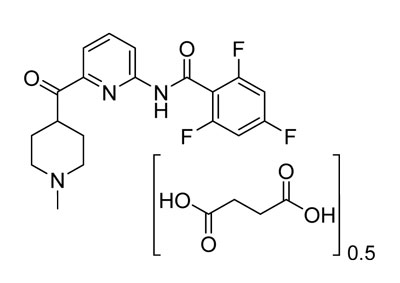
Lasmiditan hemisuccinate is a white, crystalline powder that is sparingly soluble in water, slightly soluble in ethanol, and soluble in methanol. A 1 mg/mL aqueous solution of lasmiditan hemisuccinate has a pH of 6.8 at ambient conditions.
REYVOW 50 mg tablets contain 50 mg lasmiditan (equivalent to 57.824 mg lasmiditan hemisuccinate) and the inactive ingredients as follows:
Excipients – croscarmellose sodium, magnesium stearate, microcrystalline cellulose, pregelatinized starch, sodium lauryl sulfate.
Color mixture ingredients – black ferric oxide, polyethylene glycol, polyvinyl alcohol, talc, titanium dioxide.
REYVOW 100 mg tablets contain 100 mg lasmiditan (equivalent to 115.65 mg lasmiditan hemisuccinate) and the inactive ingredients as follows:
Excipients – croscarmellose sodium, magnesium stearate, microcrystalline cellulose, pregelatinized starch, sodium lauryl sulfate.
Color mixture ingredients – black ferric oxide, polyethylene glycol, polyvinyl alcohol, red ferric oxide, talc, titanium dioxide.
CLINICAL PHARMACOLOGY
Mechanism of Action
Lasmiditan binds with high affinity to the 5-HT 1F receptor. Lasmiditan presumably exerts its therapeutic effects in the treatment of migraine through agonist effects at the 5-HT 1F receptor; however, the precise mechanism is unknown.
Pharmacodynamics
Cardiac Electrophysiology
At a dose two times the maximum recommended daily dose, REYVOW does not prolong the QTc interval to any clinically relevant extent.
Pharmacokinetics
Absorption
Following oral administration, lasmiditan is rapidly absorbed with a median t max of 1.8 hours. In patients with migraine, the absorption or pharmacokinetics of lasmiditan was not different during a migraine attack versus during the interictal period.
Effect of Food
Coadministration of lasmiditan with a high-fat meal increased the mean lasmiditan C max and AUC values by 22% and 19%, respectively, and delayed the median t max by 1 hour. This difference in exposure is not expected to be clinically significant [see Dosage and Administration (2 )] . Lasmiditan was administered without regard to food in clinical efficacy studies.
Distribution
The human plasma protein binding of lasmiditan is approximately 55% to 60% and independent of concentration between 15 and 500 ng/mL.
Elimination
Lasmiditan was eliminated with a geometric mean t ½ value of approximately 5.7 hours. No accumulation of lasmiditan was observed with daily dosing. Lasmiditan is primarily eliminated via metabolism, with ketone reduction representing the major pathway. Renal excretion is a minor route of lasmiditan clearance.
Metabolism
Lasmiditan undergoes hepatic and extrahepatic metabolism primarily by non-CYP enzymes. The following enzymes are not involved in metabolism of lasmiditan: MAO-A, MAO-B, flavin monooxygenase 3, CYP450 reductase, xanthine oxidase, alcohol dehydrogenase, aldehyde dehydrogenase, and aldo-keto reductases. Lasmiditan is also metabolized to M7 (oxidation on piperidine ring) and M18 (combination of M7 and M8 pathways). These metabolites are considered pharmacologically inactive.
Excretion
Recovery of unchanged lasmiditan in urine was low and accounted for approximately 3% of the dose. Metabolite S-M8 represented approximately 66% of the dose in urine, with the majority of recovery within 48 hours postdose.
Specific Populations
Age, Sex, Race/Ethnicity, and Body Weight
Based on a population pharmacokinetic (PK) analysis, age, sex, race/ethnicity, and body weight did not have a significant effect on the PK (C max and AUC) of lasmiditan. Therefore, no dose adjustments are warranted based on age, sex, race/ethnicity, or body weight.
Geriatric Use
In a clinical pharmacology study, administration of lasmiditan to subjects 65 years of age or older demonstrated 26% greater exposure in AUC(0-∞) and 21% higher C max , compared to subjects 45 years of age or less. This difference in exposure is not expected to be clinically significant [see Use in Specific Populations (8.5 )] .
Renal Impairment
In a clinical pharmacology study, administration of lasmiditan to subjects with severe renal impairment (eGFR <30 mL/min/1.73 m 2 ) demonstrated 18% greater exposure in AUC(0-∞) and 13% higher C max , compared to subjects with normal renal function. No dose adjustment is required based on renal function.
Hepatic Impairment
In a clinical pharmacology study, subjects with mild and moderate hepatic impairment (Child-Pugh Class A and B, respectively) demonstrated 11% and 35%, respectively, greater exposure [AUC(0-∞)] to lasmiditan, compared to subjects with normal hepatic function. The C max were higher by 19% and 33%, respectively, for subjects with mild and moderate hepatic impairment. This difference in exposure is not expected to be clinically significant. The use of lasmiditan has not been studied in subjects with severe hepatic impairment [see Use in Specific Populations (8.6 )] .
Drug Interaction Studies
Potential for Lasmiditan to Affect Other Drugs
Drug Metabolizing Enzymes
Lasmiditan is an in-vitro inhibitor of CYP2D6 but did not significantly inhibit the activity of other CYP450 enzymes. Modeling and simulation of the impact of lasmiditan on the exposure of dextromethorphan, a recognized sensitive CYP2D6 substrate, indicate that lasmiditan is unlikely to exert clinically significant inhibition of CYP2D6. Lasmiditan, M7, S-M8, and [S,R]-M18 are not reversible or time-dependent inhibitors of monoamine oxidase A (MAO-A).
Daily dosing of lasmiditan did not alter the PK of midazolam, caffeine, or tolbutamide, which are substrates of CYP3A, CYP1A2, and CYP2C9, respectively. Coadministration of lasmiditan with sumatriptan, propranolol, or topiramate resulted in no clinically meaningful changes in exposure of these medicinal products.
Drug Transporters
In a drug interaction study in healthy volunteers, co-administration of 200 mg REYVOW with dabigatran (P-gp substrate) increased the systemic exposures, AUC and C max , of dabigatran by 25% and 22%, respectively [see Drug Interactions (7.4 )] . Co-administration of 200 mg REYVOW with rosuvastatin (BCRP substrate) did not affect exposures of rosuvastatin.
Lasmiditan inhibits OCT1 in-vitro . However, in a drug-drug interaction study with lasmiditan and sumatriptan (OCT1 substrate), no change in sumatriptan PK was observed. Lasmiditan inhibits renal efflux transporters, MATE1 and MATE2-K, in-vitro .
Potential for Other Drugs to Affect Lasmiditan
Drug Metabolizing Enzymes
Lasmiditan undergoes hepatic and extrahepatic metabolism primarily by non-CYP enzymes. Therefore, it is unlikely that CYP inhibitors or inducers will affect lasmiditan pharmacokinetics. Clinical studies of lasmiditan with sumatriptan, propranolol, or topiramate did not show any significant drug interaction potential.
Drug Transporters
Lasmiditan is a substrate for P-gp in-vitro .
NONCLINICAL TOXICOLOGY
Carcinogenesis, Mutagenesis, Impairment of Fertility
Carcinogenesis
No drug-related tumors were observed following oral administration of lasmiditan to TgRasH2 mice at doses of up to 150 (males) or 250 (females) mg/kg/day for 26 weeks or to rats at doses of up to 75 mg/kg/day for 2 years. Plasma exposures (AUC) at the highest dose tested in rats were approximately 15 times that in humans at the maximum recommended human dose (MRHD) of 200 mg/day.
Mutagenesis
Lasmiditan was negative in in vitro (bacterial reverse mutation, chromosomal aberration in mammalian cells) and in vivo (mouse bone marrow micronucleus) assays.
Impairment of Fertility
Oral administration of lasmiditan to male (0, 100, 175, or 200 mg/kg/day) or female (0, 100, 150, or 200 mg/kg/day) rats prior to and during mating and continuing in females to Gestation Day 7 resulted in no adverse effects on fertility or reproductive performance. Plasma exposures (AUC) at the highest dose tested (200 mg/kg/day) were approximately 26 times that in humans at the MRHD.
CLINICAL STUDIES
Migraine
The efficacy of REYVOW in the acute treatment of migraine was demonstrated in two randomized, double-blind, placebo-controlled trials [Study 1 (NCT02439320) and Study 2 (NCT02605174)]. These studies enrolled patients with a history of migraine with and without aura according to the International Classification of Headache Disorders (ICHD-II) diagnostic criteria. Patients were predominantly female (84%), and White (78%), with a mean age of 42 years (range 18-81). Twenty-two percent of patients were taking preventive medication for migraine at baseline. Study 1 randomized patients to REYVOW 100 mg (n=744), or 200 mg (n=745) or placebo (n=742) and Study 2 randomized patients to REYVOW 50 mg (n=750), 100 mg (n=754), or 200 mg (n=750) or placebo (n=751). Patients were allowed to take a rescue medication 2 hours after taking study drug; however, opioids, barbiturates, triptans, and ergots were not allowed within 24 hours of study drug administration.
The primary efficacy analyses were conducted in patients that treated a migraine with moderate to severe pain within 4 hours of the onset of the attack. The efficacy of REYVOW was established by an effect on pain freedom at 2 hours and Most Bothersome Symptom (MBS) freedom at 2 hours compared to placebo for Studies 1 and 2. Pain freedom was defined as a reduction of moderate or severe headache pain to no pain, and MBS freedom was defined as the absence of the self-identified MBS (photophobia, phonophobia, or nausea). Among patients who selected an MBS, the most commonly selected MBS was photophobia (54%), followed by nausea (24%), and phonophobia (22%).
In both studies, the percentage of patients achieving pain freedom and MBS freedom 2 hours after treatment was significantly greater among patients receiving REYVOW at all doses compared to those receiving placebo (see Table 2 ).
| Study 1 | Study 2 | ||||||
| REYVOW 100 mg | REYVOW 200 mg | Placebo | REYVOW 50 mg | REYVOW 100 mg | REYVOW 200 mg | Placebo | |
| Pain Free at 2 hours | |||||||
| N | 498 | 503 | 515 | 544 | 523 | 521 | 534 |
| % Responders | 28.3 | 31.8 | 15.3 | 28.3 | 31.4 | 38.8 | 21.0 |
| Difference from placebo (%) | 13 | 16.5 | 7.3 | 10.4 | 17.8 | ||
| p -value | <0.001 | <0.001 | 0.006 | <0.001 | <0.001 | ||
| MBS Free at 2 hours | |||||||
| N | 464 | 467 | 480 | 502 | 491 | 478 | 509 |
| % Responders | 41.2 | 40.7 | 29.6 | 40.8 | 44.0 | 48.7 | 33.2 |
| Difference from placebo (%) | 11.6 | 11.1 | 7.6 | 10.8 | 15.5 | ||
| p -value | <0.001 | <0.001 | 0.014 | <0.001 | <0.001 | ||
Pain relief at 2 hours, defined as a reduction in migraine pain from moderate or severe to mild or none, was also evaluated (see Table 3 ).
a The analysis of pain relief was descriptive and was not controlled for Type I error. | |||||||
| Study 1 | Study 2 | ||||||
| REYVOW 100 mg | REYVOW 200 mg | Placebo | REYVOW 50 mg | REYVOW 100 mg | REYVOW 200 mg | Placebo | |
| Pain Relief at 2 hours a | |||||||
| N | 498 | 503 | 515 | 544 | 523 | 521 | 534 |
| % Responders | 54.0 | 55.3 | 40.0 | 55.9 | 61.4 | 61.0 | 45.1 |
| Difference from placebo (%) | 14.0 | 15.3 | 10.8 | 16.3 | 15.9 | ||
Figure 1 presents the percentage of patients achieving migraine pain freedom within 2 hours following treatment in Studies 1 and 2.
Figure 1: Percentage of Patients Achieving Migraine Pain Freedom within 2 Hours in Pooled Studies 1 and 2
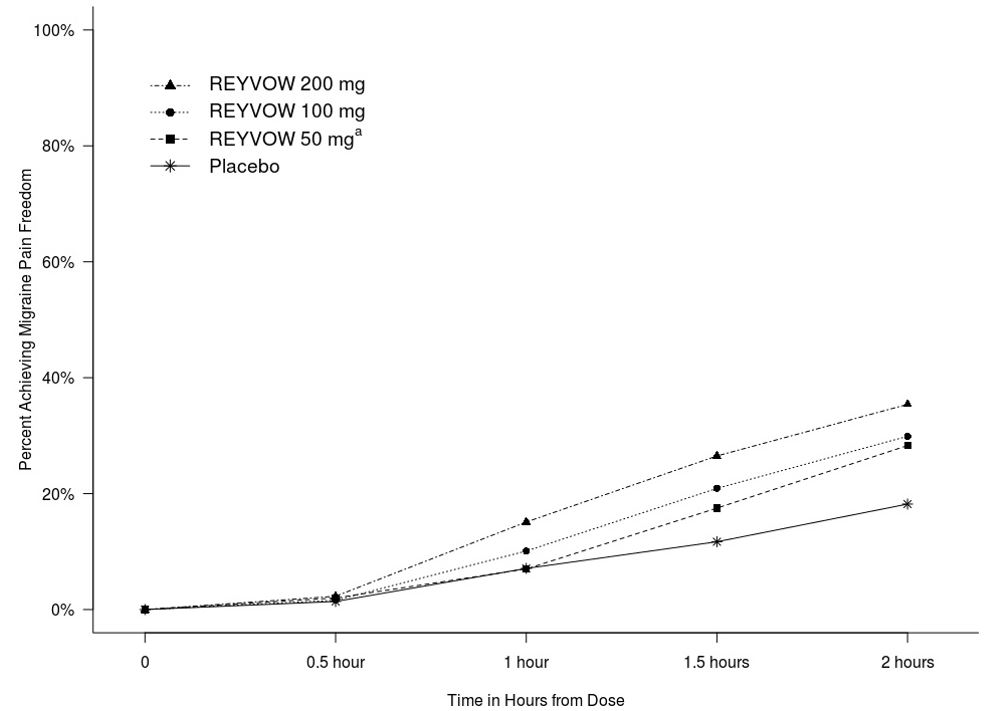
a The 50 mg arm was only included in Study 2.
Figure 2 presents the percentage of patients achieving MBS freedom within 2 hours in Studies 1 and 2.
Figure 2: Percentage of Patients Achieving MBS Freedom within 2 Hours in Pooled Studies 1 and 2
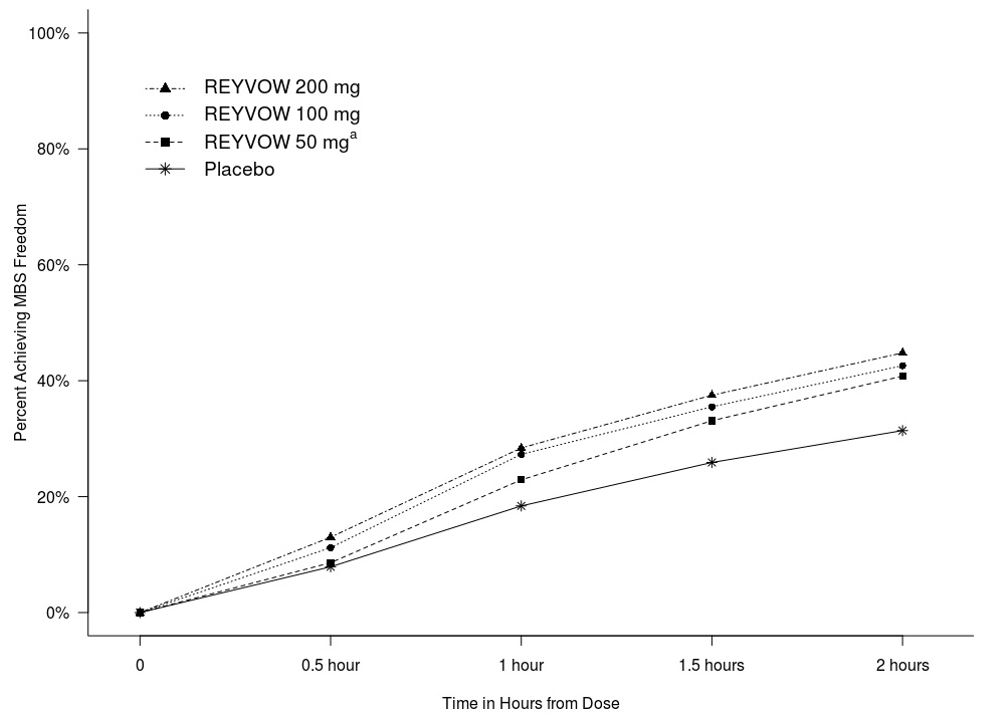
a The 50 mg arm was only included in Study 2.
Effects on Driving
Driving performance was assessed at 90 minutes after administration of REYVOW 50 mg, 100 mg, 200 mg, alprazolam 1 mg, and placebo in a randomized, double-blind, placebo- and active-controlled, five-period crossover study in 90 healthy volunteers (mean age 34.9 years) using a computer-based driving simulation. Driving performance was evaluated using a validated threshold established in a population with blood alcohol concentration of 0.05%. The primary outcome measure was the difference from placebo in the Standard Deviation of Lateral Position (SDLP), a measure of driving performance. A dose-dependent impairment of computer-based simulated driving performance was seen with all doses of REYVOW at 90 minutes after administration.
Driving performance was also assessed at 8, 12, and 24 hours after administration of REYVOW 100 mg or 200 mg, in a separate randomized, double-blind, placebo- and active-controlled, four-period crossover study in 67 healthy volunteers (mean age 32.8 years) evaluating computer-based simulated driving performance using SDLP as the primary endpoint. Diphenhydramine 50 mg was used as a positive control. The mean SDLP did not reach the threshold for driving impairment at 8 hours or later after administration of REYVOW 100 or 200 mg.
HOW SUPPLIED/STORAGE AND HANDLING
How Supplied
REYVOW (lasmiditan) 50 mg tablets are light gray, oval, film coated, tablets with “L-50” debossed on one side and “4312” on the other.
REYVOW (lasmiditan) 100 mg tablets are light purple, oval, film coated, tablets with “L-100” debossed on one side and “4491” on the other.
| Strengths | ||
| 50 mg | 100 mg | |
| Tablet color | Light gray | Light purple |
| Imprint (debossed) | L-50 4312 | L-100 4491 |
| Carton of 8 | NDC 0002-4312-08 | NDC 0002-4491-08 |
Storage and Handling
Store at 20°C to 25°C (68°F to 77°F); excursions permitted to 15°C to 30°C (59°F to 86°F) [see USP Controlled Room Temperature].
Mechanism of Action
Lasmiditan binds with high affinity to the 5-HT 1F receptor. Lasmiditan presumably exerts its therapeutic effects in the treatment of migraine through agonist effects at the 5-HT 1F receptor; however, the precise mechanism is unknown.
