Get your patient on Rhofade (Oxymetazoline Hydrochloride)
Rhofade patient education
Patient toolkit
Dosage & administration

Rhofade prescribing information

INDICATIONS AND USAGE
RHOFADE ® (oxymetazoline hydrochloride) cream, 1% is indicated for the topical treatment of persistent facial erythema associated with rosacea in adults.
DOSAGE AND ADMINISTRATION
For topical use only. RHOFADE cream is not for oral, ophthalmic, or intravaginal use.
Apply a pea-sized amount of RHOFADE cream, once daily in a thin layer to cover the entire face (forehead, nose, each cheek, and chin) avoiding the eyes and lips. Wash hands immediately after applying RHOFADE cream.
DOSAGE FORMS AND STRENGTHS
RHOFADE ® (oxymetazoline hydrochloride) cream, 1% is a white to off-white cream. Each gram of cream contains 10 mg (1%) oxymetazoline hydrochloride, equivalent to 8.8 mg (0.88%) of oxymetazoline free base.
USE IN SPECIFIC POPULATIONS
Pregnancy
Risk Summary
There are no available data on RHOFADE cream use in pregnant women to inform a drug-associated risk for major birth defects and miscarriage. A literature article describing intranasal decongestant use in pregnant women identified a potential association between second-trimester exposure to oxymetazoline (with no decongestant exposure in the first trimester) and renal collecting system anomalies [see Data ] . In animal reproduction studies, there were no adverse developmental effects observed after oral administration of oxymetazoline hydrochloride in pregnant rats and rabbits at systemic exposures up to 3 times and 73 times, respectively, the exposure associated with the maximum recommended human dose (MRHD) [see Data ] . The estimated background risks of major birth defects and miscarriage for the indicated population are unknown. All pregnancies have a background risk of birth defect, loss, or other adverse outcomes. In the U.S. general population, the estimated background risk of major birth defects and miscarriage in clinically recognized pregnancies is 2-4% and 15-20%, respectively.
Clinical Considerations
Fetal/Neonatal Adverse Reactions
Following repeated use of oxymetazoline hydrochloride solution nasal spray for the treatment of nasal congestion at a dose 5 times higher than recommended, one case of fetal distress was reported in a 41-week pregnant patient. The fetal distress resolved hours later, prior to the delivery of the healthy infant. The anticipated exposures for the case are 8- to 18-fold higher than plasma exposures after topical administration of RHOFADE cream.
Data
Human Data
No adequate and well-controlled trials of RHOFADE cream have been conducted in pregnant women. Across all clinical trials of RHOFADE cream, two pregnancies were reported. One pregnancy resulted in the delivery of a healthy child. One pregnancy resulted in a spontaneous abortion, which was considered to be unrelated to the trial medication. A literature article summarizing the results of exploratory analyses of intranasal decongestant use during pregnancy identified a potential association between second-trimester exposure to oxymetazoline hydrochloride solution (with no decongestant exposure in the first trimester) and renal collecting system anomalies.
Animal Data
Effects on embryo-fetal development were evaluated in rats and rabbits following oral administration of oxymetazoline hydrochloride during the period of organogenesis. Oxymetazoline hydrochloride did not cause adverse effects to the fetus at oral doses up to 0.2 mg/kg/day in pregnant rats during the period of organogenesis (3 times the MRHD on an AUC comparison basis). Oxymetazoline hydrochloride did not cause adverse effects to the fetus at oral doses up to 1 mg/kg/day in pregnant rabbits during the period of organogenesis (73 times the MRHD on an AUC comparison basis). Maternal toxicity, such as decreased maternal body weight, was produced at the high dose of 1 mg/kg/day in pregnant rabbits and was associated with findings of delayed skeletal ossification.
In a rat perinatal and postnatal development study, oxymetazoline hydrochloride was orally administered to pregnant rats once daily from gestation day 6 through lactation day 20. Maternal toxicity was produced at the high dose of 0.2 mg/kg/day (3 times the MRHD on an AUC comparison basis) in pregnant rats and was associated with an increase in pup mortality and reduced pup body weights. Delayed sexual maturation was noted at 0.1 and 0.2 mg/kg/day (2 times the MRHD and 3 times the MRHD on an AUC comparison basis, respectively). Oxymetazoline hydrochloride did not have any adverse effects on fetal development at a dose of 0.05 mg/kg/day (one-half of the MRHD on an AUC comparison basis).
Lactation
No clinical data are available to assess the effects of oxymetazoline on the quantity or rate of breastmilk production, or to establish the level of oxymetazoline present in human breastmilk post-dose. Oxymetazoline was detected in the milk of lactating rats. The developmental and health benefits of breastfeeding should be considered along with the mother's clinical need for RHOFADE cream and any potential adverse effects on the breastfed child from RHOFADE cream or from the underlying maternal condition.
Pediatric Use
Safety and effectiveness of RHOFADE cream have not been established in pediatric patients below the age of 18 years.
Geriatric Use
One hundred and ninety-three subjects aged 65 years and older received treatment with RHOFADE cream (n = 135) or vehicle (n = 58) in clinical trials. No overall differences in safety or effectiveness were observed between subjects ≥ 65 years of age and younger subjects, based on available data. Clinical studies of RHOFADE cream did not include sufficient numbers of subjects aged 65 and over to determine whether they respond differently from younger subjects.
CONTRAINDICATIONS
None.
WARNINGS AND PRECAUTIONS
- Alpha-adrenergic agonists as a class may impact blood pressure. Advise patients with cardiovascular disease, orthostatic hypotension, and/or uncontrolled hypertension or hypotension to seek medical care if their condition worsens. (5.1 )
- Use with caution in patients with cerebral or coronary insufficiency, Raynaud's phenomenon, thromboangiitis obliterans, scleroderma, or Sjögren's syndrome and advise patients to seek medical care if signs and symptoms of potentiation of vascular insufficiency develop. (5.2 )
- Advise patients to seek immediate medical care if signs and symptoms of acute narrow-angle glaucoma develop. (5.3 )
Potential Impacts on Cardiovascular Disease
Alpha-adrenergic agonists may impact blood pressure. RHOFADE cream should be used with caution in patients with severe or unstable or uncontrolled cardiovascular disease, orthostatic hypotension, and uncontrolled hypertension or hypotension. Advise patients with cardiovascular disease, orthostatic hypotension, and/or uncontrolled hypertension/hypotension to seek immediate medical care if their condition worsens.
Potentiation of Vascular Insufficiency
RHOFADE cream should be used with caution in patients with cerebral or coronary insufficiency, Raynaud's phenomenon, thromboangitis obliterans, scleroderma, or Sjögren's syndrome. Advise patients to seek immediate medical care if signs and symptoms of potentiation of vascular insufficiency develop.
Risk of Angle Closure Glaucoma
RHOFADE cream may increase the risk of angle closure glaucoma in patients with narrow-angle glaucoma. Advise patients to seek immediate medical care if signs and symptoms of acute angle closure glaucoma develop.
ADVERSE REACTIONS
Most common adverse reactions (incidence ≥ 1%) are application site dermatitis, worsening inflammatory lesions of rosacea, application site pruritis, application site erythema, and application site pain. (6.1 )
To report SUSPECTED ADVERSE REACTIONS, contact Mayne Pharma at 1-844-825-8500 or FDA at 1-800-FDA-1088 or www.fda.gov/medwatch.
Clinical Studies Experience
Because clinical trials are conducted under varying conditions, adverse reaction rates observed in the clinical trials of a drug cannot be directly compared to rates in the clinical trials of another drug and may not reflect the rates observed in practice.
A total of 489 subjects with persistent facial erythema associated with rosacea were treated with RHOFADE cream once daily for 4 weeks in 3 controlled clinical trials. An additional 440 subjects with persistent facial erythema associated with rosacea were also treated with RHOFADE cream once daily for up to one year in a long-term (open- label) clinical trial. Adverse reactions that occurred in at least 1% of subjects treated with RHOFADE cream through 4 weeks of treatment are presented in Table 1 below.
| Adverse Reaction | Pooled Controlled Clinical Trials | |
|---|---|---|
| RHOFADE Cream (N = 489) | Vehicle Cream (N = 483) | |
| Application site dermatitis | 9 (2%) | 0 |
| Worsening inflammatory lesions of rosacea | 7 (1%) | 1 (<1%) |
| Application site pruritus | 5 (1%) | 4 (1%) |
| Application site erythema | 5 (1%) | 2 (<1%) |
| Application site pain | 4 (1%) | 1 (<1%) |
In the long-term (open-label) clinical trial, the rates of adverse reactions over a one-year treatment period were as follows: worsening inflammatory lesions of rosacea (3%), application site dermatitis (3%), application site pruritis (2%), application site pain (2%), and application site erythema (2%). Subjects with persistent erythema along with inflammatory lesions were allowed to use additional therapy for the inflammatory lesions of rosacea.
DRUG INTERACTIONS
Anti-hypertensives/Cardiac Glycosides
Alpha-adrenergic agonists, as a class, may impact blood pressure. Caution in using drugs such as beta-blockers, anti-hypertensives and/or cardiac glycosides is advised.
Caution should also be exercised in patients receiving alpha 1 adrenergic receptor antagonists such as in the treatment of cardiovascular disease, benign prostatic hypertrophy, or Raynaud's disease.
Monoamine Oxidase Inhibitors
Caution is advised in patients taking MAO inhibitors which can affect the metabolism and uptake of circulating amines.
DESCRIPTION
RHOFADE ® (oxymetazoline hydrochloride) cream, 1% contains oxymetazoline hydrochloride, an alpha 1A adrenoceptor agonist. RHOFADE is a white to off-white cream. It has a chemical name of 3-[(4,5-Dihydro1H-imidazol-2-yl)methyl]-6-(1,1-dimethylethyl)- 2,4-dimethyl-phenol hydrochloride and a molecular weight of 296.8. It is freely soluble in water and ethanol and has a partition coefficient of 0.1 in 1-octanol/water. The molecular formula of oxymetazoline HCl is C 16 H 25 ClN 2 O and its structural formula is:
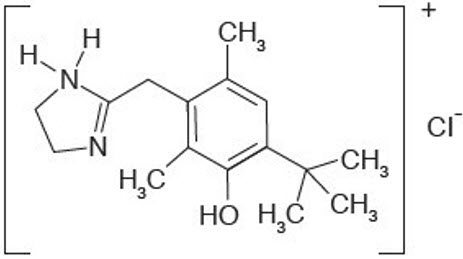
Each gram of RHOFADE ® (oxymetazoline hydrochloride) cream contains 10 mg (1%) oxymetazoline hydrochloride, equivalent to 8.8 mg (0.88%) of oxymetazoline free base. The cream contains the following inactive ingredients: sodium citrate dihydrate, citric acid anhydrous, disodium edetate dihydrate, butylated hydroxytoluene, anhydrous lanolin, medium chain triglycerides, diisopropyl adipate, oleyl alcohol, polyethylene glycol 300, PEG-6 stearate, glycol stearate, PEG-32 stearate, cetostearyl alcohol, ceteareth-6, stearyl alcohol, ceteareth-25, methylparaben, propylparaben, phenoxyethanol, and purified water.
CLINICAL PHARMACOLOGY
Mechanism of Action
Oxymetazoline is an alpha 1A adrenoceptor agonist. Oxymetazoline acts as a vasoconstrictor.
Pharmacodynamics
The pharmacodynamics of RHOFADE cream has not been studied.
Pharmacokinetics
Absorption
The pharmacokinetics of oxymetazoline was evaluated following topical administration of RHOFADE cream in a thin layer to cover the entire face in adult subjects with erythema associated with rosacea. The median weight of cream for each dose administration was 0.3 g. Plasma oxymetazoline concentrations were measurable in most of the subjects. Following the first dose application, the mean ± standard deviation (SD) peak concentrations (C max ) and area under the concentration-time curves from time 0 to 24 hours (AUC 0-24hr ) were 60.5 ± 53.9 pg/mL and 895 ±798 pg•hr/mL, respectively. Following once daily applications for 28 days, the mean ± SD C max and AUC 0-24hr were 66.4 ± 67.1 pg/mL and 1050 ± 992 pg•hr/mL, respectively. Following twice daily applications (twice the recommended frequency of application) for 28 days, the mean ± SD C max and AUC 0-24hr were 68.8 ± 61.1 pg/mL and 1530 ± 922 pg•hr/mL, respectively.
Distribution
An in vitro study demonstrated that oxymetazoline is 56.7% to 57.5% bound to human plasma proteins.
Metabolism
In vitro studies using human liver microsomes showed that oxymetazoline was minimally metabolized, generating mono-oxygenated and dehydrogenated products of oxymetazoline. The percentage of parent drug oxymetazoline remaining was 95.9% after a 120-minute incubation with human liver microsomes.
Excretion
The excretion of oxymetazoline following administration of RHOFADE cream has not been characterized in humans.
Drug Interaction
In vitro studies using human liver microsomes demonstrated that oxymetazoline up to the tested concentration of 100 nM had no inhibition on the activities of the cytochrome P450 (CYP) isoenzymes 1A2, 2B6, 2C8, 2C9, 2C19, 2D6, and 3A4/5. Treatment of cultured human hepatocytes with up to 100 nM oxymetazoline did not induce CYP1A2, CYP2B6, or CYP3A4.
NONCLINICAL TOXICOLOGY
Carcinogenesis, Mutagenesis, Impairment of Fertility
Oxymetazoline hydrochloride was not associated with an increased incidence of neoplastic or proliferative changes in transgenic mice given oral doses of 0.5, 1.0, or 2.5 mg/kg/day oxymetazoline hydrochloride for 6 months.
Oxymetazoline hydrochloride revealed no evidence of mutagenic or clastogenic potential based on the results of two in vitro genotoxicity tests (Ames assay and human lymphocyte chromosomal aberration assay) and one in vivo genotoxicity test (mouse micronucleus assay).
Effects on fertility and early embryonic development were evaluated in rats following oral administration of 0.05, 0.1, or 0.2 mg/kg/day oxymetazoline hydrochloride prior to and during mating and through early pregnancy. Decreased number of corpora lutea and increased post-implantation losses were noted at 0.2 mg/kg/day oxymetazoline hydrochloride (3 times the MRHD on an AUC comparison basis). However, no treatment related effects on fertility or mating parameters were noted at 0.2 mg/kg/day oxymetazoline hydrochloride (3 times the MRHD on an AUC comparison basis).
CLINICAL STUDIES
RHOFADE cream was evaluated for the treatment of persistent erythema associated with rosacea in two identical, randomized, double-blind, vehicle-controlled, parallel-group clinical trials. The trials enrolled 885 subjects aged 18 years and older. Overall, 90% of subjects were Caucasian and 79% were female. Subjects applied either RHOFADE cream or vehicle once daily for 29 days.
Disease severity was graded by the clinician using a 5-point clinician erythema assessment (CEA) scale and by the subject on a similar 5-point subject self-assessment (SSA) scale, on which subjects scored either "moderate" or "severe" on both scales.
CEA and SSA were measured over a 12-hour period at equally-spaced timepoints (hours 3, 6, 9, and 12) post dose on Days 1, 15, and 29. The primary efficacy endpoint was defined as the proportion of subjects with at least a 2-grade reduction in erythema (improvement) from baseline (pre-dose on Day 1) on both the CEA and SSA measured at hours 3, 6, 9, and 12 on Day 29. The results from both trials on the composite endpoint for Day 29 are presented in Table 2.
| Time-point (Hour) | Trial 1 | Trial 2 | ||
|---|---|---|---|---|
| RHOFADE Cream (N-222) | Vehicle Cream (N-218) | RHOFADE Cream (N-224) | Vehicle Cream (N-221) | |
| 3 | 12% | 6% | 14% | 7% |
| 6 | 16% | 8% | 13% | 5% |
| 9 | 18% | 6% | 16% | 9% |
| 12 | 15% | 6% | 12% | 6% |
HOW SUPPLIED/STORAGE AND HANDLING
RHOFADE ® (oxymetazoline hydrochloride) cream, 1%, is a white to off-white cream. The product is available in a laminated tube in the following packaging configuration, each with a child-resistant closure:
| NDC 51862-765-30 | 30 gram tube |
Storage: Store at 20°C-25°C (68°F-77°F); excursions permitted to 15°C-30ºC (59°F- 86ºF) [see USP Controlled Room Temperature].
| INSTRUCTIONS FOR USE RHOFADE ® (roe' fayd) (oxymetazoline hydrochloride) cream Tube |
|---|
Important:
|
Read and follow the steps below so that you use your tube of RHOFADE cream correctly:
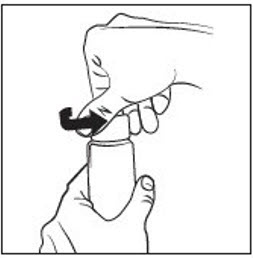
| Step 1: Open the tube of RHOFADE cream by gently pressing down on the child-resistant cap and twisting it counterclockwise until the cap is removed. Do not squeeze the tube while opening or closing. Note: When the cap is removed, the tube is not child-resistant. | 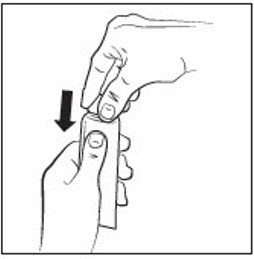 |
 | |
| Step 2: To apply RHOFADE cream to your face, squeeze a pea- sized amount of RHOFADE cream from the tube onto your fingertip. | 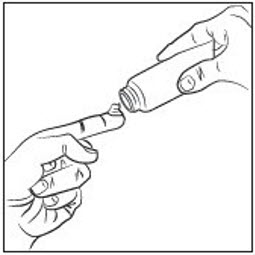 |
Step 3: Apply the pea-sized amount of RHOFADE cream to cover your entire face (forehead, nose, each cheek, and chin) 1 time each day. Spread the cream smoothly and evenly in a thin layer over your face.
| |
| Step 4: To close your RHOFADE cream tube, place the cap back on the tube. Press down on the child-resistant cap and twist clockwise until it stops. The tube is child-resistant again. | 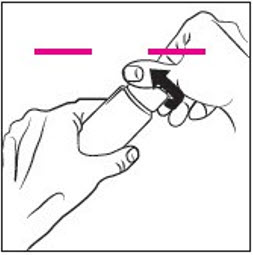 |
| Step 5: Wash your hands right away after applying RHOFADE cream. | |
How do I store RHOFADE cream?
| |
This Instructions for Use has been approved by the U.S. Food and Drug Administration.
Distributed by: Mayne Pharma Raleigh, NC 27609
RHOFADE and its design are registered trademarks of Mayne Pharma, LLC
Patented. U.S. Patent Numbers: U.S. 7,812,049; U.S. 8,420,688; U.S. 8,815,929; U.S. 8,883,838; U.S. 9,974,773 and U.S. 10335391. Product of Germany.
Revised: 10/2023
Mechanism of Action
Oxymetazoline is an alpha 1A adrenoceptor agonist. Oxymetazoline acts as a vasoconstrictor.
