Get your patient on Venclexta (Venetoclax)
Venclexta patient education
Patient toolkit
Dosage & administration

Venclexta prescribing information

1 INDICATIONS AND USAGE
VENCLEXTA is a BCL-2 inhibitor indicated:
- For the treatment of adult patients with chronic lymphocytic leukemia (CLL) or small lymphocytic lymphoma (SLL). (1.1 )
- In combination with azacitidine, or decitabine, or low-dose cytarabine for the treatment of newly diagnosed acute myeloid leukemia (AML) in adults 75 years or older, or who have comorbidities that preclude use of intensive induction chemotherapy. (1.2 )
1.1 Chronic Lymphocytic Leukemia/Small Lymphocytic Lymphoma
VENCLEXTA is indicated for the treatment of adult patients with chronic lymphocytic leukemia (CLL) or small lymphocytic lymphoma (SLL).
1.2 Acute Myeloid Leukemia
VENCLEXTA is indicated in combination with azacitidine, or decitabine, or low-dose cytarabine for the treatment of newly diagnosed acute myeloid leukemia (AML) in adults 75 years or older, or who have comorbidities that preclude use of intensive induction chemotherapy.
2 DOSAGE AND ADMINISTRATION
2.1 Important Safety Information
2.2 Recommended Dosage for Chronic Lymphocytic Leukemia/Small Lymphocytic Lymphoma
VENCLEXTA dosing begins with a 5-week ramp-up. The 5-week ramp-up dosing schedule is designed to gradually reduce tumor burden (debulk) and decrease the risk of TLS.
VENCLEXTA 5-week Dose Ramp-Up Schedule
Administer VENCLEXTA according to the 5-week ramp-up dosing schedule to the recommended dosage of 400 mg orally once daily as shown in Table 1 .
| VENCLEXTA Oral Daily Dose | |
| Week 1 | 20 mg |
| Week 2 | 50 mg |
| Week 3 | 100 mg |
| Week 4 | 200 mg |
| Week 5 and beyond | 400 mg |
The CLL/SLL Starting Pack provides the first 4 weeks of VENCLEXTA according to the ramp-up schedule [see How Supplied/Storage and Handling (16 )] .
In Combination with Acalabrutinib
Cycle 1 Day 1: Start acalabrutinib 100 mg orally approximately every 12 hours until disease progression, unacceptable toxicity or completion of 14 cycles of treatment. Each cycle is 28 days. Refer to the acalabrutinib prescribing information for additional dosing information.
Cycle 3 Day 1: start VENCLEXTA according to the 5-week ramp-up dosing schedule (see Table 1 ). After completing the ramp-up phase, continue VENCLEXTA at a dose of 400 mg orally once daily until disease progression, unacceptable toxicity, or until the last day of Cycle 14.
In Combination with Obinutuzumab
Start obinutuzumab administration at 100 mg on Cycle 1 Day 1, followed by 900 mg on Cycle 1 Day 2. Administer 1,000 mg on Days 8 and 15 of Cycle 1 and on Day 1 of each subsequent 28-day cycle for a total of 6 cycles. Refer to the obinutuzumab prescribing information for additional dosing information.
On Cycle 1 Day 22, start VENCLEXTA according to the 5-week ramp-up dosing schedule (see Table 1 ). After completing the ramp-up phase on Cycle 2 Day 28, continue VENCLEXTA at a dose of 400 mg orally once daily from Cycle 3 Day 1 until the last day of Cycle 12.
In Combination with Rituximab
Start rituximab administration after the patient has completed the 5-week ramp-up dosing schedule for VENCLEXTA (see Table 1 ) and has received VENCLEXTA at the recommended dosage of 400 mg orally once daily for 7 days. Administer rituximab on Day 1 of each 28-day cycle for 6 cycles, at a dose of 375 mg/m 2 intravenously for Cycle 1 and 500 mg/m 2 intravenously for Cycles 2-6. Continue VENCLEXTA 400 mg orally once daily for 24 months from Cycle 1 Day 1 of rituximab.
Refer to the rituximab prescribing information for additional dosing information.
Monotherapy
The recommended dosage of VENCLEXTA is 400 mg once daily after completion of the 5-week ramp-up dosing schedule (see Table 1 ). Continue VENCLEXTA until disease progression or unacceptable toxicity.
2.3 Recommended Dosage for Acute Myeloid Leukemia
The recommended dosage and ramp-up of VENCLEXTA depends upon the combination agent. Follow the dosing schedule, including the 3-day or 4-day dose ramp-up, as shown in Table 2. Start VENCLEXTA administration on Cycle 1 Day 1 in combination with:
- Azacitidine 75 mg/m 2 intravenously or subcutaneously once daily on Days 1-7 of each 28-day cycle; OR
- Decitabine 20 mg/m 2 intravenously once daily on Days 1-5 of each 28-day cycle; OR
- Cytarabine 20 mg/m 2 subcutaneously once daily on Days 1-10 of each 28-day cycle.
| VENCLEXTA Oral Daily Dose | ||
| Day 1 | 100 mg | |
| Day 2 | 200 mg | |
| Day 3 | 400 mg | |
| Days 4 and beyond | 400 mg orally once daily of each 28-day cycle in combination with azacitidine or decitabine | 600 mg orally once daily of each 28-day cycle in combination with low-dose cytarabine |
Continue VENCLEXTA, in combination with azacitidine or decitabine or low-dose cytarabine, until disease progression or unacceptable toxicity.
Refer to Clinical Studies (14.2 ) and Prescribing Information for azacitidine, decitabine, or cytarabine for additional dosing information.
2.4 Risk Assessment and Prophylaxis for Tumor Lysis Syndrome
Patients treated with VENCLEXTA may develop tumor lysis syndrome (TLS). Refer to the appropriate section below for specific details on management. Assess patient-specific factors for level of risk of TLS and provide prophylactic hydration and anti-hyperuricemics to patients prior to first dose of VENCLEXTA to reduce risk of TLS.
Chronic Lymphocytic Leukemia/Small Lymphocytic Lymphoma
VENCLEXTA can cause rapid reduction in tumor and thus poses a risk for TLS in the initial 5-week ramp-up phase. Changes in blood chemistries consistent with TLS that require prompt management can occur as early as 6 to 8 hours following the first dose of VENCLEXTA and at each dose increase. TLS can also occur upon resumption of VENCLEXTA following a dosage interruption. See Table 4 , Table 5 , and Table 6 for dose modifications of VENCLEXTA after interruption.
The risk of TLS is a continuum based on multiple factors, particularly reduced renal function (creatinine clearance [CLcr] <80 mL/min) and tumor burden; splenomegaly may also increase the risk of TLS.
Perform tumor burden assessments, including radiographic evaluation (e.g., CT scan), assess blood chemistry (potassium, uric acid, phosphorus, calcium, and creatinine) in all patients and correct pre-existing abnormalities prior to initiation of treatment with VENCLEXTA. The risk may decrease as tumor burden decreases [see Warnings and Precautions (5.1 ) and Use in Specific Populations (8.6 )] .
Table 3 below describes the recommended TLS prophylaxis and monitoring during VENCLEXTA treatment based on tumor burden determination from clinical trial data. Consider all patient comorbidities before final determination of prophylaxis and monitoring schedule. Reassess the risk of TLS when reinitiating VENCLEXTA after a dosage interruption lasting more than 1 week during the ramp-up phase, or more than 2 weeks after completion of ramp-up. Institute prophylaxis and monitoring as needed.
| Tumor Burden | Prophylaxis | Blood Chemistry Monitoring c,d | ||
| Hydration a | Anti- hyperuricemics b | Setting and Frequency of Assessments | ||
| Low | All LN <5 cm AND ALC <25 x10 9 /L | Oral (1.5 to 2 L) | Allopurinol | Outpatient
|
| Medium | Any LN 5 to <10 cm OR ALC ≥25 x10 9 /L | Oral (1.5 to 2 L) and consider additional intravenous | Allopurinol | Outpatient
|
| High | Any LN ≥10 cm OR ALC ≥25 x10 9 /L AND any LN ≥5 cm | Oral (1.5 to 2 L) and intravenous (150 to 200 mL/hr as tolerated) | Allopurinol; consider rasburicase if baseline uric acid is elevated | In hospital
|
| ALC = absolute lymphocyte count; CLcr = creatinine clearance; LN = lymph node. a Administer intravenous hydration for any patient who cannot tolerate oral hydration. b Start allopurinol or xanthine oxidase inhibitor 2 to 3 days prior to initiation of VENCLEXTA. c Evaluate blood chemistries (potassium, uric acid, phosphorus, calcium, and creatinine); review in real time. d For patients at risk of TLS, monitor blood chemistries at 6 to 8 hours and at 24 hours at each subsequent ramp-up dose. | ||||
Acute Myeloid Leukemia
- All patients should have white blood cell count less than 25 × 10 9 /L prior to initiation of VENCLEXTA. Cytoreduction prior to treatment may be required.
- Prior to first VENCLEXTA dose, provide all patients with prophylactic measures including adequate hydration and anti-hyperuricemic agents and continue during ramp-up phase.
- Assess blood chemistry (potassium, uric acid, phosphorus, calcium, and creatinine) and correct pre-existing abnormalities prior to initiation of treatment with VENCLEXTA.
- Monitor blood chemistries for TLS at pre-dose, 6 to 8 hours after each new dose during ramp-up, and 24 hours after reaching final dose.
- For patients with risk factors for TLS (e.g., circulating blasts, high burden of leukemia involvement in bone marrow, elevated pretreatment lactate dehydrogenase [LDH] levels, or reduced renal function), consider additional measures, including increased laboratory monitoring and reducing VENCLEXTA starting dose.
2.5 Dosage Modifications for Adverse Reactions
Chronic Lymphocytic Leukemia/Small Lymphocytic Lymphoma
The recommended dose reductions for VENCLEXTA for adverse reactions are provided in Table 4 . The recommended dosage modifications for VENCLEXTA for adverse reactions are provided in Table 5 and Table 6 .
For patients having a dosage interruption lasting more than 1 week during the ramp-up phase, or more than 2 weeks after completion of ramp-up, reassess for risk of TLS to determine if reinitiation with a reduced dose is necessary (e.g., all or some levels of the dose ramp-up schedule) [see Dosage and Administration (2.2 , 2.4 )].
Table 4. Recommended Dose Reduction for Adverse Reactions for VENCLEXTA in CLL/SLL
| Dose at Interruption, mg | Restart Dose, mg a,b |
| 400 | 300 |
| 300 | 200 |
| 200 | 100 |
| 100 | 50 |
| 50 | 20 |
| 20 | 10 |
| a During the ramp-up phase, continue the reduced dose for 1 week before increasing the dose. b If a dosage interruption lasts more than 1 week during the ramp-up phase or more than 2 weeks after completion of ramp-up, reassess the risk of TLS and determine if reinitiation at a reduced dosage is necessary [see Dosage and Administration (2.2 , 2.4 )] . | |
Table 5. Recommended VENCLEXTA Dosage Modifications for Adverse Reactions a in Patients with CLL/SLL Receiving VENCLEXTA in Combination with Obinutuzumab, with Rituximab or as Monotherapy
| Adverse Reaction | Occurrence | Dosage Modification |
| Tumor Lysis Syndrome | ||
| Blood chemistry changes or symptoms suggestive of TLS [see Warnings and Precautions (5.1 )] | Any | Withhold the next day’s dose. If resolved within 24 to 48 hours of last dose, resume at same dose. |
| For any blood chemistry changes requiring more than 48 hours to resolve, resume at reduced dose (see Table 4 ). | ||
| For any events of clinical TLS, b resume at reduced dose following resolution (see Table 4 ). | ||
| Non-Hematologic Adverse Reactions | ||
| Grade 3 or 4 non-hematologic toxicities [see Adverse Reactions (6.1 )] | 1 st occurrence | Interrupt VENCLEXTA. Upon resolution to Grade 1 or baseline level, resume VENCLEXTA at the same dose. |
| 2 nd and subsequent occurrences | Interrupt VENCLEXTA. Follow dose reduction guidelines in Table 4 when resuming treatment with VENCLEXTA after resolution. A larger dose reduction may occur at the discretion of the physician. | |
| Hematologic Adverse Reactions | ||
| Grade 3 neutropenia with infection or fever; or Grade 4 hematologic toxicities (except lymphopenia) [see Warnings and Precautions (5.2 )] | 1 st occurrence | Interrupt VENCLEXTA. Upon resolution to Grade 1 or baseline level, resume VENCLEXTA at the same dose. |
| 2 nd and subsequent occurrences | Interrupt VENCLEXTA. Follow dose reduction guidelines in Table 4 when resuming treatment with VENCLEXTA after resolution. A larger dose reduction may occur at the discretion of the physician. | |
| Consider discontinuing VENCLEXTA for patients who require dose reductions to less than 100 mg for more than 2 weeks. a Adverse reactions were graded using NCI CTCAE version 4.0. b Clinical TLS was defined as laboratory TLS with clinical consequences such as acute renal failure, cardiac arrhythmias, or sudden death and/or seizures [see Adverse Reactions (6.1 )] . | ||
Table 6 : Recommended Dosage Modifications for Adverse Reactions in Patients with CLL/SLL Receiving VENCLEXTA in Combination with Acalabrutinib
| Adverse Reaction a | Adverse Reaction Occurrence | Dose Modification |
| Grade 3 or 4 neutropenia with or without fever and/or infection; Grade 4 neutropenia lasting more than 7 days | First occurrence | Interrupt VENCLEXTA and/or acalabrutinib. b Once toxicity resolves to Grade ≤ 1 or baseline, restart VENCLEXTA and/or acalabrutinib at same dose. |
| Second occurrence | Interrupt VENCLEXTA and/or acalabrutinib. b Once toxicity resolves to Grade ≤ 1 or baseline, restart VENCLEXTA at one lower dose level and restart acalabrutinib at same dose. | |
| Subsequent occurrence | Withhold VENCLEXTA and/or acalabrutinib until toxicity resolves to Grade ≤ 1 or baseline. b,c | |
| Grade 3 or 4 thrombocytopenia and/or bleeding e | First occurrence | Interrupt VENCLEXTA and/or acalabrutinib. When bleeding resolves and thrombocytopenia is Grade ≤ 1 or baseline without transfusion support for 5 consecutive days, restart VENCLEXTA and/or acalabrutinib at same dose. |
| Second occurrence | Interrupt VENCLEXTA and acalabrutinib until resolution of bleeding and thrombocytopenia resolves to Grade ≤ 1 or baseline. Restart VENCLEXTA at one lower dose level and restart acalabrutinib at same dose. d | |
| Subsequent occurrences of severe thrombocytopenia | Interrupt VENCLEXTA and acalabrutinib until resolution of bleeding and thrombocytopenia resolves to Grade ≤ 1 or baseline. Restart VENCLEXTA at one lower dose level and resume acalabrutinib at a reduced frequency of 100 mg once daily. c,d | |
| Grade 3 or 4 tumour lysis syndrome (TLS) | First and subsequent episodes | If a patient experiences blood chemistry changes suggestive of TLS, the following day’s VENCLEXTA and acalabrutinib dose should be withheld. If resolved within 24–48 hours of last dose, treatment can be resumed at the same dose. For events of clinical TLS or blood chemistry changes requiring more than 48 hours to resolve, resume VENCLEXTA at one lower dose level. When resuming treatment after interruption due to TLS, monitor for TLS and provide prophylaxis. |
| Grade 3 other non-hematologic events f | First occurrence | Interrupt VENCLEXTA and/or acalabrutinib until toxicity resolves to Grade ≤ 1. Restart VENCLEXTA and/or acalabrutinib at same dose. |
| Second occurrence | Interrupt VENCLEXTA and/or acalabrutinib until toxicity resolves to Grade ≤ 1 c . | |
| Grade 4 other non-hematologic events f | First occurrence | Interrupt VENCLEXTA and/or acalabrutinib until toxicity resolves to Grade ≤ 1. Restart VENCLEXTA at one lower dose level and restart acalabrutinib at a reduced frequency of 100 mg once daily. e |
| Second occurrence | Interrupt VENCLEXTA and/or acalabrutinib until toxicity resolves to Grade ≤ 1 c . | |
| a Adverse reactions graded by the National Cancer Institute Common Terminology Criteria for Adverse Events (NCI CTCAE) version 5.0. b Growth factor may be used at physician discretion. c Clinical judgment of the treating physician should guide the management plan of each patient based on the individual benefit/risk assessment for treatment with VENCLEXTA in combination with acalabrutinib. d Acalabrutinib dose may be re-escalated at the discretion of the physician if patient tolerates a reduced dose for ≥4 weeks. e Platelets may be used at physician discretion. f Certain treatment-emergent non-hematologic AEs (e.g., venous thromboembolic events) may be managed and become clinically stable following medical intervention but may not improve to Grade ≤ 1 according to the NCI CTCAE definitions. In such cases, if a subject is clinically stable, resumption of VENCLEXTA may be possible based on clinical judgement of the treating physician. | ||
Acute Myeloid Leukemia
Monitor blood counts frequently through resolution of cytopenias. Dose modification and interruptions for cytopenias are dependent on remission status. Dose modifications of VENCLEXTA for adverse reactions are provided in Table 7.
| Adverse Reaction | Occurrence | Dosage Modification |
| Hematologic Adverse Reactions | ||
| Grade 4 neutropenia with or without fever or infection; or Grade 4 thrombocytopenia [see Warnings and Precautions (5.2 )] | Occurrence prior to achieving remission a | In most instances, do not interrupt VENCLEXTA in combination with azacitidine, decitabine, or low-dose cytarabine due to cytopenias prior to achieving remission. |
| First occurrence after achieving remission and lasting at least 7 days | Delay subsequent cycle of VENCLEXTA in combination with azacitidine, decitabine, or low-dose cytarabine and monitor blood counts. Upon resolution to Grade 1 or 2, resume VENCLEXTA at the same dose in combination with azacitidine, decitabine, or low-dose cytarabine. | |
| Subsequent occurrences in cycles after achieving remission and lasting 7 days or longer | Delay subsequent cycle of VENCLEXTA in combination with azacitidine, or decitabine, or low-dose cytarabine and monitor blood counts. Upon resolution to Grade 1 or 2, resume VENCLEXTA at the same dose in combination with azacitidine, decitabine, or low-dose cytarabine, and reduce VENCLEXTA duration by 7 days during each of the subsequent cycles, such as 21 days instead of 28 days. | |
| Non-Hematologic Adverse Reactions | ||
| Grade 3 or 4 non-hematologic toxicities [see Adverse Reactions (6.1 )] | Any occurrence | Interrupt VENCLEXTA if not resolved with supportive care. Upon resolution to Grade 1 or baseline level, resume VENCLEXTA at the same dose. |
| a Recommend bone marrow evaluation. | ||
2.6 Dosage Modifications for Drug Interactions
Strong or Moderate CYP3A Inhibitors or P-gp Inhibitors
Table 8 describes VENCLEXTA contraindication or dosage modification based on concomitant use with a strong or moderate CYP3A inhibitor or a P-gp inhibitor [see Drug Interactions (7.1 )] at initiation, during, or after the ramp-up phase.
Resume the VENCLEXTA dosage that was used prior to concomitant use of a strong or moderate CYP3A inhibitor or a P-gp inhibitor 2 to 3 days after discontinuation of the inhibitor [see Drug Interactions (7.1 )] .
| Coadministered Drug | Initiation and Ramp-Up Phase | Steady Daily Dose (After Ramp-Up Phase) a | |
| Posaconazole | CLL/SLL | Contraindicated | Reduce VENCLEXTA dose to 70 mg. |
| AML | Day 1 – 10 mg Day 2 – 20 mg Day 3 – 50 mg Day 4 – 70 mg | ||
| Other strong CYP3A inhibitor | CLL/SLL | Contraindicated | Reduce VENCLEXTA dose to 100 mg. |
| AML | Day 1 – 10 mg Day 2 – 20 mg Day 3 – 50 mg Day 4 – 100 mg | ||
| Moderate CYP3A inhibitor | Reduce the VENCLEXTA dose by at least 50%. | ||
| P-gp inhibitor | |||
| a In patients with CLL/SLL, consider alternative medications or reduce the VENCLEXTA dose as described in Table 8 . | |||
2.7 Dosage Modifications for Patients with Severe Hepatic Impairment
Reduce the VENCLEXTA once daily dose by 50% for patients with severe hepatic impairment (Child-Pugh C); monitor these patients more closely for adverse reactions [see Use in Specific Populations (8.7 )] .
2.8 Administration
Instruct patients of the following:
- Take VENCLEXTA with a meal and water.
- Take VENCLEXTA at approximately the same time each day.
The recommended dosage of VENCLEXTA may be delivered using any of the approved tablet strengths.
For patients who are unable to swallow a VENCLEXTA tablet whole, the tablets can be crushed [see Clinical Pharmacology (12.3 )] . Mix the entire dose with 120 mL (4 ounces) of water, apple juice, apple sauce, or yogurt. Take the entire dose immediately with a meal and water. Do not crush more than one dose at a time.
If the patient misses a dose of VENCLEXTA within 8 hours of the time it is usually taken, instruct the patient to take the missed dose as soon as possible and resume the normal daily dosing schedule. If a patient misses a dose by more than 8 hours, instruct the patient not to take the missed dose and resume the usual dosing schedule the next day.
If the patient vomits following dosing, instruct the patient to not take an additional dose that day and to take the next prescribed dose at the usual time.
3 DOSAGE FORMS AND STRENGTHS
| Tablet Strength | Description of Tablet |
| 10 mg | Round, biconvex shaped, pale yellow film-coated tablet debossed with “V” on one side and “10” on the other side |
| 50 mg | Oblong, biconvex shaped, beige film-coated tablet debossed with “V” on one side and “50” on the other side |
| 100 mg | Oblong, biconvex shaped, pale yellow film-coated tablet debossed with “V” on one side and “100” on the other side |
8 USE IN SPECIFIC POPULATIONS
8.1 Pregnancy
Risk Summary
Based on findings in animals and its mechanism of action [see Clinical Pharmacology (12.1 )] , VENCLEXTA may cause embryo-fetal harm when administered to a pregnant woman. There are no available data on VENCLEXTA use in pregnant women to inform a drug-associated risk. Administration of venetoclax to pregnant mice during the period of organogenesis was fetotoxic at exposures 1.2 times the human exposure at the recommended dose of 400 mg daily based on AUC. Advise pregnant women of the potential risk to a fetus.
The estimated background risk of major birth defects and miscarriage for the indicated population is unknown. All pregnancies have a background risk of birth defect, loss, or other adverse outcomes. In the U.S. general population, the estimated background risk of major birth defects and miscarriage in clinically recognized pregnancies is 2% to 4% and 15% to 20%, respectively.
Data
Animal data
In embryo-fetal development studies, venetoclax was administered to pregnant mice and rabbits during the period of organogenesis. In mice, venetoclax was associated with increased post-implantation loss and decreased fetal body weight at 150 mg/kg/day (maternal exposures approximately 1.2 times the human exposure at the recommended dose of 400 mg once daily). No teratogenicity was observed in either the mouse or the rabbit.
8.2 Lactation
Risk Summary
There are no data on the presence of VENCLEXTA in human milk or the effects on the breastfed child or milk production. Venetoclax was present in the milk when administered to lactating rats (see Data) .
Because of the potential for serious adverse reactions in a breastfed child, advise women not to breastfeed during treatment with VENCLEXTA and for 1 week after the last dose.
Data
Animal Data
Venetoclax was administered (single dose; 150 mg/kg oral) to lactating rats 8 to 10 days post-parturition. Venetoclax in milk was 1.6 times lower than in plasma. Parent drug (venetoclax) represented the majority of the total drug-related material in milk, with trace levels of three metabolites.
8.3 Females and Males of Reproductive Potential
VENCLEXTA may cause fetal harm when administered to pregnant women [see Use in Specific Populations (8.1 )] .
Pregnancy Testing
Verify pregnancy status in females of reproductive potential prior to initiating VENCLEXTA.
Contraception
Advise females of reproductive potential to use effective contraception during treatment with VENCLEXTA and for 30 days after the last dose.
Infertility
Based on findings in animals, VENCLEXTA may impair male fertility [see Nonclinical Toxicology (13.1 )] .
8.4 Pediatric Use
The safety and effectiveness of VENCLEXTA have not been established in pediatric patients.
Juvenile Animal Toxicity Data
In a juvenile toxicology study, mice were administered venetoclax at 10, 30, or 100 mg/kg/day by oral gavage from 7 to 60 days of age. Clinical signs of toxicity included decreased activity, dehydration, skin pallor, and hunched posture at ≥30 mg/kg/day. In addition, mortality and body weight effects occurred at 100 mg/kg/day. Other venetoclax-related effects were reversible decreases in lymphocytes at ≥10 mg/kg/day; a dose of 10 mg/kg/day is approximately 0.06 times the clinical dose of 400 mg on a mg/m 2 basis for a 20 kg child.
8.5 Geriatric Use
Chronic Lymphocytic Leukemia/Small Lymphocytic Lymphoma
Of the 352 patients with previously treated CLL/SLL evaluated for safety from 3 open-label trials of VENCLEXTA monotherapy, 57% (201/352) were ≥65 years of age and 18% (62/352) were ≥75 years of age. Of the 406 patients with CLL/SLL evaluated for safety from VENCLEXTA in combination with rituximab or obinutuzumab, 67% (273/406) were ≥65 years of age and 24% (97/406) were ≥75 years of age. No clinically meaningful differences in safety and effectiveness were observed between older and younger patients in these studies.
Of patients that received VENCLEXTA in combination with acalabrutinib in AMPLIFY, 33% (97/291) were ≥65 years of age, and 4.5% (13/291) were ≥75 years of age. In patients 65 years of age or older and younger than age 65, the fatal adverse reactions were 5% and 2.6%, respectively. No clinically relevant differences in efficacy were observed between patients ≥65 years of age and younger adults.
Acute Myeloid Leukemia
Of the 283 patients who received VENCLEXTA with azacitidine in VIALE-A, 96% were ≥65 years of age and 60% were ≥75 years of age.
Of the 13 patients who received VENCLEXTA in combination with decitabine in M14-358, 100% were ≥65 years of age and 62% were ≥75 years of age.
Of the 142 patients who received VENCLEXTA in combination with low-dose cytarabine in VIALE-C, 92% were ≥65 years of age and 57% were ≥75 years of age.
Clinical studies of VENCLEXTA in patients with AML did not include sufficient numbers of younger adults to determine if patients 65 years of age and older respond differently from younger adults.
8.6 Renal Impairment
Due to the increased risk of TLS, patients with reduced renal function (CLcr <80 mL/min, calculated by Cockcroft-Gault formula) require more intensive prophylaxis and monitoring to reduce the risk of TLS when initiating treatment with VENCLEXTA [see Dosage and Administration (2.1 , 2.2 , 2.3 , 2.4 ) and Warnings and Precautions (5.1 )] .
No dose adjustment is recommended for patients with mild, moderate or severe renal impairment (CLcr ≥15 mL/min) [see Clinical Pharmacology (12.3 )] .
8.7 Hepatic Impairment
No dose adjustment is recommended for patients with mild (Child-Pugh A) or moderate (Child-Pugh B) hepatic impairment.
Reduce the dose of VENCLEXTA for patients with severe hepatic impairment (Child-Pugh C); monitor these patients more frequently for adverse reactions [see Dosage and Administration (2.5 , 2.7 ) and Clinical Pharmacology (12.3 )] .
5 WARNINGS AND PRECAUTIONS
- Tumor Lysis Syndrome (TLS): Anticipate TLS; assess risk in all patients. Premedicate with anti-hyperuricemics and ensure adequate hydration. Employ more intensive measures (intravenous hydration, frequent monitoring, hospitalization) as overall risk increases. (2.4 , 5.1 )
- Neutropenia: Monitor blood counts. Interrupt dosing and resume at same or reduced dose. Consider supportive care measures. (2.5 , 5.2 )
- Infections: Monitor for signs and symptoms of infection and treat promptly. Withhold for Grade 3 and 4 infection until resolution and resume at same or reduced dose. (2.5 , 5.3 )
- Immunization: Do not administer live attenuated vaccines prior to, during, or after treatment with VENCLEXTA until B-cell recovery. (5.4 )
- Embryo-Fetal Toxicity: May cause embryo-fetal harm. Advise females of reproductive potential of the potential risk to a fetus and to use effective contraception. (5.5 )
- Treatment of patients with multiple myeloma with VENCLEXTA in combination with bortezomib plus dexamethasone is not recommended outside of controlled clinical trials. (5.6 )
5.1 Tumor Lysis Syndrome
Tumor lysis syndrome (TLS), including fatal events and renal failure requiring dialysis, has occurred in patients treated with VENCLEXTA [see Adverse Reactions (6.1 )].
VENCLEXTA can cause rapid reduction in tumor and thus poses a risk for TLS at initiation and during the ramp-up phase in all patients, and during reinitiation after dosage interruption in patients with CLL/SLL. Changes in blood chemistries consistent with TLS that require prompt management can occur as early as 6 to 8 hours following the first dose of VENCLEXTA and at each dose increase. TLS, including fatal cases, has been reported after a single 20 mg dose of VENCLEXTA.
In patients with CLL/SLL who followed the current (5-week) dose ramp-up and the TLS prophylaxis and monitoring measures, the rate of TLS was 2% in the VENCLEXTA CLL/SLL monotherapy trials. The rate of TLS remained consistent with VENCLEXTA in combination with obinutuzumab or rituximab. With a 2- to 3-week dose ramp-up and higher starting dose in patients with CLL/SLL, the TLS rate was 13% and included deaths and renal failure [see Adverse Reactions (6.1 )] .
In patients with AML who followed the current 3-day ramp-up dosing schedule and the TLS prophylaxis and monitoring measures, the rate of TLS was 1.1% in patients who received VENCLEXTA in combination with azacitidine (VIALE-A). In patients with AML who followed a 4-day ramp-up dosing schedule and the TLS prophylaxis and monitoring measures, the rate of TLS was 5.6% and included deaths and renal failure in patients who received VENCLEXTA in combination with low-dose cytarabine (VIALE-C) [see Adverse Reactions (6.1 )].
The risk of TLS is a continuum based on multiple factors, particularly reduced renal function, tumor burden, and type of malignancy. Splenomegaly may also increase the risk of TLS in patients with CLL/SLL.
Assess all patients for risk and provide appropriate prophylaxis for TLS, including hydration and anti-hyperuricemics. Monitor blood chemistries and manage abnormalities promptly. Employ more intensive measures (intravenous hydration, frequent monitoring, hospitalization) as overall risk increases. Interrupt dosing if needed; when restarting VENCLEXTA, follow dose modification guidance [see Dosage and Administration (2.1 , 2.2 , 2.3 , 2.4 ) and Use in Specific Populations (8.6 )].
Concomitant use of VENCLEXTA with P-gp inhibitors or strong or moderate CYP3A inhibitors increases venetoclax exposure, which may increase the risk of TLS at initiation and during the ramp-up phase of VENCLEXTA. For patients with CLL/SLL, coadministration of VENCLEXTA with strong CYP3A inhibitors at initiation and during the 5-week ramp-up phase is contraindicated [see Contraindications (4 )]. For patients with AML, reduce the dose of VENCLEXTA when coadministered with strong CYP3A inhibitors at initiation and during the 3- or 4-day ramp-up phase. For patients with CLL/SLL or AML, reduce the dose of VENCLEXTA when coadministered with moderate CYP3A4 inhibitors or P-gp inhibitors [see Dosage and Administration (2.6 ) and Drug Interactions (7.1 )].
5.2 Neutropenia
In patients with CLL, Grade 3 or 4 neutropenia developed in 63% to 64% of patients and Grade 4 neutropenia developed in 31% to 33% of patients when treated with VENCLEXTA in monotherapy studies and in combination studies with obinutuzumab or rituximab. Febrile neutropenia occurred in 4% to 6% of patients treated with VENCLEXTA in monotherapy studies and in combination studies with obinutuzumab or rituximab [see Adverse Reactions (6.1 )] .
In patients with CLL, Grade 3 or 4 neutropenia developed in 38% of patients and Grade 4 neutropenia developed in 15% of patients when treated with VENCLEXTA in combination with acalabrutinib. Febrile neutropenia occurred in 2% of patients treated with VENCLEXTA in combination with acalabrutinib [see Adverse Reactions (6.1 )] .
In patients with AML, baseline neutrophil counts worsened in 95% to 100% of patients treated with VENCLEXTA in combination with azacitidine, decitabine, or low-dose cytarabine. Neutropenia can recur with subsequent cycles.
Monitor complete blood counts throughout the treatment period. For interruption and dose resumption of VENCLEXTA for severe neutropenia, see Table 5 and Table 6 for CLL and Table 7 for AML [see Dosage and Administration (2.5 )]. Consider supportive measures, including antimicrobials and growth factors (e.g., G-CSF).
5.3 Infections
Fatal and serious infections, such as pneumonia and sepsis, have occurred in patients treated with VENCLEXTA [see Adverse Reactions (6.1 )] .
Monitor patients for signs and symptoms of infection and treat promptly. Withhold VENCLEXTA for Grade 3 and 4 infection until resolution. For dose resumptions, see Table 5 and Table 6 for CLL and Table 7 for AML [see Dosage and Administration (2.5 )] .
In AMPLIFY, a randomized study in patients with previously untreated CLL/SLL, serious or grade 3 or higher infections occurred in 14% of patients who received VENCLEXTA in combination with acalabrutinib (VEN+A), most commonly due to COVID-19.
In an additional cohort of patients receiving VENCLEXTA in combination with acalabrutinib and obinutuzumab (AVO) (an unapproved regimen for previously untreated CLL/SLL in AMPLIFY), serious or Grade 3 or higher infections occurred in 25% receiving AVO compared to 14% in patients receiving VEN+A. Fatal infections occurred in 6% receiving AVO compared to 3.1% of patients receiving VEN+A, most commonly due to COVID-19. The safety and effectiveness of AVO has not been established in patients with previously untreated CLL/SLL [see Clinical Studies (14.1 )] .
5.4 Immunization
Do not administer live attenuated vaccines prior to, during, or after treatment with VENCLEXTA until B-cell recovery occurs. The safety and efficacy of immunization with live attenuated vaccines during or following VENCLEXTA therapy have not been studied. Advise patients that vaccinations may be less effective.
5.5 Embryo-Fetal Toxicity
Based on findings in animals and its mechanism of action, VENCLEXTA may cause embryo-fetal harm when administered to a pregnant woman. In an embryo-fetal study conducted in mice, administration of venetoclax to pregnant animals at exposures equivalent to that observed in patients at a dose of 400 mg daily resulted in post-implantation loss and decreased fetal weight.
Advise pregnant women of the potential risk to a fetus. Advise females of reproductive potential to use effective contraception during treatment with VENCLEXTA and for 30 days after the last dose [see Use in Specific Populations (8.1 , 8.3 )] .
5.6 Increased Mortality in Patients with Multiple Myeloma when VENCLEXTA is Added to Bortezomib and Dexamethasone
In a randomized trial (BELLINI; NCT02755597) in patients with relapsed or refractory multiple myeloma, the addition of VENCLEXTA to bortezomib plus dexamethasone, a use for which VENCLEXTA is not indicated, resulted in increased mortality. Treatment of patients with multiple myeloma with VENCLEXTA in combination with bortezomib plus dexamethasone is not recommended outside of controlled clinical trials.
6 ADVERSE REACTIONS
The following clinically significant adverse reactions are described elsewhere in the labeling:
6.1 Clinical Trials Experience
Because clinical trials are conducted under widely variable conditions, adverse event rates observed in clinical trials of a drug cannot be directly compared with rates of clinical trials of another drug and may not reflect the rates observed in practice.
In CLL/SLL, the safety population reflects exposure to VENCLEXTA as monotherapy in patients in M13-982, M14-032, and M12-175 and in combination with obinutuzumab or rituximab in patients in CLL14 and MURANO. In this CLL/SLL safety population, the most common adverse reactions (≥20%) for VENCLEXTA were neutropenia, thrombocytopenia, anemia, diarrhea, nausea, upper respiratory tract infection, cough, musculoskeletal pain, fatigue, and edema.
In the CLL/SLL safety population that reflects exposure to VENCLEXTA in combination with acalabrutinib, the most common adverse reactions (≥20%) were neutropenia, headache, diarrhea, musculoskeletal pain, and COVID-19.
In AML, the safety population reflects exposure to VENCLEXTA in combination with decitabine, azacitidine, or low-dose cytarabine in patients in M14-358, VIALE-A, and VIALE-C. In this safety population, the most common adverse reactions (≥30% in any trial) were nausea, diarrhea, thrombocytopenia, constipation, neutropenia, febrile neutropenia, fatigue, vomiting, edema, pyrexia, pneumonia, dyspnea, hemorrhage, anemia, rash, abdominal pain, sepsis, musculoskeletal pain, dizziness, cough, oropharyngeal pain, and hypotension.
Chronic Lymphocytic Leukemia/Small Lymphocytic Lymphoma
VENCLEXTA in Combination with Acalabrutinib
The safety of VENCLEXTA in combination with acalabrutinib (VEN+A) (N=291) versus fludarabine plus cyclophosphamide plus rituximab or bendamustine plus rituximab (FCR/BR) (N=259) was evaluated in AMPLIFY, a randomized, multicenter, open-label study in patients with previously untreated CLL [ see Clinical S tudies (14.1 ) ] . The median duration of exposure to VENCLEXTA was 11.1 months (range: 2 to 14 months) and to acalabrutinib was 12.9 months (range: 1 to 18 months) in the VEN+A arm. Among patients who received VEN+A, 96% were exposed for 6 months or longer and 91% were exposed for greater than one year.
Serious adverse reactions were reported in 25% of patients receiving VEN+A. The most common adverse reaction (≥2%) were COVID-19 including COVID-19 pneumonia (9%), second primary malignancies (2.7%), and neutropenia (2.1%). Fatal adverse events occurred in 3.4% of patients. The most common fatal adverse events included COVID-19 and COVID-19 pneumonia.
In the VEN+A arm, adverse reactions led to treatment discontinuation in 8% of patients. Neutropenia led to discontinuation of VENCLEXTA in 0.3% of patients, dose reduction in 7%, and dose interruption in 21%.
Table 10 presents adverse reactions identified in AMPLIFY.
| Body System Adverse Reactions• | VENCLEXTA plus acalabrutinib (N = 291) | Investigator’s choice of FCR or BR (N = 259) | ||
| All Grades (%) | Grade 3 or 4 (%) | All Grades (%) | Grade 3 or 4 (%) | |
| Nervous system disorders | ||||
| Headache | 35 | 1.4 | 8 | 0.4 |
| Gastrointestinal disorders | ||||
| Diarrhea | 33 | 1.7 | 11 | 0.4 |
| Nausea | 15 | 0 | 36 | 0 |
| Musculoskeletal and connective tissue disorders | ||||
| Musculoskeletal pain a | 25 | 0.7 | 14 | 0.8 |
| Infections | ||||
| COVID-19 | 21 | 6 | 3.9 | 1.5 |
| General disorders | ||||
| Fatigue b | 18 | 0.3 | 17 | 1.5 |
| Skin and subcutaneous tissue disorders | ||||
| Bruising c | 17 | 0 | 1.5 | 0 |
| Rash d | 16 | 1 | 16 | 1.5 |
| •Excludes laboratory terms. a Includes back pain, bone pain, musculoskeletal chest pain, musculoskeletal pain, musculoskeletal discomfort, myalgia, neck pain, pain in extremity, spinal pain, non-cardiac chest pain and pain in jaw. b Includes fatigue and asthenia. c Includes increased tendency to bruise, contusion, and ecchymosis. d Includes rash, dermatitis, and other related terms. | ||||
Other clinically relevant adverse reactions reported in <15% of patients receiving VEN+A included upper respiratory tract infections, lower respiratory tract infection, arthralgia, pneumonia, hemorrhage, dizziness, constipation, vomiting, second primary malignancy and hypertension.
Table 11 presents laboratory abnormalities in AMPLIFY.
| Laboratory Abnormality | VENCLEXTA plus acalabrutinib a | Investigator’s choice of FCR or BR a | ||
| All grade (%) | Grade 3 or 4 (%) | All grade (%) | Grade 3 or 4 (%) | |
| Hematology | ||||
| Neutropenia | 78 | 38 | 80 | 53 |
| Lymphopenia | 56 | 12 | 92 | 73 |
| Thrombocytopenia | 43 | 5 | 59 | 15 |
| Anemia | 35 | 7 | 56 | 8 |
| Chemistry | ||||
| Glucose increased | 74 | 0 | 84 | 0 |
| Calcium decreased | 30 | 0.7 | 25 | 2.3 |
| ALT increased | 26 | 3.1 | 28 | 1.6 |
| Urate increased | 25 | 25 | 23 | 23 |
| LDH increased | 24 | 0 | 40 | 0 |
| Potassium increased | 22 | 2.4 | 12 | 3.1 |
| AST increased | 22 | 1.4 | 28 | 1.6 |
| ALP increased | 20 | 0 | 15 | 0 |
| Glucose decreased | 20 | 0.3 | 5 | 0 |
| Creatinine increased | 19 | 0.3 | 12 | 0.8 |
| Sodium increased | 15 | 0.3 | 9 | 0.4 |
| a The denominator used to calculate the rate varied between 256 and 290 based on the number of patients with a baseline value and at least one post-treatment value. | ||||
Grade 4 laboratory abnormalities that developed in ≥15% of patients treated with VEN+A include absolute neutrophil count decreased (15%).
VENCLEXTA in Combination with Obinutuzumab
The safety of VENCLEXTA in combination with obinutuzumab (VEN+G) (N=212) versus obinutuzumab in combination with chlorambucil (GClb) (N=214) was evaluated in CLL14, a randomized, open-label, actively controlled trial in patients with previously untreated CLL [see Clinical Studies (14.1 )] . Patients randomized to the VEN+G arm were treated with VENCLEXTA and obinutuzumab in combination for six cycles, then with VENCLEXTA as monotherapy for an additional six cycles. Patients initiated the first dose of the 5-week ramp-up for VENCLEXTA on Day 22 of Cycle 1 and once completed, continued VENCLEXTA 400 mg orally once daily for a total of 12 cycles. The trial required a total Cumulative Illness Rating Scale (CIRS) >6 or CLcr <70 mL/min, hepatic transaminases and total bilirubin ≤2 times upper limit of normal and excluded patients with any individual organ/system impairment score of 4 by CIRS except eye, ear, nose, and throat organ system. The median duration of exposure to VENCLEXTA was 10.5 months (range: 0 to 13.5 months) and the median number of cycles of obinutuzumab was 6 in the VEN+G arm.
Serious adverse reactions were reported in 49% of patients in the VEN+G arm, most often due to febrile neutropenia and pneumonia (5% each). Fatal adverse reactions that occurred in the absence of disease progression and with onset within 28 days of the last study treatment were reported in 2% (4/212) of patients, most often from infection.
In the VEN+G arm, adverse reactions led to treatment discontinuation in 16% of patients, dose reduction in 21%, and dose interruption in 74%. Neutropenia led to discontinuation of VENCLEXTA in 2% of patients, dose reduction in 13%, and dose interruption in 41%.
Table 12 presents adverse reactions identified in CLL14.
| Adverse Reaction | VENCLEXTA + Obinutuzumab (N = 212) | Obinutuzumab + Chlorambucil (N = 214) | ||
| All Grades (%) | Grade ≥3 (%) | All Grades (%) | Grade ≥3 (%) | |
| Blood and lymphatic system disorders | ||||
| Neutropenia a | 60 | 56 | 62 | 52 |
| Anemia a | 17 | 8 | 20 | 7 |
| Gastrointestinal disorders | ||||
| Diarrhea | 28 | 4 | 15 | 1 |
| Nausea | 19 | 0 | 22 | 1 |
| Constipation | 13 | 0 | 9 | 0 |
| Vomiting | 10 | 1 | 8 | 1 |
| General disorders and administration site conditions | ||||
| Fatigue a | 21 | 2 | 23 | 1 |
| Infections and infestations | ||||
| Upper respiratory tract infection a | 17 | 1 | 17 | 1 |
| a Includes multiple adverse reaction terms. | ||||
Other clinically important adverse reactions (All Grades) reported in <10% of patients treated with VEN+G are presented below:
Blood and lymphatic system disorders: febrile neutropenia (6%)
Infection and infestations (all include multiple adverse reaction terms): pneumonia (9%), urinary tract infection (6%), sepsis (4%)
Metabolism and nutrition disorder: tumor lysis syndrome (1%)
During treatment with VENCLEXTA monotherapy after completion of VEN+G, the adverse reaction that occurred in ≥10% of patients was neutropenia (26%). The grade ≥3 adverse reactions that occurred in ≥2% of patients were neutropenia (23%) and anemia (2%).
Table 13 presents laboratory abnormalities CLL14.
| Laboratory Abnormality a | VENCLEXTA + Obinutuzumab (N = 212) | Obinutuzumab + Chlorambucil (N = 214) | ||
| All Grades (%) | Grade 3 or 4 (%) | All Grades (%) | Grade 3 or 4 (%) | |
| Hematology | ||||
| Leukopenia | 90 | 46 | 89 | 41 |
| Lymphopenia | 87 | 57 | 87 | 51 |
| Neutropenia | 83 | 63 | 79 | 56 |
| Thrombocytopenia | 68 | 28 | 71 | 26 |
| Anemia | 53 | 15 | 46 | 11 |
| Chemistry | ||||
| Blood creatinine increased | 80 | 6 | 74 | 2 |
| Hypocalcemia | 67 | 9 | 58 | 4 |
| Hyperkalemia | 41 | 4 | 35 | 3 |
| Hyperuricemia | 38 | 38 | 38 | 38 |
| a Includes laboratory abnormalities that were new or worsening, or with worsening from baseline unknown. | ||||
Grade 4 laboratory abnormalities that developed in ≥2% of patients treated with VEN+G included neutropenia (32%), leukopenia and lymphopenia (10%), thrombocytopenia (8%), hypocalcemia (8%), hyperuricemia (7%), blood creatinine increased (3%), hypercalcemia (3%), and hypokalemia (2%).
VENCLEXTA in Combination with Rituximab
The safety of VENCLEXTA in combination with rituximab (VEN+R) (N=194) versus bendamustine in combination with rituximab (B+R) (N=188) was evaluated in MURANO [see Clinical Studies (14.1 )] . Patients randomized to VEN+R completed the scheduled ramp-up (5 weeks) and received VENCLEXTA 400 mg once daily, in combination with rituximab for 6 cycles followed by VENCLEXTA monotherapy, for a total of 24 months after ramp-up. At the time of analysis, the median duration of exposure to VENCLEXTA was 22 months and the median number of cycles of rituximab was 6 in the VEN+R arm.
Serious adverse reactions were reported in 46% of patients in the VEN+R arm, with most frequent (≥5%) being pneumonia (9%). Fatal adverse reactions that occurred in the absence of disease progression and within 30 days of the last VENCLEXTA treatment and/or 90 days of last rituximab were reported in 2% (4/194) of patients.
In the VEN+R arm, adverse reactions led to treatment discontinuation in 16% of patients, dose reduction in 15%, and dose interruption in 71%. Neutropenia and thrombocytopenia each led to discontinuation of VENCLEXTA in 3% of patients. Neutropenia led to dose interruption of VENCLEXTA in 46% of patients.
Table 14 presents adverse reactions identified in MURANO.
| Adverse Reaction | VENCLEXTA + Rituximab (N = 194) | Bendamustine + Rituximab (N = 188) | ||
| All Grades (%) | Grade ≥3 (%) | All Grades (%) | Grade ≥3 (%) | |
| Blood and lymphatic system disorders | ||||
| Neutropenia a | 65 | 62 | 50 | 44 |
| Anemia a | 16 | 11 | 23 | 14 |
| Gastrointestinal disorders | ||||
| Diarrhea | 40 | 3 | 17 | 1 |
| Nausea | 21 | 1 | 34 | 1 |
| Constipation | 14 | <1 | 21 | 0 |
| Infections and infestations | ||||
| Upper respiratory tract infection a | 39 | 2 | 23 | 2 |
| Lower respiratory tract infection a | 18 | 2 | 10 | 2 |
| Pneumonia a | 10 | 7 | 14 | 10 |
| General disorders and administration site conditions | ||||
| Fatigue a | 22 | 2 | 26 | <1 |
| a Includes multiple adverse reaction terms. | ||||
Other clinically important adverse reactions (All Grades) reported in <10% of patients treated with VEN+R are presented below:
Blood and lymphatic system disorders: febrile neutropenia (4%)
Gastrointestinal disorders: vomiting (8%)
Infections and infestations: sepsis (<1%)
Metabolism and nutrition disorders: tumor lysis syndrome (3%)
During treatment with VENCLEXTA monotherapy after completion of VEN+R combination treatment, adverse reactions that occurred in ≥10% of patients were upper respiratory tract infection (21%), diarrhea (19%), neutropenia (16%), and lower respiratory tract infections (11%). The Grade 3 or 4 adverse reactions that occurred in ≥2% of patients were neutropenia (12%) and anemia (3%).
Table 15 presents laboratory abnormalities identified in MURANO.
| Laboratory Abnormality | VENCLEXTA + Rituximab (N = 194) | Bendamustine + Rituximab (N = 188) | ||
| All Grades a (%) | Grade 3 or 4 (%) | All Grades a (%) | Grade 3 or 4 (%) | |
| Hematology | ||||
| Leukopenia | 89 | 46 | 81 | 35 |
| Lymphopenia | 87 | 56 | 79 | 55 |
| Neutropenia | 86 | 64 | 84 | 59 |
| Anemia | 50 | 12 | 63 | 15 |
| Thrombocytopenia | 49 | 15 | 60 | 20 |
| Chemistry | ||||
| Blood creatinine increased | 77 | <1 | 78 | 1 |
| Hypocalcemia | 62 | 5 | 51 | 2 |
| Hyperuricemia | 36 | 36 | 33 | 33 |
| Hyperkalemia | 24 | 3 | 19 | 2 |
| a Includes laboratory abnormalities that were new or worsening, or with worsening from baseline unknown. | ||||
Grade 4 laboratory abnormalities that developed in ≥2% of patients treated with VEN+R included neutropenia (31%), lymphopenia (16%), leukopenia (6%), thrombocytopenia (6%), hyperuricemia (4%), hypocalcemia (2%), hypoglycemia (2%), and hypermagnesemia (2%).
VENCLEXTA as Monotherapy
The safety of VENCLEXTA was evaluated in pooled data from three single-arm trials (M13-982, M14-032, and M12-175). Patients received VENCLEXTA 400 mg orally once daily after completing the ramp-up phase (N=352). The median duration of treatment with VENCLEXTA at the time of data analysis was 14.5 months (range: 0 to 50 months). Fifty-two percent of patients received VENCLEXTA for more than 60 weeks.
In the pooled dataset, the median age was 66 years (range: 28 to 85 years), 93% were White, and 68% were male. The median number of prior therapies was 3 (range: 0 to 15).
Serious adverse reactions were reported in 52% of patients, with the most frequent (≥5%) being pneumonia (9%), febrile neutropenia (5%), and sepsis (5%). Fatal adverse reactions that occurred in the absence of disease progression and within 30 days of venetoclax treatment were reported in 2% of patients in the VENCLEXTA monotherapy studies, most often (2 patients) from septic shock.
Adverse reactions led to treatment discontinuation in 9% of patients, dose reduction in 13%, and dose interruption in 36%. The most frequent adverse reactions leading to drug discontinuation were thrombocytopenia and autoimmune hemolytic anemia. The most frequent adverse reaction (≥5%) leading to dose reductions or interruptions was neutropenia (8%).
Table 16 presents adverse reactions identified in these trials.
| Adverse Reaction | VENCLEXTA (N = 352) | |
| All Grades (%) | Grade ≥3 (%) | |
| Blood and lymphatic system disorders | ||
| Neutropenia a | 50 | 45 |
| Anemia a | 33 | 18 |
| Thrombocytopenia a | 29 | 20 |
| Lymphopenia a | 11 | 7 |
| Febrile neutropenia | 6 | 6 |
| Gastrointestinal disorders | ||
| Diarrhea | 43 | 3 |
| Nausea | 42 | 1 |
| Abdominal pain a | 18 | 3 |
| Vomiting | 16 | 1 |
| Constipation | 16 | <1 |
| Mucositis a | 13 | <1 |
| Infections and infestations | ||
| Upper respiratory tract infection a | 36 | 1 |
| Pneumonia a | 14 | 8 |
| Lower respiratory tract infection a | 11 | 2 |
| General disorders and administration site conditions | ||
| Fatigue a | 32 | 4 |
| Edema a | 22 | 2 |
| Pyrexia | 18 | <1 |
| Musculoskeletal and connective tissue disorders | ||
| Musculoskeletal pain a | 29 | 2 |
| Arthralgia | 12 | <1 |
| Respiratory, thoracic, and mediastinal disorders | ||
| Cough a | 22 | 0 |
| Dyspnea a | 13 | 1 |
| Nervous system disorders | ||
| Headache | 18 | <1 |
| Dizziness a | 14 | 0 |
| Skin and subcutaneous tissue disorders | ||
| Rash a | 18 | <1 |
| Adverse reactions graded using NCI Common Terminology Criteria for Adverse Events version 4.0. a Includes multiple adverse reaction terms. | ||
Table 17 presents laboratory abnormalities reported throughout treatment that were new or worsening from baseline. The most common (>5%) Grade 4 laboratory abnormalities observed with VENCLEXTA monotherapy were hematologic laboratory abnormalities, including neutropenia (33%), leukopenia (11%), thrombocytopenia (15%), and lymphopenia (9%).
| Laboratory Abnormality | VENCLEXTA (N = 352) | |
| All Grades a (%) | Grade 3 or 4 (%) | |
| Hematology | ||
| Leukopenia | 89 | 42 |
| Neutropenia | 87 | 63 |
| Lymphopenia | 74 | 40 |
| Anemia | 71 | 26 |
| Thrombocytopenia | 64 | 31 |
| Chemistry | ||
| Hypocalcemia | 87 | 12 |
| Hyperglycemia | 67 | 7 |
| Hyperkalemia | 59 | 5 |
| AST increased | 53 | 3 |
| Hypoalbuminemia | 49 | 2 |
| Hypophosphatemia | 45 | 11 |
| Hyponatremia | 40 | 9 |
| a Includes laboratory abnormalities that were new or worsening, or worsening from baseline unknown. | ||
Important Adverse Reactions in CLL/SLL
Tumor Lysis Syndrome
Tumor lysis syndrome is an important identified risk when initiating VENCLEXTA.
CLL14
The incidence of TLS was 1% (3/212) in patients treated with VEN+G [see Warnings and Precautions (5.1 )] . All three events of TLS resolved and did not lead to withdrawal from the trial. Obinutuzumab administration was delayed in two cases in response to the TLS events.
MURANO
The incidence of TLS was 3% (6/194) in patients treated with VEN+R. After 77/389 patients were enrolled in the trial, the protocol was amended to incorporate the current TLS prophylaxis and monitoring measures described in sections 2.2 and 2.4 [see Dosage and Administration (2.2 , 2.4 )] . All events of TLS occurred during the VENCLEXTA ramp-up period and were resolved within two days. All six patients completed the ramp-up and reached the recommended daily dose of 400 mg of VENCLEXTA. No clinical TLS was observed in patients who followed the current 5-week ramp-up schedule and TLS prophylaxis and monitoring measures [see Dosage and Administration (2.2 , 2.4 )] . Rates of laboratory abnormalities relevant to TLS for patients treated with VEN+R are presented in Table 14 .
Monotherapy Studies (M13-982 and M14-032)
In 168 patients with CLL treated according to recommendations described in sections 2.1 and 2.2, the rate of TLS was 2% [see Dosage and Administration (2.2 , 2.4 )] . All events either met laboratory TLS criteria (laboratory abnormalities that met ≥2 of the following within 24 hours of each other: potassium >6 mmol/L, uric acid >476 µmol/L, calcium <1.75 mmol/L, or phosphorus >1.5 mmol/L), or were reported as TLS events. The events occurred in patients who had a lymph node(s) ≥5 cm and/or absolute lymphocyte count (ALC) ≥25 x 10 9 /L. All events resolved within 5 days. No TLS with clinical consequences such as acute renal failure, cardiac arrhythmias, or sudden death and/or seizures was observed in these patients. All patients had CLcr ≥50 mL/min. Laboratory abnormalities relevant to TLS were hyperkalemia (17% all Grades, 1% Grade ≥3), hyperphosphatemia (14% all Grades, 2% Grade ≥3), hypocalcemia (16% all Grades, 2% Grade ≥3), and hyperuricemia (10% all Grades, <1% Grade ≥3).
In the initial Phase 1 dose-finding trials, which had shorter (2-3 week) ramp-up phase and higher starting doses, the incidence of TLS was 13% (10/77; 5 laboratory TLS, 5 clinical TLS), including 2 fatal events and 3 events of acute renal failure, 1 requiring dialysis. After this experience, TLS risk assessment, dosing regimen, TLS prophylaxis and monitoring measures were revised [see Dosage and Administration (2.2 , 2.4 )] .
Acute Myeloid Leukemia
VENCLEXTA in Combination with Azacitidine
The safety of VENCLEXTA in combination with azacitidine (VEN+AZA) (N=283) versus placebo in combination with azacitidine (PBO+AZA) (N=144) was evaluated in VIALE-A, a double-blind, randomized trial, in patients with newly diagnosed AML [see Clinical Studies (14.2 )] . At baseline, patients were ≥75 years of age or had comorbidities that precluded the use of intensive induction chemotherapy based on at least one of the following criteria: baseline ECOG performance status of 2-3, severe cardiac or pulmonary comorbidity, moderate hepatic impairment, CLcr <45 mL/min, or other comorbidity. Patients were randomized to receive VENCLEXTA 400 mg orally once daily after completion of the ramp-up phase in combination with azacitidine (75 mg/m 2 either intravenously or subcutaneously on Days 1-7 of each 28-day cycle) or placebo in combination with azacitidine. Among patients who received VEN+AZA, the median duration of exposure to VENCLEXTA was 7.6 months (range: <0.1 to 30.7 months).
Serious adverse reactions were reported in 83% of patients who received VEN+AZA, with the most frequent (≥5%) being febrile neutropenia (30%), pneumonia (22%), sepsis (excluding fungal; 19%), and hemorrhage (6%). Fatal adverse reactions occurred in 23% of patients who received VEN+AZA, with the most frequent (≥2%) being pneumonia (4%), sepsis (excluding fungal; 3%), and hemorrhage (2%).
Adverse reactions led to permanent discontinuation of VENCLEXTA in 24% of patients, dose reductions in 2%, and dose interruptions in 72%. Adverse reactions which led to discontinuation of VENCLEXTA in ≥2% of patients were sepsis (excluding fungal; 3%) and pneumonia (2%). The most frequent adverse reaction leading to dose reduction was pneumonia (0.7%). Adverse reactions which required a dose interruption in ≥5% of patients included febrile neutropenia (20%), neutropenia (20%), pneumonia (14%), sepsis (excluding fungal; 11%), and thrombocytopenia (10%). Among patients who achieved bone marrow clearance of leukemia, 53% underwent dose interruptions for absolute neutrophil count (ANC) <500/microliter.
Table 18 presents adverse reactions identified in VIALE-A.
| Adverse Reaction | VENCLEXTA + Azacitidine (N = 283) | Placebo + Azacitidine (N = 144) | ||
| All Grades (%) | Grade 3 or 4 (%) | All Grades (%) | Grade 3 or 4 (%) | |
| Gastrointestinal disorders | ||||
| Nausea | 44 | 2 | 35 | <1 |
| Diarrhea a | 43 | 5 | 33 | 3 |
| Vomiting b | 30 | 2 | 23 | <1 |
| Stomatitis c | 18 | 1 | 13 | 0 |
| Abdominal pain d | 18 | <1 | 13 | 0 |
| Blood and lymphatic system disorders | ||||
| Febrile neutropenia | 42 | 42 | 19 | 19 |
| Musculoskeletal and connective tissue disorders | ||||
| Musculoskeletal pain e | 36 | 2 | 28 | 1 |
| General disorders and administration site conditions | ||||
| Fatigue f | 31 | 6 | 23 | 2 |
| Edema g | 27 | <1 | 19 | 0 |
| Vascular disorders | ||||
| Hemorrhage h | 27 | 7 | 24 | 3 |
| Hypotension i | 12 | 5 | 8 | 3 |
| Metabolism and nutrition disorders | ||||
| Decreased appetite j | 25 | 4 | 17 | <1 |
| Skin and subcutaneous tissue disorders | ||||
| Rash k | 25 | 1 | 15 | 0 |
| Infections and infestations | ||||
| Sepsis l (excluding fungal) | 22 | 22 | 16 | 14 |
| Urinary tract infection m | 16 | 6 | 9 | 6 |
| Respiratory, thoracic and mediastinal disorders | ||||
| Dyspnea n | 18 | 4 | 10 | 2 |
| Nervous system disorders | ||||
| Dizziness o | 17 | <1 | 8 | <1 |
| a Includes diarrhea and colitis. b Includes vomiting and hematemesis. c Includes stomatitis, mouth ulceration, mucosal inflammation, cheilitis, aphthous ulcer, glossitis, and tongue ulceration. d Includes abdominal pain, abdominal pain upper, abdominal discomfort, and abdominal pain lower. e Includes arthralgia, back pain, pain in extremity, musculoskeletal pain, bone pain, myalgia, neck pain, non-cardiac chest pain, arthritis, musculoskeletal chest pain, musculoskeletal stiffness, spinal pain, and musculoskeletal discomfort. f Includes fatigue and asthenia. g Includes edema peripheral, edema, generalized edema, eyelid edema, face edema, penile edema, periorbital edema, and swelling. h Includes epistaxis, hematuria, conjunctival hemorrhage, hemoptysis, hemorrhoidal hemorrhage, gingival bleeding, mouth hemorrhage, hemorrhage intracranial, vaginal hemorrhage, cerebral hemorrhage, gastrointestinal hemorrhage, muscle hemorrhage, skin hemorrhage, upper gastrointestinal hemorrhage, anal hemorrhage, eye hemorrhage, gastritis hemorrhagic, hemorrhage, hemorrhage urinary tract, hemorrhagic diathesis, hemorrhagic stroke, hemorrhagic vasculitis, lower gastrointestinal hemorrhage, mucosal hemorrhage, penile hemorrhage, post procedural hemorrhage, rectal hemorrhage, retinal hemorrhage, shock hemorrhagic, soft tissue hemorrhage, subdural hemorrhage, tongue hemorrhage, urethral hemorrhage, vessel puncture site hemorrhage, vitreous hemorrhage, and wound hemorrhage. i Includes hypotension and orthostatic hypotension. j Includes decreased appetite and hypophagia. k Includes rash, rash maculo-papular, rash macular, drug eruption, rash papular, rash pustular, eczema, rash erythematous, rash pruritic, dermatitis acneiform, rash morbilliform, dermatitis, eczema asteatotic, exfoliative rash, and perivascular dermatitis. l Includes sepsis, escherichia bacteremia, escherichia sepsis, septic shock, bacteremia, staphylococcal bacteremia, klebsiella bacteremia, staphylococcal sepsis, streptococcal bacteremia, enterococcal bacteremia, klebsiella sepsis, pseudomonal bacteremia, pseudomonal sepsis, urosepsis, bacterial sepsis, clostridial sepsis, enterococcal sepsis, neutropenic sepsis, and streptococcal sepsis. m Includes urinary tract infection, escherichia urinary tract infection, cystitis, urinary tract infection enterococcal, urinary tract infection bacterial, pyelonephritis acute, and urinary tract infection pseudomonal. n Includes dyspnea, dyspnea exertional, and dyspnea at rest. o Includes dizziness and vertigo. | ||||
Other clinically important adverse reactions (All Grades) at ≥10% that did not meet criteria for Table 18 or <10% are presented below:
Hepatobiliary disorders : cholecystitis/cholelithiasis a (4%)
Infections and infestations : pneumonia b (33%)
Metabolism and nutrition disorders : tumor lysis syndrome (1%)
Nervous system disorders : headache c (11%)
Investigations : weight decreased (13%).
a Includes cholecystitis acute, cholelithiasis, cholecystitis, and cholecystitis chronic. b Includes pneumonia, lung infection, pneumonia fungal, pneumonia klebsiella, atypical pneumonia, lower respiratory tract infection, pneumonia viral, lower respiratory tract infection fungal, pneumonia hemophilus, pneumonia pneumococcal, and pneumonia respiratory syncytial viral. c Includes headache and tension headache.
Table 19 presents laboratory abnormalities identified in VIALE-A.
| Laboratory Abnormality | VENCLEXTA + Azacitidine | Placebo + Azacitidine | ||
| All Grades (%) | Grade 3 or 4 (%) | All Grades (%) | Grade 3 or 4 (%) | |
| Hematology | ||||
| Neutrophils decreased | 98 | 98 | 88 | 81 |
| Platelet decreased | 94 | 88 | 94 | 80 |
| Lymphocytes decreased | 91 | 71 | 72 | 39 |
| Hemoglobin decreased | 61 | 57 | 56 | 52 |
| Chemistry | ||||
| Bilirubin increased | 53 | 7 | 40 | 4 |
| Calcium decreased | 51 | 6 | 39 | 9 |
| Sodium decreased | 46 | 14 | 47 | 8 |
| Alkaline phosphatase increased | 42 | 1 | 29 | <1 |
| Blood bicarbonate decreased | 31 | <1 | 25 | 0 |
| The denominator used to calculate the rate varied from 85 to 144 in the PBO+AZA arm and from 125 to 283 in the VEN+AZA arm based on the number of patients with at least one post-treatment value. | ||||
VENCLEXTA in Combination with Azacitidine or Decitabine
The safety of VENCLEXTA in combination with azacitidine (N=67) or decitabine (N=13) was evaluated in M14-358, a non-randomized trial of patients with newly diagnosed AML. At baseline, patients were ≥75 years of age, or had comorbidities that precluded the use of intensive induction chemotherapy based on at least one of the following criteria: baseline ECOG performance status of 2-3, severe cardiac or pulmonary comorbidity, moderate hepatic impairment, CLcr <45 mL/min, or other comorbidity [see Clinical Studies (14.2 )] . Patients received VENCLEXTA 400 mg orally once daily after completion of the ramp-up phase in combination with azacitidine (75 mg/m 2 either intravenously or subcutaneously on Days 1-7 of each 28-day cycle) or decitabine (20 mg/m 2 intravenously on Days 1-5 of each 28-day cycle).
Azacitidine
The median duration of exposure to VENCLEXTA when administered in combination with azacitidine was 6.5 months (range: 0.1 to 38.1 months). The safety of VENCLEXTA in combination with azacitidine in this trial is consistent with that of VIALE-A.
Decitabine
The median duration of exposure to VENCLEXTA when administered in combination with decitabine was 8.4 months (range: 0.5 to 39 months).
Serious adverse reactions were reported in 85% of patients who received VENCLEXTA with decitabine, the most frequent (≥10%) being sepsis (excluding fungal; 46%), febrile neutropenia (38%), and pneumonia (31%). One (8%) fatal adverse reaction of bacteremia occurred within 30 days of starting treatment.
Permanent discontinuation of VENCLEXTA due to adverse reactions occurred in 38% of patients. The most frequent adverse reaction leading to permanent discontinuation (≥5%) was pneumonia (8%).
Dosage reductions of VENCLEXTA due to adverse reactions occurred in 15% of patients. The most frequent adverse reaction leading to dose reduction (≥5%) was neutropenia (15%).
Dosage interruptions of VENCLEXTA due to adverse reactions occurred in 69% of patients. The most frequent adverse reactions leading to dose interruption (≥10%) were neutropenia (38%), febrile neutropenia (23%), leukopenia (15%), and pneumonia (15%).
The most common adverse reactions (≥30%) were febrile neutropenia (69%), fatigue (62%), constipation (62%), musculoskeletal pain (54%), dizziness (54%), nausea (54%), abdominal pain (46%), diarrhea (46%), pneumonia (46%), sepsis (excluding fungal; 46%), cough (38%), pyrexia (31%), hypotension (31%), oropharyngeal pain (31%), edema (31%), and vomiting (31%). The most common laboratory abnormalities (≥30%) were neutrophils decreased (100%), lymphocytes decreased (100%), white blood cells decreased (100%), platelets decreased (92%), calcium decreased (85%), hemoglobin decreased (69%), glucose increased (69%), magnesium decreased (54%), potassium decreased (46%), bilirubin increased (46%), albumin decreased (38%), alkaline phosphatase increased (38%), sodium decreased (38%), ALT increased (31%), creatinine increased (31%), and potassium increased (31%).
VENCLEXTA in Combination with Low-Dose Cytarabine
VIALE-C
The safety of VENCLEXTA in combination with low-dose cytarabine (VEN+LDAC) (N=142) versus placebo with low-dose cytarabine (PBO+LDAC) (N=68) was evaluated in VIALE-C, a double-blind randomized trial in patients with newly diagnosed AML. At baseline, patients were ≥75 years of age, or had comorbidities that precluded the use of intensive induction chemotherapy based on at least one of the following criteria: baseline ECOG performance status of 2-3, severe cardiac or pulmonary comorbidity, moderate hepatic impairment, CLcr <45 mL/min, or other comorbidity [see Clinical Studies (14.2 )] . Patients were randomized to receive VENCLEXTA 600 mg orally once daily after completion of a 4-day ramp-up phase in combination with low-dose cytarabine (20 mg/m 2 subcutaneously once daily on Days 1-10 of each 28-day cycle) or placebo in combination with low-dose cytarabine. Among patients who received VEN+LDAC, the median duration of exposure to VENCLEXTA was 3.9 months (range: <0.1 to 17.1 months).
Serious adverse reactions were reported in 65% of patients who received VEN+LDAC, with the most frequent (≥10%) being pneumonia (17%), febrile neutropenia (16%), and sepsis (excluding fungal; 12%). Fatal adverse reactions occurred in 23% of patients who received VEN+LDAC, with the most frequent (≥5%) being pneumonia (6%) and sepsis (excluding fungal; 7%).
Adverse reactions led to permanent discontinuation of VENCLEXTA in 25% of patients, dose reductions in 9%, and dose interruptions in 63%. The most frequent adverse reaction (>2%) which resulted in permanent discontinuation of VENCLEXTA was pneumonia (6%). Adverse reactions which required a dose reduction in ≥1% of patients were pneumonia (1%) and thrombocytopenia (1%), and the adverse reactions which required a dose interruption in ≥5% of patients included neutropenia (20%), thrombocytopenia (15%), pneumonia (8%), febrile neutropenia (6%), and sepsis (excluding fungal; 6%). Among patients who achieved bone marrow clearance of leukemia, 32% underwent dose interruptions for ANC <500/microliter.
Table 20 presents adverse reactions identified in VIALE-C.
| Adverse Reaction | VENCLEXTA + Low-Dose Cytarabine (N = 142) | Placebo + Low-Dose Cytarabine (N = 68) | ||
| All Grades (%) | Grade 3 or 4 (%) | All Grades (%) | Grade 3 or 4 (%) | |
| Gastrointestinal disorders | ||||
| Nausea | 42 | 1 | 31 | 0 |
| Diarrhea | 28 | 3 | 16 | 0 |
| Vomiting | 25 | <1 | 13 | 0 |
| Abdominal pain a | 15 | <1 | 9 | 3 |
| Stomatitis b | 15 | 1 | 6 | 0 |
| Blood and lymphatic system disorders | ||||
| Febrile neutropenia | 32 | 32 | 29 | 29 |
| Infections and infestations | ||||
| Pneumonia c | 29 | 19 | 21 | 21 |
| Vascular Disorders | ||||
| Hemorrhage d | 27 | 8 | 16 | 1 |
| Hypotension e | 11 | 5 | 4 | 1 |
| Musculoskeletal and connective tissue disorders | ||||
| Musculoskeletal pain f | 23 | 3 | 18 | 0 |
| General Disorders and Administration Site Conditions | ||||
| Fatigue g | 22 | 2 | 21 | 0 |
| Nervous System Disorders | ||||
| Headache | 11 | 0 | 6 | 0 |
| a Includes abdominal pain, abdominal pain upper, abdominal discomfort, and abdominal pain lower. b Includes stomatitis, mouth ulceration, aphthous ulcer, glossitis, mucosal inflammation, and tongue ulceration. c Includes pneumonia, lung infection, lower respiratory tract infection, pneumonia fungal, lower respiratory tract infection fungal, pneumocystis jirovecii pneumonia, pneumonia aspiration, pneumonia cytomegaloviral, and pneumonia pseudomonal. d Includes epistaxis, conjunctival hemorrhage, hemoptysis, gastrointestinal hemorrhage, gingival bleeding, mouth hemorrhage, upper gastrointestinal hemorrhage, hematuria, retinal hemorrhage, catheter site hemorrhage, cerebral hemorrhage, gastric hemorrhage, gastritis hemorrhagic, hemorrhage intracranial, hemorrhage subcutaneous, lip hemorrhage, mucosal hemorrhage, pharyngeal hemorrhage, post procedural hemorrhage, pulmonary alveolar hemorrhage, pulmonary hemorrhage, tooth pulp hemorrhage, uterine hemorrhage, and vascular access site hemorrhage. e Includes hypotension and orthostatic hypotension. f Includes back pain, arthralgia, pain in extremity, musculoskeletal pain, myalgia, neck pain, non-cardiac chest pain, arthritis, bone pain, musculoskeletal chest pain, and spinal pain. g Includes fatigue and asthenia. | ||||
Other clinically important adverse reactions (All Grades) at ≥10% that did not meet criteria for Table 20 or <10% are presented below:
Hepatobiliary disorders : cholecystitis/cholelithiasis a (1%)
Infections and infestations : sepsis b (excluding fungal; 15%), urinary tract infection c (8%)
Metabolism and nutrition disorders : decreased appetite (19%), tumor lysis syndrome (6%)
Nervous system disorders : dizziness d (9%)
Respiratory, thoracic, and mediastinal disorders : dyspnea e (10%)
Investigations: weight decreased (9%).
a Includes cholecystitis and cholecystitis acute. b Includes sepsis, bacteremia, septic shock, neutropenic sepsis, staphylococcal bacteremia, streptococcal bacteremia, bacterial sepsis, Escherichia bacteremia, pseudomonal bacteremia, and staphylococcal sepsis. c Includes urinary tract infection and escherichia urinary tract infection. d Includes dizziness and vertigo. e Includes dyspnea and dyspnea exertional.
Table 21 describes laboratory abnormalities identified in VIALE-C.
| Laboratory Abnormality | VENCLEXTA + Low-Dose Cytarabine | Placebo + Low-Dose Cytarabine | ||
| All Grades (%) | Grade 3 or 4 (%) | All Grades (%) | Grade 3 or 4 (%) | |
| Hematology | ||||
| Platelets decreased | 97 | 95 | 92 | 90 |
| Neutrophils decreased | 95 | 92 | 82 | 71 |
| Lymphocytes decreased | 92 | 69 | 65 | 24 |
| Hemoglobin decreased | 63 | 57 | 57 | 54 |
| Chemistry | ||||
| Bilirubin increased | 61 | 7 | 38 | 7 |
| Albumin decreased | 61 | 6 | 43 | 4 |
| Potassium decreased | 56 | 16 | 42 | 14 |
| Calcium decreased | 53 | 8 | 45 | 13 |
| Glucose increased | 52 | 13 | 59 | 9 |
| AST increased | 36 | 6 | 37 | 1 |
| Alkaline phosphatase increased | 34 | 1 | 26 | 1 |
| ALT increased | 30 | 4 | 26 | 1 |
| Sodium increased | 11 | 3 | 6 | 1 |
| The denominator used to calculate the rate varied from 38 to 68 in the PBO+LDAC arm and from 65 to 142 in the VEN+LDAC arm based on the number of patients with at least one post-treatment value. | ||||
M14-387
The safety of VENCLEXTA in combination with low-dose cytarabine (N=61) was evaluated in M14-387, a non-randomized, open- label trial of patients with newly diagnosed AML [see Clinical Studies (14.2 )] . At baseline, patients were ≥75 years of age, or had comorbidities that precluded the use of intensive induction chemotherapy based on at least one of the following criteria: baseline ECOG performance status of 2-3, severe cardiac or pulmonary comorbidity, moderate hepatic impairment, CLcr <45 mL/min, or other comorbidity. Patients received VENCLEXTA 600 mg orally once daily after completion of the ramp-up phase in combination with low-dose cytarabine (20mg/m 2 subcutaneously on Days 1-10 of each 28-day cycle). The safety of VENCLEXTA in combination with low-dose cytarabine is consistent with that of VIALE-C.
7 DRUG INTERACTIONS
7.1 Effects of Other Drugs on VENCLEXTA
Strong or Moderate CYP3A Inhibitors or P-gp Inhibitors
Concomitant use with a strong or moderate CYP3A inhibitor or a P-gp inhibitor increases venetoclax C max and AUC 0-INF [see Clinical Pharmacology (12.3 )] , which may increase VENCLEXTA toxicities, including the risk of TLS [see Warnings and Precautions (5.1 )] .
Concomitant use with a strong CYP3A inhibitor at initiation and during the ramp-up phase in patients with CLL/SLL is contraindicated [see Contraindications (4 )] .
In patients with CLL/SLL taking a steady daily dosage (after ramp-up phase), consider alternative medications or adjust VENCLEXTA dosage and monitor more frequently for adverse reactions [see Dosage and Administration (2.5 , 2.6 )] .
In patients with AML, adjust VENCLEXTA dosage and monitor more frequently for adverse reactions [see Dosage and Administration (2.5 , 2.6 )] .
Resume the VENCLEXTA dosage that was used prior to concomitant use with a strong or moderate CYP3A inhibitor or a P-gp inhibitor 2 to 3 days after discontinuation of the inhibitor [see Dosage and Administration (2.5 , 2.6 )] .
Avoid grapefruit products, Seville oranges, and starfruit during treatment with VENCLEXTA, as they contain inhibitors of CYP3A.
Strong or Moderate CYP3A Inducers
Concomitant use with a strong CYP3A inducer decreases venetoclax C max and AUC 0-INF [see Clinical Pharmacology (12.3 )] , which may decrease VENCLEXTA efficacy. Avoid concomitant use of VENCLEXTA with strong CYP3A inducers or moderate CYP3A inducers.
7.2 Effect of VENCLEXTA on Other Drugs
Warfarin
Concomitant use of VENCLEXTA increases warfarin C max and AUC 0-INF [see Clinical Pharmacology (12.3 )] , which may increase the risk of bleeding. Monitor international normalized ratio (INR) more frequently in patients using warfarin concomitantly with VENCLEXTA.
P-gp Substrates
Concomitant use of VENCLEXTA increases C max and AUC 0-INF of P-gp substrates [see Clinical Pharmacology (12.3 )] , which may increase toxicities of these substrates. Avoid concomitant use of VENCLEXTA with a P-gp substrate. If a concomitant use is unavoidable, separate dosing of the P-gp substrate at least 6 hours before VENCLEXTA.
11 DESCRIPTION
Venetoclax is a BCL-2 inhibitor. It is a light yellow to dark yellow solid with the empirical formula C 45 H 50 ClN 7 O 7 S and a molecular weight of 868.44. Venetoclax is described chemically as 4-(4-{[2-(4-chlorophenyl)-4,4-dimethylcyclohex-1-en-1-yl]methyl}piperazin-1-yl)- N -({3-nitro-4-[(tetrahydro-2 H -pyran-4-ylmethyl)amino]phenyl}sulfonyl)-2-(1 H -pyrrolo[2,3- b ]pyridin-5-yloxy)benzamide) and has the following chemical structure:

Venetoclax has very low aqueous solubility.
VENCLEXTA tablets for oral use are supplied as pale yellow or beige tablets that contain 10 mg, 50 mg, or 100 mg venetoclax as the active ingredient. Each tablet also contains the following inactive ingredients: copovidone, colloidal silicon dioxide, polysorbate 80, sodium stearyl fumarate, and calcium phosphate dibasic. In addition, the 10 mg and 100 mg coated tablets include the following: iron oxide yellow, polyvinyl alcohol, polyethylene glycol, talc, and titanium dioxide. The 50 mg coated tablets also include the following: iron oxide yellow, iron oxide red, iron oxide black, polyvinyl alcohol, talc, polyethylene glycol and titanium dioxide. Each tablet is debossed with “V” on one side and “10”, “50” or “100” corresponding to the tablet strength on the other side.
12 CLINICAL PHARMACOLOGY
12.1 Mechanism of Action
Venetoclax is a selective and orally bioavailable small-molecule inhibitor of BCL-2, an anti-apoptotic protein. Overexpression of BCL-2 has been demonstrated in CLL and AML cells where it mediates tumor cell survival and has been associated with resistance to chemotherapeutics. Venetoclax helps restore the process of apoptosis by binding directly to the BCL-2 protein, displacing pro-apoptotic proteins like BIM, triggering mitochondrial outer membrane permeabilization and the activation of caspases. In nonclinical studies, venetoclax has demonstrated cytotoxic activity in tumor cells that overexpress BCL-2.
12.2 Pharmacodynamics
Based on the exposure response analyses for efficacy, a relationship between drug exposure and a greater likelihood of response was observed in clinical studies in patients with CLL/SLL, and in patients with AML. Based on the exposure response analyses for safety, a relationship between drug exposure and a greater likelihood of some safety events was observed in clinical studies in patients with AML. No exposure-safety relationship was observed in patients with CLL/SLL at doses up to 1200 mg given as monotherapy and up to 600 mg given in combination with rituximab.
Cardiac Electrophysiology
The effect of multiple doses of VENCLEXTA up to 1200 mg once daily (2 times the maximum approved recommended dosage) on the QTc interval was evaluated in an open-label, single-arm trial in 176 patients with previously treated hematologic malignancies. VENCLEXTA had no large effect on QTc interval (i.e., >20 ms) and there was no relationship between venetoclax exposure and change in QTc interval.
12.3 Pharmacokinetics
Venetoclax mean (± standard deviation) steady state C max was 2.1 ± 1.1 mcg/mL and AUC 0-24h was 32.8 ± 16.9 mcg•h/mL following administration of 400 mg once daily with a low-fat meal. Venetoclax steady state AUC increased proportionally over the dose range of 150 to 800 mg (0.25 to 1.33 times the maximum approved recommended dosage). The pharmacokinetics of venetoclax does not change over time.
Administration of crushed VENCLEXTA tablets has no impact on venetoclax AUC.
Absorption
Maximum plasma concentration of venetoclax was reached 5 to 8 hours following multiple oral administration under fed conditions.
Effect of Food
Administration with a low-fat meal (approximately 512 kilocalories, 25% fat calories, 60% carbohydrate calories, and 15% protein calories) increased venetoclax exposure by approximately 3.4-fold and administration with a high-fat meal (approximately 753 kilocalories, 55% fat calories, 28% carbohydrate calories, and 17% protein calories) increased venetoclax exposure by 5.1- to 5.3-fold compared with fasting conditions.
Distribution
Venetoclax is highly bound to human plasma protein with unbound fraction in plasma <0.01 across a concentration range of 1-30 micromolar (0.87-26 mcg/mL). The mean blood-to-plasma ratio was 0.57. The apparent volume of distribution (Vd ss /F) of venetoclax ranged from 256-321 L in patients.
Elimination
The terminal elimination half-life of venetoclax was approximately 26 hours.
Metabolism
Venetoclax is predominantly metabolized by CYP3A in vitro. The major metabolite identified in plasma, M27, has an inhibitory activity against BCL-2 that is at least 58-fold lower than venetoclax in vitro and its AUC represented 80% of the parent AUC.
Excretion
After single oral dose of radiolabeled [ 14 C]-venetoclax 200 mg to healthy subjects, >99.9% of the dose was recovered in feces (21% as unchanged) and <0.1% in urine within 9 days.
Specific Populations
No clinically significant differences in the pharmacokinetics of venetoclax were observed based on age (19 to 93 years), sex, weight, mild to severe renal impairment (CLcr 15 to 89 mL/min, calculated by Cockcroft-Gault), or mild to moderate hepatic impairment (normal total bilirubin and aspartate transaminase (AST) > upper limit of normal (ULN) or total bilirubin 1 to 3 times ULN). The effect of end-stage renal disease (CLcr <15 mL/min) or dialysis on venetoclax pharmacokinetics is unknown.
Racial or Ethnic Groups
No clinically significant differences in the pharmacokinetics of venetoclax were observed in White, Black, and Asian patients enrolled in the United States. Of 771 patients with AML, Asian patients from Asian countries [China (5.6%), Japan (5.5%), South Korea (2.1%), and Taiwan (0.9%)] had 63% higher venetoclax exposure than non-Asian populations.
Patients with Hepatic Impairment
Following a single dose of VENCLEXTA 50 mg, venetoclax systemic exposure (AUC 0-INF ) was 2.7-fold higher in subjects with severe hepatic impairment (Child-Pugh C) compared to subjects with normal hepatic function [see Dosage and Administration (2.7 ) and Use in Specific Populations (8.7 )] . No clinically relevant differences in venetoclax systemic exposure were observed between subjects with mild or moderate hepatic impairment and subjects with normal hepatic function.
Drug Interactions Studies
Clinical Studies
No clinically significant differences in venetoclax pharmacokinetics were observed when coadministered with azacitidine, azithromycin, cytarabine, decitabine, gastric acid reducing agents, obinutuzumab, or rituximab.
Ketoconazole
Concomitant use of ketoconazole (a strong CYP3A, P-gp, and BCRP inhibitor) 400 mg once daily for 7 days increased venetoclax C max by 130% and AUC 0-INF by 540% [see Drug Interactions (7.1 )] .
Ritonavir
Concomitant use of ritonavir (a strong CYP3A, P-gp, and OATP1B1/B3 inhibitor) 50 mg once daily for 14 days increased venetoclax C max by 140% and AUC by 690% [see Drug Interactions (7.1 )] .
Posaconazole
Concomitant use of posaconazole (a strong CYP3A and P-gp inhibitor) 300 mg with VENCLEXTA 50 mg and 100 mg for 7 days resulted in 61% and 86% higher venetoclax C max , respectively, compared with VENCLEXTA 400 mg administered alone. The venetoclax AUC 0-24h was 90% and 144% higher, respectively [see Drug Interactions (7.1 )] .
Rifampin
Concomitant use of a single dose of rifampin (an OATP1B1/1B3 and P-gp inhibitor) 600 mg increased venetoclax C max by 106% and AUC 0-INF by 78%. Concomitant use of multiple doses of rifampin (as a strong CYP3A inducer) 600 mg once daily for 13 days decreased venetoclax C max by 42% and AUC 0-INF by 71% [see Drug Interactions (7.1 )] .
Warfarin
Concomitant use of a single 400 mg dose of VENCLEXTA with 5 mg of warfarin resulted in 18% to 28% increase in C max and AUC 0-INF of R-warfarin and S-warfarin [see Drug Interactions (7.2 )] .
Digoxin
Concomitant use of a single dose of VENCLEXTA 100 mg with digoxin (a P-gp substrate) 0.5 mg increased digoxin C max by 35% and AUC 0-INF by 9% [see Drug Interactions (7.2 )] .
In Vitro Studies
Venetoclax is not an inhibitor or inducer of CYP1A2, CYP2B6, CYP2C19, CYP2D6, or CYP3A4. Venetoclax is a weak inhibitor of CYP2C8, CYP2C9, and UGT1A1.
Venetoclax is not an inhibitor of UGT1A4, UGT1A6, UGT1A9, or UGT2B7.
Venetoclax is an inhibitor and substrate of P-gp and BCRP and weak inhibitor of OATP1B1.
Venetoclax is not an inhibitor of OATP1B3, OCT1, OCT2, OAT1, OAT3, MATE1, or MATE2K.
13 NONCLINICAL TOXICOLOGY
13.1 Carcinogenesis, Mutagenesis, Impairment of Fertility
Neither venetoclax nor M27, a major human metabolite, were carcinogenic in a 6-month transgenic (Tg.rasH2) mouse study at oral doses up to 400 mg/kg/day of venetoclax, and at a single oral dose level of 250 mg/kg/day of M27.
Venetoclax was not mutagenic in an in vitro bacterial mutagenicity (Ames) assay, did not induce numerical or structural aberrations in an in vitro chromosome aberration assay using human peripheral blood lymphocytes, and was not clastogenic in an in vivo mouse bone marrow micronucleus assay at doses up to 835 mg/kg. The M27 metabolite was negative for genotoxic activity in in vitro Ames and chromosome aberration assays.
Fertility and early embryonic development studies were conducted in male and female mice. These studies evaluate mating, fertilization, and embryonic development through implantation. There were no effects of venetoclax on estrous cycles, mating, fertility, corpora lutea, uterine implants or live embryos per litter at dosages up to 600 mg/kg/day. However, a risk to human male fertility exists based on testicular toxicity (germ cell loss) observed in dogs at exposures as low as 0.5 times the human AUC exposure at a dose of 400 mg.
13.2 Animal Toxicology and/or Pharmacology
In dogs, venetoclax caused single-cell necrosis in various tissues, including the gallbladder, exocrine pancreas, and stomach with no evidence of disruption of tissue integrity or organ dysfunction; these findings were minimal to mild in magnitude. Following a 4-week dosing period and subsequent 4-week recovery period, minimal single-cell necrosis was still present in some tissues and reversibility has not been assessed following longer periods of dosing or recovery.
In addition, after approximately 3 months of daily dosing in dogs, venetoclax caused progressive white discoloration of the hair coat due to loss of melanin pigment.
14 CLINICAL STUDIES
14.1 Chronic Lymphocytic Leukemia/Small Lymphocytic Lymphoma
In Combination with Acalabrutinib
AMPLIFY (ACE-CL-311) was a randomized, multi-center, open-label study (NCT03836261) that evaluated the efficacy and safety of VENCLEXTA in combination with acalabrutinib (VEN+A). The study included patients previously untreated for CLL without del(17p) or TP53 mutation that were 18 years of age and older. Patients were randomized to receive:
- VENCLEXTA plus acalabrutinib (VEN+A): Acalabrutinib 100 mg was administered twice daily starting on Cycle 1 Day 1 for a total of 14 cycles or until disease progression or unacceptable toxicity. On Cycle 3 Day 1, patients started the VENCLEXTA 5-week dose-titration schedule, starting at 20 mg and increasing weekly to 50 mg, 100 mg, 200 mg and finally 400 mg once daily. VENCLEXTA was administered for a total of 12 cycles. Each cycle was 28 days.
- Investigator’s choice of chemoimmunotherapy (FCR/BR):
- Fludarabine plus cyclophosphamide plus rituximab (FCR): Fludarabine (25 mg/m 2 ) and cyclophosphamide (250 mg/m 2 ) were administered on Days 1–3 up to a maximum of 6 cycles. Rituximab was administered at a dose of 375 mg/m 2 on Day 1 Cycle 1 and 500 mg/m 2 on Day 1 of Cycles 2 up to 6. Each cycle was 28 days.
- Bendamustine plus rituximab (BR): Bendamustine 90 mg/m 2 was administered on Days 1 and 2 up to maximum of 6 cycles. Rituximab was administered at a dose of 375 mg/m 2 on Day 1 Cycle 1 and 500 mg/m 2 on Day 1 of Cycles 2 up to 6. Each cycle was 28 days.
- An additional investigational combination regimen [see Warnings and Precautions (5.3 ) ] .
Patients were stratified by age (>65 years or ≤65), IgVH mutational status (mutated versus unmutated), Rai stage (high risk [≥3] versus non-high risk) and geographic region (North America and Europe versus other). In the efficacy population described in Table 22 , overall median age was 61 years (range: 26 to 86 years) and 62% were males; 89% were White, 3.8% Asian, 1.7% were Black or African American, 0.3% American Indian or Alaska Native, 0.3% Native Hawaiian or Other Pacific Islander, and 4.8% not reported; 86% were not Hispanic or Latino, 7% Hispanic or Latino, and 7% not reported. The ECOG performance was 0-1 in 90%, bulky disease with nodes ≥5 cm was seen in 41%, 45% had Rai stage III or IV disease, 17% had 11q deletion and 58% had unmutated IgVH .
The major efficacy outcome was based on progression-free survival (PFS) as assessed by an Independent Review Committee (IRC) of the VEN+A arm versus the Investigator’s choice (FCR/BR) arm. The median duration of follow-up for PFS was 42.6 months (range: 1 to 59 months) in the VEN+A arm. Efficacy results are presented in Table 22 . The Kaplan-Meier curve for IRC-assessed PFS is shown in Figure 1 .
| VENCLEXTA + acalabrutinib N = 291 | FCR/BR b N = 290 | ||
| Progression-free survival a | |||
| Number of events, n (%) | 89 (31) | 95 (33) | |
| Disease progression, n (%) | 77 (26) | 66 (23) | |
| Death events (%) | 12 (4) | 29 (10) | |
| Median, months (95% CI) | Not Reached (51.1, Not Reached) | 47.6 (43.3, Not Reached) | |
| HR c (95% CI) | 0.65 (0.49, 0.87) | ||
| p-value d | 0.0038 | ||
| Overall Response Rate (CR, CRi, nPR, PR) e | |||
| ORR n (%) | 270 (93) | 218 (75) | |
| (95% CI) | (89, 95) | (70, 80) | |
| CR | 26 (9) | 15 (5) | |
| CRi, n (%) | 0 | 1 (0.3) | |
| nPR, n (%) | 1 (0.3) | 1 (0.3) | |
| PR n (%) | 243 (84) | 201 (69) | |
| CR = complete response; CRi=complete response with incomplete blood count recovery; nPR=nodular partial response; PR=partial response a Per IRC assessment. b Approximately 50% of patients were treated with FCR and 50% were treated with BR per investigator's choice. c Based on stratified Cox-Proportional-Hazards model. d Based on stratified log-rank test. The pre-specified type I error rate (α) for this interim analysis is 0.0469 derived from a Lan-DeMets alpha spending function with O’Brien-Fleming boundary. e Per iwCLL 2018 criteria | |||
Figure 1. Kaplan-Meier Curve of IRC-Assessed Progression-free Survival in AMPLIFY

With a median follow-up of 41.0 months, a total of 60 death events were reported with 18 in the VEN+A arm and 42 in the FCR/BR arm.
In Combination with Obinutuzumab
CLL14 (BO25323) was a randomized (1:1), multicenter, open-label, actively controlled trial (NCT02242942) that evaluated the efficacy and safety of VENCLEXTA in combination with obinutuzumab (VEN+G) versus obinutuzumab in combination with chlorambucil (GClb) for patients with previously untreated CLL with coexisting medical conditions (total Cumulative Illness Rating Scale [CIRS] score >6 or CLcr <70 mL/min). The trial required hepatic transaminases and total bilirubin ≤2 times upper limit of normal and excluded patients with Richter’s transformation or any individual organ/system impairment score of 4 by CIRS except eye, ear, nose, and throat organ system.
All patients received obinutuzumab at 1000 mg on Days 1 (the first dose could be split as 100 mg and 900 mg on Days 1 and 2), 8 and 15 of Cycle 1, and on Day 1 of each subsequent cycle for a total of 6 cycles. Patients in the VEN+G arm began the VENCLEXTA 5-week ramp-up dosing schedule [see Dosage and Administration (2.2 , 2.4 )] on Day 22 of Cycle 1 and received VENCLEXTA 400 mg orally once daily from Cycle 3 Day 1 until the last day of Cycle 12. Patients randomized to the GClb arm received chlorambucil 0.5 mg/kg orally on Day 1 and Day 15 of Cycles 1 to 12. Each cycle was 28 days.
A total of 432 patients were randomized, 216 to each arm. Baseline demographic and disease characteristics were similar between the arms. The median age was 72 years (range: 41 to 89 years), 89% were White, 67% were male; 36% and 43% were Binet stage B and C, respectively, and 88% had Eastern Cooperative Oncology Group (ECOG) performance status <2. The median CIRS score was 8.0 (range: 0 to 28) and 58% of patients had CLcr <70 mL/min. A 17p deletion was detected in 8% of patients, TP53 mutations in 10%, 11q deletion in 19%, and unmutated IgVH in 57%.
Efficacy was based on progression-free survival (PFS) as assessed by an Independent Review Committee (IRC). The median duration of follow-up for PFS was 28 months (range: 0 to 36 months). Efficacy results for CLL14 are shown in Table 23 . The Kaplan-Meier curve for PFS is shown in Figure 2 .
| Endpoint | VENCLEXTA + Obinutuzumab (N = 216) | Obinutuzumab + Chlorambucil (N = 216) |
| Progression-free survival a | ||
| Number of events, n (%) | 29 (13) | 79 (37) |
| Disease progression | 14 (6) | 71 (33) |
| Death | 15 (7) | 8 (4) |
| Median, months | Not Reached | Not Reached |
| HR (95% CI) b | 0.33 (0.22, 0.51) | |
| p-value b | <0.0001 | |
| Response rate c , n (%) | ||
| ORR d | 183 (85) | 154 (71) |
| 95% CI | (79, 89) | (65, 77) |
| CR | 100 (46) | 47 (22) |
| CR+CRi d | 107 (50) | 50 (23) |
| PR | 76 (35) | 104 (48) |
| CI = confidence interval; CR = complete remission; CRi = complete remission with incomplete marrow recovery; HR = hazard ratio; ORR = overall response rate (CR + CRi + PR); PR = partial remission. a From randomization until earliest event of disease progression or death due to any cause. IRC-assessed; Kaplan-Meier estimate. b HR estimate is based on Cox-proportional hazards model stratified by Binet Stage and geographic region; p-value based on log rank test stratified by the same factors. c Per 2008 International Workshop for Chronic Lymphocytic Leukemia (IWCLL) guidelines. d p-values based on Cochran-Mantel-Haenszel test; p=0.0007 for ORR; p<0.0001 for CR+CRi. | ||
Figure 2 . Kaplan-Meier Curve of IRC-Assessed Progression-free Survival in CLL14

At the time of analysis, median overall survival (OS) had not been reached, with fewer than 10% of patients experiencing an event. The median duration of follow-up for OS was 28 months.
Minimal residual disease (MRD) was evaluated using allele-specific oligonucleotide polymerase chain reaction (ASO-PCR). The definition of negative status was less than one CLL cell per 10 4 leukocytes. Rates of MRD negativity 3 months after the completion of treatment regardless of response and in patients who achieved CR are shown in Table 24 . At this assessment, 134 patients in the VEN+G arm who were MRD negative in peripheral blood had matched bone marrow specimens; of these, 122 patients (91%) were MRD negative in both peripheral blood and bone marrow.
| VENCLEXTA + Obinutuzumab | Obinutuzumab + Chlorambucil | |
| MRD negativity rate (ITT population) | ||
| N | 216 | 216 |
| Bone marrow, n (%) | 123 (57) | 37 (17) |
| 95% CI | (50, 64) | (12, 23) |
| p-value a | <0.0001 | |
| Peripheral blood, n (%) | 163 (76) | 76 (35) |
| 95% CI | (69, 81) | (29, 42) |
| p-value a | <0.0001 | |
| MRD negativity rate in patients with CR | ||
| N | 100 | 47 |
| Bone marrow, n (%) | 69 (69) | 21 (45) |
| 95% CI | (59, 78) | (30, 60) |
| p-value a | 0.0048 | |
| Peripheral blood, n (%) | 87 (87) | 29 (62) |
| 95% CI | (79, 93) | (46, 75) |
| p-value a | 0.0005 | |
| CI = confidence interval; CR = complete remission. a p-value based on Chi-square test. | ||
Twelve months after the completion of treatment, MRD negativity rates in peripheral blood were 58% (126/216) in patients treated with VEN+G and 9% (20/216) in patients treated with GClb.
In Combination with Rituximab
MURANO was a randomized (1:1), multicenter, open-label trial (NCT02005471) that evaluated the efficacy and safety of VENCLEXTA in combination with rituximab (VEN+R) versus bendamustine in combination with rituximab (B+R) in patients with CLL who had received at least one line of prior therapy. Patients in the VEN+R arm completed the VENCLEXTA 5-week ramp-up dosing schedule [see Dosage and Administration (2.2 , 2.4 )] and received VENCLEXTA 400 mg orally once daily for 24 months from Cycle 1 Day 1 of rituximab in the absence of disease progression or unacceptable toxicity. Rituximab was initiated after the 5-week dose ramp-up at a dose of 375 mg/m 2 intravenously on Day 1 of Cycle 1 and 500 mg/m 2 intravenously on Day 1 of Cycles 2-6. Patients randomized to B+R received bendamustine 70 mg/m 2 intravenously on Days 1 and 2 for 6 cycles in combination with rituximab at the above described dose and schedule. Each cycle was 28 days.
A total of 389 patients were randomized: 194 to the VEN+R arm and 195 to the B+R arm. Baseline demographic and disease characteristics were similar between the VEN+R and B+R arms. The median age was 65 years (range: 22 to 85 years), 97% were White, 74% were male, and 99% had ECOG performance status <2. Median prior lines of therapy was 1 (range: 1 to 5); 59% had received 1 prior therapy, 26% had received 2 prior therapies, and 16% had received 3 or more prior therapies. Prior therapies included alkylating agents (94%), anti-CD20 antibodies (77%), B-cell receptor pathway inhibitors (2%), and prior purine analogs (81%, including fludarabine/cyclophosphamide/rituximab in 55%). A 17p deletion was detected in 24% of patients, TP53 mutations in 25%, 11q deletion in 32%, and unmutated IgVH in 63%.
Efficacy was based on PFS as assessed by an IRC. The median follow-up for PFS was 23.4 months (range: 0 to 37.4+ months). Efficacy results for MURANO are shown in Table 25 . The Kaplan-Meier curve for PFS is shown in Figure 3 .
| Endpoint | VENCLEXTA + Rituximab (N = 194) | Bendamustine + Rituximab (N = 195) |
| Progression-free survival a | ||
| Number of events, n (%) | 35 (18) | 106 (54) |
| Disease progression, n | 26 | 91 |
| Death events, n | 9 | 15 |
| Median, months (95% CI) | Not Reached | 18.1 (15.8, 22.3) |
| HR (95% CI) b | 0.19 (0.13, 0.28) | |
| p-value b | <0.0001 | |
| Response rate c , n (%) | ||
| ORR | 179 (92) | 141 (72) |
| 95% CI | (88, 96) | (65, 78) |
| CR+CRi | 16 (8) | 7 (4) |
| nPR | 3 (2) | 1 (1) |
| PR | 160 (82) | 133 (68) |
| CI = confidence interval; CR = complete remission; CRi = complete remission with incomplete marrow recovery; HR = hazard ratio; nPR = nodular partial remission; ORR = overall response rate (CR + CRi + nPR + PR); PR = partial remission. a Kaplan-Meier estimate. b HR estimate is based on Cox-proportional hazards model stratified by 17p deletion, risk status, and geographic region; p-value based on log-rank test stratified by the same factors. c Per 2008 International Workshop for Chronic Lymphocytic Leukemia (IWCLL) guidelines. | ||
Figure 3 . Kaplan-Meier Curve of IRC-Assessed Progression-free Survival in MURANO

At 3 months after the last dose of rituximab, the MRD negativity rate in peripheral blood in patients who achieved PR or better was 54% (104/194) in the VEN+R arm and 12% (23/195) in the B+R arm. The MRD-negative CR/CRi rate at this timepoint was 3% (6/194) in the VEN+R arm and 2% (3/195) in the B+R arm.
71-Month Follow-Up
With an overall follow-up of 71 months, the investigator-assessed median PFS was 53.6 months (95% CI: 48.4, 57.0) in the VEN+R arm and 17.0 months (95% CI: 15.5, 21.7) in the B+R arm. Median OS had not been reached in either arm. Death occurred in 16% (32/194) of patients in the VEN+R arm and 33% (64/195) of patients in the B+R arm (stratified HR 0.40; 95% CI [0.26, 0.62]). The Kaplan-Meier curve for OS is shown in Figure 4 .
Figure 4 . Kaplan-Meier Curve of Overall Survival in MURANO

Monotherapy
The efficacy of VENCLEXTA monotherapy in previously treated CLL or SLL is based on three single-arm trials.
M13-982
M13-982 (NCT01889186) was an open-label, multicenter trial that enrolled 106 patients with CLL with 17p deletion who had received at least one prior therapy. In the trial, 17p deletion was confirmed in peripheral blood specimens from patients using Vysis CLL FISH Probe Kit, which is FDA approved for selection of patients for VENCLEXTA treatment. Patients received VENCLEXTA 400 mg orally once daily following completion of the ramp-up dosing schedule [see Dosage and Administration (2.2 , 2.4 )] .
Efficacy was based on overall response rate (ORR) as assessed by an IRC.
Table 26 summarizes the baseline demographic and disease characteristics of the trial population.
| Characteristic | N = 106 |
| Age, years; median (range) | 67 (37-83) |
| White; % | 97 |
| Male; % | 65 |
| ECOG performance status; % 0 1 2 | 40 52 8 |
| Tumor burden; % Absolute lymphocyte count ≥25 x 10 9 /L One or more nodes ≥5 cm | 50 53 |
| Number of prior therapies; median (range) | 2.5 (1-10) |
| Time since diagnosis, years; median (range) a | 6.6 (0.1-32.1) |
| ECOG = Eastern Cooperative Oncology Group. a N=105. | |
The median time on treatment at the time of evaluation was 12.1 months (range: 0 to 21.5 months). Efficacy results are shown in Table 27 .
| Endpoint | VENCLEXTA N = 106 |
| ORR, n (%) a (95% CI) | 85 (80) (71, 87) |
| CR + CRi, n (%) CR, n (%) CRi, n (%) | 8 (8) 6 (6) 2 (2) |
| nPR, n (%) | 3 (3) |
| PR, n (%) | 74 (70) |
| CI = confidence interval; CR = complete remission; CRi = complete remission with incomplete marrow recovery; IRC = independent review committee; nPR = nodular partial remission; ORR = overall response rate (CR + CRi + nPR + PR); PR = partial remission. a Per 2008 IWCLL guidelines. | |
The median time to first response was 0.8 months (range: 0.1 to 8.1 months).
Based on a later data cutoff date and investigator-assessed efficacy, the duration of response (DOR) ranged from 2.9 to 32.8+ months. The median DOR has not been reached with median follow-up of 22 months.
Minimal residual disease was evaluated in peripheral blood and bone marrow for patients who achieved CR or CRi, following treatment with VENCLEXTA. Three percent (3/106) achieved MRD negativity in the peripheral blood and bone marrow (less than one CLL cell per 10 4 leukocytes).
M12-175
M12-175 (NCT01328626) was an open-label, multicenter trial that enrolled previously treated patients with CLL or SLL, including those with 17p deletion. Efficacy was evaluated in 67 patients (59 with CLL, 8 with SLL) who had received VENCLEXTA 400 mg orally once daily following completion of a ramp-up dosing schedule. Patients continued this dose until disease progression or unacceptable toxicity. The median duration of treatment at the time of evaluation was 22.1 months (range: 0.5 to 71.7 months).
The median age was 65 years (range: 42 to 84 years), 78% were male and 87% were White. The median number of prior treatments was 3 (range: 1 to 11). At baseline, 67% of patients had one or more nodes ≥5 cm, 30% of patients had ALC ≥25 x 10 9 /L, 33% had documented unmutated IgVH , and 21% had documented 17p deletion.
Efficacy was based on 2008 IWCLL guidelines and assessed by an IRC. The ORR was 76% (95% CI: 64%, 86%), with a CR + CRi rate of 10% and PR rate of 66%. The median DOR was 36.2 months (range: 2.4 to 52.4 months).
M14-032
M14-032 (NCT02141282) was an open-label, multicenter trial that enrolled patients with CLL who had been previously treated with and progressed on or after ibrutinib or idelalisib. Patients received VENCLEXTA 400 mg orally once daily following completion of the ramp-up dosing schedule [see Dosage and Administration (2.2 , 2.4 )] . Patients continued this dose until disease progression or unacceptable toxicity. At the time of analysis, the median duration of treatment was 19.5 months (range: 0.1 to 39.5 months).
Of the 127 patients treated (91 with prior ibrutinib, 36 with prior idelalisib), the median age was 66 years (range: 28 to 85 years), 70% were male and 92% were White. The median number of prior treatments was 4 (range: 1 to 15). At baseline, 41% of patients had one or more nodes ≥5 cm, 31% had an ALC ≥25 x 10 9 /L, 57% had documented unmutated IgVH , and 39% had documented 17p deletion.
Efficacy was based on 2008 IWCLL guidelines and was assessed by an IRC. The ORR was 70% (95% CI: 61%, 78%), with a CR + CRi rate of 5% and PR rate of 65%. The median DOR was not reached with a median follow-up time of 19.9 months (range: 2.9 to 36 months).
14.2 Acute Myeloid Leukemia
VENCLEXTA was studied in adult patients with newly diagnosed AML who were 75 years or older, or had comorbidities that precluded the use of intensive induction chemotherapy based on at least one of the following criteria: baseline ECOG performance status of 2-3, severe cardiac or pulmonary comorbidity, moderate hepatic impairment, CLcr <45 mL/min, or other comorbidity.
In Combination with Azacitidine or Decitabine
VIALE-A was a randomized (2:1), double-blind, placebo-controlled, multicenter trial (NCT02993523) that evaluated the efficacy and safety of VENCLEXTA in combination with azacitidine (VEN+AZA) versus placebo with azacitidine (PBO+AZA).
Patients received VENCLEXTA 400 mg orally once daily on Days 1-28 following completion of the ramp-up dosing schedule [see Dosage and Administration (2.3 )] or placebo in combination with azacitidine 75 mg/m 2 either intravenously or subcutaneously on Days 1-7 of each 28-day cycle beginning on Cycle 1 Day 1. During the ramp-up, patients received TLS prophylaxis and were hospitalized for monitoring.
Once bone marrow assessment confirmed a remission, defined as less than 5% leukemia blasts with cytopenia following Cycle 1 treatment, VENCLEXTA or placebo was interrupted up to 14 days or until ANC ≥500/microliter and platelet count ≥50 × 10 3 /microliter. For patients with resistant disease at the end of Cycle 1, a bone marrow assessment was performed after Cycle 2 or 3 and as clinically indicated. Azacitidine was resumed on the same day as VENCLEXTA or placebo following interruption. Azacitidine dose reduction was implemented in the clinical trial for management of hematologic toxicity [see Dosage and Administration (2.5 )] . Patients continued treatment until disease progression or unacceptable toxicity.
A total of 431 patients were randomized: 286 to the VEN+AZA arm and 145 to the PBO+AZA arm. The baseline demographic and disease characteristic are shown in Table 28 .
| Characteristic | VENCLEXTA + Azacitidine N = 286 | Placebo + Azacitidine N = 145 |
| Age, years; median (range) | 76 (49, 91) | 76 (60, 90) |
| Race | ||
| White; % | 76 | 75 |
| Black or African American; % | 1 | 1.4 |
| Asian; % | 23 | 23 |
| Males; % | 60 | 60 |
| ECOG performance status; % | ||
| 0-1 | 55 | 56 |
| 2 | 40 | 41 |
| 3 | 5.6 | 3.4 |
| Bone marrow blast; % | ||
| <30% | 30 | 28 |
| ≥30% to <50% | 21 | 23 |
| ≥50% | 49 | 49 |
| Disease history; % | ||
| De Novo AML | 75 | 76 |
| Secondary AML | 25 | 24 |
| Cytogenetic risk detected a , % | ||
| Intermediate | 64 | 61 |
| Poor | 36 | 39 |
| Mutation analyses detected; n/N b (%) | ||
| IDH1 or IDH2 | 61/245 (25) | 28/127 (22) |
| IDH1 | 23/245 (9.4) | 11/127 (8.7) |
| IDH2 | 40/245 (16) | 18/127 (14) |
| FLT3 | 29/206 (14) | 22/108 (20) |
| NPM1 | 27/163 (17) | 17/86 (20) |
| TP53 | 38/163 (23) | 14/86 (16) |
| a Per the 2016 National Comprehensive Cancer Network (NCCN) Guidelines. b Number of evaluable BMA specimens received at baseline. | ||
Efficacy was based on overall survival (OS), measured from the date of randomization to death from any cause. The combination of VEN+AZA was superior in OS to PBO+AZA.
The Kaplan-Meier curve for OS is shown in Figure 5. The efficacy results of VIALE-A are shown in Table 29 .
Figure 5 . Kaplan-Meier Curve for Overall Survival in VIALE-A
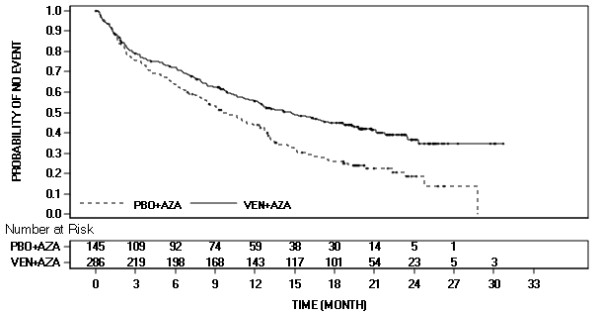
| Endpoint | VENCLEXTA + Azacitidine (N = 286) | Placebo + Azacitidine (N = 145) |
| Overall survival | ||
| Median a , months (95% CI) | 14.7 (11.9, 18.7) | 9.6 (7.4, 12.7) |
| Hazard ratio b (95% CI) | 0.66 (0.52, 0.85) | |
| p-value b | <0.001 | |
| Response rate | ||
| CR, n (%) | 105 (37) | 26 (18) |
| (95% CI) | (31, 43) | (12, 25) |
| p-value c | <0.001 | |
| Median DOCR a,d (months) | 18.0 | 13.4 |
| 95% CI | (15.3, -) | (8.7, 17.6) |
| CR+CRh, n (%) | 185 (65) | 33 (23) |
| (95% CI) | (59, 70) | (16, 30) |
| p-value c | <0.001 | |
| Median DOCR+CRh a,e (months) | 17.8 | 13.9 |
| 95% CI | (15.3, -) | (10.4, 15.7) |
| CI = confidence interval; CR = complete remission; CRh = complete remission with partial hematologic recovery; DOCR = duration of CR; HR = hazard ratio; - = not reached. CR (complete remission) was defined as absolute neutrophil count >1,000/microliter, platelets >100,000/microliter, red blood cell transfusion independence, and bone marrow with <5% blasts. Absence of circulating blasts and blasts with Auer rods; absence of extramedullary disease. CRh (complete remission with partial hematological recovery) was defined as <5% of blasts in the bone marrow, no evidence of disease, and partial recovery of peripheral blood counts (platelets >50,000/microliter and ANC >500/microliter). a Kaplan-Meier estimate. b Hazard ratio estimate (VEN+AZA vs. PBO+AZA) is based on Cox-proportional hazards model stratified by cytogenetics (intermediate risk, poor risk) and age (18 to <75, ≥75 years) as assigned at randomization; p-value based on log-rank test stratified by the same factors. c p-value is from Cochran-Mantel-Haenszel test stratified by age and cytogenetics risk. d Duration of CR is defined as the number of days from the date of first response of CR to the date of earliest evidence of confirmed morphologic relapse, confirmed progressive disease or death due to disease progression. e Duration of CR+CRh is defined as the number of days from the date of first response of CR+CRh (the first of either CR or CRh) to the date of earliest evidence of confirmed morphologic relapse, confirmed progressive disease, or death due to disease progression. | ||
Among the patients treated with VEN+AZA, 155 were dependent on red blood cell (RBC) and/or platelets transfusions at baseline; of these patients, 49% (76/155) became independent of RBC and platelet transfusions during any consecutive ≥56-day post-baseline period. Of the patients treated with VEN+AZA, 131 were independent of both RBC and platelet transfusions at baseline, 69% (90/131) remained transfusion independent during any consecutive ≥56-day post-baseline period. Among the patients treated with PBO+AZA, 81 were dependent on RBC and/or platelets transfusions at baseline; of these patients, 27% (22/81) patients became independent of RBC and platelet transfusions during any consecutive ≥56-day post-baseline period. Of the patients treated with PBO+AZA, 64 were independent of both RBC and platelet transfusions at baseline, 42% (27/64) remained transfusion independent during any consecutive ≥56-day post-baseline period.
The median time to first response of CR or CRh was 1.0 months (range: 0.6 to 14.3 months) with VEN+AZA treatment.
M14-358
M14-358 (NCT02203773) was a non-randomized, open-label trial that evaluated the efficacy of VENCLEXTA in combination with azacitidine (N=84) or decitabine (N=31) in patients with newly diagnosed AML. Of those patients, 67 who received azacitidine combination and 13 who received decitabine combination were 75 years or older, or had comorbidities that precluded the use of intensive induction chemotherapy.
Patients received VENCLEXTA 400 mg orally once daily following completion of the ramp-up dosing schedule [see Dosage and Administration (2.3 )] in combination with azacitidine (75 mg/m 2 either intravenously or subcutaneously on Days 1-7 of each 28-day cycle beginning on Cycle 1 Day 1) or decitabine (20 mg/m 2 intravenously on Days 1-5 of each 28-day cycle beginning on Cycle 1 Day 1). During the ramp-up phase, patients received TLS prophylaxis and were hospitalized for monitoring. Patients continued treatment until disease progression or unacceptable toxicity. Once bone marrow assessment confirmed a remission, defined as less than 5% leukemia blasts, with cytopenia following Cycle 1 treatment, VENCLEXTA was interrupted up to 14 days or until ANC ≥500/microliter and platelet count ≥50 × 10 3 /microliter. Azacitidine dose reduction was implemented in the clinical trial for management of hematologic toxicity [see Dosage and Administration (2.5 )] . Dose reductions for decitabine were not implemented in the clinical trial. Baseline demographic and disease characteristic are shown in Table 30 .
| Characteristic | VENCLEXTA + Azacitidine N = 67 | VENCLEXTA + Decitabine N = 13 |
| Age, years; median (range) | 76 (61-90) | 75 (68-86) |
| Race; % | ||
| White | 87 | 77 |
| Black or African American | 4.5 | 0 |
| Asian | 1.5 | 0 |
| Native Hawaiian or Pacific Islander | 1.5 | 15 |
| American Indian/Alaskan Native | 0 | 7.7 |
| Unreported other | 6 | 0 |
| Male; % | 60 | 38 |
| ECOG performance status; % 0-1 2 3 | 64 33 3 | 92 7.7 0 |
| Disease history; % De Novo AML Secondary AML | 73 27 | 85 15 |
| Mutation analyses detected a ; % | ||
| TP53 | 15 | 31 |
| IDH1 or IDH2 | 27 | 0 |
| FLT3 | 16 | 23 |
| NPM1 | 19 | 15 |
| Cytogenetic risk detected b,c ; % | ||
| Intermediate | 64 | 38 |
| Poor | 34 | 62 |
| Baseline comorbidities d ; % | ||
| Severe cardiac disease | 4.5 | 7.7 |
| Severe pulmonary disease | 1.5 | 0 |
| Moderate hepatic impairment | 9 | 0 |
| Creatinine clearance <45 mL/min | 13 | 7.7 |
| ECOG = Eastern Cooperative Oncology Group. a Includes 6 patients with insufficient sample for analysis in the azacitidine group and 4 in the decitabine group. b As defined by the National Comprehensive Cancer Network (NCCN) risk categorization v2014. c No mitosis in 1 patient in azacitidine group (excluded favorable risk by Fluorescence in situ Hybridization [FISH] analysis). d Patients may have had more than one comorbidity. | ||
The efficacy results are shown in Table 31 .
| Efficacy Outcomes | VENCLEXTA + Azacitidine N = 67 | VENCLEXTA + Decitabine N = 13 |
| CR, n (%) | 29 (43) | 7 (54) |
| (95% CI) | (31, 56) | (25, 81) |
| CRh, n (%) | 12 (18) | 1 (7.7) |
| (95% CI) | (9.6, 29) | (0.2, 36) |
| CI = confidence interval; CR = complete remission; CRh = complete remission with partial hematological recovery. | ||
The median follow-up was 15.9 months (range: 0.4 to 40.3 months) for VENCLEXTA in combination with azacitidine. The median duration of CR was 23.8 months (95% CI: 15.4, -), and the median duration of CR+CRh was 26.5 months (95% CI: 17.4, -).
The median follow-up was 11.0 months (range: 0.7 to 38.8 months) for VENCLEXTA in combination with decitabine. The median duration of CR was 12.7 months (95% CI: 1.4, -) and median duration of CR+CRh was 12.7 months (95% CI: 1.4, 20.0).
Duration of CR is defined as time from the first documentation of CR to the first date of relapse, clinical disease progression or death due to disease progression, whichever occurred earliest. Duration of CR+CRh is defined as time from the first documentation of either CR or CRh to the first date of relapse, clinical disease progression or death due to disease progression, whichever occurred earliest.
Median time to first CR or CRh for patients treated with VENCLEXTA in combination with azacitidine was 1.0 month (range: 0.7 to 8.9 months).
Median time to first CR or CRh for patients treated with VENCLEXTA in combination with decitabine was 1.9 months (range: 0.8 to 4.2 months).
Of patients treated with VENCLEXTA in combination with azacitidine, 12% (8/67) subsequently received stem cell transplant.
The trial enrolled 35 additional patients (age range: 65 to 74 years) who did not have known comorbidities that precluded the use of intensive induction chemotherapy and were treated with VENCLEXTA in combination with azacitidine (N=17) or decitabine (N=18).
For the 17 patients treated with VENCLEXTA in combination with azacitidine, the CR rate was 35% (95% CI: 14%, 62%). The CRh rate was 41% (95% CI: 18%, 67%). Nine (53%) patients subsequently received stem cell transplant.
For the 18 patients treated with VENCLEXTA in combination with decitabine, the CR rate was 56% (95% CI: 31%, 79%). The CRh rate was 22% (95% CI: 6.4%, 48%). Four (22%) patients subsequently received stem cell transplant.
In Combination with Low-Dose Cytarabine
VIALE-C was a randomized (2:1), double-blind, placebo-controlled, multicenter trial (NCT03069352) that evaluated the efficacy and safety of VENCLEXTA in combination with low-dose cytarabine (VEN+LDAC) versus placebo with low-dose cytarabine (PBO+LDAC).
Patients received VENCLEXTA 600 mg orally once daily on Days 1-28 following completion of the ramp-up dosing schedule [see Dosage and Administration (2.3 )] or placebo in combination with cytarabine 20 mg/m 2 subcutaneously once daily on Days 1-10 of each 28-day cycle beginning on Cycle 1 Day 1. During the ramp-up phase, patients received TLS prophylaxis and were hospitalized for monitoring.
Once bone marrow assessment confirmed a remission, defined as less than 5% leukemia blasts with cytopenia following Cycle 1 treatment, VENCLEXTA or placebo was interrupted up to 14 days or until ANC ≥500/microliter and platelet count ≥50 × 10 3 /microliter. For patients with resistant disease at the end of Cycle 1, a bone marrow assessment was performed after Cycle 2 or 3 and as clinically indicated. LDAC was resumed on the same day as VENCLEXTA or placebo following interruption. Patients continued to receive treatment until disease progression or unacceptable toxicity. Baseline demographic and disease characteristic are shown in Table 32 .
| Characteristic | VENCLEXTA + Low-Dose Cytarabine N = 143 | Placebo + Low-Dose Cytarabine N = 68 |
| Age, years; median (range) | 76 (36, 93) | 76 (41, 88) |
| Race; % | ||
| White | 71 | 69 |
| Black or African American | 1.4 | 1.5 |
| Asian | 27 | 29 |
| Male; % | 55 | 57 |
| ECOG performance status; % 0-1 2 3 | 52 44 4.2 | 50 37 13 |
| Disease history; % De Novo AML Secondary AML | 59 41 | 66 34 |
| Mutation analyses detected; n/N a (%) | ||
| TP53 | 22/112 (20) | 9/52 (17) |
| IDH1 or IDH2 | 21/112 (19) | 12/52 (23) |
| FLT3 | 20/112 (18) | 9/52 (17) |
| NPM1 | 18/112 (16) | 7/52 (13) |
| Cytogenetic risk detected b ; % | ||
| Favorable | <1 | 4 |
| Intermediate | 63 | 63 |
| Poor | 33 | 29 |
| a Number of evaluable BMA specimens received at baseline. b Per the 2016 National Comprehensive Cancer Network (NCCN) Guidelines. | ||
Efficacy was based on the rate of CR and duration of CR with supportive evidence of rate of CR+CRh, duration of CR+CRh, and the rate of conversion from transfusion dependence to transfusion independence. The CR rate in the VEN+LDAC arm was 27% (95% CI: 20%, 35%) with a median duration of CR of 11.1 months (95% CI: 6.1, -), and the CR rate in the PBO+LDAC arm was 7.4% (95% CI: 2.4%, 16%) with a median duration of CR of 8.3 months (95% CI: 3.1, - ). The CR+CRh rate in the VEN+LDAC arm was 47% (95% CI: 39%, 55%) and in the PBO+LDAC arm was 15% (95% CI: 7.3%, 25%) with a median duration of CR+CRh of 11.1 months with VEN+LDAC treatment and 6.2 months with PBO+LDAC treatment. The median time to first response of CR or CRh was 1.0 month (range: 0.7 to 5.8 months) with VEN+LDAC treatment.
Among the patients treated with VEN+LDAC, 111 were dependent on RBC and/or platelets transfusions at baseline; of these patients, 33% (37/111) patients became independent of RBC and platelet transfusions during any consecutive ≥56-day post-baseline period. Of the patients treated with VEN+LDAC, 32 were independent of both RBC and platelet transfusions at baseline, 50% (16/32) remained transfusion independent during any consecutive ≥56-day post-baseline period.
Among the patients treated with PBO+LDAC, 55 were dependent on RBC and/or platelets transfusions at baseline; of these patients, 13% (7/55) patients became independent of RBC and platelet transfusions during any consecutive ≥56-day post-baseline period. Of the patients treated with PBO+LDAC, 13 were independent of both RBC and platelet transfusions at baseline, 31% (4/13) remained transfusion independent during any consecutive ≥56-day post-baseline period.
VEN+LDAC did not significantly improve OS versus PBO+LDAC. The hazard ratio (HR) for OS was 0.75 (95% CI: 0.52, 1.07); p-value 0.114. The median OS for VEN+LDAC arm was 7.2 months (95% CI: 5.6, 10.1) and for PBO+LDAC arm was 4.1 months (95% CI: 3.1, 8.8).
M14-387
M14-387 (NCT02287233) was a non-randomized, open-label trial that evaluated the efficacy of VEN+LDAC (N=82) in patients with newly diagnosed AML, including patients with previous exposure to a hypomethylating agent for an antecedent hematologic disorder. Of those patients, 61 were 75 years or older, or had comorbidities that precluded the use of intensive induction chemotherapy.
Patients received VENCLEXTA 600 mg orally once daily on Days 1-28 following completion of the ramp-up phase [see Dosage and Administration (2.3 )] in combination with cytarabine 20 mg/m 2 subcutaneously once daily on Days 1-10 of each 28-day cycle beginning on Cycle 1 Day 1. During the ramp-up, patients received TLS prophylaxis and were hospitalized for monitoring. Once bone marrow assessment confirmed a remission, defined as less than 5% leukemia blasts with cytopenia following Cycle 1 treatment, VENCLEXTA was interrupted up to 14 days or until ANC ≥500/microliter and platelet count ≥50 × 10 3 /microliter. Patients continued treatment until disease progression or unacceptable toxicity. Baseline demographic and disease characteristic are shown in Table 33 .
| Characteristic | VENCLEXTA in Combination with Low-Dose Cytarabine N = 61 |
| Age, years; median (range) | 76 (63-90) |
| Race; % | |
| White | 92 |
| Black or African American | 1.6 |
| Asian | 1.6 |
| Unreported | 4.9 |
| Male; % | 74 |
| ECOG performance status; % 0-1 2 3 | 66 33 1.6 |
| Disease history; % De Novo AML Secondary AML | 54 46 |
| Mutation analyses detected a ; % | |
| TP53 | 8.2 |
| IDH1 or IDH2 | 23 |
| FLT3 | 21 |
| NPM1 | 9.8 |
| Cytogenetic risk detected b ; % | |
| Intermediate | 59 |
| Poor | 34 |
| No mitoses | 6.6 |
| Baseline comorbidities c ; % | |
| Severe cardiac disease | 9.8 |
| Moderate hepatic impairment | 4.9 |
| Creatinine clearance ≥30 or <45 mL/min | 3.3 |
| a Includes 7 patients with insufficient sample for analysis. b As defined by the National Comprehensive Cancer Network (NCCN) risk categorization v2014. c Patients may have had more than one comorbidity. | |
The median follow-up was 7.3 months (range: 0.3 to 54.0 months). The CR rate was 21% (95% CI: 12, 34) and CRh rate was 21% (95% CI: 12, 34).
The median duration of CR was 22.9 months (95% CI: 5.1, -) and the median duration of CR+CRh was 14.3 months (95% CI: 6.1, 31.2).
Median time to first CR or CRh for patients treated with VEN+LDAC was 1.0 month (range: 0.8 to 9.4 months).
The trial enrolled 21 additional patients (age range: 67 to 74 years) who did not have known comorbidities that precluded the use of intensive induction chemotherapy and were treated with VEN+LDAC. The CR rate was 33% (95% CI: 15%, 57%). The CRh rate was 24% (95% CI: 8.2%, 47%). One patient (4.8%) subsequently received stem cell transplant.
16 HOW SUPPLIED/STORAGE AND HANDLING
VENCLEXTA is dispensed as follows:
| Packaging Presentation | Number of Tablets | National Drug Code (NDC) |
| CLL/SLL Starting Pack | Each pack contains four weekly wallet blister packs:
| 0074-0579-28 |
| Wallet containing 10 mg tablets | 14 x 10 mg tablets | 0074-0561-14 |
| Wallet containing 50 mg tablets | 7 x 50 mg tablets | 0074-0566-07 |
| Unit dose blister containing 10 mg tablets | 2 x 10 mg tablets | 0074-0561-11 |
| Unit dose blister containing 50 mg tablet | 1 x 50 mg tablet | 0074-0566-11 |
| Unit dose blister containing 100 mg tablet | 1 x 100 mg tablet | 0074-0576-11 |
| Bottle containing 100 mg tablets | 28 x 100 mg tablets | 0074-0576-30 |
| Bottle containing 100 mg tablets | 120 x 100 mg tablets | 0074-0576-22 |
VENCLEXTA 10 mg film-coated tablets are round, biconvex shaped, pale yellow debossed with “V” on one side and “10” on the other side.
VENCLEXTA 50 mg film-coated tablets are oblong, biconvex shaped, beige debossed with “V” on one side and “50” on the other side.
VENCLEXTA 100 mg film-coated tablets are oblong, biconvex shaped, pale yellow debossed with “V” on one side and “100” on the other side.
Store in original container at or below 86°F (30°C). Dispense to patient in original container to protect from moisture.
12.1 Mechanism of Action
Venetoclax is a selective and orally bioavailable small-molecule inhibitor of BCL-2, an anti-apoptotic protein. Overexpression of BCL-2 has been demonstrated in CLL and AML cells where it mediates tumor cell survival and has been associated with resistance to chemotherapeutics. Venetoclax helps restore the process of apoptosis by binding directly to the BCL-2 protein, displacing pro-apoptotic proteins like BIM, triggering mitochondrial outer membrane permeabilization and the activation of caspases. In nonclinical studies, venetoclax has demonstrated cytotoxic activity in tumor cells that overexpress BCL-2.
