Get your patient on Voydeya (Danicopan)
Voydeya patient education
Patient toolkit
Dosage & administration

Voydeya prescribing information

WARNING: SERIOUS INFECTIONS CAUSED BY ENCAPSULATED BACTERIA
VOYDEYA, a complement inhibitor, increases the risk of serious infections, especially those caused by encapsulated bacteria, such as Neisseria meningitidis , Streptococcus pneumoniae , and Haemophilus influenzae type B [ see Warnings and Precautions (5.1) ]. Life-threatening and fatal infections with encapsulated bacteria have occurred in patients treated with complement inhibitors. These infections may become rapidly life-threatening or fatal if not recognized and treated early.
- Complete or update vaccination for encapsulated bacteria specifically, Neisseria meningitidis and Streptococcus pneumoniae at least 2 weeks prior to the first dose of VOYDEYA, unless the risks of delaying therapy with VOYDEYA outweigh the risk of developing a serious infection. Comply with the most current Advisory Committee on Immunization Practices (ACIP) recommendations for vaccinations against encapsulated bacteria in patients receiving a complement inhibitor. See Warnings and Precautions (5.1) for additional guidance on the management of the risk of serious infections caused by encapsulated bacteria.
- Patients receiving VOYDEYA are at increased risk for invasive disease caused by encapsulated bacteria, even if they develop antibodies following vaccination. Monitor patients for early signs and symptoms of serious infections and evaluate immediately if infection is suspected.
Because of the risk of serious infections caused by encapsulated bacteria, VOYDEYA is available only through a restricted program under a Risk Evaluation and Mitigation Strategy (REMS) called the VOYDEYA REMS [see Warnings and Precautions (5.2) ] .
INDICATIONS AND USAGE
VOYDEYA is indicated as add-on therapy to ravulizumab or eculizumab for the treatment of extravascular hemolysis (EVH) in adults with paroxysmal nocturnal hemoglobinuria (PNH).
Limitations of Use
VOYDEYA has not been shown to be effective as monotherapy and should only be prescribed as an add-on to ravulizumab or eculizumab.
DOSAGE AND ADMINISTRATION
Recommended Vaccination and Prophylaxis for Encapsulated Bacterial Infections
Vaccinate patients against encapsulated bacteria, including Neisseria meningitidis (serogroups A, C, W, Y, and B) and Streptococcus pneumoniae according to current ACIP recommendations at least 2 weeks prior to initiation of VOYDEYA.
If urgent VOYDEYA therapy is indicated in a patient who is not up to date with vaccines for Neisseria meningitidis and Streptococcus pneumoniae according to ACIP recommendations, provide the patient with antibacterial drug prophylaxis and administer these vaccines as soon as possible [see Warnings and Precautions (5.1) ] .
Healthcare professionals who prescribe VOYDEYA must enroll in the VOYDEYA REMS [see Warnings and Precautions (5.2) ] .
Recommended Dosage
Starting Dose:
The recommended dosage of VOYDEYA is 150 mg three times a day administered orally.
VOYDEYA can be taken with or without food.
VOYDEYA doses should be taken around the same time every day.
Dose Adjustment:
The dose can be increased to 200 mg three times a day if the patient's hemoglobin (Hgb) level has not increased by greater than 2 g/dL after 4 weeks of therapy, if the patient required a transfusion during the previous 4 weeks, or to achieve an appropriate Hgb response based on clinical judgement.
Missed Doses
A patient who misses a dose of VOYDEYA should take it as soon as they remember unless it is within 3 hours prior to their next dose, in which case the patient should skip the missed dose and take VOYDEYA at the next regularly scheduled time. Patients should not take two or more doses of VOYDEYA at the same time.
DOSAGE FORMS AND STRENGTHS
Tablets: 50 mg and 100 mg (3 )
Tablets:
- 50 mg, white to off-white, round, film-coated, printed with "DCN" above "50" debossed on one side, plain on the other side.
- 100 mg, white to off-white, round film-coated, printed with "DCN" above "100" debossed on one side, plain on the other side.
USE IN SPECIFIC POPULATIONS
Hepatic Impairment: Avoid use in patients with severe hepatic impairment (Child-Pugh C) (8.6 ).
Pregnancy
Risk Summary
There are no available data on VOYDEYA use in pregnant individuals to evaluate for a drug-associated risk of major birth defects, miscarriage or adverse maternal or fetal outcomes. There are risks to the mother and fetus associated with untreated PNH in pregnancy (see Clinical Considerations ) . The use of VOYDEYA in pregnant women or women planning to become pregnant may be considered following an assessment of the risks and benefits.
In animal reproduction studies, oral administration of danicopan to pregnant New Zealand White (NZW) rabbits and Wistar Hans (WH) rats during organogenesis at exposures 18 or 25-times, respectively, above the human exposure at the maximum recommended human dose (MRHD) of 200 mg three times a day (based on AUC) resulted in no adverse developmental effects (see Data ) .
The estimated background risk of major birth defects and miscarriage for the indicated population is unknown. All pregnancies have a background risk of birth defect, loss, or other adverse outcomes. In the U.S. general population, the estimated background risk of major birth defects and miscarriage in clinically recognized pregnancies is 2-4% and 15-20%, respectively.
Clinical Considerations
Disease-Associated Maternal and/or Fetal/Neonatal Risk
PNH in pregnancy is associated with adverse maternal outcomes, including worsening cytopenias, thrombotic events, infections, bleeding, miscarriages, and increased maternal mortality, and adverse fetal outcomes, including fetal death and premature delivery.
Data
Animal Data
There were no effects on early embryonic development and fetal development in NZW rabbits (where danicopan is pharmacodynamically active) up to a mean maternal systemic exposure 18-times the exposure at the MRHD (based on AUC) or during post-natal development up to a mean maternal systemic exposure 9-times the exposure at the MRHD (based on AUC). In WH rats (where danicopan lacks pharmacodynamic activity), there were no effects on embryo-fetal development up to a mean maternal exposure 25-times the exposure at the MRHD (based on AUC).
Lactation
Risk Summary
There are no data on the presence of danicopan in human milk, the effects on the breastfed child, or the effect on milk production. Danicopan is present in animal milk. When a drug is present in animal milk, it is likely that the drug will be present in human milk.
Because of the potential for serious adverse reactions in the breastfed child, including serious infections with encapsulated bacteria and liver enzyme increases, advise patients not to breastfeed during treatment with VOYDEYA, and for 3-days after the last dose.
Data
Animal Data
Danicopan was excreted into the milk of lactating rabbits following oral administration from lactation day 4 to lactation day 10, with mean milk concentrations at approximately 2 hours following dose administration 5- and 3.5-times higher than the mean maternal plasma concentrations at 50 and 250 mg/kg/day, respectively. Mean milk concentrations in dams were 19- and 43-times higher than the systemic exposure at the MRHD (based on rabbit concentration at 2 hours vs. human C max ).
Pediatric Use
Safety and effectiveness of VOYDEYA for the treatment of PNH in pediatric patients have not been established.
Geriatric Use
There were 22 patients 65 years of age and older in the clinical studies for PNH [see Clinical Studies (14) ] . Of the total number of VOYDEYA-treated patients in these studies, 16 (28.1%) were 65 years of age and older, and 7 (12.3%) were 75 years of age and older. Clinical studies of VOYDEYA did not include sufficient numbers of subjects aged 65 years and over to determine whether they respond differently from younger subjects.
Hepatic Impairment
No dose adjustment is required in patients with mild to moderate hepatic impairment (Child-Pugh Class A and B). Studies have not been conducted in patients with severe hepatic impairment, therefore, avoid use of VOYDEYA in this patient population [see Warnings and Precautions (5.3) ] .
CONTRAINDICATIONS
VOYDEYA is contraindicated for initiation in patients with unresolved serious infection caused by encapsulated bacteria, including Neisseria meningitidis , Streptococcus pneumoniae , or Haemophilus influenzae type B [see Warnings and Precautions (5.1) ] .
WARNINGS AND PRECAUTIONS
- Hepatic Enzyme Increases: Assess liver enzymes before treatment initiation and periodically during treatment. Consider treatment interruption or discontinuation if elevations are clinically significant or if the patient becomes symptomatic (5.3 ).
- Hyperlipidemia: Monitor serum lipids periodically during treatment and initiate cholesterol-lowering medication if indicated (5.4 ).
Serious Infections Caused by Encapsulated Bacteria
VOYDEYA, a complement inhibitor, increases a patient's susceptibility to serious, life-threatening, or fatal infections caused by encapsulated bacteria including Neisseria meningitidis (caused by any serogroup, including non-groupable strains), Streptococcus pneumoniae , and Haemophilus influenzae type B. Life-threatening and fatal infections with encapsulated bacteria have occurred in both vaccinated and unvaccinated patients treated with complement inhibitors. The initiation of VOYDEYA treatment is contraindicated in patients with unresolved serious infections caused by encapsulated bacteria.
Complete or update vaccination against encapsulated bacteria, specifically Neisseria meningitidis and Streptococcus pneumoniae at least 2 weeks prior to administration of the first dose of VOYDEYA, according to the current ACIP recommendations for patients receiving a complement inhibitor. Revaccinate patients in accordance with ACIP recommendations considering the duration of therapy with VOYDEYA. Note that ACIP recommends an administration schedule in patients receiving complement inhibitors that differs from the administration schedule in the vaccine prescribing information. If urgent VOYDEYA therapy is indicated in a patient who is not up to date with vaccines against encapsulated bacteria according to ACIP recommendations, provide the patient with antibacterial drug prophylaxis and administer these vaccines as soon as possible. Various durations and regimens of antibacterial drug prophylaxis have been considered, but the optimal durations and drug regimens for prophylaxis and their efficacy have not been studied in unvaccinated or vaccinated patients receiving complement inhibitors, including VOYDEYA. The benefits and risks of treatment with VOYDEYA, as well as the benefits and risks of antibacterial drug prophylaxis in unvaccinated or vaccinated patients, must be considered against the known risks for serious infections caused by encapsulated bacteria.
Vaccination does not eliminate the risk of serious encapsulated bacterial infections, despite development of antibodies following vaccination. Closely monitor patients for early signs and symptoms of serious infection and evaluate patients immediately if an infection is suspected. Inform patients of these signs and symptoms and instruct patients to seek immediate medical care if these signs and symptoms occur. Promptly treat known infections. Serious infection may become rapidly life-threatening or fatal if not recognized and treated early. Consider interruption of VOYDEYA in patients who are undergoing treatment for serious infections.
VOYDEYA is available only through a restricted program under a REMS [see Warnings and Precautions (5.2) ] .
VOYDEYA REMS
VOYDEYA is available only through a restricted program under a REMS called VOYDEYA REMS, because of the risk of serious infections caused by encapsulated bacteria [see Warnings and Precautions (5.1) ] .
Notable requirements of the VOYDEYA REMS include the following:
- Prescribers must enroll in the REMS.
- Prescribers must counsel patients about the risk of serious infections caused by encapsulated bacteria.
- Prescribers must provide patients with the REMS educational materials.
- Prescribers must assess patient vaccination status for vaccines against encapsulated bacteria and vaccinate if needed according to current ACIP recommendations two weeks prior to the first dose of VOYDEYA.
- Prescribers must provide a prescription for antibacterial drug prophylaxis if treatment must be started urgently, and the patient is not up to date with vaccines against encapsulated bacteria according to current ACIP recommendations at least two weeks prior to the first dose of VOYDEYA.
- Pharmacies that dispense VOYDEYA must be certified in the VOYDEYA REMS and must verify prescribers are certified.
- Patients must receive counseling from the prescriber about the need to receive vaccinations against encapsulated bacteria per ACIP recommendations, the need to take antibiotics as directed by the prescriber, and the early signs and symptoms of serious infections.
- Patients must be instructed to carry the Patient Safety Card with them at all times during treatment and for 1 week following the last dose of VOYDEYA.
Further information is available by telephone: 1-888-765-4747 or online at www.VoydeyaREMS.com.
Hepatic Enzyme Increases
Hepatic enzyme elevations have been observed in patients treated with VOYDEYA [see Adverse Reactions (6.1) ] . Fourteen percent of patients receiving VOYDEYA in Study ALXN2040-PNH-301 had elevations in serum alanine aminotransferase (ALT). ALT elevations > 3 × the upper limit of normal (ULN) and ≤ 5 × ULN occurred in 9% of VOYDEYA-treated patients, and ALT elevations > 5 × ULN and ≤ 10 × ULN occurred in 5% of VOYDEYA-treated patients.
Assess liver enzyme test results prior to the initiation of VOYDEYA and periodically during treatment. Consider treatment interruption or discontinuation if elevations are clinically significant or if the patient becomes symptomatic. VOYDEYA has not been studied in patients with severe hepatic impairment [see Use in Specific Populations (8.7)] .
Monitoring of PNH Manifestations After VOYDEYA Discontinuation
After discontinuing treatment with VOYDEYA, closely monitor patients for at least 2 weeks after the last dose for signs and symptoms of hemolysis. If discontinuation of VOYDEYA is necessary, continue background treatment with ravulizumab or eculizumab or consider alternative therapy if necessary. The signs and symptoms of hemolysis may include a sudden decrease in hemoglobin or fatigue.
If hemolysis occurs after discontinuation of VOYDEYA, consider restarting treatment with VOYDEYA if appropriate.
Hyperlipidemia
VOYDEYA increases total cholesterol and LDL-cholesterol.
Of the 50 VOYDEYA-treated patients who had a normal total cholesterol level at baseline in Study ALXN2040-PNH-301, 30% developed Grade 1 hypercholesterolemia. Of the 6 VOYDEYA treated patients who had Grade 1 hypercholesterolemia at baseline in Study ALXN2040-PNH-301, 1 patient experienced increased total cholesterol that worsened to Grade 2. Of the 54 VOYDEYA-treated patients who had LDL-cholesterol ≤130 mg/dL at baseline in Study ALXN2040-PNH-301, 13% developed LDL-cholesterol >130-160 mg/dL and 9% developed LDL-cholesterol >160-190 mg/dL.
Some patients required cholesterol-lowering medications.
Monitor serum lipid parameters periodically during treatment with VOYDEYA and initiate cholesterol lowering medication, if indicated.
ADVERSE REACTIONS
The following clinically significant adverse reactions are discussed in greater detail in other sections of the labeling:
- Serious Infections Caused by Encapsulated Bacteria [see Warnings and Precautions (5.1) ]
- Hepatic Enzyme Increases [see Warnings and Precautions (5.3) ]
- Hyperlipidemia [see Warnings and Precautions (5.4) ]
Clinical Trials Experience
Because clinical trials are conducted under widely varying conditions, adverse reaction rates observed in the clinical trials of a drug cannot be directly compared to rates in the clinical trials of another drug and may not reflect the rates observed in practice.
The safety of VOYDEYA was evaluated in 86 adults with PNH in Study ALXN2040-PNH-301 [see Clinical Studies (14) ] . Study ALXN2040-PNH-301 enrolled adults with PNH with clinically significant EVH who had been treated with a stable dose of ravulizumab or eculizumab for at least the previous 6 months. Patients were randomly assigned 2:1 to receive double-blind VOYDEYA 150 mg (n=57) or placebo (n=29) orally three times a day in addition to ravulizumab or eculizumab for 12 weeks. Patients received either US-approved or non-US-approved ravulizumab or eculizumab in the trial. Among patients who were randomized to receive VOYDEYA, 84% were exposed for at least 12 weeks.
Serious adverse reactions were reported in 5% of patients who received VOYDEYA and included pancreatitis, cholecystitis, and blood bilirubin increased. No specific serious adverse reaction was reported in more than 1 patient treated with VOYDEYA.
Permanent discontinuation of VOYDEYA due to an adverse reaction occurred in 5% of patients and included 1 patient with blood bilirubin increase and pancreatitis, 1 patient with hepatic enzyme increased, and 1 patient with ALT increased and aspartate aminotransferase increased. Dosage reduction due to an adverse reaction occurred in 1 patient and the adverse reaction was COVID-19.
Among the 57 patients treated with VOYDEYA in Study ALXN2040-PNH-301, the most common adverse reaction (≥10%) was headache.
Table 1 describes adverse reactions reported in ≥5% of patients treated with VOYDEYA and greater than placebo in the randomized, controlled period of Study ALXN2040-PNH-301.
| Adverse Reactions Common Toxicity Criteria Adverse Events (CTCAE) | VOYDEYA (with ravulizumab or eculizumab) N = 57 | Placebo (ravulizumab or eculizumab only) N = 29 |
|---|---|---|
| n (%) | n (%) | |
| Headache | 6 (11) | 3 (10) |
| Vomiting Represents a composite of multiple, related adverse reactions | 4 (7) | 0 (0) |
| Pyrexia | 4 (7) | 0 (0) |
| Alanine aminotransferase increased | 3 (5) | 1 (3) |
| Hypertension | 3 (5) | 1 (3) |
| Pain in extremity | 3 (5) | 0 (0) |
Clinically relevant adverse reactions in <5% of patients include increased serum triglycerides.
DRUG INTERACTIONS
- BCRP substrates: Monitor patients more frequently for adverse reactions and consider dose reduction of the BCRP substrate drug. For rosuvastatin, the dose should not exceed 10 mg once daily (7.1 ).
- P-gp substrates: Dose adjustment might be necessary for P-gp substrates where minimal concentration changes may lead to serious adverse reactions (7.2 ).
BCRP Substrates
Danicopan is a Breast Cancer Resistance Protein (BCRP) inhibitor. Concomitant use of VOYDEYA with a BCRP substrate increases the plasma concentrations of the BCRP substrate [see Clinical Pharmacology (12.3) ] , which may increase the risk for adverse reactions associated with the BCRP substrate. If used together, monitor patients more frequently for adverse reactions associated with the BCRP substrate, and consider dose reduction of the BCRP substrate according to its prescribing information.
Rosuvastatin
Danicopan significantly increased rosuvastatin exposure. The dose of rosuvastatin should not exceed 10 mg once daily when concomitantly used with VOYDEYA [see Clinical Pharmacology (12.3) ] .
P-gp Substrates
Danicopan is an inhibitor of P-glycoprotein (P-gp). Concomitant administration of VOYDEYA with a P-gp substrate may increase the plasma concentration of the P-gp substrate. Dose adjustment might be necessary for P-gp substrates where minimal concentration changes may lead to serious adverse reactions [see Clinical Pharmacology (12.3) ] .
DESCRIPTION
Danicopan is a small molecule complement Factor D inhibitor. Its chemical name is (2S,4R)-1-{[3-acetyl-5-(2-methylpyrimidin-5-yl)-1H-indazol-1-yl] acetyl}-N-(6-bromopyridin-2-yl)-4-fluoropyrrolidine-2-carboxamide. Its molecular formula is C 26 H 23 BrFN 7 O 3 and its molecular weight is 580.4. Danicopan has the following structural formula:
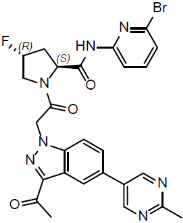
Danicopan is a white/off-white to pale yellow powder. In aqueous solutions, danicopan is considered slightly soluble at pH 1.2 and insoluble from pH 4 to pH 7.
Danicopan tablets are available as white to off-white, round, film-coated, immediate release tablets in strengths of 50 mg and 100 mg, intended for oral administration. Each tablet contains the following inactive ingredients: colloidal silicon dioxide, croscarmellose sodium, hypromellose acetate succinate, lactose monohydrate, magnesium stearate, microcrystalline cellulose, and sodium lauryl sulfate. The tablet coating components are polyethylene glycol, polyvinyl alcohol, talc, and titanium dioxide.
CLINICAL PHARMACOLOGY
Mechanism of Action
Danicopan binds reversibly to complement Factor D and selectively inhibits the alternative complement pathway. Danicopan prevents the cleavage of complement Factor B into the Ba and Bb fragments which are required for the formation of the alternative pathway (AP) complement component C3 convertase (C3bBb), the generation of downstream effectors including C3 fragment opsonization, and the amplification of the terminal pathway.
In PNH, intravascular hemolysis (IVH) is mediated by the terminal membrane attack complex (MAC), while extravascular hemolysis (EVH) is facilitated by C3 fragment opsonization. Danicopan acts proximally in the alternative pathway of the complement cascade to control preferentially C3 fragment-mediated EVH, while co-administered ravulizumab or eculizumab is anticipated to maintain control over MAC-mediated IVH.
Pharmacodynamics
Danicopan inhibits the AP of the complement system, as demonstrated by the decrease in ex vivo serum AP activity and in vivo plasma Bb concentration. Danicopan also reduces complement C3 fragment deposition on circulating red blood cells (RBCs) in PNH patients.
In patients with PNH undergoing treatment with ravulizumab or eculizumab, co-administration of VOYDEYA from 150 mg three times a day to 200 mg three times a day inhibited AP activity by >90%. Additionally, plasma Bb levels decreased by about 50% and the fraction of circulating PNH RBCs with measured C3 fragment deposition decreased by over 50%.
Cardiac Electrophysiology
At a single-dose of 1200 mg that results in approximately 2 times the peak concentration achieved following 200 mg three times a day, VOYDEYA does not prolong the QTc interval to any clinically relevant extent.
Pharmacokinetics
At the recommended dosages of 150 or 200 mg three times a day, the median systemic exposure of danicopan at steady state has a maximum plasma concentration (C max,ss ) of 535 or 665 ng/mL, respectively, and has an area under the plasma drug concentration time curve (AUC 24,ss ) of 8180 or 10200 ng × h/mL, respectively.
Danicopan exposures at steady state generally increase in a dose-proportional manner from 150 mg three times a day to 200 mg three times a day. Danicopan systemic exposure reaches steady state in approximately 2 days. An approximately 2-fold accumulation of danicopan exposure is expected at steady state following thrice daily dosing compared to a single dose.
Absorption
The median time to maximum drug concentration (T max ) is 3.7 hours following oral administration of 150 mg danicopan in patients with PNH.
Effect of Food
When the danicopan tablet was administered with a high-fat meal, danicopan AUC and C max were approximately 25%, and 93% higher, respectively, compared to the fasted state. Median time to maximum drug concentration (T max ) was comparable when danicopan was administered in the fed or fasted state at approximately 3.0 and 2.5 hours, respectively.
Distribution
Plasma protein binding of danicopan is 91.5% to 94.3%. Danicopan is mainly distributed in plasma with a whole blood to plasma distribution ratio of 0.545. The apparent volume of distribution for a 75 kg person was 395 L.
Elimination
The mean half-life (t ½ ) is 7.9 hours. The mean apparent clearance of danicopan is 63 L/h.
Metabolism
Danicopan is extensively metabolized (96%) via oxidation, reduction, and hydrolysis pathways, with amide hydrolysis being the major pathway of elimination. Metabolism by CYP-mediated pathways is minimal.
Excretion
After a single oral administration of 150 mg [ 14 C]-danicopan in humans, 69% of total radioactivity (danicopan plus metabolites) was excreted in feces and 25% was excreted in urine. Unchanged danicopan accounted for 3.57% and 0.48% of the dose excreted in feces and urine, respectively.
Specific Populations
No clinically significant differences in the pharmacokinetics of danicopan were observed based on sex, age (16.9 to 82 years), or race (Caucasians and Asians) based on population pharmacokinetic (PK) assessment.
Renal Impairment
Following oral administration of danicopan 200 mg in subjects with severe renal impairment (eGFR < 30 mL/min/1.73 m 2 ), the extent of danicopan exposure (AUC 0-inf ) increased by 52% as compared to subjects with normal renal function. There was no clinically meaningful change in C max and T max .
Hepatic Impairment
Danicopan C max decreased by 27% and AUC 0-inf decreased by 8% in subjects with moderate hepatic impairment (Child-Pugh B). Studies have not been conducted in patients with severe hepatic impairment (Child-Pugh Class C).
Drug Interaction Studies
Clinical Studies
Effect of Danicopan on the Pharmacokinetics of Other Drugs:
Dedicated clinical drug interaction studies showed no clinically significant drug interactions with danicopan as an inhibitor or inducer of CYP2B6 (bupropion), CYP2C9 (warfarin), CYP2C19 (omeprazole), CYP3A4 (midazolam), and UGT1A1 and UGT2B7 (mycophenolic acid).
BCRP Substrates
Co-administration of a single oral dose of rosuvastatin 20 mg with danicopan dosed to steady state (200 mg three times a day for 4 days) resulted in increased rosuvastatin C max and AUC 0-inf by 3.3-fold and 2.2-fold, respectively.
P-gp Substrates
Co-administration of a single oral dose of fexofenadine 180 mg with danicopan dosed to steady state (150 mg three times a day for 4 days) resulted in increased fexofenadine C max and AUC 0-inf by 1.4-fold and 1.6-fold, respectively.
Co-administration of a single oral dose of tacrolimus 2 mg with danicopan dosed to steady state (200 mg three times a day for 5 days) resulted in increased tacrolimus C max and AUC 0-inf by 1.1-fold and 1.5-fold, respectively.
Effect of Other Drugs on the Pharmacokinetics of Danicopan:
No clinically significant drug interactions were observed for danicopan as a victim when co-administered with antacid drugs (calcium carbonate, aluminum/magnesium hydroxide/simethicone) or a proton pump inhibitor (omeprazole).
In Vitro Studies
Non-CYP based metabolism is the predominant clearance pathway for danicopan. The minimal contribution of CYP metabolism in human hepatocytes is suggestive of a very low likelihood of danicopan as a victim of CYP-based drug-drug interactions.
Danicopan is a substrate of P-gp, but not a substrate of BCRP, Organic Anion Transporting Polypeptide 1B1 (OATP1B1), or OATP1B3. Danicopan is not an inducer of CYP1A2, CYP2B6 or CYP2C9.
Danicopan is an inhibitor of BCRP and P-gp, but not an inhibitor of transporters OATP1B1, OATP1B3, Organic Anion Transporter (OAT)1, OAT3, Organic Cation Transporter 2 (OCT2), or Multidrug And Toxin Extrusion 1 and 2K (MATE1 and MATE2-K).
NONCLINICAL TOXICOLOGY
Carcinogenesis, Mutagenesis, Impairment of Fertility
Carcinogenesis
Danicopan was not carcinogenic in the 6-month carcinogenicity study in the TgRasH2 mouse model. Danicopan was not carcinogenic in the 2-year rat carcinogenicity study at exposures 15- to 23-times the exposure at the MRHD (based on AUC).
Mutagenesis
Danicopan was not genotoxic in the Ames bacterial reverse mutation assay, in vitro micronucleus assay in human peripheral blood lymphocytes, or in the in vivo micronucleus assay in rats.
Impairment of Fertility
In a rabbit study, reductions in male and female fertility and copulation/conception indices were observed at mean exposures 13-times the exposure at the MRHD (based on AUC).
Animal Toxicology and/or Pharmacology
Ocular phototoxicity was observed in pigmented rats at systemic exposures 15-times and 28-times the exposure at the MRHD (based on AUC and C max , respectively). As danicopan is expected to accumulate in the eye, a risk of developing ocular phototoxicity cannot be excluded in patients on long-term danicopan therapy who are exposed to unprotected ultraviolet radiation for extended periods of time. The clinical significance of these findings is unknown.
CLINICAL STUDIES
Paroxysmal Nocturnal Hemoglobinuria (PNH)
The efficacy of VOYDEYA in adults with PNH and clinically significant EVH was assessed in a multiple-region, randomized, double-blind, placebo-controlled study (ALXN2040-PNH-301; NCT04469465). Clinically significant EVH was defined by anemia (hemoglobin [Hgb] ≤ 9.5 g/dL) with absolute reticulocyte count ≥ 120 × 10 9 /L with or without transfusion support. The study enrolled patients with PNH who had been treated with a stable dose of ravulizumab or eculizumab for at least the previous 6 months.
VOYDEYA was administered orally at 150 mg three times a day, escalated to 200 mg three times a day depending on the clinical response.
Patients were vaccinated against meningococcal infection prior to or at the time of initiating treatment with VOYDEYA if vaccination status within 3 years could not be verified.
Patients were randomized to VOYDEYA or placebo in a 2:1 ratio for 12 weeks in addition to background ravulizumab or eculizumab treatment. After Week 12, all patients received VOYDEYA in combination with their background ravulizumab or eculizumab treatment up to Week 24. After Week 24, patients could enter a long-term extension period and continue to receive VOYDEYA with background ravulizumab or eculizumab.
Efficacy was based on the change in Hgb level from Baseline to Week 12. Other efficacy measures included the proportion of patients with Hgb increase of ≥ 2 g/dL at Week 12 in the absence of transfusions, the proportion of patients with transfusion avoidance through Week 12, the change from Baseline in Functional Assessment of Chronic Illness Therapy (FACIT)-Fatigue scores at Week 12, and change from Baseline in absolute reticulocyte count at Week 12. Transfusion avoidance was considered as achieved only by the patients who did not receive a transfusion and did not meet the protocol specified guidelines for transfusion from Baseline through Week 12.
A pre-specified interim analysis was performed when 63 participants reached the end (either completed or discontinued) of Week 12.
Baseline demographic and disease history characteristics were generally balanced between treatment groups.
Table 2 presents the baseline characteristics of the patients with PNH enrolled in the study.
| Parameter | Statistics | VOYDEYA (Add-on to ravulizumab or eculizumab) N = 42 | Placebo (Add-on to ravulizumab or eculizumab) N = 21 |
|---|---|---|---|
| Abbreviations: FACIT = Functional Assessment of Chronic Illness Therapy; LDH = lactate dehydrogenase; N = number of patients; pRBC = packed red blood cell; SD = standard deviation | |||
| Age (years) | Mean (SD) | 55 (16) | 53 (14) |
| Median | 58 | 53 | |
| Min, max | 25, 80 | 29, 75 | |
| Sex | n (%) | ||
| Male | 19 (45.2) | 7 (33.3) | |
| Female | 23 (54.8) | 14 (66.7) | |
| Race | n (%) | ||
| American Indian or Alaska Native | 1 (2.4) | 0 | |
| Asian | 18 (42.9) | 7 (33.3) | |
| Black or African American | 1 (2.4) | 0 | |
| White | 19 (45.2) | 9 (42.9) | |
| Other | 1 (2.4) | 0 | |
| Unknown | 0 | 1 (4.8) | |
| Not Reported | 2 (4.8) | 4 (19.0) | |
| Ethnicity | n (%) | ||
| Hispanic or Latino | 4 (9.5) | 0 | |
| Not Hispanic or Latino | 34 (81.0) | 17 (81.0) | |
| Not reported | 4 (9.5) | 4 (19.0) | |
| Hemoglobin level (g/dL) | Mean (SD) | 7.7 (0.9) | 7.7 (1.0) |
| Reticulocyte count (10 9 /L) | N | 42 | 20 |
| Mean (SD) | 236 (91) | 241 (120) | |
| Number of patients with pRBC/whole blood transfusions within 24 weeks prior to first dose | n (%) | 38 (90) | 17 (81) |
| pRBC/whole blood Transfusions within 24 weeks prior to first dose | Mean (SD) | 2.5 (2.2) | 2.6 (2.1) |
| LDH (U/L) | N | 42 | 20 |
| Mean (SD) | 299 (106) | 278 (68) | |
| FACIT-Fatigue score Fatigue-related symptoms and impacts were assessed using a patient reported outcome instrument, FACIT-Fatigue (score range from 0 to 52 with higher scores indicating less fatigue). | Mean (SD) | 33 (11) | 34 (11) |
| Background treatment with: | n (%) | ||
| Ravulizumab | 27 (64.3) | 10 (47.6) | |
| Eculizumab | 15 (35.7) | 11 (52.4) | |
Efficacy was established based on demonstration of superiority of VOYDEYA in combination with ravulizumab or eculizumab compared to placebo in combination with ravulizumab or eculizumab in all efficacy measures with statistically significant results (Table 3).
| VOYDEYA (Add-on to ravulizumab or eculizumab) (N = 42) | Placebo (Add-on to ravulizumab or eculizumab) (N = 21) | |
|---|---|---|
| Abbreviations: CI = confidence interval; FACIT = Functional Assessment of Chronic Illness Therapy | ||
| Change in Hemoglobin Level The model included the fixed, categorical effects of treatment group, study visit, and study visit-by-treatment group interaction, as well as the fixed, continuous covariate of baseline value and the randomization stratification factor of transfusion history. An unstructured covariance matrix was used to model the within-patient errors. | ||
| Mean change from Baseline to Week 12 (g/dL) | 2.9 | 0.5 |
| Treatment difference | 2.4 (95% CI: 1.7, 3.2) | |
| P-value | 0.0007 Statistical significance of the treatment group difference was evaluated via a re-randomization test method. The p-value for the re-randomization test was calculated as the number of re-randomized treatment group differences that were more extreme than the treatment group difference calculated under the actual randomization divided by the total number of simulated re-randomizations. | |
| Proportion of Patients with Hemoglobin Increase of ≥ 2 g/dL in the Absence of Transfusion The proportions were compared between treatment groups using the Cochrane-Mantel-Haenszel (CMH) test stratified by randomization stratification factors of transfusion history and screening Hgb level. The p-value was from the stratified CMH test. | ||
| At Week 12 (%) | 59.5 | 0 |
| Treatment difference | 46.9 (95% CI: 29.2, 64.7) | |
| P-value | < 0.0001 | |
| Proportion of Patients with Transfusion Avoidance | ||
| Through 12-Week Treatment Period (%) | 83.3 | 38.1 |
| Treatment difference | 41.7 (95% CI: 22.7, 60.8) | |
| P-value | 0.0004 | |
| Change in FACIT-Fatigue Score The model included the fixed, categorical effects of treatment group, study visit, and study visit-by-treatment group interaction, as well as the fixed, continuous covariate of baseline value and the randomization stratification factors of transfusion history and screening Hgb level. An unstructured covariance matrix was used to model the within-patient errors. Fatigue-related symptoms and impacts were assessed using a patient reported outcome instrument, FACIT-Fatigue (score range from 0 to 52 with higher scores indicating less fatigue). | ||
| Mean change from Baseline to Week 12 | 8.0 | 1.9 |
| Treatment difference | 6.1 (95% CI: 2.3, 9.9) | |
| P-value | 0.002 The p-value was for the difference of LS mean from the mixed models for repeated measures (MMRM). | |
| Change in Absolute Reticulocyte Count | ||
| Mean change from Baseline to Week 12 (10 9 /L) | -84 | 4 |
| Treatment difference | -87 (95% CI: -118, -57) | |
| P-value | < 0.0001 | |
HOW SUPPLIED/STORAGE AND HANDLING
VOYDEYA (danicopan) tablets are available in the doses and packages listed in Table 4.
| Dose | Tablet Strength | Film-Coated Tablet Markings | Tablet Color/Shape | Pack Size | NDC Code |
|---|---|---|---|---|---|
| Each carton contains two high density polyethylene bottles with desiccant and child resistant seal, with 180 tablets per carton: | |||||
| 150 mg | 50 mg | Debossed on one side with "DCN 50" | White to off-white, round film-coated tablets | One bottle with 90 × 50 mg per tablet (25682-040-90) One bottle with 90 × 100 mg per tablet (25682-043-90) | 25682-046-92 |
| 100 mg | Debossed on one side with "DCN 100" | ||||
| 200 mg | 100 mg | Debossed on one side with "DCN 100" | White to off-white, round film-coated tablets | Two bottles with 90 tablets per bottle: 90 × 100 mg per tablet (25682-043-90) | 25682-043-92 |
Store and dispense in the original container at 20°C to 25°C (68°F to 77°F) with excursions permitted between 15°C and 30°C (59°F and 86°F) [see USP controlled room temperature].
Mechanism of Action
Danicopan binds reversibly to complement Factor D and selectively inhibits the alternative complement pathway. Danicopan prevents the cleavage of complement Factor B into the Ba and Bb fragments which are required for the formation of the alternative pathway (AP) complement component C3 convertase (C3bBb), the generation of downstream effectors including C3 fragment opsonization, and the amplification of the terminal pathway.
In PNH, intravascular hemolysis (IVH) is mediated by the terminal membrane attack complex (MAC), while extravascular hemolysis (EVH) is facilitated by C3 fragment opsonization. Danicopan acts proximally in the alternative pathway of the complement cascade to control preferentially C3 fragment-mediated EVH, while co-administered ravulizumab or eculizumab is anticipated to maintain control over MAC-mediated IVH.
