Get your patient on Adapalene And Benzoyl Peroxide - Adapalene And Benzoyl Peroxide gel (Adapalene And Benzoyl Peroxide)
Adapalene And Benzoyl Peroxide - Adapalene And Benzoyl Peroxide gel prescribing information

INDICATIONS AND USAGE
Adapalene and benzoyl peroxide gel is indicated for the topical treatment of acne vulgaris in patients 9 years of age and older.
DOSAGE AND ADMINISTRATION
For topical use only; Adapalene and benzoyl peroxide gel is not for oral, ophthalmic, or intravaginal use.
Apply a thin film of adapalene and benzoyl peroxide gel to affected areas of the face and/or trunk once daily after washing. Use a pea-sized amount for each area of the face (e.g., forehead, chin, each cheek). Avoid the eyes, lips and mucous membranes.
DOSAGE FORMS AND STRENGTHS
Each gram of adapalene and benzoyl peroxide gel contains 1 mg (0.1%) adapalene, USP and 25 mg (2.5%) benzoyl peroxide, USP in a white to pale yellow, opaque gel.
USE IN SPECIFIC POPULATIONS
Pregnancy
Pregnancy Category C. There are no well-controlled trials in pregnant women treated with adapalene and benzoyl peroxide gel. Animal reproduction studies have not been conducted with the combination gel or benzoyl peroxide. Furthermore, such studies are not always predictive of human response; therefore, adapalene and benzoyl peroxide gel should be used during pregnancy only if the potential benefit justifies the risk to the fetus.
No teratogenic effects were observed in rats treated with oral doses of 0.15 to 5 mg adapalene/kg/day, up to 25 times (mg/m 2 /day) the maximum recommended human dose (MRHD) of 2 grams of adapalene and benzoyl peroxide gel. However, teratogenic changes were observed in rats and rabbits when treated with oral doses of ≥ 25 mg adapalene/kg/day representing 123 and 246 times MRHD, respectively. Findings included cleft palate, microphthalmia, encephalocele and skeletal abnormalities in rats; and umbilical hernia, exophthalmos and kidney and skeletal abnormalities in rabbits.
Dermal teratology studies conducted in rats and rabbits at doses of 0.6 to 6 mg adapalene/kg/day [25 to 59 times (mg/m 2 ) the MRHD] exhibited no fetotoxicity and only minimal increases in supernumerary ribs in both species and delayed ossification in rabbits.
Nursing Mothers
It is not known whether adapalene or benzoyl peroxide is excreted in human milk following use of adapalene and benzoyl peroxide gel. Because many drugs are excreted in human milk, caution should be exercised when adapalene and benzoyl peroxide gel is administered to a nursing woman.
Pediatric Use
Safety and effectiveness of adapalene and benzoyl peroxide gel in pediatric patients under the age of 9 have not been established.
Geriatric Use
Clinical studies of adapalene and benzoyl peroxide gel did not include sufficient numbers of subjects aged 65 and over to determine whether they respond differently from younger subjects.
CONTRAINDICATIONS
None
WARNINGS AND PRECAUTIONS
Ultraviolet Light and Environmental Exposure: Avoid exposure to sunlight and sunlamps. Wear sunscreen when sun exposure cannot be avoided. (5.1 )
Erythema, scaling, dryness, stinging/burning, irritant and allergic contact dermatitis may occur with use of adapalene and benzoyl peroxide gel and may necessitate discontinuation. (5.2 )
Ultraviolet Light and Environmental Exposure
Exposure to sunlight, including sunlamps, should be minimized during the use of adapalene and benzoyl peroxide gel. Patients with high levels of sun exposure and those with inherent sensitivity to sun should exercise particular caution. Use of sunscreen products and protective apparel, (e.g., hat) are recommended when exposure cannot be avoided. Weather extremes, such as wind or cold, may be irritating to patients under treatment with adapalene and benzoyl peroxide gel.
Local Cutaneous Reactions
Erythema, scaling, dryness, and stinging/burning may be experienced with use of adapalene and benzoyl peroxide gel. These are most likely to occur during the first four weeks of treatment, are mostly mild to moderate in intensity, and usually lessen with continued use of the medication. Irritant and allergic contact dermatitis may occur. Depending upon the severity of these adverse reactions, patients should be instructed to use a moisturizer, reduce the frequency of the application of adapalene and benzoyl peroxide gel, or discontinue use. The product should not be applied to cuts, abrasions, eczematous or sunburned skin. As with other retinoids, use of "waxing" as a depilatory method should be avoided on skin treated with adapalene and benzoyl peroxide gel.
Avoid concomitant use of other potentially irritating topical products (medicated or abrasive soaps and cleansers, soaps and cosmetics that have strong skin-drying effect and products with high concentrations of alcohol, astringents, spices, or limes).
ADVERSE REACTIONS
Most commonly reported adverse events (≥1%) in patients treated with adapalene and benzoyl peroxide gel were dry skin, contact dermatitis, application site burning, application site irritation and skin irritation. (6 )
To report SUSPECTED ADVERSE REACTIONS, contact Glenmark Pharmaceuticals Inc., USA at 1 (888) 721-7115, or FDA at 1-800-FDA-1088 or www.fda.gov/medwatch
Clinical Studies Experience
Because clinical studies are conducted under widely varying conditions, adverse reaction rates observed in the clinical studies of a drug cannot be directly compared to rates in the clinical studies of another drug and may not reflect the rates observed in practice.
During clinical trials, 1401 subjects were exposed to adapalene and benzoyl peroxide gel. A total of 1036 subjects with acne vulgaris, 12 years and older, were treated once daily for 12 weeks to 12 months. Related adverse events reported within 12 weeks of treatment and in at least 1% of subjects treated with adapalene and benzoyl peroxide gel and those reported in subjects treated with the vehicle gel are presented in Table 1:
| System Organ Class/Preferred Term | Adapalene and Benzoyl Peroxide gel N = 564 | Vehicle gel N = 489 |
|---|---|---|
Subjects with AE (s) | 14% | 4% |
Dry Skin | 7% | 2% |
Contact dermatitis | 3% | <1% |
Application site burning | 2% | <1% |
Application site irritation | 1% | <1% |
Skin irritation | 1% | 0% |
Local tolerability evaluations, presented in Table 2, were conducted at each study visit in clinical trials by assessment of erythema, scaling, dryness, burning, and stinging.
Maximum Severity During Treatment | End of Treatment Severity (12 Weeks) | |||||
Mild | Moderate | Severe | Mild | Moderate | Severe | |
Erythema | 27% | 13% | 1% | 8% | 2% | 1% |
Scaling | 35% | 11% | 1% | 9% | 1% | <1% |
Dryness | 41% | 13% | 1% | 10% | 2% | <1% |
Stinging/burning | 41% | 15% | 3% | 7% | 2% | 1% |
Analysis over the 12-week period showed that local tolerability scores for erythema, scaling, dryness, and stinging/burning peaked at Week 1 of therapy and decreased thereafter.
During a pediatric clinical trial, 285 children with acne vulgaris, 9 to 11 years of age were treated with adapalene and benzoyl peroxide gel or with the vehicle gel once daily for 12 weeks. Overall, the safety profile of adapalene and benzoyl peroxide gel in these subjects is comparable to the safety profile observed in older subjects 12 years of age and above, both in the nature and frequency of the observed events.
Analysis of local tolerability evaluations shows similar incidence of treatment emergent signs and symptoms as in subjects 12 years of age and above, with local tolerability signs and symptoms peaking during the first week and decreasing over time.
Postmarketing Experience
The following adverse reactions have been identified during postapproval use of adapalene and benzoyl peroxide gel: eyelid edema, sunburn, blister, pain of skin, pruritus, swelling face, conjunctivitis, skin discoloration, rash, eczema, throat tightness and allergic contact dermatitis. Because these reactions are reported voluntarily from a population of uncertain size, it is not always possible to reliably estimate their frequency or establish a causal relationship to drug exposure.
DRUG INTERACTIONS
Concomitant topical acne therapy should be used with caution because a possible cumulative irritancy effect may occur, especially with the use of peeling, desquamating, or abrasive agents.
No formal drug-drug interaction studies were conducted with adapalene and benzoyl peroxide gel.
DESCRIPTION
Adapalene and Benzoyl Peroxide Gel, 0.1%/2.5% is a white to pale yellow, opaque gel for topical use containing adapalene, USP, 0.1%, and benzoyl peroxide, USP, 2.5%.
Adapalene, USP a synthetic retinoid, is a naphthoic acid derivative with retinoid-like properties. The chemical name for adapalene, USP is 6-(4-Methoxy-3-(tricyclo [3.3.1.13,7 ]dec-1-ylphenyl)-2-naphthalene carboxylic acid . It has the following structural formula:
Adapalene, USP:
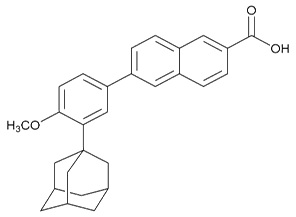
Molecular formula: C 28 H 28 O 3 Molecular weight: 412.52 g/mol
Benzoyl peroxide, USP is a highly lipophilic oxidizing agent that localizes in both bacterial and keratinocyte cell membranes. The chemical name for benzoyl peroxide, USP is dibenzoyl peroxide. It has the following structural formula:
Benzoyl Peroxide, USP:
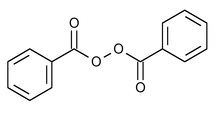
Molecular formula: C 14 H 10 O 4 Molecular weight: 242.23 g/mol
Adapalene and Benzoyl Peroxide Gel contains the following inactive ingredients: carbomer homopolymer type C, cyclomethicone, docusate sodium, edetate disodium, glycerin, propylene glycol, poloxamer 124, purified water, sorbitan oleate and sodium hydroxide.
CLINICAL PHARMACOLOGY
Mechanism of Action
Adapalene
Adapalene binds to specific retinoic acid nuclear receptors but does not bind to cytosolic receptor protein. Biochemical and pharmacological profile studies have demonstrated that adapalene is a modulator of cellular differentiation, keratinization and inflammatory processes. However, the significance of these findings with regard to the mechanism of action of adapalene for the treatment of acne is unknown.
Benzoyl peroxide
Benzoyl peroxide is an oxidizing agent with bactericidal and keratolytic effects.
Pharmacodynamics
Pharmacodynamics of adapalene and benzoyl peroxide gel is unknown.
Pharmacokinetics
A pharmacokinetic study was conducted in 10 adult subjects with acne vulgaris who were treated once daily for 30 days with 2 grams/day of adapalene and benzoyl peroxide gel applied to 1000 cm 2 of acne involved skin, (face, chest, and upper back).
Two subjects (20%) had quantifiable adapalene plasma concentrations above the limit of quantification (LOQ = 0.1ng/mL). The highest adapalene C max and AUC 0-24h was 0.21 ng/mL and 1.99 ng•h/mL, respectively. Excretion of adapalene appears to be primarily by the biliary route. Pharmacokinetics of adapalene and benzoyl peroxide gel in pediatric subjects have not been evaluated.
Benzoyl peroxide is absorbed by the skin where it is converted to benzoic acid and eliminated in the urine.
NONCLINICAL TOXICOLOGY
Carcinogenesis, Mutagenesis, Impairment of Fertility
No carcinogenicity, photocarcinogenicity, genotoxicity, or fertility studies were conducted with adapalene and benzoyl peroxide gel.
Carcinogenicity studies with adapalene have been conducted in mice at topical doses of 0.4, 1.3, and 4 mg/kg/day (1.2, 3.9, and 12 mg/m 2 /day), and in rats at oral doses of 0.15, 0.5, and 1.5 mg/kg/day (0.9, 3, and 9 mg/m 2 /day). In terms of body surface area, the highest dose levels are 9.8 (mice) and 7.4 times (rats) the MRHD of 2 grams of adapalene and benzoyl peroxide gel. In the rat study, an increased incidence of benign and malignant pheochromocytomas in the adrenal medulla of male rats was observed.
No significant increase in tumor formation was observed in rodents topically treated with 15 to 25% benzoyl peroxide carbopol gel (6 to 10 times the concentration of benzoyl peroxide in adapalene and benzoyl peroxide gel) for two years. Rats received maximum daily applications of 138 (males) and 205 (females) mg benzoyl peroxide/kg. In terms of body surface area, these levels are 27 to 40 times the MRHD. Similar results were obtained in mice topically treated with 25% benzoyl peroxide carbopol gel for 56 weeks followed by intermittent treatment with 15% benzoyl peroxide carbopol gel for rest of the 2 years study period, and in mice topically treated with 5% benzoyl peroxide carbopol gel for two years.
The role of benzoyl peroxide as a tumor promoter has been well established in several animal species. However, the significance of this finding in humans is unknown.
In a photocarcinogenicity study conducted with 5% benzoyl peroxide carbopol gel, no increase in UV-induced tumor formation was observed in hairless mice topically treated for 40 weeks.
No photocarcinogenicity studies were conducted with adapalene. However, animal studies have shown an increased tumorigenic risk with the use of pharmacologically similar drugs (e.g., retinoids) when exposed to UV irradiation in the laboratory or sunlight. Although the significance of these findings to humans is not clear, patients should be advised to avoid or minimize exposure to either sunlight or artificial irradiation sources.
Adapalene did not exhibit mutagenic or genotoxic effects in vitro (Ames test, Chinese hamster ovary cell assay, mouse lymphoma TK assay) or in vivo (mouse micronucleus test).
Bacterial mutagenicity assays (Ames test) with benzoyl peroxide has provided mixed results, mutagenic potential was observed in a few but not in a majority of investigations. Benzoyl peroxide has been shown to produce single-strand DNA breaks in human bronchial epithelial and mouse epidermal cells, it has caused DNA-protein cross-links in the human cells, and has also induced a dose-dependent increase in sister chromatid exchanges in Chinese hamster ovary cells.
In rat oral studies, 20 mg adapalene/kg/day (120 mg/m 2 /day; 98 times the MRHD based on mg/m 2 /day comparison) did not affect the reproductive performance and fertility of F 0 males and females, or growth, development and reproductive function of F 1 offspring.
No fertility studies were conducted with benzoyl peroxide.
CLINICAL STUDIES
The safety and efficacy of adapalene and benzoyl peroxide gel applied once daily for the treatment of acne vulgaris were assessed in two 12-week, multicenter, controlled clinical studies of similar design, comparing adapalene and benzoyl peroxide gel to the gel vehicle in acne subjects.
Treatment response was defined as the percent of subjects who had a two grade improvement and rated ‘Clear’ and ‘Almost Clear’ at Week 12 based on the Investigator's Global Assessment (IGA) and mean absolute change from baseline at Week 12 in both inflammatory and non-inflammatory lesion counts. An IGA score of 'Clear' corresponded to residual hyperpigmentation and erythema may be present. An IGA score of ‘Almost Clear’ corresponded to a few scattered comedones and a few small papules.
In Study 1, 517 subjects were randomized to adapalene and benzoyl peroxide gel, adapalene 0.1% in vehicle gel, benzoyl peroxide 2.5% in vehicle gel, or vehicle gel. The median age of these 517 subjects was 15 years old and 60% were males. At baseline subjects had between 20 to 50 inflammatory lesions and 30 to 100 non-inflammatory lesions. The majority of subjects had a baseline IGA score of ‘Moderate’ which corresponded to more than half of the face is involved, many comedones, papules and pustules. The efficacy results at week 12 are presented in Table 3.
In Study 2, 1668 subjects were randomized to adapalene and benzoyl peroxide gel, adapalene 0.1% in vehicle gel, benzoyl peroxide 2.5% in vehicle gel, or vehicle gel. The median age of subjects was 16 years old and 49% were males. At baseline subjects had between 20 to 50 inflammatory lesions and 30 to 100 non-inflammatory lesions as well as an Investigator Global Assessment score of ‘Moderate’. The efficacy results at week 12 are presented in Table 3.
In Study 3, 285 pediatric subjects 9 to 11 years of age were randomized to adapalene and benzoyl peroxide gel or vehicle gel. The median age of subjects was 11 years and 24% were males. At baseline, subjects had a minimum of 20 but not more than 100 total lesions (inflammatory and/or non-inflammatory) with an Investigator Global Assessment score of 'Moderate'. The efficacy results at week 12 are presented in Table 3.
Study 1 | ||||
Adapalene and Benzoyl Peroxide gel | Adapalene 0.1% in Vehicle gel | Benzoyl Peroxide 2.5% in Vehicle gel | Vehicle gel | |
(N = 149) | (N = 148) | (N = 149) | (N = 71) | |
IGA: Two Grade Improvement and Clear or Almost Clear | 32 (21.5%) | 18 (12.2%) | 18 (12.1%) | 4 (5.6%) |
Inflammatory Lesions: Mean Absolute (Percent) Change | 16 (52.4%) | 11.4 (39.9%) | 10.5 (35.8%) | 9.5 (31.8%) |
Non-inflammatory Lesions: Mean Absolute (Percent) Change | 23.4 (45.9%) | 15.2 (29.6%) | 13.7 (32.2%) | 13.2 (27.8%) |
Study 2 | ||||
Adapalene and Benzoyl Peroxide gel | Adapalene 0.1% in Vehicle gel | Benzoyl Peroxide 2.5% in Vehicle gel | Vehicle gel | |
(N = 415) | (N = 420) | (N = 415) | (N = 418) | |
IGA: Two Grade Improvement and Clear or Almost Clear | 125 (30.1%) | 83 (19.8%) | 92 (22.2%) | 47 (11.3%) |
Inflammatory Lesions: Mean Absolute (Percent) Change | 15.4 (53.4%) | 12.3 (41.7%) | 13.7 (47.6%) | 8.7 (30.2%) |
Non-inflammatory Lesions: Mean Absolute (Percent) Change | 24.6 (48.1%) | 21 (40.8%) | 19.2 (37.2%) | 11.3 (23.2%) |
In both Studies 1 and 2 the treatment effect was smaller in subjects with a small number of baseline lesions than in subjects with a large number of baseline lesions.
Adapalene and Benzoyl Peroxide Gel N=142 | Vehicle Gel N=143 | |
IGA: Two Grade Improvement and Clear or Almost Clear | 67 (47.2%) | 22 (15.4%) |
Inflammatory Lesions: Mean Absolute (Percent) Change | 7.4 (36%) | 0.7 (-13.2%)• |
Non-inflammatory Lesions: Mean Absolute (Percent) Change | 20.2 (54.7%) | 2.9 (2.3%) |
• - That is, a mean percent increase of 13.2%
HOW SUPPLIED/STORAGE AND HANDLING
Adapalene and Benzoyl Peroxide Gel, 0.1%/2.5% is white to pale yellow in color and opaque in appearance, and is supplied as follows:
45 gram tube NDC 68462-301-55
45 gram pump NDC 68462-301-47
Store at 20° to 25°C (68° to 77°F); excursions permitted to 15° to 30°C (59° to 86°F) [see USP Controlled Room Temperature].
Protect from light. Keep out of reach of children.
Keep away from heat. Keep tube tightly closed.
Mechanism of Action
Adapalene
Adapalene binds to specific retinoic acid nuclear receptors but does not bind to cytosolic receptor protein. Biochemical and pharmacological profile studies have demonstrated that adapalene is a modulator of cellular differentiation, keratinization and inflammatory processes. However, the significance of these findings with regard to the mechanism of action of adapalene for the treatment of acne is unknown.
Benzoyl peroxide
Benzoyl peroxide is an oxidizing agent with bactericidal and keratolytic effects.
