Get your patient on Azulfidine en - Tabs - Sulfasalazine tablet, Delayed Release (Sulfasalazine)
Azulfidine en - Tabs - Sulfasalazine tablet, Delayed Release prescribing information

INDICATIONS AND USAGE
AZULFIDINE EN-tabs Tablets are indicated:
- in the treatment of mild to moderate ulcerative colitis, and as adjunctive therapy in severe ulcerative colitis;
- for the prolongation of the remission period between acute attacks of ulcerative colitis;
- in the treatment of patients with rheumatoid arthritis who have responded inadequately to salicylates or other nonsteroidal anti-inflammatory drugs (e.g., an insufficient therapeutic response to, or intolerance of, an adequate trial of full doses of one or more nonsteroidal anti-inflammatory drugs); and
- in the treatment of pediatric patients with polyarticular-course 1 juvenile rheumatoid arthritis who have responded inadequately to salicylates or other nonsteroidal anti-inflammatory drugs.
AZULFIDINE EN-tabs is particularly indicated in patients with ulcerative colitis who cannot take uncoated sulfasalazine tablets because of gastrointestinal intolerance, and in whom there is evidence that this intolerance is not primarily the result of high blood levels of sulfapyridine and its metabolites, e.g., patients experiencing nausea and vomiting with the first few doses of the drug, or patients in whom a reduction in dosage does not alleviate the adverse gastrointestinal effects.
In patients with rheumatoid arthritis or juvenile rheumatoid arthritis, rest and physiotherapy as indicated should be continued. Unlike anti-inflammatory drugs, AZULFIDINE EN-tabs does not produce an immediate response. Concurrent treatment with analgesics and/or nonsteroidal anti-inflammatory drugs is recommended at least until the effect of AZULFIDINE EN-tabs is apparent.
DOSAGE AND ADMINISTRATION
The dosage of AZULFIDINE EN-tabs Tablets should be adjusted to each individual's response and tolerance.
Patients should be instructed to take AZULFIDINE EN-tabs in evenly divided doses, preferably after meals, and to swallow the tablets whole.
Ulcerative Colitis
Initial Therapy
Adults: 3 to 4 g daily in evenly divided doses with dosage intervals not exceeding eight hours. It may be advisable to initiate therapy with a lower dosage, e.g., 1 to 2 g daily, to reduce possible gastrointestinal intolerance. If daily doses exceeding 4 g are required to achieve the desired therapeutic effect, the increased risk of toxicity should be kept in mind.
Children, six years of age and older: 40 to 60 mg/kg of body weight in each 24-hour period, divided into 3 to 6 doses.
Maintenance Therapy
Adults: 2 g daily.
Children, six years of age and older: 30 mg/kg of body weight in each 24-hour period, divided into 4 doses. The response of acute ulcerative colitis to AZULFIDINE EN-tabs can be evaluated by clinical criteria, including the presence of fever, weight changes, and degree and frequency of diarrhea and bleeding, as well as by sigmoidoscopy and the evaluation of biopsy samples. It is often necessary to continue medication even when clinical symptoms, including diarrhea, have been controlled. When endoscopic examination confirms satisfactory improvement, dosage of AZULFIDINE EN-tabs should be reduced to a maintenance level. If diarrhea recurs, dosage should be increased to previously effective levels.
AZULFIDINE EN-tabs is particularly indicated in patients who cannot take uncoated sulfasalazine tablets because of gastrointestinal intolerance (e.g., anorexia, nausea). If symptoms of gastric intolerance (anorexia, nausea, vomiting, etc.) occur after the first few doses of AZULFIDINE EN-tabs, they are probably due to increased serum levels of total sulfapyridine, and may be alleviated by halving the daily dose of AZULFIDINE EN-tabs and subsequently increasing it gradually over several days. If gastric intolerance continues, the drug should be stopped for 5 to 7 days, then reintroduced at a lower daily dose.
Adult Rheumatoid Arthritis
2 g daily in two evenly divided doses. It is advisable to initiate therapy with a lower dosage of AZULFIDINE EN-tabs, e.g., 0.5 to 1.0 g daily, to reduce possible gastrointestinal intolerance. A suggested dosing schedule is given below.
In rheumatoid arthritis, the effect of AZULFIDINE EN-tabs can be assessed by the degree of improvement in the number and extent of actively inflamed joints. A therapeutic response has been observed as early as 4 weeks after starting treatment with AZULFIDINE EN-tabs, but treatment for 12 weeks may be required in some patients before clinical benefit is noted. Consideration can be given to increasing the daily dose of AZULFIDINE EN-tabs to 3 g if the clinical response after 12 weeks is inadequate. Careful monitoring is recommended for doses over 2 g per day.
Suggested Dosing Schedule for Adult Rheumatoid Arthritis:
Week of | Number of AZULFIDINE EN-tabs Tablets | |
Treatment | Morning | Evening |
1 | One | |
2 | One | One |
3 | One | Two |
4 | Two | Two |
Juvenile Rheumatoid Arthritis - polyarticular course
Children, six years of age and older: 30 to 50 mg/kg of body weight daily in two evenly divided doses. Typically, the maximum dose is 2 g per day. To reduce possible gastrointestinal intolerance, begin with a quarter to a third of the planned maintenance dose and increase weekly until reaching the maintenance dose at one month.
Some patients may be sensitive to treatment with sulfasalazine. Various desensitization-like regimens have been reported to be effective in 34 of 53 patients, 8 7 of 8 patients, 9 and 19 of 20 patients. 10 These regimens suggest starting with a total daily dose of 50 to 250 mg sulfasalazine initially, and doubling it every 4 to 7 days until the desired therapeutic level is achieved. If the symptoms of sensitivity recur, AZULFIDINE EN-tabs should be discontinued. Desensitization should not be attempted in patients who have a history of agranulocytosis, or who have experienced an anaphylactoid reaction while previously receiving sulfasalazine.
CONTRAINDICATIONS
AZULFIDINE EN-tabs Tablets are contraindicated in: Hypersensitivity to sulfasalazine, its metabolites, sulfonamides or salicylates, Patients with intestinal or urinary obstruction, Patients with porphyria, as the sulfonamides have been reported to precipitate an acute attack.
ADVERSE REACTIONS
The most common adverse reactions associated with sulfasalazine in ulcerative colitis are anorexia, headache, nausea, vomiting, gastric distress, and apparently reversible oligospermia. These occur in about one-third of the patients. Less frequent adverse reactions are pruritus, urticaria, rash, fever, Heinz body anemia, hemolytic anemia, and cyanosis, which may occur at a frequency of 1 in 30 patients or less. Experience suggests that with a daily dose of 4 g or more, or total serum sulfapyridine levels above 50 µg/mL, the incidence of adverse reactions tends to increase.
Similar adverse reactions are associated with sulfasalazine use in adult rheumatoid arthritis, although there was a greater incidence of some reactions. In rheumatoid arthritis studies, the following common adverse reactions were noted: nausea (19%), dyspepsia (13%), rash (13%), headache (9%), abdominal pain (8%), vomiting (8%), fever (5%), dizziness (4%), stomatitis (4%), pruritis (4%), abnormal liver function tests (4%), leukopenia (3%), and thrombocytopenia (1%). One report 7 showed a 10% rate of immunoglobulin suppression, which was slowly reversible and rarely accompanied by clinical findings.
In general, the adverse reactions in juvenile rheumatoid arthritis patients are similar to those seen in patients with adult rheumatoid arthritis except for a high frequency of serum sickness-like syndrome in systemic-course juvenile rheumatoid arthritis (see PRECAUTIONS, Pediatric Use ). One clinical trial showed an approximate 10% rate of immunoglobulin suppression. 1
Although the listing which follows includes a few adverse reactions which have not been reported with this specific drug, the pharmacological similarities among the sulfonamides require that each of these reactions be considered when AZULFIDINE EN-tabs is administered.
Less common or rare adverse reactions include:
Blood dyscrasias: aplastic anemia, agranulocytosis, megaloblastic (macrocytic) anemia, purpura, hypoprothrombinemia, methemoglobinemia, congenital neutropenia, and myelodysplastic syndrome.
Hypersensitivity reactions: erythema multiforme, epidermal necrolysis (SJS/TEN) with corneal damage, exfoliative dermatitis, DRESS, anaphylaxis, serum sickness syndrome, interstitial lung disease, pneumonitis with or without eosinophilia, vasculitis, fibrosing alveolitis, pleurisy/pleuritis, pericarditis with or without tamponade, allergic myocarditis, polyarteritis nodosa, lupus erythematosus-like syndrome, hepatitis and hepatic necrosis with or without immune complexes, fulminant hepatitis, sometimes leading to liver transplantation, parapsoriasis varioliformis acuta (Mucha-Haberman syndrome), rhabdomyolysis, photosensitization, arthralgia, periorbital edema, conjunctival and scleral injection and alopecia.
Gastrointestinal reactions: hepatitis, hepatic failure, pancreatitis, bloody diarrhea, impaired folic acid absorption, impaired digoxin absorption, stomatitis, diarrhea, abdominal pains, and neutropenic enterocolitis.
Central Nervous System reactions: transverse myelitis, convulsions, meningitis, transient lesions of the posterior spinal column, cauda equina syndrome, Guillain-Barre syndrome, peripheral neuropathy, mental depression, vertigo, hearing loss, insomnia, ataxia, hallucinations, tinnitus, and drowsiness.
Renal reactions: toxic nephrosis with oliguria and anuria, nephritis, nephrotic syndrome, urinary tract infections, hematuria, crystalluria, proteinuria, and hemolytic-uremic syndrome.
Other reactions: urine discoloration and skin discoloration.
The sulfonamides bear certain chemical similarities to some goitrogens, diuretics (acetazolamide and the thiazides), and oral hypoglycemic agents. Goiter production, diuresis and hypoglycemia have occurred rarely in patients receiving sulfonamides.
Cross-sensitivity may exist with these agents. Rats appear to be especially susceptible to the goitrogenic effects of sulfonamides and long-term administration has produced thyroid malignancies in this species.
Postmarketing Reports
The following events have been identified during post-approval use of products which contain (or are metabolized to) mesalamine in clinical practice. Because they are reported voluntarily from a population of unknown size, estimates of frequency cannot be made. These events have been chosen for inclusion due to a combination of seriousness, frequency of reporting, or potential causal connection to mesalamine:
Blood dyscrasias: pseudomononucleosis
Cardiac disorders: myocarditis
Hepatobiliary disorders: reports of hepatotoxicity, including elevated liver function tests (SGOT/AST, SGPT/ALT, GGT, LDH, alkaline phosphatase, bilirubin), jaundice, cholestatic jaundice, cirrhosis, hepatitis cholestatic, cholestasis and possible hepatocellular damage including liver necrosis and liver failure. Some of these cases were fatal. One case of Kawasaki-like syndrome, which included hepatic function changes, was also reported.
Immune system disorders: anaphylaxis
Metabolism and nutrition system disorders: folate deficiency
Renal and urinary disorders: nephrolithiasis
Respiratory, thoracic and mediastinal disorders: oropharyngeal pain
Skin and subcutaneous tissue disorders: angioedema, purpura, SJS/TEN, DRESS, and AGEP
Vascular disorders: pallor
Drug Interactions
Reduced absorption of folic acid and digoxin have been reported when those agents were administered concomitantly with sulfasalazine.
When daily doses of sulfasalazine 2 g and weekly doses of methotrexate 7.5 mg were coadministered to 15 rheumatoid arthritis patients in a drug-drug interaction study, the pharmacokinetic disposition of the drugs was not altered.
Daily doses of sulfasalazine 2 g (maximum 3 g) and weekly doses of methotrexate 7.5 mg (maximum 15 mg) were administered alone or in combination to 310 rheumatoid arthritis patients in two controlled 52-week clinical studies. The overall toxicity profile of the combination revealed an increased incidence of gastrointestinal adverse events, especially nausea, when compared to the incidence associated with either drug administered alone.
DESCRIPTION
AZULFIDINE EN-tabs Tablets contain sulfasalazine, formulated in a delayed release tablet (enteric-coated), 500 mg, for oral administration.
AZULFIDINE EN-tabs Tablets are film coated with cellulose acetate phthalate to retard disintegration of the tablet in the stomach and reduce potential irritation of the gastric mucosa.
Therapeutic Classification: Anti-inflammatory agent and/or immunomodulatory agent.
Chemical Designation: 5-([p-(2-pyridylsulfamoyl)phenyl]azo) salicylic acid.
Chemical Structure:
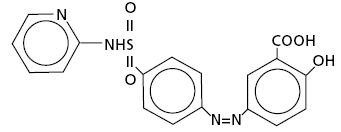
Molecular Formula: C 18 H 14 N 4 O 5 S
Inactive ingredients: beeswax (white), carnauba wax, cellacefate, magnesium stearate, polyethylene glycol, povidone, propylene glycol, self-emulsifying glycerol monostearate, silica (colloidal anhydrous), starch (pregelatinized), talc.
CLINICAL PHARMACOLOGY
Pharmacodynamics
The mode of action of sulfasalazine (SSZ) or its metabolites, 5-aminosalicylic acid (5-ASA) and sulfapyridine (SP), may be related to the anti-inflammatory and/or immunomodulatory properties that have been observed in animal and in vitro models, to its affinity for connective tissue, and/or to the relatively high concentration it reaches in serous fluids, the liver and intestinal walls, as demonstrated in autoradiographic studies in animals. In ulcerative colitis, clinical studies utilizing rectal administration of SSZ, SP and 5-ASA have indicated that the major therapeutic action may reside in the 5-ASA moiety. The relative contribution of the parent drug and the major metabolites in rheumatoid arthritis is unknown.
Pharmacokinetics
In vivo studies have indicated that the absolute bioavailability of orally administered SSZ is less than 15% for parent drug. In the intestine, SSZ is metabolized by intestinal bacteria to SP and 5-ASA. Of the two species, SP is relatively well absorbed from the intestine and highly metabolized, while 5-ASA is much less well absorbed.
Absorption
Following oral administration of 1 g of SSZ to 9 healthy males, less than 15% of a dose of SSZ is absorbed as parent drug. Detectable serum concentrations of SSZ have been found in healthy subjects within 90 minutes after the ingestion. Maximum concentrations of SSZ occur between 3 and 12 hours post-ingestion, with the mean peak concentration (6 µg/mL) occurring at 6 hours.
In comparison, peak plasma levels of both SP and 5-ASA occur approximately 10 hours after dosing. This longer time to peak is indicative of gastrointestinal transit to the lower intestine, where bacteria-mediated metabolism occurs. SP apparently is well absorbed from the colon, with an estimated bioavailability of 60%. In this same study, 5-ASA is much less well absorbed from the gastrointestinal tract, with an estimated bioavailability of from 10% to 30%.
Distribution
Following intravenous injection, the calculated volume of distribution (Vdss) for SSZ was 7.5 ± 1.6 L. SSZ is highly bound to albumin (>99.3%), while SP is only about 70% bound to albumin. Acetylsulfapyridine (AcSP), the principal metabolite of SP, is approximately 90% bound to plasma proteins.
Metabolism
As mentioned above, SSZ is metabolized by intestinal bacteria to SP and 5-ASA. Approximately 15% of a dose of SSZ is absorbed as parent and is metabolized to some extent in the liver to the same two species. The observed plasma half-life for intravenous sulfasalazine is 7.6 ± 3.4 hrs. The primary route of metabolism of SP is via acetylation to form AcSP. The rate of metabolism of SP to AcSP is dependent upon acetylator phenotype. In fast acetylators, the mean plasma half-life of SP is 10.4 hrs, while in slow acetylators it is 14.8 hrs. SP can also be metabolized to 5-hydroxy-sulfapyridine (SPOH) and N-acetyl-5-hydroxy-sulfapyridine. 5-ASA is primarily metabolized in both the liver and intestine to N-acetyl-5-aminosalicylic acid via a nonacetylation phenotype dependent route. Due to low plasma levels produced by 5-ASA after oral administration, reliable estimates of plasma half-life are not possible.
Excretion
Absorbed SP and 5-ASA and their metabolites are primarily eliminated in the urine either as free metabolites or as glucuronide conjugates. The majority of 5-ASA stays within the colonic lumen and is excreted as 5-ASA and acetyl-5-ASA with the feces. The calculated clearance of SSZ following intravenous administration was 1 L/hr. Renal clearance was estimated to account for 37% of total clearance.
Special Populations
Elderly
Elderly patients with rheumatoid arthritis showed a prolonged plasma half-life for SSZ, SP, and their metabolites. The clinical impact of this is unknown.
Pediatric
Small studies have been reported in the literature in children down to the age of 4 years with ulcerative colitis and inflammatory bowel disease. In these populations, relative to adults, the pharmacokinetics of SSZ and SP correlated poorly with either age or dose. To date, comparative pharmacokinetic trials have not been conducted to determine whether or not significant pharmacokinetic differences exist between children with juvenile rheumatoid arthritis and adults with rheumatoid arthritis.
Acetylator Status
The metabolism of SP to AcSP is mediated by polymorphic enzymes such that two distinct populations of slow and fast metabolizers exist. Approximately 60% of the Caucasian population can be classified as belonging to the slow acetylator phenotype. These subjects will display a prolonged plasma half-life for SP (14.8 hrs vs. 10.4 hrs) and an accumulation of higher plasma levels of SP than fast acetylators. The clinical implication of this is unclear; however, in a small pharmacokinetic trial where acetylator status was determined, subjects who were slow acetylators of SP showed a higher incidence of adverse events.
Gender
Gender appears not to have an effect on either the rate or the pattern of metabolites of SSZ, SP, or 5-ASA.
HOW SUPPLIED
AZULFIDINE EN-tabs Tablets, 500 mg, are elliptical, gold-colored, film enteric-coated tablets, monogrammed "102" on one side and "KPh" on the other. They are available in the following package sizes:
Bottle of 100 (with carton) | NDC 0013-0102-50 |
Bottle of 100 | NDC 0013-0102-01 |
Bottle of 300 (with carton) | NDC 0013-0102-60 |
Bottle of 300 | NDC 0013-0102-20 |
Storage
Store at 25°C (77°F); excursions permitted to 15–30°C (59–86°F) [see USP Controlled Room Temperature].
