Get your patient on Calcitonin Salmon - Calcitonin Salmon spray, Metered (Calcitonin Salmon)
Calcitonin Salmon - Calcitonin Salmon spray, Metered prescribing information

INDICATIONS AND USAGE
Treatment of Postmenopausal Osteoporosis
Calcitonin Salmon Nasal Solution is indicated for the treatment of postmenopausal osteoporosis in women greater than 5 years postmenopause. Fracture reduction efficacy has not been demonstrated. Calcitonin Salmon Nasal Solution should be reserved for patients for whom alternative treatments are not suitable (e.g., patients for whom other therapies are contraindicated or for patients who are intolerant or unwilling to use other therapies).
Important Limitations of Use
- Due to the possible association between malignancy and calcitonin-salmon use, the need for continued therapy should be re-evaluated on a periodic basis [see Warnings and Precautions (5.4 ) ].
- Calcitonin Salmon Nasal Solution has not been shown to increase spinal bone mineral density in early postmenopausal women.
DOSAGE AND ADMINISTRATION
Basic Dosing Information
The recommended dose of Calcitonin Salmon Nasal Solution is 1 spray (200 International Units) per day administered intranasally, alternating nostrils daily.
Priming (Activation) of Pump
Unopened Calcitonin Salmon Nasal Solution should be stored in the refrigerator. Before using the first dose of Calcitonin Salmon Nasal Solution, the patient should wait until it has reached room temperature. To prime the pump before it is used for the first time, the bottle should be held upright and the two white side arms of the pump depressed toward the bottle, repeat until a full spray is released. The pump is primed once the first full spray is emitted. To administer, the nozzle should first be carefully placed into the nostril while the patient’s head is in the upright position, then the pump should be firmly depressed toward the bottle. The pump should not be primed before each daily dose.
Recommendations for Calcium and Vitamin D Supplementation
Patients who use Calcitonin Salmon Nasal Solution should receive adequate calcium (at least 1000 mg elemental calcium per day) and vitamin D (at least 400 International Units per day).
DOSAGE FORMS AND STRENGTHS
Calcitonin Salmon Nasal Solution consists of one glass bottle and one screw-on pump. The bottle contains 3.7 mL of calcitonin-salmon clear solution at a concentration of 2200 International Units per mL. A primed pump delivers 0.09 mL (200 International Units) calcitonin-salmon per actuation.
USE IN SPECIFIC POPULATIONS
Pregnancy
Risk Summary
Calcitonin Salmon Nasal Solution is not indicated for use in females of reproductive potential. There are no data with the use of Calcitonin Salmon Nasal Solution in pregnant women. In an animal reproduction study, subcutaneous administration of calcitonin-salmon to pregnant rabbits during organogenesis at 4 to 18 times the recommended parenteral human dose caused a decrease in fetal birth weights. No adverse developmental outcome was observed in the rat with subcutaneous administration of calcitonin-salmon at 9 times the recommended human parenteral dose based on body surface area (see Data ).
Data
Animal Data
Calcitonin-salmon has been shown to cause a decrease in fetal birth weights in rabbits when given by subcutaneous injection in doses 4 to 18 times the parenteral dose (of 54 International Units/m 2 ) and 70 to 278 times the intranasal dose recommended for human use based on body surface area. No embryo/fetal toxicities related to Calcitonin Salmon Nasal Solution were reported from maternal subcutaneous daily doses in rats up to 80 International Units/kg/day from gestation day 6 to 15.
Lactation
Risk Summary
Calcitonin Salmon Nasal Solution is not indicated for use in females of reproductive potential. There is no information on the presence of calcitonin-salmon in human milk, the effects on the breastfed child, or the effects on milk production. Calcitonin has been shown to inhibit lactation in rats.
Pediatric Use
Safety and effectiveness in pediatric patients have not been established.
Geriatric Use
In a multi-centered, double-blind, randomized clinical study of calcitonin-salmon nasal solution, 279 patients were less than 65 years old, while 467 patients were 65 to 74 years old and 196 patients were 75 years old and older. Compared to subjects less than 65 years old, the incidence of nasal adverse reactions (rhinitis, irritation, erythema, and excoriation) was higher in patients over the age of 65, particularly among those over the age of 75. Other reported clinical experience has not identified differences in responses between the elderly and younger patients, but greater sensitivity of some older individuals cannot be ruled out.
CONTRAINDICATIONS
Hypersensitivity to calcitonin-salmon or any of the excipients. Reactions have included anaphylactic shock, anaphylaxis, bronchospasm, and swelling of the tongue or throat [see Warnings and Precautions (5.1 ) ].
WARNINGS AND PRECAUTIONS
Hypersensitivity Reactions
Serious hypersensitivity reactions have been reported in patients receiving Calcitonin Salmon Nasal Solution, e.g., bronchospasm, swelling of the tongue or throat, anaphylaxis and anaphylactic shock. Reports of serious hypersensitivity reactions with injectable calcitonin-salmon have also been reported, including reports of death attributed to anaphylaxis. The usual provisions should be made for emergency treatment if such a reaction occurs. Hypersensitivity reactions should be differentiated from generalized flushing and hypotension [see Contraindications (4 ) ].
For patients with suspected hypersensitivity to calcitonin-salmon, skin testing should be considered prior to treatment utilizing a dilute, sterile solution of a calcitonin-salmon injectable product. Healthcare providers may wish to refer patients who require skin testing to an allergist. A detailed skin testing protocol is available from the Medical Services Department of Par Health at 1-800-828-9393.
Hypocalcemia
Hypocalcemia associated with tetany (i.e., muscle cramps, twitching) and seizure activity has been reported with calcitonin therapy. Hypocalcemia must be corrected before initiating therapy with Calcitonin Salmon Nasal Solution. Other disorders affecting mineral metabolism (such as vitamin D deficiency) should also be effectively treated. In patients with these conditions, serum calcium and symptoms of hypocalcemia should be monitored during therapy with Calcitonin Salmon Nasal Solution. Use of Calcitonin Salmon Nasal Solution is recommended in conjunction with an adequate intake of calcium and vitamin D [see Dosage and Administration (2.3 ) ].
Nasal Adverse Reactions
Adverse reactions related to the nose including rhinitis and epistaxis have been reported. Development of mucosal alterations may occur. Therefore, periodic nasal examinations with visualization of the nasal mucosa, turbinates, septum and mucosal blood vessels are recommended prior to start of treatment with Calcitonin Salmon Nasal Solution, periodically during the course of therapy, and at any time nasal symptoms occur.
Calcitonin Salmon Nasal Solution should be discontinued if severe ulceration of the nasal mucosa occurs, as indicated by ulcers greater than 1.5 mm in diameter or penetrating below the mucosa, or those associated with heavy bleeding. Although smaller ulcers often heal without withdrawal of Calcitonin Salmon Nasal Solution, medication should be discontinued temporarily until healing occurs [see Adverse Reactions (6.1 ) ].
Malignancy
In a meta-analysis of 21 randomized, controlled clinical trials with calcitonin-salmon (nasal solution or investigational oral formulations), the overall incidence of malignancies reported was higher among calcitonin-salmon-treated patients (4.1%) compared with placebo-treated patients (2.9%). This suggests an increased risk of malignancies in calcitonin-salmon-treated patients compared to placebo-treated patients. The benefits for the individual patient should be carefully considered against possible risks [see Adverse Reactions (6.1 ) ].
Antibody Formation
Circulating antibodies to calcitonin-salmon have been reported with Calcitonin Salmon Nasal Solution. The possibility of antibody formation should be considered in any patient with an initial response to Calcitonin Salmon Nasal Solution who later stops responding to treatment [see Adverse Reactions (6.3 ) ].
Urine Sediment Abnormalities
Coarse granular casts and casts containing renal tubular epithelial cells were reported in young adult volunteers at bed rest who were given injectable calcitonin-salmon to study the effect of immobilization on osteoporosis. There was no other evidence of renal abnormality and the urine sediment normalized after calcitonin-salmon was stopped. Periodic examinations of urine sediment should be considered. Urine sediment abnormalities have not been reported in ambulatory volunteers treated with calcitonin salmon nasal solution.
ADVERSE REACTIONS
The following serious adverse reactions are discussed in greater detail in other sections of the label:
Clinical Trials Experience
Because clinical trials are conducted under widely varying conditions, adverse reaction rates observed in the clinical trials of a drug cannot be directly compared to rates in the clinical trials of another drug and may not reflect the rates observed in practice.
The safety of Calcitonin Salmon Nasal Solution in the treatment of postmenopausal osteoporosis was assessed in 5 randomized, double-blind, placebo controlled trials that enrolled postmenopausal women, aged 45 to 75 years. The duration of the trials ranged from 1 to 2 years. The incidence of adverse reactions reported in studies involving postmenopausal osteoporotic patients chronically exposed to Calcitonin Salmon Nasal Solution (N=341) and to placebo nasal solution (N=131), and reported in greater than 3% of Calcitonin Salmon Nasal Solution treated patients are presented in the following table. Other than flushing, nausea, possible allergic reactions, and possible local irritative effects in the respiratory tract, a relationship to Calcitonin Salmon Nasal Solution has not been established.
| † Symptom of nose includes: nasal crusts, dryness, redness or erythema, nasal sores, irritation, itching, thick feeling, soreness, pallor, infection, stenosis, runny/blocked, small wound, bleeding wound, tenderness, uncomfortable feeling and sore across bridge of nose. | ||
Calcitonin Salmon Nasal Solution | Placebo Nasal Solution | |
Adverse Reaction | N = 341 % of Patients | N = 131 % of Patients |
Rhinitis | 12 | 7 |
Symptom of Nose † | 11 | 16 |
Back Pain | 5 | 2 |
Arthralgia | 4 | 5 |
Epistaxis | 4 | 5 |
Headache | 3 | 5 |
Nasal Adverse Reactions: In all postmenopausal patients treated with Calcitonin Salmon Nasal Solution, the most commonly reported nasal adverse reactions included rhinitis (12%), epistaxis (4%), and sinusitis (2%). Smoking did not have a contributory effect on the occurrence of nasal adverse reactions.
Adverse reactions reported in 1% to 3% of patients treated with Calcitonin Salmon Nasal Solution include: influenza-like symptoms, erythematous rash, arthrosis, myalgia, sinusitis, upper respiratory tract infection, bronchospasm, abdominal pain, nausea, dizziness, paresthesia, abnormal lacrimation, conjunctivitis, lymphadenopathy, infection, and depression.
Malignancy
A meta-analysis of 21 randomized, controlled clinical trials with calcitonin-salmon (nasal solution or investigational oral formulations) was conducted to assess the risk of malignancies in calcitonin-salmon-treated patients compared to placebo-treated patients. The trials in the meta-analysis ranged in duration from 6 months to 5 years and included a total of 10883 patients (6151 treated with calcitonin-salmon and 4732 treated with placebo). The overall incidence of malignancies reported in these 21 trials was higher among calcitonin-salmon-treated patients (254/6151 or 4.1%) compared with placebo-treated patients (137/4732 or 2.9%). Findings were similar when analyses were restricted to the 18 nasal spray only trials [calcitonin-salmon 122/2712 (4.5%); placebo 30/1309 (2.3%)].
The meta-analysis results suggest an increased risk of overall malignancies in calcitonin-salmon-treated patients compared to placebo-treated patients when all 21 trials are included and when the analysis is restricted to the 18 nasal spray only trials (see Table 2 ). It is not possible to exclude an increased risk when calcitonin-salmon is administered by the subcutaneous, intramuscular, or intravenous route because these routes of administration were not investigated in the meta-analysis. The increased malignancy risk seen with the meta-analysis was heavily influenced by a single large 5-year trial, which had an observed risk difference of 3.4% [95% CI (0.4%, 6.5%)]. Imbalances in risks were still observed when analyses excluded basal cell carcinoma (see Table 2 ); the data were not sufficient for further analyses by type of malignancy. A mechanism for these observations has not been identified. Although a definitive causal relationship between calcitonin-salmon use and malignancies cannot be established from this meta-analysis, the benefits for the individual patient should be carefully evaluated against all possible risks [see Warnings and Precautions (5.4 ) ].
Table 2: Risk Difference for Malignancies in Calcitonin-Salmon-Treated Patients Compared with Placebo-Treated Patients
Patients | Malignancies | Risk Difference 1 (%) | 95% Confidence Interval 2 (%) |
All (nasal spray + oral) | All | 1.0 | (0.3, 1.6) |
All (nasal spray + oral) | Excluding basal cell carcinoma | 0.5 | (-0.1, 1.2) |
All (nasal spray only) | All | 1.4 | (0.3, 2.6) |
All (nasal spray only) | Excluding basal cell carcinoma | 0.8 | (-0.2, 1.8) |
1 The overall adjusted risk difference is the difference between the percentage of patients who had any malignancy (or malignancy excluding basal cell carcinoma) in calcitonin-salmon and placebo treatment groups, using the Mantel-Haenszel (MH) fixed-effect method. A risk difference of 0 is suggestive of no difference in malignancy risks between the treatment groups. 2 The corresponding 95% confidence interval for the overall adjusted risk difference also based on MH fixed-effect method. | |||
Post Marketing Experience
Because post marketing adverse reactions are reported voluntarily from a population of uncertain size, it is not always possible to reliably estimate their frequency or establish a causal relationship to drug exposure.
The following adverse reactions have been reported during post-approval use of Calcitonin Salmon Nasal Solution.
- Allergic/Hypersensitivity Reactions: Serious allergic reactions have been reported in patients receiving Calcitonin Salmon Nasal Solution, including anaphylaxis and anaphylactic shock.
- Hypocalcemia : Hypocalcemia with paresthesia has been reported.
- Body as a whole : facial or peripheral edema
- Cardiovascular: hypertension, vasodilatation, syncope, chest pain
- Nervous system: dizziness, seizure, visual or hearing impairment, tinnitus
- Respiratory/Special Senses : cough, bronchospasm, dyspnea, loss of taste/smell
- Skin : rash/dermatitis, pruritus, alopecia, increased sweating
- Gastrointestinal: diarrhea
- Nervous system disorders: tremor
Immunogenicity
Consistent with the potentially immunogenic properties of medicinal products containing peptides, administration of Calcitonin Salmon Nasal Solution may trigger the development of anti-calcitonin antibodies. In a two-year Calcitonin Salmon Nasal Solution clinical study that evaluated immunogenicity, a measurable antibody titer was found in 69% of patients treated with Calcitonin Salmon Nasal Solution and 3% of placebo-treated patients. Antibody formation may be associated with a loss of response to treatment [see Warnings and Precautions (5.5 ) ].
The incidence of antibody formation is highly dependent on the sensitivity and specificity of the assay. Additionally, the observed incidence of a positive antibody test result may be influenced by several factors, including assay methodology, sample handling, timing of sample collection, concomitant medications, and underlying disease. For these reasons, comparison of antibodies to Calcitonin Salmon Nasal Solution with the incidence of antibodies to other calcitonin-containing products may be misleading.
DRUG INTERACTIONS
No formal drug interaction studies have been performed with Calcitonin Salmon Nasal Solution.
Concomitant use of calcitonin-salmon and lithium may lead to a reduction in plasma lithium concentrations due to increased urinary clearance of lithium. The dose of lithium may require adjustment.
DESCRIPTION
Calcitonin is a polypeptide hormone secreted by the parafollicular cells of the thyroid gland in mammals and by the ultimobranchial gland of birds and fish.
Calcitonin Salmon Nasal Solution is a synthetic polypeptide of 32 amino acids in the same linear sequence that is found in calcitonin of salmon origin. This is shown by the following graphic formula:
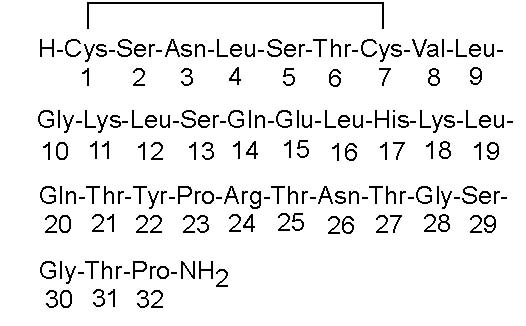
It is provided in a 3.7 mL fill glass bottle as a solution for nasal administration. This is sufficient medication for 30 doses.
Active Ingredient: calcitonin-salmon, 2200 International Units per mL (corresponding to 200 International Units per 0.09 mL actuation).
Inactive Ingredients: sodium chloride, chlorobutanol (possesses a characteristic odor), hydrochloric acid (added as necessary to adjust pH), purified water and nitrogen.
The activity of Calcitonin Salmon Nasal Solution is stated in International Units based on bioassay in comparison with the International Reference Preparation of calcitonin-salmon for Bioassay, distributed by the National Institute of Biological Standards and Control, Holly Hill, London.
CLINICAL PHARMACOLOGY
Mechanism of Action
Calcitonin-salmon is a calcitonin receptor agonist. Calcitonin-salmon acts primarily on bone, but direct renal effects and actions on the gastrointestinal tract are also recognized. Calcitonin-salmon appears to have actions essentially identical to calcitonins of mammalian origin, but its potency per mg is greater and it has a longer duration of action.
The actions of calcitonin on bone and its role in normal human bone physiology are still not completely elucidated, although calcitonin receptors have been discovered in osteoclasts and osteoblasts.
Pharmacodynamics
The information below, describing the clinical pharmacology of calcitonin, has been derived from studies with injectable calcitonin-salmon. The mean bioavailability of calcitonin-salmon nasal solution is approximately 3% of the injectable calcitonin-salmon in healthy subjects and, therefore, the conclusions concerning the clinical pharmacology of this preparation may be different.
Bone
Single injections of calcitonin-salmon caused a marked transient inhibition of the ongoing bone resorptive process. With prolonged use, there is a persistent, smaller decrease in the rate of bone resorption. Histologically, this is associated with a decreased number of osteoclasts and an apparent decrease in their resorptive activity.
In healthy adults, who have a relatively low rate of bone resorption, the administration of exogenous calcitonin‑salmon results in decreases in serum calcium within the limits of the normal range. In healthy children and in patients whose bone resorption is more rapid, decreases in serum calcium are more pronounced in response to calcitonin-salmon.
Kidney
Studies with injectable calcitonin-salmon show increases in the excretion of filtered phosphate, calcium, and sodium by decreasing their tubular reabsorption. Comparable studies have not been conducted with Calcitonin Salmon Nasal Solution.
Gastrointestinal Tract
Some evidence from studies with injectable preparations suggests that calcitonin-salmon may have effects on the gastrointestinal tract. Short-term administration of injectable calcitonin-salmon results in marked transient decreases in the volume and acidity of gastric juice and in the volume and the trypsin and amylase content of pancreatic juice. Whether these effects continue to be elicited after each injection of calcitonin-salmon during chronic therapy has not been investigated. These studies have not been conducted with Calcitonin Salmon Nasal Solution.
Calcium Homeostasis
In two clinical studies designed to evaluate the pharmacodynamic response to calcitonin-salmon nasal solution, administration of calcitonin-salmon 100 to 1600 International Units to healthy volunteers resulted in rapid and sustained decreases within the normal range for both total serum calcium and serum ionized calcium. Single doses of calcitonin-salmon greater than 400 International Units did not produce any further biological response to the drug.
Pharmacokinetics
The bioavailability of Calcitonin Salmon Nasal Solution relative to intramuscular administration in healthy volunteers is between 3% and 5%. Calcitonin Salmon Nasal Solution is absorbed rapidly by the nasal mucosa with a mean T max of about 13 minutes. The terminal half-life of calcitonin-salmon has been calculated to be around 18 minutes and no evidence of accumulation was observed with multiple dosing.
NONCLINICAL TOXICOLOGY
Carcinogenesis, Mutagenesis, Impairment of Fertility
Carcinogenicity
The incidence of pituitary adenomas was increased in rats after one and two years of subcutaneous exposure to synthetic calcitonin-salmon. The significance of this finding to humans is unknown because pituitary adenomas are very common in rats as they age, the pituitary adenomas did not transform into metastatic tumors, there were no other clear treatment-related neoplasms, and synthetic calcitonin-salmon related neoplasms were not observed in mice after two years of dosing.
Rat findings :
The only clear neoplastic finding in rats dosed subcutaneously with synthetic calcitonin-salmon was an increase in the incidence of pituitary adenomas in male Fisher 344 rats and female Sprague Dawley rats after one year of dosing and male Sprague Dawley rats dosed for one and two years. In female Sprague Dawley rats, the incidence of pituitary adenomas after two years was high in all treatment groups (between 80% and 92% including the control groups) such that a treatment-related effect could not be distinguished from natural background incidence. The lowest dose in male Sprague Dawley rats that developed an increased incidence of pituitary adenomas after two years of dosing (1.7 International Units/kg/day) is approximately 2 times the maximum recommended intranasal dose in humans (200 International Units/day) based on body surface area conversion between rats and humans and a 20-fold conversion factor to account for decreased clinical exposure via the intranasal route. The findings suggest that calcitonin-salmon reduced the latency period for development of non-functioning pituitary adenomas.
Mouse findings :
No carcinogenicity potential was evident in male or female mice dosed subcutaneously for two years with synthetic calcitonin-salmon at doses up to 800 International Units/kg/day. The 800 International Units/kg/day dose is approximately 390 times the maximum recommended intranasal dose in humans (200 International Units) based on scaling for body surface area and a 20-fold conversion factor to account for low clinical exposure via the intranasal route.
Mutagenesis
Synthetic calcitonin-salmon tested negative for mutagenicity using Salmonella typhimurium (5 strains) and Escherichia coli (2 strains), with and without rat liver metabolic activation, and was not clastogenic in a chromosome aberration test in Chinese Hamster V79 cells. There was no evidence that calcitonin- salmon was clastogenic in the in vivo mouse micronucleus test.
Fertility
Effects of calcitonin-salmon on fertility have not been assessed in animals.
CLINICAL STUDIES
Two randomized, placebo-controlled, two-year trials were conducted in 266 postmenopausal women who were greater than 5 years postmenopause with spinal, forearm or femoral bone mineral density (BMD) at least one standard deviation below the normal value for healthy premenopausal women (T-score < -1). In both studies, a total of 144 patients received Calcitonin Salmon Nasal Solution 200 International Units or placebo daily. The intent-to-treat population comprised 139 patients who had at least one follow-up BMD measurement. In study 1, patients also received 500 mg daily calcium supplements, while in study 2, patients received no calcium supplementation. The primary endpoint for both studies was percent change in lumbar spine BMD at 2 years. Calcitonin Salmon Nasal Solution increased lumbar vertebral BMD relative to placebo in women with low bone mass who were greater than 5 years postmenopause (see Table 3 below).
Table 3: Calcitonin Salmon Nasal Solution: Lumbar Spine Bone Mineral Density In Women Greater Than 5 years Postmenopause With Low Bone Mass
Lumbar Spine Bone Mineral Density, Mean Change From Baseline (in %) at Month 24 | ||
Study 1 (with calcium supplement) n (ITT) = 100 | Study 2 (no calcium supplement) n (ITT) = 39 | |
Calcitonin Salmon Nasal Solution 200 IU NS daily | +1.56 | +1.02 |
Placebo | +0.20 | -1.85 |
Treatment Difference | +1.36 | +2.87 |
p-value † | < 0.05 | < 0.005 |
ITT: Intent To Treat IU: International Units NS: nasal solution † p-values by parametric testing (2-tailed 2-sample t-test) | ||
No effects of calcitonin-salmon nasal solution on cortical bone of the forearm or hip were demonstrated.
In clinical studies of postmenopausal osteoporosis, bone biopsy and radial bone mass assessments at baseline and after 26 months of daily injectable calcitonin-salmon indicate that calcitonin therapy results in the formation of normal bone.
HOW SUPPLIED/STORAGE AND HANDLING
How Supplied
Available as a metered dose clear solution in a 3.7 mL fill clear glass bottle. It is available in a dosage strength of 200 International Units per activation (0.09 mL/spray). A screw-on pump is provided. The pump, following priming, will deliver 0.09 mL of solution. Calcitonin Salmon Nasal Solution contains 2200 International Units/mL calcitonin-salmon and is provided in an individual box containing one glass bottle and one screw-on pump (NDC 49884-161-11).
Storage and Handling
Store unopened bottle in refrigerator between 2°C to 8°C (36°F to 46°F). Freezing is to be avoided.
Store bottle in use at room temperature between 20°C to 25°C (68°F to 77°F) in an upright position, for up to 35 days.
Each bottle contains at least 30 doses. Discard bottle after 30 doses.
Mechanism of Action
Calcitonin-salmon is a calcitonin receptor agonist. Calcitonin-salmon acts primarily on bone, but direct renal effects and actions on the gastrointestinal tract are also recognized. Calcitonin-salmon appears to have actions essentially identical to calcitonins of mammalian origin, but its potency per mg is greater and it has a longer duration of action.
The actions of calcitonin on bone and its role in normal human bone physiology are still not completely elucidated, although calcitonin receptors have been discovered in osteoclasts and osteoblasts.
