Get your patient on Delflex - Dextrose Monohydrate, Sodium Chloride, Sodium Lactate, Calcium Chloride, Magnesium Chloride solution (Dextrose Monohydrate, Sodium Chloride, Sodium Lactate, Calcium Chloride, Magnesium Chloride)
Delflex - Dextrose Monohydrate, Sodium Chloride, Sodium Lactate, Calcium Chloride, Magnesium Chloride solution prescribing information

INDICATIONS AND USAGE
DELFLEX® is indicated in the treatment of chronic kidney failure in patients being maintained on peritoneal dialysis.
DOSAGE AND ADMINISTRATION
For intraperitoneal dialysis only. (2 )
Basic Dosing Information
DELFLEX® is intended for intraperitoneal administration only. Not for intravenous or intra-arterial administration.
The mode of therapy, frequency of treatment, formulation, exchange volume, duration of dwell, and length of dialysis should be selected by the physician responsible for the treatment of the individual patient.
Utilize the peritoneal dialysis solution with lowest level of osmolarity consistent with the fluid removal requirements for that exchange.
Do not store solutions containing additives.
Administration Instructions
Parenteral drug products should be inspected visually for particulate matter and discoloration prior to administration whenever solution and container permit.
Do not heat in a microwave oven.
Get Ready
- Clean work surface.
- Gather supplies:
- DELFLEX peritoneal dialysis bag(s).
- Prescribed medication(s), if ordered by your healthcare provider.
- Mask.
PVC 
Tear the overwrap from the slit edge down the length of the inner bag to open. Locate pull tabs on overwrap. Grasping one tab in each hand, pull outward, down the length of the inner bag to open. 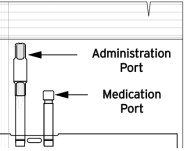
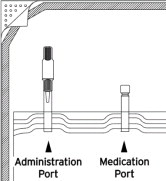
Wipe away any moisture from the solution bags. Some opacity may be observed in the plastic of the bag and/or tubing and is due to moisture absorption during the sterilization process. This is normal and does not affect the solution quality or safety. The opacity will diminish gradually. Wipe away any moisture from the solution bags. Inspect DELFLEX Solution Bag
- After removing the overwrap, check your DELFLEX solution bag(s) for strength, clarity, amount, leaks, and expiration date. Do not use DELFLEX solution if leaks are found, the solution bag is damaged, and/or the solution is cloudy or discolored, or the product is expired. Color may vary from clear to slightly yellow but does not affect efficacy and may be used.
- Visually check that the solution bag tubing is free from kinks. If kinks are present, straighten tubing to allow the solution to flow freely. Note: Retain DELFLEX peritoneal dialysis bag sample for manufacturer evaluation and notify your healthcare provider if any of the above defects are found. Note: DELFLEX peritoneal dialysis solutions utilize the Safe-Lock® Connection System. This unique system consists of two Safe-Lock connectors, one located on the administration port of the bag, and the mating connector is located on the cycler set. The Safe-Lock connectors were designed to reduce the potential risk of touch contamination of the internal connection components.
- Put on mask. Wash your hands.
- If you will be adding medications(s):
- Clean hands (as per facility's protocol)
- Clean the medication port as instructed by your healthcare provider.
- Add the medicine(s).
- Turn the bag upside down several times to mix the medicine(s).
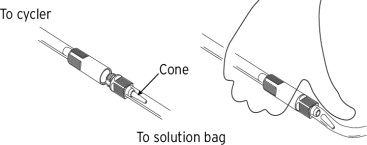
- To connect the bag(s) to the cycler set, unscrew the protective caps of the administration port and the cycler set solution line connector. Secure these two connectors with a twisting motion to lock in place, so that the cycler set connector is seated over the administration port O-ring to assure a firm and tight fit.
- After completing Step 8, wait for the cycler prompt to break the administration port cone and initiate solution flow. Do this by placing the thumb firmly on the tube over the cone and pressing towards the outer wall of the tube and away from the bag.
- Perform your treatment as prescribed.
- At the end of your treatment, throw away the fluid and used set as instructed by your healthcare provider. In case of cloudiness, save the fluid and the used set and immediately contact your healthcare provider. Dispose of your empty solution bag according to your local recycling program. Empty solution bags may not be recyclable in your area.
Compatible Medications
DOSAGE FORMS AND STRENGTHS
DELFLEX peritoneal dialysis solutions are available in single-dose flexible bags comprised of either polyvinyl chloride (PVC), or a proprietary blend of polyolefins called Biofine®. All DELFLEX peritoneal dialysis solutions have overfills declared on the bag label.
DELFLEX peritoneal dialysis solutions are available in the sizes and formulations shown in Table 1 .
| PVC | Biofine ® | ||||||
| 2L | 3L | 5L | 6L | 3L | 5L | 6L | |
| DELFLEX Standard with 1.5% Dextrose | X | X | X | X | |||
| DELFLEX Standard with 2.5% Dextrose | X | X | X | X | |||
| DELFLEX Low Magnesium, Low Calcium with 1.5% Dextrose | X | X | X | X | X | X | X |
| DELFLEX Low Magnesium, Low Calcium with 2.5% Dextrose | X | X | X | X | X | X | X |
| DELFLEX Low Magnesium, Low Calcium with 4.25% Dextrose | X | X | X | X | X | X | X |
USE IN SPECIFIC POPULATIONS
Pregnancy
Risk Summary
DELFLEX solutions consist of electrolytes, lactate, and bicarbonate at physiological levels, and glucose to facilitate ultrafiltration. While there are no adequate and well controlled studies in pregnant women, appropriate administration of DELFLEX with monitoring of fluid, electrolyte, acid-base and glucose balance, is not expected to cause fetal harm. Animal reproduction studies have not been conducted with DELFLEX.
The estimated background risk of major birth defects and miscarriage for the indicated population are unknown. All pregnancies have a background risk of birth defect, loss or other adverse outcomes. In the U.S. general population, the estimated background risk of major birth defects and miscarriage in clinically recognized pregnancies is 2 to 4% and 15 to 20%, respectively.
Lactation
Risk Summary
The components of DELFLEX solutions are excreted in human milk. Appropriate administration of DELFEX solutions with monitoring of fluid, electrolyte, acid-base and glucose balance, is not expected to harm a nursing infant.
Pediatric Use
Safety and effectiveness in pediatric patients have not been established.
CONTRAINDICATIONS
None.
WARNINGS AND PRECAUTIONS
Electrolyte, Fluid and Nutrition Imbalances
Peritoneal dialysis may affect a patient's protein, water-soluble vitamin, potassium, sodium, chloride, bicarbonate, and magnesium levels and volume status. Monitor electrolytes and blood chemistry periodically and take appropriate clinical action.
Potassium is omitted from DELFLEX solutions because dialysis may be performed to correct hyperkalemia. In situations where there is a normal serum potassium level or hypokalemia, the addition of potassium chloride (up to a concentration of 4 mEq/L) may be indicated to prevent severe hypokalemia.
To avoid the risk of severe dehydration or hypovolemia and to minimize the loss of protein, it is advisable to select the peritoneal dialysis solution with lowest level of osmolarity consistent with the fluid removal requirements for that exchange.
Significant loss of protein, amino acids and water-soluble vitamins may occur during peritoneal dialysis. Replacement therapy should be provided as necessary.
Peritonitis and Encapsulating Peritoneal Sclerosis
Infectious and aseptic peritonitis has been associated with peritoneal dialysis therapy. Following DELFLEX use, inspect the drained fluid for the presence of fibrin or cloudiness, which may indicate the presence of peritonitis. Improper clamping or priming sequence may result in infusion of air into the peritoneal cavity, which may result in abdominal pain and/or peritonitis. If peritonitis occurs, treat with appropriate therapy.
Encapsulating peritoneal sclerosis (EPS), sometimes fatal, is a complication of peritoneal dialysis therapy.
Lactic Acidosis
Monitor patients with conditions known to increase the risk of lactic acidosis [e.g., severe hypotension or sepsis that can be associated with acute kidney failure, inborn errors of metabolism, treatment with drugs such as nucleoside/nucleotide reverse transcriptase inhibitors (NRTIs)] for lactic acidosis before the start of treatment and during treatment with DELFLEX.
Solutions containing the lactate ion should be used with great care in patients with metabolic or respiratory alkalosis. Lactate should be administered with great care in those conditions in which there is an increased level or an impaired utilization of this ion, such as severe hepatic insufficiency.
Over Infusion
Over infusion of peritoneal dialysis solution volume into the peritoneal cavity may be characterized by abdominal distention, feeling of fullness and/or shortness of breath. Drain the peritoneal dialysis solution from the peritoneal cavity to treat over infusion.
ADVERSE REACTIONS
Solution related adverse reactions may include peritonitis, catheter site infection, electrolyte and fluid imbalances, hypovolemia, hypervolemia, hypertension, hypotension, disequilibrium syndrome, muscle cramping, abdominal pain, abdominal distension, and abdominal discomfort.
DESCRIPTION
The DELFLEX® peritoneal dialysis solutions (standard and low magnesium/low calcium) are sterile, non-pyrogenic formulations of dextrose and electrolytes in water for injection, USP, for use in peritoneal dialysis. These solutions do not contain antimicrobial agents or additional buffers. Composition, calculated osmolarity, pH, and ionic concentrations are shown in Table 2 .
| Composition/100mL | Total Osmolarity (mOsmoL/L) (calc) | pH (5.0 - 6.0) | Ionic Concentration (mEq/L) | |||||||||
| Dextrose Hydrous, USP (C 6 H 12 O 6 ⋅H 2 O) | Sodium Chloride. USP (NaCI) | Sodium Lactate (C3H5NaO3) | Calcium Chloride, USP (CaCl 2 ⋅2H 2 O) | Magnesium Chloride, USP (MgCl 2 -6H 2 0) | Sodium | Calcium | Magnesium | Chloride | Lactate | |||
| DELFLEX Standard with 1.5% Dextrose | 1.5 g | 567 mg | 392 mg | 25.7 mg | 15.2 mg | 347 | 5.5 | 132 | 3.5 | 1.5 | 102 | 35 |
| DELFLEX Standard with 2.5% Dextrose | 2.5 g | 567 mg | 392 mg | 25.7 mg | 15.2 mg | 398 | 5.5 | 132 | 3.5 | 1.5 | 102 | 35 |
| DELFLEX Low Magnesium, Low Calcium with 1.5% Dextrose | 1.5 g | 538 mg | 448 mg | 18.4 mg | 5.08 mg | 344 | 5.5 | 132 | 2.5 | 0.5 | 95 | 40 |
| DELFLEX Low Magnesium, Low Calcium with 2.5% Dextrose | 2.5 g | 538 mg | 448 mg | 18.4 mg | 5.08 mg | 394 | 5.5 | 132 | 2.5 | 0.5 | 95 | 40 |
| DELFLEX Low Magnesium, Low Calcium with 4.25% Dextrose | 4.25g | 538 mg | 448 mg | 18.4 mg | 5.08 mg | 483 | 5.5 | 132 | 2.5 | 0.5 | 95 | 40 |
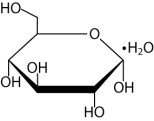
Dextrose, USP, is chemically designated D-glucose monohydrate (C 6 H 12 O 6 •H 2 O) a hexose sugar freely soluble in water. The structural formula is shown here:
Calcium chloride, USP, is chemically designated calcium chloride dihydrate (CaCl 2 •2H 2 O) white fragments or granules freely soluble in water.
Magnesium chloride, USP, is chemically designated magnesium chloride hexahydrate (MgCl 2 •6H 2 O) colorless flakes or crystals very soluble in water.
Sodium lactate solution, USP, is chemically designated (CH 3 CH(OH)COONa), a 60% aqueous solution miscible in water.
Sodium chloride, USP, is chemically designated (NaCl), a white, crystalline compound freely soluble in water.
Water for injection, USP, is chemically designated (H 2 O).
Hydrochloric Acid or Sodium Hydroxide may be added for pH adjustment. pH is 5.5 ± 0.5.
Exposure to temperatures above 25°C (77°F) during transport and storage will lead to minor losses in moisture content. Higher temperatures lead to greater losses. It is unlikely that these minor losses will lead to clinically significant changes within the expiration period. Since the inner bag is compounded from flexible plastic, water may permeate from the inner bag into the overwrap in quantities insufficient to affect the solution significantly. Solutions in contact with the plastic inner bag can cause certain chemical components of the bag to leach out in very small amounts; however, the safety of the plastic formulation is supported by biological tests for plastic containers.
CLINICAL PHARMACOLOGY
Mechanism of Action
DELFLEX peritoneal dialysis solutions are hypertonic peritoneal dialysis solutions containing dextrose, a monosaccharide, as the primary osmotic agent. An osmotic gradient must be created between the peritoneal membrane and the dialysis solution in order for ultrafiltration to occur. The hypertonic concentration of glucose in DELFLEX solutions exert an osmotic pressure across the peritoneal membrane resulting in transcapillary ultrafiltration. Like other peritoneal dialysis solutions, DELFLEX solutions contain electrolytes to facilitate the correction of acid-base and electrolyte abnormalities. DELFLEX solutions contain a buffer, lactate, to help normalize acid-base abnormalities.
Pharmacokinetics
Absorption
Glucose can be rapidly absorbed from the peritoneal cavity by diffusion and appears quickly in the circulation due to the high glucose concentration gradient between DELFLEX solutions compared to blood capillary glucose level. Absorption per unit time will be the highest at the start of an exchange and decreases over time. The rate of glucose absorption will be dependent upon the transport characteristics of the patient's peritoneal membrane as determined by a peritoneal equilibration test (PET). Glucose absorption will also depend upon the concentration of glucose used for the exchange and the length of the dwell. Transport of other molecules will be dependent upon the molecular size of the solute, the concentration gradient, and the effective peritoneal surface area as determined by the PET.
Metabolism and Elimination
Glucose is metabolized by normal cellular pathways (i.e., glycolysis). Metabolism of lactate occurs in the liver and results in the generation of the bicarbonate. Glucose not absorbed during PD exchange procedure is removed by drainage of the PD solution from the peritoneal cavity.
Drug Interaction Studies
Antibiotics
No formal clinical drug interaction studies have been performed. In vitro studies of the following medications have demonstrated stability with DELFLEX solutions: cefazolin, ceftazidime, gentamicin, and vancomycin.
NONCLINICAL TOXICOLOGY
Carcinogenesis, Mutagenesis, Impairment of Fertility
Long term animal studies with DELFLEX peritoneal dialysis solutions have not been performed to evaluate the carcinogenic potential, mutagenic potential or effect on fertility.
HOW SUPPLIED/STORAGE AND HANDLING
DELFLEX peritoneal dialysis solutions are available in the sizes and formulations shown in Table 1 [see Dosage Forms and Strengths (3 )] .
| PVC | Biofine ® | ||||||
| 2L | 3L | 5L | 6L | 3L | 5L | 6L | |
| Standard 1.5% Dextrose | 49230- 188-50 | 49230- 188-60 | 49230- 188-52 | 49230- 188-62 | |||
| Standard 2.5% Dextrose | 49230- 191-50 | 49230- 191-60 | 49230- 191-52 | 49230- 191-62 | |||
| Low Mg/Low Ca 1.5% Dextrose | 49230- 206-20 | 49230- 206-30 | 49230- 206-50 | 49230- 206-60 | 49230- 206-32 | 49230- 206-52 | 49230- 206-62 |
| Low Mg/Low Ca 2.5% Dextrose | 49230- 209-23 | 49230- 209-30 | 49230- 209-50 | 49230- 209-60 | 49230- 209-32 | 49230- 209-52 | 49230- 209-62 |
| Low Mg/Low Ca 4.25% Dextrose | 49230- 212-23 | 49230- 212-30 | 49230- 212-50 | 49230- 212-60 | 49230- 212-32 | 49230- 212-52 | 49230- 212-62 |
Store at 20°C to 25°C (68°F to 77°F); excursions permitted between 15°C and 30°C (between 59°F and 86°F). See USP Controlled Room Temperature. Brief exposure to temperatures up to 40°C (104°F) may be tolerated provided the mean kinetic temperature does not exceed 25°C (77°F); however, such exposure should be minimized.
Keep DELFLEX and all medicines out of the reach of children.
Mechanism of Action
DELFLEX peritoneal dialysis solutions are hypertonic peritoneal dialysis solutions containing dextrose, a monosaccharide, as the primary osmotic agent. An osmotic gradient must be created between the peritoneal membrane and the dialysis solution in order for ultrafiltration to occur. The hypertonic concentration of glucose in DELFLEX solutions exert an osmotic pressure across the peritoneal membrane resulting in transcapillary ultrafiltration. Like other peritoneal dialysis solutions, DELFLEX solutions contain electrolytes to facilitate the correction of acid-base and electrolyte abnormalities. DELFLEX solutions contain a buffer, lactate, to help normalize acid-base abnormalities.
