Get your patient on Emzahh - Norethindrone tablet (Norethindrone)
Emzahh - Norethindrone tablet prescribing information

INDICATIONS AND USAGE
1. Indications
Progestin-only oral contraceptives are indicated for the prevention of pregnancy.
2. Efficacy
If used perfectly, the first-year failure rate for progestin-only oral contraceptives is 0.3%. However, the typical failure rate is estimated to be closer to 9%, due to late or omitted pills. Table 1 lists the pregnancy rates for users of all major methods of contraception.
| Method (1) | % of Women Experiencing an Unintended Pregnancy within the First Year of Use | % of Women Continuing Use at One Year 3 | |
| Typical Use 1 (2) | Perfect Use 2 (3) | (4) | |
| No method 4 | 85 | 85 | |
| Spermicides 5 | 28 | 18 | 42 |
| Fertility awareness-based methods | 24 | 47 | |
| Standard Days method 6 | 5 | ||
| TwoDay method 6 | 4 | ||
| Ovulation method 6 | 3 | ||
| Symptothermal method 6 | 0.4 | ||
| Withdrawal | 22 | 4 | 46 |
| Sponge | 36 | ||
| Parous Women | 24 | 20 | |
| Nulliparous Women | 12 | 9 | |
| Condom 7 | |||
| Female (fc) | 21 | 5 | 41 |
| Male | 18 | 2 | 43 |
| Diaphragm 8 | 12 | 6 | 57 |
| Combined pill and progestin-only pill | 9 | 0.3 | 67 |
| Norelgestromin and ethinyl estradiol patch | 9 | 0.3 | 67 |
| NuvaRing | 9 | 0.3 | 67 |
| Depo-Provera | 6 | 0.2 | 56 |
| Intrauterine contraceptives | |||
| ParaGard (copper T) | 0.8 | 0.6 | 78 |
| Mirena (LNg) | 0.2 | 0.2 | 80 |
| Implanon | 0.05 | 0.05 | 84 |
| Female Sterilization | 0.5 | 0.5 | 100 |
| Male Sterilization | 0.15 | 0.10 | 100 |
Emergency Contraception: Emergency contraceptive pills or insertion of a copper intrauterine contraceptive after unprotected intercourse substantially reduces the risk of pregnancy. 9 (See Chapter 6.).
Lactational Amenorrhea Method: LAM is a highly effective, temporary method of contraception. 10 (See Chapter 18.)
Source: Trussell J. Contraceptive Efficacy. In Hatcher RA, Trussell J, Nelson AL, Cates W, Kowal D, Policar M. Contraceptive Techology: Twentieth Revised Edition. New York NY: Ardent Media, 2011.
———————————————————————————————————————————————————————————————————
Notes:
1 Among typical couples who initiate use of a method (not necessarily for the first time), the percentage who experience an accidental pregnancy during the first year if they do not stop use for any other reason. Estimates of the probability of pregnancy during the first year of typical use for spermicides, withdrawal, fertility awareness-based methods, the diaphragm, the male condom, the oral contraceptive pill, and Depo-Provera are taken from the 1995 National Survey of Family Growth corrected for underreporting of abortion; see the text for the derivation of estimates for the other methods.
2 Among couples who initiate use of a method (not necessarily for the first time) and who use it perfectly (both consistently and correctly), the percentage who experience an accidental pregnancy during the first year if they do not stop use for any other reason. See the text for the derivation of the estimate for each method.
3 Among couples attempting to avoid pregnancy, the percentage who continue to use a method for 1 year.
4 The percentages becoming pregnant in columns (2) and (3) are based on data from populations where contraception is not used and from women who cease using contraception in order to become pregnant. Among such populations, about 89% become pregnant within 1 year. This estimate was lowered slightly (to 85%) to represent the percentage who would become pregnant within 1 year among women now relying on reversible methods of contraception if they abandoned contraception altogether.
5 Foams, creams, gels, vaginal suppositories, and vaginal film.
6 The Ovulation and TwoDay methods are based on evaluation of cervical mucus. The Standard Days method avoids intercourse on cycle days 8 through 19. The Symptothermal method is a double-check method based on evaluation of cervical mucus to determine the first fertile day and evaluation of cervical mucus and temperature to determine the last fertile day.
7 Without spermicides.
8 With spermicidal cream or jelly.
9 ella, Plan B One-Step and Next Choice are the only dedicated products specifically marketed for emergency contraception. The label for Plan B One-Step (one dose is 1 white pill) says to take the pill within 72 hours after unprotected intercourse. Research has shown that all of the brands listed here are effective when used within 120 hours after unprotected sex. The label for Next Choice (one dose is 1 peach pill) says to take 1 pill within 72 hours after unprotected intercourse and another pill 12 hours later. Research has shown that both pills can be taken at the same time with no decrease in efficacy or increase in side effects and that they are effective when used within 120 hours after unprotected sex. The FDA has in addition declared the following 19 brands of oral contraceptives to be safe and effective for emergency contraception: Ogestrel (1 dose is 2 white pills), Nordette (1 dose is 4 light-orange pills), Cryselle, Levora, Low-Ogestrel, Lo/Ovral, or Quasence (1 dose is 4 white pills), Jolessa, Portia, Seasonale or Trivora (1 dose is 4 pink pills), Seasonique (1 dose is 4 light-blue-green pills), Enpresse (one dose is 4 orange pills), Lessina (1 dose is 5 pink pills), Aviane or LoSeasonique (one dose is 5 orange pills), Lutera or Sronyx (one dose is 5 white pills), and Lybrel (one dose is 6 yellow pills).
10 However, to maintain effective protection against pregnancy, another method of contraception must be used as soon as menstruation resumes, the frequency or duration of breastfeeds is reduced, bottle feeds are introduced, or the baby reaches 6 months of age. Emzahh ™ Tablets have not been studied for and are not indicated for use in emergency contraception.
DOSAGE AND ADMINISTRATION
To achieve maximum contraceptive effectiveness, Emzahh ™ tablets must be taken exactly as directed. One tablet is taken every day, at the same time. Administration is continuous, with no interruption between pill packs. See Detailed Patient Labeling for detailed instruction.
CONTRAINDICATIONS
Progestin-only oral contraceptives (POPs) should not be used by women who currently have the following conditions:
- Known or suspected pregnancy
- Known or suspected carcinoma of the breast
- Undiagnosed abnormal genital bleeding
- Hypersensitivity to any component of this product
- Benign or malignant liver tumors
- Acute liver disease
ADVERSE REACTIONS
Adverse reactions reported with the use of POPs include:
- Menstrual irregularity is the most frequently reported side effect.
- Frequent and irregular bleeding are common, while long duration of bleeding episodes and amenorrhea are less likely.
- Headache, breast tenderness, nausea, and dizziness are increased among progestin-only oral contraceptive users in some studies.
- Androgenic side effects such as acne, hirsutism, and weight gain occur rarely.
The following adverse reactions were also reported in clinical trials or during post-marketing experience: Gastrointestinal Disorders: vomiting, abdominal pain; General Disorders and Administration Site Conditions: fatigue, edema; Psychiatric Disorders: depression, nervousness; Musculoskeletal and Connective Tissue Disorders: pain in extremity; Reproductive System and Breast Disorders: genital discharge; breast pain, menstruation delayed, suppressed lactation, vaginal hemorrhage, menorrhagia, withdrawal bleed when product is stopped; Immune System Disorders: anaphylactic/anaphylactoid reaction, hypersensitivity ; Hepatobiliary Disorders: hepatitis, jaundice cholestatic; Skin and Subcutaneous Tissue Disorders: alopecia, rash, rash pruritic.
Drug Interactions
Consult the labeling of concurrently-used drugs to obtain further information about interactions with hormonal contraceptives or the potential for enzyme alterations.
- Effects of Other Drugs on Hormonal Contraceptives
Substances decreasing the systemic concentrations of hormonal contraceptives (HCs) and potentially diminishing the efficacy of HCs:
Drugs or herbal products that induce certain enzymes, including cytochrome P450 3A4 (CYP3A4), may decrease the systemic concentrations of HCs and potentially diminish the effectiveness of HCs or increase breakthrough bleeding.
Some drugs or herbal products that may decrease the effectiveness of HCs include efavirenz, phenytoin, barbiturates, carbamazepine, bosentan, felbamate, griseofulvin, oxcarbazepine, rifampicin, rifabutin, rufinamide, aprepitant, and products containing St. John’s wort. Interactions between HCs and other drugs may lead to breakthrough bleeding and/or contraceptive failure. Counsel women to use an alternative non-hormonal method of contraception or a back-up method when enzyme inducers are used with HCs, and to continue back-up non-hormonal contraception for 28 days after discontinuing the enzyme inducer to ensure contraceptive reliability.
Substances increasing the systemic concentrations of HCs: Co-administration of certain HCs and strong or moderate CYP3A4 inhibitors such as itraconazole, voriconazole, fluconazole, grapefruit juice, or ketoconazole may increase the systemic concentrations of progestins, including norethindrone.
Human Immunodeficiency Virus (HIV)/Hepatitis C Virus (HCV) protease inhibitors and nonnucleoside reverse transcriptase inhibitors: Significant decreases in systemic concentrations of progestin have been noted in cases of co-administration with some HIV protease inhibitors (e.g., nelfinavir, ritonavir, darunavir/ritonavir, (fos)amprenavir/ritonavir, lopinavir/ritonavir, and tipranavir/ritonavir), some HCV protease inhibitors (e.g., boceprevir and telaprevir), and some non-nucleoside reverse transcriptase inhibitors (e.g., nevirapine, efavirenz). In contrast, significant increases in systemic exposure of the progestin have been noted in cases of co-administration with certain other HIV protease inhibitors (e.g., indinavir and atazanavir/ritonavir) and with other non-nucleoside reverse transcriptase inhibitors (e.g., etravirine). These changes may be clinically relevant in some cases. Consult the prescribing information of anti-viral and anti-retroviral concomitant medications to identify potential interactions.
- Effects of Hormonal Contraceptives on Other Drugs
Hormonal contraceptives may affect the metabolism of other drugs. Consequently, systemic concentrations may either increase (for example, cyclosporine) or decrease. Consult the labeling of all concurrently-used drugs to obtain further information about interactions with hormonal contraceptives or the potential for enzyme alterations.
- Interactions between ulipristal and hormonal contraceptives
Effectiveness of progestin-containing hormonal contraceptives and emergency contraceptive ulipristal acetate may be decreased if progestin-containing hormonal contraceptives are used within five days after ulipristal acetate dosing. Therefore, if a woman wishes to use norethindrone after using ulipristal acetate, she should do so no sooner than 5 days after the intake of ulipristal acetate and she should use a reliable barrier method for subsequent acts of intercourse until her next menstrual period.
DESCRIPTION
Emzahh ™ Tablets
Each tablet contains 0.35 mg norethindrone USP. Inactive ingredients include anhydrous lactose, corn starch, D&C Yellow No. 10 aluminum lake, ethylcellulose, magnesium stearate, microcrystalline cellulose, povidone, sodium starch glycolate, and talc. 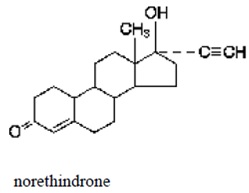
CLINICAL PHARMACOLOGY
1. Mode of Action Emzahh ™ progestin-only oral contraceptives prevent conception by suppressing ovulation in approximately half of users, thickening the cervical mucus to inhibit sperm penetration, lowering the midcycle LH and FSH peaks, slowing the movement of the ovum through the fallopian tubes, and altering the endometrium. 2. Pharmacokinetics Serum progestin levels peak about two hours after oral administration, followed by rapid distribution and elimination. By 24 hours after drug ingestion, serum levels are near baseline, making efficacy dependent upon rigid adherence to the dosing schedule. There are large variations in serum levels among individual users. Progestin-only administration results in lower steady-state serum progestin levels and a shorter elimination half-life than concomitant administration with estrogens.
HOW SUPPLIED
Emzahh TM (Norethindrone Tablets USP, 0.35 mg) are light yellow to yellow, round, flat faced beveled edged uncoated tablets, debossed with ‘S’ on one side and ‘13’ on other side of the tablet. It is supplied as 28 tablets in a blister pack.
The blister packs are available in the following packages:
• The blister packs are packed in pouches and the pouches are packaged in carton
Carton of 6 Pouches NDC 59651-136-92
Carton of 3 Pouches NDC 59651-136-88
• The blister pack is packed in carton
Carton of 1 Blister Pack NDC 59651-136-28
STORAGE: Store at 20° to 25°C (68° to 77°F); excursions permitted to 15º to 30ºC (59º to 86ºF) [See USP Controlled Room Temperature].
Keep out of reach of children.
