Get your patient on Glycopyrrolate - Glycopyrrolate injection, Solution (Glycopyrrolate)
Glycopyrrolate - Glycopyrrolate injection, Solution prescribing information

1 INDICATIONS AND USAGE
1.1 Preanesthetic
Glycopyrrolate Injection is indicated in adults and pediatric patients for reduction of salivary, tracheobronchial, and pharyngeal secretions, reduction of volume and acidity of gastric secretions, and blockade of cardiac inhibitory reflexes during induction of anesthesia and intubation.
1.2 Intraoperative
Glycopyrrolate Injection is indicated in adults and pediatric patients to counteract surgically or drug-induced or vagal reflex-associated arrhythmias.
1.3 Reversal of Neuromuscular Blockade
Glycopyrrolate Injection is indicated in adults and pediatric patients for protection against peripheral muscarinic effects of cholinergic agents such as neostigmine and pyridostigmine given to reverse the neuromuscular blockade due to non- depolarizing agents.
1.4 Peptic Ulcer
Glycopyrrolate Injection is indicated in adults to reduce symptoms of a peptic ulcer as an adjunct to treatment of peptic ulcer when rapid anticholinergic effect is desired or when oral medication is not tolerated.
• Limitations of Use
Glycopyrrolate Injection is not indicated as monotherapy for the treatment of peptic ulcer because effectiveness in peptic ulcer healing has not been established.
2 DOSAGE AND ADMINISTRATION
NOTE: CONTAINS BENZYL ALCOHOL [see Use in Specific Populations (8.4 )].
2.1 Important Dosage and Administration Instructions
• Parenteral drug products should be inspected visually for particulate matter and discoloration prior to administration whenever solution and container permit. • Glycopyrrolate Injection may be administered intramuscularly or intravenously, without dilution. • This product is for both single dose and multiple dose.
2.2 Recommended Dosage of Preanesthetic Medication in Adults and Pediatric Patients
The recommended dose of Glycopyrrolate Injection is 0.004 mg/kg by intramuscular injection, given 30 to 60 minutes prior to the anticipated time of induction of anesthesia or at the time the preanesthetic narcotic and/or sedative are administered. Patients less than 2 years of age may require up to 0.009 mg/kg.
2.3 Recommended Dosage as Intraoperative Medication to Counteract Drug-induced or Vagal Reflexes and Their Associated Arrhythmias (e.g., bradycardia) in Adults and Pediatric Patients
The recommended adult dose of Glycopyrrolate Injection is 0.1 mg intravenously. Repeat this dose, as needed, at intervals of 2 to 3 minutes. The recommended pediatric dosage is 0.004 mg/kg intravenously, not to exceed 0.1 mg in a single dose, repeated every 2 to 3 minutes. Attempt to determine the etiology of the arrhythmia, and perform the surgical or anesthetic manipulations necessary to correct parasympathetic imbalance.
Because of the long duration of action of Glycopyrrolate Injection if used as preanesthetic medication, additional Glycopyrrolate Injection for anticholinergic effect intraoperatively is rarely needed.
2.4 Recommended Dosage for Reversal of Neuromuscular Blockade in Adults and Pediatric Patients
The recommended dose of Glycopyrrolate Injection is 0.2 mg IV for each 1 mg of neostigmine or 5 mg of pyridostigmine. In order to minimize the appearance of cardiac side effects, the drugs may be administered simultaneously by intravenous injection.
2.5 Recommended Dosage for Peptic Ulcer in Adults
The recommended dosage of Glycopyrrolate Injection is 0.1 mg administered at 4-hour intervals, 3 or 4 times daily, intravenously or intramuscularly. Where more profound effect is required, 0.2 mg may be given. Some patients may need only a single dose. Frequency of administration should be dictated by patient response up to a maximum of four times daily.
2.6 Preparation and Handling
Diluent Compatibilities
Dextrose 5% and 10% in water, or saline, dextrose 5% in sodium chloride 0.45%, sodium chloride 0.9%, and Ringer’s Injection.
Diluent Incompatibilities
Lactated Ringer’s solution.
Admixture Compatibilities
Physical Compatibility
This list does not constitute an endorsement of the clinical utility or safety of co-administration of Glycopyrrolate Injection with these drugs. Glycopyrrolate Injection is compatible for mixing and injection with the following injectable dosage forms: atropine sulfate, USP; physostigmine salicylate; diphenhydramine HCl; codeine phosphate, USP; benz-quinamide HCl; hydromorphone HCl, USP; droperidol; levorphanol tartrate; lidocaine, USP; meperidine HCl, USP; pyridostigmine bromide; morphine sulfate, USP; nalbuphine HCl; oxymorphone HCl; procaine HCl, USP; promethazine HCl, USP; neostigmine methylsulfate, USP; scopolamine HBr, USP; butorphanol tartrate; fentanyl citrate; trimethobenzamide HCl; and hydroxyzine HCl. Glycopyrrolate Injection may be administered via the tubing of a running infusion of normal
saline.
Admixture Incompatibilities
Physical Incompatibility
Because the stability of glycopyrrolate is questionable above a pH of 6.0 do not combine Glycopyrrolate Injection in the same vial with methohexital Na; chloramphenicol Na succinate; dimenhydrinate; pentobarbital Na; thiopental Na; secobarbital Na; sodium bicarbonate; diazepam; dexamethasone Na phosphate; or pentazocine lactate. These mixtures will result in a pH higher than 6.0 and may result in gas production or precipitation.
3 DOSAGE FORMS AND STRENGTHS
Glycopyrrolate Injection, USP is a clear, colorless, solution for injection available as 0.2 mg/mL glycopyrrolate in presentation of 0.2 mg/1 mL, 0.2 mg/2 mL single dose vials and 0.2 mg/5 mL, 0.2 mg/20 mL multi-dose vials.
8 USE IN SPECIFIC POPULATIONS
8.1 Pregnancy
Risk Summary
Limited available data over decades of use with glycopyrrolate in pregnant women have not identified a drug-associated risk of birth defects and miscarriage, however, most of the reported exposures occurred after the first trimester. Most of the available data are based on studies with exposures that occurred at the time of Cesarean section delivery, and these studies have not identified an adverse effect on maternal outcomes or infant Apgar scores (see Data) .
In animal reproduction studies in pregnant rats and rabbits administered glycopyrrolate orally (rats) and intramuscularly (rabbits) during the period of organogenesis, no teratogenic effects were seen at 320-times and 5-times the maximum recommended human dose (MRHD) of 2 mg (on a mg/m2 basis), respectively (see Data) .
The background risk for major birth defects and miscarriage for the indicated population is unknown. All pregnancies have a background risk of birth defect, loss, or other adverse outcomes. In the U.S. general population, the estimated background risk of major birth defects and miscarriage in the clinically recognized pregnancies is 2 to 4% and 15 to 20%, respectively.
Data
Human Data
Published, randomized, controlled trials over several decades, which compared the use of glycopyrrolate to another antimuscarinic agent in pregnant women during Cesarean section, have not identified adverse maternal or infant outcomes. In normal doses (0.004 mg/kg), glycopyrrolate does not appear to affect fetal heart rate or fetal heart rate variability to a significant degree. Concentrations of glycopyrrolate in umbilical venous and arterial blood and in the amniotic fluid are low after intramuscular administration to parturients. Therefore, glycopyrrolate does not appear to penetrate through the placental barrier in significant amounts.
There are no studies on the safety of glycopyrrolate exposure during the period of organogenesis, and therefore, it is not possible to draw any conclusions on the risk of birth defects following exposure to glycopyrrolate during pregnancy. In addition, there are no data on the risk of miscarriage following fetal exposure to glycopyrrolate.
Animal Data
Reproduction studies with glycopyrrolate were performed in rats at a dietary dose of approximately 65 mg/kg/day (exposure was approximately 320 times the maximum recommended daily human dose of 2 mg on a mg/m2 basis) and rabbits at intramuscular doses of up to 0.5 mg/kg/day (exposure was approximately 5 times the maximum recommended daily human dose on a mg/m2 basis). These studies produced no teratogenic effects to the fetus.
A preclinical study on reproductive performance of rats given glycopyrrolate resulted in a decreased rate of conception and survival at weaning.
8.2 Lactation
Risk Summary
There are no data on the presence of glycopyrrolate in either human milk or animal milk, the effects on the breastfed infant, or the effects on milk production. As with other anticholinergics, glycopyrrolate may cause suppression of lactation [see Adverse Reactions (6 )] . The developmental and health benefits of breast feeding should be considered along with the mother’s clinical need for Glycopyrrolate Injection and any potential adverse effects on the breastfed child from Glycopyrrolate Injection or from the underlying maternal condition.
8.4 Pediatric Use
Glycopyrrolate Injection is indicated in pediatric patients:
• for reduction of salivary, tracheobronchial, and pharyngeal secretions, reduction of volume and acidity of gastric secretions, and blockade of cardiac inhibitory reflexes during induction of anesthesia and intubation
• intraoperatively to counteract surgically or drug-induced or vagal reflex-associated arrhythmias
• for protection against peripheral muscarinic effects of cholinergic agents such as neostigmine and pyridostigmine given to reverse the neuromuscular blockade due to nondepolarizing agents
Heat prostration can occur in pediatric patients in the presence of fever, high environmental temperature, and/or during physical exercise with use of anticholinergic agents including Glycopyrrolate Injection [see Warnings and Precautions (5.3 )] .
Young pediatric patients (and especially those less than 1 month of age), patients with Down syndrome, and pediatric patients with spastic paralysis or brain damage may experience an increased response to anticholinergics, thus increasing the potential for side effects.
A paradoxical reaction characterized by hyperexcitability may occur in pediatric patients receiving large doses of anticholinergics including Glycopyrrolate Injection. Dysrhythmias associated with the use of glycopyrrolate intravenously as a premedicant or during anesthesia have been observed in pediatric patients.
The safety and effectiveness of Glycopyrrolate Injection for treatment of peptic ulcer have not
been established in pediatric patients.
Benzyl Alcohol Toxicity Benzyl alcohol, a component of this drug product, has been associated with serious adverse events and death, particularly in pediatric patients. The “gasping syndrome", (characterized by central nervous system depression, metabolic acidosis, gasping respirations, and high levels of benzyl alcohol and its metabolites found in the blood and urine) has been associated with benzyl alcohol dosages >99 mg/kg/day in neonates and low-birth-weight neonates. Additional symptoms may include gradual neurological deterioration, seizures, intracranial hemorrhage, hemotologic abnormalities, skin breakdown, hepatic and renal failure, hypotension, bradycardia, and cardiovascular collapse. Although normal therapeutic doses of this product deliver amounts of benzyl alcohol that are substantially lower than those reported in association with the “gasping syndrome”, the minimum amount of benzyl alcohol at which toxicity may occur is not known. Premature and low-birthweight infants, as well as patients receiving high dosages, may be more likely to develop toxicity. Practitioners administering this and other medications containing benzyl alcohol should consider the combined daily metabolic load of benzyl alcohol from all sources. Due to its benzyl alcohol content, glycopyrrolate injection should not be used in neonates, i.e., patients less than 1 month of age [see Warnings and Precautions (5.10 )] .
8.5 Geriatric Use
Clinical studies of Glycopyrrolate Injection did not include sufficient numbers of subjects aged 65 and over to determine whether they respond differently from younger subjects. Other reported clinical experience has not identified differences in responses between the elderly and younger patients. In general, dose selection for an elderly patient should be cautious, usually starting at the low end of the dosing range, reflecting the greater frequency of decreased hepatic, renal, or cardiac function, and of concomitant disease or other therapy.
8.6 Renal Impairment
Renal elimination of glycopyrrolate may be significantly reduced in patients with renal failure. Dosage adjustments may be necessary [see Clinical Pharmacology (12.3 )] .
4 CONTRAINDICATIONS
Glycopyrrolate Injection is contraindicated in:
• patients with known hypersensitivity to Glycopyrrolate Injection or any of its inactive ingredients.
• peptic ulcer patients with the following concurrent conditions: glaucoma; obstructive uropathy (for example, bladder neck obstruction due to prostatic hypertrophy); obstructive disease of the gastrointestinal tract (as in achalasia, pyloroduodenal stenosis, etc.); paralytic ileus, intestinal atony of the elderly or debilitated patient; unstable cardiovascular status in acute hemorrhage; severe ulcerative colitis; toxic megacolon complicating ulcerative colitis; myasthenia gravis.
5 WARNINGS AND PRECAUTIONS
5.1 Precipitation of Acute Glaucoma
Glycopyrrolate Injection may cause mydriasis and increase intraocular pressure in patients with glaucoma. Advise patients with glaucoma to promptly seek medical care in the event that they experience symptoms of acute angle closure glaucoma (pain and reddening of the eyes, accompanied by dilated pupils).
5.2 Drowsiness or Blurred Vision
Glycopyrrolate Injection may cause drowsiness or blurred vision. Warn patients not to participate in activities requiring mental alertness, such as operating a motor vehicle or other machinery or performing hazardous work, until these issues resolve.
5.3 Heat Prostration
In the presence of fever, high environmental temperature, and/or during physical exercise, heat prostration can occur with use of anticholinergic agents including Glycopyrrolate Injection (due to decreased sweating), particularly in children and the elderly. Advise patients to avoid exertion and high environmental temperature after receiving Glycopyrrolate Injection.
5.4 Intestinal Obstruction
Diarrhea may be an early symptom of incomplete intestinal obstruction, especially in patients with ileostomy or colostomy. In this instance treatment with Glycopyrrolate Injection is inappropriate and possibly harmful. Glycopyrrolate is contraindicated in patients with these conditions.
5.5 Tachycardia
Investigate any tachycardia before giving Glycopyrrolate Injection because an increase in the heart rate may occur. Use with caution in patients with coronary artery disease, congestive heart failure, cardiac arrhythmias, hypertension, or hyperthyroidism.
5.6 Risk of Use in Patients with Renal Impairment
Renal elimination of glycopyrrolate may be significantly reduced in patients with renal failure. Dosage adjustments may be necessary in this population [ see Clinical Pharmacology (12.3 ) ].
5.7 Autonomic Neuropathy, Hepatic Disease, Ulcerative Colitis, Prostatic Hypertrophy, or Hiatal Hernia
Use Glycopyrrolate Injection with caution in the elderly and in all patients with autonomic neuropathy, hepatic disease, ulcerative colitis, prostatic hypertrophy, or hiatal hernia, because anticholinergic drugs may aggravate these conditions. Consider dose reduction and closely monitor the elderly and patients with autonomic neuropathy, hepatic disease, ulcerative colitis, prostatic hypertrophy, or hiatal hernia.
5.8 Delayed Gastric Emptying/Gastric Stasis
The use of anticholinergic drugs, including Glycopyrrolate Injection, in the treatment of peptic ulcer may produce a delay in gastric emptying due to antral stasis. Monitor patients for symptoms such as vomiting, dyspepsia, early satiety, abdominal distention, and increased abdominal pain. Discontinue Glycopyrrolate Injection treatment if these symptoms develop or worsen on treatment.
5.9 Light Sensitivity
Patients may experience sensitivity of the eyes to light. Advise patients to protect their eyes from light after receiving Glycopyrrolate Injection.
5.10 Risk of Benzyl alcohol Toxicity in Neonates
Exposure to excessive amounts of benzyl alcohol has been associated with toxicity (hypotension, metabolic acidosis), particularly in neonates, and an increased incidence of kernicterus, particularly in small preterm infants. There have been rare reports of deaths, primarily in preterm infants, associated with exposure to excessive amounts of benzyl alcohol. The amount of benzyl alcohol from medications is usually considered negligible compared to that received in flush solutions containing benzyl alcohol. Administration of high dosages of medications containing this preservative must take into account the total amount of benzyl alcohol administered. The amount of benzyl alcohol at which toxicity may occur is not known. If the patient requires more than the recommended dosages or other medications containing this preservative, the practitioner must consider the daily metabolic load of benzyl alcohol from these combined sources [see Use in Specific Populations (8.4 )] .
6 ADVERSE REACTIONS
The following adverse reactions were identified in clinical studies or postmarketing reports. Because some of these reactions were reported voluntarily from a population of uncertain size, it is not always possible to reliably estimate their frequency or establish a causal relationship to drug exposure.
Adverse reactions to anticholinergics include xerostomia (dry mouth); urinary hesitancy and retention; blurred vision and photophobia due to mydriasis (dilation of the pupil); cycloplegia; increased ocular tension; tachycardia; palpitation; decreased sweating; loss of taste; headache; nervousness; drowsiness; weakness; dizziness; insomnia; nausea; vomiting; impotence; suppression of lactation; constipation; bloated feeling; severe allergic reactions including anaphylactic/anaphylactoid reactions; hypersensitivity; urticaria, pruritus, dry skin, and other dermal manifestations; some degree of mental confusion and/or excitement, especially in elderly persons.
The following adverse events have been reported from post-marketing experience with glycopyrrolate: malignant hyperthermia; cardiac arrhythmias (including bradycardia, ventricular tachycardia, ventricular fibrillation); cardiac arrest; hypertension; hypotension; seizures; and respiratory arrest. Post-marketing reports have included cases of heart block and QTc interval prolongation associated with the combined use of glycopyrrolate and an anticholinesterase. Injection site reactions including pruritus, edema, erythema, and pain have also been reported.
The following is discussed in more detail in other sections of the labeling. • Benzyl Alcohol Toxicity : Due to its benzyl alcohol content, glycopyrrolate injection should not be used in neonates, i.e., patients less than 1 month of age [see Warnings and Precautions (5.10 ) and Use in Specific Populations (8.4 )] .
7 DRUG INTERACTIONS
The concurrent use of Glycopyrrolate Injection with other anticholinergics or medications with anticholinergic activity, such as phenothiazines, antiparkinson drugs, or tricyclic antidepressants, may intensify the antimuscarinic effects and result in an increase in anticholinergic side effects.
Concomitant administration of Glycopyrrolate Injection and potassium chloride in a wax matrix may increase the severity of potassium chloride-induced gastrointestinal lesions as a result of a slower gastrointestinal transit time.
11 DESCRIPTION
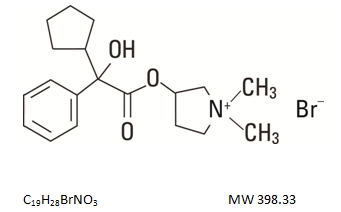
Glycopyrrolate is a synthetic anticholinergic agent.
It is a quaternary ammonium salt with the following chemical name:
3[(cyclopentylhydroxyphenylacetyl)oxy]-1,1-dimethyl pyrrolidinium bromide. The molecular formula is C 19 H 28 BrNO 3 and the molecular weight is 398.33.
Its structural formula is as follows:
Glycopyrrolate occurs as a white, odorless, crystalline powder. It is soluble in water and alcohol, and practically insoluble in chloroform and ether. It is completely ionized at physiological pH values. Glycopyrrolate Injection, USP, is a clear, colorless, sterile liquid with a pH of 2.0 to 3.0. The partition coefficient of glycopyrrolate in n-octanol/water system is 0.304 (log 10 P = -1.52) at ambient room temperature (24°C).
Glycopyrrolate injection, USP, is intended for intramuscular or intravenous administration. Each 1 mL contains 0.2 mg of glycopyrrolate, water for injection, Benzyl Alcohol, NF 0.9% (preservative) and hydrochloric acid as pH adjusters.
12 CLINICAL PHARMACOLOGY
12.1 Mechanism of Action
Glycopyrrolate, like other anticholinergic (antimuscarinic) agents, inhibits the action of acetylcholine on structures innervated by postganglionic cholinergic nerves and on smooth muscles that respond to acetylcholine but lack cholinergic innervation. These peripheral cholinergic receptors are present in the autonomic effector cells of smooth muscle, cardiac muscle, the sinoatrial node, the atrioventricular node, exocrine glands and, to a limited degree, in the autonomic ganglia. Thus, it diminishes the volume and free acidity of gastric secretions and controls excessive pharyngeal, tracheal, and bronchial secretions.
12.2 Pharmacodynamics
Glycopyrrolate antagonizes muscarinic symptoms (e.g., bronchorrhea, bronchospasm, bradycardia, and intestinal hypermotility) induced by cholinergic drugs such as the anticholinesterases. The highly polar quaternary ammonium group of glycopyrrolate limits its passage across lipid membranes, such as the blood-brain barrier, in contrast to atropine sulfate and scopolamine hydrobromide, which are highly non-polar tertiary amines which penetrate lipid barriers easily. For this reason, the occurrence of CNS-related side effects is lower, in comparison to their incidence following administration of anticholinergics which are chemically tertiary amines that can cross this barrier readily. With intravenous injection, the onset of action is generally evident within one minute. Following intramuscular administration, the onset of action is noted in 15 to 30 minutes, with peak effects occurring within approximately 30 to 45 minutes. The vagal blocking effects persist for 2 to 3 hours and the antisialagogue effects persist up to 7 hours, periods longer than for atropine.
12.3 Pharmacokinetics
The following pharmacokinetic information and conclusions were obtained from published studies that used nonspecific assay methods.
Distribution
The mean volume of distribution of glycopyrrolate was estimated to be 0.42 ± 0.22 L/kg.
Elimination
Metabolism
The in vivo metabolism of glycopyrrolate in humans has not been studied.
Excretion
The mean clearance and mean t 1/2 values were reported to be 0.54 ± 0.14 L/kg/hr and 0.83 ± 0.27 hr, respectively post IV administration. After IV administration of a 0.2 mg radiolabeled glycopyrrolate, 85% of dose recovered was recovered in urine 48 hours post dose and some of the radioactivity was also recovered in bile. After IM administration of glycopyrrolate to adults, the mean t 1/2 value is reported to be between 0.55 to 1.25 hrs. Over 80% of IM dose administered was recovered in urine and the bile as unchanged drug and half the IM dose is excreted within 3 hrs. The following table summarizes the mean and standard deviation of pharmacokinetic parameters from a study.
| Group | t 1/2 | V ss | CL | T max | C max | AUC |
| (hr) | (L/kg) | (L/kg/hr) | (min) | (mcg/L) | (mcg/L•hr) | |
| (6 mcg/kg IV) | 0.83 ± 0.27 | 0.42 ± 0.22 | 0.54 ± 0.14 | - | - | 8.64 ± 1.49• |
| (8 mcg/kg IM) | - | - | - | 27.48 ± 6.12 | 3.47 ± 1.48 | 6.64 ± 2.33• |
• 0 to 8 hr
Specific Populations
Pediatric Patients
Following IV administration (5 mcg/kg glycopyrrolate) to infants and children, the mean t 1/2 values were reported to be between 21.6 and 130.0 minutes and between 19.2 and 99.2 minutes, respectively.
Patients with Renal Impairment
In one study glycopyrrolate was administered IV in uremic patients undergoing renal transplantation. The mean elimination half-life was significantly longer (46.8 minutes) than in healthy patients (18.6 minutes). The mean area-under-the-concentration-time curve (10.6 hrmcg/ L), mean plasma clearance (0.43 L/hr/kg), and mean 3-hour urine excretion (0.7%) for glycopyrrolate were also significantly different than those of controls (3.73 hr-mcg/L, 1.14 L/hr/kg, and 50%, respectively). These results suggest that the elimination of glycopyrrolate is significantly reduced in patients with renal failure.
13 NONCLINICAL TOXICOLOGY
13.1 Carcinogenesis, Mutagenesis and Impairment of Fertility
Carcinogenesis
Long-term studies in animals have not been performed to evaluate carcinogenic potential.
Mutagenesis
Studies to evaluate the mutagenic potential of glycopyrrolate have not been conducted.
Impairment of Fertility
In reproduction studies in rats, dietary administration of glycopyrrolate resulted in diminished rates of conception in a dose-related manner. Other studies in dogs suggest that this may be due to diminished seminal secretion which is evident at high doses of glycopyrrolate.
16 HOW SUPPLIED/STORAGE AND HANDLING
Glycopyrrolate Injection, USP, 0.2 mg/mL , is a clear colorless solution, and supplied as single and multiple dose vials available in following strengths and package sizes:
0.2 mg/mL, 1 mL vial
Single dose vial: NDC 66794-202-02
25 single dose vials in a carton: NDC 66794-202-42
0.2 mg/mL, 2 mL vial
Single dose vial: NDC 66794-203-02
25 single dose vials in a carton: NDC 66794-203-42
0.2 mg/mL, 5 mL vial
Multiple dose vial: NDC 66794-204-02
25 multiple dose vials in a carton: NDC 66794-204-42
0.2 mg/mL, 20 mL vial
Multiple dose vial: NDC 66794-205-02
10 multiple dose vials in a carton: NDC 66794-205-41
Store at 20°C to 25°C (68°F to 77°F) [See USP Controlled Room Temperature].
Discard unused portion.
