Get your patient on Hydrocortisone Valerate Cream - Hydrocortisone Valerate Cream cream (Hydrocortisone Valerate Cream)
Hydrocortisone Valerate Cream - Hydrocortisone Valerate Cream cream prescribing information

INDICATIONS AND USAGE
Hydrocortisone valerate cream USP, 0.2% is medium potency corticosteroids indicated for the relief of the inflammatory and pruritic manifestations of corticosteroid responsive dermatoses in adult patients.
DOSAGE AND ADMINISTRATION
Hydrocortisone valerate cream USP, 0.2% should be applied to the affected area as a thin film two or three times daily depending on the severity of the condition.
As with other corticosteroids, therapy should be discontinued when control is achieved. If no improvement is seen within 2 weeks, reassessment of the diagnosis may be necessary.
Hydrocortisone valerate cream USP, 0.2% should not be used with occlusive dressings unless directed by a physician. Hydrocortisone valerate cream USP, 0.2% should not be applied in the diaper area if the patient requires diapers or plastic pants as these garments may constitute occlusive dressing.
CONTRAINDICATIONS
Hydrocortisone valerate cream USP, 0.2% is contraindicated in those patients with a history of hypersensitivity to any of the components of the preparations.
ADVERSE REACTIONS
Hydrocortisone Valerate Cream USP, 0.2%
The following local adverse reactions have been reported with topical corticosteroids, and they may occur more frequently with the use of occlusive dressings. These reactions are listed in an approximate decreasing order of occurrence: burning, itching, irritation, dryness, folliculitis, hypertrichosis, acneiform eruptions, hypopigmentation, perioral dermatitis, allergic contact dermatitis, maceration of the skin, secondary infection, skin atrophy, striae, and miliaria.
In controlled clinical studies involving pediatric patients one month to 2 years of age (n=29), the incidence of adverse experiences, regardless of relationship to the use of hydrocortisone valerate cream USP, 0.2%, was approximately 21%. Reported reactions included stinging (10%), eczema (7%), fungal infection (3%), and gastrointestinal disorder (3%).
In controlled clinical studies involving pediatric patients 2 to 12 years of age (n=153), the incidence of adverse experiences, regardless of relationship to the use of hydrocortisone valerate cream USP, 0.2%, was approximately 10%. Reported reactions included stinging (3%), burning skin (2%), infection (Body as a Whole) (2%). Skin irritation, eczema, pruritus, application site reaction, rash, rash maculopapular, and dry skin were all reported at incidences of approximately 1%.
To report SUSPECTED ADVERSE REACTIONS , contact Encube Ethicals Private Limited al 1-833-285-4151 or FDA at 1-800-FDA- 1088 or www.fda.gov/medwatch.
DESCRIPTION
Hydrocortisone valerate cream USP, 0.2% contain hydrocortisone valerate, 11,21-dihydroxy-17-[(1-oxopentyl)oxy]-(11β)-pregn-4-ene-3,20-dione, a synthetic corticosteroid for topical dermatologic use. The corticosteroids constitute a class of primarily synthetic steroids used topically as anti-inflammatory and antipruritic agents. Chemically, hydrocortisone valerate is C 26 H 38 O 6 . It has the following structural formula:
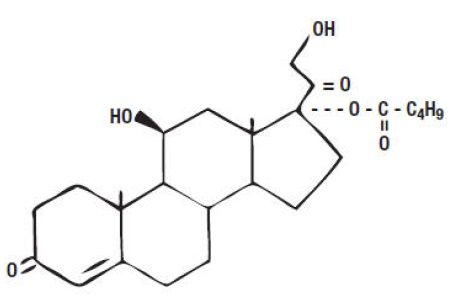
Hydrocortisone valerate has a molecular weight of 446.58. It is a white, crystalline solid, soluble in ethanol and methanol, sparingly soluble in propylene glycol and insoluble in water. Each gram of hydrocortisone valerate cream USP, 0.2% contains 2 mg hydrocortisone valerate in a hydrophilic base composed of carbomer homopolymer type C, dibasic sodium phosphate, methylparaben, sodium lauryl sulfate, polyoxyethylene (100) stearyl ether, stearyl alcohol, white petrolatum, polyoxyl 2 stearyl ether, purified water and propylene glycol.
CLINICAL PHARMACOLOGY
Like other topical corticosteroids, hydrocortisone valerate has anti-inflammatory, antipruritic and vasoconstrictive properties. The mechanism of the anti-inflammatory activity of the topical steroids, in general, is unclear. However, corticosteroids are thought to act by the induction of phospholipase A 2 inhibitory proteins, collectively called lipocortins. It is postulated that these proteins control the biosynthesis of potent mediators of inflammation such as prostaglandins and leukotrienes by inhibiting the release of their common precursor arachidonic acid. Arachidonic acid is released from membrane phospholipids by phospholipase A 2 . Pharmacokinetics The extent of percutaneous absorption of topical corticosteroids is determined by many factors including the vehicle and the integrity of the epidermal barrier. Occlusive dressings with hydrocortisone for up to 24 hours have not been demonstrated to increase penetration; however, occlusion of hydrocortisone for 96 hours markedly enhances penetration. Topical corticosteroids can be absorbed from normal intact skin. Inflammation and/or other disease processes in the skin may increase percutaneous absorption. Studies performed with hydrocortisone valerate cream USP, 0.2% indicate that it is in the medium range of potency as compared with other topical corticosteroids.
HOW SUPPLIED
Hydrocortisone valerate cream USP, 0.2%, is supplied in 15 g (NDC 21922-007-04), 45g (NDC 21922-007-06), 60 g (NDC 21922-007-07) tube sizes. STORAGE Store at 20° to 25°C (68° to 77°F) [see USP Controlled Room Temperature].
Made in France, formulated in India.
Mfg. Lic. No. 361
Manufactured by:
Encube Ethicals Pvt. Ltd.
Plot No. C1, Madkaim Industrial Estate, Madkaim, Post Mardol, Ponda, Goa-403 404, India.
Distributed by:
Encube Ethicals Inc.
200 Meredith Avenue, Suite 202 Durham, NC 27713 USA
Rev 04
Rev. 12/23
