Get your patient on Moxidectin - Moxidectin tablet (Moxidectin)
Moxidectin - Moxidectin tablet prescribing information

1 INDICATIONS AND USAGE
Moxidectin Tablets are indicated for the treatment of onchocerciasis due to Onchocerca volvulus in adult and pediatric patients aged 4 years and older and weighing at least 13 kg [see Clinical Studies (14 )] .
Limitations of Use:
Moxidectin Tablets does not kill adult Onchocerca volvulus (O. volvulus) parasites . Follow-up evaluation is advised.
The safety and efficacy of repeat administration of Moxidectin Tablets in patients with O . volvulus has not been studied.
2 DOSAGE AND ADMINISTRATION
- Recommended Dosage in Adult Patients : Take 8 mg (four 2 mg tablets) as a single oral dose, with or without food. (2.1 )
- Recommended Dosage in Pediatric P atients (4 Years of Age and Older and Weighing at Least 13 kg): See Table below. (2.2 )
| Body Weight | Dose | Number of 2 mg Tablets |
| 13 kg to less than 15 kg | 4 mg | 2 |
| 15 kg to less than 30 kg | 6 mg | 3 |
| Greater than or equal to 30 kg | 8 mg | 4 |
2.1 Recommended Dosage in Adult Patients
The recommended dosage of Moxidectin Tablets in adult patients is a single dose of 8 mg (four 2 mg tablets) taken orally with or without food [see Clinical Pharmacology (12.3 )].
2.000000000000000e+00 2 Recommended Dosage in Pediatric Patients (4 Years of Age and Older and Weighing at Least 13 kg)
The recommended dosage of Moxidectin Tablets in pediatric patients aged 4 years and older and weighing at least 13 kg is described in Table 1 below. Administer Moxidectin Tablets as a single dose taken orally with or without food [see Clinical Pharmacology (12.3 ) ].
Table 1: Recommended Dosage of Moxidectin Tablets in Pediatric Patients 4 Years of Age and Older and Weighing at Least 13 kg
| Body Weight | Dose | Number of 2 mg Tablets |
| 13 kg to less than 15 kg | 4 mg | 2 |
| 15 kg to less than 30 kg | 6 mg | 3 |
| Greater than or equal to 30 kg | 8 mg | 4 |
3 DOSAGE FORMS AND STRENGTHS
Moxidectin Tablets: 2 mg of moxidectin, white to pale yellow, uncoated, oval-shaped, debossed on one side with “AKKA”.
8 USE IN SPECIFIC POPULATIONS
Lactation : Breastfeeding is not recommended during treatment with Moxidectin Tablets and for 7 days after treatment. (8.2 )
8.1 Pregnancy
Risk Summary
Available data from clinical trials on the use of Moxidectin Tablets in pregnant women are insufficient to establish whether there is a moxidectin-associated risk for major birth defects and miscarriage . Moxidectin administered orally to pregnant rats during the period of organogenesis was not associated with significant embryo-fetal developmental effects at doses of approximately 15 times the recommended human dose based on body surface area (BSA) comparison. When moxidectin was dosed orally to pregnant rabbits during the period of organogenesis, no embryo-fetal developmental effects were observed at oral doses of moxidectin up to 24 times the recommended human dose based on BSA comparison ( see Data ) .
Daily administration of moxidectin by oral gavage to maternal female rats during organogenesis and through lactation was associated with decreased survival, adverse clinical signs, and decreased body weights in first-generation offspring during the lactation period at a moxidectin dose less than 2-times the recommended human dose based on BSA comparison. Additional findings in first-generation offspring at the same dose included delays in pinna unfolding, eye opening, and vaginal opening. Other parameters, including reproduction and neurological development in first-generation offspring were not affected at any moxidectin dose ( see Data ) .
The estimated background risk of major birth defects and miscarriage for the indicated population is unknown. All pregnancies have a background risk of birth defect, loss or other adverse outcomes. In the U.S. general population, the estimated background risk of major birth defects and miscarriage in clinically recognized pregnancies is 2% to 4% and 15% to 20%, respectively.
Data
Animal Data
In a rat embryo-fetal development study, daily oral administration of moxidectin at 12 mg/kg/day (approximately 15 times the recommended human dose of 8 mg based on BSA comparison) during Gestation Days (GDs) 6 to 15 significantly increased the fetal incidence, but not the litter incidence of cleft palate and the fetal and litter incidence of a skeletal variation, wavy ribs, at a maternally toxic dose. Mean maternal food consumption, body weights, and body weight gain were significantly decreased at moxidectin doses of 10 and 12 mg/kg/day compared to control values. The no observed adverse effect level (NOAEL) value for maternal and fetal toxicity was considered to be 5 and 10 mg/kg/day respectively (approximately 6 and 12 times, respectively, the recommended human dose based on BSA comparison). In the rabbit, daily oral administration of moxidectin at ≥ 5 mg/kg/day from GD 7 to GD 19 was not associated with fetal weight loss or malformations but resulted in significantly decreased maternal food consumption and body weight gains. The NOAEL values for maternal and fetal toxicity in the rabbit was 1 mg/kg/day and 10 mg/kg/day respectively (approximately 2 times and 24 times, respectively, the recommended human dose based on BSA comparison).
In a pre-postnatal study, moxidectin doses of 0.2 and 0.5 mg/kg/day were administered by oral gavage to maternal female rats from GD 6 throughout the lactation period until LD 21. A third dose group that received maternal doses of 1.5 mg/kg/day moxidectin (less than 2-times the recommended human dose based on BSA comparison) was divided into two cohorts with Cohort 1 receiving maternal doses from GD 6 until LD 10 and Cohort 2 receiving maternal doses from GD 6 until each individual animal littered, but not during the lactation period. First-generation offspring in Cohort 1 had adverse clinical signs (small body size, thin, weak, subdued/sluggish, pale, cold to touch, respiratory distress, blue coloration and/or no visible milk in stomach) and decreased survival and body weights during the lactation period. However, first-generation offspring in Cohort 2 did not experience adverse clinical signs, body weight loss, or reduced survival suggesting moxidectin in lactation milk was responsible for the adverse effects in offspring in Cohort 1. Additional findings included delays in pinna unfolding and eye opening in male and female offspring in both cohorts and delay of vaginal opening in female offspring in Cohort 2. No adverse effects were noted in offspring at a maternal dose of 0.5 mg/kg/day (approximately 0.6 times the recommended human dose based on BSA comparison). Reproductive performance based on mating and fertility indices and neurological development were not affected in male and female first-generation offspring at any of the administered moxidectin doses.
In another pre-postnatal study in rats, parental oral administration of dietary moxidectin prior to mating, through mating, gestation, and lactation did not produce adverse effects in first-generation or second-generation offspring at a maternal NOAEL dose of 0.824 mg/kg/day (approximately equivalent to the recommended human dose based on BSA comparison). However, at moxidectin doses ≥ 1.1 mg/kg/day (approximately equivalent to 1.3 times the recommended human dose based on BSA comparison), the survival and body weights of first-generation offspring were significantly decreased during the lactation period, and the number of live fetuses at birth was significantly decreased with a maternal moxidectin dose of 11 mg/kg/day (approximately equivalent to 13 times the recommended human dose based on BSA comparison). In this study, offspring were assessed for survival, body weights, and fertility, and developmental milestones were not assessed.
8.2 Lactation
Risk Summary
Moxidectin was detected in the milk of lactating women following a single 8 mg dose of Moxidectin Tablets ( see Data ) . There are no data on the effects of Moxidectin Tablets on the breast-fed infant or milk production. In a pre-postnatal study in rats, oral gavage administration of moxidectin at a dose less than 2-times the recommended human dose based on BSA comparison during the lactation period resulted in adverse clinical signs, weight loss, and increased mortality in rat pups suggesting moxidectin in lactation milk was responsible for the adverse effects [ see Use in Specific Populations (8.1 ), and Data ] .
Because of serious findings from the rat pre-postnatal study including weight loss and death, advise women that breastfeeding is not recommended at the time of treatment with Moxidectin Tablets and for 7 days after treatment.
Data
A pharmacokinetic study in twelve healthy adult lactating women who were 21 to 100 weeks post partum evaluated the concentrations of moxidectin in plasma and breast milk collected over a period of 28 days following a single 8 mg dose of Moxidectin Tablets. The mean (± SD) exposure ratio of moxidectin present in human breast milk to that of human plasma was approximately 1.77 mg(± 0.66) over a collection period of 28 days. The estimated mean (± SD) total infant dose, assuming the infants would consume all the breast milk collected during the study, was 0.056 mg (± 0.024 mg), which would be approximately 0.70% (± 0.30%) of the maternal dose. Relative infant dose was estimated to be 8.73% (± 0.024 mg). The effects of moxidectin or its metabolites on the breast-fed child or milk production were not evaluated.
8.4 Pediatric Use
The safety and effectiveness of Moxidectin Tablets for the treatment of onchocerciasis due to O. volvulus have been established in pediatric patients aged 4 years and older and weighing at least 13 kg. Use of Moxidectin Tablets for this indication is supported by evidence from adequate and well controlled studies in adult and pediatric patients aged 12 years and older with additional pharmacokinetics (PK) and safety data in pediatric patients aged 4 years and older [see Adverse Reactions (6.1 ), Clinical Pharmacology (12.3 ), and Clinical Studies (14 )] .
The safety and effectiveness of Moxidectin Tablets in pediatric patients younger than 4 years of age or weighing less than 13 kg has not been established.
8.5 Geriatric Use
Of the total number of patients included in Trial 1 that were treated with Moxidectin Tablets, 83 were aged 65 and over. No overall differences in safety or effectiveness were observed between these patients and younger patients, and other reported clinical experience has not identified differences in responses between the elderly and younger patients, but greater sensitivity of some older individuals cannot be ruled out [see Clinical Studies (14 ) and Clinical Pharmacology (12.3 )] .
8.6 Renal Impairment
No dose adjustment of Moxidectin Tablets is necessary for patients with mild (creatinine clearance (CrCL) 60 to 89 mL/min) to moderate (CrCL 30 to 59 mL/min) renal impairment. The safety of Moxidectin Tablets in patients with severe renal impairment (CrCL 15 to 29 mL/min) or end stage renal disease, is unknown [ see Clinical Pharmacology (12.3 ) ].
4 CONTRAINDICATIONS
None.
5 WARNINGS AND PRECAUTIONS
- Cutaneous, Ophthalmological and/or Systemic Adverse Reactions of Varying Severity (Mazzotti Reaction ) : This may occur in patients with onchocerciasis following treatment with Moxidectin Tablets. Monitor patients for symptoms, including symptomatic orthostatic hypotension. (5.1 )
- Symptomatic Orthostatic Hypotension : Episodes of symptomatic orthostatic hypotension including inability to stand without support may occur in patients following treatment with Moxidectin Tablets. (5.2 )
- Encephalopathy in Loa loa C o- I nfected P atients : Serious or even fatal encephalopathy following treatment with Moxidectin Tablets may occur in patients co-infected with Loa loa . Assess patients for loiasis in Loa loa endemic areas prior to treatment. (5.3 )
- Edema and Worsening of Onchodermatitis : Patients with hyper-reactive onchodermatitis (sowda) may be more likely than others to experience severe edema and aggravation of onchodermatitis. (5.4 )
5.1 Cutaneous, Ophthalmological and/or Systemic Adverse Reactions
Treatment with Moxidectin Tablets may cause cutaneous, ophthalmological and/or systemic reactions of varying severity (Mazzotti reaction). These adverse reactions are due to allergic and inflammatory host responses to the death of microfilariae [see Adverse Reactions (6.1 )]. There is a trend toward an increased incidence of these adverse reactions in patients with higher microfilarial burden.
The clinical manifestations of Mazzotti reaction include pruritus, headache, pyrexia, rash, urticaria, hypotension (including symptomatic orthostatic hypotension and dizziness) [ see Warnings and Precautions (5.2 )] , tachycardia, edema, lymphadenopathy, arthralgia, myalgia, chills, paresthesia and asthenia. Ophthalmological manifestations include conjunctivitis, eye pain, eye pruritus, eyelid swelling, blurred vision, photophobia, changes in visual acuity, hyperemia, ocular discomfort and watery eyes. These adverse reactions generally occur and resolve in the first week post-treatment. Laboratory changes include eosinophilia, eosinopenia, lymphocytopenia, neutropenia, and increases in alanine aminotransferase (ALT), aspartate aminotransferase (AST), gamma glutamyl transferase (GGT) and lactate dehydrogenase (LDH). Proteinuria has also been reported.
Treatment of severe Mazzotti reactions has not been evaluated in controlled clinical trials. Symptomatic treatments such as oral hydration, recumbency, intravenous normal saline, and/or parenteral corticosteroids have been used to treat orthostatic hypotension. Antihistamines and/or analgesics have been used for most mild to moderate cases.
5.2 Symptomatic Orthostatic Hypotension
An increased number of patients who received Moxidectin Tablets developed symptomatic orthostatic hypotension with inability to stand without support after lying down for 5 minutes (in an orthostatic hypotension provocation test); 47/978 (5%) compared with 8/494 (2%) who received ivermectin. The decreases in blood pressure were transient, managed by resumption of recumbency and most commonly occurred on Days 1 and 2 post-treatment. Advise patients that if they feel dizzy or light-headed after taking Moxidectin Tablets, they should lie down until the symptoms resolve.
5.3 Encephalopathy in Loa loa Co - infected Patients
Patients with onchocerciasis who are also infected with Loa loa may develop a serious or even fatal encephalopathy following treatment with Moxidectin Tablets.
Moxidectin Tablets have not been studied in patients co-infected with Loa loa . Therefore, it is recommended that individuals who warrant treatment with Moxidectin Tablets and have had exposure to Loa loa -endemic areas undergo diagnostic screening for loiasis prior to treatment.
5.4 Edema and Worsening of Onchodermatitis
Patients with hyper-reactive onchodermatitis (sowda) may be more likely than others to experience severe edema and worsening of onchodermatitis following the use of Moxidectin Tablets. Symptomatic treatment has been used to manage patients who have experienced edema and worsening of onchodermatitis.
6 ADVERSE REACTIONS
The following clinically significant adverse reactions are described in greater detail in other labeling sections:
- Cutaneous, Ophthalmological and/or Systemic Adverse Reactions [see Warnings and Precautio ns (5.1 )]
- Symptomatic Orthostatic Hypotension [see Warnings and Precautions (5.2 )]
- Encephalopathy in Loa loa Co-infected Patients [see Warnings and Precautions (5.3 )]
- Edema and Worsening of Onchodermatitis [see Warnings and Precautions (5.4 )]
6.1 Clinical Trials Experience
Because clinical trials are conducted under varying controlled conditions, adverse reaction rates observed in one clinical trial cannot be directly compared to rates observed in the clinical trials of another drug and may not reflect the rates observed in clinical practice.
Clinical Trials Experience in Adults and Pediatric Patients (12 Years to Less than 18 Years of Age)
The safety of Moxidectin Tablets was evaluated in two randomized, double-blind, active-controlled studies in patients with confirmed onchocerciasis (Trial 1 and Trial 2) [see Clinical Studies (14 )] . In Trial 1, 978 patients (including 53 pediatric patients aged 12 to less than 18 years) received Moxidectin Tablets as a single oral dose of 8 mg and 494 patients received ivermectin (including 24 pediatric patients aged 12 to less than 18 years) as a single oral dose of approximately 150 mcg/kg. In Trial 2, 127 patients aged 18 years or older received Moxidectin Tablets as a single oral dose ranging from 2 mg (this is not an approved dose) to 8 mg (38 received the recommended 8 mg dose) and 45 patients aged 18 years or older received ivermectin as a single oral dose of approximately 150 mcg/kg.
Most Common Adverse Reactions
No patients withdrew from either trial due to adverse reactions. Adverse Reactions reported in Trial 1 in > 10% of patients are summarized in Table 2. Most were related to physical, vital signs and laboratory changes associated with Mazzotti reaction [see Warnings and Precautions (5.1 )] .
| Adverse Reaction | Moxidectin N = 978 n (%) | Ivermectin N = 494 n (%) |
| Eosinophilia | 721 (74) | 390 (79) |
| Pruritus | 640 (65) | 268 (54) |
| Musculoskeletal pain a | 623 (64) | 257 (52) |
| Headache | 566 (58) | 267 (54) |
| Lymphocytopenia• | 470 (48) | 215 (44) |
| Tachycardia b | 382 (39) | 148(30) |
| Orthostatic tachycardia c | 333 (34) | 130 (26) |
| Non-orthostatic tachycardia d | 179 (18) | 57 (12) |
| Rash e | 358 (37) | 103 (21) |
| Abdominal pain f | 305 (31) | 173 (35) |
| Hypotension g | 289 (30) | 125 (25) |
| Orthostatic hypotension h | 212 (22) | 81 (16) |
| Pyrexia/Chills | 268 (27) | 88 (18) |
| Leukocytosis | 240 (25) | 125 (25) |
| Influenza like illness | 226 (23) | 102 (21) |
| Neutropenia•• | 197 (20) | 112 (23) |
| Cough | 168 (17) | 88 (18) |
| Lymph node pain | 129 (13) | 28 (6) |
| Dizziness | 121 (12) | 44 (9) |
| Diarrhea/Gastroenteritis/Enteritis | 144 (15) | 84 (17) |
| Hyponatremia | 112 (12) | 65 (13) |
| Peripheral swelling | 107 (11) | 30 (6) |
a Includes “myalgia”, “arthralgia”, “musculoskeletal pain”, “pain” and “back pain”
b Includes “orthostatic heart rate increased”, “postural orthostatic tachycardia syndrome”, “heart rate increased” and “sinus tachycardia”
c Includes “orthostatic heart rate increased” and “postural orthostatic tachycardia syndrome”
d Includes “heart rate increased”, “tachycardia”, and “sinus tachycardia”
e Includes “rash,” “papular rash” and “urticaria”
f Includes “abdominal pain”, “abdominal pain upper” and “abdominal pain lower”
g Includes “orthostatic hypotension”, “blood pressure orthostatic decreased”, “blood pressure decreased”, “mean arterial pressure decreased”, “hypotension”
h Includes “orthostatic hypotension”, and “blood pressure orthostatic decreased”
•Lymphocytopenia is defined as absolute lymphocyte count less than 1 x 10 9 /L
••Neutropenia is defined as absolute neutrophil count less than 1 x 10 9 /L
The most common adverse reactions in patients (N = 38) treated with 8 mg moxidectin in Trial 2 were similar to the adverse reactions noted in Trial 1 described in Table 2above.
Other Adverse Reactions Reported in Clinical Trials (Trial 1 and Trial 2)
The following adverse reactions occurred in less than 10% of subjects receiving Moxidectin Tablets in Trial 1:
Ocular Adverse Reactions : In Trial 1, the most common ocular adverse reactions (occurring in ≥ 0.5% of patients) is shown in Table 3.
| Adverse Reaction | Moxidectin N = 978 n ( % ) | Ivermectin N = 494 n ( % ) |
| Eye pain | 78 (8) | 28 (6) |
| Eye pruritus | 64 (7) | 26 (5) |
| Visual impairment• | 25 (3) | 9 (2) |
| Eyelid edema | 21 (2) | 5 (1) |
| Conjunctivitis allergic | 19 (2) | 11 (2) |
| Ocular discomfort•• | 18 (2) | 11 (2) |
| Ocular and conjunctival hyperemia | 17 (2) | 3 (1) |
| Lacrimation increased | 13 (1) | 10 (2) |
•Includes “visual impairment”, “blurred vision” and “low vision acuity”
••Includes “foreign body sensation”, “ocular discomfort” and “abnormal sensation in the eye”
Hepatobiliary Adverse Reactions
More patients in the moxidectin arm experienced elevation in bilirubin above the upper limit of normal and elevation in transaminases > 5x upper limit of normal. Twenty-seven (2.8%) patients in the moxidectin arm and 3 (0.6%) patients in the ivermectin arm had hyperbilirubinemia. Most of the patients had single measurements of hyperbilirubinemia without concurrent elevation in transaminases.
Nine (1%) patients in the moxidectin arm and 2 (0.4%) patients in the ivermectin arm had elevation in ALT of more than 5x upper limit of normal; ten (1%) patients in the moxidectin arm and 3 (0.6%) patients in the ivermectin arm had elevation in AST to more than 5x upper limit of normal.
Laboratory Abnormalities
Laboratory abnormalities occurring in at least 1% of patients in Trial 1 are described in Table 4.
| Parameter | MOXIDECTIN ( N = 978) n (%) | Ivermectin ( N = 494) n (%) |
| Hematology | ||
| Severe eosinophilia (> 5 x10 9 /L) | 173 (18) | 111 (23) |
| Grade 3 lymphocytopenia (< 0.5 x10 9 /L) | 220 (23) | 98 (20) |
| Grade 4 Neutrophils (< 0.5 x10 9 /L) | 65 (7) | 46 (9) |
| Eosinopenia (< 0.045 x10 9 /L) | 51 (5) | 21 (4) |
| Hepatobiliary | ||
| GGT (> 5x upper limit of normal) | 26 (3) | 16 (3) |
| Bilirubin (> 2x upper limit of normal) | 14 (1) | 2 (0.4) |
| AST (> 5x upper limit of normal) | 10 (1) | 3 (0.6) |
| ALT (> 5x upper limit of normal) | 9 (1) | 2 (0.4) |
Clinical Trials Experience in Pediatric Patients (4 Years to Less than 18 Years of Age)
The safety of Moxidectin Tablets in pediatric patients is based on data from 2 studies, Trial 1 and Trial 3 (NCT01035619).
Pediatric Patients in Trial 1
Trial 1 included 53 pediatric patients aged 12 to less than 18 years with confirmed onchocerciasis who received a single dose of Moxidectin Tablets 8 mg. Pediatric patients with confirmed infection experienced efficacy-related adverse reactions (Mazzotti reactions) such as abdominal pain, tachycardia, pyrexia, rash, peripheral swelling, and lymph node pain at a prevalence and severity similar to infected adults. Overall, the safety profile relative to age was similar across pediatric and adult patients studied in Trial 1.
Pediatric Patients in Trial 3
Trial 3 was a single-arm, open-label, age-stratified, multi-cohort, safety and pharmacokinetic trial that evaluated 36 pediatric patients aged 4 to less than 18 years with unknown O. volvulus infection status from an onchocerciasis-endemic area in Ghana. Patients were stratified by age to receive a single dose of Moxidectin Tablets as follows: aged 12 to less than 18 years received 8 mg (N = 9), 8 to less than 12 years received 8 mg (N = 9) or 6 mg (N = 9), and 4 to less than 8 years received 4 mg (N = 9). Median weight was 34.8 kg (range: 30.8 to 55.5 kg) in patients 12 to less than 18 years of age, 25.1 kg (range: 19.4 to 36.8 kg) in patients 8 to less than 12 years, and 15.6 kg (range: 13.6 to 20.6 kg) in patients 4 to less than 8 years. A majority of patients were female (58%) and 100% were black. Mazzotti reactions were not seen in this population with unknown O. volvulus infection. The most common adverse reactions in these pediatric patients were abdominal pain and diarrhea, in 3/36 (8%) patients each. No new safety signals were noted in this pediatric patient population that were not already noted in Trial 1.
7 DRUG INTERACTIONS
7.1 Midazolam (CYP3A4 substrate)
In healthy subjects, concomitant administration of a single 8 mg oral dose of Moxidectin Tablets did not have an effect on the pharmacokinetics of midazolam [ see Clinical Pharmacology (12.3 ) ]. Moxidectin can be co-administered with CYP3A4 substrates.
11 DESCRIPTION
Moxidectin Tablets contain moxidectin, an anthelmintic drug and a macrocyclic lactone of the milbemycin class derived from the actinomycete Streptomyces cyanogriseus.
The chemical name of moxidectin is (2aE,4E,5'R,6R,6'S,8E,11R,13S,15S,17aR,20R,20aR,20bS)-6'-[(E)-1,3-dimethyl-1-butenyl]-5',6,6',7,10,11,14,15,17a,20,20a,20b-dodecahydro-20,20b-dihydroxy-5',6,8,19-tetramethylspiro[11,15-methano-2H,13H,17H-furo[4,3,2-pq][2,6]benzodioxacyclooctadecin-13,2'-[2H]pyran]-4',17(3'H)-dione 4'-(E)-(O-methyloxime). The structural formula is:
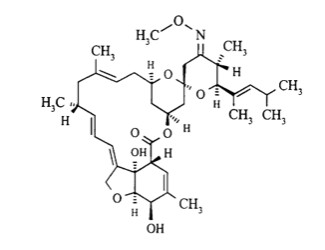
Figure 1 : Moxidectin Structure
Moxidectin is a white or pale-yellow, amorphous powder. The empirical formula is C 37 H 53 NO 8 and the molecular weight is 639.82 Dalton. Moxidectin is readily soluble in organic solvents such as methylene chloride, diethyl ether, ethanol, acetonitrile, and ethyl acetate. It is only slightly soluble in water (0.51 mg/L) and the melting point range for moxidectin powder is 145°C to 154°C.
Moxidectin Tablets are for oral administration. Each tablet contains 2 mg of moxidectin. The tablets are uncoated and include the following inactive ingredients: colloidal silicon dioxide, croscarmellose sodium, lactose anhydrous, magnesium stearate, microcrystalline cellulose and sodium lauryl sulfate.
12 CLINICAL PHARMACOLOGY
12.1 Mechanism of Action
Moxidectin, a macrocyclic lactone, is an anthelmintic drug [see Microbiology (12.4 )] .
12.2 Pharmacodynamics
Cardiac Electrophysiology
At a dose 4.5 times the approved recommended dose, moxidectin does not prolong the QT interval to any clinically relevant extent.
12.3 Pharmacokinetics
The pharmacokinetic parameters of moxidectin following a single 8 mg oral dose of Moxidectin Tablets to healthy subjects and patients with onchocerciasis under fasted conditions are shown in Table 5. Mean moxidectin C max and AUC increased approximately proportionally to dose over a dose range of 2 to 36 mg (0.25 to 4.5 times the approved recommended dose) in healthy subjects under fasted conditions.
| PK Parameter | Healthy Subjects (N = 27 ) | Patients with Onchocerciasis (N = 3 1 ) |
| C max (ng/mL) | 58.9 ± 12.5 | 63.1 ± 20.0 |
| T max • (hours) | 4 (2, 8) | 4 (1, 4) |
| AUC inf (ng•h/mL) | 3387 ± 1328 | 2738 ± 1606 |
| Half-life (hours) | 784 ± 347 | 559 ± 525 |
C max = maximum plasma concentration; T max = time to reach C max ; AUC inf = area under the plasma concentration-time curve from time 0 to infinity; • Median (range)
Absorption
Effect of Food
Moxidectin mean C max and AUC increased on average by 34% and 39%, respectively, when administered with a standard high fat meal (900 calories, with a nutritional distribution of approximately 55% fat, 31% carbohydrates and 14% protein), compared to fasted conditions [see Dosage and Administration (2.1 )] .
Distribution
The apparent mean ± SD volume of distribution of moxidectin is 2421 ± 1658 L in patients with onchocerciasis. The plasma protein binding in humans is 99.92%.
Elimination
The mean terminal half-life of moxidectin in patients with onchocerciasis is 23.3 days (559 hours) following a single 8 mg dose of Moxidectin Tablets.
The apparent mean ± SD total clearance of moxidectin is approximately 3.50 ± 1.23 L/hour in patients with onchocerciasis.
Metabolism
The hepatic metabolism of moxidectin is minimal.
Excretion
Following administration of a single 8 mg oral dose of Moxidectin Tablets to healthy subjects, 2% of the dose is eliminated unchanged in the feces within the first 72 hours. Renal elimination of intact drug is negligible.
Specific Populations
In clinical studies, no clinically significant differences in the pharmacokinetics of moxidectin were observed based on age (18 to 60 years), sex, weight (42.7 to 107.2 kg), or renal impairment (creatinine clearance (CrCL) 47 to 89 mL/min, estimated by Cockcroft-Gault). The pharmacokinetics of moxidectin in patients with CrCL less than 47 mL/min is unknown. The pharmacokinetics of moxidectin in patients with hepatic impairment is unknown.
Patients with Renal Impairment
Based on a population pharmacokinetic analysis and negligible renal elimination of moxidectin, mild (creatinine clearance (CrCL), estimated by Cockcroft-Gault of 60 to 89 mL/min) and moderate (CrCL 30 to 59 mL/min) renal impairment is not likely to have an impact on the exposure of moxidectin. The effect of severe renal impairment (CrCL 15 to 29 mL/min) or of end-stage renal disease on the pharmacokinetics of moxidectin is unknown.
Pediatric Patients
A pharmacokinetic study was conducted in 36 pediatric patients aged 4 to 17 years with unknown O. volvulus infection status who were administered a single dose of moxidectin (4, 6, or 8 mg). Body weight was identified as a key covariate in the population pharmacokinetic analysis. The simulated mean pharmacokinetic parameters of moxidectin following a single 4, 6, and 8 mg oral dose of Moxidectin Tablets in a U.S. pediatric population weighing 13 kg to less than 15 kg, 15 kg to less than 30 kg, and 30 kg and greater, respectively, are shown in Table 6.
Table 6: Mean (CV%) Pharmacokinetic Parameters for Moxidectin Following a Single Oral Weight Based Dose of Moxidectin Tablets in Pediatric Patients
| PK Parameter | Following 4 mg single dose in pediatric patients weighing 13 kg to less than 15 kg | Following 6 mg single dose in pediatric patients weighing 15 kg to less than 30 kg | Following 8 mg single dose in pediatric patients weighing 30 kg and greater |
| C max (ng/mL) | 80.9 (22.3%) | 90.9 (26.2%) | 65.2 (30.7%) |
| T max (hours) | 3.4 (34.1%) | 3.5 (34.7%) | 3.5 (34.1%) |
| AUC inf (ng•h/mL) | 2388.8 (42.2%) | 2840.2 (43.7%) | 2660.5 (41.9%) |
| Half-life (hours) | 299.0 (36.4%) | 338.2 (41.0%) | 545.8 (50.9%) |
C max = maximum plasma concentration; T max = time to reach C max ; AUC inf = area under the plasma concentration-time curve from time 0 to infinity; CV = coefficient of variation
Drug Interaction Studie s
Clinical Study with Midazolam (CYP3A4 substrate )
Co-administration of a single 8 mg dose of Moxidectin Tablets with a single oral 7.5 mg dose of midazolam (a sensitive CYP3A substrate) to healthy subjects (n = 37) did not affect the pharmacokinetics of midazolam or its major metabolite, 1-hydroxy midazolam.
In Vitro Studies
CYP Enzymes: Moxidectin is not a substrate or inhibitor of CYP enzymes.
Uridine 5'-diphospho-glucuronosyltransferases (UGTs): Moxidectin is not a UGT substrate.
Transporter Systems: Moxidectin is not a substrate of P-glycoprotein (P-gp) nor breast cancer resistance protein 1 (BCRP1).
12.4 Microbiology
Mechanism of Action
The mechanism by which moxidectin exhibits its effect against O. volvulus is not known. Studies with other nematodes suggest that moxidectin binds to glutamate-gated chloride channels (GluCl), gamma-aminobutyric acid (GABA) receptors and/or ATP-binding cassette (ABC) transporters. This leads to increased permeability, influx of chloride ions, hyperpolarization and muscle paralysis. Additionally, there is a reduction in motility of all stages of the parasite, excretion of immunomodulatory proteins, and the fertility of both male and female adult worms.
Antimicrobial activity
Moxidectin is active against the microfilariae of O. volvulus [see Clinical Studies (14 )] .
Studies suggest that moxidectin is not effective in killing the adult worms, however, it inhibits intra-uterine embryogenesis and release of microfilariae from the adult worms.
Resistance
Studies in vitro and in infected animals suggest a potential for development of resistance to moxidectin and cross-resistance with other macrocyclic lactones, such as ivermectin. However, the clinical relevance of these findings is not known.
The mechanism of resistance may be multifactorial that include alteration in the target GluCl, GABA receptors and/or ABC transporters.
13 NONCLINICAL TOXICOLOGY
13.1 Carcinogenesis, Mutagenesis, Impairment of Fertility
Carcinogenesis
Two-year carcinogenicity studies in mice and rats were conducted with moxidectin. Mice were administered a mean dietary dose of 8.7 mg/kg/day moxidectin which is approximately equivalent to 5 times the recommended human dose based on body surface area comparison. Rats were administered a mean dietary dose of 6.1 mg/kg/day moxidectin which is approximately equivalent to 7 times the recommended human dose based on body surface area comparison. There was no evidence of tumorigenicity in either study.
Mutagenesis
Moxidectin was shown to be negative for genotoxicity in a battery of in vitro assays including a bacterial mutagenicity assay, mouse lymphoma cell mutagenicity assay, unscheduled DNA synthesis assay, and a chromosome aberration assay, as well as in vivo in a micronucleus assay in mice and a chromosome aberration assay in rats.
Impairment of Fertility
In fertility evaluations, male and female mating and fertility indices were not inhibited by oral-dietary moxidectin doses of approximately 0.86 mg/kg/day which is approximately equivalent to the recommended human dose based on body surface area comparison.
13.2 Animal Toxicology and/or Pharmacology
Moxidectin was associated with transient CNS-related clinical signs. In rats, a single oral dose of 20 mg/kg (equivalent to approximately 24 times the recommended human dose based on body surface area comparison) moxidectin was associated with piloerection, reduced arousal and body tone, abnormal gait, slowed breathing, and impaired righting reflex. In adult dogs, repeated oral doses of 1.6 mg/kg/day moxidectin (equivalent to approximately 7 times the recommended human dose based on body surface area comparison) was associated with lacrimation, languid appearance, tremors, slight salivation, and slight ataxia. Similar clinical signs that were largely resolved after 24 and 48 hours in juvenile (11-week-old) and adult (10-monthold) dogs, respectively, were observed after a single oral dose of 3 mg/kg moxidectin (respectively, approximately 34 and 50 times the maximum recommended human dose in patients with onchocerciasis based on plasma AUC comparison).
6.1 Clinical Trials Experience
Because clinical trials are conducted under varying controlled conditions, adverse reaction rates observed in one clinical trial cannot be directly compared to rates observed in the clinical trials of another drug and may not reflect the rates observed in clinical practice.
Clinical Trials Experience in Adults and Pediatric Patients (12 Years to Less than 18 Years of Age)
The safety of Moxidectin Tablets was evaluated in two randomized, double-blind, active-controlled studies in patients with confirmed onchocerciasis (Trial 1 and Trial 2) [see Clinical Studies (14 )] . In Trial 1, 978 patients (including 53 pediatric patients aged 12 to less than 18 years) received Moxidectin Tablets as a single oral dose of 8 mg and 494 patients received ivermectin (including 24 pediatric patients aged 12 to less than 18 years) as a single oral dose of approximately 150 mcg/kg. In Trial 2, 127 patients aged 18 years or older received Moxidectin Tablets as a single oral dose ranging from 2 mg (this is not an approved dose) to 8 mg (38 received the recommended 8 mg dose) and 45 patients aged 18 years or older received ivermectin as a single oral dose of approximately 150 mcg/kg.
Most Common Adverse Reactions
No patients withdrew from either trial due to adverse reactions. Adverse Reactions reported in Trial 1 in > 10% of patients are summarized in Table 2. Most were related to physical, vital signs and laboratory changes associated with Mazzotti reaction [see Warnings and Precautions (5.1 )] .
| Adverse Reaction | Moxidectin N = 978 n (%) | Ivermectin N = 494 n (%) |
| Eosinophilia | 721 (74) | 390 (79) |
| Pruritus | 640 (65) | 268 (54) |
| Musculoskeletal pain a | 623 (64) | 257 (52) |
| Headache | 566 (58) | 267 (54) |
| Lymphocytopenia• | 470 (48) | 215 (44) |
| Tachycardia b | 382 (39) | 148(30) |
| Orthostatic tachycardia c | 333 (34) | 130 (26) |
| Non-orthostatic tachycardia d | 179 (18) | 57 (12) |
| Rash e | 358 (37) | 103 (21) |
| Abdominal pain f | 305 (31) | 173 (35) |
| Hypotension g | 289 (30) | 125 (25) |
| Orthostatic hypotension h | 212 (22) | 81 (16) |
| Pyrexia/Chills | 268 (27) | 88 (18) |
| Leukocytosis | 240 (25) | 125 (25) |
| Influenza like illness | 226 (23) | 102 (21) |
| Neutropenia•• | 197 (20) | 112 (23) |
| Cough | 168 (17) | 88 (18) |
| Lymph node pain | 129 (13) | 28 (6) |
| Dizziness | 121 (12) | 44 (9) |
| Diarrhea/Gastroenteritis/Enteritis | 144 (15) | 84 (17) |
| Hyponatremia | 112 (12) | 65 (13) |
| Peripheral swelling | 107 (11) | 30 (6) |
a Includes “myalgia”, “arthralgia”, “musculoskeletal pain”, “pain” and “back pain”
b Includes “orthostatic heart rate increased”, “postural orthostatic tachycardia syndrome”, “heart rate increased” and “sinus tachycardia”
c Includes “orthostatic heart rate increased” and “postural orthostatic tachycardia syndrome”
d Includes “heart rate increased”, “tachycardia”, and “sinus tachycardia”
e Includes “rash,” “papular rash” and “urticaria”
f Includes “abdominal pain”, “abdominal pain upper” and “abdominal pain lower”
g Includes “orthostatic hypotension”, “blood pressure orthostatic decreased”, “blood pressure decreased”, “mean arterial pressure decreased”, “hypotension”
h Includes “orthostatic hypotension”, and “blood pressure orthostatic decreased”
•Lymphocytopenia is defined as absolute lymphocyte count less than 1 x 10 9 /L
••Neutropenia is defined as absolute neutrophil count less than 1 x 10 9 /L
The most common adverse reactions in patients (N = 38) treated with 8 mg moxidectin in Trial 2 were similar to the adverse reactions noted in Trial 1 described in Table 2above.
Other Adverse Reactions Reported in Clinical Trials (Trial 1 and Trial 2)
The following adverse reactions occurred in less than 10% of subjects receiving Moxidectin Tablets in Trial 1:
Ocular Adverse Reactions : In Trial 1, the most common ocular adverse reactions (occurring in ≥ 0.5% of patients) is shown in Table 3.
| Adverse Reaction | Moxidectin N = 978 n ( % ) | Ivermectin N = 494 n ( % ) |
| Eye pain | 78 (8) | 28 (6) |
| Eye pruritus | 64 (7) | 26 (5) |
| Visual impairment• | 25 (3) | 9 (2) |
| Eyelid edema | 21 (2) | 5 (1) |
| Conjunctivitis allergic | 19 (2) | 11 (2) |
| Ocular discomfort•• | 18 (2) | 11 (2) |
| Ocular and conjunctival hyperemia | 17 (2) | 3 (1) |
| Lacrimation increased | 13 (1) | 10 (2) |
•Includes “visual impairment”, “blurred vision” and “low vision acuity”
••Includes “foreign body sensation”, “ocular discomfort” and “abnormal sensation in the eye”
Hepatobiliary Adverse Reactions
More patients in the moxidectin arm experienced elevation in bilirubin above the upper limit of normal and elevation in transaminases > 5x upper limit of normal. Twenty-seven (2.8%) patients in the moxidectin arm and 3 (0.6%) patients in the ivermectin arm had hyperbilirubinemia. Most of the patients had single measurements of hyperbilirubinemia without concurrent elevation in transaminases.
Nine (1%) patients in the moxidectin arm and 2 (0.4%) patients in the ivermectin arm had elevation in ALT of more than 5x upper limit of normal; ten (1%) patients in the moxidectin arm and 3 (0.6%) patients in the ivermectin arm had elevation in AST to more than 5x upper limit of normal.
Laboratory Abnormalities
Laboratory abnormalities occurring in at least 1% of patients in Trial 1 are described in Table 4.
| Parameter | MOXIDECTIN ( N = 978) n (%) | Ivermectin ( N = 494) n (%) |
| Hematology | ||
| Severe eosinophilia (> 5 x10 9 /L) | 173 (18) | 111 (23) |
| Grade 3 lymphocytopenia (< 0.5 x10 9 /L) | 220 (23) | 98 (20) |
| Grade 4 Neutrophils (< 0.5 x10 9 /L) | 65 (7) | 46 (9) |
| Eosinopenia (< 0.045 x10 9 /L) | 51 (5) | 21 (4) |
| Hepatobiliary | ||
| GGT (> 5x upper limit of normal) | 26 (3) | 16 (3) |
| Bilirubin (> 2x upper limit of normal) | 14 (1) | 2 (0.4) |
| AST (> 5x upper limit of normal) | 10 (1) | 3 (0.6) |
| ALT (> 5x upper limit of normal) | 9 (1) | 2 (0.4) |
Clinical Trials Experience in Pediatric Patients (4 Years to Less than 18 Years of Age)
The safety of Moxidectin Tablets in pediatric patients is based on data from 2 studies, Trial 1 and Trial 3 (NCT01035619).
Pediatric Patients in Trial 1
Trial 1 included 53 pediatric patients aged 12 to less than 18 years with confirmed onchocerciasis who received a single dose of Moxidectin Tablets 8 mg. Pediatric patients with confirmed infection experienced efficacy-related adverse reactions (Mazzotti reactions) such as abdominal pain, tachycardia, pyrexia, rash, peripheral swelling, and lymph node pain at a prevalence and severity similar to infected adults. Overall, the safety profile relative to age was similar across pediatric and adult patients studied in Trial 1.
Pediatric Patients in Trial 3
Trial 3 was a single-arm, open-label, age-stratified, multi-cohort, safety and pharmacokinetic trial that evaluated 36 pediatric patients aged 4 to less than 18 years with unknown O. volvulus infection status from an onchocerciasis-endemic area in Ghana. Patients were stratified by age to receive a single dose of Moxidectin Tablets as follows: aged 12 to less than 18 years received 8 mg (N = 9), 8 to less than 12 years received 8 mg (N = 9) or 6 mg (N = 9), and 4 to less than 8 years received 4 mg (N = 9). Median weight was 34.8 kg (range: 30.8 to 55.5 kg) in patients 12 to less than 18 years of age, 25.1 kg (range: 19.4 to 36.8 kg) in patients 8 to less than 12 years, and 15.6 kg (range: 13.6 to 20.6 kg) in patients 4 to less than 8 years. A majority of patients were female (58%) and 100% were black. Mazzotti reactions were not seen in this population with unknown O. volvulus infection. The most common adverse reactions in these pediatric patients were abdominal pain and diarrhea, in 3/36 (8%) patients each. No new safety signals were noted in this pediatric patient population that were not already noted in Trial 1.
16 HOW SUPPLIED/STORAGE AND HANDLING
Moxidectin Tablets containing 2 mg moxidectin are white to pale yellow uncoated oval-shaped tablets, debossed on one side with “AKKA”. Each high-density polyethylene bottle contains 500 tablets (NDC 71705-050-01), a silica gel desiccant and rayon coil.
Store below 30°C (86°F).
- Protect from light.
- Once open, the full contents of the container should be used within 24 hours and discard any unused content.
12.1 Mechanism of Action
Moxidectin, a macrocyclic lactone, is an anthelmintic drug [see Microbiology (12.4 )] .
