Get your patient on Nitrofurantoin - Nitrofurantoin suspension (Nitrofurantoin)
Nitrofurantoin - Nitrofurantoin suspension prescribing information

INDICATIONS & USAGE
Nitrofurantoin Oral Suspension, USP is specifically indicated for the treatment of urinary tract infections when due to susceptible strains of Escherichia coli , enterococci, Staphylococcus aureus , and certain susceptible strains of Klebsiella and Enterobacter species.
Nitrofurantoin is not indicated for the treatment of pyelonephritis or perinephric abscesses.
Nitrofurantoins lack the broader tissue distribution of other therapeutic agents approved for urinary tract infections. Consequently, many patients who are treated with Nitrofurantoin Oral Suspension, USP are predisposed to persistence or reappearance of bacteriuria. Urine specimens for culture and susceptibility testing should be obtained before and after completion of therapy. If persistence or reappearance of bacteriuria occurs after treatment with Nitrofurantoin Oral Suspension, USP, other therapeutic agents with broader tissue distribution should be selected. In considering the use of Nitrofurantoin Oral Suspension, USP, lower eradication rates should be balanced against the increased potential for systemic toxicity and for the development of antimicrobial resistance when agents with broader tissue distribution are utilized.
DOSAGE AND ADMINISTRATION:
Nitrofurantoin Oral Suspension, USP should be given with food to improve drug absorption and, in some patients, tolerance.
Adults:
50 to 100 mg four times a day — the lower dosage level is recommended for uncomplicated urinary tract infections.
Pediatric Patients:
5 to 7 mg/kg of body weight per 24 hours, given in four divided doses (contraindicated under one month of age).
The following table is based on an average weight in each range receiving 5 to 6 mg/kg of body weight per 24 hours, given in four divided doses. It can be used to calculate an average dose of Nitrofurantoin Oral Suspension, USP (25 mg/5 mL) for pediatric patients. Table 3: Pediatric Dosing Table
| Weight in Kilograms (kg) | Pediatric Doses (milliliters) and Frequency |
|---|---|
| 7 kg to 11 kg | 2.5 mL Four times Daily |
| 12 kg to 21 kg | 5 mL Four times Daily |
| 22 kg to 30 kg | 7.5 mL Four times Daily |
| 31 kg to 41 kg | 10 mL Four times Daily |
| 42 kg or greater | See Adult Dose |
Therapy should be continued for one week or for at least 3 days after sterility of the urine is obtained. Continued infection indicates the need for reevaluation.
For long-term suppressive therapy in adults, a reduction of dosage to 50 to 100 mg at bedtime may be adequate. For longterm suppressive therapy in pediatric patients, doses as low as 1 mg/kg per 24 hours, given in a single dose or in two divided doses, may be adequate. SEE WARNINGS SECTION REGARDING RISKS ASSOCIATED WITH LONG TERM THERAPY.
CONTRAINDICATIONS:
Anuria, oliguria, or significant impairment of renal function (creatinine clearance under 60 mL per minute or clinically significant elevated serum creatinine) are contraindications. Treatment of this type of patient carries an increased risk of toxicity because of impaired excretion of the drug.
Because of the possibility of hemolytic anemia due to immature erythrocyte enzyme systems (glutathione instability), the drug is contraindicated in pregnant patients at term (38 to 42 weeks gestation), during labor and delivery, or when the onset of labor is imminent. For the same reason, the drug is contraindicated in neonates under one month of age.
Nitrofurantoin Oral Suspension, USP is contraindicated in patients with a previous history of cholestatic jaundice/hepatic dysfunction associated with nitrofurantoin. Nitrofurantoin Oral Suspension, USP is also contraindicated in those patients with known hypersensitivity to nitrofurantoin.
ADVERSE REACTIONS:
Respiratory:
CHRONIC, SUBACUTE, OR ACUTE PULMONARY HYPERSENSITIVITY REACTIONS MAY OCCUR.
CHRONIC PULMONARY REACTIONS MAY OCCUR GENERALLY IN PATIENTS WHO HAVE RECEIVED CONTINUOUS TREATMENT FOR SIX MONTHS OR LONGER. MALAISE, DYSPNEA ON EXERTION, COUGH, AND ALTERED PULMONARY FUNCTION ARE COMMON MANIFESTATIONS WHICH CAN OCCUR INSIDIOUSLY. RADIOLOGIC AND HISTOLOGIC FINDINGS OF DIFFUSE INTERSTITIAL PNEUMONITIS OR FIBROSIS, OR BOTH, ARE ALSO COMMON MANIFESTATIONS OF THE CHRONIC PULMONARY REACTION. FEVER IS RARELY PROMINENT.
THE SEVERITY OF CHRONIC PULMONARY REACTIONS AND THEIR DEGREES OF RESOLUTION APPEAR TO BE RELATED TO THE DURATION OF THERAPY AFTER THE FIRST CLINICAL SIGNS APPEAR. PULMONARY FUNCTION MAY BE IMPAIRED PERMANENTLY, EVEN AFTER CESSATION OF THERAPY. THE RISK IS GREATER WHEN CHRONIC PULMONARY REACTIONS ARE NOT RECOGNIZED EARLY.
In subacute pulmonary reactions, fever and eosinophilia occur less often than in the acute form. Upon cessation of therapy, recovery may require several months. If the symptoms are not recognized as being drug-related and nitrofurantoin therapy is not stopped, the symptoms may become more severe.
Acute pulmonary reactions are commonly manifested by fever, chills, cough, chest pain, dyspnea, pulmonary infiltration with consolidation of pleural effusion on x-ray, and eosinophilia. Acute reactions usually occur within the first week of treatment and are reversible with cessation of therapy. Resolution often is dramatic. (See WARNINGS .)
Changes in EKG (e.g., non-specific ST/T wave changes, bundle branch block) have been reported in association with pulmonary reactions.
Cyanosis has been reported rarely.
Hepatic:
Hepatic reactions, including hepatitis, cholestatic jaundice, chronic active hepatitis, and hepatic neurosis, occur rarely. (See WARNINGS .)
Neurologic:
Peripheral neuropathy, which may become severe or irreversible, has occurred. Fatalities have been reported. Conditions such as renal impairment (creatinine clearance under 60 mL per minute or clinically significant elevated serum creatinine), anemia, diabetes mellitus, electrolyte imbalance, vitamin B deficiency, and debilitating diseases may increase the possibility of peripheral neuropathy. (See WARNINGS .)
Asthenia, vertigo, nystagmus, dizziness, headache, and drowsiness have also been reported with the use of nitrofurantoin.
Benign intracranial hypertension (pseudotumor cerebri), confusion, depression, optic neuritis, and psychotic reactions have been reported rarely. Bulging fontanels, as a sign of benign intracranial hypertension in infants, have been reported rarely.
Dermatologic:
Exfoliative dermatitis and erythema multiforme (including Stevens-Johnson syndrome) have been reported rarely. Transient alopecia also has been reported.
Allergic:
A lupus-like syndrome associated with pulmonary reactions to nitrofurantoin has been reported. Also, angioedema; maculopapular, erythematous, or eczematous eruptions; pruritus; urticaria; anaphylaxis; arthralgia; myalgia; drug fever; and vasculitis (sometimes associated with pulmonary reactions) have been reported. Hypersensitivity reactions present the most frequent spontaneously-reported adverse events in world-wide postmarketing experience with nitrofurantoin formulations.
Gastrointestinal:
Nausea, emesis, and anorexia occur most often. Abdominal pain and diarrhea are less common gastrointestinal reactions. These dose-related reactions can be minimized by reduction of dosage. Sialadenitis and pancreatitis have been reported. There have been sporadic reports of pseudomembranous colitis with the use of nitrofurantoin. The onset of pseudomembranous colitis symptoms may occur during or after antimicrobial treatment. (See WARNINGS .)
Hematologic:
Cyanosis secondary to methemoglobinemia has been reported rarely.
Miscellaneous:
As with other antimicrobial agents, superinfections caused by resistant organisms, e.g., Pseudomonas species or Candida species, can occur. There are sporadic reports of Clostridium difficile superinfections, or pseudomembranous colitis, with the use of nitrofurantoin.
Laboratory Adverse Events:
The following laboratory adverse events have been reported with the use of nitrofurantoin; increased AST (SGOT), increased ALT (SGPT), decreased hemoglobin, increased serum phosphorus, eosinophilia, glucose-6-phosphate dehydrogenase deficiency anemia (see WARNINGS ), agranulocytosis, leukopenia, granulocytopenia, hemolytic anemia, thrombocytopenia, megaloblastic anemia. In most cases, these hematologic abnormalities resolved following cessation of therapy. Aplastic anemia has been reported rarely.
To report SUSPECTED ADVERSE REACTIONS, contact Nostrum Laboratories, Inc. at quality@nostrumpharma.com or 1-877-770-1288 or FDA at 1-800-FDA-1088 or www.fda.gov/medwatch.
DRUG INTERACTIONS
Antacids containing magnesium trisilicate, when administered concomitantly with nitrofurantoin, reduce both the rate and extent of absorption. The mechanism for this interaction probably is adsorption of nitrofurantoin onto the surface of magnesium trisilicate.
Uricosuric drugs, such as probenecid and sulfinpyrazone, can inhibit renal tubular secretion of nitrofurantoin. The resulting increase in nitrofurantoin serum levels may increase toxicity, and the decreased urinary levels could lessen its efficacy as a urinary tract antibacterial.
DESCRIPTION:
Nitrofurantoin, a synthetic chemical, is a stable, yellow, crystalline compound. Nitrofurantoin Oral Suspension, USP is an antibacterial agent for specific urinary tract infections.
Nitrofurantoin Oral Suspension, USP is available in 25 mg/5 mL liquid suspension for oral administration.
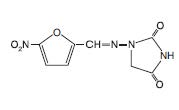
1-[[(5-nitro-2-furanyl)methylene]amino]-2, 4-imidazolidinedione
Inactive Ingredients:
Nitrofurantoin Oral Suspension, USP contains carboxymethylcellulose sodium, citric acid, glycerin, magnesium aluminum silicate, methylparaben, N&A fruit gum flavor #960 (MN72), propylparaben, purified water, sodium citrate, sorbitol, and sucralose.
CLINICAL PHARMACOLOGY
Orally administered Nitrofurantoin Oral Suspension, USP is readily absorbed and rapidly excreted in urine. Blood concentrations at therapeutic dosage are usually low. It is highly soluble in urine, to which it may impart a brown color.
Following a dose regimen of 100 mg q.i.d. for 7 days, average urinary drug recoveries (0 to 24 hours) on day 1 and day 7 were 42.7% and 43.6%.
Unlike many drugs, the presence of food or agents delaying gastric emptying can increase the bioavailability of Nitrofurantoin Oral Suspension, USP, presumably by allowing better dissolution in gastric juices.
Microbiology:
Mode of Action
Nitrofurantoin is reduced by a wide range of enzymes including bacterial flavoproteins to reactive intermediates which are damaging to macromolecules such as DNA and proteins.
Cross- Resistance
Although cross-resistance with other antimicrobials may occur, cross resistance with sulfonamides has not been observed.
Interaction with Other Antimicrobials
Antagonism has been demonstrated in vitro between nitrofurantoin and quinolone antimicrobial agents. Nitrofurantoin, in the form of Nitrofurantoin Oral Suspension, USP, has been shown to be active against most strains of the following bacteria both in vitro and in clinical infections: (See INDICATIONS AND USAGE ).
Gram-Positive Aerobes
• Staphylococcus aureus •Enterococcus species
Gram-Negative Aerobes
• Escherichia coli
NOTE: Some strains of Enterobacter species and Klebsiella species are resistant to nitrofurantoin.
The following in vitro data are available, but their clinical significance is unknown. Nitrofurantoin exhibits in vitro activity against the following bacteria; however, the safety and effectiveness of nitrofurantoin in treating clinical infections due to these bacteria have not been established in adequate and well controlled clinical trials.
Gram-Positive Aerobes
• Coagulase-negative staphylococci (including Staphylococcus epidermidis and Staphylococcus saprophyticus ) • Streptococcus agalactiae • Viridans group streptococci
Gram-Negative Aerobes
• Citrobacter koseri • Citrobacter freundii • Klebsiella oxytoca
Nitrofurantoin is not active against most strains of Proteus species or Serratia species. It has no activity against Pseudomonas species.
Susceptibility Testing
For specific information regarding susceptibility test interpretive criteria, and associated test methods and quality control standards recognized by FDA for this drug, please see: http://www.fda.gov/STIC.
HOW SUPPLIED:
Nitrofurantoin Oral Suspension, USP is a lemon yellow liquid with a fruity scent available in:
NDC 70408-239-32 240 mL amber PET bottle with a child resistant cap
NDC 70408-239-34 480 mL amber PET bottle with a child resistant cap
Avoid exposure to strong light which may darken the drug. This package is child-resistant. Store at 20° to 25°C (68° to 77°F); excursions permitted to 15° to 30°C (59° to 86°F) [See USP for Controlled Room Temperature]. Protect from freezing. Shake vigorously. Dispense in a tight, light- resistant container made of either glass or amber PET. Use within 90 days. Keep this and all medication out of the reach of children.
Manufactured by:
Nostrum Laboratories, Inc.
Bryan, OH 43506
7466T01 Iss: 06/21
