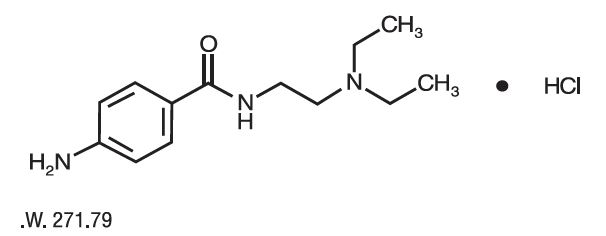
Procainamide Hydrochloride Prescribing Information
Procainamide hydrochloride injection is indicated for the treatment of documented ventricular arrhythmias, such as sustained ventricular tachycardia, that, in the judgement of the physician, are life-threatening. Because of the proarrhythmic effects of procainamide, its use with lesser arrhythmias is generally not recommended. Treatment of patients with asymptomatic ventricular premature contractions should be avoided.
Initiation of procainamide treatment, as with other antiarrhythmic agents used to treat life-threatening arrhythmias, should be carried out in the hospital.
Antiarrhythmic drugs have not been shown to enhance survival in patients with ventricular arrhythmias.
Because procainamide has the potential to produce serious hematological disorders (0.5 percent) particularly leukopenia or agranulocytosis (sometimes fatal), its use should be reserved for patients in whom, in the opinion of the physician, the benefits of treatment clearly outweigh the risks. (see
WARNINGSMortality:Digitalis IntoxicationCaution should be exercised in the use of procainamide in arrhythmias associated with digitalis intoxication. Procainamide can suppress digitalis-induced arrhythmias; however, if there is concomitant marked disturbance of atrioventricular conduction, additional depression of conduction and ventricular asystole or fibrillation may result. Therefore, use of procainamide should be considered only if discontinuation of digitalis, and therapy with potassium, lidocaine, or phenytoin are ineffective.
First Degree Heart BlockCaution should be exercised also if the patient exhibits or develops first degree heart block while taking PA, and dosage reduction is advised in such cases. If the block persists despite dosage reduction, continuation of PA administration must be evaluated on the basis of current benefit versus risk of increased heart block.
Predigitalization for Atrial Flutter or FibrillationPatients with atrial flutter or fibrillation should be cardioverted or digitalized prior to PA administration to avoid enhancement of A- V conduction which may result in ventricular rate acceleration beyond tolerable limits. Adequate digitalization reduces but does not eliminate the possibility of sudden increase in ventricular rate as the atrial rate is slowed by PA in these arrhythmias.
Congestive Heart FailureFor patients in congestive heart failure, and those with acute ischemic heart disease or cardiomyopathy, caution should be used in PA therapy, since even slight depression of myocardial contractility may further reduce cardiac output of the damaged heart.
Concurrent Other Antiarrhythmic AgentsConcurrent use of PA with other Group 1A antiarrhythmic agents such as quinidine or disopyramide may produce enhanced prolongation of conduction or depression of contractility and hypotension, especially in patients with cardiac decompensation. Such use should be reserved for patients with serious arrhythmias unresponsive to a single drug and employed only if close observation is possible.
Renal InsufficiencyRenal insufficiency may lead to accumulation of high plasma levels from conventional doses of PA, with effects similar to those of overdosage (see OVERDOSAGE), unless dosage is adjusted for the individual patient.
Myasthenia GravisPatients with myasthenia gravis may show worsening of symptoms from PA due to its procaine-like effect on diminishing acetylcholine release at skeletal muscle motor nerve endings, so that PA administration may be hazardous without optimal adjustment of anticholinesterase medications and other precautions.
Sulfite SensitivityProcainamide Hydrochloride Injection contains sodium metabisulfite, a sulfite that may cause allergic-type reactions including anaphylactic symptoms and life-threatening or less severe asthmatic episodes in certain susceptible people. The overall prevalence of sulfite sensitivity in the general population is unknown and probably low. Sulfite sensitivity is seen more frequently in asthmatic than in nonasthmatic people.
Procainamide Hydrochloride Injection is useful for arrhythmias which require immediate suppression and for maintenance of arrhythmia control. Intravenous therapy allows most rapid control of serious arrhythmias, including those following myocardial infarction; it should be carried out in circumstances where close observation and monitoring of the patient are possible, such as in hospital or emergency facilities. Intramuscular administration is less apt to produce temporary high plasma levels but therapeutic plasma levels are not obtained as rapidly as with intravenous administration. Oral procainamide dosage forms are preferable for less urgent arrhythmias as well as for long-term maintenance after initial parenteral PA therapy. Intramuscular administration may be used as an alternative to the oral route for patients with less threatening arrhythmias but who are nauseated or vomiting, who are ordered to receive nothing by mouth preoperatively, or who may have malabsorptive problems. An initial daily dose of 50 mg per kg body weight may be estimated. This amount should be divided into fractional doses of one-eighth to one-quarter to be injected intramuscularly every three to six hours until oral therapy is possible. If more than three injections are given, the physician may wish to assess patient factors such as age and renal function (see below), clinical response and, if available, blood levels of PA and NAPA in adjusting further doses for that individual. For treatment of arrhythmias associated with anesthesia or surgical operation, the suggested dose is 100 to 500 mg by intramuscular injection. Intravenous administration of Procainamide Hydrochloride Injection should be done cautiously to avoid a possible hypotensive response
PRECAUTIONSBlood-Pressure and ECG MonitoringBlood pressure should be monitored with the patient supine during parenteral, especially intravenous, administration of PA (see DOSAGE AND ADMINISTRATION). There is a possibility that relatively high although transient plasma levels of PA may be attained and cause hypotension before the PA can be distributed from the plasma volume to its full apparent volume of distribution which is approximately 50 times greater. Therefore, caution should be exercised to avoid overly rapid administration of PA. If the blood pressure falls 15 mm Hg or more, PA administration should be temporarily discontinued. Electrocardiographic (ECG) monitoring is advisable as well, both for observation of the progress and response of the arrhythmia under treatment, and for early detection of any tendency to excessive widening of the QRS complex, prolongation of the P-R interval, or any signs of heart block (see OVERDOSAGE). Parenteral therapy with PA should be limited to use in hospitals in which monitoring and intensive supportive care are available, or to emergency situations in which equivalent observation and treatment can be provided.
GeneralImmediately after initiation of PA therapy, patients should be closely observed for possible hypersensitivity reactions. In conversion of atrial fibrillation to normal sinus rhythm by any means, dislodgement of mural thrombi may lead to embolization, which should be kept in mind. After achieving and maintaining therapeutic plasma concentrations and satisfactory electrocardiographic and clinical responses, continued frequent periodic monitoring of vital signs and electrocardiograms is advised. If evidence of QRS widening of more than 25 percent or marked prolongation of the Q-T interval occurs, concern for overdosage is appropriate, and interruption of the PA infusion is advisable if a 50 percent increase occurs. Elevated serum creatinine or urea nitrogen, reduced creatinine clearance or history of renal insufficiency, as well as use in older patients (over age 50), provide grounds to anticipate that less than the usual dosage or infusion rate may suffice, since the urinary elimination of PA and NAPA may be reduced, leading to gradual accumulation beyond normally- predicted amounts. If facilities are available for measurement of plasma PA and NAPA, or acetylation capability, individual dose adjustment for optimal therapeutic levels may be easier, but close observation of clinical effectiveness is the most important criterion.
Information for PatientsThe patient should be encouraged to disclose any past history of drug sensitivity, especially to procaine or other local anesthetic agents, or aspirin, and to report any history of kidney disease, congestive heart failure, myasthenia gravis, liver disease, or lupus erythematosus. The patient should be counseled to report any symptoms of arthralgia, myalgia, fever, chills, skin rash, easy bruising, sore throat or sore mouth, infections, dark urine or icterus, wheezing, muscular weakness, chest or abdominal pain, palpitations, nausea, vomiting, anorexia, diarrhea, hallucinations, dizziness, or depression.
Laboratory TestsLaboratory tests such as complete blood count (CBC), electrocardiogram and serum creatinine or urea nitrogen may be indicated depending on the clinical situation, and periodic rechecking of the CBC and ANA may be helpful in early detection of untoward reactions.
Drug InteractionsIf other antiarrhythmic drugs are being used, additive effects on the heart may occur with PA administration, and dosage reduction may be necessary (see WARNINGS).
Anticholinergic drugs administered concurrently with PA may produce additive antivagal effects on A-V nodal conduction, although this is not as well documented for PA as for quinidine.
Patients taking PA who require neuromuscular blocking agents such as succinylcholine may require less than usual doses of the latter, due to PA effects on reducing acetylcholine release.
Drug/Laboratory Test InteractionsSuprapharmacologic concentrations of lidocaine and meprobamate may inhibit fluorescence of PA and NAPA, and propranolol shows a native fluorescence close to the PA/NAPA peak wavelengths, so that tests which depend on fluorescence measurement may be affected.
Carcinogenesis, Mutagenesis, Impairment of FertilityLong-term studies in animals have not been performed.
Teratogenic Effects: Pregnancy Category CAnimal reproduction studies have not been conducted with PA. It also is not known whether PA can cause fetal harm when administered to a pregnant woman or can affect reproduction capacity. PA should be given to a pregnant woman only if clearly needed.
Nursing MothersBoth PA and NAPA are excreted in human milk, absorbed by the nursing infant. Because of the potential for serious adverse reactions in nursing infants, a decision to discontinue nursing or the drug should be made, taking into account the importance of the drug to the mother.
Pediatric UseSafety and effectiveness in pediatric patients have not been established.
OVERDOSAGEProgressive widening of the QRS complex, prolonged Q-T and P-R intervals, lowering of the R and T waves, as well as increasing A-V block, may be seen with doses which are excessive for a given patient. Increased ventricular extrasystoles, or even ventricular tachycardia or fibrillation may occur. After intravenous administration but seldom after oral therapy, transient high plasma levels of PA may induce hypotension, affecting systolic more than diastolic pressures, especially in hypertensive patients. Such high levels may also produce central nervous depression, tremor, and even respiratory depression. Plasma levels above 10 mcg/ mL are increasingly associated with toxic findings, which are seen occasionally in the 10 to 12 mcg/mL range, more often in the 12 to 15 mcg/mL range, and commonly in patients with plasma levels greater than 15 mcg/ mL. Treatment of overdosage or toxic manifestations includes general supportive measures, close observation, monitoring of vital signs and possibly intravenous pressor agents and mechanical cardiorespiratory support. If available, PA and NAPA plasma levels may be helpful in assessing the potential degree of toxicity and response to therapy. Both PA and NAPA are removed from the circulation by hemodialysis but not peritoneal dialysis. No specific antidote for PA is known.
- Direct injection into a vein or into tubing of an established infusion line should be done slowly at a rate not to exceed 50 mg per minute. It is advisable to dilute either the 100 mg/mL or the 500 mg/mL concentrations of procainamide hydrochloride prior to intravenous injection to facilitate control of dosage rate. Doses of 100 mg may be administered every 5 minutes at this rate until the arrhythmia is suppressed or until 500 mg has been administered, after which it is advisable to wait 10 minutes or longer to allow for more distribution into tissues before resuming.
- Alternatively, a loading infusion containing 20 mg of Procainamide Hydrochloride per mL (1 g diluted to 50 mL with 5% Dextrose Injection, USP) may be administered at a constant rate of 1 mL per minute for 25 to 30 minutes to deliver 500 to 600 mg of PA. Some effects may be seen after infusion of the first 100 or 200 mg; it is unusual to require more than 600 mg to achieve satisfactory antiarrhythmic effects. The maximum advisable dosage to be given either by repeated bolus injections or such loading infusion is 1 g.
To maintain therapeutic levels, a more dilute intravenous infusion at a concentration of 2 mg/mL is convenient (1000 mg procainamide HCl in 500 mL of 5% Dextrose Injection, USP), and may be administered at 1 to 3 mL/minute. If daily total fluid intake must be limited, a 4 mg/mL concentration (1 g of Procainamide Hydrochloride Injection in 250 mL of 5% Dextrose Injection, USP) administered at 0.5 to 1.5 mL/minute will deliver an equivalent 2 to 6 mg per minute. The amount needed in a given patient to maintain the therapeutic level should be assessed principally from the clinical response, and will depend upon the patient's weight and age, renal elimination, hepatic acetylation rate, and cardiac status, but should be adjusted for each patient based upon close observation. A maintenance infusion rate of 50 mcg/min/kg body weight to a person with a normal renal PA elimination half-time of three hours may be expected to produce a plasma level of approximately 6.5 mcg/mL.
Since the principal route for elimination of PA and NAPA is renal excretion, reduced excretion will prolong the half-life of elimination and lower the dose rate needed to maintain therapeutic levels. Advancing age reduces the renal excretion of PA and NAPA independently of reductions in creatinine clearance; compared to normal young adults, there is approximately 25 percent reduction at age 50 and 50 percent at age 75.
Intravenous therapy should be terminated if persistent conduction disturbances or hypotension develop. As soon as the patient's basic cardiac rhythm appears to be stabilized, oral antiarrhythmic maintenance therapy is preferable, if indicated and possible. A period of about three to four hours (one half-time for renal elimination, ordinarily) should elapse after the last intravenous dose before administering the first dose of Procainamide Hydrochloride tablets or capsules.
DILUTIONS AND RATES FOR INTRAVENOUS INFUSIONS* Procainamide Hydrochloride Injection, USP
†(All infusions should be made up to final volume with 5% Dextrose Injection, USP.) | ||||||||||||||||||||||||||||||||||
*Please see text under DOSAGE AND ADMINISTRATIONProcainamide Hydrochloride Injection is useful for arrhythmias which require immediate suppression and for maintenance of arrhythmia control. Intravenous therapy allows most rapid control of serious arrhythmias, including those following myocardial infarction; it should be carried out in circumstances where close observation and monitoring of the patient are possible, such as in hospital or emergency facilities. Intramuscular administration is less apt to produce temporary high plasma levels but therapeutic plasma levels are not obtained as rapidly as with intravenous administration. Oral procainamide dosage forms are preferable for less urgent arrhythmias as well as for long-term maintenance after initial parenteral PA therapy. Intramuscular administration may be used as an alternative to the oral route for patients with less threatening arrhythmias but who are nauseated or vomiting, who are ordered to receive nothing by mouth preoperatively, or who may have malabsorptive problems. An initial daily dose of 50 mg per kg body weight may be estimated. This amount should be divided into fractional doses of one-eighth to one-quarter to be injected intramuscularly every three to six hours until oral therapy is possible. If more than three injections are given, the physician may wish to assess patient factors such as age and renal function (see below), clinical response and, if available, blood levels of PA and NAPA in adjusting further doses for that individual. For treatment of arrhythmias associated with anesthesia or surgical operation, the suggested dose is 100 to 500 mg by intramuscular injection. Intravenous administration of Procainamide Hydrochloride Injection should be done cautiously to avoid a possible hypotensive response (see PRECAUTIONSand OVERDOSAGE) . Initial arrhythmia control, under ECG monitoring, may usually be accomplished safely within a half-hour by either of the two methods which follows:
To maintain therapeutic levels, a more dilute intravenous infusion at a concentration of 2 mg/mL is convenient (1000 mg procainamide HCl in 500 mL of 5% Dextrose Injection, USP), and may be administered at 1 to 3 mL/minute. If daily total fluid intake must be limited, a 4 mg/mL concentration (1 g of Procainamide Hydrochloride Injection in 250 mL of 5% Dextrose Injection, USP) administered at 0.5 to 1.5 mL/minute will deliver an equivalent 2 to 6 mg per minute. The amount needed in a given patient to maintain the therapeutic level should be assessed principally from the clinical response, and will depend upon the patient's weight and age, renal elimination, hepatic acetylation rate, and cardiac status, but should be adjusted for each patient based upon close observation. A maintenance infusion rate of 50 mcg/min/kg body weight to a person with a normal renal PA elimination half-time of three hours may be expected to produce a plasma level of approximately 6.5 mcg/mL. Since the principal route for elimination of PA and NAPA is renal excretion, reduced excretion will prolong the half-life of elimination and lower the dose rate needed to maintain therapeutic levels. Advancing age reduces the renal excretion of PA and NAPA independently of reductions in creatinine clearance; compared to normal young adults, there is approximately 25 percent reduction at age 50 and 50 percent at age 75. Intravenous therapy should be terminated if persistent conduction disturbances or hypotension develop. As soon as the patient's basic cardiac rhythm appears to be stabilized, oral antiarrhythmic maintenance therapy is preferable, if indicated and possible. A period of about three to four hours (one half-time for renal elimination, ordinarily) should elapse after the last intravenous dose before administering the first dose of Procainamide Hydrochloride tablets or capsules. DILUTIONS AND RATES FOR INTRAVENOUS INFUSIONS* Procainamide Hydrochloride Injection, USP
Parenteral drug products should be examined visually for particulate matter and discoloration ( see HOW SUPPLIED ) prior to administration.PRECAUTIONSBlood-Pressure and ECG MonitoringBlood pressure should be monitored with the patient supine during parenteral, especially intravenous, administration of PA (see DOSAGE AND ADMINISTRATION). There is a possibility that relatively high although transient plasma levels of PA may be attained and cause hypotension before the PA can be distributed from the plasma volume to its full apparent volume of distribution which is approximately 50 times greater. Therefore, caution should be exercised to avoid overly rapid administration of PA. If the blood pressure falls 15 mm Hg or more, PA administration should be temporarily discontinued. Electrocardiographic (ECG) monitoring is advisable as well, both for observation of the progress and response of the arrhythmia under treatment, and for early detection of any tendency to excessive widening of the QRS complex, prolongation of the P-R interval, or any signs of heart block (see OVERDOSAGE). Parenteral therapy with PA should be limited to use in hospitals in which monitoring and intensive supportive care are available, or to emergency situations in which equivalent observation and treatment can be provided. GeneralImmediately after initiation of PA therapy, patients should be closely observed for possible hypersensitivity reactions. In conversion of atrial fibrillation to normal sinus rhythm by any means, dislodgement of mural thrombi may lead to embolization, which should be kept in mind. After achieving and maintaining therapeutic plasma concentrations and satisfactory electrocardiographic and clinical responses, continued frequent periodic monitoring of vital signs and electrocardiograms is advised. If evidence of QRS widening of more than 25 percent or marked prolongation of the Q-T interval occurs, concern for overdosage is appropriate, and interruption of the PA infusion is advisable if a 50 percent increase occurs. Elevated serum creatinine or urea nitrogen, reduced creatinine clearance or history of renal insufficiency, as well as use in older patients (over age 50), provide grounds to anticipate that less than the usual dosage or infusion rate may suffice, since the urinary elimination of PA and NAPA may be reduced, leading to gradual accumulation beyond normally- predicted amounts. If facilities are available for measurement of plasma PA and NAPA, or acetylation capability, individual dose adjustment for optimal therapeutic levels may be easier, but close observation of clinical effectiveness is the most important criterion. Information for PatientsThe patient should be encouraged to disclose any past history of drug sensitivity, especially to procaine or other local anesthetic agents, or aspirin, and to report any history of kidney disease, congestive heart failure, myasthenia gravis, liver disease, or lupus erythematosus. The patient should be counseled to report any symptoms of arthralgia, myalgia, fever, chills, skin rash, easy bruising, sore throat or sore mouth, infections, dark urine or icterus, wheezing, muscular weakness, chest or abdominal pain, palpitations, nausea, vomiting, anorexia, diarrhea, hallucinations, dizziness, or depression. Laboratory TestsLaboratory tests such as complete blood count (CBC), electrocardiogram and serum creatinine or urea nitrogen may be indicated depending on the clinical situation, and periodic rechecking of the CBC and ANA may be helpful in early detection of untoward reactions. Drug InteractionsIf other antiarrhythmic drugs are being used, additive effects on the heart may occur with PA administration, and dosage reduction may be necessary (see WARNINGS). Anticholinergic drugs administered concurrently with PA may produce additive antivagal effects on A-V nodal conduction, although this is not as well documented for PA as for quinidine. Patients taking PA who require neuromuscular blocking agents such as succinylcholine may require less than usual doses of the latter, due to PA effects on reducing acetylcholine release. Drug/Laboratory Test InteractionsSuprapharmacologic concentrations of lidocaine and meprobamate may inhibit fluorescence of PA and NAPA, and propranolol shows a native fluorescence close to the PA/NAPA peak wavelengths, so that tests which depend on fluorescence measurement may be affected. Carcinogenesis, Mutagenesis, Impairment of FertilityLong-term studies in animals have not been performed. Teratogenic Effects: Pregnancy Category CAnimal reproduction studies have not been conducted with PA. It also is not known whether PA can cause fetal harm when administered to a pregnant woman or can affect reproduction capacity. PA should be given to a pregnant woman only if clearly needed. Nursing MothersBoth PA and NAPA are excreted in human milk, absorbed by the nursing infant. Because of the potential for serious adverse reactions in nursing infants, a decision to discontinue nursing or the drug should be made, taking into account the importance of the drug to the mother. Pediatric UseSafety and effectiveness in pediatric patients have not been established. | ||||||||||||||||||||||||||||||||||
Final Concentration | Infusion Volume† | Procainamide Hydrochloride To Be Added | Infusion Rate | |||||||||||||||||||||||||||||||
| Initial Loading Infusion | 20 mg/mL | 50 mL | 1000 mg | 1 mL/min (for up to 25 30 min*) | ||||||||||||||||||||||||||||||
| Maintenance Infusion | 2 mg/mL or 4 mg/mL | 500 mL 250 mL | 1000 mg 1000 mg | 1 to 3 mL/min 0.5 to 1.5 mL/min | ||||||||||||||||||||||||||||||
| The maintenance infusion rates are calculated to deliver 2 to 6 mg per minute, depending on body weight, renal elimination rate, and steady-state plasma level needed to maintain control of the arrhythmia*. The 4 mg/mL maintenance concentration may be preferred if total infused volume must be limited. | ||||||||||||||||||||||||||||||||||
Parenteral drug products should be examined visually for particulate matter and discoloration (
HOW SUPPLIEDProcainamide Hydrochloride Injection, USP is available in multiple-dose 10 mL vials providing 100 mg procainamide hydrochloride per mL and 2 mL vials providing 500 mg procainamide hydrochloride per mL.
NDC No. | Container | Concentration | Size |
| 14789-901-10 | Fliptop Vial | 100 mg/mL | 10 x 10 mL Multiple-Dose vials |
| 14789-900-02 | Fliptop Vial | 500 mg/mL | 10 x 2 mL Multiple-Dose vials |
The solutions, which are clear and colorless initially, may develop a slightly yellow color in time. This does not indicate a change which should preclude its use, but a solution any darker than light amber or otherwise discolored should not be used.
Store at 20 to 25°C (68 to 77°F). [See USP Controlled Room Temperature.]
The container closure is not made with natural rubber latex.
To report
Manufactured in Italy for:
Nexus Pharmaceuticals, LLC
Lincolnshire, IL 60069, USA
PRAPI01ITR05
NEXUS
PHARMACEUTICALS
Revised: 01/2024

OVERDOSAGEProgressive widening of the QRS complex, prolonged Q-T and P-R intervals, lowering of the R and T waves, as well as increasing A-V block, may be seen with doses which are excessive for a given patient. Increased ventricular extrasystoles, or even ventricular tachycardia or fibrillation may occur. After intravenous administration but seldom after oral therapy, transient high plasma levels of PA may induce hypotension, affecting systolic more than diastolic pressures, especially in hypertensive patients. Such high levels may also produce central nervous depression, tremor, and even respiratory depression. Plasma levels above 10 mcg/ mL are increasingly associated with toxic findings, which are seen occasionally in the 10 to 12 mcg/mL range, more often in the 12 to 15 mcg/mL range, and commonly in patients with plasma levels greater than 15 mcg/ mL. Treatment of overdosage or toxic manifestations includes general supportive measures, close observation, monitoring of vital signs and possibly intravenous pressor agents and mechanical cardiorespiratory support. If available, PA and NAPA plasma levels may be helpful in assessing the potential degree of toxicity and response to therapy. Both PA and NAPA are removed from the circulation by hemodialysis but not peritoneal dialysis. No specific antidote for PA is known.
PRECAUTIONSBlood-Pressure and ECG MonitoringBlood pressure should be monitored with the patient supine during parenteral, especially intravenous, administration of PA (see DOSAGE AND ADMINISTRATION). There is a possibility that relatively high although transient plasma levels of PA may be attained and cause hypotension before the PA can be distributed from the plasma volume to its full apparent volume of distribution which is approximately 50 times greater. Therefore, caution should be exercised to avoid overly rapid administration of PA. If the blood pressure falls 15 mm Hg or more, PA administration should be temporarily discontinued. Electrocardiographic (ECG) monitoring is advisable as well, both for observation of the progress and response of the arrhythmia under treatment, and for early detection of any tendency to excessive widening of the QRS complex, prolongation of the P-R interval, or any signs of heart block (see OVERDOSAGE). Parenteral therapy with PA should be limited to use in hospitals in which monitoring and intensive supportive care are available, or to emergency situations in which equivalent observation and treatment can be provided.
GeneralImmediately after initiation of PA therapy, patients should be closely observed for possible hypersensitivity reactions. In conversion of atrial fibrillation to normal sinus rhythm by any means, dislodgement of mural thrombi may lead to embolization, which should be kept in mind. After achieving and maintaining therapeutic plasma concentrations and satisfactory electrocardiographic and clinical responses, continued frequent periodic monitoring of vital signs and electrocardiograms is advised. If evidence of QRS widening of more than 25 percent or marked prolongation of the Q-T interval occurs, concern for overdosage is appropriate, and interruption of the PA infusion is advisable if a 50 percent increase occurs. Elevated serum creatinine or urea nitrogen, reduced creatinine clearance or history of renal insufficiency, as well as use in older patients (over age 50), provide grounds to anticipate that less than the usual dosage or infusion rate may suffice, since the urinary elimination of PA and NAPA may be reduced, leading to gradual accumulation beyond normally- predicted amounts. If facilities are available for measurement of plasma PA and NAPA, or acetylation capability, individual dose adjustment for optimal therapeutic levels may be easier, but close observation of clinical effectiveness is the most important criterion.
Information for PatientsThe patient should be encouraged to disclose any past history of drug sensitivity, especially to procaine or other local anesthetic agents, or aspirin, and to report any history of kidney disease, congestive heart failure, myasthenia gravis, liver disease, or lupus erythematosus. The patient should be counseled to report any symptoms of arthralgia, myalgia, fever, chills, skin rash, easy bruising, sore throat or sore mouth, infections, dark urine or icterus, wheezing, muscular weakness, chest or abdominal pain, palpitations, nausea, vomiting, anorexia, diarrhea, hallucinations, dizziness, or depression.
Laboratory TestsLaboratory tests such as complete blood count (CBC), electrocardiogram and serum creatinine or urea nitrogen may be indicated depending on the clinical situation, and periodic rechecking of the CBC and ANA may be helpful in early detection of untoward reactions.
Drug InteractionsIf other antiarrhythmic drugs are being used, additive effects on the heart may occur with PA administration, and dosage reduction may be necessary (see WARNINGS).
Anticholinergic drugs administered concurrently with PA may produce additive antivagal effects on A-V nodal conduction, although this is not as well documented for PA as for quinidine.
Patients taking PA who require neuromuscular blocking agents such as succinylcholine may require less than usual doses of the latter, due to PA effects on reducing acetylcholine release.
Drug/Laboratory Test InteractionsSuprapharmacologic concentrations of lidocaine and meprobamate may inhibit fluorescence of PA and NAPA, and propranolol shows a native fluorescence close to the PA/NAPA peak wavelengths, so that tests which depend on fluorescence measurement may be affected.
Carcinogenesis, Mutagenesis, Impairment of FertilityLong-term studies in animals have not been performed.
Teratogenic Effects: Pregnancy Category CAnimal reproduction studies have not been conducted with PA. It also is not known whether PA can cause fetal harm when administered to a pregnant woman or can affect reproduction capacity. PA should be given to a pregnant woman only if clearly needed.
Nursing MothersBoth PA and NAPA are excreted in human milk, absorbed by the nursing infant. Because of the potential for serious adverse reactions in nursing infants, a decision to discontinue nursing or the drug should be made, taking into account the importance of the drug to the mother.
Pediatric UseSafety and effectiveness in pediatric patients have not been established.
PRECAUTIONSBlood-Pressure and ECG MonitoringBlood pressure should be monitored with the patient supine during parenteral, especially intravenous, administration of PA (see DOSAGE AND ADMINISTRATION). There is a possibility that relatively high although transient plasma levels of PA may be attained and cause hypotension before the PA can be distributed from the plasma volume to its full apparent volume of distribution which is approximately 50 times greater. Therefore, caution should be exercised to avoid overly rapid administration of PA. If the blood pressure falls 15 mm Hg or more, PA administration should be temporarily discontinued. Electrocardiographic (ECG) monitoring is advisable as well, both for observation of the progress and response of the arrhythmia under treatment, and for early detection of any tendency to excessive widening of the QRS complex, prolongation of the P-R interval, or any signs of heart block (see OVERDOSAGE). Parenteral therapy with PA should be limited to use in hospitals in which monitoring and intensive supportive care are available, or to emergency situations in which equivalent observation and treatment can be provided.
GeneralImmediately after initiation of PA therapy, patients should be closely observed for possible hypersensitivity reactions. In conversion of atrial fibrillation to normal sinus rhythm by any means, dislodgement of mural thrombi may lead to embolization, which should be kept in mind. After achieving and maintaining therapeutic plasma concentrations and satisfactory electrocardiographic and clinical responses, continued frequent periodic monitoring of vital signs and electrocardiograms is advised. If evidence of QRS widening of more than 25 percent or marked prolongation of the Q-T interval occurs, concern for overdosage is appropriate, and interruption of the PA infusion is advisable if a 50 percent increase occurs. Elevated serum creatinine or urea nitrogen, reduced creatinine clearance or history of renal insufficiency, as well as use in older patients (over age 50), provide grounds to anticipate that less than the usual dosage or infusion rate may suffice, since the urinary elimination of PA and NAPA may be reduced, leading to gradual accumulation beyond normally- predicted amounts. If facilities are available for measurement of plasma PA and NAPA, or acetylation capability, individual dose adjustment for optimal therapeutic levels may be easier, but close observation of clinical effectiveness is the most important criterion.
Information for PatientsThe patient should be encouraged to disclose any past history of drug sensitivity, especially to procaine or other local anesthetic agents, or aspirin, and to report any history of kidney disease, congestive heart failure, myasthenia gravis, liver disease, or lupus erythematosus. The patient should be counseled to report any symptoms of arthralgia, myalgia, fever, chills, skin rash, easy bruising, sore throat or sore mouth, infections, dark urine or icterus, wheezing, muscular weakness, chest or abdominal pain, palpitations, nausea, vomiting, anorexia, diarrhea, hallucinations, dizziness, or depression.
Laboratory TestsLaboratory tests such as complete blood count (CBC), electrocardiogram and serum creatinine or urea nitrogen may be indicated depending on the clinical situation, and periodic rechecking of the CBC and ANA may be helpful in early detection of untoward reactions.
Drug InteractionsIf other antiarrhythmic drugs are being used, additive effects on the heart may occur with PA administration, and dosage reduction may be necessary (see WARNINGS).
Anticholinergic drugs administered concurrently with PA may produce additive antivagal effects on A-V nodal conduction, although this is not as well documented for PA as for quinidine.
Patients taking PA who require neuromuscular blocking agents such as succinylcholine may require less than usual doses of the latter, due to PA effects on reducing acetylcholine release.
Drug/Laboratory Test InteractionsSuprapharmacologic concentrations of lidocaine and meprobamate may inhibit fluorescence of PA and NAPA, and propranolol shows a native fluorescence close to the PA/NAPA peak wavelengths, so that tests which depend on fluorescence measurement may be affected.
Carcinogenesis, Mutagenesis, Impairment of FertilityLong-term studies in animals have not been performed.
Teratogenic Effects: Pregnancy Category CAnimal reproduction studies have not been conducted with PA. It also is not known whether PA can cause fetal harm when administered to a pregnant woman or can affect reproduction capacity. PA should be given to a pregnant woman only if clearly needed.
Nursing MothersBoth PA and NAPA are excreted in human milk, absorbed by the nursing infant. Because of the potential for serious adverse reactions in nursing infants, a decision to discontinue nursing or the drug should be made, taking into account the importance of the drug to the mother.
Pediatric UseSafety and effectiveness in pediatric patients have not been established.
WARNINGSMortality:Digitalis IntoxicationCaution should be exercised in the use of procainamide in arrhythmias associated with digitalis intoxication. Procainamide can suppress digitalis-induced arrhythmias; however, if there is concomitant marked disturbance of atrioventricular conduction, additional depression of conduction and ventricular asystole or fibrillation may result. Therefore, use of procainamide should be considered only if discontinuation of digitalis, and therapy with potassium, lidocaine, or phenytoin are ineffective.
First Degree Heart BlockCaution should be exercised also if the patient exhibits or develops first degree heart block while taking PA, and dosage reduction is advised in such cases. If the block persists despite dosage reduction, continuation of PA administration must be evaluated on the basis of current benefit versus risk of increased heart block.
Predigitalization for Atrial Flutter or FibrillationPatients with atrial flutter or fibrillation should be cardioverted or digitalized prior to PA administration to avoid enhancement of A- V conduction which may result in ventricular rate acceleration beyond tolerable limits. Adequate digitalization reduces but does not eliminate the possibility of sudden increase in ventricular rate as the atrial rate is slowed by PA in these arrhythmias.
Congestive Heart FailureFor patients in congestive heart failure, and those with acute ischemic heart disease or cardiomyopathy, caution should be used in PA therapy, since even slight depression of myocardial contractility may further reduce cardiac output of the damaged heart.
Concurrent Other Antiarrhythmic AgentsConcurrent use of PA with other Group 1A antiarrhythmic agents such as quinidine or disopyramide may produce enhanced prolongation of conduction or depression of contractility and hypotension, especially in patients with cardiac decompensation. Such use should be reserved for patients with serious arrhythmias unresponsive to a single drug and employed only if close observation is possible.
Renal InsufficiencyRenal insufficiency may lead to accumulation of high plasma levels from conventional doses of PA, with effects similar to those of overdosage (see OVERDOSAGE), unless dosage is adjusted for the individual patient.
Myasthenia GravisPatients with myasthenia gravis may show worsening of symptoms from PA due to its procaine-like effect on diminishing acetylcholine release at skeletal muscle motor nerve endings, so that PA administration may be hazardous without optimal adjustment of anticholinesterase medications and other precautions.
Sulfite SensitivityProcainamide Hydrochloride Injection contains sodium metabisulfite, a sulfite that may cause allergic-type reactions including anaphylactic symptoms and life-threatening or less severe asthmatic episodes in certain susceptible people. The overall prevalence of sulfite sensitivity in the general population is unknown and probably low. Sulfite sensitivity is seen more frequently in asthmatic than in nonasthmatic people.
If other antiarrhythmic drugs are being used, additive effects on the heart may occur with PA administration, and dosage reduction may be necessary (see
WARNINGSMortality:Digitalis IntoxicationCaution should be exercised in the use of procainamide in arrhythmias associated with digitalis intoxication. Procainamide can suppress digitalis-induced arrhythmias; however, if there is concomitant marked disturbance of atrioventricular conduction, additional depression of conduction and ventricular asystole or fibrillation may result. Therefore, use of procainamide should be considered only if discontinuation of digitalis, and therapy with potassium, lidocaine, or phenytoin are ineffective.
First Degree Heart BlockCaution should be exercised also if the patient exhibits or develops first degree heart block while taking PA, and dosage reduction is advised in such cases. If the block persists despite dosage reduction, continuation of PA administration must be evaluated on the basis of current benefit versus risk of increased heart block.
Predigitalization for Atrial Flutter or FibrillationPatients with atrial flutter or fibrillation should be cardioverted or digitalized prior to PA administration to avoid enhancement of A- V conduction which may result in ventricular rate acceleration beyond tolerable limits. Adequate digitalization reduces but does not eliminate the possibility of sudden increase in ventricular rate as the atrial rate is slowed by PA in these arrhythmias.
Congestive Heart FailureFor patients in congestive heart failure, and those with acute ischemic heart disease or cardiomyopathy, caution should be used in PA therapy, since even slight depression of myocardial contractility may further reduce cardiac output of the damaged heart.
Concurrent Other Antiarrhythmic AgentsConcurrent use of PA with other Group 1A antiarrhythmic agents such as quinidine or disopyramide may produce enhanced prolongation of conduction or depression of contractility and hypotension, especially in patients with cardiac decompensation. Such use should be reserved for patients with serious arrhythmias unresponsive to a single drug and employed only if close observation is possible.
Renal InsufficiencyRenal insufficiency may lead to accumulation of high plasma levels from conventional doses of PA, with effects similar to those of overdosage (see OVERDOSAGE), unless dosage is adjusted for the individual patient.
Myasthenia GravisPatients with myasthenia gravis may show worsening of symptoms from PA due to its procaine-like effect on diminishing acetylcholine release at skeletal muscle motor nerve endings, so that PA administration may be hazardous without optimal adjustment of anticholinesterase medications and other precautions.
Sulfite SensitivityProcainamide Hydrochloride Injection contains sodium metabisulfite, a sulfite that may cause allergic-type reactions including anaphylactic symptoms and life-threatening or less severe asthmatic episodes in certain susceptible people. The overall prevalence of sulfite sensitivity in the general population is unknown and probably low. Sulfite sensitivity is seen more frequently in asthmatic than in nonasthmatic people.
Anticholinergic drugs administered concurrently with PA may produce additive antivagal effects on A-V nodal conduction, although this is not as well documented for PA as for quinidine.
Patients taking PA who require neuromuscular blocking agents such as succinylcholine may require less than usual doses of the latter, due to PA effects on reducing acetylcholine release.