Get your patient on Rizafilm (Rizatriptan Benzoate)
Rizafilm prescribing information

1 INDICATIONS AND USAGE
RizaFilm™ is indicated for the acute treatment of migraine with or without aura in adults and in pediatric patients 6 to 17 years of age.
Limitations of Use
- RizaFilm should only be used where a clear diagnosis of migraine has been established. If a patient has no response for the first migraine attack treated with RizaFilm, the diagnosis of migraine should be reconsidered before RizaFilm is administered to treat any subsequent attacks.
- RizaFilm is not indicated for the preventive treatment of migraine.
- Safety and effectiveness of RizaFilm have not been established for cluster headache.
2 DOSAGE AND ADMINISTRATION
- RizaFilm is administered on the tongue (2.1)
- Adults: 10 mg single dose; separate repeat doses by at least two hours; maximum cumulative dosage in a 24-hour period is 30 mg (2.1)
- Pediatric patients 6 to 17 years of age: 5 mg single dose in patients less than 40 kg (88 lb); 10 mg single dose in patients 40 kg (88 lb) or more. (2.2)
2.1 Dosing Information in Adults
The recommended dose of RizaFilm in adults is 10 mg administered on the tongue. The maximum cumulative dose that may be given in 24 hours is 30 mg, with doses separated by at least 2 hours. The safety of treating, on average, more than four headaches in a 30-day period has not been established.
2.2 Dosing Information in Pediatric Patients (6 to 17 Years of Age)
Dosing in pediatric patients is based on the patient's body weight. The recommended dose of RizaFilm is 5 mg in patients weighing less than 40 kg (88 lb), and 10 mg in patients weighing 40 kg (88 lb) or more administered on the tongue.
The efficacy and safety of treatment with more than one dose of RizaFilm within 24 hours in pediatric patients 6 to 17 years of age have not been established.
2.3 Administration of RizaFilm Oral Films
For RizaFilm oral films, administration with liquid is not necessary. Oral films are packaged individually in child-resistant aluminum pouches with a tear notch. To open the pouch, fold on the dotted line and tear open at the notch. Place the oral film on the tongue, where it will disintegrate within approximately two minutes and can be swallowed with saliva.
3 DOSAGE FORMS AND STRENGTHS
RizaFilm 10 mg oral films are white to off-white, rectangular strips of 2.2 cm x 2.75 cm with a blue identifier “RIZA10” on one side.
RizaFilm 5 mg oral films are white to off-white, rectangular strips of 1.1 cm x 1.375 cm with a blue identifier “RZ5” on one side.
8 USE IN SPECIFIC POPULATIONS
- Pregnancy: Based on animal data, may cause fetal harm (8.1)
8.1 Pregnancy
Risk Summary
Available human data on the use of rizatriptan in pregnant women are not sufficient to draw conclusions about drug-associated risk for major birth defects and miscarriage.
In animal studies, developmental toxicity was observed following oral administration of rizatriptan during pregnancy (decreased fetal body weight in rats) or throughout pregnancy and lactation (increased mortality, decreased body weight, and neurobehavioral impairment in rat offspring) at maternal plasma exposures greater than that expected at therapeutic doses in humans [see Animal Data].
In the U.S. general population, the estimated background risk of major birth defects and miscarriage in clinically recognized pregnancies is 2% to 4% and 15% to 20%, respectively. The reported rate of major birth defects among deliveries to women with migraine range from 2.2% to 2.9% and the reported rate of miscarriage was 17%, which are similar to rates reported in women without migraine.
Clinical Considerations
Disease-Associated Maternal and/or Embryo/Fetal Risk In women with migraine, there is an increased risk of adverse perinatal outcomes in the mother, including pre-eclampsia and gestational hypertension.
Data
Human Data
The Pregnancy Registry for rizatriptan did not identify any pattern of congenital anomalies or other adverse birth outcomes over the period of 1998 to 2018. However, the lack of identification of any pattern should be viewed with caution, as the number of prospective reports with outcome information was low and did not provide sufficient power to detect an increased risk of individual birth defects associated with the use of rizatriptan. Additionally, there was significant loss to follow-up in the prospective pregnancy reports, further complicating this assessment of an association between rizatriptan and any pattern of congenital anomalies or other adverse birth outcomes.
In a study using data from the Swedish Medical Birth Register, live births to women who reported using triptans or ergots during pregnancy were compared with those of women who did not. Of the 157 births with first-trimester exposure to rizatriptan, 7 infants were born with malformations (relative risk 1.01 [95% CI: 0.40 to 2.08]). A study using linked data from the Medical Birth Registry of Norway to the Norwegian Prescription Database compared pregnancy outcomes in women who redeemed prescriptions for triptans during pregnancy, as well as a migraine disease comparison group who redeemed prescriptions for triptans before pregnancy only, compared with a population control group. Of the 310 women who redeemed prescriptions for rizatriptan during the first trimester, 10 had infants with major congenital malformations (OR 1.03 [95% CI: 0.55 to 1.93]), while for the 271 women who redeemed prescriptions for rizatriptan before but not during pregnancy, 12 had infants with major congenital malformations (OR 1.48 [95% CI: 0.83 to 2.64]), each compared with the population comparison group.
Animal Data
When rizatriptan (0, 2, 10, or 100 mg/kg/day) was administered orally to pregnant rats throughout organogenesis, a decrease in fetal body weight was observed at the highest doses tested. At the mid-dose (10 mg/kg/day), which was a no-effect dose for adverse effects on embryofetal development, plasma exposure (AUC) was approximately 15 times that in humans at the maximum recommended human dose (MRHD) of 30 mg/day. When rizatriptan (0, 5, 10, or 50 mg/kg/day) was administered orally to pregnant rabbits throughout organogenesis, no adverse fetal effects were observed. Plasma exposure (AUC) at the highest dose tested was 115 times that in humans at the MRHD. Placental transfer of the drug to the fetus was demonstrated in both species.
Oral administration of rizatriptan (0, 2, 10, or 100 mg/kg/day) to female rats before and during mating and continuing throughout gestation and lactation resulted in reduced body weight in offspring from birth and throughout lactation at all but the lowest dose tested (2 mg/kg/day). Plasma exposure (AUC) at the no-effect dose (2 mg/kg/day) for adverse effects on postnatal development was similar to that in humans at the MRHD.
Oral administration of rizatriptan (0, 5, 100, or 250 mg/kg/day) throughout organogenesis and lactation resulted in neonatal mortality, reduced body weight (which persisted into adulthood), and impaired neurobehavioral function in offspring at all but the lowest dose tested. Plasma exposure (AUC) at the no-effect dose for adverse effects on postnatal development (5 mg/kg/day) was approximately 8 times that in humans at the MRHD.
8.2 Lactation
Risk Summary
There are no data on the presence of rizatriptan or any active metabolites in human milk or on the effects of rizatriptan on the breastfed infant, or milk production.
Rizatriptan was excreted in rat milk, with levels in milk approximately 6 times those in maternal plasma.
The developmental and health benefits of breastfeeding should be considered along with the mother’s clinical need for RizaFilm and any potential adverse effects on the breastfed infant from RizaFilm or the underlying maternal condition.
Data
Following oral administration of rizatriptan to lactating rats at a dose of 100 mg/kg/day, the drug concentrations of rizatriptan in milk samples exceeded maternal plasma drug concentrations by approximately 6-fold.
8.4 Pediatric Use
The safety and effectiveness of RizaFilm for the acute treatment of migraine have been established in pediatric patients 6 years of age and older based on an adequate and well-controlled study with rizatriptan benzoate tablets [see Clinical Studies (14.2) ].
The incidence of adverse reactions reported for pediatric patients in the acute clinical trial was similar in patients who received rizatriptan benzoate tablets to those who received placebo. The adverse reaction pattern in pediatric patients is expected to be similar to that in adults.
Safety and effectiveness of RizaFilm in pediatric patients under 6 years of age and weighing less than 40 kg have not been established.
8.5 Geriatric Use
Clinical studies of rizatriptan benzoate did not include sufficient numbers of subjects aged 65 and over to determine whether they respond differently from younger subjects. Other reported clinical experience has not identified differences in responses between the elderly and younger patients.
The pharmacokinetics of rizatriptan were similar in elderly (aged ≥65 years) and younger adults (n=17) [see Clinical Pharmacology (12.3) ].
Geriatric patients who have cardiovascular risk factors (e.g., diabetes, hypertension, smoking, obesity, strong family history of coronary artery disease) should have a cardiovascular evaluation before receiving RizaFilm [see Warnings and Precautions (5.1) ].
4 CONTRAINDICATIONS
RizaFilm is contraindicated in patients with:
- Ischemic coronary artery disease (angina pectoris, history of myocardial infarction, or documented silent ischemia), or other significant underlying cardiovascular disease [ see Warnings and Precautions (5.1) ].
- Coronary artery vasospasm including Prinzmetal's angina[ see Warnings and Precautions (5.1) ].
- Wolff-Parkinson-White Syndrome or arrhythmias associated with other cardiac accessory conduction pathway disorders [see Warnings and Precautions (5.2) ]
- History of stroke or transient ischemic attack (TIA) [ see Warnings and Precautions (5.4) ].
- Peripheral vascular disease (PVD) [ see Warnings and Precautions (5.5) ].
- Ischemic bowel disease [ see Warnings and Precautions (5.5) ].
- Uncontrolled hypertension [ see Warnings and Precautions (5.9) ].
- Recent use (i.e., within 24 hours) of another 5-HT 1 agonist, ergotamine-containing medication, or ergot-type medication (such as dihydroergotamine or methysergide) [ see Drug Interactions (7.2 and 7.3) ].
- Hemiplegic or basilar migraine.
- Concurrent administration or recent discontinuation (i.e., within 2 weeks) of a MAO-A inhibitor [see Drug Interactions (7.5) and Clinical Pharmacology (12.3) ]
- Concurrent administration of propranolol [see Drug Interactions (7.1) and Clinical Pharmacology (12.3) ]
- Hypersensitivity to rizatriptan or any ingredients in RizaFilm (angioedema and anaphylaxis seen) [see Warnings and Precautions (5.6) ]
5 WARNINGS AND PRECAUTIONS
5.1 Myocardial Ischemia, Myocardial Infarction, and Prinzmetal's Angina
RizaFilm should not be given to patients with ischemic or vasospastic coronary artery disease. There have been rare reports of serious cardiac adverse reactions, including acute myocardial infarction, occurring within a few hours following administration of rizatriptan benzoate. Some of these reactions occurred in patients without known coronary artery disease (CAD). 5-HT1 agonists, including RizaFilm may cause coronary artery vasospasm (Prinzmetal's Angina), even in patients without a history of CAD.
Perform a cardiovascular evaluation in triptan-naïve patients who have multiple cardiovascular risk factors (e.g., increased age, diabetes, hypertension, smoking, obesity, strong family history of CAD) before receiving RizaFilm. If there is evidence of CAD or coronary artery vasospasm, RizaFilm is contraindicated. For patients with multiple cardiovascular risk factors who have a negative cardiovascular evaluation, consider administering the first RizaFilm dose in a medically supervised setting and performing an electrocardiogram (ECG) immediately following RizaFilm administration. For such patients, consider periodic cardiovascular evaluation in intermittent long-term users of RizaFilm.
5.2 Arrhythmias
Life-threatening disturbances of cardiac rhythm, including ventricular tachycardia and ventricular fibrillation leading to death, have been reported within a few hours following the administration of 5-HT1 agonists. Discontinue RizaFilm if these disturbances occur. RizaFilm is contraindicated in patients with Wolff-Parkinson-White syndrome or arrhythmias associated with other cardiac accessory conduction pathway disorder.
5.3 Chest, Throat, Neck, and/or Jaw Pain/Tightness/Pressure
Sensations of tightness, pain, pressure, and heaviness in the precordium, throat, neck, and jaw commonly occur after treatment with rizatriptan, the active moiety in RizaFilm, and are usually noncardiac in origin. However, perform a cardiac evaluation if these patients are at a high cardiac risk. The use of RizaFilm is contraindicated in patients with CAD and those with Prinzmetal's variant angina.
5.4 Cerebrovascular Events
Cerebral hemorrhage, subarachnoid hemorrhage, and stroke have occurred in patients treated with 5-HT1 agonists, and some have resulted in fatalities. In a number of cases, it appears possible that the cerebrovascular events were primary, the 5-HT1 agonist having been administered in the incorrect belief that the symptoms experienced were a consequence of migraine, when they were not. Also, patients with migraine may be at increased risk of certain cerebrovascular events (e.g., stroke, hemorrhage, transient ischemic attack). Discontinue RizaFilm if a cerebrovascular event occurs.
Before treating headaches in patients not previously diagnosed with migraine or in patients who present with atypical symptoms, exclude other potentially serious neurological conditions. RizaFilm is contraindicated in patients with a history of stroke or transient ischemic attack.
5.5 Other Vasospasm Reactions
5-HT 1 agonists, including RizaFilm, may cause non-coronary vasospastic reactions, such as peripheral vascular ischemia, gastrointestinal vascular ischemia and infarction (presenting with abdominal pain and bloody diarrhea), splenic infarction, and Raynaud’s syndrome. In patients who experience symptoms or signs suggestive of non-coronary vasospasm reaction following the use of any 5-HT 1 agonist, rule out the suspected vasospasm reaction before receiving additional RizaFilm doses.
Transient and permanent blindness and significant partial vision loss have been reported with the use of 5-HT 1 agonists. Since visual disorders may be part of a migraine attack, a causal relationship between these events and the use of 5-HT 1 agonists has not been clearly established.
5.6 Hypersensitivity Reactions
Hypersensitivity reactions, including angioedema and anaphylaxis, have occurred in patients receiving rizatriptan, the active moiety in RizaFilm. Such reactions can be life-threatening or fatal. In general, anaphylactic reactions to drugs are more likely to occur in individuals with a history of sensitivity to multiple allergens. RizaFilm is contraindicated in patients with a history of hypersensitivity reaction to rizatriptan.
5.7 Medication Overuse Headache
Overuse of acute migraine drugs (e.g., ergotamine, triptans, opioids, or a combination of drugs for 10 or more days per month) may lead to exacerbation of headache (medication overuse headache). Medication overuse headache may present as migraine-like daily headaches, or as a marked increase in the frequency of migraine attacks. Detoxification of patients, including withdrawal of the overused drugs, and treatment of withdrawal symptoms (which often includes a transient worsening of headache) may be necessary.
5.8 Serotonin Syndrome
Serotonin syndrome may occur with triptans, including RizaFilm, particularly during coadministration with selective serotonin reuptake inhibitors (SSRIs), serotonin norepinephrine reuptake inhibitors (SNRIs), tricyclic antidepressants (TCAs), and MAO inhibitors [see Drug Interactions (7.5) ]. Serotonin syndrome symptoms may include mental status changes (e.g., agitation, hallucinations, coma), autonomic instability (e.g., tachycardia, labile blood pressure, hyperthermia), neuromuscular aberrations (e.g., hyperreflexia, incoordination) and/or gastrointestinal symptoms (e.g., nausea, vomiting, diarrhea). The onset of symptoms can occur within minutes to hours of receiving a new or a greater dose of a serotonergic medication. RizaFilm treatment should be discontinued if serotonin syndrome is suspected [see Drug Interactions (7.4) and Patient Counseling Information (17) ].
5.9 Increase in Blood Pressure
Significant elevation in blood pressure, including hypertensive crisis with acute impairment of organ systems, has been reported on rare occasions in patients with and without a history of hypertension receiving 5-HT1 agonists, including rizatriptan benzoate. In healthy young adult male and female patients who received maximal doses of rizatriptan benzoate (10 mg every 2 hours for 3 doses), slight increases in blood pressure (approximately 2-3 mmHg) were observed. RizaFilm is contraindicated in patients with uncontrolled hypertension [see Contraindications (4) ].
6 ADVERSE REACTIONS
The following serious adverse reactions are discussed in more detail in other sections of the labeling:
- Myocardial Ischemia, Myocardial Infarction, and Prinzmetal's Angina [see Warnings and Precautions (5.1) ].
- Arrhythmias [see Warnings and Precautions (5.2) ].
- Chest and or Throat, Neck and/or Jaw Pain/Tightness/Pressure [see Warnings and Precautions (5.3) ].
- Cerebrovascular Events [see Warnings and Precautions (5.4) ].
- Other Vasospasm Reactions [see Warnings and Precautions (5.5) ].
- Hypersensitivity Reactions [see Warnings and Precautions (5.6) ]
- Medication Overuse Headache [see Warnings and Precautions (5.7) ].
- Serotonin Syndrome [see Warnings and Precautions (5.8) ].
- Increase in Blood Pressure [see Warnings and Precautions (5.9) ].
6.1 Clinical Trials Experience
Because clinical studies are conducted under widely varying conditions, adverse reaction rates observed in the clinical studies of a drug cannot be directly compared to rates in the clinical studies of another drug and may not reflect the rates observed in practice.
The studies described below were conducted with rizatriptan benzoate tablets; adverse reactions with RizaFilm are expected to be similar to rizatriptan benzoate tablets.
Adults
Incidence in Controlled Clinical Trials
Adverse reactions to rizatriptan benzoate were assessed in controlled clinical trials that included over 3700 adult patients who received single or multiple doses of rizatriptan benzoate tablets. The most common adverse reactions during treatment with rizatriptan benzoate (≥5% in either treatment group and greater than placebo) were asthenia/fatigue, somnolence, pain/pressure sensation, dizziness, and nausea.
Table 1 lists the adverse reactions (incidence ≥2% and greater than placebo) after a single dose of rizatriptan benzoate in adults.
% of Patients | |||
Adverse Reactions | Rizatriptan Benzoate 5 mg (N=977) % | Rizatriptan Benzoate 10 mg (N=1167) % | Placebo (N=627) % |
Atypical Sensations | 4 | 5 | 4 |
Paresthesia | 3 | 4 | <2 |
Pain and other Pressure Sensations | 6 | 9 | 3 |
Chest Pain: | |||
tightness/pressure and/or heaviness | <2 | 3 | 1 |
Pain, location unspecified | 3 | 3 | <2 |
Neck/throat/jaw: | |||
pain/tightness/pressure | <2 | 2 | 1 |
Regional Pain: | |||
tightness/pressure and/or heaviness | <1 | 2 | 0 |
Digestive | 9 | 13 | 8 |
Nausea | 4 | 6 | 4 |
Dry Mouth | 3 | 3 | 1 |
Neurological | 14 | 20 | 11 |
Dizziness | 4 | 9 | 5 |
Somnolence | 4 | 8 | 4 |
Headache | <2 | 2 | <1 |
Other | |||
Asthenia/fatigue | 4 | 7 | 2 |
The frequencies of adverse reactions in clinical trials did not increase when up to three doses were taken within 24 hours. Adverse reaction frequencies were also unchanged by concomitant use of drugs commonly taken for migraine prophylaxis, oral contraceptives, or analgesics. The incidences of adverse reactions were not affected by age or gender. There were insufficient data to assess the impact of race on the incidence of adverse reactions.
Other Events Observed in Association with the Administration of Rizatriptan Benzoate in Adults
In the following section, the frequencies of less commonly reported adverse events are presented that were not reported in other sections of the labeling. Because the reports include events observed in open studies, the role of rizatriptan benzoate in their causation cannot be reliably determined. Furthermore, variability associated with adverse event reporting, the terminology used to describe adverse events, limit the value of the quantitative frequency estimates provided. Event frequencies are calculated as the number of patients who used rizatriptan benzoate and reported an event divided by the total number of patients exposed to rizatriptan benzoate (N=3716). All reported events occurred at an incidence ≥1%, or are believed to be reasonably associated with the use of the drug. Events are further classified within body system categories and enumerated in order of decreasing frequency using the following definitions: frequent adverse events are those defined as those occurring in at least (>)1/100 patients; infrequent adverse experiences are those occurring in 1/100 to 1/1000 patients; and rare adverse experiences are those occurring in fewer than 1/1000 patients.
General: Infrequent was facial edema. Rare were syncope and edema/swelling.
Atypical Sensations: Frequent were warm sensations.
Cardiovascular: Frequent was palpitation. Infrequent were tachycardia, cold extremities, and bradycardia.
Digestive: Frequent were diarrhea and vomiting. Infrequent were dyspepsia, tongue edema and abdominal distention.
Musculoskeletal: Infrequent were muscle weakness, stiffness, myalgia and muscle cramp/spasm.
Neurological/Psychiatric: Frequent were hypoesthesia, euphoria and tremor. Infrequent were vertigo, insomnia, confusion/disorientation, gait abnormality, memory impairment, and agitation.
Respiratory: Frequent was dyspnea. Infrequent was pharyngeal edema.
Special Senses: Infrequent were blurred vision and tinnitus. Rare was eye swelling.
Skin and Skin Appendage: Frequent was flushing. Infrequent were sweating, pruritus, rash, and urticaria. Rare was erythema, hot flashes.
Pediatric Patients 6 to 17 Years of Age
Incidence in Controlled Clinical Trials in Pediatric Patients
Adverse reactions to rizatriptan benzoate orally disintegrating tablets were assessed in a controlled clinical trial for the acute treatment of migraine (Study 7) that included a total of 1382 pediatric patients (including those 6-17 years of age), of which 977 (72%) were administered at least one dose of study treatment (rizatriptan benzoate orally disintegrating tablets and/or placebo) [see Clinical Studies (14.2) ]. The incidence of adverse reactions reported for pediatric patients in the acute clinical trial was similar in patients who received rizatriptan benzoate tablets to those who received placebo. The adverse reaction pattern in pediatric patients is expected to be similar to that in adults.
Other Events Observed in Association with the Administration of Rizatriptan Benzoate Orally Disintegrating Tablets in Pediatric Patients
In the following section, the frequencies of less commonly reported adverse events are presented. Because the reports include events observed in open studies, the role of rizatriptan benzoate orally disintegrating tablets in their causation cannot be reliably determined. Furthermore, variability associated with adverse event reporting, the terminology used to describe adverse events, limit the value of the quantitative frequency estimates provided.
Event frequencies are calculated as the number of pediatric patients (including those 6 to 17 years of age) who used rizatriptan benzoate orally disintegrating tablets and reported an event divided by the total number of patients exposed to rizatriptan benzoate orally disintegrating tablets (N=1068). All reported events occurred at an incidence ≥1%, or are believed to be reasonably associated with the use of the drug. Events are further classified within system organ class and enumerated in order of decreasing frequency using the following definitions: frequent adverse events are those occurring in (>)1/100 pediatric patients; infrequent adverse experiences are those occurring in 1/100 to 1/1000 pediatric patients, and rare adverse experiences are those occurring in fewer than 1/1000 patients.
General: Frequent was fatigue.
Ear and labyrinth disorders : Infrequent was hypoacusis.
Gastrointestinal disorders: Frequent was abdominal discomfort.
Nervous system disorders: Infrequent were coordination abnormal, disturbance in attention, and presyncope.
Psychiatric disorders: Infrequent was hallucination.
6.2 Postmarketing Experience
The following adverse reactions have been identified during postapproval use of rizatriptan. Because these reactions are reported voluntarily from a population of uncertain size, it is not always possible to reliably estimate their frequency or establish a causal relationship to drug exposure.
Neurological/Psychiatric: Seizure.
General: Allergic conditions including anaphylaxis/anaphylactoid reaction, angioedema, wheezing, and toxic epidermal necrolysis [see Contraindications (4) ].
Special Senses: Dysgeusia.
7 DRUG INTERACTIONS
7.1 Propranolol
Because propranolol increases the exposure of rizatriptan and dosage adjustment is not possible with RizaFilm, concomitant use of RizaFilm with propranolol is contraindicated [see Contraindications (4) and Clinical Pharmacology (12.3) ] .
7.2 Ergot-Containing Drugs
Ergot-containing drugs have been reported to cause prolonged vasospastic reactions. Because these effects may be additive, use of ergotamine-containing or ergot-type medications (like dihydroergotamine or methysergide) and RizaFilm within 24 hours is contraindicated [ see Contraindications (4) ].
7.3 Other 5-HT 1 Agonists
Because their vasospastic effects may be additive, co-administration of RizaFilm and other 5-HT 1 agonists within 24 hours of each other is contraindicated [ see Contraindications (4) ].
7.4 SSRIs/SNRIs and Serotonin Syndrome
Cases of serotonin syndrome have been reported during co-administration of triptans and selective serotonin reuptake inhibitors (SSRIs) or serotonin norepinephrine reuptake inhibitors (SNRIs) [see Warnings and Precautions (5.7) ] .
7.5 Monoamine Oxidase Inhibitors
Because of an increase in the systemic exposure of rizatriptan and its metabolite, RizaFilm is contraindicated in patients taking MAO-A inhibitors and non-selective MAO inhibitors [see Contraindications (4) and Clinical Pharmacology (12.3) ] .
11 DESCRIPTION
RizaFilm contains rizatriptan benzoate, a selective 5-hydroxytryptamine 1B/1D (5-HT 1B/1D ) receptor agonist.
Rizatriptan benzoate is described chemically as: N,N -dimethyl-5-(1 H -1,2,4-triazol-1-ylmethyl)-1 H- indole-3-ethanamine monobenzoate and its structural formula is:
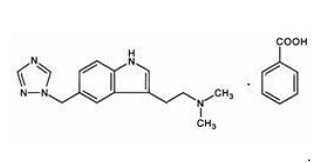
Its empirical formula is C 15 H 19 N 5 •C 7 H 6 O 2 , representing a molecular weight of the free base of 269.4. Rizatriptan benzoate is a white to off-white, crystalline solid that is soluble in water at about 42 mg per mL (expressed as free base) at 25°C.
RizaFilm oral film is available for oral administration in a 5 mg and 10 mg strength (equivalent to 7.265 mg and 14.53 mg rizatriptan benzoate respectively). Each oral film contains the following inactive ingredients: ammonium glycyrrhizate, butylated hydroxytoluene, copovidone, cupric chloride, ethylcellulose, FD&C Blue No. 1, hydroxypropyl cellulose, isopropyl alcohol, levomenthol, methyl ethyl ketone, sodium acetate, sucralose, titanium dioxide, and triacetin.
12 CLINICAL PHARMACOLOGY
12.1 Mechanism of Action
Rizatriptan binds with high affinity to human cloned 5-HT 1B/1D receptors. RizaFilm presumably exerts its therapeutic effects in the treatment of migraine headache by binding to 5-HT 1B/1D receptors located on intracranial blood vessels and sensory nerves of the trigeminal system.
12.2 Pharmacodynamics
Blood Pressure: Significant elevation in blood pressure, including hypertensive crisis, has been reported in patients treated with rizatriptan, with and without a history of hypertension [see Warnings and Precautions (5.9) ].
12.3 Pharmacokinetics
Absorption
Rizatriptan is completely absorbed following oral administration. The mean oral absolute bioavailability of the rizatriptan benzoate tablet is about 45% and mean peak plasma concentrations (Cmax) are reached in approximately 1-1.5 hours (Tmax). The presence of a migraine headache did not appear to affect the absorption or pharmacokinetics of rizatriptan. Food has no significant effect on the bioavailability of rizatriptan but delays the time to reach peak concentration by an hour. In clinical trials, rizatriptan benzoate tablets were administered without regard to food.
The bioavailability and Cmax of rizatriptan were similar following administration of rizatriptan benzoate tablets and rizatriptan benzoate orally disintegrating tablets, but the rate of absorption is somewhat slower with the orally disintegrating tablets, with Tmax delayed by up to 0.7 hour. AUC of rizatriptan is approximately 30% higher in females than in males. No accumulation occurred on multiple dosing.
Following a single dose of 10mg RizaFilm, the mean Cmax and AUCinf of rizatriptan were 23.79 (± 8.36) ng/mL and 84.54 (± 18.65) ng·hr/mL, respectively; the maximum peak plasma concentrations were achieved in 1.4 hours.
Distribution
The mean volume of distribution is approximately 140 liters in male subjects and 110 liters in female subjects. Rizatriptan is minimally bound (14%) to plasma proteins.
Metabolism
The primary route of rizatriptan metabolism is via oxidative deamination by monoamine oxidase-A (MAO-A) to the indole acetic acid metabolite, which is not active at the 5-HT1B/1D receptor. N-monodesmethyl-rizatriptan, a metabolite with activity similar to that of parent compound at the 5-HT 1B/1D receptor, is formed to a minor degree. Plasma concentrations of N-monodesmethyl-rizatriptan are approximately 14% of those of parent compound, and it is eliminated at a similar rate. Other minor metabolites, the N-oxide, the 6-hydroxy compound, and the sulfate conjugate of the 6-hydroxy metabolite are not active at the 5-HT 1B/1D receptor.
Elimination
The total radioactivity of the administered dose recovered over 120 hours in urine and feces was 82% and 12%, respectively, following a single 10-mg oral administration of 14 C-rizatriptan. Following oral administration of 14 C-rizatriptan, rizatriptan accounted for about 17% of circulating plasma radioactivity. Approximately 14% of an oral dose is excreted in urine as unchanged rizatriptan while 51% is excreted as indole acetic acid metabolite, indicating substantial first-pass metabolism.
Following administration of RizaFilm, the mean plasma half-life of rizatriptan is 2 hours.
Cytochrome P450 Isoforms
Rizatriptan is not an inhibitor of the activities of human liver cytochrome P450 isoforms 3A4/5, 1A2, 2C9, 2C19, or 2E1; rizatriptan is a competitive inhibitor (Ki =1400 nM) of cytochrome P450 2D6, but only at high, clinically irrelevant concentrations.
Specific Populations
Geriatric: Rizatriptan pharmacokinetics in healthy elderly non-migraineur volunteers (age 65-77 years) were similar to those in younger non-migraineur volunteers (age 18-45 years).
Pediatric : The pharmacokinetics of rizatriptan was determined in pediatric migraineurs 6 to 17 years of age. Exposures following single dose administration of 5 mg rizatriptan benzoate to pediatric patients weighing 20-39 kg (44-87 lb) or 10 mg rizatriptan benzoate to pediatric patients weighing ≥40 kg (88 lb) were similar to those observed following single dose administration of 10 mg rizatriptan benzoate to adults.
Gender: The mean AUC 0-∞ and C max of rizatriptan (10 mg orally) were about 30% and 11% higher in females as compared to males, respectively, while Tmax occurred at approximately the same time.
Patients with Hepatic Impairment: Following oral administration in patients with hepatic impairment caused by mild to moderate alcoholic cirrhosis of the liver, plasma concentrations of rizatriptan were similar in patients with mild hepatic insufficiency compared to a control group of subjects with normal hepatic function; plasma concentrations of rizatriptan were approximately 30% greater in patients with moderate hepatic insufficiency.
Patients with Renal Impairment: In patients with renal impairment (creatinine clearance 10-60 mL/min/1.73 m 2 ), the AUC 0-∞ of rizatriptan was not significantly different from that in subjects with normal renal function. In hemodialysis patients, (creatinine clearance <2 mL/min/1.73 m2), however, the AUC for rizatriptan was approximately 44% greater than that in patients with normal renal function.
Race: Pharmacokinetic data revealed no significant differences between African American and Caucasian subjects.
Drug Interactions
Monoamine Oxidase Inhibitors: In a drug interaction study, when rizatriptan benzoate 10 mg tablets were administered to subjects (n=12) receiving concomitant therapy with the selective, reversible MAO-A inhibitor, moclobemide 150 mg three times a day, there were mean increases in rizatriptan AUC and C max of 119% and 41%, respectively; and the AUC of the active N-monodesmethyl metabolite of rizatriptan was increased more than 400%. The interaction would be expected to be greater with irreversible MAO inhibitors [see Contraindications (4) and Drug Interactions (7.5) ]. No pharmacokinetic interaction is anticipated in patients receiving selective MAO-B inhibitors.
Propranolol: In a study of concurrent administration of propranolol 240 mg/day and a single dose of rizatriptan 10 mg in healthy adult subjects (n=11), mean plasma AUC for rizatriptan was increased by 70%, and a four-fold increase was observed in one subject [see Contraindications (4) and Drug Interactions (7.1) ]. The AUC of the active N-monodesmethyl metabolite of rizatriptan was not affected by propranolol.
Nadolol/Metoprolol: In a drug interactions study, effects of multiple doses of nadolol 80 mg or metoprolol 100 mg every 12 hours on the pharmacokinetics of a single dose of 10 mg rizatriptan were evaluated in healthy subjects (n=12). No pharmacokinetic interactions were observed.
Paroxetine: In a study of the interaction between the selective serotonin reuptake inhibitor (SSRI) paroxetine 20 mg/day for two weeks and a single dose of rizatriptan benzoate tablet 10 mg in healthy subjects (n=12), neither the plasma concentrations of rizatriptan nor its safety profile were affected by paroxetine [see Warnings and Precautions (5.7) , Drug Interactions (7.4) , and Patient Counseling Information (17) ].
Oral Contraceptives: In a study of concurrent administration of an oral contraceptive during 6 days of administration of rizatriptan (10-30 mg/day) in healthy female volunteers (n=18), rizatriptan did not affect plasma concentrations of ethinyl estradiol or norethindrone.
13 NONCLINICAL TOXICOLOGY
13.1 Carcinogenesis, Mutagenesis, Impairment of Fertility
Carcinogenesis
Oral carcinogenicity studies were conducted in mice (100 weeks) and rats (106 weeks) at doses of up to 125 mg/kg/day. Plasma exposures (AUC) at the highest dose tested were approximately 150 (mice) and 240 times (rats) that in humans at the maximum recommended daily dose (MRDD) of 30 mg/day. There was no evidence of an increase in tumor incidence related to rizatriptan in either species.
Mutagenesis
Rizatriptan was neither mutagenic nor clastogenic in a battery of in vitro and in vivo genetic toxicity studies, including the microbial mutagenesis (Ames) assay, in vitro mammalian cell mutagenesis and chromosomal aberration assays, and the in vivo chromosomal aberration assay in mouse.
Impairment of Fertility
In a fertility study in rats, altered estrus cyclicity and delays in time to mating were observed in females treated orally with 100 mg/kg/day rizatriptan. The no-effect dose was 10 mg/kg/day (approximately 15 times the human exposure at the MRDD). There were no other fertility-related effects in the female rats. There was no impairment of fertility or reproductive performance in male rats treated with up to 250 mg/kg/day (approximately 550 times the human exposure at the MRDD).
14 CLINICAL STUDIES
The studies described below establishing effectiveness for the acute treatment of migraine with or without aura were conducted with rizatriptan benzoate tablets. The efficacy of RizaFilm is based on a relative bioavailability study comparing RizaFilm 10 mg oral film to rizatriptan benzoate 10 mg tablets [see Clinical Pharmacology (12.3) ].
14.1 Adults
The efficacy of rizatriptan benzoate tablets was established in four multicenter, randomized, placebo-controlled trials. Patients enrolled in these studies were primarily female (84%) and Caucasian (88%), with a mean age of 40 years (range of 18 to 71). Patients were instructed to treat a moderate to severe headache. Headache response, defined as a reduction of moderate or severe headache pain to no or mild headache pain, was assessed for up to 2 hours (Study 1) or up to 4 hours after dosing (Studies 2, 3, and 4). Associated symptoms of nausea, photophobia, and phonophobia and maintenance of response up to 24 hours post-dose were evaluated. A second dose of rizatriptan benzoate tablets was allowed 2 to 24 hours after dosing for treatment of recurrent headache in Studies 1 and 2. Additional analgesics and/or antiemetics were allowed 2 hours after initial treatment for rescue in all four studies.
In all studies, the percentage of patients achieving headache response 2 hours after treatment was significantly greater in patients who received rizatriptan 10 mg compared to those who received placebo. Doses greater than 10 mg were associated with an increased incidence of adverse effects. The results from the four controlled studies are summarized in Table 2.
| Study | Placebo | Rizatriptan tablets 5mg | Rizatriptan tablets 10mg | ||
| 1 | 35% (n=304) | 62%• (n=458) | 71% •,† (n=456) | ||
| 2•• | 37% (n=82) | - | 77% • (n=320) | ||
| 3 | 23% (n=80) | 63%• (n=352) | - | ||
| 4 | 40% (n=159) | 60%• (n=164) | 67%• (n=385) | ||
• p-value <0.05 in comparison with placebo. † p-value <0.05 in comparison with 5 mg ••Results for initial headache only. | |||||
Comparisons of drug performance based upon results obtained in different clinical trials may not be reliable. Because studies are conducted at different times, with different samples of patients, by different investigators, employing different criteria and/or different interpretations of the same criteria, under different conditions (dose, dosing regimen, etc.), quantitative estimates of treatment response and the timing of response may be expected to vary considerably from study to study.
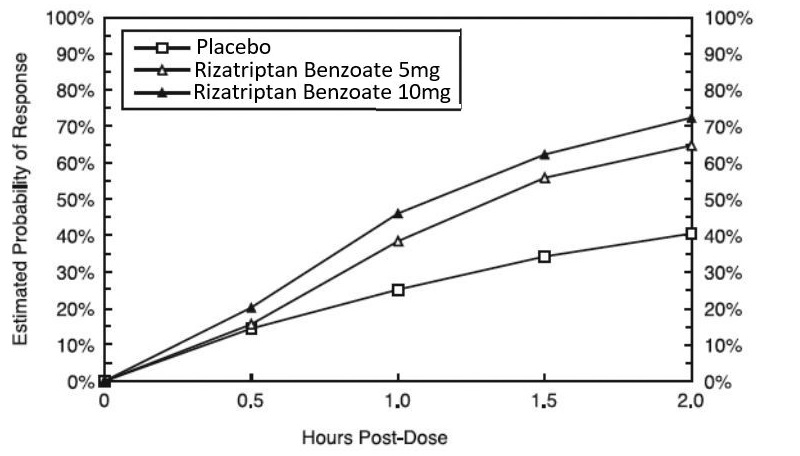
The estimated probability of achieving an initial headache response within 2 hours following treatment in pooled Studies 1, 2, 3, and 4 is depicted in Figure 1.
• Figure 1 shows the Kaplan-Meier plot of the probability over time of obtaining headache response (no or mild pain) following treatment with rizatriptan benzoate tablets or placebo. The averages displayed are based on pooled data from 4 placebo-controlled, outpatient trials providing evidence of efficacy (Studies 1, 2, 3, and 4). Patients taking additional treatment or not achieving headache response before 2 hours were censored at 2 hours. |
For patients with migraine-associated photophobia, phonophobia, and nausea at baseline, there was a decreased incidence of these symptoms following administration of rizatriptan benzoate tablets compared to placebo.
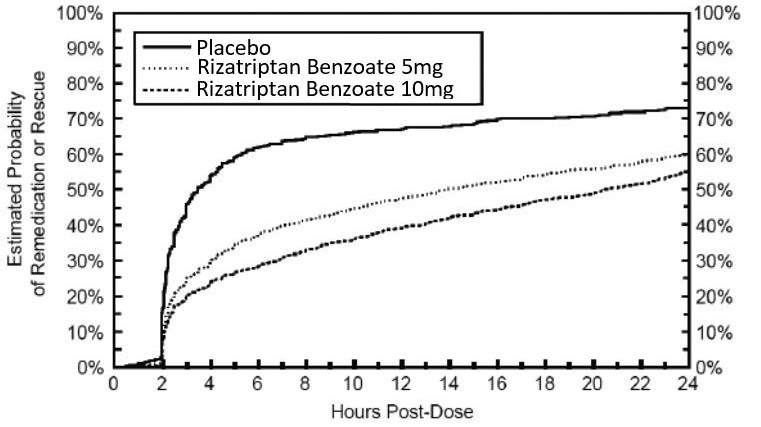
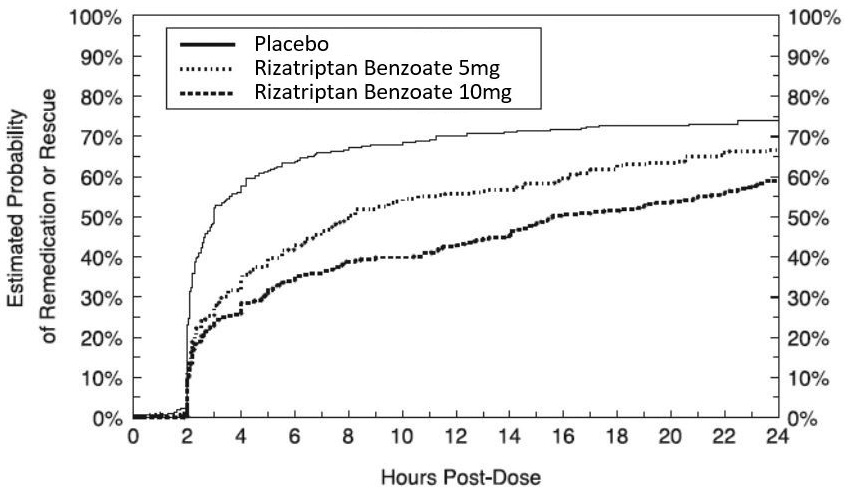
Two to 24 hours following the initial dose of study treatment, patients were allowed to use additional treatment for pain response in the form of a second dose of study treatment or other medication. The estimated probability of patients taking a second dose or other medication for migraine over the 24 hours following the initial dose of study treatment is summarized in Figure 2.
• This Kaplan-Meier plot is based on data obtained in 4 placebo-controlled outpatient clinical trials (Studies 1, 2, 3, and 4). Patients not using additional treatments were censored at 24 hours. The plot includes both patients who had headache response at 2 hours and those who had no response to the initial dose. Remedication was not allowed within 2 hours post-dose. |
Efficacy was unaffected by the presence of aura; by the gender, or age of the patient; or by concomitant use of common migraine prophylactic drugs (e.g., beta-blockers, calcium channel blockers, tricyclic antidepressants) or oral contraceptives. In two additional similar studies, efficacy was unaffected by relationship to menses. There were insufficient data to assess the impact of race on efficacy.
Rizatriptan Benzoate Orally Disintegrating Tablets
The efficacy of rizatriptan benzoate orally disintegrating tablets was established in two multicenter, randomized, placebo-controlled trials that were similar in design to the trials of rizatriptan benzoate tablets (Studies 5 and 6). Patients were instructed to treat a moderate to severe headache. Patients treated in these studies were primarily female (88%) and Caucasian (95%), with a mean age of 42 years (range 18-72).
In both studies, the percentage of patients achieving headache response 2 hours after treatment was significantly greater in patients who received rizatriptan benzoate orally disintegrating tablets 10 mg compared to those who received placebo. The results from Studies 5 and 6 are summarized in Table 3.
| Study | Placebo | Rizatriptan orally disintegrating tablets 5mg | Rizatriptan orally disintegrating tablets 10mg | |||
| 5 | 47% (n=98) | 66%• (n=100) | 66%• (n=113) | |||
| 6 | 28% (n=180) | 59%• (n=181) | 74%•, •• (n=186) | |||
•p-value <0.01 in comparison with placebo •• p-value <0.01 in comparison with 5 mg | ||||||
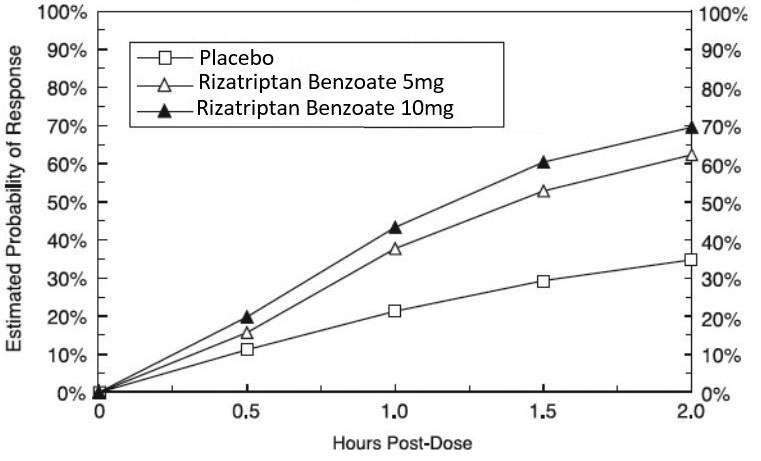
The estimated probability of achieving an initial headache response by 2 hours following treatment with rizatriptan benzoate orally disintegrating tablets in pooled Studies 5 and 6 is depicted in Figure 3.
• Figure 3 shows the Kaplan-Meier plot of the probability over time of obtaining headache response (no or mild pain) following treatment with rizatriptan benzoate orally disintegrating tablets or placebo. The averages displayed are based on pooled data from 2 placebo-controlled, outpatient trials providing evidence of efficacy (Studies 5 and 6). Patients taking additional treatment or not achieving headache response before 2 hours were censored at 2 hours. |
For patients with migraine-associated photophobia and phonophobia at baseline, there was a decreased incidence of these symptoms following administration of rizatriptan benzoate orally disintegrating tablets as compared to placebo.
Two to 24 hours following the initial dose of study treatment, patients were allowed to use additional treatment for pain response in the form of a second dose of study treatment or other medication. The estimated probability of patients taking a second dose or other medication for migraine over the 24 hours following the initial dose of study treatment is summarized in Figure 4.
• This Kaplan-Meier plot is based on data obtained in 2 placebo-controlled outpatient clinical trials (Studies 5 and 6). Patients not using additional treatments were censored at 24 hours. The plot includes both patients who had headache response at 2 hours and those who had no response to the initial dose. Remedication was not allowed within 2 hours post-dose. |
14.2 Pediatric Patients 6 to 17 Years of Age
The efficacy of rizatriptan benzoate orally disintegrating tablets in pediatric patients 6 to 17 years of age was evaluated in a multicenter, randomized, double-blind, placebo-controlled, parallel-group clinical trial (Study 7). Patients had to have at least a 6-month history of migraine attacks (with or without aura) usually lasting 3 hours or more (when untreated). The patient population was historically non-responsive to NSAIDs and acetaminophen therapy.
Patients were instructed to treat a single migraine attack with headache pain of moderate to severe intensity. The treatment phase of the study had two stages. Stage 1 was used to identify placebo non-responders, who then entered into Stage 2, in which patients were randomized to rizatriptan benzoate orally disintegrating tablets or placebo. Using a weight-based dosing strategy, patients 20 kg to <40 kg (44 lb to <88 lb) received rizatriptan benzoate orally disintegrating tablets 5 mg or placebo, and patients ≥40 kg (88 lb) received rizatriptan benzoate orally disintegrating tablets 10 mg or placebo.
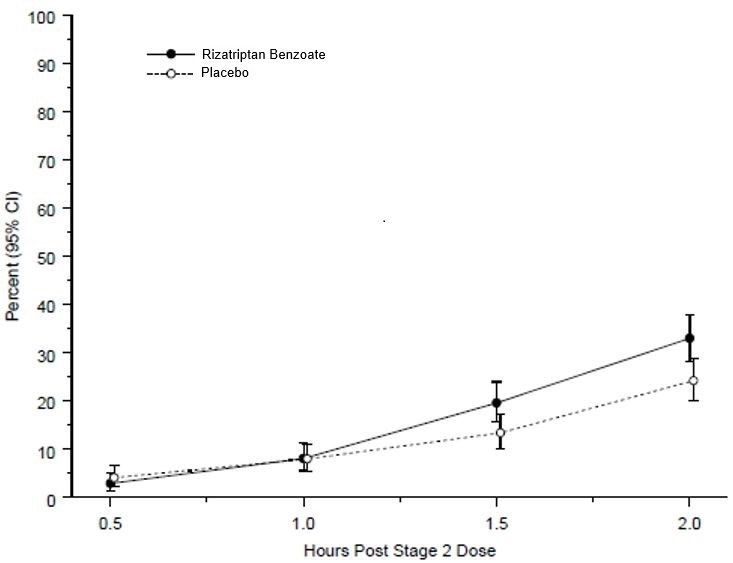
The mean age for the studied patient population was 13 years. Sixty-one percent of the patients were Caucasian, and fifty-six percent of the patients were female. The percentage of patients achieving the primary efficacy endpoint of no headache pain at 2 hours after treatment was significantly greater in patients who received rizatriptan benzoate orally disintegrating tablets, compared with those who received placebo (33% vs. 24%). Study 7 results are summarized in Table 4.
| Endpoint | Placebo | Rizatriptan orally disintegrating tablets | p-Value |
| No headache pain at 2 hours post-dose | 24% (n/m = 94/388) | 33% (n/m = 126/382) | 0.01 |
| n = Numbr of evaluable patients with no headache pain at 2 hours post dose.m = Number of evaluable patients in population. | |||
The observed percentage of pediatric patients achieving no headache pain within 2 hours following initial treatment with rizatriptan benzoate orally disintegrating tablets is shown in Figure 5.
 |
The prevalence of the exploratory endpoints of absence of migraine-associated symptoms (nausea, photophobia, and phonophobia) at 2 hours after taking the dose was not statistically significantly different between patients who received rizatriptan benzoate orally disintegrating tablets and those who received placebo.
16 HOW SUPPLIED/STORAGE AND HANDLING
16.1 How Supplied
RizaFilm oral film, 10 mg is a white flexible rectangular strip of 2.2 cm × 2.75 cm with an imprint "RIZA10" in edible blue ink on one side. Each oral film is individually packaged in an aluminum laminate pouch. It is supplied as follows:
NDC 35781-0600-8. 1 carton of 18 individually packaged films.
RizaFilm oral film, 5 mg is a white flexible rectangular strip of 1.1 cm × 1.375 cm with an imprint
"RZ5" in edible blue ink on one side. Each oral film is individually packaged in an aluminum laminate
pouch. It is supplied as follows:
NDC 35781-0605-8. 1 carton of 18 individually packaged films.
16.2 Storage and Handling
Store RizaFilm at room temperature, 20°C to 25°C (68°F to 77°F); excursions permitted from 15°C to 30°C (59°F to 86°F) [see USP Controlled Room Temperature]. Keep product in pouch until ready to use.
