Get your patient on Sernivo - Betamethasone Dipropionate spray (Betamethasone Dipropionate)
Sernivo - Betamethasone Dipropionate spray prescribing information

INDICATIONS AND USAGE
SERNIVO Spray is indicated for the treatment of mild to moderate plaque psoriasis in patients 18 years of age or older.
DOSAGE AND ADMINISTRATION
Shake well before use.
Apply SERNIVO Spray to the affected skin areas twice daily and rub in gently.
Use SERNIVO Spray for up to 4 weeks of treatment. Treatment beyond 4 weeks is not recommended.
Discontinue SERNIVO Spray when control is achieved.
Do not use if atrophy is present at the treatment site.
Do not bandage, cover, or wrap the treated skin area unless directed by a physician.
Avoid use on the face, scalp, axilla, groin, or other intertriginous areas.
SERNIVO Spray is for topical use only. It is not for oral, ophthalmic, or intravaginal use.
DOSAGE FORMS AND STRENGTHS
Spray, 0.05% for topical use. Each gram of SERNIVO Spray contains 0.643 mg betamethasone dipropionate USP (equivalent to 0.5 mg betamethasone) in a slightly thickened, white to off-white oil-in-water emulsion.
USE IN SPECIFIC POPULATIONS
Pregnancy
There are no available data on SERNIVO Spray use in pregnant women to evaluate a drug-associated risk of major birth defects, miscarriage, or adverse maternal or fetal outcomes.
Observational studies suggest an increased risk of low birthweight infants with the use of greater than 300 grams of potent or very potent topical corticosteroid during a pregnancy. Advise pregnant women that SERNIVO Spray may increase the risk of having a low birthweight infant and to use SERNIVO Spray on the smallest area of skin and for the shortest duration possible.
In animal reproduction studies, increased malformations, including umbilical hernias, cephalocele, and cleft palate, were observed after intramuscular administration of betamethasone dipropionate to pregnant rabbits during the period of organogenesis ( see Data ). The available data do not allow the calculation of relevant comparisons between the systemic exposure of betamethasone dipropionate observed in animal studies to the systemic exposure that would be expected in humans after topical use of SERNIVO Spray.
The estimated background risk of major birth defects and miscarriage for the indicated population is unknown. All pregnancies have a background risk of birth defect, loss, or other adverse outcomes. In the U.S. general population, the estimated risk of major birth defects and miscarriage in clinically recognized pregnancies is 2 to 4% and 15 to 20%, respectively.
Data
Animal Data
Administration of 0.05 mg/kg betamethasone dipropionate intramuscularly to pregnant rabbits during the period of organogenesis caused malformations. The abnormalities observed included umbilical hernias, cephalocele, and cleft palate.
Lactation
Risk Summary
There are no data regarding the presence of betamethasone dipropionate in human milk, the effects on the breastfed infant, or the effects on milk production after topical application of SERNIVO Spray to women who are breastfeeding.
It is possible that topical administration of betamethasone dipropionate could result in sufficient systemic absorption to produce detectable quantities in human milk. The developmental and health benefits of breastfeeding should be considered along with the mother’s clinical need for SERNIVO Spray and any potential adverse effects on the breastfed infant from SERNIVO Spray or from the underlying maternal condition.
Clinical Considerations
To minimize potential exposure to the breastfed infant via breast milk, use SERNIVO Spray on the smallest area of skin and for the shortest duration possible while breastfeeding. Advise breastfeeding women not to apply SERNIVO Spray directly to the nipple and areola to avoid direct infant exposure [ see Use in Specific Populations (8.4 ) ].
Pediatric Use
Safety and effectiveness of SERNIVO Spray in patients younger than 18 years of age have not been studied, therefore use in pediatric patients is not recommended. Because of a higher ratio of skin surface area to body mass, pediatric patients are at greater risk of systemic toxicity, including HPA axis suppression and adrenal insufficiency, when treated with topical drugs. [ see Warnings and Precautions (5.1 )]
Rare systemic effects such as Cushing's syndrome, linear growth retardation, delayed weight gain, and intracranial hypertension have been reported in pediatric patients, especially those with prolonged exposure to large doses of high potency topical corticosteroids.
Local adverse reactions including skin atrophy have also been reported with use of topical corticosteroids in pediatric patients.
Geriatric Use
Clinical studies of SERNIVO Spray did not include sufficient numbers of subjects who were 65 years of age or older to determine whether they respond differently from younger subjects.
CONTRAINDICATIONS
None.
WARNINGS AND PRECAUTIONS
- SERNIVO Spray can produce reversible HPA axis suppression with the potential for glucocorticosteroid insufficiency during or after treatment. High potency corticosteroids, large treatment surface areas, prolonged use, use of occlusive dressings, altered skin barrier, liver failure and use in pediatric patients may predispose to HPA axis suppression. Use of topical corticosteroids may require periodic evaluation for HPA axis suppression. Modify use if HPA axis suppression develops. (5.1 ) High potency corticosteroids, large treatment surface areas, prolonged use, use of occlusive dressings, altered skin barrier, liver failure and young age may predispose to HPA axis suppression. (5.1 )
- Topical corticosteroids may increase the risk of cataracts and glaucoma. If visual symptoms occur, consider referral to an ophthalmologist. (5.2 )
Effects on Endocrine System
SERNIVO Spray can produce reversible hypothalamic-pituitary-adrenal (HPA) axis suppression with the potential for glucocorticosteroid insufficiency. This may occur during or after withdrawal of treatment. Factors that predispose to HPA axis suppression include the use of high-potency corticosteroids, large treatment surface areas, prolonged use, use of occlusive dressings, altered skin barrier, liver failure, and young age.
Evaluation for HPA axis suppression may be done by using the adrenocorticotropic hormone (ACTH) stimulation test.
In a study including 48 evaluable subjects 18 years of age or older with moderate to severe plaque psoriasis, abnormal ACTH stimulation test results suggestive of adrenal suppression were identified in 5 out of 24 (20.8%) subjects after treatment with SERNIVO Spray twice daily for 15 days. No subject (0 out of 24) had abnormal ACTH stimulation test results after treatment with SERNIVO Spray twice daily for 29 days [ see Clinical Pharmacology (12.2 ) ].
If HPA axis suppression is documented, gradually withdraw the drug, reduce the frequency of application, or substitute with a less potent corticosteroid. If signs and symptoms of steroid withdrawal occur, supplemental systemic corticosteroids may be required.
Systemic effects of topical corticosteroids may also manifest as Cushing’s syndrome, hyperglycemia, and glucosuria. These events are rare and generally occur after prolonged exposure to larger than recommended doses, particularly with high-potency topical corticosteroids.
Minimize the unwanted risks from endocrine effects by mitigating the risk factors favoring increased systemic bioavailability and by using the product as recommended [ see Dosage and Administration (2 ) ].
Pediatric patients may be more susceptible to systemic toxicity due to their larger skin surface to body mass ratios. Use of SERNIVO Spray is not recommended in pediatric patients [ see Use in Specific Populations (8.4 ) ].
Ophthalmic Adverse Reactions
Use of topical corticosteroids, including SERNIVO Spray, may increase the risk of posterior subcapsular cataracts and glaucoma. Cataracts and glaucoma have been reported postmarketing with the use of topical corticosteroid products, including betamethasone dipropionate [ see Adverse Reactions (6.2 ) ].
Avoid contact of SERNIVO Spray with eyes. Advise patients to report any visual symptoms and consider referral to an ophthalmologist for evaluation.
Allergic Contact Dermatitis
Allergic contact dermatitis with corticosteroids is usually diagnosed by observing failure to heal rather than noting a clinical exacerbation. Corroborate such an observation with appropriate diagnostic patch testing. If irritation develops, discontinue the topical corticosteroid and institute appropriate therapy.
ADVERSE REACTIONS
The most common adverse reactions (≥1%) are application site reactions, including pruritus, burning and/or stinging, pain, and atrophy. (6.1 )
To report SUSPECTED ADVERSE REACTIONS, contact Promius Pharma, LLC. at 1-888-966-8766 or FDA at 1-800-FDA-1088 or www.fda.gov/medwatch .
Clinical Trials Experience
Because clinical trials are conducted under widely varying conditions, adverse reaction rates observed in the clinical trials of a drug cannot be directly compared to rates in the clinical trials of another drug and may not reflect the rates observed in clinical practice.
In two randomized, multicenter, prospective vehicle-controlled clinical trials, subjects with moderate plaque psoriasis of the body applied SERNIVO Spray or vehicle spray twice daily for 4 weeks. A total of 352 subjects applied SERNIVO Spray and 180 subjects applied vehicle spray.
Adverse reactions that occurred in at least 1% of subjects treated with SERNIVO Spray for up to 28 days are presented in Table 1 .
| SERNIVO Spray b.i.d. (N=352) | Vehicle Spray b.i.d. (N=180) | |
| Application site pruritus | 6.0% | 9.4% |
| Application site burning and/or stinging | 4.5% | 10.0% |
| Application site pain | 2.3% | 3.9% |
| Application site atrophy | 1.1% | 1.7% |
Less common adverse reactions (with occurrence lower than 1% but higher than 0.1%) in subjects treated with SERNIVO Spray were application site reactions including telangiectasia, dermatitis, discoloration, folliculitis and skin rash, in addition to dysgeusia and hyperglycemia. These adverse reactions were not observed in subjects treated with vehicle.
Postmarketing Experience
Because adverse reactions are reported voluntarily from a population of uncertain size, it is not always possible to reliably estimate their frequency or establish a causal relationship to drug exposure.
Postmarketing reports for local adverse reactions to topical corticosteroids have also included striae, irritation, dryness, acneiform eruptions, hypopigmentation, perioral dermatitis, allergic contact dermatitis, secondary infection, hypertrichosis, and miliaria.
Hypersensitivity reactions, consisting of predominantly skin signs and symptoms, e.g., contact dermatitis, pruritus, bullous dermatitis, and erythematous rash have been reported.
Ophthalmic adverse reactions of cataracts, glaucoma, and increased intraocular pressure have been reported with the use of topical corticosteroids, including topical betamethasone products.
DESCRIPTION
SERNIVO Spray contains 0.0643% betamethasone dipropionate (equivalent to 0.05% betamethasone), a synthetic, fluorinated corticosteroid for topical use.
The chemical name for betamethasone dipropionate is 9-fluoro-11(β), 17, 21-trihydroxy-16(β)-methylpregna-1,4-diene-3,20-dione-17,21-dipropionate. The empirical formula is C 28 H 37 FO 7 and the molecular weight is 504.6. The structural formula is shown below.
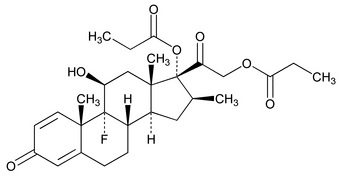
Each gram of SERNIVO Spray contains 0.643 mg of betamethasone dipropionate USP (equivalent to 0.5 mg betamethasone) in a slightly thickened, white to off-white, oil-in-water, non-sterile emulsion with the following inactive ingredients: butylated hydroxytoluene, cetostearyl alcohol, hydroxyethyl cellulose, methylparaben, mineral oil, oleyl alcohol, polyoxyl 20 cetostearyl ether, propylparaben, purified water, and sorbitan monostearate. SERNIVO Spray is co-packaged with a manual spray pump for installation by the pharmacist prior to dispensing to patients.
CLINICAL PHARMACOLOGY
Mechanism of Action
Corticosteroids play a role in cellular signaling, immune function, inflammation, and protein regulation; however, the precise mechanism of action of SERNIVO Spray in psoriasis is unknown.
Pharmacodynamics
Vasoconstrictor studies performed with SERNIVO Spray in healthy subjects indicate that it is in the mid-range of potency as compared with other topical corticosteroids; however, similar blanching scores do not necessarily imply therapeutic equivalence.
The potential for HPA axis suppression by SERNIVO Spray was evaluated in a study randomizing 52 adult subjects with moderate to severe plaque psoriasis. SERNIVO Spray was applied twice daily for 15 or 29 days, in subjects with psoriasis involving a mean of 29.0% and 26.5% body surface area at baseline across the 2 treatment duration arms, respectively. Forty-eight (48) subjects were evaluated for HPA axis suppression at the end of treatment. The proportion of subjects demonstrating HPA axis suppression was 20.8% (5 out of 24) in subjects treated with SERNIVO Spray for 15 days. No subjects (0 out of 24) treated with SERNIVO Spray for 29 days had HPA axis suppression. In this study HPA axis suppression was defined as serum cortisol level ≤18 mcg/dL 30-minutes post-cosyntropin stimulation. In the 4 subjects with available follow-up values, all subjects had normal ACTH stimulation tests at follow-up.
Pharmacokinetics
The extent of percutaneous absorption of topical corticosteroids is determined by many factors including the vehicle, the integrity of the epidermal barrier, and the use of occlusive dressings.
Topical corticosteroids are absorbed through normal intact skin. Inflammation and/or other disease processes in the skin may increase percutaneous absorption.
Plasma concentrations of betamethasone dipropionate, betamethasone-17-propionate, and betamethasone were measured at baseline, and before and after the last dose (1, 3, and 6 hours) in the HPA axis suppression trial in subjects with psoriasis [ see Clinical Pharmacology (12.2 ) ]. The majority of subjects had no measurable plasma concentration (<5.00 pg/mL) of betamethasone dipropionate, while the metabolites, betamethasone-17-propionate and betamethasone, were detected in the majority of subjects (Table 2 ). There was high variability in the data but there was a trend toward higher systemic exposure at Day 15 and lower systemic exposure at Day 29.
| Analyte (pg/mL) | SERNIVO Spray b.i.d. (15 days) | SERNIVO Spray b.i.d. (29 days) |
| Betamethasone-17-propionate | 120 ± 127 | 63.9 ± 52.6 |
| Betamethasone | 119 ± 176 | 57.6 ± 55.9 |
NONCLINICAL TOXICOLOGY
Carcinogenesis, Mutagenesis, Impairment of Fertility
Long-term animal studies have not been performed to evaluate the carcinogenic potential of betamethasone dipropionate.
In a 90-day repeat-dose toxicity study in rats, topical administration of betamethasone dipropionate spray formulation at dose concentrations of 0.05% and 0.1% (providing dose levels up to 0.5 mg/kg/day in males and 0.25 mg/kg/day in females) resulted in a toxicity profile consistent with long-term exposure to corticosteroids including reduced body weight gain, adrenal atrophy, and histological changes in bone marrow, thymus and spleen indicative of severe immune suppression. A no observable adverse effect level (NOAEL) could not be determined in this study. Although the clinical relevance of the findings in animals to humans is not clear, sustained glucocorticoid-related immune suppression may increase the risk of infection and possibly the risk of carcinogenesis.
Betamethasone was negative in the bacterial mutagenicity assay ( Salmonella typhimurium and Escherichia coli ), and in the mammalian cell mutagenicity assay (CHO/HGPRT). It was positive in the in vitro human lymphocyte chromosome aberration assay, and equivocal in the in vivo mouse bone marrow micronucleus assay.
Studies in rabbits, mice, and rats using intramuscular doses up to 1, 33, and 2 mg/kg, respectively, resulted in dose-related increases in fetal resorptions in rabbits and mice.
CLINICAL STUDIES
Two multi-center, randomized, double-blind, vehicle-controlled clinical trials were conducted in subjects aged 18 years and older with moderate plaque psoriasis. In both trials, randomized subjects applied SERNIVO Spray or vehicle spray to the affected areas twice daily for 28 days. Enrolled subjects had body surface area of involvement between 10% to 20%, and an Investigator Global Assessment (IGA) score of 3 (moderate).
Efficacy was assessed as the proportion of subjects who were considered a treatment success (defined as having an IGA score of 0 or 1 [clear or almost clear] and at least a 2-grade reduction from baseline). Table 3 presents the efficacy results at Day 15 and Day 29.
| a Treatment success is defined as an IGA of 0 or 1 (clear or almost clear) and at least a 2-grade reduction from baseline. | ||||
| Study 1 | Study 2 | |||
| SERNIVO Spray b.i.d. (N=182) | Vehicle Spray b.i.d. (N=95) | SERNIVO Spray b.i.d. (N=174) | Vehicle Spray b.i.d. (N=87) | |
| Treatment Success at Day 15 | 21.5% | 7.4% | 19.0% | 2.3% |
| Treatment Success at Day 29 | 42.7% | 11.7% | 34.5% | 13.6% |
HOW SUPPLIED/STORAGE AND HANDLING
How Supplied/Storage
SERNIVO Spray is a slightly thickened, white to off-white, non-sterile emulsion supplied in high density polyethylene bottles with a heat induction seal lined polypropylene cap. The drug is supplied in the following volumes:
- 120 mL (NDC 68040-714-28)
Store at controlled room temperature of 20°C to 25°C (68°F to 77°F), excursions permitted to 15°C to 30°C (59°F to 86°F) [ See USP Controlled Room Temperature ].
Each unit is co-packaged with a manual spray pump for installation by the pharmacist prior to dispensing.
Handling/Instructions for the Pharmacist
- Remove the spray pump from the wrapper.
- Remove and discard the cap from the bottle.
- Keeping the bottle upright, insert the spray pump into the bottle and turn clockwise until it is closed tightly.
- Dispense the bottle with the spray pump inserted.
- Include the date dispensed in the space provided on the carton.
Instructions for Use
SERNIVO™ (ser-ne-vo) (betamethasone dipropionate) Spray, 0.05%
Important: SERNIVO Spray is for use on the skin only. Do not get SERNIVO Spray near or in your eyes, mouth, or vagina.
Read this “Instructions for Use” before you start using SERNIVO Spray and each time you get a refill. There may be new information. This information does not take the place of talking with your doctor about your medical condition or treatment.
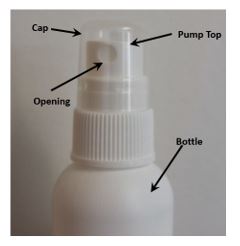
Parts of the SERNIVO Spray bottle. (See Figure A )
Figure A
How to apply SERNIVO Spray:
Step 1: Shake the SERNIVO Spray bottle well. Remove the cap from the pump top.
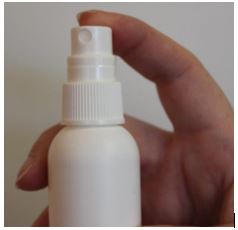
Step 2: Hold the bottle in an upright position while pointing the opening of the pump top in the direction of the affected area. To spray, push down on the pump top. Apply SERNIVO Spray to the affected area as instructed by your doctor. (See Figure B )
Figure B
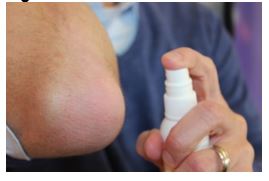
Step 3: Spray only enough SERNIVO Spray to cover the affected area, for example, the elbow (See Figure C ) . Rub in SERNIVO Spray gently.
Figure C
Repeat Steps 2 and 3 to apply SERNIVO Spray to other affected areas as instructed by your doctor.
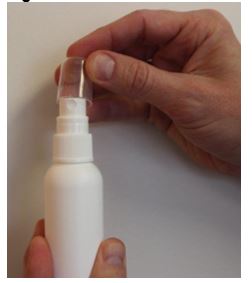
Step 4: After applying SERNIVO Spray, place the cap back onto the pump top. (See Figure D )
Figure D
How should I store SERNIVO Spray?
- Store SERNIVO Spray at room temperature between 68°F to 77°FF (20°FC to 25°C).
- Throw away (discard) any unused SERNIVO Spray after 28 days.
Keep SERNIVO Spray and all medicines out of the reach of children.
This "Instructions for Use" has been approved by the U.S. Food and Drug Administration.
Manufactured by: DPT Laboratories, Ltd., San Antonio, TX 78215 Distributed by: Encore Dermatology, Inc., Scottsdale AZ 85254
SERNIVO is a registered trademark of Encore Dermatology, Inc
Issued: 02/2016 Revised: 04/2019 SER1289 4/19
Mechanism of Action
Corticosteroids play a role in cellular signaling, immune function, inflammation, and protein regulation; however, the precise mechanism of action of SERNIVO Spray in psoriasis is unknown.
