Get your patient on Torvex (Diclofenac Sodium And Menthol, Methyl Salicylate)
Torvex prescribing information

WARNING: RISK OF SERIOUS CARDIOVASCULAR AND GASTROINTESTINAL EVENTS
Cardiovascular Thrombotic Events
- Nonsteroidal anti-inflammatory drugs (NSAIDs) cause an increased risk of serious cardiovascular thrombotic events, including myocardial infarction and stroke, which can be fatal. This risk may occur early in treatment and may increase with duration of use [see Warnings and Precautions (5.1) ] .
- D iclofenac sodium topical solution is contraindicated in the setting of coronary artery bypass graft (CABG) surgery [see Contraindications (4) and Warnings and Precautions (5.1) ] .
Gastrointestinal Bleeding, Ulceration, and Perforation
- NSAIDs cause an increased risk of serious gastrointestinal (GI) adverse events including bleeding, ulceration, and perforation of the stomach or intestines, which can be fatal. These events can occur at any time during use and without warning symptoms. Elderly patients and patients with a prior history of peptic ulcer disease and or GI bleeding are at greater risk for serious GI events [see Warnings and Precautions (5.2) ] .
1 INDICATIONS AND USAGE
Diclofenac sodium topical solution is indicated for the treatment of signs and symptoms of osteoarthritis of the knee(s).
Adults and children 12 years of age and older: apply to affected area not more than 3 to 4 times daily wash hands with soap and water after apply Children under 12 years of age: ask a doctor
3 DOSAGE FORMS AND STRENGTHS
Diclofenac sodium topical solution: 1.5% w/w
4 CONTRAINDICATIONS
Diclofenac sodium topical solution is contraindicated in the following patients:
- Known hypersensitivity (e.g., anaphylactic reactions and serious skin reactions) to diclofenac or any components of the drug product [see Warnings and Precautions (5.7, 5.9) ] .
- History of asthma, urticaria, or other allergic-type reactions after taking aspirin or other NSAIDs. Severe, sometimes fatal, anaphylactic reactions to NSAIDs have been reported in such patients [see Warnings and Precautions (5.7, 5.8) ] .
- In the setting of coronary artery bypass graft (CABG) surgery [see Warnings and Precautions (5.1) ] .
6 ADVERSE REACTIONS
The following adverse reactions are discussed in greater detail in other sections of the labeling:
- Cardiovascular Thrombotic Events [see Warnings and Precautions (5.1) ]
- GI Bleeding, Ulceration and Perforation [see Warnings and Precautions (5.2) ]
- Hepatotoxicity [see Warnings and Precautions (5.3) ]
- Hypertension [see Warnings and Precautions (5.4) ]
- Heart Failure and Edema [see Warnings and Precautions (5.5) ]
- Renal Toxicity and Hyperkalemia [see Warnings and Precautions (5.6) ]
- Anaphylactic Reactions [see Warnings and Precautions (5.7) ]
- Serious Skin Reactions [see Warnings and Precautions (5.9) ]
- Hematologic Toxicity [see Warnings and Precautions (5.12) ]
Clinical Trials Experience
Because clinical trials are conducted under widely varying conditions, adverse reaction rates observed in the clinical trials of a drug cannot be directly compared to rates in the clinical trials of another drug and may not reflect the rates observed in practice.
The data described below reflect exposure to diclofenac sodium topical solution of 911 patients treated between 4 and 12 weeks (mean duration of 49 days) in seven Phase 3 controlled trials, as well as exposure of 793 patients treated in an open-label study, including 463 patients treated for at least 6 months, and 144 patients treated for at least 12 months. The population mean age was approximately 60 years, 89% of patients were Caucasians, 64% were females, and all patients had primary osteoarthritis. The most common adverse events with diclofenac sodium topical solution were application site skin reactions. These events were the most common reason for withdrawing from the studies.
Application Site Reactions
In controlled trials, the most common treatment-related adverse events in patients receiving diclofenac sodium topical solution were application site skin reactions. Application site reactions were characterized by one or more of the following: dryness, erythema, induration, vesicles, paresthesia, pruritus, vasodilation, acne, and urticaria. The most frequent of these reactions were dry skin (32%), contact dermatitis characterized by skin erythema and induration (9%), contact dermatitis with vesicles (2%) and pruritus (4%). In one controlled trial, a higher rate of contact dermatitis with vesicles (4%) was observed after treatment of 152 subjects with the combination of diclofenac sodium topical solution and oral diclofenac. In the open label uncontrolled long-term safety study, contact dermatitis occurred in 13% and contact dermatitis with vesicles in 10% of patients, generally within the first 6 months of exposure, leading to a withdrawal rate for an application site event of 14%.
Adverse Events Common to the NSAID Class
In controlled trials, subjects treated with diclofenac sodium topical solution experienced some adverse events associated with the NSAID class more frequently than subjects using placebo (constipation, diarrhea, dyspepsia, nausea, flatulence, abdominal pain, edema; see Table 1 ). The combination of diclofenac sodium topical solution and oral diclofenac, compared to oral diclofenac alone, resulted in a higher rate of rectal hemorrhage (3% vs. less than 1%), and more frequent abnormal creatinine (12% vs. 7%), urea (20% vs. 12%), and hemoglobin (13% vs. 9%), but no difference in elevation of liver transaminases.
Table 1 lists all adverse reactions occurring in ≥ 1% of patients receiving diclofenac sodium topical solution, where the rate in the diclofenac sodium topical solution group exceeded placebo, from seven controlled studies conducted in patients with osteoarthritis. Since these trials were of different durations, these percentages do not capture cumulative rates of occurrence.
Table 1: Adverse Reactions occurring in ≥ 1% of patients treated with diclofenac sodium topical solution in placebo and oral diclofenac-controlled trials.
Treatment Group: | Diclofenac sodium topical solution N=911 | Topical Placebo N=332 |
Adverse Reaction † | N (%) | N (%) |
Dry Skin (Application Site) | 292 (32) | 17 (5) |
Contact Dermatitis (Application Site) | 83 (9) | 6 (2) |
Dyspepsia | 72 (8) | 13 (4) |
Abdominal Pain | 54 (6) | 10 (3) |
Flatulence | 35 (4) | 1 (<1) |
Pruritus (Application Site) | 34 (4) | 7 (2) |
Diarrhea | 33 (4) | 7 (2) |
Nausea | 33 (4) | 3 (1) |
Pharyngitis | 40 (4) | 13 (4) |
Constipation | 29 (3) | 1 (<1) |
Edema | 26 (3) | 0 |
Rash (Non-Application Site) | 25 (3) | 5 (2) |
Infection | 25 (3) | 8 (2) |
Ecchymosis | 19 (2) | 1 (<1) |
Dry Skin (Non-Application Site) | 19 (2) | 1 (<1) |
Contact Dermatitis, vesicles (Application Site) | 18 (2) | 0 |
Paresthesia (Non-Application Site) | 14 (2) | 3 (<1) |
Accidental Injury | 22 (2) | 7 (2) |
Pruritus (Non-Application Site) | 15 (2) | 2 (<1) |
Sinusitis | 10 (1) | 2 (<1) |
Halitosis | 11 (1) | 1 (<1) |
Application Site Reaction (not otherwise specified) | 11 (1) | 3 (<1) |
† Preferred Term according to COSTART | ||
Postmarketing Experience
In non-U.S. postmarketing surveillance, the following adverse reactions have been reported during post-approval use of diclofenac sodium topical solution. Because these reactions are reported voluntarily from a population of uncertain size, it is not always possible to reliably estimate their frequency or establish a causal relationship to drug exposure.
Body as a Whole: abdominal pain, accidental injury, allergic reaction, asthenia, back pain, body odor, chest pain, edema, face edema, halitosis, headache, lack of drug effect, neck rigidity, pain
Cardiovascular: palpitation, cardiovascular disorder
Digestive: diarrhea, dry mouth, dyspepsia, gastroenteritis, decreased appetite, mouth ulceration, nausea, rectal hemorrhage, ulcerative stomatitis
Metabolic and Nutritional: creatinine increased
Musculoskeletal: leg cramps, myalgia
Nervous: depression, dizziness, drowsiness, lethargy, paresthesia, paresthesia at application site
Respiratory: asthma, dyspnea, laryngismus, laryngitis, pharyngitis
Skin and Appendages: At the Application Site: Adverse Reactions: contact dermatitis, contact dermatitis with vesicles, dry skin, pruritus, rash; Other Skin and Appendages: eczema, rash, pruritus, skin discoloration, urticaria
Special Senses: abnormal vision, blurred vision, cataract, ear pain, eye disorder, eye pain, taste perversion
7 DRUG INTERACTIONS
See Table 2 for clinically significant drug interactions with diclofenac.
Table 2: Clinically Significant Drug Interactions with Diclofenac
Drugs That Interfere with Hemostasis | |
Clinical Impact: |
|
Intervention: | Monitor patients with concomitant use of diclofenac sodium topical solution with anticoagulants (e.g., warfarin), antiplatelet agents (e.g., aspirin), selective serotonin reuptake inhibitors (SSRIs), and serotonin norepinephrine reuptake inhibitors (SNRIs) for signs of bleeding [see Warnings and Precautions (5.12) ] |
Aspirin | |
Clinical Impact: | Controlled clinical studies showed that the concomitant use of NSAIDs and analgesic doses of aspirin does not produce any greater therapeutic effect than the use of NSAIDs alone. In a clinical study, the concomitant use of an NSAID and aspirin was associated with a significantly increased incidence of GI adverse reactions as compared to use of NSAID alone [see Warnings and Precautions (5.2) ] |
Intervention: | Concomitant use of diclofenac sodium topical solution and analgesic doses of aspirin is not generally recommended because of the increased risk of bleeding [see Warnings and Precautions (5.12) ] . Diclofenac sodium topical solution is not a substitute for low dose aspirin for cardiovascular protection. |
ACE inhibitors, Angiotensin Receptor Blockers, and Beta-Blockers | |
Clinical Impact: |
|
Intervention: |
|
Diuretics | |
Clinical Impact: | Clinical studies, as well as post-marketing observations, showed that NSAIDS reduced the natriuretic effect of loop diuretics (e.g., furosemide) and thiazide diuretics in some patients. This effect has been attributed to the NSAID inhibition of renal prostaglandin synthesis. |
Intervention: | During concomitant use of diclofenac sodium topical solution with diuretics, observe patients for signs of worsening renal function, in addition to assuring diuretic efficacy including antihypertensive effects [see Warnings and Precautions (5.6) ] . |
Digoxin | |
Clinical Impact: | The concomitant use of diclofenac with digoxin has been reported to increase the serum concentration and prolong the half-life digoxin. |
Intervention: | During concomitant use of diclofenac sodium topical solution and digoxin, monitor serum digoxin levels. |
Lithium | |
Clinical Impact: | NSAIDS have produced elevations in plasma lithium levels and reductions in renal lithium clearance. The mean minimum lithium concentration increased 15%, and the renal clearance decreased by approximately 20%. This effect has been attributed to NSAID inhibition of renal prostaglandin synthesis. |
Intervention: | During concomitant use of diclofenac sodium topical solution and lithium, monitor patients for signs of lithium toxicity. |
Methotrexate | |
Clinical Impact: | Concomitant use of NSAIDs and methotrexate may increase the risk of methotrexate toxicity (e.g., neutropenia, thrombocytopenia, renal dysfunction). |
Intervention: | During concomitant use of diclofenac sodium topical solution and methotrexate, monitor patients for methotrexate toxicity. |
Cyclosporine | |
Clinical Impact: | Concomitant use of diclofenac sodium topical solution and cyclosporine may increase cyclosporine’s nephrotoxicity. |
Intervention: | During concomitant use of diclofenac sodium topical solution and cyclosporine, monitor patients for signs or worsening renal function. |
NSAIDs and Salicylates | |
Clinical Impact: | Concomitant use of diclofenac with other NSAIDs or salicylates (e.g., diflunisal, salsalate) increases the risk of GI toxicity, with little or no increase in efficacy [see Warnings and Precautions (5.2) ] . Concomitant use of oral NSAIDs with diclofenac sodium topical solution has been evaluated in one Phase 3 controlled trial and in combination with oral diclofenac, compared to oral diclofenac alone, resulted in a higher rate of rectal hemorrhage (3% vs. less than 1%), and more frequent abnormal creatinine (12% vs. 7%), urea (20% vs. 12%) and hemoglobin (13% vs. 9%). |
Intervention: | The concomitant use of diclofenac with other NSAIDs or salicyclates is not recommended. Do not use combination therapy with diclofenac sodium topical solution and an oral NSAID unless the benefit outweighs the risk and conduct periodic laboratory evaluations |
Pemetrexed | |
Clinical Impact: | Concomitant use of diclofenac sodium topical solution and pemetrexed may increase the risk of pemetrexed-associated myelosuppression, renal, and GI toxicity (see the pemetrexed prescribing information). |
Intervention: | During concomitant use of diclofenac sodium topical solution and pemetrexed, in patients with renal impairment whose creatinine clearance ranges from 45 to 79 mL/min, monitor for myelosuppression, renal and GI toxicity. NSAIDs with short elimination half-lives (e.g., diclofenac, indomethacin) should be avoided for a period of two days before, the day of, and two days following administration pemetrexed. In the absence of data regarding potential interaction between pemetrexed and NSAIDs with longer half-lives (e.g., meloxicam, nabumetone), patients taking these NSAIDs should interrupt dosing for at least five days before, the day of, and two days following pemetrexed administration. |
11 DESCRIPTION
Diclofenac sodium topical solution 1.5% is a nonsteroidal anti-inflammatory drug, available as a clear, colorless to faintly pink-orange solution for topical application.
Diclofenac sodium topical solution contains 1.5% w/w diclofenac sodium, USP, a benzeneacetic acid derivative that is a nonsteroidal anti-inflammatory drug (NSAID), designated chemically as 2-[(2,6-dichlorophenyl)amino]-benzeneacetic acid, monosodium salt. It is a white to off-white crystalline powder, hygroscopic, and odorless that is freely soluble in methanol, soluble in alcohol, and sparingly soluble in water. The molecular weight is 318.13. Its molecular formula is C 14 H 10 Cl 2 NNaO 2 and it has the following structural formula.
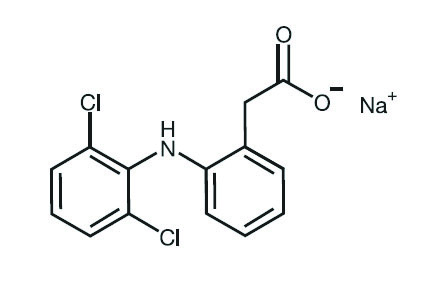
Each 1 mL of solution contains 16.05 mg of diclofenac sodium, USP. The inactive ingredients in diclofenac sodium topical solution include: alcohol, dimethyl sulfoxide USP (DMSO, 45.5% w/w), glycerin, propylene glycol, and purified water.
16 HOW SUPPLIED/STORAGE AND HANDLING
Diclofenac sodium topical solution 1.5% w/w is supplied as a clear, colorless to faintly pink-orange solution containing 16.05 mg of diclofenac sodium per 1 mL of solution, in a white high density polyethylene bottle with a white low-density dropper cap. It is available as follows:
150 mL bottle NDC 65162-911-74
Storage
Store at 20° to 25°C (68° to 77°F); excursions permitted between 15° to 30°C (59° to 86°F) [see USP Controlled Room Temperature].
Instructions for Use
Diclofenac (dye-KLOE-fen-ak) Sodium Topical Solution 1.5%
Read the Medication Guide that comes with diclofenac sodium topical solution first. Be sure that you read, understand and follow these Instructions for Use before you use diclofenac sodium topical solution for the first time.
Important: For use on the skin only (topical). Do not get diclofenac sodium topical solution in your eyes, nose or mouth.
Before you use diclofenac sodium topical solution:
- Apply diclofenac sodium topical solution exactly as your healthcare provider tells you. Talk with your healthcare provider or pharmacist if you are not sure.
- Only use diclofenac sodium topical solution to treat pain from osteoarthritis in your knee or knees.
- Apply diclofenac sodium topical solution on clean, dry skin that does not have any cuts, infections or rashes.
- Use diclofenac sodium topical solution 4 times each day on your knee or knees as prescribed.
- Your total dose for each knee is 40 drops of diclofenac sodium topical solution, each time you use it.
- If you get diclofenac sodium topical solution in your eyes, rinse your eyes right away with water or saline. Call your healthcare provider if your eyes are irritated for more than one hour.
Steps for using diclofenac sodium topical solution:
Step 1. Wash your hands with soap and water before applying diclofenac sodium topical solution.
Step 2. Put 10 drops of diclofenac sodium topical solution either on your hand or directly on your knee (see Figure A ).
Figure A

or

Step 3. Spread diclofenac sodium topical solution evenly on the front, back and sides of your knee (see Figures B and C ). Repeat steps 2 and 3, three times so that your knee is completely covered with a total of 40 drops of diclofenac sodium topical solution.
Figure B
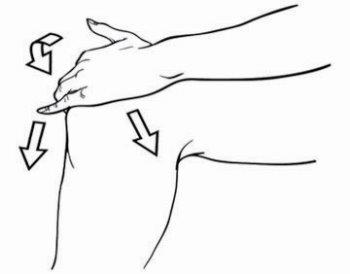
Figure C

Step 4. If your healthcare provider has prescribed diclofenac sodium topical solution for both knees, repeat steps 2 and 3 for the other knee.
After you use diclofenac sodium topical solution:
- Wash your hands with soap and water right away after applying diclofenac sodium topical solution.
Do not:
- touch the treated knee or allow another person to touch the knee treated with diclofenac sodium topical solution until your knee is completely dry.
- cover your knee with clothing until your knee is completely dry.
- put sunscreen, insect repellant, lotion, moisturizer, cosmetics, or other topical medicines on your knee until it is completely dry.
- take a shower or a bath for at least 30 minutes after you put diclofenac sodium topical solution on your knee.
- use heating pads or cover the treated area with bandages where you have applied diclofenac sodium topical solution.
- use sunlamps and tanning beds. Protect your treated knee from sunlight. Wear clothes that cover your skin if you have to be in sunlight.
How should I store diclofenac sodium topical solution?
- Store diclofenac sodium topical solution at room temperature between 68°F to 77°F (20°C to 25°C).
Keep diclofenac sodium topical solution and all medicines out of the reach of children.
This Instructions for Use has been approved by the U.S. Food and Drug Administration.
•Trademarks are the property of their respective owners.
Distributed by: Amneal Pharmaceuticals Bridgewater, NJ 08807
Rev. 11-2016-01
