Get your patient on Venlafaxine Hydrochloride - Venlafaxine Hydrochloride tablet (Venlafaxine Hydrochloride)
Venlafaxine Hydrochloride - Venlafaxine Hydrochloride tablet prescribing information

Suicidality and Antidepressant Drugs
Antidepressants increased the risk compared to placebo of suicidal thinking and behavior (suicidality) in children, adolescents, and young adults in short-term studies of Major Depressive Disorder (MDD) and other psychiatric disorders. Anyone considering the use of venlafaxine tablets or any other antidepressant in a child, adolescent, or young adult must balance this risk with the clinical need. Short-term studies did not show an increase in the risk of suicidality with antidepressants compared to placebo in adults beyond age 24; there was a reduction in risk with antidepressants compared to placebo in adults aged 65 and older. Depression and certain other psychiatric disorders are themselves associated with increases in the risk of suicide. Patients of all ages who are started on antidepressant therapy should be monitored appropriately and observed closely for clinical worsening, suicidality, or unusual changes in behavior. Families and caregivers should be advised of the need for close observation and communication with the prescriber. Venlafaxine tablets are not approved for use in pediatric patients. (See WARNINGS: Clinical Worsening and Suicide Risk , PRECAUTIONS: Information for Patients and PRECAUTIONS: Pediatric Use .)
INDICATIONS AND USAGE
Venlafaxine tablets, USP are indicated for the treatment of major depressive disorder.
The efficacy of venlafaxine tablets, USP in the treatment of major depressive disorder was established in 6-week controlled trials of adult outpatients whose diagnoses corresponded most closely to the DSM-III or DSM-III-R category of major depression and in a 4-week controlled trial of inpatients meeting diagnostic criteria for major depression with melancholia (see CLINICAL TRIALS ).
A major depressive episode implies a prominent and relatively persistent depressed or dysphoric mood that usually interferes with daily functioning (nearly every day for at least 2 weeks); it should include at least four of the following eight symptoms: change in appetite, change in sleep, psychomotor agitation or retardation, loss of interest in usual activities or decrease in sexual drive, increased fatigue, feelings of guilt or worthlessness, slowed thinking or impaired concentration, and a suicide attempt or suicidal ideation.
The efficacy of venlafaxine hydrochloride extended-release capsules in maintaining an antidepressant response for up to 26 weeks following 8 weeks of acute treatment was demonstrated in a placebo-controlled trial. The efficacy of venlafaxine tablets, USP in maintaining an antidepressant response in patients with recurrent depression who had responded and continued to be improved during an initial 26 weeks of treatment and were then followed for a period of up to 52 weeks was demonstrated in a second placebo-controlled trial (see CLINICAL TRIALS ). Nevertheless, the physician who elects to use venlafaxine tablets/venlafaxine hydrochloride extended-release capsules for extended periods should periodically reevaluate the long-term usefulness of the drug for the individual patient.
DOSAGE AND ADMINISTRATION
Initial Treatment
The recommended starting dose for venlafaxine tablets is 75 mg/day, administered in two or three divided doses, taken with food. Depending on tolerability and the need for further clinical effect, the dose may be increased to 150 mg/day. If needed, the dose should be further increased up to 225 mg/day. When increasing the dose, increments of up to 75 mg/day should be made at intervals of no less than 4 days. In outpatient settings there was no evidence of usefulness of doses greater than 225 mg/day for moderately depressed patients, but more severely depressed inpatients responded to a mean dose of 350 mg/day. Certain patients, including more severely depressed patients, may therefore respond more to higher doses, up to a maximum of 375 mg/day, generally in three divided doses (see PRECAUTIONS: General: Use in Patients with Concomitant Illness ).
Special Populations
Treatment of Pregnant Women During the Third Trimester
Neonates exposed to venlafaxine tablets, other SNRIs, or SSRIs, late in the third trimester have developed complications requiring prolonged hospitalization, respiratory support, and tube feeding (see PRECAUTIONS ). When treating pregnant women with venlafaxine tablets during the third trimester, the physician should carefully consider the potential risks and benefits of treatment.
Dosage for Patients with Hepatic Impairment
Given the decrease in clearance and increase in elimination half-life for both venlafaxine and ODV that is observed in patients with hepatic cirrhosis and mild and moderate hepatic impairment compared to normal subjects (see CLINICAL PHARMACOLOGY ), it is recommended that the total daily dose be reduced by 50% in patients with mild to moderate hepatic impairment. Since there was much individual variability in clearance between subjects with cirrhosis, it may be necessary to reduce the dose even more than 50%, and individualization of dosing may be desirable in some patients.
Dosage for Patients with Renal Impairment
Given the decrease in clearance for venlafaxine and the increase in elimination half-life for both venlafaxine and ODV that is observed in patients with renal impairment (GFR = 10 to 70 mL/min) compared to normals (see CLINICAL PHARMACOLOGY ), it is recommended that the total daily dose be reduced by 25% in patients with mild to moderate renal impairment. It is recommended that the total daily dose be reduced by 50% in patients undergoing hemodialysis. Since there was much individual variability in clearance between patients with renal impairment, individualization of dosing may be desirable in some patients.
Dosage for Elderly Patients
No dose adjustment is recommended for elderly patients on the basis of age. As with any antidepressant, however, caution should be exercised in treating the elderly. When individualizing the dosage, extra care should be taken when increasing the dose.
Maintenance Treatment
It is generally agreed that acute episodes of major depressive disorder require several months or longer of sustained pharmacological therapy beyond response to the acute episode. In one study, in which patients responding during 8 weeks of acute treatment with venlafaxine hydrochloride extended-release capsules were assigned randomly to placebo or to the same dose of venlafaxine hydrochloride extended-release capsules (75 mg/day, 150 mg/day, or 225 mg/day, qAM) during 26 weeks of maintenance treatment as they had received during the acute stabilization phase, longer term efficacy was demonstrated. A second longer term study has demonstrated the efficacy of venlafaxine tablets in maintaining an antidepressant response in patients with recurrent depression who had responded and continued to be improved during an initial 26 weeks of treatment and were then randomly assigned to placebo or venlafaxine tablets for periods of up to 52 weeks on the same dose (100 to 200 mg/day, on a b.i.d. schedule) (see CLINICAL TRIALS ). Based on these limited data, it is not known whether or not the dose of venlafaxine tablets/venlafaxine hydrochloride extended-release capsules needed for maintenance treatment is identical to the dose needed to achieve an initial response. Patients should be periodically reassessed to determine the need for maintenance treatment and the appropriate dose for such treatment.
Discontinuing Venlafaxine Tablets
Symptoms associated with discontinuation of venlafaxine tablets, other SNRIs, and SSRIs, have been reported (see PRECAUTIONS ). Patients should be monitored for these symptoms when discontinuing treatment. A gradual reduction in the dose rather than abrupt cessation is recommended whenever possible. If intolerable symptoms occur following a decrease in the dose or upon discontinuation of treatment, then resuming the previously prescribed dose may be considered. Subsequently, the physician may continue decreasing the dose but at a more gradual rate.
Switching a Patient to or from a Monoamine Oxidase Inhibitor (MAOI) Intended to Treat Psychiatric Disorders
At least 14 days should elapse between discontinuation of an MAOI intended to treat psychiatric disorders and initiation of therapy with venlafaxine tablets. Conversely, at least 7 days should be allowed after stopping venlafaxine tablets before starting an MAOI intended to treat psychiatric disorders (see CONTRAINDICATIONS ).
Use of Venlafaxine with Other MAOls, such as Linezolid or Methylene Blue
Do not start venlafaxine tablets in a patient who is being treated with linezolid or intravenous methylene blue because there is increased risk of serotonin syndrome. In a patient who requires more urgent treatment of a psychiatric condition, other interventions, including hospitalization, should be considered (see CONTRAINDICATIONS ).
In some cases, a patient already receiving therapy with venlafaxine tablets may require urgent treatment with linezolid or intravenous methylene blue. If acceptable alternatives to linezolid or intravenous methylene blue treatment are not available and the potential benefits of linezolid or intravenous methylene blue treatment are judged to outweigh the risks of serotonin syndrome in a particular patient, venlafaxine tablets should be stopped promptly, and linezolid or intravenous methylene blue can be administered. The patient should be monitored for symptoms of serotonin syndrome for 7 days or until 24 hours after the last dose of linezolid or intravenous methylene blue, whichever comes first. Therapy with venlafaxine tablets may be resumed 24 hours after the last dose of linezolid or intravenous methylene blue (see WARNINGS ).
The risk of administering methylene blue by non-intravenous routes (such as oral tablets or by local injection) or in intravenous doses much lower than 1 mg/kg with venlafaxine tablets is unclear. The clinician should, nevertheless, be aware of the possibility of emergent symptoms of serotonin syndrome with such use (see WARNINGS ).
CONTRAINDICATIONS
Hypersensitivity to venlafaxine hydrochloride or to any excipients in the formulation.
The use of MAOIs intended to treat psychiatric disorders with venlafaxine or within 7 days of stopping treatment with venlafaxine is contraindicated because of an increased risk of serotonin syndrome. The use of venlafaxine within 14 days of stopping an MAOI intended to treat psychiatric disorders is also contraindicated (see WARNINGS and DOSAGE AND ADMINISTRATION ).
Starting venlafaxine in a patient who is being treated with MAOIs such as linezolid or intravenous methylene blue is also contraindicated because of an increased risk of serotonin syndrome (see WARNINGS and DOSAGE AND ADMINISTRATION ).
ADVERSE REACTIONS
Associated with Discontinuation of Treatment
Nineteen percent (537/2,897) of venlafaxine patients in Phase 2 and Phase 3 depression studies discontinued treatment due to an adverse event. The more common events (≥ 1%) associated with discontinuation and considered to be drug-related (i.e., those events associated with dropout at a rate approximately twice or greater for venlafaxine compared to placebo) included:
CNS | Venlafaxine | Placebo |
Somnolence | 3% | 1% |
Insomnia | 3% | 1% |
Dizziness | 3% | |
Nervousness | 2% | |
Dry mouth | 2% | |
Anxiety | 2% | 1% |
Gastrointestinal | ||
Nausea | 6% | 1% |
Urogenital | ||
Abnormal ejaculation Percentages based on the number of males. | 3% | |
Other | ||
Headache | 3% | 1% |
Asthenia | 2% | |
Sweating | 2% | |
- Less than 1% |
Incidence in Controlled Trials
Commonly Observed Adverse Events in Controlled Clinical Trials
The most commonly observed adverse events associated with the use of venlafaxine (incidence of 5% or greater) and not seen at an equivalent incidence among placebo-treated patients (i.e., incidence for venlafaxine at least twice that for placebo), derived from the 1% incidence table below, were asthenia, sweating, nausea, constipation, anorexia, vomiting, somnolence, dry mouth, dizziness, nervousness, anxiety, tremor, and blurred vision as well as abnormal ejaculation/orgasm and impotence in men.
Adverse Events Occurring at an Incidence of 1% or More Among Venlafaxine-Treated Patients
The table that follows enumerates adverse events that occurred at an incidence of 1% or more, and were more frequent than in the placebo group, among venlafaxine-treated patients who participated in short-term (4- to 8-week) placebo-controlled trials in which patients were administered doses in a range of 75 to 375 mg/day. This table shows the percentage of patients in each group who had at least one episode of an event at some time during their treatment. Reported adverse events were classified using a standard COSTART-based Dictionary terminology.
The prescriber should be aware that these figures cannot be used to predict the incidence of side effects in the course of usual medical practice where patient characteristics and other factors differ from those which prevailed in the clinical trials. Similarly, the cited frequencies cannot be compared with figures obtained from other clinical investigations involving different treatments, uses and investigators. The cited figures, however, do provide the prescribing physician with some basis for estimating the relative contribution of drug and nondrug factors to the side effect incidence rate in the population studied.
Body System | Preferred Term | Venlafaxine (n = 1,033) | Placebo (n = 609) |
Body as a Whole | Headache | 25% | 24% |
Asthenia | 12% | 6% | |
Infection | 6% | 5% | |
Chills | 3% | ||
Chest pain | 2% | 1% | |
Trauma | 2% | 1% | |
Cardiovascular | Vasodilatation | 4% | 3% |
Increased blood pressure/hypertension | 2% | ||
Tachycardia | 2% | ||
Postural hypotension | 1% | ||
Dermatological | Sweating | 12% | 3% |
Rash | 3% | 2% | |
Pruritus | 1% | ||
Gastrointestinal | Nausea | 37% | 11% |
Constipation | 15% | 7% | |
Anorexia | 11% | 2% | |
Diarrhea | 8% | 7% | |
Vomiting | 6% | 2% | |
Dyspepsia | 5% | 4% | |
Flatulence | 3% | 2% | |
Metabolic | Weight loss | 1% | |
Nervous System | Somnolence | 23% | 9% |
Dry mouth | 22% | 11% | |
Dizziness | 19% | 7% | |
Insomnia | 18% | 10% | |
Nervousness | 13% | 6% | |
Anxiety | 6% | 3% | |
Tremor | 5% | 1% | |
Abnormal dreams | 4% | 3% | |
Hypertonia | 3% | 2% | |
Paresthesia | 3% | 2% | |
Libido decreased | 2% | ||
Agitation | 2% | ||
Confusion | 2% | 1% | |
Thinking abnormal | 2% | 1% | |
Depersonalization | 1% | ||
Depression | 1% | ||
Urinary retention | 1% | ||
Twitching | 1% | ||
Respiration | Yawn | 3% | |
Special Senses | Blurred vision | 6% | 2% |
Taste perversion | 2% | ||
Tinnitus | 2% | ||
Mydriasis | 2% | ||
Urogenital System | Abnormal ejaculation/orgasm | 12% Incidence based on number of male patients. | - † |
Impotence | 6% † | - † | |
Urinary frequency | 3% | 2% | |
Urination impaired | 2% | ||
Orgasm disturbance | 2% Incidence based on number of female patients. | - ‡ | |
- Incidence less than 1%. | |||
Dose Dependency of Adverse Events
A comparison of adverse event rates in a fixed-dose study comparing venlafaxine hydrochloride 75 mg/day, 225 mg/day, and 375 mg/day with placebo revealed a dose dependency for some of the more common adverse events associated with venlafaxine use, as shown in the table that follows. The rule for including events was to enumerate those that occurred at an incidence of 5% or more for at least one of the venlafaxine groups and for which the incidence was at least twice the placebo incidence for at least one venlafaxine group. Tests for potential dose relationships for these events (Cochran-Armitage Test, with a criterion of exact 2-sided p-value ≤ 0.05) suggested a dose-dependency for several adverse events in this list, including chills, hypertension, anorexia, nausea, agitation, dizziness, somnolence, tremor, yawning, sweating, and abnormal ejaculation.
Venlafaxine (mg/day) | ||||
Body System/ Preferred Term | Placebo (n = 92) | 75 (n = 89) | 225 (n = 89) | 375 (n = 88) |
Body as a Whole | ||||
Abdominal pain | 3.3% | 3.4% | 2.2% | 8% |
Asthenia | 3.3% | 16.9% | 14.6% | 14.8% |
Chills | 1.1% | 2.2% | 5.6% | 6.8% |
Infection | 2.2% | 2.2% | 5.6% | 2.3% |
Cardiovascular System | ||||
Hypertension | 1.1% | 1.1% | 2.2% | 4.5% |
Vasodilatation | 0% | 4.5% | 5.6% | 2.3% |
Digestive System | ||||
Anorexia | 2.2% | 14.6% | 13.5% | 17% |
Dyspepsia | 2.2% | 6.7% | 6.7% | 4.5% |
Nausea | 14.1% | 32.6% | 38.2% | 58% |
Vomiting | 1.1% | 7.9% | 3.4% | 6.8% |
Nervous System | ||||
Agitation | 0% | 1.1% | 2.2% | 4.5% |
Anxiety | 4.3% | 11.2% | 4.5% | 2.3% |
Dizziness | 4.3% | 19.1% | 22.5% | 23.9% |
Insomnia | 9.8% | 22.5% | 20.2% | 13.6% |
Libido decreased | 1.1% | 2.2% | 1.1% | 5.7% |
Nervousness | 4.3% | 21.3% | 13.5% | 12.5% |
Somnolence | 4.3% | 16.9% | 18% | 26.1% |
Tremor | 0% | 1.1% | 2.2% | 10.2% |
Respiratory System | ||||
Yawn | 0% | 4.5% | 5.6% | 8% |
Skin and Appendages | ||||
Sweating | 5.4% | 6.7% | 12.4% | 19.3% |
Special Senses | ||||
Abnormality of accommodation | 0% | 9.1% | 7.9% | 5.6% |
Urogenital System | ||||
Abnormal ejaculation/orgasm | 0% | 4.5% | 2.2% | 12.5% |
Impotence (Number of men) | 0% (n = 63) | 5.8% (n = 52) | 2.1% (n = 48) | 3.6% (n = 56) |
Adaptation to Certain Adverse Events
Over a 6-week period, there was evidence of adaptation to some adverse events with continued therapy (e.g., dizziness and nausea), but less to other effects (e.g., abnormal ejaculation and dry mouth).
Vital Sign Changes
Venlafaxine hydrochloride treatment (averaged over all dose groups) in clinical trials was associated with a mean increase in pulse rate of approximately 3 beats per minute, compared to no change for placebo. In a flexible-dose study, with doses in the range of 200 to 375 mg/day and mean dose greater than 300 mg/day, the mean pulse was increased by about 2 beats per minute compared with a decrease of about 1 beat per minute for placebo.
In controlled clinical trials, venlafaxine was associated with mean increases in diastolic blood pressure ranging from 0.7 to 2.5 mm Hg averaged over all dose groups, compared to mean decreases ranging from 0.9 to 3.8 mm Hg for placebo. However, there is a dose dependency for blood pressure increase (see WARNINGS ).
Laboratory Changes
Of the serum chemistry and hematology parameters monitored during clinical trials with venlafaxine, a statistically significant difference with placebo was seen only for serum cholesterol. In premarketing trials, treatment with venlafaxine tablets was associated with a mean final on-therapy increase in total cholesterol of 3 mg/dL.
Patients treated with venlafaxine tablets for at least 3 months in placebo-controlled 12-month extension trials had a mean final on-therapy increase in total cholesterol of 9.1 mg/dL compared with a decrease of 7.1 mg/dL among placebo-treated patients. This increase was duration dependent over the study period and tended to be greater with higher doses. Clinically relevant increases in serum cholesterol, defined as 1) a final on-therapy increase in serum cholesterol ≥ 50 mg/dL from baseline and to a value ≥ 261 mg/dL or 2) an average on-therapy increase in serum cholesterol ≥ 50 mg/dL from baseline and to a value ≥ 261 mg/dL, were recorded in 5.3% of venlafaxine-treated patients and 0.0% of placebo-treated patients (see PRECAUTIONS: General: Serum Cholesterol Elevation ).
ECG Changes
In an analysis of ECGs obtained in 769 patients treated with venlafaxine and 450 patients treated with placebo in controlled clinical trials, the only statistically significant difference observed was for heart rate, i.e., a mean increase from baseline of 4 beats per minute for venlafaxine. In a flexible-dose study, with doses in the range of 200 to 375 mg/day and mean dose greater than 300 mg/day, the mean change in heart rate was 8.5 beats per minute compared with 1.7 beats per minute for placebo (see PRECAUTIONS: General: Use in Patients with Concomitant Illness ).
Other Events Observed During the Premarketing Evaluation of Venlafaxine
During its premarketing assessment, multiple doses of venlafaxine tablets were administered to 2,897 patients in Phase 2 and Phase 3 studies. In addition, in premarketing assessment of venlafaxine hydrochloride extended-release capsules, multiple doses were administered to 705 patients in Phase 3 major depressive disorder studies and venlafaxine tablets were administered to 96 patients. During its premarketing assessment, multiple doses of venlafaxine hydrochloride extended-release capsules were also administered to 1,381 patients in Phase 3 GAD studies and 277 patients in Phase 3 Social Anxiety Disorder studies. The conditions and duration of exposure to venlafaxine in both development programs varied greatly, and included (in overlapping categories) open and double-blind studies, uncontrolled and controlled studies, inpatient (venlafaxine tablets only) and outpatient studies, fixed-dose and titration studies. Untoward events associated with this exposure were recorded by clinical investigators using terminology of their own choosing. Consequently, it is not possible to provide a meaningful estimate of the proportion of individuals experiencing adverse events without first grouping similar types of untoward events into a smaller number of standardized event categories.
In the tabulations that follow, reported adverse events were classified using a standard COSTART-based Dictionary terminology. The frequencies presented, therefore, represent the proportion of the 5,356 patients exposed to multiple doses of either formulation of venlafaxine who experienced an event of the type cited on at least one occasion while receiving venlafaxine. All reported events are included except those already listed in Table 2 and those events for which a drug cause was remote. If the COSTART term for an event was so general as to be uninformative, it was replaced with a more informative term. It is important to emphasize that, although the events reported occurred during treatment with venlafaxine, they were not necessarily caused by it.
Events are further categorized by body system and listed in order of decreasing frequency using the following definitions: frequent adverse events are defined as those occurring on one or more occasions in at least 1/100 patients; infrequent adverse events are those occurring in 1/100 to 1/1,000 patients; rare events are those occurring in fewer than 1/1,000 patients.
Body as a Whole: Frequent: accidental injury, chest pain substernal, neck pain; Infrequent: face edema, intentional injury, malaise, moniliasis, neck rigidity, pelvic pain, photosensitivity reaction, suicide attempt, withdrawal syndrome; Rare: appendicitis, bacteremia, carcinoma, cellulitis
Cardiovascular System: Frequent: migraine; Infrequent: angina pectoris, arrhythmia, extrasystoles, hypotension, peripheral vascular disorder (mainly cold feet and/or cold hands), syncope, thrombophlebitis; Rare: aortic aneurysm, arteritis, first-degree atrioventricular block, bigeminy, bradycardia, bundle branch block, capillary fragility, cardiovascular disorder (mitral valve and circulatory disturbance), cerebral ischemia, coronary artery disease, congestive heart failure, heart arrest, mucocutaneous hemorrhage, myocardial infarct, pallor
Digestive System: Frequent: eructation; Infrequent: bruxism, colitis, dysphagia, tongue edema, esophagitis, gastritis, gastroenteritis, gastrointestinal ulcer, gingivitis, glossitis, rectal hemorrhage, hemorrhoids, melena, oral moniliasis, stomatitis, mouth ulceration; Rare: cheilitis, cholecystitis, cholelithiasis, duodenitis, esophageal spasm, hematemesis, gastrointestinal hemorrhage, gum hemorrhage, hepatitis, ileitis, jaundice, intestinal obstruction, parotitis, periodontitis, proctitis, increased salivation, soft stools, tongue discoloration
Endocrine System: Rare: goiter, hyperthyroidism, hypothyroidism, thyroid nodule, thyroiditis
Hemic and Lymphatic System: Frequent: ecchymosis; Infrequent: anemia, leukocytosis, leukopenia, lymphadenopathy, thrombocythemia, thrombocytopenia; Rare: basophilia, bleeding time increased, cyanosis, eosinophilia, lymphocytosis, multiple myeloma, purpura
Metabolic and Nutritional: Frequent: edema, weight gain; Infrequent: alkaline phosphatase increased, dehydration, hypercholesteremia, hyperglycemia, hyperlipemia, hypokalemia, SGOT (AST) increased, SGPT (ALT) increased, thirst; Rare: alcohol intolerance, bilirubinemia, BUN increased, creatinine increased, diabetes mellitus, glycosuria, gout, healing abnormal, hemochromatosis, hypercalcinuria, hyperkalemia, hyperphosphatemia, hyperuricemia, hypocholesteremia, hypoglycemia, hyponatremia, hypophosphatemia, hypoproteinemia, uremia
Musculoskeletal System: Infrequent: arthritis, arthrosis, bone pain, bone spurs, bursitis, leg cramps, myasthenia, tenosynovitis; Rare: pathological fracture, myopathy, osteoporosis, osteosclerosis, plantar fasciitis, rheumatoid arthritis, tendon rupture
Nervous System: Frequent: trismus, vertigo; Infrequent: akathisia, apathy, ataxia, circumoral paresthesia, CNS stimulation, emotional lability, euphoria, hallucinations, hostility, hyperesthesia, hyperkinesia, hypotonia, incoordination, libido increased, manic reaction, myoclonus, neuralgia, neuropathy, psychosis, seizure, abnormal speech, stupor; Rare: akinesia, alcohol abuse, aphasia, bradykinesia, buccoglossal syndrome, cerebrovascular accident, loss of consciousness, delusions, dementia, dystonia, facial paralysis, feeling drunk, abnormal gait, Guillain-Barre Syndrome, hyperchlorhydria, hypokinesia, impulse control difficulties, neuritis, nystagmus, paranoid reaction, paresis, psychotic depression, reflexes decreased, reflexes increased, suicidal ideation, torticollis
Respiratory System: Frequent: bronchitis, dyspnea; Infrequent: asthma, chest congestion, epistaxis, hyperventilation, laryngismus, laryngitis, pneumonia, voice alteration; Rare: atelectasis, hemoptysis, hypoventilation, hypoxia, larynx edema, pleurisy, pulmonary embolus, sleep apnea
Skin and Appendages: Infrequent: acne, alopecia, brittle nails, contact dermatitis, dry skin, eczema, skin hypertrophy, maculopapular rash, psoriasis, urticaria; Rare: erythema nodosum, exfoliative dermatitis, lichenoid dermatitis, hair discoloration, skin discoloration, furunculosis, hirsutism, leukoderma, petechial rash, pustular rash, vesiculobullous rash, seborrhea, skin atrophy, skin striae
Special Senses : Frequent: abnormality of accommodation, abnormal vision; Infrequent: cataract, conjunctivitis, corneal lesion, diplopia, dry eyes, eye pain, hyperacusis, otitis media, parosmia, photophobia, taste loss, visual field defect; Rare: blepharitis, chromatopsia, conjunctival edema, deafness, exophthalmos, angle-closure glaucoma, retinal hemorrhage, subconjunctival hemorrhage, keratitis, labyrinthitis, miosis, papilledema, decreased pupillary reflex, otitis externa, scleritis, uveitis
Urogenital System: Frequent: metrorrhagia Based on the number of men and women as appropriate. , prostatic disorder (prostatitis and enlarged prostate) 1 , vaginitis 1 ; Infrequent: albuminuria, amenorrhea 1 , cystitis, dysuria, hematuria, leukorrhea 1 , menorrhagia 1 , nocturia, bladder pain, breast pain, polyuria, pyuria, urinary incontinence, urinary urgency, vaginal hemorrhage 1 ; Rare: abortion 1 , anuria, balanitis 1 , breast discharge, breast engorgement, breast enlargement, endometriosis 1 , fibrocystic breast, calcium crystalluria, cervicitis 1 , ovarian cyst 1 , prolonged erection 1 , gynecomastia (male) 1 , hypomenorrhea 1 , kidney calculus, kidney pain, kidney function abnormal, female lactation 1 , mastitis, menopause 1 , oliguria, orchitis 1 , pyelonephritis, salpingitis 1 , urolithiasis, uterine hemorrhage 1 , uterine spasm 1 , vaginal dryness 1
Post-Marketing Reports
Voluntary reports of other adverse events temporally associated with the use of venlafaxine that have been received since market introduction and that may have no causal relationship with the use of venlafaxine include the following: agranulocytosis, anaphylaxis, anosmia, angioedema, aplastic anemia, catatonia, congenital anomalies, impaired coordination and balance, CPK increased, deep vein thrombophlebitis, delirium, Takotsubo cardiomyopathy, EKG abnormalities such as QT prolongation; cardiac arrhythmias including atrial fibrillation, supraventricular tachycardia, ventricular extrasystole, and rare reports of ventricular fibrillation and ventricular tachycardia, including Torsades de pointes; toxic epidermal necrolysis/Stevens-Johnson Syndrome, erythema multiforme, extrapyramidal symptoms (including dyskinesia and tardive dyskinesia), angle-closure glaucoma, hemorrhage (including eye and gastrointestinal bleeding), hepatic events (including GGT elevation; abnormalities of unspecified liver function tests; liver damage, necrosis, or failure; and fatty liver), interstitial lung disease, involuntary movements, LDH increased, neutropenia, night sweats, pancreatitis, pancytopenia, panic, prolactin increased, renal failure, rhabdomyolysis, shock-like electrical sensations or tinnitus (in some cases, subsequent to the discontinuation of venlafaxine or tapering of dose), and syndrome of inappropriate antidiuretic hormone secretion (usually in the elderly).
There have been reports of elevated clozapine levels that were temporally associated with adverse events, including seizures, following the addition of venlafaxine. There have been reports of increases in prothrombin time, partial thromboplastin time, or INR when venlafaxine was given to patients receiving warfarin therapy.
DESCRIPTION
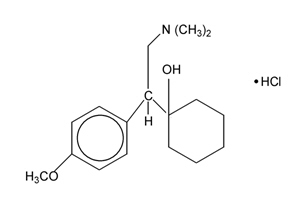
Venlafaxine hydrochloride, USP is a structurally novel antidepressant for oral administration. It is designated (R/S)-1-[2-(dimethylamino)-1-(4-methoxyphenyl)ethyl] cyclohexanol hydrochloride or (±)-1-[α-[(dimethylamino)methyl]-p-methoxybenzyl] cyclohexanol hydrochloride and has the molecular formula of C 17 H 27 NO 2 HCl. Its molecular weight is 313.87. The structural formula is shown below.
Venlafaxine hydrochloride, USP is a white to off-white crystalline solid with a solubility of 572 mg/mL in water (adjusted to ionic strength of 0.2 M with sodium chloride). Its octanol:water (0.2 M sodium chloride) partition coefficient is 0.43.
Compressed tablets contain venlafaxine hydrochloride,USP equivalent to 25 mg, 37.5 mg, 50 mg, 75 mg, or 100 mg venlafaxine.Inactive ingredients consist of microcrystalline cellulose, lactose monohydrate, sodium starch glycolate, magnesium stearate, colloidal silicon dioxide, ferric oxides yellow, and ferric oxides red.
CLINICAL PHARMACOLOGY
Pharmacodynamics
The mechanism of the antidepressant action of venlafaxine in humans is believed to be associated with its potentiation of neurotransmitter activity in the CNS. Preclinical studies have shown that venlafaxine and its active metabolite, O-desmethylvenlafaxine (ODV), are potent inhibitors of neuronal serotonin and norepinephrine reuptake and weak inhibitors of dopamine reuptake. Venlafaxine and ODV have no significant affinity for muscarinic, histaminergic, or α-1 adrenergic receptors in vitro . Pharmacologic activity at these receptors is hypothesized to be associated with the various anticholinergic, sedative, and cardiovascular effects seen with other psychotropic drugs. Venlafaxine and ODV do not possess monoamine oxidase (MAO) inhibitory activity.
Pharmacokinetics
Venlafaxine is well absorbed and extensively metabolized in the liver. O-desmethylvenlafaxine (ODV) is the only major active metabolite. On the basis of mass balance studies, at least 92% of a single dose of venlafaxine is absorbed. Approximately 87% of a venlafaxine dose is recovered in the urine within 48 hours as either unchanged venlafaxine (5%), unconjugated ODV (29%), conjugated ODV (26%), or other minor inactive metabolites (27%). Renal elimination of venlafaxine and its metabolites is the primary route of excretion. The relative bioavailability of venlafaxine from a tablet was 100% when compared to an oral solution. Food has no significant effect on the absorption of venlafaxine or on the formation of ODV.
The degree of binding of venlafaxine to human plasma is 27% ± 2% at concentrations ranging from 2.5 to 2215 ng/mL. The degree of ODV binding to human plasma is 30% ± 12% at concentrations ranging from 100 to 500 ng/mL. Protein-binding-induced drug interactions with venlafaxine are not expected.
Steady-state concentrations of both venlafaxine and ODV in plasma were attained within 3 days of multiple-dose therapy. Venlafaxine and ODV exhibited linear kinetics over the dose range of 75 mg to 450 mg total dose per day (administered on a q8h schedule). Plasma clearance, elimination half-life and steady-state volume of distribution were unaltered for both venlafaxine and ODV after multiple-dosing. Mean ± SD steady-state plasma clearance of venlafaxine and ODV is 1.3 ± 0.6 and 0.4 ± 0.2 L/h/kg, respectively; elimination half-life is 5 ± 2 and 11 ± 2 hours, respectively; and steady-state volume of distribution is 7.5 ± 3.7 L/kg and 5.7 ± 1.8 L/kg, respectively. When equal daily doses of venlafaxine were administered as either b.i.d. or t.i.d. regimens, the drug exposure (AUC) and fluctuation in plasma levels of venlafaxine and ODV were comparable following both regimens.
Age and Gender
A pharmacokinetic analysis of 404 venlafaxine-treated patients from two studies involving both b.i.d. and t.i.d. regimens showed that dose-normalized trough plasma levels of either venlafaxine or ODV were unaltered due to age or gender differences. Dosage adjustment based upon the age or gender of a patient is generally not necessary (see DOSAGE AND ADMINISTRATION ).
Liver Disease
In nine subjects with hepatic cirrhosis, the pharmacokinetic disposition of both venlafaxine and ODV was significantly altered after oral administration of venlafaxine. Venlafaxine elimination half-life was prolonged by about 30%, and clearance decreased by about 50% in cirrhotic subjects compared to normal subjects. ODV elimination half-life was prolonged by about 60% and clearance decreased by about 30% in cirrhotic subjects compared to normal subjects. A large degree of intersubject variability was noted. Three patients with more severe cirrhosis had a more substantial decrease in venlafaxine clearance (about 90%) compared to normal subjects.
In a second study, venlafaxine was administered orally and intravenously in normal (n = 21) subjects, and in Child-Pugh A (n = 8) and Child-Pugh B (n = 11) subjects (mildly and moderately impaired, respectively). Venlafaxine oral bioavailability was increased 2-fold to 3-fold, oral elimination half-life was approximately twice as long and oral clearance was reduced by more than half, compared to normal subjects. In hepatically impaired subjects, ODV oral elimination half-life was prolonged by about 40%, while oral clearance for ODV was similar to that for normal subjects. A large degree of intersubject variability was noted.
Dosage adjustment is necessary in these hepatically impaired patients (see DOSAGE AND ADMINISTRATION ).
Renal Disease
In a renal impairment study, venlafaxine elimination half-life after oral administration was prolonged by about 50% and clearance was reduced by about 24% in renally impaired patients (GFR = 10 to 70 mL/min), compared to normal subjects. In dialysis patients, venlafaxine elimination half-life was prolonged by about 180% and clearance was reduced by about 57% compared to normal subjects. Similarly, ODV elimination half-life was prolonged by about 40% although clearance was unchanged in patients with renal impairment (GFR = 10 to 70 mL/min) compared to normal subjects. In dialysis patients, ODV elimination half-life was prolonged by about 142% and clearance was reduced by about 56%, compared to normal subjects. A large degree of intersubject variability was noted.
Dosage adjustment is necessary in these patients (see DOSAGE AND ADMINISTRATION ).
CLINICAL TRIALS
The efficacy of venlafaxine hydrochloride as a treatment for major depressive disorder was established in five placebo-controlled, short-term trials. Four of these were 6-week trials in adult outpatients meeting DSM-III or DSM-III-R criteria for major depression: two involving dose titration with venlafaxine hydrochloride in a range of 75 to 225 mg/day (t.i.d. schedule), the third involving fixed venlafaxine hydrochloride doses of 75, 225, and 375 mg/day (t.i.d. schedule), and the fourth involving doses of 25, 75, and 200 mg/day (b.i.d. schedule). The fifth was a 4-week study of adult inpatients meeting DSM-III-R criteria for major depression with melancholia whose venlafaxine hydrochloride doses were titrated in a range of 150 to 375 mg/day (t.i.d. schedule). In these five studies, venlafaxine was shown to be significantly superior to placebo on at least two of the following three measures: Hamilton Depression Rating Scale (total score), Hamilton depressed mood item, and Clinical Global Impression-Severity of Illness rating. Doses from 75 to 225 mg/day were superior to placebo in outpatient studies and a mean dose of about 350 mg/day was effective in inpatients. Data from the two fixed dose outpatient studies were suggestive of a dose-response relationship in the range of 75 to 225 mg/day. There was no suggestion of increased response with doses greater than 225 mg/day.
While there were no efficacy studies focusing specifically on an elderly population, elderly patients were included among the patients studied. Overall, approximately 2/3 of all patients in these trials were women. Exploratory analyses for age and gender effects on outcome did not suggest any differential responsiveness on the basis of age or sex.
In one longer term study, adult outpatients meeting DSM-IV criteria for major depressive disorder who had responded during an 8-week open trial on venlafaxine hydrochloride extended-release capsules (75 mg, 150 mg, or 225 mg, qAM) were randomized to continuation of their same venlafaxine hydrochloride extended-release capsules dose or to placebo, for up to 26 weeks of observation for relapse. Response during the open phase was defined as a CGI Severity of Illness item score of ≤ 3 and a HAM-D-21 total score of ≤ 10 at the day 56 evaluation. Relapse during the double-blind phase was defined as follows: (1) a reappearance of major depressive disorder as defined by DSM-IV criteria and a CGI Severity of Illness item score of ≥ 4 (moderately ill), (2) two consecutive CGI Severity of Illness item scores of ≥ 4, or (3) a final CGI Severity of Illness item score of ≥ 4 for any patient who withdrew from the study for any reason. Patients receiving continued venlafaxine hydrochloride extended-release capsules treatment experienced significantly lower relapse rates over the subsequent 26 weeks compared with those receiving placebo.
In a second longer term trial, adult outpatients meeting DSM-III-R criteria for major depression, recurrent type, who had responded (HAM-D-21 total score ≤ 12 at the day 56 evaluation) and continued to be improved [defined as the following criteria being met for days 56 through 180: (1) no HAM-D-21 total score ≥ 20; (2) no more than 2 HAM-D-21 total scores > 10; and (3) no single CGI Severity of Illness item score ≥ 4 (moderately ill)] during an initial 26 weeks of treatment on venlafaxine hydrochloride (100 to 200 mg/day, on a b.i.d. schedule) were randomized to continuation of their same venlafaxine dose or to placebo. The follow-up period to observe patients for relapse, defined as a CGI Severity of Illness item score ≥ 4, was for up to 52 weeks. Patients receiving continued venlafaxine treatment experienced significantly lower relapse rates over the subsequent 52 weeks compared with those receiving placebo.
HOW SUPPLIED
Venlafaxine Tablets, USP are available as follows:
25 mg, mottled peach, round, flat beveled tablet, on one side scored and debossed “Y01” on the other side of the tablet.
NDC 50771-001-01, bottle of 30 tablets with CRC Cap in unit of use package.
NDC 50771-001-02, bottle of 100 tablets with CRC Cap.
NDC 50771-001-03, bottle of 1000 tablets with regular Cap.
37.5 mg, mottled peach, round, flat beveled tablet, on one side scored and debossed “Y02” on the other side of the tablet.
NDC 50771-002-01, bottle of 30 tablets with CRC Cap in unit of use package.
NDC 50771-002-02, bottle of 100 tablets with CRC Cap.
NDC 50771-002-03, bottle of 1000 tablets with regular Cap.
50 mg, mottled peach, round, flat beveled tablet, on one side scored and debossed “Y03” on the other side of the tablet.
NDC 50771-003-01, bottle of 30 tablets with CRC Cap in unit of use package.
NDC 50771-003-02, bottle of 100 tablets with CRC Cap.
NDC 50771-003-03, bottle of 1000 tablets with regular Cap.
75 mg, mottled peach, round, flat beveled tablet, on one side scored and debossed “Y04” on the other side of the tablet.
NDC 50771-004-01, bottle of 30 tablets with CRC Cap in unit of use package.
NDC 50771-004-02, bottle of 100 tablets with CRC Cap.
NDC 50771-004-03, bottle of 1000 tablets with regular Cap.
100 mg, mottled peach, round, flat beveled tablet, on one side scored and debossed “Y05” on the other side of the tablet.
NDC 50771-005-01, bottle of 30 tablets with CRC Cap in unit of use package.
NDC 50771-005-02, bottle of 100 tablets with CRC Cap.
NDC 50771-005-03, bottle of 1000 tablets with regular Cap.
Store at 20° to 25°C (68° to 77°F). [See USP Controlled Room Temperature].
Dispense in a well-closed container as defined in the USP.
KEEP THIS AND ALL MEDICATIONS OUT OF THE REACH OF CHILDREN
The unit of use package is intended to be dispensed as a unit.
Manufactured by
Yaopharma Co., Ltd.
100 Xingguang Avenue, Yubei District,
Chongqing, 401121
China
Rev 06/23
